Process
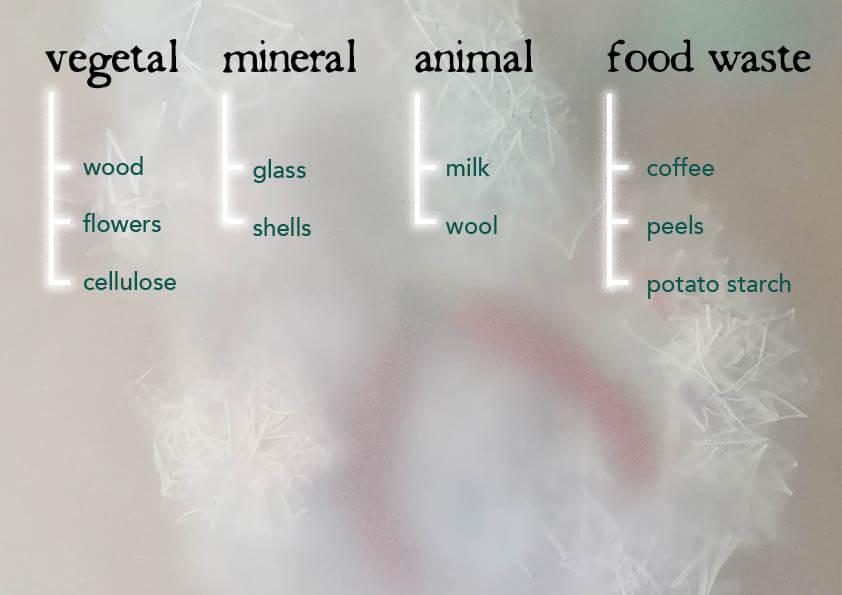
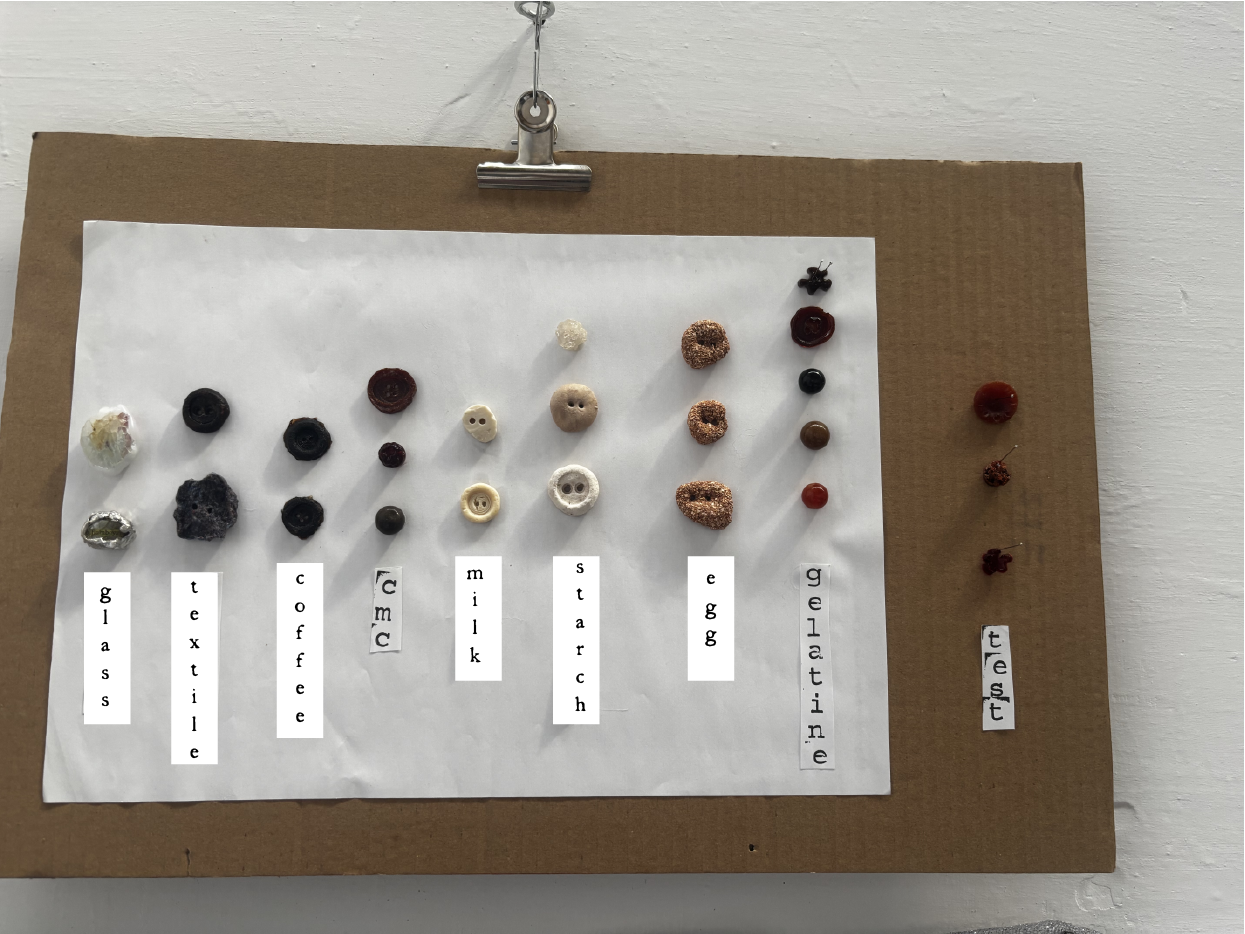
My process will be divided over these different sources.
Click here to open my Laboratory Cookbook.
Intentions
Everything in this research is:
- sourced in my surroundings
- biodegradable or from waste as much as possible
My approach is exploring various sources in order to obtain a recipe that is both:
- water resistant (3 hours in water)
- heat resistant (less than 50 degrees)
Summary
- Mapping
- Tools
- Molding process
- Colors
- Recipes
- Mineral
- Animal
- Vegetal
- Assembly
- Polishing
- Preservation
Visual Guide
Vocabulary
* = can be sourced in waste
Cross-link
Fillers
White page
Exploring / developing recipes
Green page
Final recipe
Molding
- can be molded in detailed shape
- can only be molded with hands
Mapping
Cross-linkers
For cellulose
- acid citric
- vinegar
For gelatine
- iron sulfate
- tanin
- alcohol
Dyes
- onion skins
- alder
Dye modifier
- citric acid
- iron sulfate
Fillers
- fabric
- eggshells
- petals
- paper
- coffee grounds
Preservatives
- cosgaard
Main ingredients
- glycerine
- gelatin
- baking soda
- water
- milk
- alginate
- potato starch
Tools
Laboratory & Processing Equipment
- Mortar and pestle (for grinding and homogenization)
- Beaker (for liquid handling and preparation)
- Heating vessel (saucepan, for thermal processing)
- Stainless steel mixing bowls (for sample preparation)
- Precision digital balance (for mass measurement)
- Electric hand mixer (for mechanical agitation and mixing)
- Food dehydrator (for controlled drying processes)
- Freezer (for low-temperature storage)
- Glass stirring rod (for manual mixing and solution handling)
Molding Process
Colors
Colors are either made with natural dyes added to the water, or obtained through the fillers.
Natural dyes
- orange
- red
- dark brown
Fillers
- egg shells
- textile
- petals
Each dye can be modified in its opacity by diluting it with water.
It can also be brightened or made darker by using:
- citric acid (CA)
- sulfate iron (SI)
Recipes from Mineral Sources
Egg Shells
Ingredients
- 100ml water
- 3g alginate
- 3g glycerin
- 50g eggs
- 100ml spray
- 10% chloride water
Egg Shells Preparation
- Boil and remove white foam
- Dry in the dehydrator for 2h
- Break into pieces
Recipe with Alginate
- Pour egg shells, alginate, glycerin and water
- Use a mixer to blend everything perfectly
Pouring
- Prepare a surface by spraying it with chloride
- Pour mixture where wanted
- Spray the top of what was just poured
- Make sure it has been sprayed all over
Drying
- Remove from wet surface and place somewhere it can dry
- Or in a dehydrator for 2h
Perspectives
- playing with egg shells percentage. now it’s 1/3 of the mixture
- try reducing egg shells into a powder and no chunks
Recipes from Animal Sources
Gelatin
Ingredients
- 100ml water
- 40g gelatin
- 2.8g glycerin
- 14g tanin
Melting
- In a hot pan, mix all ingredients with a stirring rod
- When mixture becomes transparent because gelatine melted, continue stirring for 2 min
Pouring
- Pour into molds until the top
- Place in freezer
Drying
- Remove from mold
- Air dry for 10 days in a ventilated place
Perspectives
- it is possible to reheat mixture and reuse
- should try to replace by agar-agar so that it is vegan
Milk
Ingredients
- 0.380L milk
- 14g glycerin
- 10g vinegar
- 20ml alcohol
Melting
- In a hot pan, heat milk until 60 degrees
- Out of the fire, add vinegar
- Filter into a fabric so that chunks can be collected
- Pour alcohol and stir within the chunks
- Let drip for 1h
Pouring
- Pour into molds until the top
Drying
- Remove from mold after 3 days
- Air dry for 10 days in a ventilated place
Perspectives
- it is important to let it air dry in a cool place
- not all the grease is extracted with this recipe
- explore vegetal milks
Wool
Ingredients
- 100ml water
- 40g gelatin
- 2.8g glycerin
- 14g tanin
- 5g wool
Melting
- In a hot pan, mix all ingredients with a stirring rod
- When mixture becomes transparent because gelatine melted, continue stirring for 2 min while adding wool
Pouring
- Pour into molds until the top
- Place in freezer
Drying
- Remove from mold
- Air dry for 10 days in a ventilated place
Perspectives
- can cut hair shorter for another texture
- hairs make it impossible to have detailed molding
Recipes from Vegetal Sources
Petals
Ingredients
- 100ml water
- 40g gelatin
- 2.8g glycerin
- 14g tanin
- 5g petals
Melting
- In a hot pan, mix all ingredients with a stirring rod
- When mixture becomes transparent because gelatine melted, continue stirring for 2 min
Pouring
- Add petals at the bottom of the mould
- Pour into molds until the top
- Place in freezer
Drying
- Remove from mold
- Air dry for 10 days in a ventilated place
Perspectives
- can grind petals more for a multicolored aspect
- or keep one petal whole and place decoratively in the button
Coffee Grounds
Ingredients
- 100ml water
- 40g gelatin
- 2.8g glycerin
- 14g tanin
- 20g dried coffee grounds
Melting
- Mix water and coffee first
- In a hot pan, mix all ingredients with a stirring rod
- When mixture becomes transparent because gelatine melted, continue stirring for 2 min
Pouring
- Pour into molds until the top
- Place in freezer
Drying
- Remove from mold
- Air dry for 10 days in a ventilated place
Perspectives
- it is important to freeze right after pouring otherwise coffee falls at the bottom of the mold
Potato Starch / Wrinkly
Ingredients
- 20g potato starch
- 10ml vinegar
- 10ml glycerin
- 100ml water
Melting
- In a hot pan, mix all ingredients with a stirring rod
- Heat until thick
Pouring
- Pour into a piping bag
- Wait a couple minutes so that it cools down
- Make small batch on a surface such as a glass or mirror
Drying
- Air dry for 10 days in a ventilated place
- Or place in dehydrator for 4 hours on 50 degrees
Perspectives
- it is very slimy when pouring, new pouring methods are worth searching
Potato Starch / Clay
Ingredients
- 125g sodium bicarbonate
- 62g potato starch
- 88ml water
- 2ml vinegar
Melting
- In a hot pan, mix all ingredients and keep stirring
- Heat until thick
- Turn off once it starts boiling
Pouring
- Wait a couple minutes so that it cools down
- Mold into balls with your hands
- Flatten on a surface
Drying
- Air dry for 10 days in a ventilated place
- Or place in dehydrator for 4 hours on 50 degrees
Perspectives
- it is very crumbly so adjustments in the recipe would be necessary
Textile
Ingredients
- 100ml water
- 40g gelatin
- 2.8g glycerin
- 14g tanin
- 20g shredded textile
Melting
- Mix water and textiles first
- In a hot pan, mix all ingredients with a stirring rod
- When mixture becomes transparent because gelatine melted, continue stirring for 2 min
Pouring
- Pour into molds until the top
- Place in freezer
Drying
- Remove from mold
- Air dry for 10 days in a ventilated place
Perspectives
- the more shredded the textiles the better
- could also play with lace as a texture
- can also play with textile ratio
Design & Fabrication
Surfaces
video holographic
https://youtube.com/shorts/uK6eA6KwOoM?si=U3cVKTZhbc8OcisG
once you start designing and fabricating your first tests, you can link both at the bottom of the page with footnotes

"This step of the process was important because i learnt to draft my own pattern digitally. The first tests of this can be seen here on the right, find half- or test-fabrication files here[^1]"