DESIGN
NOTES
Sargassum is not only approached as a material resource, but also as a source of formal and aesthetic inspiration, informing both the structure and the behavior of the design.
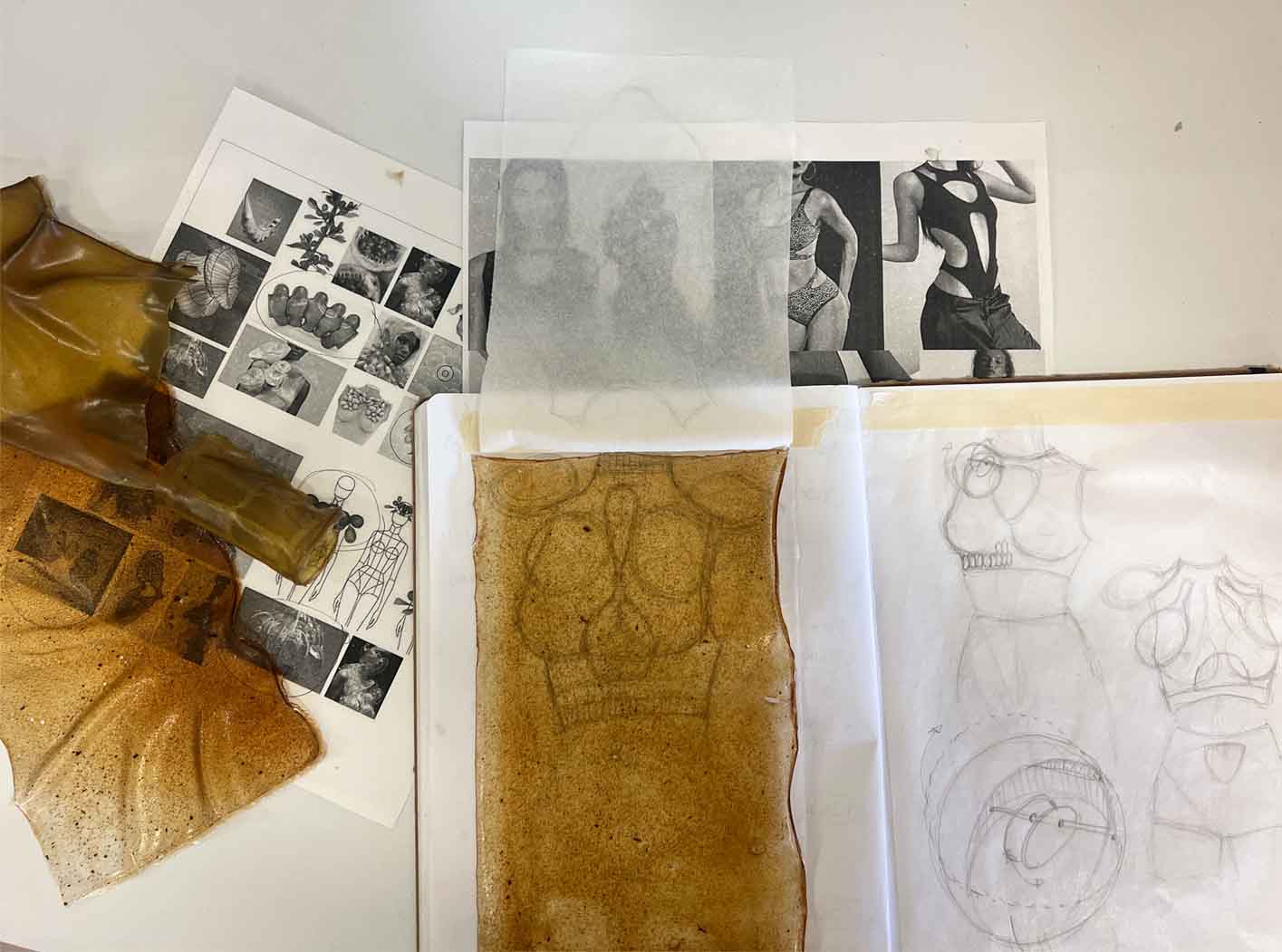
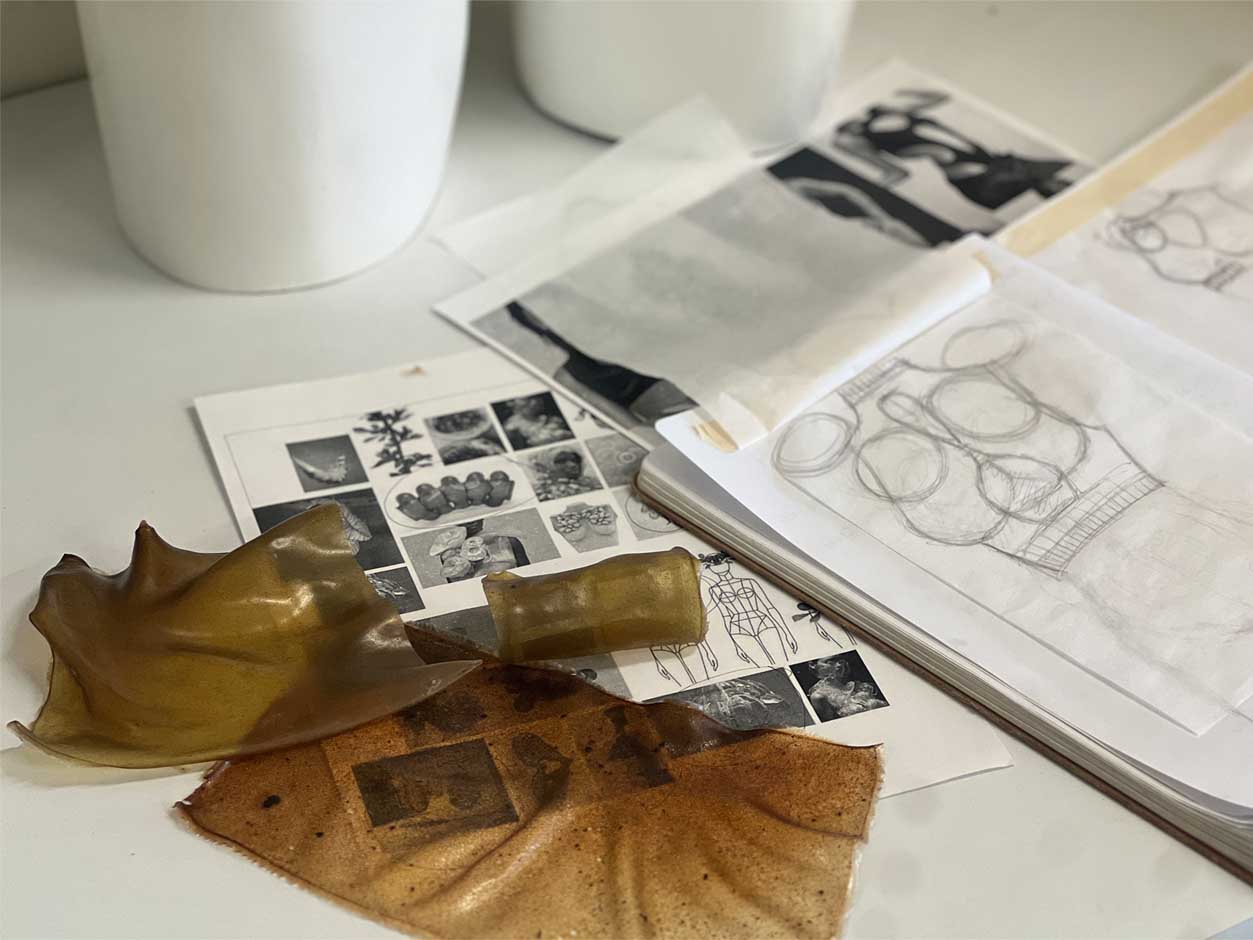
ON BODY
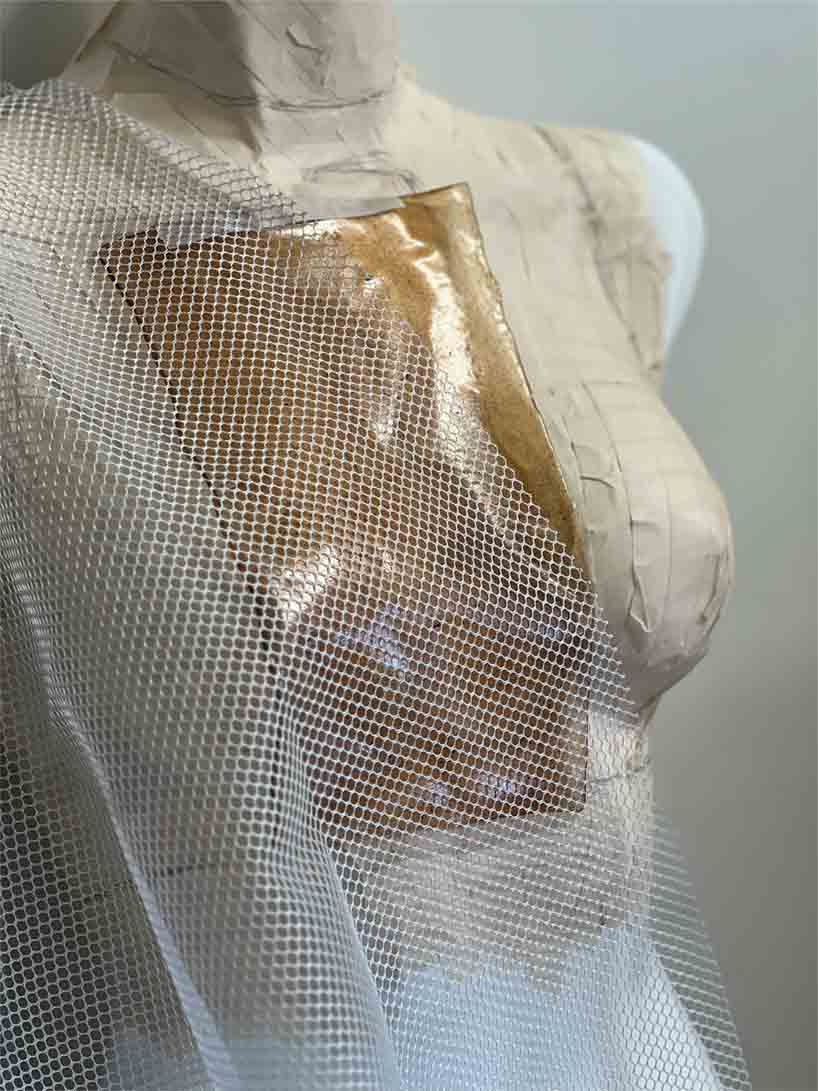
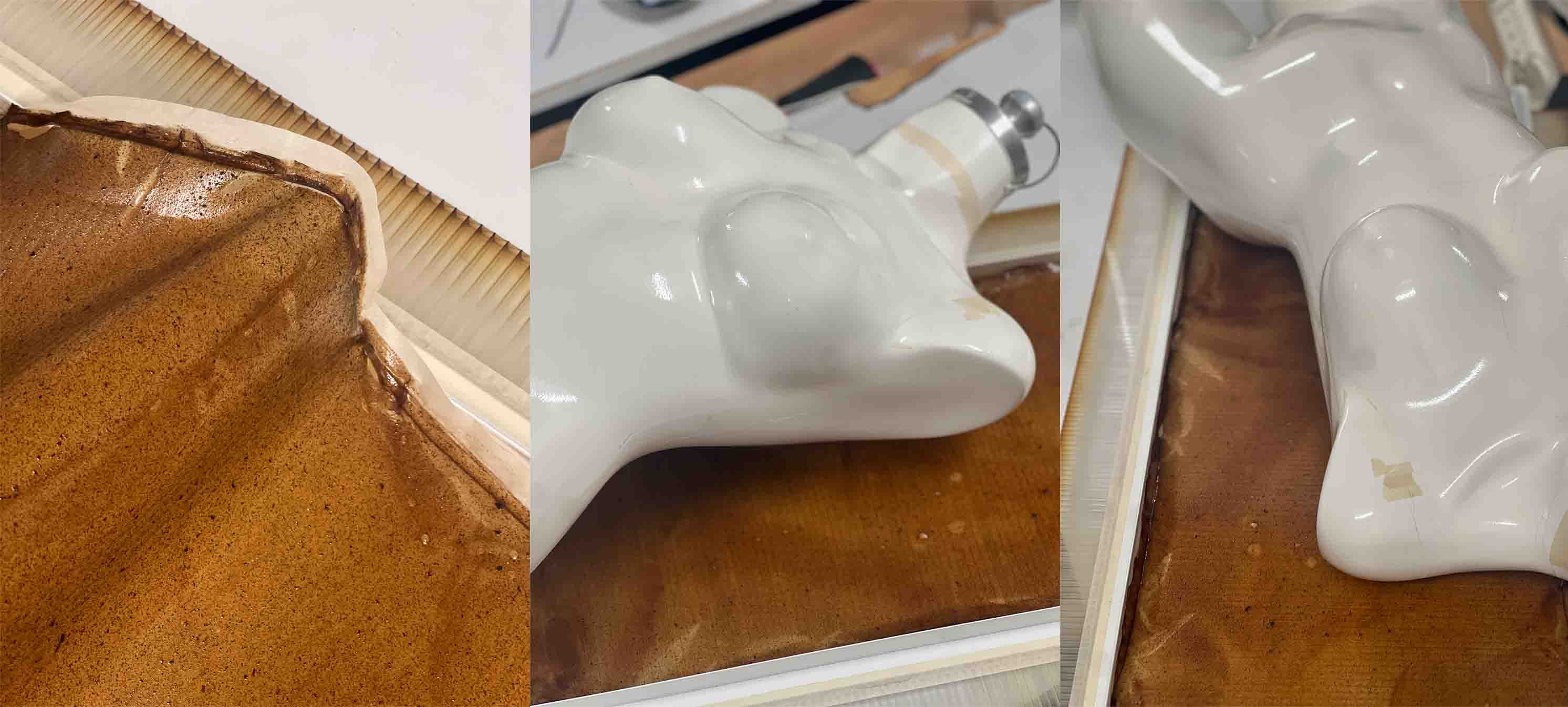
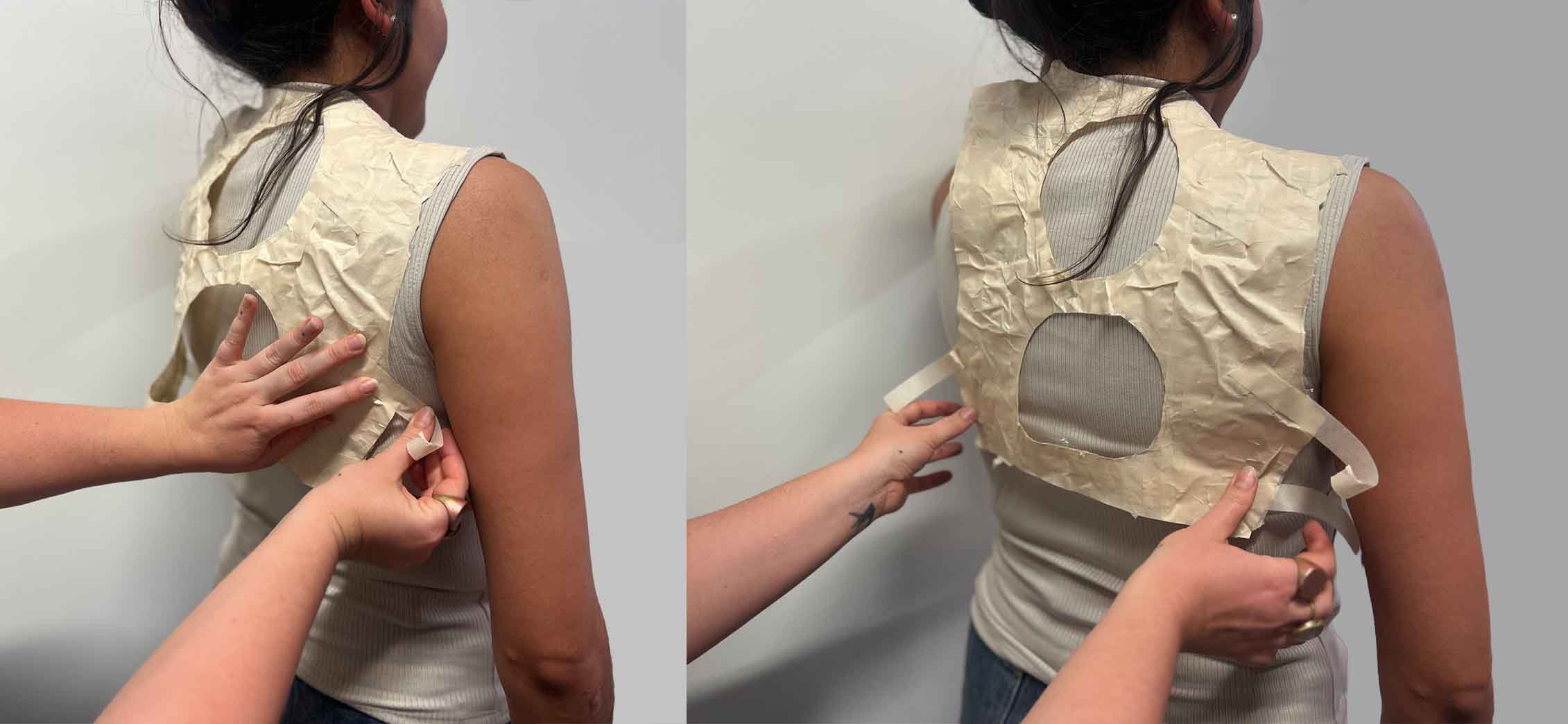
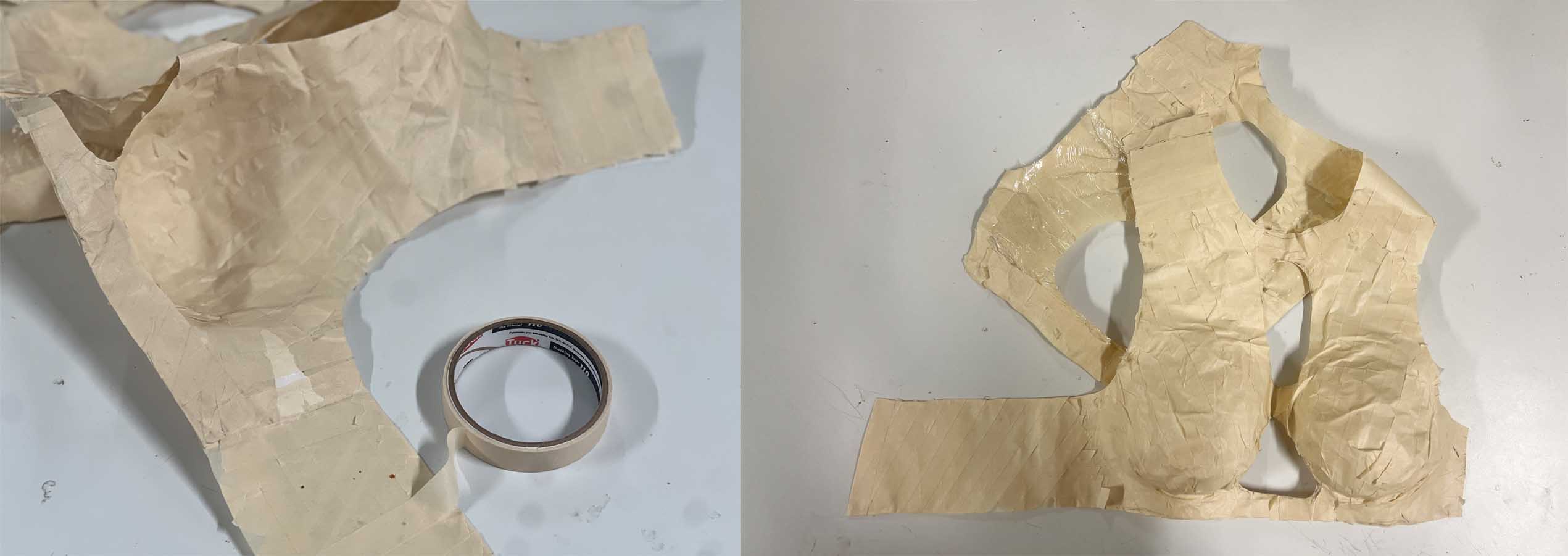
TAPE
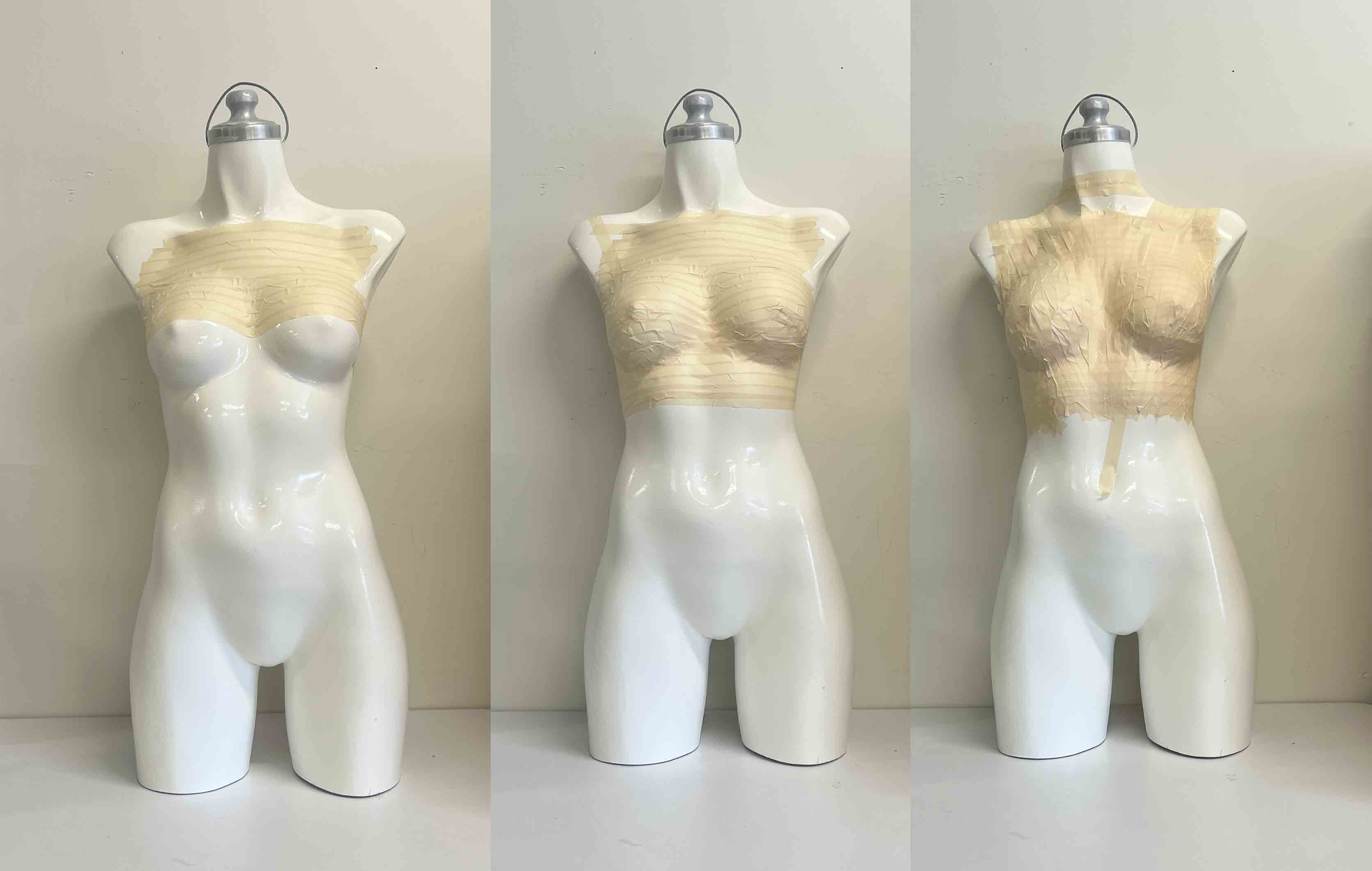
MOKE UPS
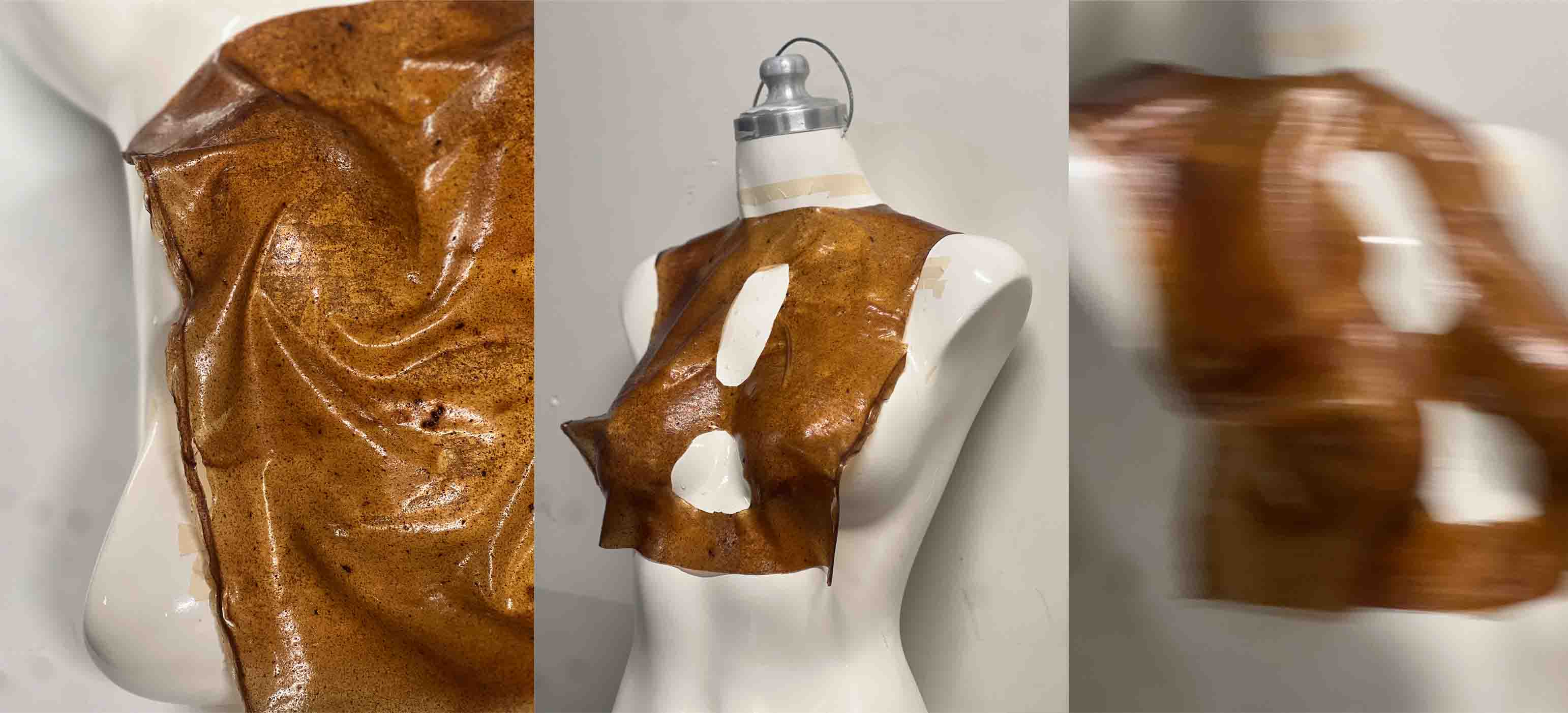
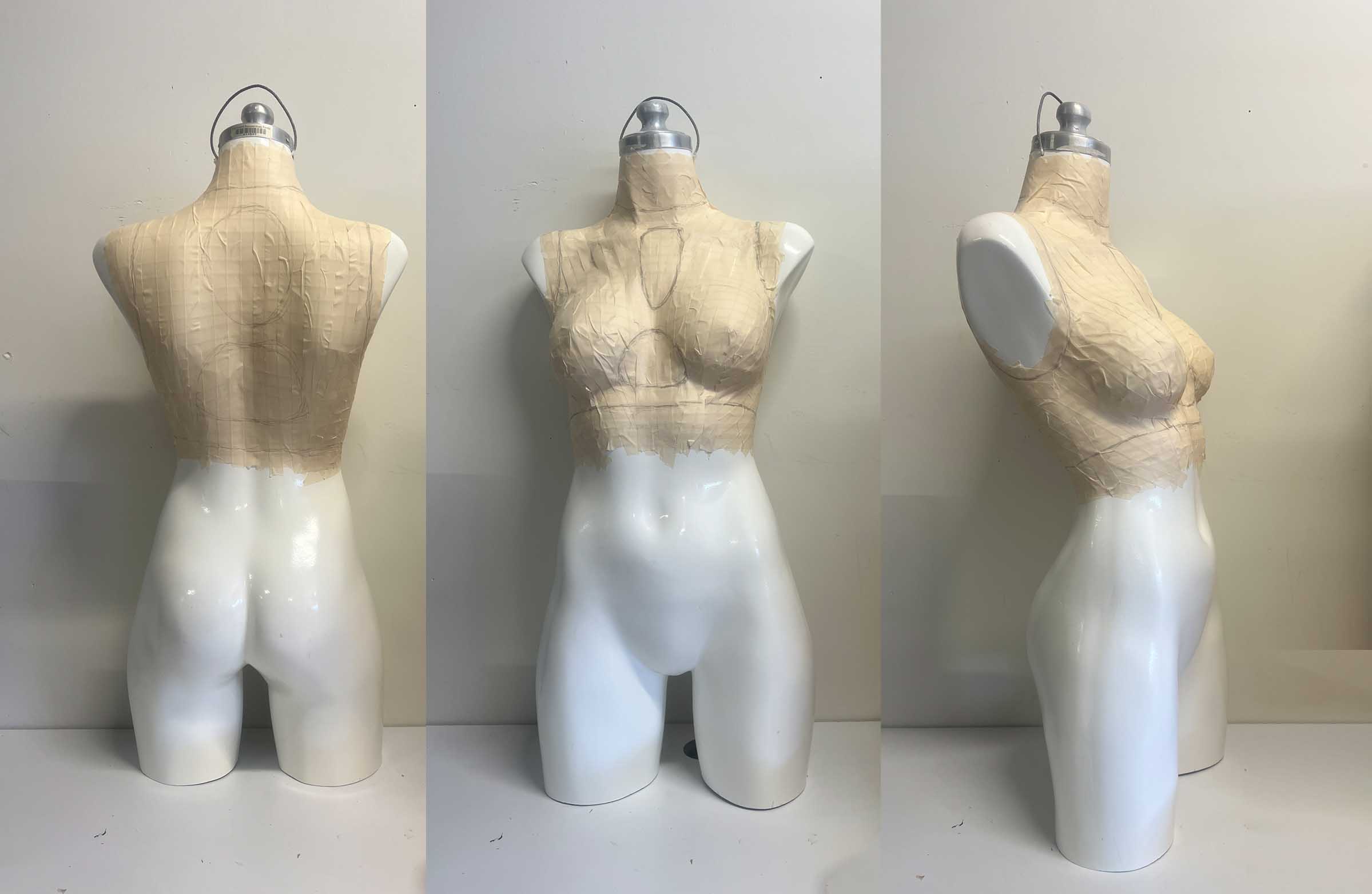
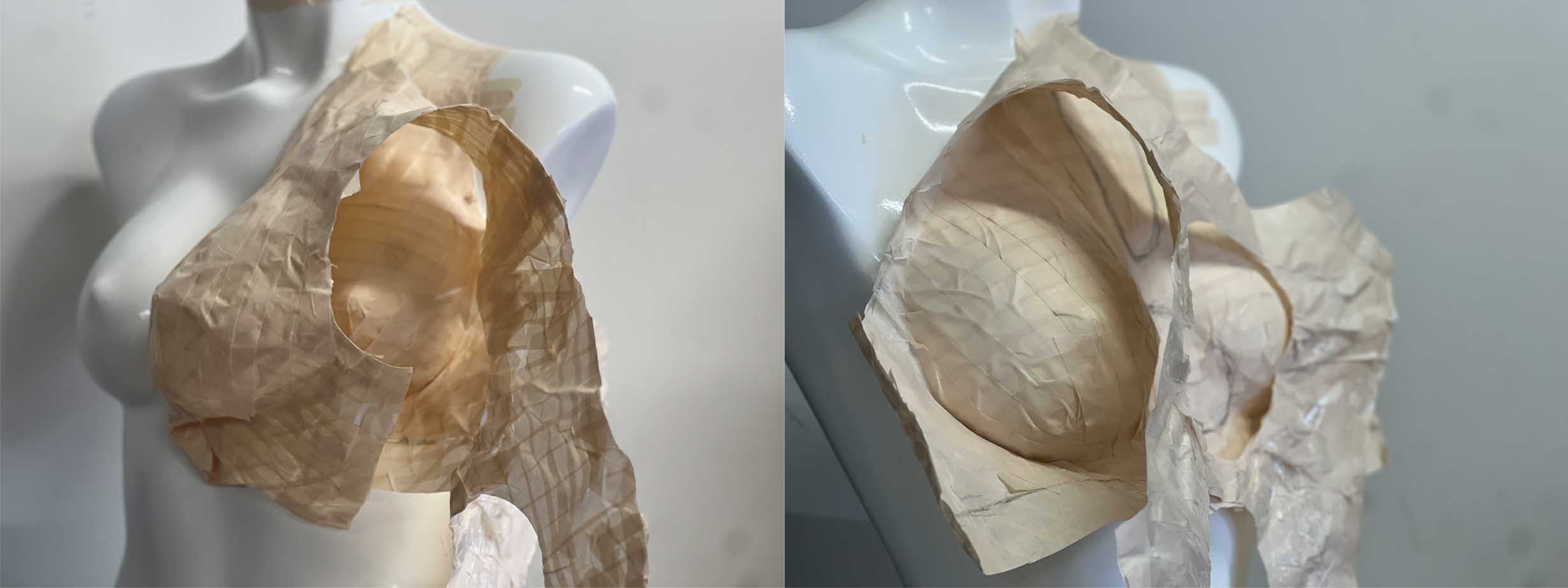
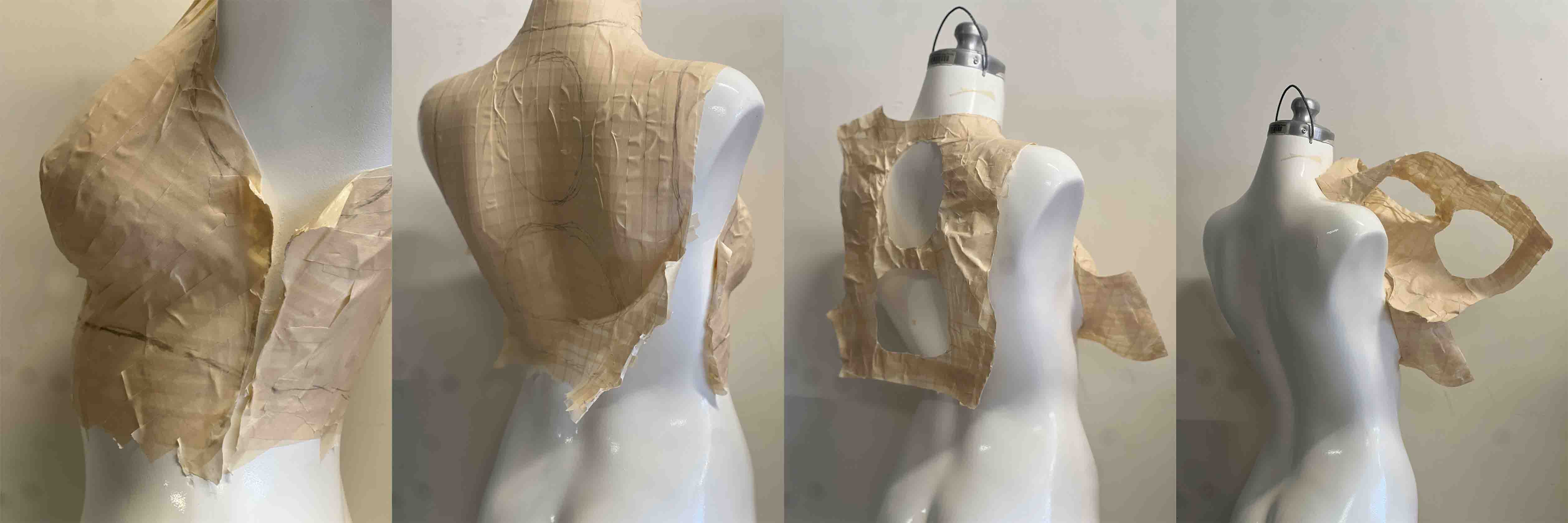
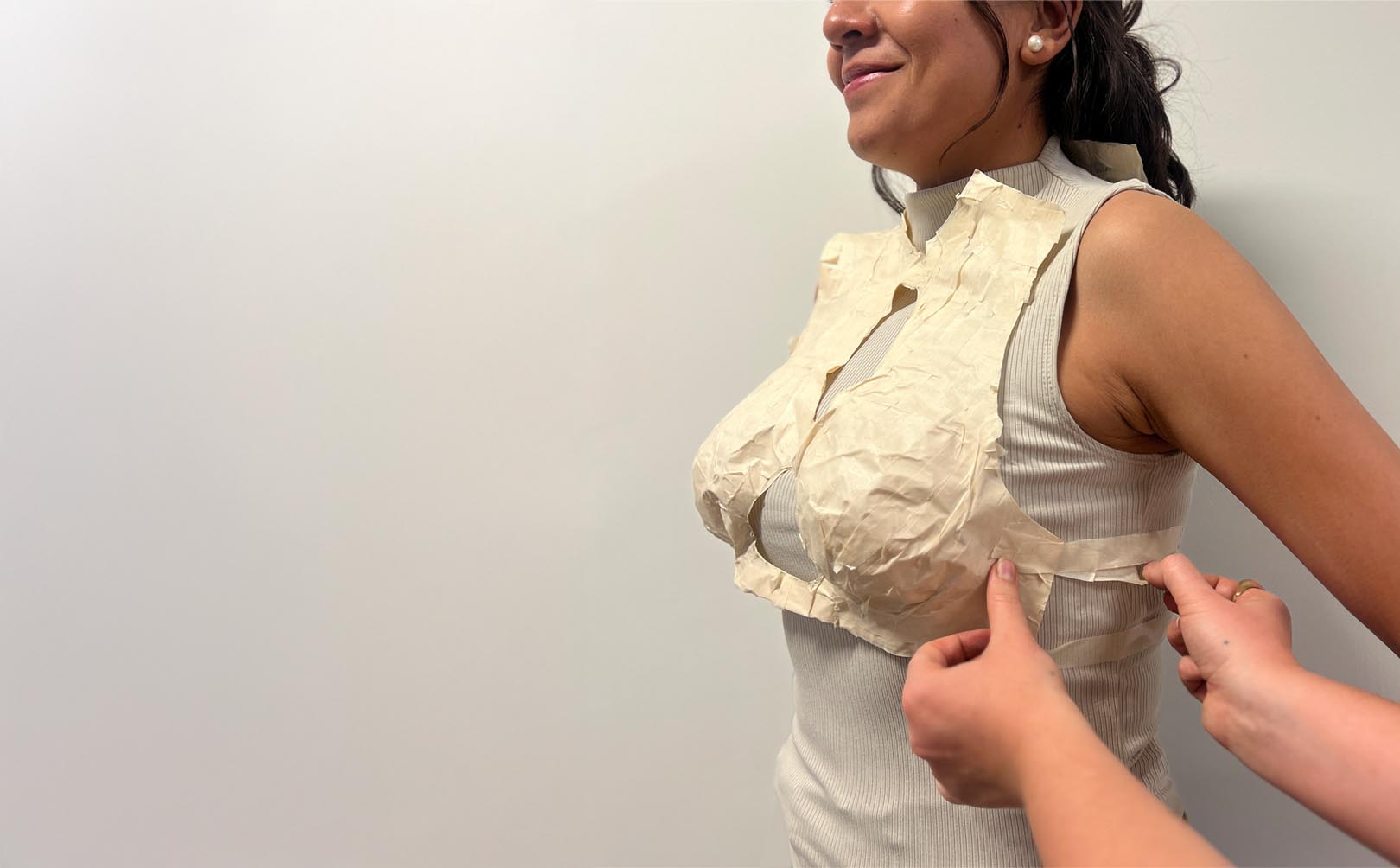
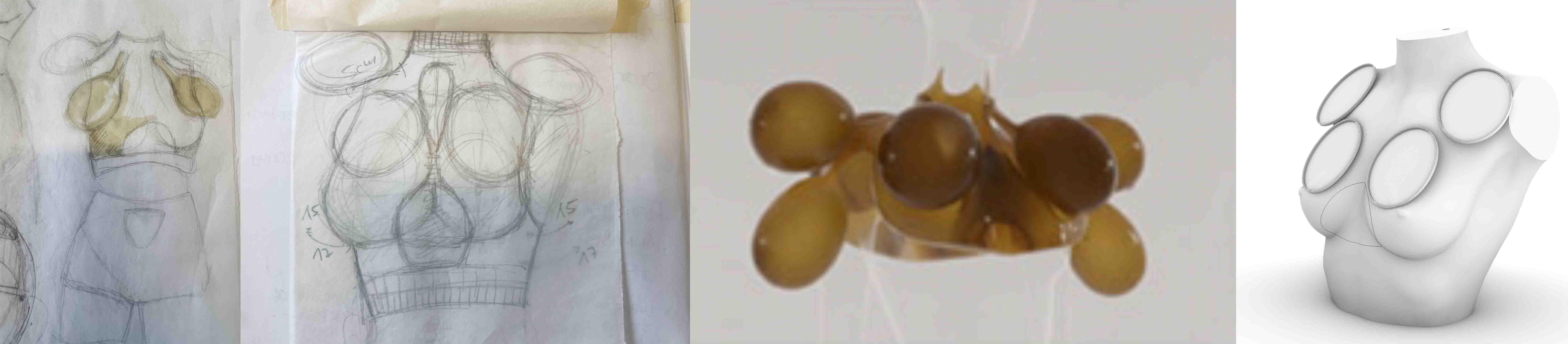
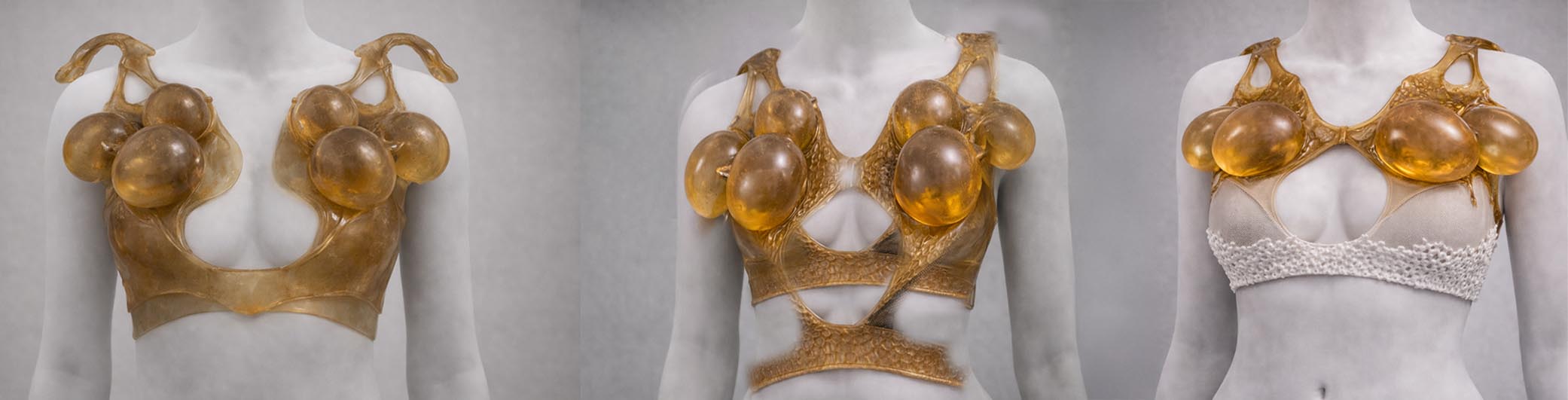
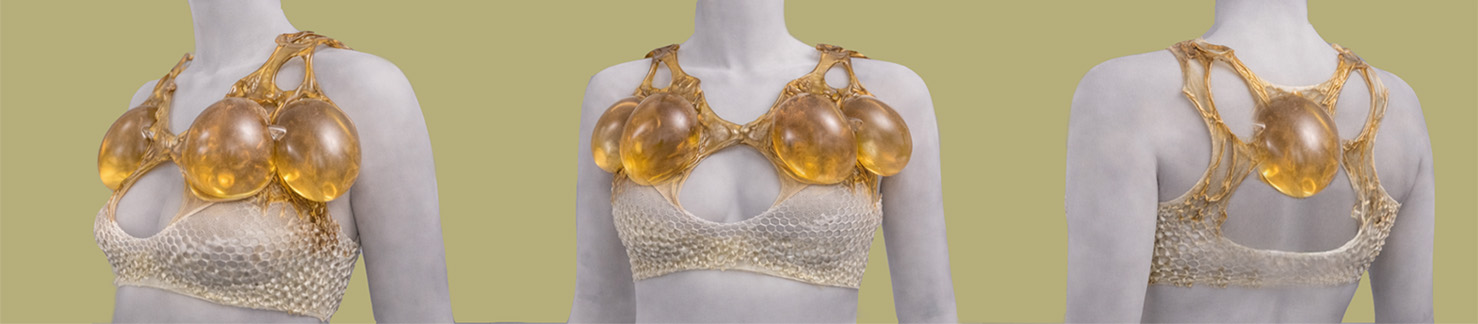
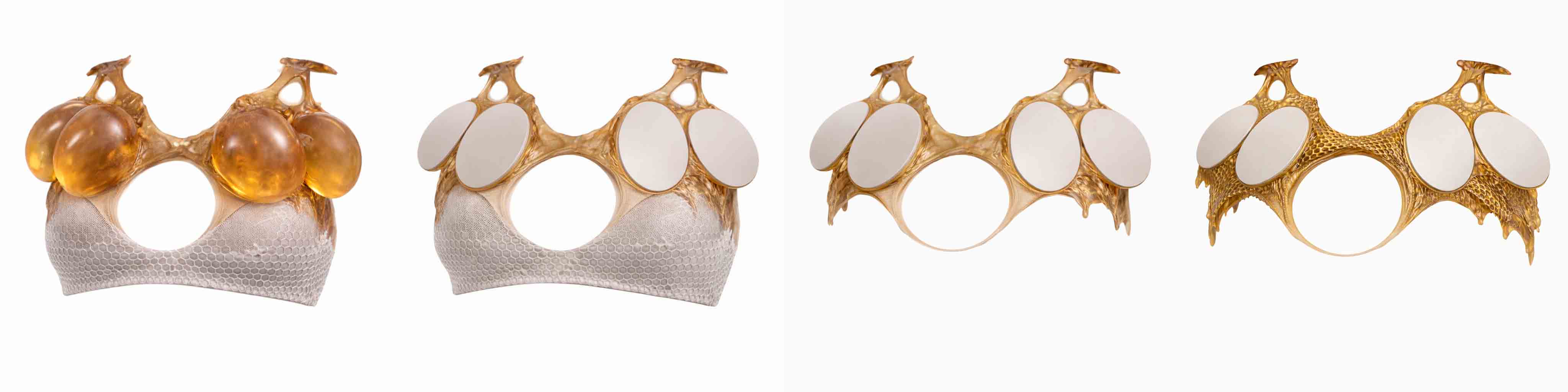
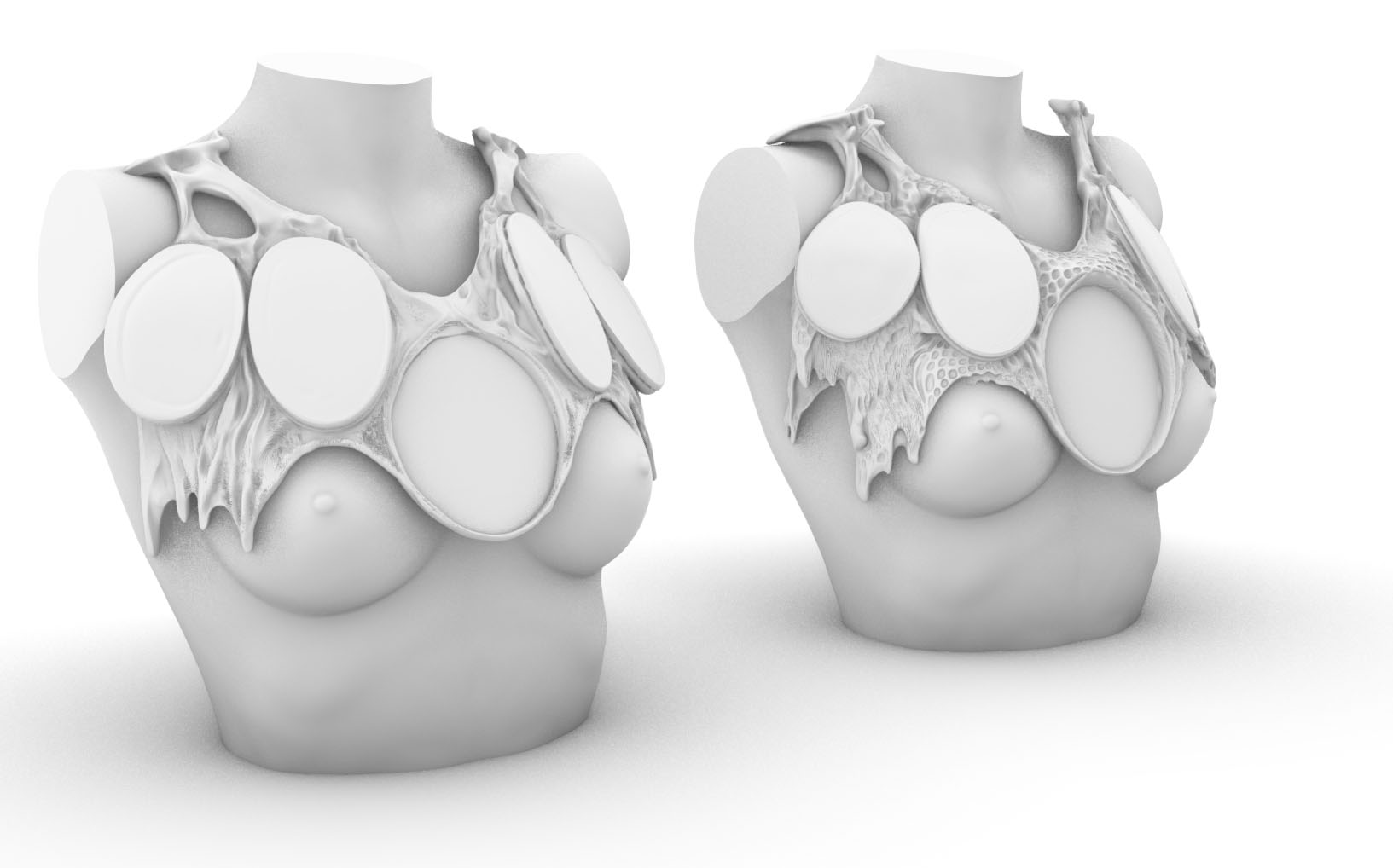
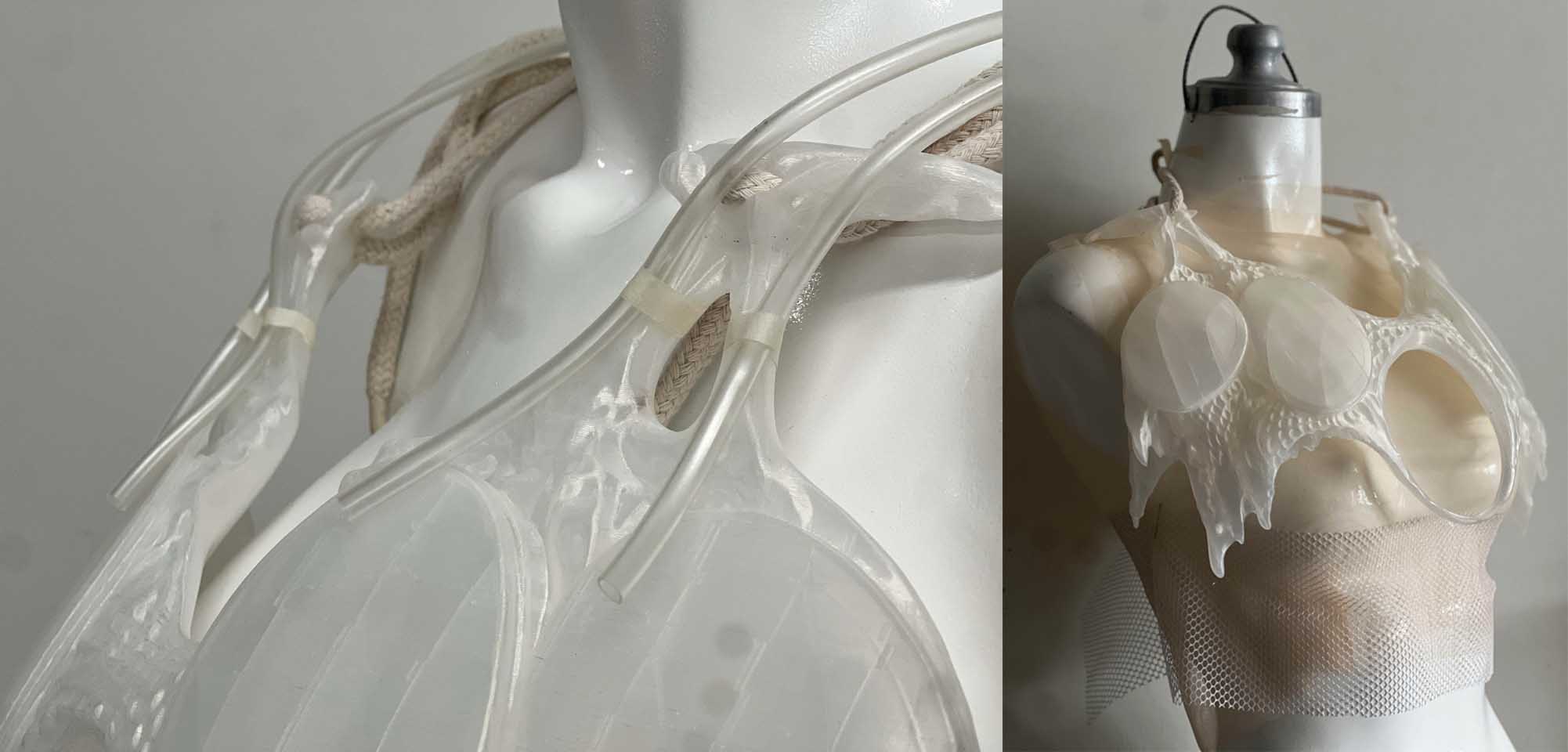
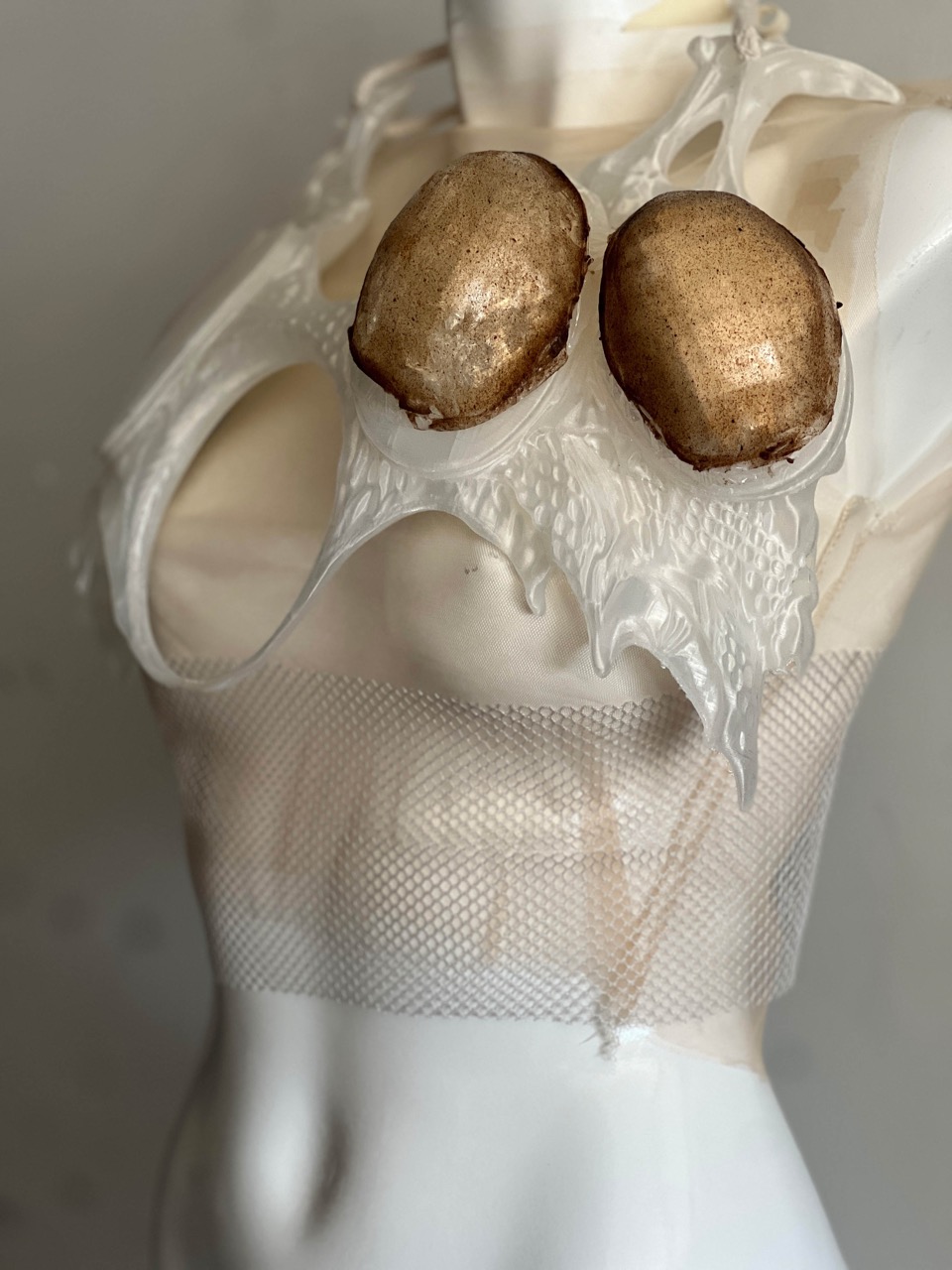
For the first variation of the chest piece, I designed a crop top featuring cut-outs that highlight & emphasize selected areas of the body.
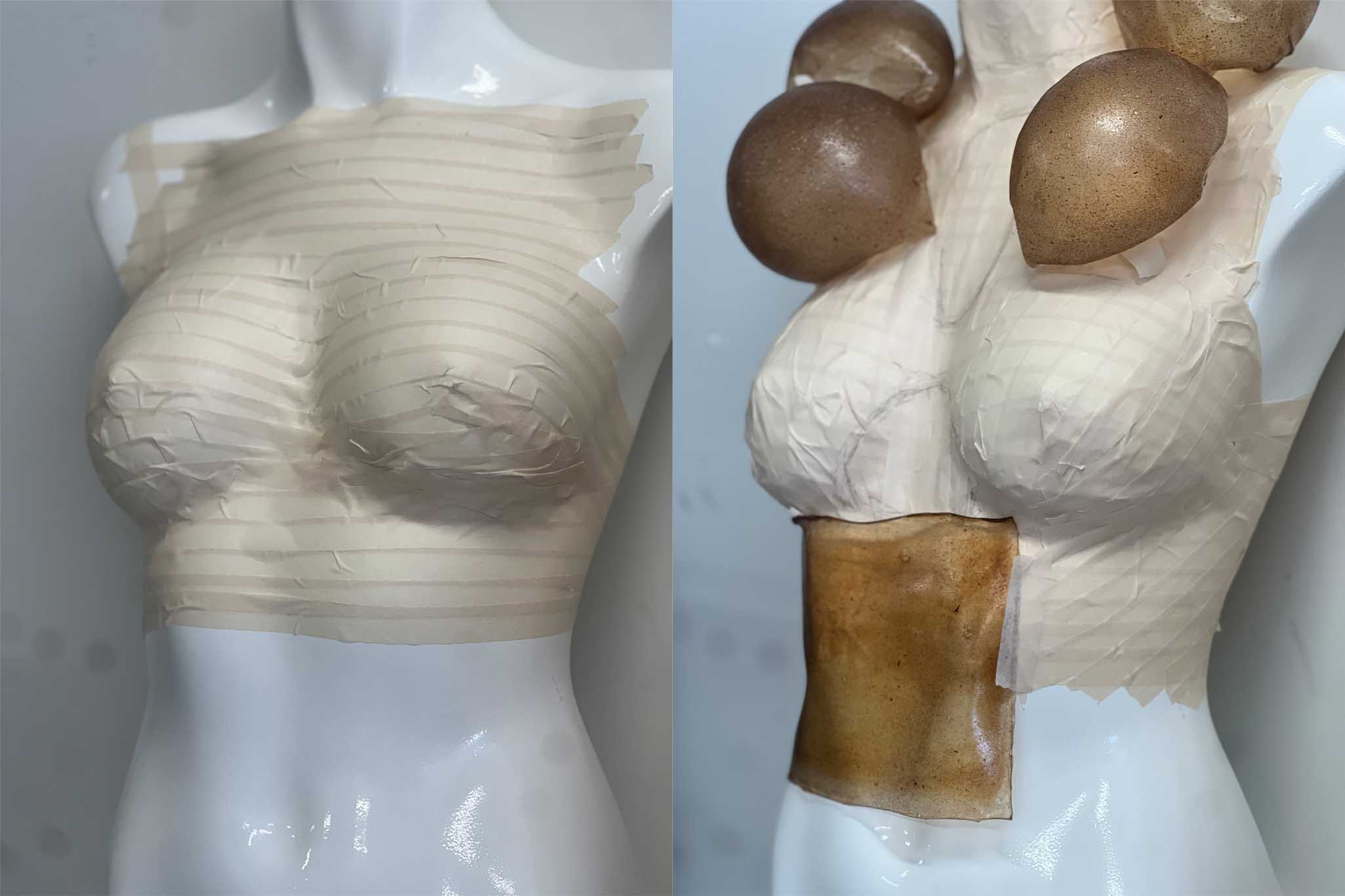
INSPIRATION
 An inspiring reference comes from antique glass buoys, with their ocean-toned glass & rope-bound structures. While I encountered the idea that seaweed was historically used as a pigment in glassmaking, I was not able to find clear written evidence to support this claim. Nevertheless, this association informed the design approach — not only in terms of form & structural harnessing, but also in the exploration of seaweed as a natural pigment within the material development.
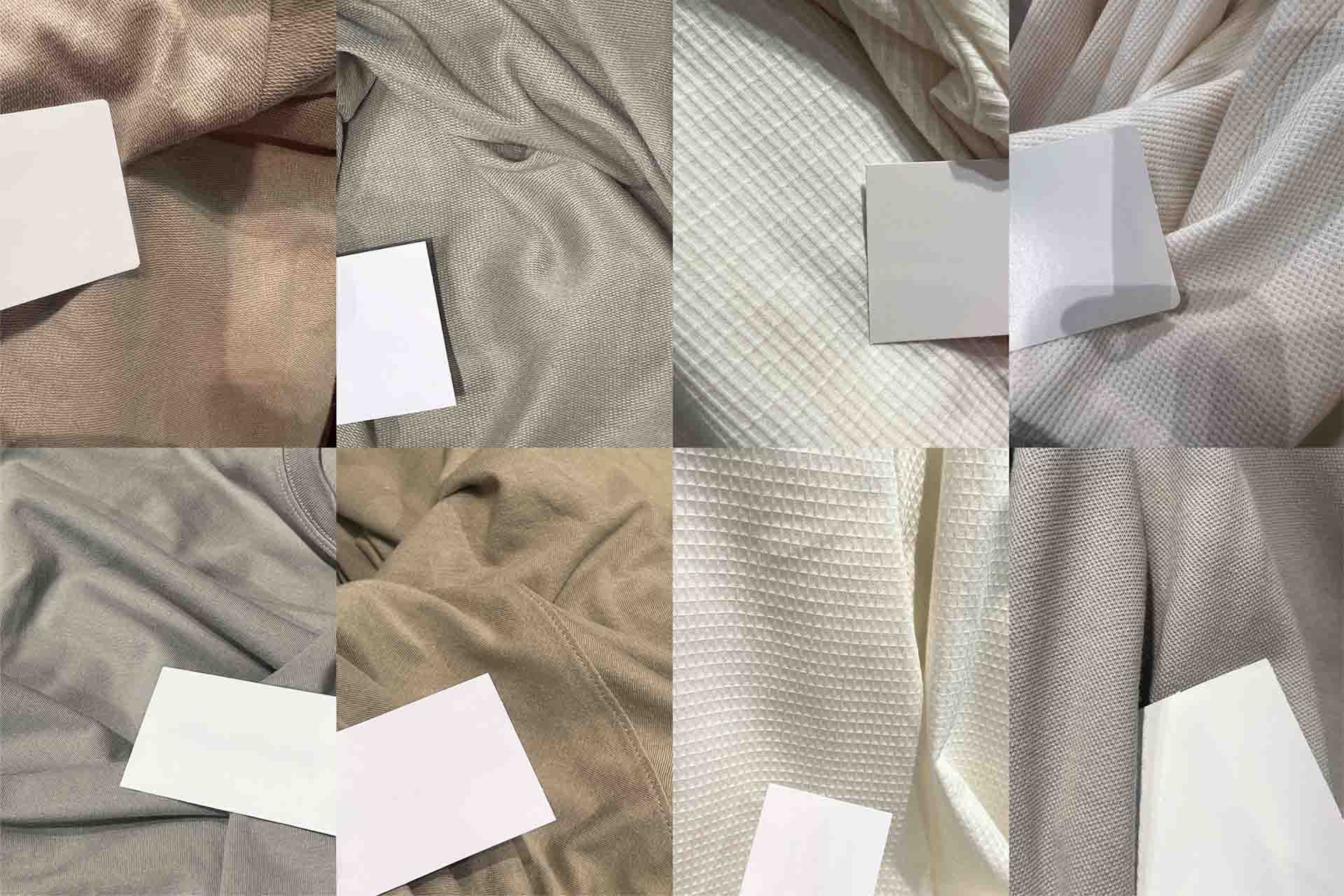
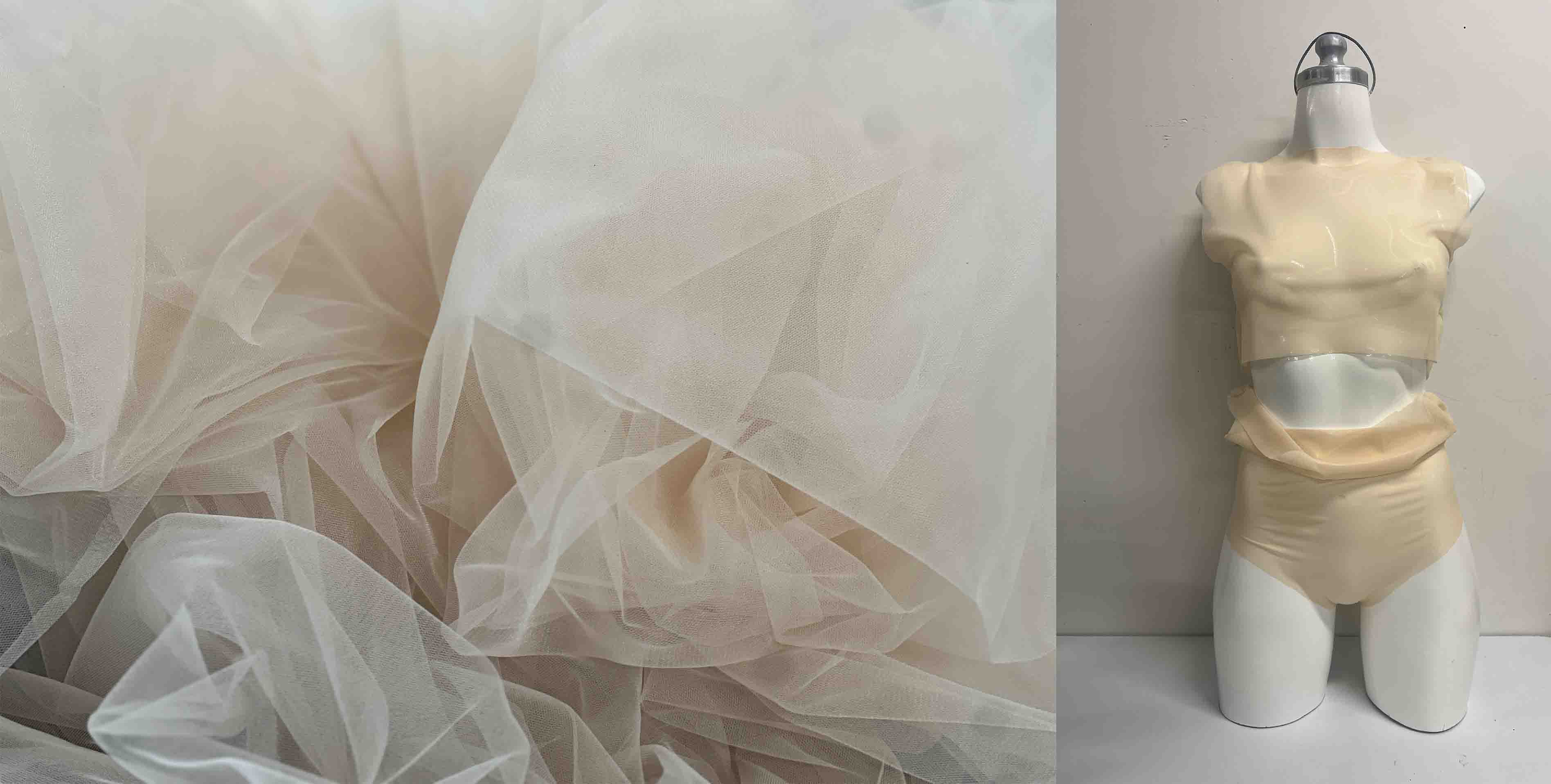
UNDERNEATH
 My approach follows the principle of “beginning with the end in mind.”
My primary focus lies on materiality & form,
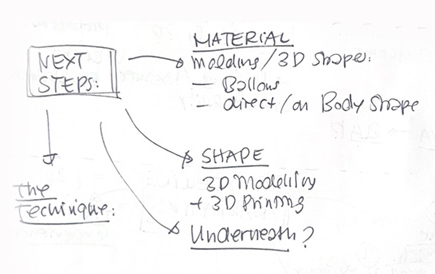
with technique coming 2..
My approach follows the principle of “beginning with the end in mind.”
My primary focus lies on materiality & form,
with technique coming 2..
As a result, the remaining parts of the outfit intentionally move into the background. Nevertheless, my intention is to create a coherent overall concept. I have therefore already considered the form, silhouette, color palette, & materiality of the remaining elements. The outfit is meant to be minimal & restrained, supporting the material piece without becoming visually dull. Formal elements are subtly echoed & continued.
For this reason, I chose to incorporate various cut-outs that conceal certain areas while emphasizing others.
Ideally, I would have liked to work with SEACELL for this part. I still own white fabric in Germany. Dyeing it with seaweed-based pigments would have been an exciting extension of the concept. However, further exploration of pigmentation would exceed the scope of this already extensive project.
I therefore consciously decided to narrow & define the focus more clearly rather than expanding it further. This remains a potential future direction — as does a more holistic material consideration of the “underwear” layer.
SARGASSUM GLASSES
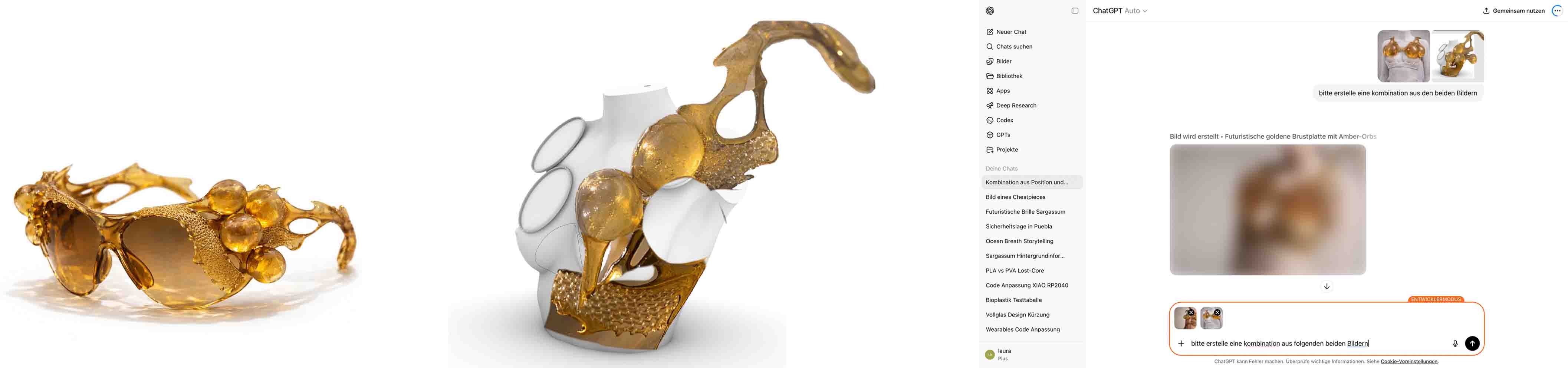
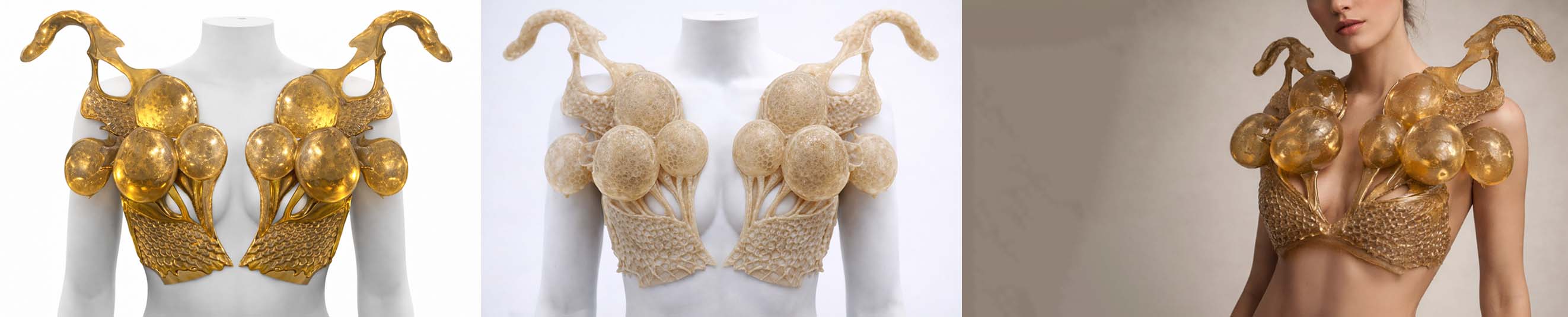
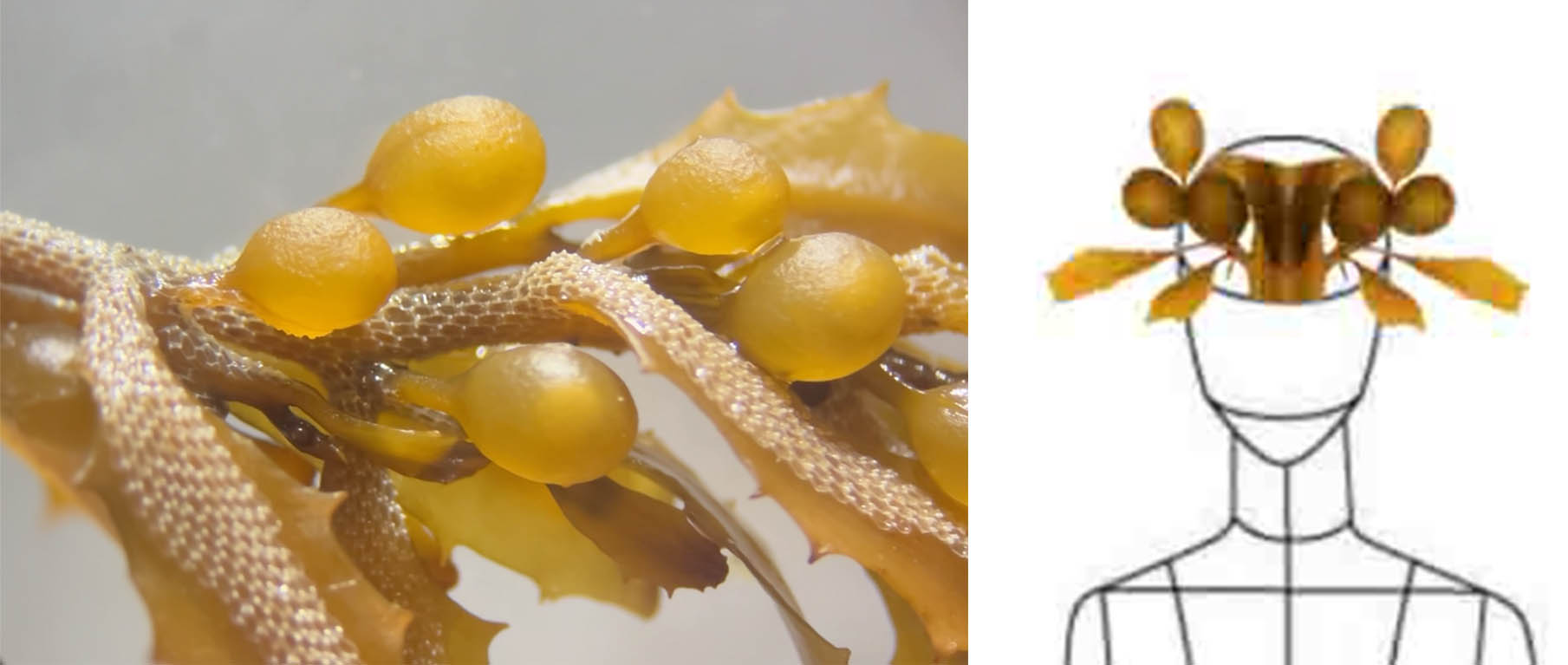 In the development of the Sargassum glasses, I combined my own microscopic images of the material with early rough mock-ups
to used AI-based image generation tools (ChatGPT / OpenAI).
This approach allowed me to translate biological structures into design proposals & to explore hyperrealistic representations as part of an iterative design process.
In the development of the Sargassum glasses, I combined my own microscopic images of the material with early rough mock-ups
to used AI-based image generation tools (ChatGPT / OpenAI).
This approach allowed me to translate biological structures into design proposals & to explore hyperrealistic representations as part of an iterative design process.

Subsequently, I refined the proportions in Photoshop, developing the design further through a dynamic exchange/rapid iterative dialogue between myself, manual adjustments, digital editing /the image editing software, & AI-generated inputs/OpenAI.
Through this collaborative back-&-forth process, the design of the glasses gradually emerged, evolving in alignment with my vision & taking shape through continuous intention & iteration.
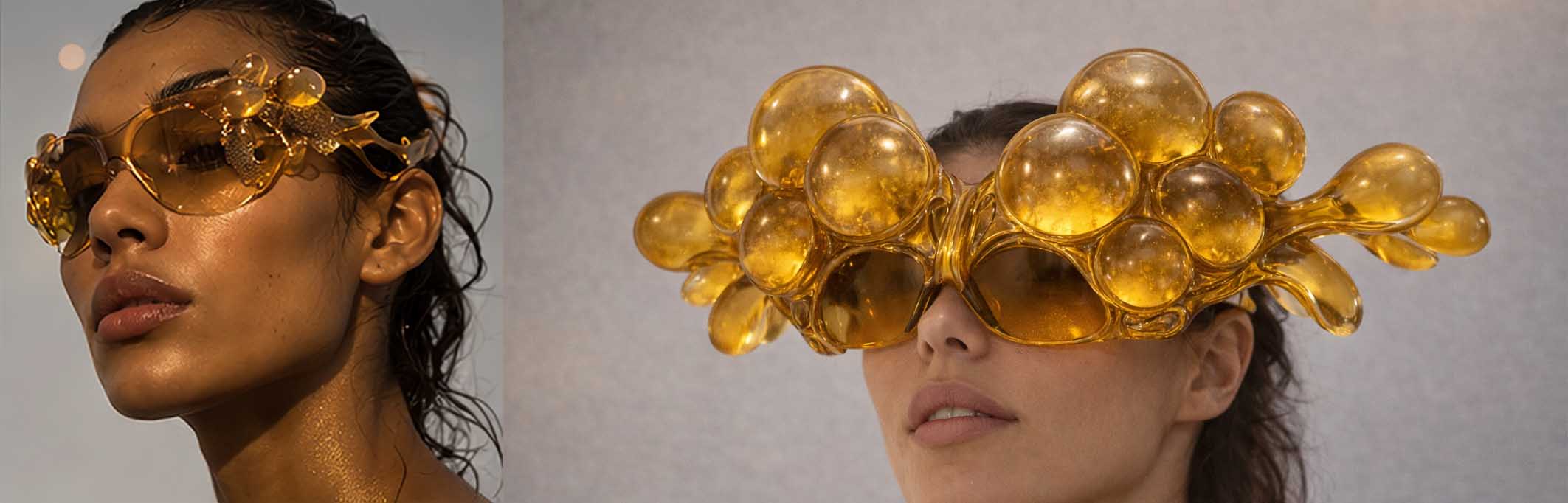
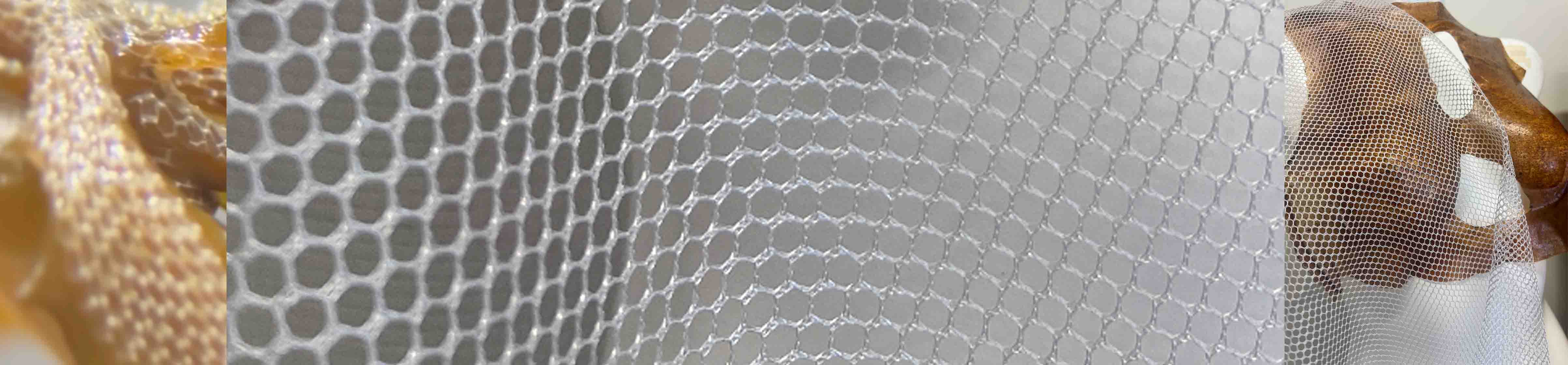
The form development focused on transferring the visual language of Sargassum into the glasses, while maintaining the key characteristics of premium eyewear. This included integrating the spherical bubble forms as well as the surface textures found on the undersides of the seaweed leaves.
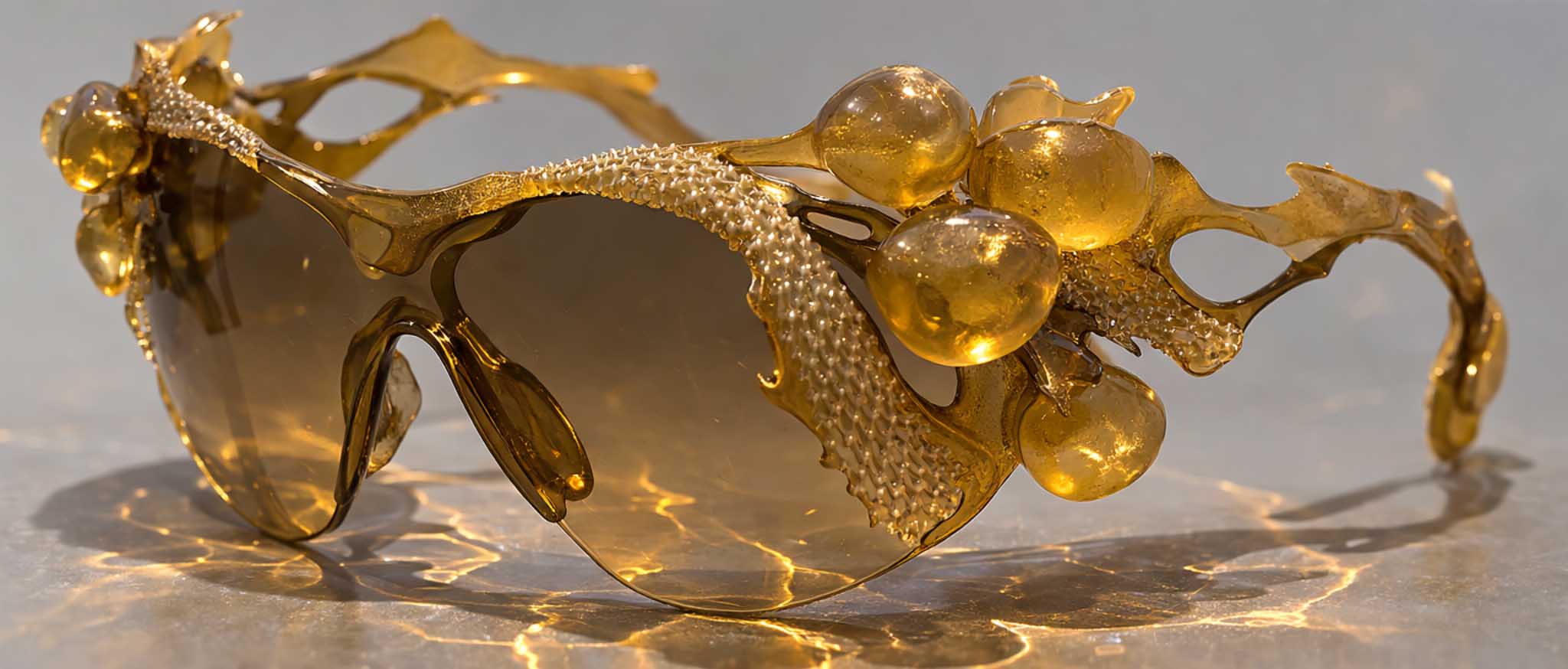 Once the form was finalized & aligned with my design vision, I isolated the glasses from the background & used OpenAI to generate an updated image of the object in a matte, opaque material.
This step was necessary, as reflective or transparent surfaces can lead to errors in 3D generation processes.
Once the form was finalized & aligned with my design vision, I isolated the glasses from the background & used OpenAI to generate an updated image of the object in a matte, opaque material.
This step was necessary, as reflective or transparent surfaces can lead to errors in 3D generation processes.
The resulting image was then used as a base for generating a 3D model in Studio.Tripo.
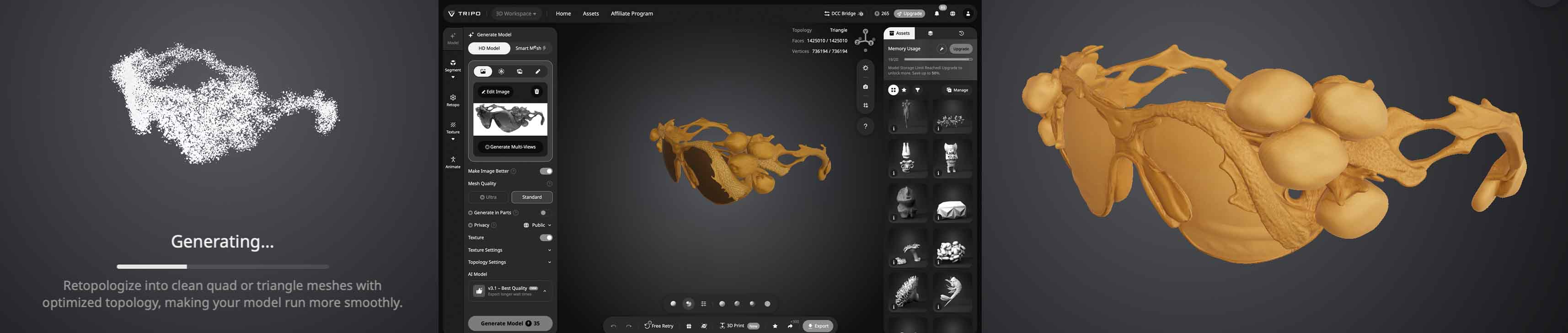
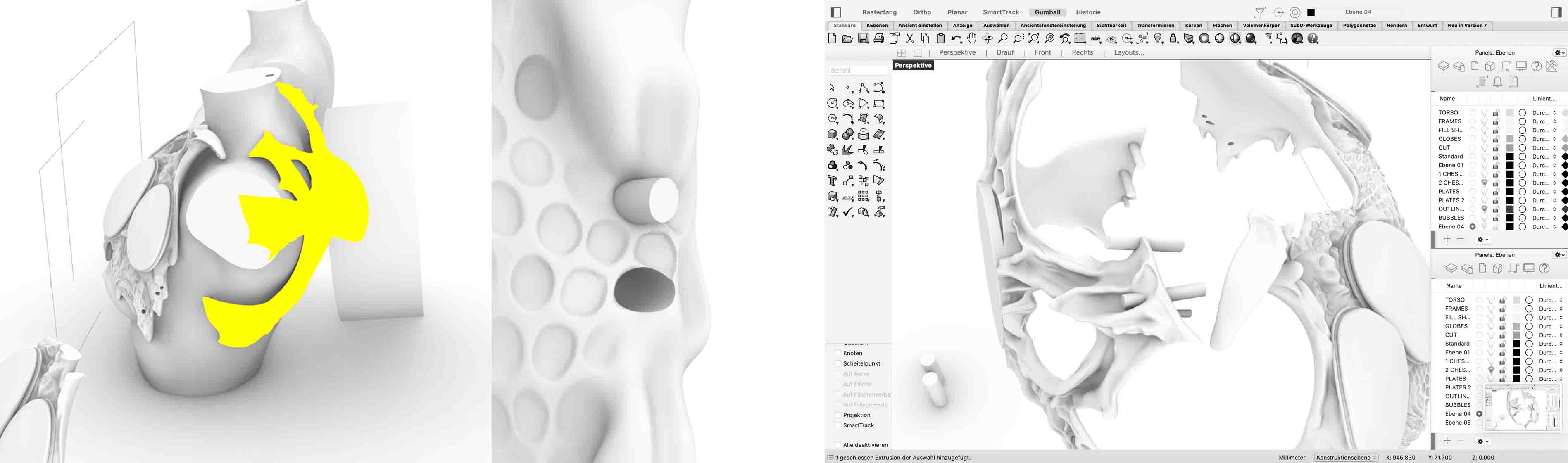
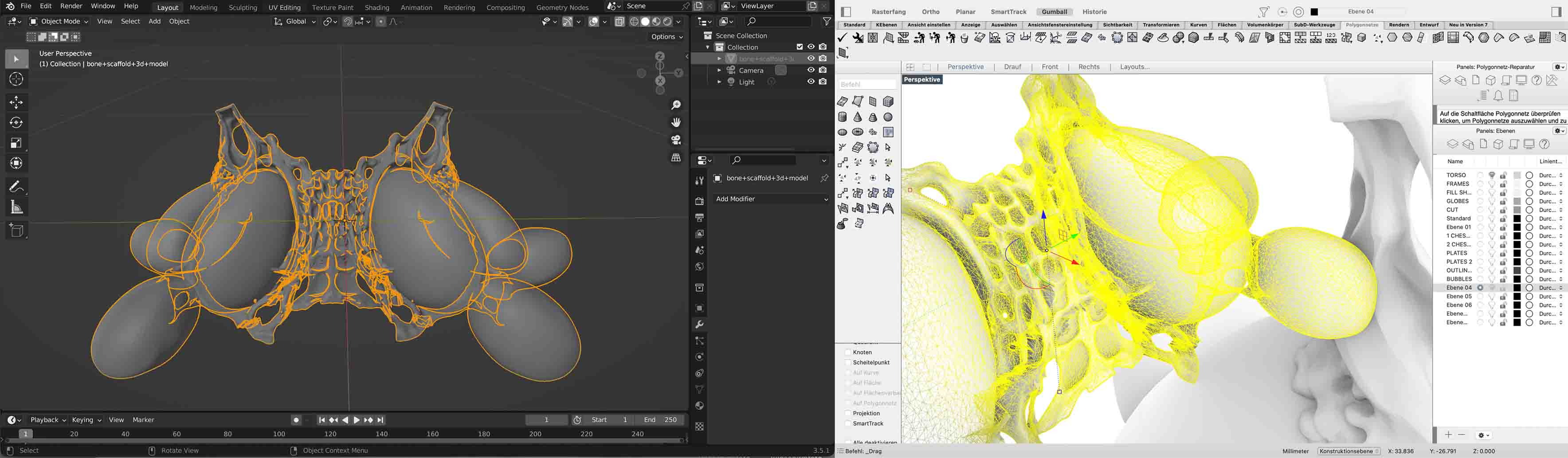
After generating the initial 3D model in Studio.Tripo, I continued refining the form, scale, & proportions using CAD software (Rhino).
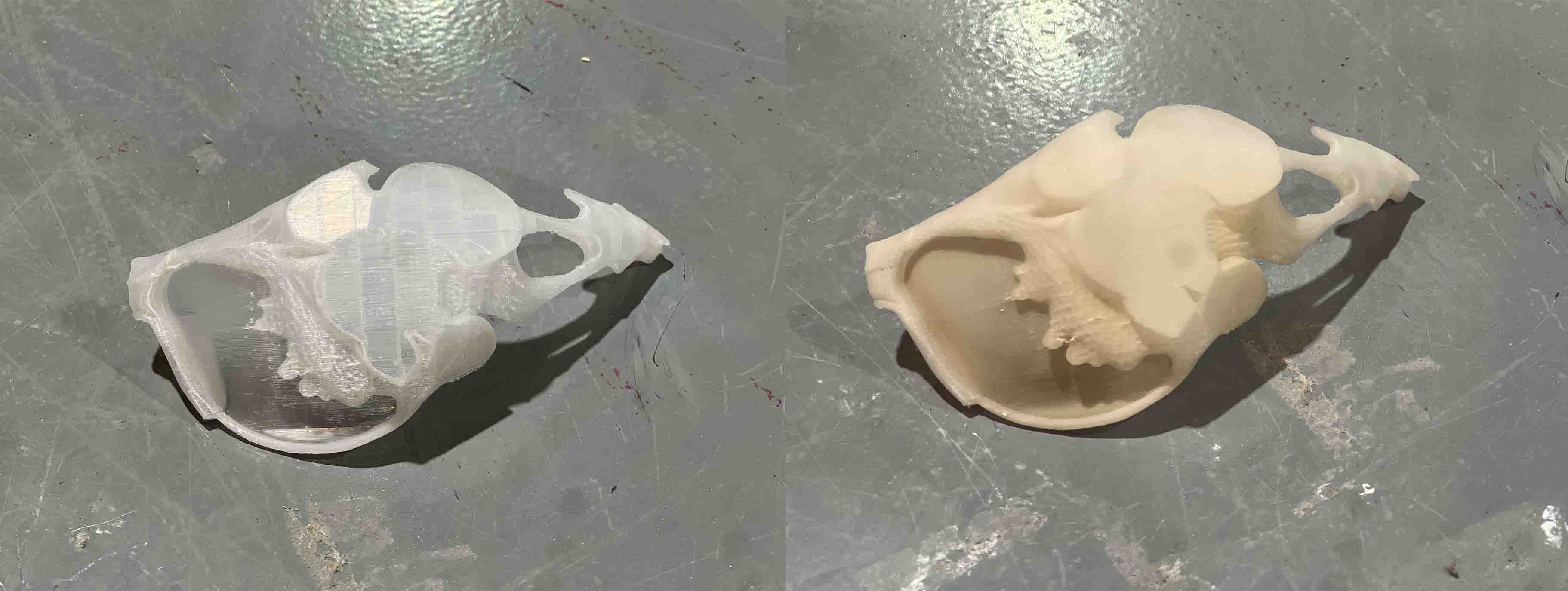
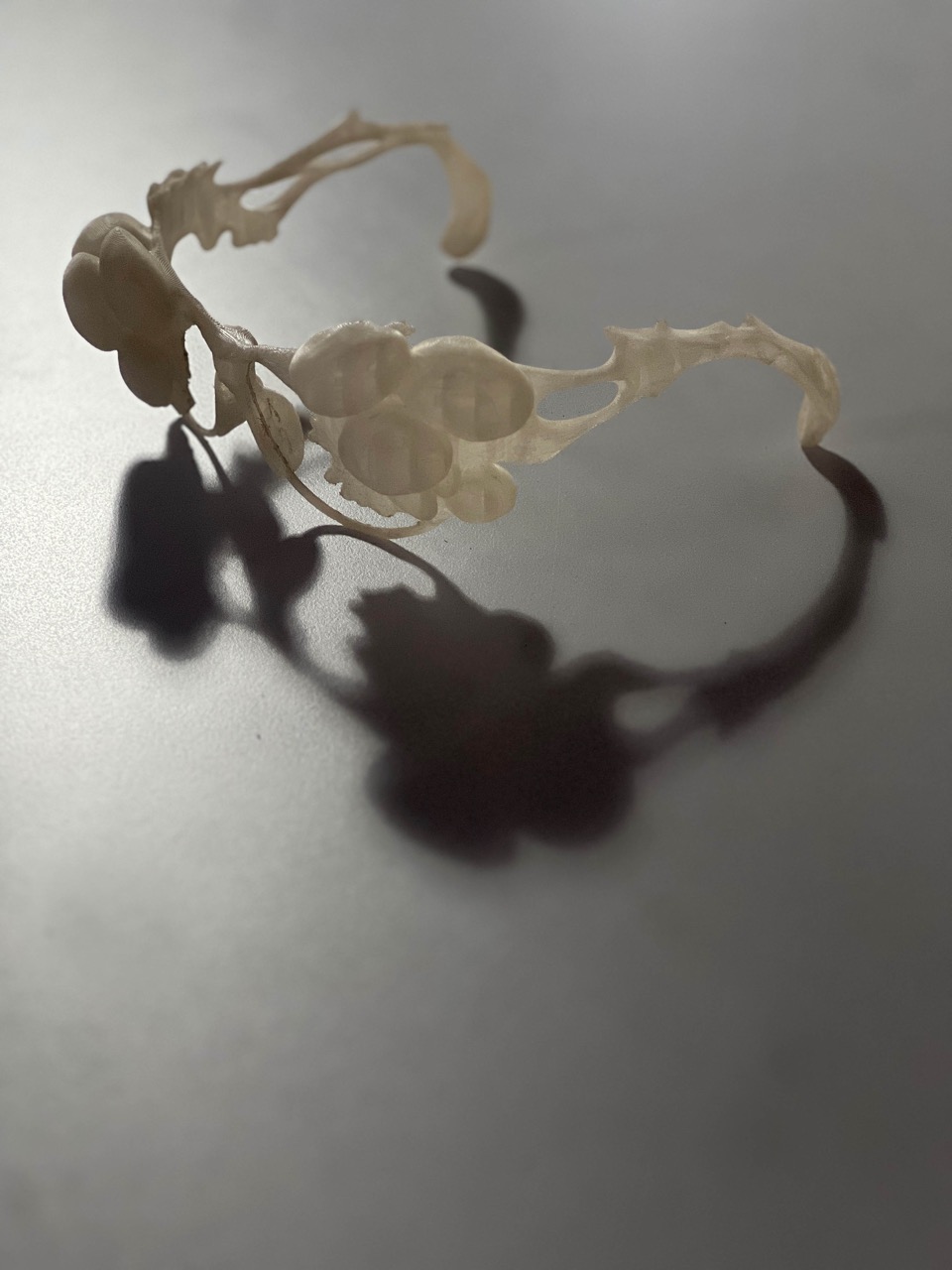
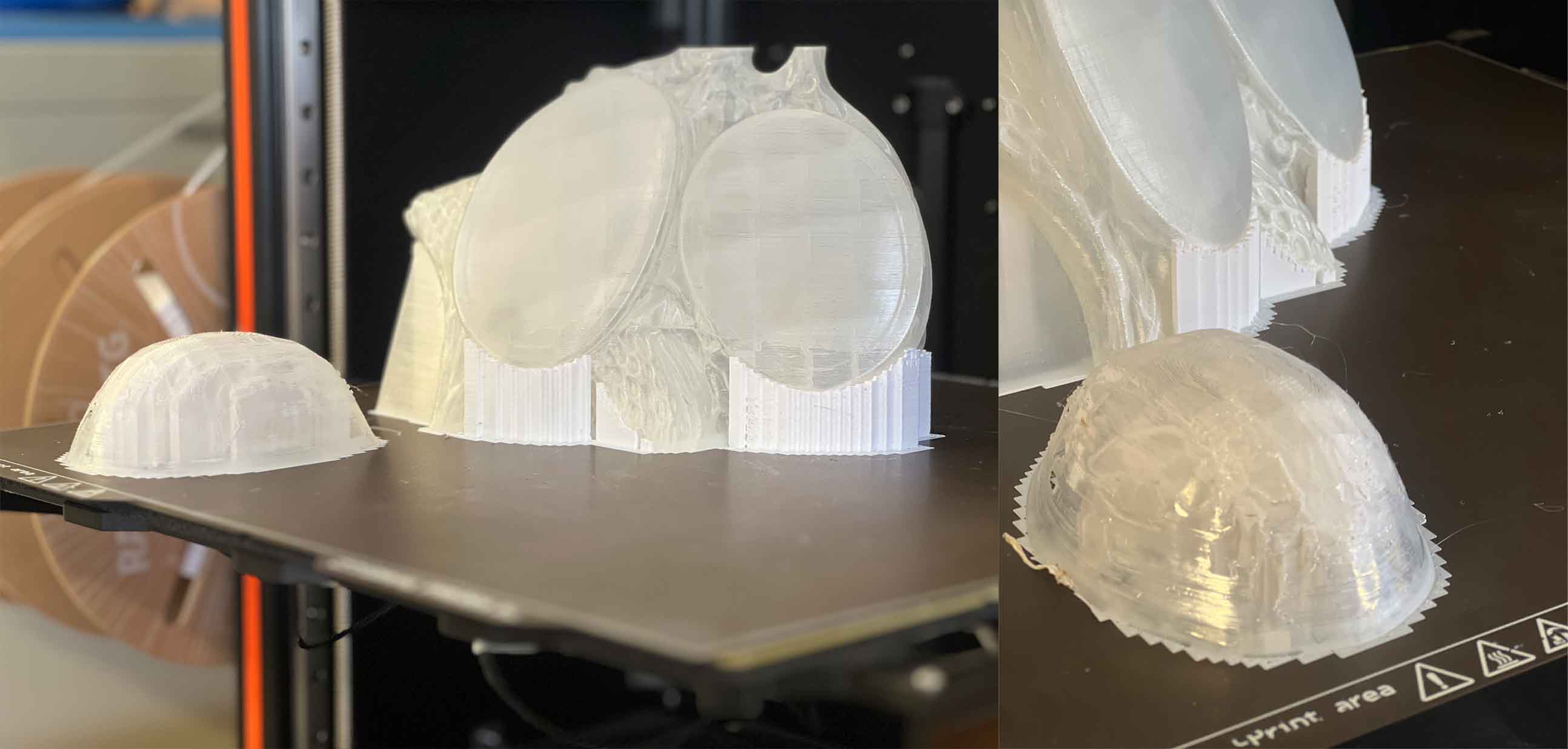
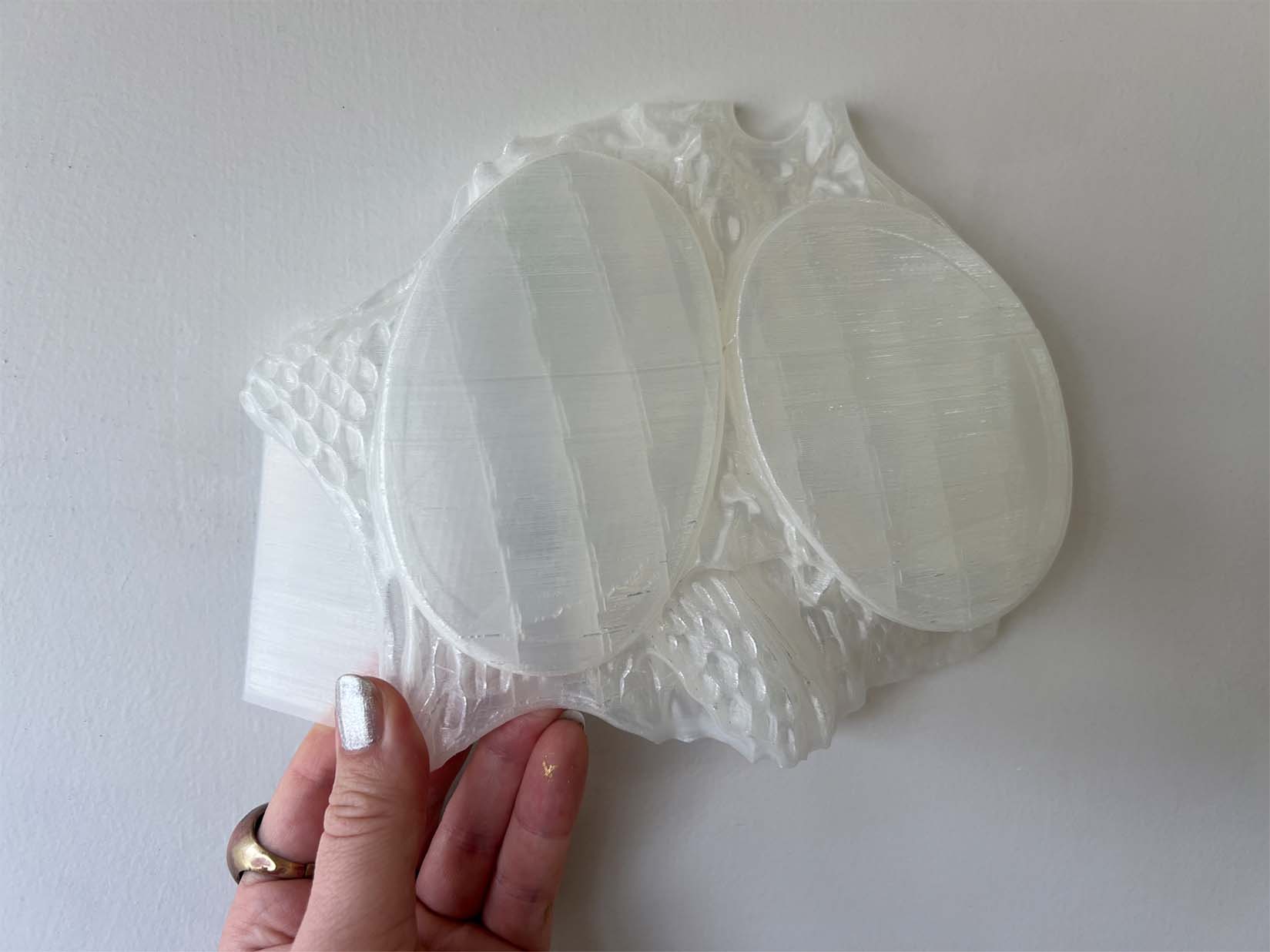
To translate the digital model into a physical object, I prepared it in PrusaSlicer & printed it using a dual-extrusion Original Prusa i3 MK3S+.
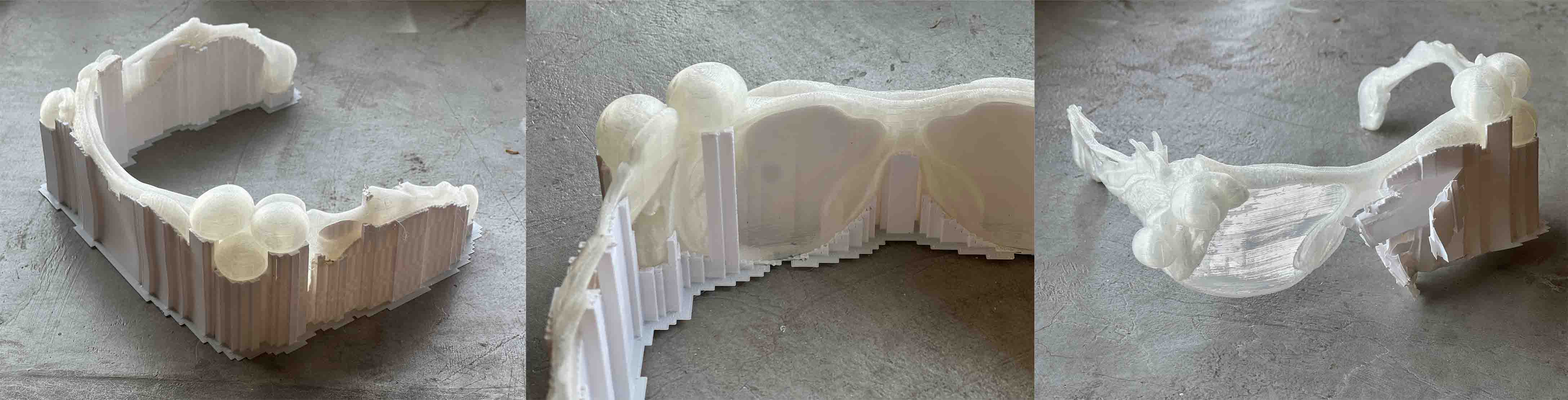
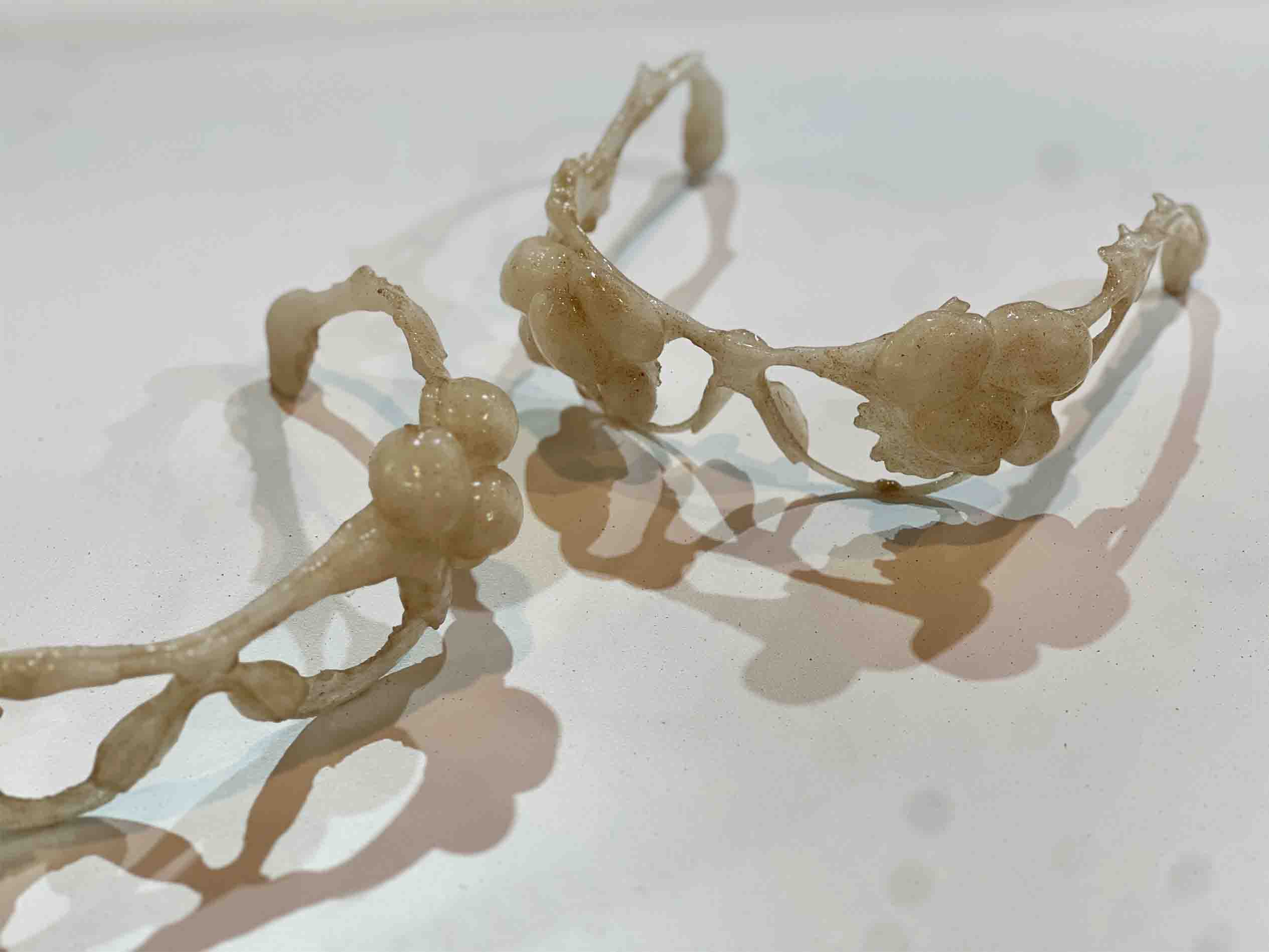
For the main print, I chose a translucent, semi-transparent PLA, combined with a linear infill of only 5% to maintain lightness &material efficiency. For the support structures, I used PETG, as the combination of these 2 materials enables cleaner & easier separation of supports from the final object.
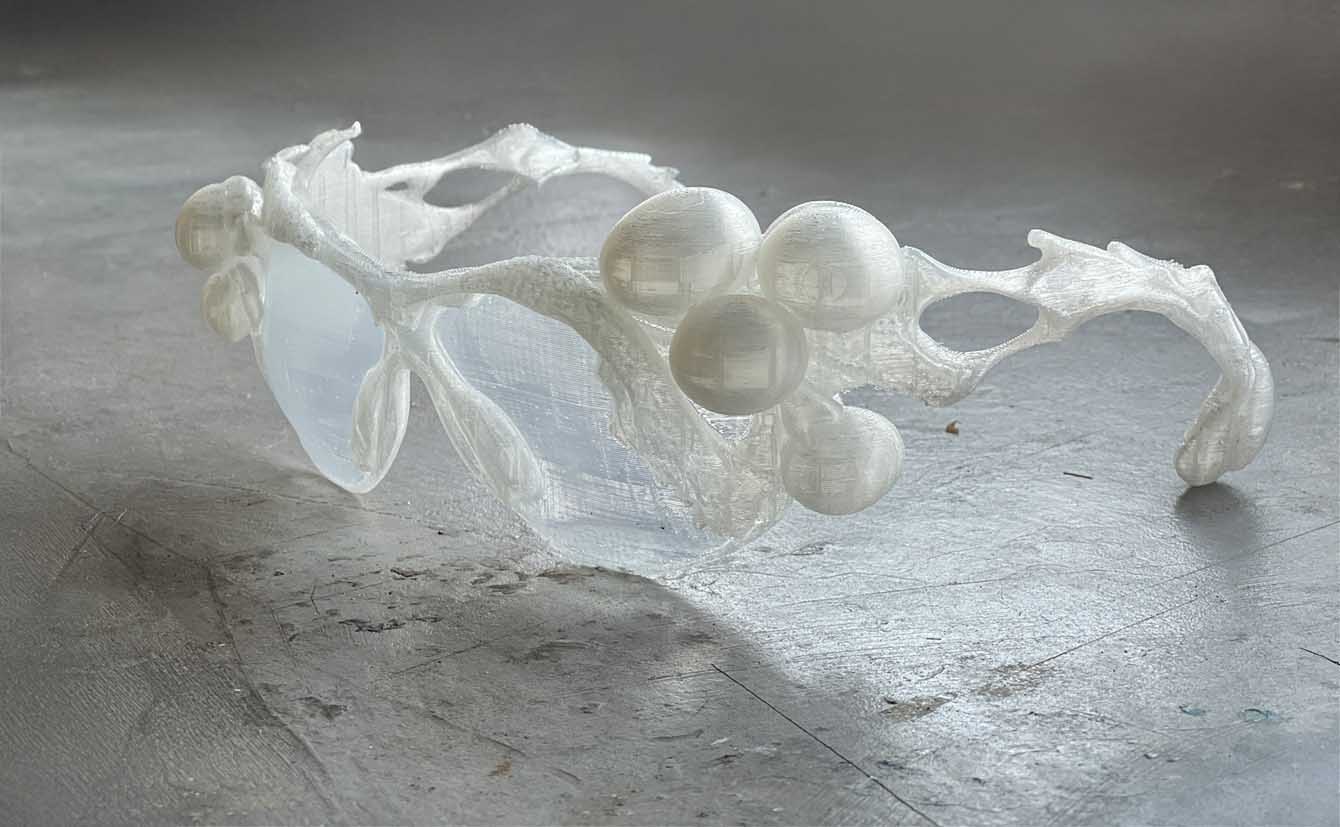
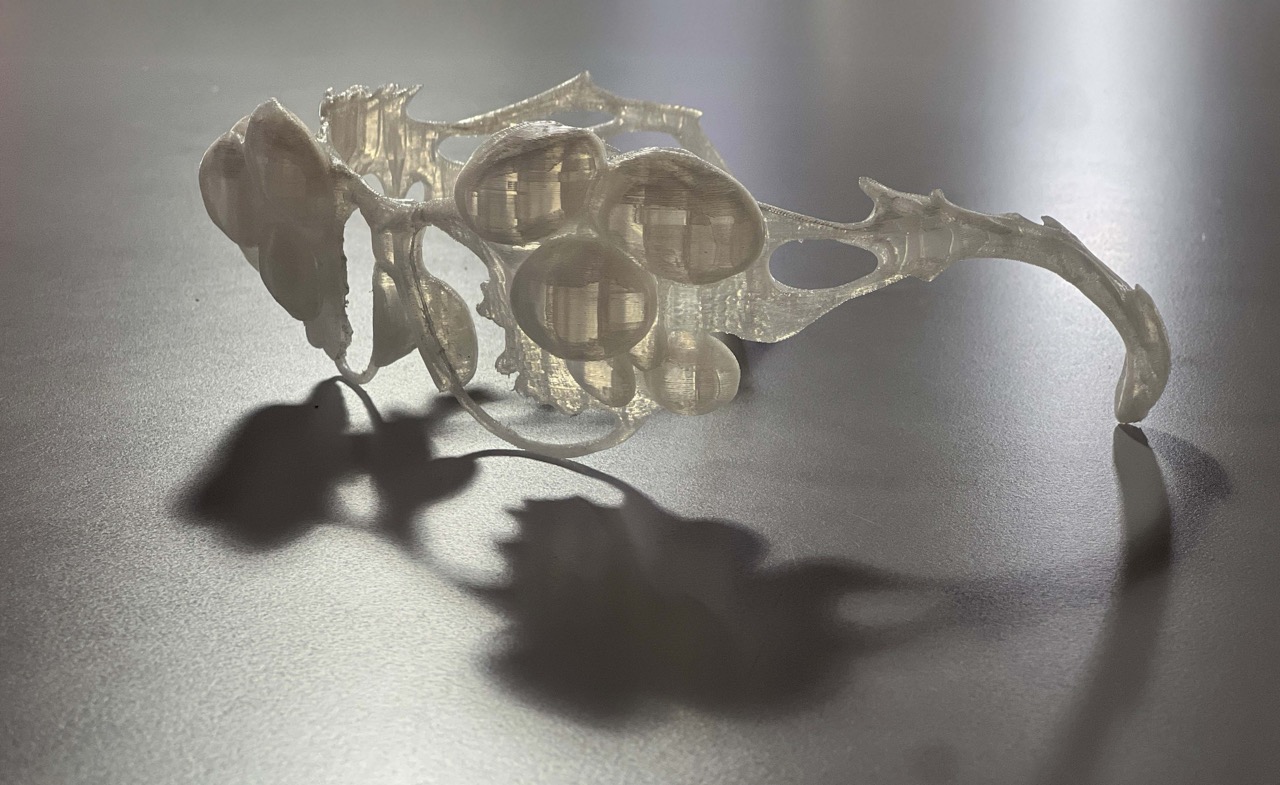
I developed 2 variations of the glasses: a smaller, more delicate version & a slightly larger, more angular model.
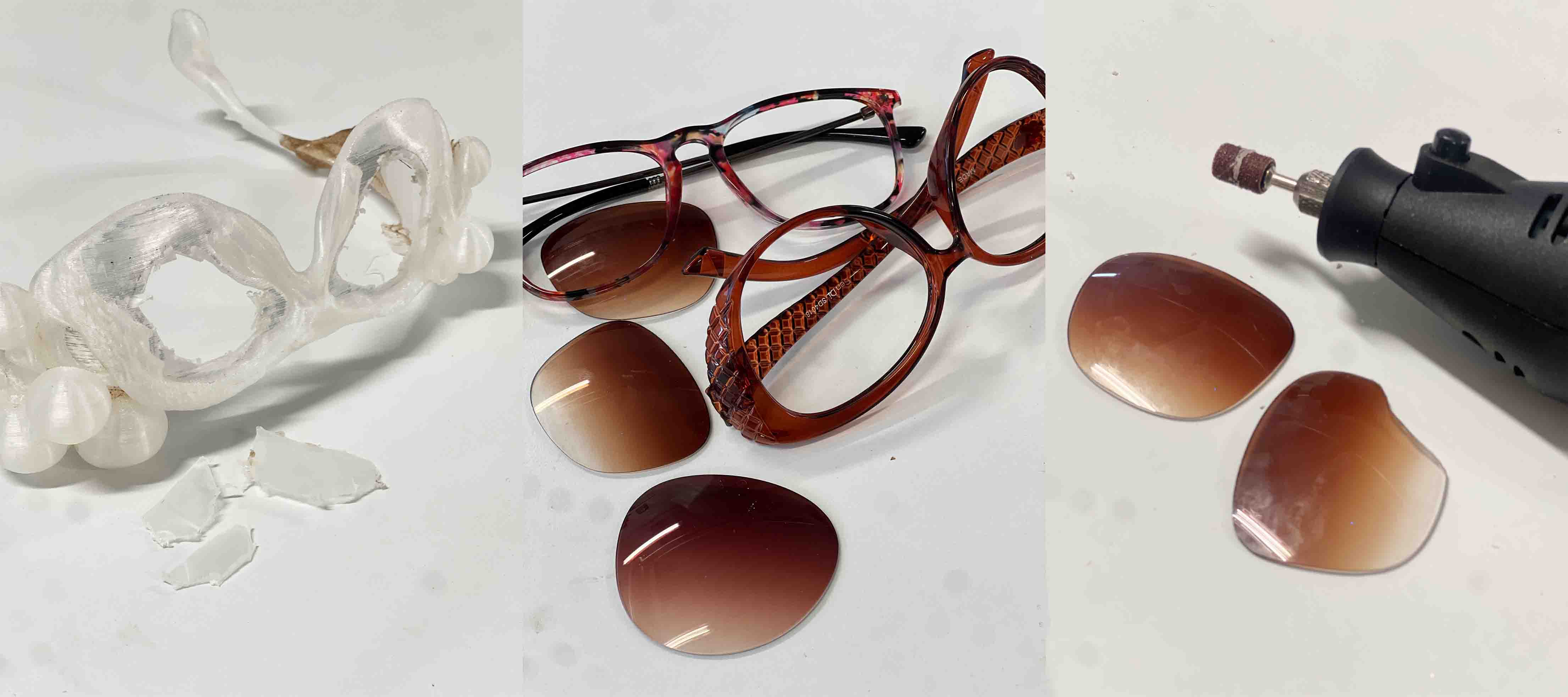
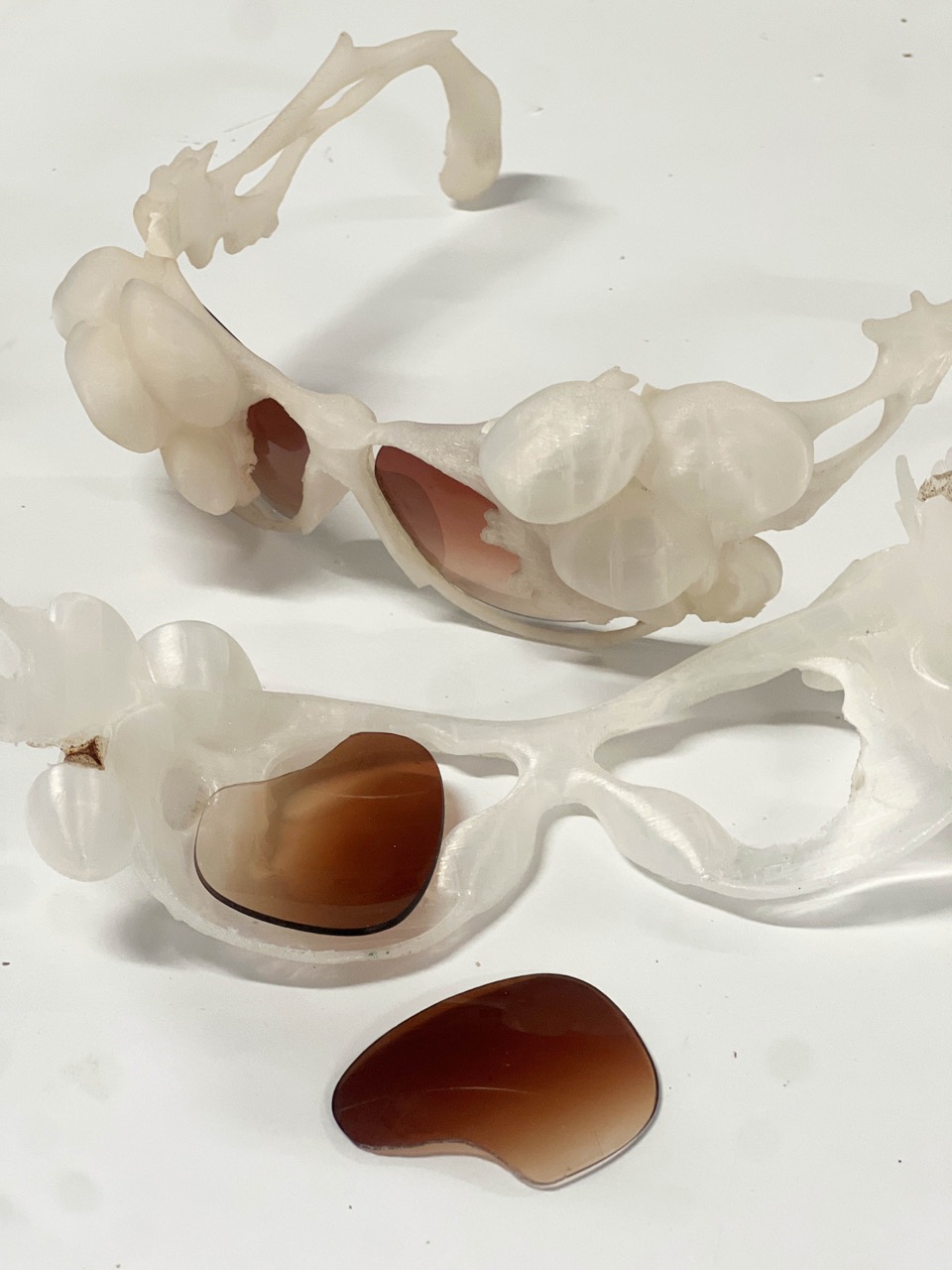
The lenses were then removed from the 3D-printed frames using a Dremel tool, & the edges were carefully sanded for a clean fit. Replacement lenses, sourced from 2.hand sunglasses, were subsequently cut & adjusted using the Dremel to match the custom frame geometry.
PIGMENTATION
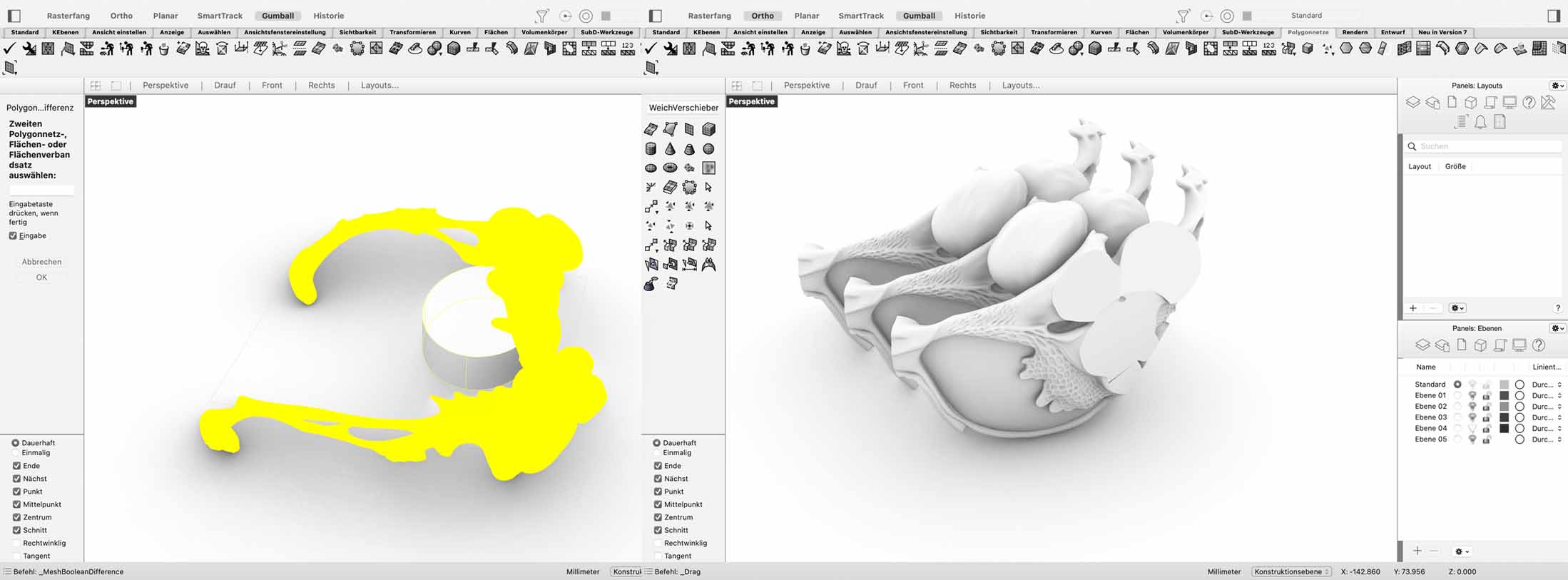 Satisfied with the initial outcome, I proceeded to print several test variations.
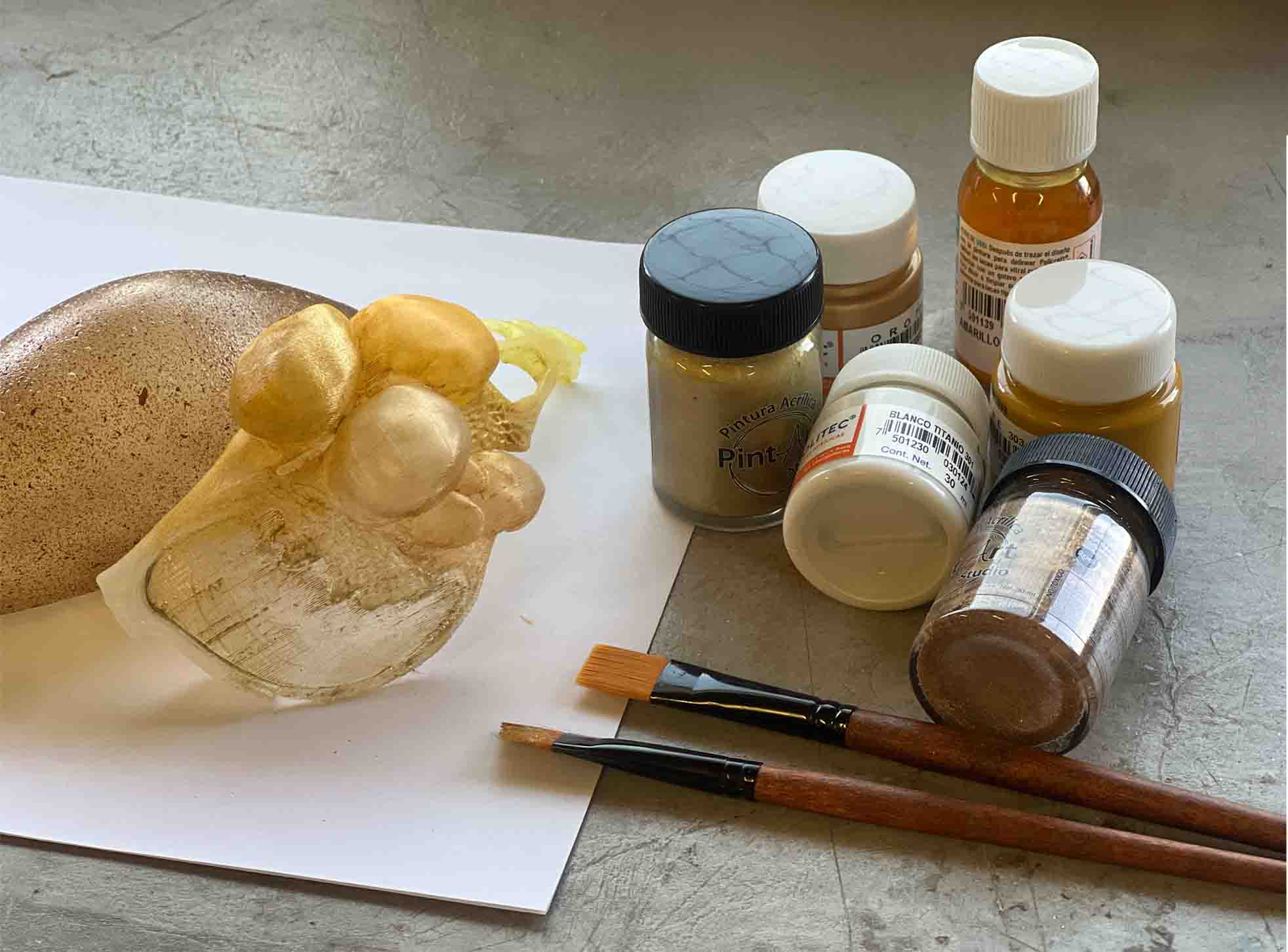
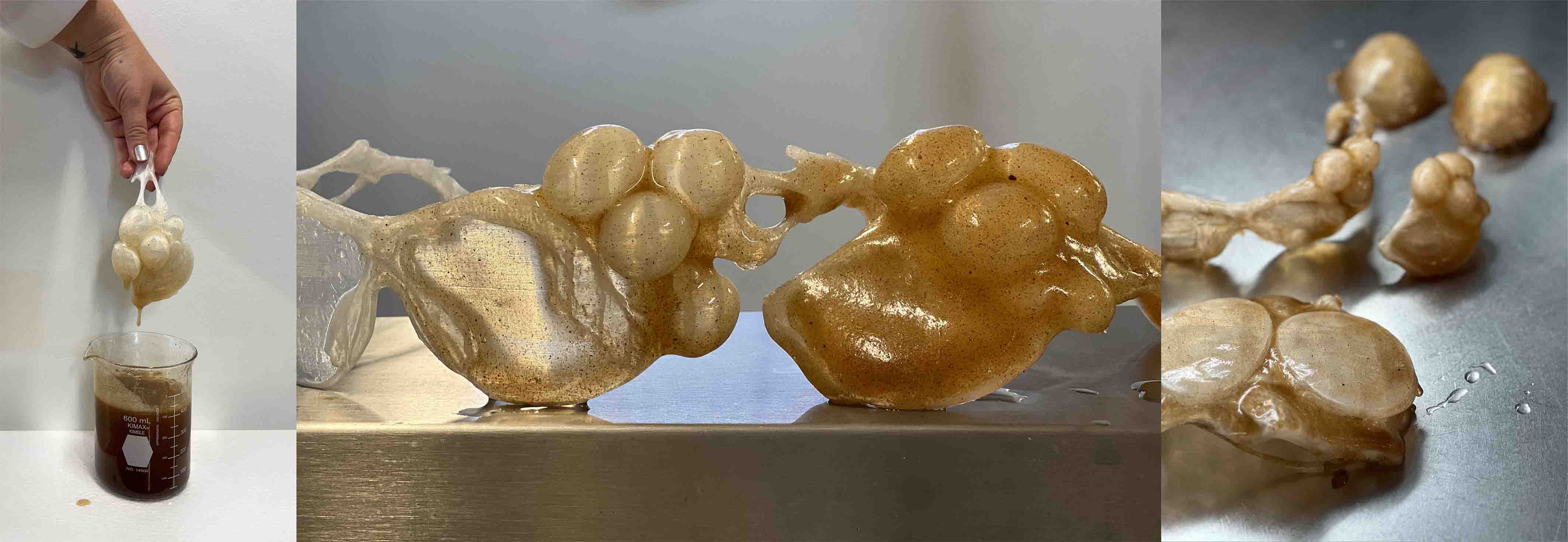
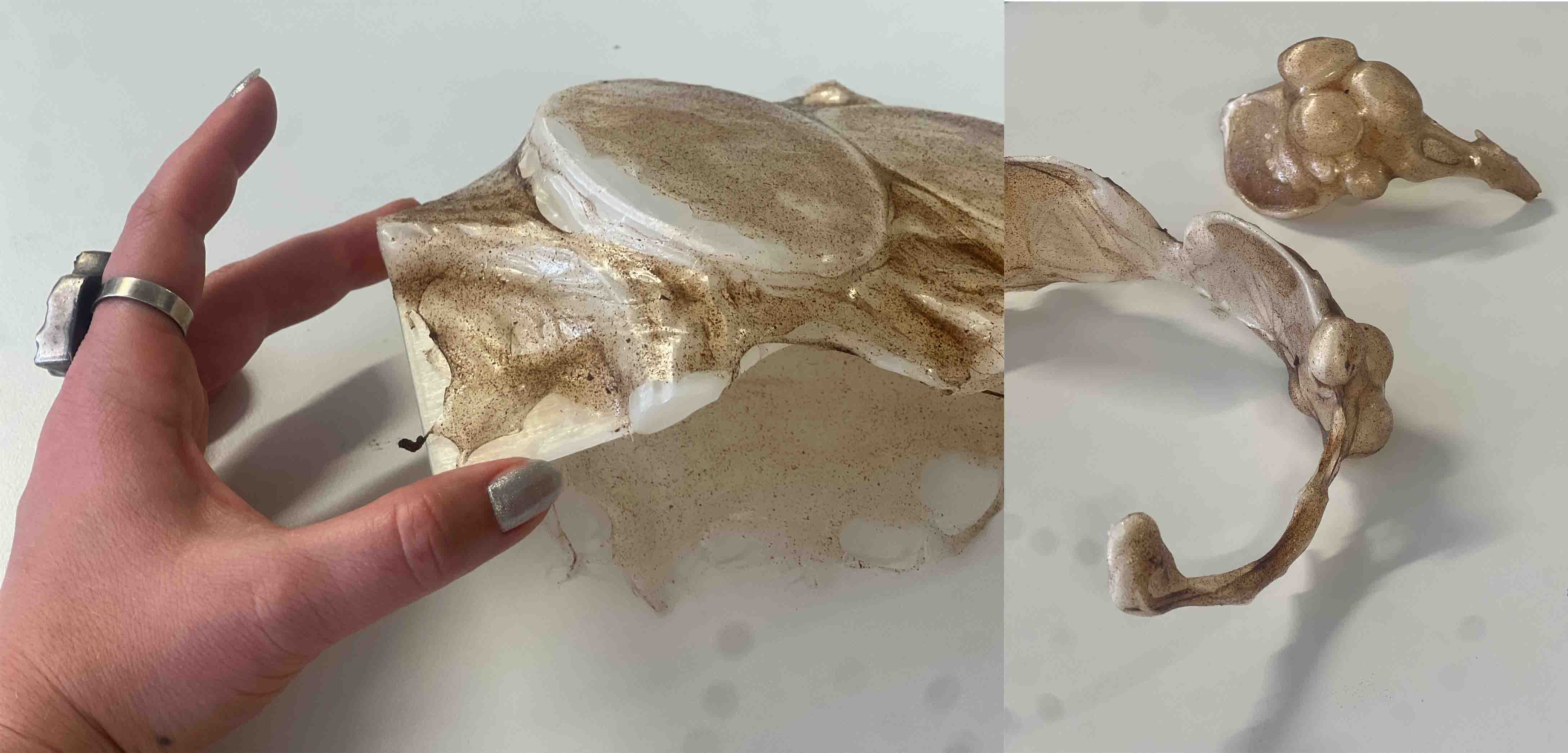
These small prototypes served as a basis for experimenting with surface treatments & material combinations — including painting, testing the adhesion & behavior of bioplastic on the printed surface, & exploring whether the bubble structures should be integrated into the print or produced separately from bioplastic & applied afterward.
Satisfied with the initial outcome, I proceeded to print several test variations.
These small prototypes served as a basis for experimenting with surface treatments & material combinations — including painting, testing the adhesion & behavior of bioplastic on the printed surface, & exploring whether the bubble structures should be integrated into the print or produced separately from bioplastic & applied afterward.
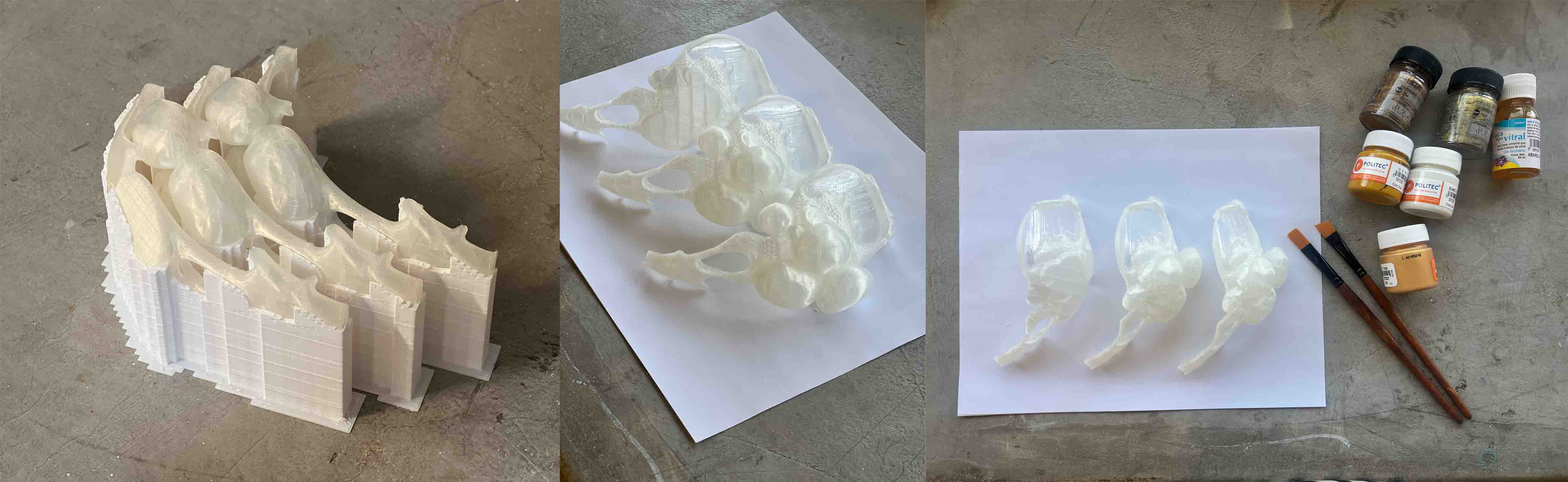
DIFFRENT COLOURS
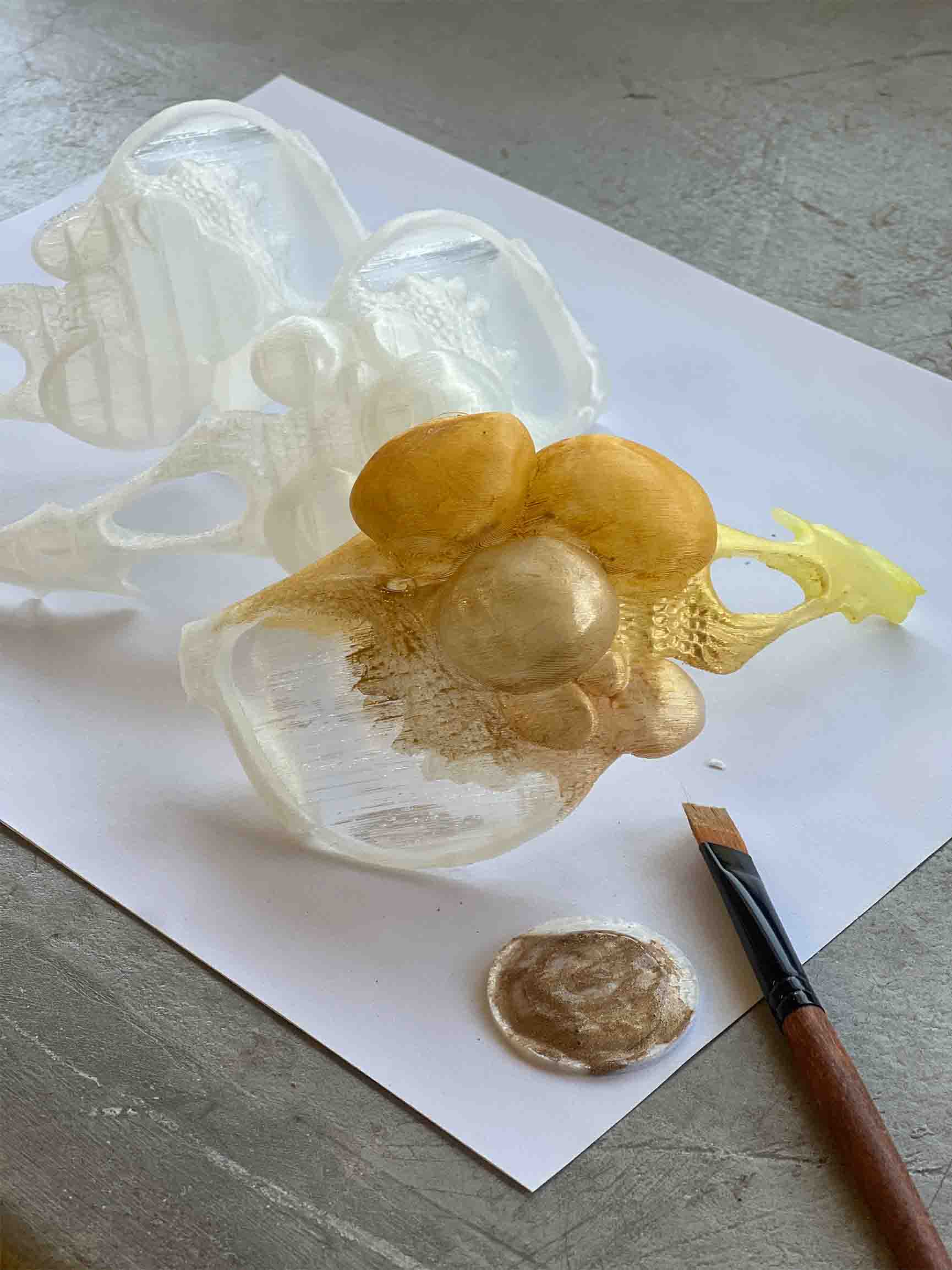
BIO PLASTIC
SANDED
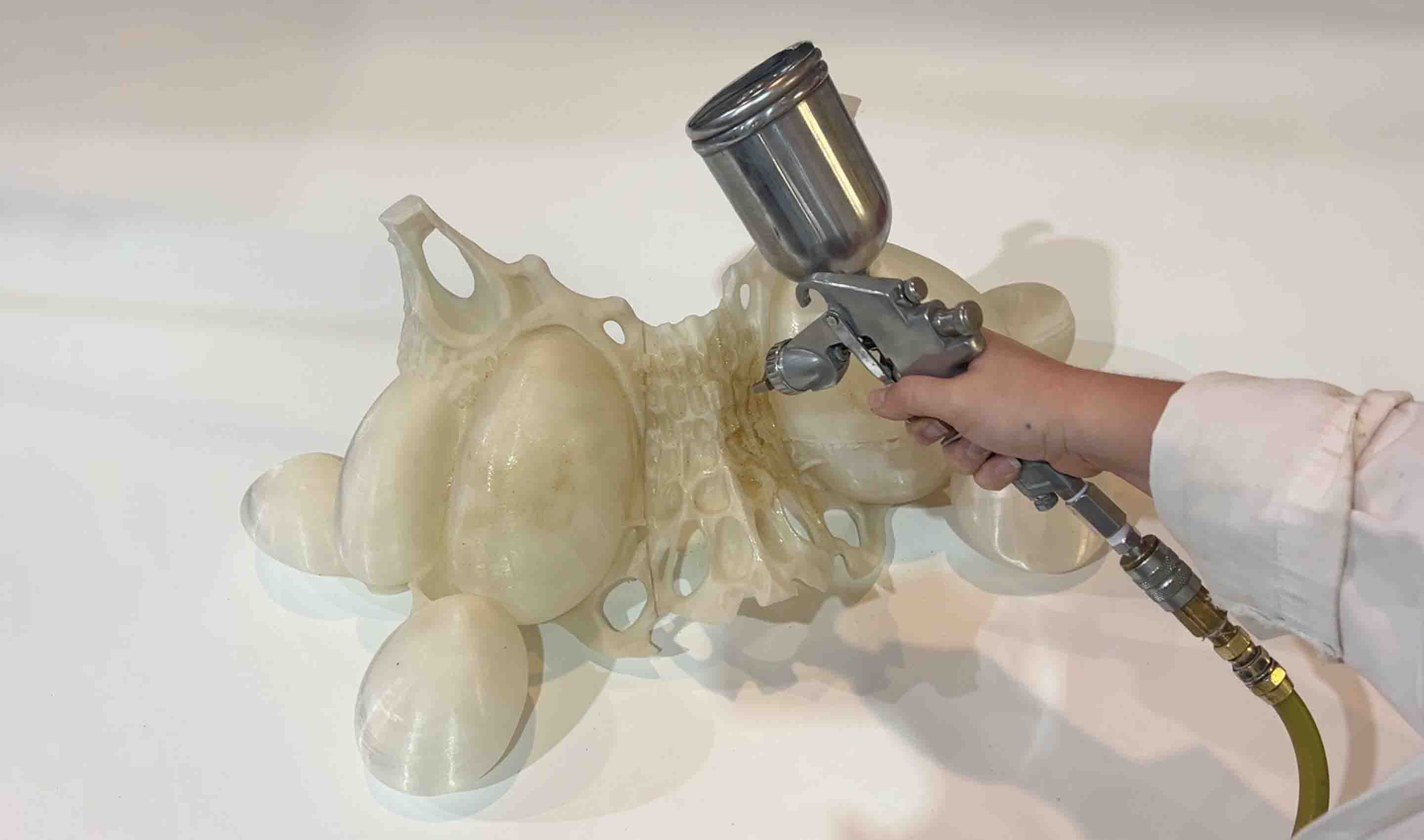
Following the printing process, the surfaces were sandblasted to achieve a more refined finish.
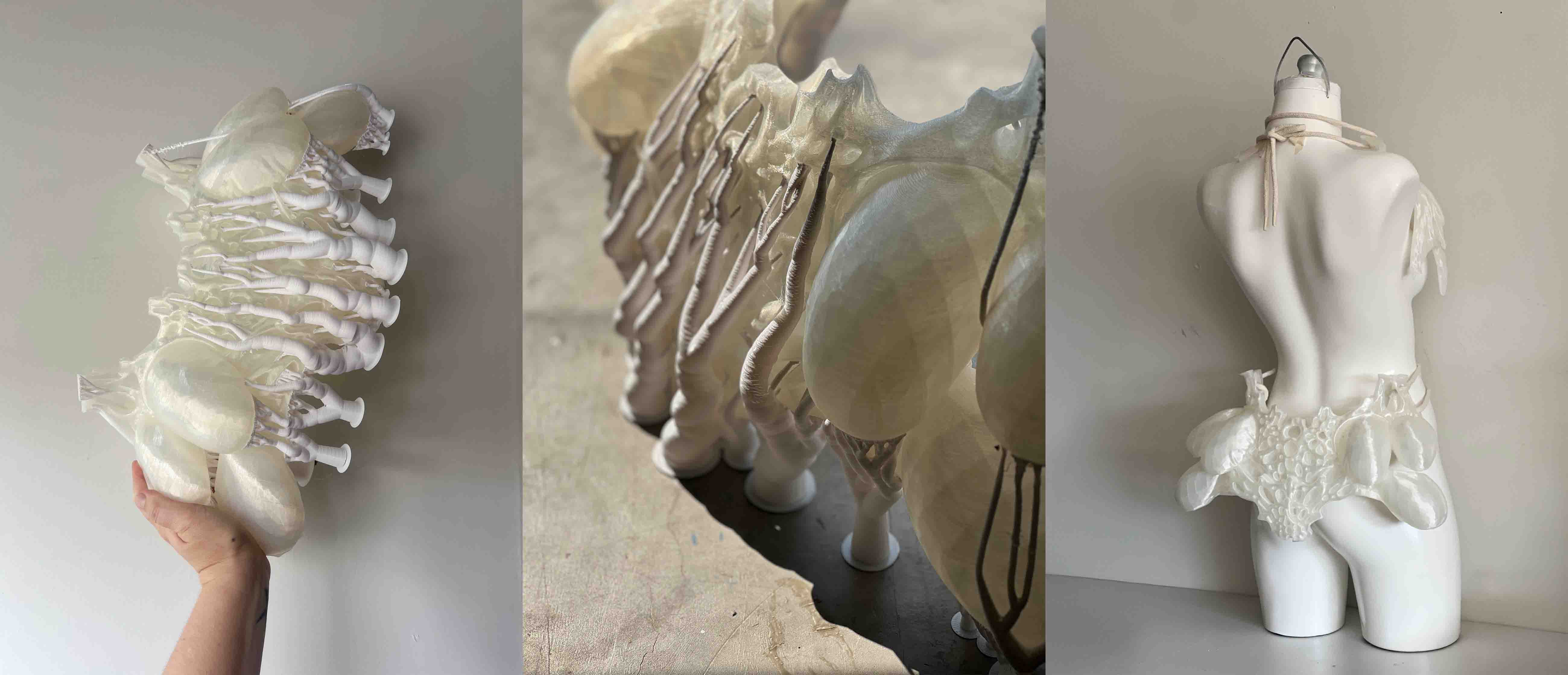
CHEST PIECE

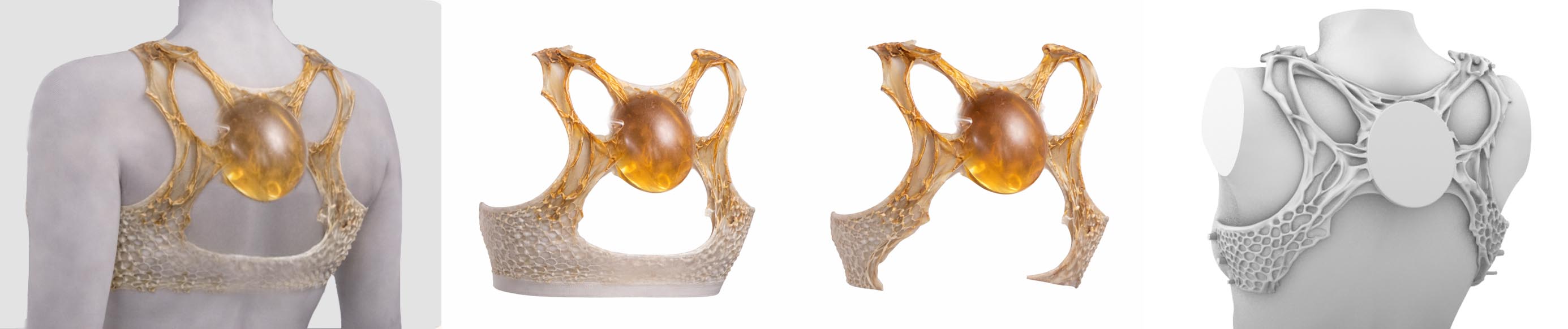
BACK PIECE
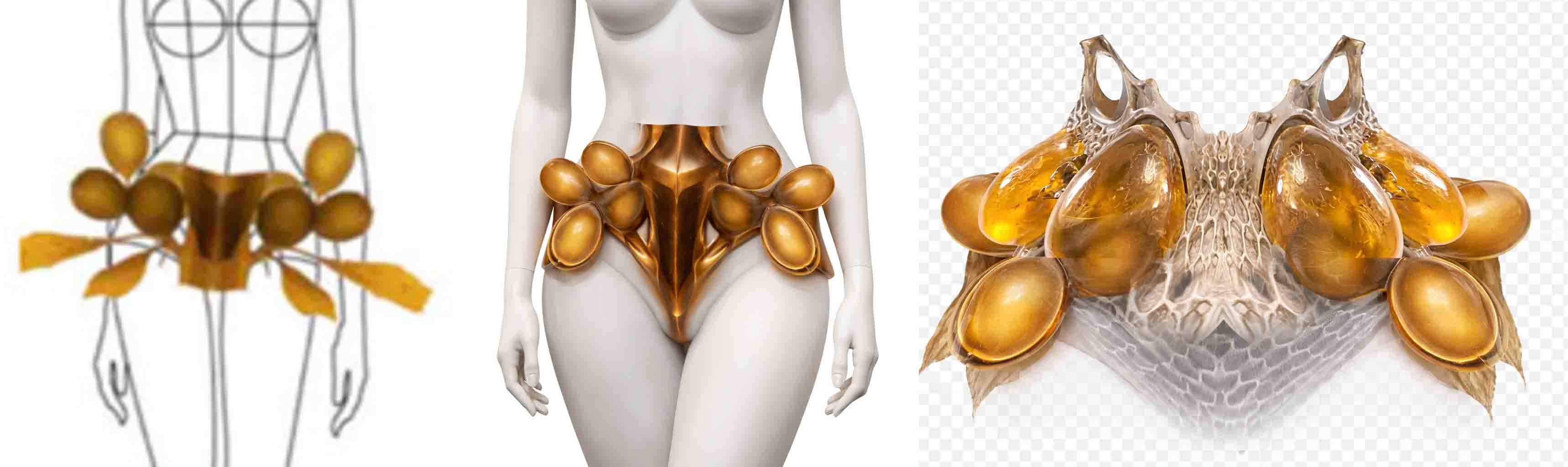
HIP PIECE FR0NT
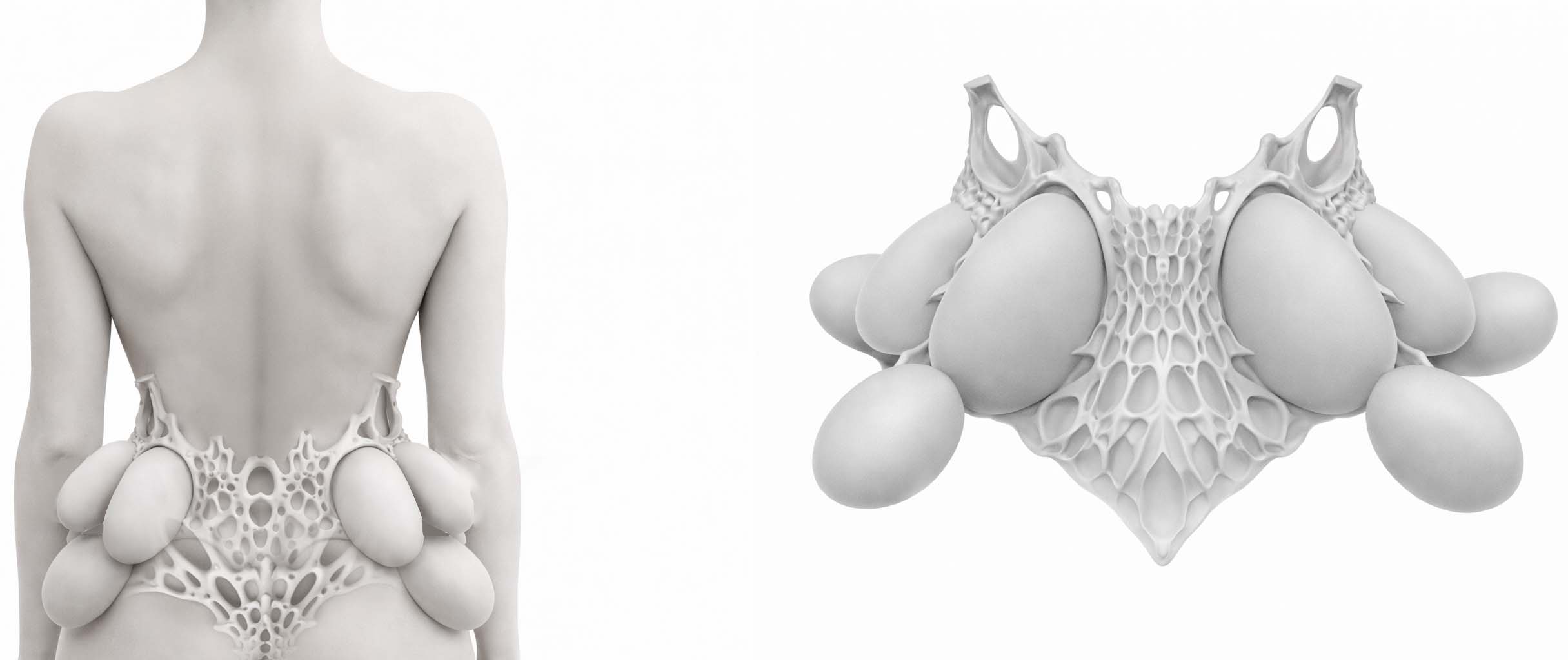
HIP PIECE BACK

. . . . . . .
©️ Copyright 2024 laura Muth
- All project & material experiment images are my own & were photographed by me.
- Other images are credited to the respective artists below.