Circular Open Source Fashion
For this week’s assignment, we were asked to explore the topic of circular fashion and open source. I find these two concepts particularly interesting to address together, because for several years now we have been having this ongoing conversation about how fashion negatively impacts the environment, and therefore, how necessary it is to rethink the linear system under which clothing is produced and manufactured.
1. References, research & inspiration
Framework
One alternative is precisely to think in terms of circularity: to stop and consider how, after a product has reached the end of its expected use, it can return to the production chain or cycle through different strategies.
This is where the open-source perspective comes into play as a tool for generating different options that can help us adopt this circular system. This can be approached through material selection, through the garments themselves, and, at this point, by thinking about how a garment can actually become circular. What systems can we implement within a garment to make it circular?
This also means breaking away from established frameworks and preconceived ideas about what clothing should be. Therefore, it becomes necessary to think about hacking clothing, and this is where an opportunity emerges to develop alternatives based on interchangeable pieces that can adapt to the user, be customized to individual measurements, and be produced from digital data in order to reduce transportation, shipping, and related impacts.
This is where modular garment systems come into play.
References
As references and background research, there are actually several brands, designers, and projects that have implemented circularity, as well as the use of modular systems.
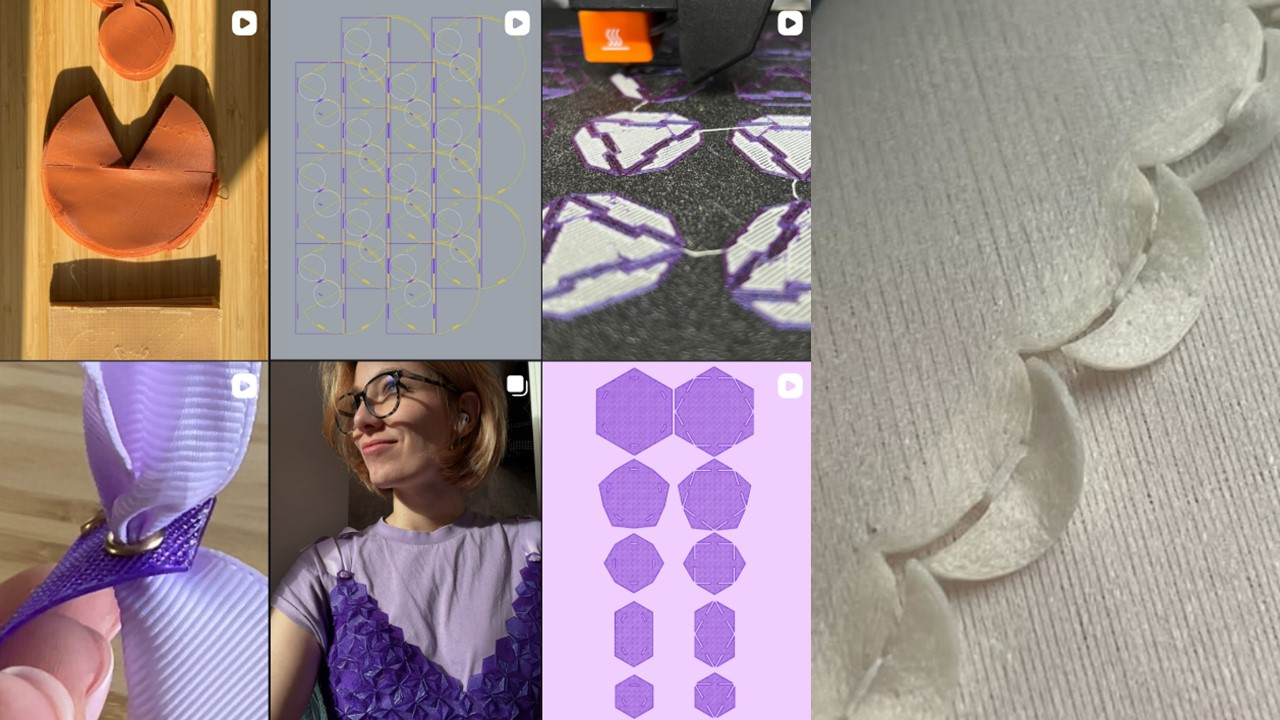
Focusing specifically on these approaches, I selected the work of Brigitte Kock from Variable Seams, where she explores different applications using modules developed and 3D-printed. It is really interesting to see her entire process and the logic behind how she creates the connections, whenever possible following silhouette patterns. In fact, 3D printing allows her to create these modules without generating material waste.
On the other hand, in the textile category, Eunsuk Hur has a very interesting body of work from a formal and aesthetic perspective, particularly because of the complexity of the modules, but also because of the use of a parametric approach. We can see different scales and sizes of the modules within the same garment, which creates a visually rich textural effect.
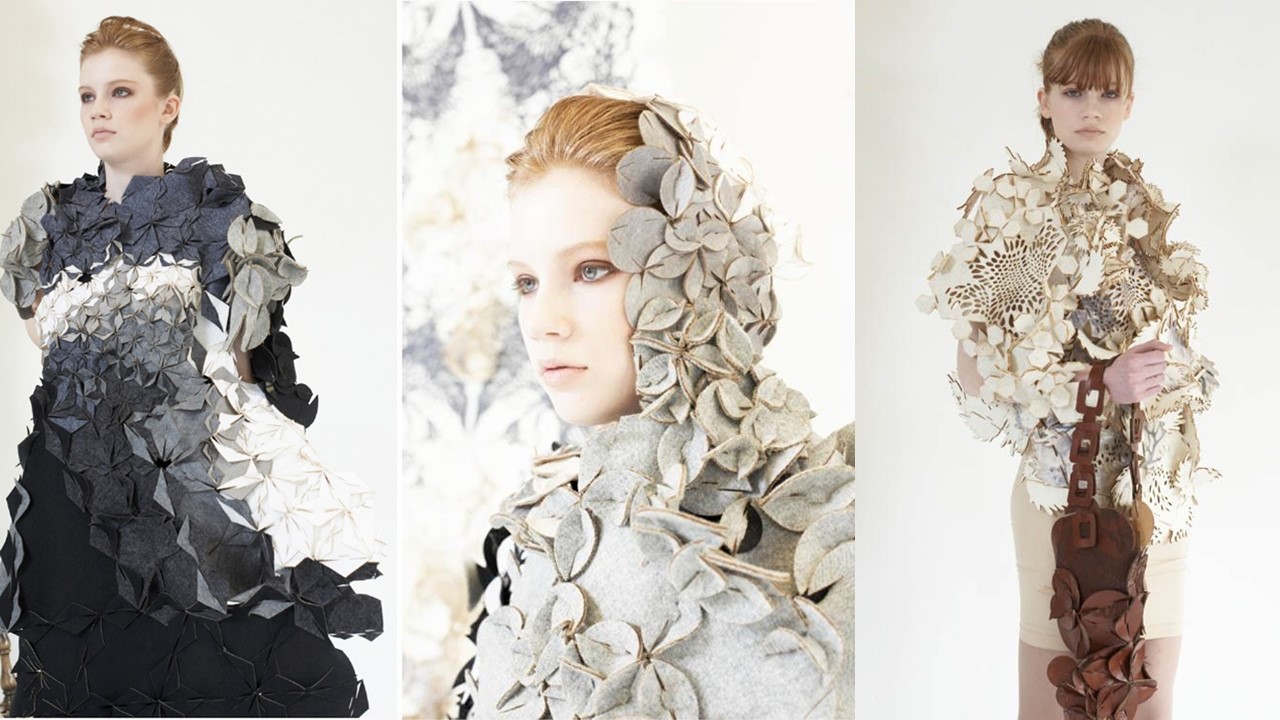
What I find most interesting and what really caught my attention is the possibility of creating this three-dimensionality from two-dimensional pieces that connect with one another.
Inspiration
As inspiration for the creation of my modules, I drew from the iconography found in Paracas textiles. This culture was highly developed in terms of textile production and is one of the most remarkable textile traditions of ancient Peru.
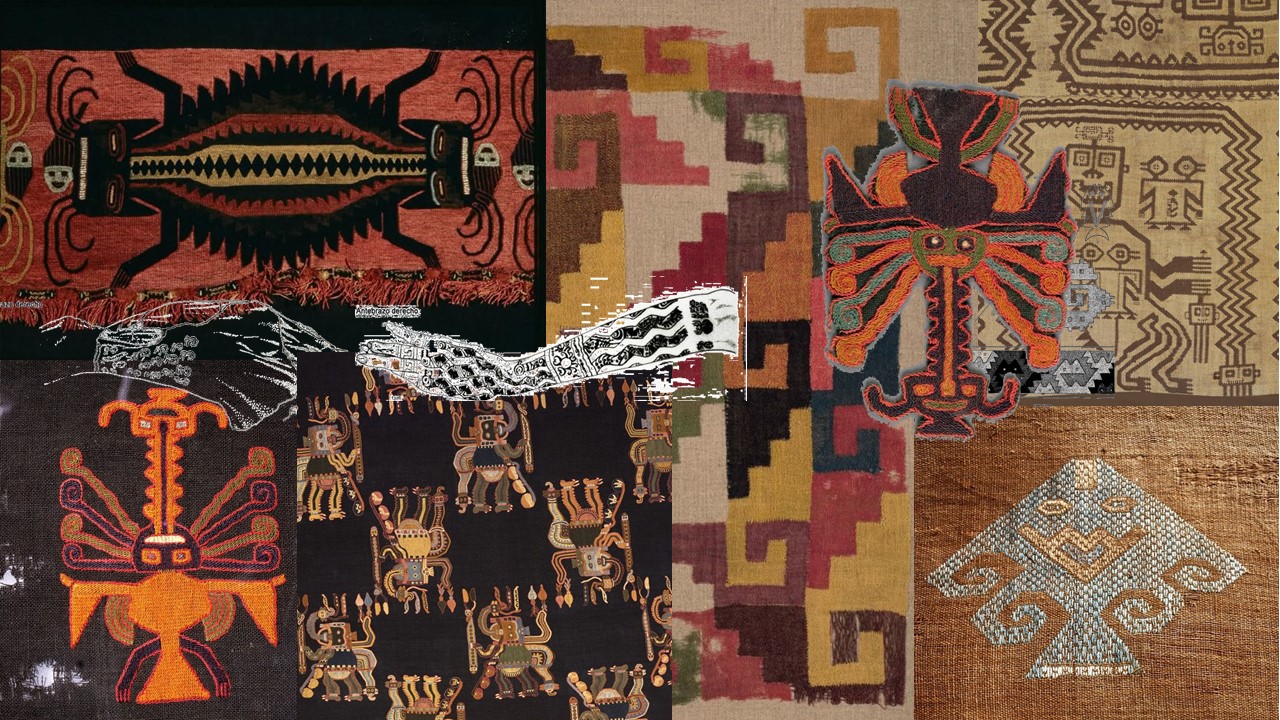
Among the symbols they used, anthropomorphic figures representing different deities stand out. These figures were, in a way, how this civilization interpreted its context and surroundings.
Other highly characteristic graphic elements include stepped diagonals, waves, and orthogonal wave patterns.
I took some of these elements as a starting point to develop the designs for my modular proposals.
2. Tools & Materials
- Paper
- Felt
- Thin fabric : satin
- Metallic faux leather
- Affinty : Vectorial program
- Laser cutting machine
About modules
3. Process and workflow
Sketching and prototyping
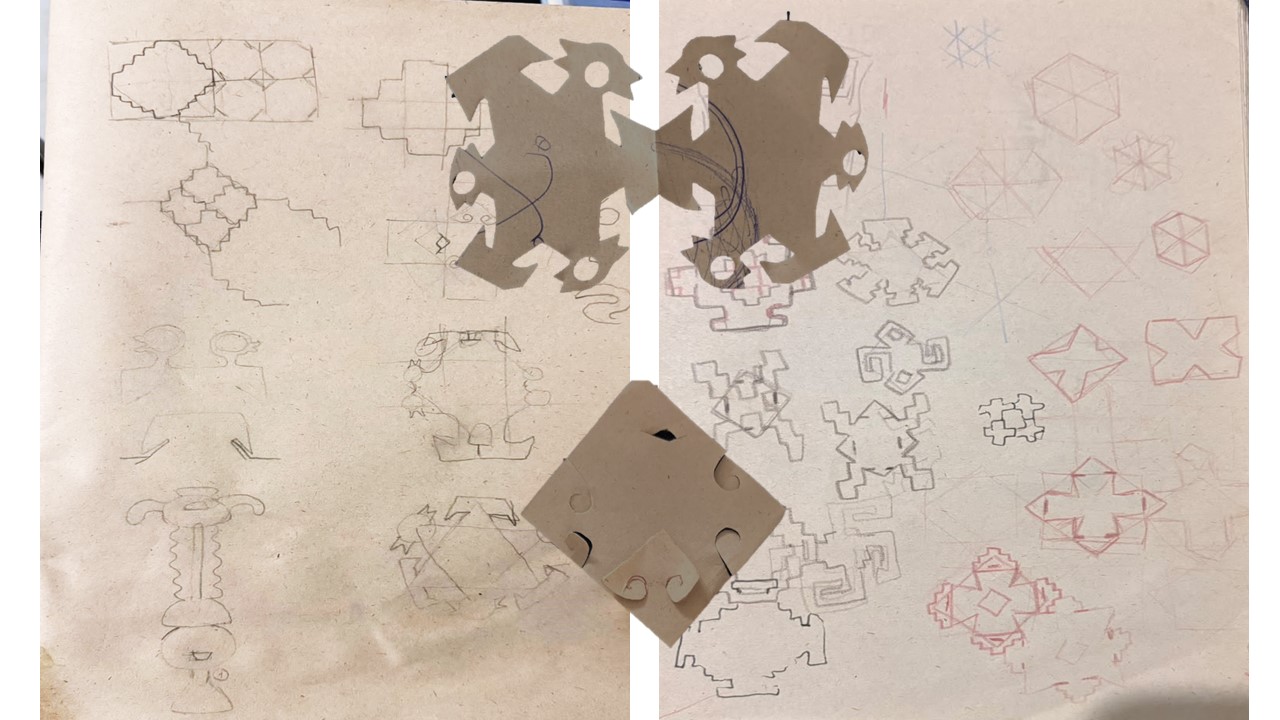
For my development process, I focused on creating an option that was as close to zero waste as possible. Therefore, all the joints and cuts for the tabs were placed on the inside of the module.
For the other module, I used its geometric characteristics to develop the piece. In this case, it was not possible to completely avoid material waste, but I tried to keep it to a minimum.
One of the modules had a circular opening as its main feature, while the others were based more on cut-out patterns. I also incorporated stepped wave patterns and other representations inspired by the Paracas textiles.
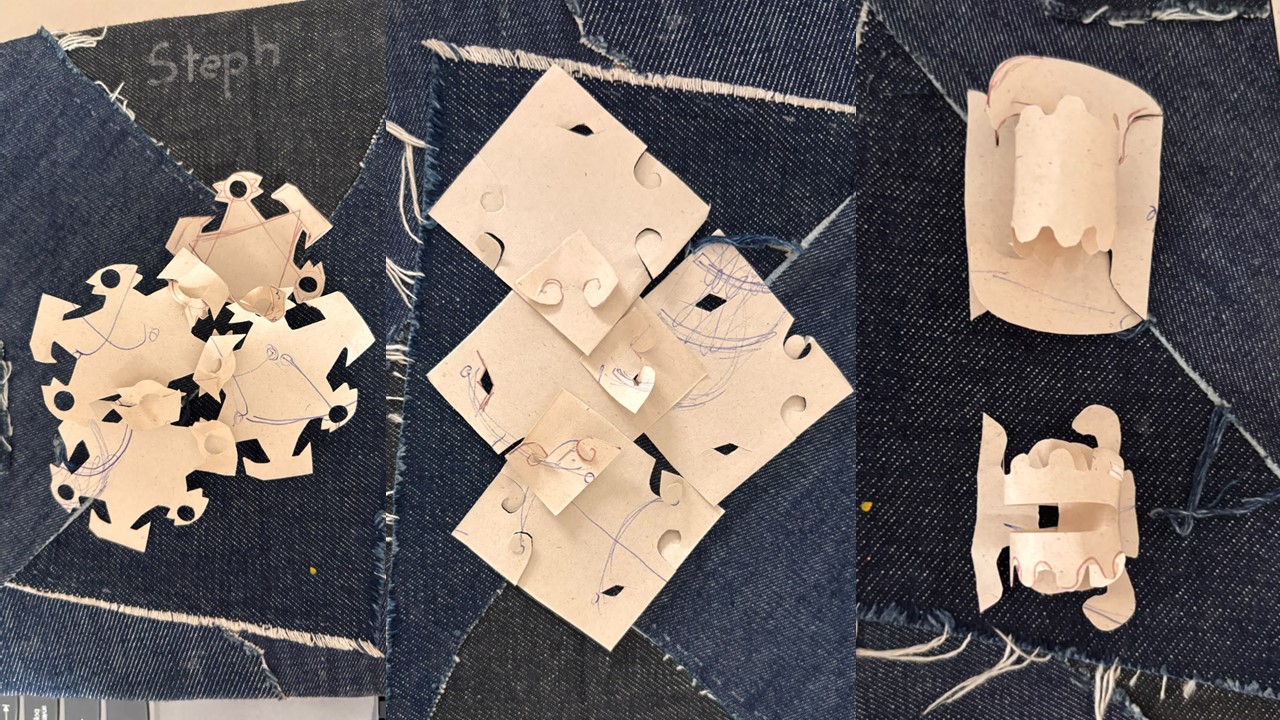
Afterwards, I made a paper prototype to test the connections. Personally, I think paper can be misleading because its structural properties are different from those of fabric, so it can give us a false positive. In other words, a module may work well on paper, but once it is transferred to fabric, depending on the type of fabric used, the connections may become weak. Therefore, it is always necessary to test the connections again using a fabric prototype.
Digitalization
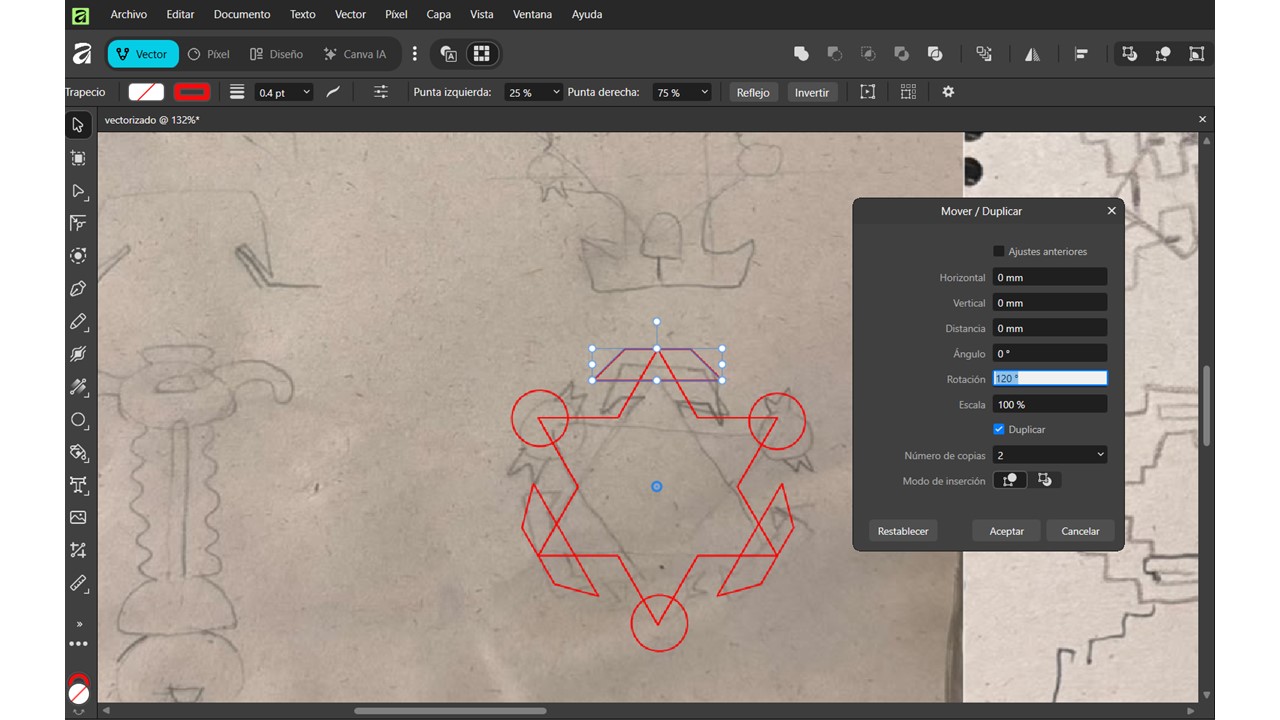
For this, I transferred the hand-drawn sketches into a digital space. In this case, I wanted to experiment with Affinity, an open-source program that is very similar to Illustrator and offers a wide range of tools. It was my first time exploring it in greater depth, and I was actually surprised by how many practical options it offered for creating vector graphics.
Another technique that I found interesting was keeping the previous steps visible as a way of documenting and remembering how the construction was developed. So, I kept all the geometries that I used to assemble the pieces, and then documented the final connections between the completed modules.
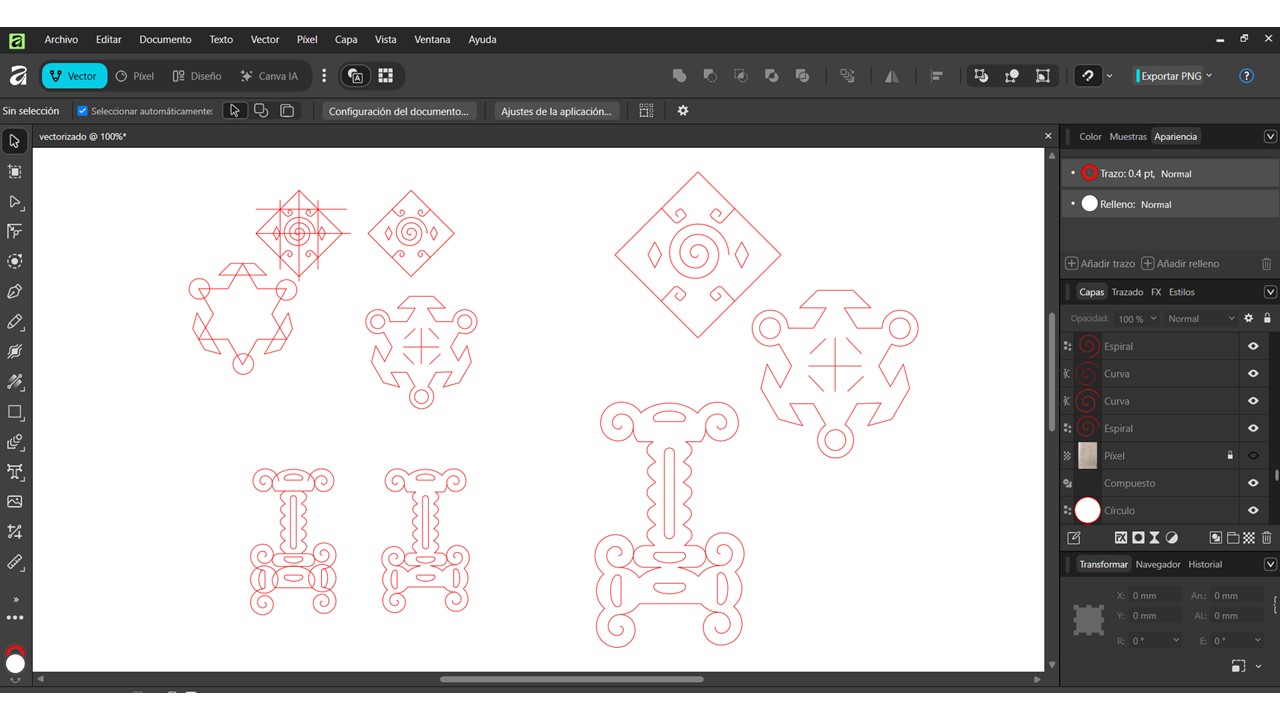
Laser cutting
Once the modules were ready, I exported them as DXF and PDF files so that I could open them in the laser cutter’s software.
At this stage, I also considered the nesting process, arranging the pieces in such a way as to make the most efficient use of the fabric area and minimize material waste.
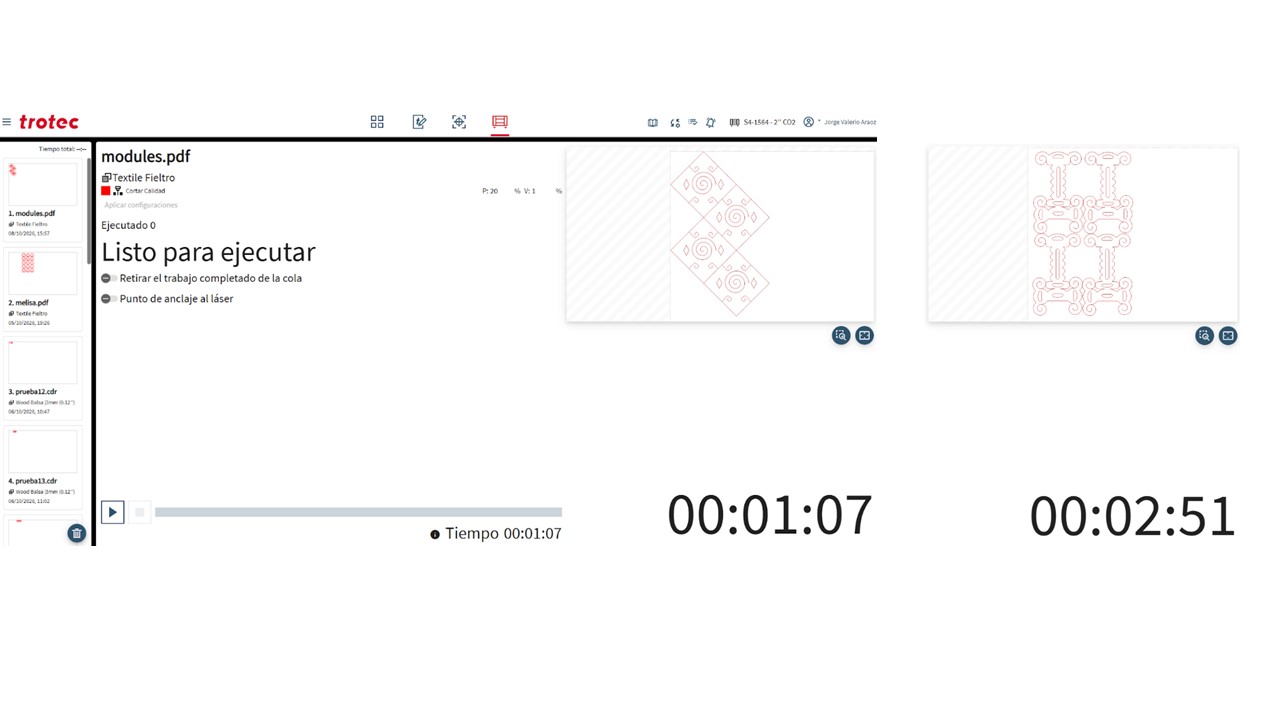
As I mentioned earlier, one of the modules had been designed from the beginning with this approach in mind. Therefore, the positioning of the module allowed us to make use of almost the entire fabric area, while the other modules did generate some material waste.
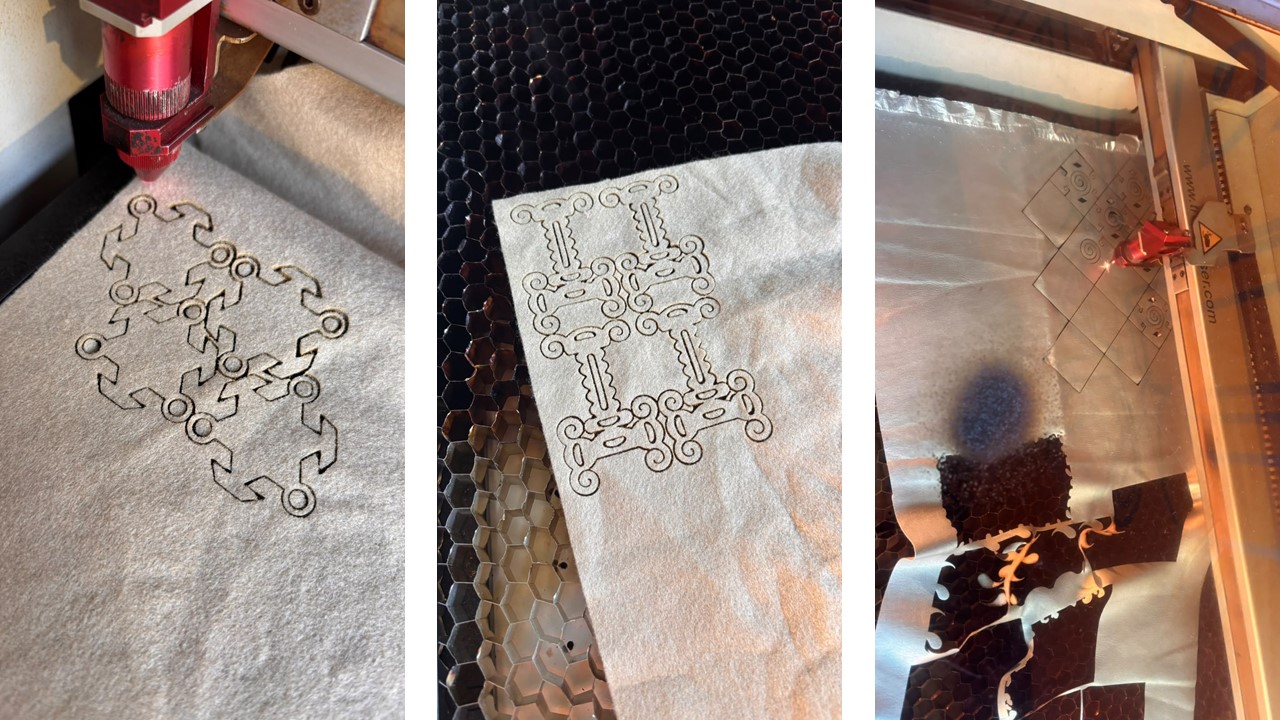
4. Results
In the case of the first module, which had circular cut-outs and more rectangular tabs, the system worked well. However, we observed that the width of the cuts was too tight, which could increase the risk of tearing when using a different type of fabric.
Module 1
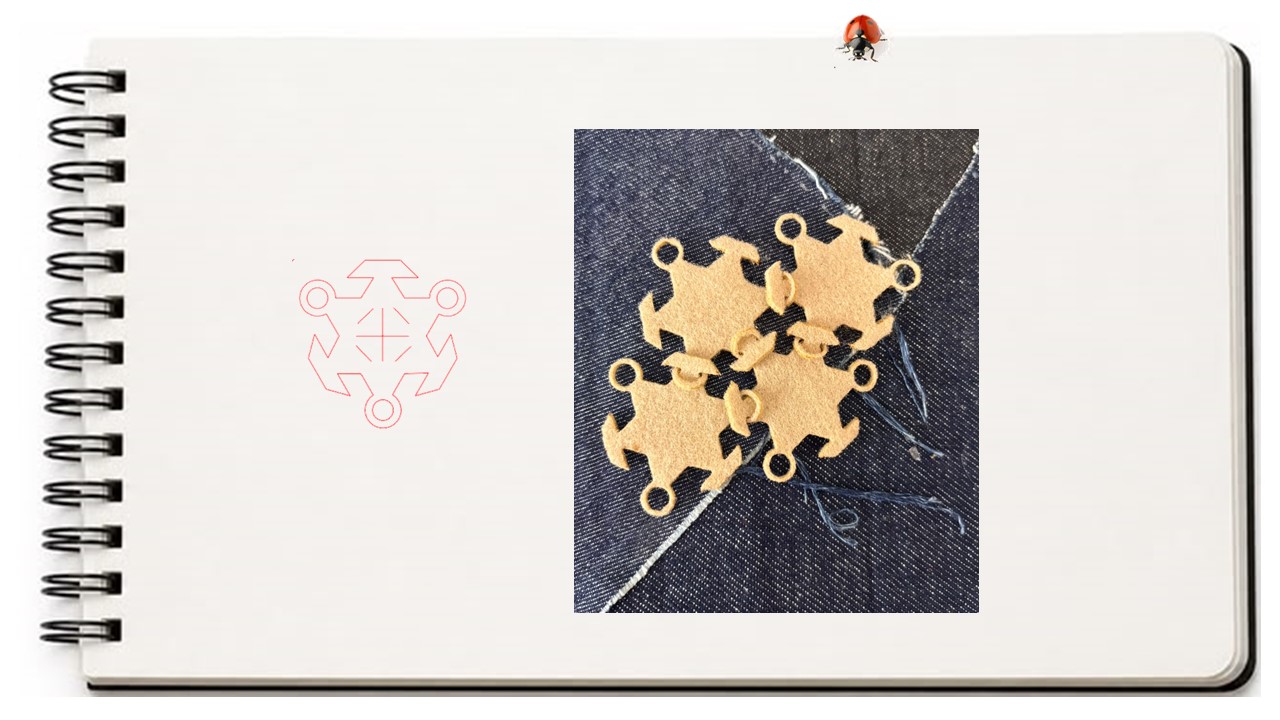
The second module connected quite well, just like the previous one. However, in this case, it was clear that the tabs and cut-outs were better designed, since they remained firmly in place. Even when pulling on them, they did not open as easily and stayed securely connected.
We then proceeded to conduct two additional tests with different materials to see how they would perform: one with a thinner fabric satin, and another with fish leather. The material that performed best was the fish leather, as it maintained the connection more effectively.
The initial prototype was made with felt.
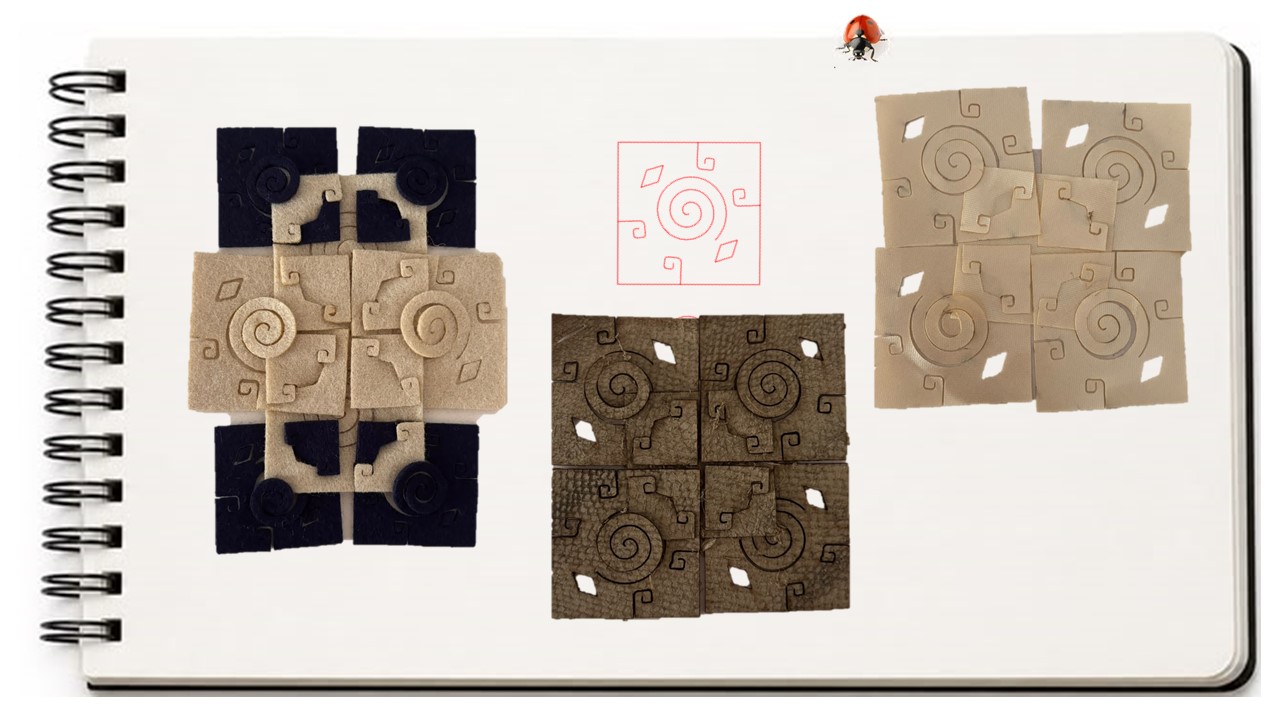
As a conclusion from this part of the process, the thicker and more structurally consistent the fabric is, the stronger the connection tends to be. This is also somewhat similar to the way paper behaves, since it has a certain degree of rigidity. That is one of the reasons why the connection works particularly well with these types of materials.
Module 2
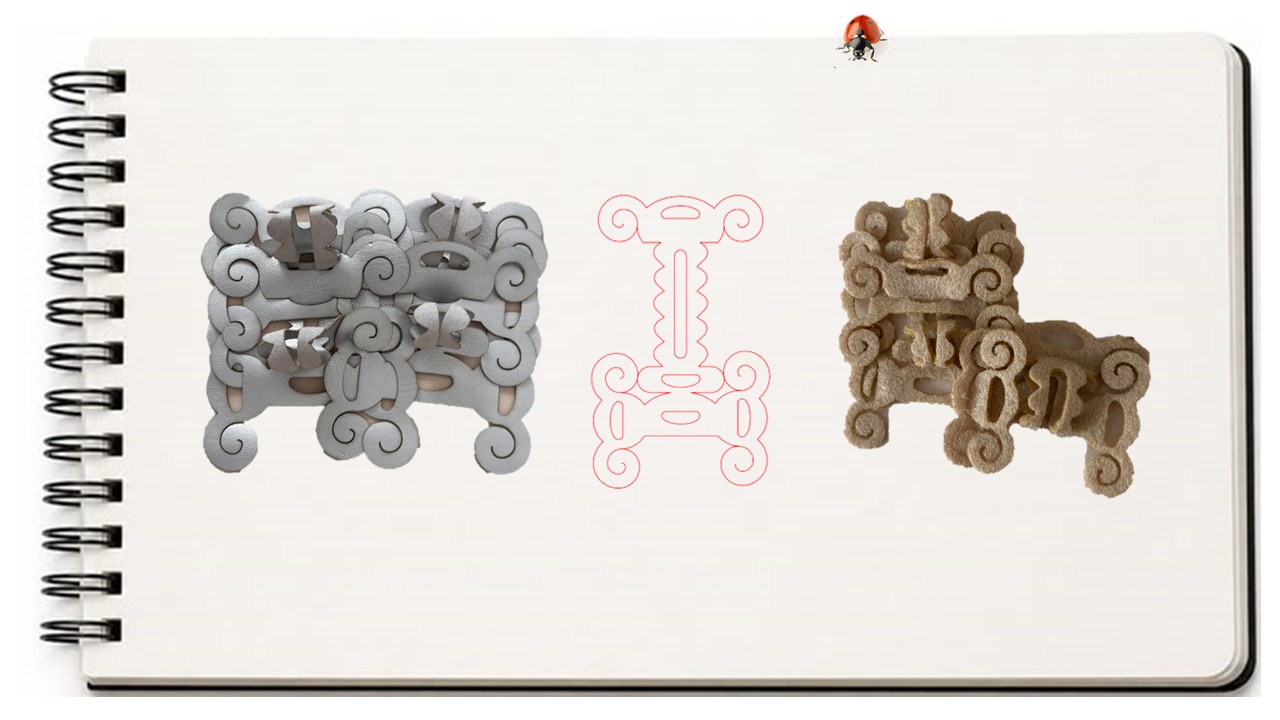
The last module I developed had a three-dimensional component, because the module folded and connected onto itself, and this connection created a small wave-like form that generated a three-dimensional texture.
This module also worked well. However, because it consisted of quite a few elements, some of the connections within the module were too loose in certain areas, which caused them to open up.
Overall, I found the result very interesting and promising. However, in order to apply this design at a larger scale, some adjustments would need to be made to the connections. Module 3
Final garment
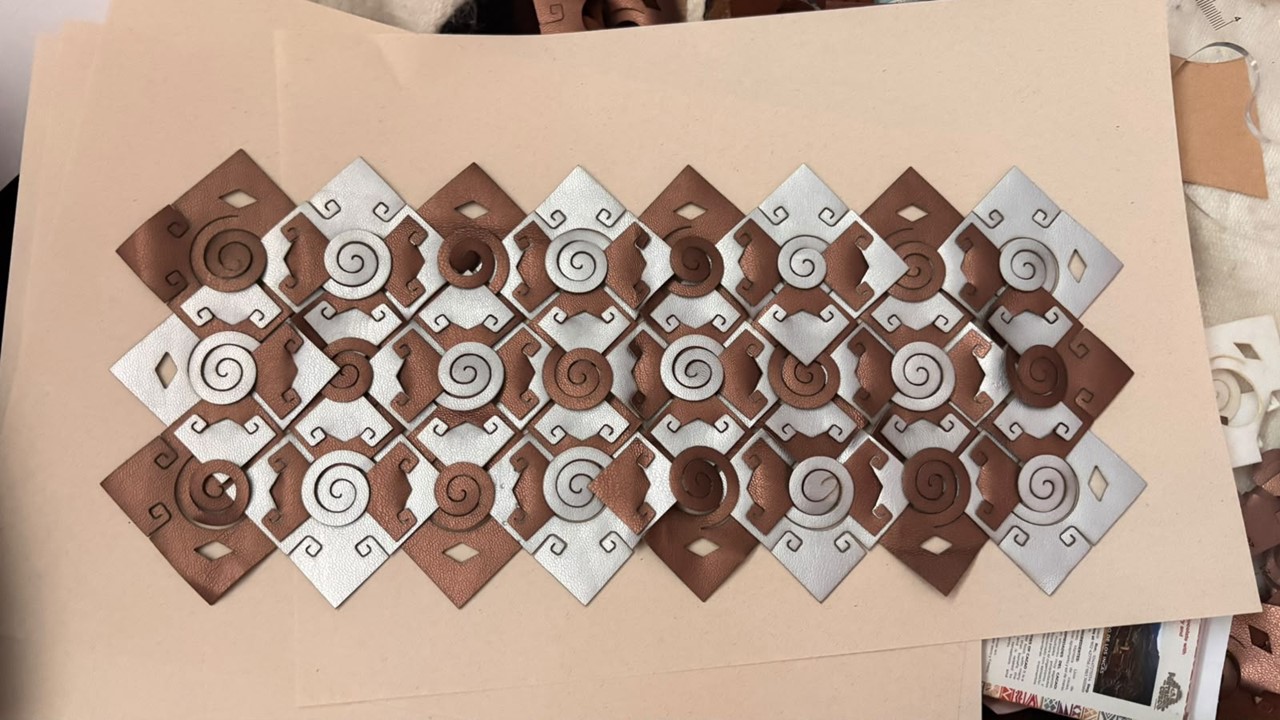
Finally, I decided to work with the second module to develop the final piece. In this case, the module was cut from a metallic faux-leather fabric in two different tones, and we created an initial swatch where we could see the tabs with this square-wave shape. This also evoked the stepped patterns found in the Paracas textiles, and a small spiral was incorporated as another element inspired by the same references.
Assembly proccess
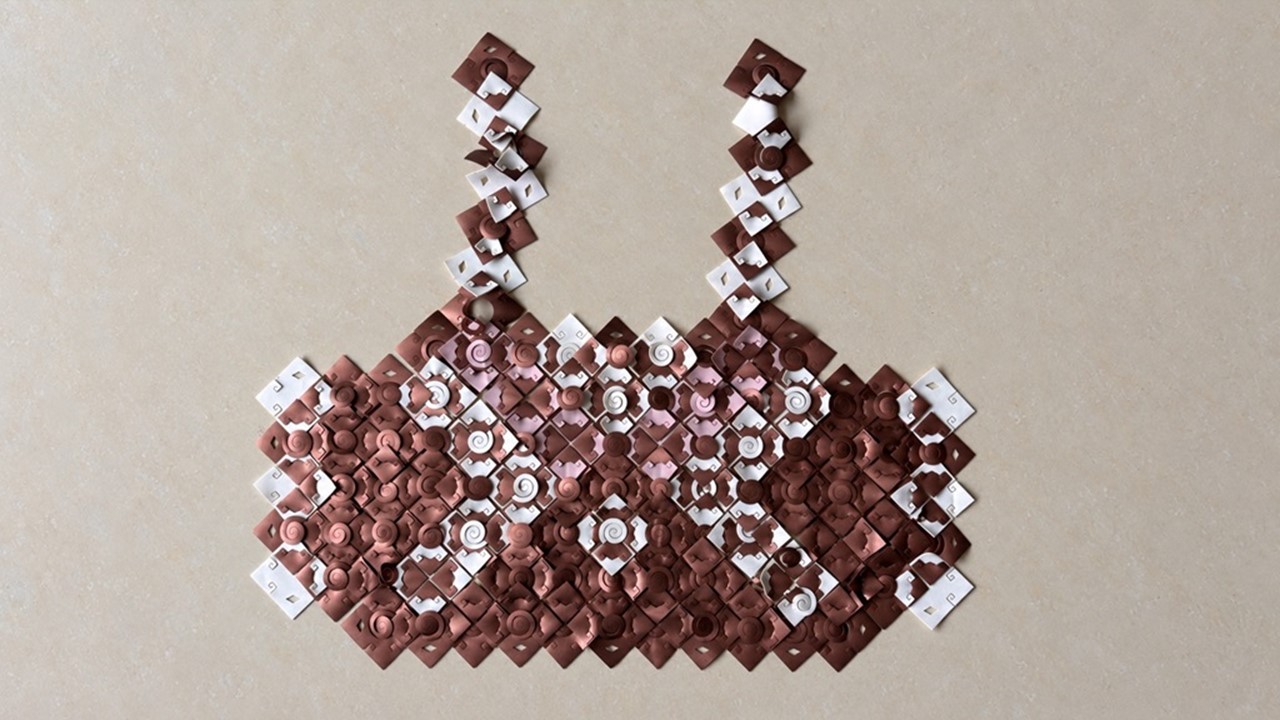
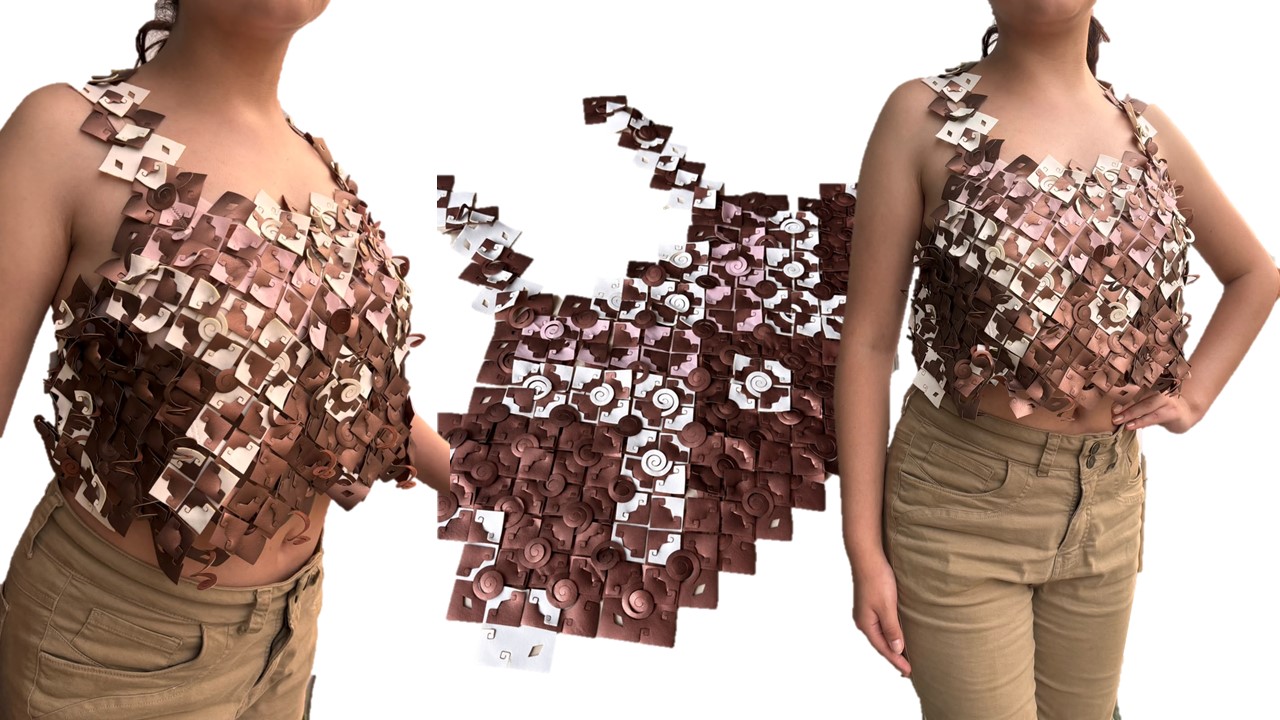
The final connection consisted of 162 pieces. I focused on the front section of the garment, as this was the area that had the greatest visual impact. The back had the same assembly proccess.
Weekly reflection & critical
My reflection on this topic is that the possibilities that can be achieved through the creation of modular systems are truly interesting. At a first level, we have different configurations that can be explored. A second level is through color, which adds another layer of value and can lead to completely different results. Finally, the appropriate selection of fabrics also has a significant influence on the final outcome.
I think it is valuable to incorporate this modular approach into garments because it offers many advantages in terms of customization and replacing individual pieces. It also connects back to the idea of open source: the possibility of creating digital files that can be distributed around the world, allowing anyone with access to a laser-cutting machine to reproduce them using whatever materials are available in their local context.
For this reason, I believe this approach has great potential for future applications and could contribute to changing the way we think about, create, and use clothing.
Files & References
Files: