Week 10 — Textile as Scaffold
Research
In this assignment, I explored two different approaches to transforming textile surfaces.
The aim was to observe how simple processes can change the behavior, texture, and form of fabric through both chemical and mechanical interventions.
The experiments focused on: - material behavior - low-tech experimentation - surface transformation - structural change through simple methods
Two separate experiments were conducted:
- Crystallization on textile surfaces
- Textile shaping using a manual binding technique
Both experiments were documented step by step in order to compare their effects and understand the possibilities and limitations of each method.
Experiment 1: Crystallization on Textile
Tools & Materials
Materials
- Brown sugar
- Kaya tuzu (rafine edilmemiş)
- Water
- Cotton textile
Tools
- Glass containers
- Spoon
- Drying surface
- Thread
Process
Two crystallization solutions were prepared:
- Brown sugar: 200 g + 300 ml water
- Kaya tuzu: 200 g + 300 ml water
Textiles were immersed in the solutions and left to dry for crystal formation.
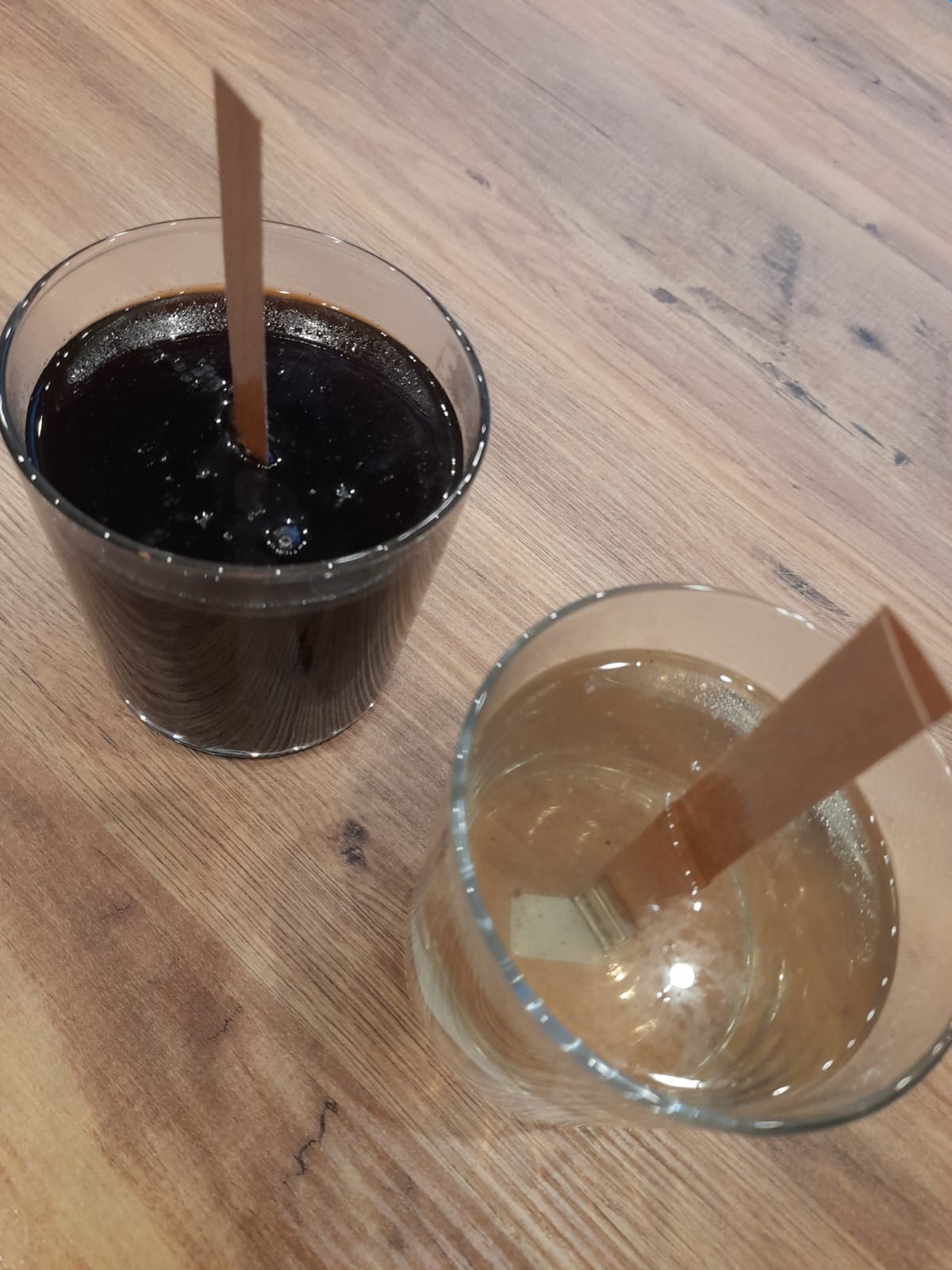
Results
Brown sugar:
- sticky surface
- no crystal formation
- no structure
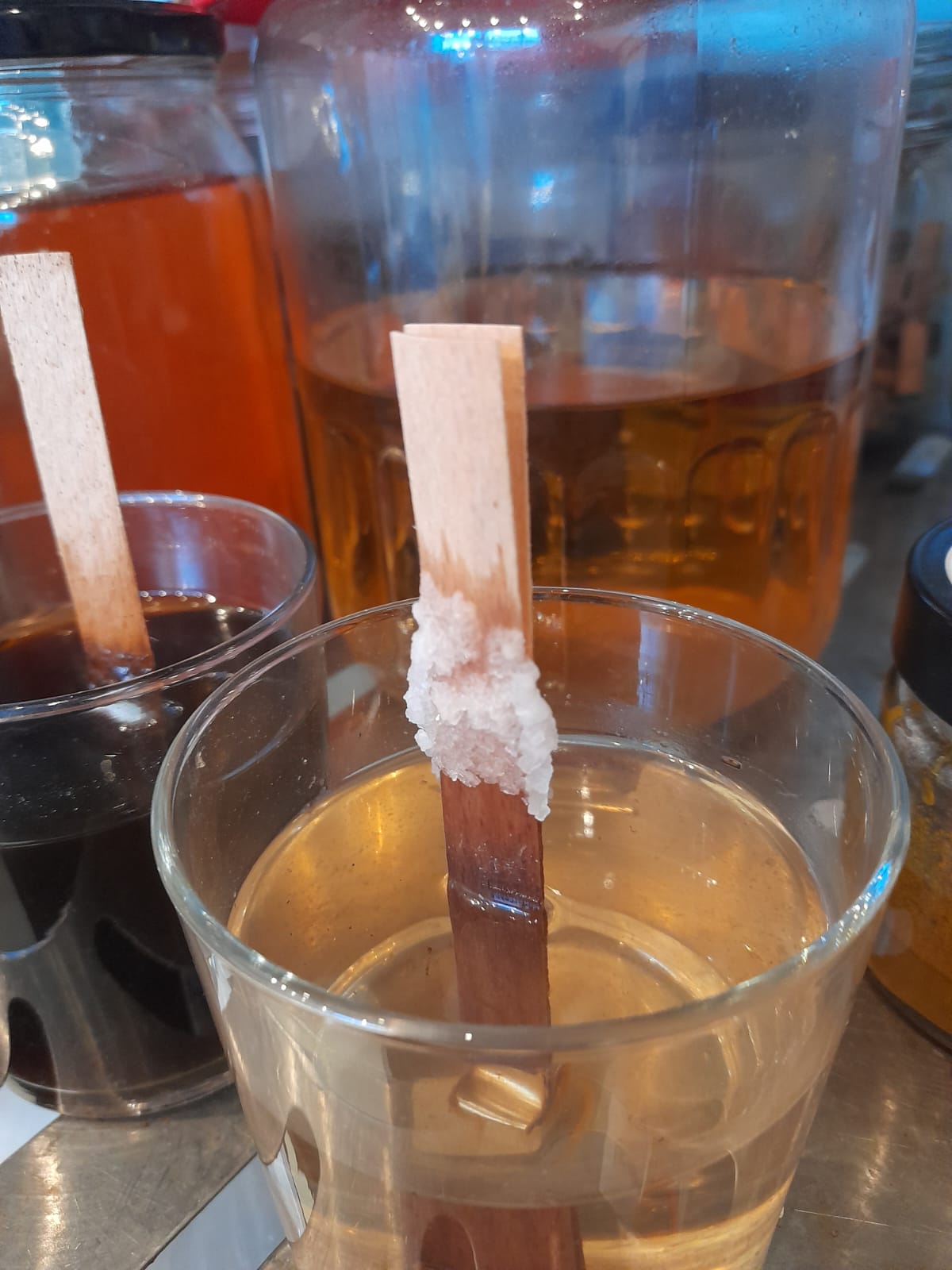
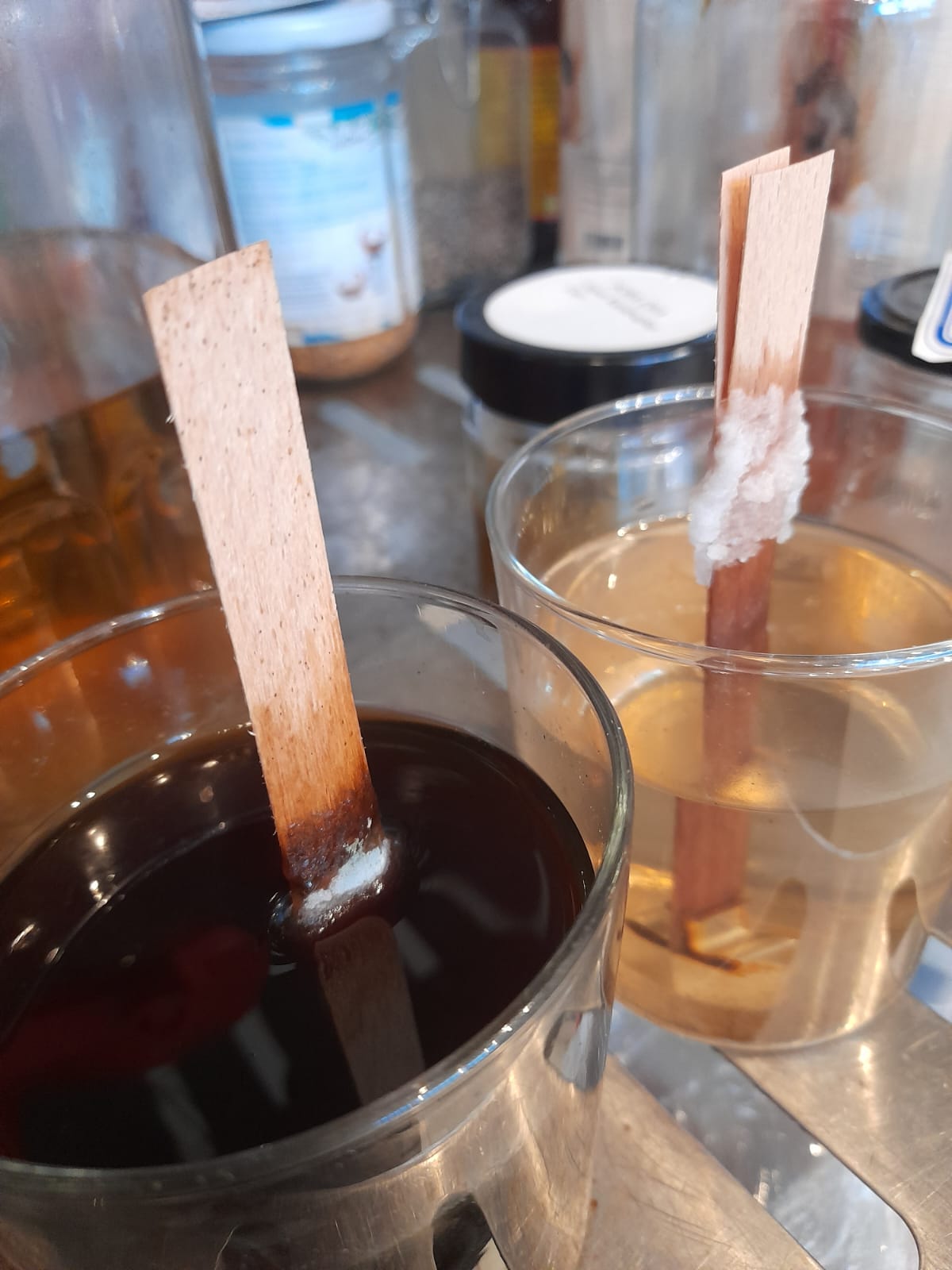
Kaya tuzu (10 days):
- visible crystals
- weak rigidity
- unstable structure
Observations
- crystallization occurred locally
- no continuous structure formed
- time alone was not sufficient
Conclusion
Crystallization showed potential but did not produce a self-supporting structure.
The brown sugar sample remained sticky and structurally weak, while the kaya tuzu sample showed visible crystal growth but still lacked stability.
Experiment 2: Textile Shaping (Shibori Bubbles)
Process
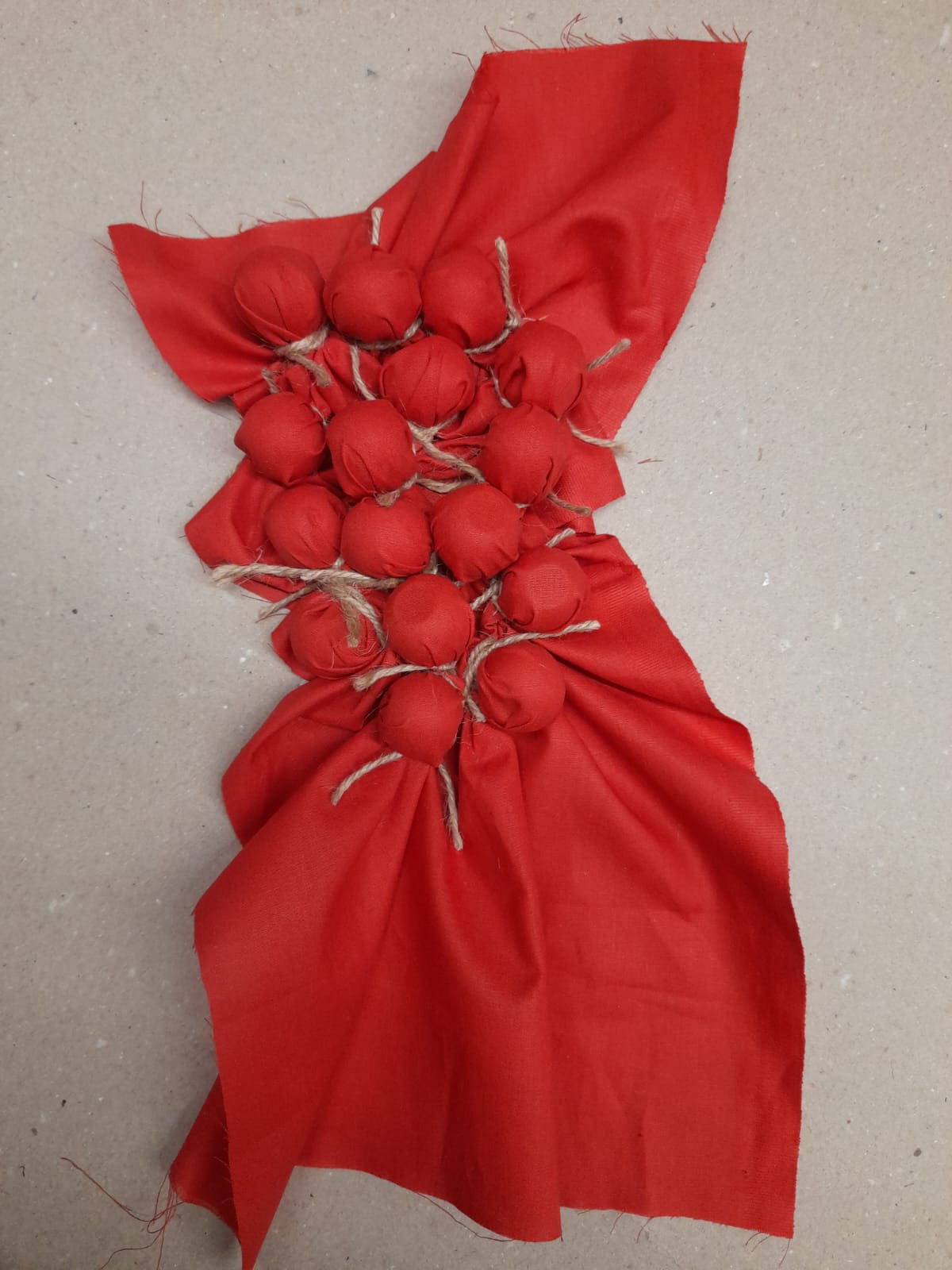
Inspired by a Japanese textile technique, the fabric was manipulated manually to create a 3D bubble texture.
Step 1
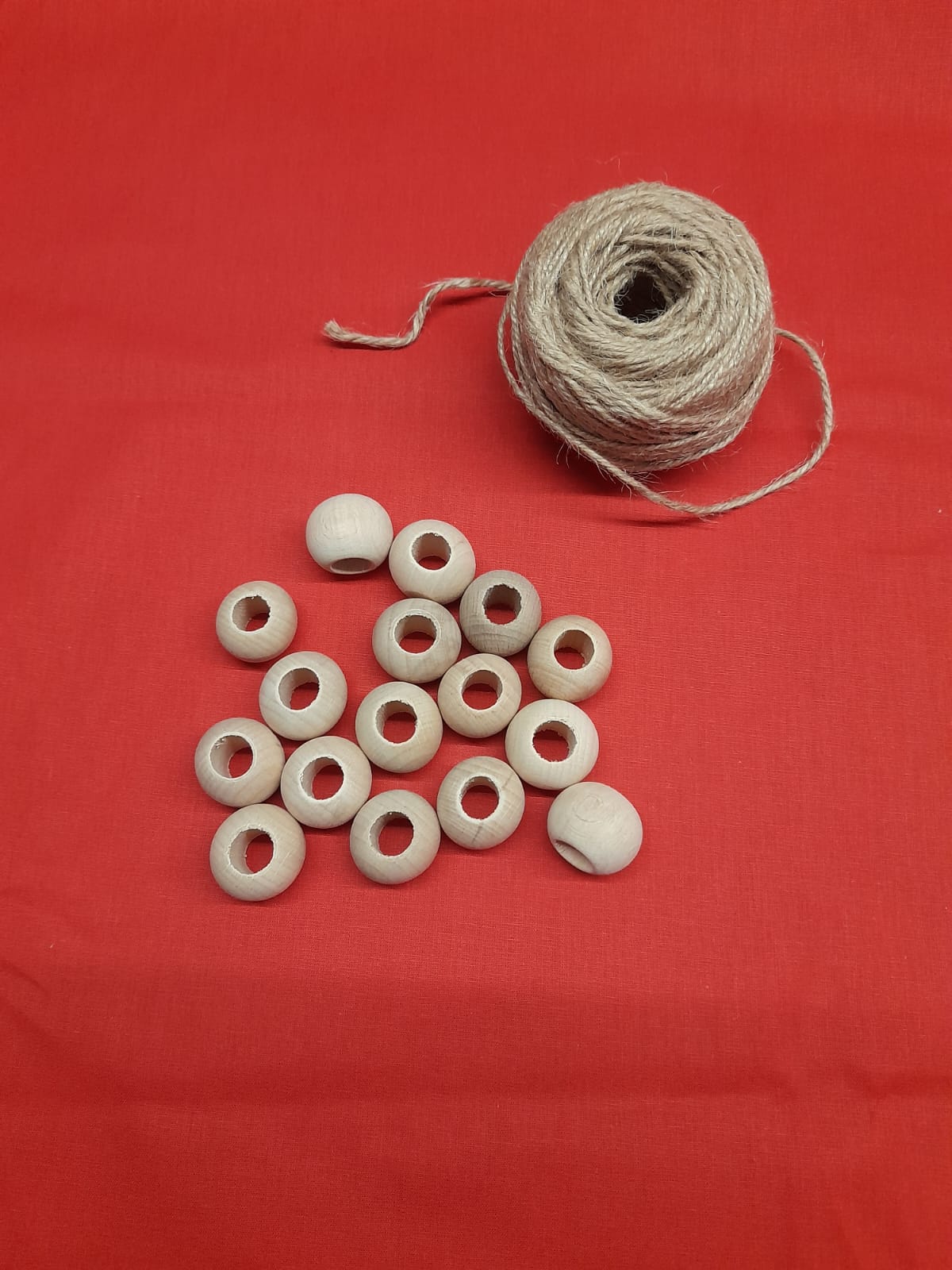
Small pieces of thread were used to wrap sections of fabric around beads.
Step 2
The beads were placed under the fabric and tied tightly to form repeated bubble shapes.


Step 3
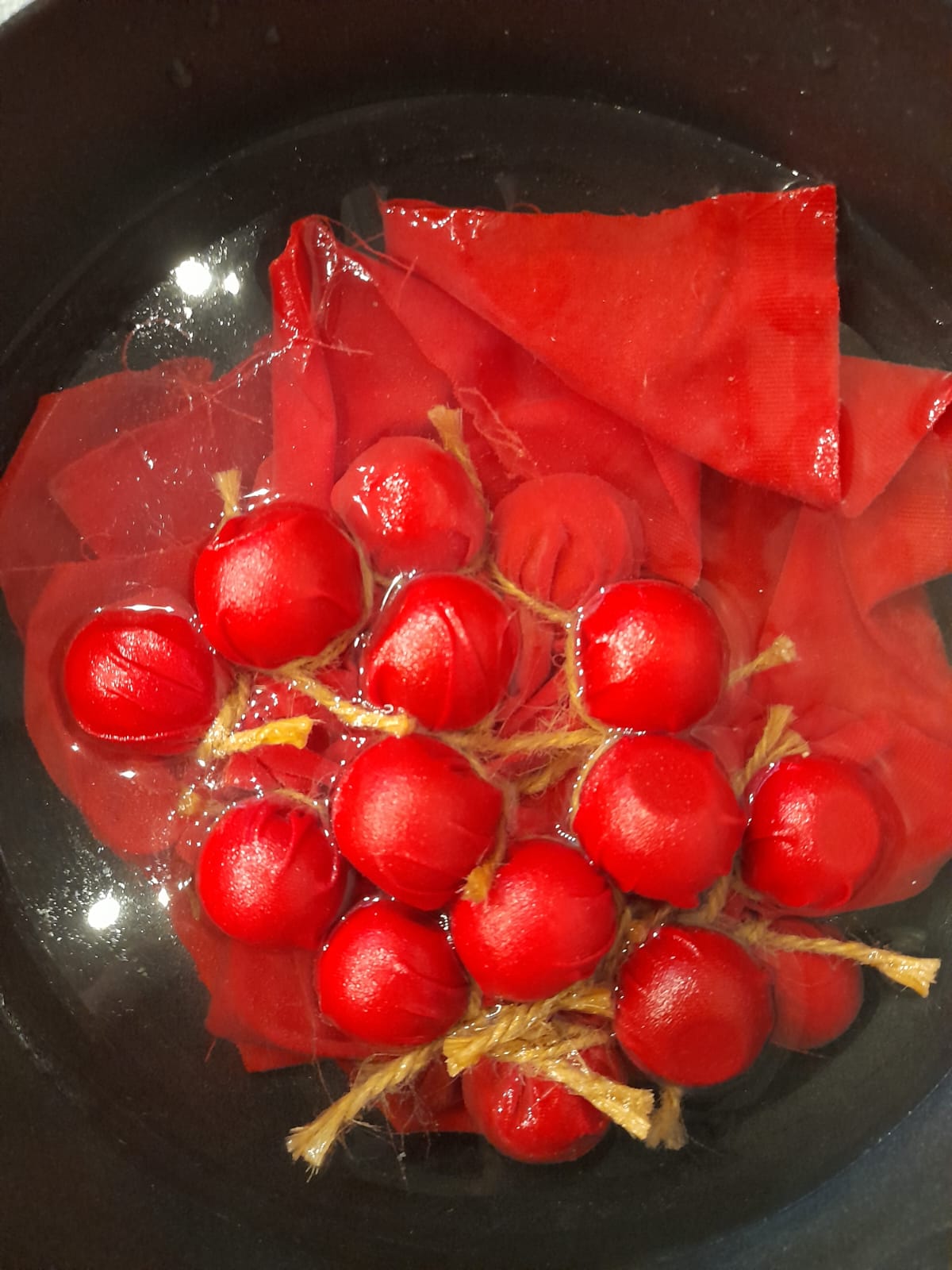
Two fixing methods were tested:
-
Steaming:
steamed for 20 minutes, then dried -
Boiling:
boiled for 20 minutes, then dried for 24 hours
Result
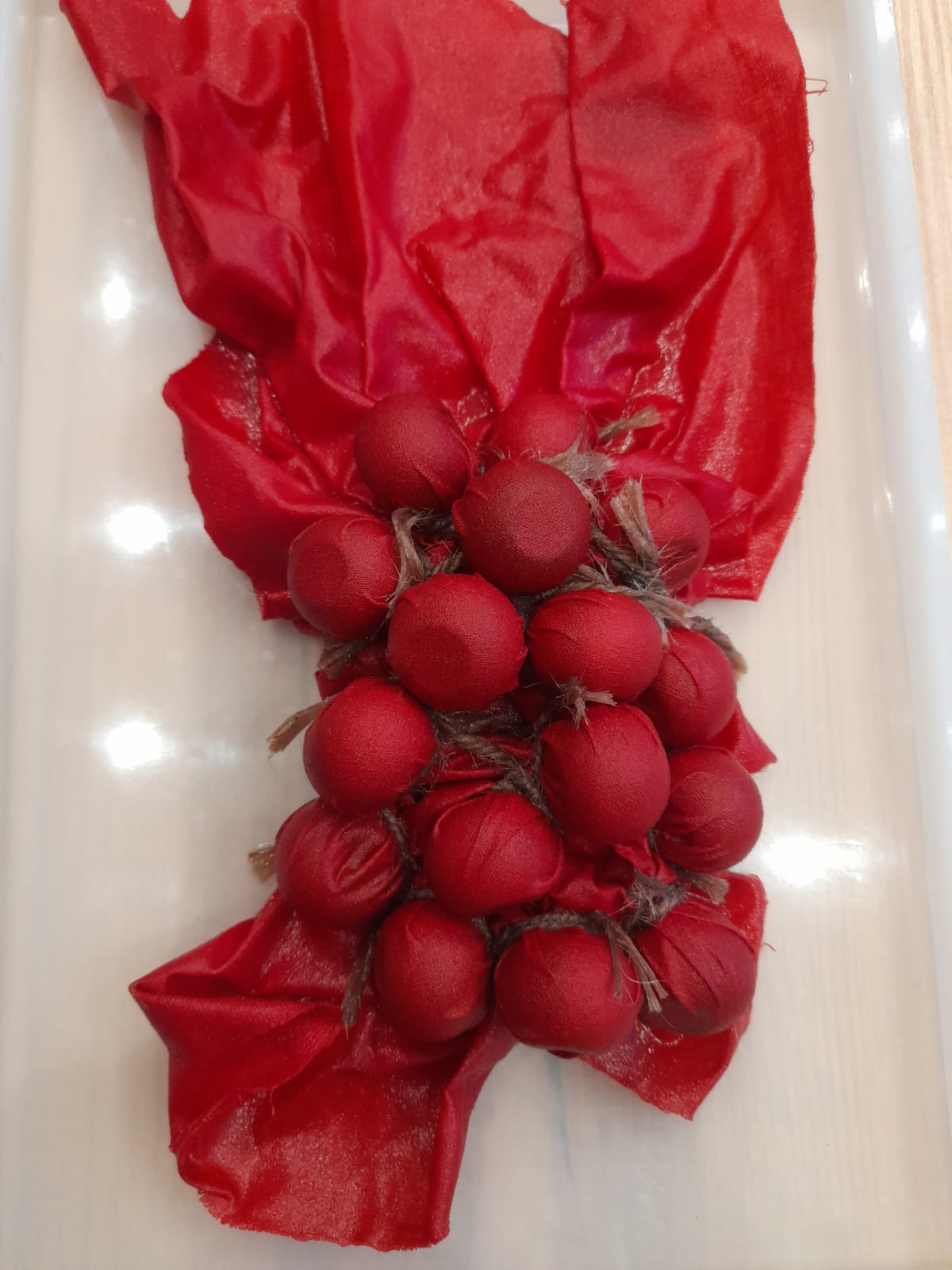
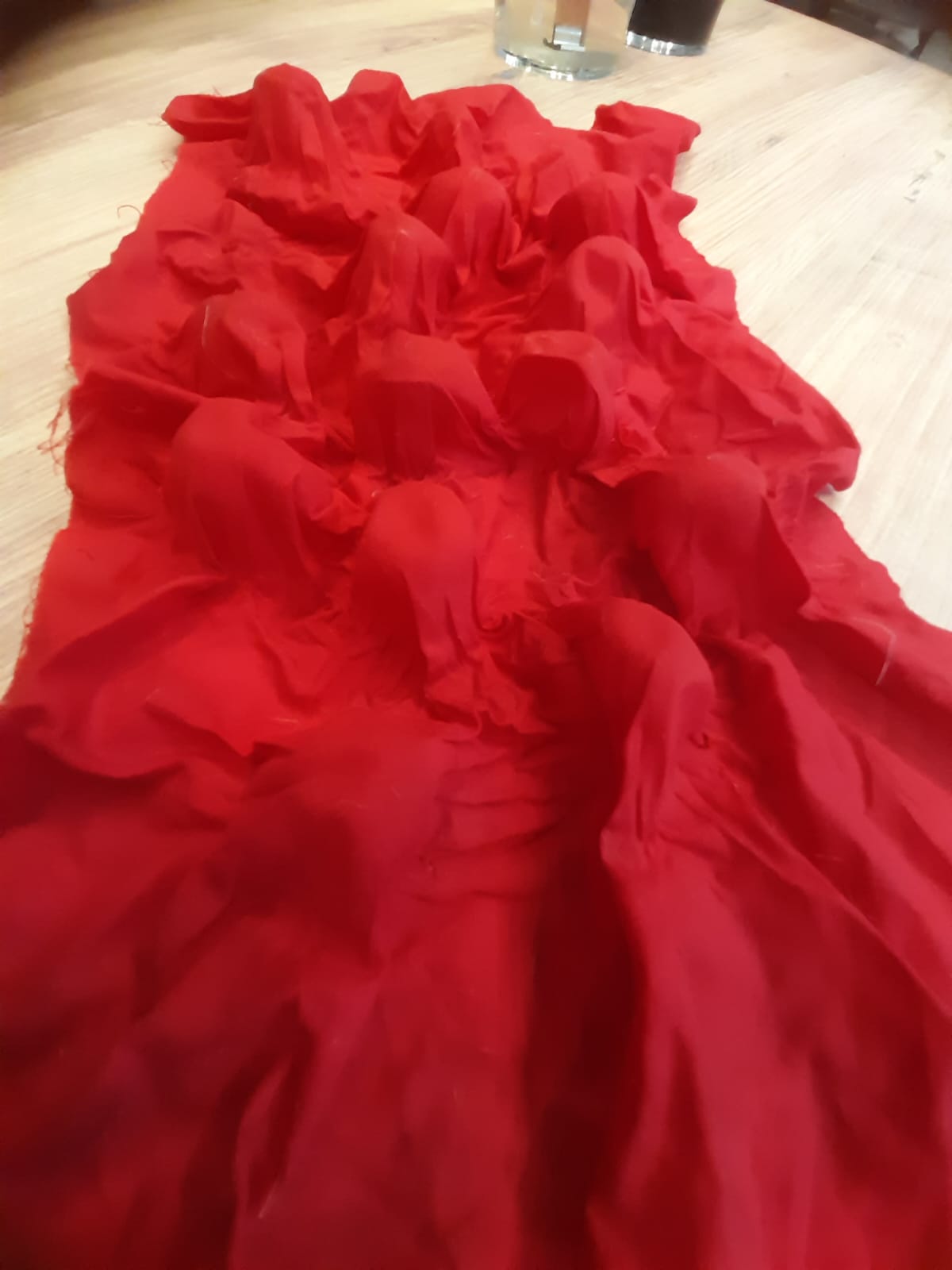
The fabric developed a stable three-dimensional surface texture.
- bubble forms remained after drying
- structure was soft but volumetric
- shaping was successful without crystallization

Reflection
This assignment allowed me to compare two different ways of transforming textile material.
- crystallization worked as a chemical surface transformation
- textile shaping worked as a mechanical form-making process
Although the crystallization experiment did not create a fully self-supporting structure, it revealed useful information about material limits and crystal behavior.
The textile shaping experiment produced a clearer and more successful result, showing how simple manual techniques can generate stable three-dimensional texture on fabric.