Wool Objects
All the following objects are made from either this gelatin recipe :
- 80 mL water
- 16 g powdered gelatin
- 2.5 g glycerin
- Essential oil (tea tree, mint, or lavender)
- Optional: food coloring, natural pigments, coffee grounds, eggshells, seeds
- Scale
- Saucepan
- Spoon or spatula
- Stove or hot plate
- Embroidery hoops with plastic sheets (or any mold)
- Prepare your mold: place the plastic sheet between the embroidery hoop frames, add decorative elements if desired.
- Weigh all ingredients into a saucepan.
- Heat gently (60–80°C), stirring slowly to prevent bubbles.
- When syrupy, remove from heat and add a few drops of essential oil.
- Pour mixture into prepared hoop and mix in optional additives.
- Let dry flat for 1–2 hours depending on thickness.
- Remove plastic, reassemble hoops, and hang to dry both sides evenly.
- Full drying may take a few days.
- Do not immerse in water.
- Make sure it is fully dry before handling.
- Do not heat above 60 °C.
- Biodegradable, can be remelted and reshaped.
Or this alginate recipe :
- 2 tbsp sodium alginate
- ¾ cup water
- 1 tsp glycerol (optional)
- ½ tsp natural dye or pigment (optional)
- Blender or hand mixer
- Nonstick tray or silicone mold
- Calcium chloride solution (for setting)
- Pipette or spoon
- Gloves (recommended)
- Dissolve sodium alginate in water using a blender or hand mixer until smooth.
- Add glycerol and pigment if desired, mix again until homogeneous.
- Let the mixture rest for at least 30 minutes to remove air bubbles.
- Prepare a *calcium chl
Wool Stool
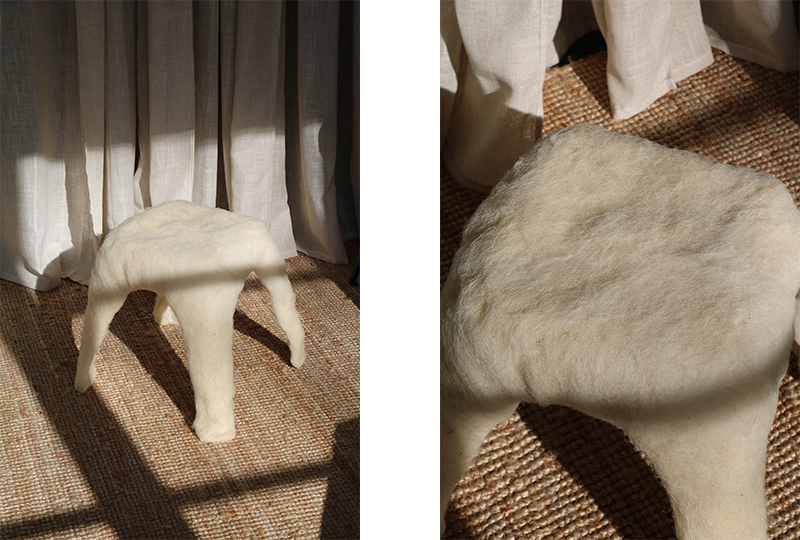
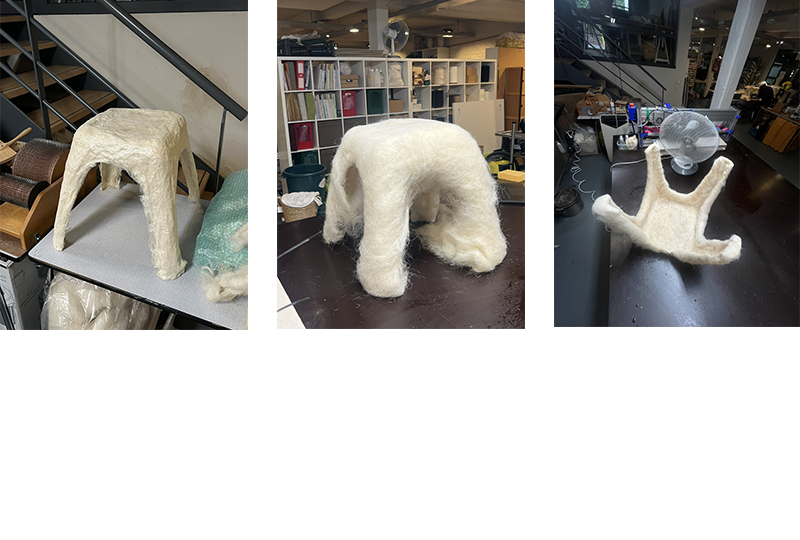
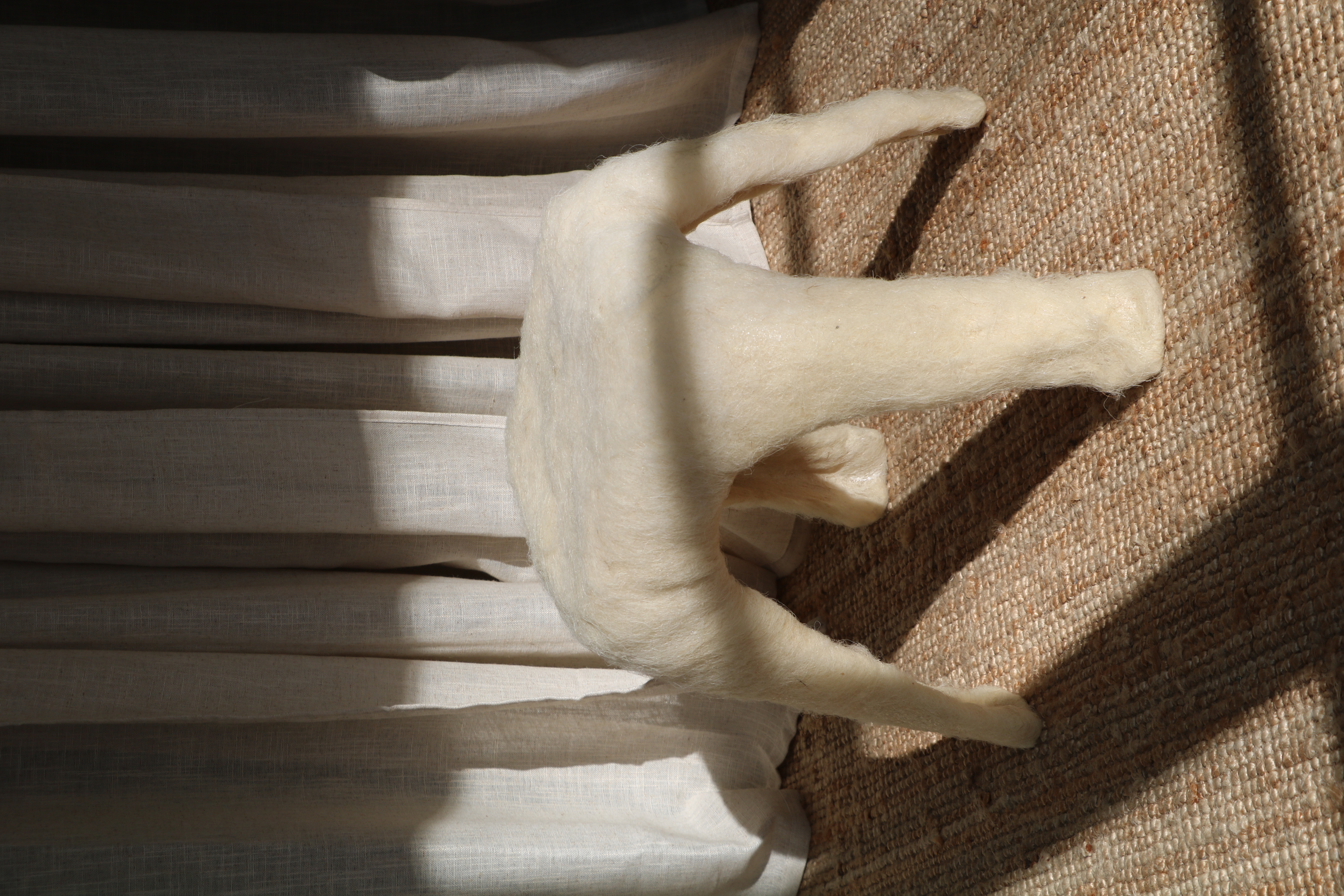 It all began with an unexpected encounter: an injection-molded plastic stool, discarded on the street near my home. Initially just a plant stand, it soon revealed an untapped potential. What if, instead of letting it fade away, I gave it a new life—this time, in wool? And so, it became the mold for its own transformation.
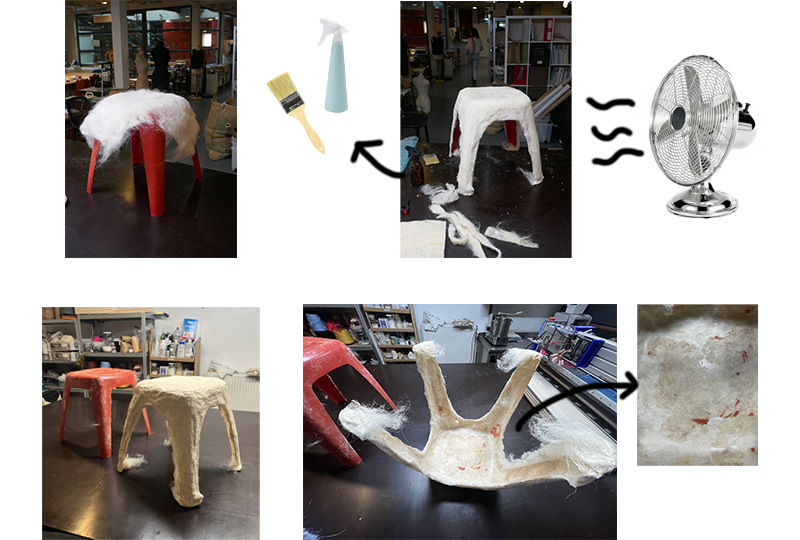
I started by coating it in wool infused with gelatin, patiently building layer upon layer to create enough thickness to hold its shape once dry. Once removed from the mold, the fragile wool skeleton seemed to call for a second skin. I applied another layer of wool, this time misted with gelatin to preserve its airy, ethereal texture. For the underside, drawing inspiration from upholstery techniques, I folded and sealed the edges with more gelatin, reinforcing the structure while maintaining a refined finish.
After a final drying, the stool was complete: the first prototype in a series where wool—a warm, living material—replaces plastic to create an object that is both functional and poetic.
Gallery
Process
Wool Shelf
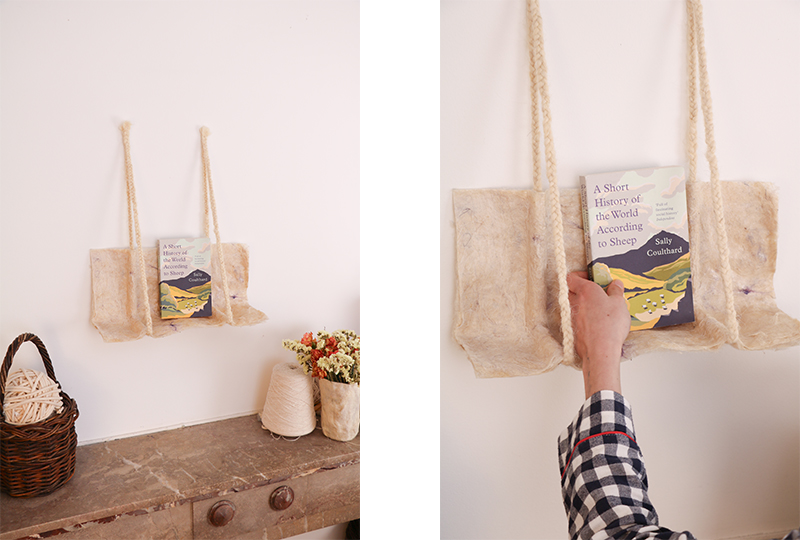
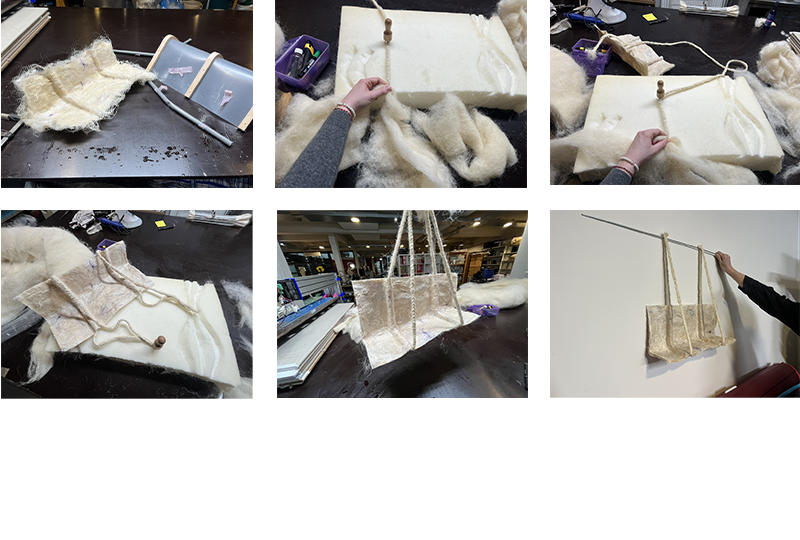
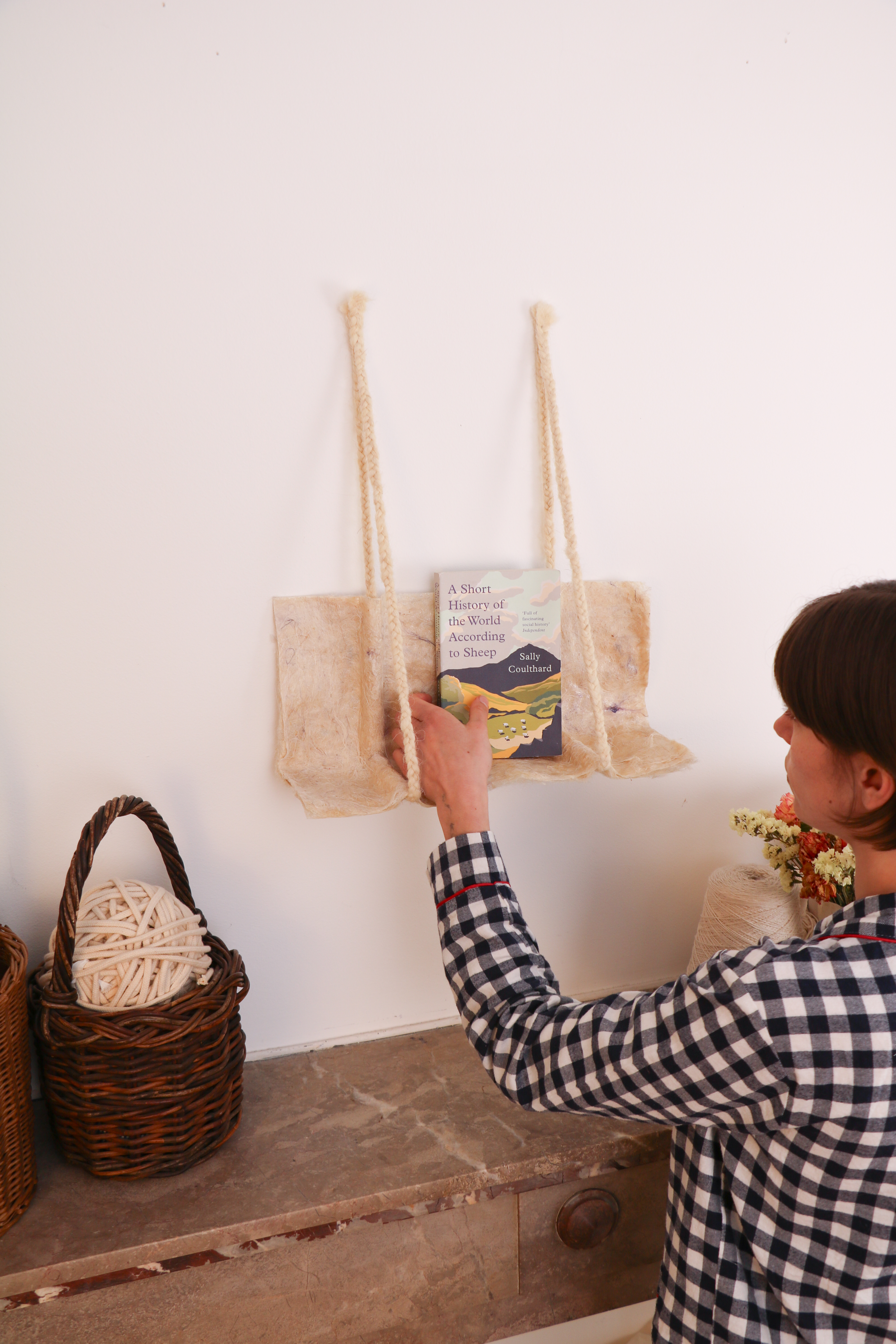 The shelf was born from a sketch and a desire to suspend a "sheet" of wool using two braids seamlessly integrated into the material. The goal was to add a graphic detail to the wool, which was flattened and set using gelatin. Within the fibers, hints of purple appear—the color used to mark my family’s flock to identify our sheep during the summer transhumance.
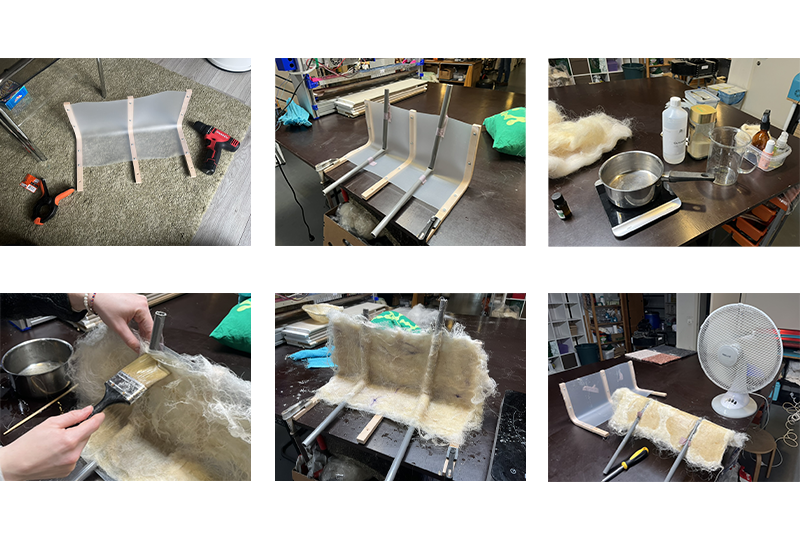
Based on my sketch, I built a mold to achieve the desired shape, following the same technique used for the stool. To prevent the plastic from sticking to the wool during demolding, I used a polypropylene sheet, which is better suited for shaping (and was already available in my studio). I used brackets as templates and a PVC tube to create the counter-form where the suspension braids would pass. To get a more rounded curve, I could have filled the tube with sand and heated it, but since I had none on hand, I moved forward without it; ultimately, it did not affect the final shape of the fiber.
Once the mold was ready, I applied gelatin to the wool using a brush. Inès helped me position the fibers, as having an extra pair of hands made the process much easier. After reaching the desired thickness, we tapped the entire surface to press the material firmly against the mold. After a day of fan-drying, the shelf was ready to be demolded and dried on the other side.
Meanwhile, I crafted the braids for the suspension. Once dry, I trimmed the edges for a cleaner finish, and the shelf was finally ready for use!
Gallery
Process
Click on the preview to open the video on Instagram.
Wool Blind
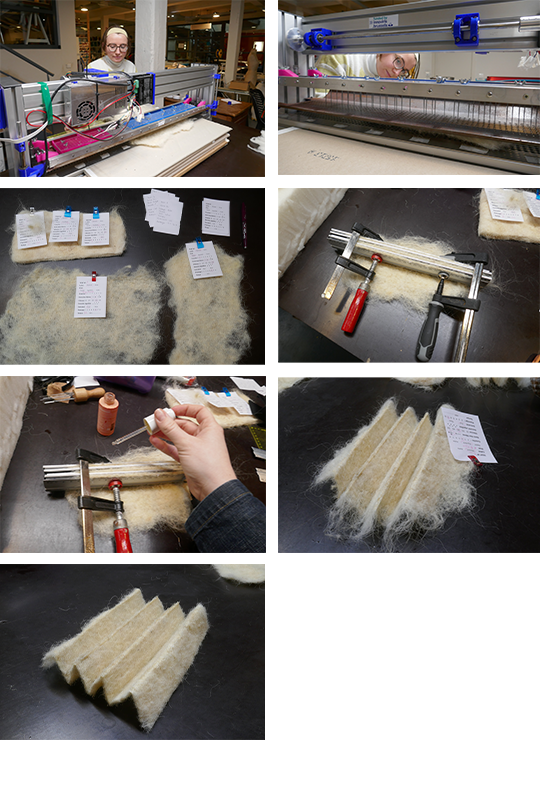
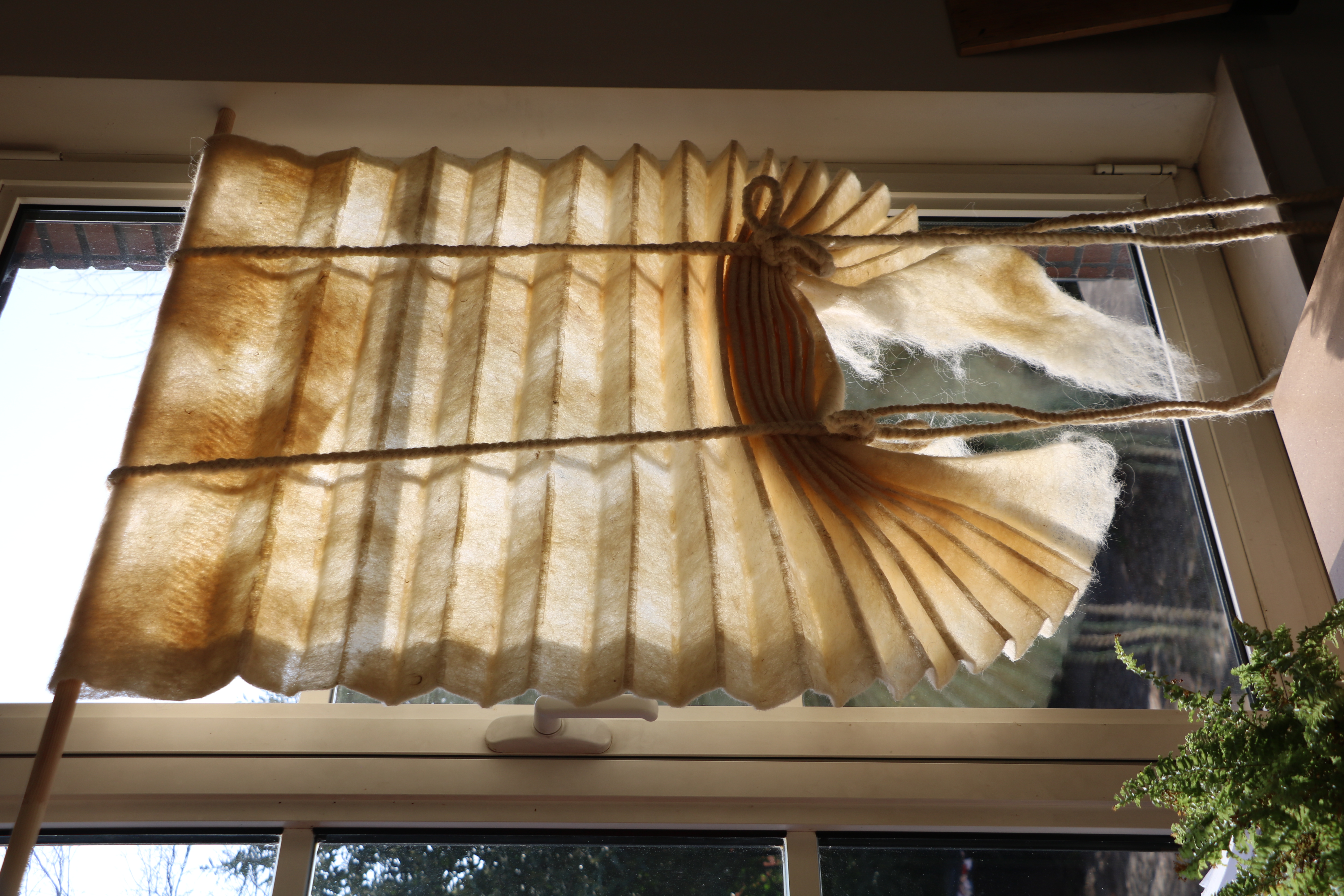 The curtain was born from research into developing a folding process specifically for wool. In the textile industry, wool is rarely shaped using folding techniques because its density makes it difficult to hold a sharp crease. Driven by a desire to shape wool in unexpected ways, I began sampling various experiments using metal rulers combined with gelatin or alginate.
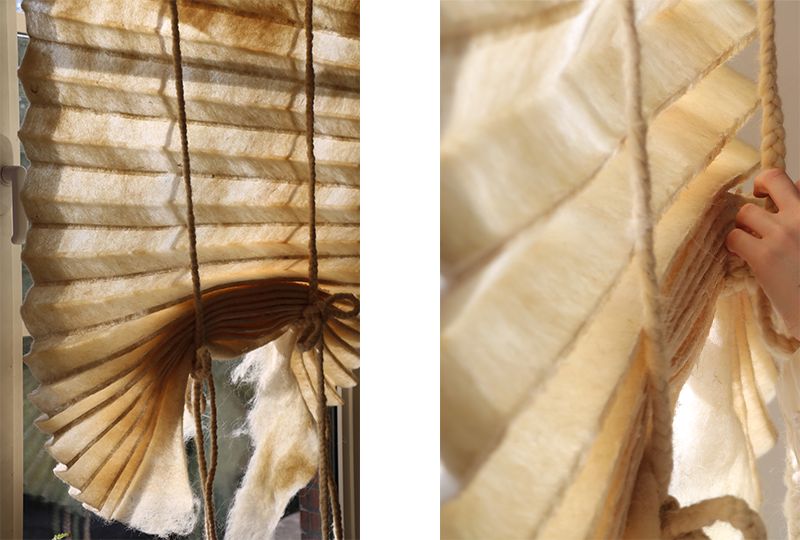
By pre-felting the wool with Green Fabric’s open-source needle-felting machine, I created thin surfaces that were easier to manipulate. The material is held in an accordion shape using clamps. Once in place, I apply a gelatin or alginate solution to the exposed edges of the wool at the ends of the rulers. Once dry, the tools are removed, leaving only the pleated wool.
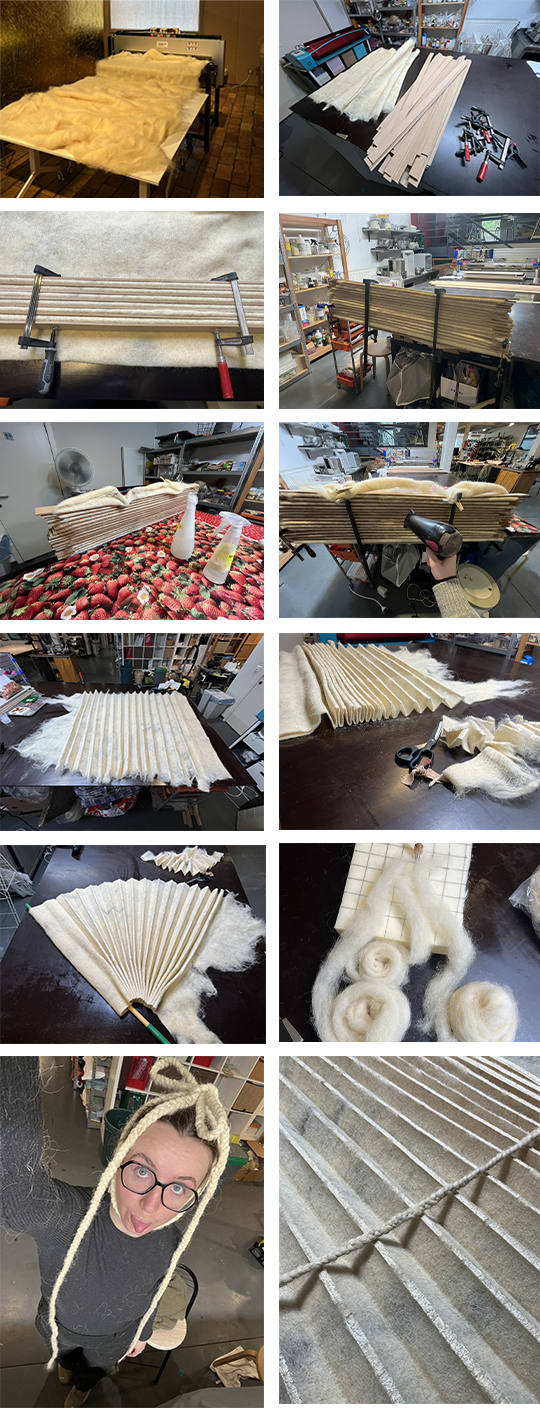
While gelatin offers a more efficient finish and faster setting time, I chose alginate for the final prototype. Since the curtain is designed for a window to block light, it needed to withstand high temperatures; therefore, alginate was the most suitable biomaterial. To needle-felt such a large surface, I used the FeltLoom at the Texture Museum in Kortrijk. This allowed me to create a 2.50m x 1.20m surface, matching the standard 1kg wool batts carded at the Filature de Niaux. I felted the material unevenly to play with different light opacities and then created a needle-felted hem for the curtain rod.
Back at Green Fabric, after purchasing and cutting 40 MDF slats, I reproduced the sampling process on a large scale. Inès helped me once again, as the size of the panel required four hands. Once dry, I removed the wooden slats and finished the piece. I decided to leave the fibers loose at the bottom of the curtain to evoke the material's natural state and highlight the rhythmic nature of the shaping process. The pleats bring a poetic quality to the curtain's movement. To allow for modularity, I hand-braided 8 meters of Manech wool cord. These two parallel braids recall the look of Venetian blinds while providing a graceful drape. The braids support the folds through small knots, adding a touch of poetry and tenderness to the design.
Gallery
Process
Wool Bed
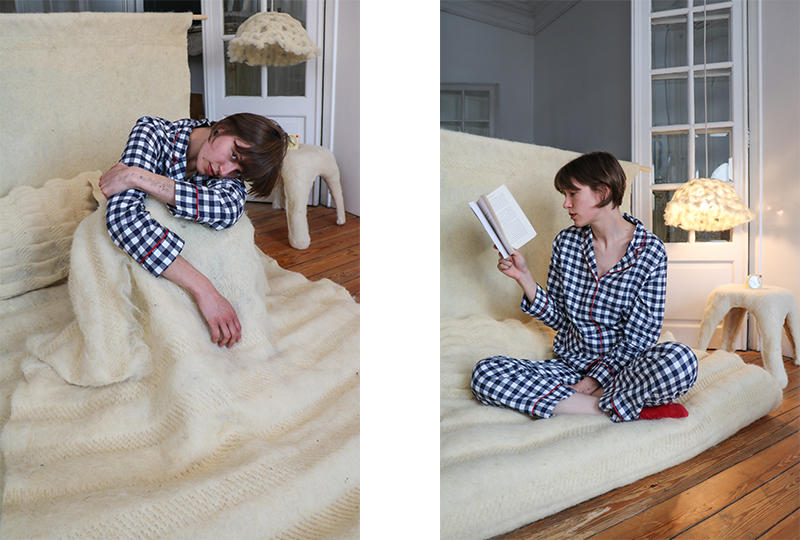
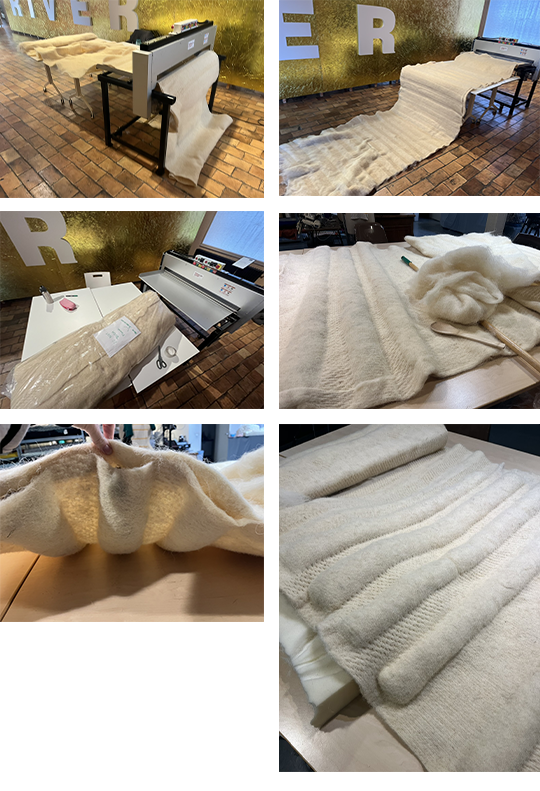
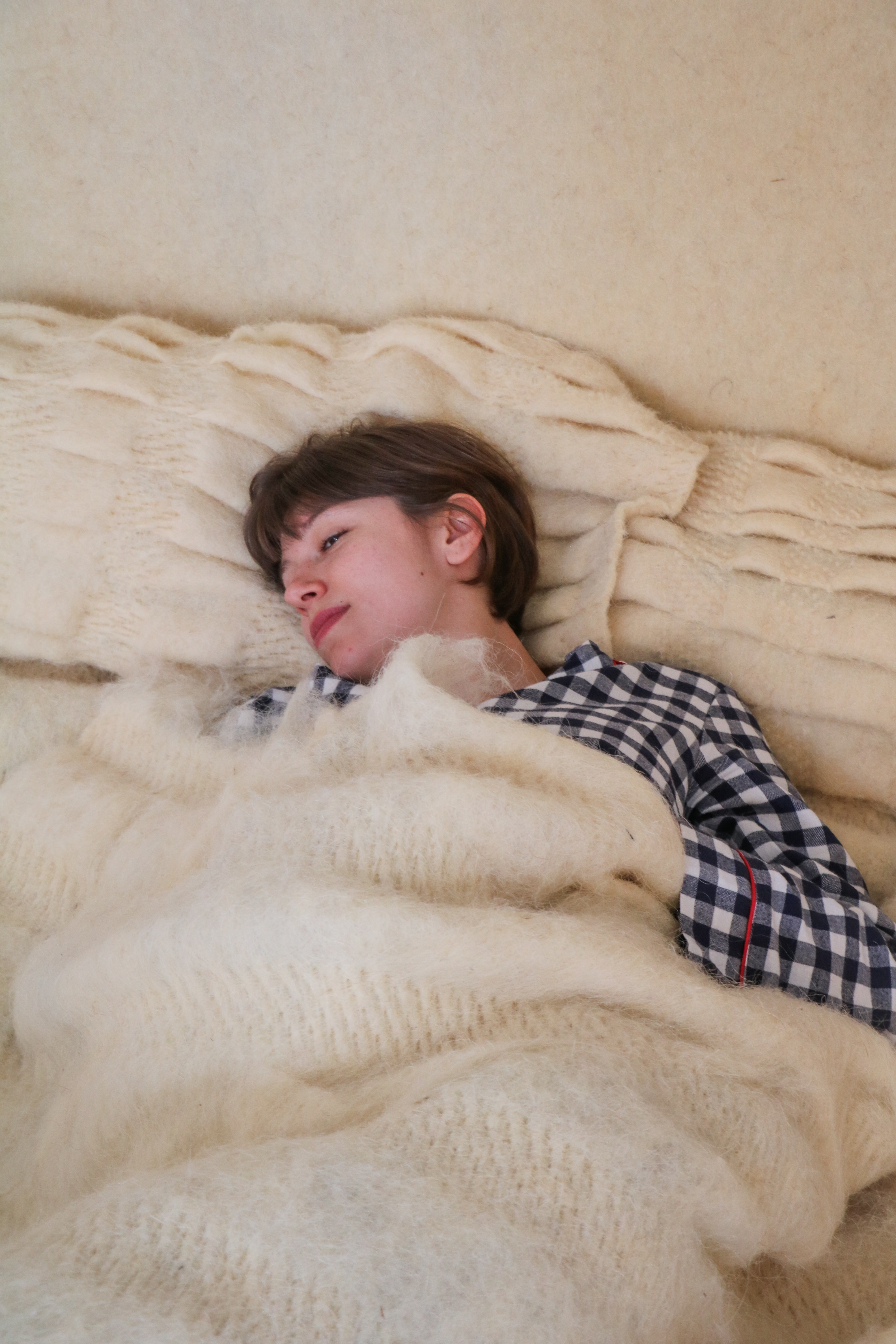 The bed was born from a desire to create a modular wellness space that adapts to changing needs—a place where textures unfurl to envelop the user in Manech wool. Like a flexible ribbon, it defines the space it occupies. This theatrical piece measures 7.5 meters in length and uses 5 kg of wool, featuring varying opacities to meet different sleep-related needs.
The headboard is thick and opaque, bridging the gap between the wall and the floor while insulating against drafts. At the top, a hem (similar to the one on the curtain) allows the ribbon to be hung at the desired height. This is followed by 2.5 meters of thick, quilted wool, padded to provide comfort and floor insulation. Much like a futon, it can be used on the ground or mounted on the wall as an acoustic panel. The piece then transitions into a gradient of increasingly airy material, creating a comfortable duvet that conforms to the body's shape.
When rolled up, the bed transforms into a sofa, creating an entirely different atmosphere. This entire monumental piece was crafted using a FeltLoom at the Texture Museum in Kortrijk, with final touches completed at Green Fabric.
Gallery
Process
Wool Light
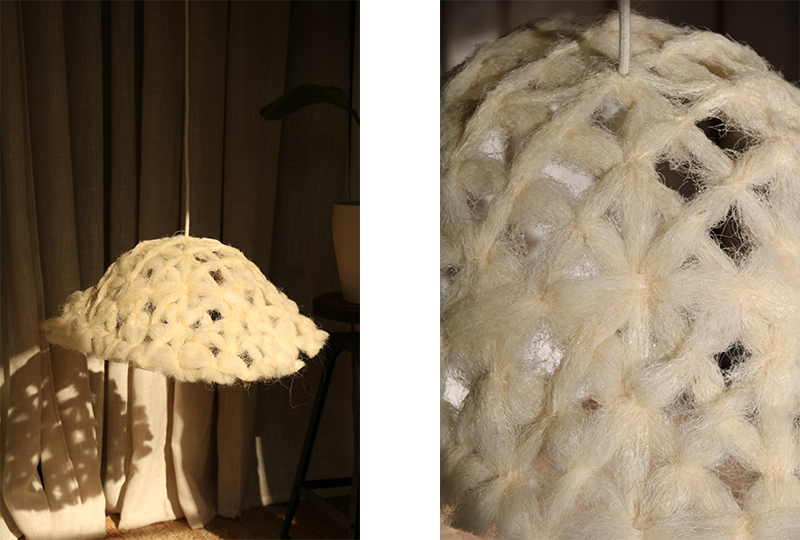
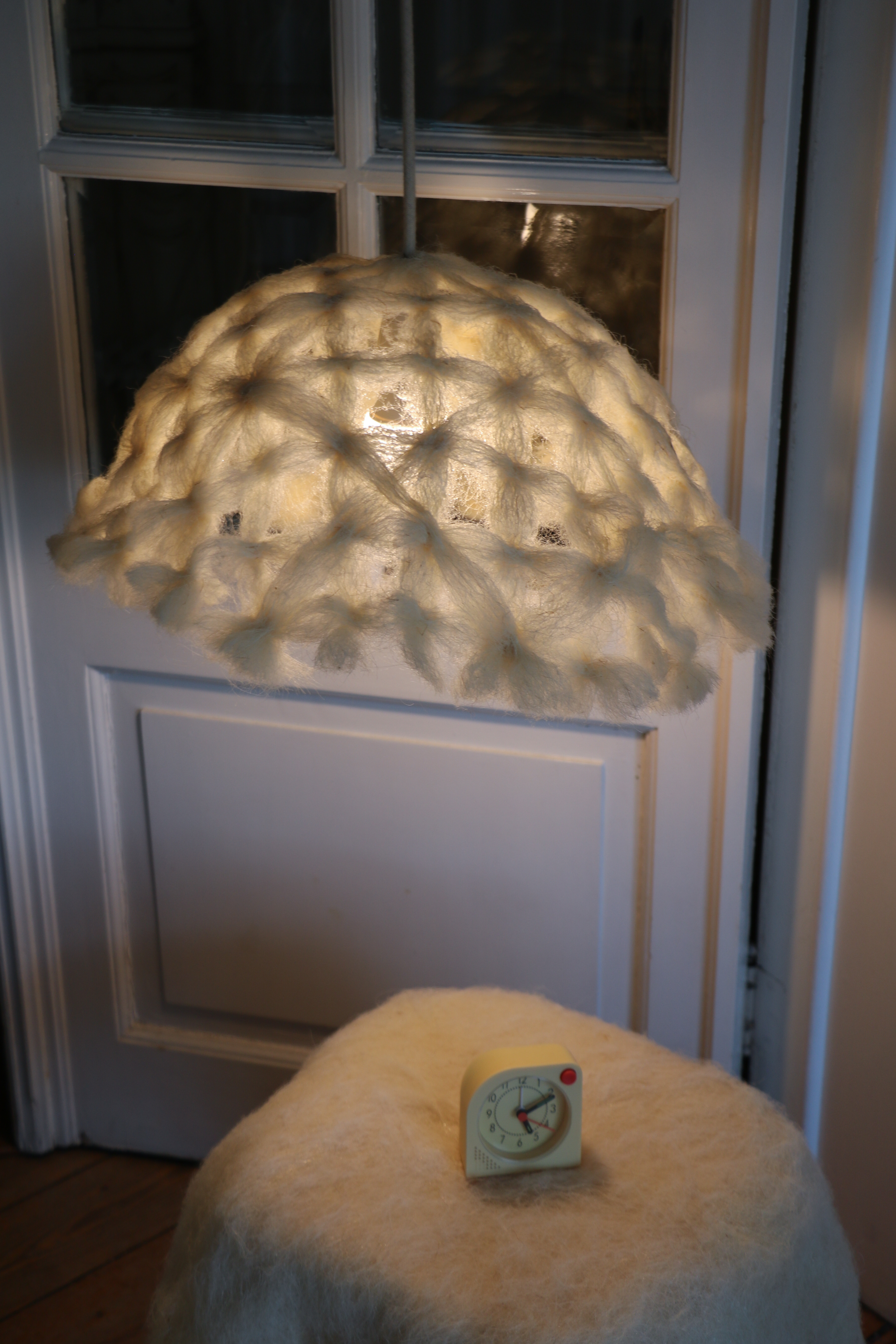 The lamp was born from a desire to showcase the openwork textile surfaces I developed by combining them with spray gelatin during the "Textile Scaffold" week. Since my wool consists of very long fibers, I work it using a "gridding" technique: I felt it onto gridded foam to create delicate, openwork surfaces. Combining this with spray gelatin allows me to preserve the fiber's airy quality while adding strength and shape-memory properties.
In this case, the rectangular surface was shaped using a thin, suspended metal structure over which I draped my material. Once the desired shape was achieved, I sprayed a generous amount of gelatin to ensure the final structural integrity of the wool. After drying with a fan, the piece was demolded to create the lampshade. Annabelle helped me build the electrical circuit (bulb, switch, and plug) on a 4-meter cable to offer more installation possibilities. Whether using natural outdoor light or the bulb, the patterns of the lampshade reflect throughout the room, adding a touch of sensitivity.
Gallery
Process
Click on the preview to open the video on Instagram.
Wool Tableware
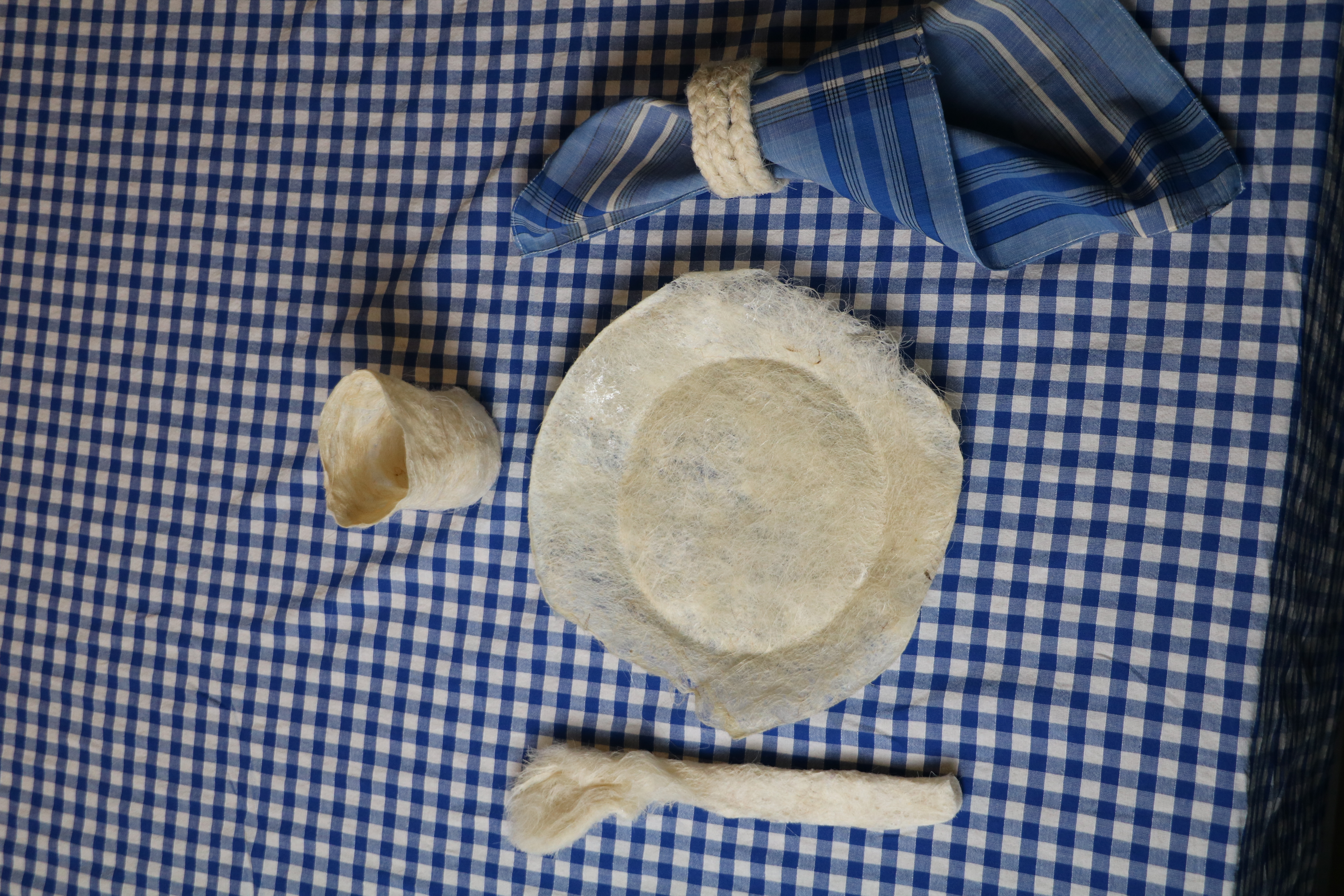
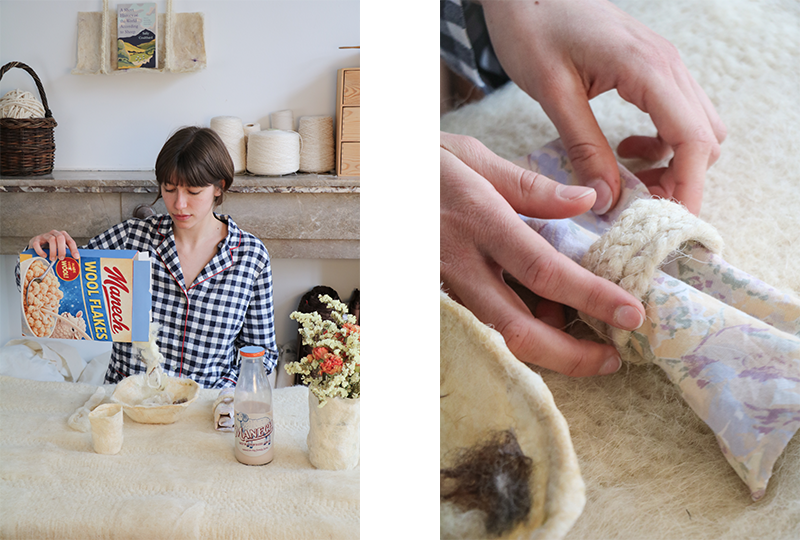
The tableware was created using various existing molds along with gelatin or alginate. While they are not actually functional, they were designed to add an extra layer of narrative to the project.
Gallery