Portfolio
Freedom to walk concept
Hello, I’m Mariam – welcome to my Fabricademy page!
I am a fashion designer with professional experience in garment production and a deep passion for the avant-garde.
My journey combines two worlds:
- exploration of new forms, meanings, and visual languages during my studies,
- and practical innovation — developing consumer-friendly and technologically advanced solutions while working for a leading menswear brand.
For me, Fabric Academy is more than a course — it is an important step forward, opening doors to new possibilities, creative collaborations, and unexplored directions in design.
Tags: Fashion • Textile • Tech • Avant-garde
📧 Contact: Mariam Baghdasaryan
Project

Freedom to walk
A wearable solar garment exploring portable renewable energy
This project explores the integration of solar energy systems into wearable garments designed for outdoor use. The goal of the project was to investigate how clothing could become an interface between the human body and the surrounding environment by collecting and storing renewable energy during movement.
Solar energy is already widely used to power buildings and infrastructure. However, much less attention has been given to personal-scale energy generation that can travel with the user. This project explores the idea that garments themselves could become small mobile energy platforms, capable of harvesting sunlight while the wearer moves through the landscape.
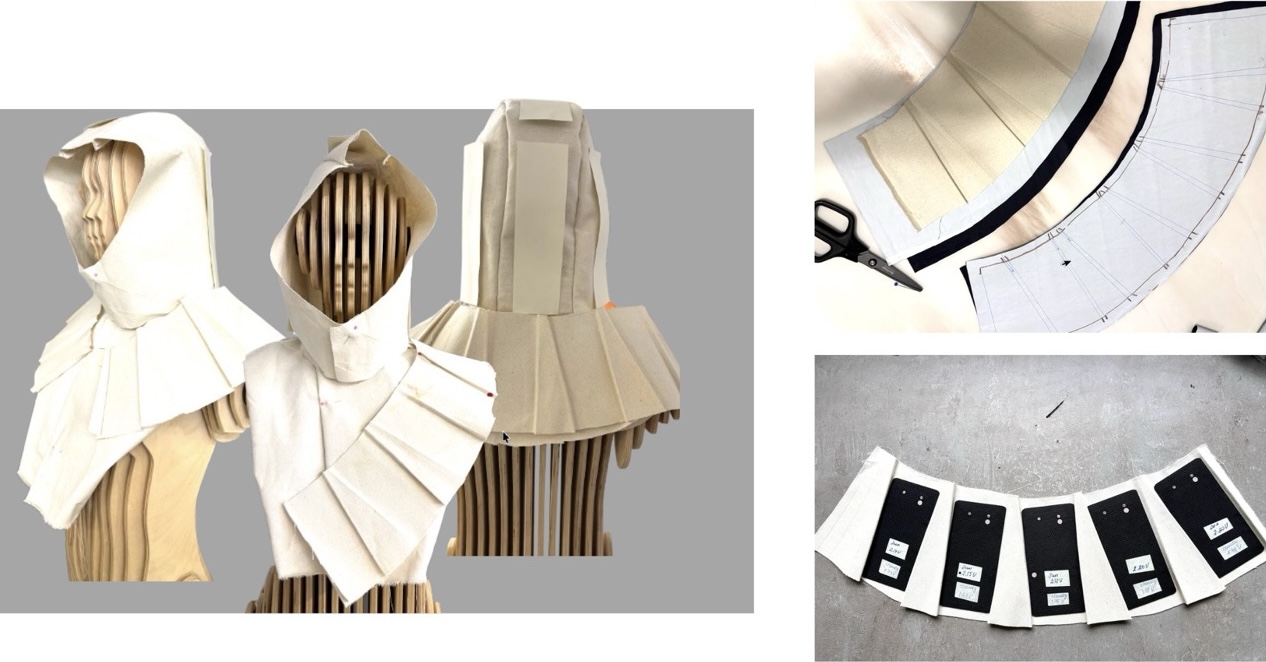
The concept was developed as a wearable prototype: a hooded neck garment positioned between a scarf, a hood, and a lightweight vest. The design allows solar panels to be placed on the outer surface of the garment, where they can receive sunlight during walking or hiking. The energy generated by the panels is stored in a portable battery that can later be used to charge small devices such as a phone.
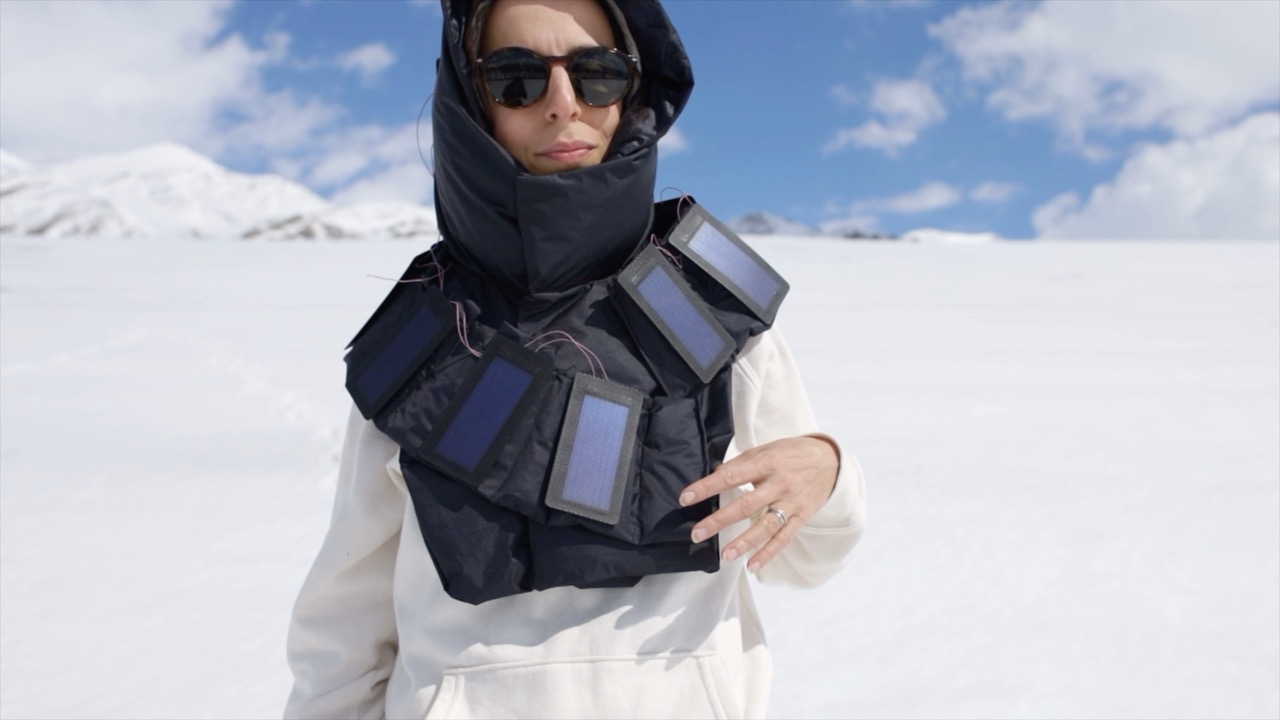
The project combines elements of wearable technology, garment design, and renewable energy systems. My professional background in outerwear design influenced many of the construction decisions, particularly regarding durability, material selection, and modularity of the garment.
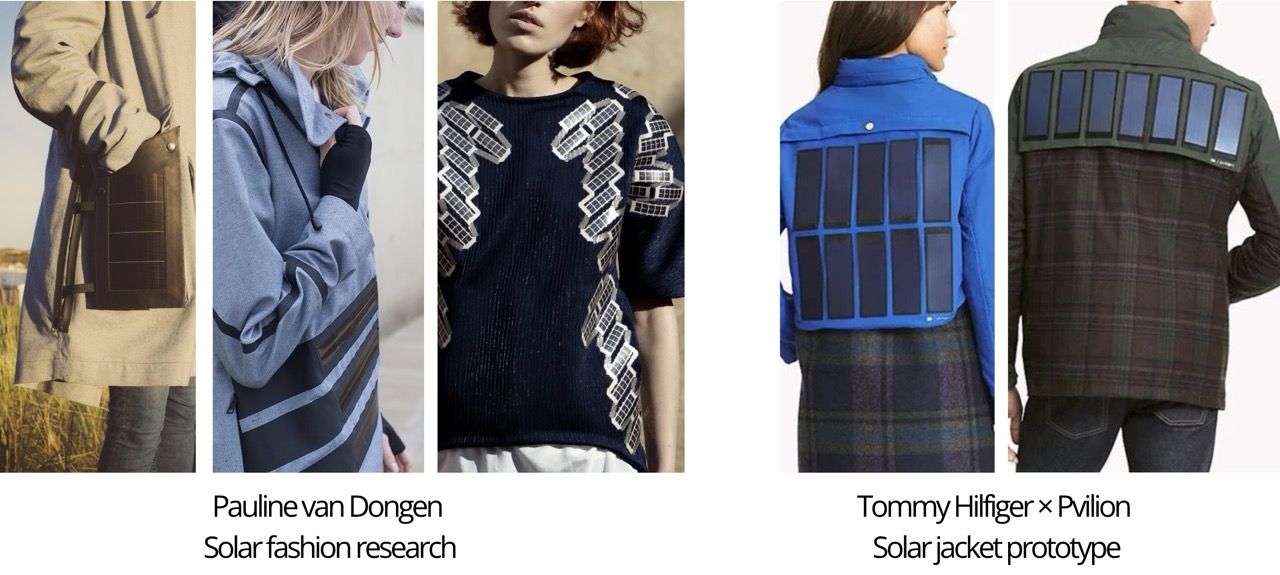
The idea of solar clothing has previously been explored by designers and researchers such as Pauline van Dongen, whose work ranges from experimental solar fashion pieces to research on integrating photovoltaic technology directly into textile structures. Another well-known example is the solar jacket developed by Tommy Hilfiger in collaboration with Pvilion. These projects demonstrate the potential of solar garments but also reveal the challenges of integrating electronic systems into wearable objects.
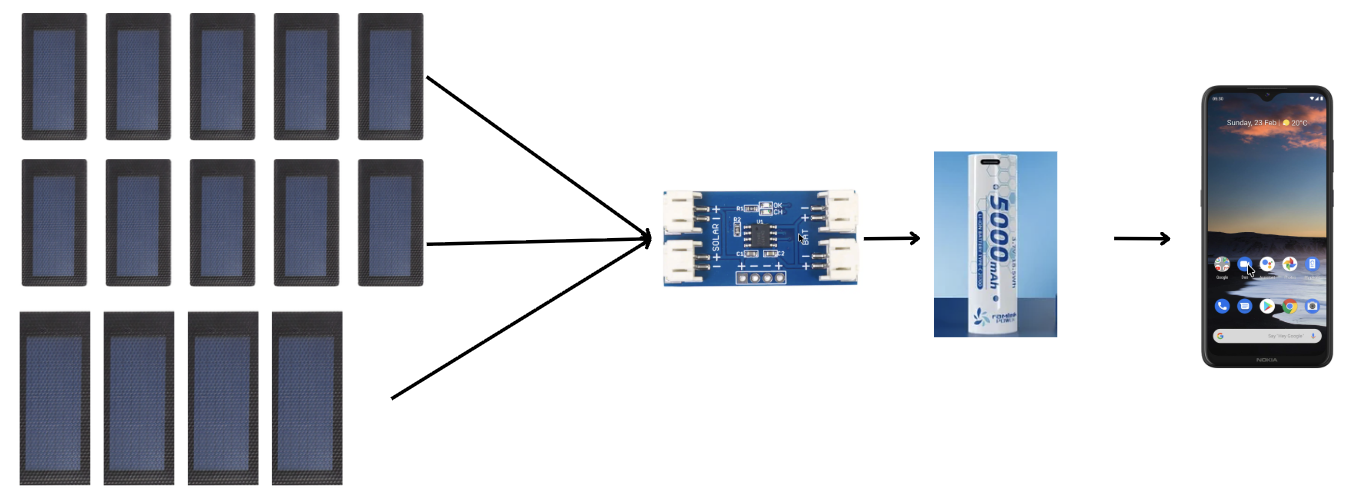
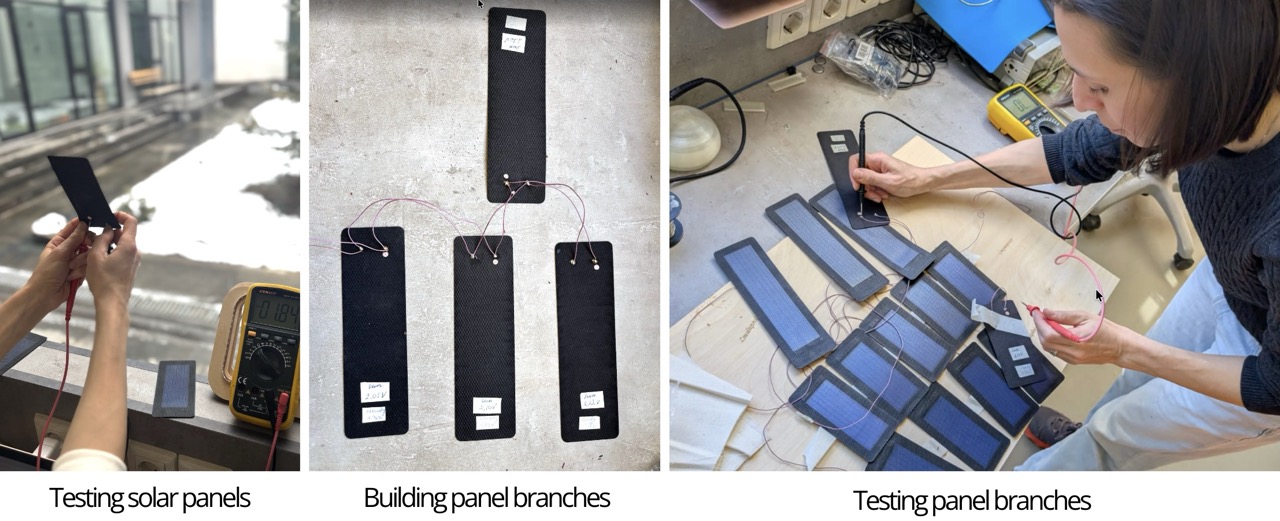
In this project, the solar energy system consists of small photovoltaic panels connected through a CN3065 solar charging controller to a 5000 mAh power bank. The panels were tested individually in both cloudy and sunny conditions to verify their voltage output before being assembled into a multi-branch system designed to remain within the voltage limits of the controller. During testing, the assembled system produced approximately 6.2 volts under daylight conditions.
The garment itself was developed through several prototyping stages. An initial mock-up was created using prototype fabric to test proportions, panel placement, and construction methods. After refining the design, the final prototype was produced using a reinforced water-repellent fabric that I previously used in outerwear production. The development process also involved consultation with my garment technologist, whose support and advice helped refine the construction approach.
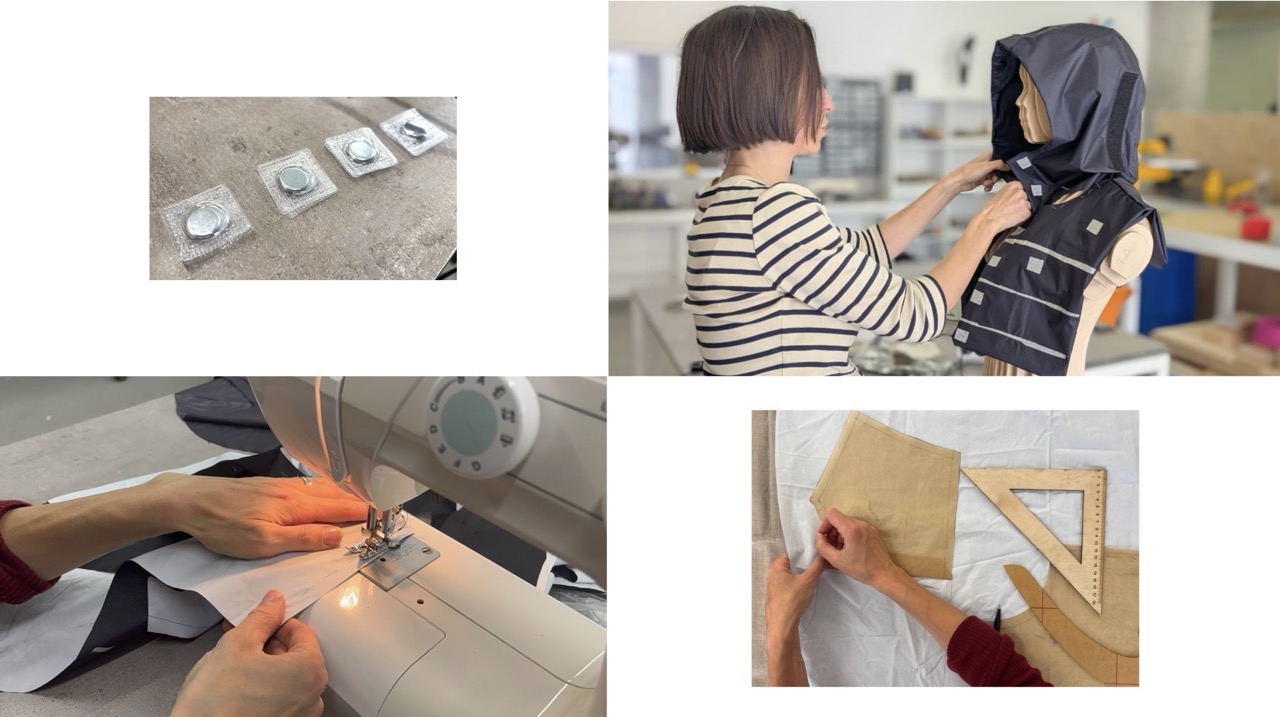
To make the garment modular and maintainable, magnetic snaps were used along the central closure and to attach scarf elements to the vest structure. Solar panels are attached using velcro tape, allowing the electronic components to be removed when necessary. For additional reliability, the solar controller and power bank are placed inside a separate removable module attached with velcro. This module can be placed inside a garment pocket or inside a backpack if desired.
The project does not attempt to replace traditional solar energy infrastructure. Instead, it explores a smaller and more personal scale of renewable energy use. By integrating energy generation into clothing, the project suggests a future in which garments can actively interact with the environment and collect energy as we move through the world.
Ultimately, this work investigates how wearable design might contribute to a more sustainable relationship between technology, mobility, and renewable energy.
Video / Movie final project
Gallery


Thesis PDF
Download thesis here
Presentation
Download presentation here