11. Open Source Hardware - From Fibers to Fabric
Research & Ideation
 |
 |
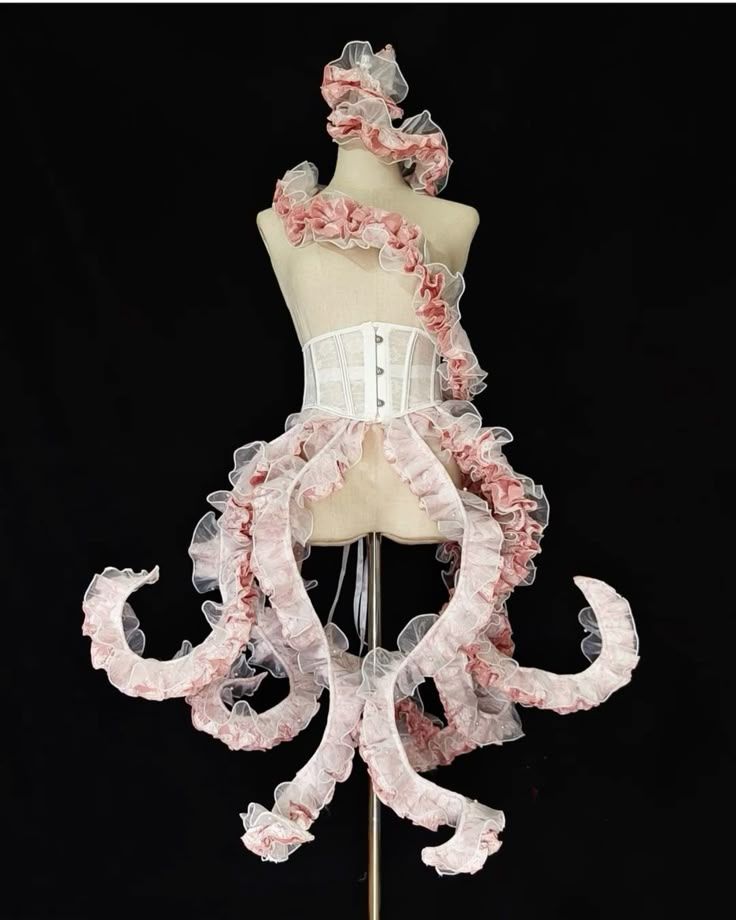 |
Pinterest, Juan Carlos tavárez
 |
 |
 |
 |
 |
 |
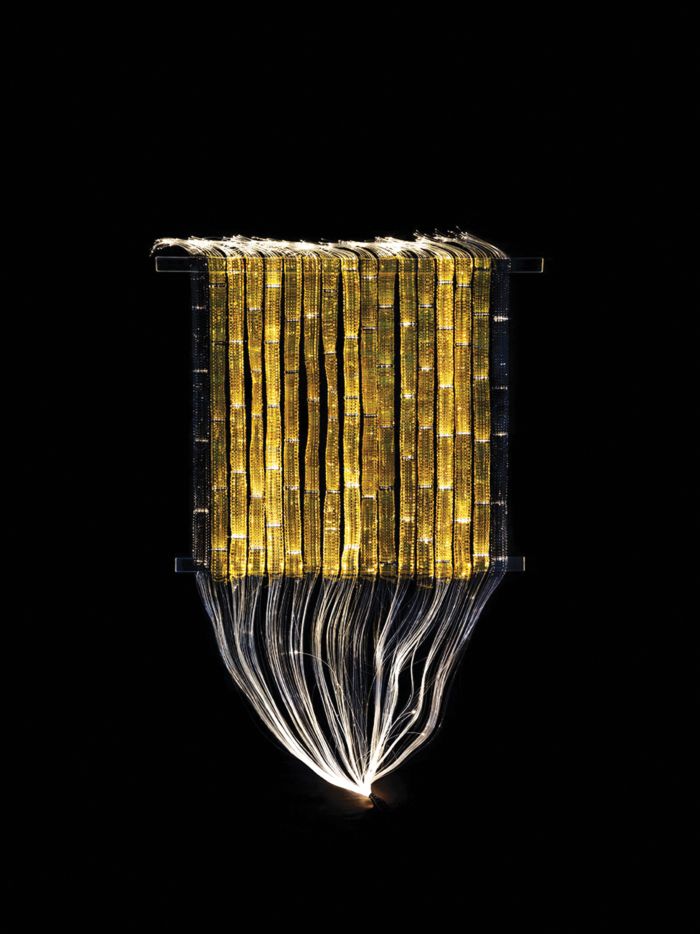
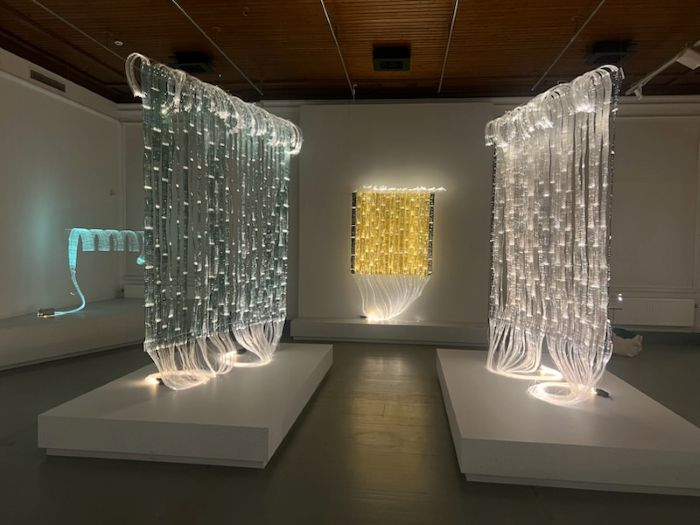
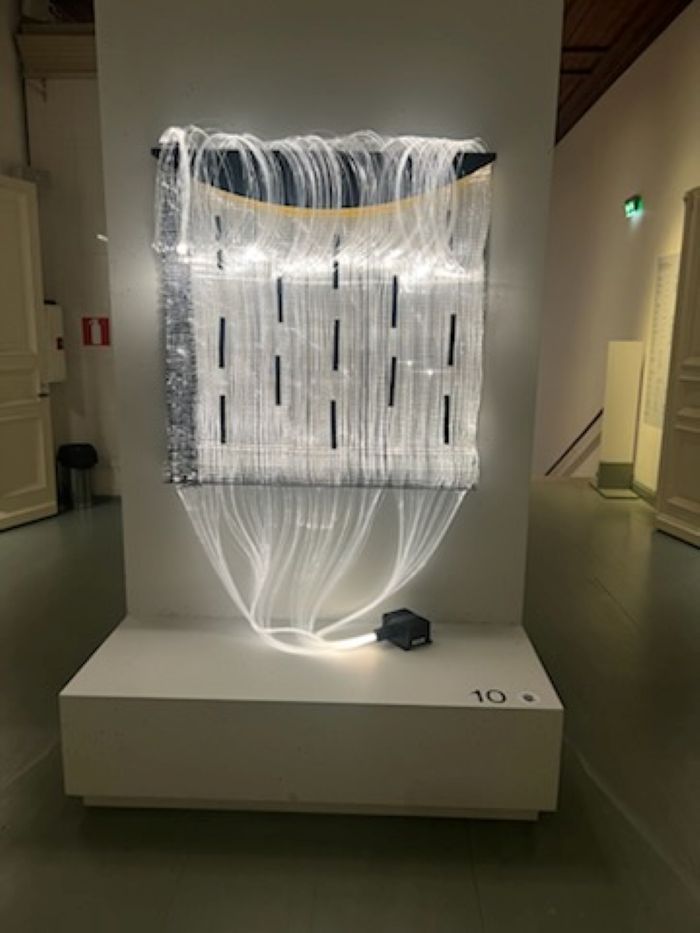
Finnish textile artist Maija Lavonen
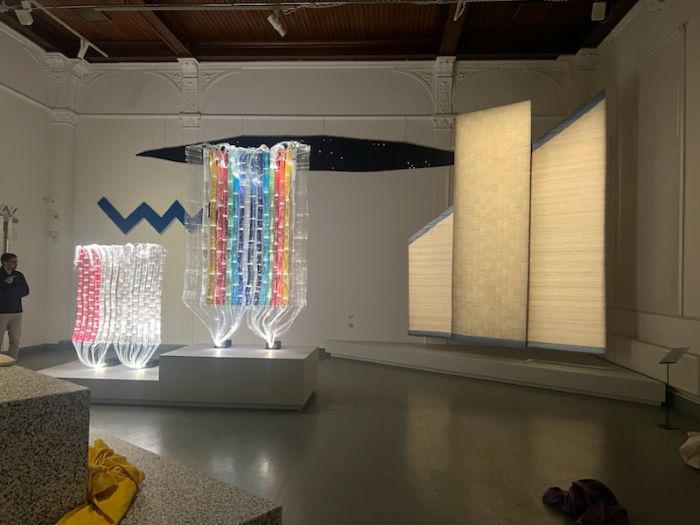
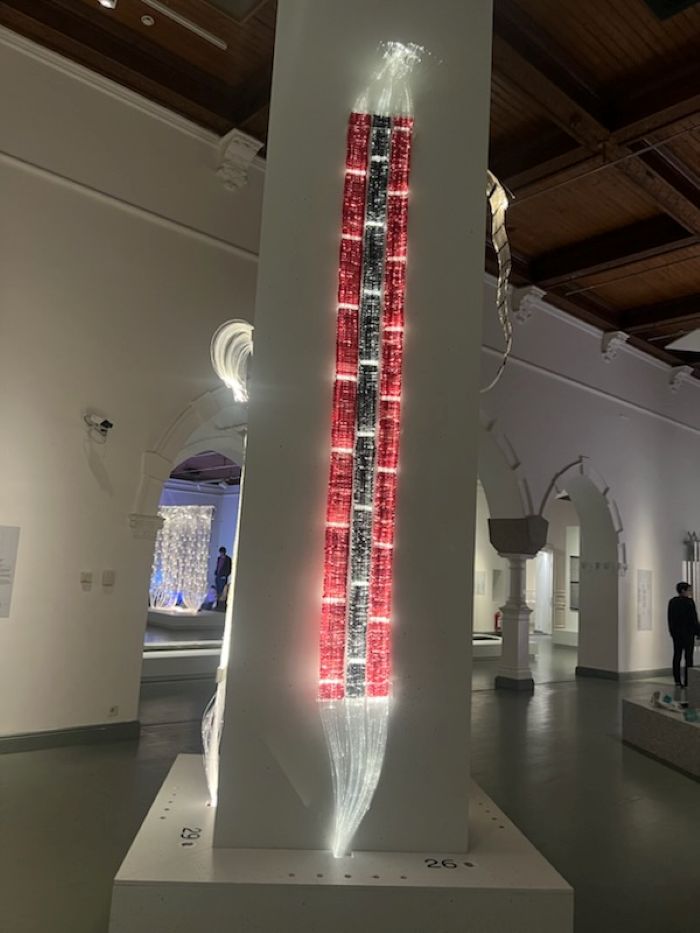
I was lucky enough to see Fiber-optic-based art pieces created by Finnish textile artist Maija Lavonen, at the “Quietly Monumental” exhibition, Architecture and Design Museum in Helsinki, Finland, in spring 2025. She was a professor at the University of Art and Design in Helsinki and was named Textile Artist of the Year in 1996.
Playing with fiber optics can inspire making garments for the body. I would like to try to do some weaving with fiber optics somehow for fashion effects as Maija does. While this inspiration does not exactly fit this assignment, I think the effects she gets can really inspire fashion looks.
Maija has created pieces for interior spaces including Finland’s Parliament House and the Ministry of the Interior in Helsinki. Textile on Three Surfaces is displayed in the waiting room of the Speaker’s Office in the Parliament House, and Nature as the Source is in the second-floor lobby of the Ministry of the Interior, where it often serves as a backdrop for media interviews.
She developed a technique to combine handwoven wide ribbons into large textile artworks, often featuring light. In Corridor of Light, she wove linen yarn and acrylic rods on a fiber-optic loom and projected light onto the piece to create different shapes. She deliberately broke the fibers so that when the light projected on them, they reflected the shape she desired.
"Lavonen also developed a technique to combine handwoven wide ribbons into large textile artworks, often featuring light. In Corridor of Light, she wove linen yarn and acrylic rods on a fiber-optic loom and projected light on the piece to create different shapes. She deliberately broke the fibers so that when the light projected on them, they reflected the shape she desired."
Techniques : "Maija Lavonen used wide hand-woven linen ribbons in many of her large textile works. She sewed them together or combined them with other materials such as steel. In the 2000s, she used the same idea in the production of fiber-optic works. The optical fiber acts as a warp instead of linen and guides light to the work."
Research: YouTube Videos to learn more about weaving and sewing with fiber optics
Warp and weft definitions found here
Warp Direction: Vertical threads on a loom. Function: Forms the structural foundation of the fabric. Characteristics: Typically stronger, more tightly twisted, and less stretchy because they are held under high tension. Identification: Runs parallel to the selvage (the finished edge of the fabric). Weft Direction: Horizontal threads woven across the warp. Function: Fills in the structure and creates the fabric's width and pattern. Characteristics: Generally less strong and more flexible, as they are not under the same tension as the warp. Identification: Runs perpendicular to the selvage. Alternative name: Also called the "cross grain".
Resultant Machine
I changed my plan from the research above, mosytly because my colleague, Anupam, Kumar, an electrical engineer, enjoyed helping me make Week 9's soft speaker with the embroidered spiral of conductive thread. This project is his idea, designed as a variation of that soft speaker. I still am interested in the research above and potentilally thinking about how to make or aquire somekind of machine loom to help me weave together a vareity of soft materials and fiber optics.
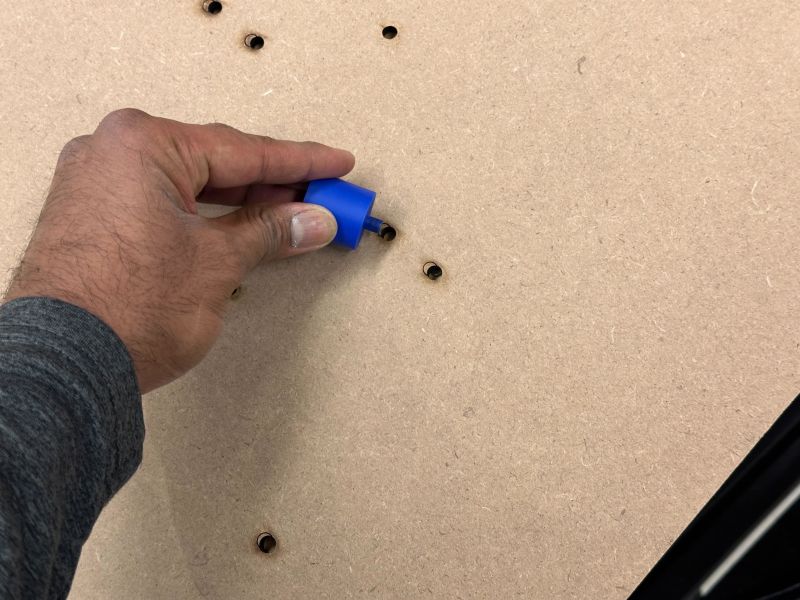
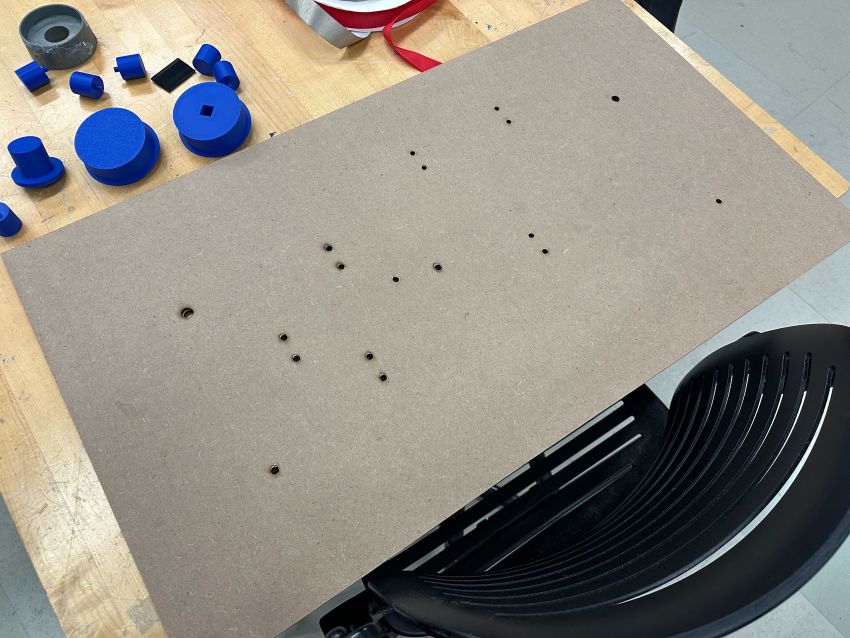
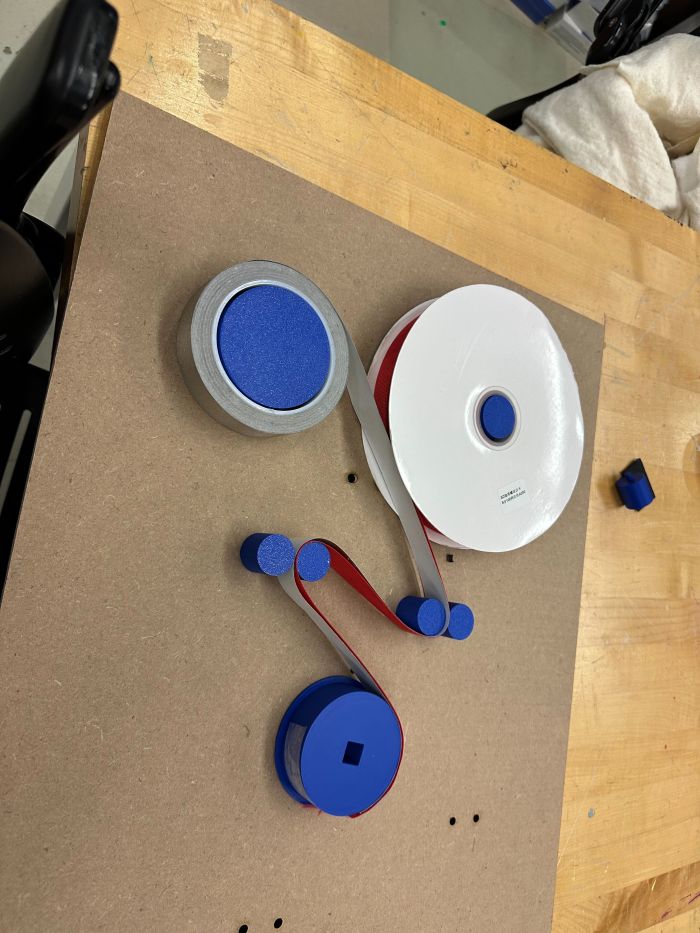
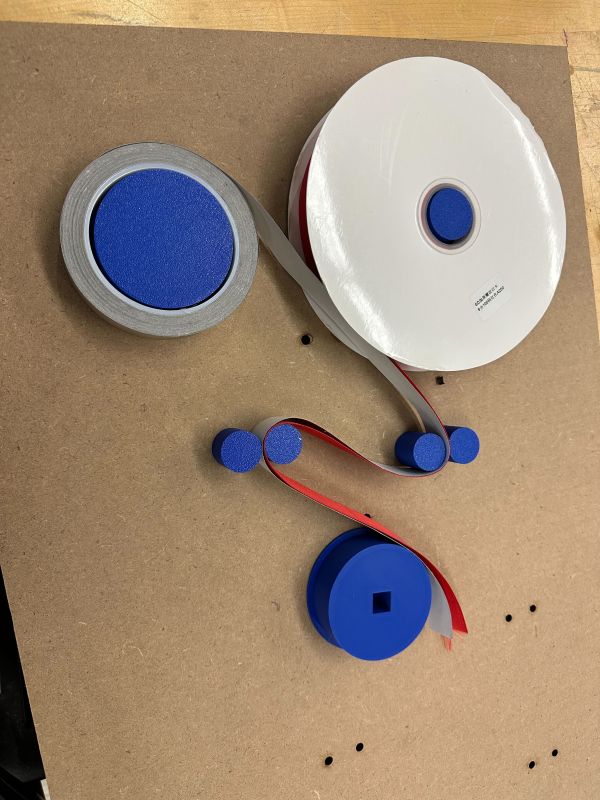
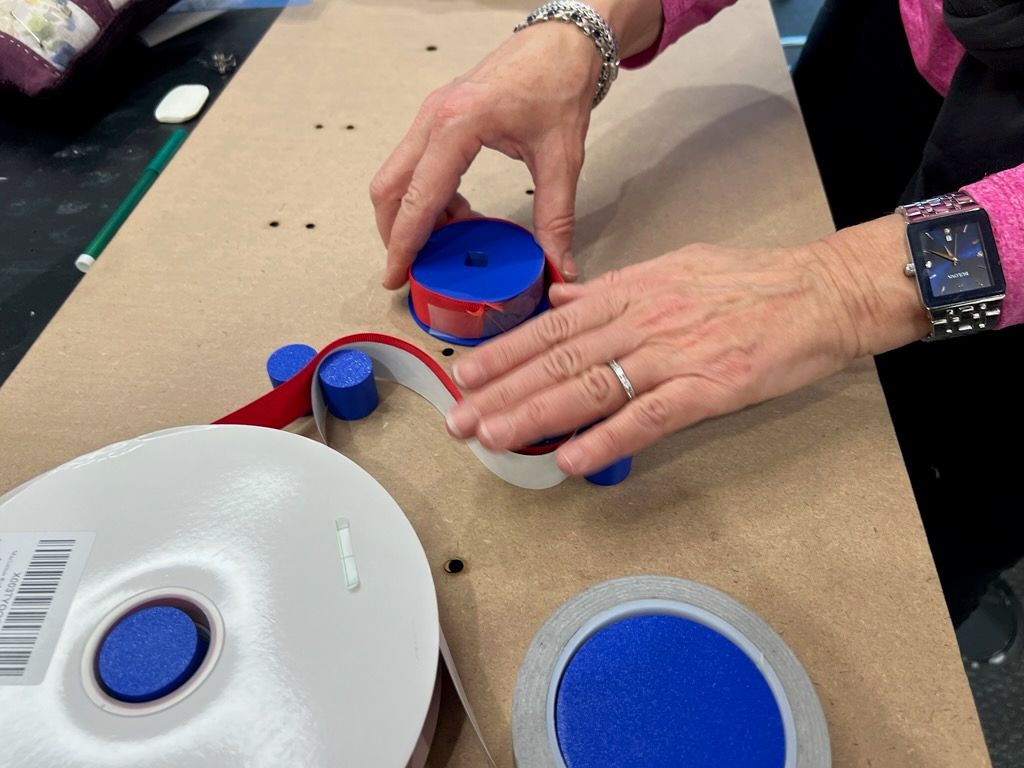
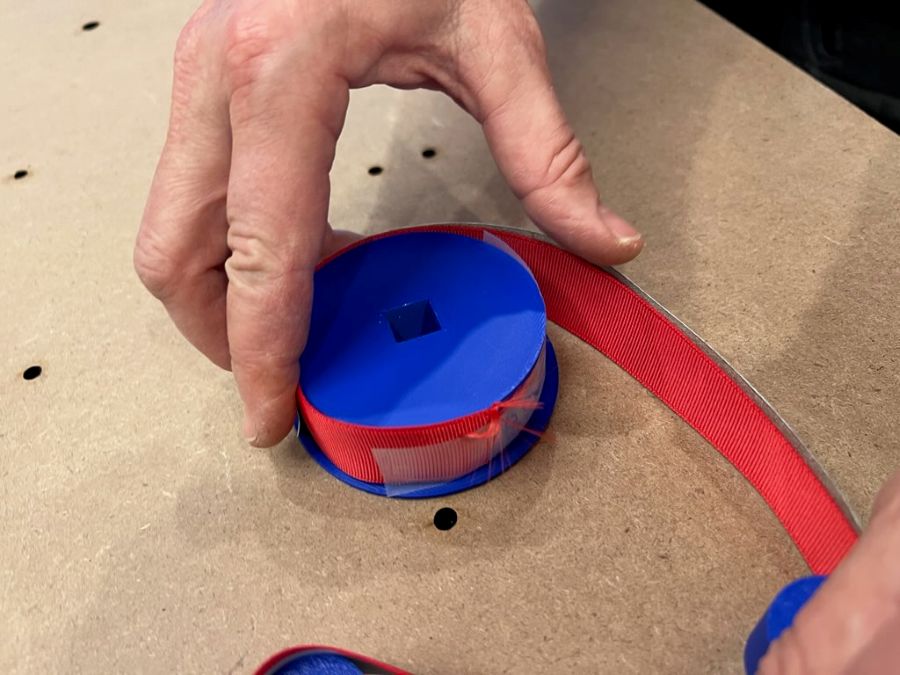
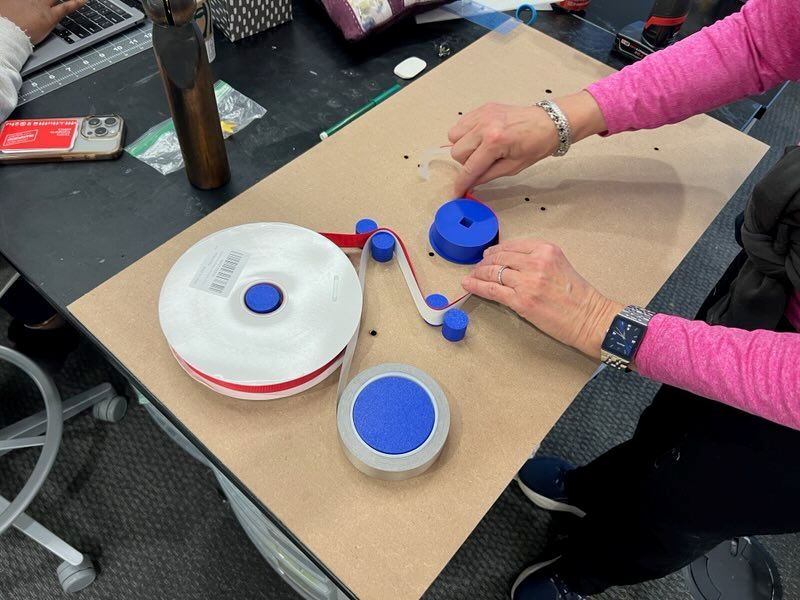
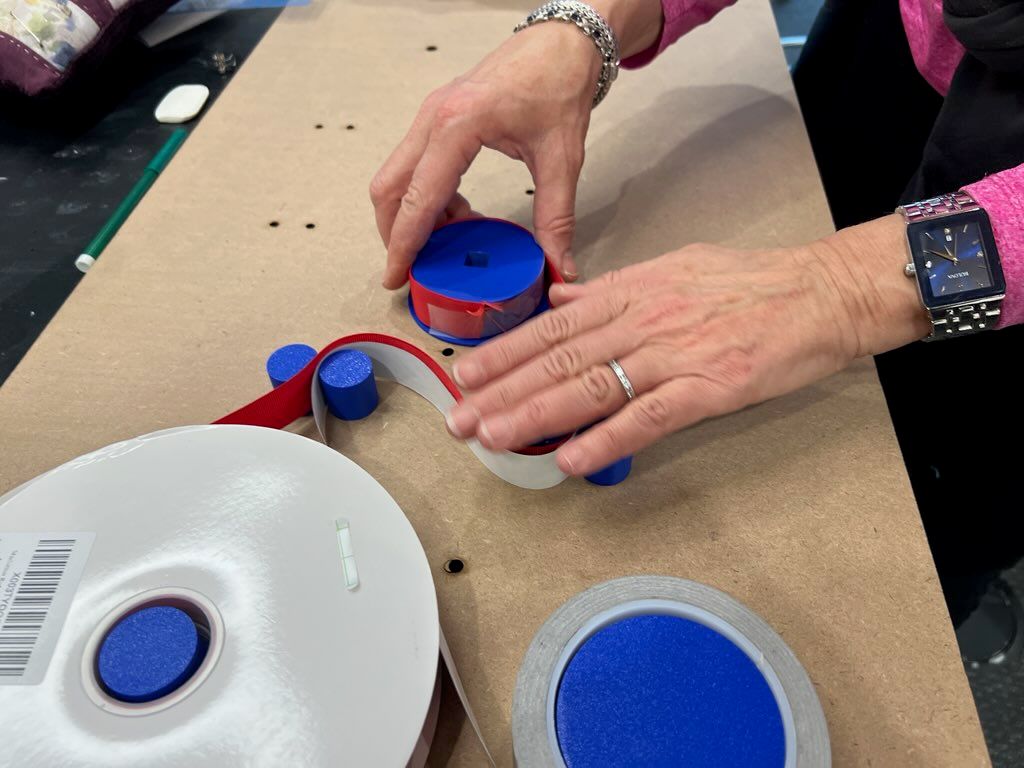
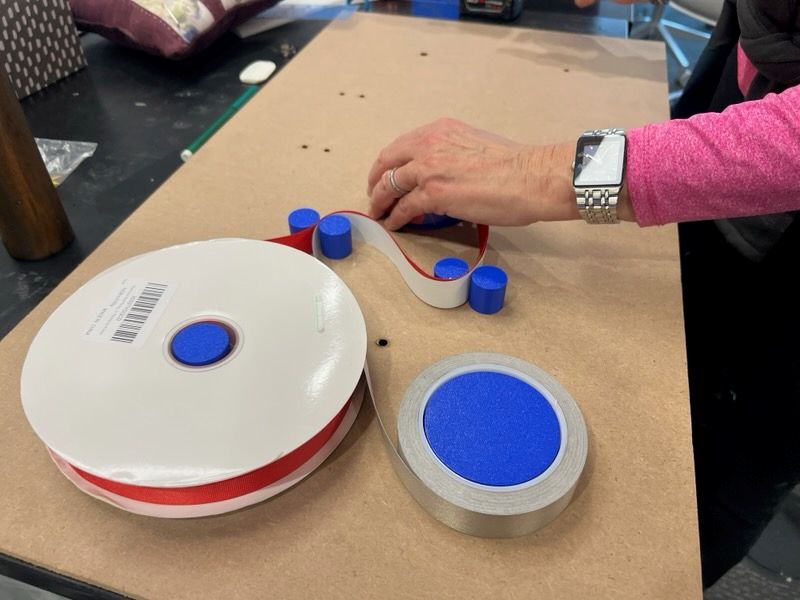
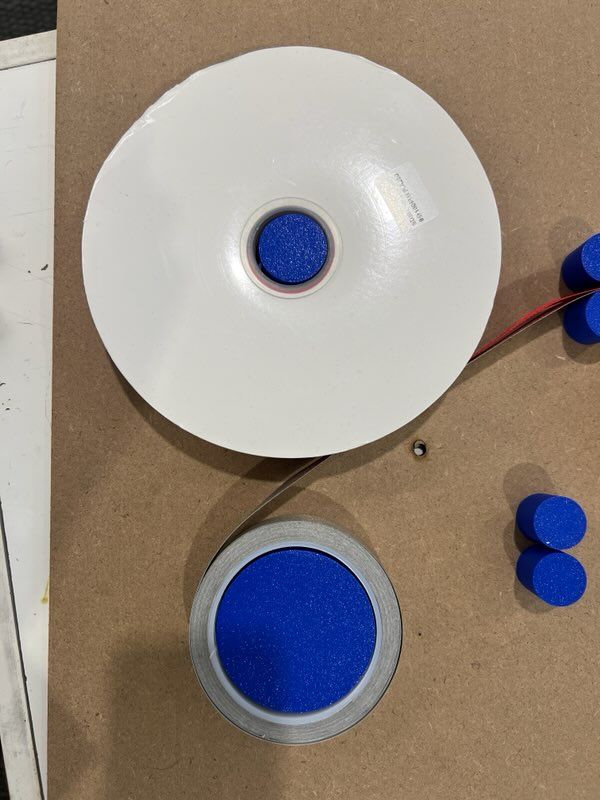
The "machine" I made, with Anupam's help, is a spooler to wind a conductive and non- conductive material to make a soft speaker. This device is playing with the soft speaker I made for Week 9, Wearables, for which we embroidered a tight spiral of one conductive thread (in the bobbin) and one non-conductive thread (top thread). In the images below, we have a spool of a conductive material and a spool of grosgrain ribbon. They both slide through 2 3-D printed small circular holders, designed to spin, and wind around each other, like a tighter version of the embroidered spiral velveteen speaker device.
To make this device, we:
1) Measured the interior of two existing spools, one of conductive and one of non-conductive material.
2)3-D printed interior circles to place inside the spools so they could spin in place, incuding:
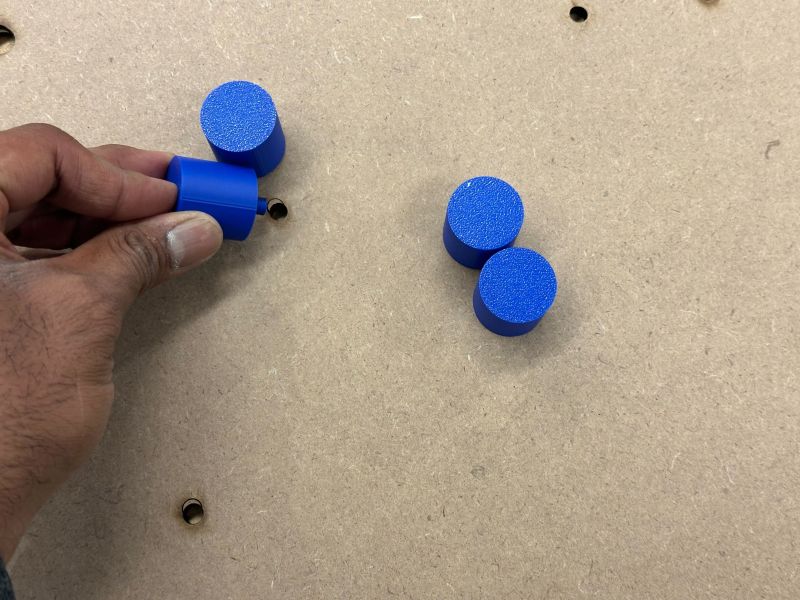
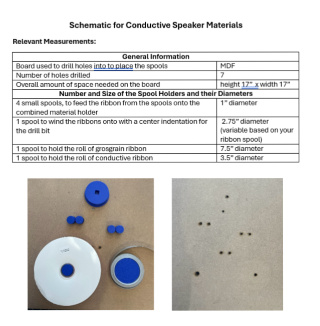
1. 3-D printed 4 x 1" diameter spools to use to hold the winding ribbons in place.
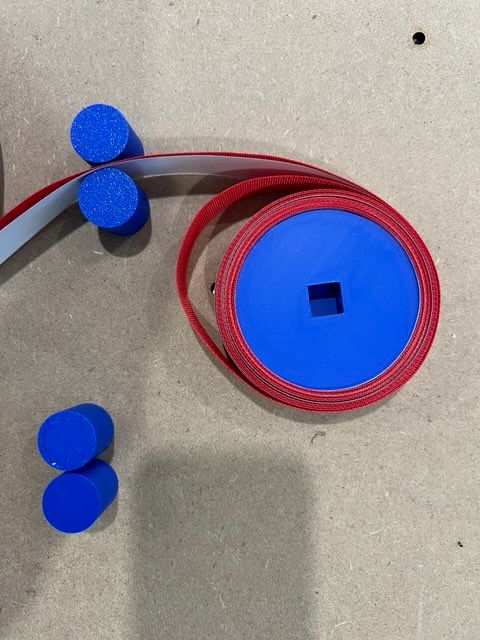
2.3- D printed a spool onto which the resultant double ribbon soft speaker would wind with an interior center indentation fitted to the drill bit we will use to help turn the spool and wind the ribbons together.
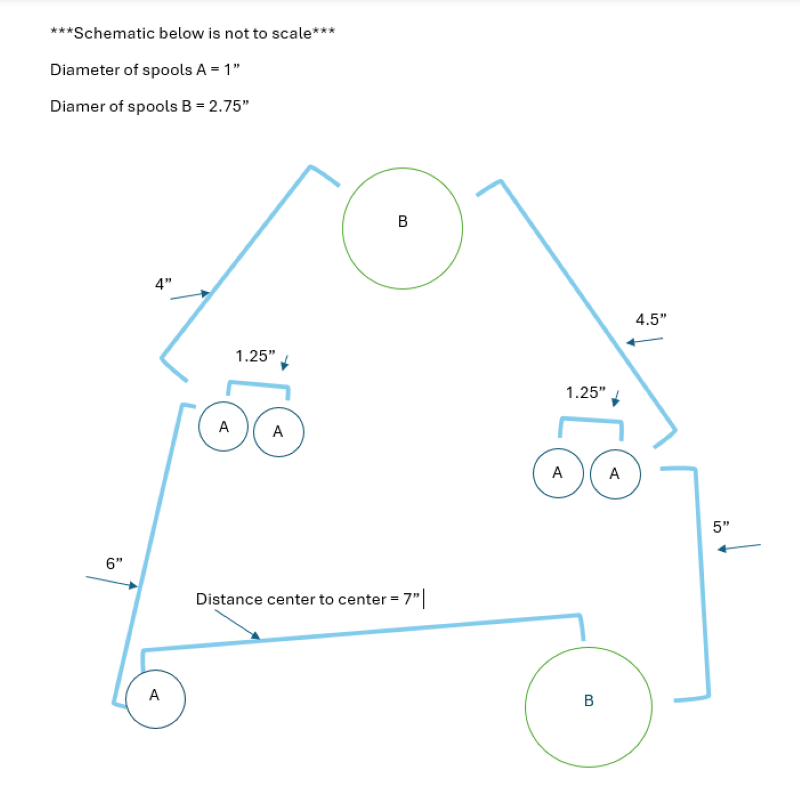
3. Used a board to drill holes into which all the spools were inserted.
4. Placed the 3-d printed spools into the board.
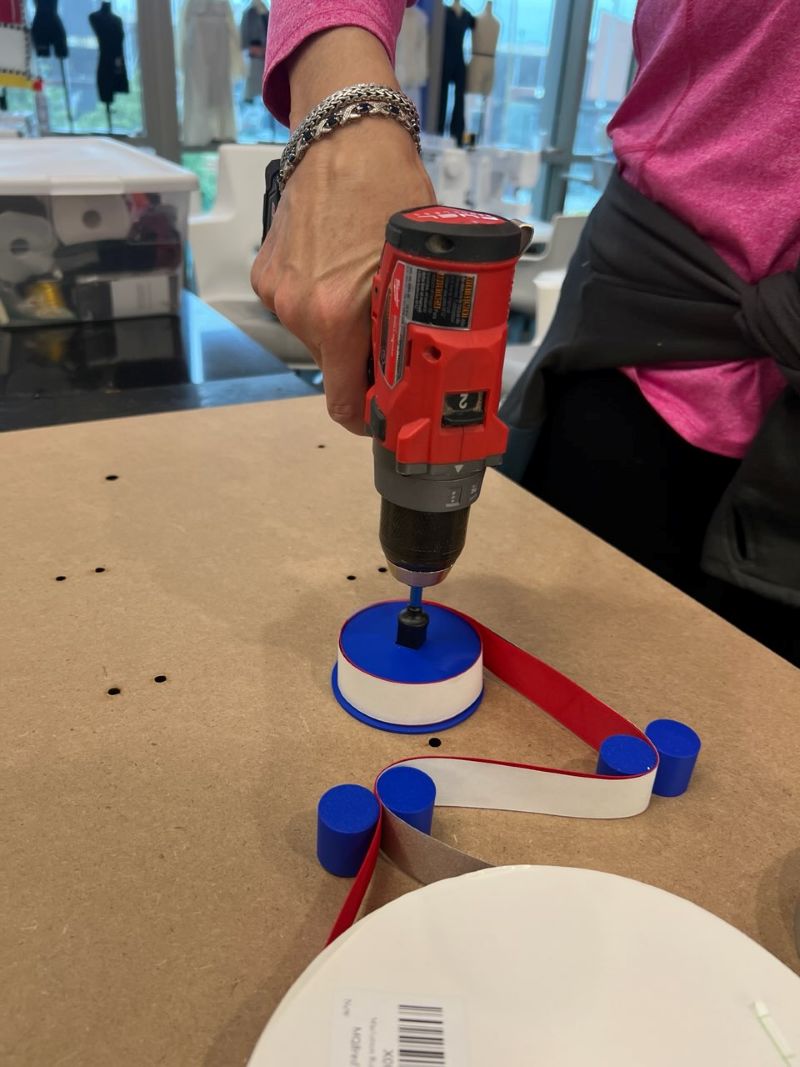
3)Placed an electric drill bit into a space custom printed for it to fit into. Ran the drill and turned the ribbons into a spiral.
4)Inserted the drill bit, then spun the ribbon onto the empty spool, creating a spiral of a conductive and non-conductive ribbon in a circle to use as a soft speaker.
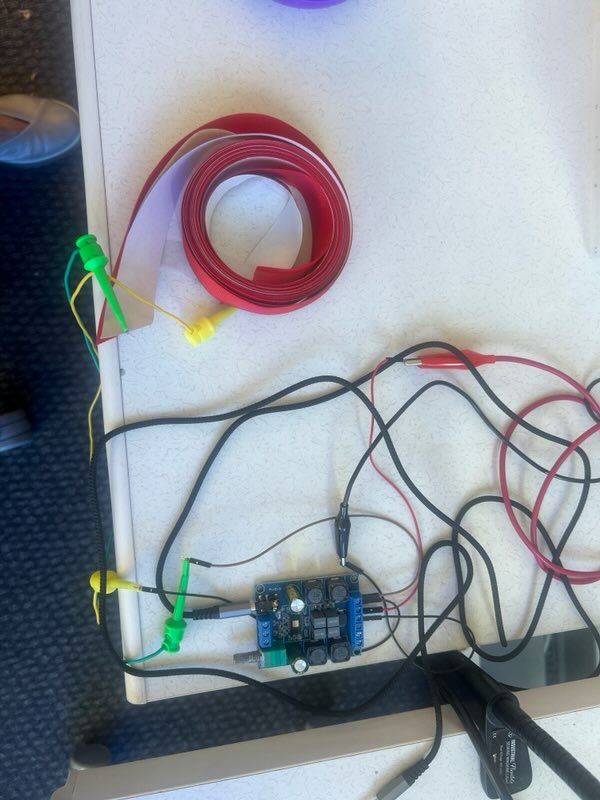
5)Hooked-up the componenets we used for the soft speaker in week 9, including the steps below (taken from Week 9):
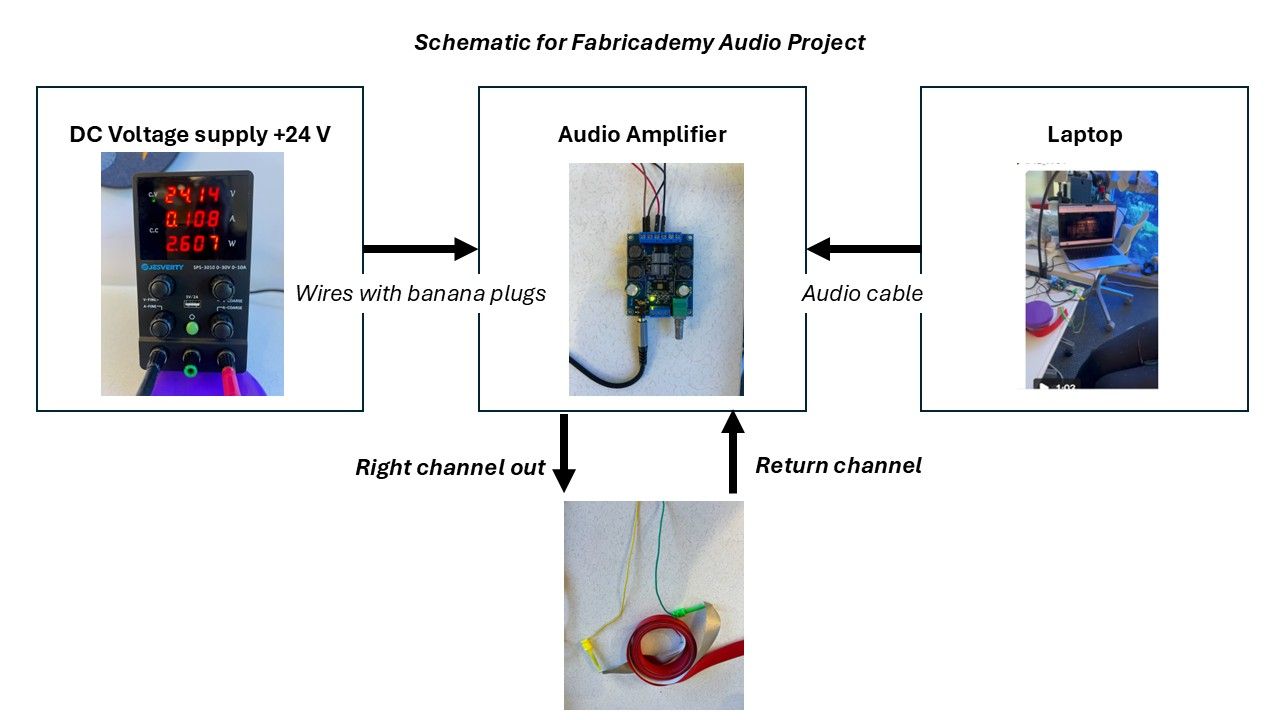
1)Attached a 3.5mm TRS Auxiliary Audio Cable to the computer then to a Digital Amplifier Board powered using a 24v signal, PA3116D2 Dual Channel Audio Stereo AMP High Power Digital Subwoofer Power Amplifier Board 2x50W 5V 12V 24V
2) The Digital Subwoofer Power Amplifier Board amplifier board was connected to a positive and negative conductive bobbin thread of a spiral made from conductive fabric tape and grosgrain ribbon.
3) Connected to the Digital Amplifier Board.
4) The music played when the magnetic pin cushion was lowered all the way to the embroidered spiral with the positive side facing upwards.
5) The pin cushion provided a large enough magnet for the sound to play.
In the event you have a softer audio file, you cannot make it work.
Application
According to Anupam, "wearable electronics are a mainstay. If we want soft, conformal speakers we now have the ability to make them." I believe that means he feels we were successful and that this exercise has applications to future projects.
Process
Photo Gallery and Videos of our Set-Up and Running Process
 |
 |
 |
 |
 |
 |
 |
 |
 |
 |
 |
 |
 |
 |
Schematic for Setting Up the Board
 |
 |
Schematic for Setting Up the Electronics
 |
Below is the video of the soft speaker working!
Fabrication files
Links to 3-D printing files for this project can be found below:
Output Spool with Drill Socket here
Little Spool here
Big Spool here
Spooler templatehere
Bill of Materials
Materials
| Qty | Description | Price | Link | Notes |
|---|---|---|---|---|
| 1 | Faraday Fabric Tape 1inch x 50 Feet Double Conductive High Temp Cloth Tape for Electrical Connection | 9.99 $ | https://www.amazon.com/dp/B097HPSLTH?ref_=ppx_hzod_title_dt_b_fed_asin_title_0_0&th=1 | |
| 1 | Roll grosgrain ribbon, 1 inch wide x 100 yards | 7.99 $ | https://www.amazon.com/your-orders/order-details?orderID=114-8405083-3081046&ref_=ppx_hzsearch_conn_dt_b_fed_order_details_1 | |
| 1 | Digital Amplifier Board,TPA3116D2 Dual Channel Audio Stereo AMP High Power Digital Subwoofer Power Amplifier Board 2x50W 5V 12V 24V | 12.99 $ | https://www.amazon.com/dp/B08GYQTTXF?ref_=ppx_hzsearch_conn_dt_b_fed_asin_title_2&th=1 |