Deliverables
Midterm Presentation
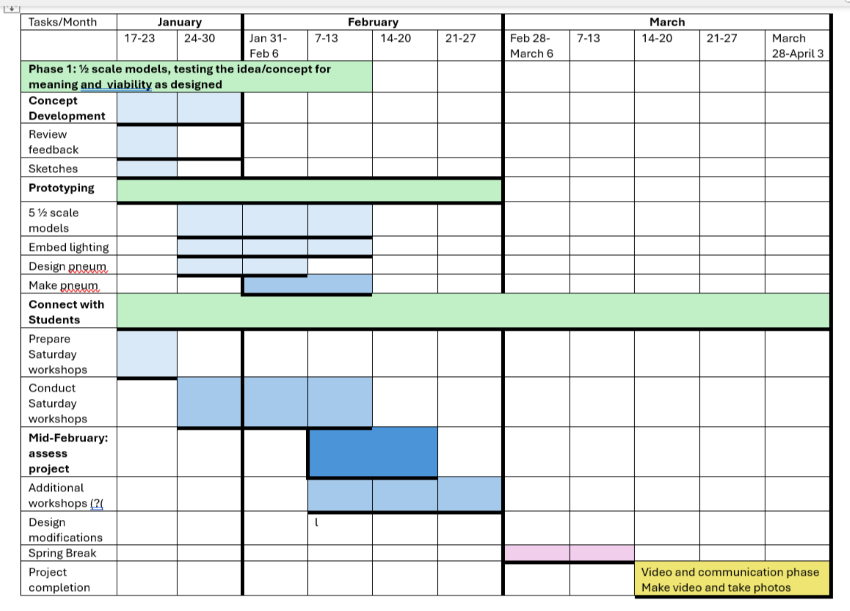
GANTT
BoM bill of materials
This is an initial list of materials. It can be added to.
Materials
| Qty | Description | Price | Link | Notes |
|---|---|---|---|---|
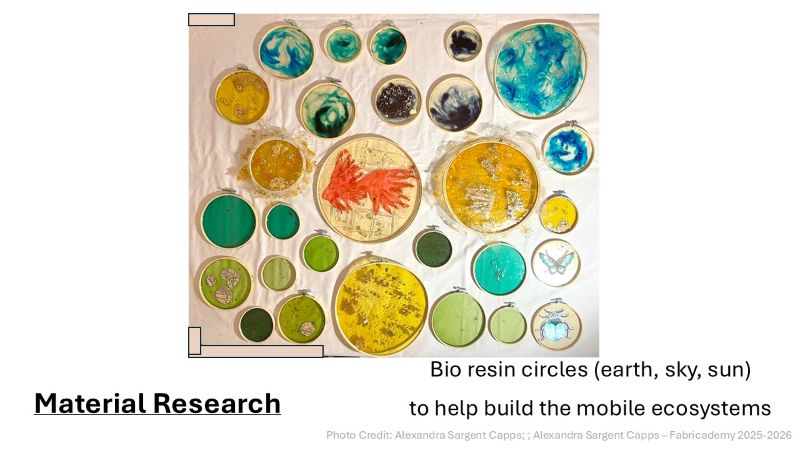
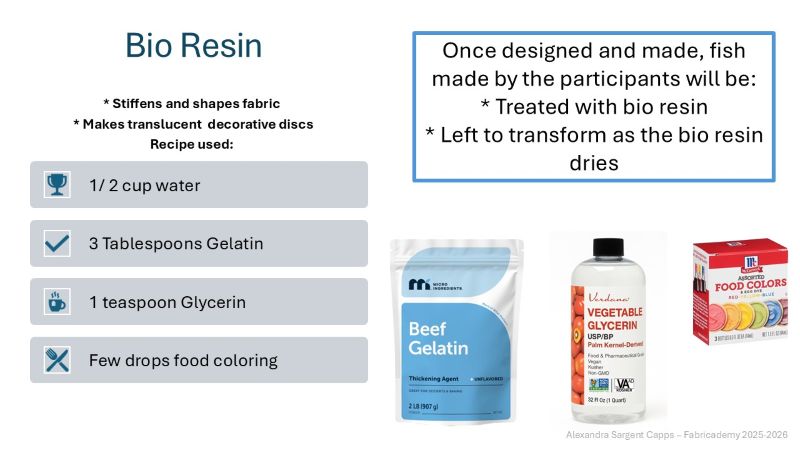
| 1 | 2 pound bag of beef Gelatin powder | $30.00 | https://www.amazon.com/dp/B0C35DQQM9?ref=ppx_yo2ov_dt_b_fed_asin_title&th=1 | This bag is approximately 8 cups, or 16 times the standard bio resin recipe I have on my presentation slide |
| 2 | 32 ounces Vegetable Glycerin | $15.00 | hhttps://www.amazon.com/dp/B0DDJSJQ1H?ref=ppx_yo2ov_dt_b_fed_asin_title | |
| 3 | 50 small curtain clips | $8.00 | https://www.amazon.com/dp/B01M01I3QL?ref=ppx_yo2ov_dt_b_fed_asin_title | |
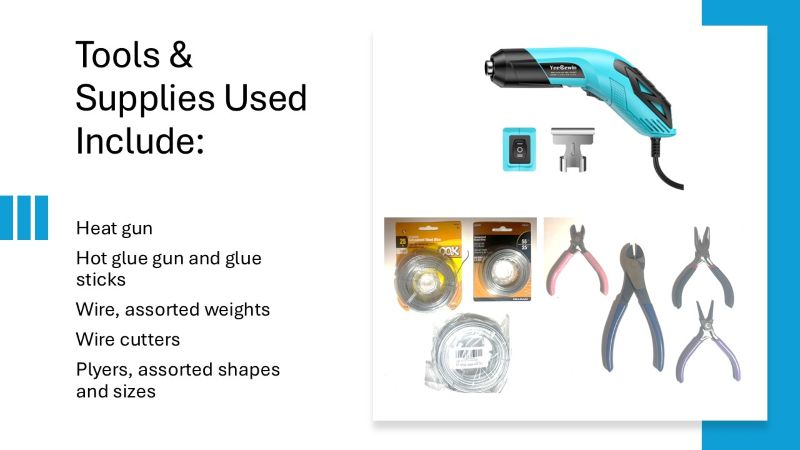
| 4 | Invisible hanging wire with 40 aluminum crimping sleeves, | $7.00 | https://www.amazon.com/dp/B08TTS287C?ref=ppx_yo2ov_dt_b_fed_asin_title | |
| 5 | Heat gun for melting plastic bottles | $15.00 | https://www.amazon.com/dp/B0FMQXDK9X?ref=ppx_yo2ov_dt_b_fed_asin_title | |
| 6 | Gold Leaf Sheets 20 Colors Gold Foil Leaf Multi-Color Imitation Gold Leaf Paper | $10.00 | https://www.amazon.com/dp/B0G4BVXTHS?ref=ppx_yo2ov_dt_b_fed_asin_title&th=1 | |
| 7 | 16 Gauge Galvanized Steel Wire, 25-Feet | $10.00 | https://www.amazon.com/dp/B000BPDBFU?ref=ppx_yo2ov_dt_b_fed_asin_title&th=1 | |
| 8 | Food coloring for coloring the bio resin | $10.00 | https://www.amazon.com/dp/B0B591N59Y?ref=ppx_yo2ov_dt_b_fed_asin_title&th=1 | |
| 9 | 50pcs 1.5mm x 300mm 304 Stainless Steel Rod | $12.00 | https://www.amazon.com/dp/B0CX19H4HW?ref=ppx_yo2ov_dt_b_fed_asin_title&th=1 | |
| 10 | 3mm Craft Wire for Sculpting, 52 Ft Aluminum Bendable Thick Meta | $11.00 | https://www.amazon.com/dp/B09WD3XM59?ref=ppx_yo2ov_dt_b_fed_asin_title&th=1 | |
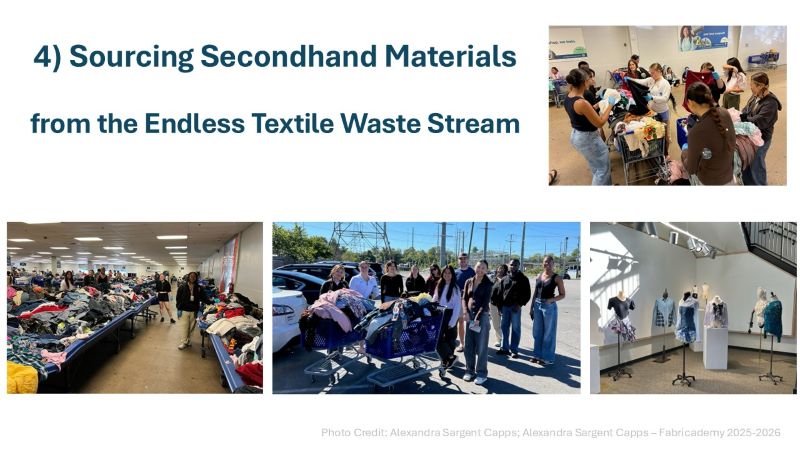
| 11 | Used denim jeans to make fish from | $50.00 | A used clothing outlet | |
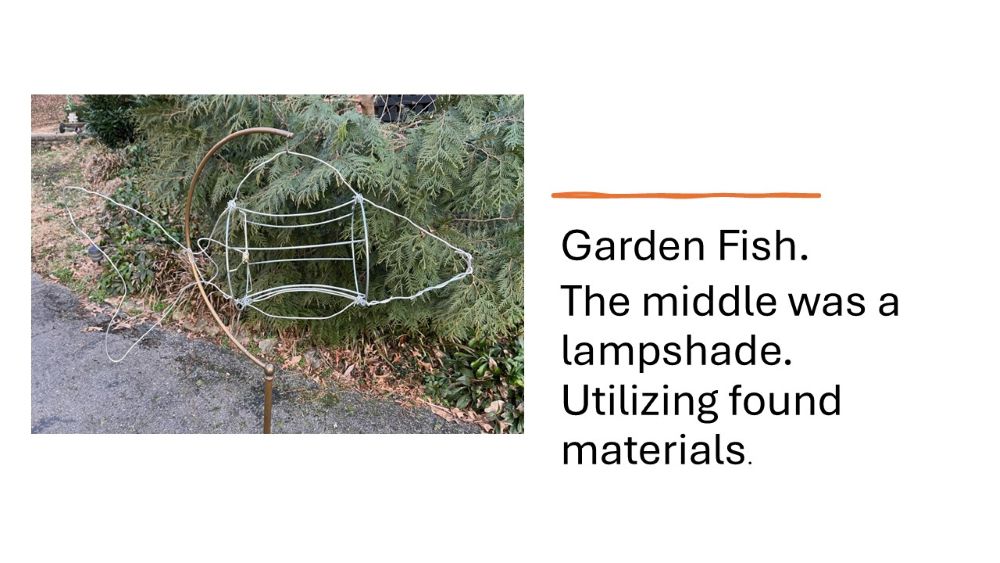
| 12 | Used lamshades and metal structures to make mobiles from | $50.00 | Used home furnishings outlet | |
| 13 | Embroidery hoops, assorted sizes | $8.00 | https://www.amazon.com/gp/aw/d/B0D2RH7PK3/?encoding=UTF8&pd_rd_plhdr=t&aaxitk=570ce92edc8b52f45d6c26810a0f115d&hsa_cr_id=0&qid=1775709641&sr=1-1-9e67e56a-6f64-441f-a281-df67fc737124&ref=sbx_s_sparkle_sbtcd_asin_0_title&pd_rd_w=oGz0Q&content-id=amzn1.sym.2fb72bc8-96ef-420d-b08f-c04b69f36507%3Aamzn1.sym.2fb72bc8-96ef-420d-b08f-c04b69f36507&pf_rd_p=2fb72bc8-96ef-420d-b08f-c04b69f36507&pf_rd_r=8CBW1678Q5ARRHRMBGEE&pd_rd_wg=kDVAO&pd_rd_r=74cb8efc-aa9d-4d4a-9d7e-be8acb0a13ed&th=1 | 6 assorted sizes |
Final Slide Presentation
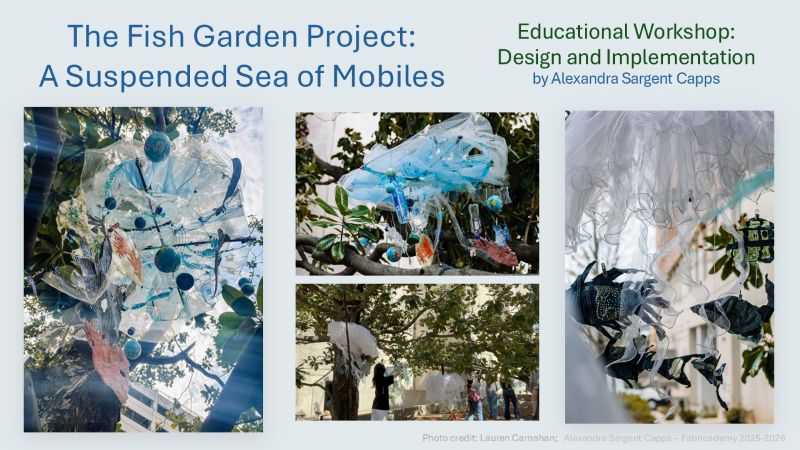
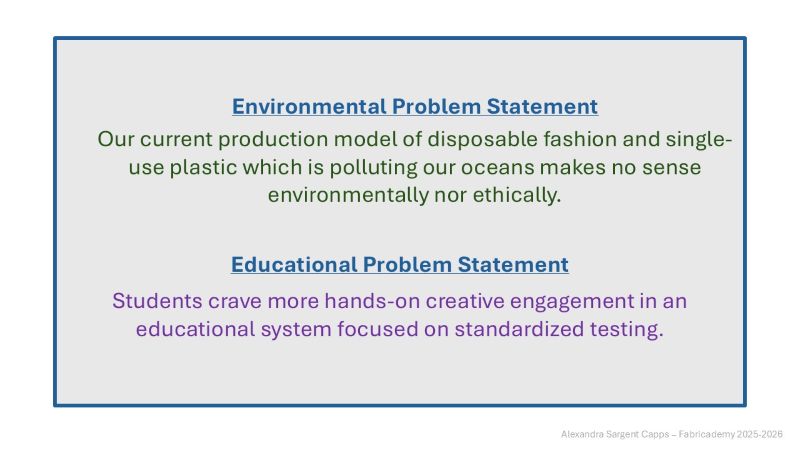
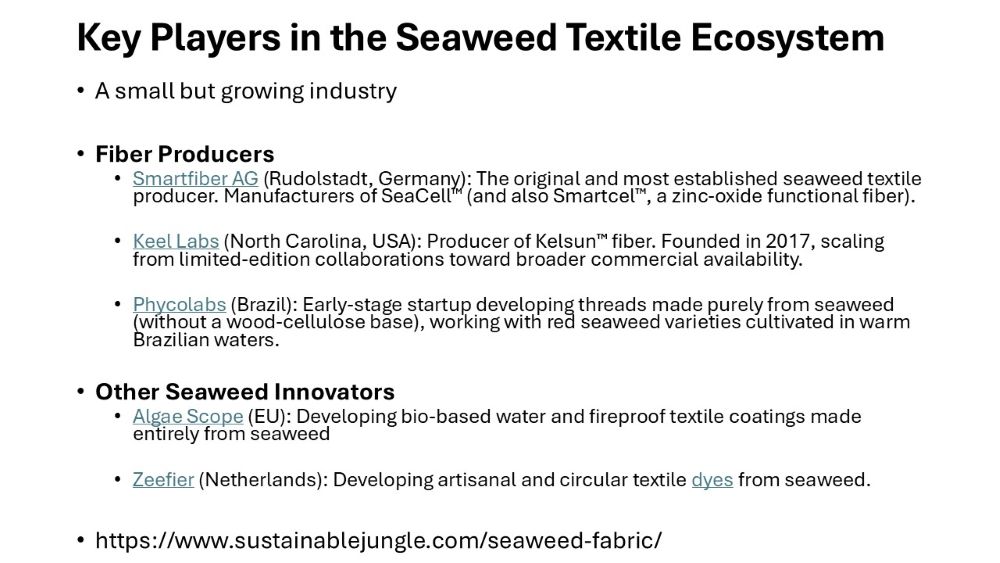

Laser Cutting and Fabrication Files for the Laser Cut Fish
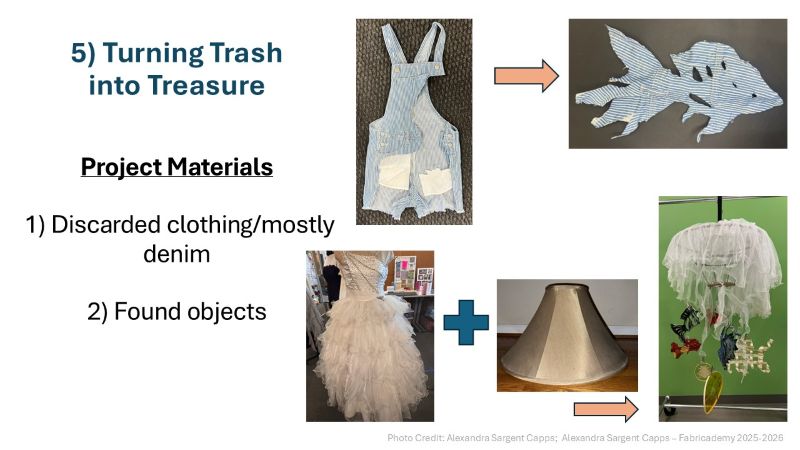
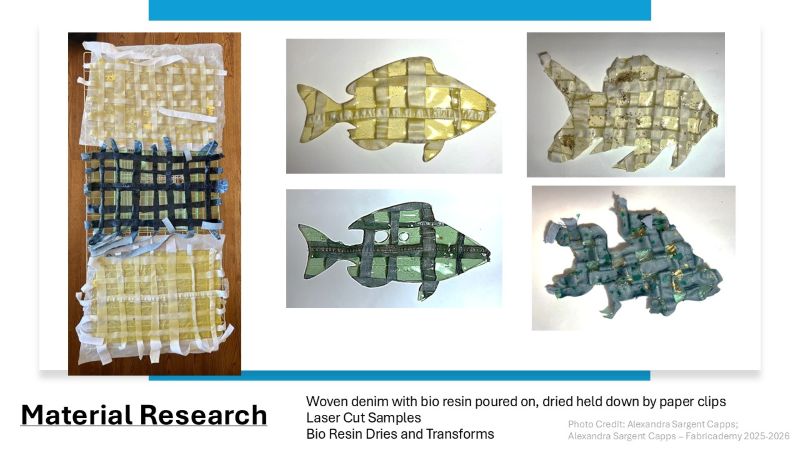
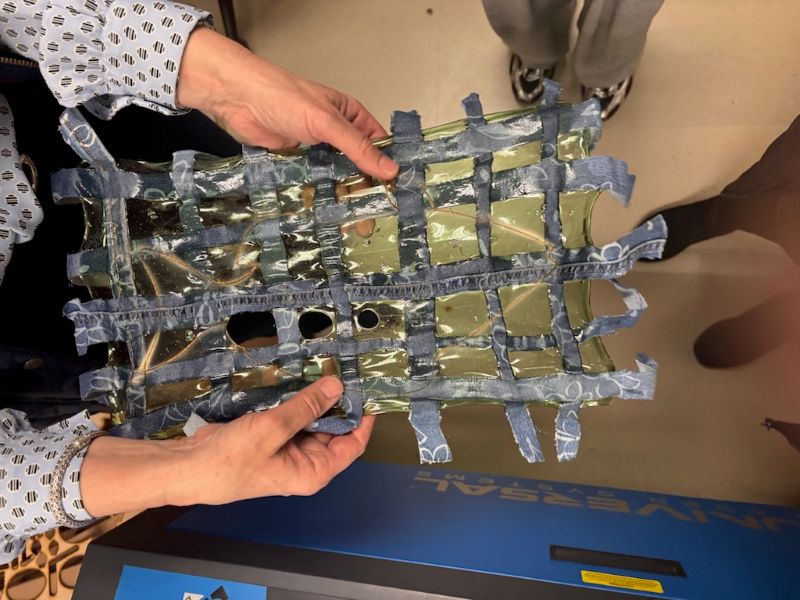
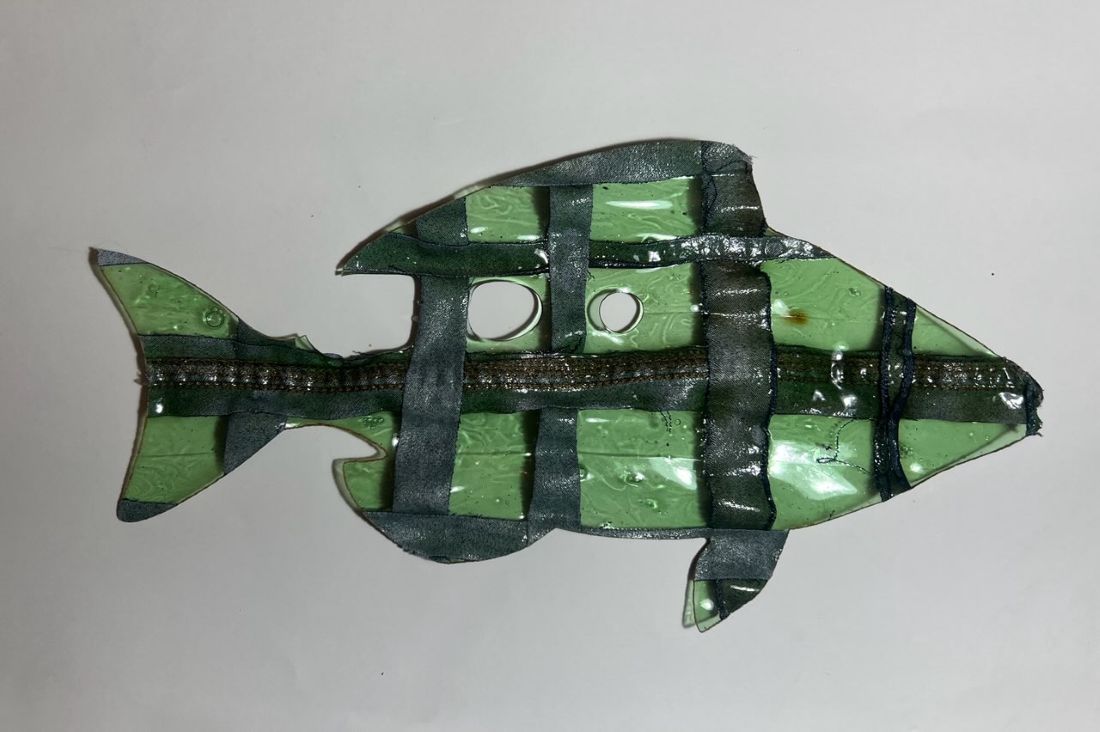
I wanted to dry and cut fish from sheets of bio resin with woven denim strips in two different ways: 1) naturally without manipluating the drying process 2) manipulated, dried flat by clipping the sheets with binder clips to hold it down, then cut with a laser cuter.
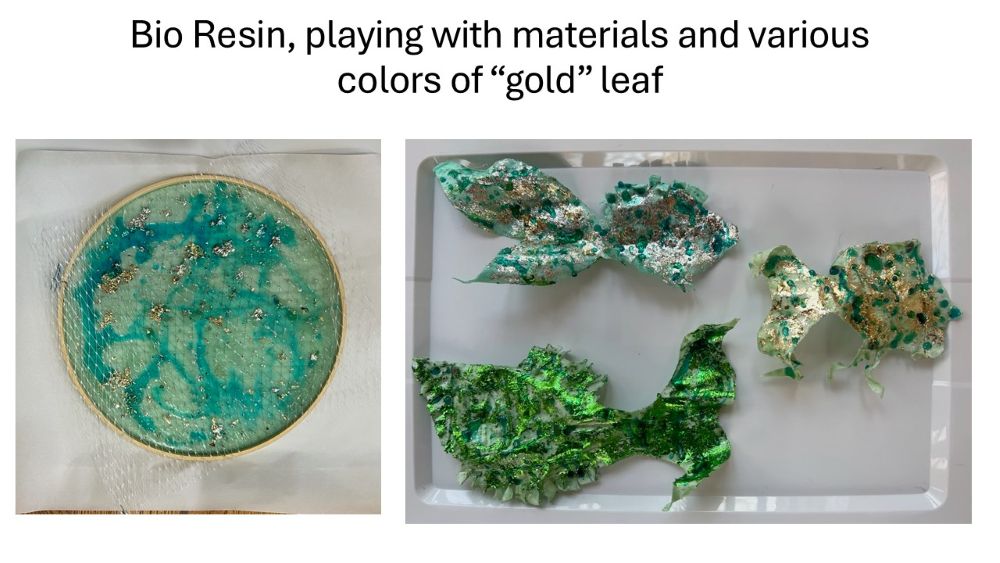
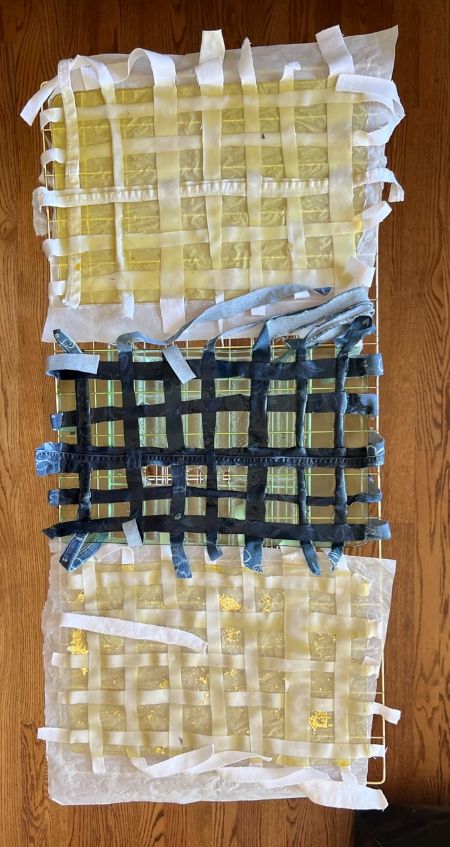
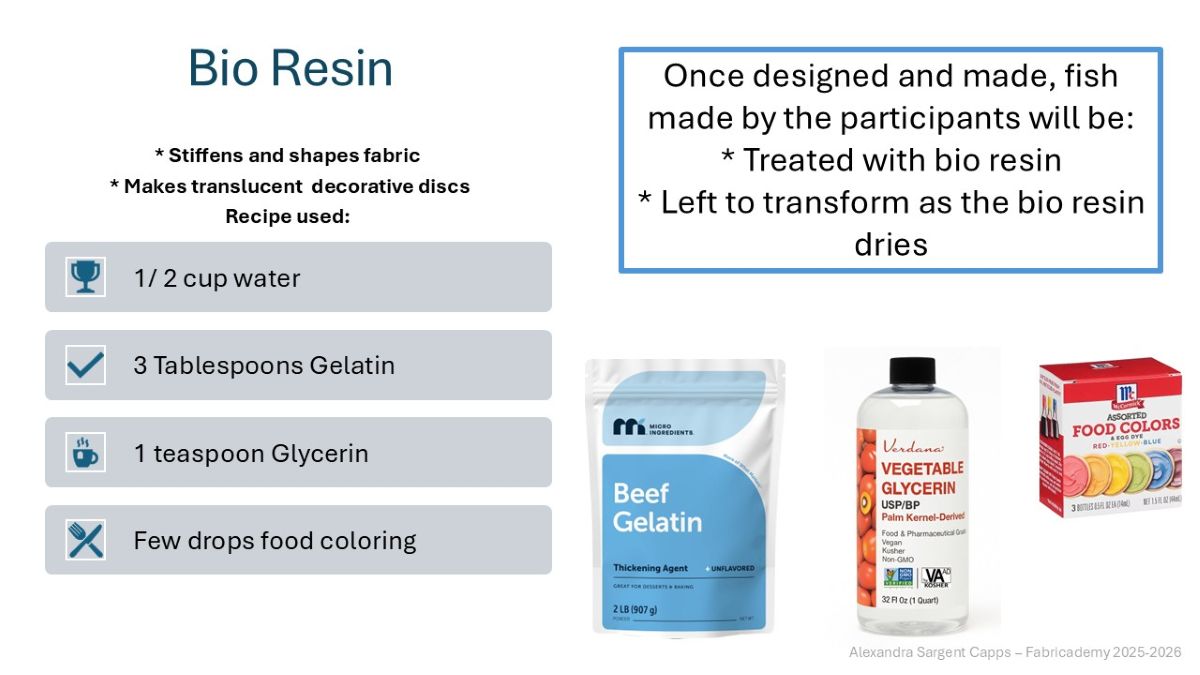
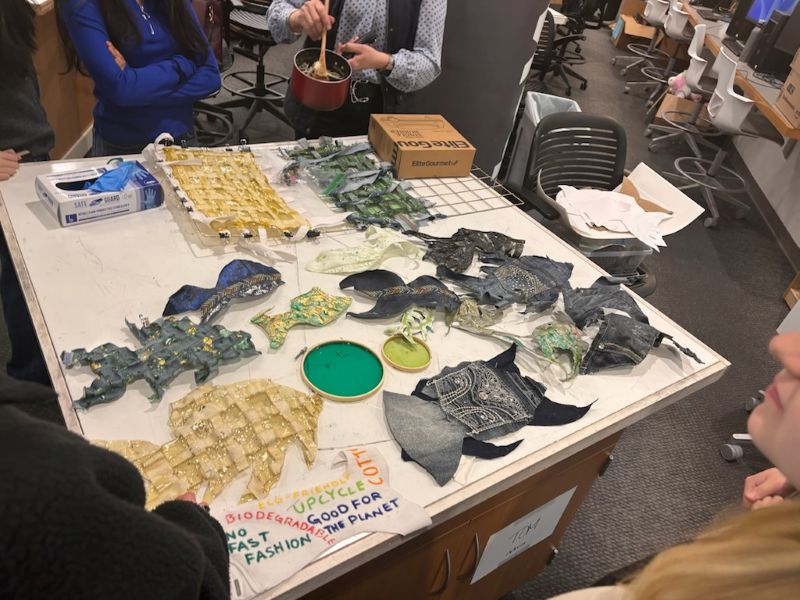
Below are images of the yellow and blue resin that I 1) poured into a cookie sheet with woven strips of denim 2) waited for it to harden so I could take it out of the cookie tray 3) clamped the edges of the sheets of bio resin with denim strips all the way around with binder clips to a stiff metal mesh rectangle to keep it as flat as possible as it dried. I have repeated my slide from above to show the recipe I used for this bio resin. It's qualities are that it has some flexibility but certainly the fish are sturdy enough to hang from the mobiles and keep their shape.
 |
 |
 |
Fish dried flat and cut with a laser cutter
 |
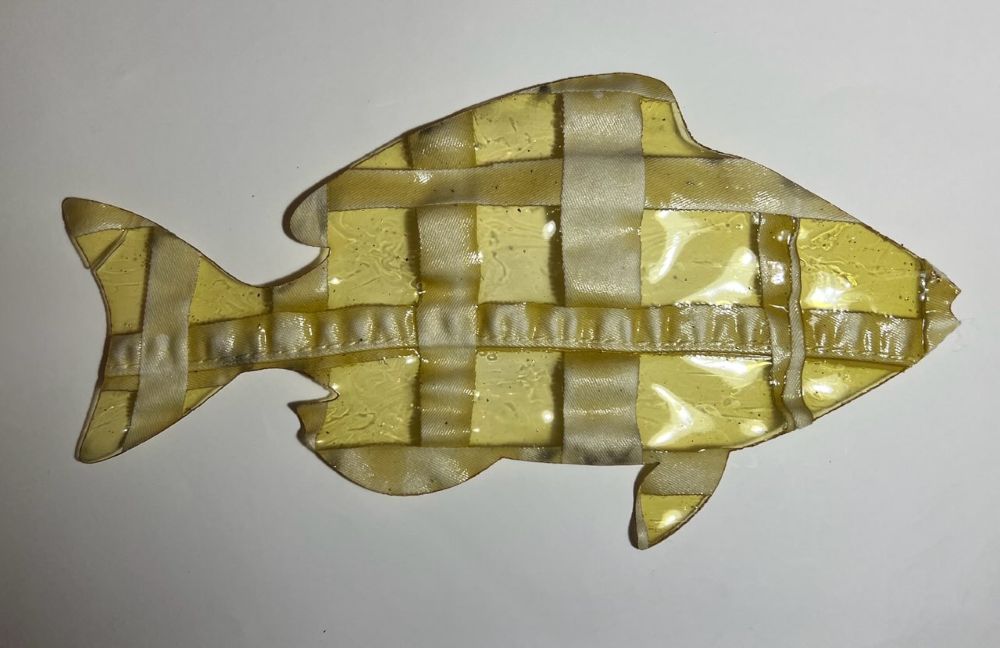 |
Fish dried naturally and cut with scissors before the material hardened too much
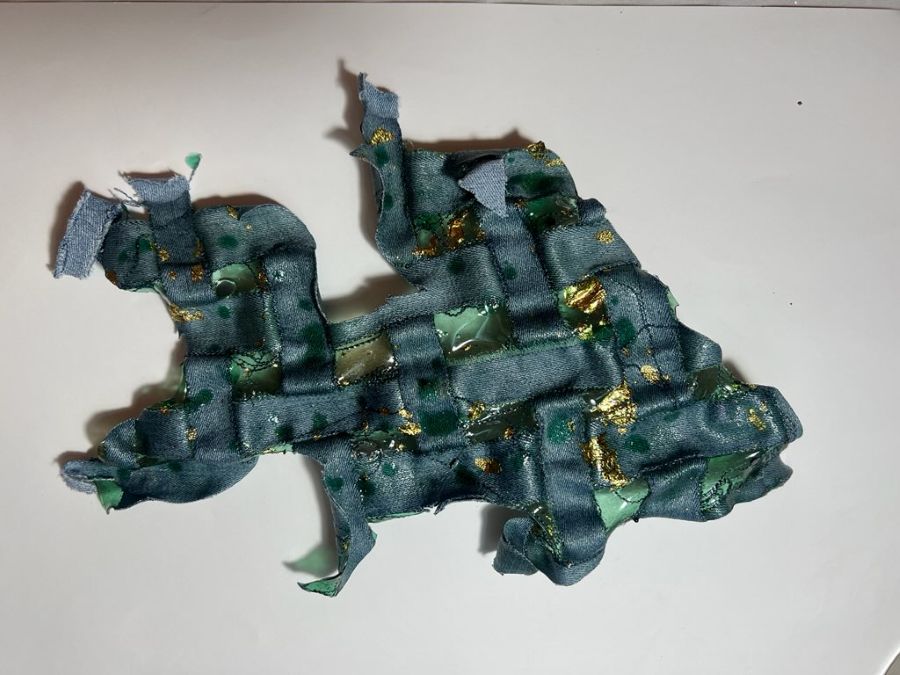 |
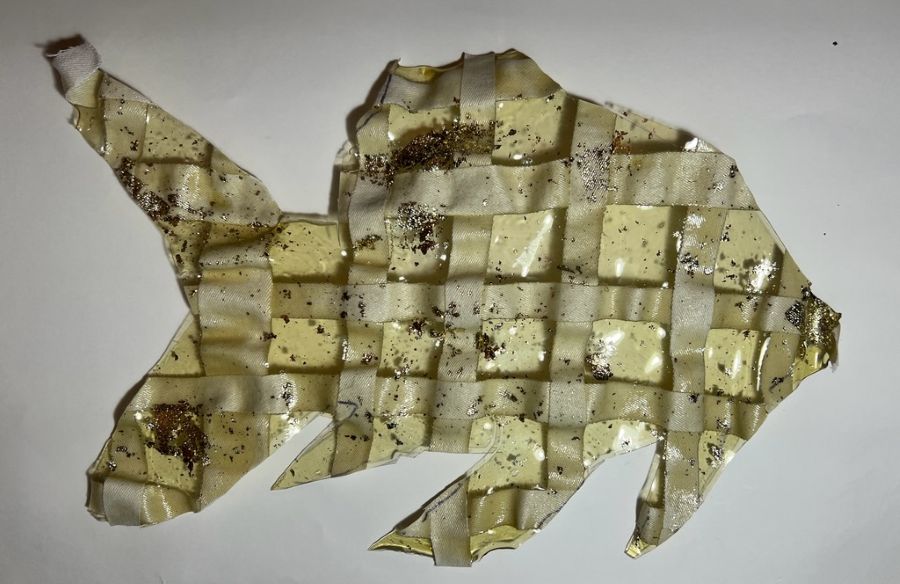 |
Laser Cut Negatives
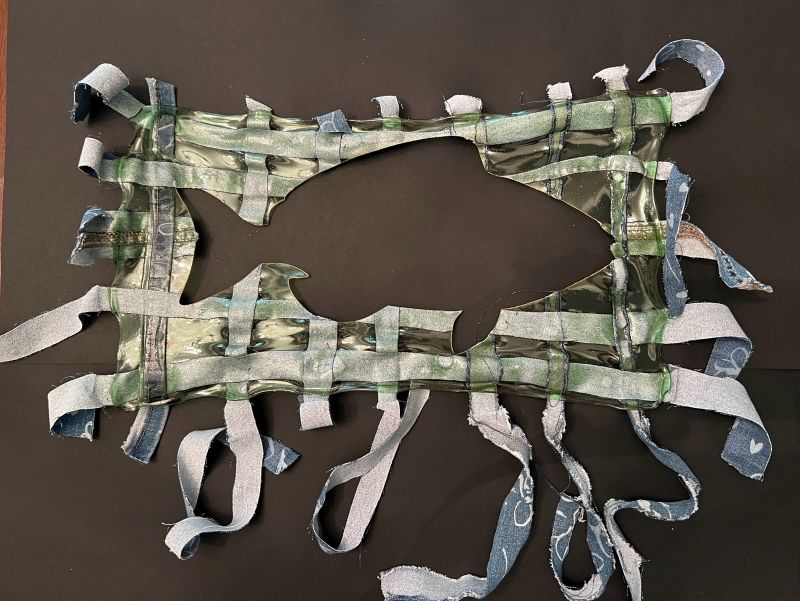 |
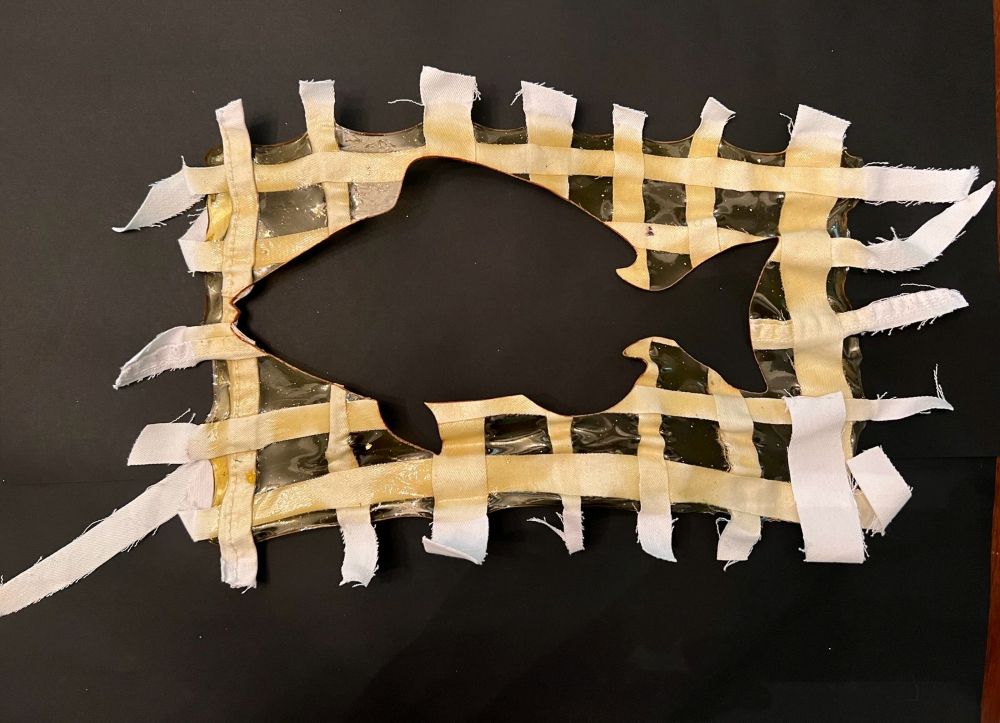 |
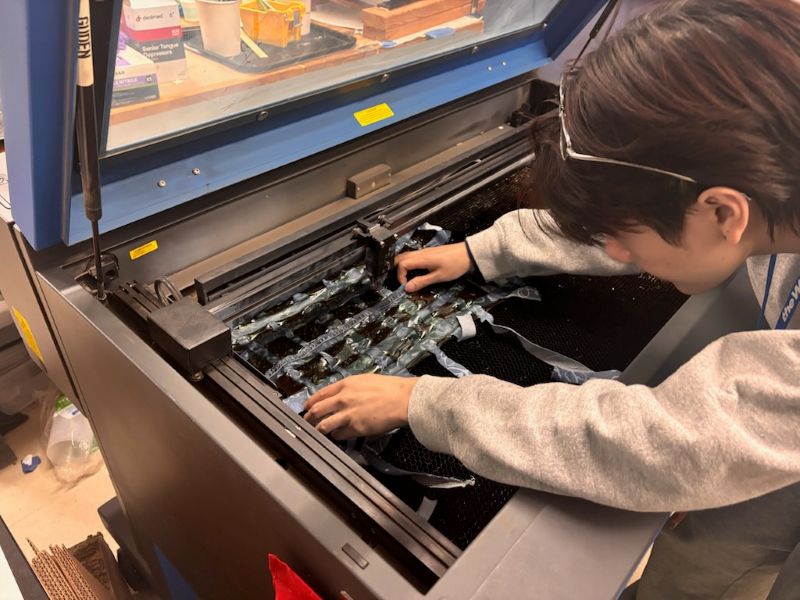
Laser Cutting the Fish
 |
 |
The laser cut file for the fish can be found here
To cut into the bio resin with the laser cutter. We stared with 80% power and 9% speed, then adjusted to 80% power and 5% speed, which worked okay. There was a bit of smoke because the bio resin was dimensional and a bit bumpy and uneven even though I clamped it down when I was drying it. Videos of the laser cutting are below:
Story telling script
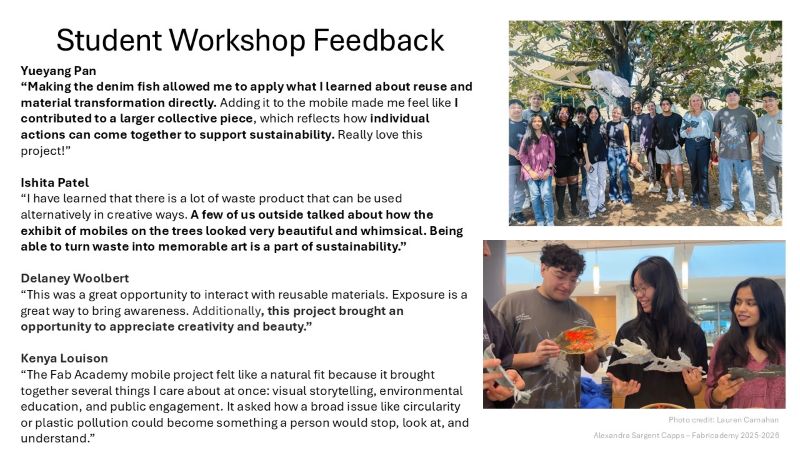
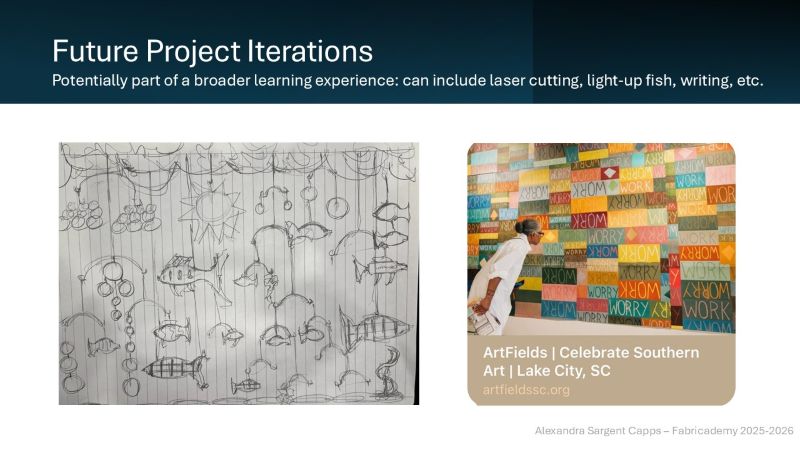
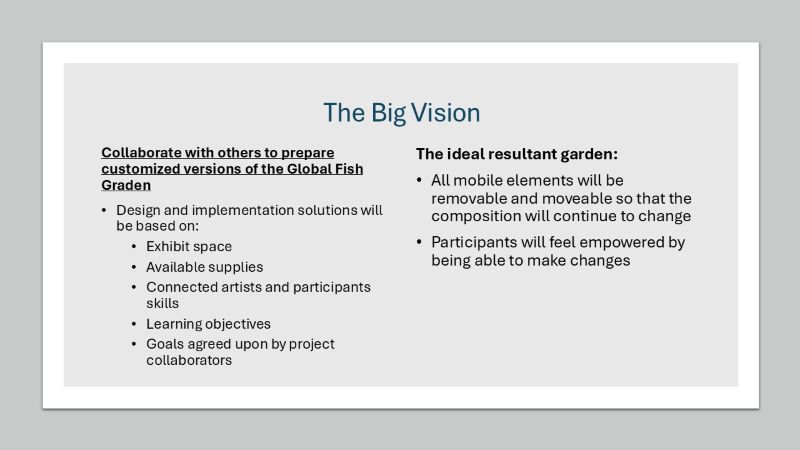
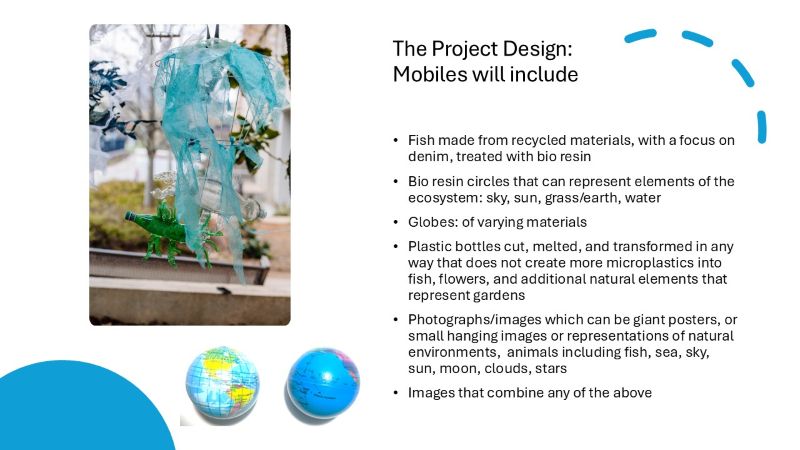
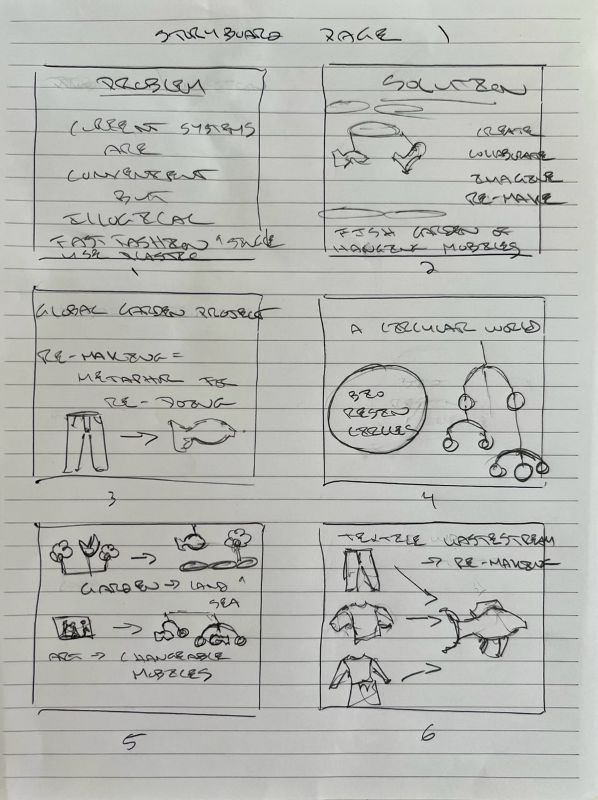
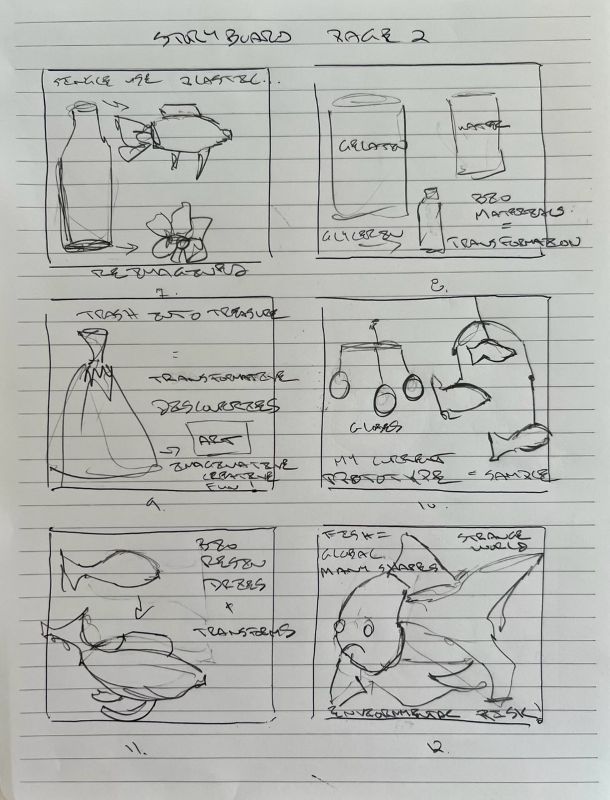
These story board images are simplified versions of one of my final presentation slides. I made them to try to understand my underlying narrative and the bigger picture of what I am trying to say through my project. These pictures helped me get to and understand what I wanted my final presentation to be. The actual script for my video came out of a class session working with my students, so it was not scripted.
 |
 |
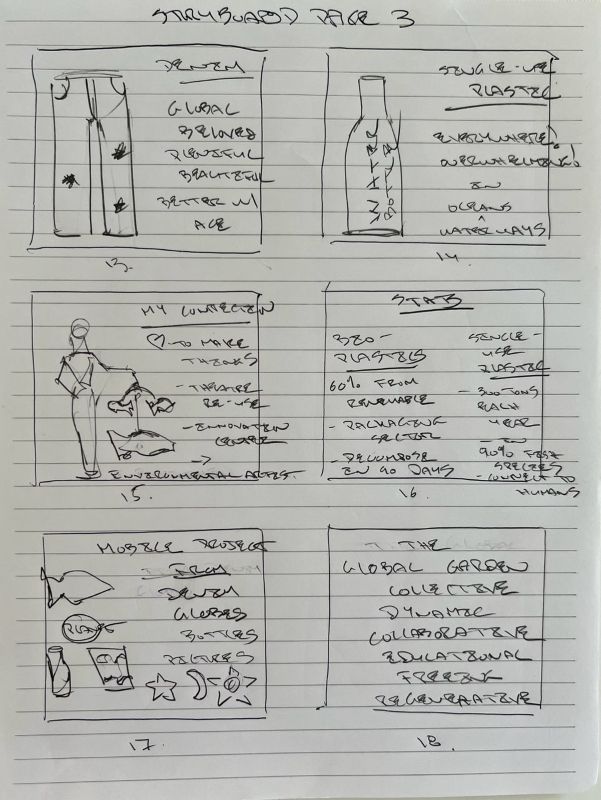 |
Lesson Plan PDF
I created a Lesson Plan for educators to run the workshop. I imagine this plan will change as I run it and learn more about how it works and what aspects need to be re-thought.
The Lesson Plan dated May 3, 2026 can be linked and accessed here
Video Script Option 1: The Global Fish Garden
I wrote a script for the video that I did not use. However, it did lend itself to telling the story of my project in my presentation. Here it is:
I love to make things.
I love the freedom of transforming fabric—of seeing one material as something entirely different.
That act of reimagining materials is powerful.
Because when we learn to see objects differently, we also learn to imagine the world differently.
I believe everyone can be an artist when they use their imagination to transform what already exists.
Our planet itself works this way.
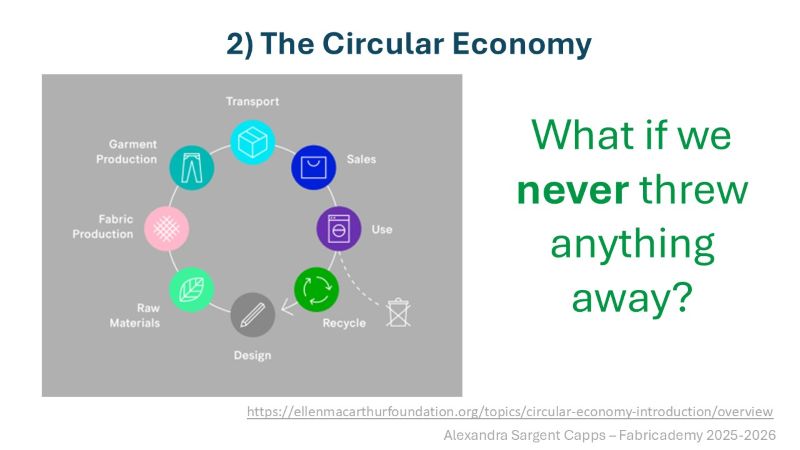
Nature doesn’t throw anything away. Everything is part of a regenerative system where materials circulate and become something new.
So, what if our creative work followed the same idea?
What if we never threw anything away?
What if everything could be reused, reimagined, and redesigned?
Through art and making, we can explore the circular economy—a system where materials are continually reused rather than discarded.
Because right now, our world works very differently.
The problem is that we live in a culture of planned obsolescence, where our systems are mostly linear: things are made to be disposable, where end of life means tossed away, especially in fashion and single-use plastics.
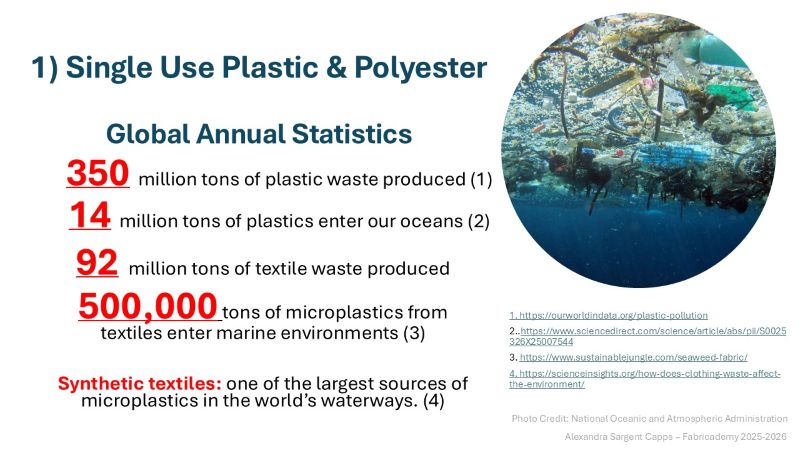
• Over 300 million tons of plastic are produced globally each year, with a significant portion being single-use.
• Approximately 8 million tons of plastic waste enter the oceans annually.
Our oceans are filling with trash.
• By 2050, it is estimated that there will be more plastic than fish in the ocean by weight
At the same time, many young people are educated in systems focused on testing and correct answers—systems that often discourage experimentation, imagination, and risk-taking.
But creativity thrives on curiosity, play, and exploration.
That’s where the Global Garden Project comes in.
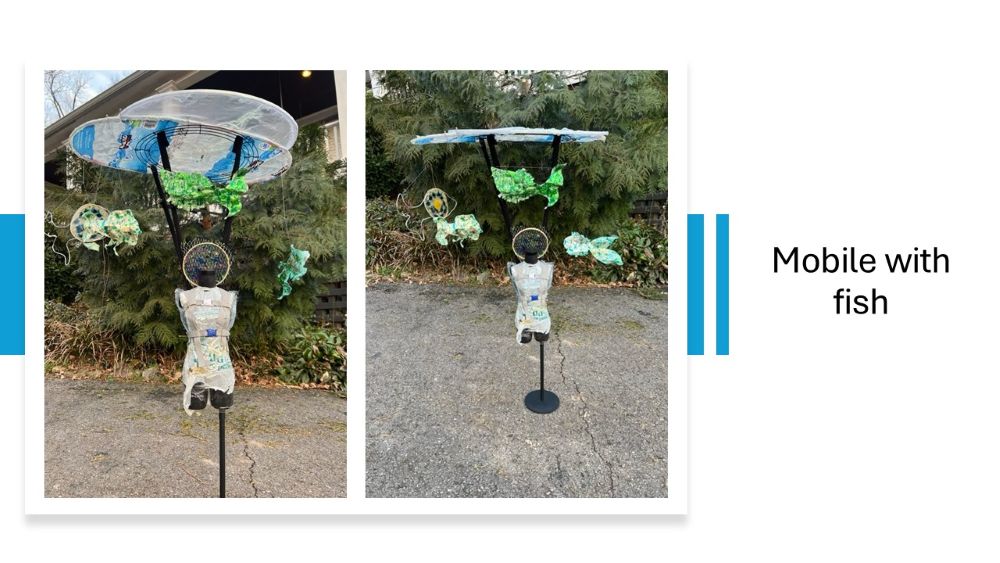
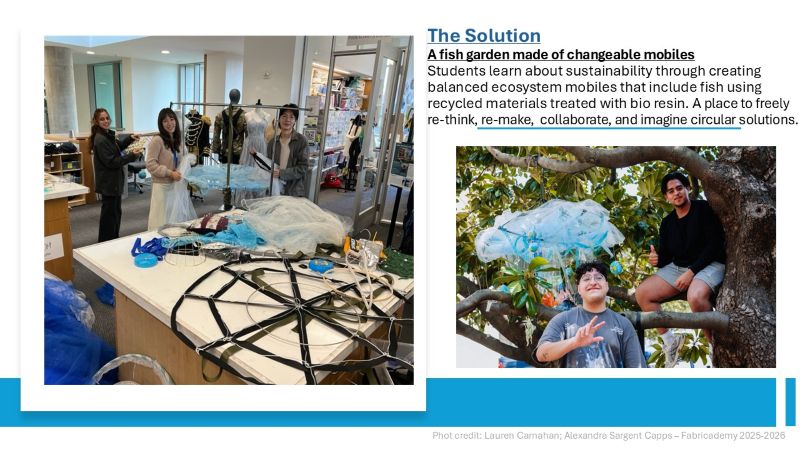
The project imagines a garden made of kinetic mobiles—a living, changing ecosystem of art.
A place where people can rethink materials, collaborate, experiment, and imagine circular solutions through hands-on making.
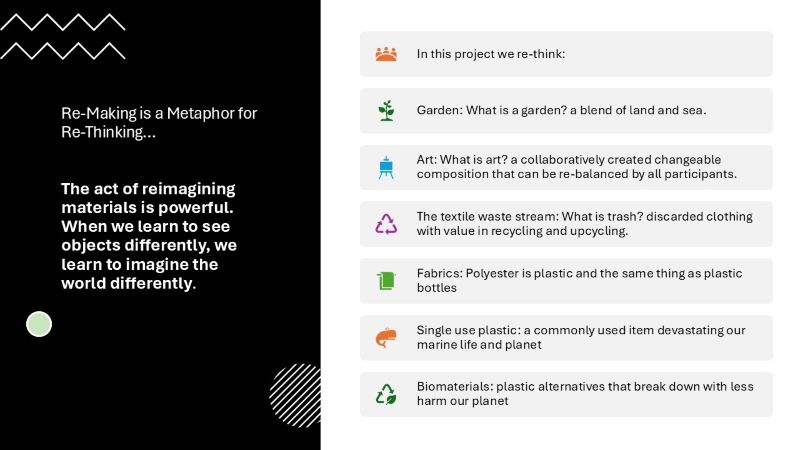
In this garden, we rethink many things:
A garden becomes a blend of land and sea.
Art becomes a constantly shifting composition of mobiles that can be adjusted and rebalanced.
The textile waste stream becomes a source of beauty and possibility.
And single-use plastic becomes something we transform—so we can see both its value and the scale of the problem it represents.
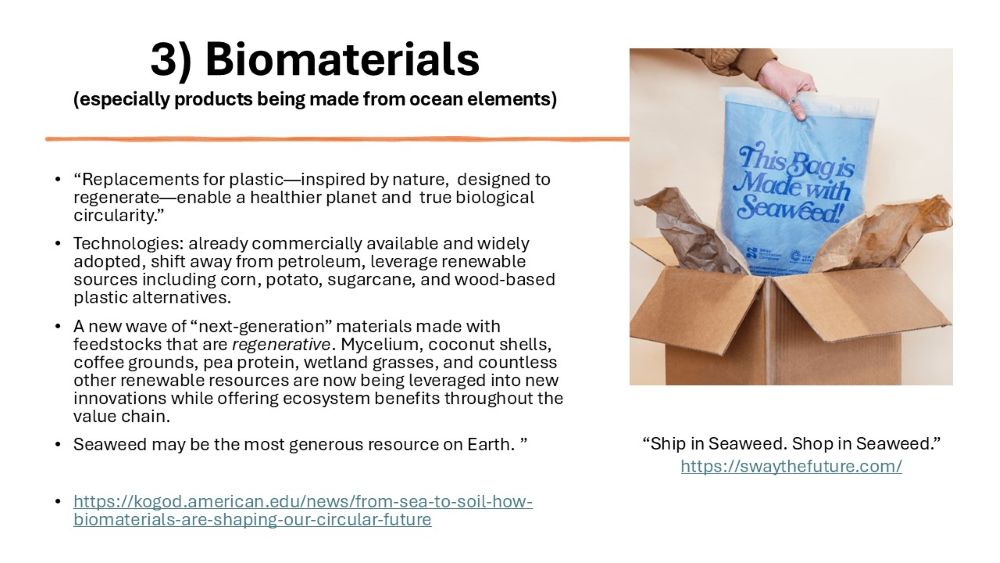
We also explore new biomaterials—plastics made from natural sources that can break down without harming the planet.
My current prototype explores these ideas through fish.
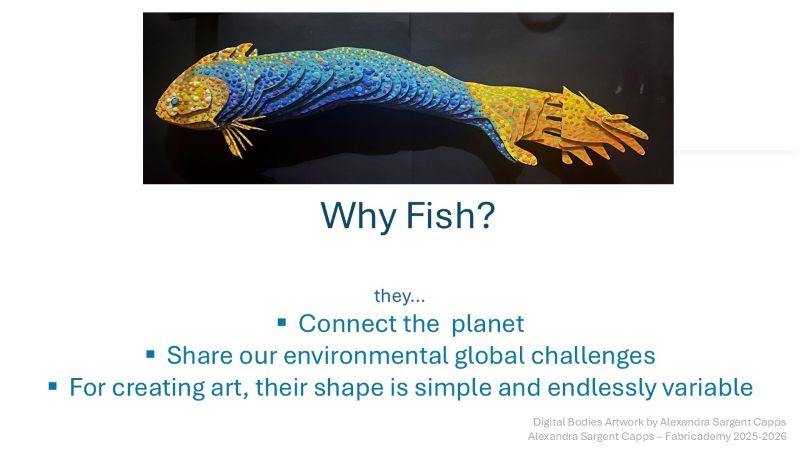
Fish connect the entire planet.
Everyone recognizes them. Their shape is simple but endlessly adaptable and variable for art and design.
Fish live in the oceans that connect us all—and those same oceans are increasingly filled with plastic waste.
They remind us that environmental challenges are shared globally.
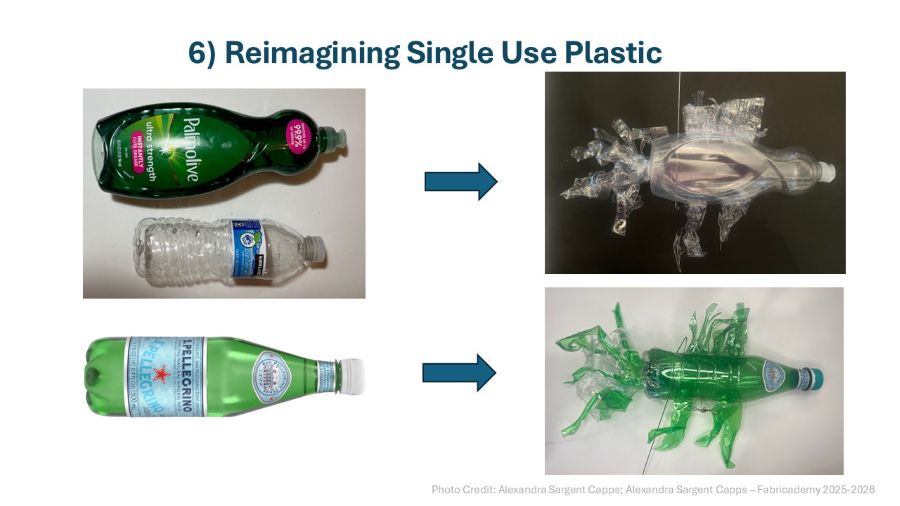
Participants in the project create fish from reclaimed materials—especially denim and plastic bottles.
Denim, one of the most dynamic and plentiful fabrics on the planet, is a perfect material to explore.
It’s beloved around the world, durable, and full of beautiful design details—topstitching, rivets, pockets, textures. It’s a textile that often gets better with age. Learning about denim is a wonderful basis for understanding textile science.
Plastic bottles are the opposite: used briefly, then discarded in enormous quantities.
By transforming these materials into art, we begin to rethink their value—and our relationship to them.
This project is also deeply personal for me.
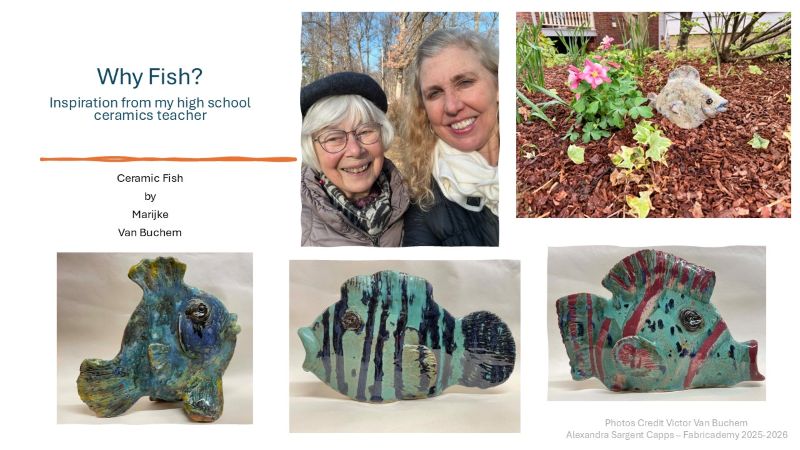
My background is in costume design, where creativity often begins with limited resources. In theatre, costumes are frequently reused, reworked, and reimagined.
As an educator, I’m always looking for ways to engage students with issues they care about—while giving them the freedom to experiment and create.
The most meaningful ideas often emerge when people from different backgrounds come together to make something.
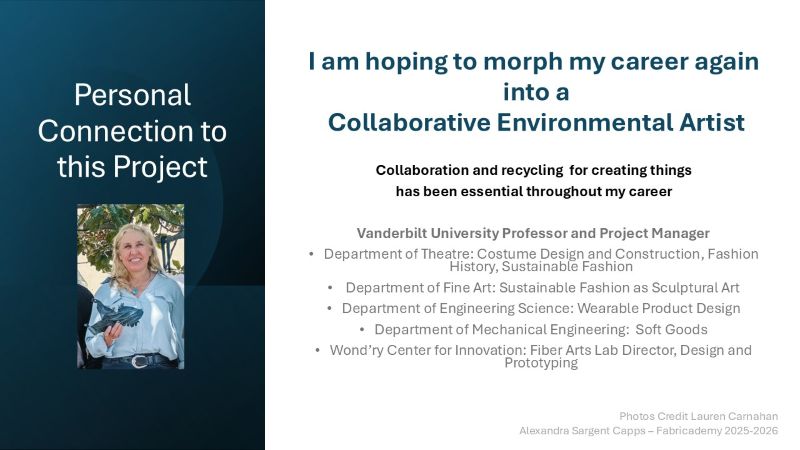
Over time, my career has evolved—from theatre design to running a fiber arts lab in an innovation center.
Now I hope to evolve again—into a collaborative environmental artist.
This prototype is just the beginning.
My vision is a Global Garden Collective: a growing network of people around the world creating pieces of this living garden together.
A project that brings people together.
Encourages creativity and experimentation.
And helps us imagine regenerative ways to care for the natural world we share.
Because sometimes the first step toward changing the world… is simply learning to see what we already have in a new way.
Video Script Option 2
Story: Are We Disposable?
It starts small with a plastic cup tossed away, a polyester dress thrown out, or a bottle left in a ditch. Some of that plastic blows out of bins and landfills, or is washed off streets when it rains. These materials slip through drains, move into streams and rivers, and eventually reach the sea.
From above, the ocean still looks blue, bright and glittering. Under the surface, it can be murky, polluted with tiny plastic pieces and synthetic fibers that fish and other creatures mistake for food. Bit by bit, they end up inside the fish and then onto our plates.
Caught in the Current: Are We Disposable? turns this journey into something that people can see, feel and touch.
In workshops, participants use old denim, plastic scraps, and bio-resin to make fish mobiles and wearable pieces that follow the path of these materials: where they started, how they travelled, and what else they could become instead of waste.
In a series of global workshops, participants create and add their contributions to a growing “global garden ecosystem ” of hanging artwork mobiles and stabiles. The continuous re-balancing of the process of adaptation, discovery, and creation raises a question: if other living beings are treated as disposable, what does that say about us?
The art process and product invites individuals to work as a dynamic collective to imagine more thoughtful ways of living and reimagining our relationship with waste. What if we lived the circular economy and redesigned our world for reuse? With this new approach in mind, our art-making journey together makes participants empowered designers who discover ways to reimagine our waste system into something unexpectedly beautiful.
How-Tos & Tutorials
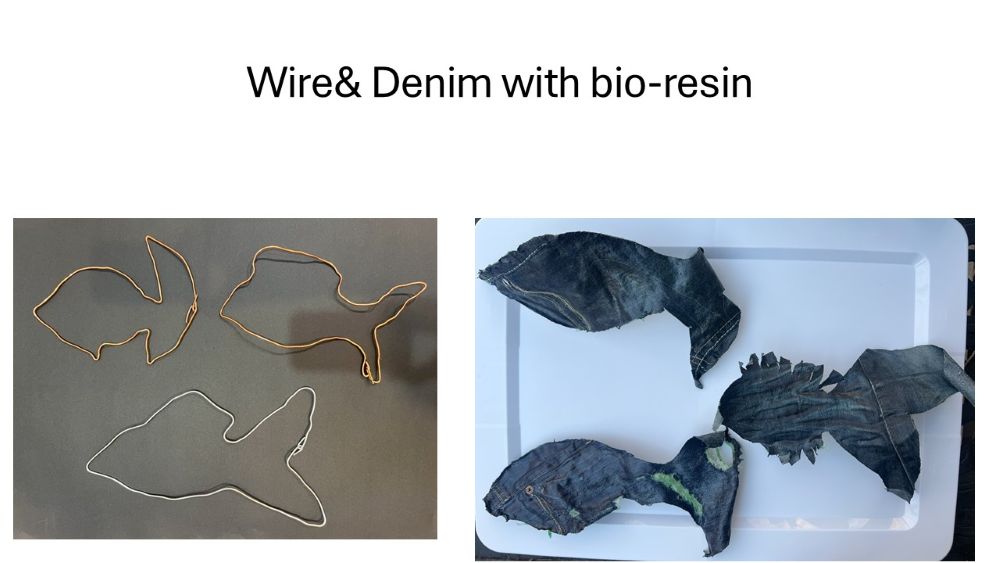
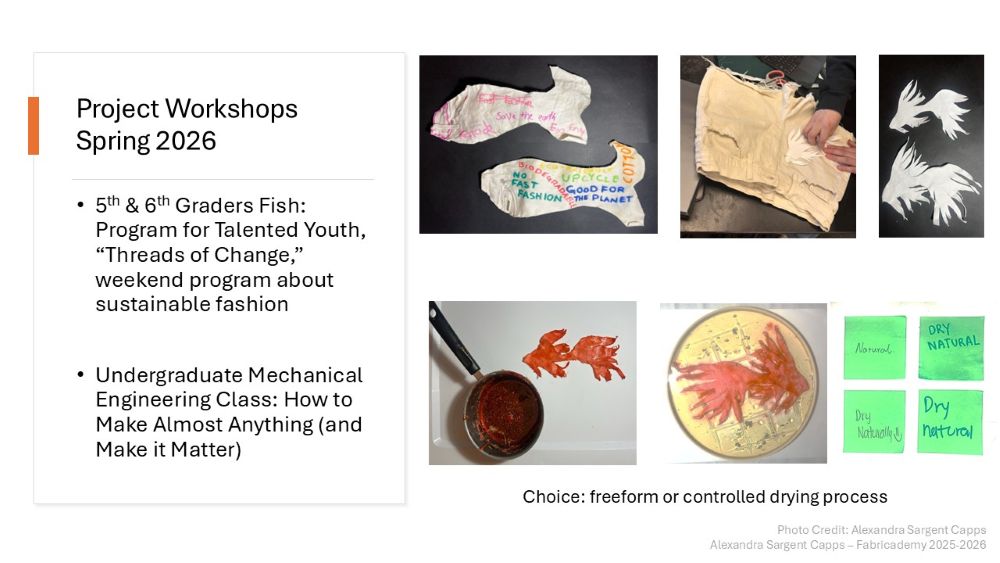
How to Make a Fish. The information below is one approach using denim to make the fish. You can use different fabrics, colro treatments including Sharpies and acrylic paint markers, or whatever you want to make your final product unique.
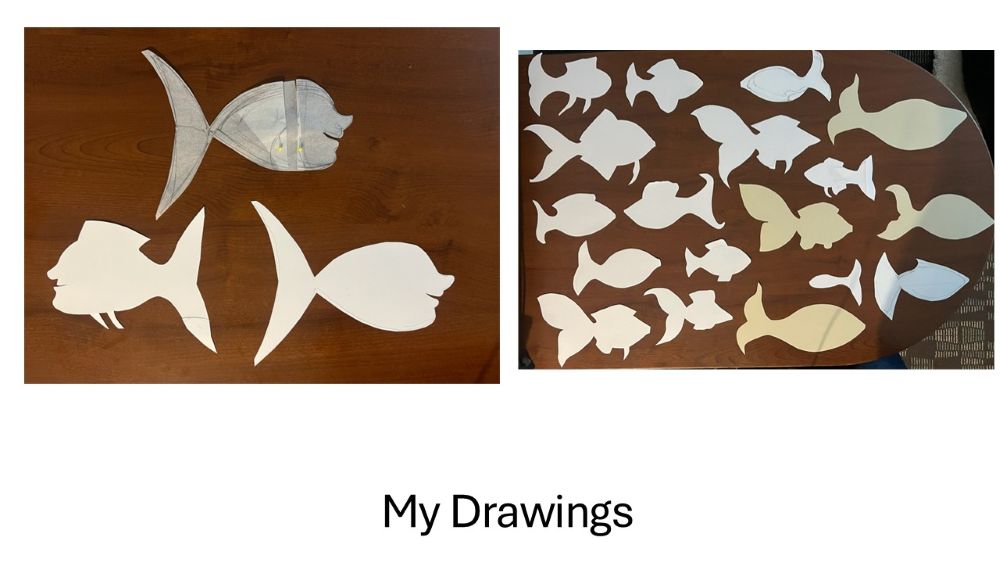
1) Students make a pattern, using a template or making one from scratch. I suggest having both assorted templates/patterns for students to choose from, as well as images on a screen or available to them if they want to draw their fish from scratch. One of my students found a fish he liked on his computer that he drew from, which I thought was great because he was inspired by his own personally chosen research.
2) Have a variety or available used denim for students to choose from. Tell and show them some pre-cut examples, and how making strategic use of existing design features on the denim can be a fun way to approach upcycling old clothes. Making use of existing details to make the reuse obvious helps to educate and inspire those looking at the resultant work!
3) Have students cut out their pattern, pin it to the fabric, and then cut out their fish.
4) Ask them if they want their fish, after it is soaked in bio resin, to dry in a controlled way, so that it ends up relatively flat and in the same configuration they cut it in, OR if they want the fish to dry naturally, allowing it to curl in whatever way it wants to as the bio resin dries and affects the shape.
5) Dip the fish into the bio resin, making sure it soaks through the fabric
This step is ideally done with the students, but in my case I had to dip the denim fish at home due to space restraints for drying and also fire safety issues at my workspace in conjunction to using a hot plate.
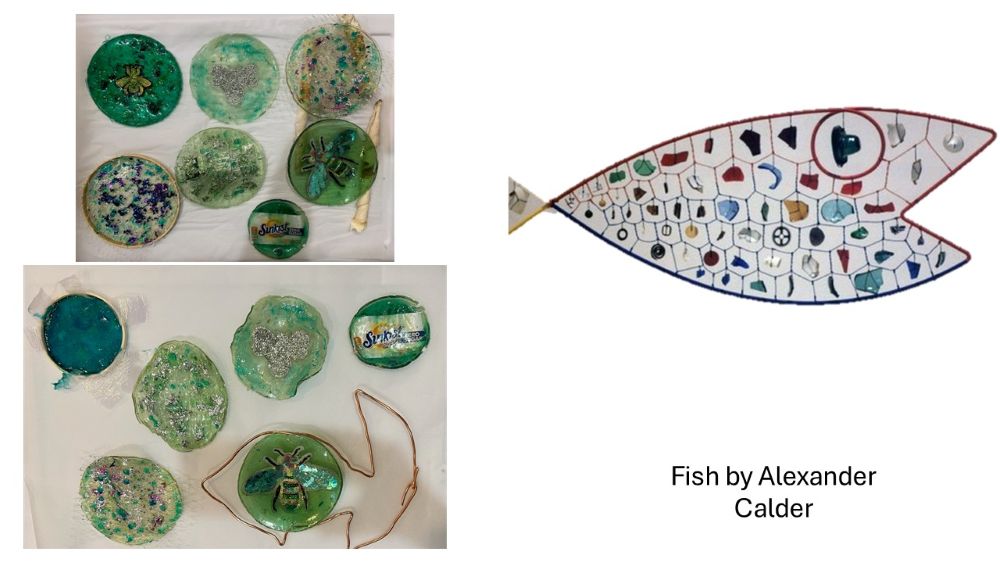
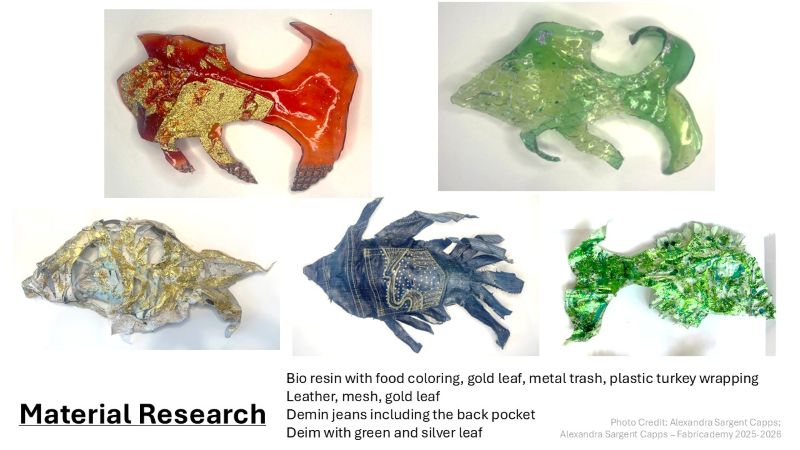
6) Let them dry. The denim fish dry relatively quickly, in about 24 hours. You can dip them in uncolored bio resin, od add food coloring, depending on the desired aesthetic result and initial color of your denim. You can mix up some different colors of resin and pour and/or apply it in patterns over the dry or still slightly wet fish to give some fun color, texture, and pattern variations.
7) To attach the dry fish to a mobile, you need clips attached to silamide, shown with my Materials List.
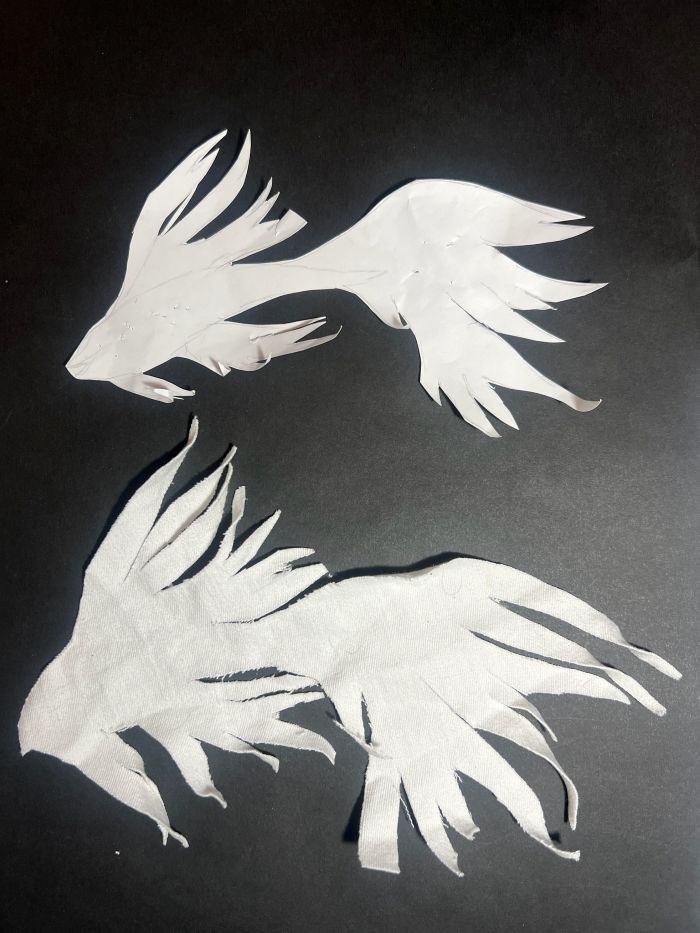
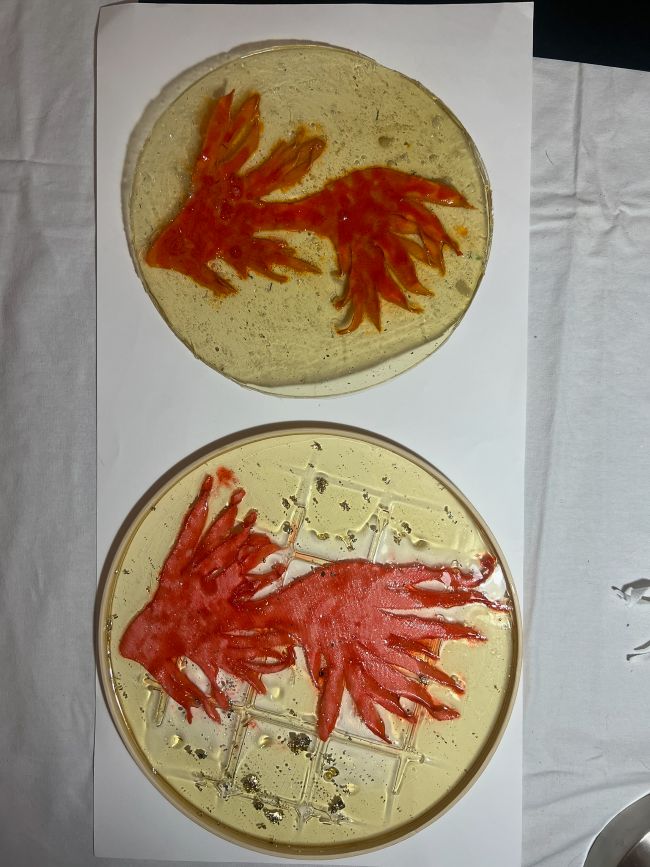
Below is my student Gabe's paper pattern and a denim cut-out of it. He wante dthe fish to be red. I dippped it in red bio resin that I made, then let it dry slightly so the fins woukdl start to curl up. I poured uncolored bio resin into the embroidery hoop, and placed the fish into it, helping the fins to stay above it so they would have some life to them. I left the fish in the bottom image on right outside to dry on a gridded plastic drying rack. It stuck a bit to the rack and got a grid-like texture to it. I love the result. This is one of my favorite outcomes of a student working on the project and in general one of my favorite fishes.
 |
 |