Soft Robotic Plant
Concept

The Soft Robotic Plant is an artificial organism that breathes. It is a pneumatic body that expands and contracts in response to environmental data (soil moisture from a real plant) and bioelectrical signals captured from living organisms, including plant electrical activity and human heartbeat. The system translates invisible inputs into visible movement. Air pressure becomes the mechanism through which data is embodied.
Rather than simulating a flower, the structure performs a mechanical interpretation of vitality.
System Components
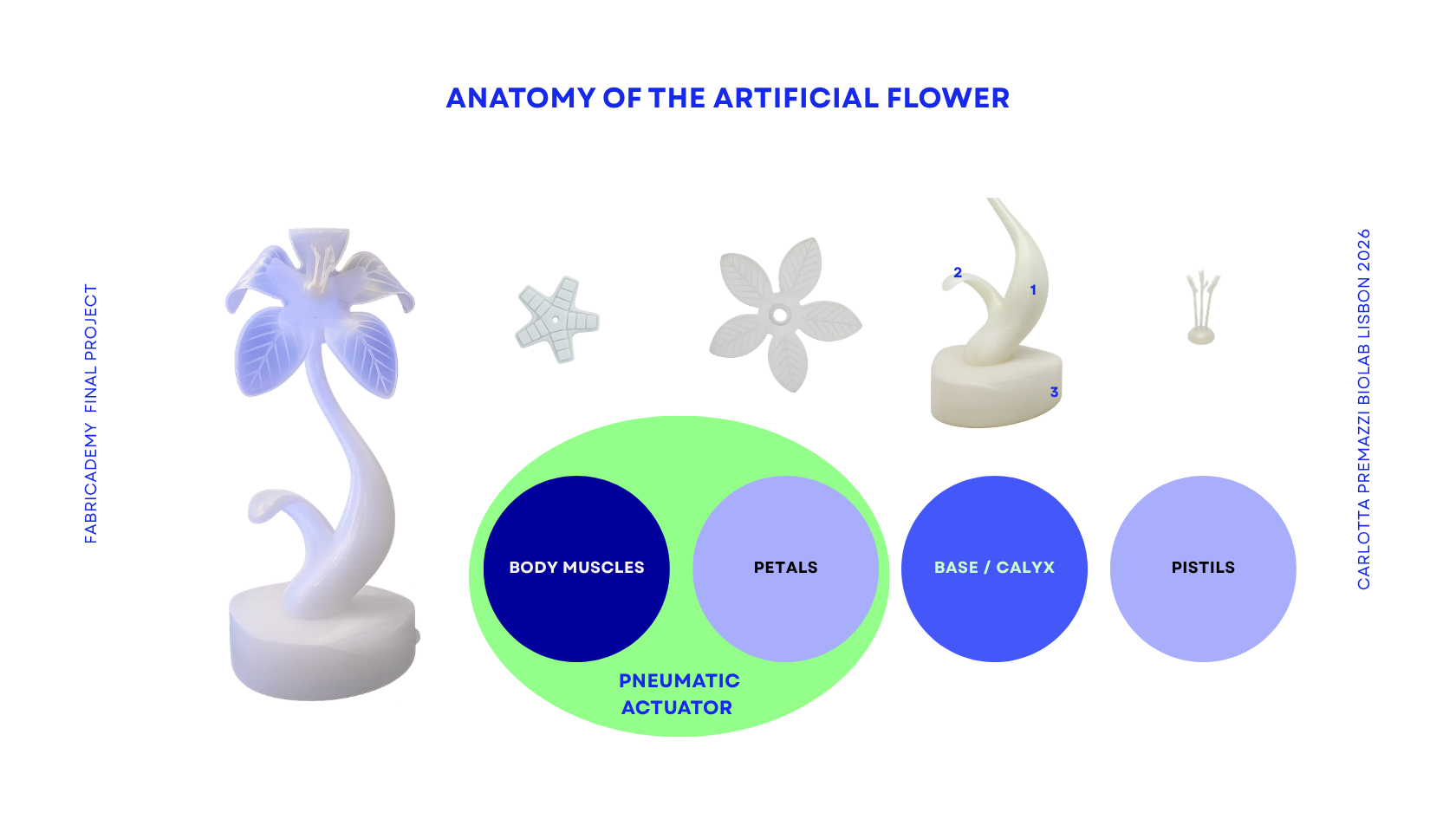
The soft robotic flower is not a single cast object, but an assembled system composed of: | Component | Material | Function | |---|---|---| | Soft petals / actuator | Transparent silicone | Inflates and deforms through air pressure | | Textile scaffold | Fabric layer | Constrains deformation and prevents uncontrolled ballooning | | Pistil | Transparent PLA | Stabilizes the central structure | | Calyx / base | Transparent PLA | Supports the flower and routes tubes and cables | | Pneumatic tube | Flexible tubing | Connects the flower to the pump system | | LEDs | WS2812B strip | Adds reactive light behaviour |
-
Pneumatic Actuator
The flower body is made of two silicone layers:
A layer forming the air chambers (body muscles) + layer defining the petal geometry
A textile scaffold is embedded between these layers to guide deformation and reinforce the structure. -
Pistil
PLA 3D printed central rigid element that is attached to the silicone structure.
It stabilizes the form and organizes the morphology of the flower. -
Base / Calyx
The entire flower is mounted onto a PLA 3D printed base.
The connection is made through a pneumatic tube, which links the actuator to the air system and integrates the structure with the installation.
Pneumatic Actuator
The pneumatic actuator is the core element of the soft robotic flower.
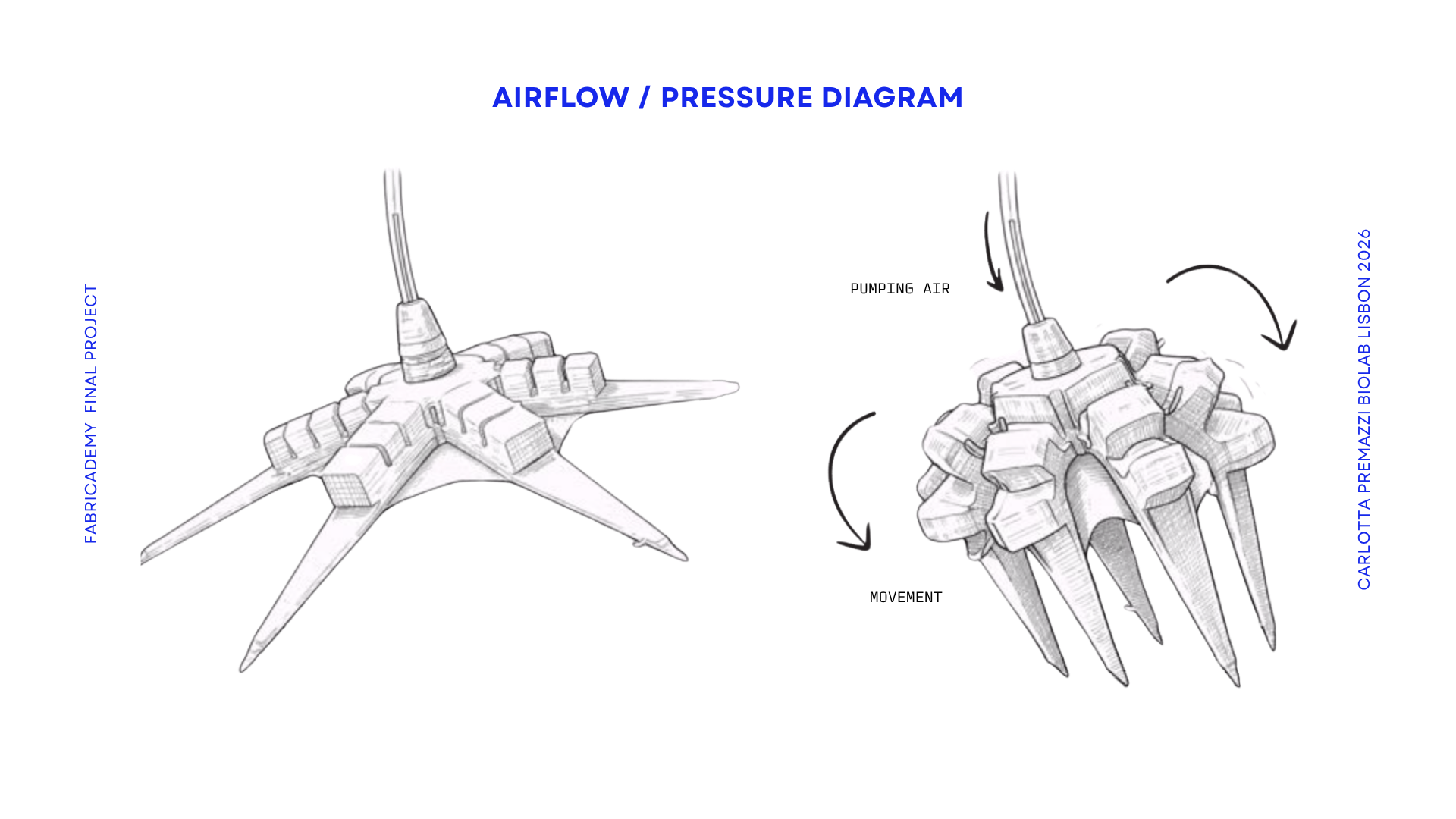
It operates through air pressure, enabling expansion and contraction.
Its behaviour emerges from the interaction between: internal air chambers (body muscles) + textile reinforcement (constraint layer)
Morphological Inspiration
The formal inspiration derives from jellyfish soft robotics, whose radial actuation and fluid deformation translate effectively into a floral morphology.
Like jellyfish robots, the structure relies on distributed air chambers to generate movement. Inflation creates expansion; deflation produces contraction. The resulting motion is smooth, organic, and continuous.
This adaptive softness allows the artificial flower to appear alive while remaining visibly technological.
Source: Yirmibesoglu, Osman & Oshiro, Tyler & Olson, Gina & Palmer, Camille & Mengüç, Yigit. (2019). Evaluation of 3D Printed Soft Robots in Radiation Environments and Comparison With Molded Counterparts. Frontiers in Robotics and AI. 6. 10.3389/frobt.2019.00040
Base / Calyx
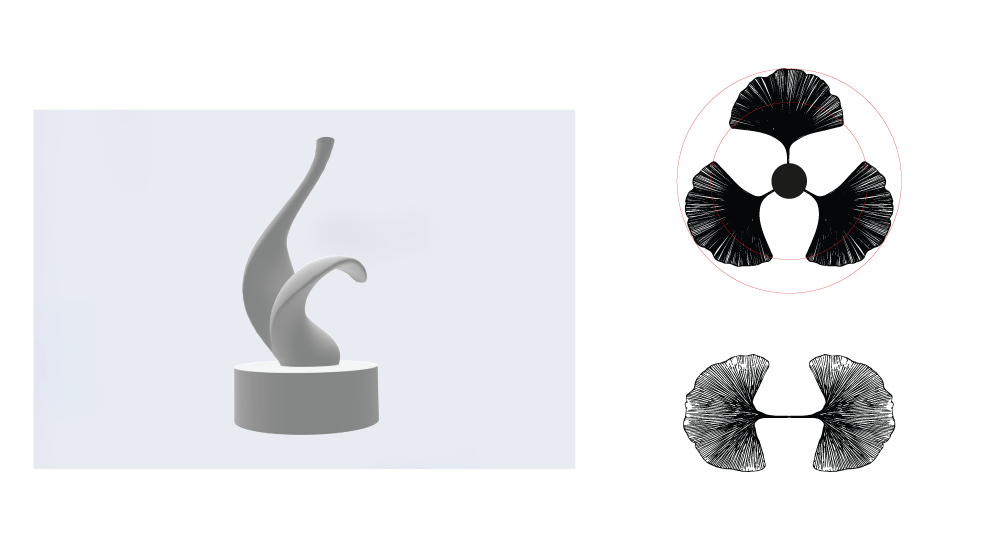 The soft flower is supported by a rigid 3D printed calyx and stem, which connect the actuator to the installation base. This element provides mechanical support while also integrating the passage of pneumatic tubes and wiring.
The initial geometry was adapted from an existing 3D model from makerworld and extensively modified to fit the needs of the project. Decorative elements were removed, internal routing channels were added, and the base was redesigned to support the custom soft actuator.
Through these modifications, the calyx evolved from a decorative object into a functional structural interface between the flower, the sensors and the control system.
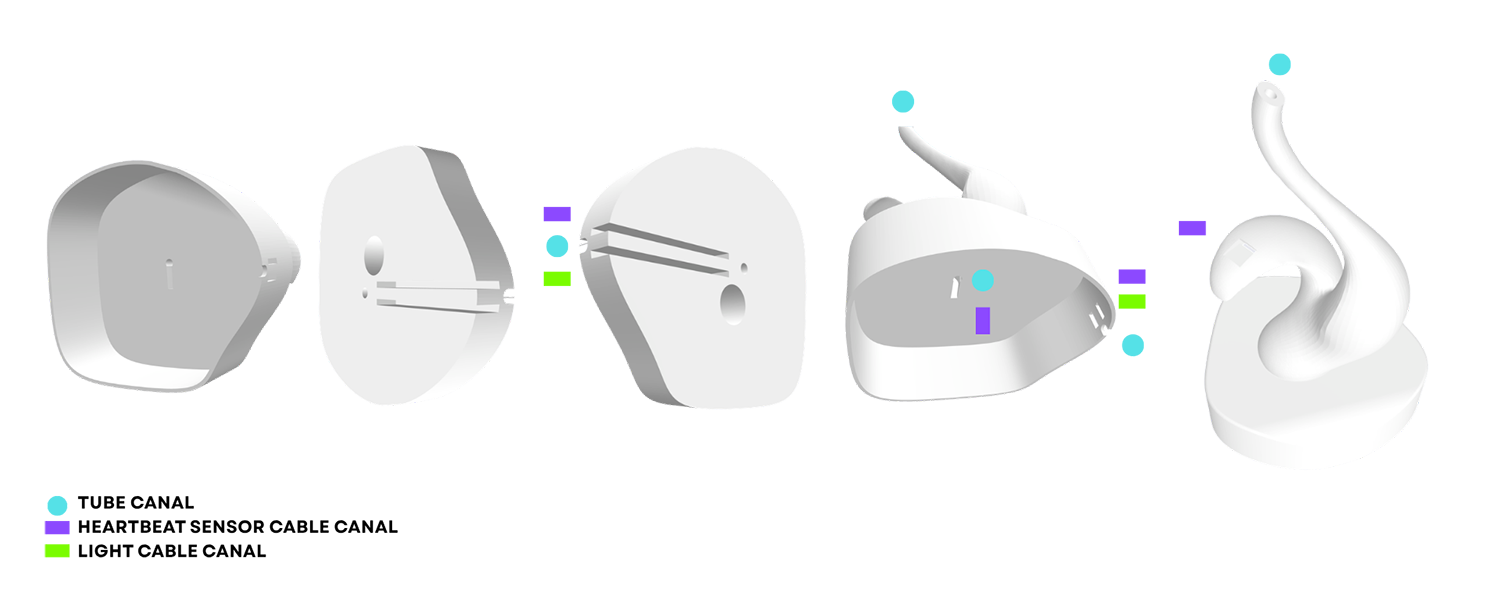 3D Calix Parts and cables canals, Carlotta Premazzi Fabricademy 2026
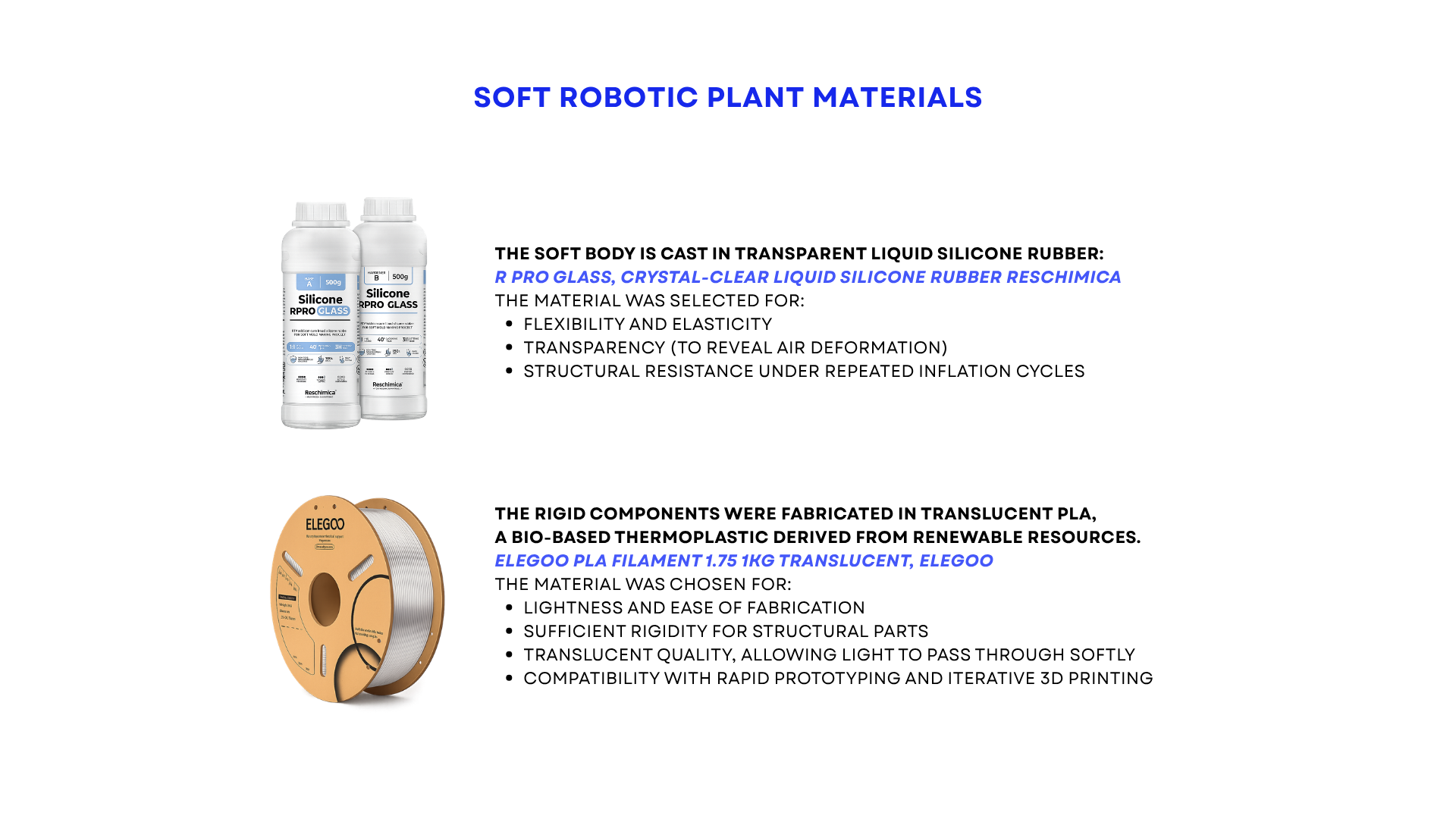
Soft Robotic Plant Material
Process
3D print
3D print process on Bambu Lab H2D.
Carlotta Premazzi Fabricademy 2026, with Carlos Roque, Biolab Lisbon
The rigid elements of the flower were fabricated through 3D printing in Transparent PLA (ELEGOO Filament PLA 1.75) with Biolab Bambu Lab H2D | Dual Extruder 3D Printer.
This material was selected for its precision, lightness, and visual compatibility with the artificial and luminous character of the piece. PLA was considered appropriate because it is a bio-based thermoplastic, commonly derived from renewable resources such as corn starch or sugarcane.
Within this system, the printed parts act as structural supports and housings for tubes, wires, and LEDs, mediating between the soft body of the flower and technical components.
Mold for Silicone
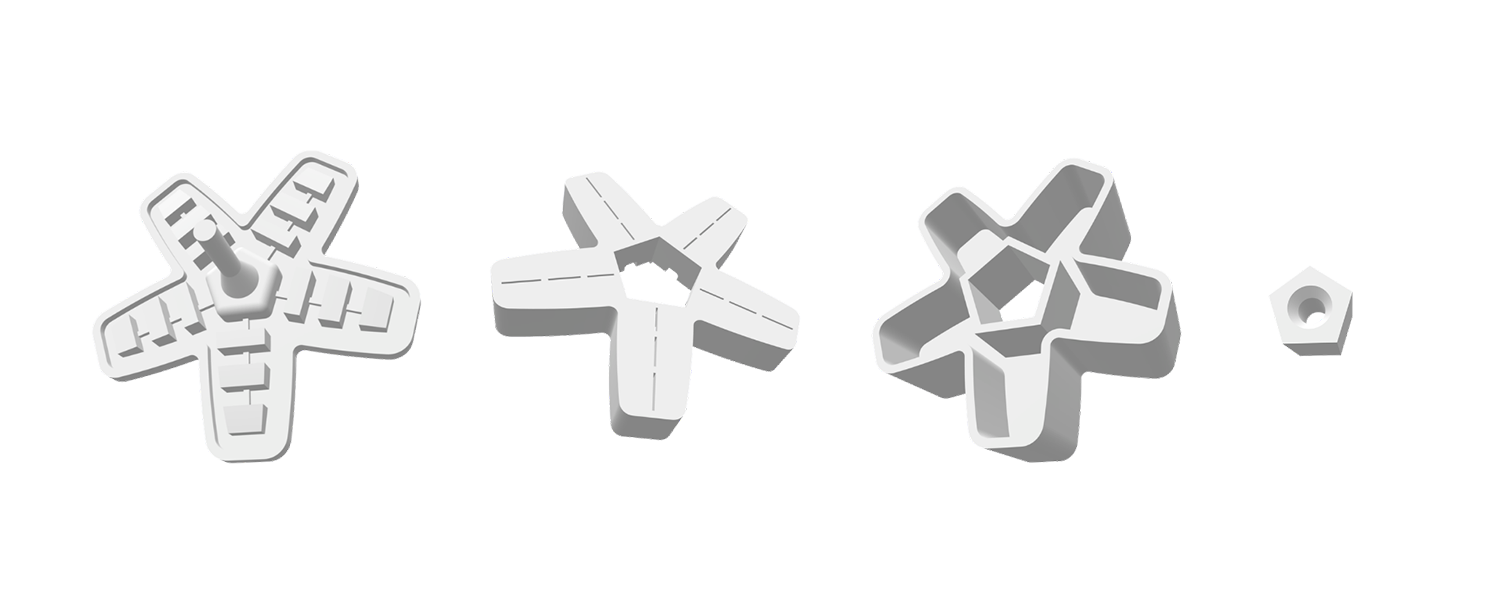 3D Mold Version nº6, Carlotta Premazzi Fabricademy 2026
The mold used to fabricate the actuators was designed using Fusion 360 in collaboration with Carlos Roque from Biolab, allowing precise control over both the internal pneumatic cavities and the external geometry of the actuator. During development, the mould underwent several iterations. The first version created in Soft Robotics assignment generated pneumatic muscles with a relatively square geometry and uniform height across the entire structure. While these prototypes successfully produced inflation, the resulting aestethic appeared more mechanical then organic. Subsequent iterations introduced a more complex geometry with variations in height and curvature along different axes. These changes allowed the expansion of the silicone to distribute more gradually through the structure, resulting in smoother deformation and more fluid motion. The mould itself also evolved structurally during the development process. Early versions required the use of elastic bands to maintain alignment between mould parts during casting. The mould was redesigned into a four-part modular structure that allows the pieces to interlock and align precisely without external constraints. This configuration simplified the casting process and improved the reliability of the fabrication workflow.
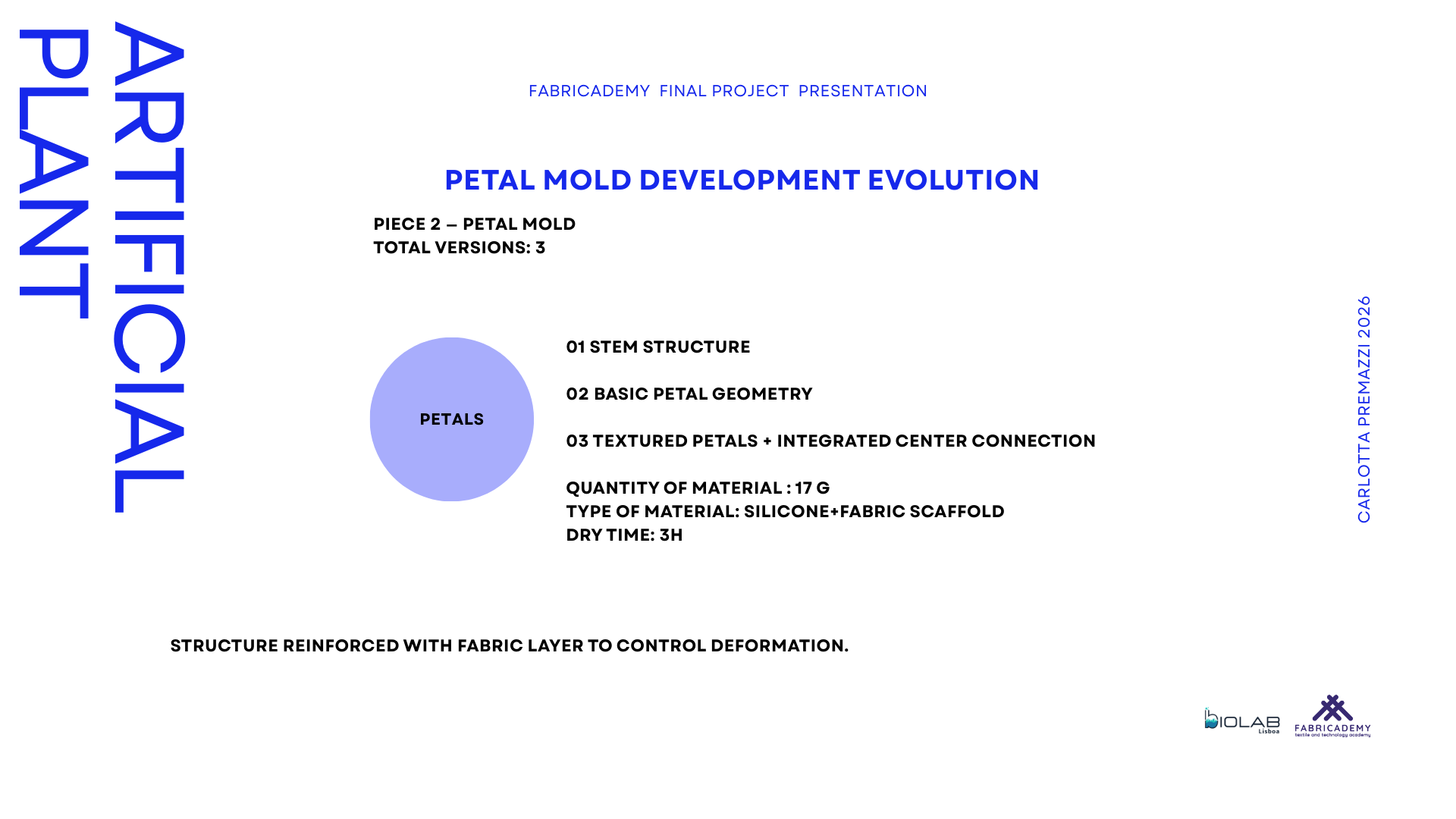
The petals were developed through an iterative mould-design process aimed at improving both movement quality and organic appearance.
The development evolved through three main stages: an initial stem structure, a second version with a basic petal geometry, and a later version with textured petals and an integrated center connection. These iterations helped transform the actuator from a simpler technical prototype into a more articulated and biomimetic element.
To improve performance, the silicone structure was reinforced with a fabric scaffold layer, which helped control deformation during inflation and made the petal movement more stable and directional.
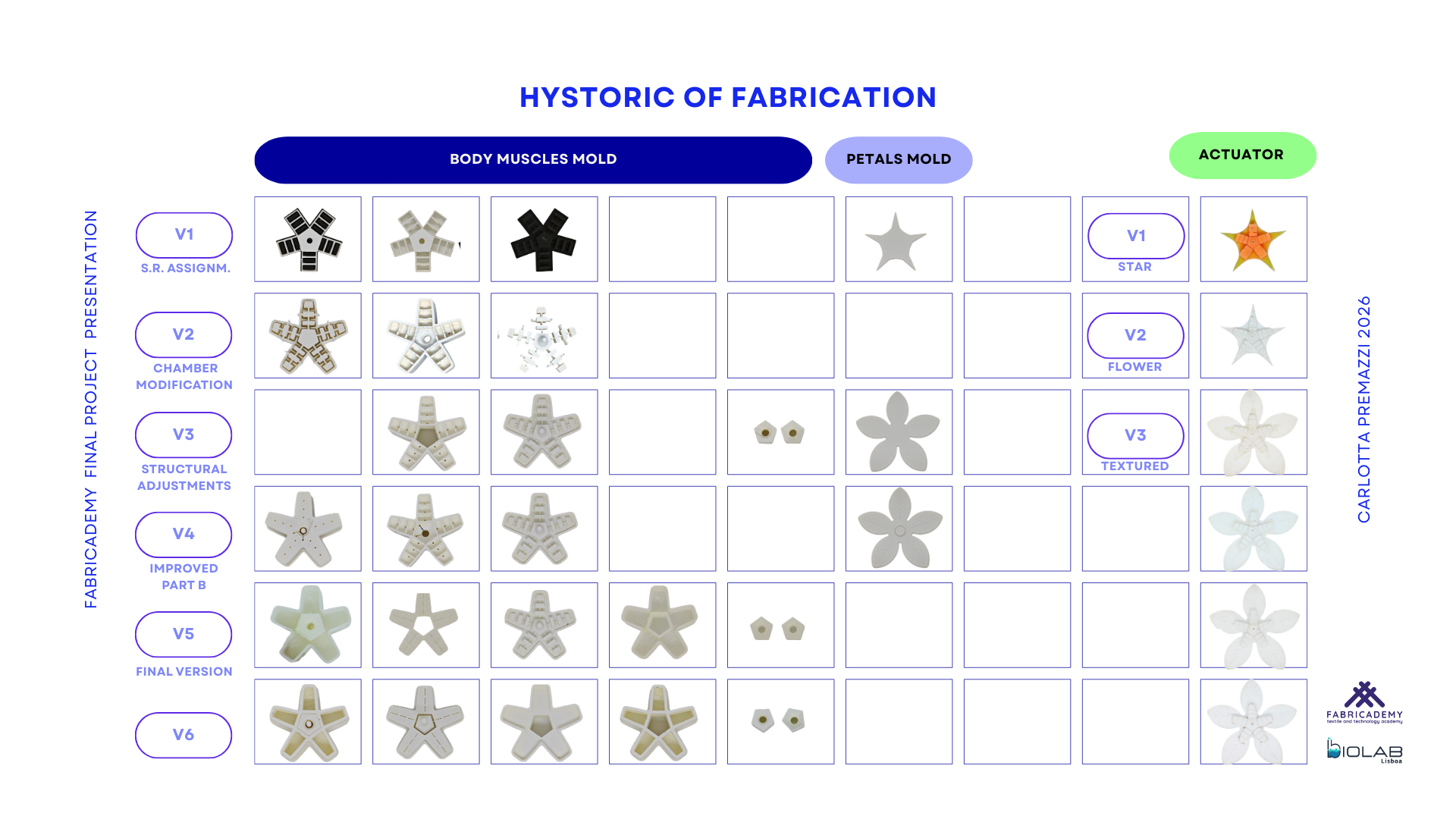
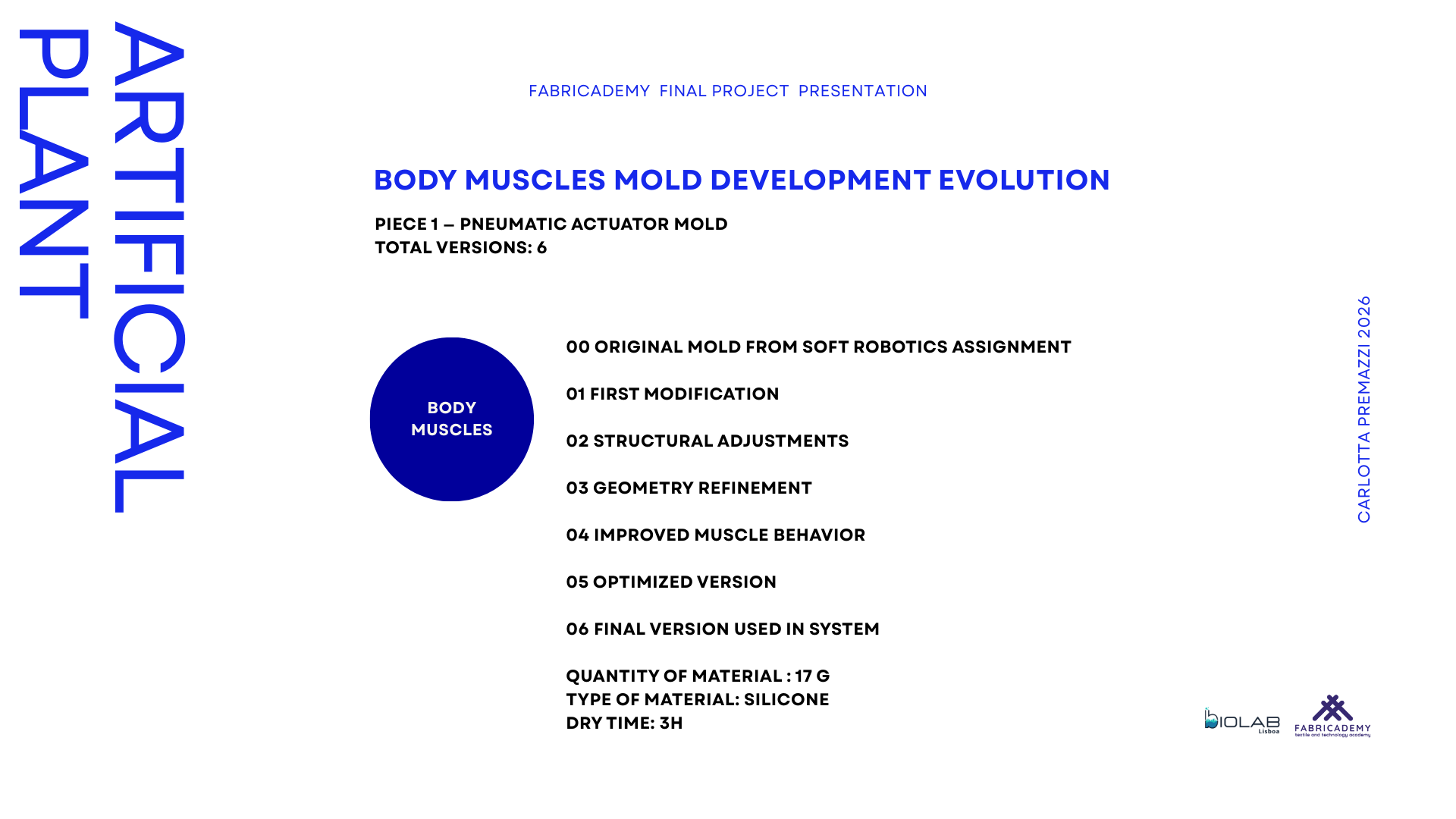
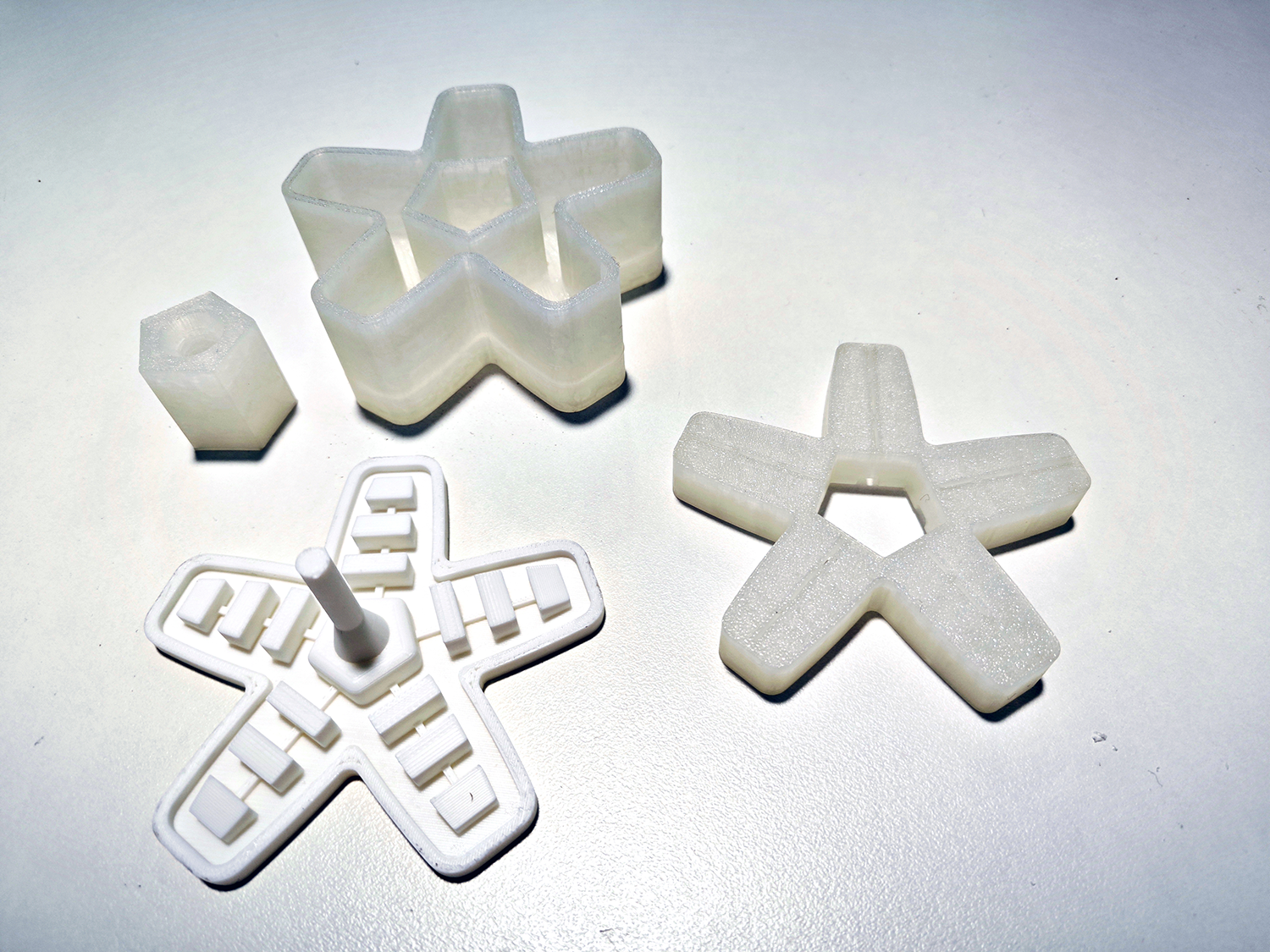 Mold Version nº6, Carlotta Premazzi Fabricademy 2026
Base / Calyx
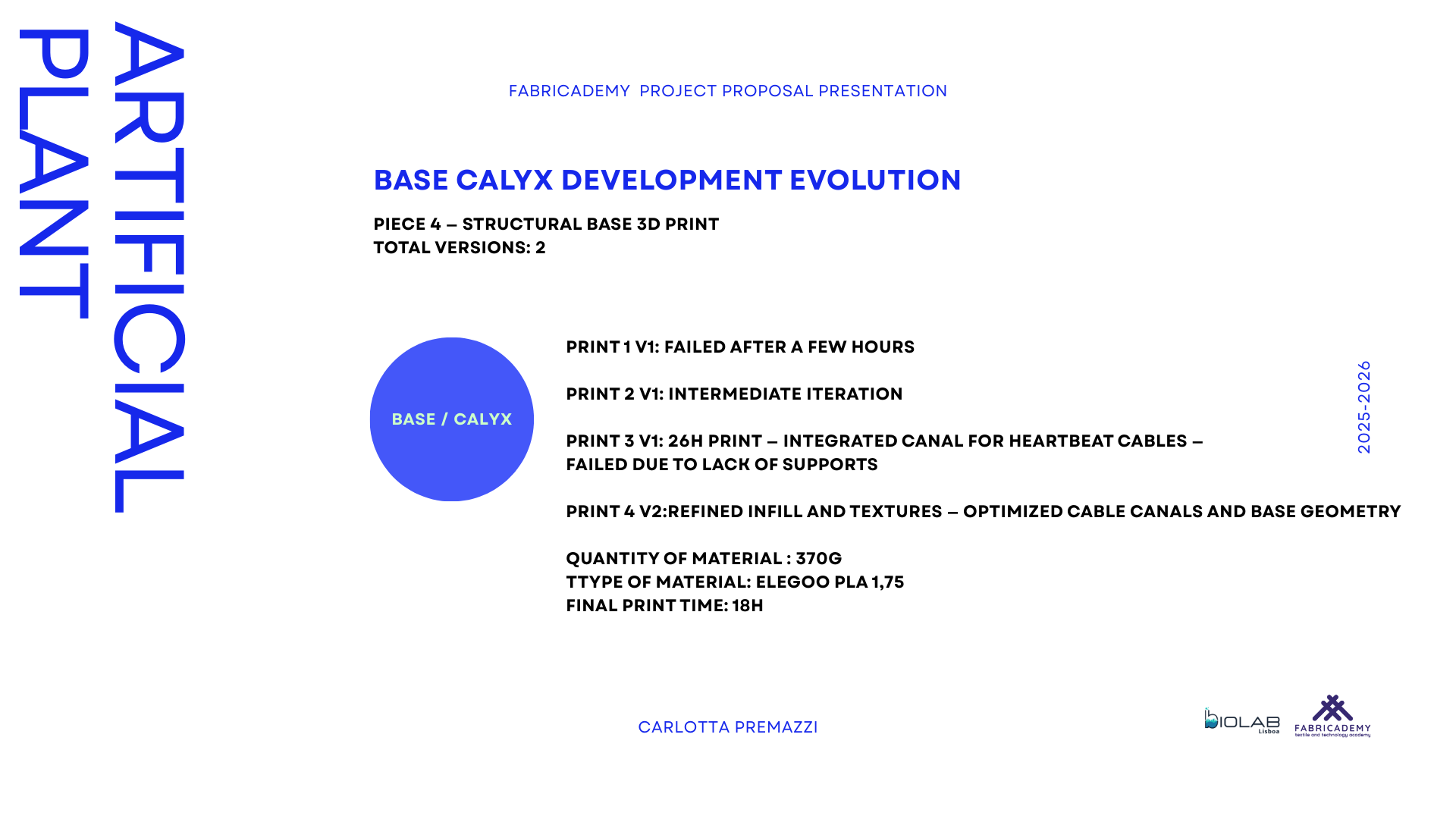 The 3D geometry was derived from a makerworld model and subsequently reworked for the needs of this project. The original flower structure was removed, and a new detachable base composed of two interlocking parts was designed. This modification enabled the incorporation of internal channels for tubes, wires, and LEDs, improving both assembly and technical integration while preserving the overall organic aesthetic.
The fabrication process required several iterations. The first two print attempts failed because the part slipped during printing, leading to a redesign of the base with reinforced areas and adjusted infill settings. The final version was successfully printed over approximately 18 hours, using around 370 g of material.
The 3D geometry was derived from a makerworld model and subsequently reworked for the needs of this project. The original flower structure was removed, and a new detachable base composed of two interlocking parts was designed. This modification enabled the incorporation of internal channels for tubes, wires, and LEDs, improving both assembly and technical integration while preserving the overall organic aesthetic.
The fabrication process required several iterations. The first two print attempts failed because the part slipped during printing, leading to a redesign of the base with reinforced areas and adjusted infill settings. The final version was successfully printed over approximately 18 hours, using around 370 g of material.
Pistil
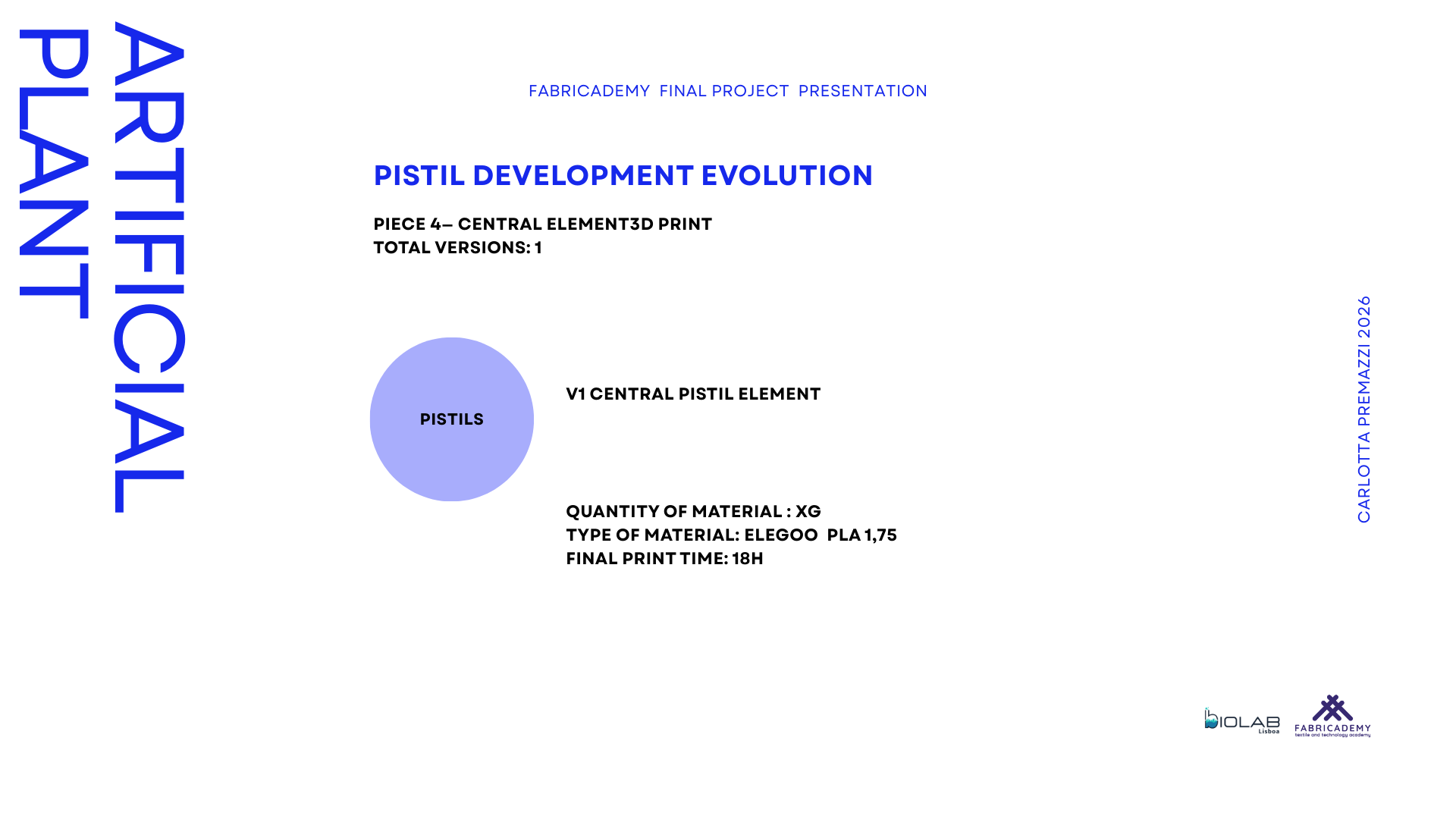
The pistil geometry was adapted from an existing MakerWorld model, used as a starting reference and reworked for the specific needs of this project. The original flower structure was removed, preserving only the central pistil element.
A new base was then designed to connect the pistil with the petals through an interlocking system. This custom modification allowed the central part to be structurally integrated into the flower while also accommodating the internal passage of tubes
Silicone casting
The pneumatic actuator was fabricated through silicone casting with textile reinforcement. The workflow combines digital modelling, 3D printed moulds and multi-step casting to produce airtight soft chambers capable of repeated inflation.
The mould was designed in Fusion 360 and 3D printed in PLA. Several iterations were necessary: early versions generated more rigid and mechanical deformations, while later refinements introduced smoother curves and variable heights to achieve softer movement.
The actuator was produced through a two-stage casting process. First, the layer containing the pneumatic cavities was cast. Then, a second layer sealed the chambers while embedding a textile scaffold, which acts as a constraint layer and helps guide the deformation during inflation.
The process involved recurring challenges, especially air bubbles, venting issues and occasional blockage of pneumatic channels during sealing. These tests were essential in refining both the mould and the casting workflow.
Air chamber testing
The pneumatic actuator was tested by connecting the air tube and activating the pump under different pressure levels and cycles.
The structure produced a breathing-like motion, but testing at maximum pressure using a dimmer caused multiple actuators to break, especially at junction areas. This demonstrated the importance of controlling air pressure to prevent structural failure.
The textile reinforcement proved essential: without it, the actuator does not deform correctly, resulting in irregular and unstable movement. With the textile layer, deformation becomes controlled and directional, allowing consistent opening and closing of the petals.
Assembly
The flower is assembled through a sequential process:
- Attachment of the pneumatic tube to the flower.
- Insertion of the tube into its dedicated channel at the upper end of the calyx.
- Insertion of the heartbeat sensor, already connected to its cables, into its dedicated channel through the leaf.
- Placement of the LEDs in their dedicated position.
- Routing of all cables out through the base of the calyx.