Real Plant/Integration
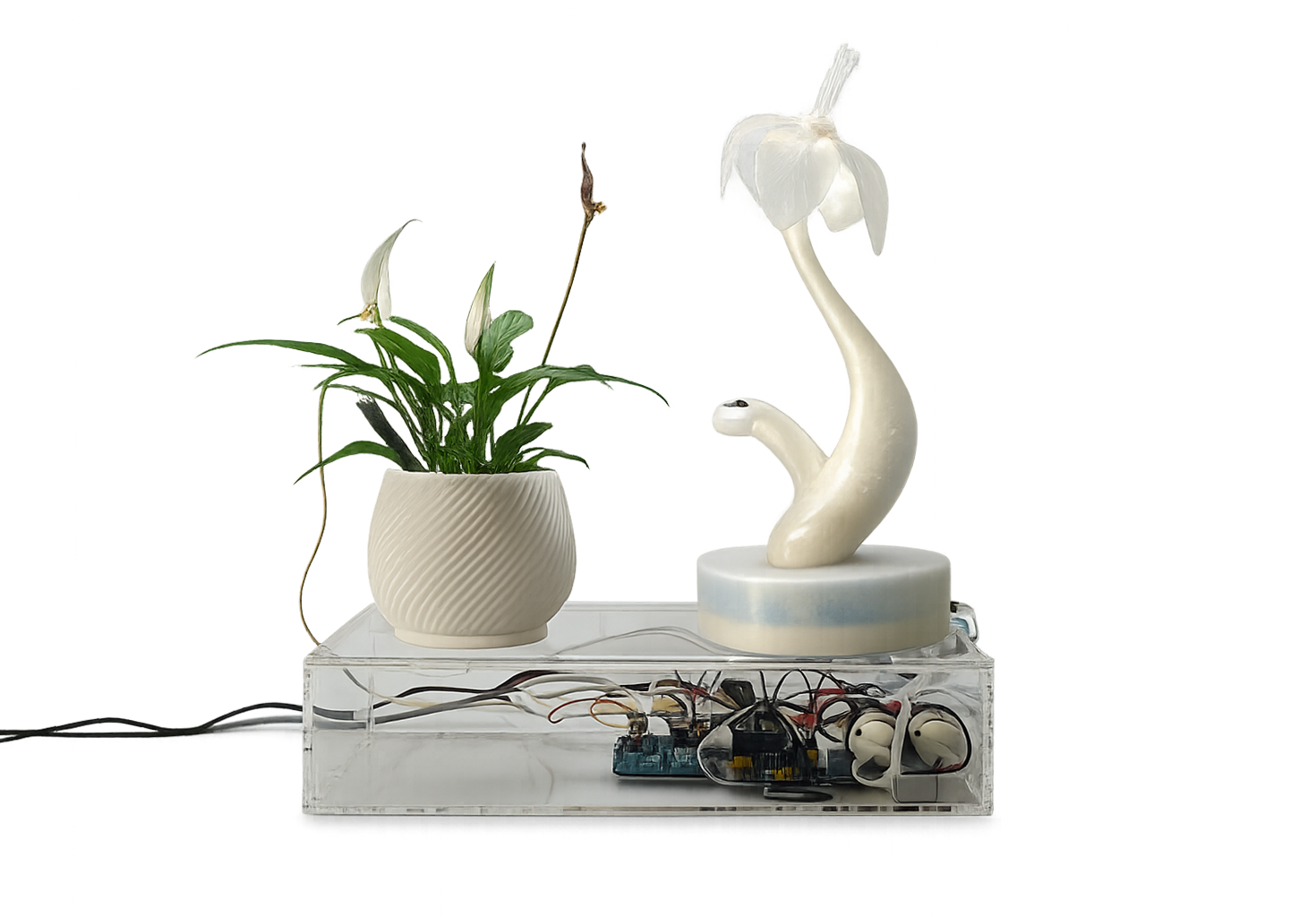 Radical EcoSystem with the new PLA 3D printed pot
The living plant is conceived as an active biological component of the system rather than a decorative element. Its selection depends not only on bioelectrical responsiveness and maintenance, but also on its capacity to coexist spatially and conceptually with the artificial flower and the electronic infrastructure.
At this stage, the plant is temporarily housed in a commercially available cement pot used for filming and testing. The final intention is to develop a more integrated container structure, bringing together the real plant, the artificial flower, and the electronic components within a single formal and spatial system.
Role of the Living Plant in the System
In the current prototype, the plant provides the environmental baseline of the installation through soil moisture sensing. The moisture value is read by the Arduino and translated into three behavioural states: DRY, OK and WET.
These states define the breathing rhythm of the artificial flower, the chromatic behaviour of the LEDs, and the general mood of the system. The plant therefore acts as a living input that influences the temporal and atmospheric behaviour of the installation.
| Plant condition | System state | Behaviour |
|---|---|---|
| Low moisture | DRY | Short, tense, nervous breathing |
| Balanced moisture | OK | Smooth, organic breathing |
| High moisture | WET | Slow, heavy, irregular breathing |
Recommended Plant Options
| Photo | Common Name | Scientific Name | Bioelectrical Responsiveness | Maintenance | Conceptual Fit |
|---|---|---|---|---|---|
| Peace Lily | Spathiphyllum | High | Medium | Soft, responsive, moisture-sensitive | |
| Pothos | Epipremnum aureum | Medium–High | Very Easy | Adaptive, evolving, trailing growth | |
| Calathea | Calathea orbifolia | Medium | Medium–High | Expressive leaves, visible movement | |
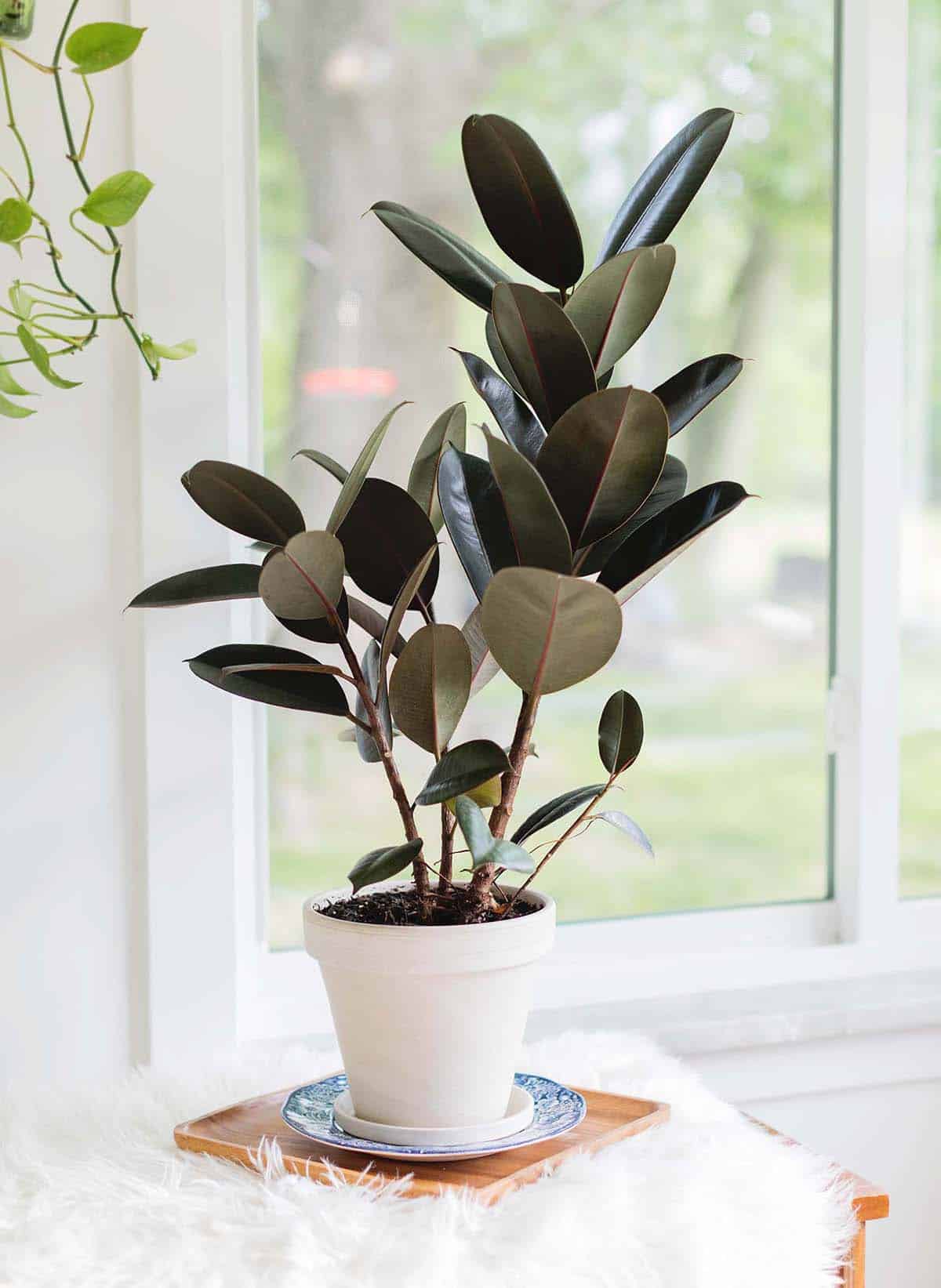 |
Rubber Plant | Ficus elastica | Medium | Easy | Sculptural, stable, structural presence |
| Snake Plant | Dracaena trifasciata | Low–Medium | Very Easy | Stoic, vertical, resilient contrast |
Pot and Plant Housing Development
The container for the real plant was initially imagined as a natural, non-human-made element, in order to preserve the idea of a living organism embedded in an environment with minimal visible intervention. I considered using a piece of tree trunk as a base or vessel, but I was not fully satisfied with the aesthetic result and with the way it dialogued with the rest of the installation.
For filming and temporary setup, I therefore used a cement pot that I had purchased as an interim solution. In parallel, I started considering a 3D-printed element in PLA, using the same material language already adopted for the body of the artificial flower. This brought me back to an intermediate prefabrication approach, in which I began developing the idea of a single piece able to contain the electronic part, the artificial flower, and the vessel for the real plant. This integrated solution is likely to be developed further in the next stage. The 3D geometry was derived from a makerworld model, as time constraints did not allow for the development of a fully custom pot at this stage.
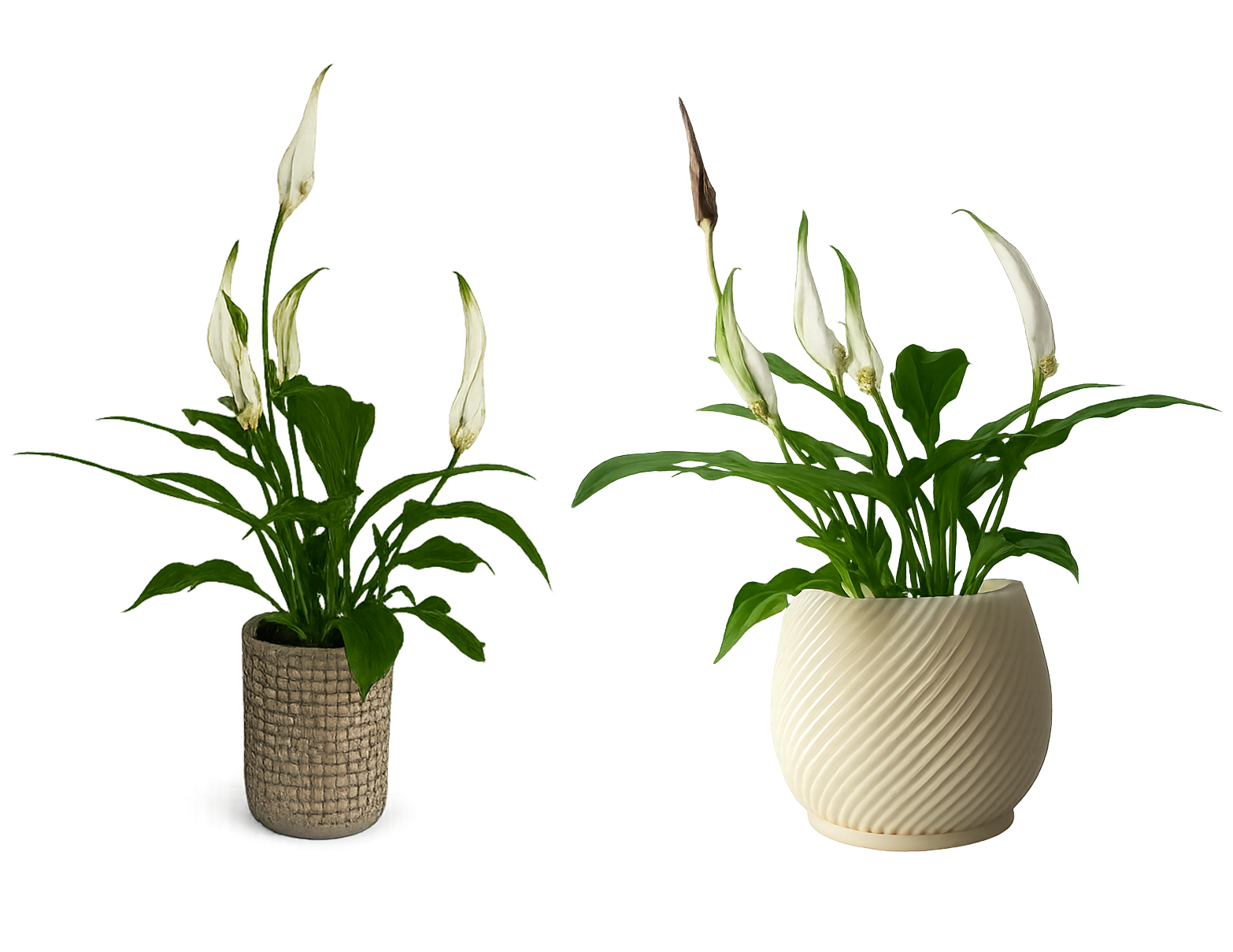 Peace Lily into first cement pot and PLA 3D printed pot