Process Journal
Prototypes
Process Update, Feb 23, 2026:
It's been busy since mid terms.
The last few weeks were heavy on the pattern experimentation front. I hit a few road blocks. My lake pigments were really not marbling....
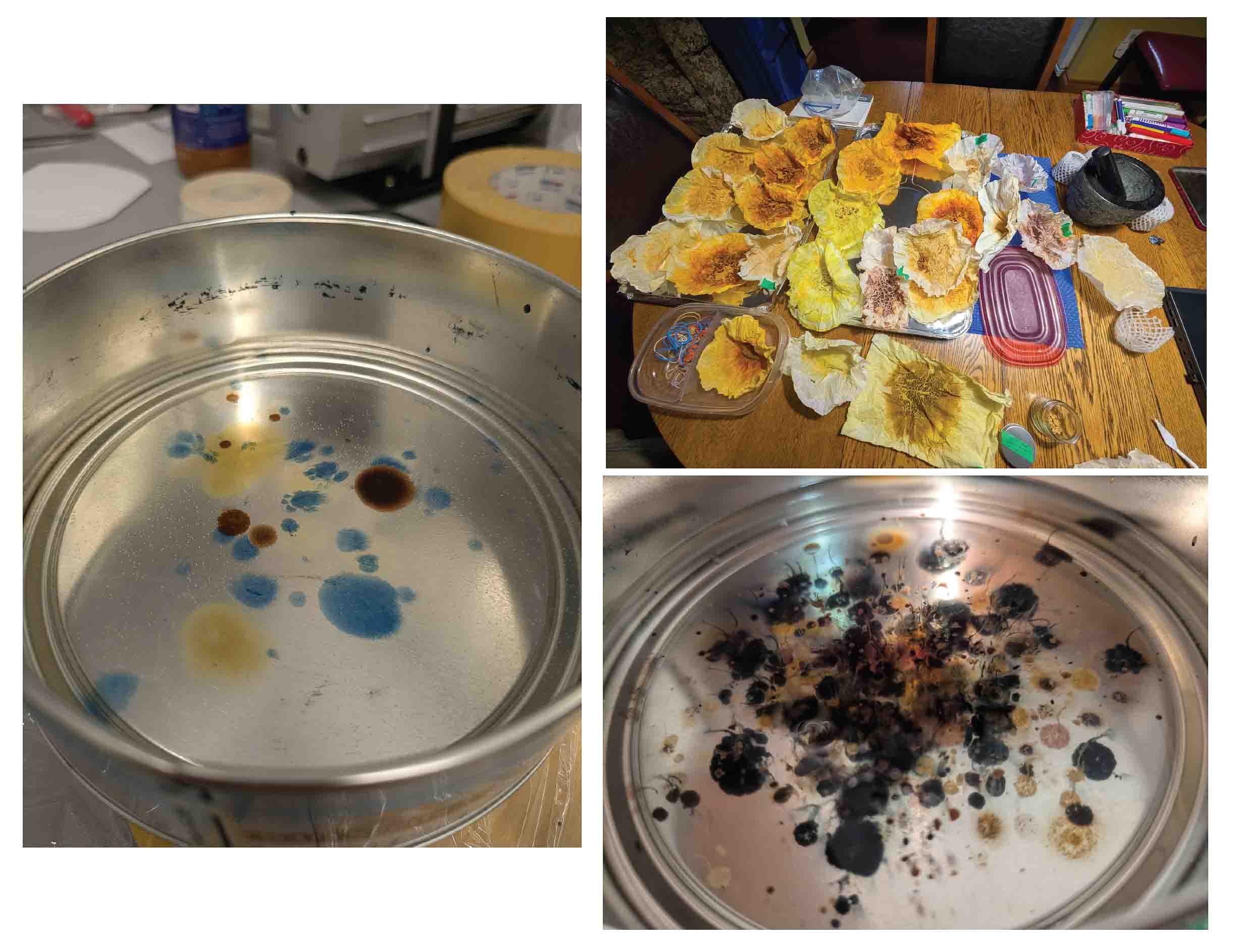
I made what feels like a thousand pigments at the front of term. I was going for a "security in numbers" approach. But none of them were working. So I was low-key starting to panic this week.
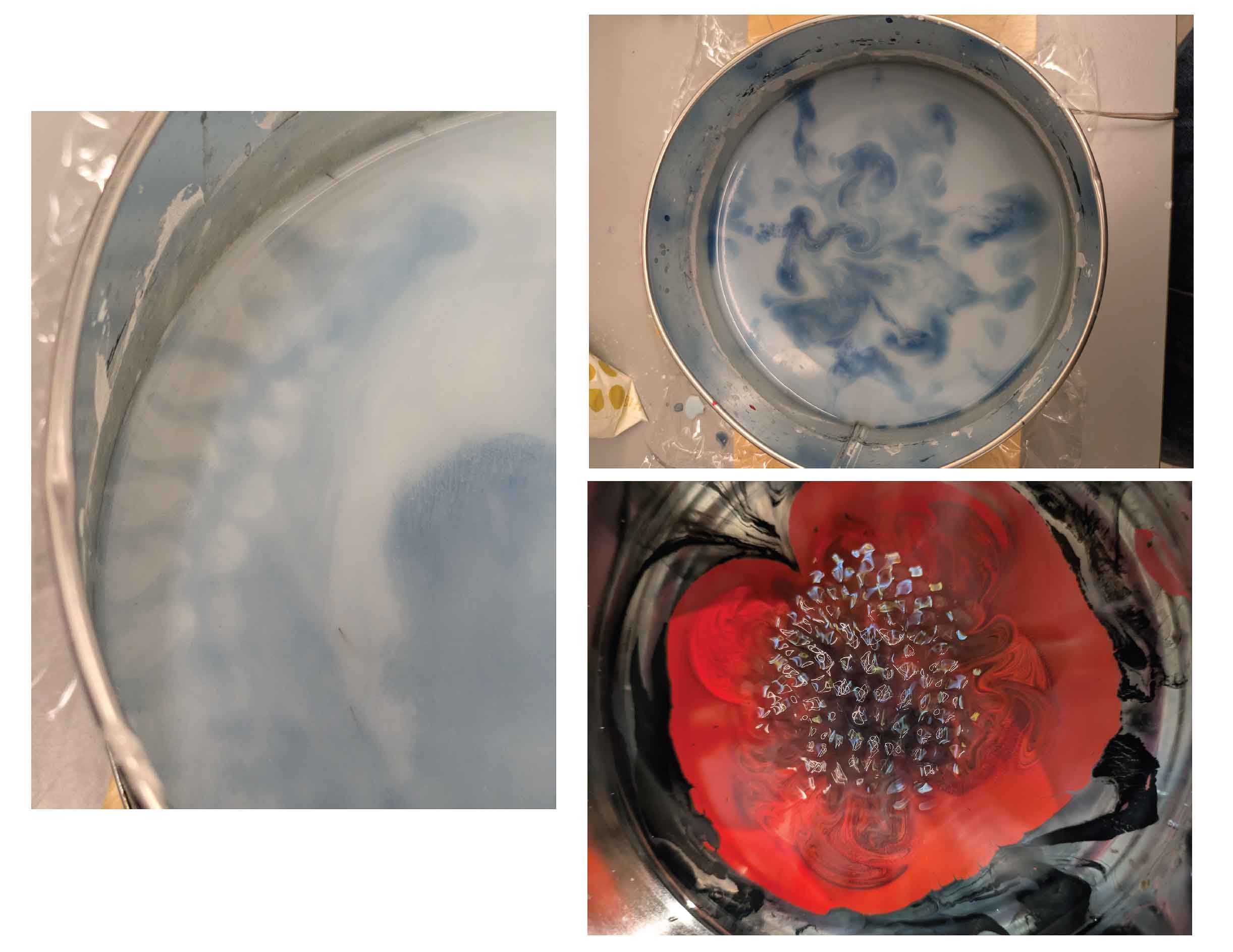
But I had to keep pushing, so I moved on to pattern exploration with other materials. I'd previosuly used acrylic to test my prints - but this week I also played with cornstarch.
I learned the thickness of the marbling bath will actually change the resonant frequencies of the cymatics.
Cornstart was cool too because it kind of freezes the patterns temporaily in the bath when the frequency stops.
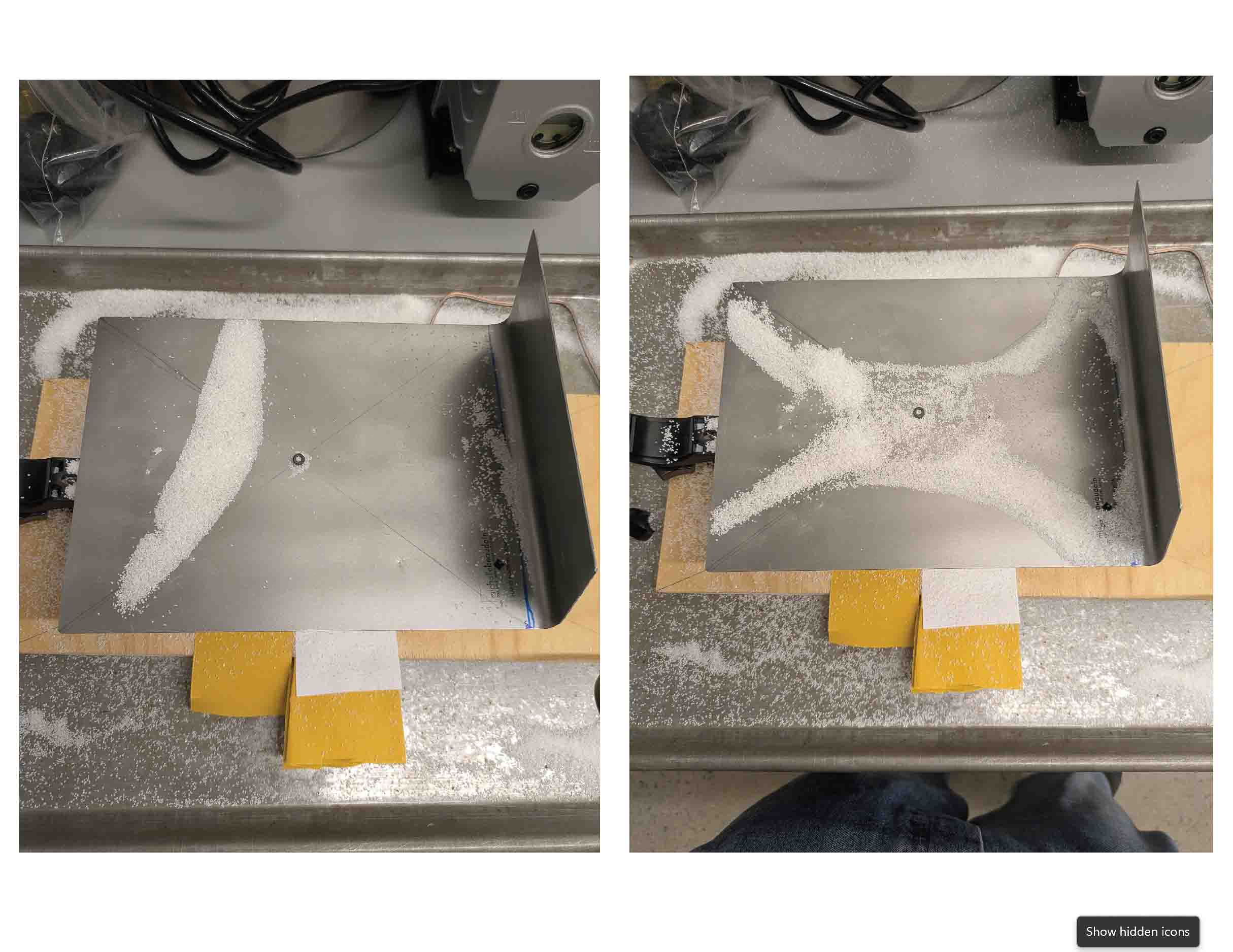
I also experimented with different rig set ups.
I've used both speakers and a surface transducer now. I switched to a transducer because I read transducers are usually better at showing higher, more lace-like frequencies.
I've also learned is that, A) - higher frequencies are very annoying for you and anyone around you to listen to constantly, and B) the most influential element is actually usually the plate size.
Different plate sizes and materials respond to different frequencies.
Like latex....
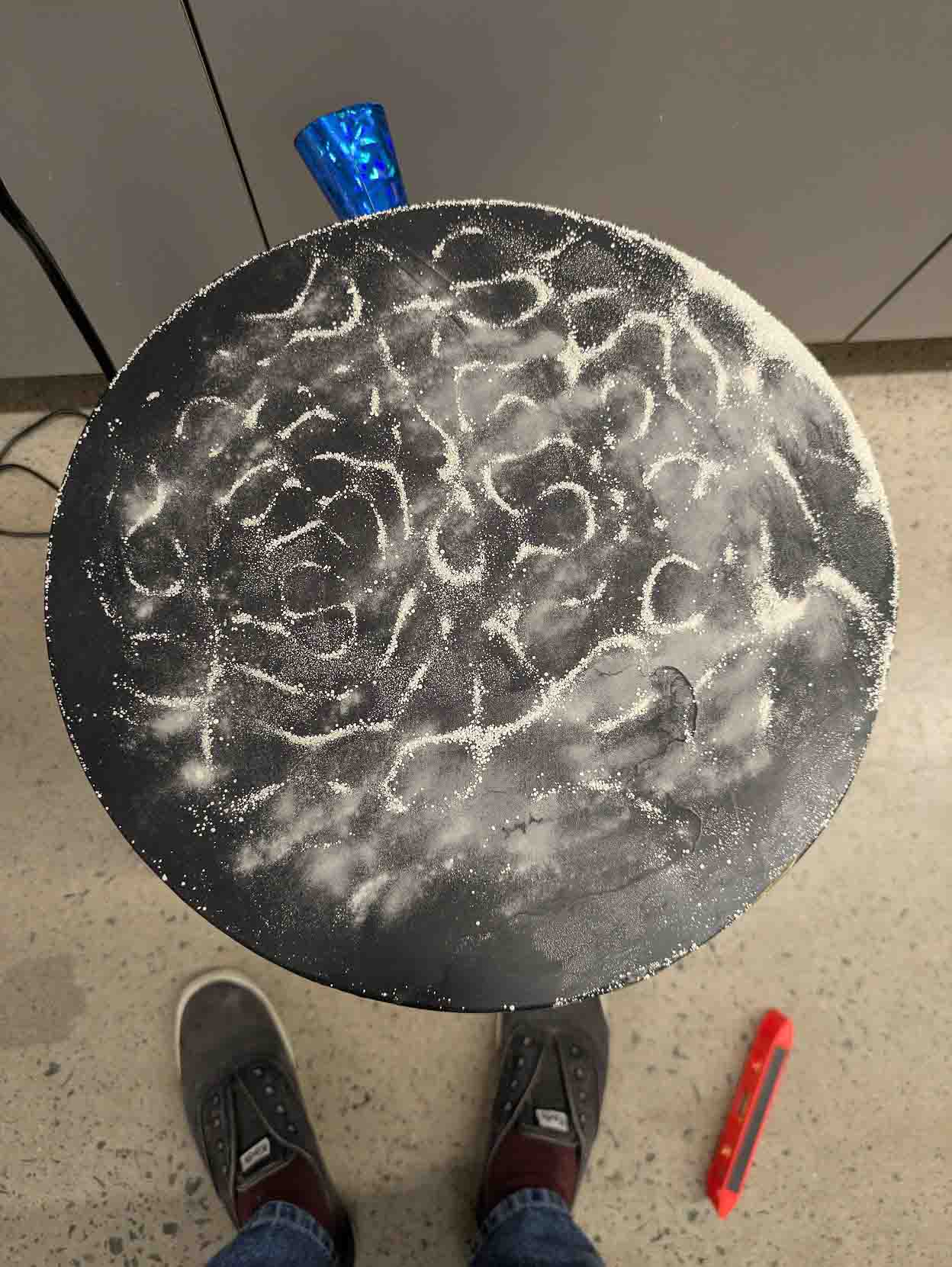
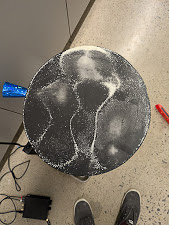
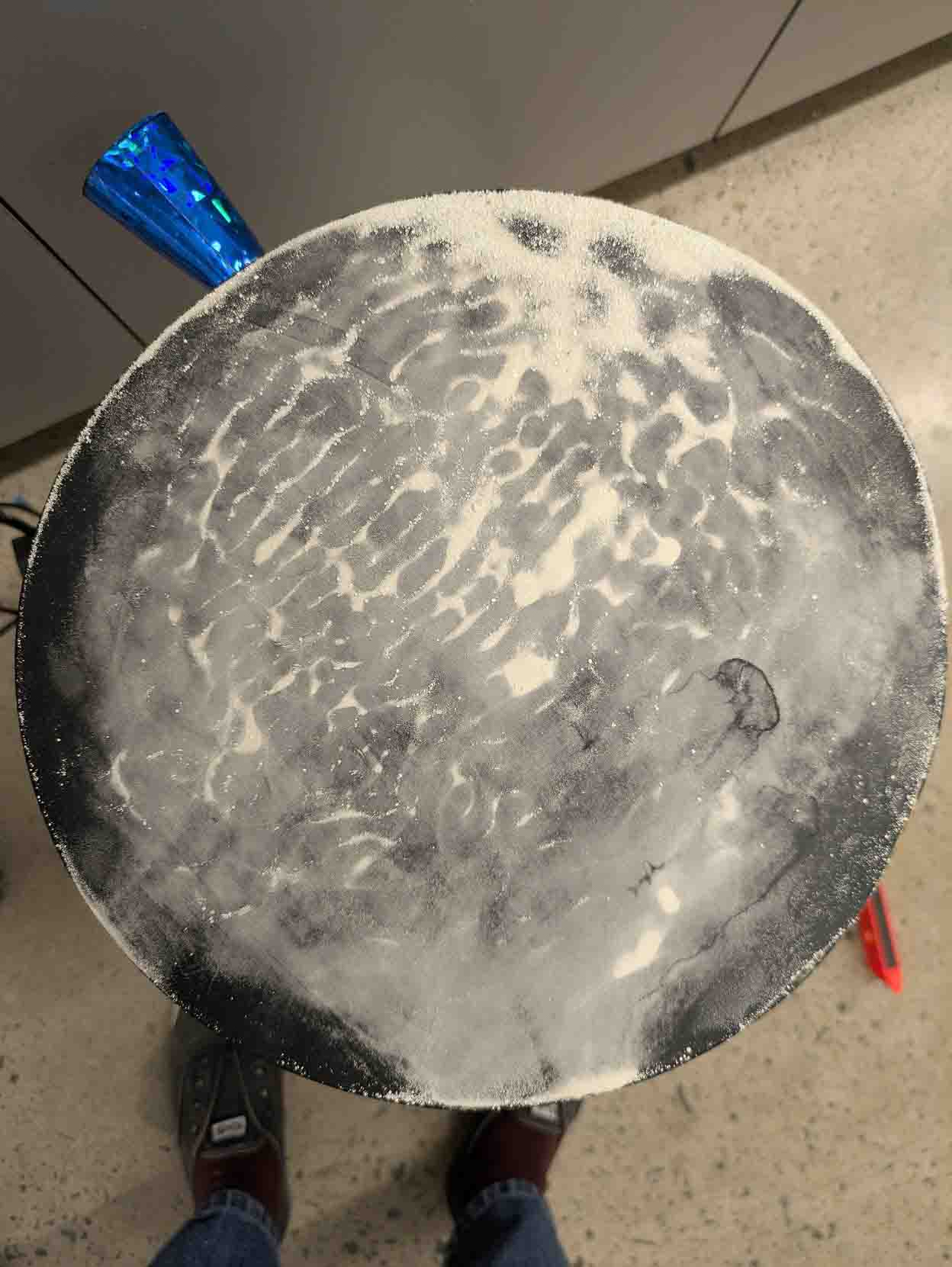
These cymatics were made by cutting the top off an old distilled water jug and stretching a jumbo balloon over it. They worked better than any of my high tech electronic gear!
And the particle size of your medium also matters.
The logic here was that if I use pigment instead of sand I might somehow imprint the pattern on wet alumed fabric. I did this and left it for the weekend. Unfortunately the result is very very faint when the pigment washes off - so I have yet to get that to succeed.
I'm realizing I'm probably only going to have time for water marbling cymatics capture.
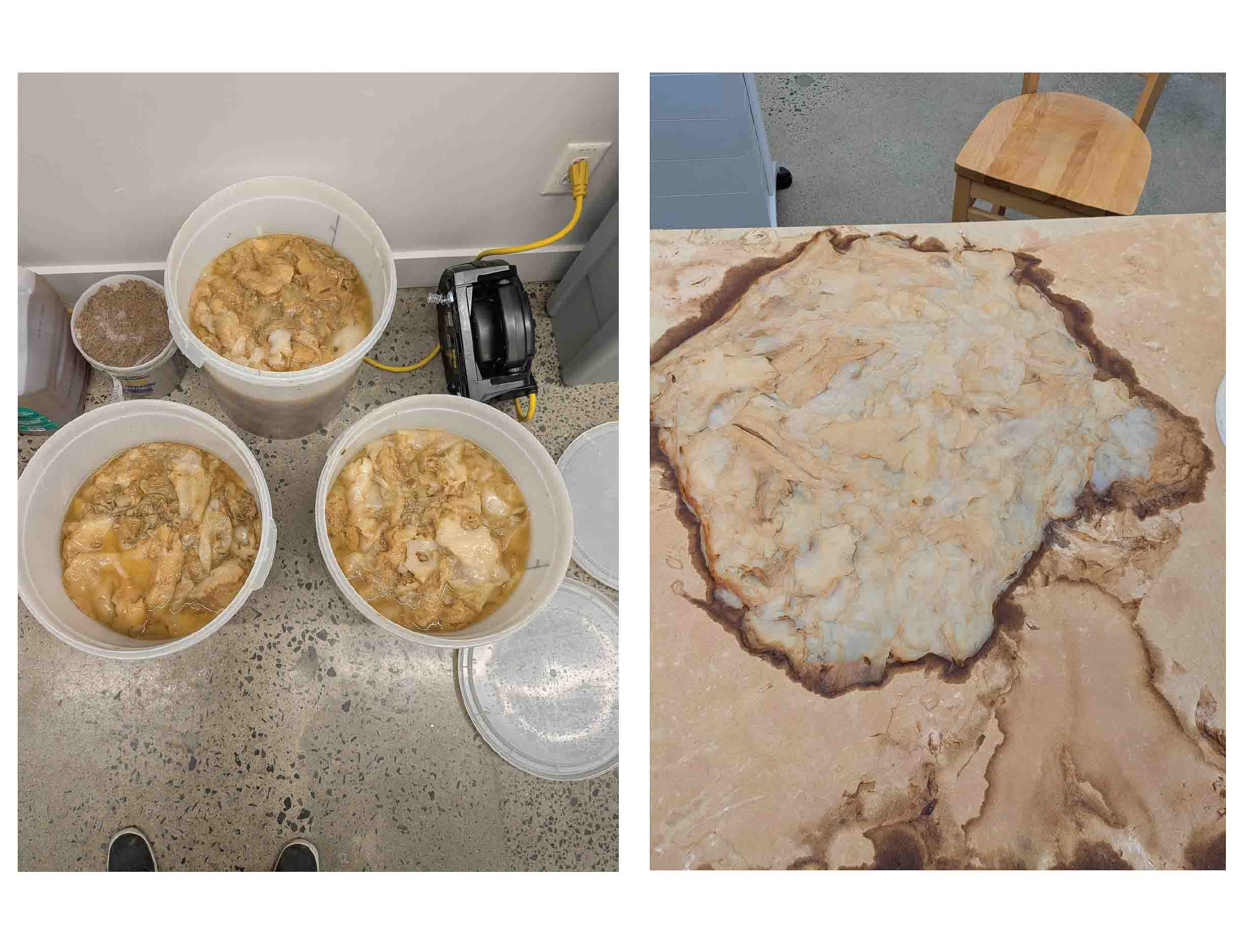
On the material front - Annie contacted her kombucha waste supplier and they gave us three giant buckets of scoby! It is the most alien material I've ever worked with. It looks like giant slabs of chicken breast. It's truly bizarre. But I loved it!
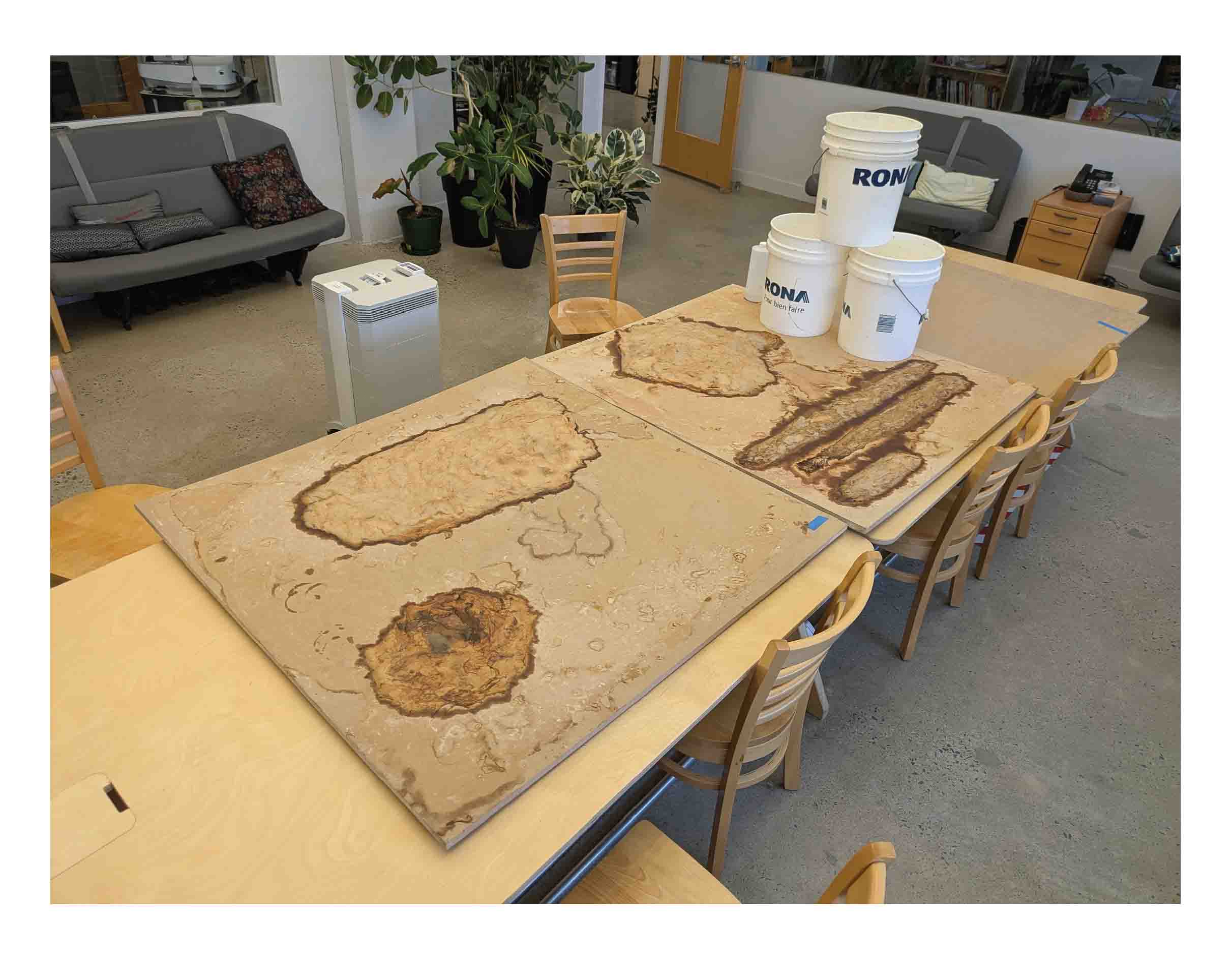
She so graciously helped me wash it all and we had a nice Friday evening laying it out artistically on a sheet of MFD. It took about one week to fully dry.
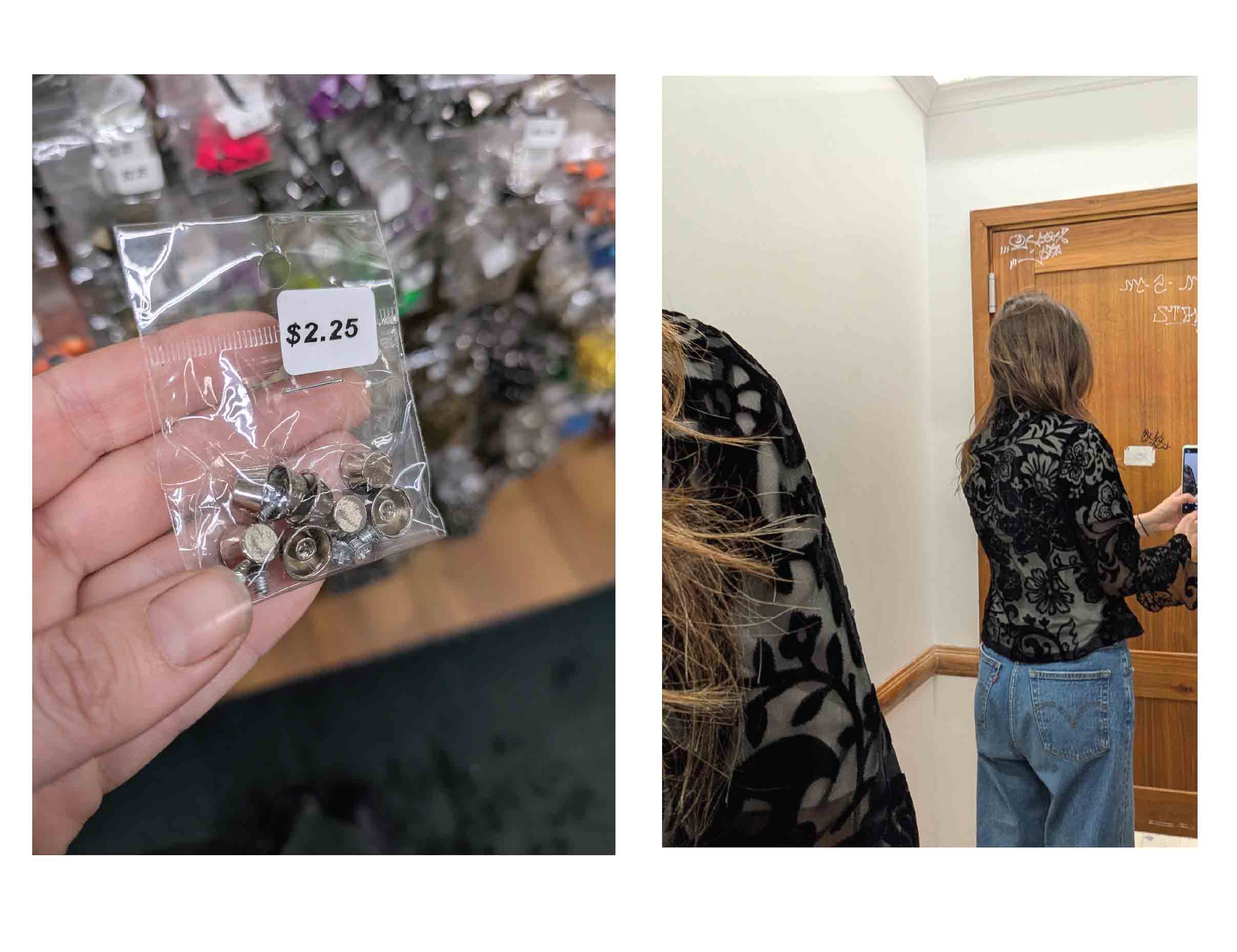
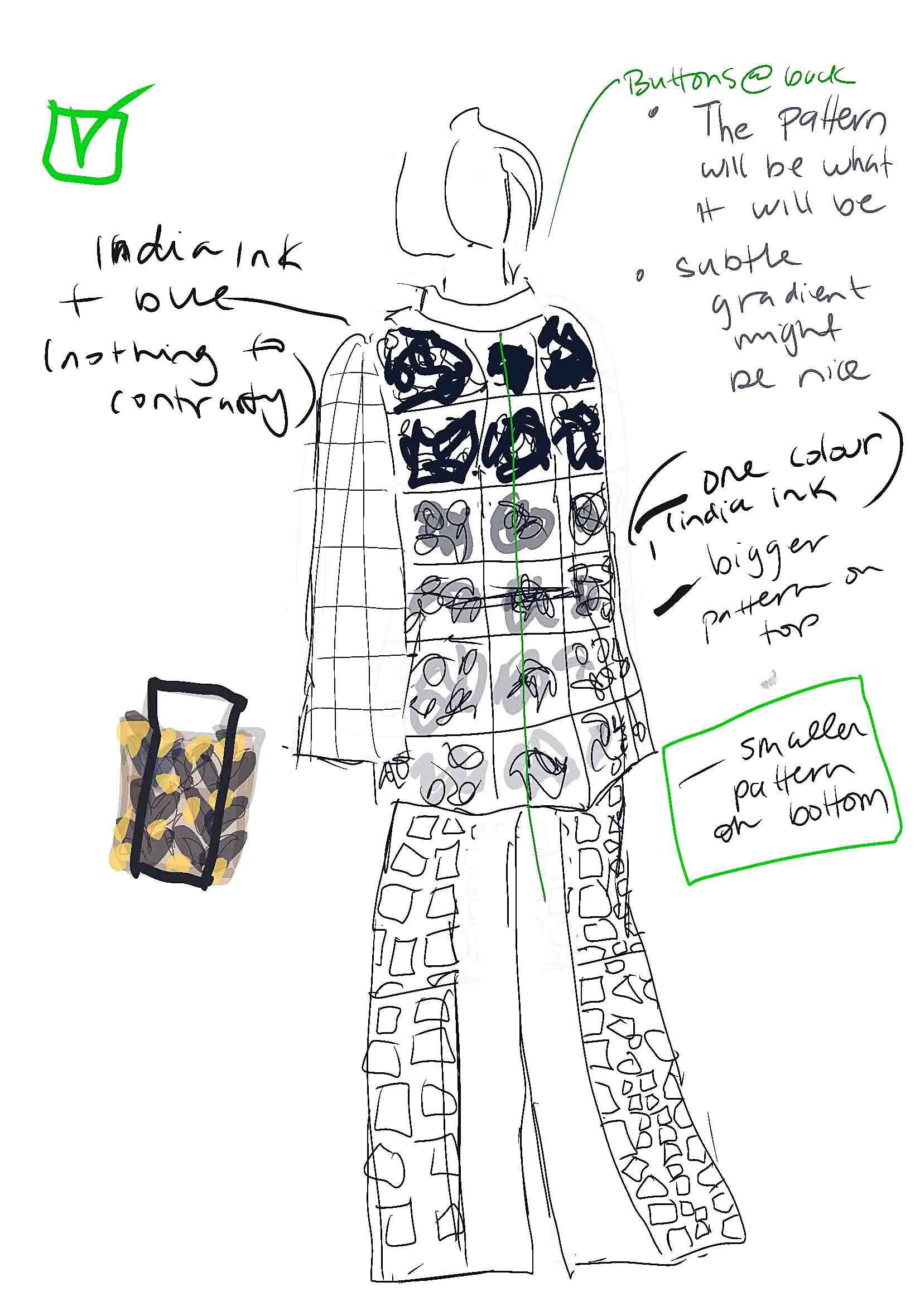
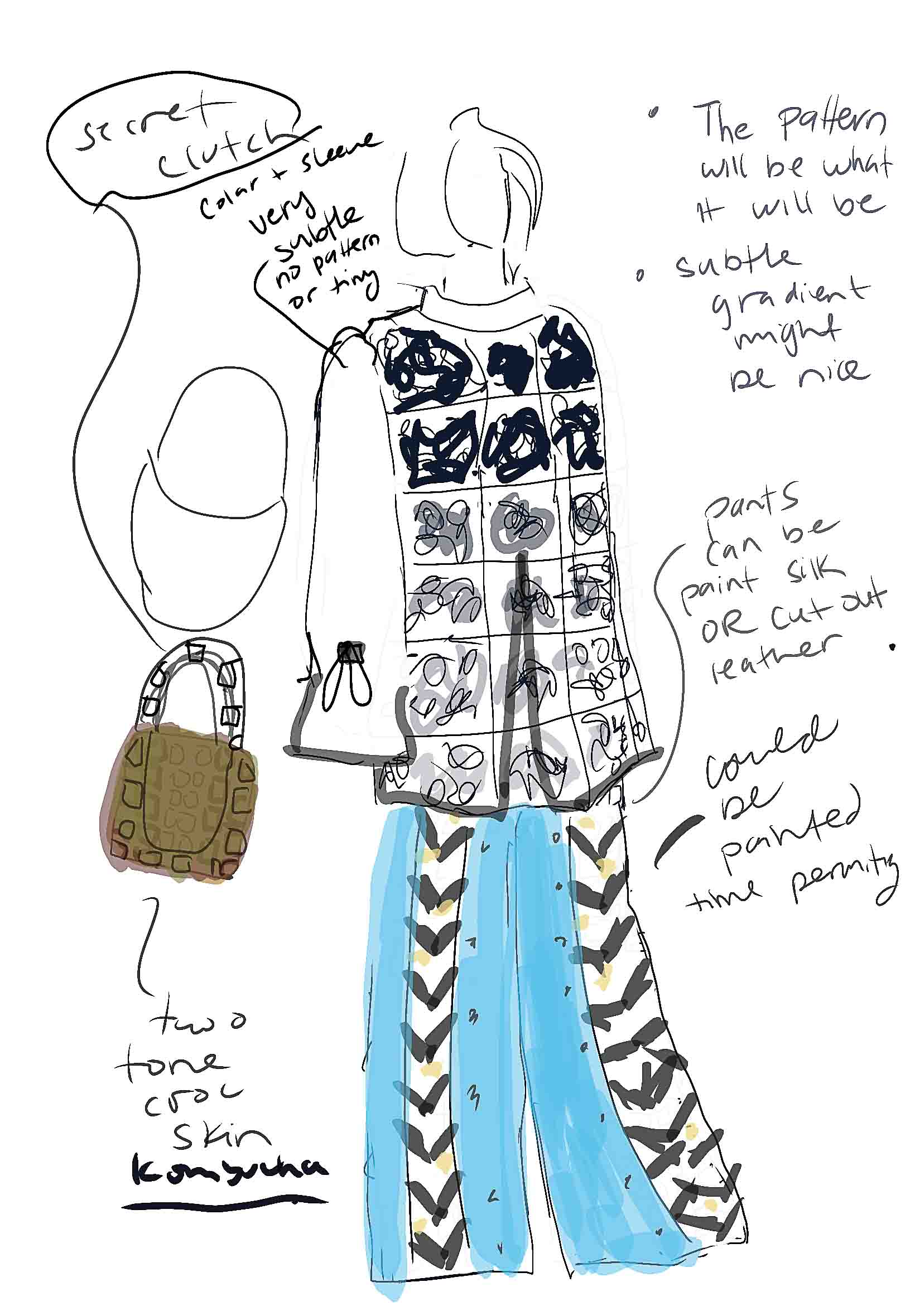
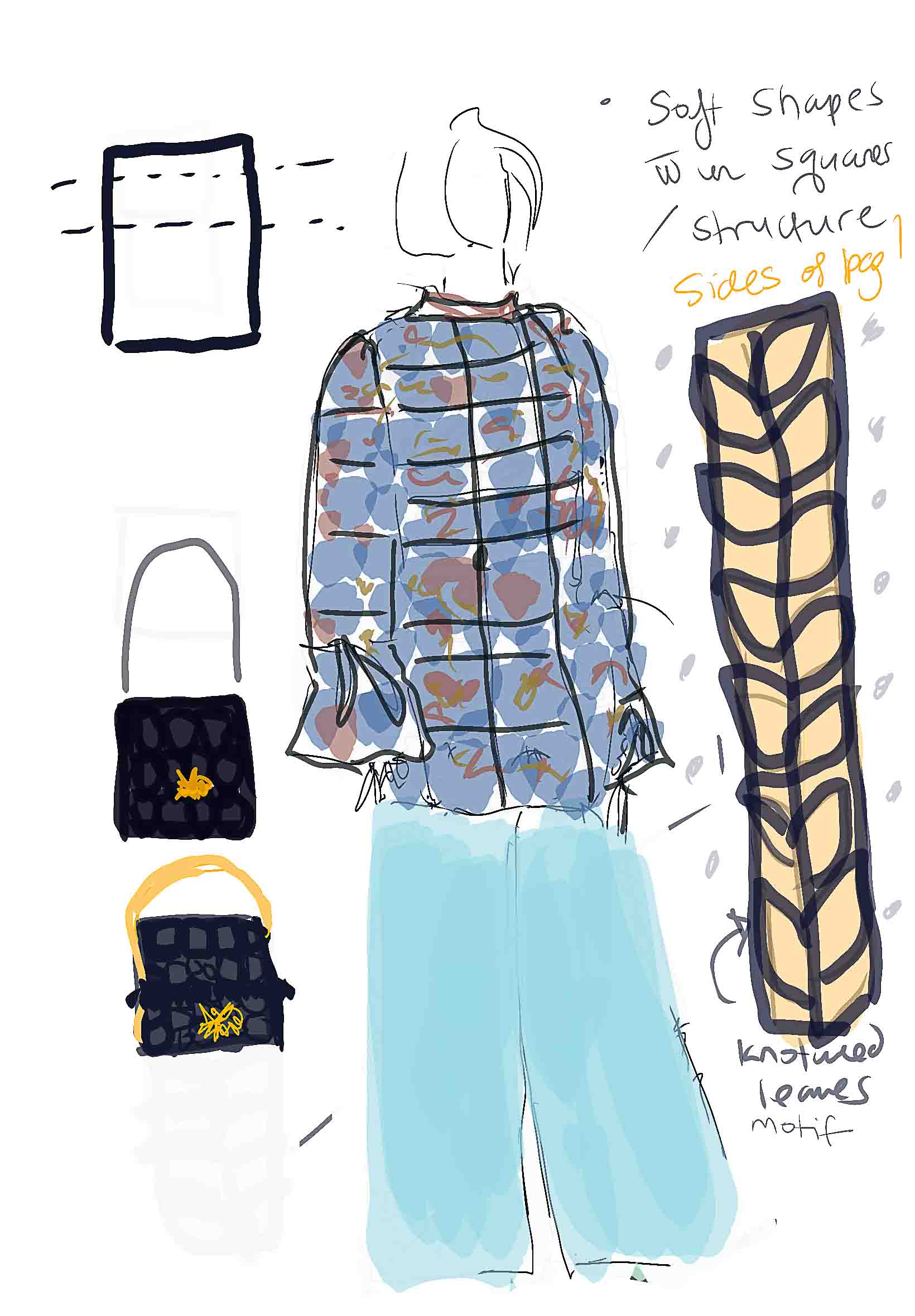
On the garment design end of things I've been trying on a lot of different cuts and patterns to see what shapes and scales I like, and how they blend together.
And I've been shopping for a lot of materials ...
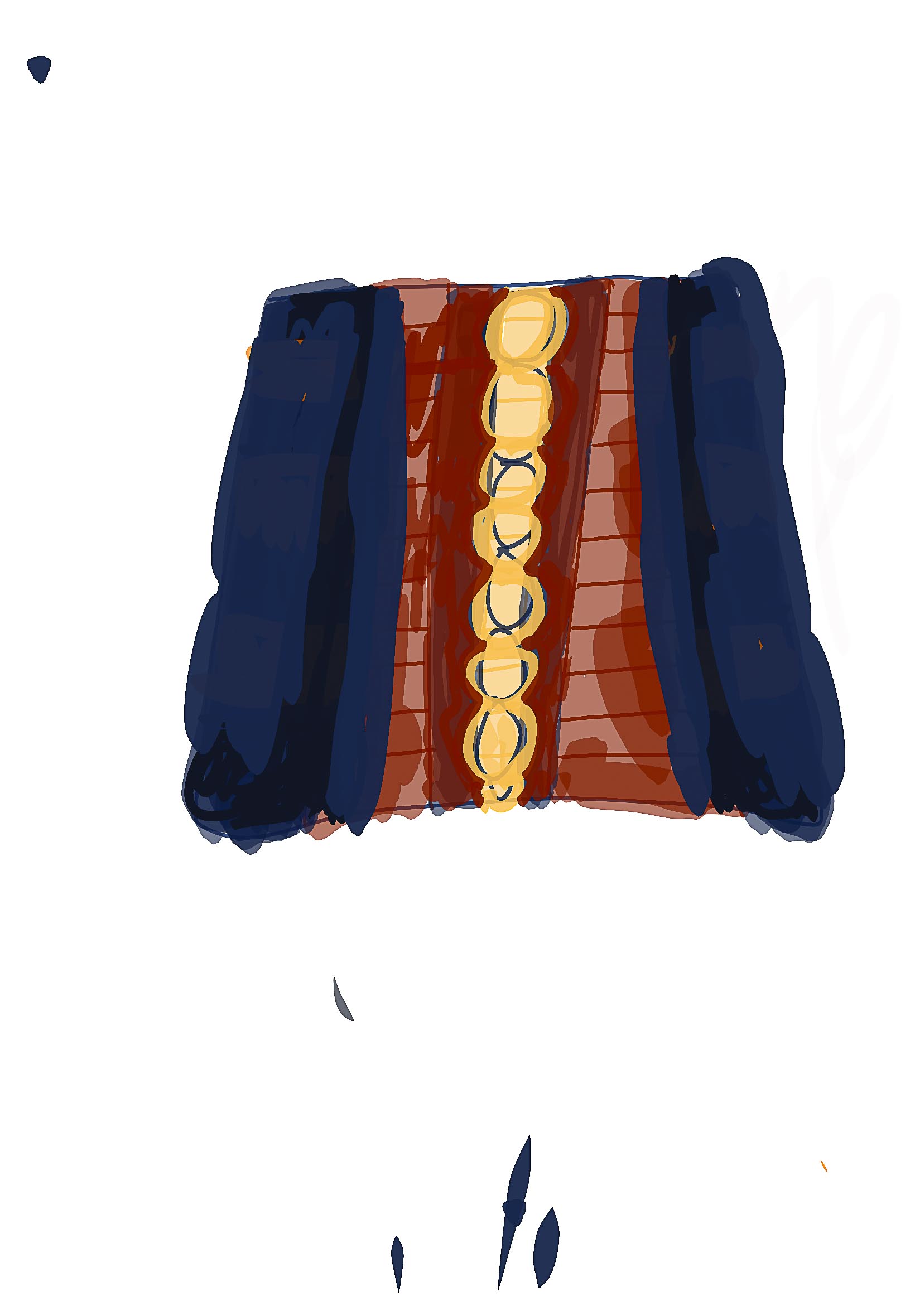
I'm still finalizing the design. I really really want to do multiple simple garments with cymatic patterns at differnt scales - but we will see if I can get time back after my massive marbling delays.
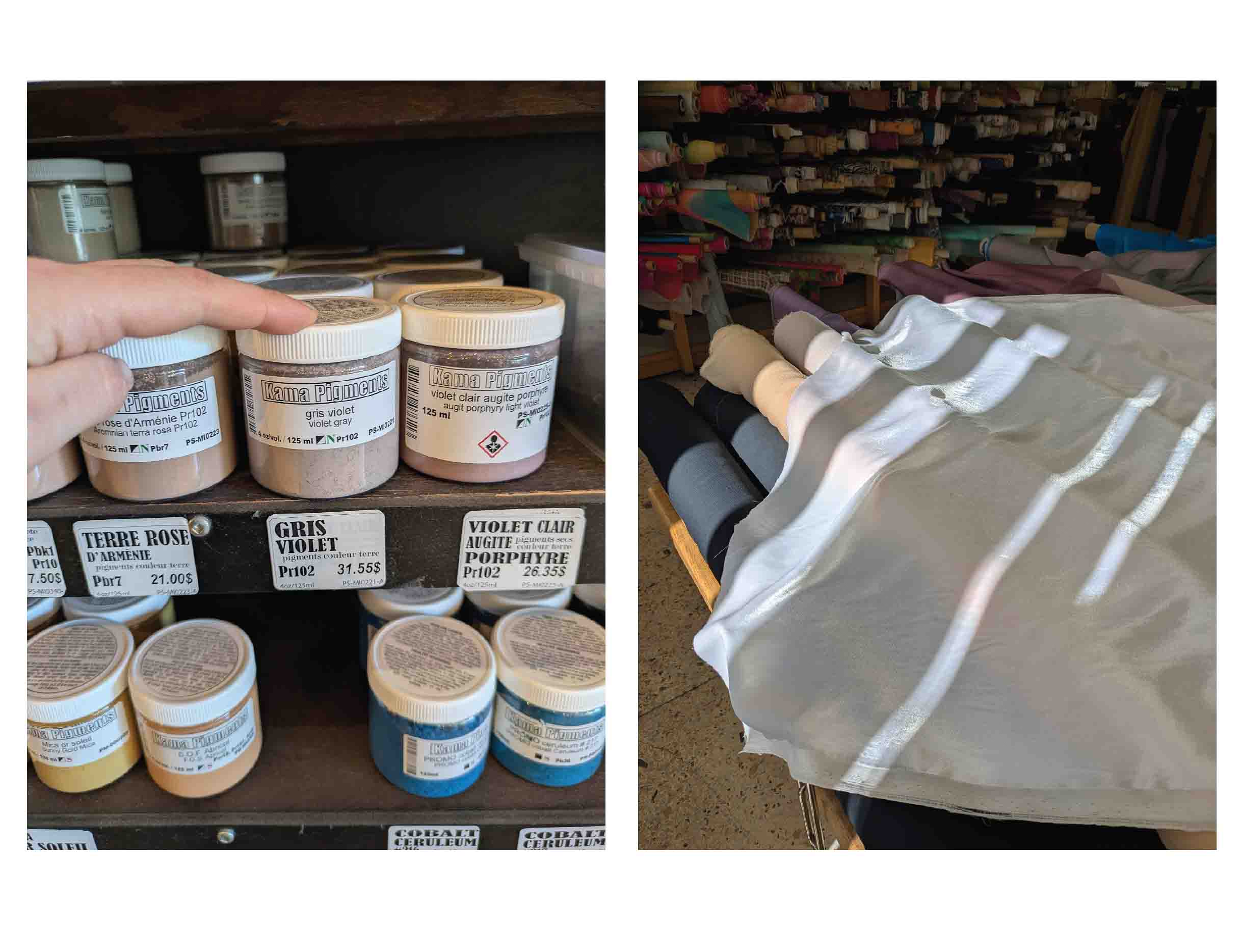
Documentation wise - I've been really wanting to get more comfortable with film photography for a long time - so I told myself this was the perfect excuse to bite the bullet. I've started taking film photos of the process and my world right now when I'm out and about - including portraits of all the people in the shops who have sold me supplies. Montreal is so great.
And to circle back to pigment - it finally registered, after all this time, that traditional ebru was done with earth pigments- not plant pigments. So to ensure I could get any prints at all - I'm now focusing my effort on earth pigment instead.
And I'm happy to say that, finally today I managed to get my first earth pigments to marble. (Annie helped)
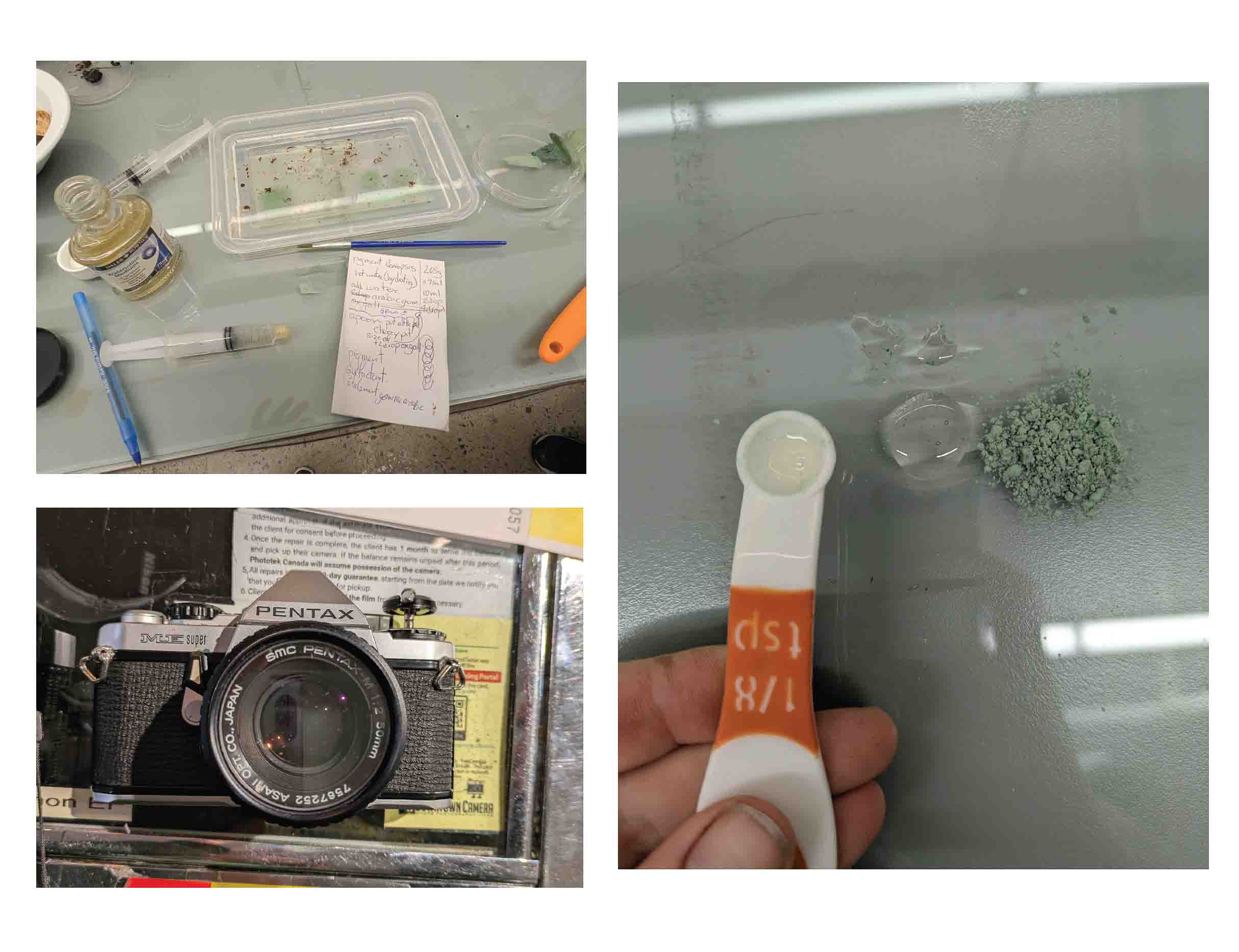
So now it's on to the final phase... capturing the prints and figuring out what the heck my garment should look like.
Design & Fabrication
Process Update, Jan 26, 2026:
I've spent the last two weeks acquiring materials and setting up my initial tests. This includes:
-
sourced many natural lakes, ( created 16 and bought 6 ) Including indigo and cochineal and Japanese knotweed.
-
Built a mini cymatics rig to test my cymatics with a waterproof speaker
-
Started 6 kombucha vats at the lab that will grow for 16 days.
-
Sourced 2 larger speakers and an amp for the big cymatics, and researched their connections and wattage needs.
-
Further researched cuts and patterns I like by playing with paper shapes
-
Documentation research - how will I showcase all my hard work?
-
silk, wool
This week;
-
testing natural dyes
-
testing cymatics for marble ability
-
developing the sewing pattern further
Next week:
-
Build the pattern from muslin
-
continue dye tests
Montreal, Feb 7 - Feb 14:
-
Build the final cymatics rig in the lab
-
natural dye tests
-
make a vat of indigo
-
test kombucha for dye ability
-
decide on final colour palette
-
source final fabrics
Machine List: - Cymatics rig
Ideation & sketches
Bag
 Project management |
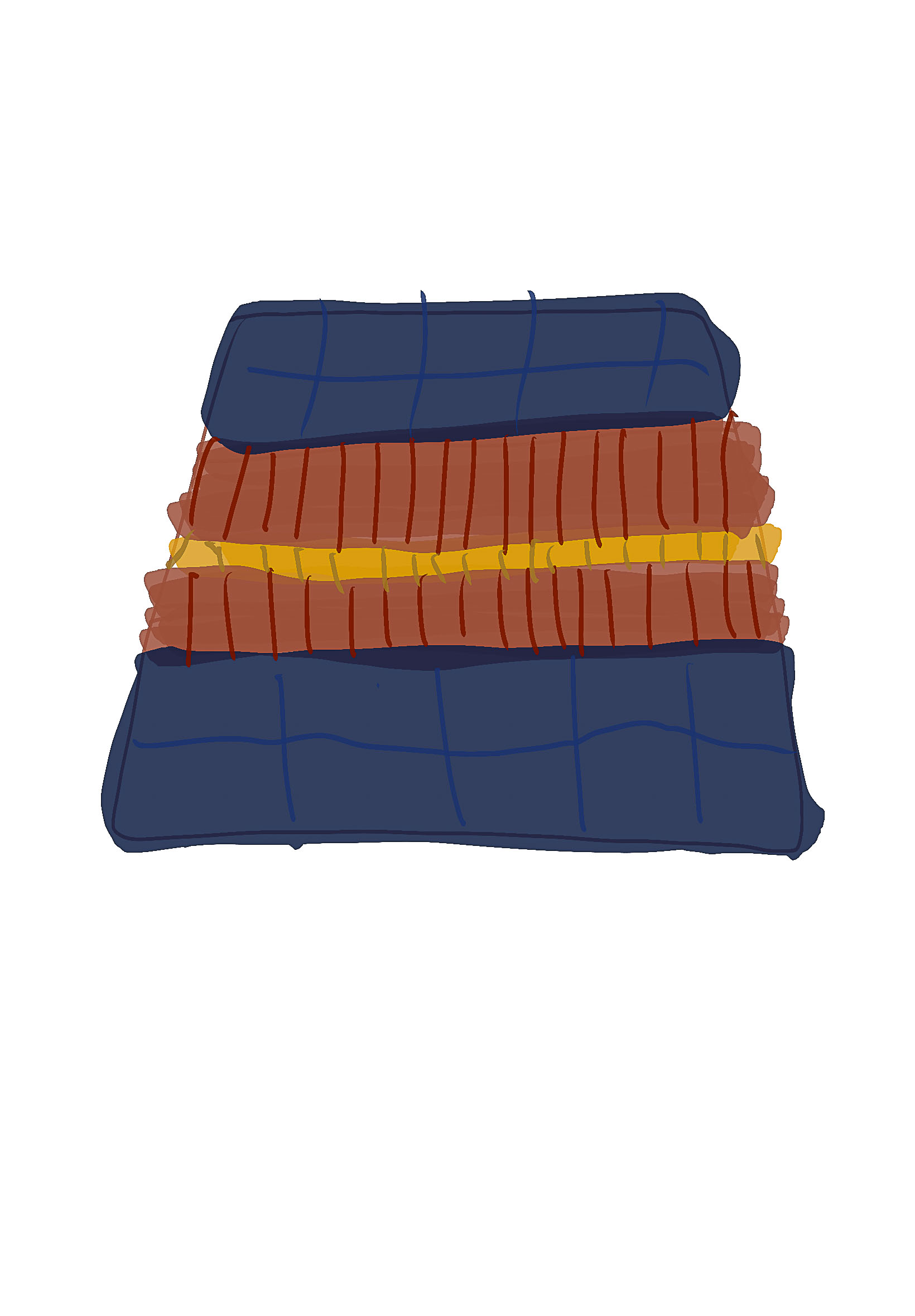 Digital bodies |
Outfit
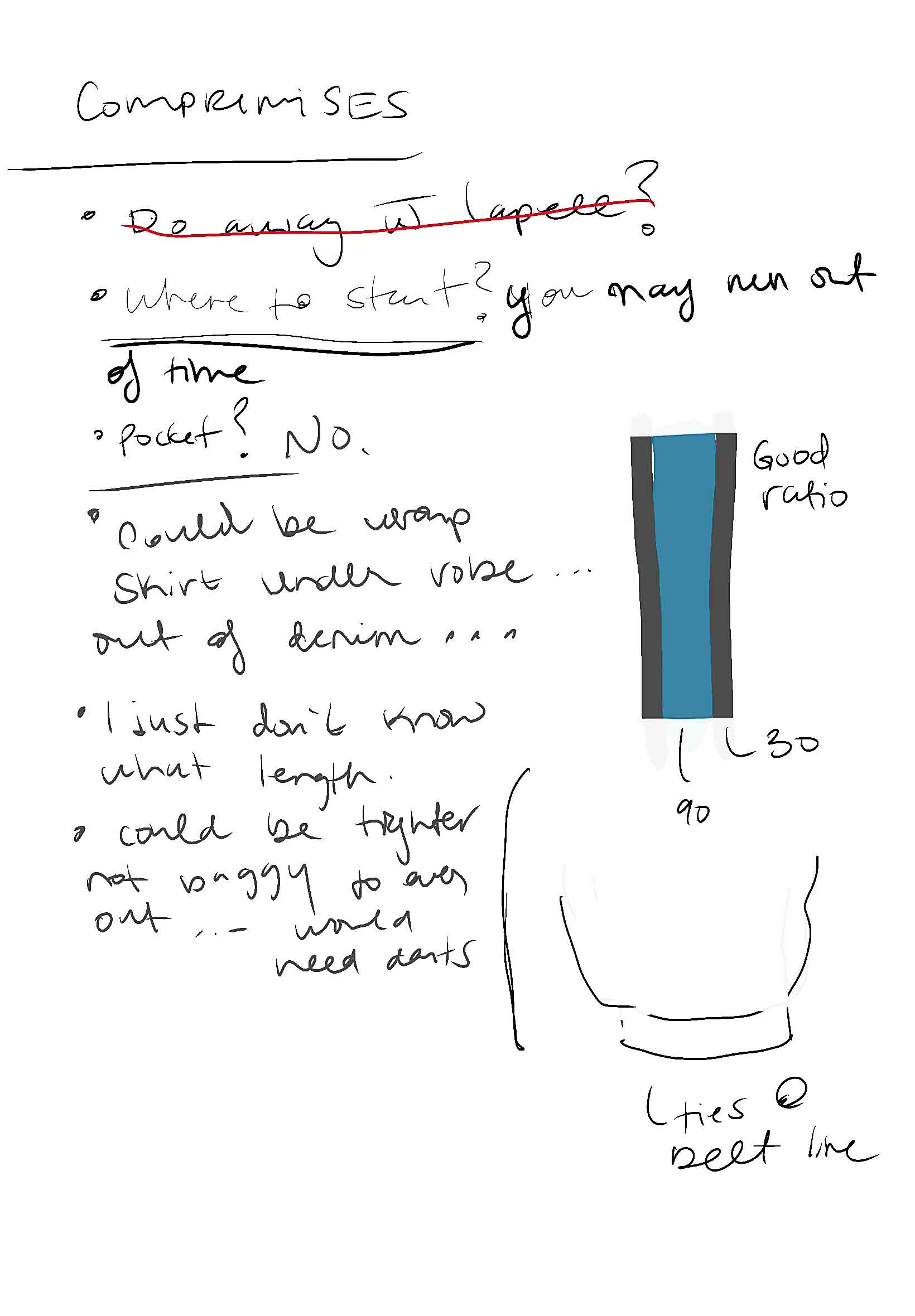 Computational Couture |
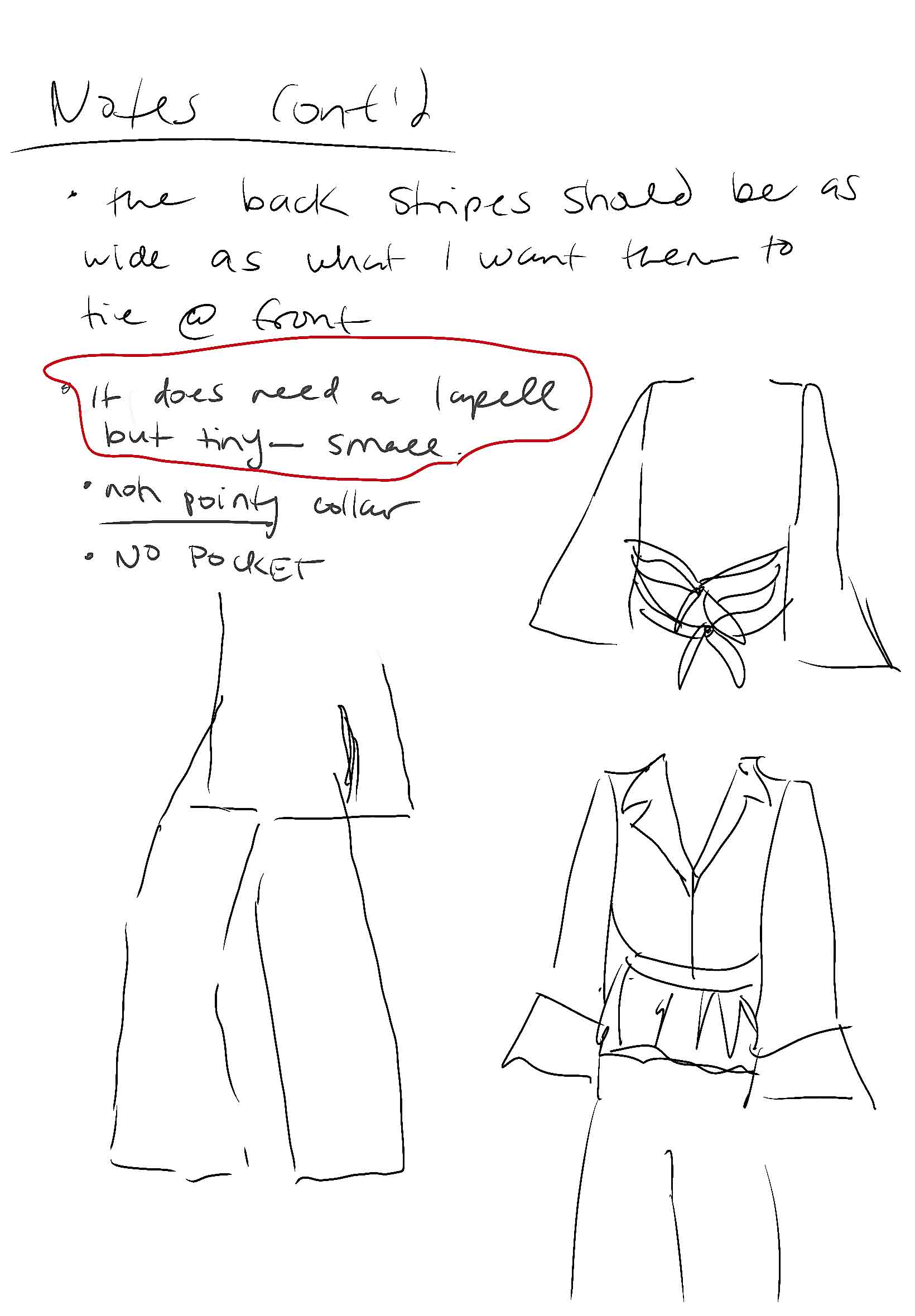 BioFabricating Materials |
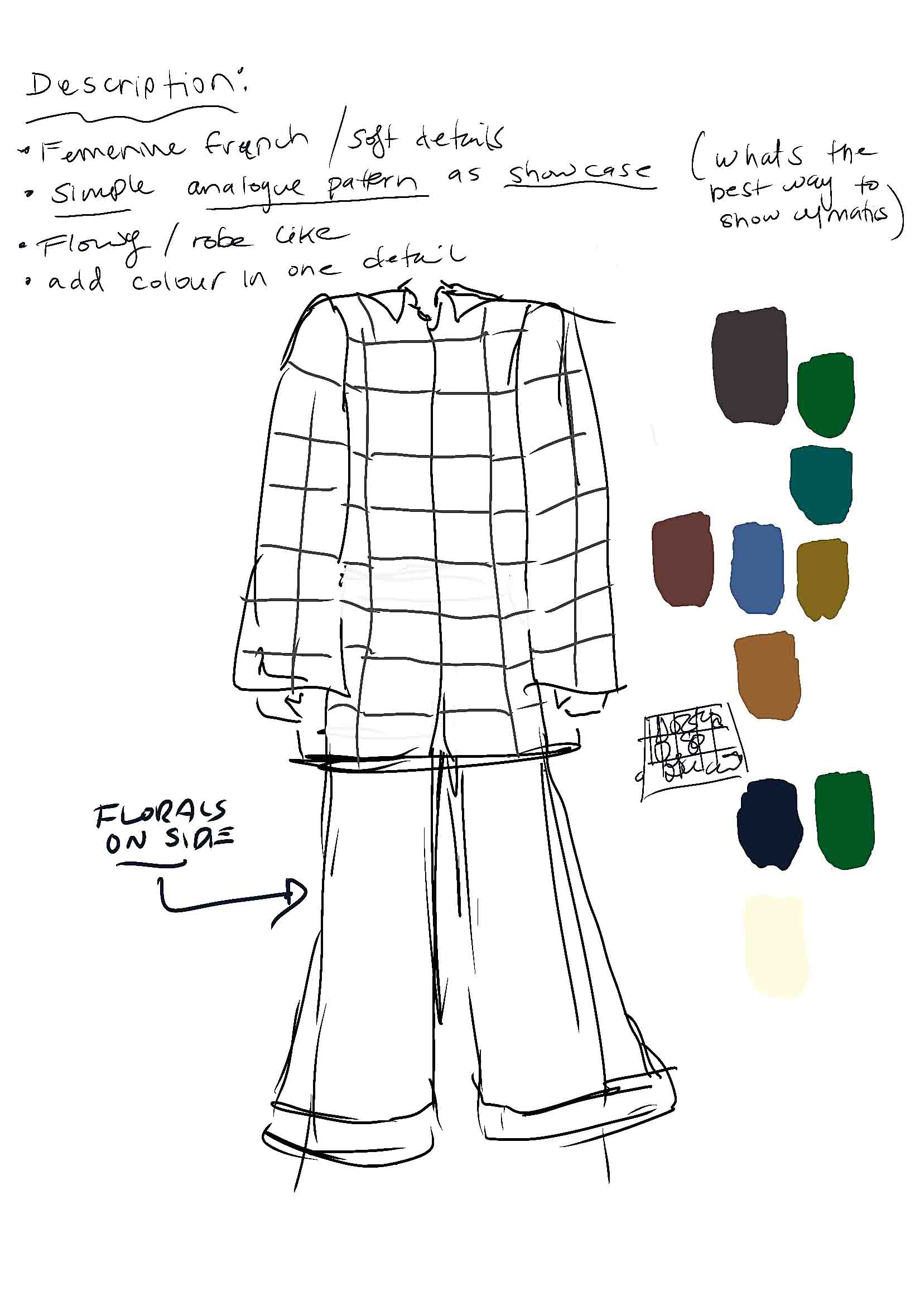 Soft robotics |
 Implications and applications |
 Project management |
 Digital bodies |
Mentoring notes
At midterm Professor Becky Early from University of the Arts London, (the guest judge for my presentation) gave me some fantastic advice.
I’d pitched the idea of having other people wear my final garment – to see how they would style it, as a fun experiment. I wanted to do more photography and thought it’d be a great excuse to take their portraits.
This was a systems project after all, and I knew other people absolutely to be shown as part of the story. The whole point of my project was to make room for more personal and intellectual connection into my work.
Becky liked my idea. But she said (I’m paraphrasing): “Don’t forget, YOU are still the artist. So don’t let it get too broad. Make sure your original point of view is still palpable”.
She was totally right.
After this feedback I realized it wasn’t about how people style the jacket. It was about the ones who would help me make it – who were going to sell me materials and give me advice.
I realized the jacket was a symbol, but the project was actually about the process.
This advice helped the project become a much more honest and beneficial way to test out my system design -- because it was going to push me to even more things I’d been meaning to get better at. Now I’d have to ask strangers for their portraits, not friends. It was also a good excuse to practice French. I took French immersion as a kid and have always wanted to get it to a level where I can converse with people in shops without them switching to English for me.
_