Upper gesture: Flexibility and flow
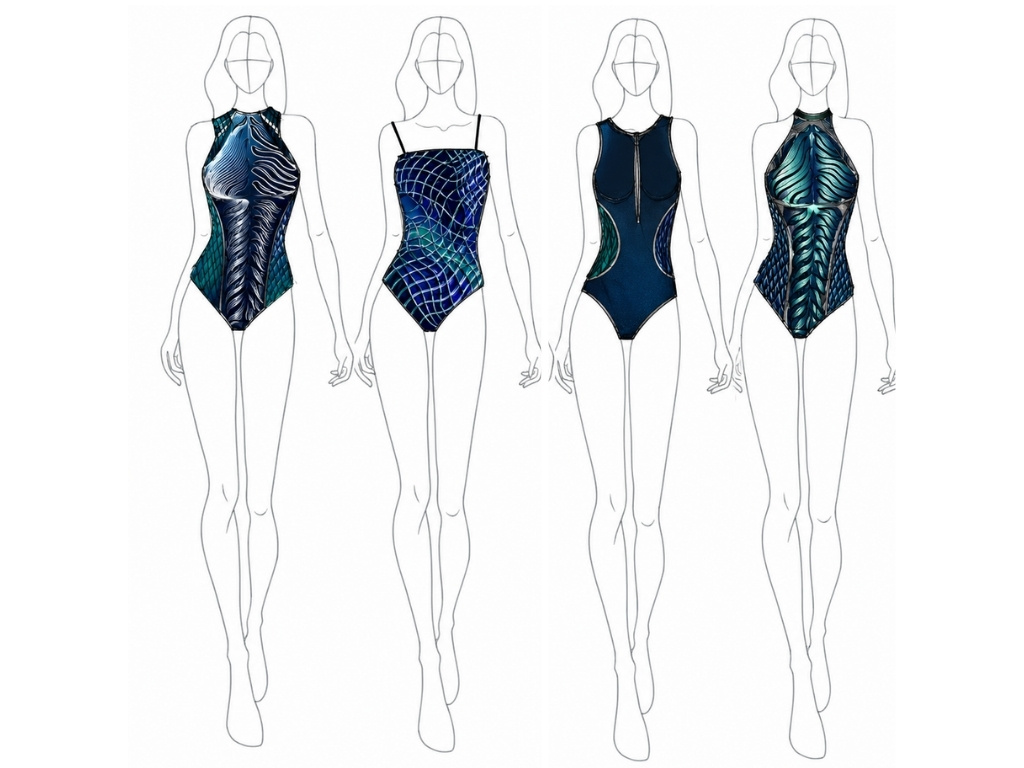
For the first piece, the goal was to create a design with a simple silhouette that captures the fluidity and flexibility of the body in water; the piece is intended to appear as a direct extension of the body in motion, where skin and water become one and the same language. This choice stems from the need to work with a garment that allows for the observation and translation of the fluidity, adaptation, and continuity of bodily movements without structural interruptions.
Conceptual skectches
Design & Fabrication
Parametric Design
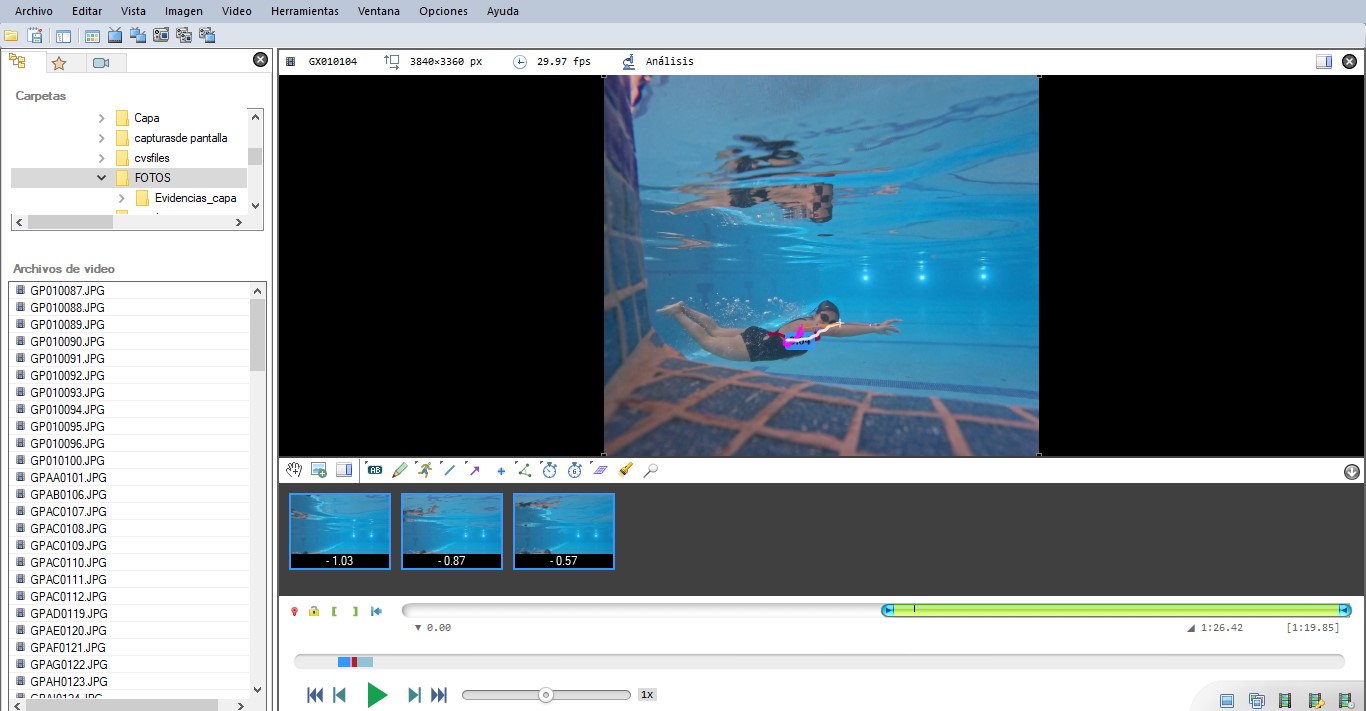
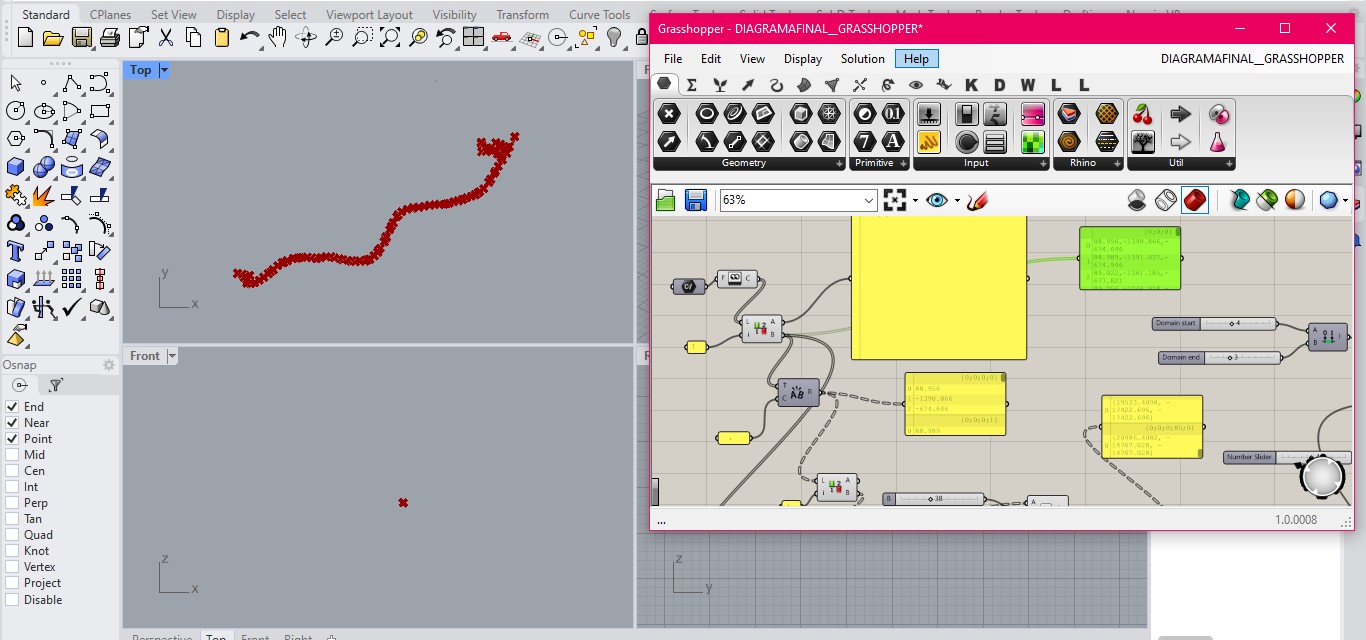
We focused on the arm as an extension of the body, since it is one of the most frequently used limbs underwater. Once the movement was identified and the trajectories were obtained, the data was exported into CSV files so that Grasshopper could interpret them as curves.
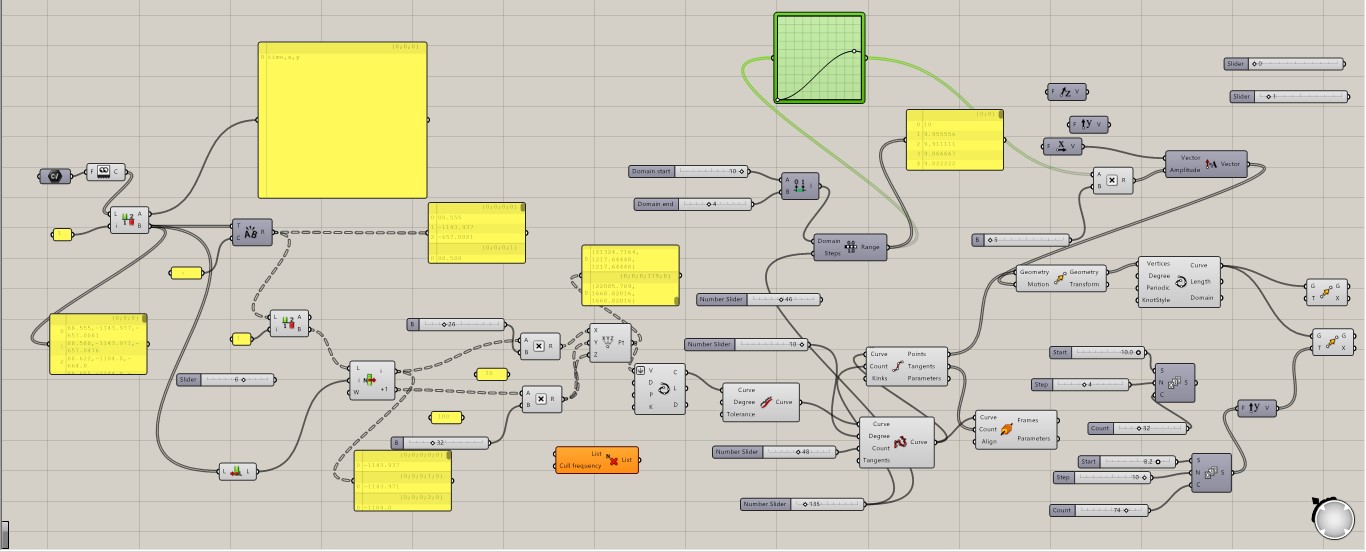
This was the diagram with the components that allowed me to cosntruct curves to transform into optical ilusional pieces
This was the curve grasshopper construct, you can play with the parameters to add more curves infinity in X and Y axis, and you can also control espaces between every line
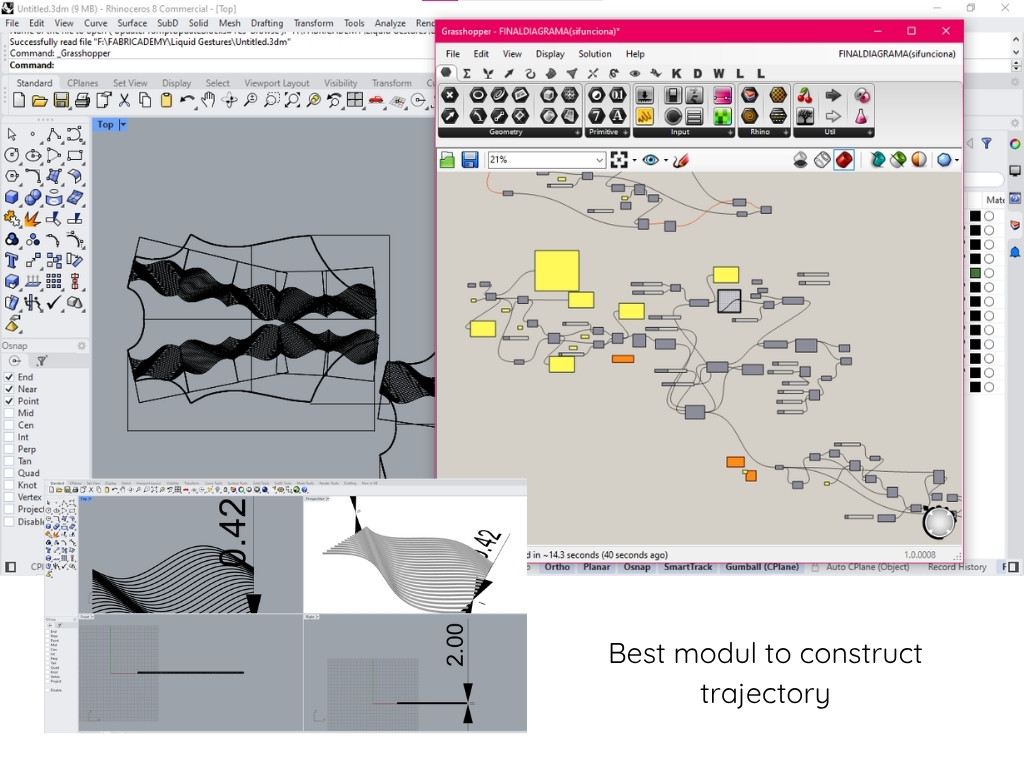
Finally with the curves obtained and the design making a kind of optical ilusion, this was the final piece sketch.
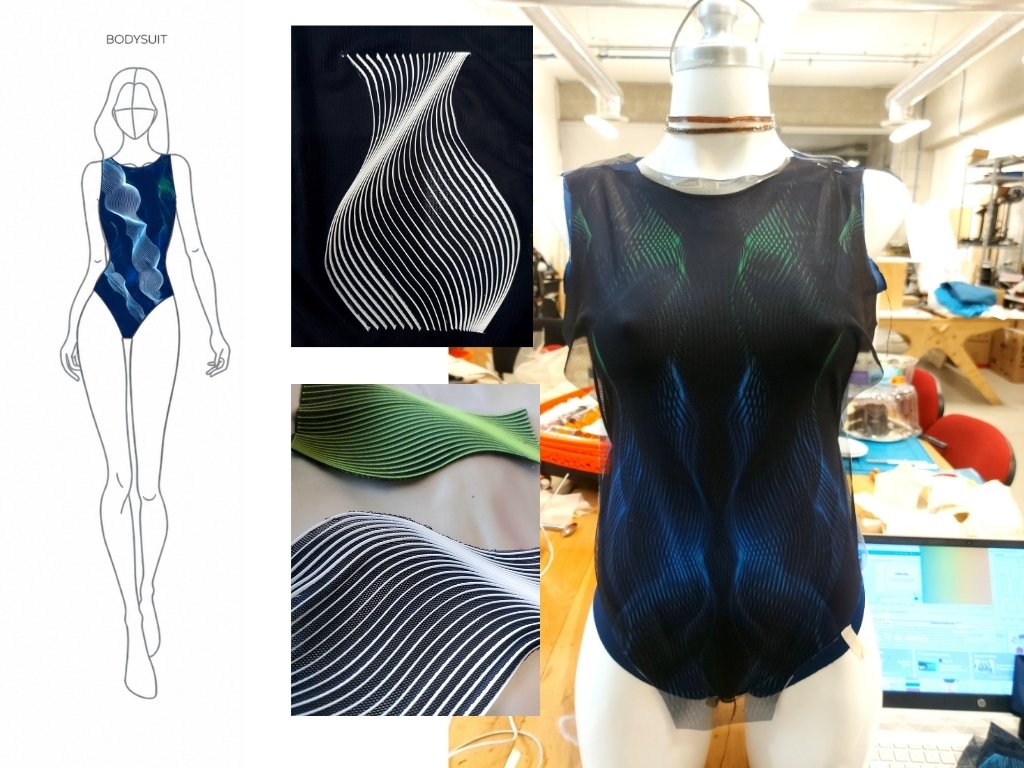
MAIN FABRICS
- Blue Lycra lining: 50% Nylon/ 50% Elastane.
- Blue Lycra base: 100% Polyester
-Mesh: 85% Polyester/ 15% Spandex
For greater elasticity and great sublimate color, it is important that they have a balanced blend of polyester and spandex

Pattern Making
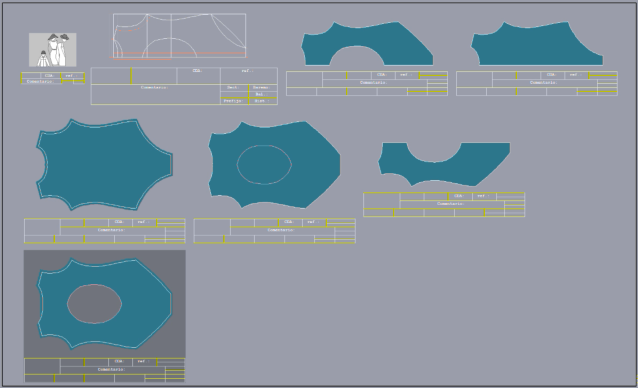
For pattern drafting, there is a program called Modaris. At work, I usually use this program to create patterns that will be cut on an industrial scale; it’s a good option for creating everything digitally, generating DXF files that are ready for cutting.
Patternmaking de Monse Islas
You can watch tutorials Here
Laser Cutting
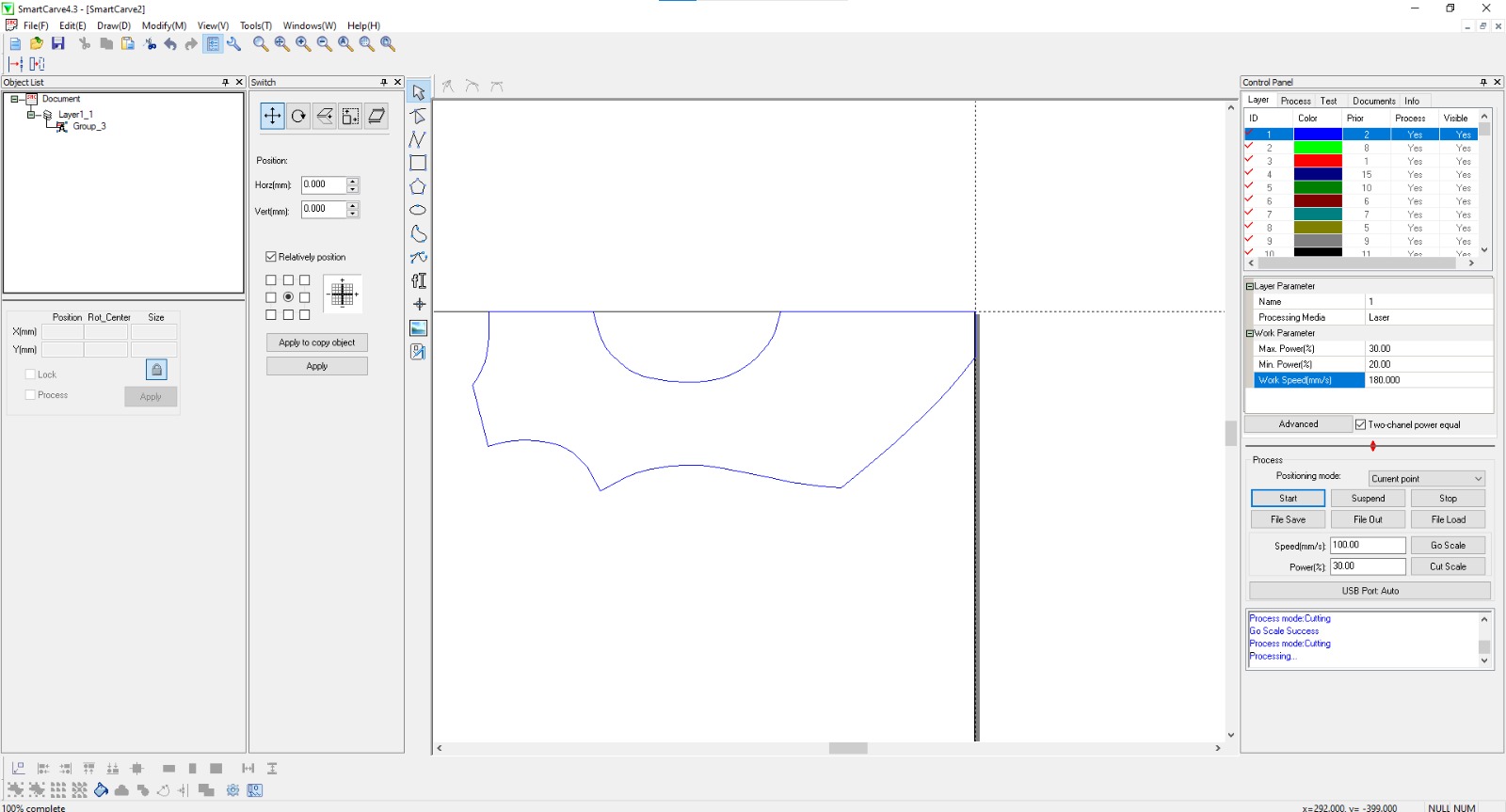
Once I had the digital patterns, I decided to cut a test piece out of Lycra since I had never worked with this fabric using a laser cutter
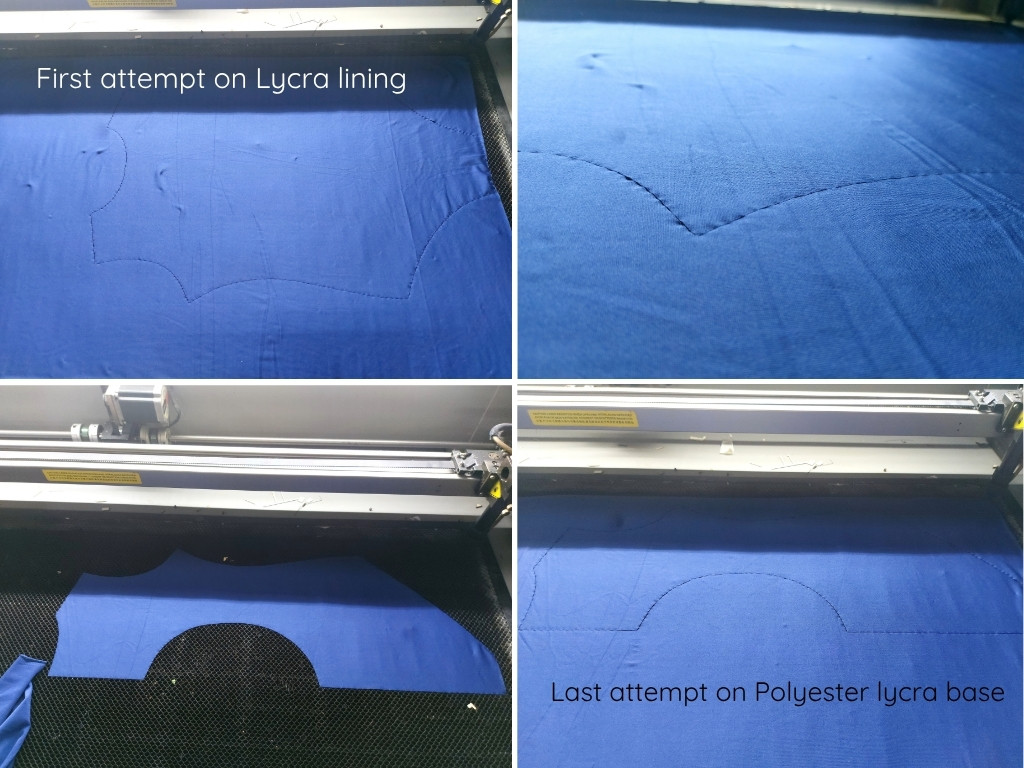
Once I had the digital patterns, I decided to cut a test piece out of Lycra since I had never worked with this fabric using a laser cutter before. The settings were:
Speed: 40 mm/s
Power: Max. 40, Min. 30
Synthetic fabrics like polyester or Lycra require low power because they melt easily, so I had to adjust to a faster speed and less power and that has a clean cutting.
Speed: 180 mm/s
Power: Max. 30, Min. 20
Sublimate
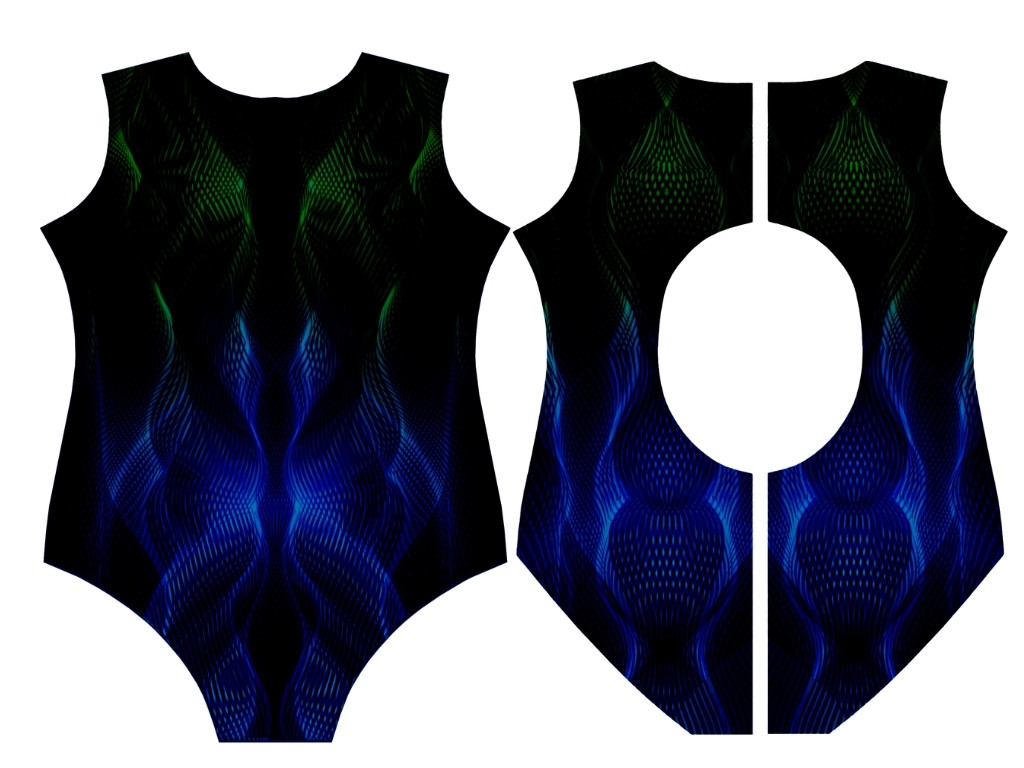
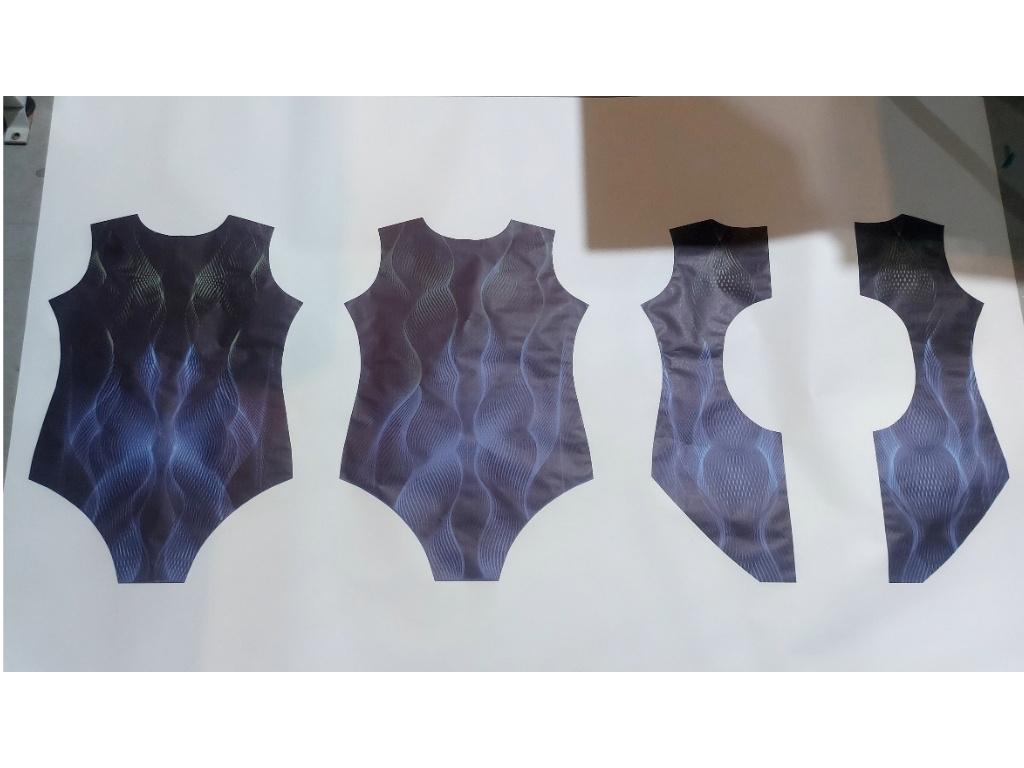
For the sublimation, I wanted to respect the flow of the paths while creating a design guided by them, with a mirror effect to achieve a sporty style with an optical illusion.
Diseño_sublimado de Monse Islas
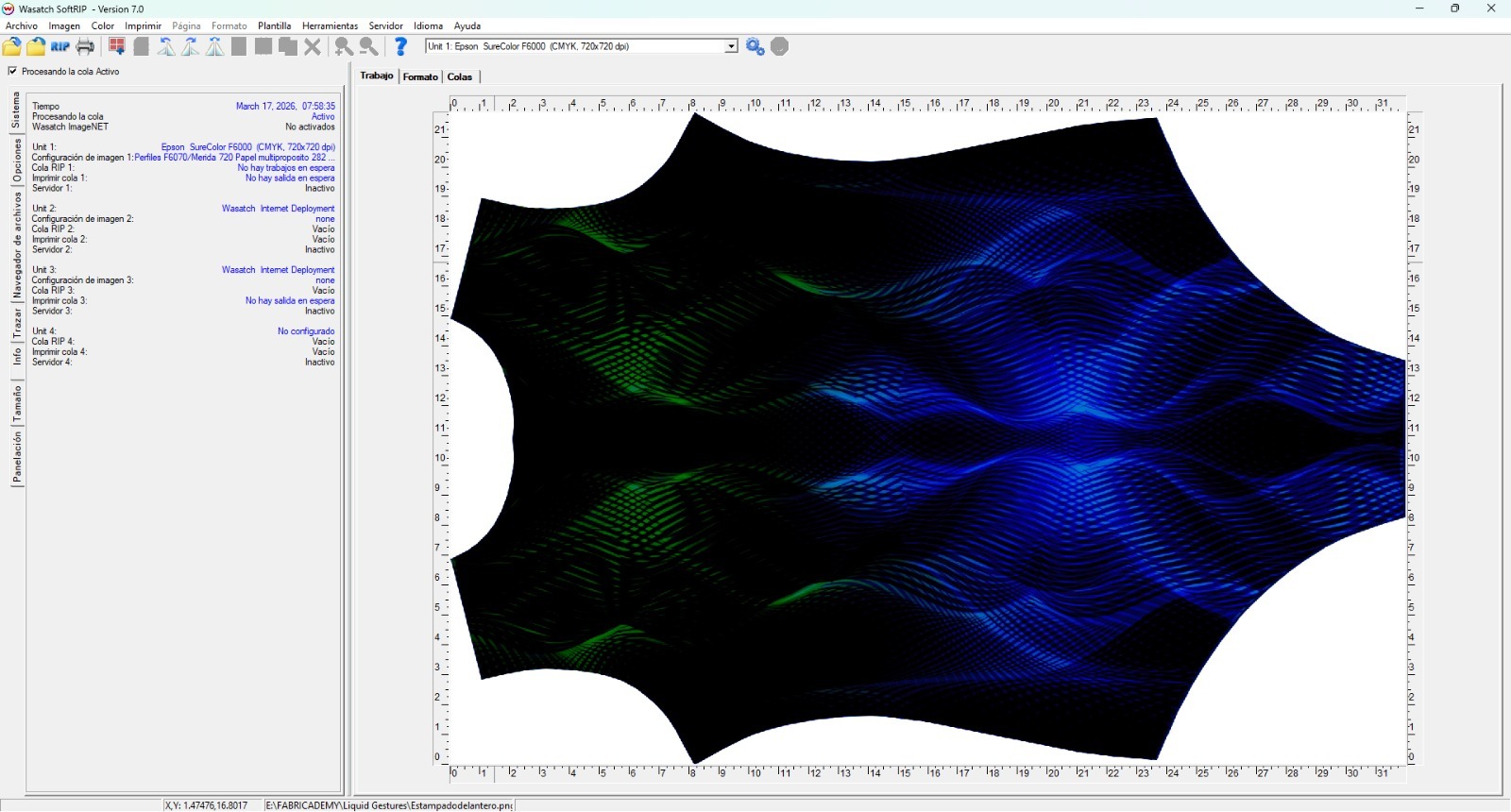
I used Wasatch’s SOFTRIP software, where you first import the file (AI, PDF, PNG, etc.) into the program.
In the first window, you can set:
- Actual print size
- Resolution
- Color profiles (very important for color accuracy on fabric; I recommend running a color test, as results may vary depending on the color profile you’re using)
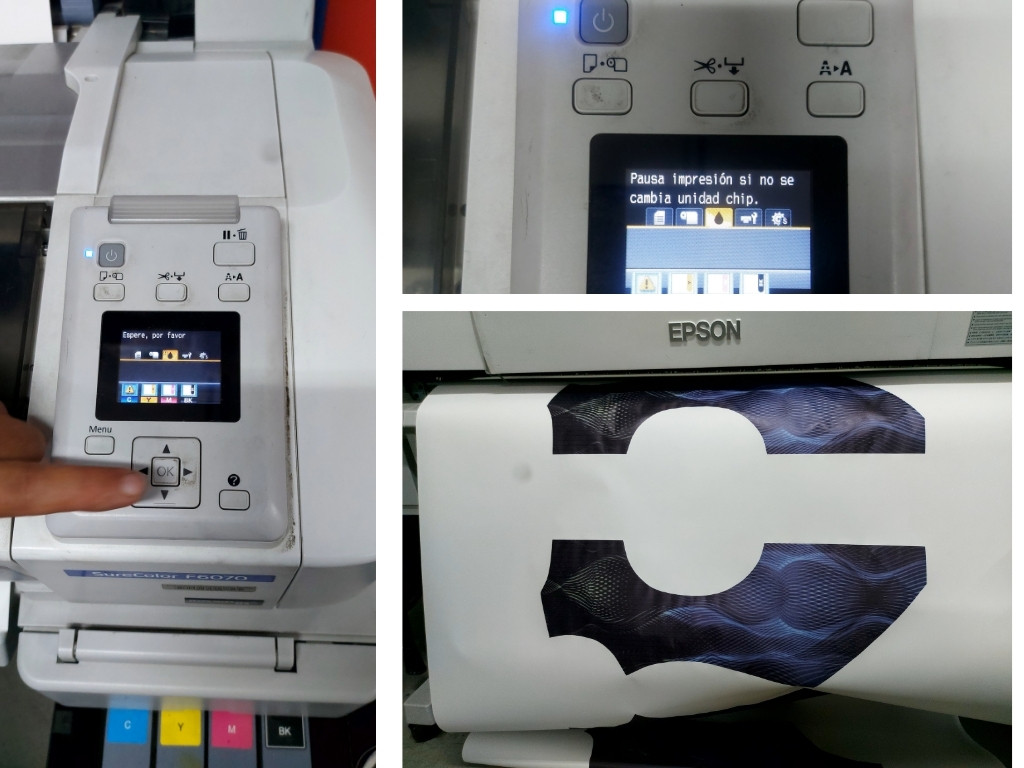
From Wasatch, send the file to the printer:
- It is printed on special paper
- The image is usually mirrored
- The amount of ink is controlled
Finally:
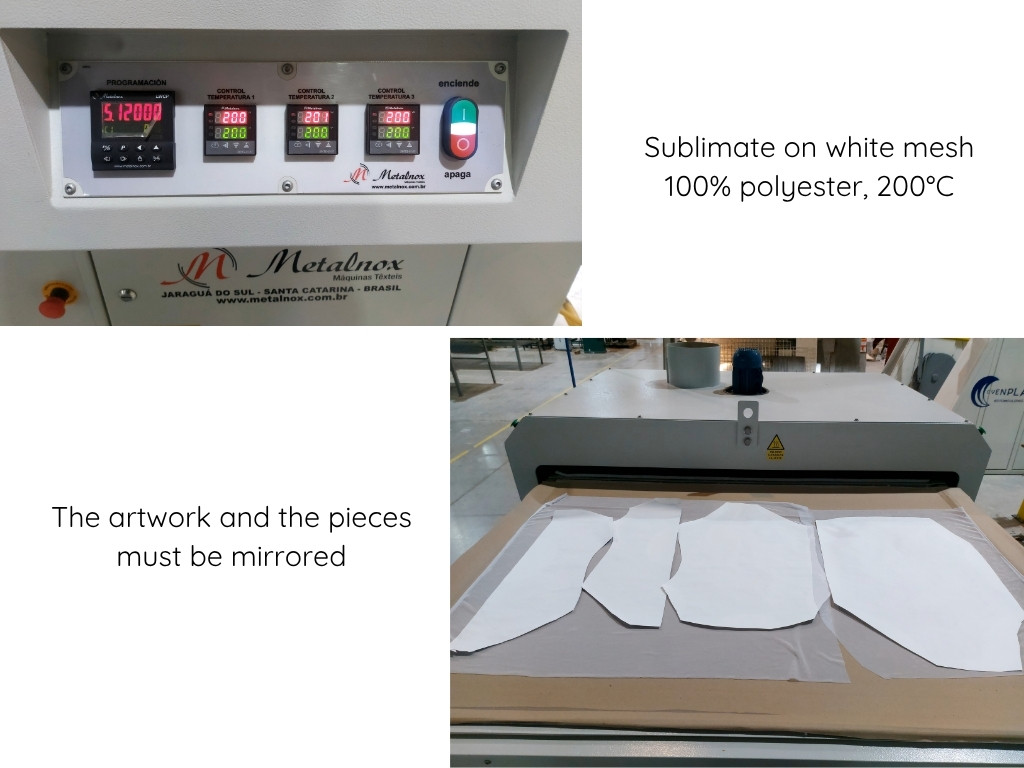
Placed the paper on the fabric (usually polyester/lycra) Apply heat (≈180–200°C) and pressure The ink transitions from a solid to a gas and bonds to the fiber
This is what the assembled sublimated pieces look like, creating an optical illusion effect
3D Printing
For printing the modules, the parameters required for a clean print with flexible TPU were as follows:
Printing parameters:nozzle temperature 210°C, bed temperature 60°C, moderate speed 63 mm/s. Pause in the second layer.
This ensured the print had sufficient flexibility and stretch so it wouldn’t feel restrictive on the body
3D printing flexibility
Main trajectory model
Manufacturing
Assemble the final pieces of mesh fabric over spandex
Fitting on manequin