Middle gesture: Intensity/Power
Ideation & sketches
A lightweight cape that extends body movement, exploring the intensity and power of underwater gestures through fluid, shifting forms.
This piece represents the body’s central gesture—the torso, the second key point of the body for generating movement. I sought to make the piece an extension of the body that plays with the intensity and power of underwater movement, exploring how the force of the gesture transforms form. Thus, the cape is not merely an accessory, but a device that translates the gesture into volume, time, and presence.
Conceptual skectches
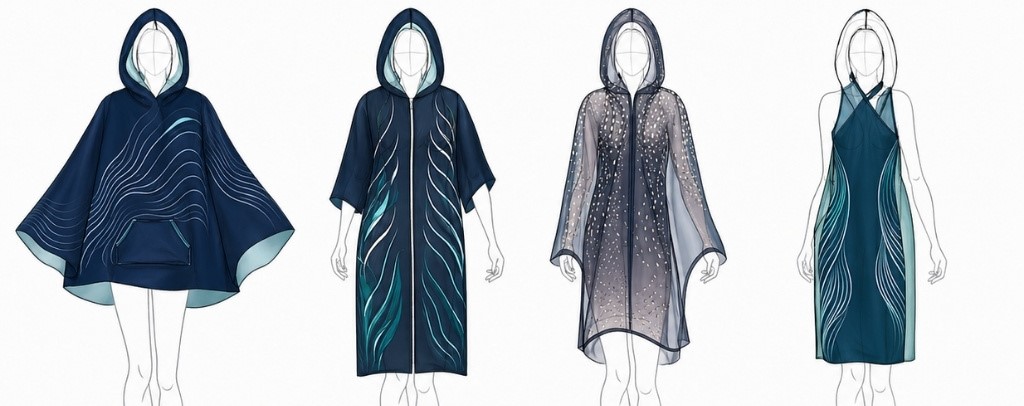
Design & Fabrication
Parametric Design
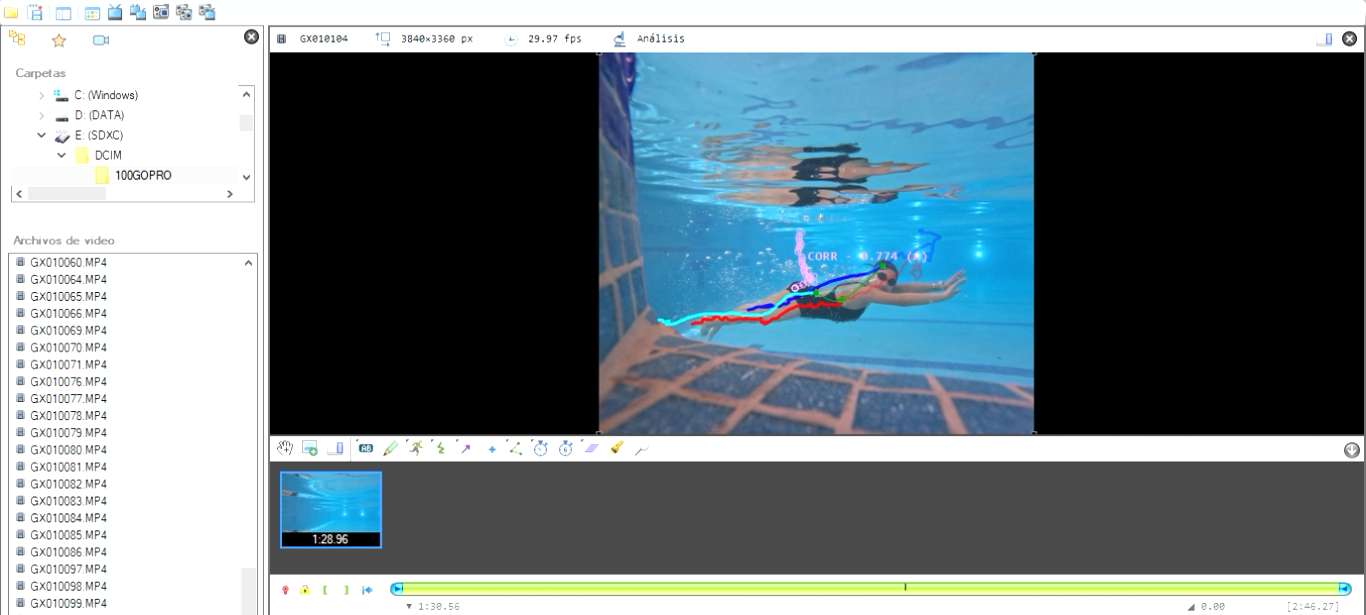
The first step was to extract the torso’s trajectory data to be translated by Grasshopper
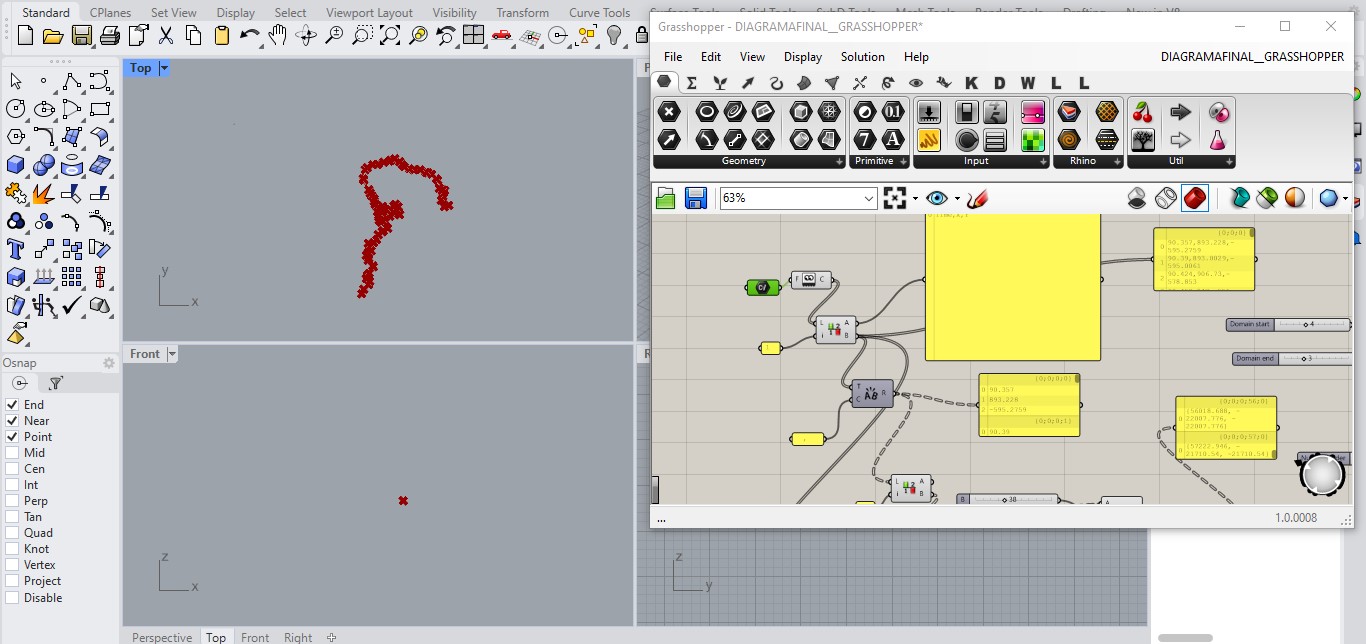
What is interesting about these pieces is that they are unique, since each movement records different data, so the curves, shapes, and repetitions will always be unique
 v
v
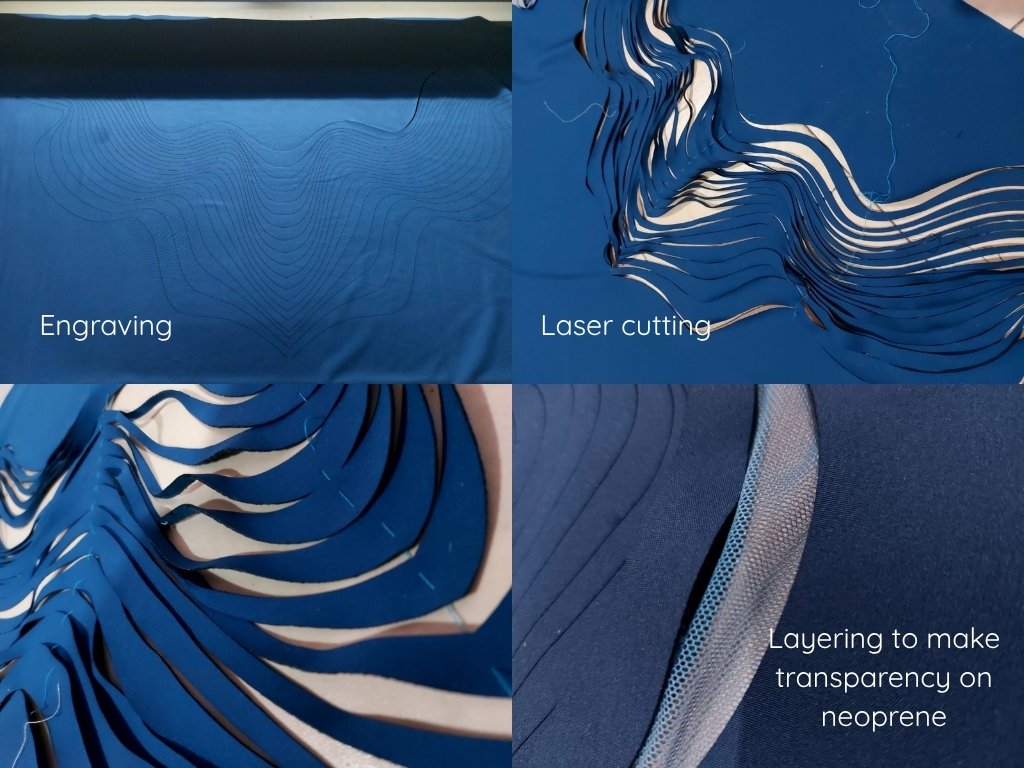
For this piece, I decided to experiment with the power, parameters, and settings to achieve an engraving on neoprene, as well as cuts that add depth to the piece
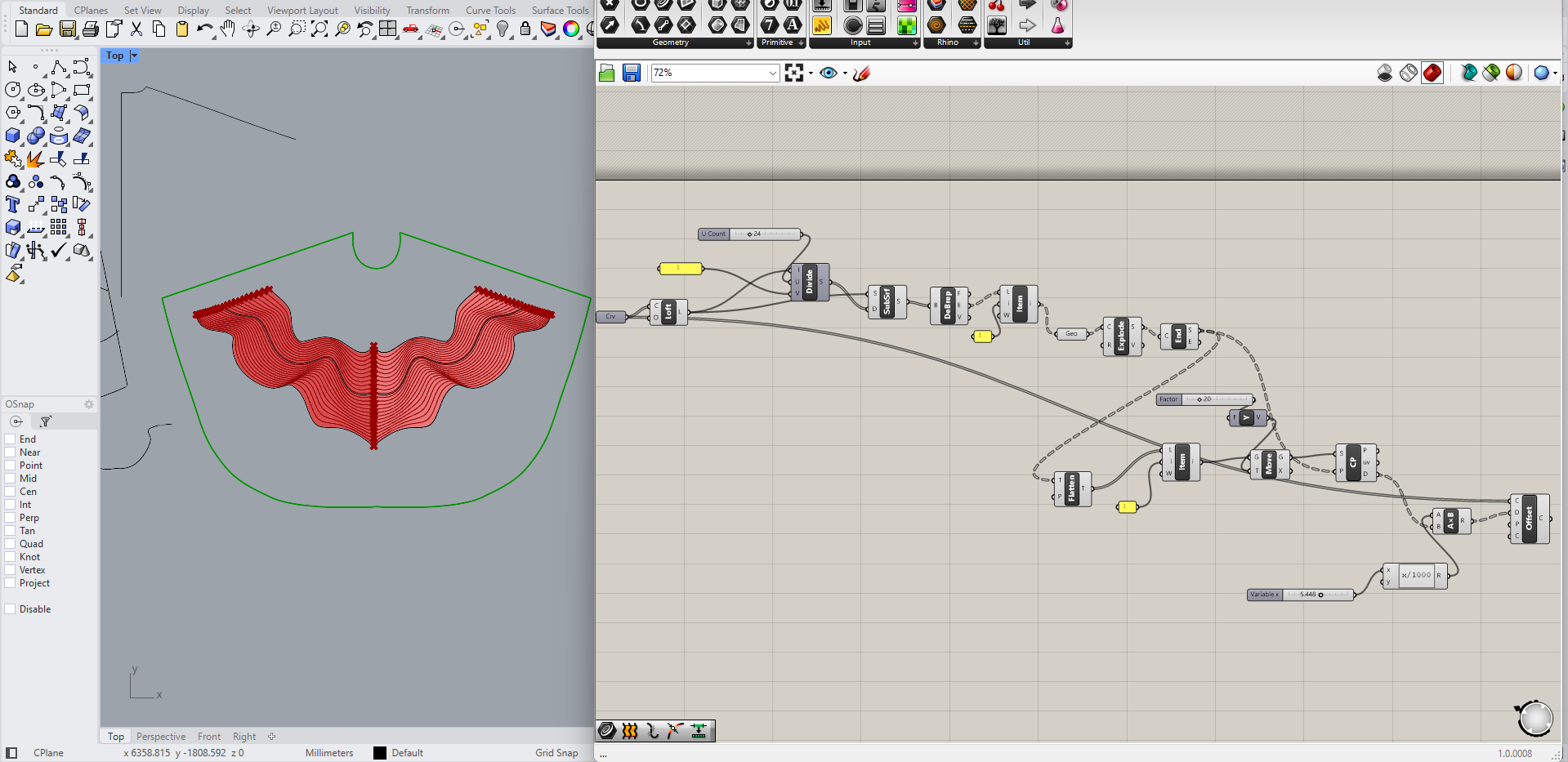
For the mold of the piece, I chose to use a Grasshopper definition that would adapt the shape to the mold.
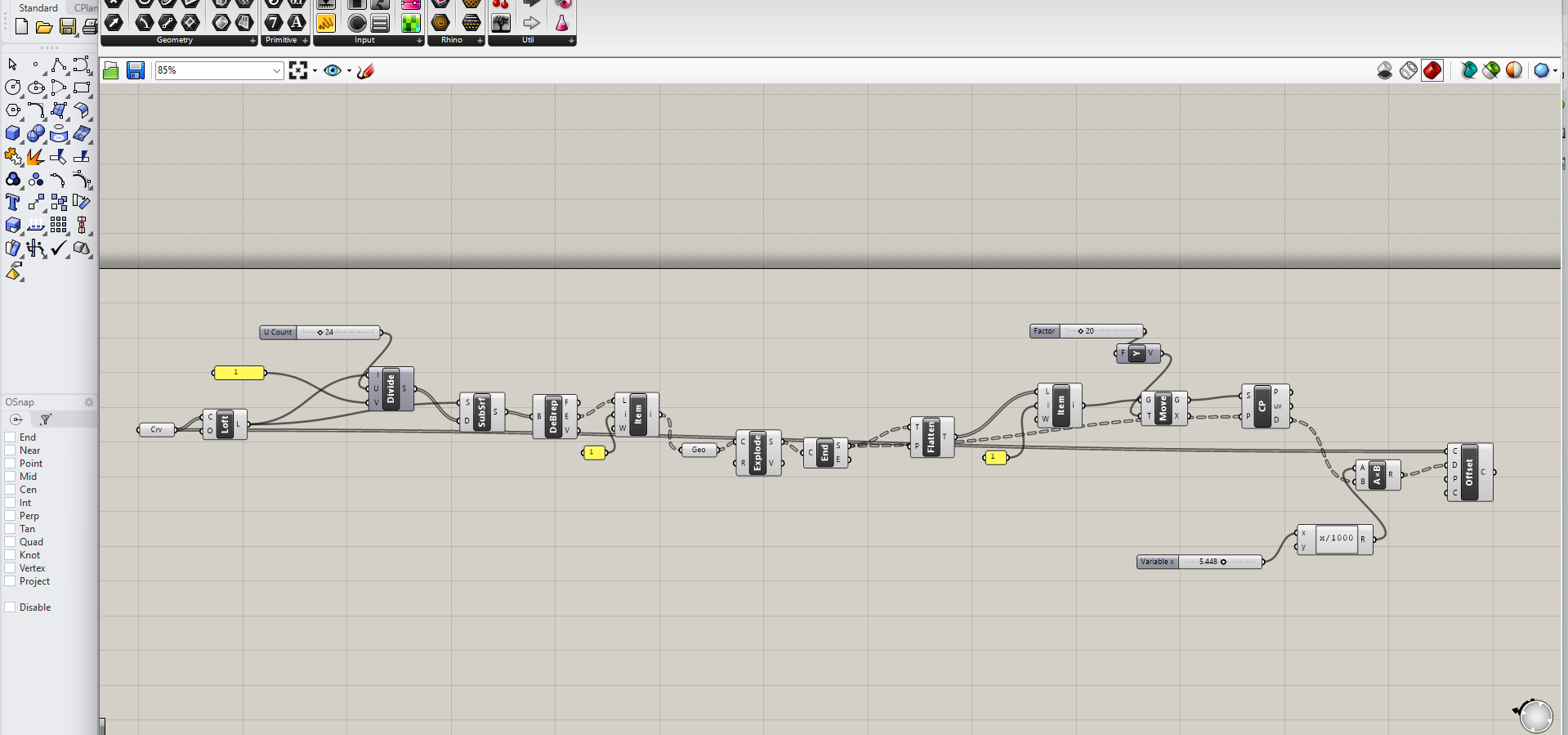
Once I had the curves with the initial definition in Grasshopper, the curves were extracted, aligned, and modified to be included in a new Grasshopper definition that would adapt to the shape of the cape
Laser Cutting*
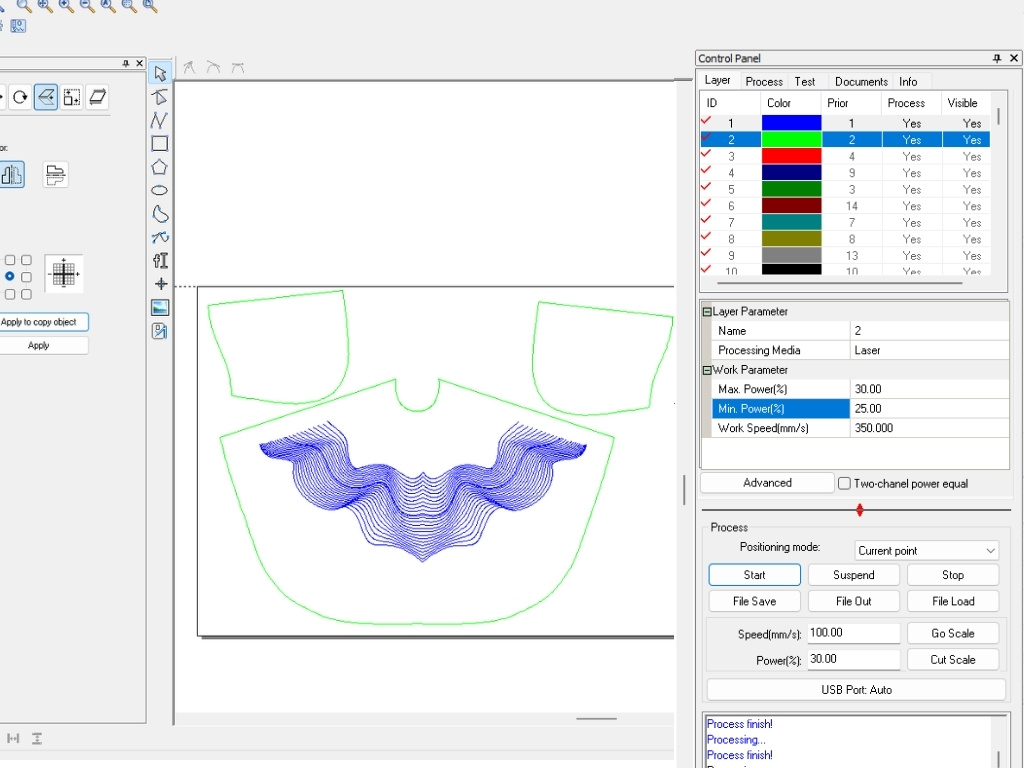
For the front of the cape, I chose a fabric pattern featuring these repeating motifs created by the body's contours
Parameters: Max.30 Min.25 Speed: 350 mm/s
Laser engraving of neoprene
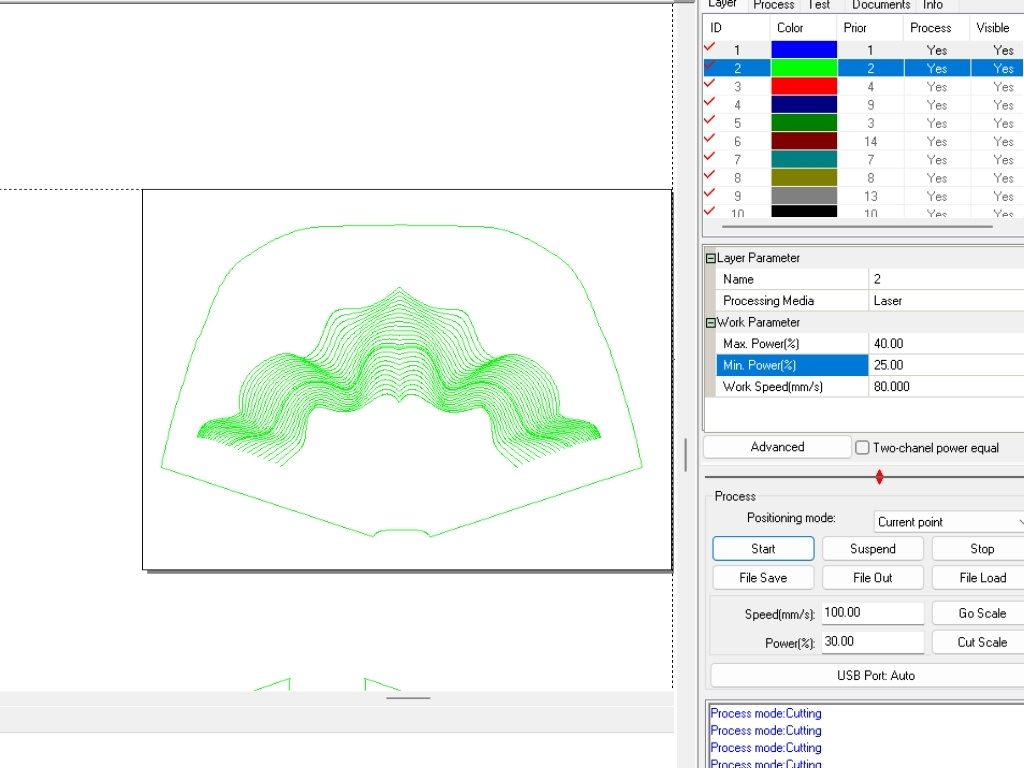
For the back panel, a cutout was chosen to add dimension to the back
Parameters: Max.40 Min.25 Speed: 80 mm/s
For the back panel, a cut was chosen to add dimension to the back; these measurements were ideal to ensure the fabric wouldn’t burn and that the cut would remain defined on the panel, since the lines were very close together and there was a risk they wouldn’t show up or would merge together and burn.
Laser cutting of neoprene
To assemble the garment, the slits on the back were first secured with a type of basting stitch; then, a layer of blue mesh fabric was added as a base to cover the transparency created by the slits, using a layering technique, while also allowing air to circulate through the garment.