Biofabricating Materials
FABRICADEMY 2026–2027 · ASSIGNMENT 07
I explored growing bacterial cellulose and crafting materials with gelatin, recycled paper, fruit peels, eggshells and petals. My experiments moved from small samples to a flexible bioplastic bag with a reused T-shirt lining.
Inspiration & Research — Mexican Biomaterial Explorations
I selected three Mexican references that connect biological processes and organic waste with material design. These projects relate to my interest in fashion and textiles, as well as my work with students and colleagues.
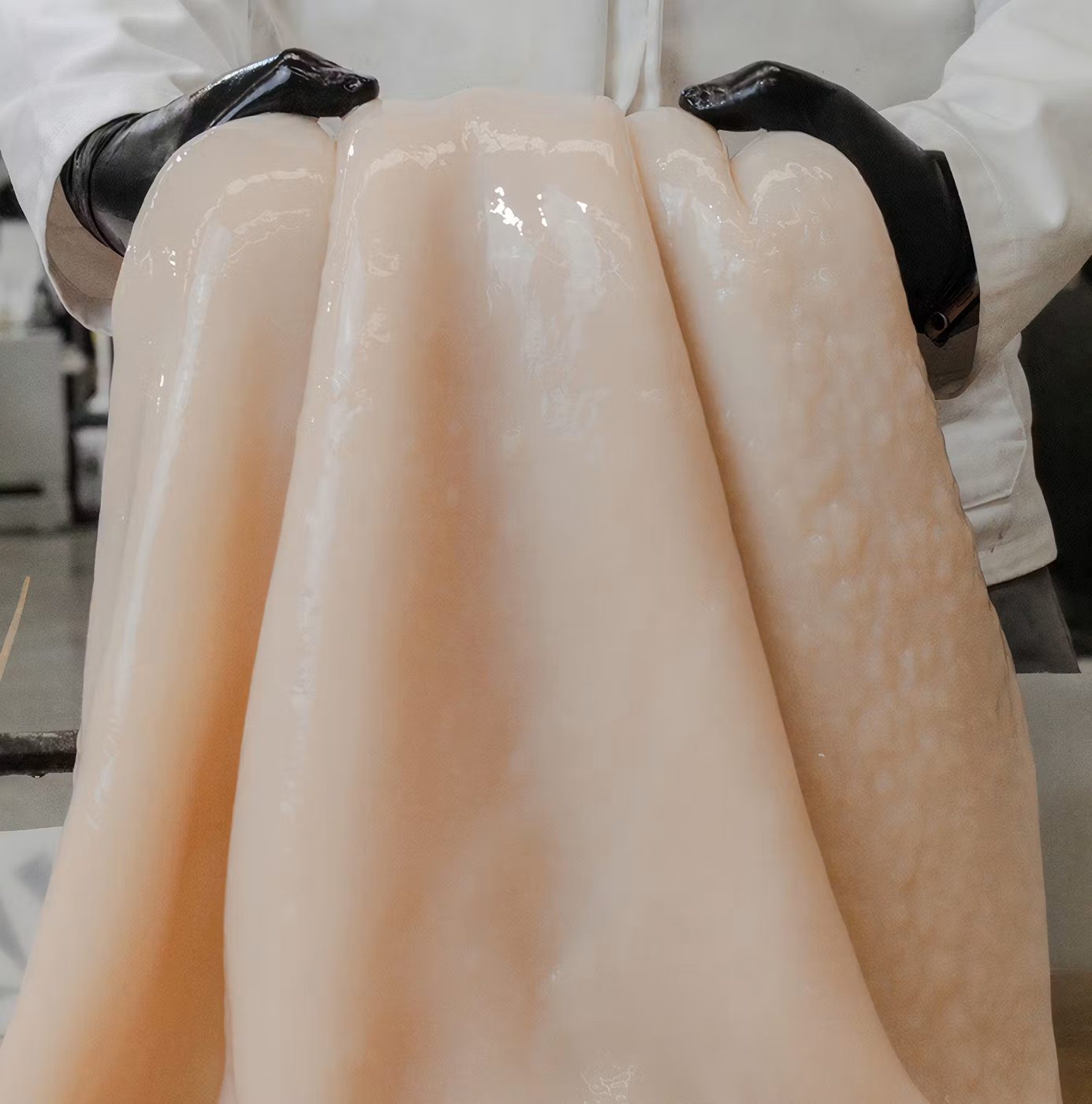
Polybion
Polybion develops biomaterials through biotechnology. Its Celium material is based on bacterial cellulose grown through fermentation using nutrients from agro-industrial fruit waste. The material is then processed and finished for design applications. At the university, we have worked with Polybion on student projects and hosted masterclasses with their team. This makes their work especially relevant to my exploration: it connects growing a material with the possibilities of developing surfaces for fashion and other design applications.
Original project reference ↗My colleague Cynthia Gómez developed Armadura de Turandot with Elsa Casas and Francisco Hernández. Inspired by the princess in Puccini’s opera, the project translates emotional barriers into a wearable armour. It combines biomaterial made with orange waste and reclaimed materials, connecting material experimentation with costume construction. The project received recognition in the 2022 Diseña México awards, including the overall Design for the Fashion Industry award. I am particularly interested in how organic waste becomes components for a piece designed around the body. Fabteria explores how bakery waste can become raw material for new products. Its research works with old bread, leftover dough, eggshells and used napkins, developing tableware, fermentation baskets, labels, paper sheets and biological adhesives. The project won the Novedades competition at Abierto de Diseño CDMX in 2025. For my experiments, it offers a concrete reference for working with locally available residues. I am interested in how it links material development with everyday uses and the resources already present in a production process.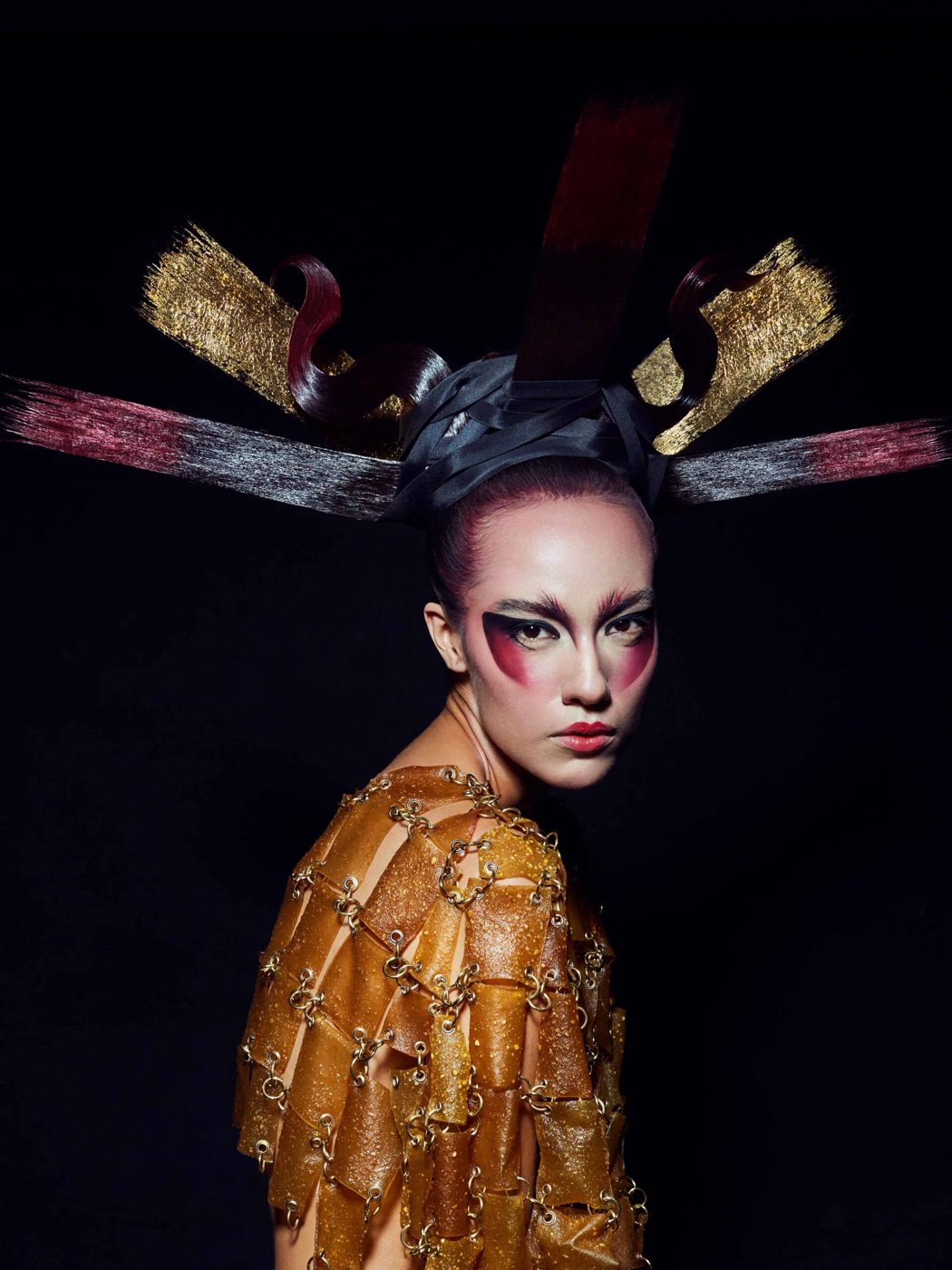
Cynthia Gómez — Armadura de Turandot
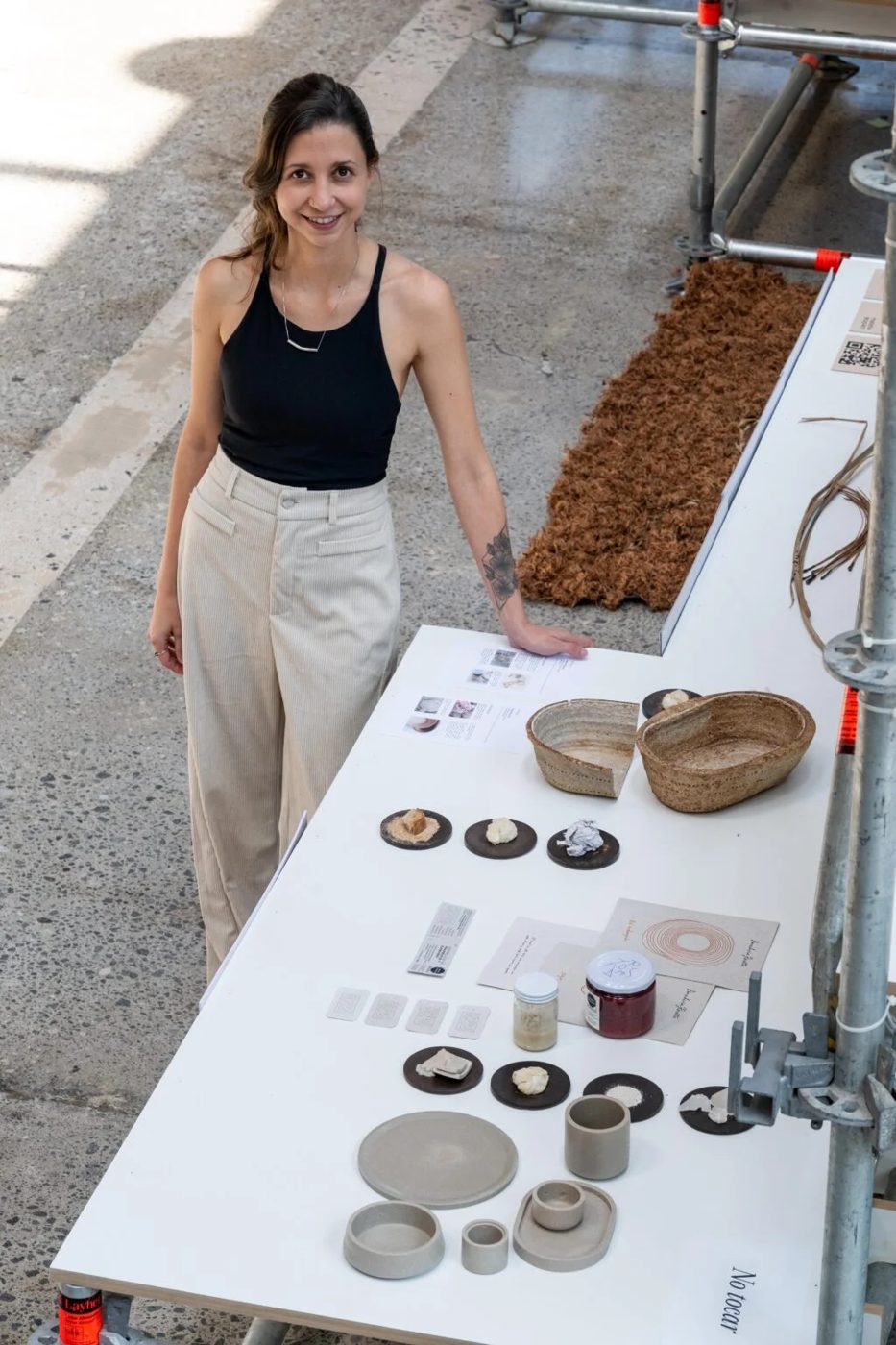
Fabteria
My material collection
I organised the experiments by material type: grown bacterial cellulose and crafted materials. Each experiment has a number connecting its recipe, process and results.
01 · GROWN MATERIAL
Bacterial cellulose
Medium A — Tea and kombucha
| Ingredient | Quantity |
|---|---|
| Water | 1 L |
| Black tea | 3 tea bags |
| Sugar | ½ cup (approximately 100 g) |
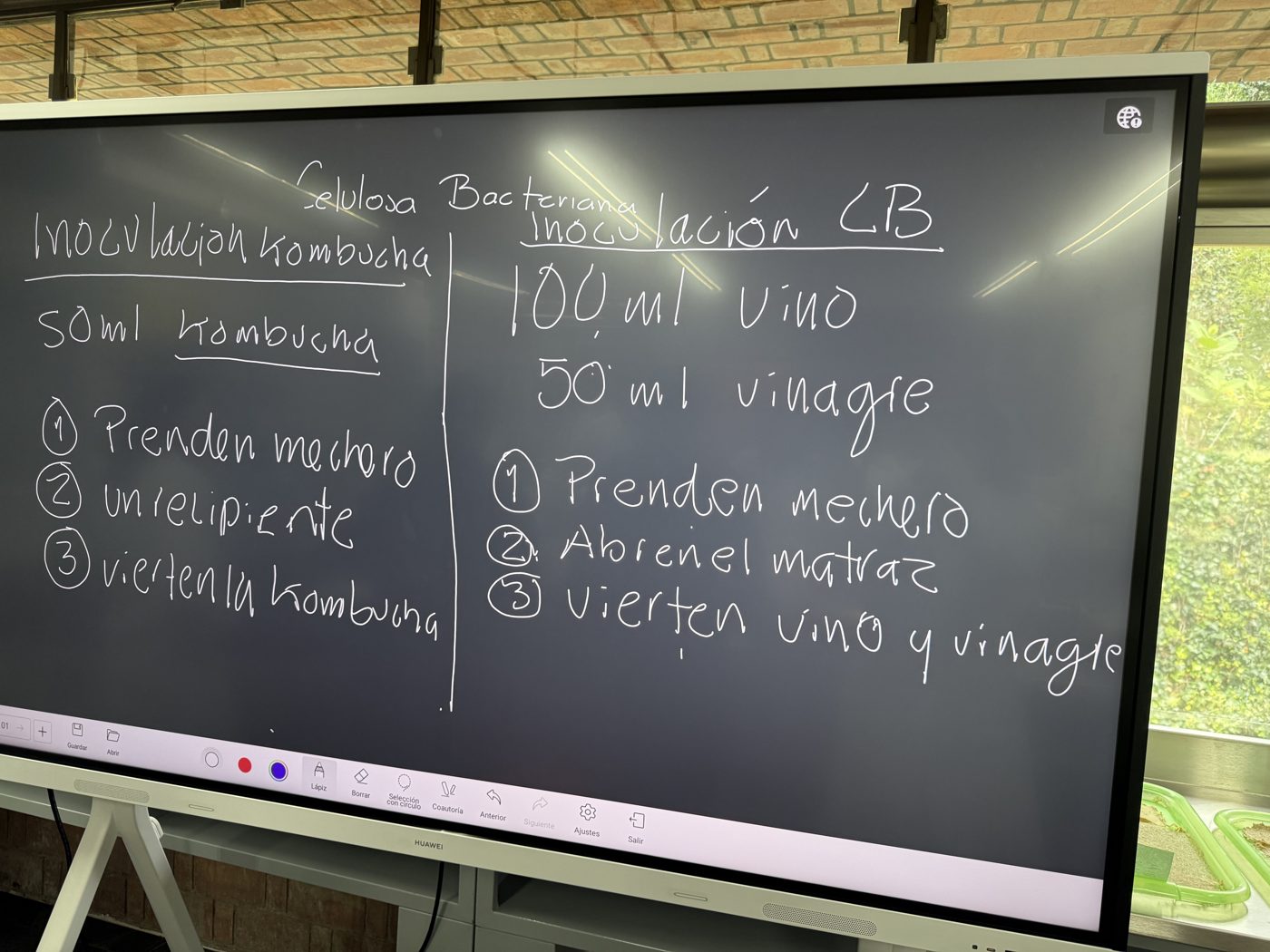
| Kombucha | 50 mL per jar |
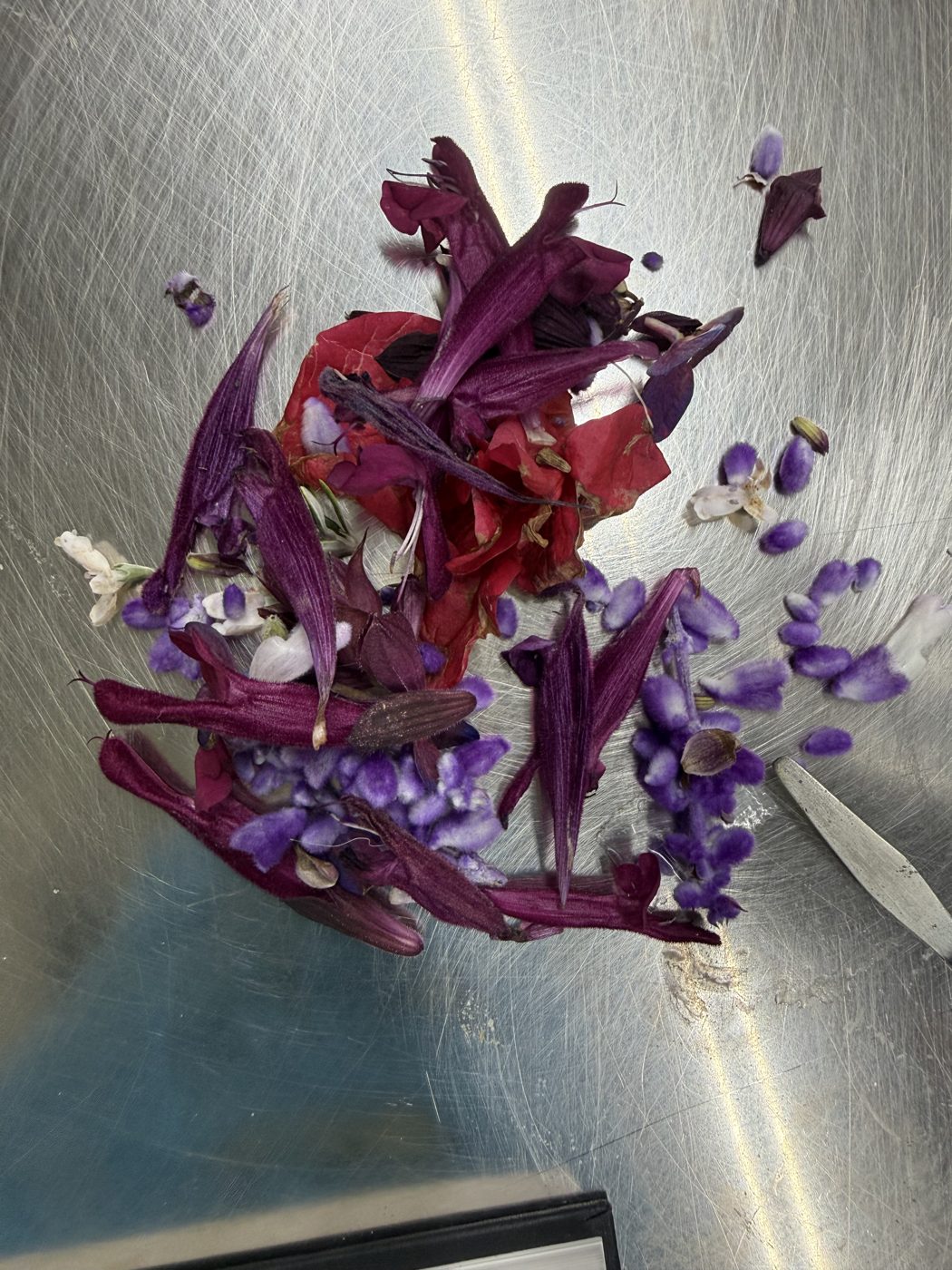
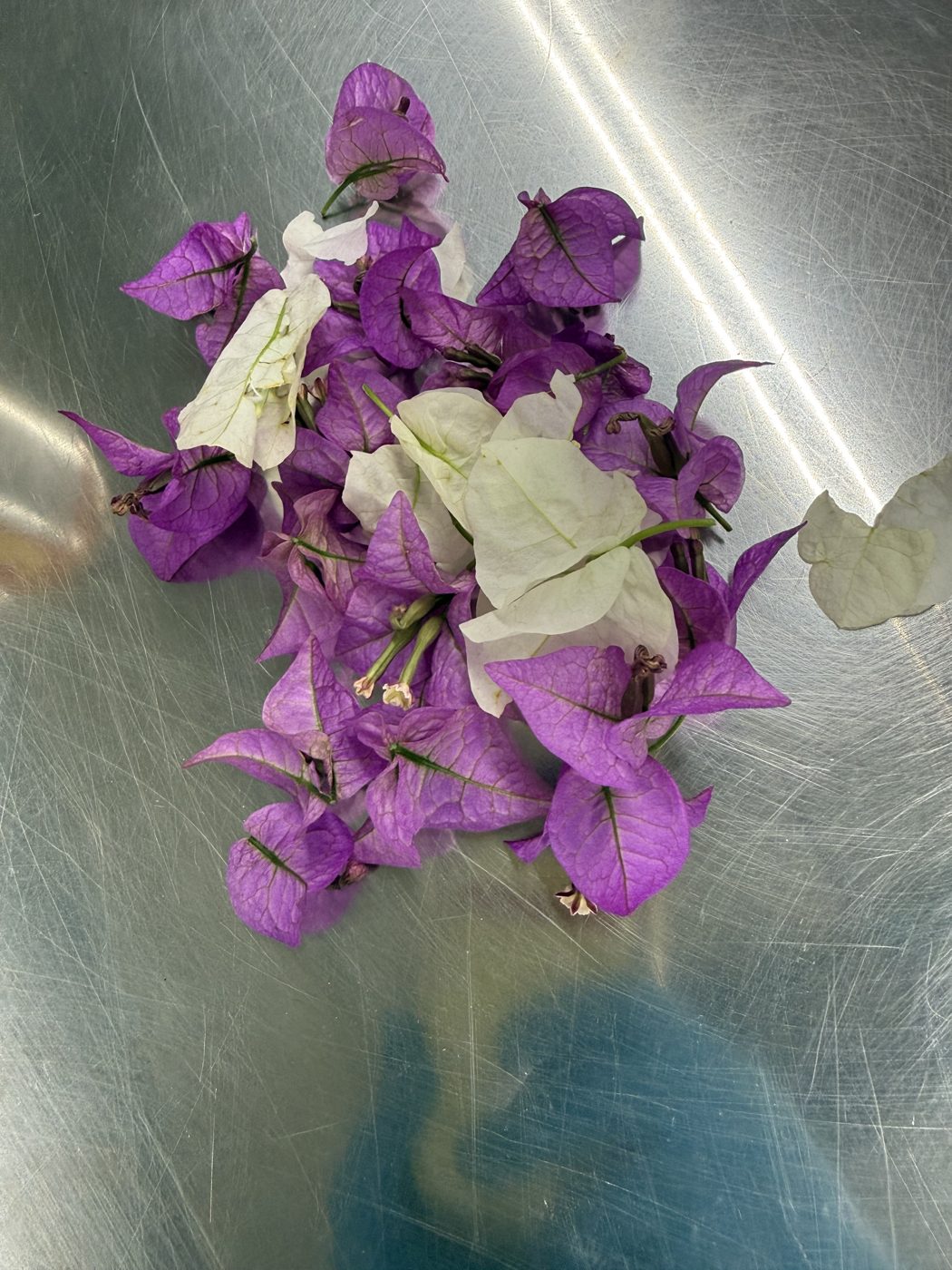
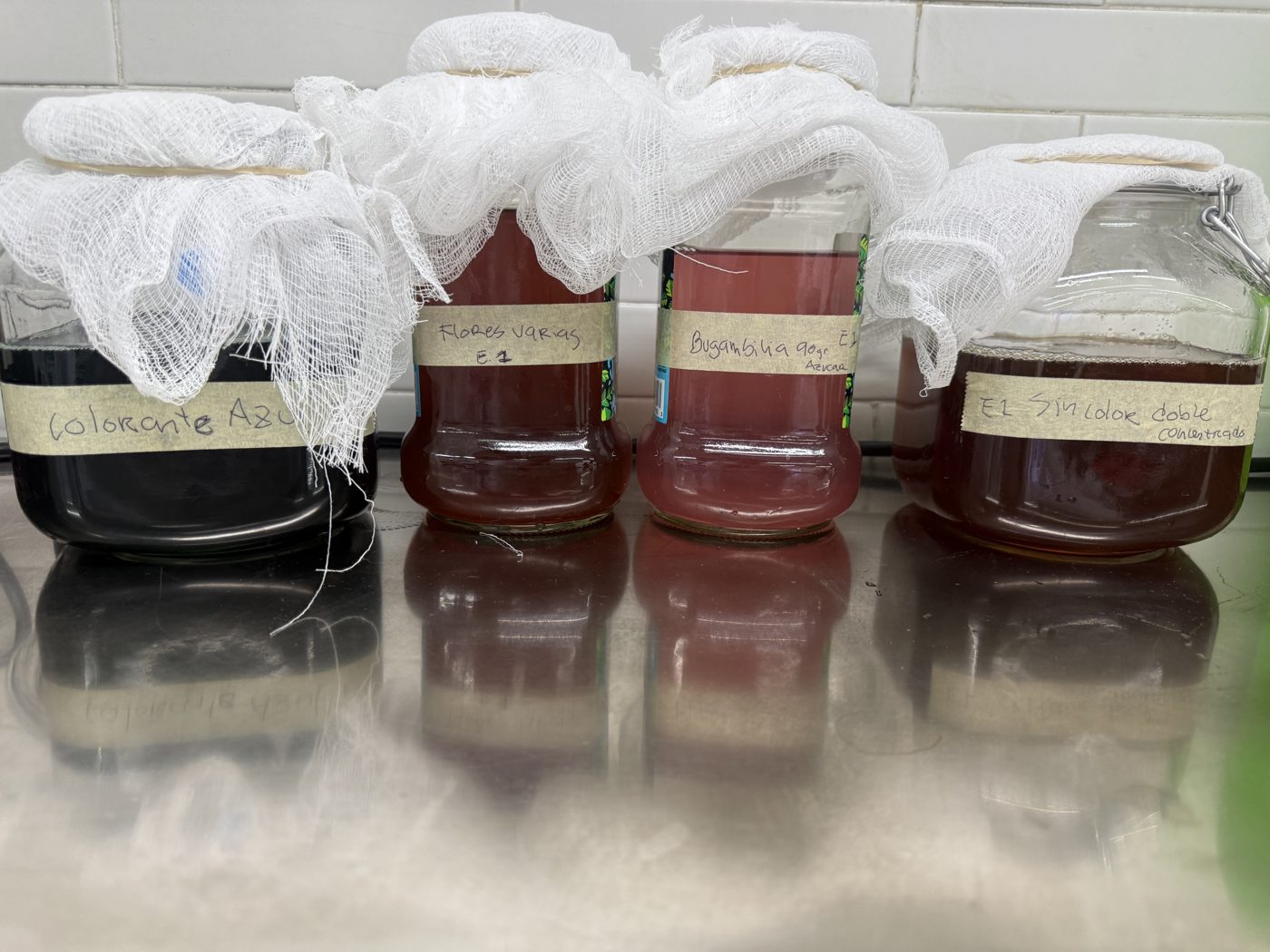
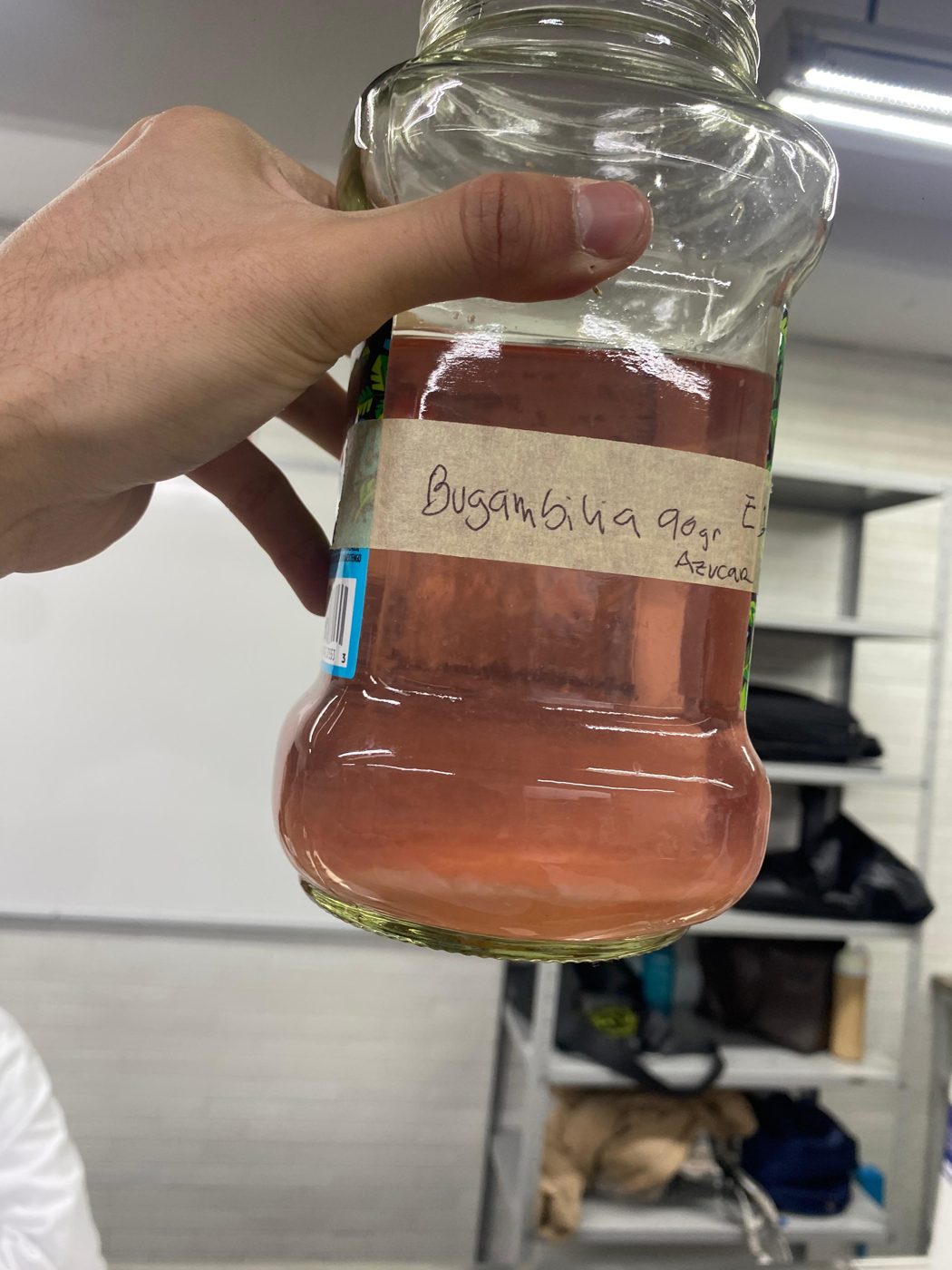
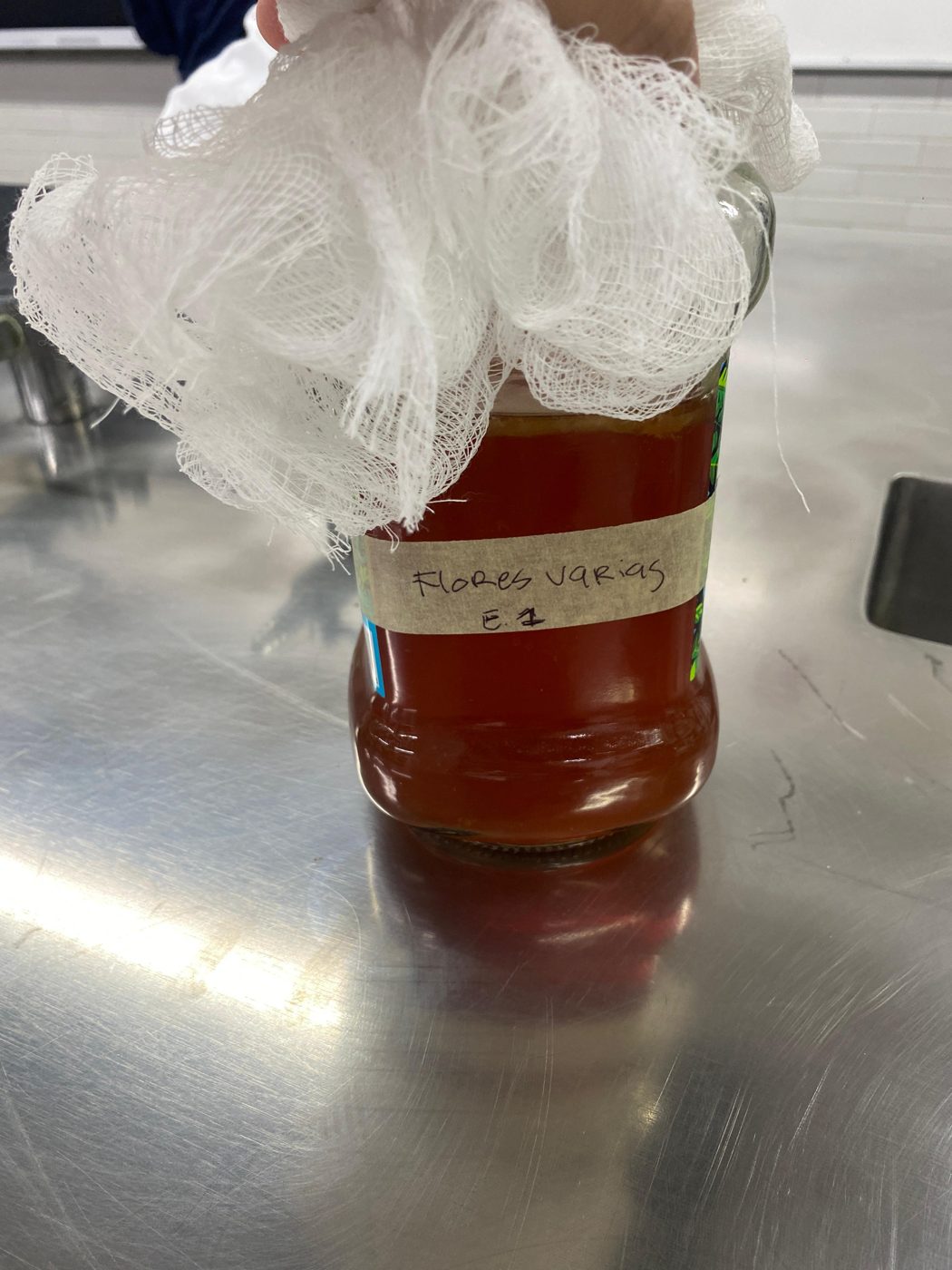
| Bougainvillea / mixed flowers | Added to the floral preparations |
- I boiled the water and prepared the black tea with sugar.
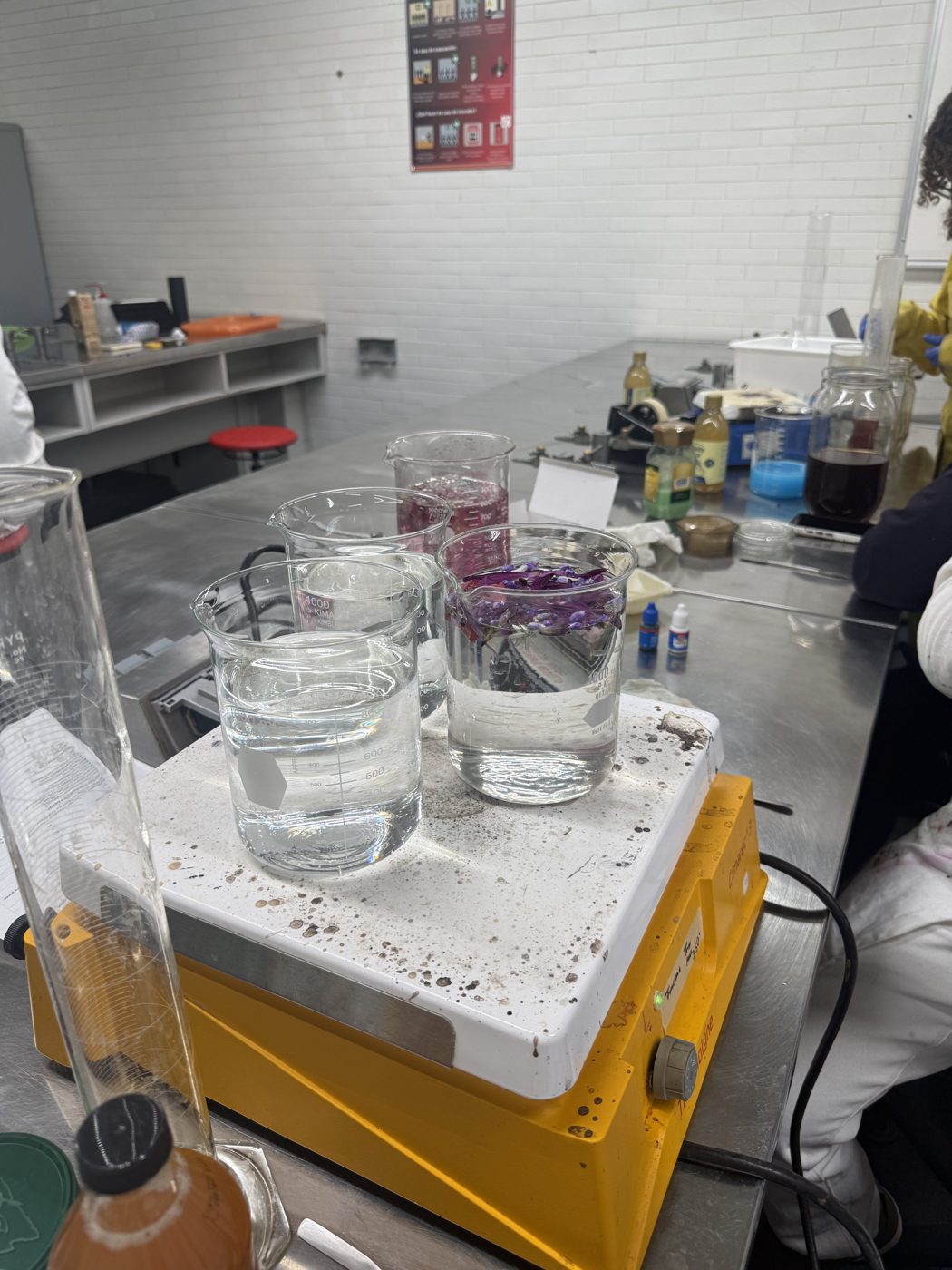
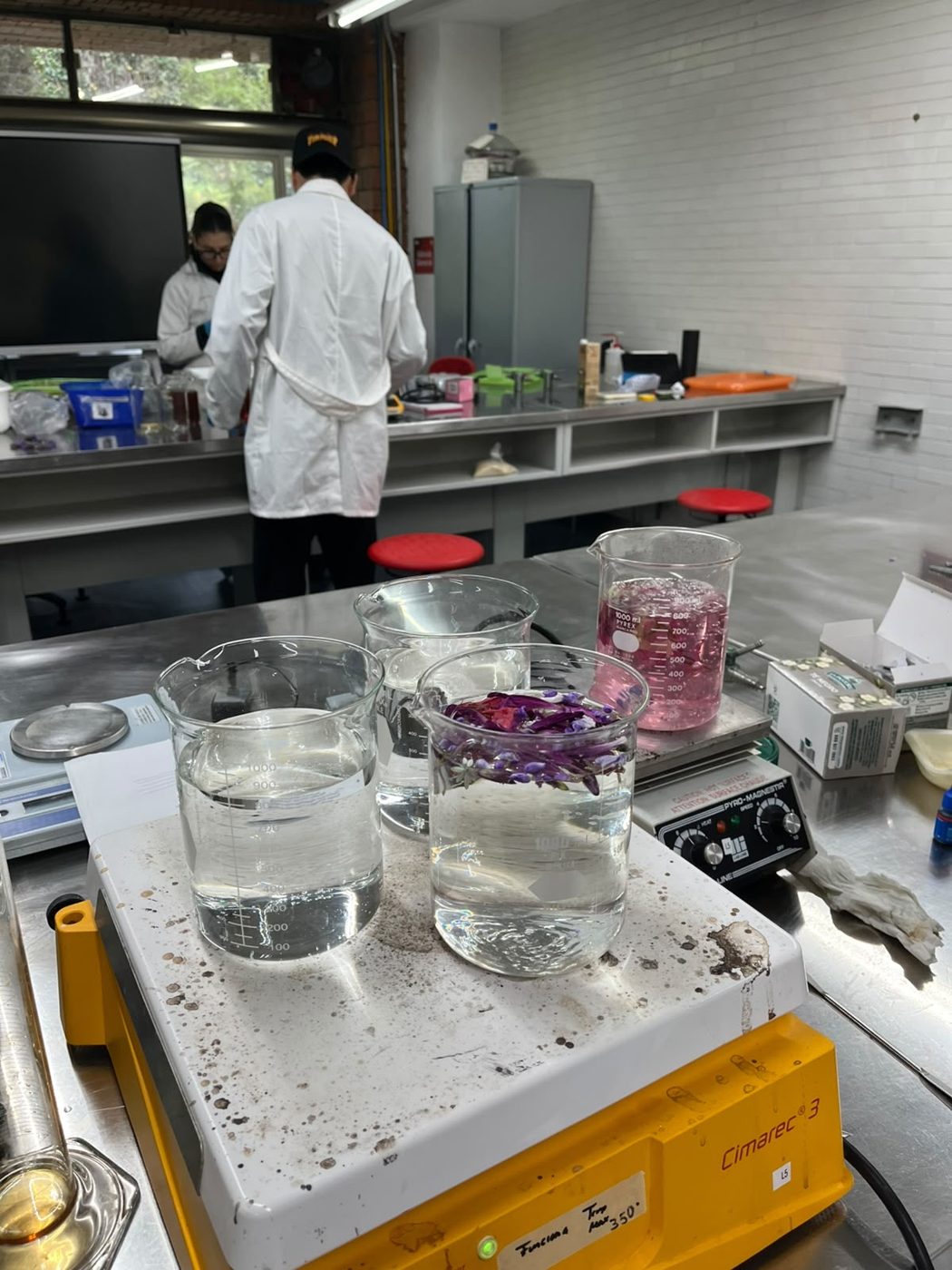
- I prepared the bougainvillea and mixed flowers separately by heating them with water.
- I let the preparations cool and distributed them into small jars.
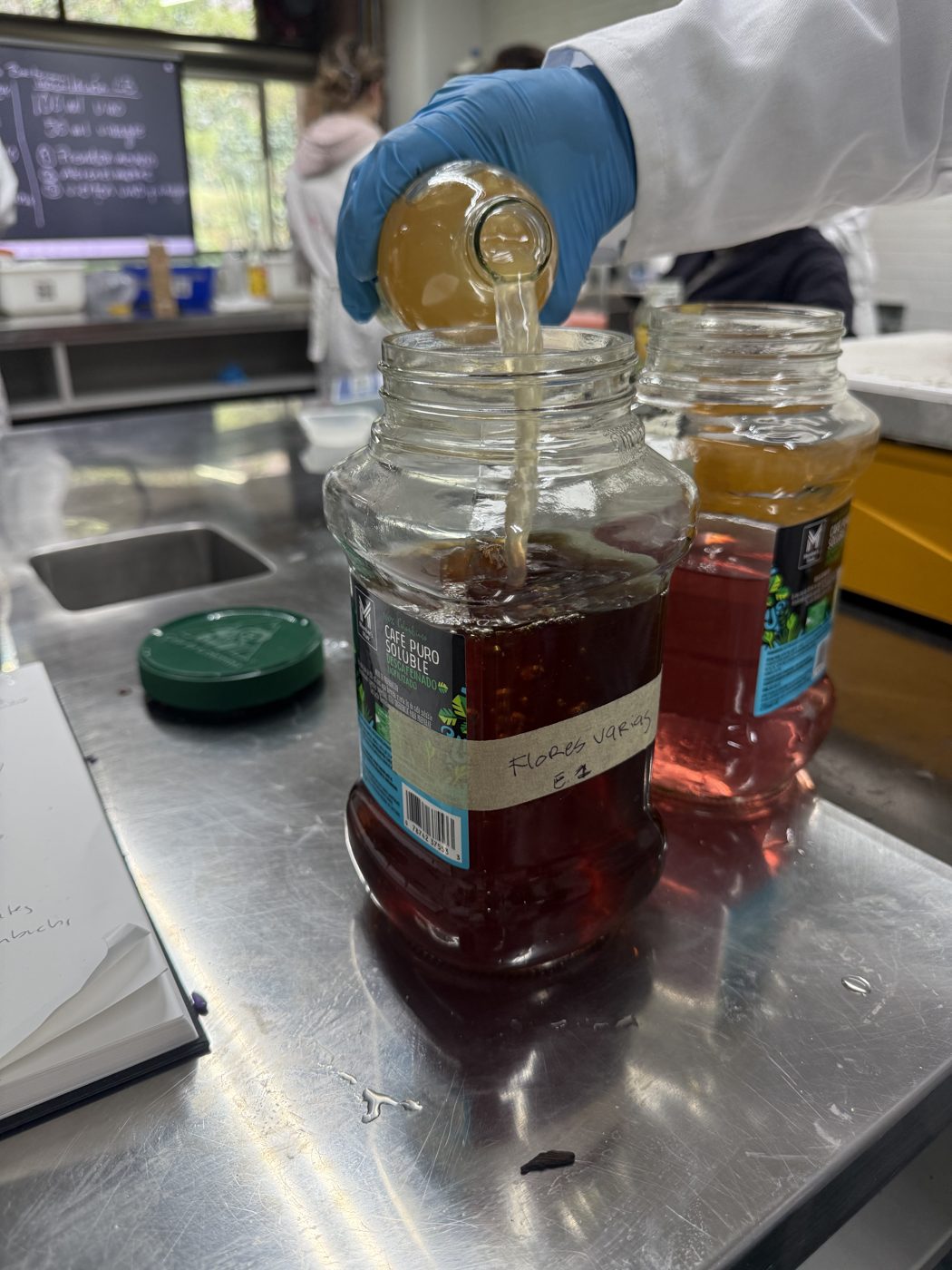
- I lit the laboratory burner and added 50 mL of kombucha to each jar.
- I stirred the preparations, covered the jars with gauze and kept them at room temperature for 3–4 weeks.
- I removed the films that had formed.
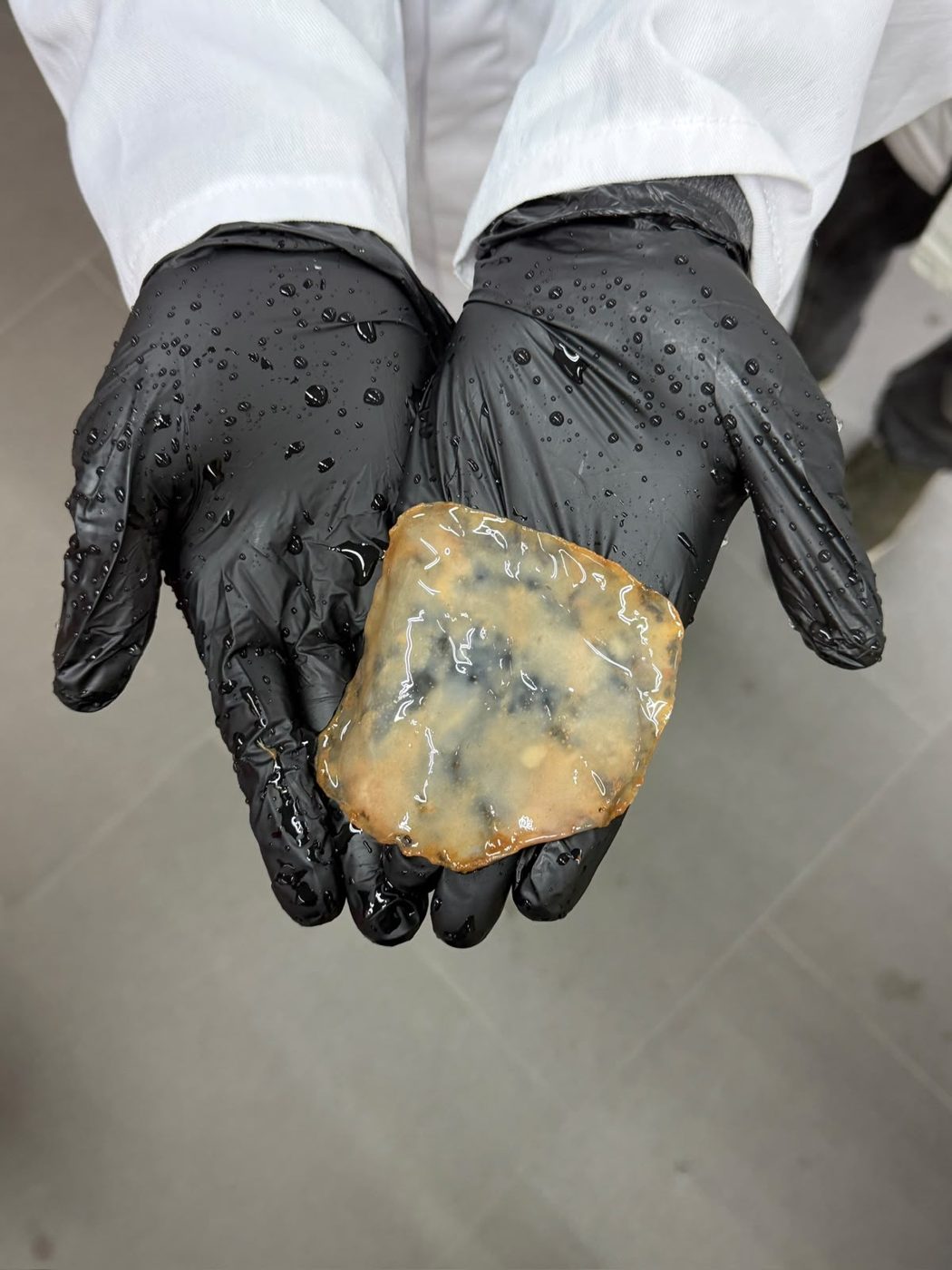
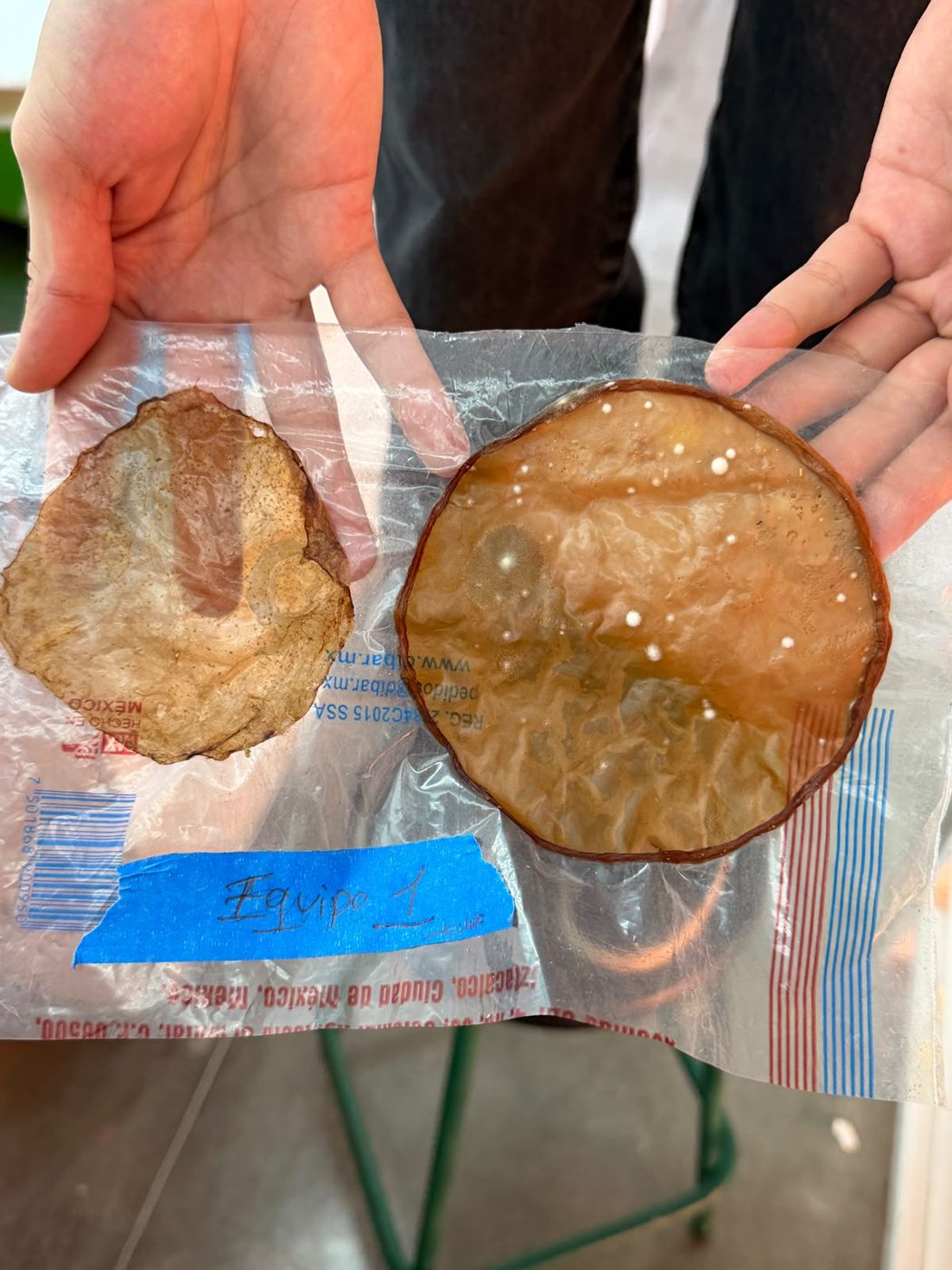
Results
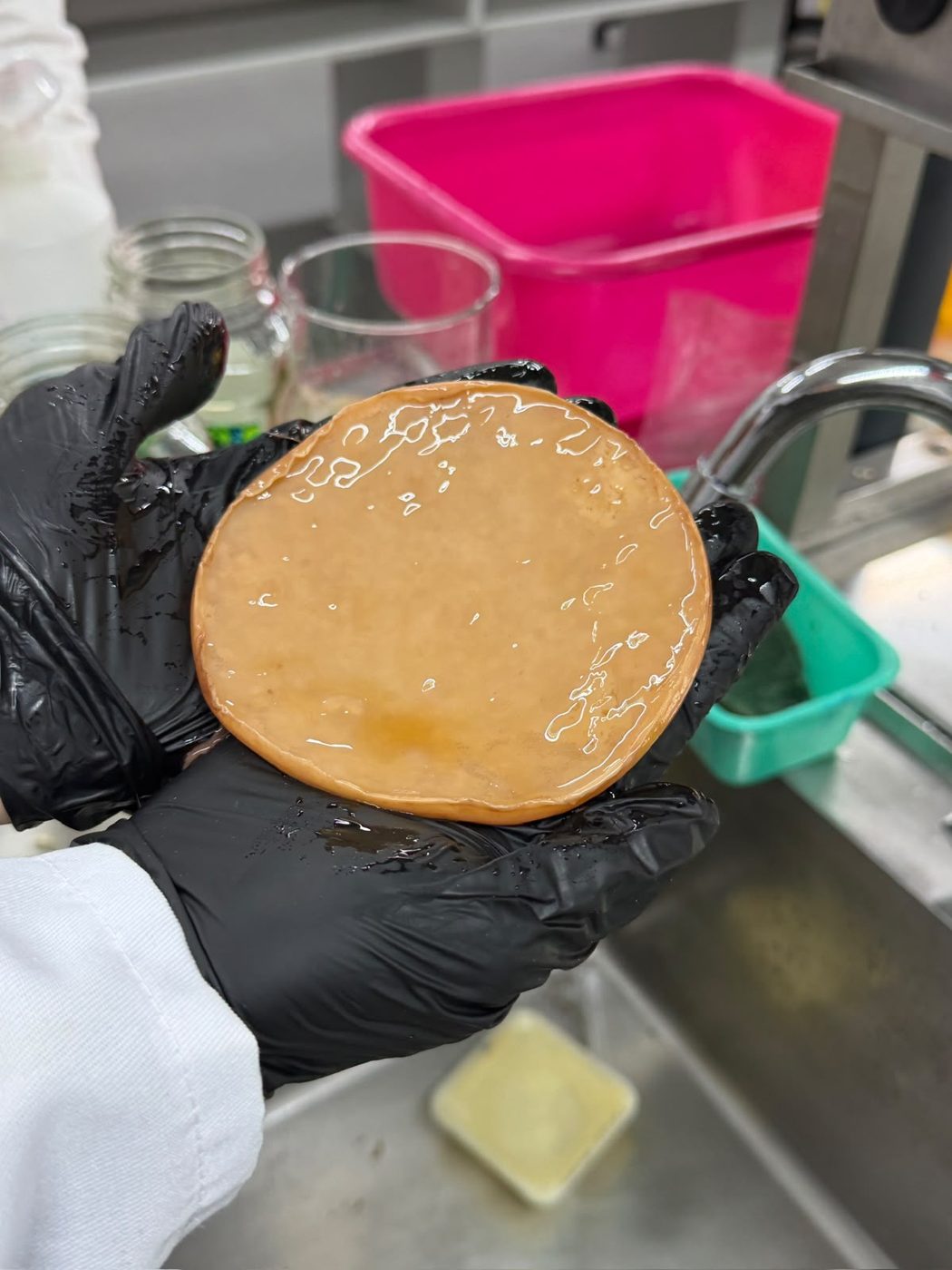
The small bougainvillea and mixed-flower cultures worked and produced bacterial cellulose films.
Medium B — YPD with wine and vinegar
| Ingredient | Quantity |
|---|---|
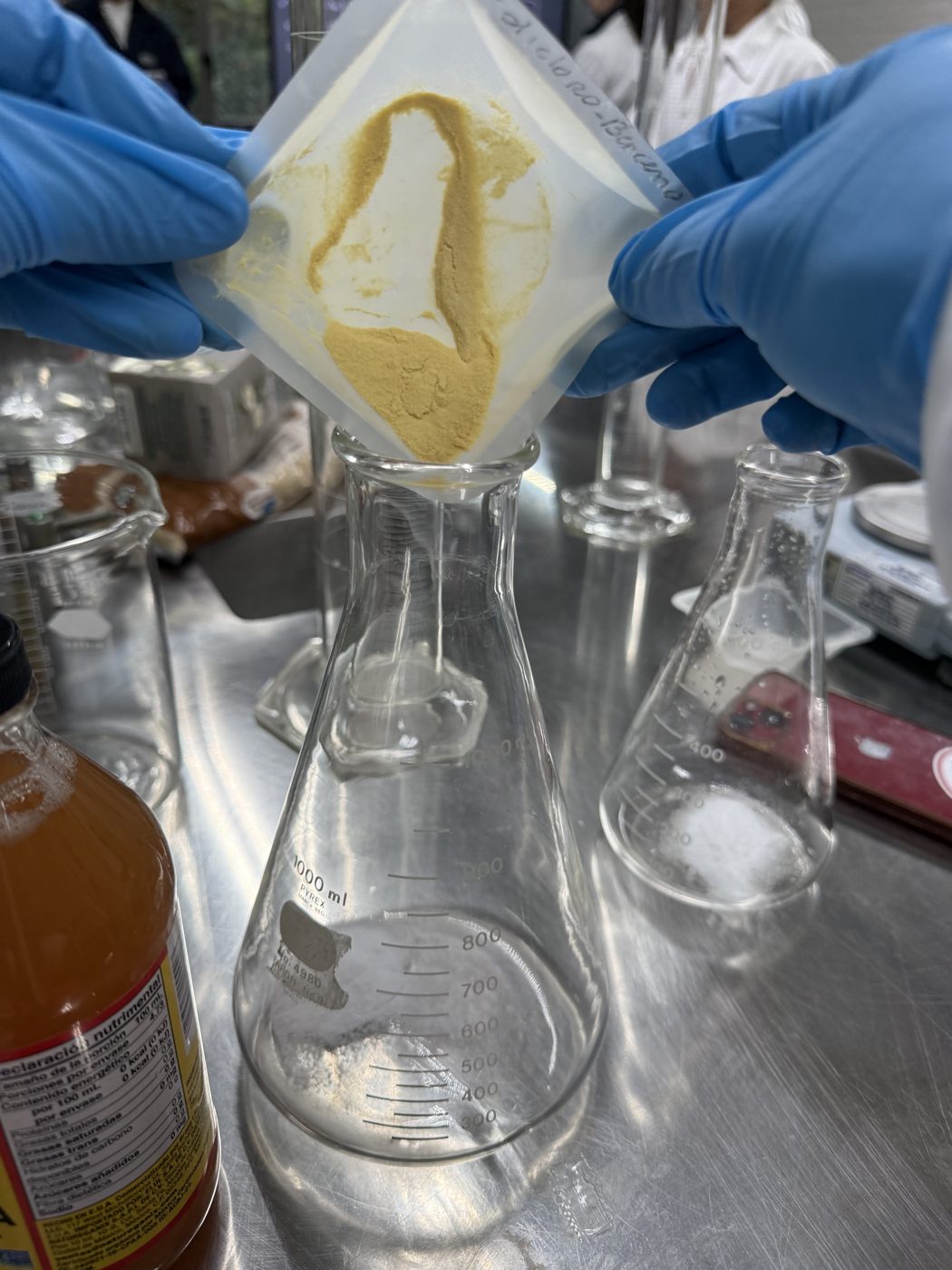
| Yeast extract | 10 g |
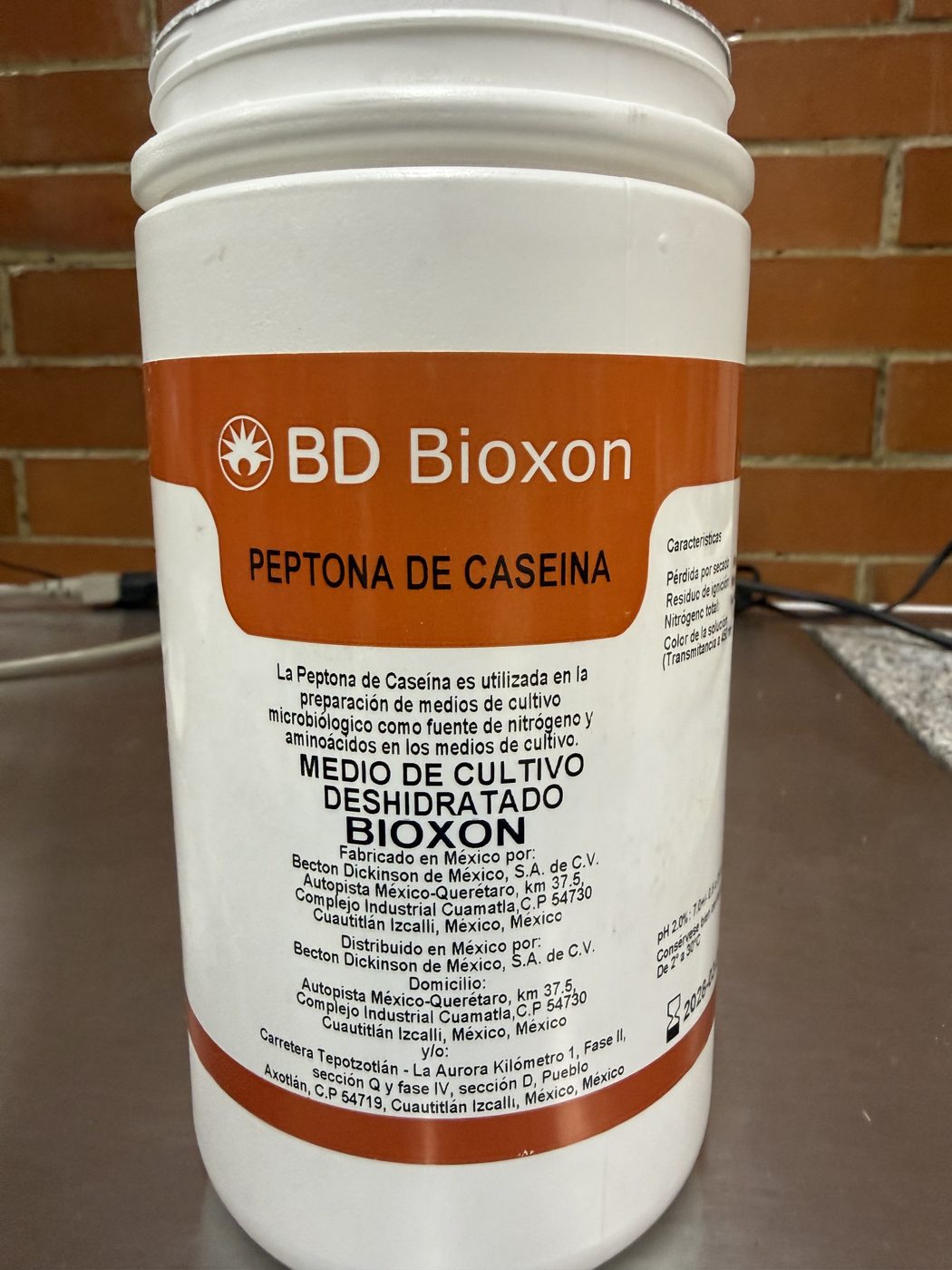
| Peptone | 20 g |
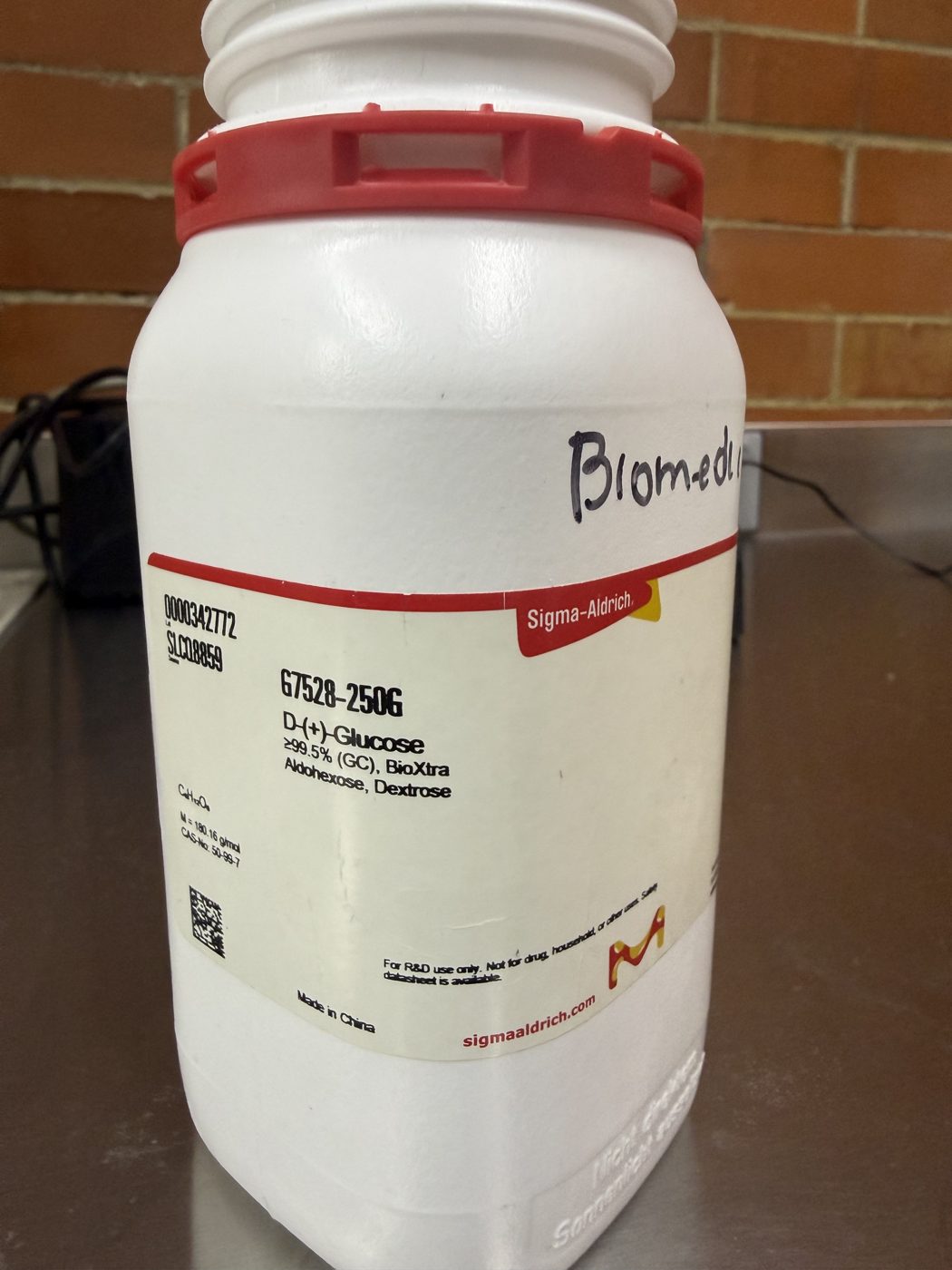
| Dextrose / glucose | 20 g |
| Water | Make up to 1 L |
| Wine | 100 mL per container of 1 L medium |
| Apple cider vinegar | 50 mL per container of 1 L medium |
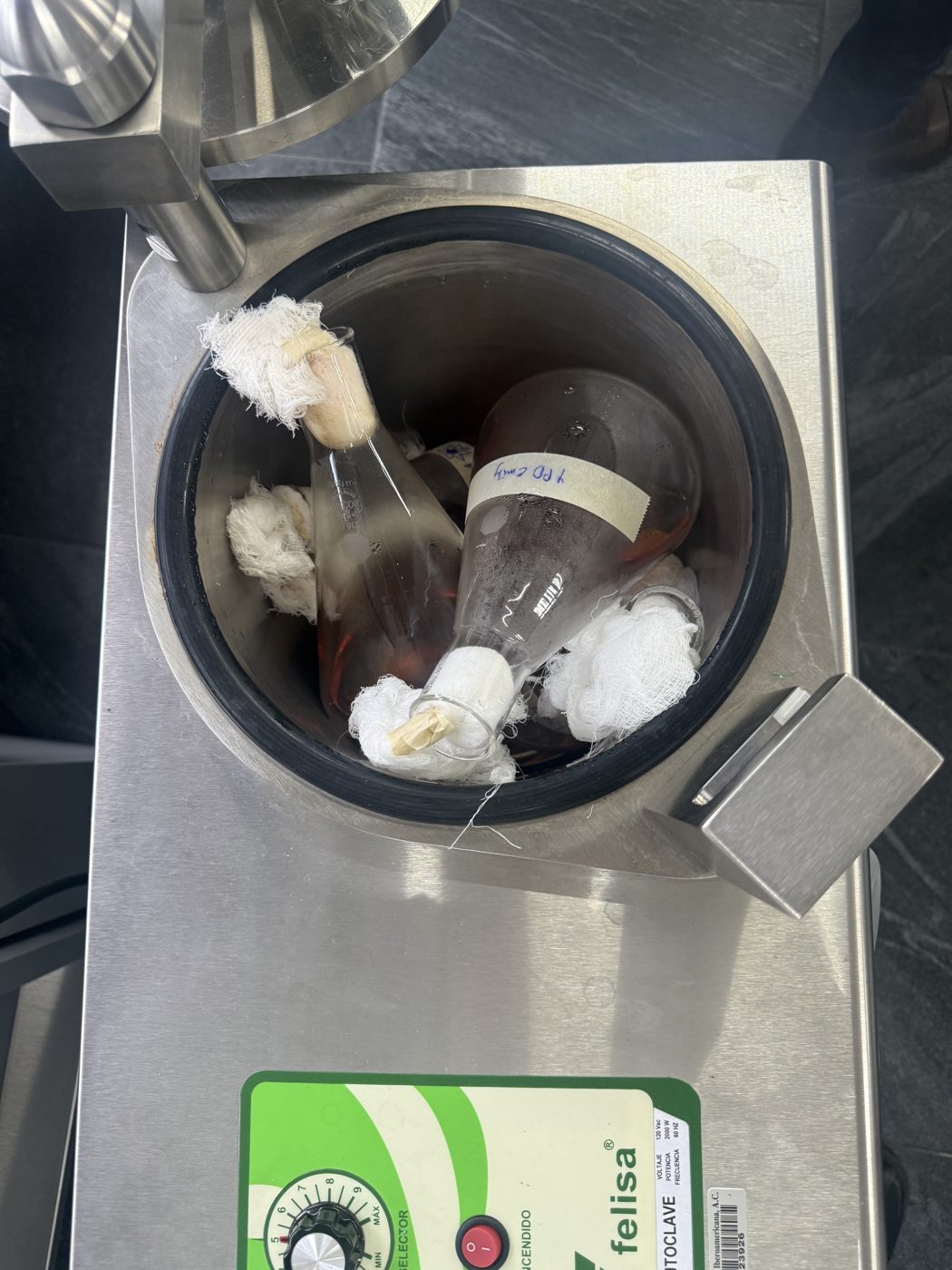
- I weighed the yeast extract, peptone and glucose, placed them in flasks and added water.
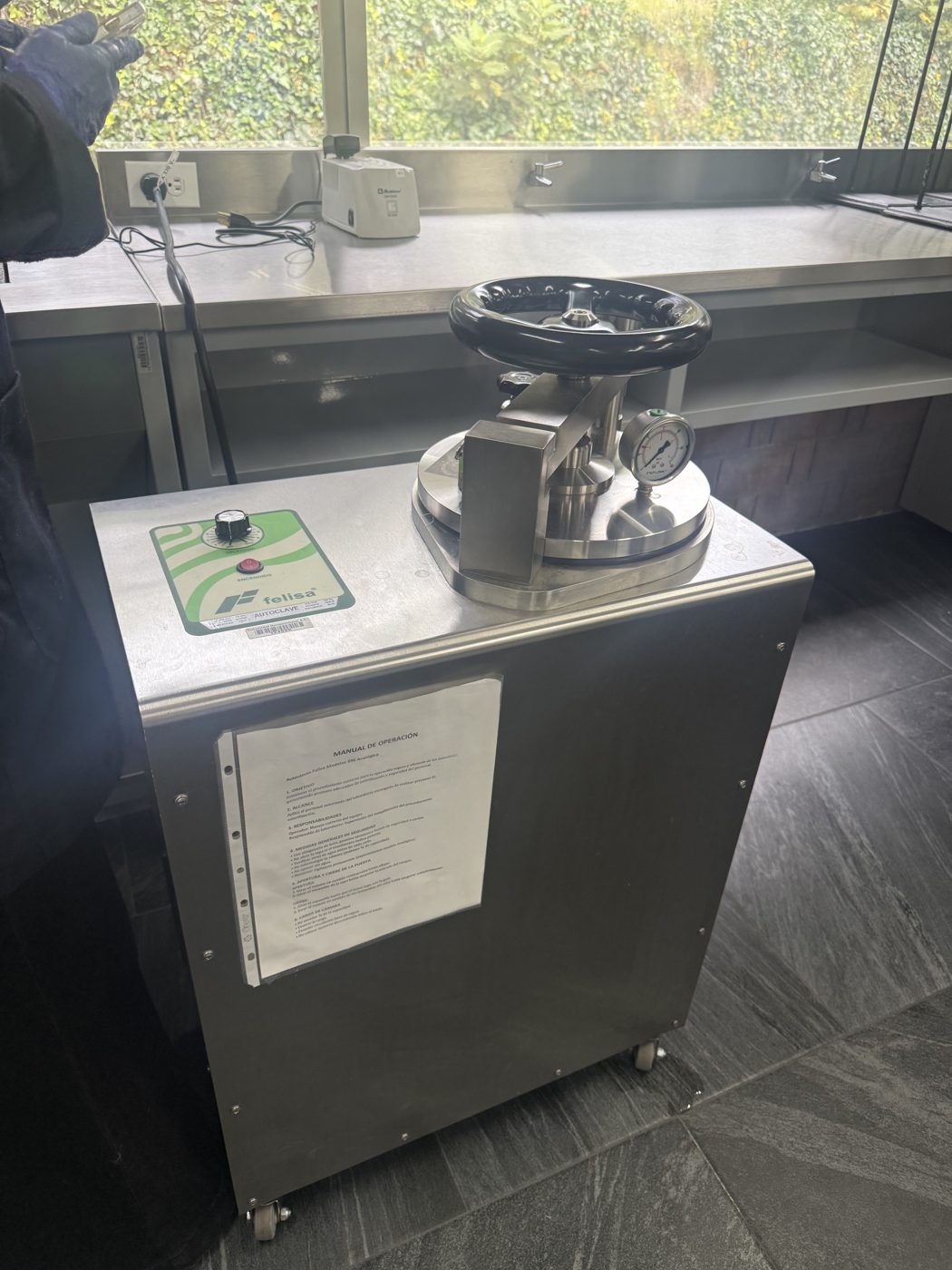
- I sterilised the medium in the autoclave at 121 °C for 15 minutes and let it cool.
- I lit the laboratory burner and added the wine and apple cider vinegar together: 100 mL of wine and 50 mL of vinegar per container of 1 L medium.
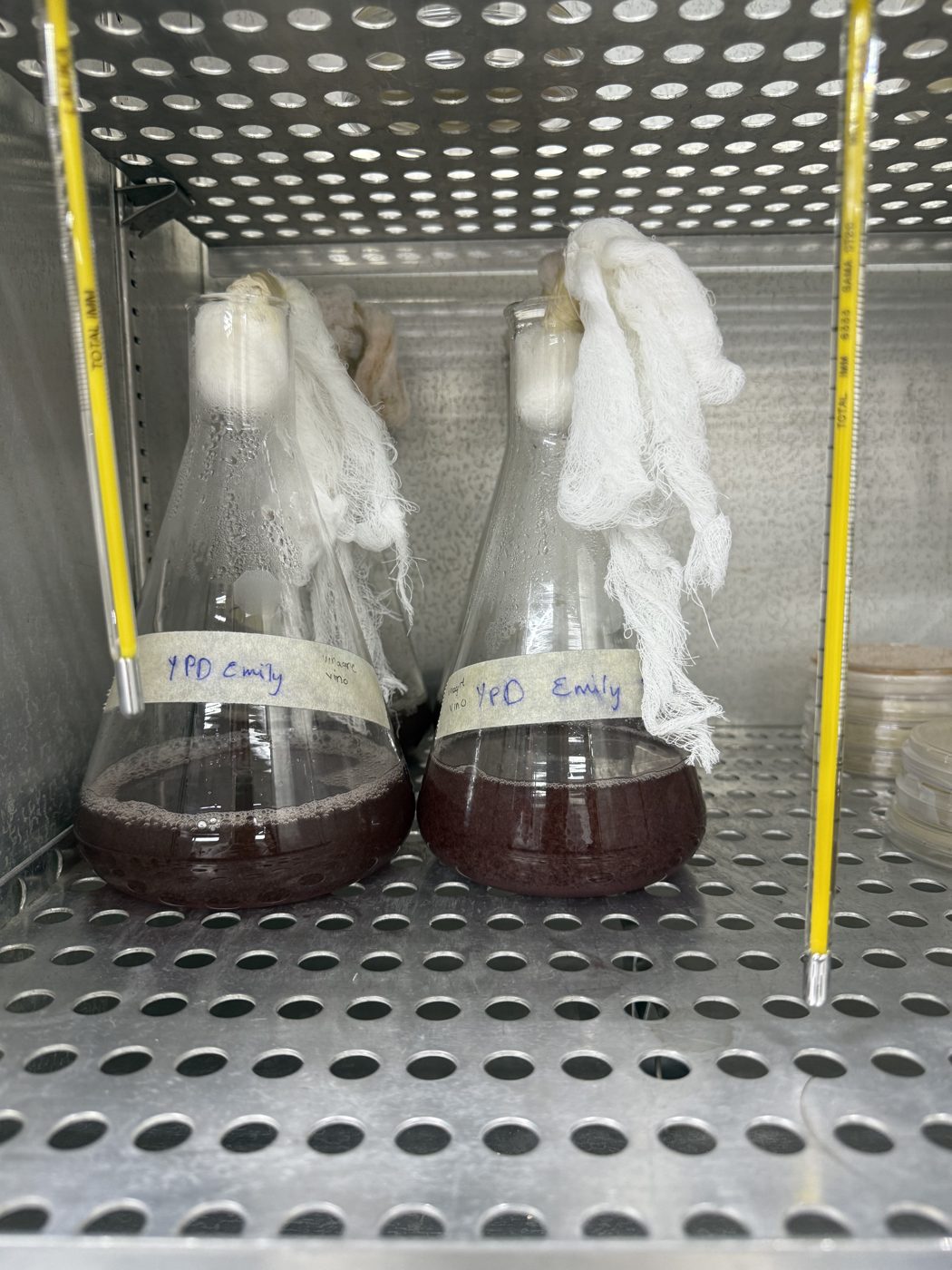
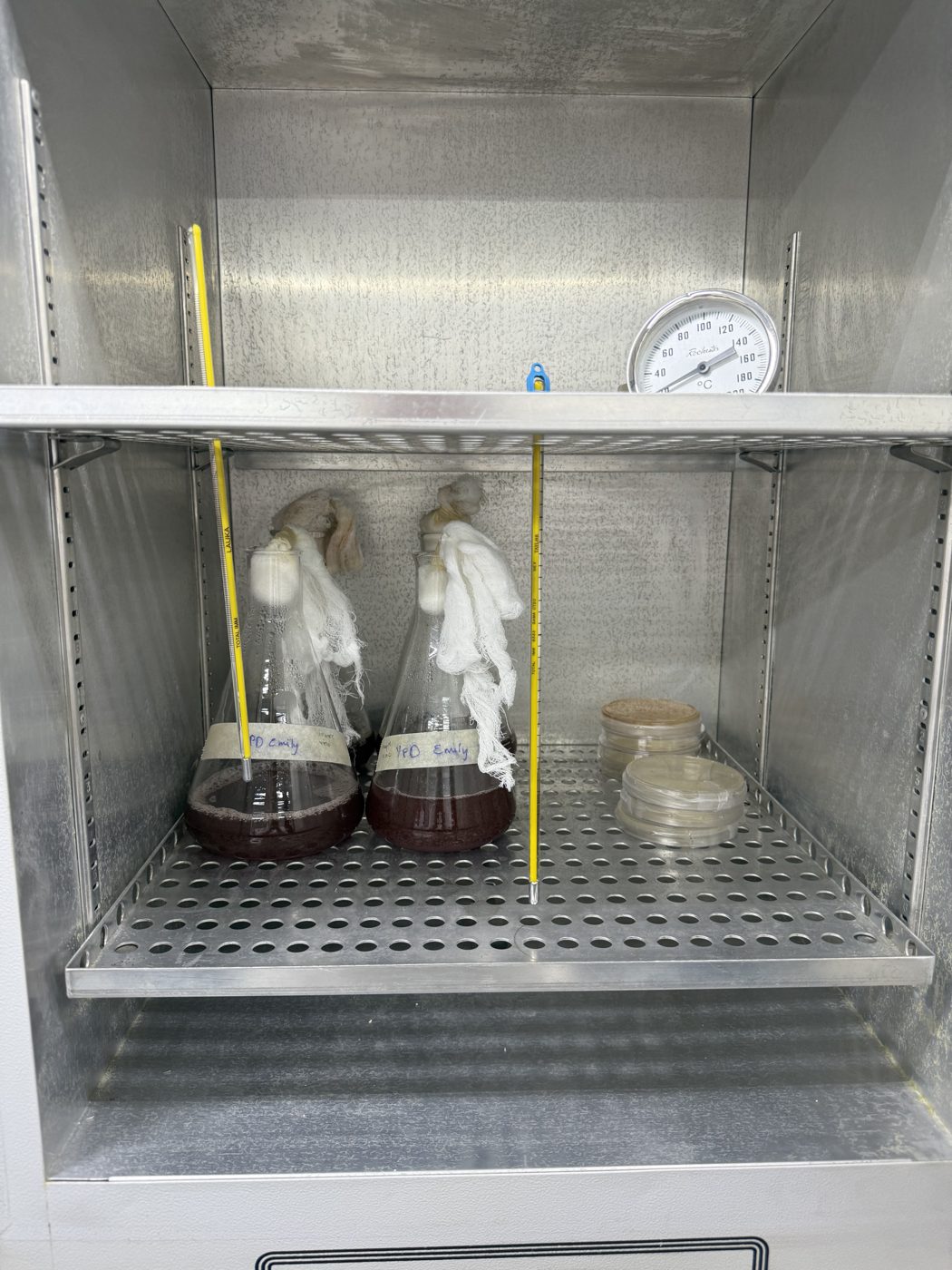
- I stirred and covered the preparations, then placed them in the incubator at 37 °C for 3–4 weeks.
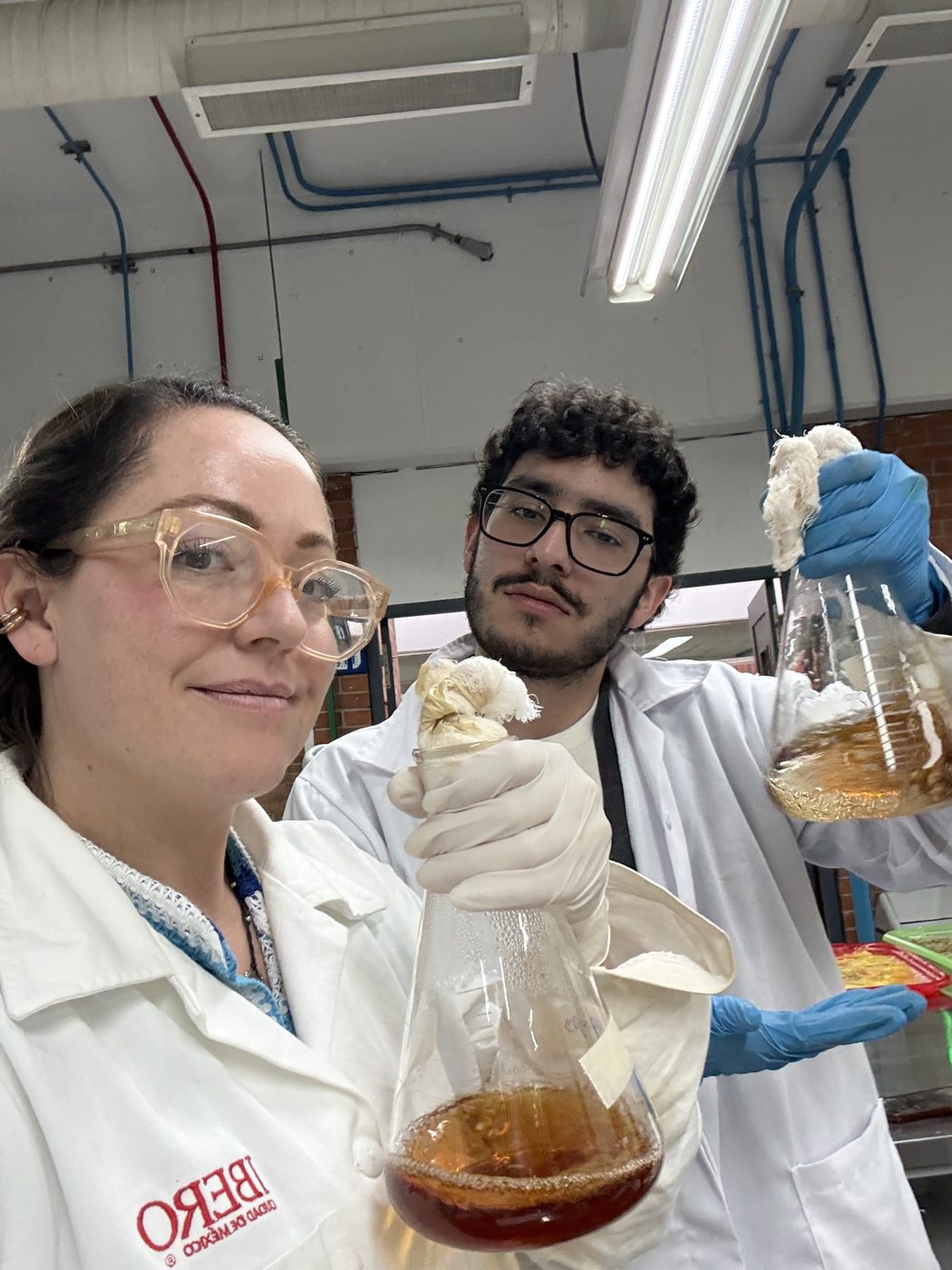
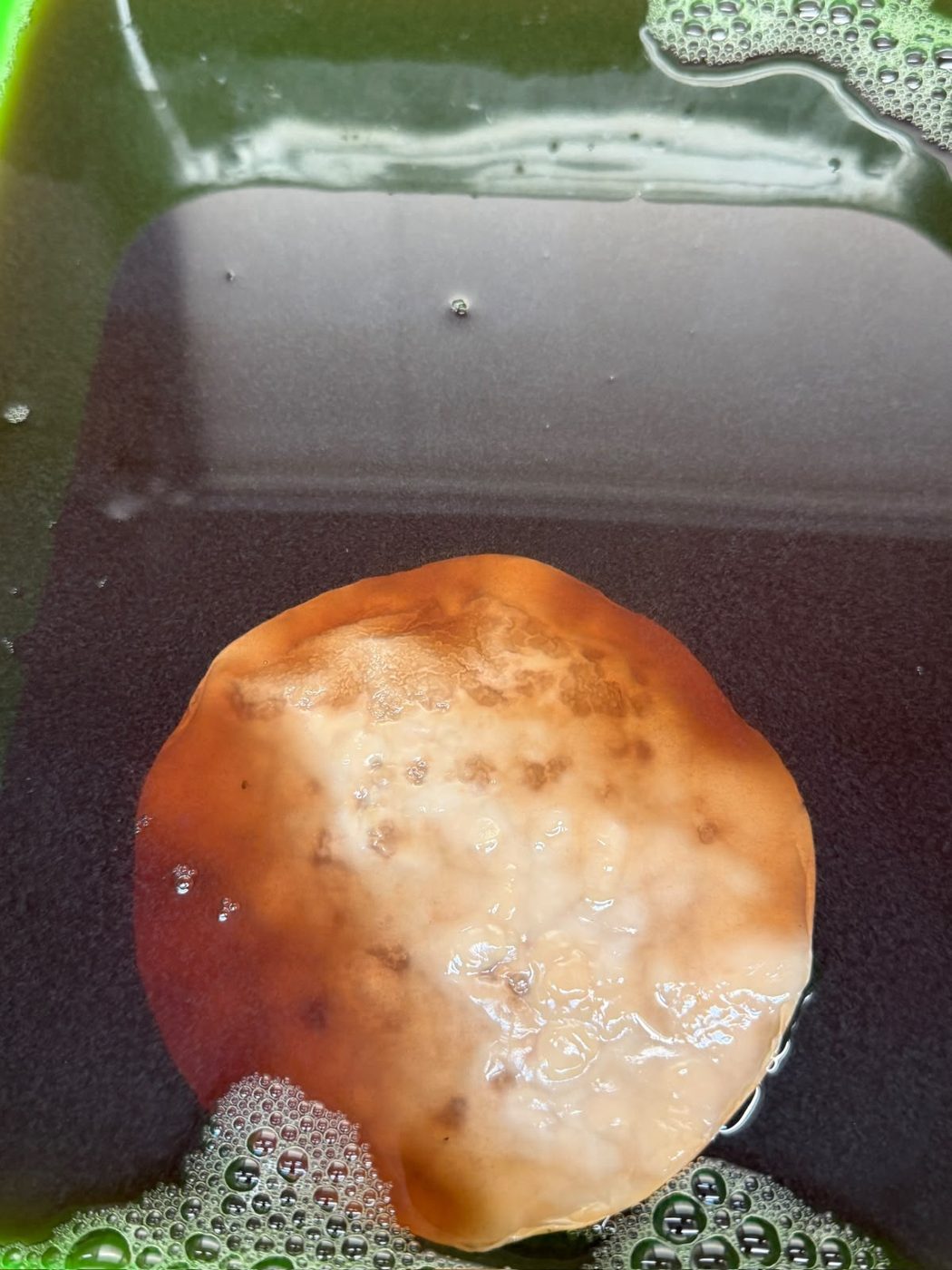
- I observed the films as they developed.
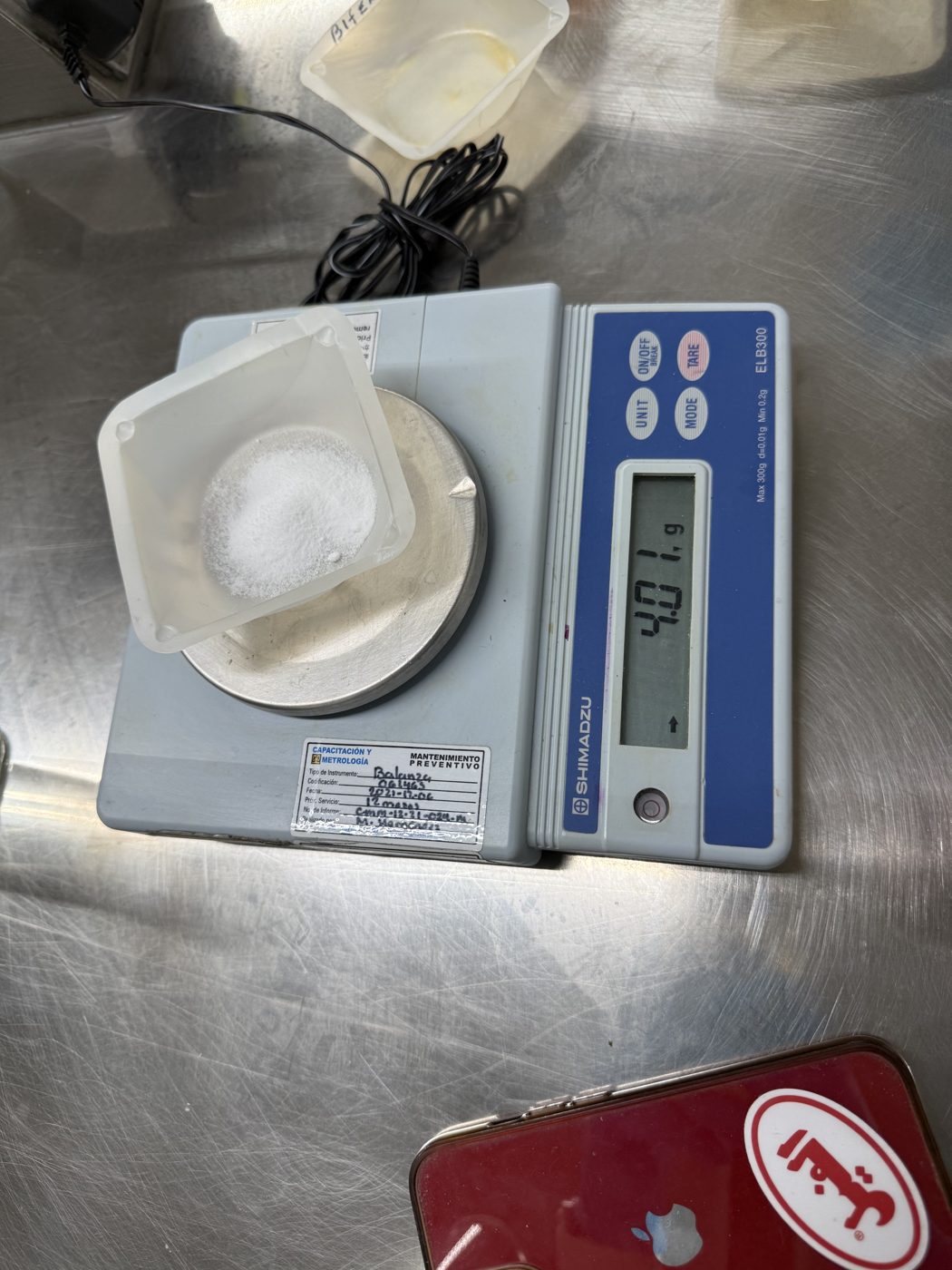
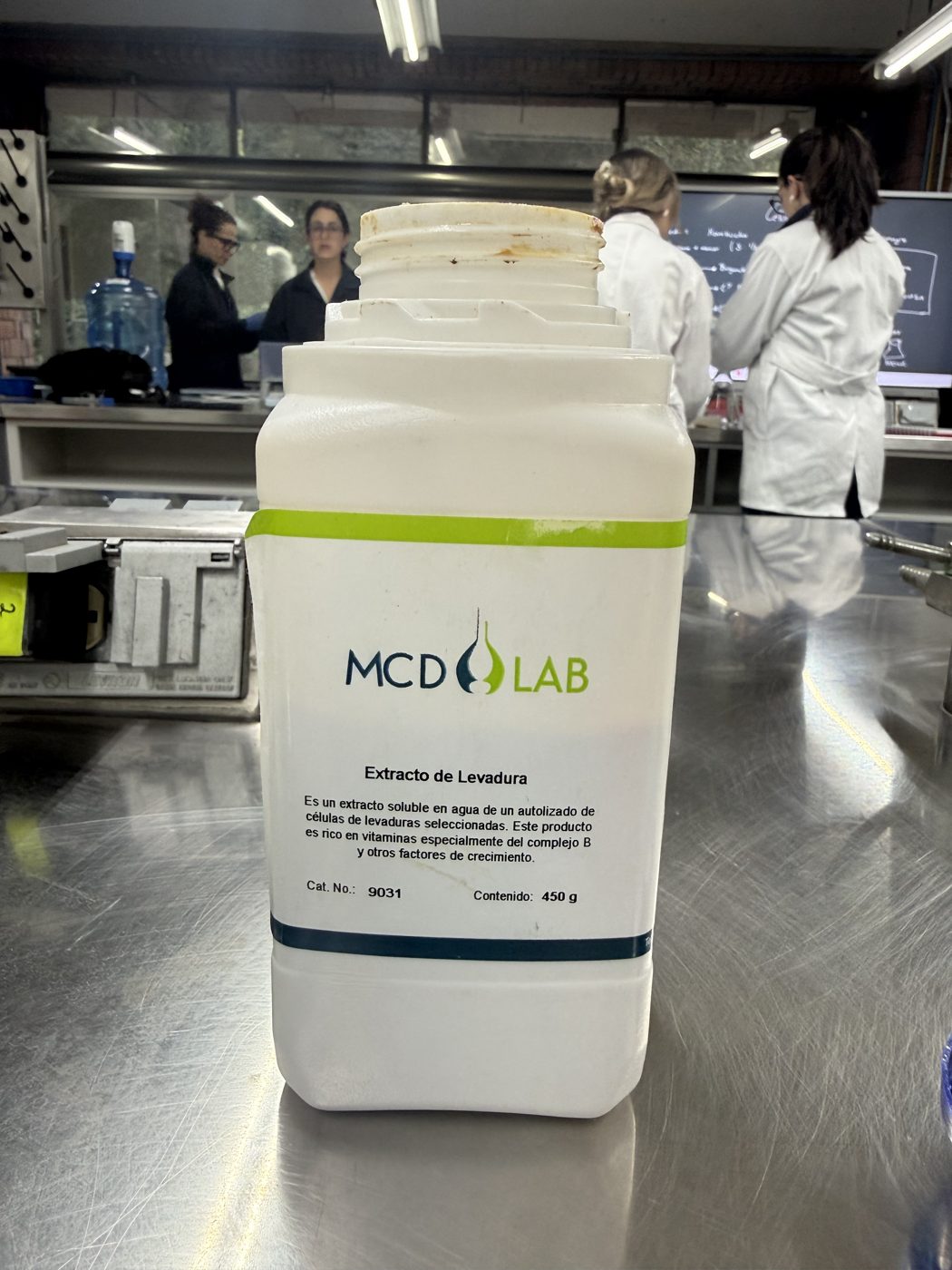
Results
Films formed, but the cultures later became contaminated with fungi and were unsuccessful.
02 · CRAFTED MATERIAL
Green lemon (Mexican kind) bioplastic
Recipe
| Ingredient | Quantity |
|---|---|
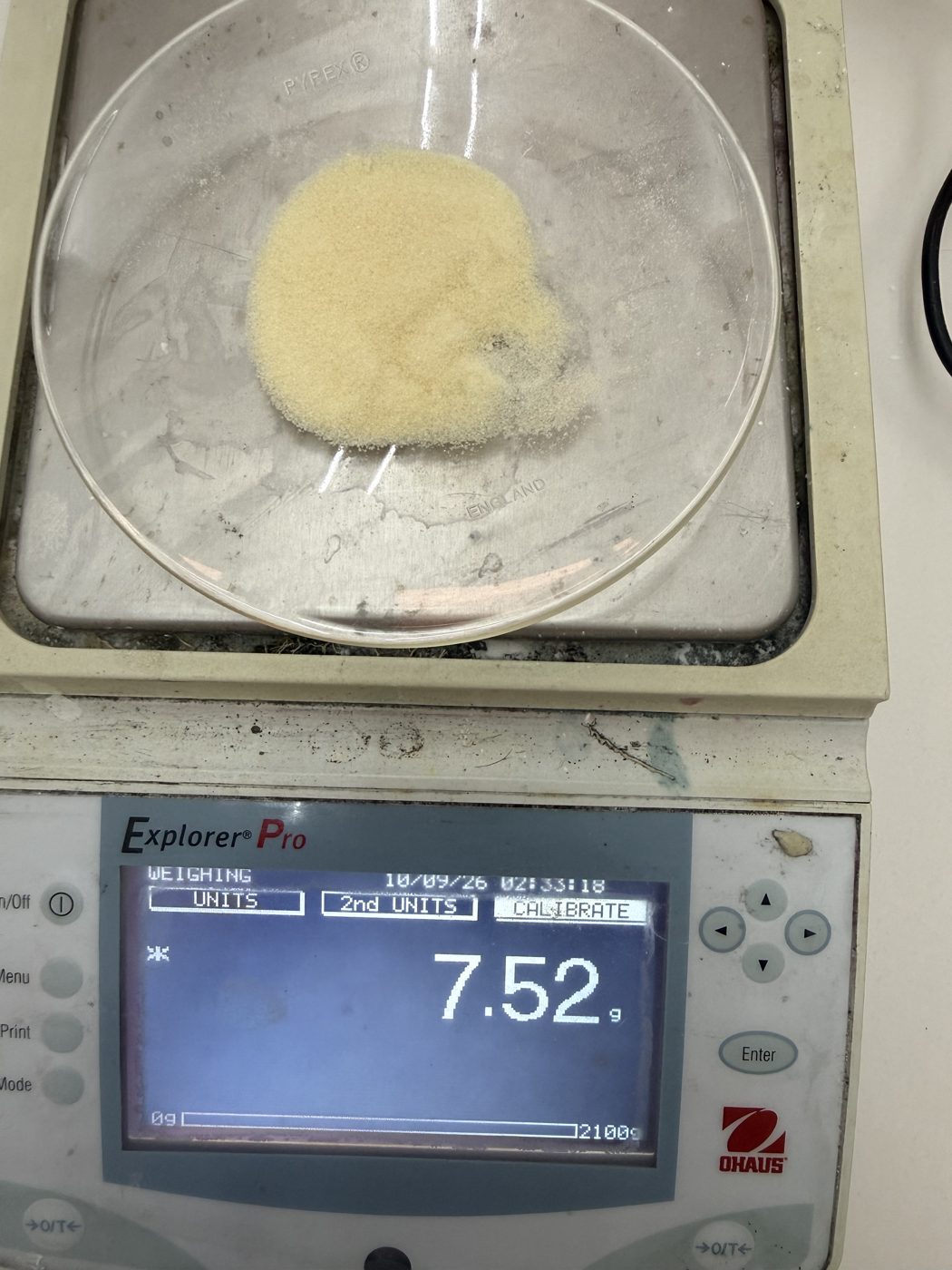
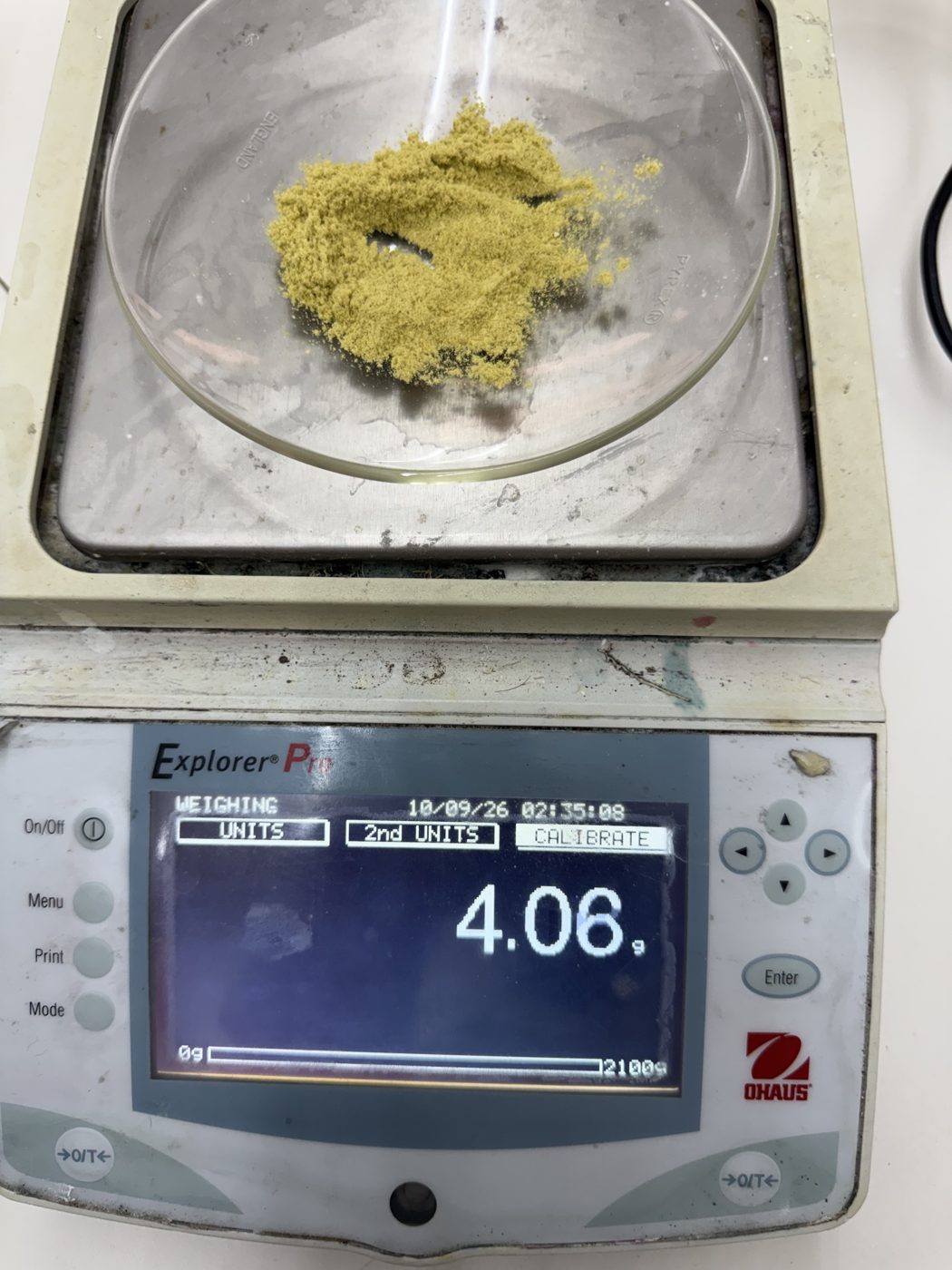
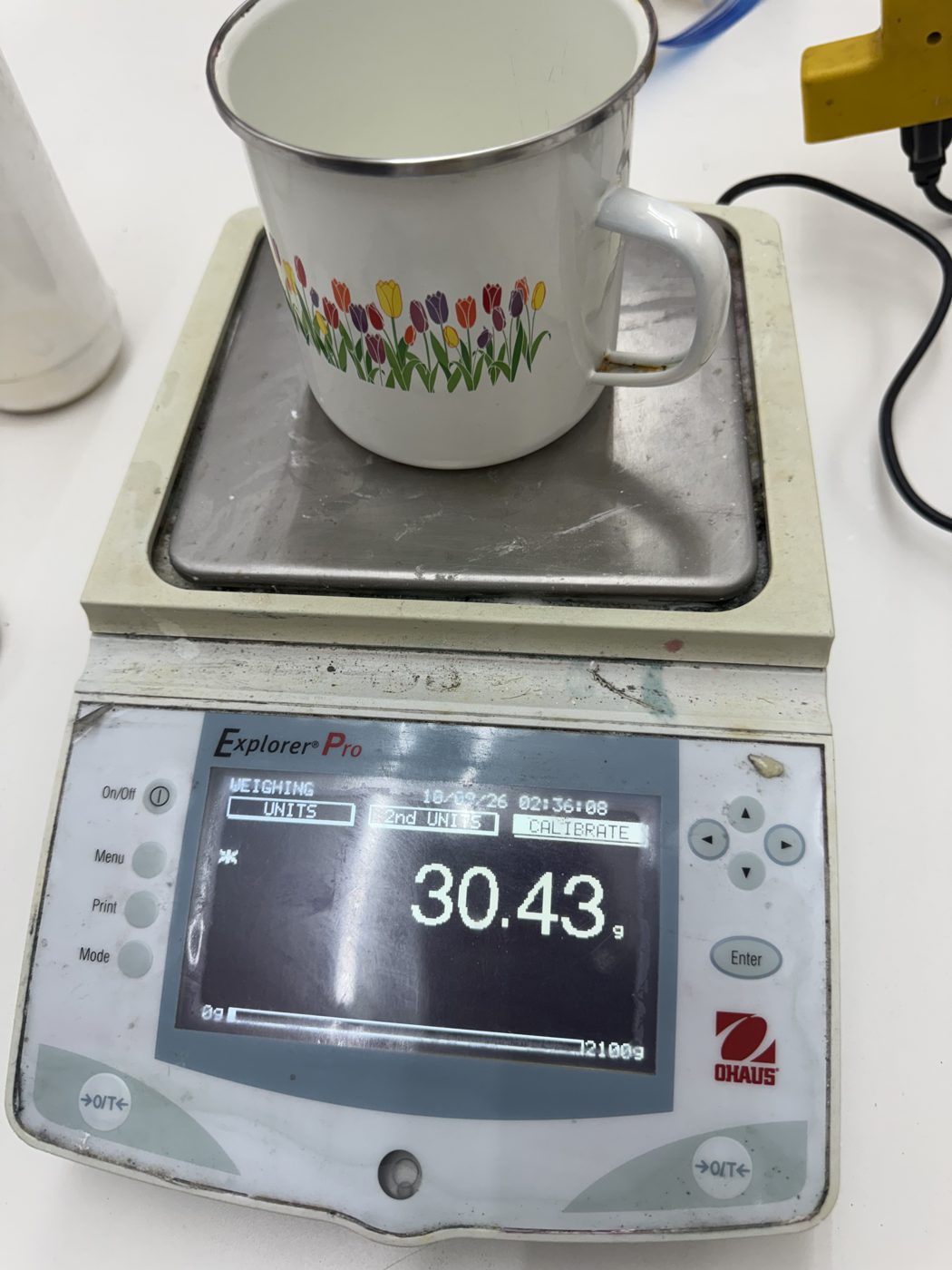
| Gelatin | 7.5 g |
| Ground green lemon (Mexican kind) peel | 4 g |
| Water | 30 mL |
| Glycerin | 8 g |
| Vinegar | 5 mL |
Process
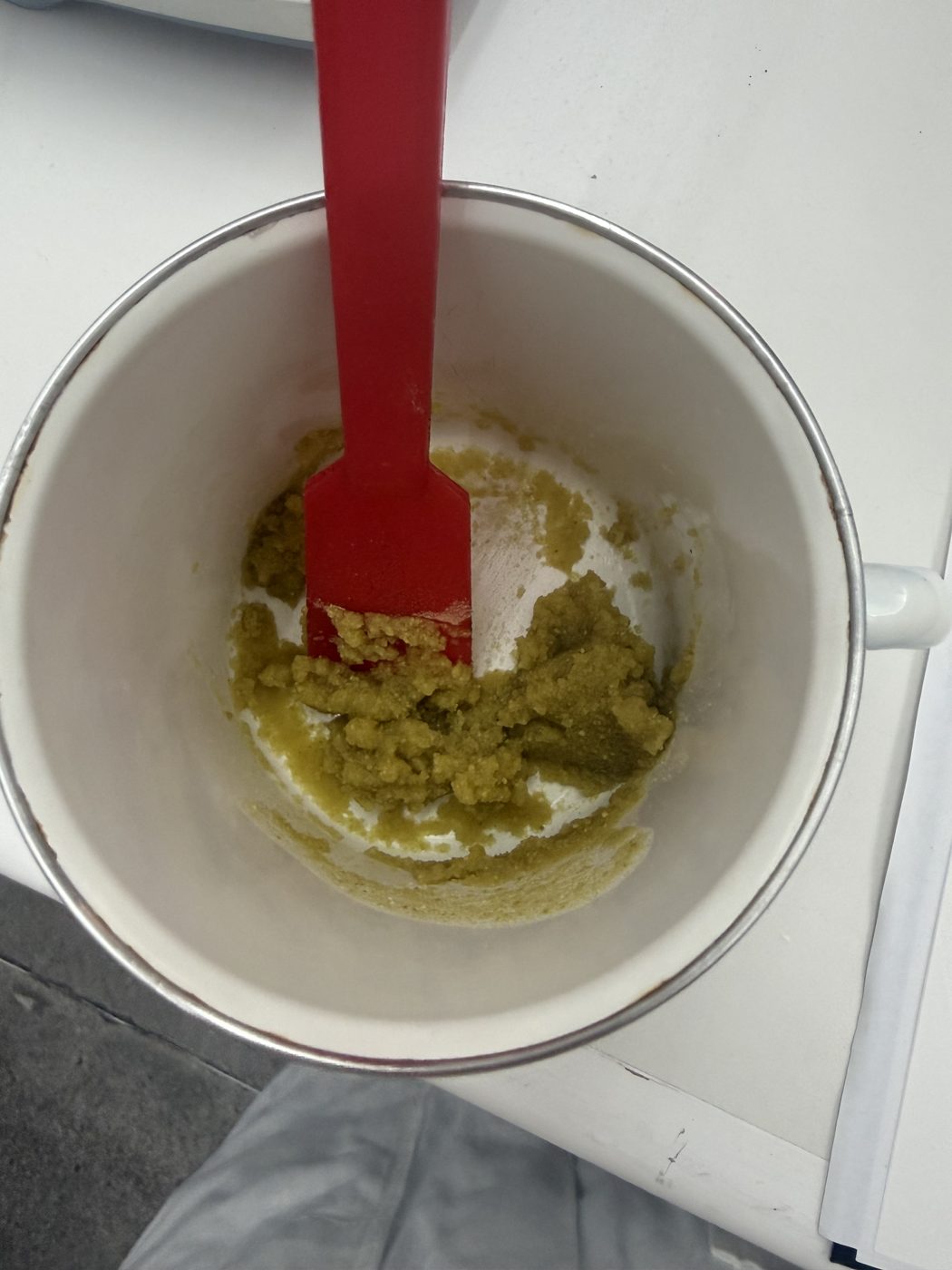
- I weighed the gelatin and ground green lemon (Mexican kind) peel and mixed the dry ingredients.
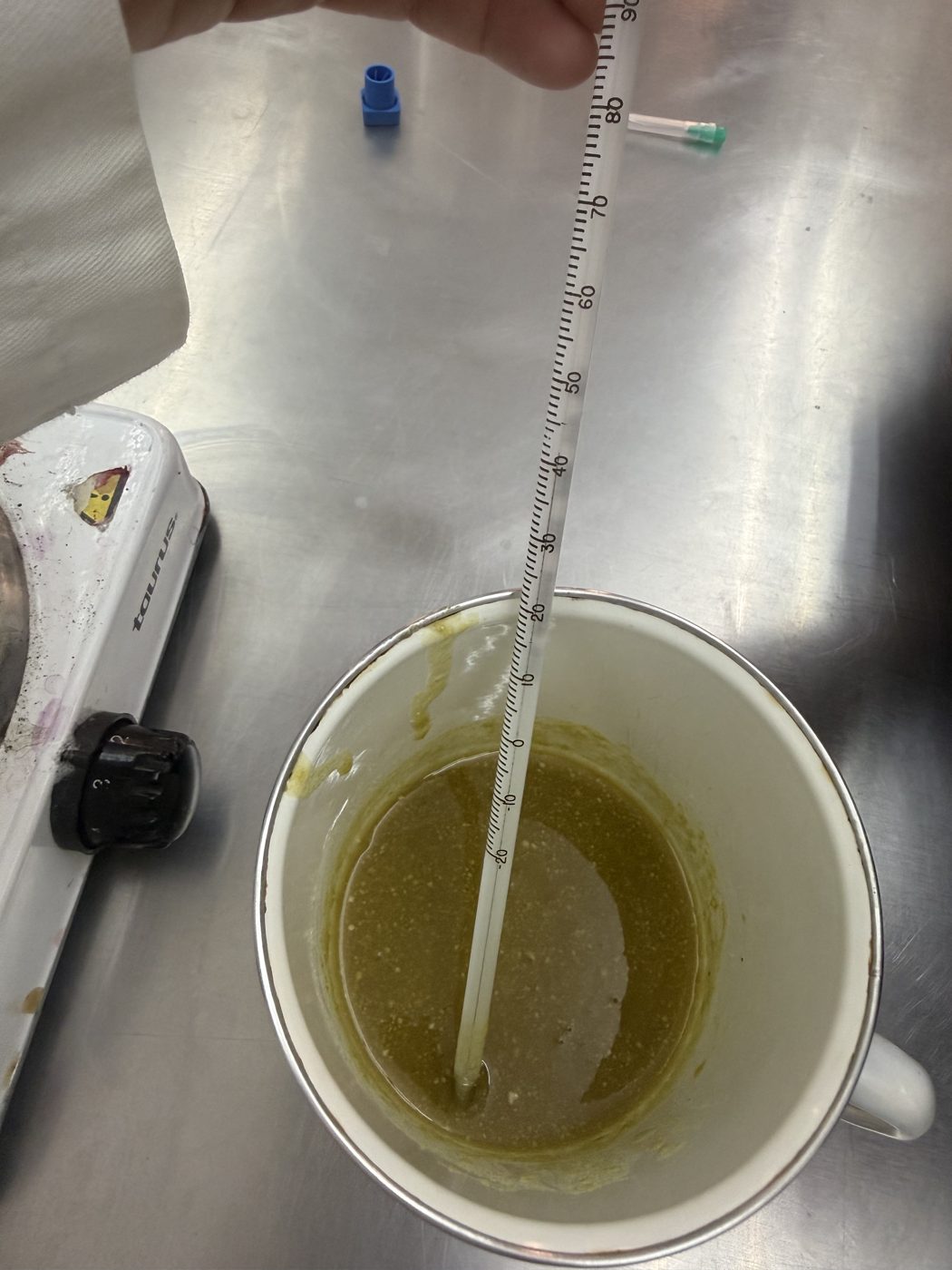
- I added water to hydrate the mixture and heated it above 60 °C.
- I added the glycerin while heating and stirring.
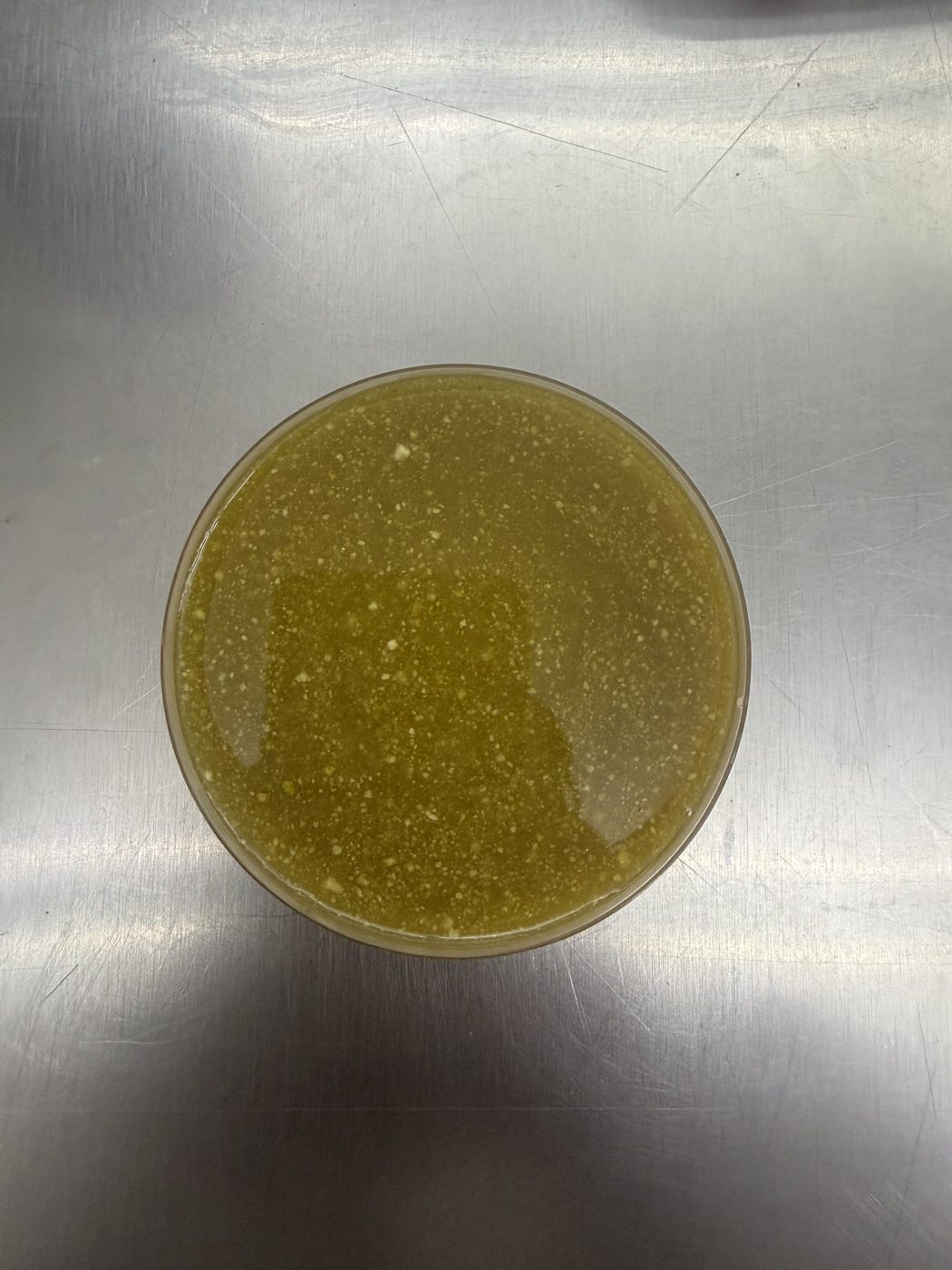
- I removed the mixture from the heat, added the vinegar and poured it into a Petri dish.
- I let the sample dry.
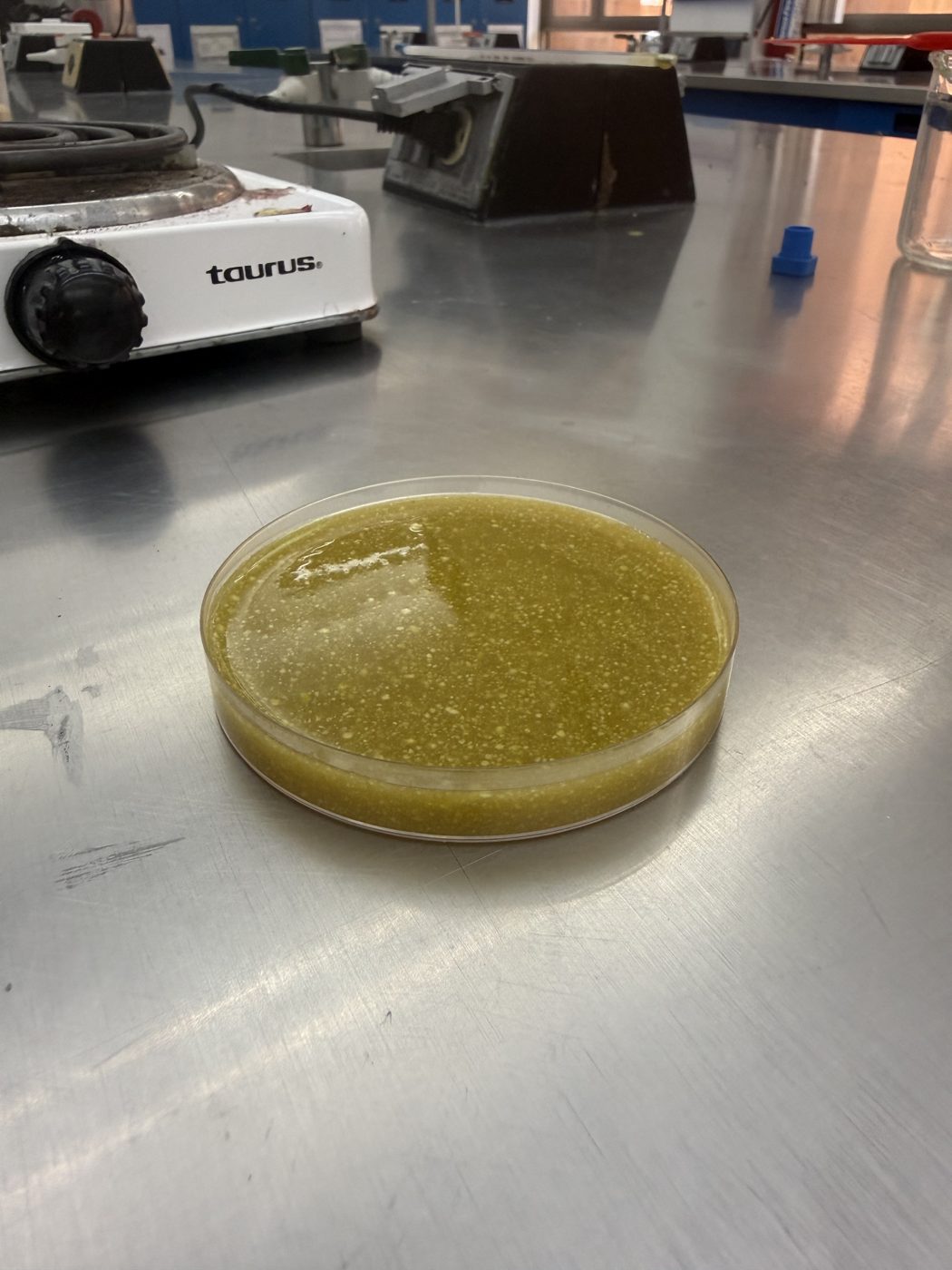
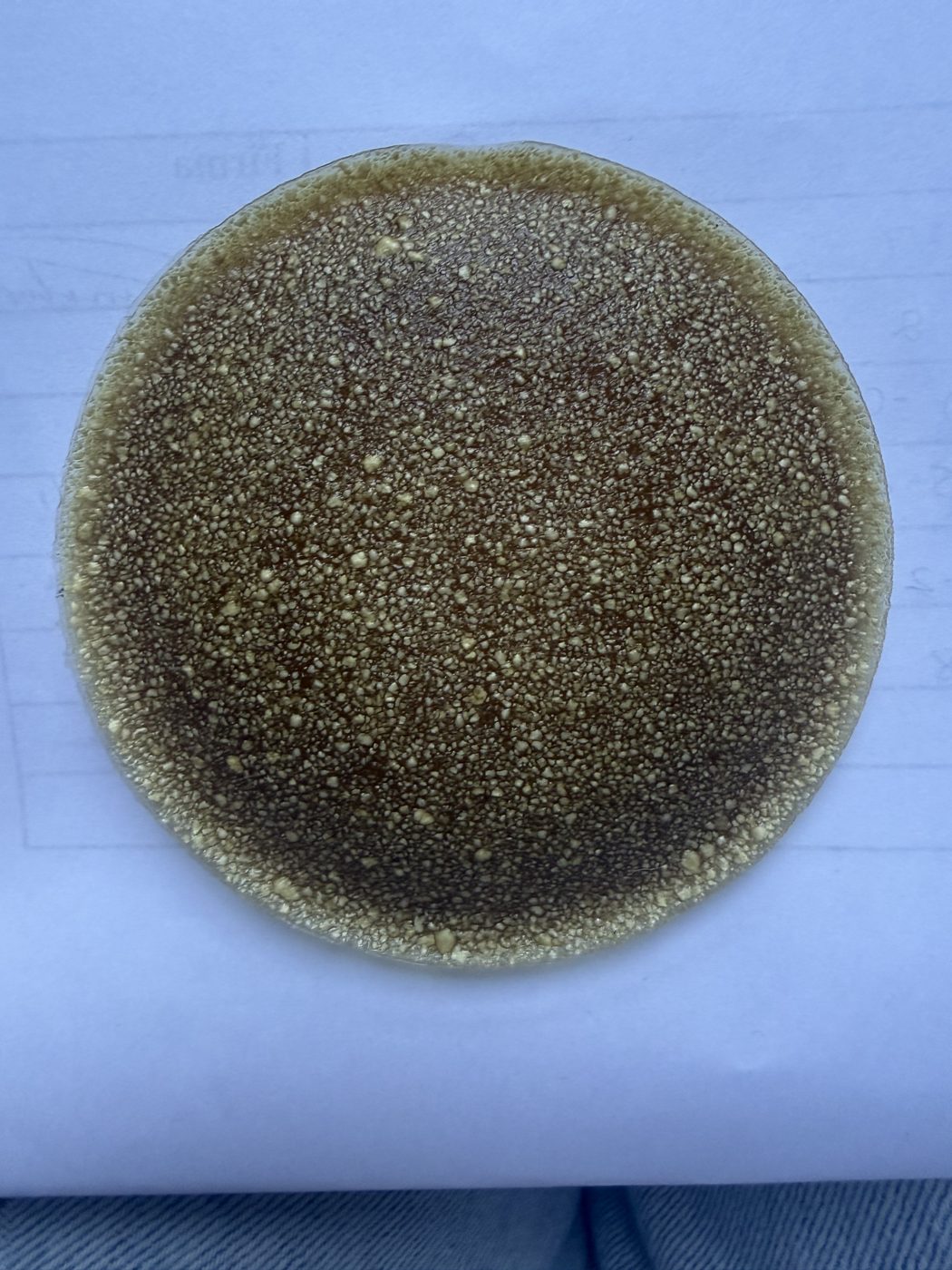
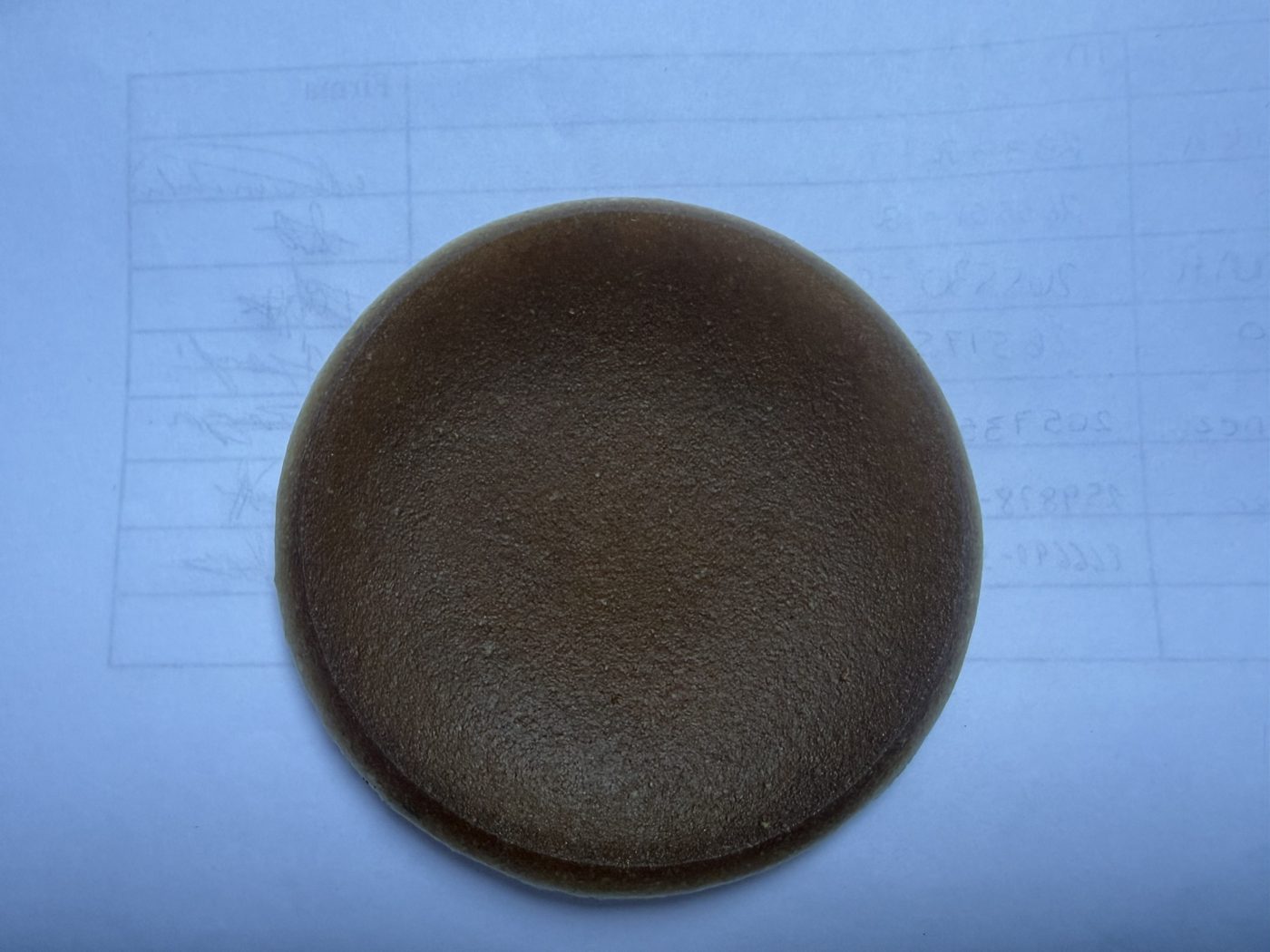
Results and observations
The circular sample was quite flexible, with visible particles and a pleasant green lemon aroma. One face had a granular, greenish-brown surface, while the opposite face was smoother and dark brown.
03 · CRAFTED MATERIAL
Extruded cellulose
Recipe
| Ingredient | Quantity |
|---|---|
| Paper | 5 g |
| Water | 50 mL |
| Tapioca starch | 5 g |
| White vinegar | 1 mL |
| Glycerin | 2 mL |
Process
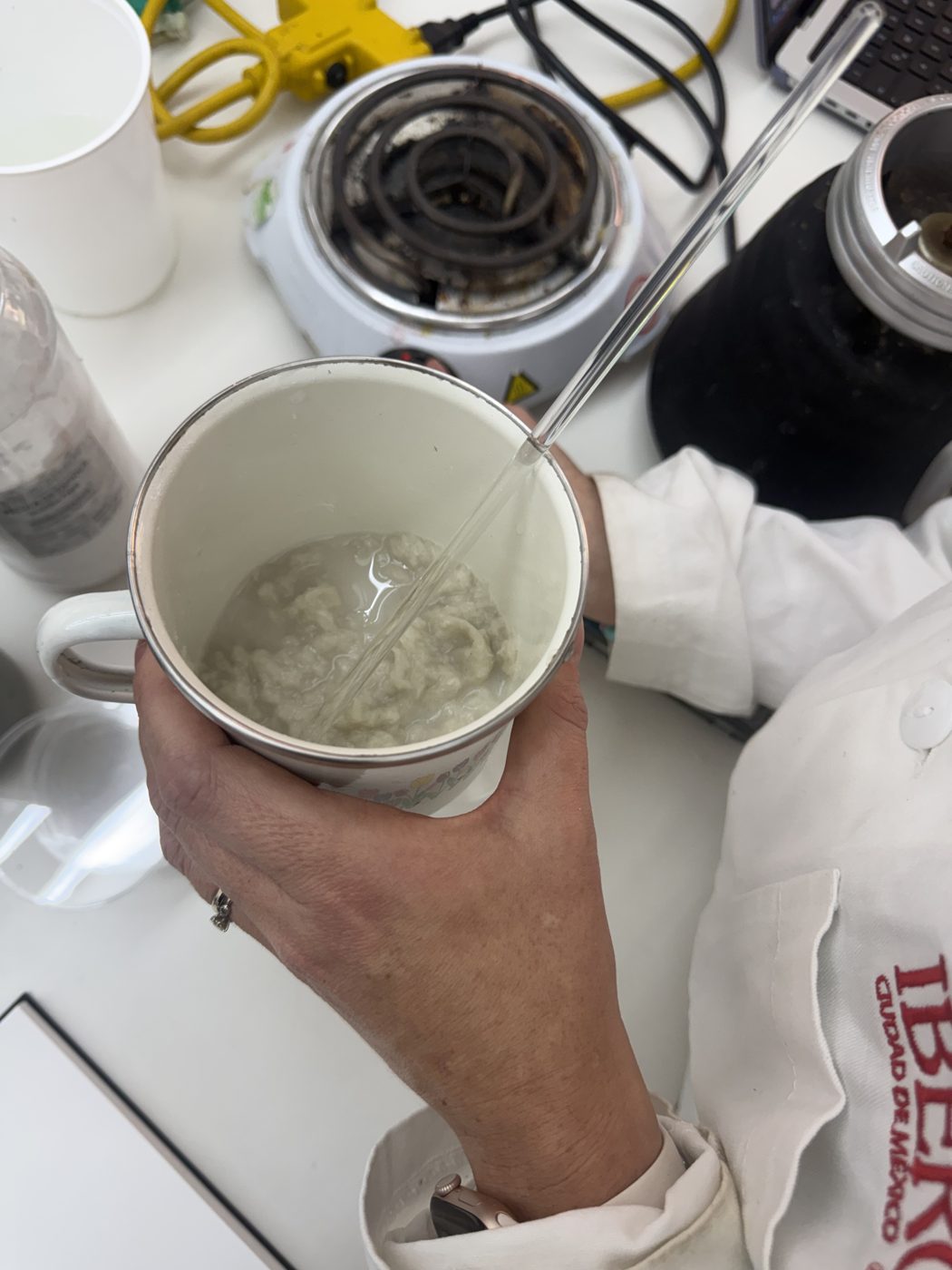
- I boiled the paper and mixed the water with tapioca starch.
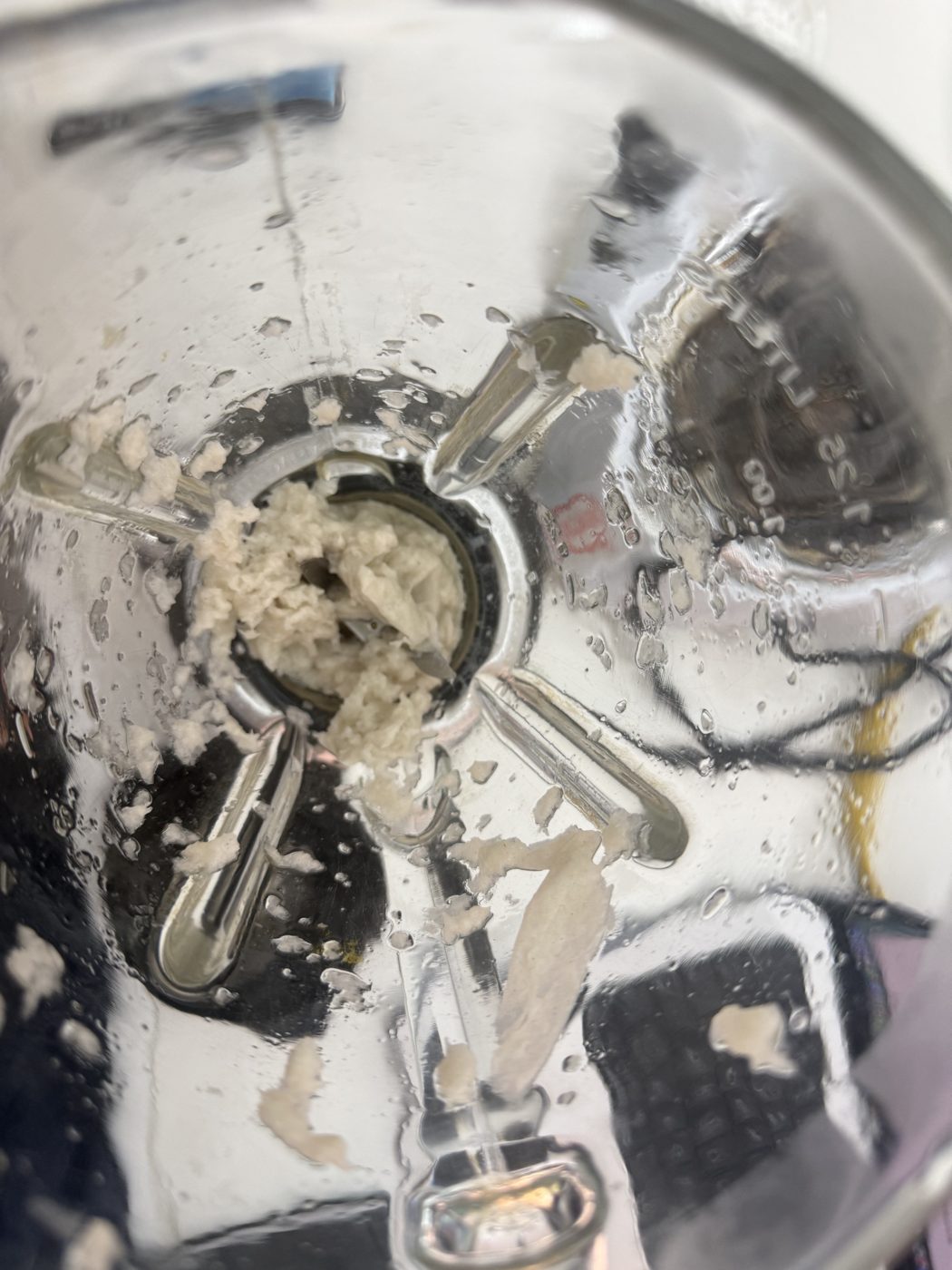
- I blended the paper into pulp.
- I mixed the water, starch, vinegar and glycerin into a milky-looking preparation, then incorporated the pulp.
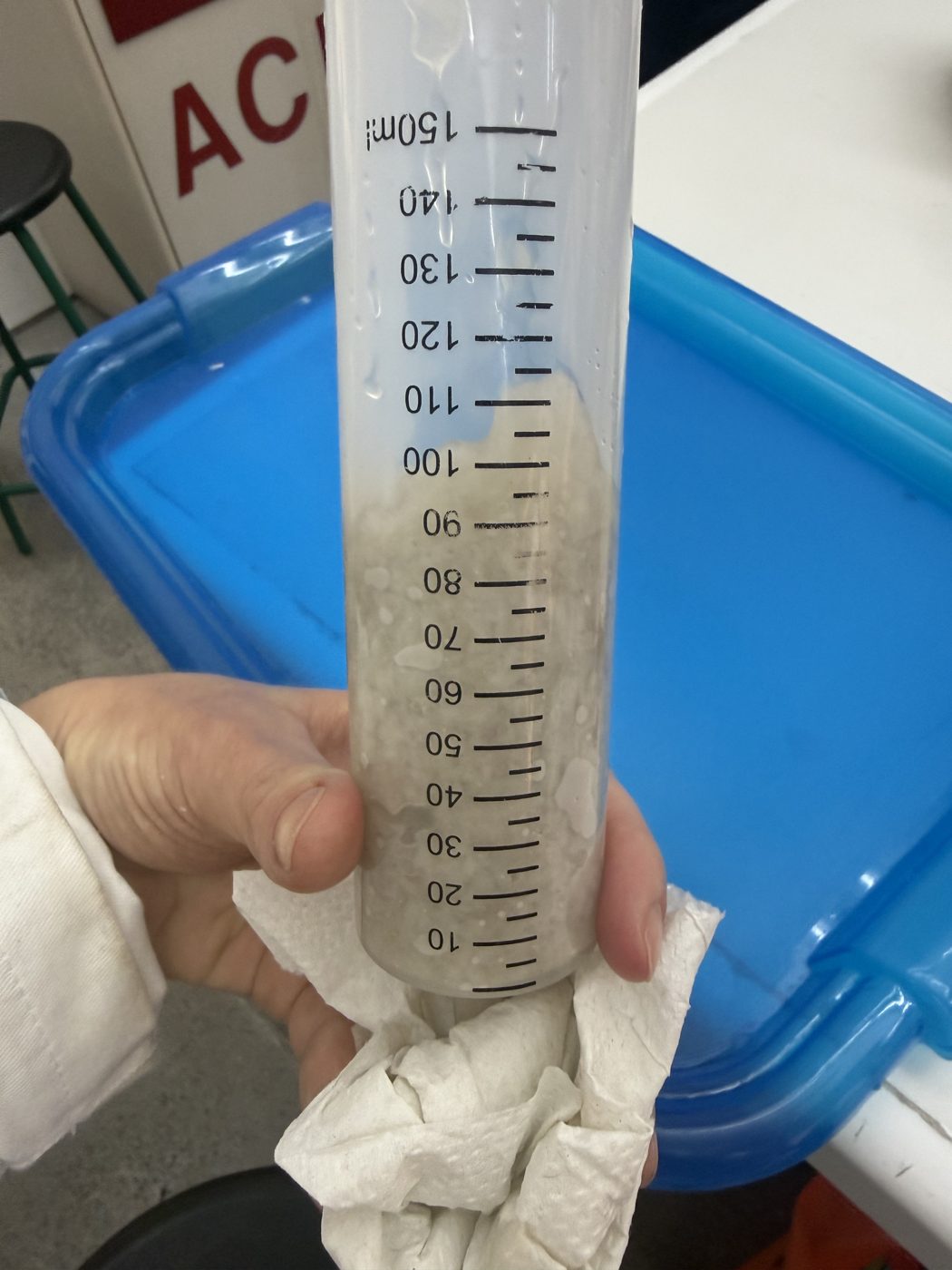
- I heated the mixture over medium heat and loaded it into a syringe.
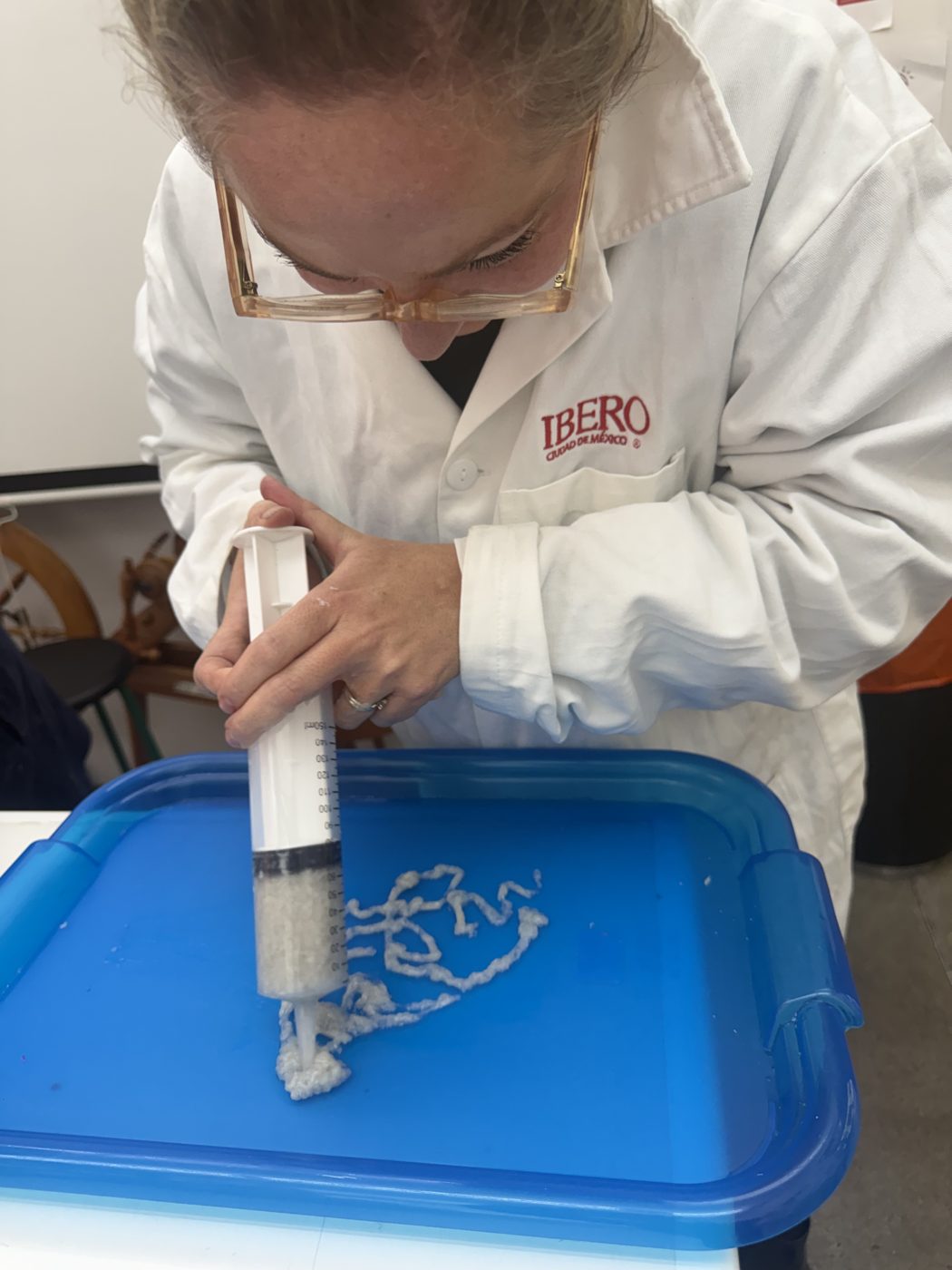
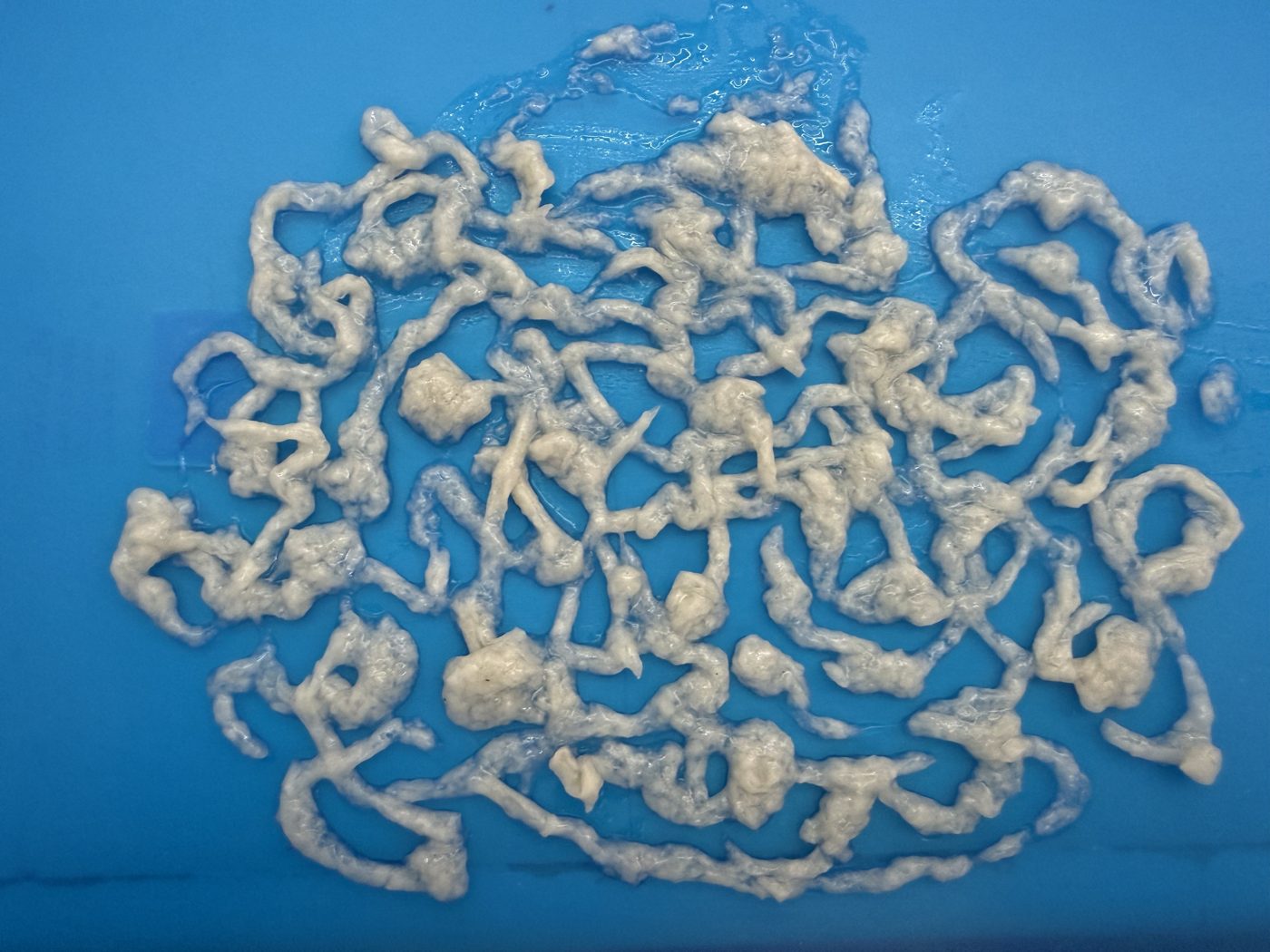
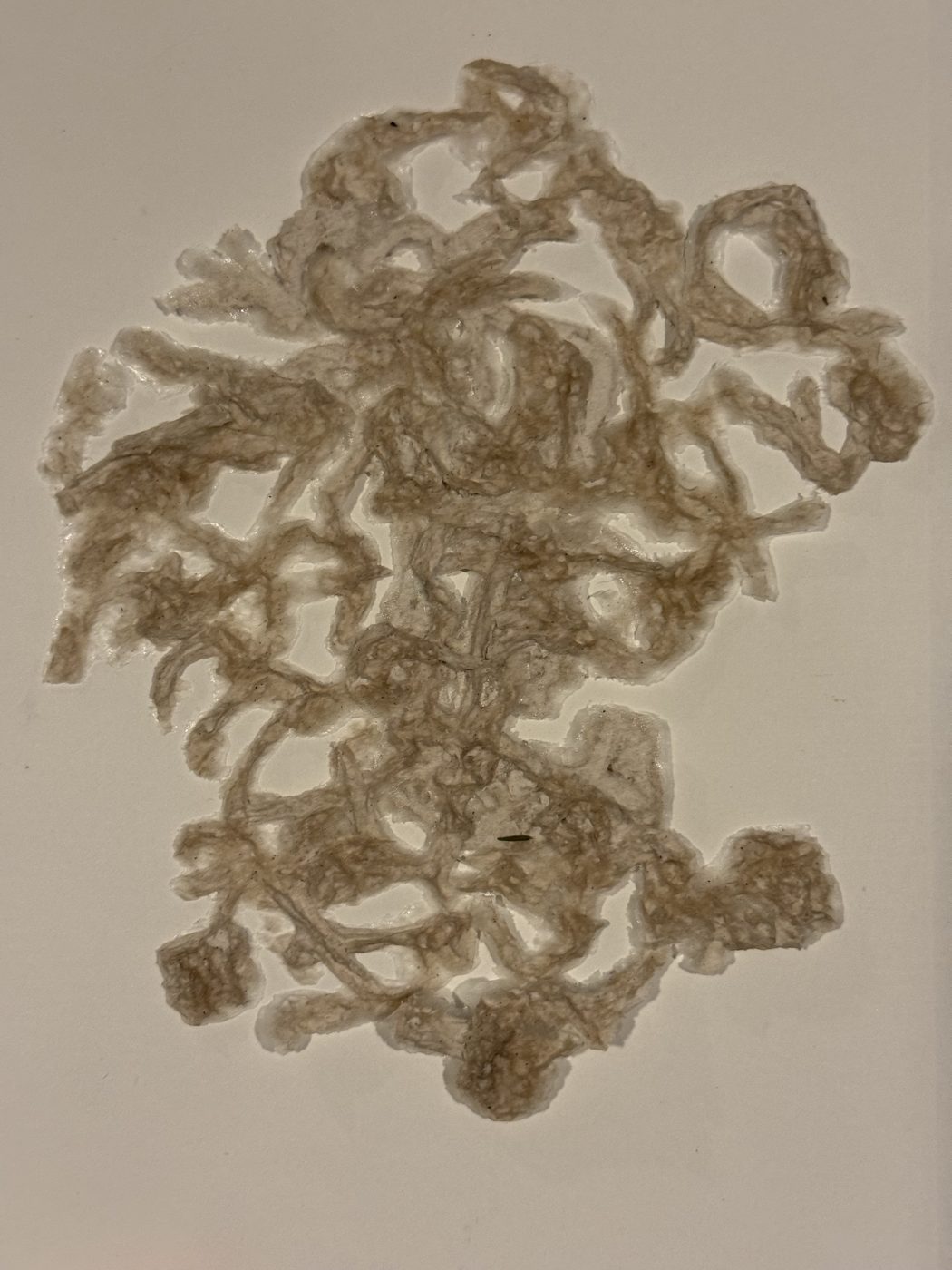
- I extruded it onto a tray, drawing a lace-like pattern, and let it dry.
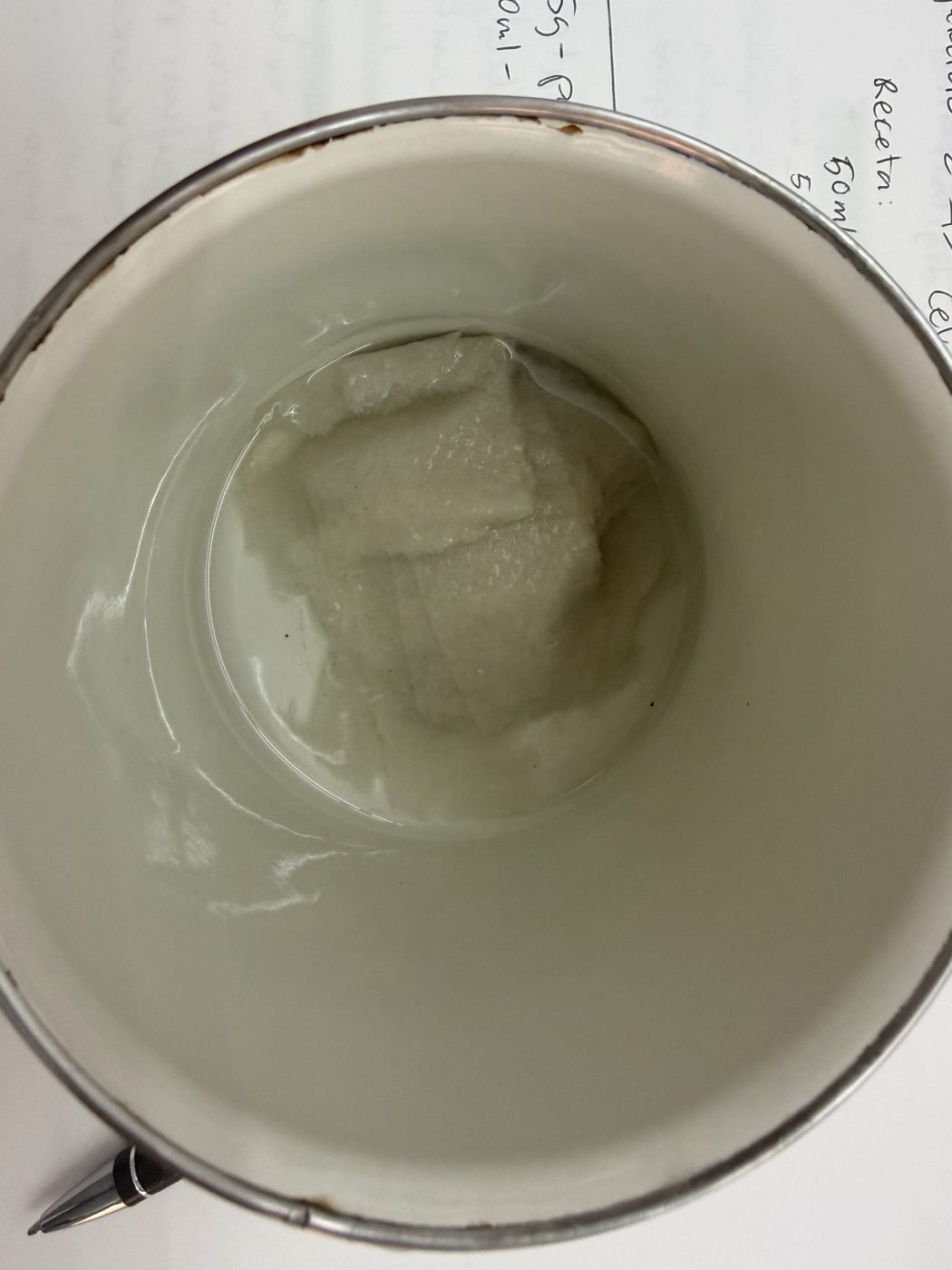
Results and observations
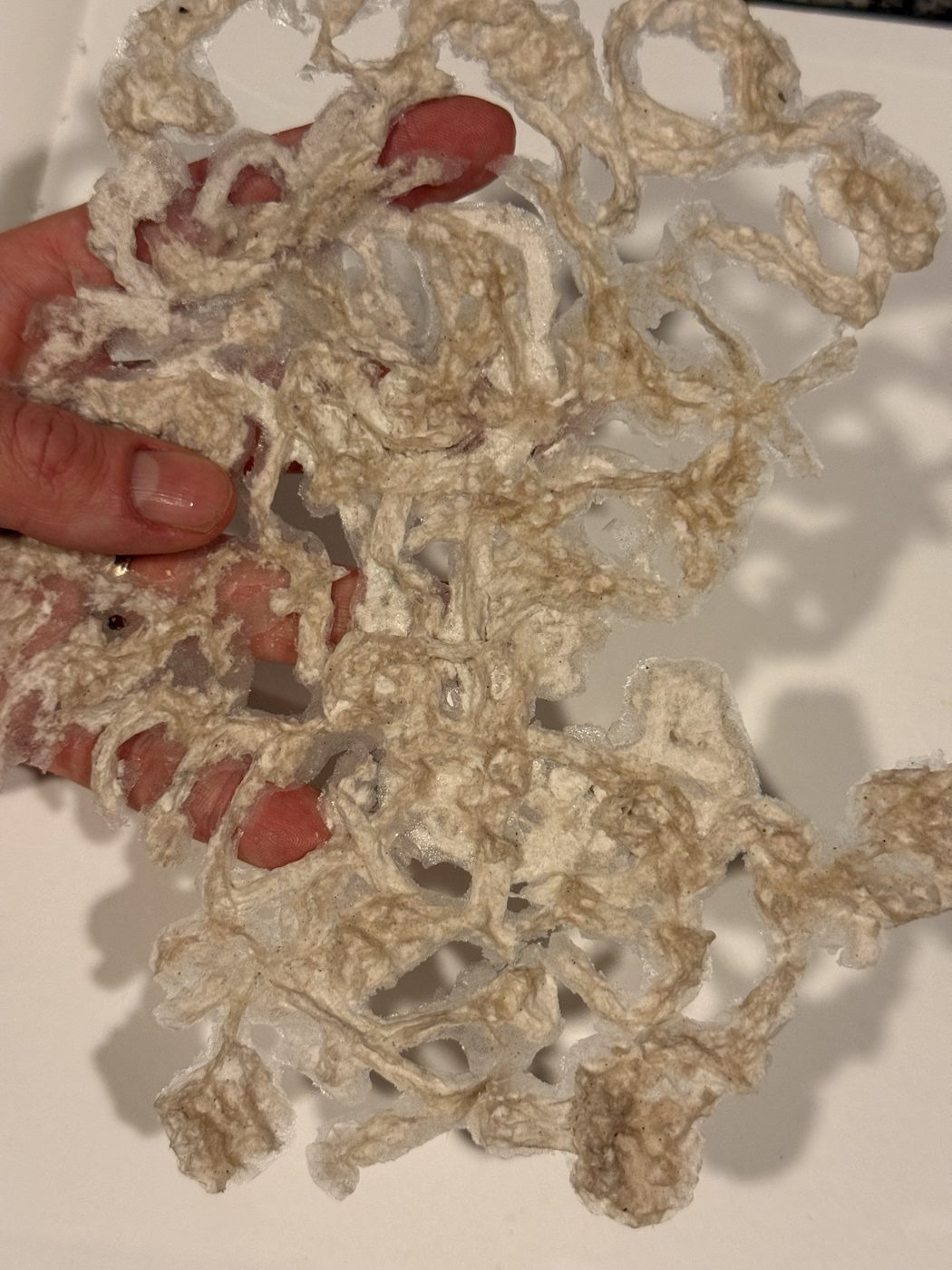
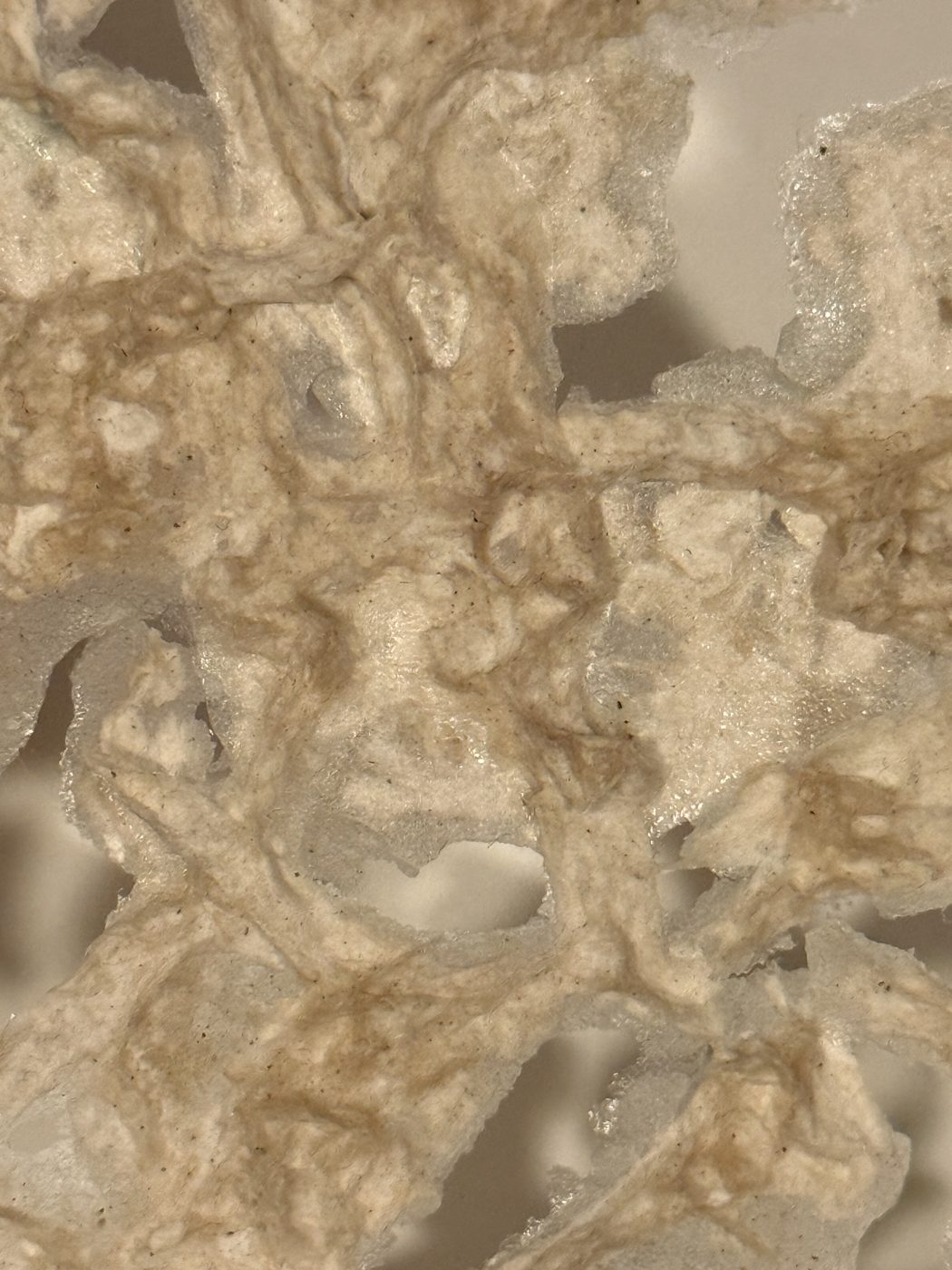
I obtained a naturally beige, lace-like openwork structure, with irregular lines and variations in thickness. The pulp was coarse, and lumps blocked the syringe, making continuous extrusion difficult.
Next iteration
I would soak the paper for longer to obtain a finer pulp.
04 · CRAFTED MATERIAL
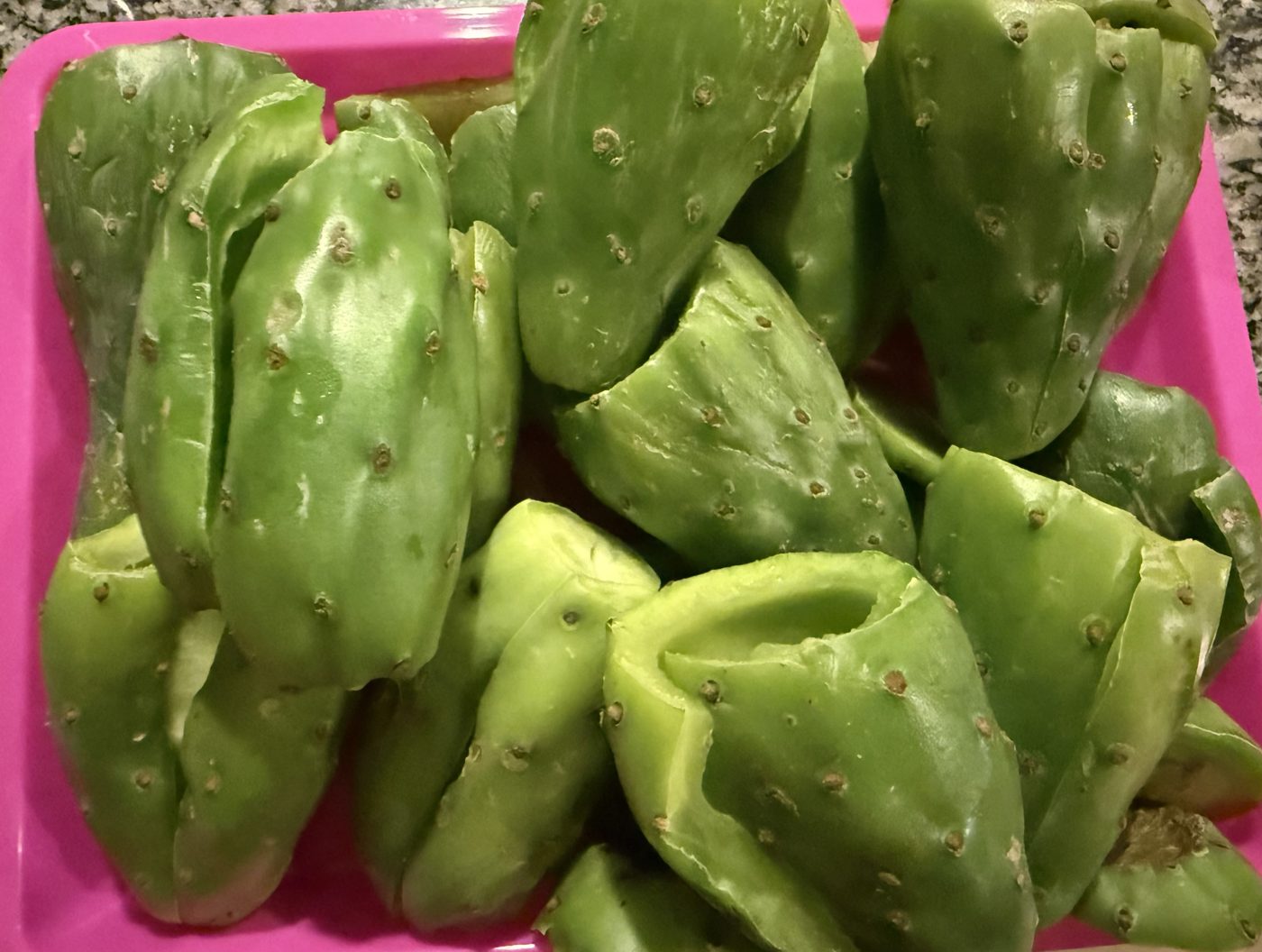
Tuna verde bioleather
Recipe
| Ingredient | Quantity |
|---|---|
| Water | 200 mL |
| Gelatin | 50 g |
| Glycerin | 40 mL |
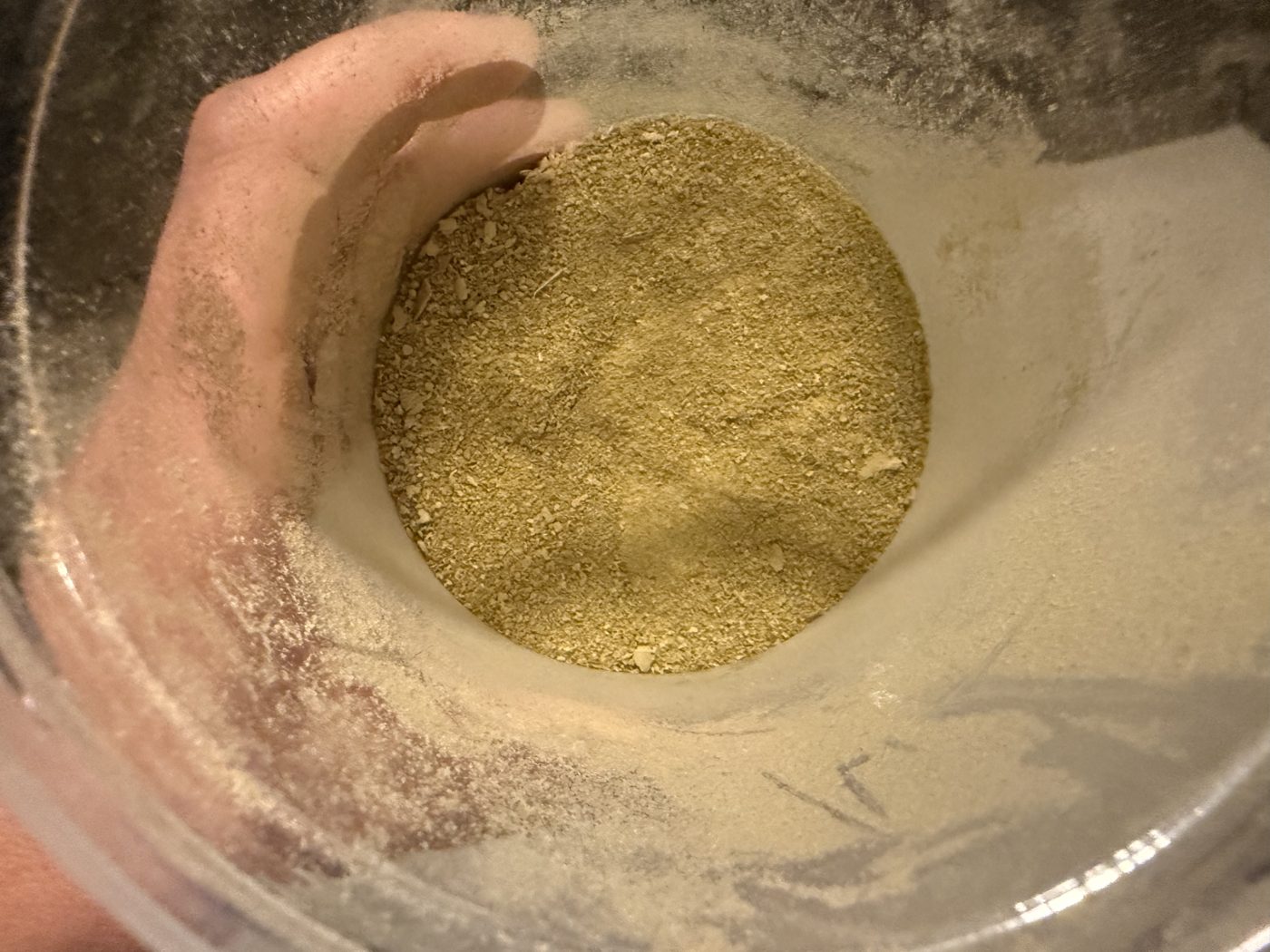
| Dried, ground tuna verde peel | 15 g |
| White vinegar | 15 mL |
Process
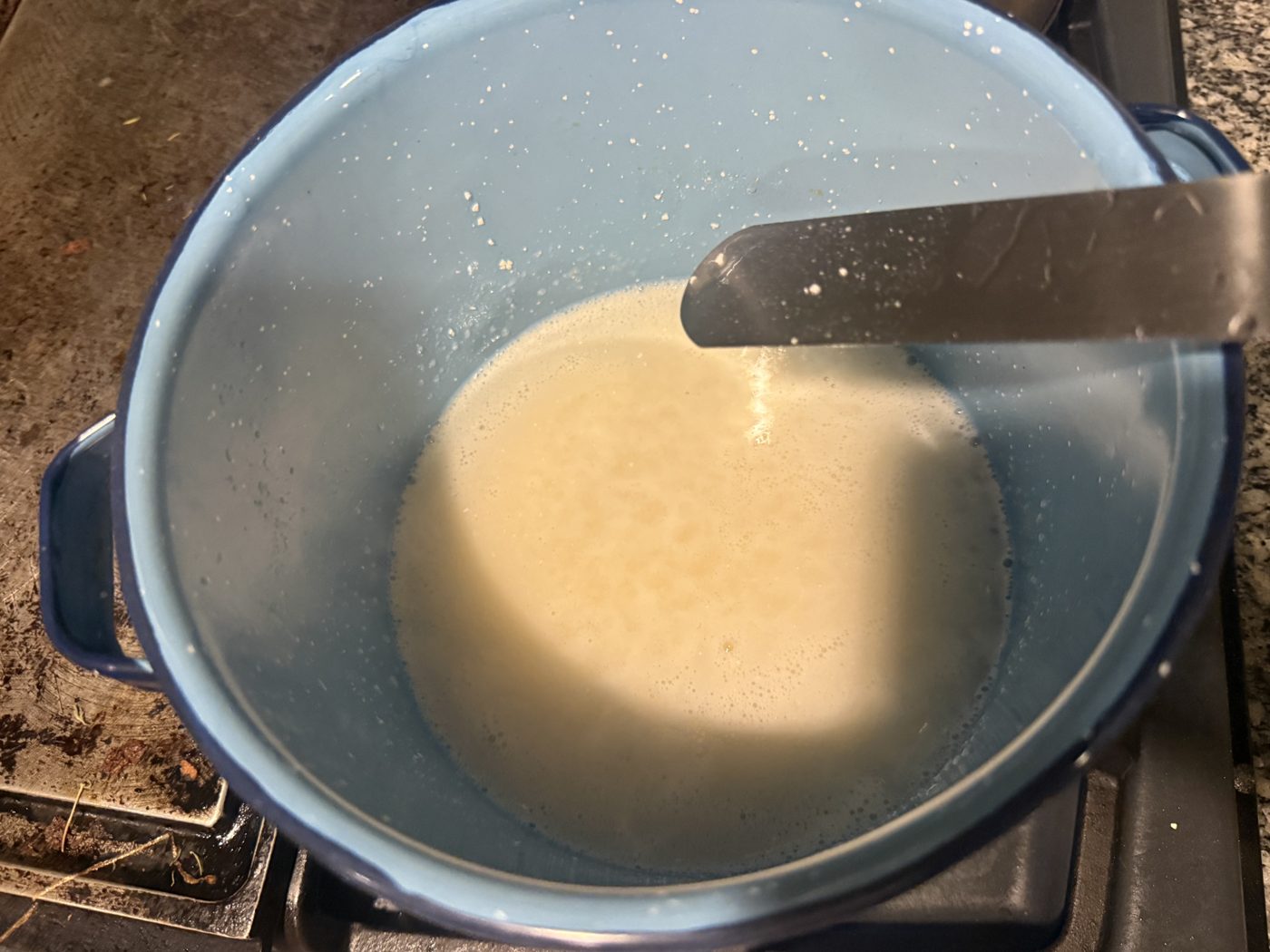
- I hydrated the gelatin with water and heated it over medium heat.
- I added the remaining ingredients, stirred and brought the mixture to a boil.
- I poured it into a 23 × 27 cm tray and let it dry.
Results and observations
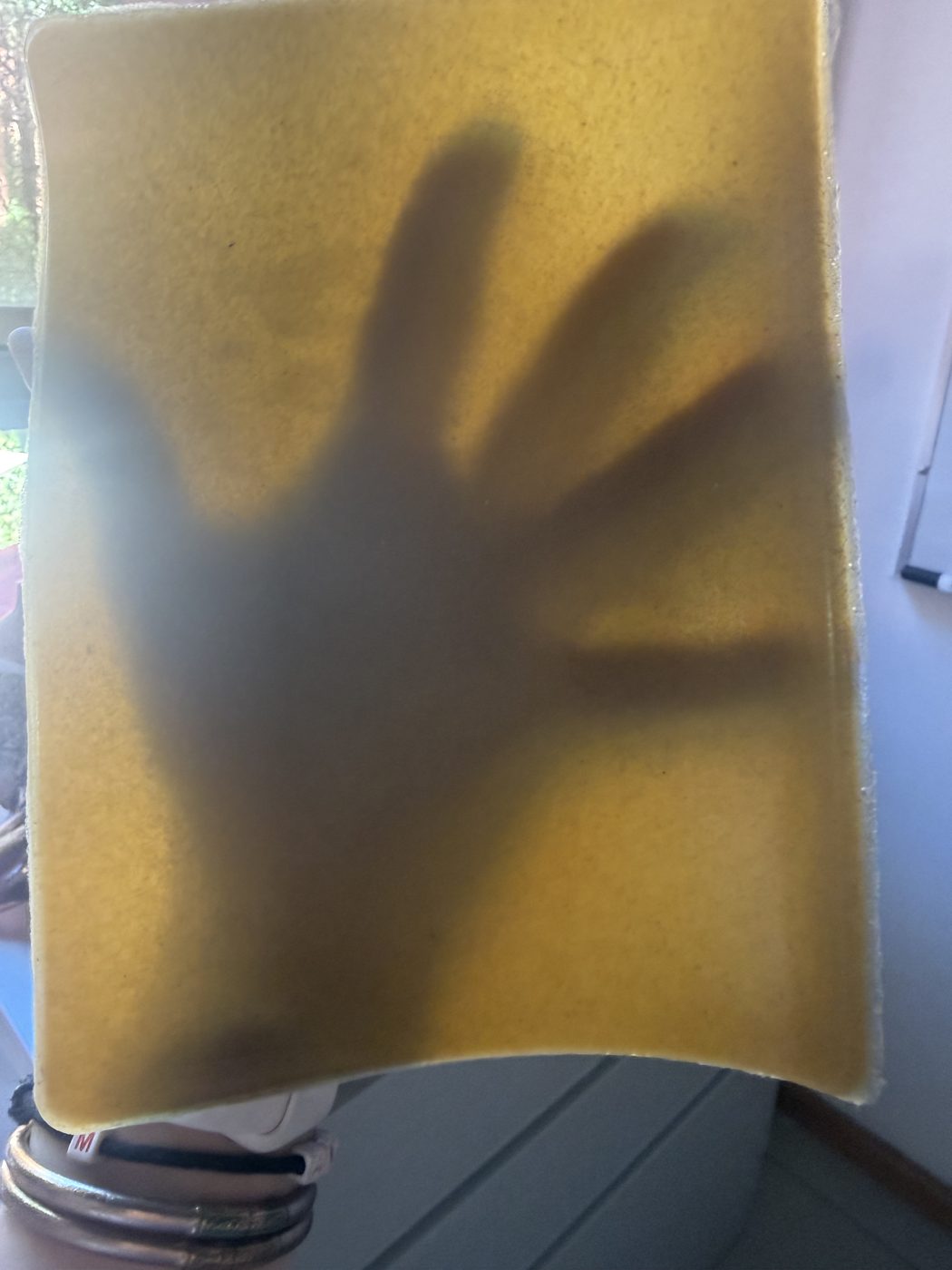
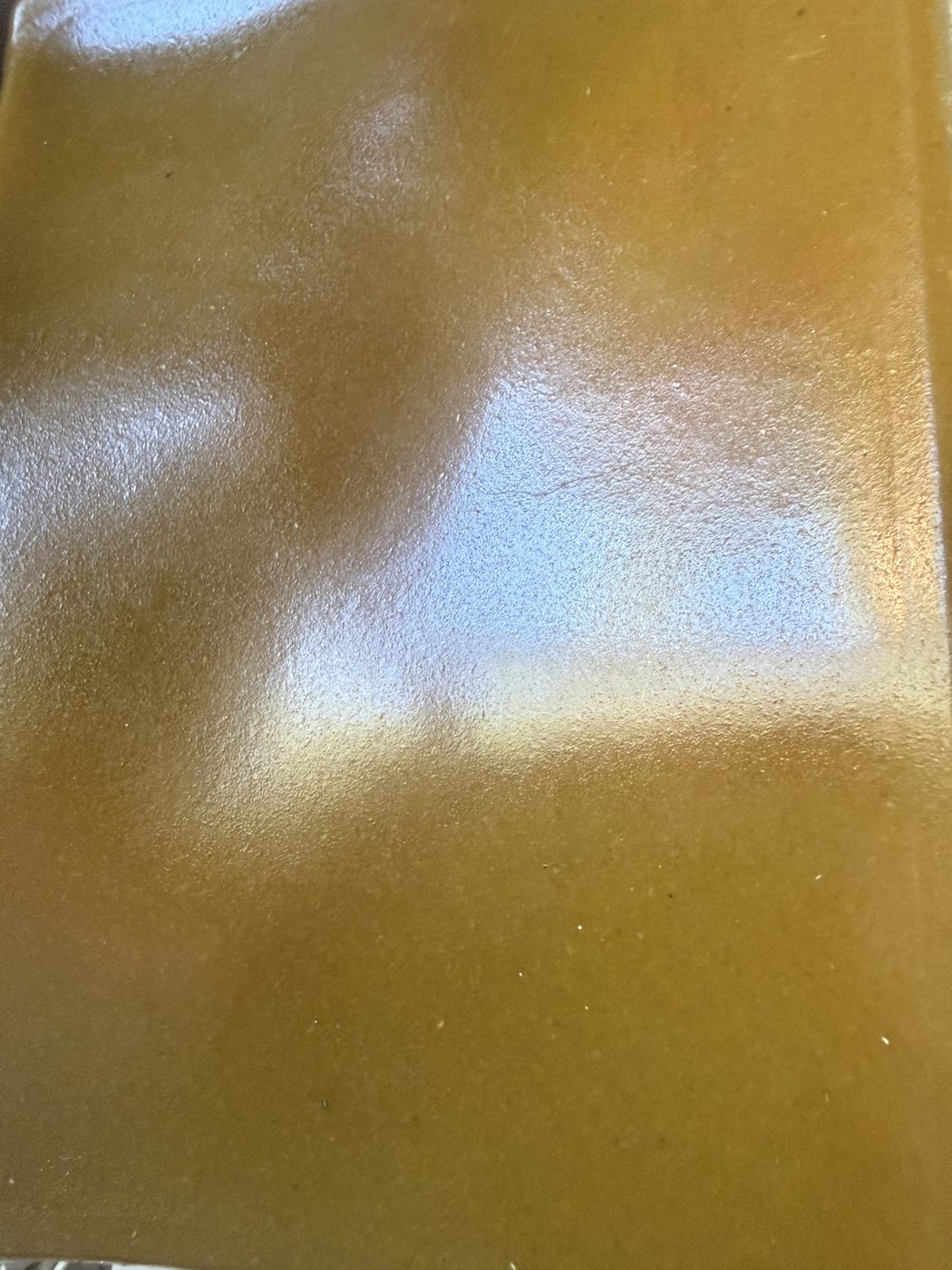
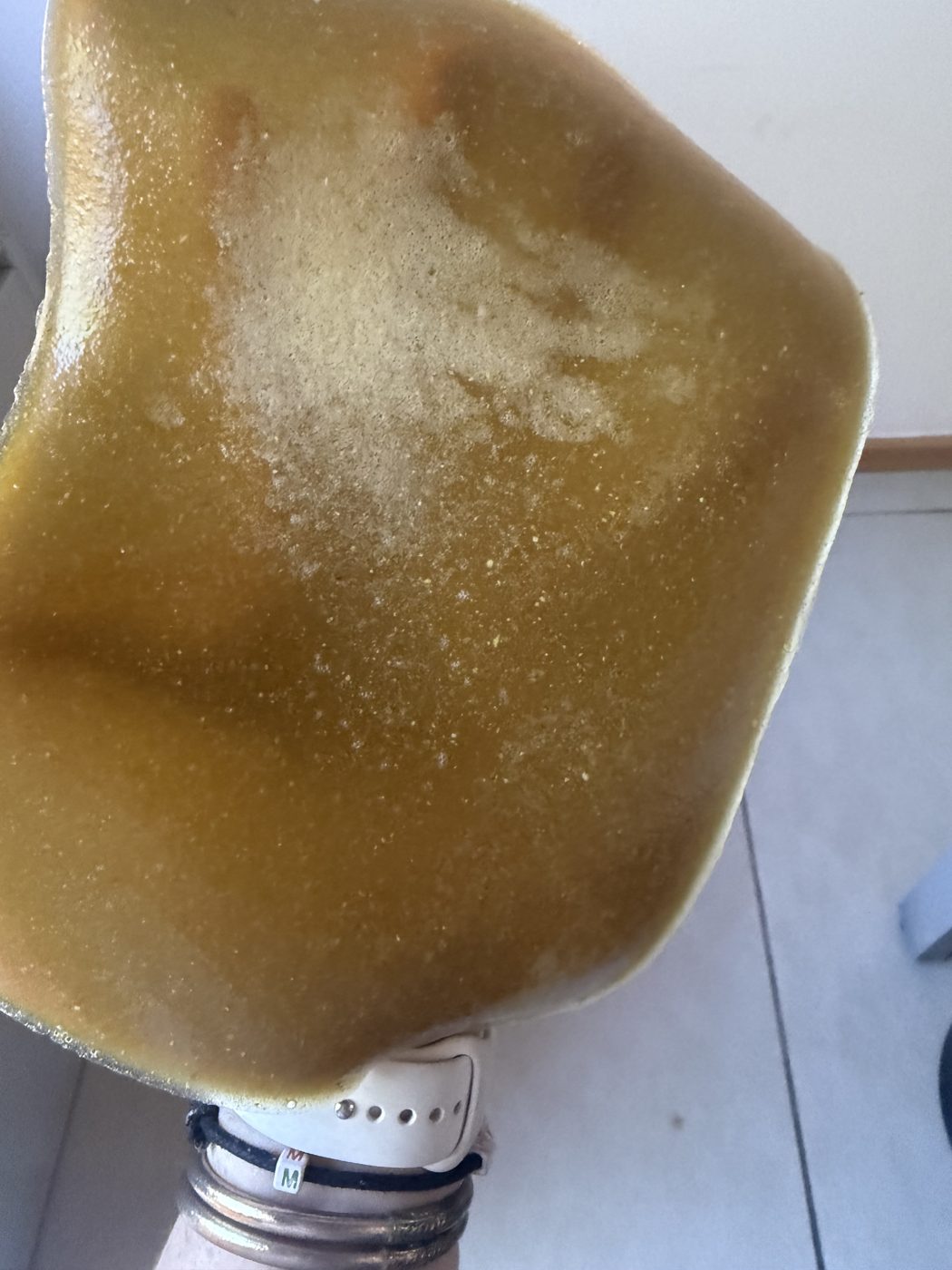
The material was very flexible, with a leather-like appearance and some transparency. The tuna verde gave it a greenish-brown colour. Foam produced during stirring created patches and an uneven surface texture.
Next iteration
I would avoid creating foam to obtain a smoother surface.
05 · CRAFTED MATERIAL
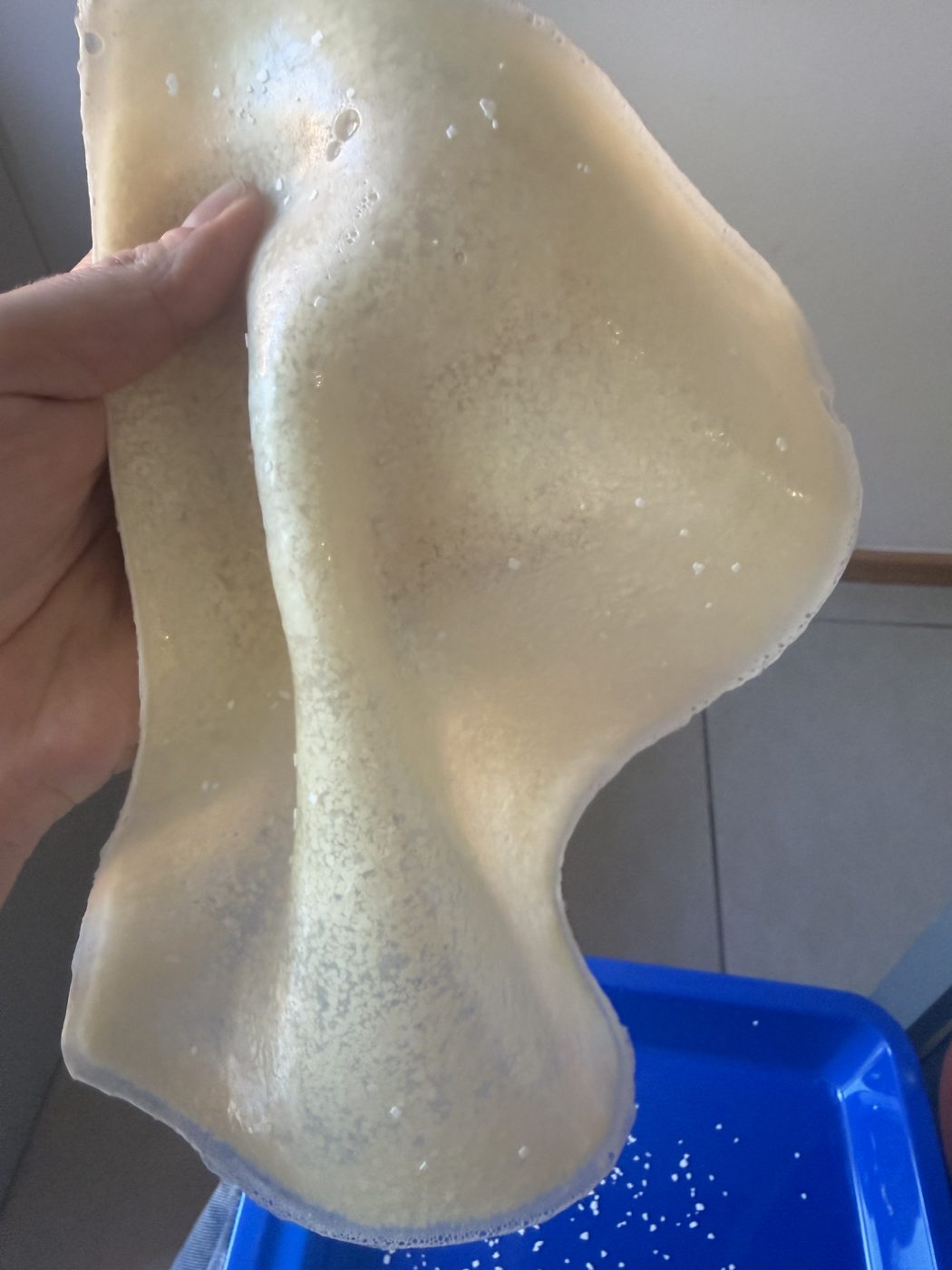
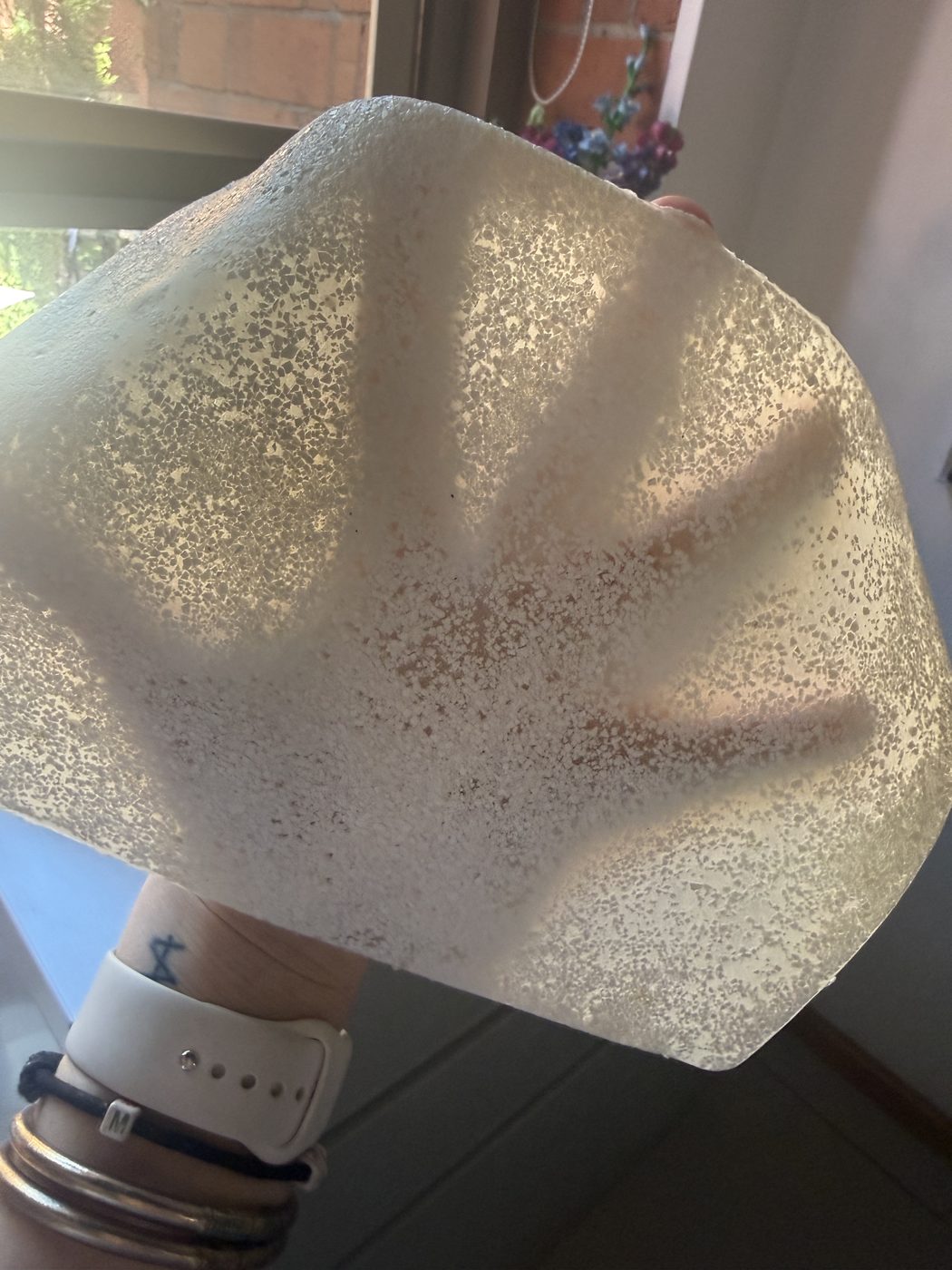
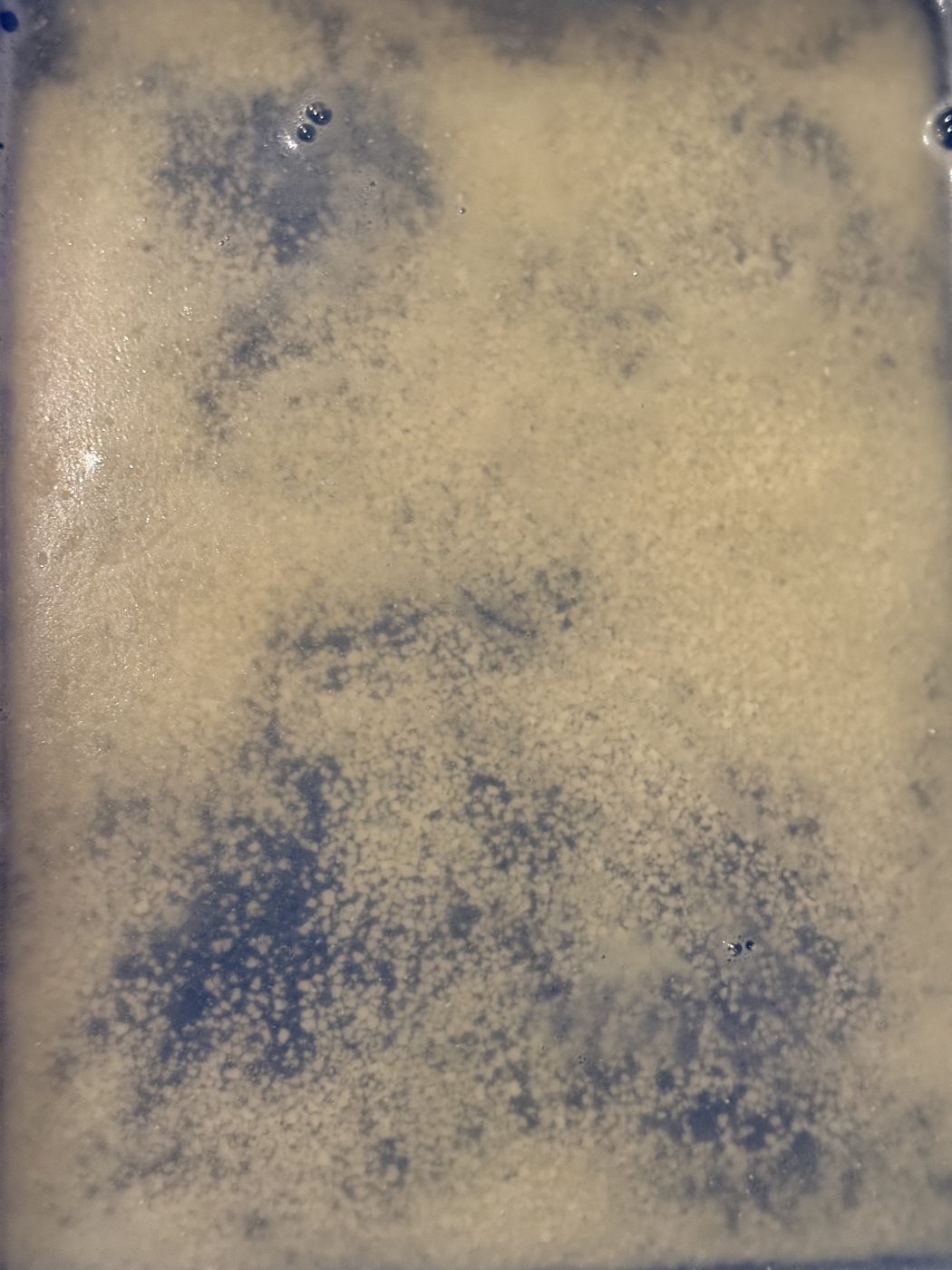
Eggshell bioplastic
Recipe
| Ingredient | Quantity |
|---|---|
| Water | 150 mL |
| Gelatin | 20 g |
| Glycerin | 30 mL |
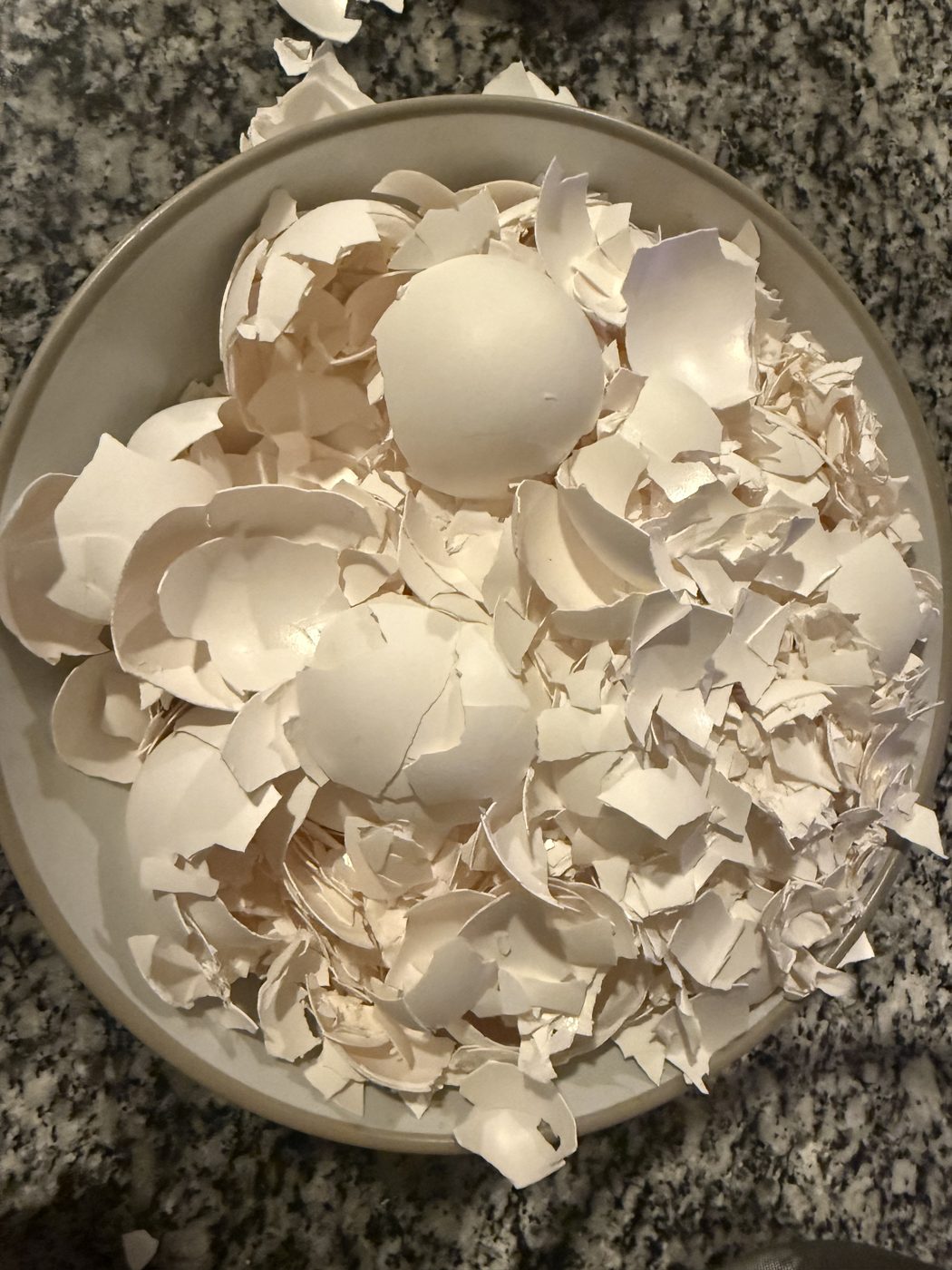
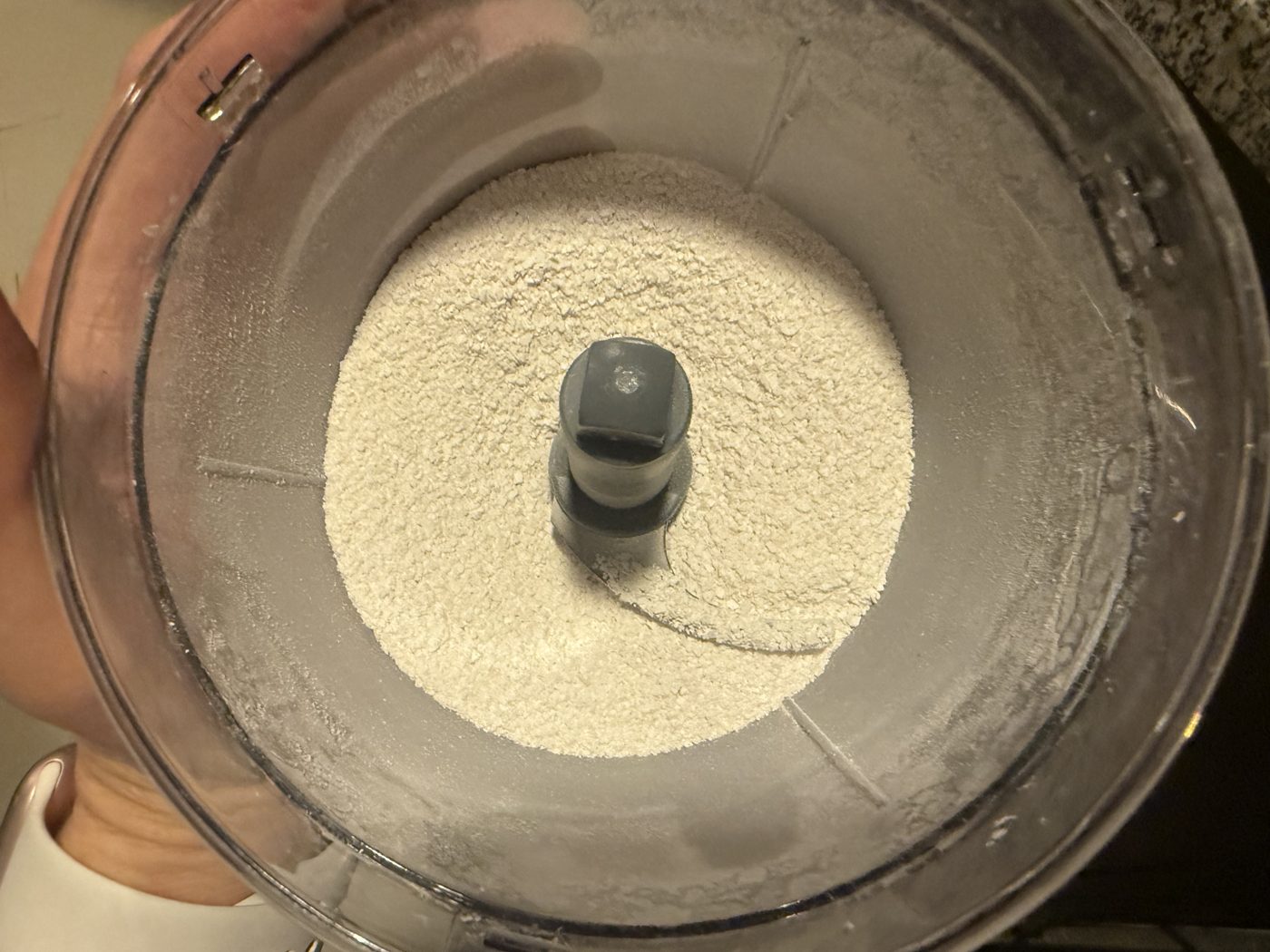
| Ground eggshell | 35 g |
Process
- I hydrated the gelatin with water and heated it over medium heat.
- I added the glycerin and ground eggshell, stirred and brought the mixture to a boil.
- I poured it into a 23 × 27 cm tray and let it dry.
Results and observations
The eggshell created a visual effect resembling fine crackling. The particles were not distributed evenly.
Next iteration
I would place eggshell on the bottom of the tray, pour the mixture and add another layer of eggshell on top, to make the texture visible on both faces.
06 · CRAFTED MATERIAL
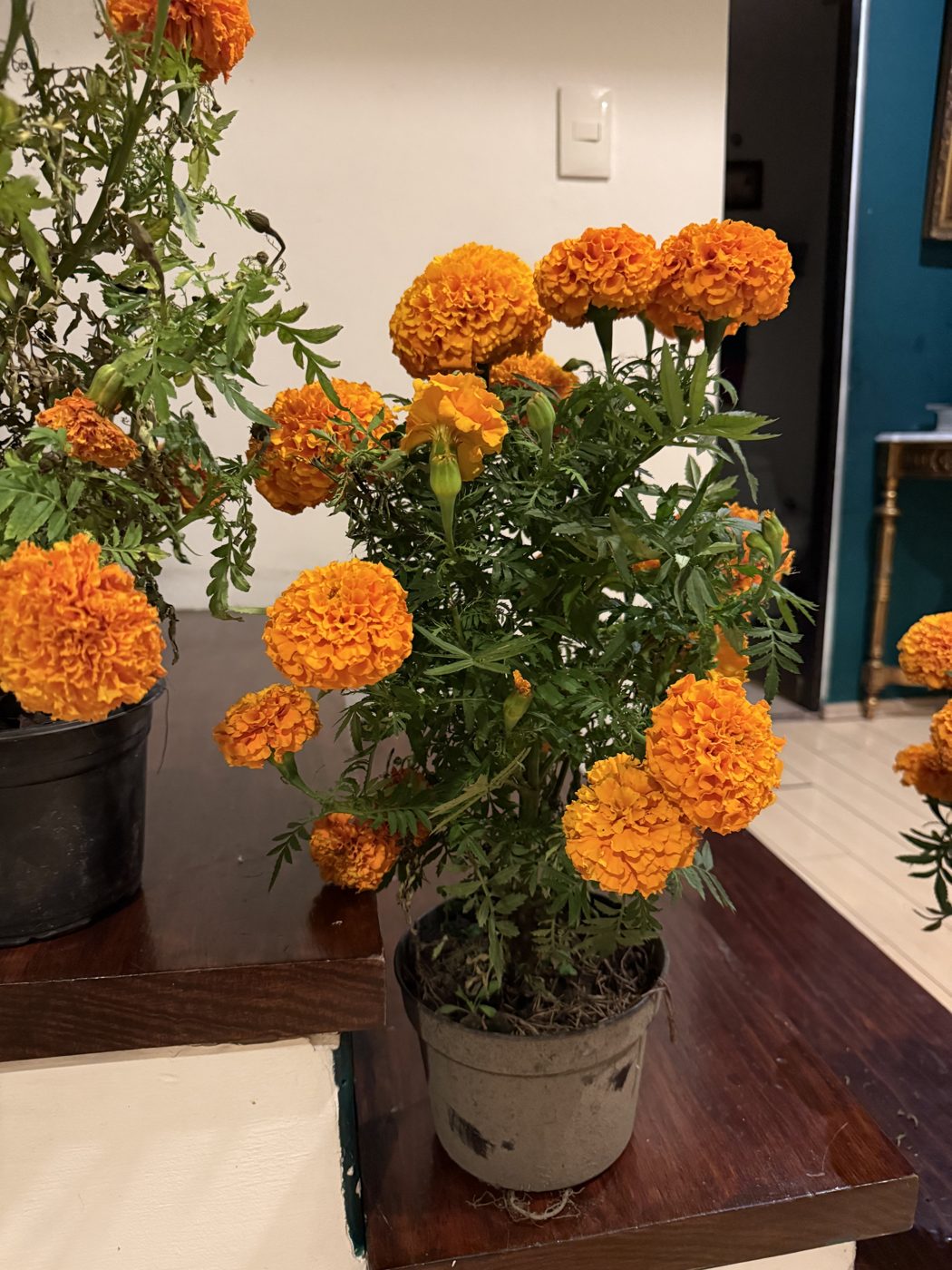
Tuna verde and cempasúchil bioplastic
Recipe
| Ingredient | Quantity |
|---|---|
| Water | 400 mL |
| Gelatin | 50 g |
| Glycerin | 30 g |
| Tuna verde powder | 8 g |
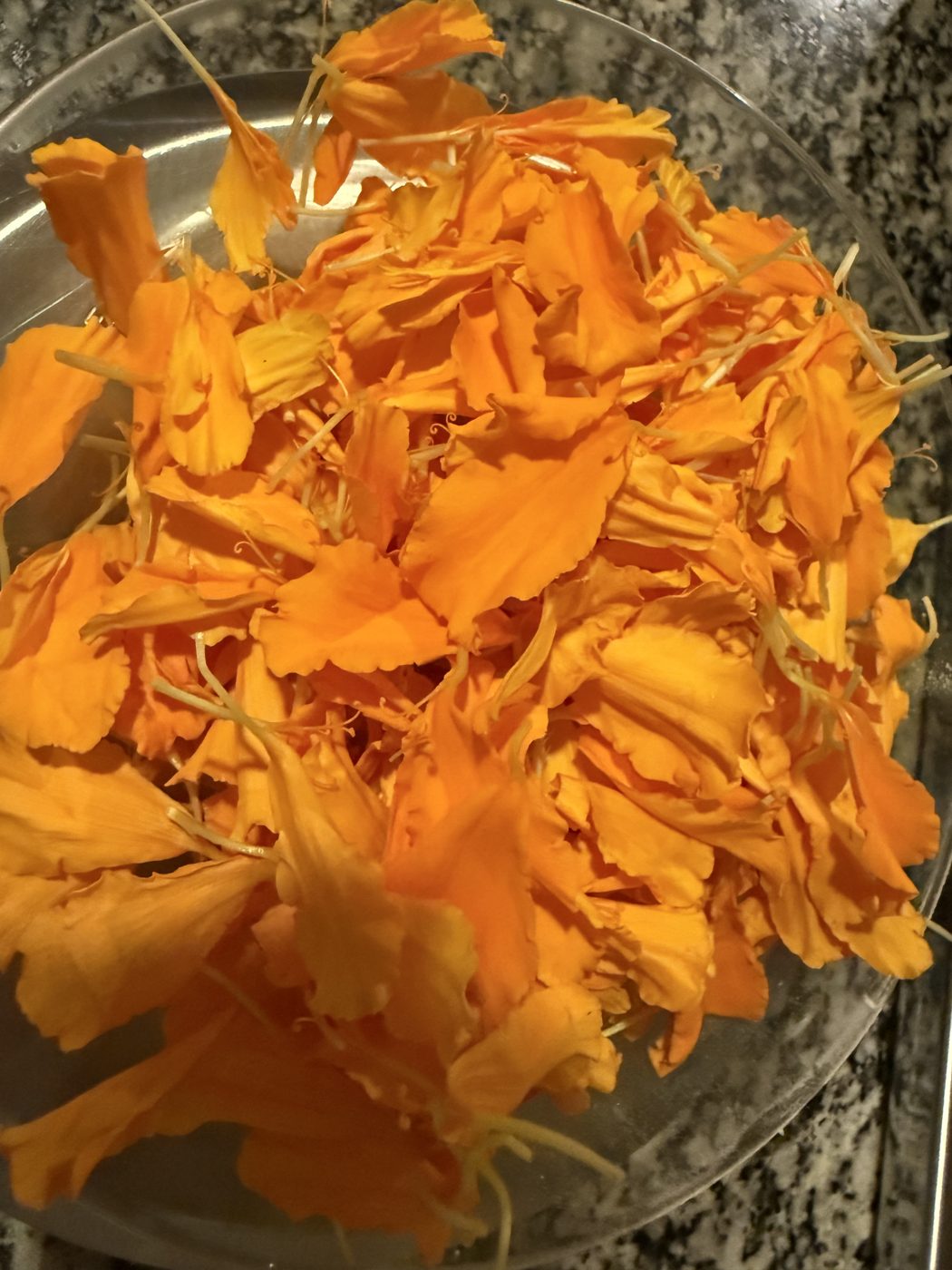
| Cempasúchil petals | Distributed over the mixture |
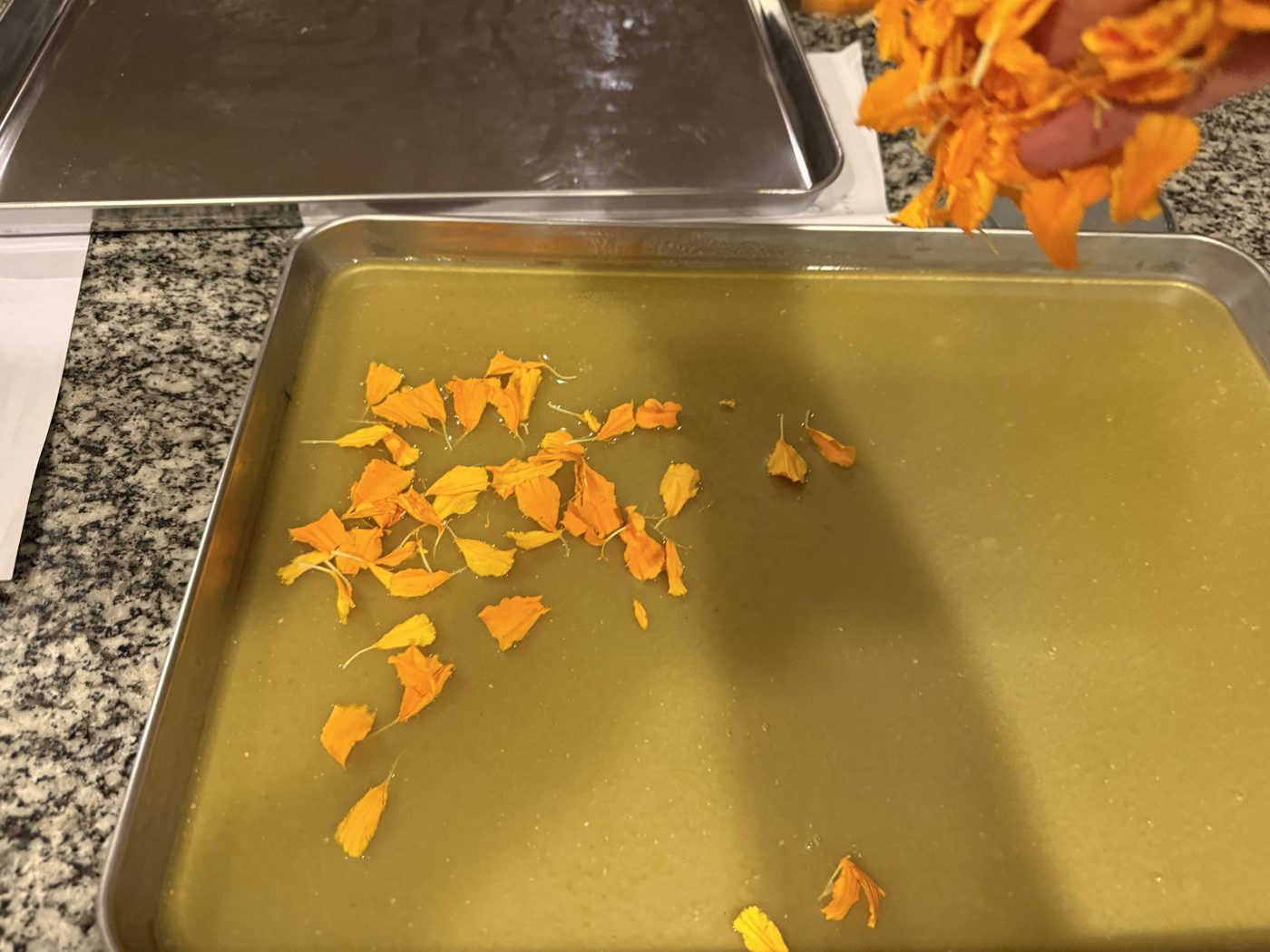
Process
- I hydrated the gelatin with water and heated it over medium heat.
- I added the glycerin and tuna verde powder, stirred and brought the mixture to a boil.
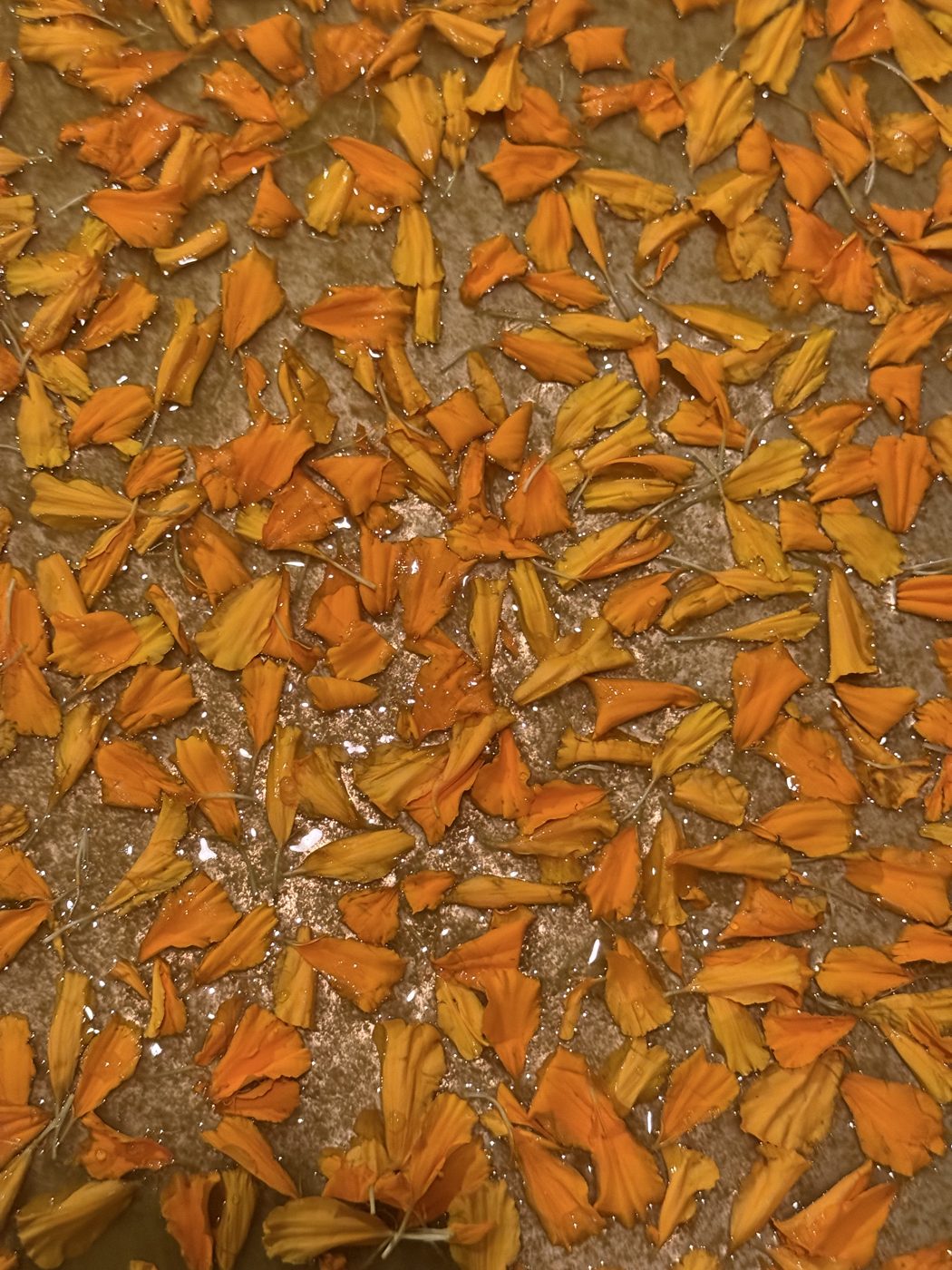
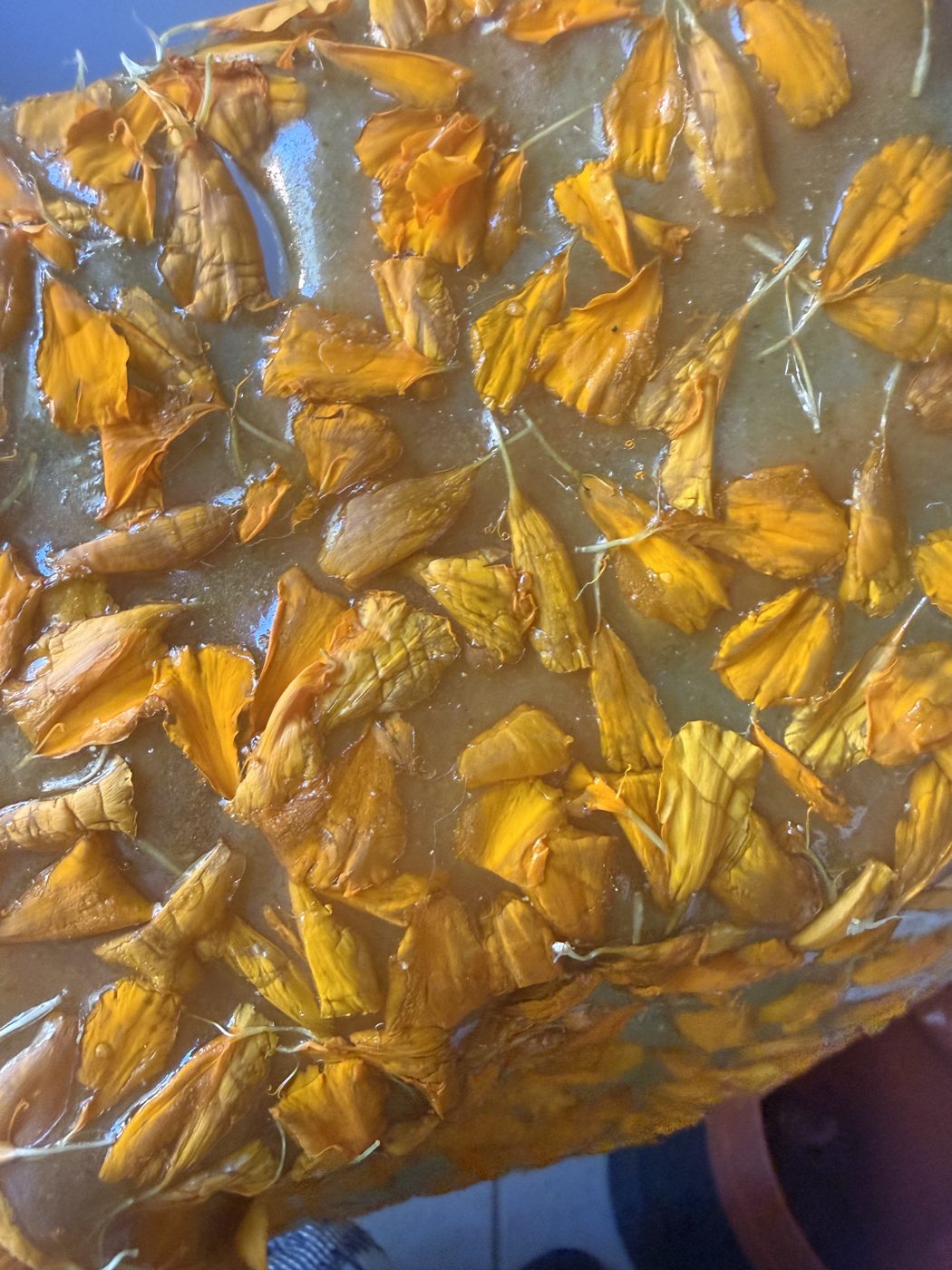
- I poured it into a 40 × 28 cm metal tray and distributed the petals over the mixture.
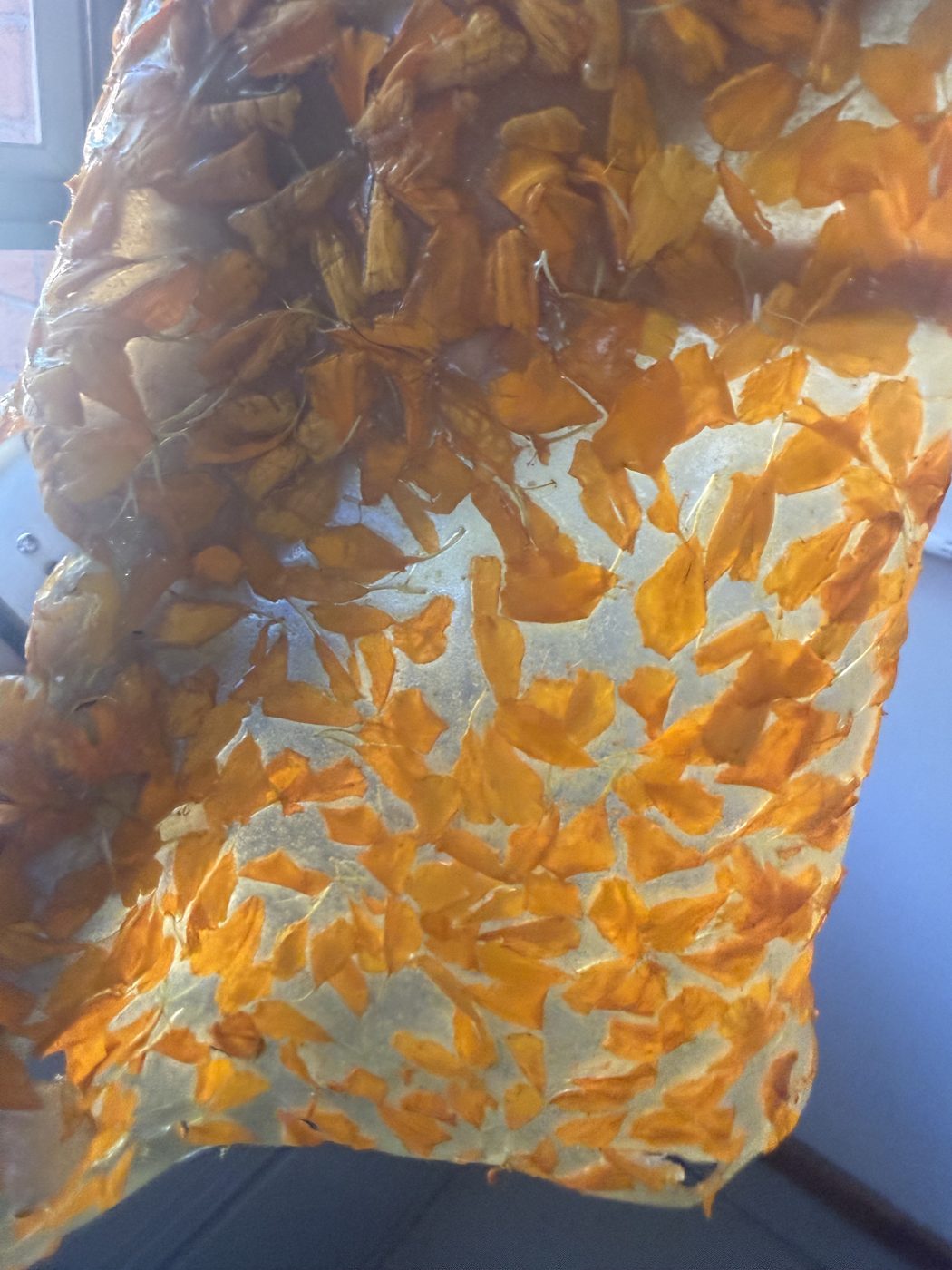
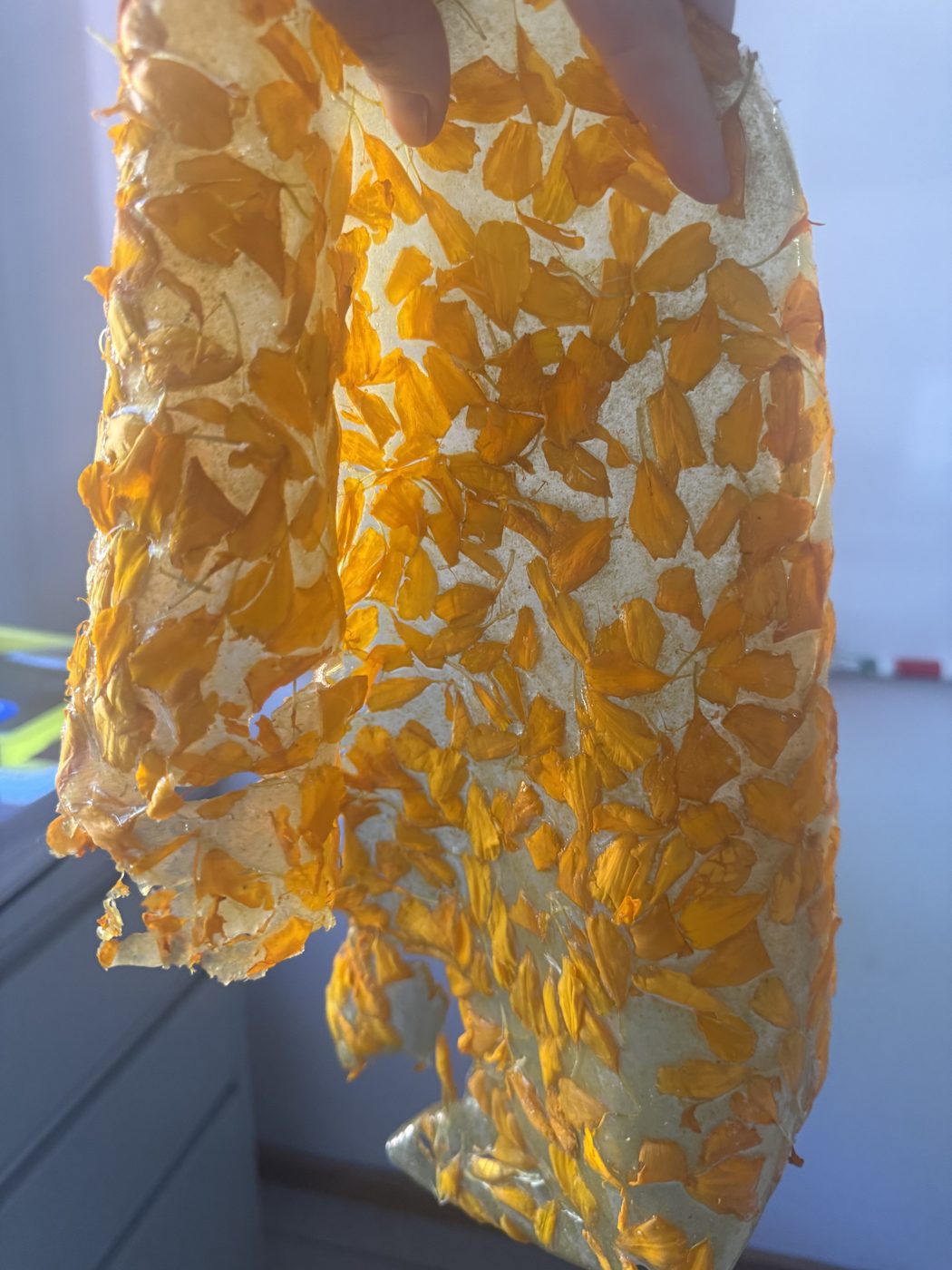
- I let the sheet dry and removed it from the tray.
Results and observations
The sheet was very flexible, with a pleasant smell and an attractive visual texture. There was not enough mixture to create an even thickness, and some areas were too thin. The material also stuck to the metal tray, making it difficult to remove.
Next iteration
I would increase the amount of mixture to obtain a more uniform thickness.
07 · CRAFTED MATERIAL
Flexible bioplastic and a bag
Recipe
| Ingredient | Quantity |
|---|---|
| Gelatin | 50 g |
| Water | 300 mL |
| Glycerin | 68 g |
| Food colouring | Applied freely to the surface |
Process
- I hydrated the gelatin with water and heated it over medium heat.
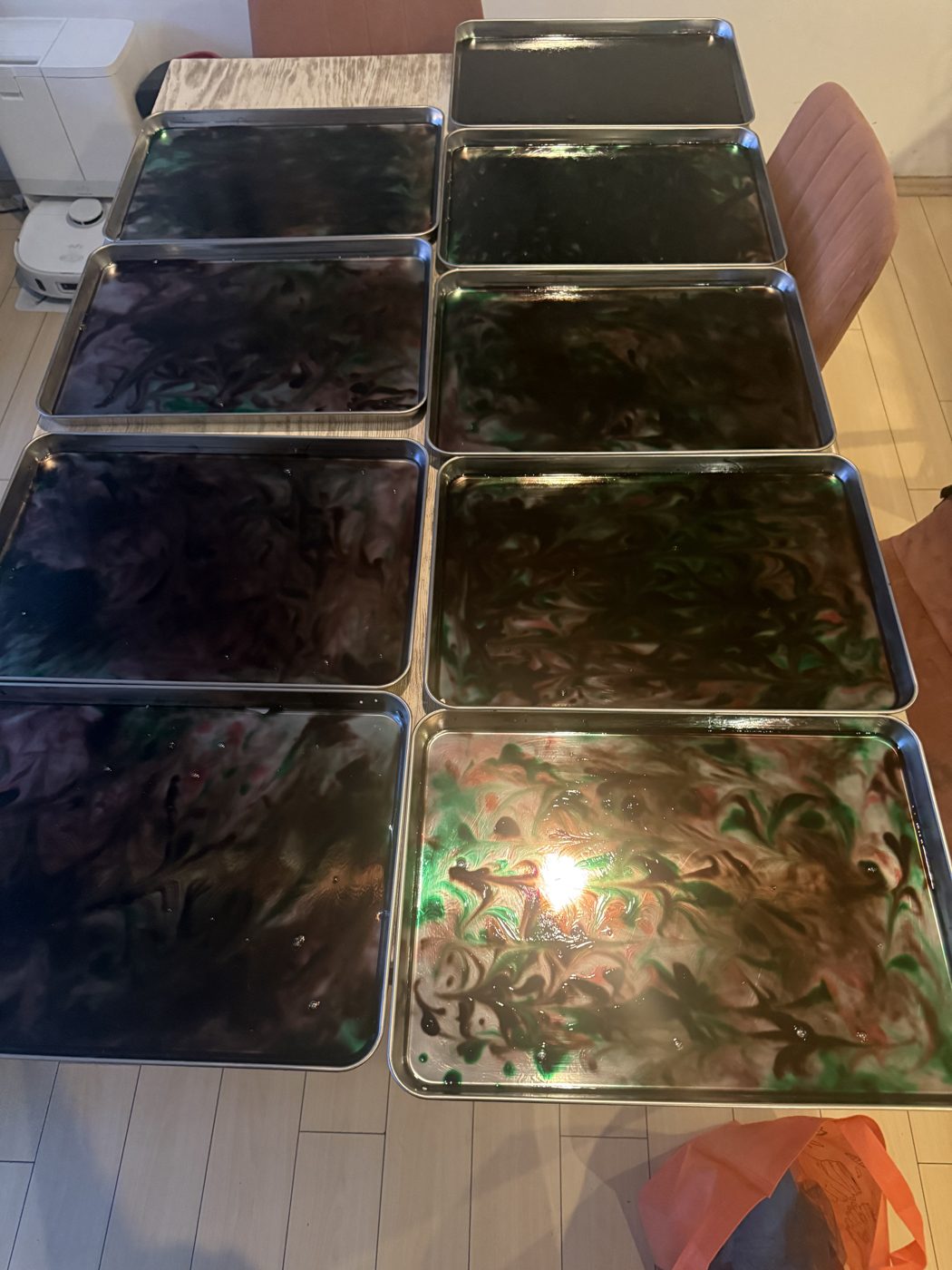
- I incorporated the glycerin, stirred and poured the mixture into several trays.
- I painted freely onto the mixture with food colouring, without a predetermined pattern, and let the sheets dry.
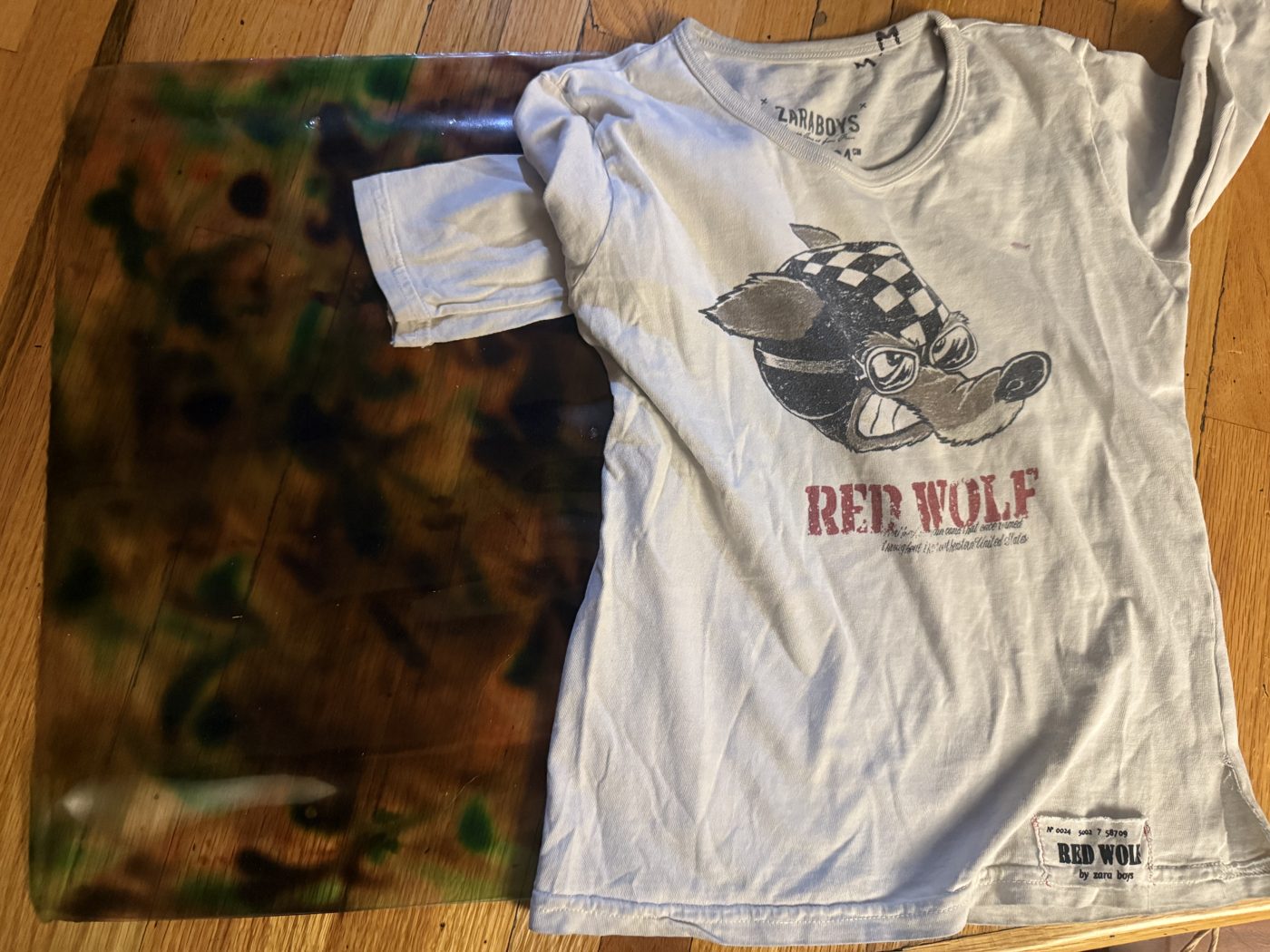
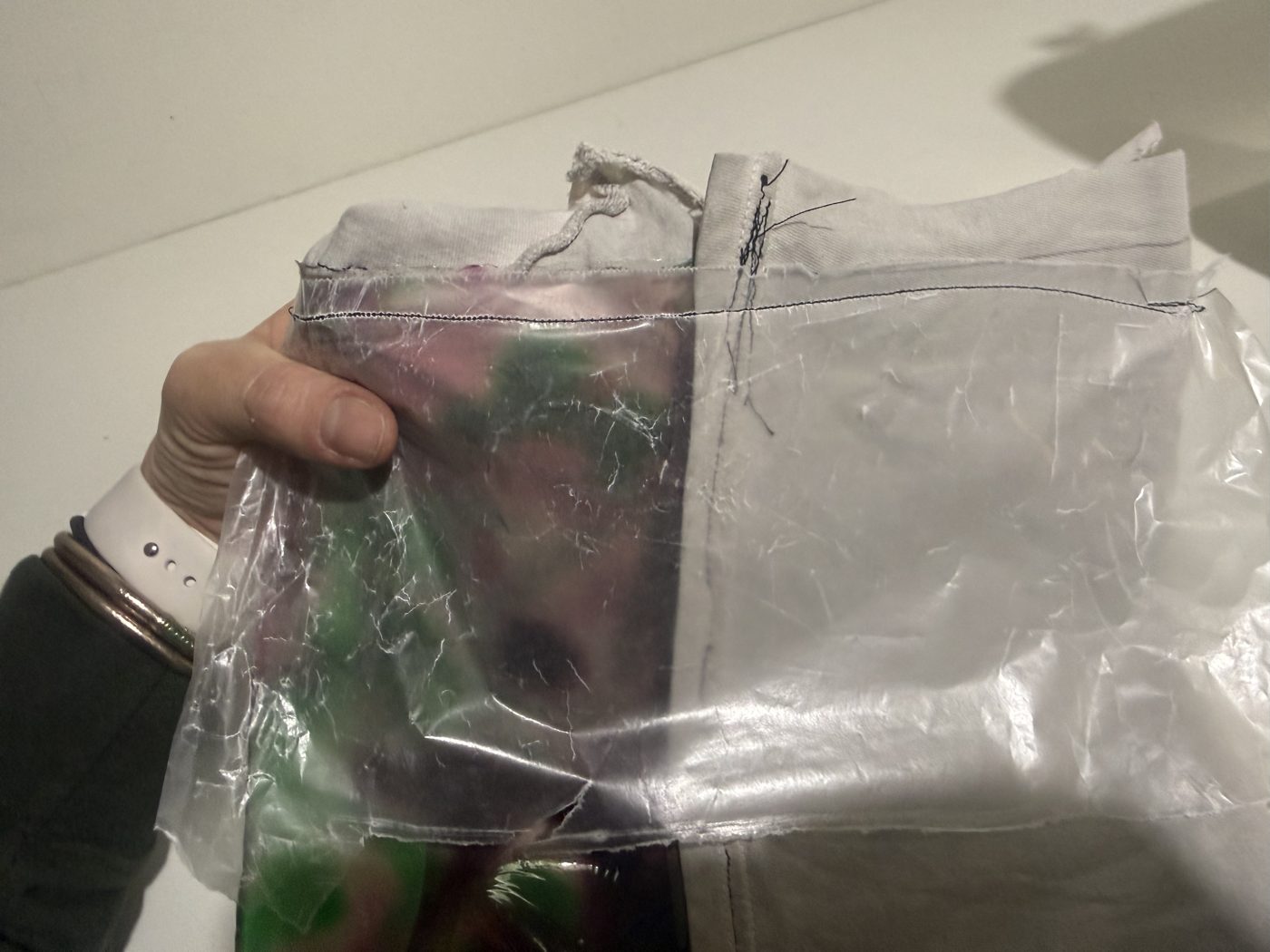
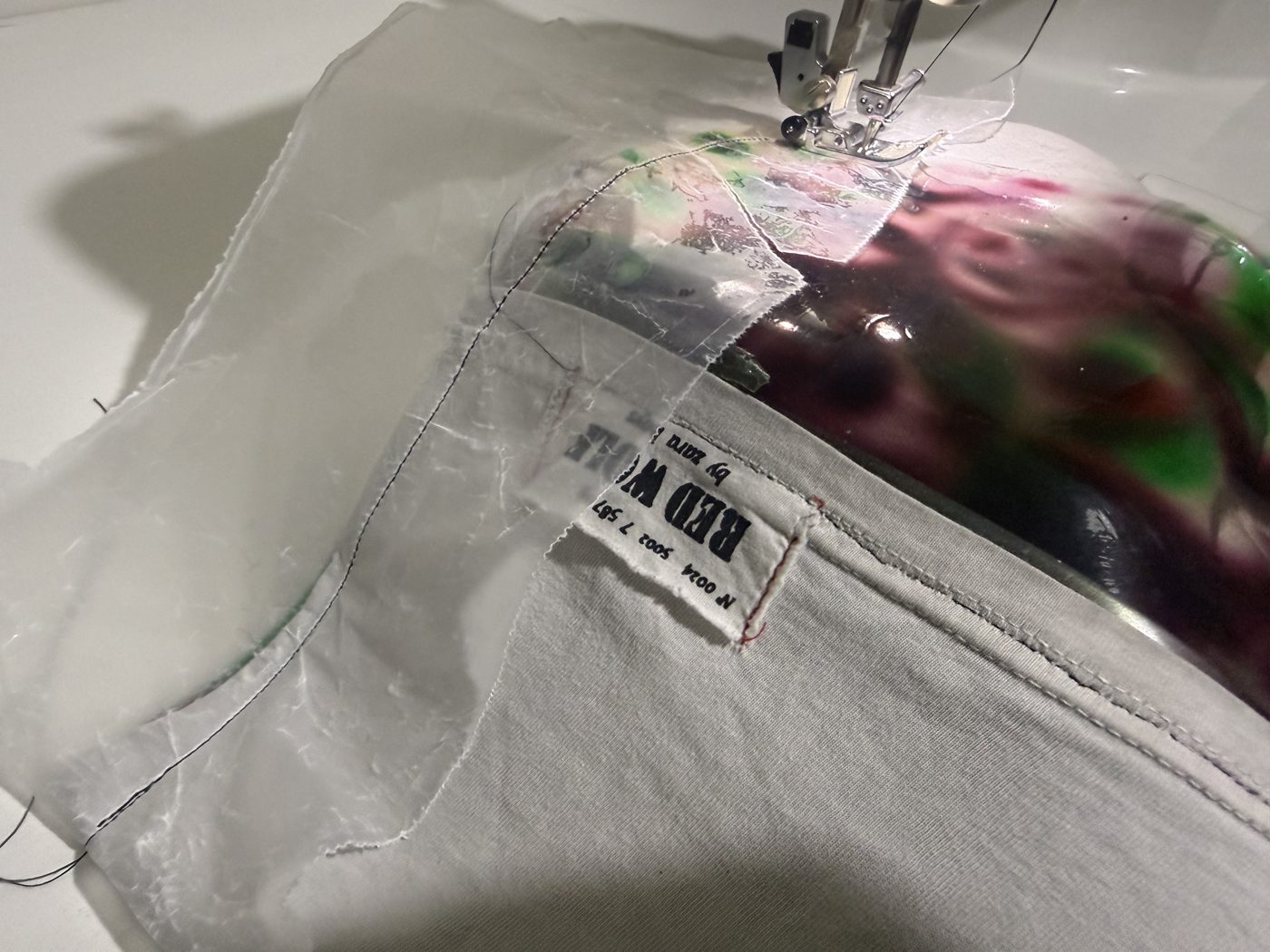
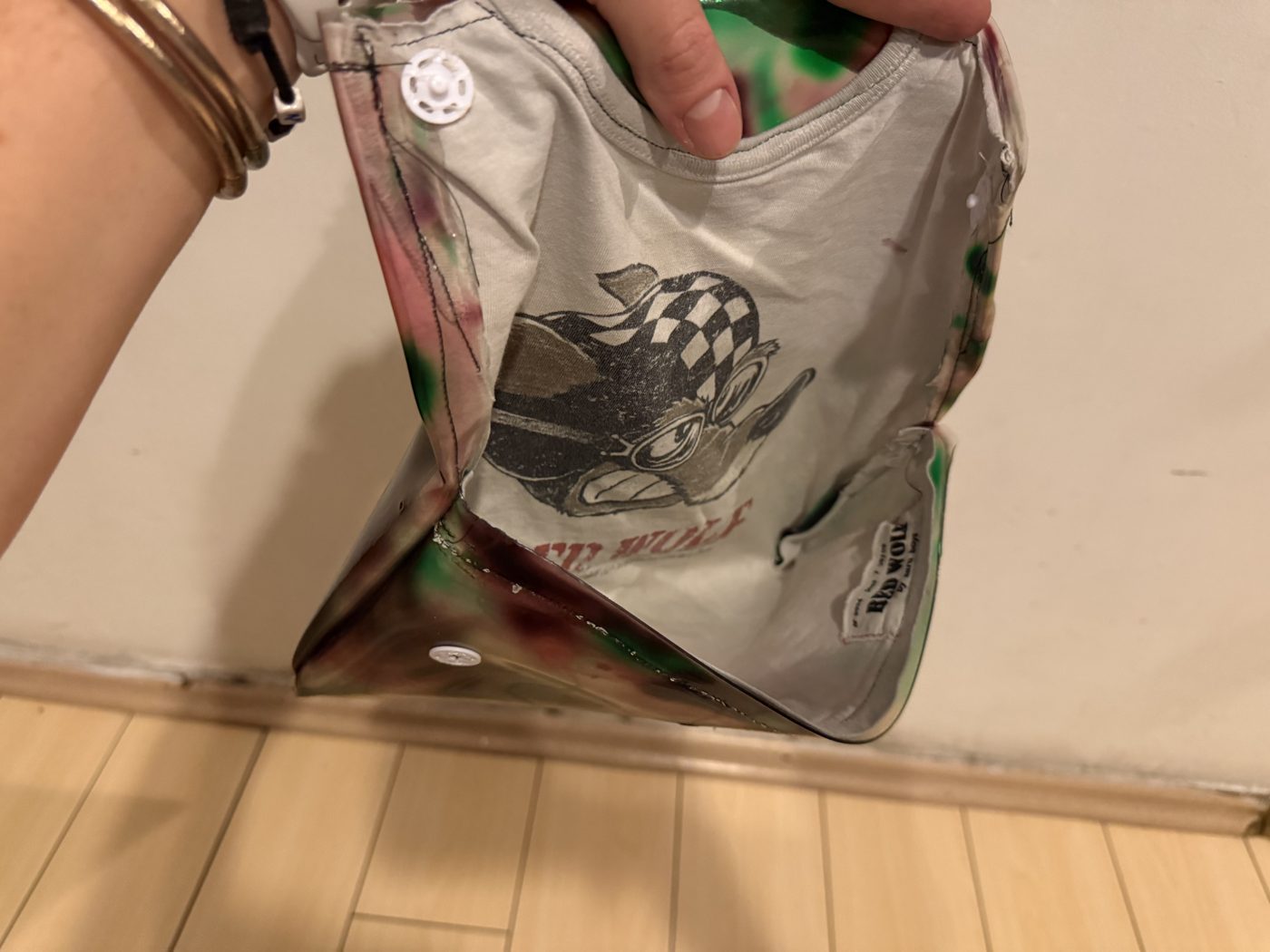
- I selected a sheet for the bag and reused a child’s T-shirt as the lining.
- I cut and prepared the pieces.
- I covered both faces of the biomaterial with waxed kitchen paper to help it move through the sewing machine.
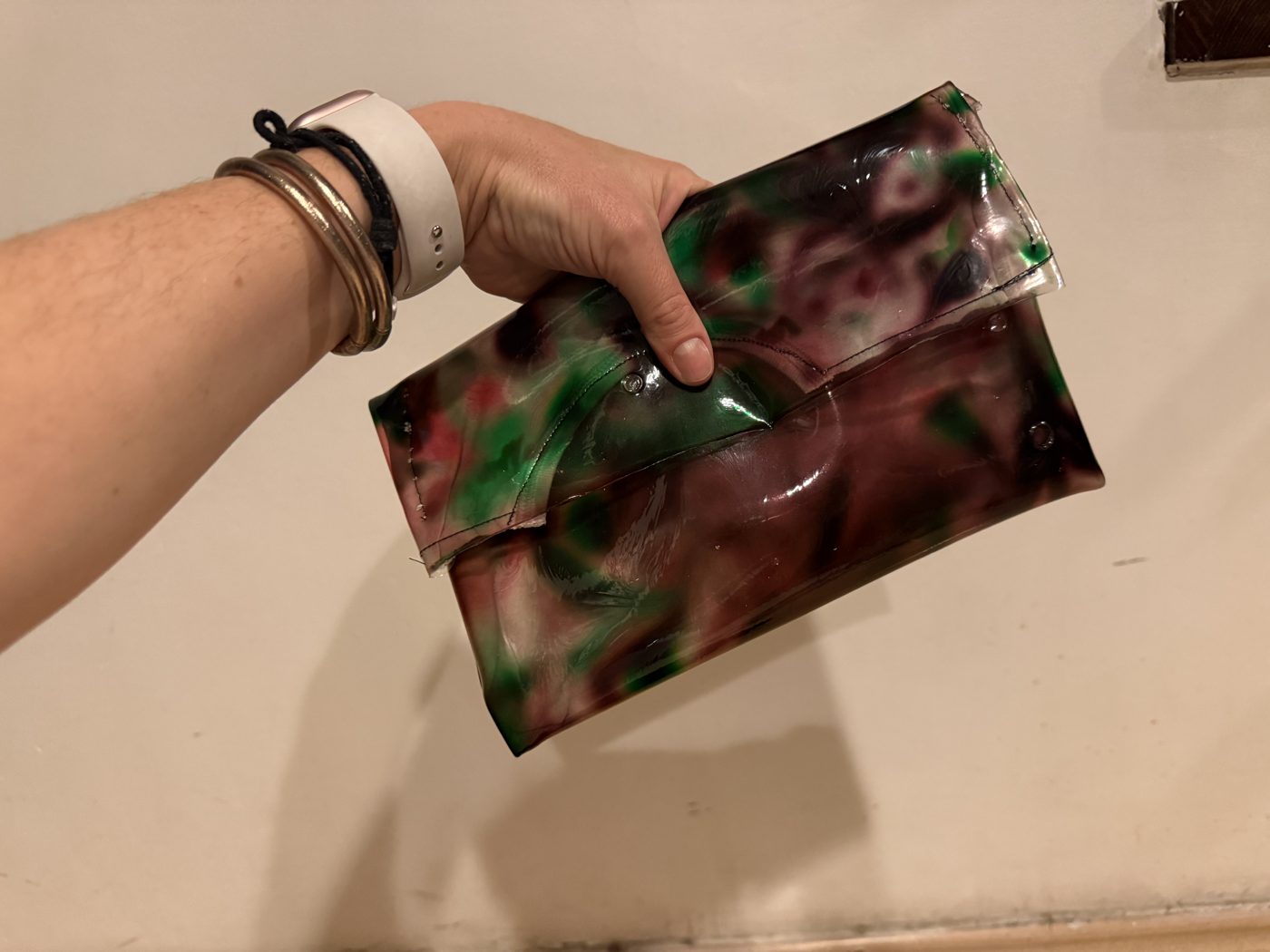
- I sewed and assembled the bag.
Making the bioplastic
Making the bag
The completed bag
Results and observations
The sheets were extremely flexible, with freely applied colours and irregular patterns. They took a long time to dry. The biomaterial slipped during sewing; with my mother’s help, I solved this by covering the surfaces with waxed kitchen paper to help it feed through the machine. I completed the bag with a reused T-shirt lining and simple finishes.
Final results — My material collection
Comparing my samples
| Experiment | Type | Observation |
|---|---|---|
| 01 · Bacterial cellulose | Grown | Medium A produced films; Medium B later developed fungal contamination. |
| 02 · Green lemon (Mexican kind) bioplastic | Crafted | Flexible; granular and smooth faces. |
| 03 · Extruded cellulose | Crafted | Openwork structure; coarse pulp interrupted extrusion. |
| 04 · Tuna verde bioleather | Crafted | Very flexible; foam created uneven texture. |
| 05 · Eggshell bioplastic | Crafted | Crackle-like appearance; uneven particle distribution. |
| 06 · Tuna verde and cempasúchil bioplastic | Crafted | Very flexible; thin areas and adhesion to the tray. |
| 07 · Flexible bioplastic and a bag | Crafted | Extremely flexible; used for a bag with a reused lining. |
References
- Polybion. Information on Celium and bacterial cellulose. Official website.
- Cynthia Gómez — Armadura de Turandot. Project information and image. Credit: Cynthia Gómez. Project website.
- Fabteria. Coverage of the Novedades competition at Abierto de Diseño CDMX. Article on Trendsetera. Photograph: Pim Schalkwijk — @pimfotografo.
AI assistance
I used ChatGPT/Codex to help organise and translate my experimental records into English, structure the documentation, and prepare images and videos for the website. The recipes, processes, observations and results presented here come from my own experimental work and records. I reviewed the texts and selected the visual material for the page.