State of the art, project management and documentation
1. Research & inspiration
In the pursuit of manufacturing new products that are more environmentally friendly, reusable, and whose lifecycle generates low emissions, biomaterials derived from agricultural waste and microorganisms emerge as a viable raw material alternative.
On the other hand, optimizing manufacturing processes has become a significant challenge in recent times. Energy savings, bottleneck reduction, resource optimization, and waste minimization are some of the key factors to consider when creating a new product.
In this context, we are led to reflect on our history and question how our ancestors were able to create countless artifacts, materials, tools, garments, and even structures using only the nature around them. They crafted diverse pigments from native plants, mastered artisan techniques using surrounding soil and minerals, and worked as top-tier architects and sculptors, building structures that endure to this day. It is incredible to consider that they accomplished all of this through trial and error, using only a fraction of the knowledge we possess today—something that many seem to have forgotten.
In this regard, Peru is one of the most biodiverse countries in the world, not only in its flora and fauna, but also in its culture and traditions. This is a level of richness few countries possess—one that still holds so much for us to discover, and from which we can begin creating new works of art that leave a positive impact on both society and the environment.
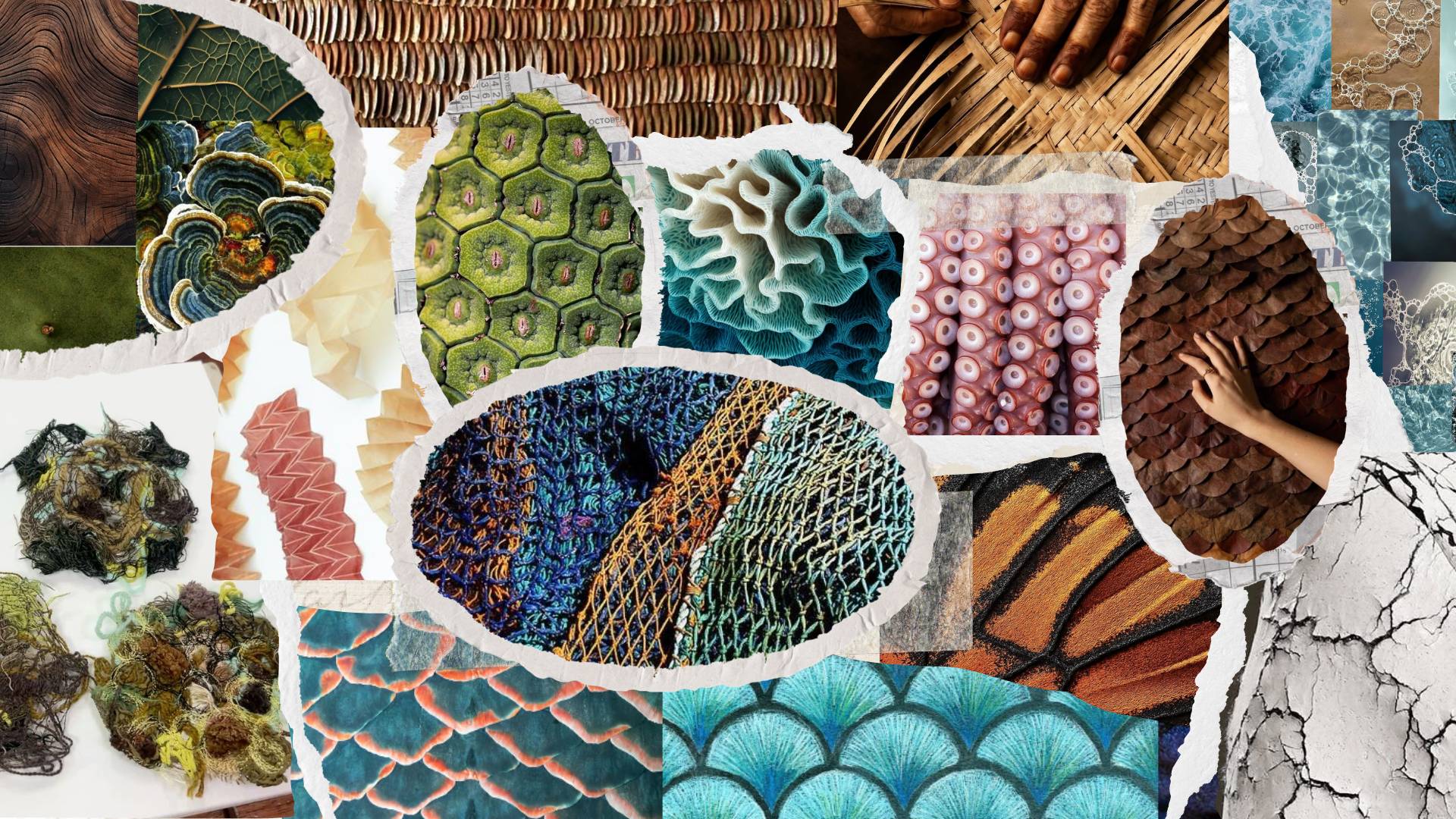
With this in mind, I want to explore a wide variety of textures in biomaterials, project by project, to understand how to achieve and refine them
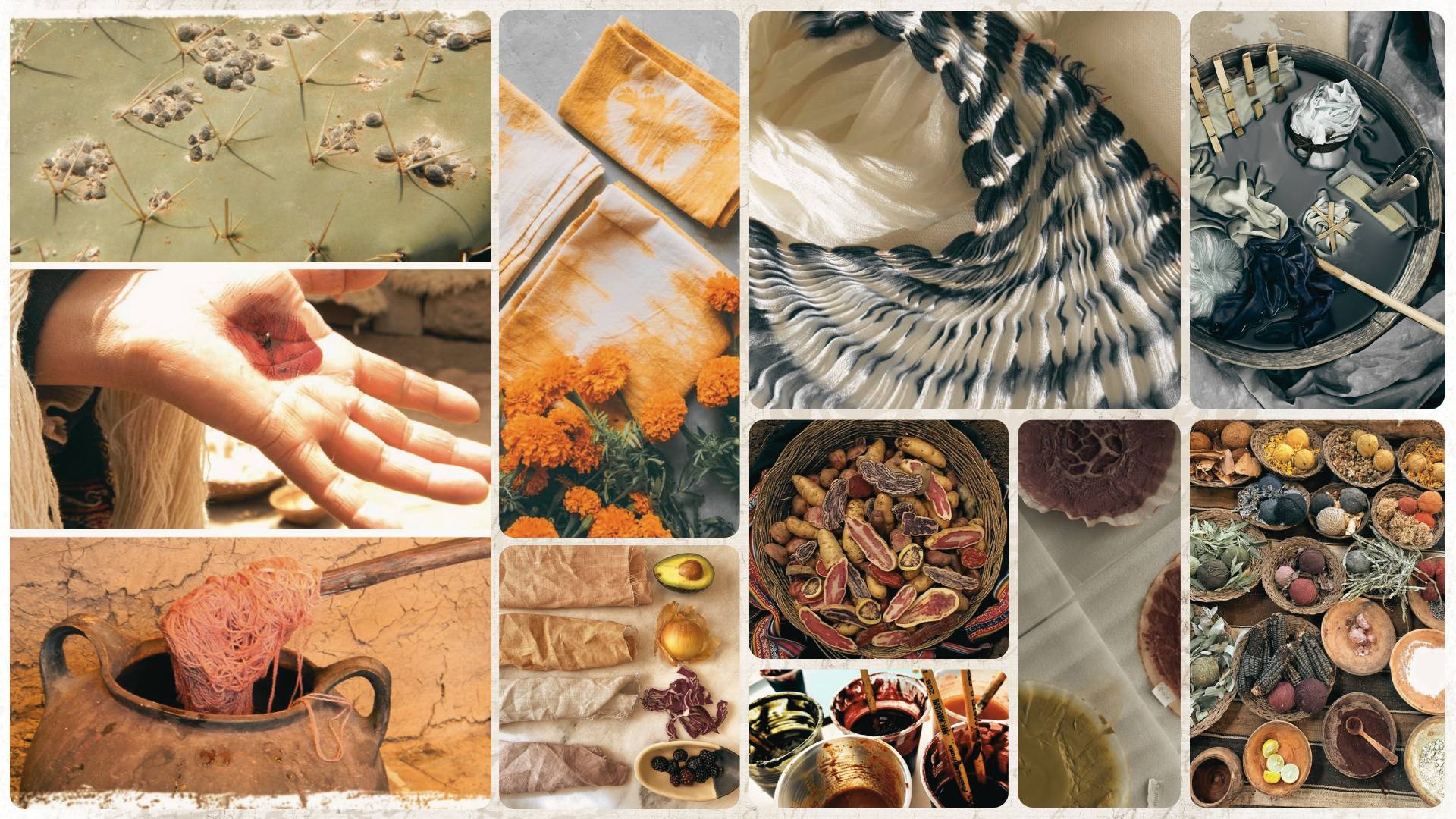
Also I want to learn more about how do I get new natural dyes. Because I'm so interested to work with some native plants here from Perú, discover new techniques for working with bacterias and review the history about how our ancestors made pigments from the resources around them.
I want to learn about how can I do bioplastic and bio leather from SCOBY, mycelium, agricultural waste, plants, etc, in order to improve the process that are already available doing some tests to gain experience, and to gain knowledge in the subject and be able to better support my students when they want to do projects about this. Also I was looking for information in articles on how to make these biomaterials and replicate some process using other waste or improve the material we can obtain and make other products that we need on a daily basis.
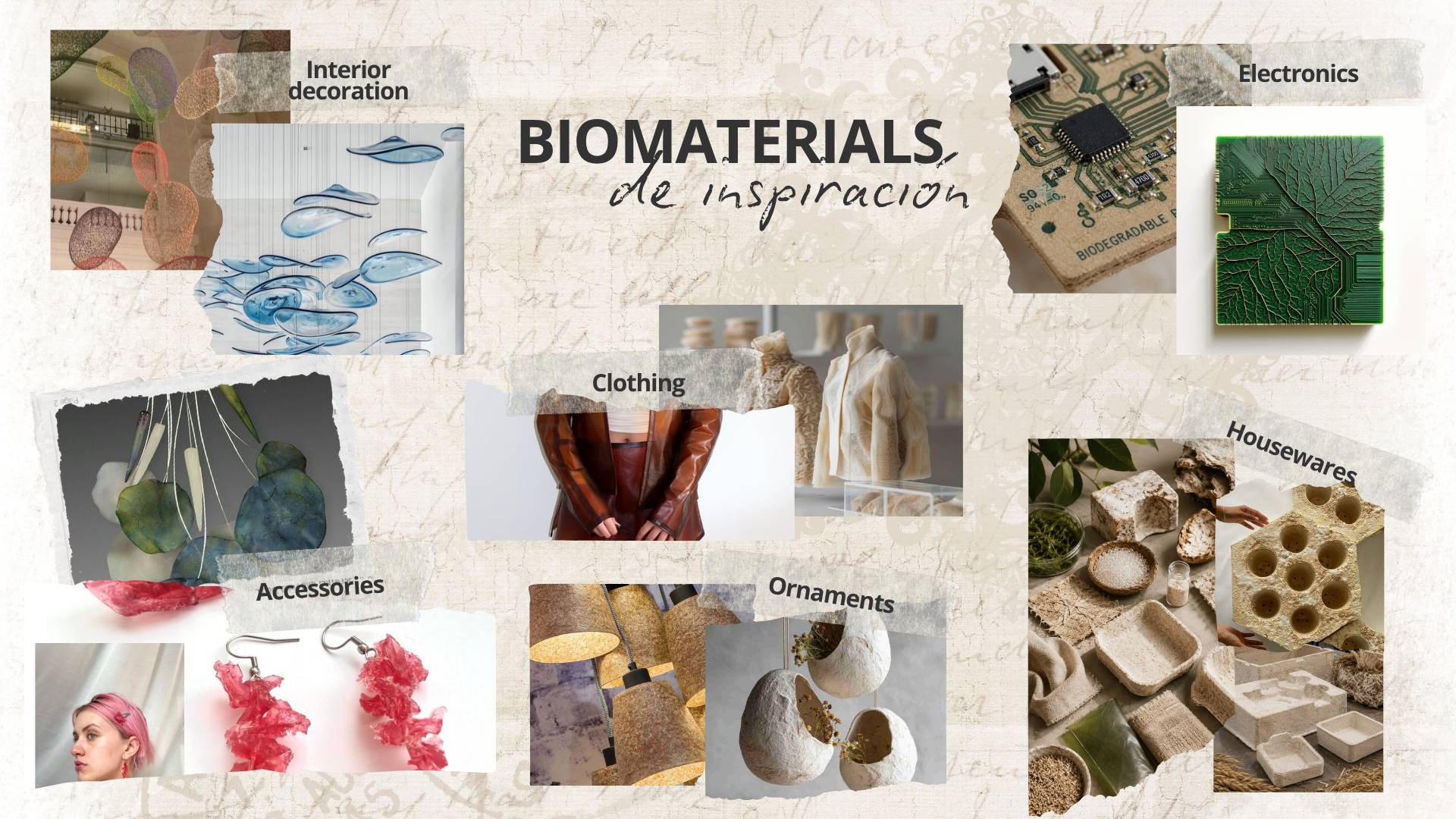
Finally, I want to say that beyond wanting to develop biomaterials, my inspiration stems from the work of Naif Lab, which I discovered one day. This company designed a visually striking installation aligned with Mango's brand identity, using exclusively organic materials and circular processes. To achieve this, Naif Lab created a sculptural system of 1,500 suspended discs made from Reolivar Air—a biomaterial derived from olive pits, natural biopolymers, and plant pigments. Inspired by the movement of a school of fish and the autumn palette of the collection, the pieces were designed to be reusable, recyclable, or compostable, demonstrating how sustainability and design can seamlessly integrate into the visual communication of a global brand.
If you want to read more about this incredible project, you can enter on this link
2. Tools
3. Process and workflow
The following details the steps taken to modify the program, explaining how each tool was utilized and how all multimedia files up to this week were integrated.
3.1 Step 1: Installing and connecting GitLab with Visual Studio Code
We begin by downloading and installing Git from the link.
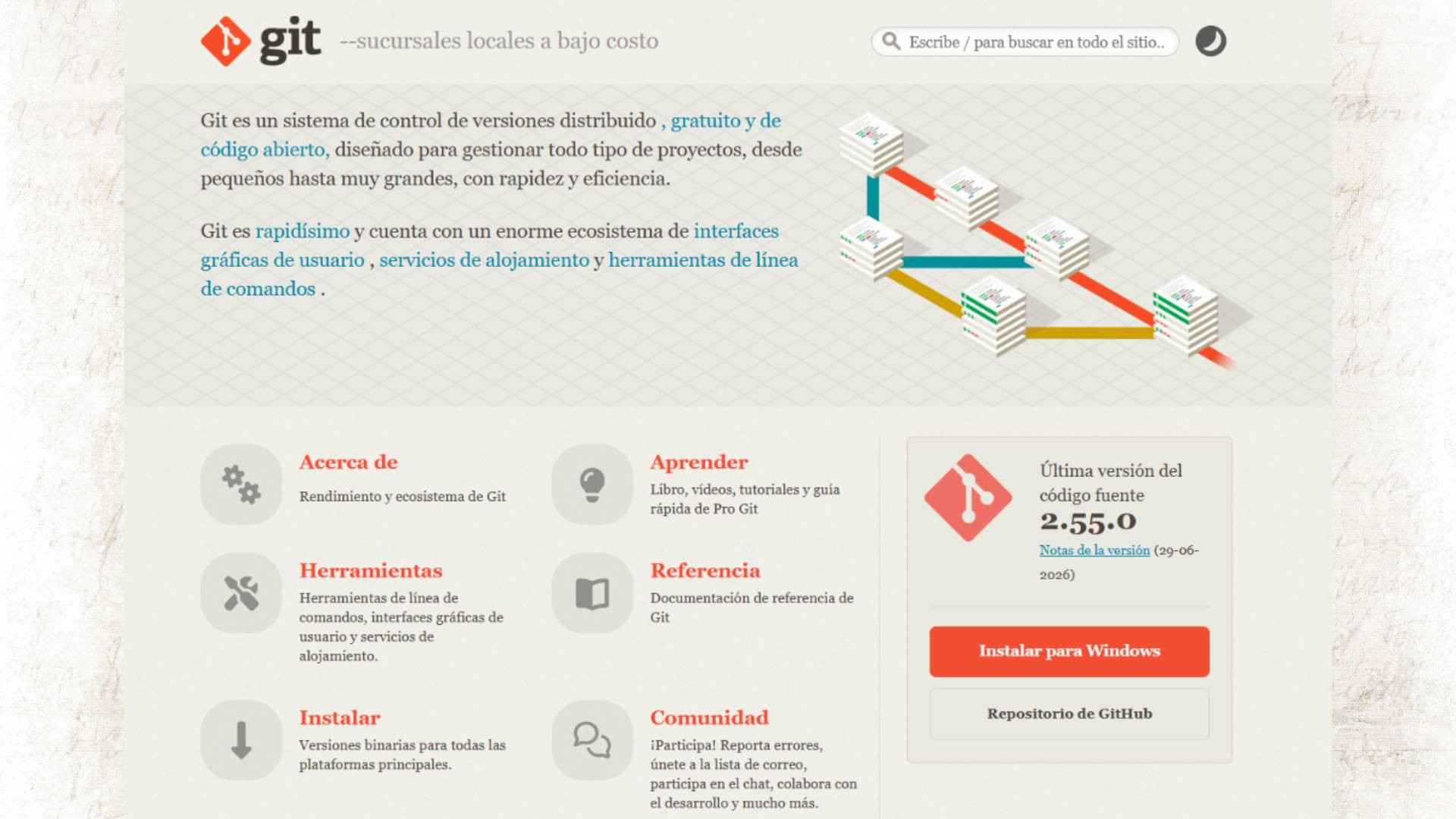
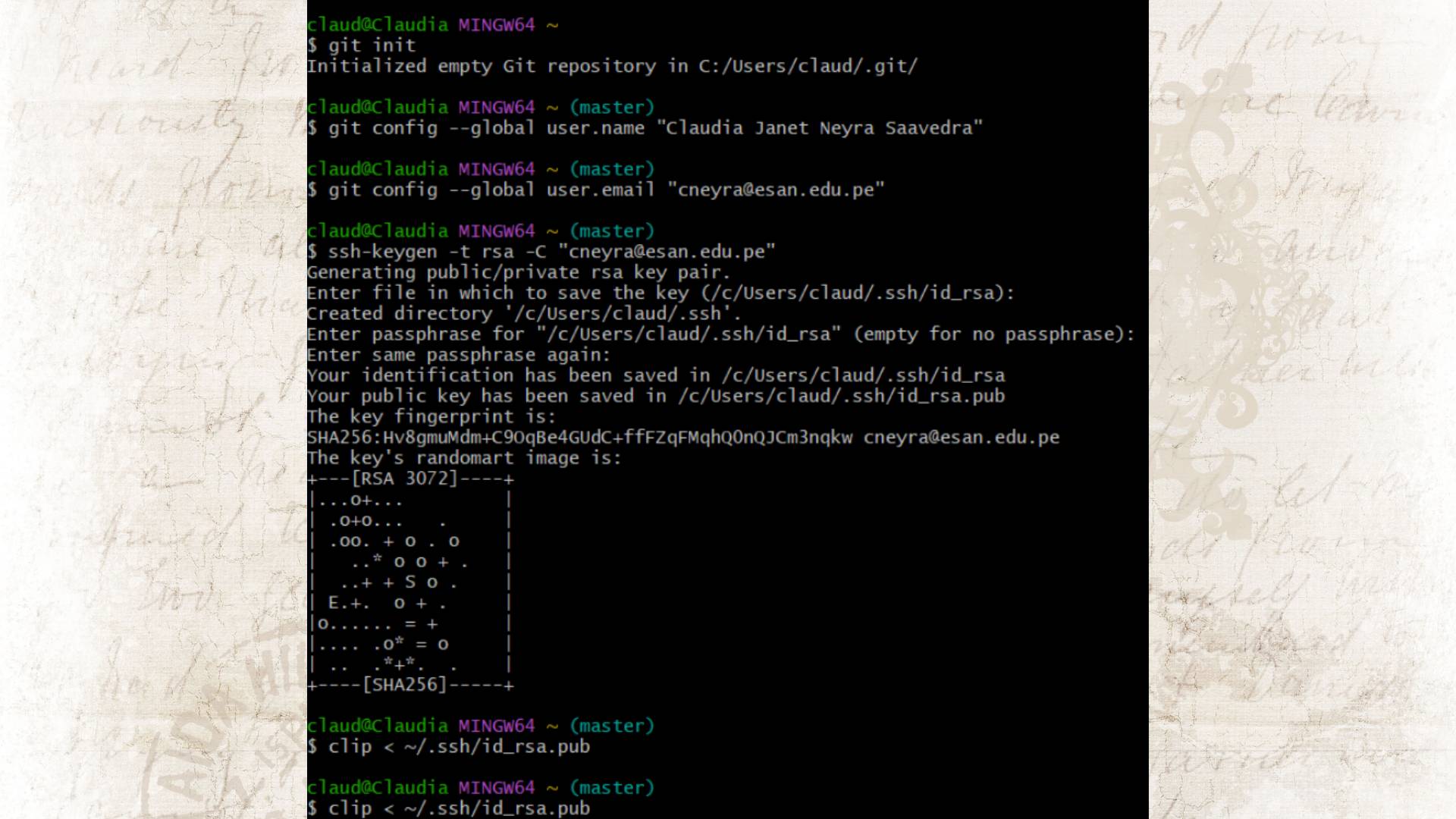
Next, a Git key was created to enable communication between my laptop and GitLab, allowing for file transfers.
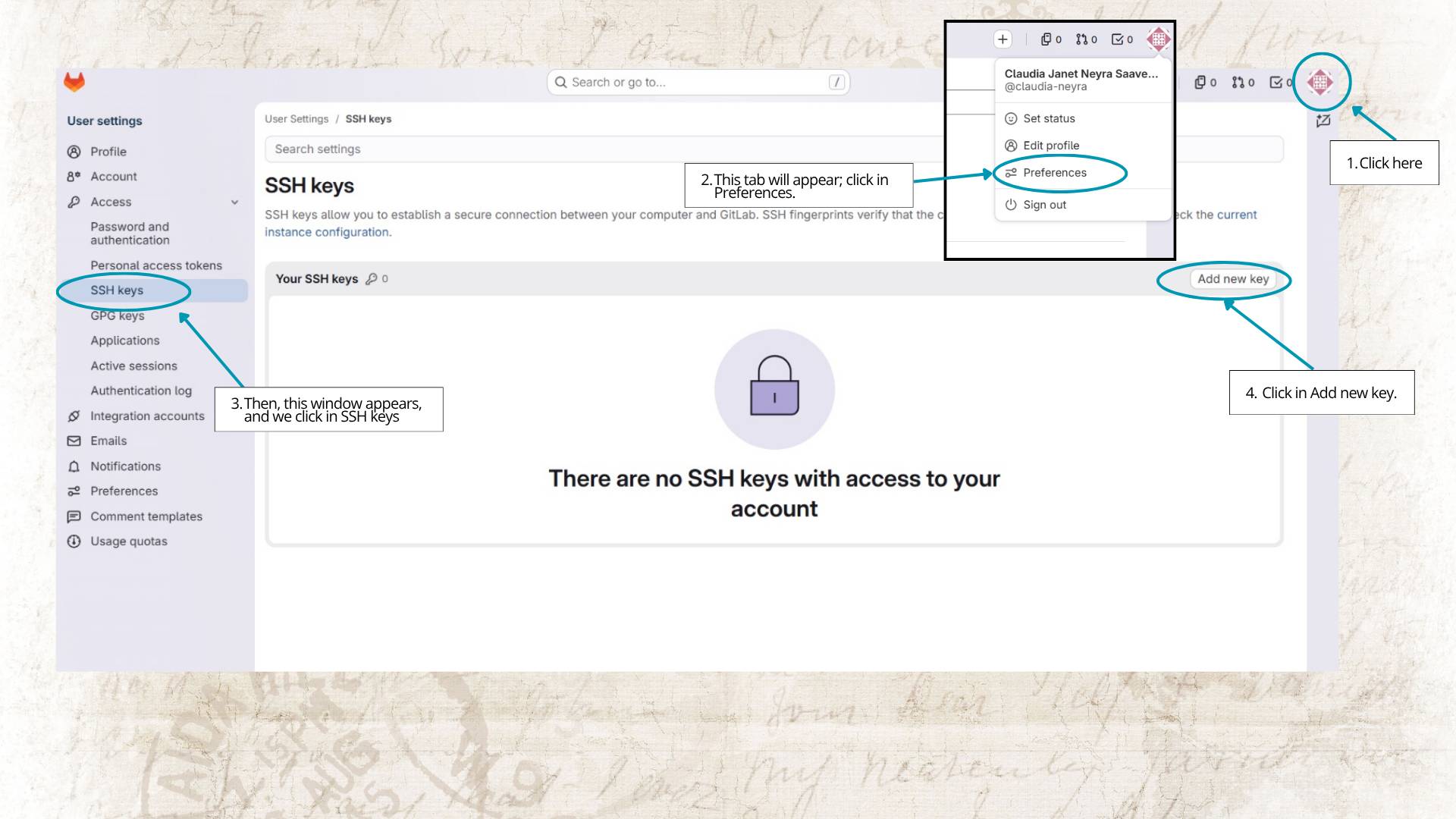
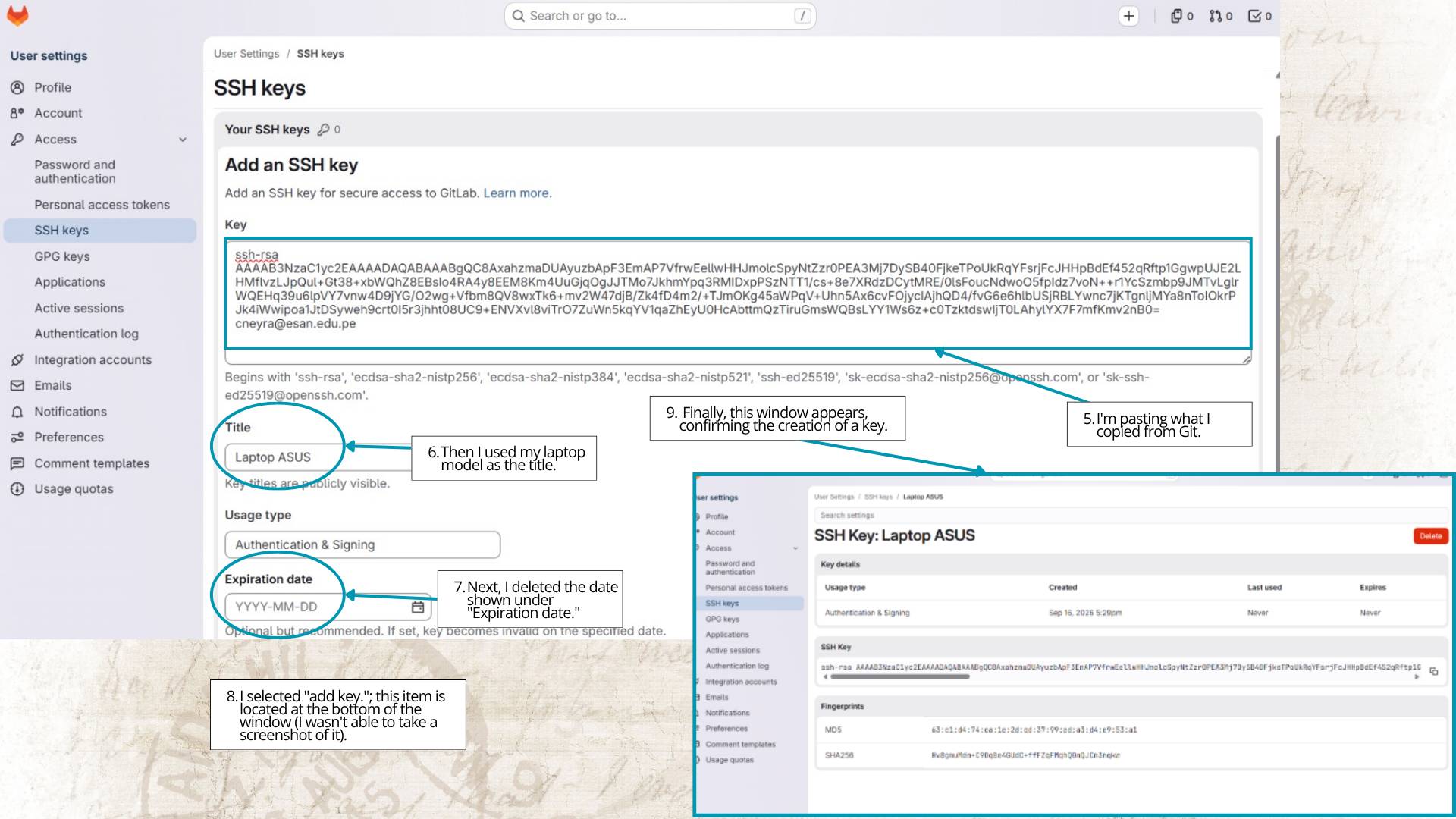
Subsequently, I added the key created in Git to my GitLab, following the process shown in the following images.
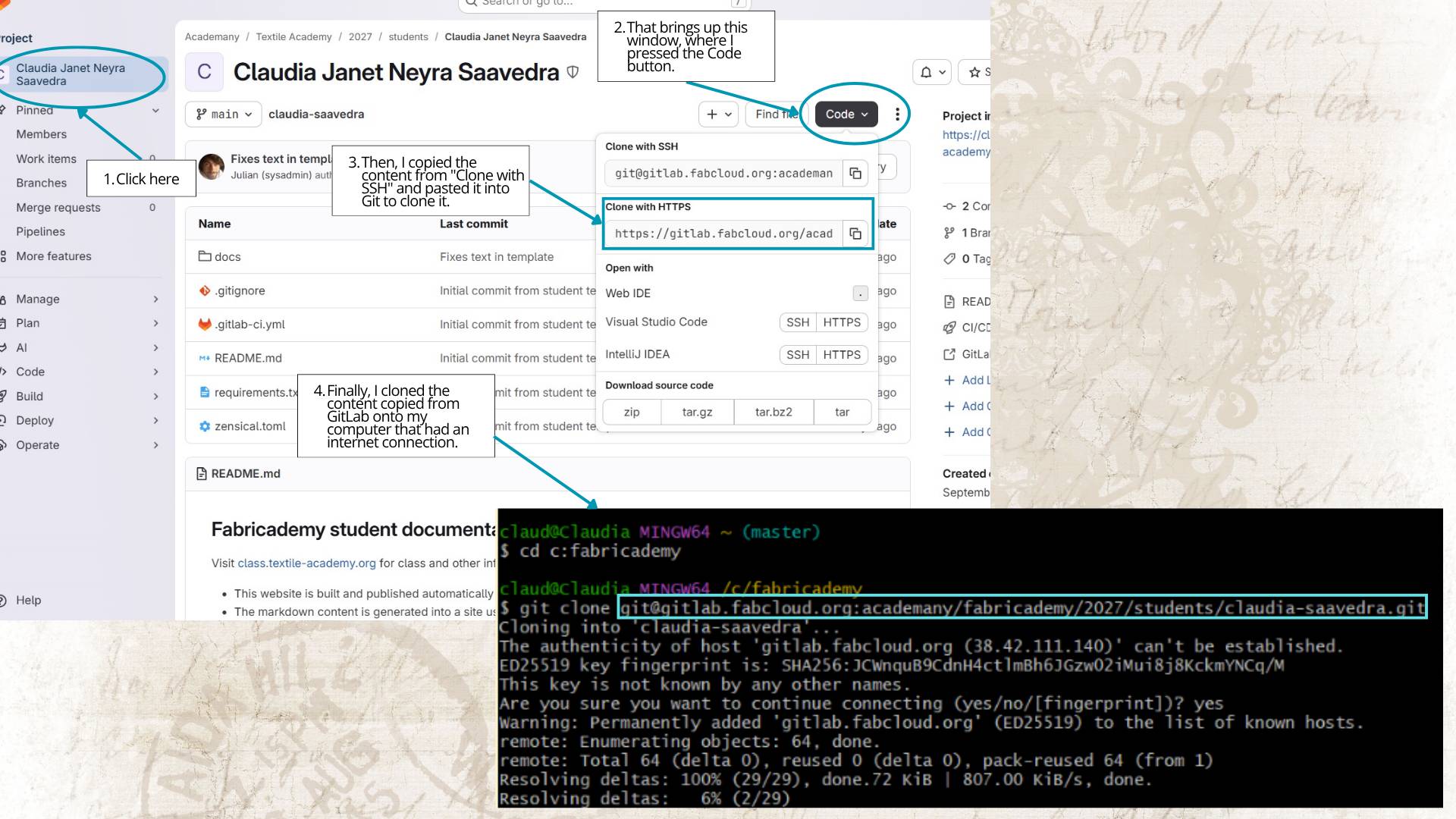
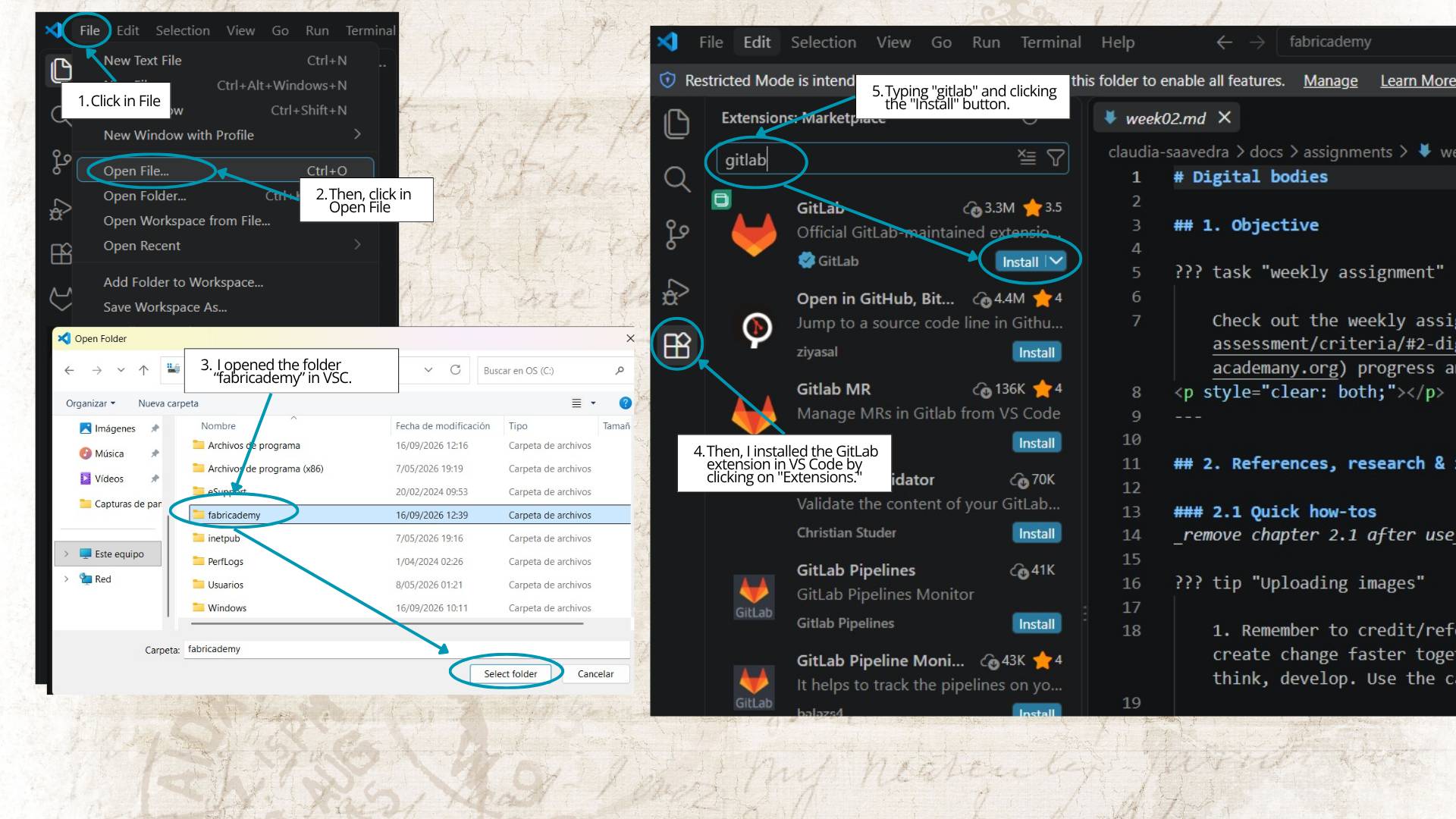
As the next step, the files from GitLab were cloned to my computer using the process shown in the following image.
Next, the GitLab extension was installed in VS Code, as shown below.
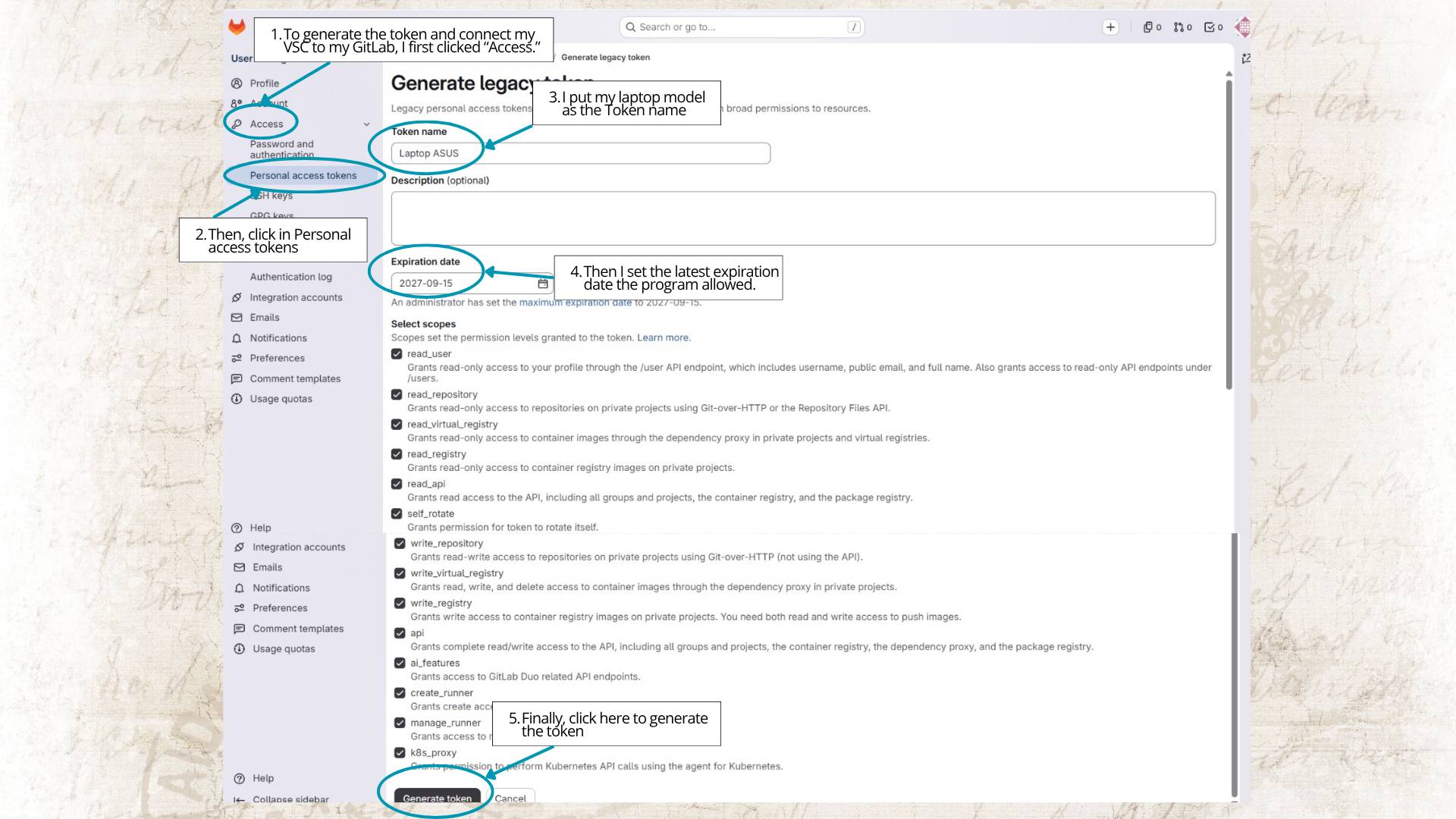
Then, I generated a token so that the changes made in my VS Code would be reflected in my GitLab.
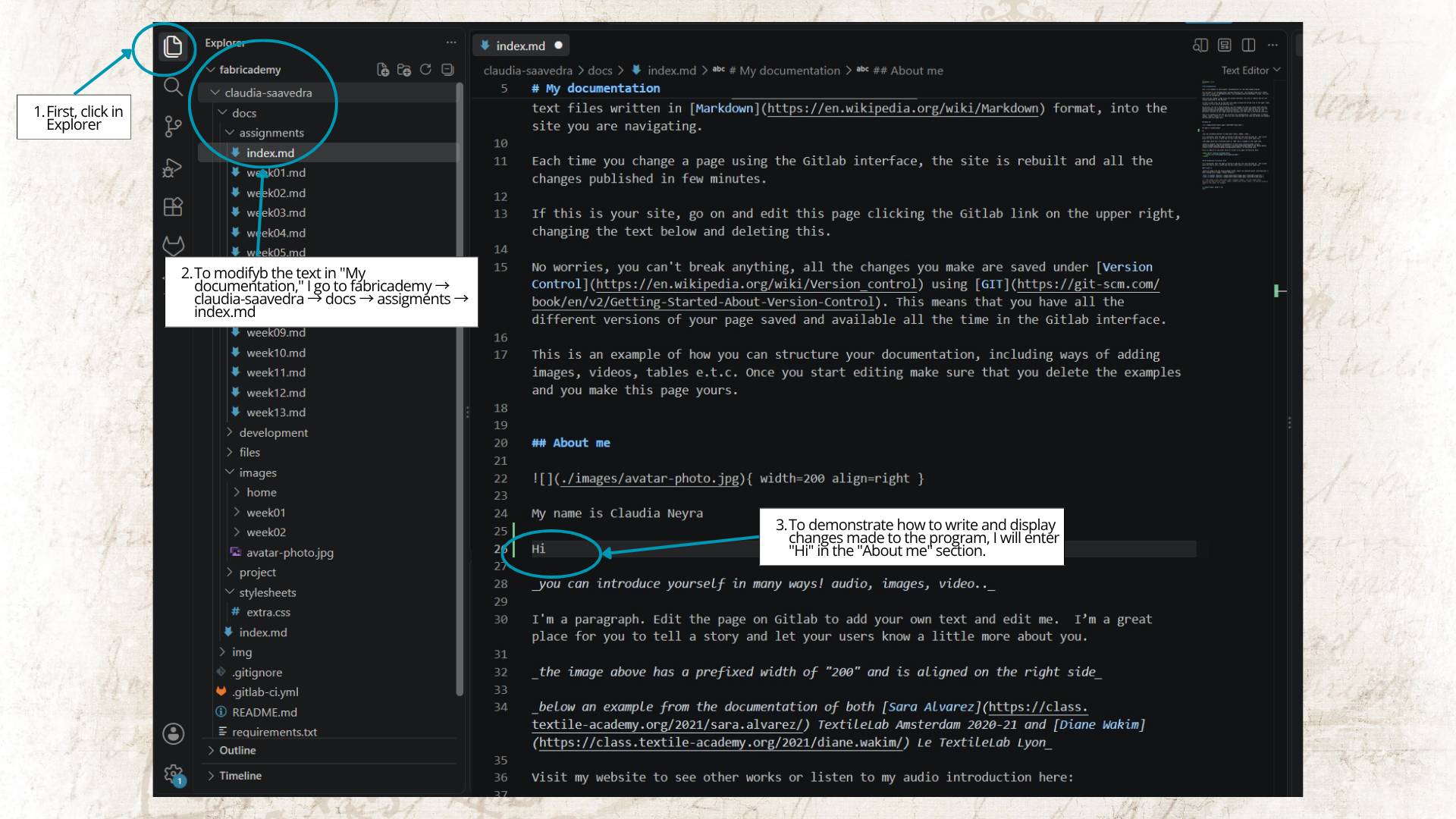
3.2 Step 2: Modifying text in GitLab from Visual Studio
The following images show the step-by-step process for making changes to the text.
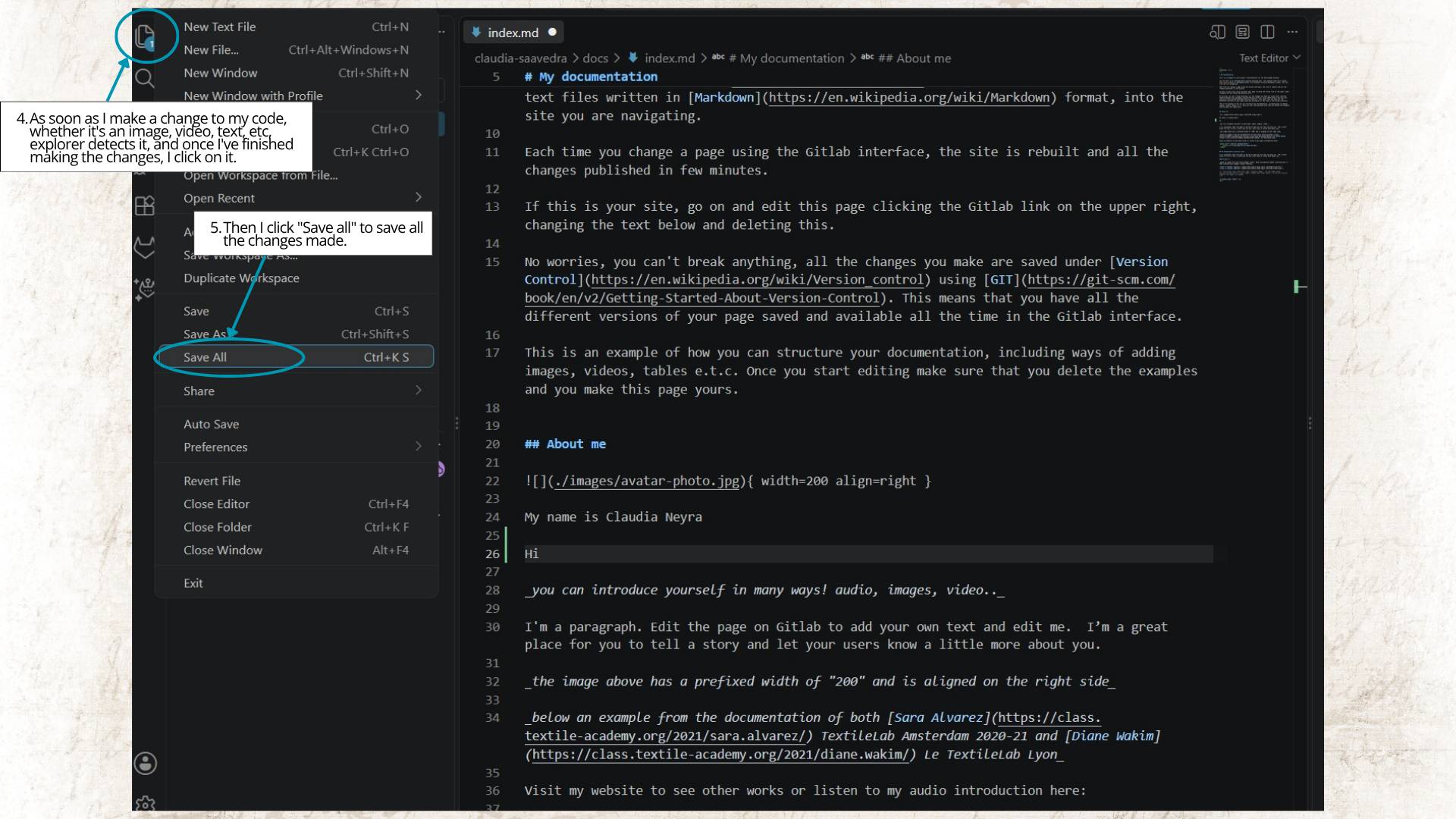
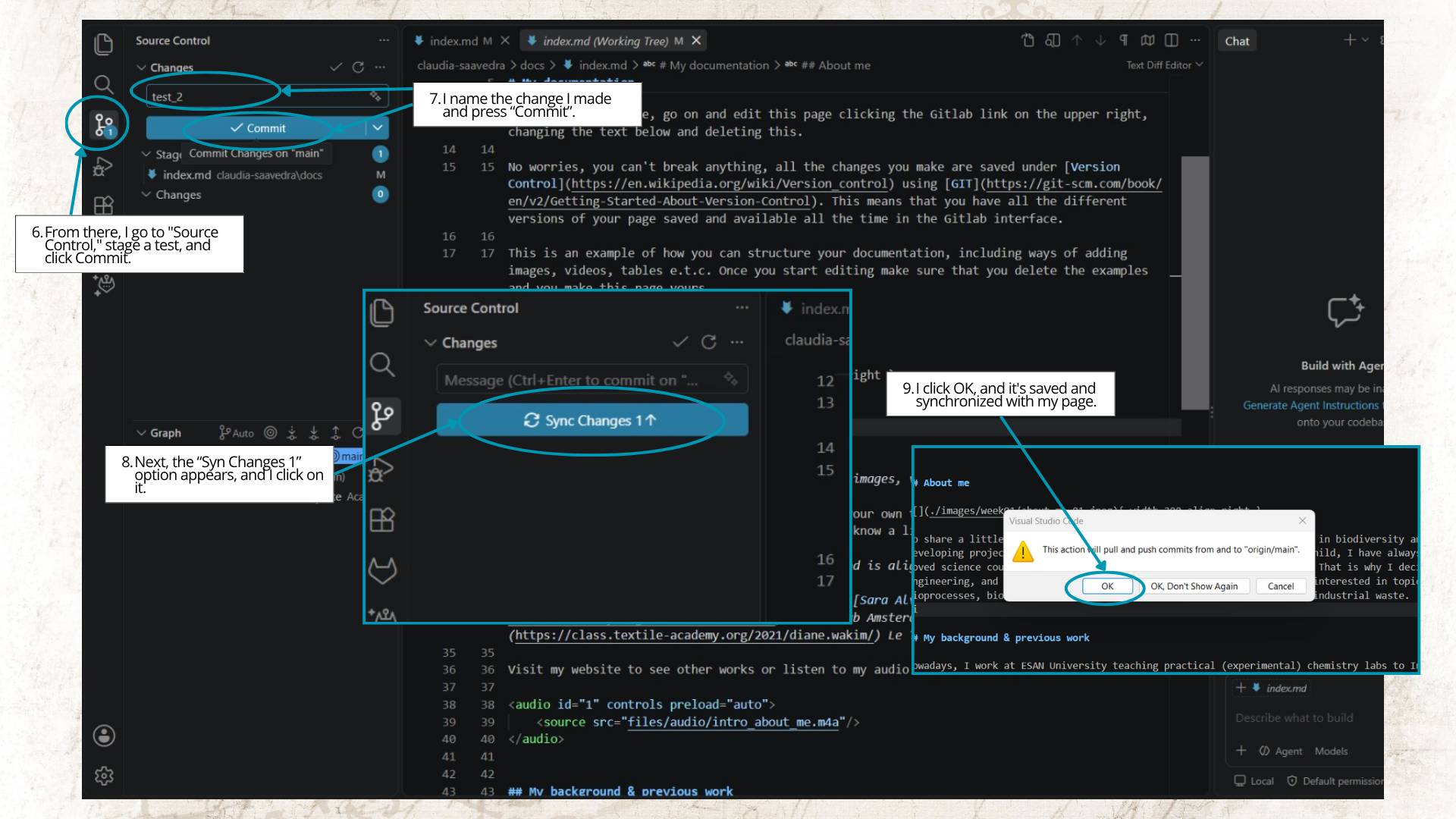
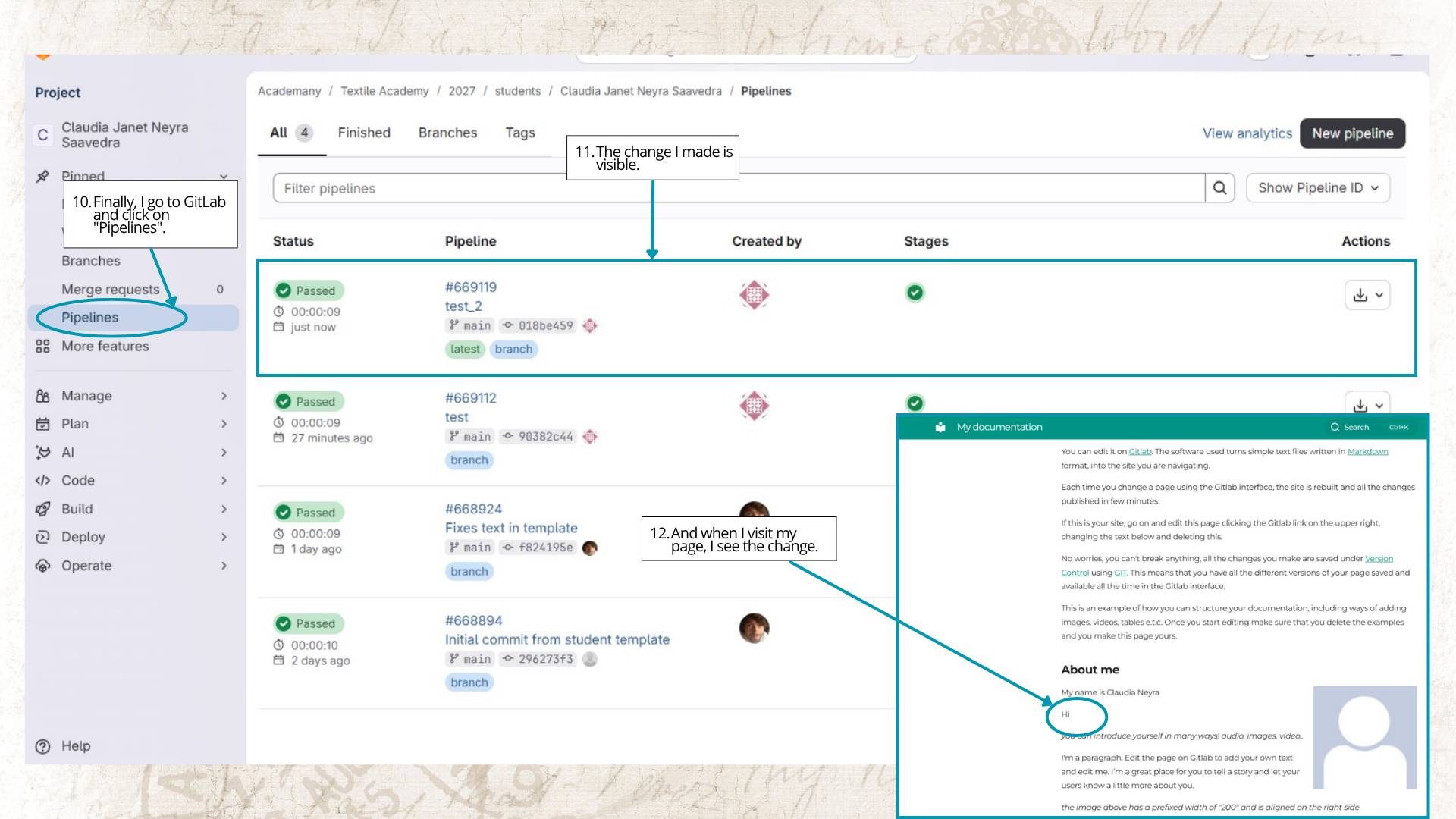
3.3 Step 3: Add images in GitLab from Visual Studio
The following describes how the images were added to the program.
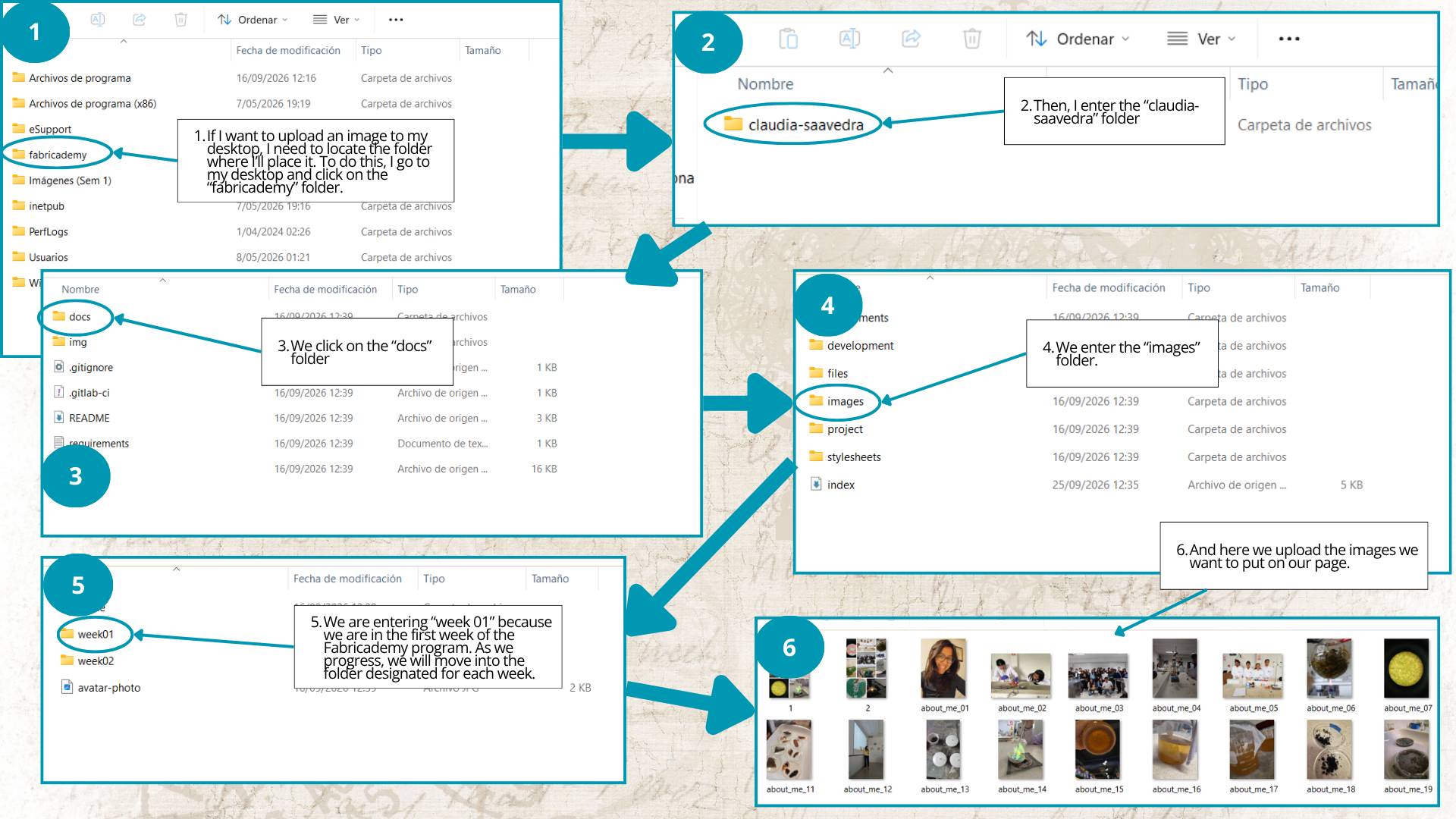
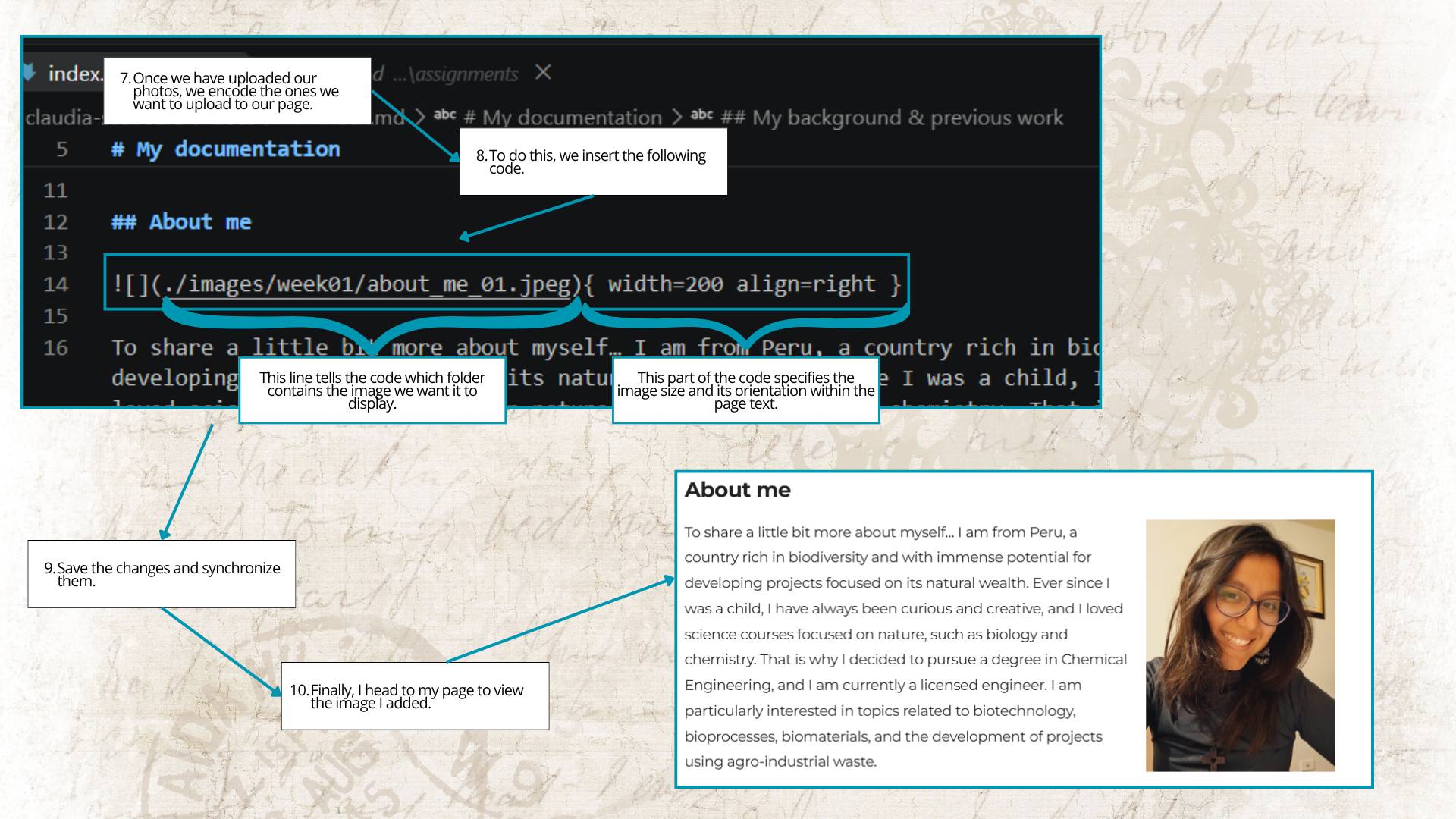
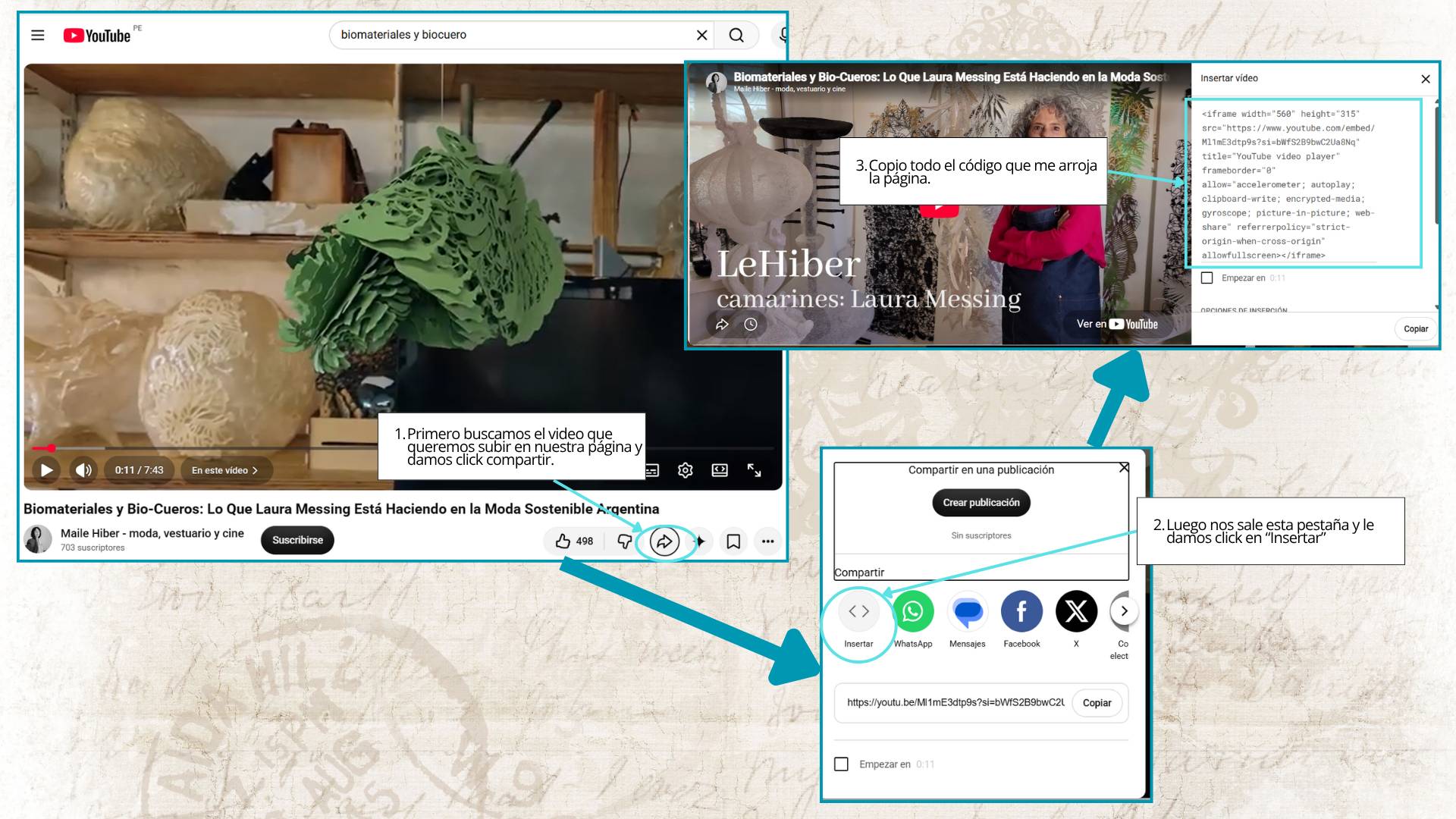
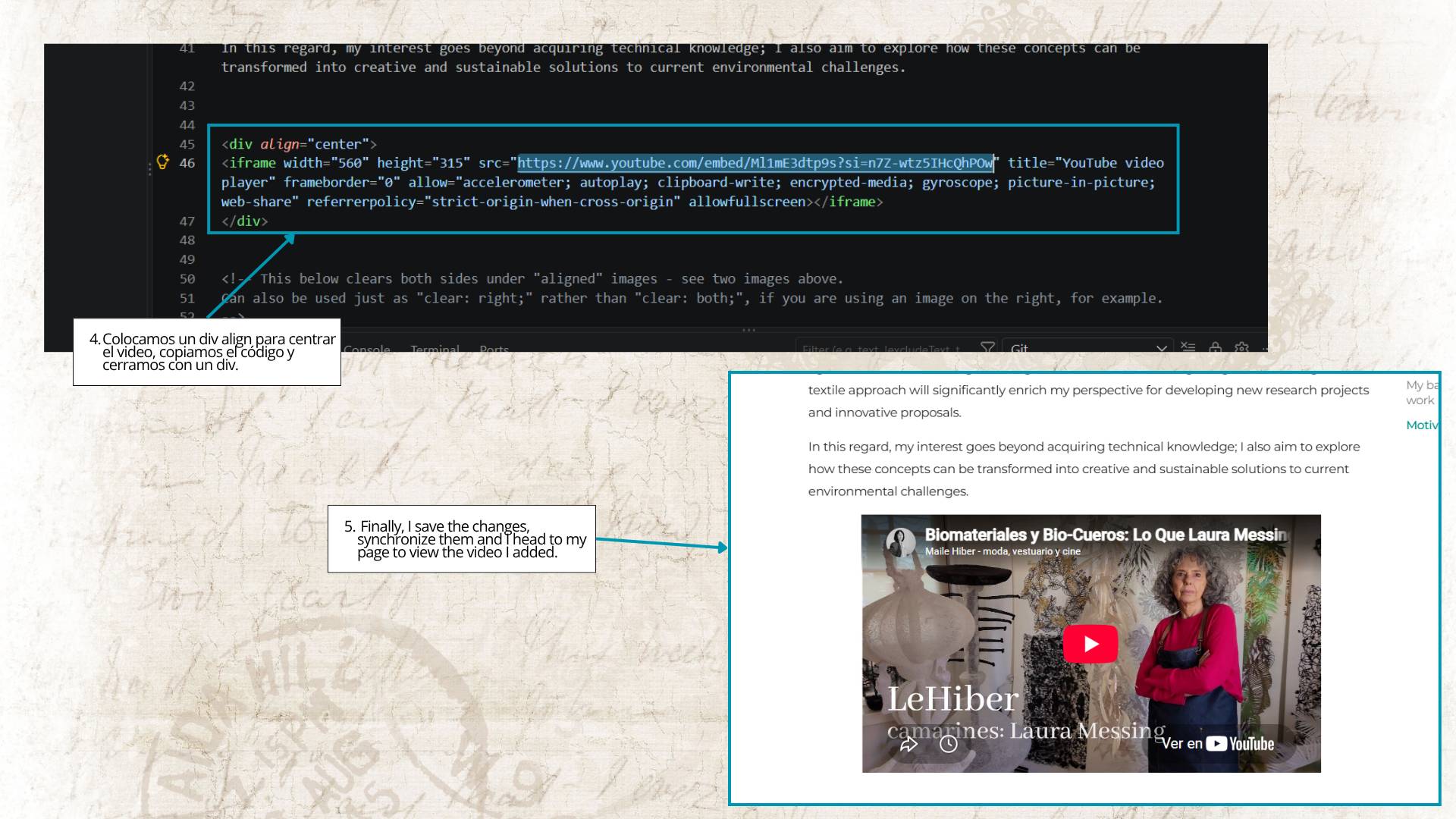
3.4 Step 4: Add videos in GitLab from Visual Studio
Finally, the process for adding video to GitLab is shown.
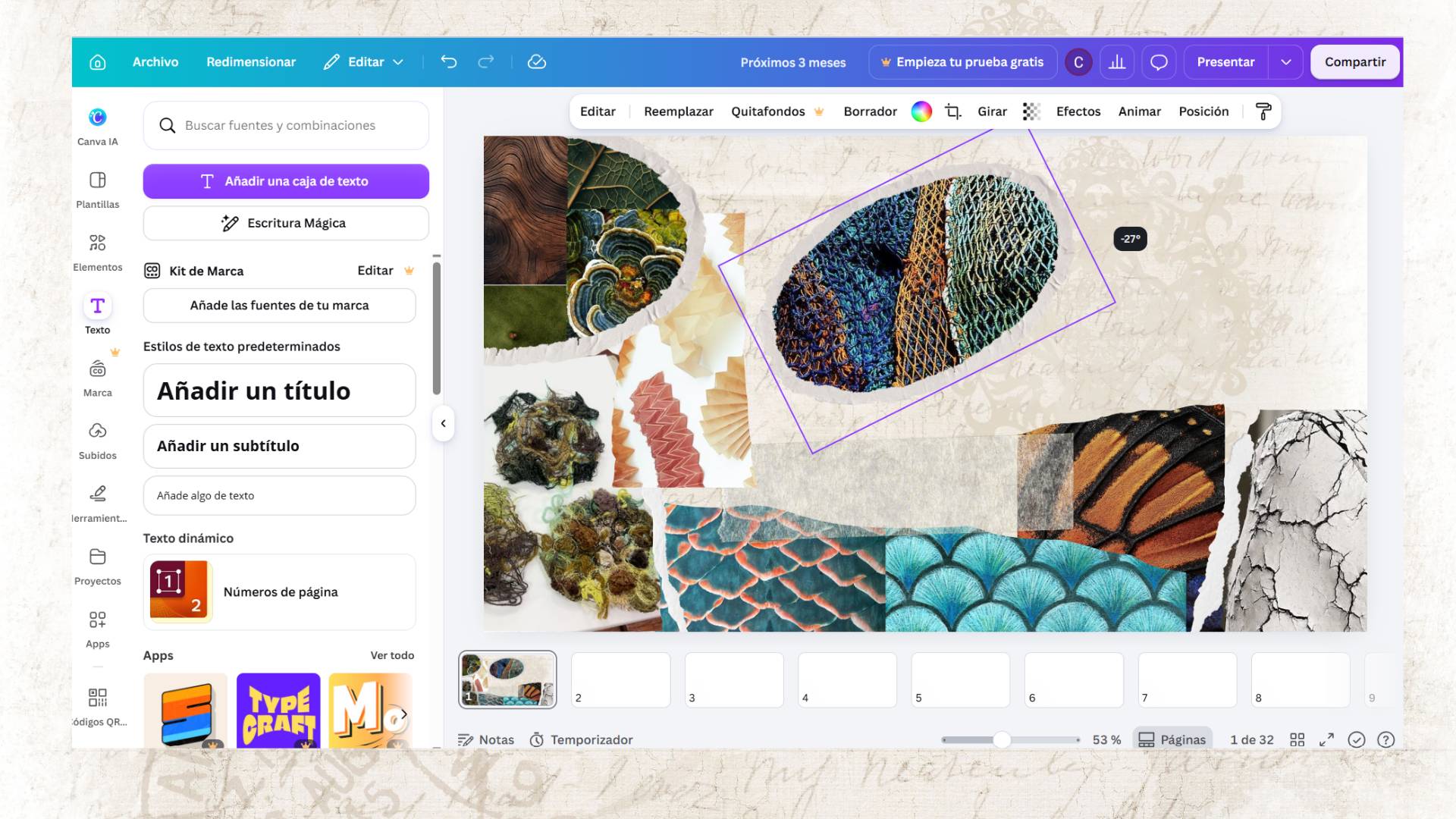
3.5 Step 5: Using Canva for images
The following image shows the process of creating the previous images made in Canva.
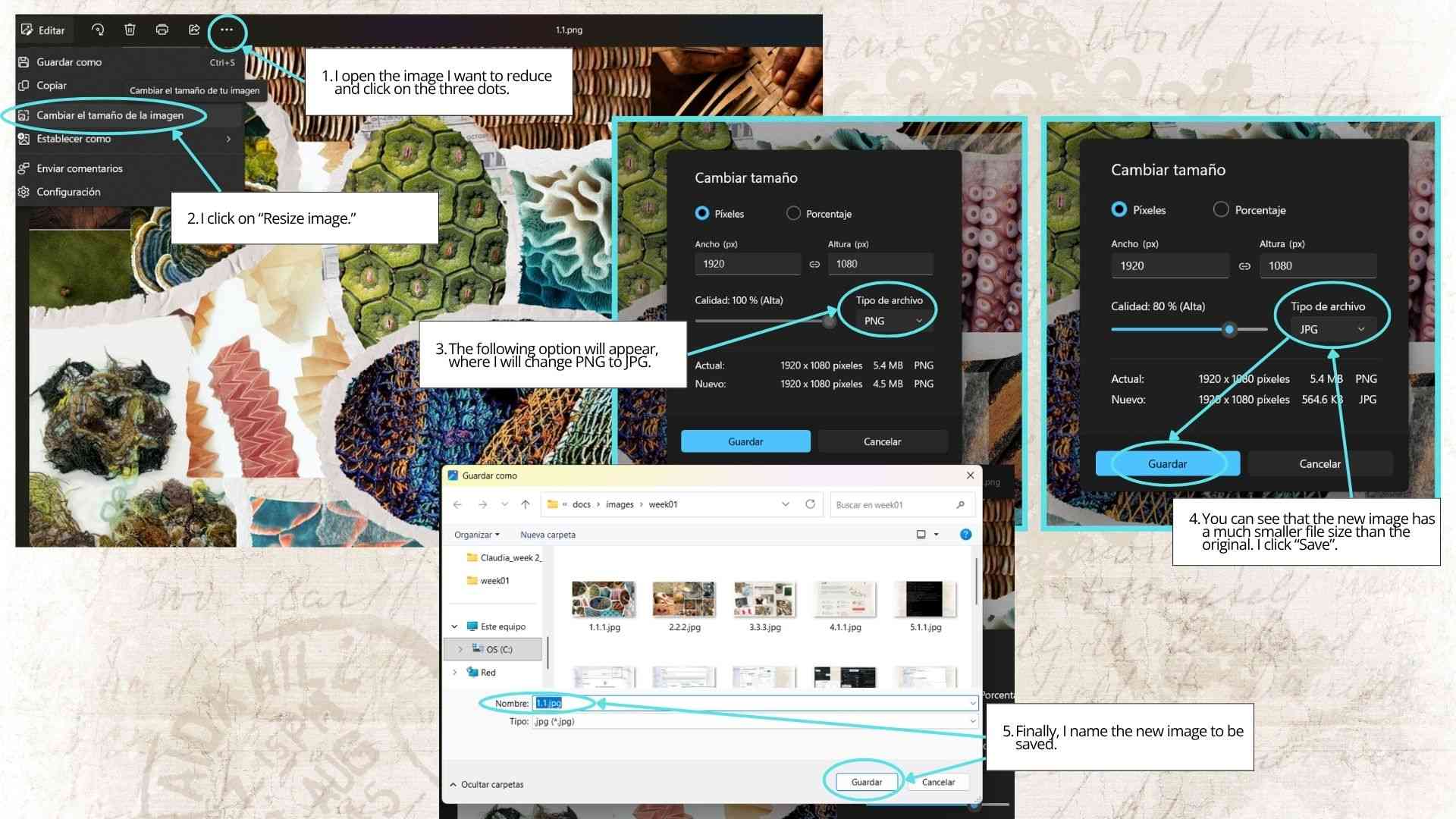
3.6 Step 6: How to reduce image size
The next image explain how we can reduce an image.
3.7 Step 7: Translate the text
For all the text I write on my page, I am going to use Gemini to translate from Spanish to English.
4. Weekly reflection & critical thinking
This week was full of inspiration and learning as I worked on personalizing my website and documenting each step of the process. It was challenging, given that it had been a while since I last used programming languages. Getting to understand how GitLab and VS Code work was quite new to me, but I know that with practice, it will all become easier. Finally, I would like to add that I still have a lot to learn in this field to make more advanced modifications to my page, but I will get there step by step.
5. References
-
Naifactory Lab. (s. f.). Mango — Escaparate sostenible en la 5ª Avenida, Nueva York. Recuperado el 28 de septiembre de 2026, de https://naifactorylab.com/project/mango/ ↩