State of Art, Project Management & Documentation
Interests & motivation
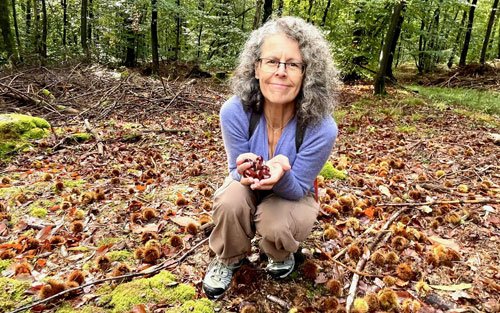
I have spent most of my career as a learning experience designer. I started out in the sciences, designing online interactive experiences for WGBH’s NOVA program, and then teamed up with learning scientists and the Universal Design for Learning (UDL) framework to understand how people truly learn. I eventually landed back in the physical world co-designing community makerspaces and STEAM programming. I found the intersection of textiles and technology particularly enticing for engaging girls and women. Ever since, my personal and professional activities have circled around this area.
In the Fabricademy program, I intend to explore how my background knowledge, professional domains expertise, and those of the Fabricademy curriculum (particularly the wearables units), and my life experience all fit together. How might they inform and influence how and what I prototype in the skill capsules from week to week, which final project ideas I gravitate towards, and ultimately, and in which way I point my compass beyond Fabricademy?
Weekly assignment
-
Build a documentation website describing you and your motivation for the textile-academy, including your previous work
-
Upload the documentation to your project page on class.textile-academy.org
-
Add references and research based on the topic of your interest
-
Learn how to upload images, videos, references and how to use Markdown and Gitlab
-
Learn to resize and “optimize for web” images, videos and files
-
Learn about the fab lab processes, booking system, usage, machine demos, tools and safety rules (most of these will be addressed in week 2)
Driving questions & ideation
Where do these intersect?
- topics and domain knowledge from a career in learning experience design
- the technologies and skills to be acquired through Fabricademy
- a sense of purpose
- the things I love (things that move me, favorite pastimes, loves, etc.)
Step 1: Map senses of purpose with things I love
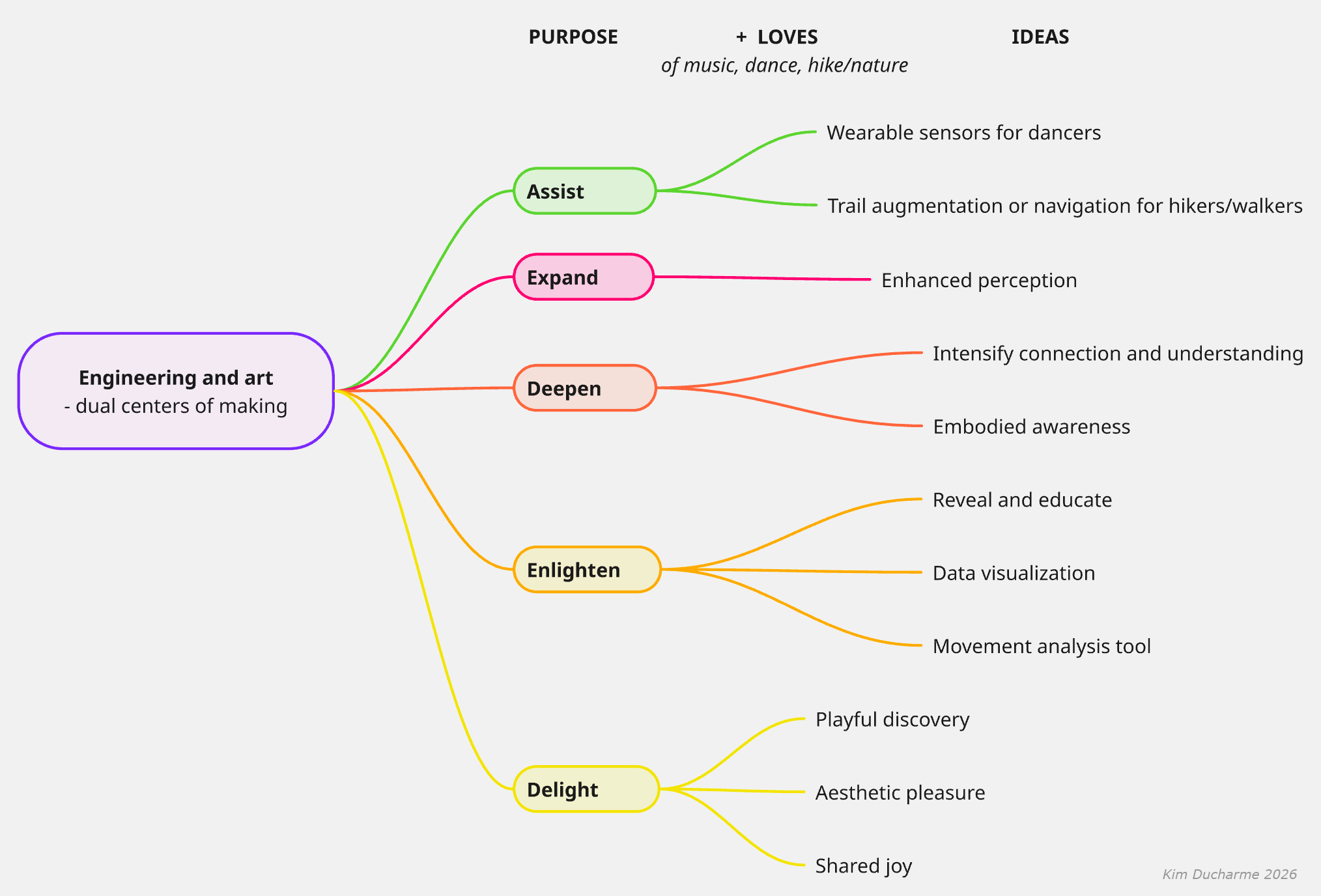
I used Miro to create a mind map to organize my thinking in the context of making — combining senses of purpose with things I love, then some initial ideas.
- Purpose (why?): To assist, expand, or deepen an experience; to enlighten, or to delight.
- Some things I love: Music, dance, hiking, and nature.
- Initial ideas: To assist: wearable sensors for dancers, trail augmentation or navigation for hikers/walkers; to expand: enhanced perception; to deepen: Intensify connection and understanding, Embodied awareness; to enlighten: reveal and/or educate, data visualization, movement analysis tool; to delight: playful discovery, aesthetic pleasure, shared joy.
Step 2: Brainstorm project ideas
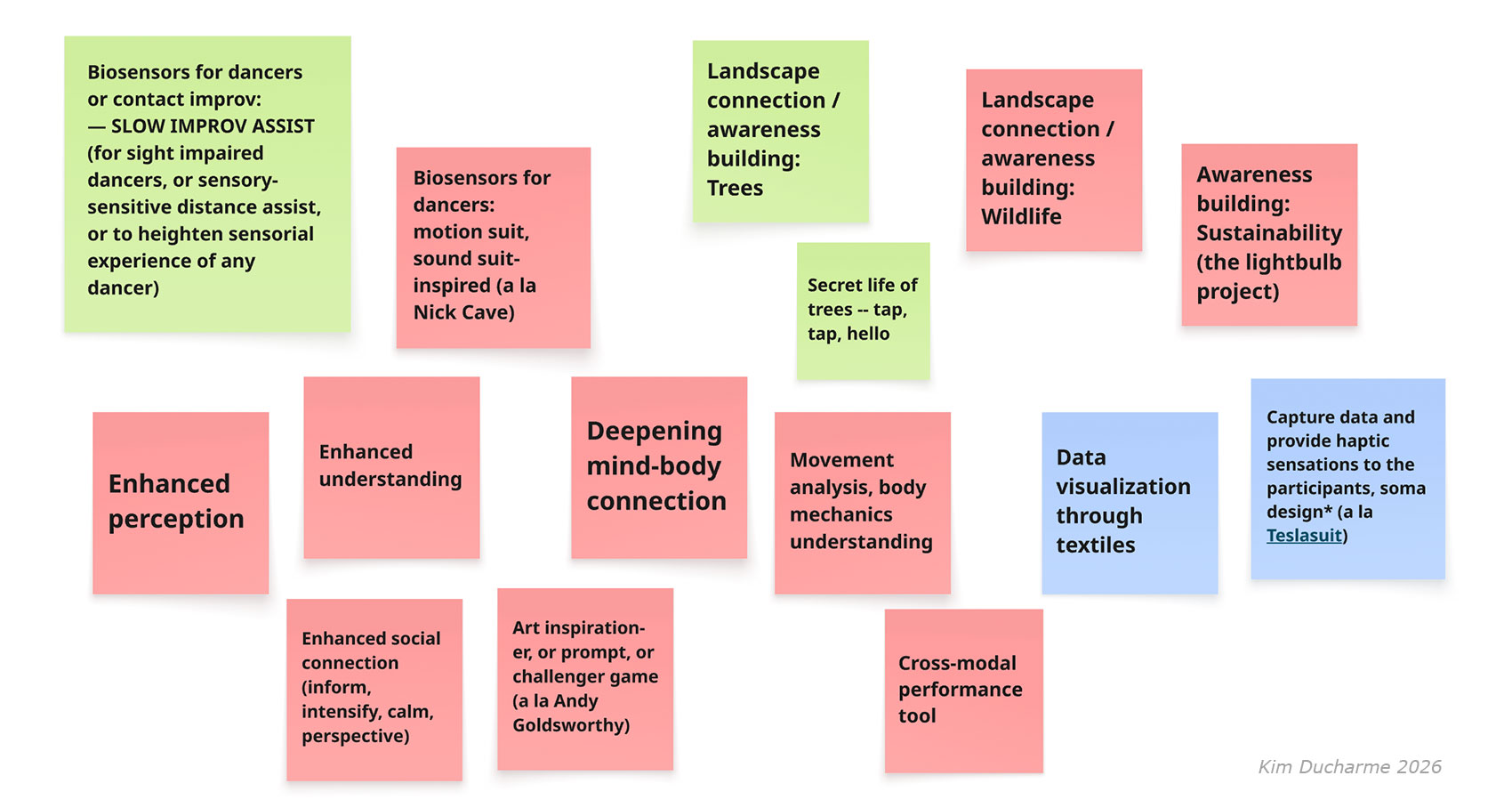
Step 3: Leverage domain knowledge and Fabricademy technologies and skills to test out ideas, discover new ones along the way, and bring project concepts to life.
References, research & inspiration
Preliminary research topic
At the intersection of neuroscience + dance + music: Augmenting proprioception
Proprioception is your body’s subconscious sixth sense — your body’s ability to sense its own position and movements in space. Proprioception is a complex automatic process that you can also fine-tune.
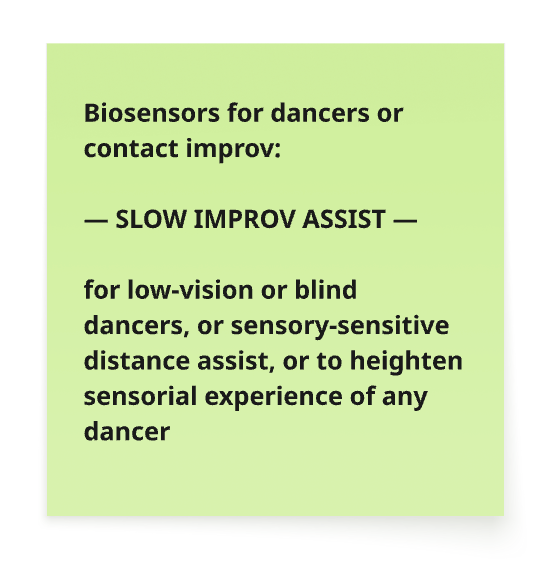
How might textiles, technology, and biology be leveraged to assist and augment the experience of low-vision and blind dancers?
Contemporary dance improvisation — preliminary inspiration
Below are examples of contemporary dance improvisation. How might they work in pairs, and slowed down?
Contemporary Dance Improvisation Exercise:
Improvisation workshop by NDT:
What about pairing slow improv and flamenco?!
Boston dance communities to collaborate with: Abilities Dance Boston, Silent Rhythms, Dark Room Ballet, the Boston Ballet Adaptive Dance Program, and Ilya Vidrin’s Partnering Lab (video below: Proxies: Computation, Performance, & Design research).
Potential technical solutions
- Proximity sensors: Ultrasonic and Time-of-Flight (ToF) Infrared sensors - best for precisely sensing variable distances, but safe for humans; Capacitive Proximity Sensors; Passive Infrared (PIR) Sensors; Specialized Fabric Sensors (“smart cloth”), and Millimeter-Wave (mmWave) Radar.
- Analog solutions: Physical garment designed to detect proximity to another dancer, signals dancer.
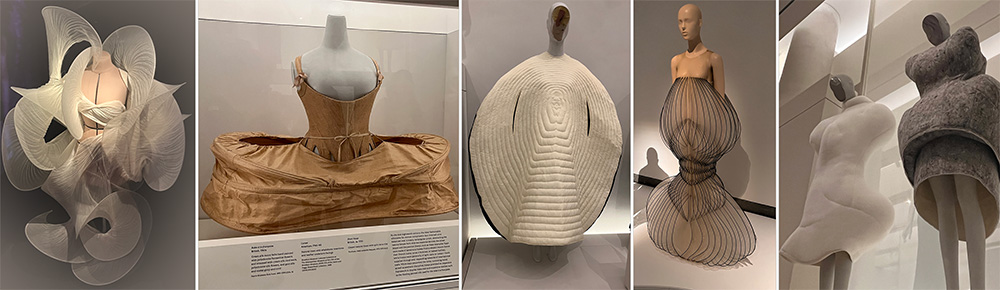
I took the photos below of voluminous garments at the 2026 Iris van Herpen: Sculpting the Senses show in Brooklyn, NY. They inspired me to think about analog solutions.
Documentation workflow
My website design principles: Keep to a clean, minimalist design to draw the eye to the content rather than the wrapper; use logical filenames rather than obscure numbers; and use clear and accessible language and accessibility practices, including proper heading heirarchy and image alt tags for screen readers, and adequate color contrast (contrast checker tool for low-vision users.
Some of the tools and resources I’ll use for this course include:
- Website configuration via Zensical and Zensical markdown documentation
- GitLab Documentation Tutorial
- Markdown Cheat Sheet
- Adobe Suite for image composition and compression
- Miro for a virtual design workspace, vision boards, mind mapping, etc.
- Class archive for alum inspiration and wisdom
- Fabricademy Handbook as a course resource
GitLab and website building
I updated the basic information in the Zensical.toml file (e.g. my name, copyright info, etc.). I kept the default styling, except for choosing gray #757575 for the page top heading background.
I tried the DM Serif Display font for headings h1 and h2, but the visual hierarchy was not right. I tried bolding them, but still not right. I decided that the default styles worked better.
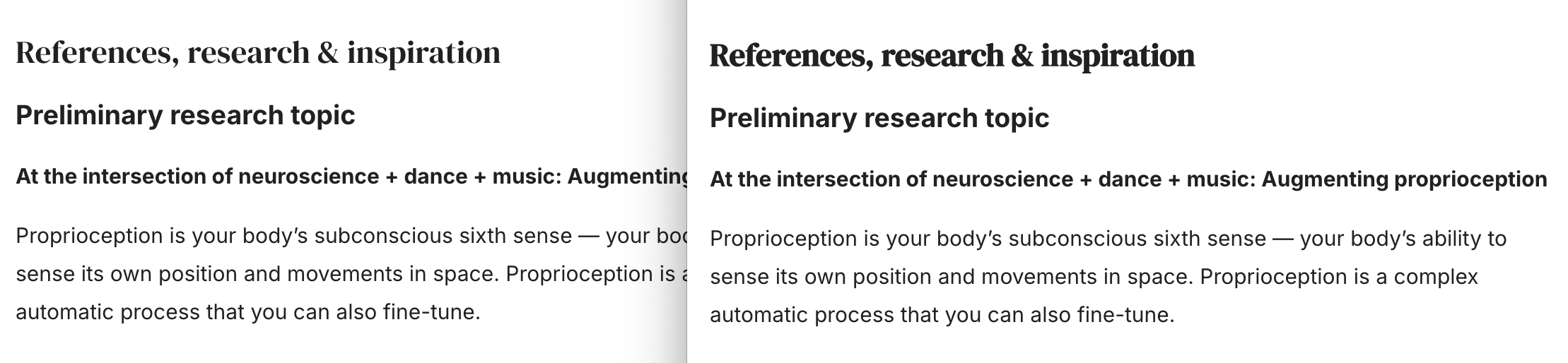
// Code added to the extra.css file to change headings
.md-typeset h1, .md-typeset h2 {
 font-family: "DM Serif Display", serif;
 font-weight: 400;
 font-style: normal;
}
// Code added to the Zensical.tom file
extra_css = [
  "stylesheets/extra.css",
  "https://fonts.googleapis.com/css2?family=DM+Serif+Display:ital@0;1&display=swap",
]
I followed Myles Zach-Zell’s lead and removed the default letter spacing adjustment to open up the space between letters for better readability. It looks subtle here, but overall, provides better readability to the page.

/* Code for the extra.css file */
.md-typeset, .md-typeset h1, .md-typeset h2, .md-typeset h3, .md-typeset h4, .md-typeset h5, .md-typeset h6, .md-header__title {
  letter-spacing: 0;
}
Adobe suite is my go-to for image processing, vector graphics, and video, but I will also experiment with open-source options such as Canva (image and composition), InkScape (vector), Gimp (image), DaVinci Resolve (video), and others.
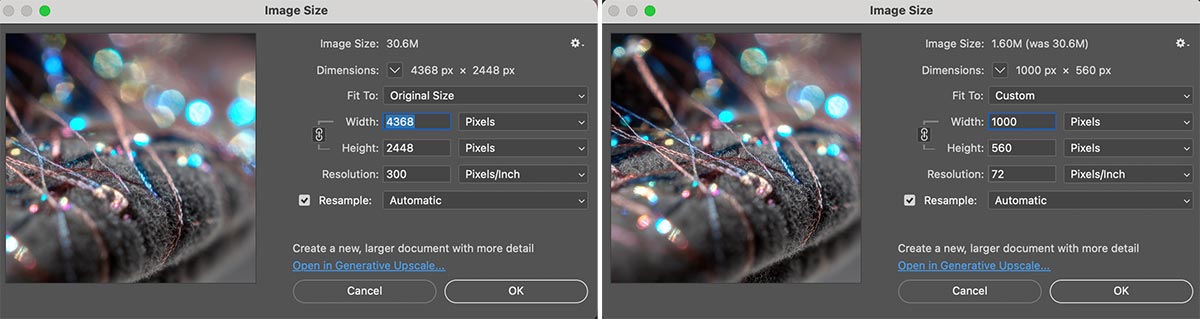
Workflow for image sizing and compression: Capture images > move to proper folder > make selections > bring into Photoshop to adjust and size > save for the web (shoot for 100-200 MB).
With the “resample” box checked, first change the resolution to 72 dpi, then the width to 1000 pixels wide (order matters).
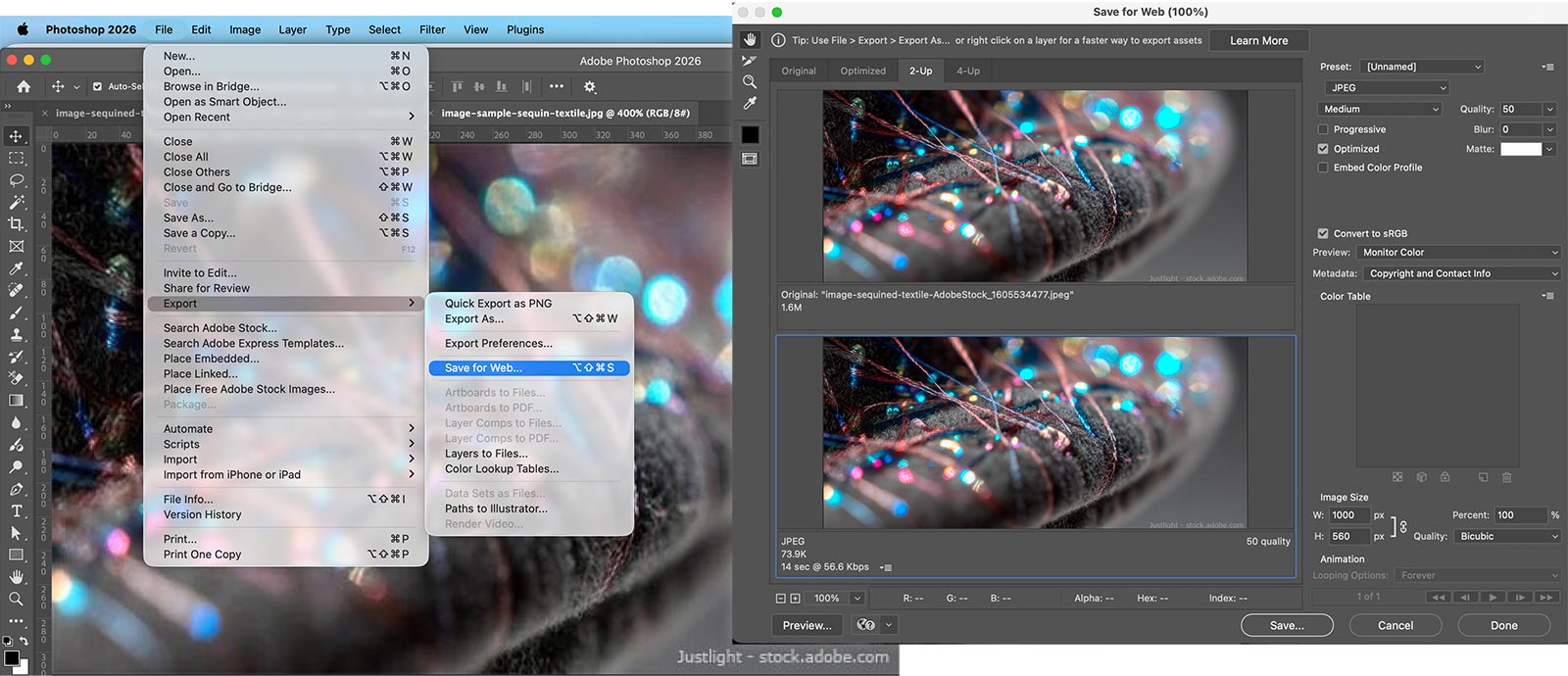
Then, choose File > Export > Save for Web and set your compression settings. Pngs are for flat images and diagrams, and jpegs are for photos. Compress as much as possible without losing too much visual clarity. I make sure the “optimized” box is checked, and usually compress my jpegs to medium, quality 50.
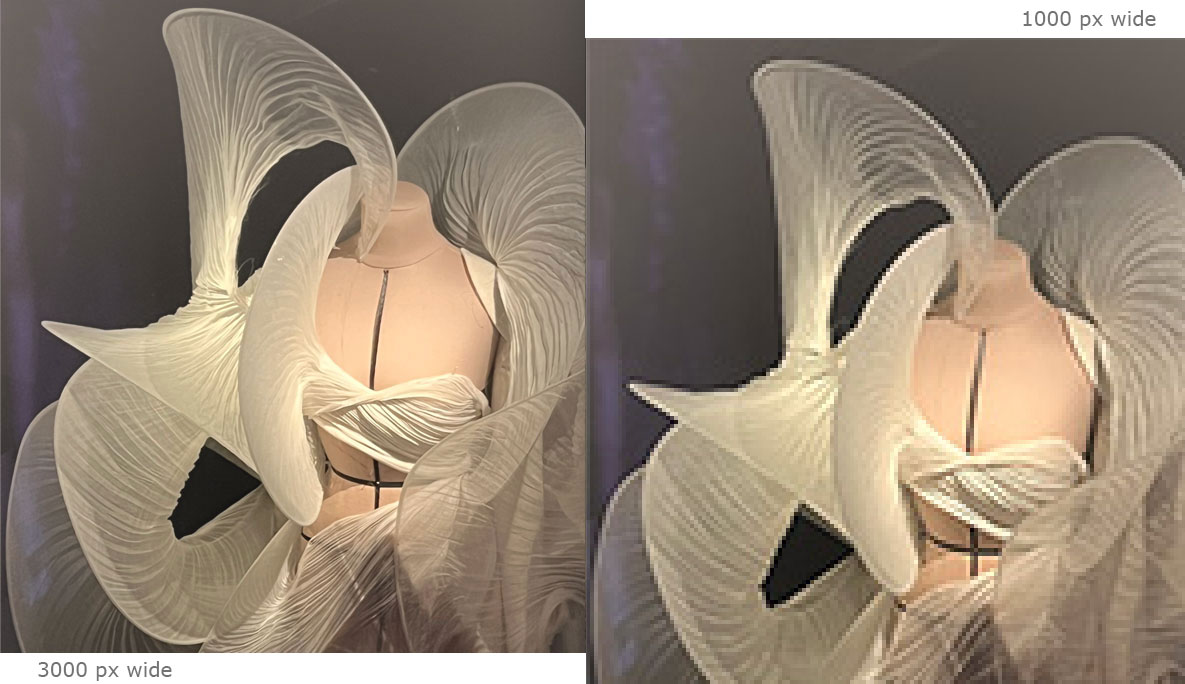
A note on resolution: An image that is 1000 pixels wide provides low resolution detail. Here is an image saved at 1000 and 3000 pixels wide. The detail of the left-hand image is lost. My conclusion is to use low resolution where small details are not critical, and save my image bank ‘spending allowance’ for those where fine details are key.
Design process methods
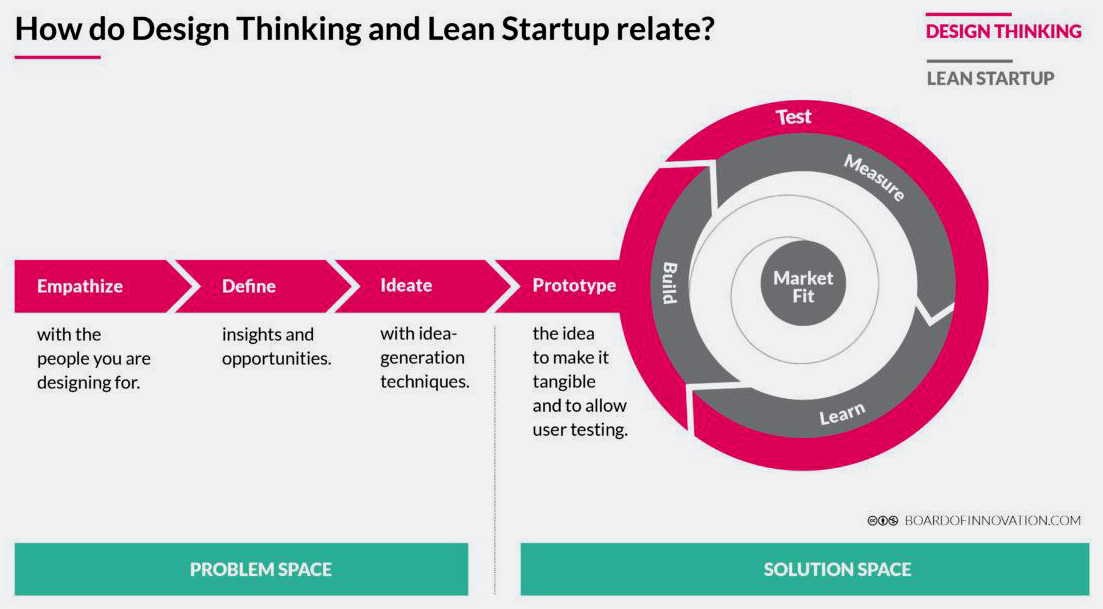
My go-to creative problem-solving tools and methods include stickies, mind maps, and human-centered design processes. In particular, I like to pair design thinking with the lean build-measure-learn cycle. This is my favorite diagram of how these two fit together:
Reflection
I don’t know if my initial direction is going to be possible — some sort of improv dance assist or related concept. My focus for the next few months will be on learning as much as possible and being open to possibilities related to my initial ideas, and to new ones that come along the way.