01 Concept
Overview
5 Ws who, what, when, where, why
Who?
Gratitude Loom is for people seeking a slower, more intentional relationship with intelligent systems through embodied making and rhythmic repetition.
What?
A 4-shaft weaving instrument augmented with sensing and AI that listens to the rhythm of making and allows structure to evolve through steadiness rather than speed.
When?
Activated during short, intentional weaving sessions structured as cycles of reflection and repetition.
Where?
It can exist in homes, studios, or exhibition spaces as a participatory ritual apparatus that invites sustained presence.
Why?
Contemporary intelligent systems prioritize acceleration, optimization, and constant responsiveness. Gratitude Loom asks whether computation can instead support human rhythm. Rather than rewarding productivity, it privileges continuity. The woven textile becomes a material trace of lived cadence rather than achievement.
How?
Each session begins with a brief spoken expression of gratitude that marks a transition from accelerated daily time into intentional making. This vocal articulation slows cognition and sets a reflective tone before repetition begins. The system then listens quietly to the rhythm of repeated hand movements, responding to steadiness rather than precision. Slight variation is welcomed as part of human cadence. When rhythm settles into coherence, structure deepens gently; when it softens, the weave eases without interruption. The loom does not enforce tempo—it accompanies it, holding space for sustained rhythm to unfold at a human pace.
Thesis
In a hyper-accelerated computational world, can technology be designed to deepen slowness, presence, and embodied awareness?
Project Statement
Gratitude Loom reimagines artificial intelligence as a listener to human rhythm. In a computational culture driven by acceleration and constant optimization, the work proposes a quieter temporal logic—one grounded in sustained repetition and unfragmented time. During ritualized weaving sessions, the system responds to the cadence of making, allowing structure to evolve through steadiness rather than speed. Slight variation is embraced; pauses are permitted without penalty or reset.
The loom does not measure productivity or demand correction. Instead, it holds space for continuity to settle. As rhythm stabilizes, the woven pattern deepens gently; when it softens, structure eases without rupture. The resulting textile becomes a material trace of lived cadence—a record of time that is inhabited rather than managed.
Gratitude Loom asks whether intelligent systems can support slowness not by enforcing it, but by listening.
First working prototype—Voice-Activated Gratitude Weaving Loom by Pattaraporn (Porpla) Kittisapkajon
Moodboard
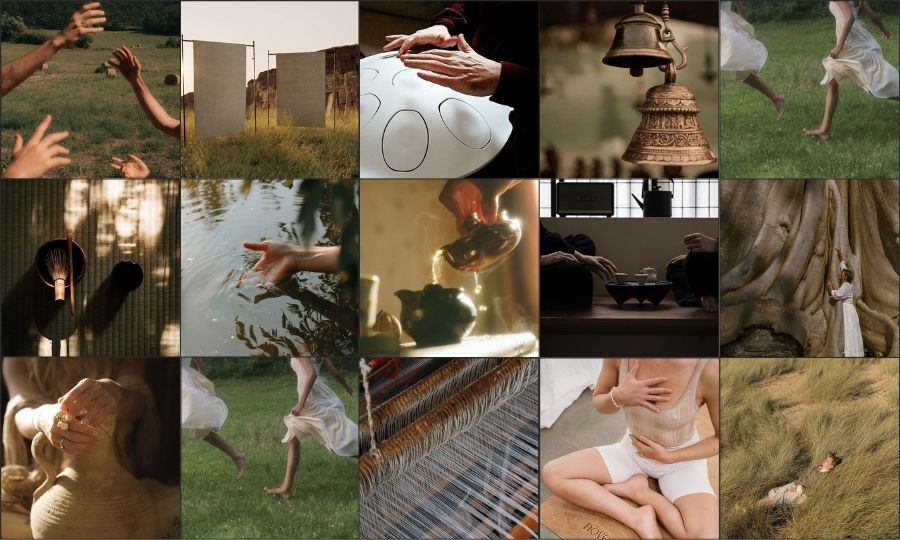
This moodboard shaped the design, experience, and philosophy of Gratitude Loom. Originally, I wanted the project to be about a simple daily ritual — hence the tea making. But the more I pulled images together, the more I kept reaching not for what the ritual is, but for what it could become for the person performing it. Hands kept appearing because that's where the body meets the material world. Two hands meeting felt like the truest image of what I'm trying to build: something between me and the loom, between maker and material, and sometimes between people where no one is fully in charge. The woven threads gave structure. The open fields gave permission to leave space. The barefoot figures reminded me that presence doesn't have to be solemn — there's a kind of attention that's playful, almost mischievous. The handpan and the bell are instruments for awareness without demanding it. You have to be there to hear them. The palette is quiet, but I don't want it to read as soft. Underneath there's something more stubborn — a refusal to move quickly, even when everything around me does. The loom wants to be a daily practice you do with your hands. Weaving as a way of noticing. A small ritual of gratitude, made slowly, by touch.
References
Human-Machine Collaboration
Sougwen Chung collaborates with robots on large-scale paintings
Temporal Design
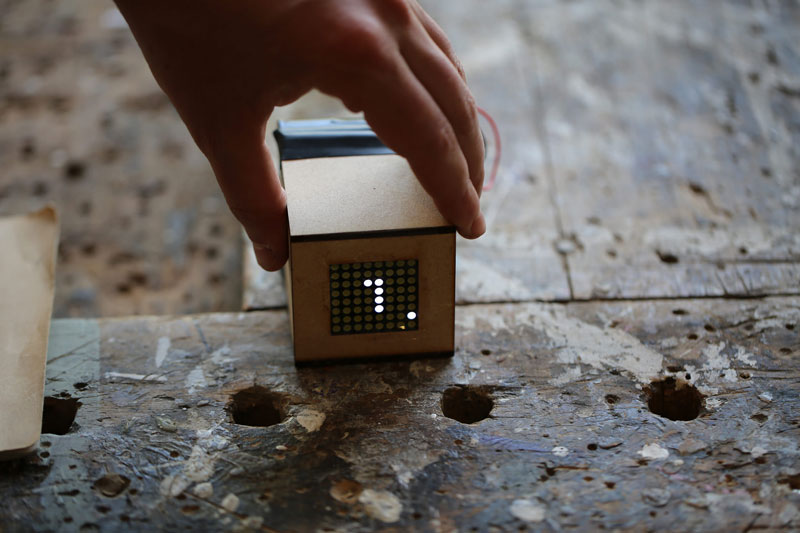
Slow Game by Garnet Hertz, Will Odom and others
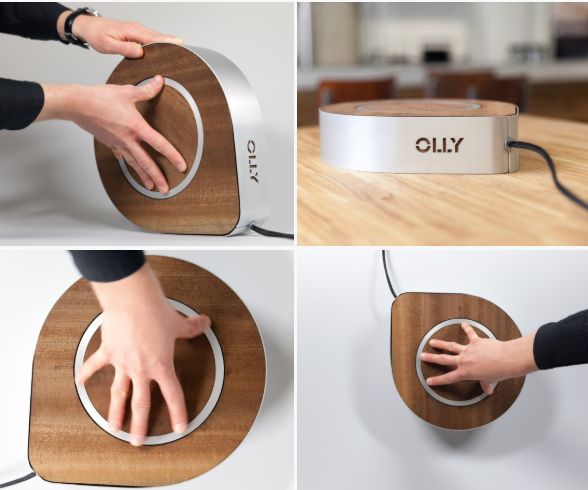
Olly by William Odom, Ron Wakkary, Pepijn Verburg, Bram Naus, and Jeroen Hol
Voice-Activated Loom
Kae Nagano’s Voice-Activated Weaving Loom
Digital Jacquard Loom
Fabricademy 2024-25 Aristarco Cortes - Loom One