Circular open source fashion
1. Understanding
Circular open source fashion mixes circular design with open source models. Creating modular pieces like assembles or modules, this allowing more possibilities like assembling, repairing, transforming a piece into another, making it's mantainance easier.
2. References, research & inspiration
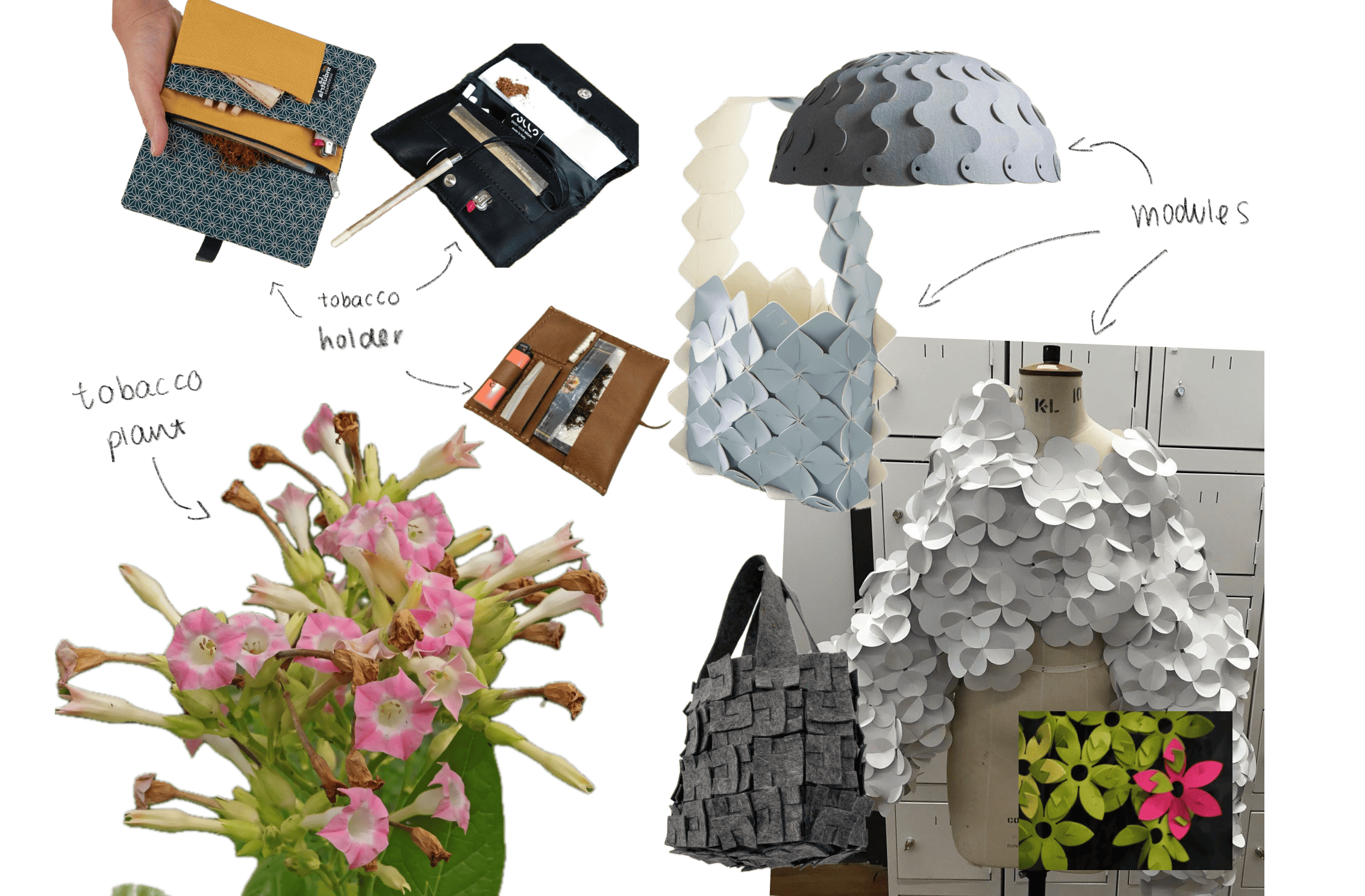
I started looking at some modules and how they were done, some different types and ways of connecting them. Also studying the shape of tobacco pouches to get some idea of what it needed.
3. Tools
4. Process and workflow
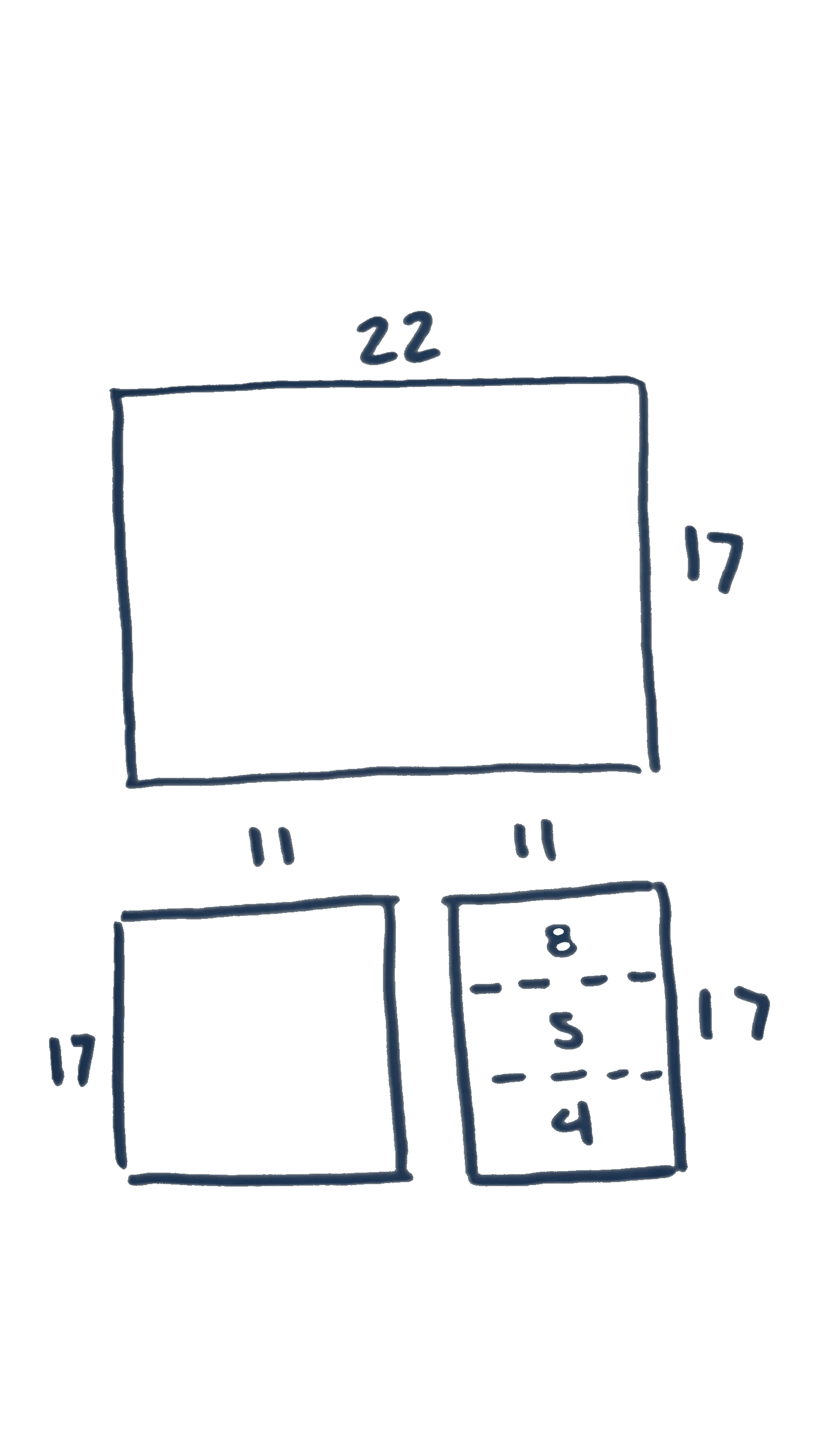
For this project I started with the idea of making an upcycled tobacco pouch. I drew a sketch with the measurements, got some second hand jeans, cut them, and started to explore the shape.
Shape
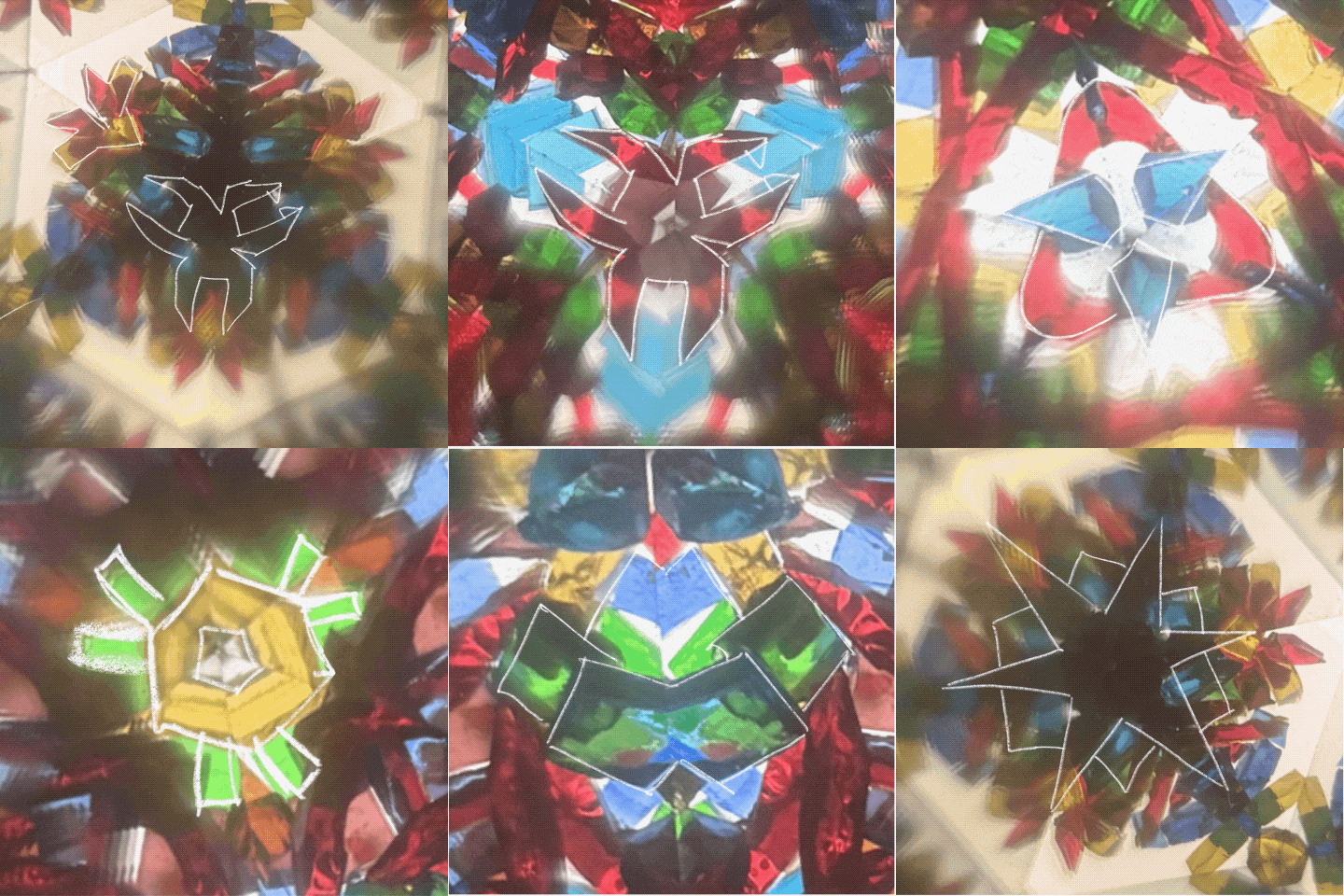
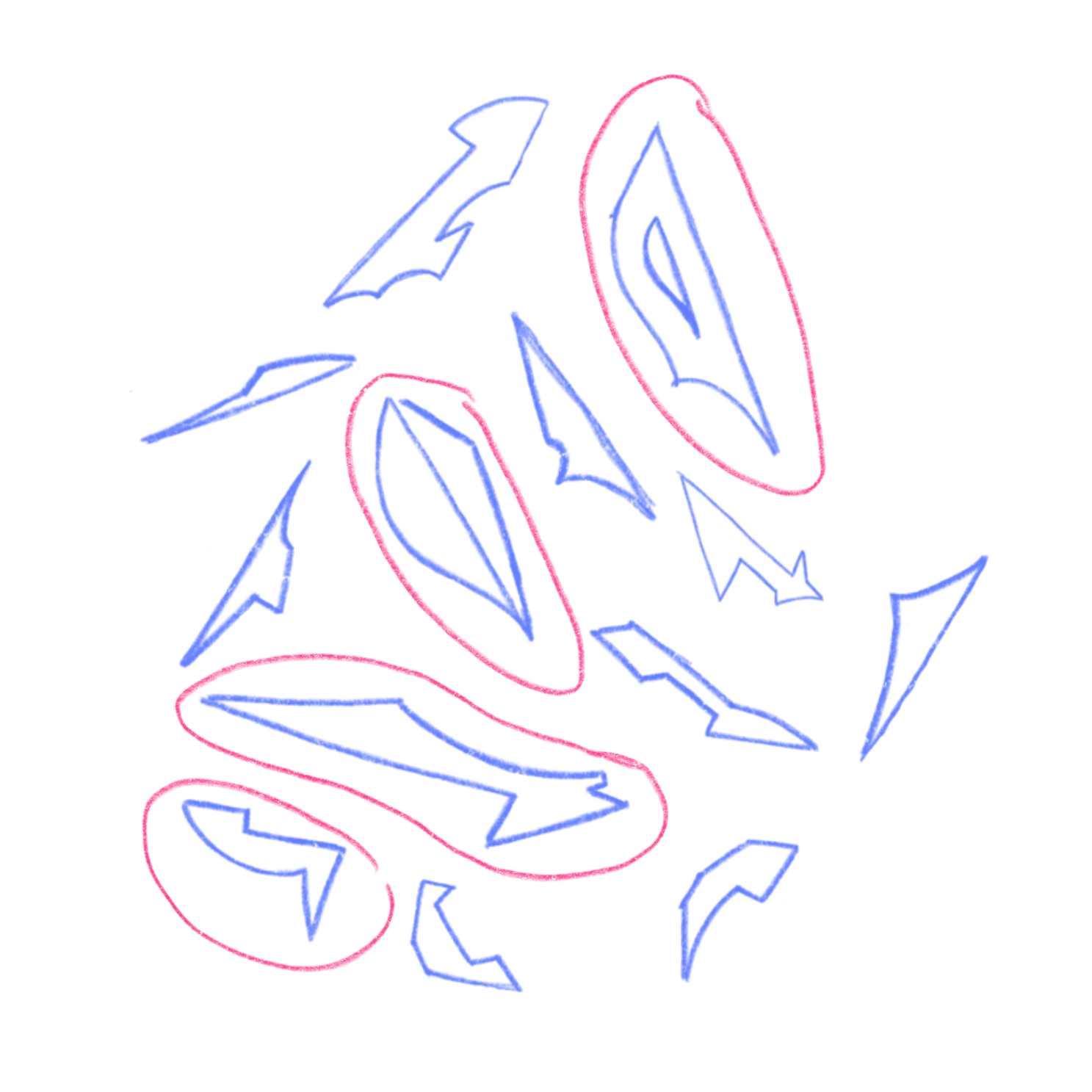
I started with looking at my kaleidoscope and taking pictures of some of the images it generated.
After this, using procreate, I started to find shapes in this images, I chose some of them and started exploring more around them. Selected some preliminar shapes and chose the final one.

Making it modular
To understand how to make it modular and see if it could work, I cut the shape in paper and started doing some cuts to figure out how to make it a module.
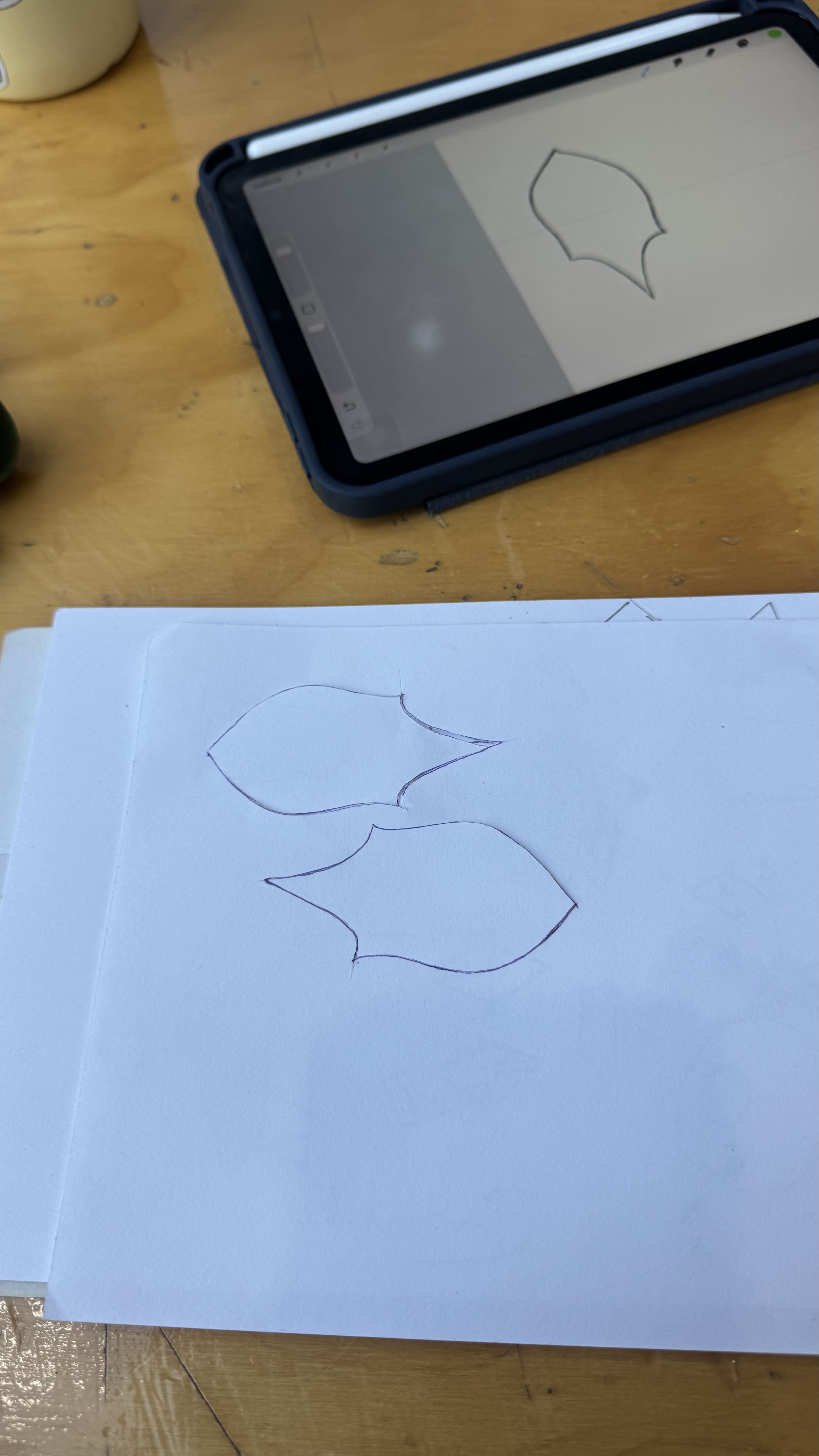
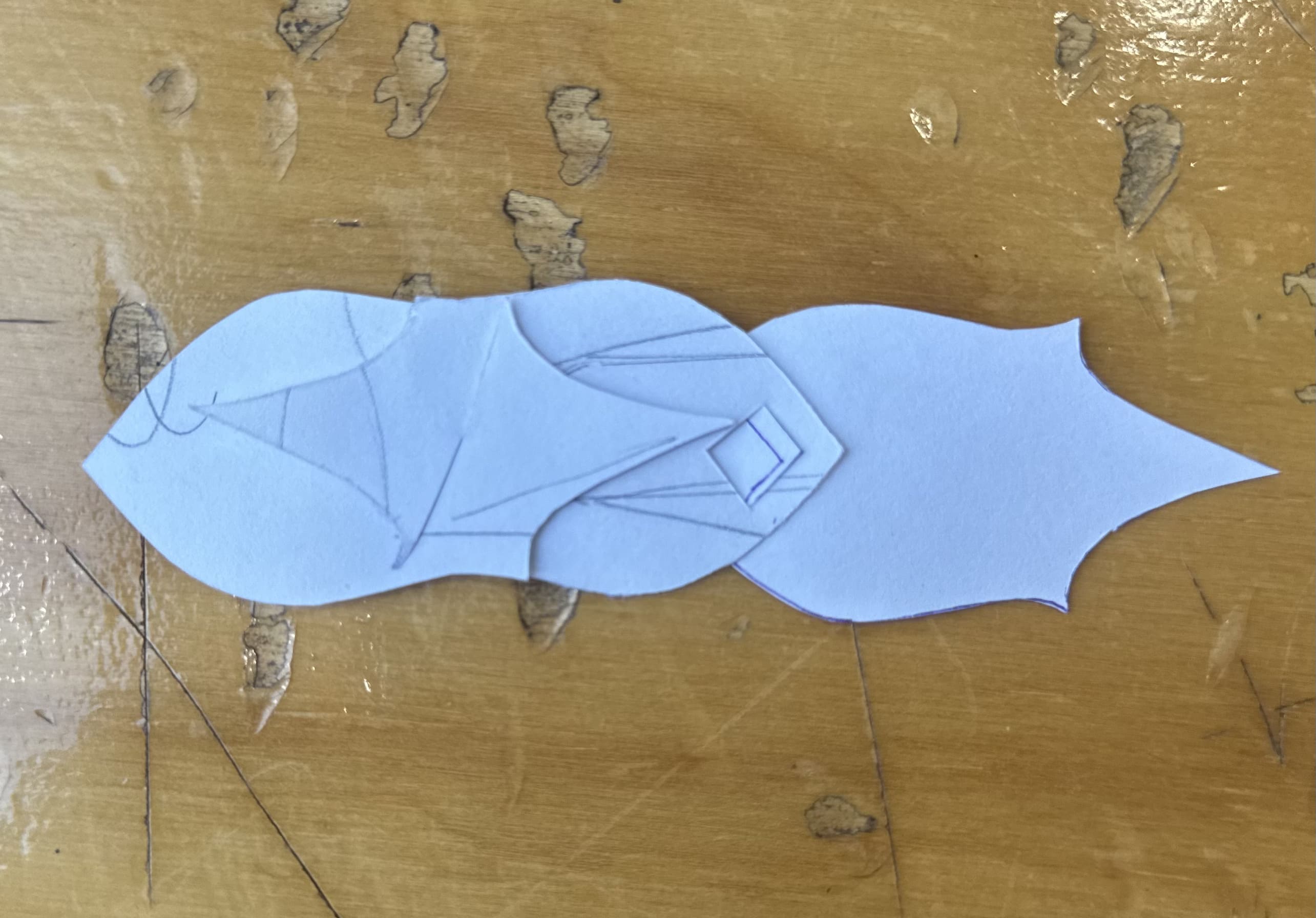
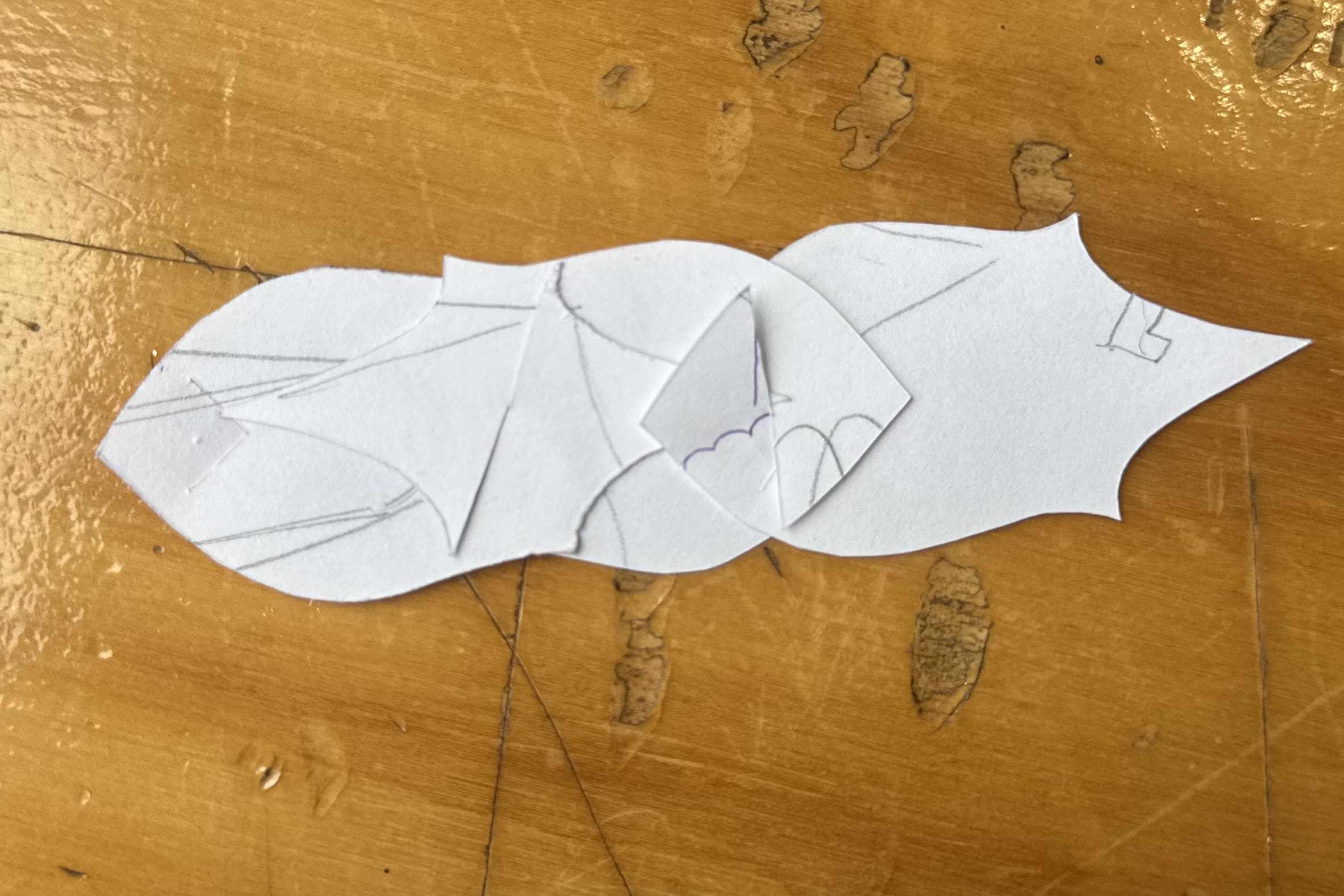
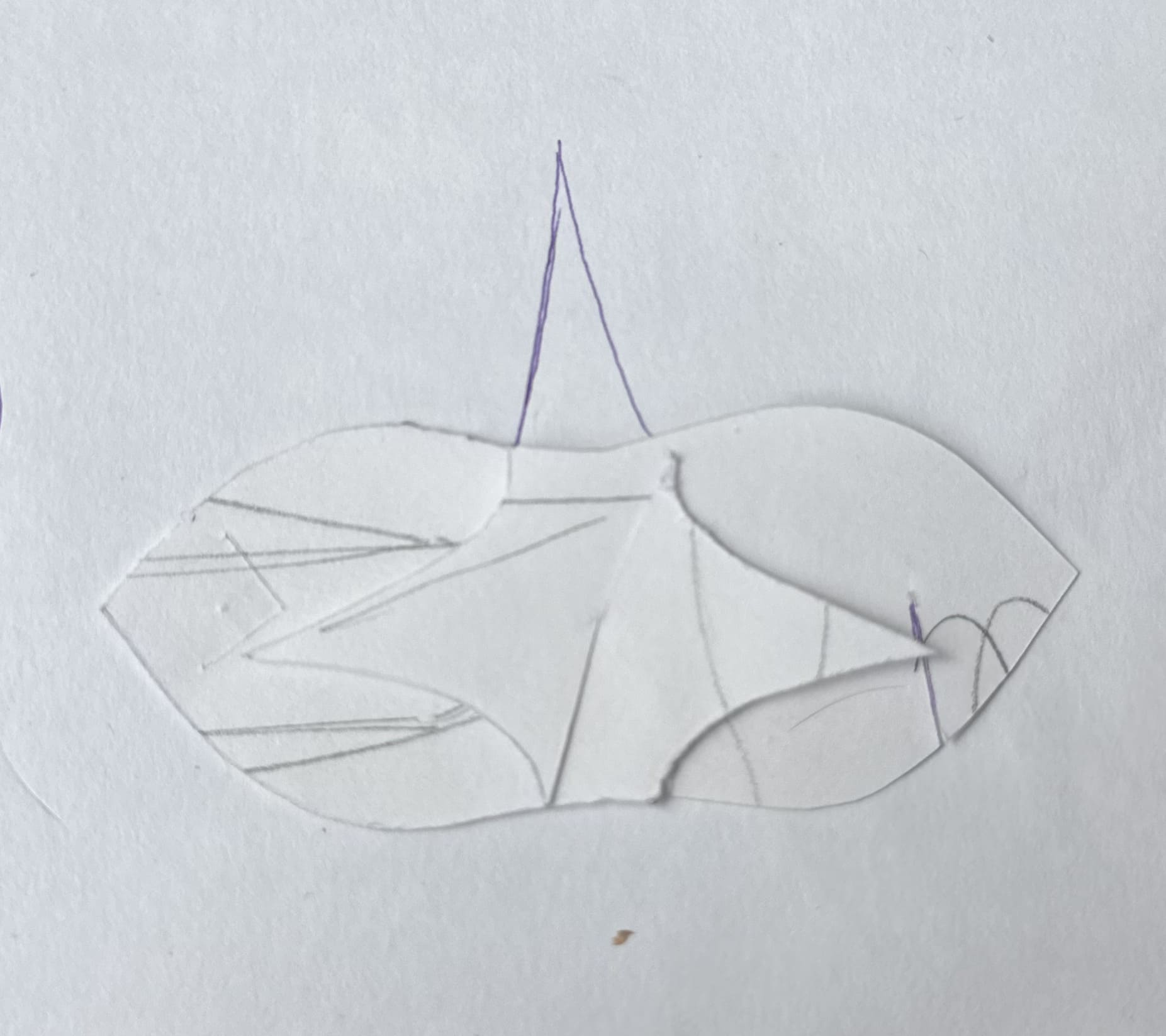
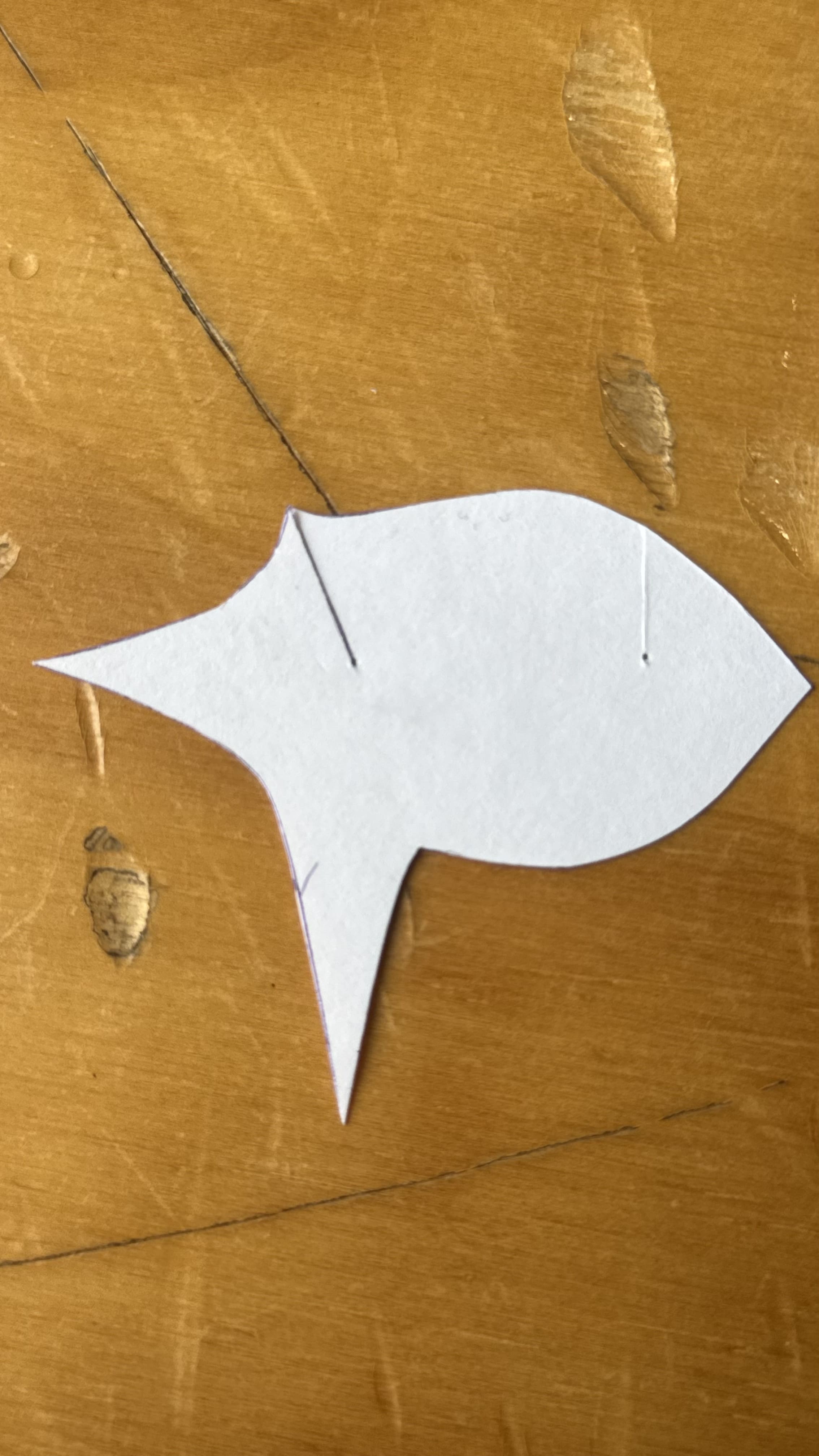
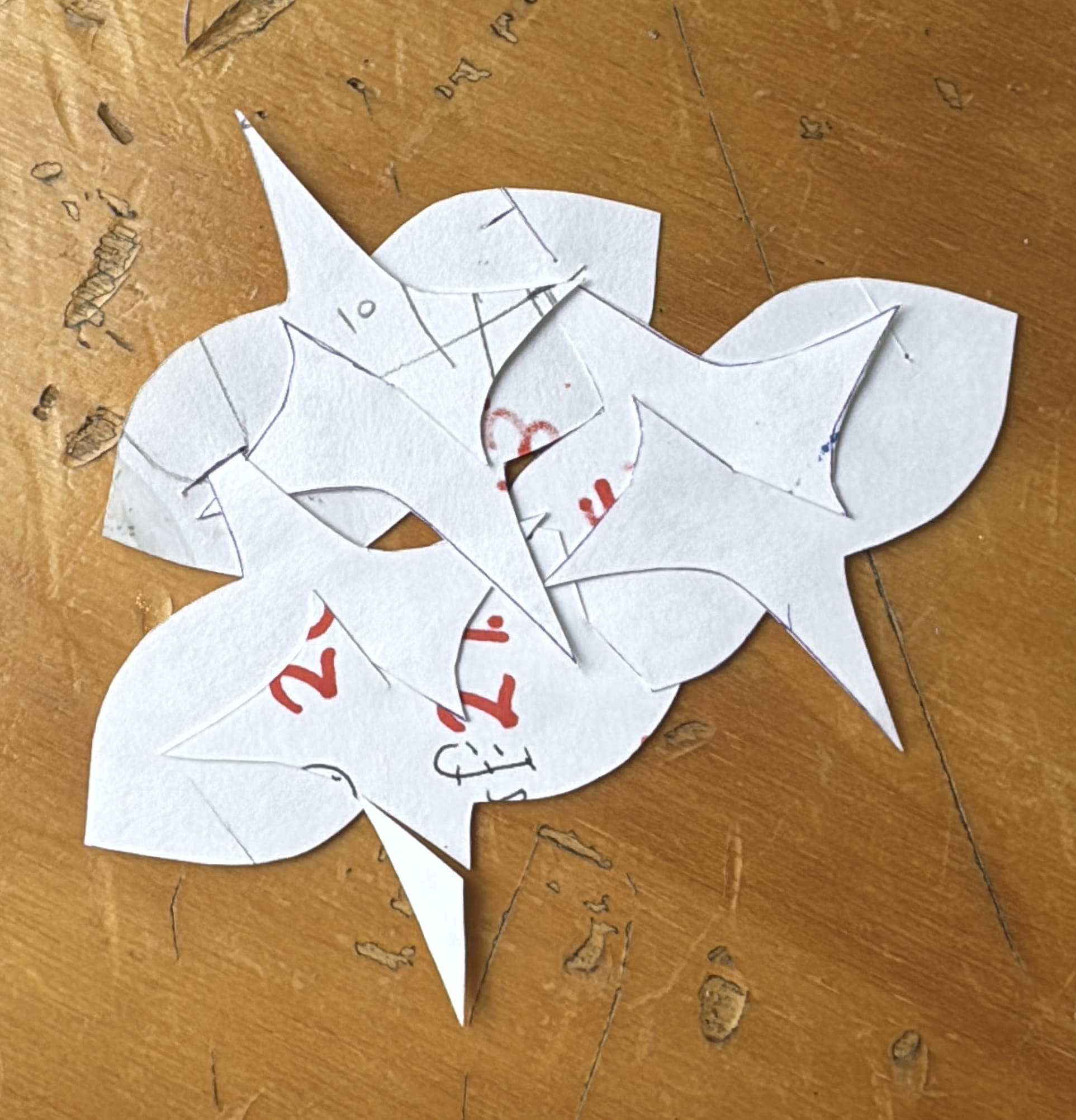
After some exploration, the shape evolved I decided to keep figure 5
Making the file
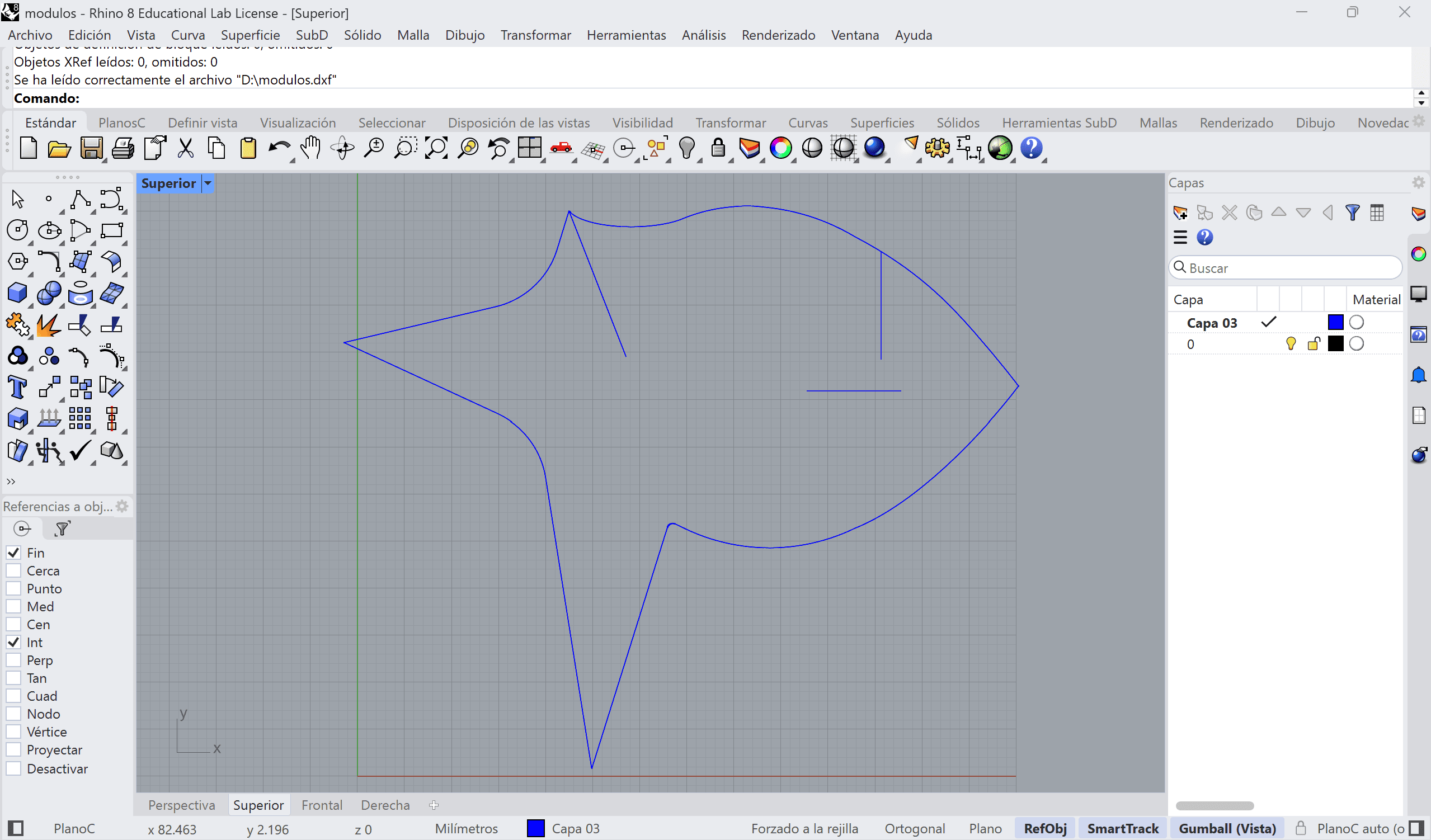
I did the lines in rhino, using an image plane and the polyline function I replicated the shape I made on paper.
Laser cut
After having the file ready I cut 4 different jean fabrics.
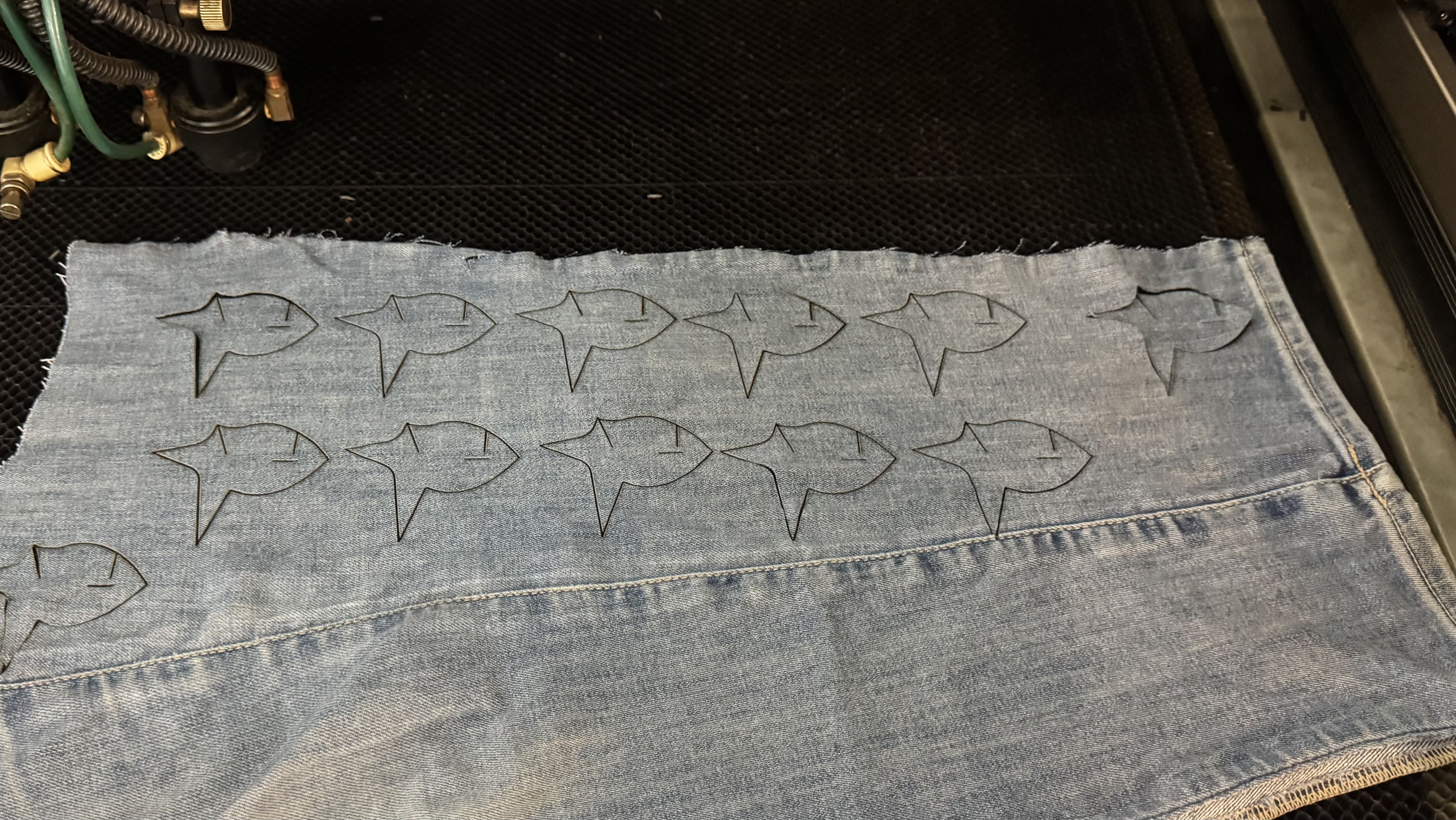
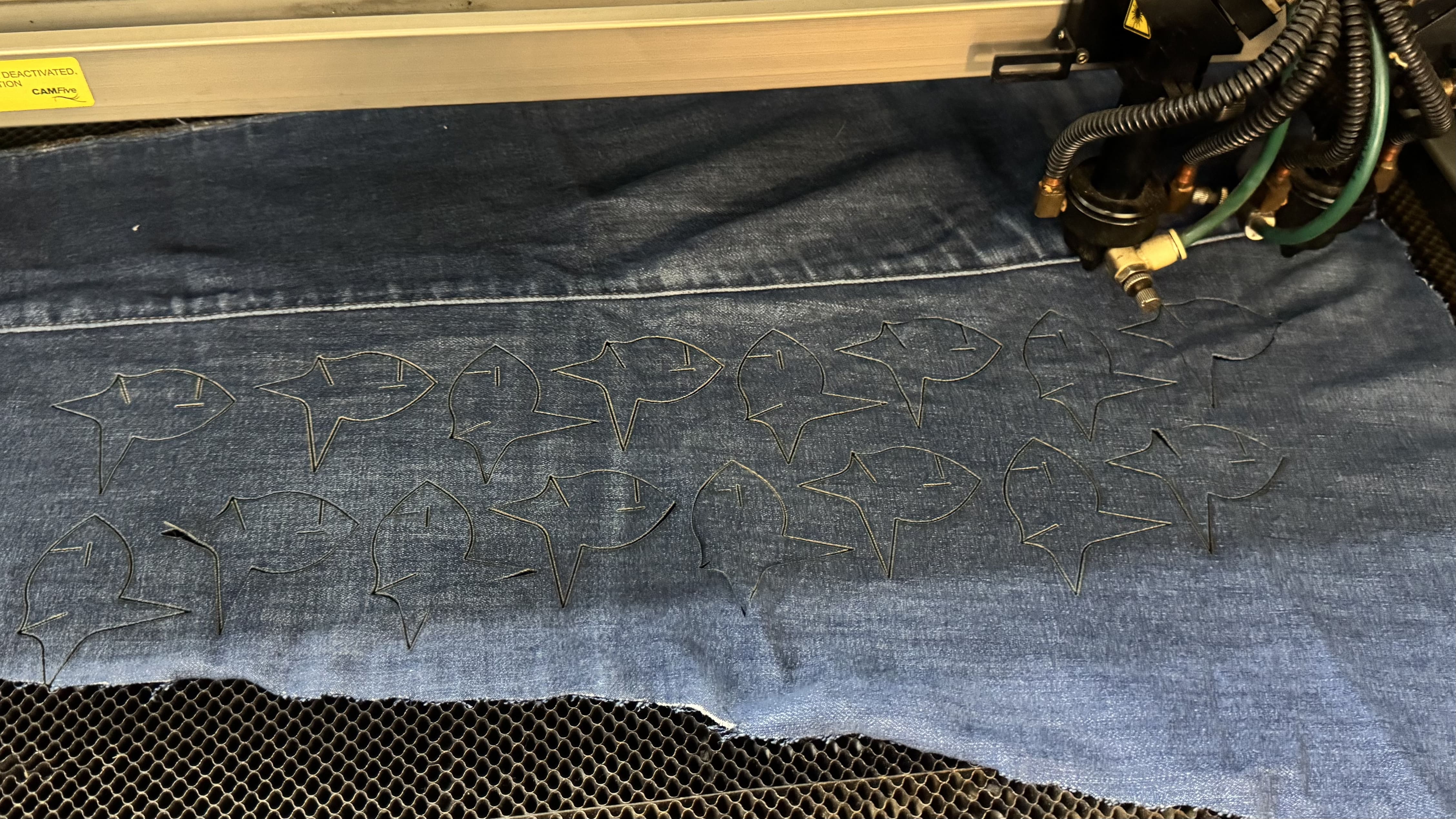
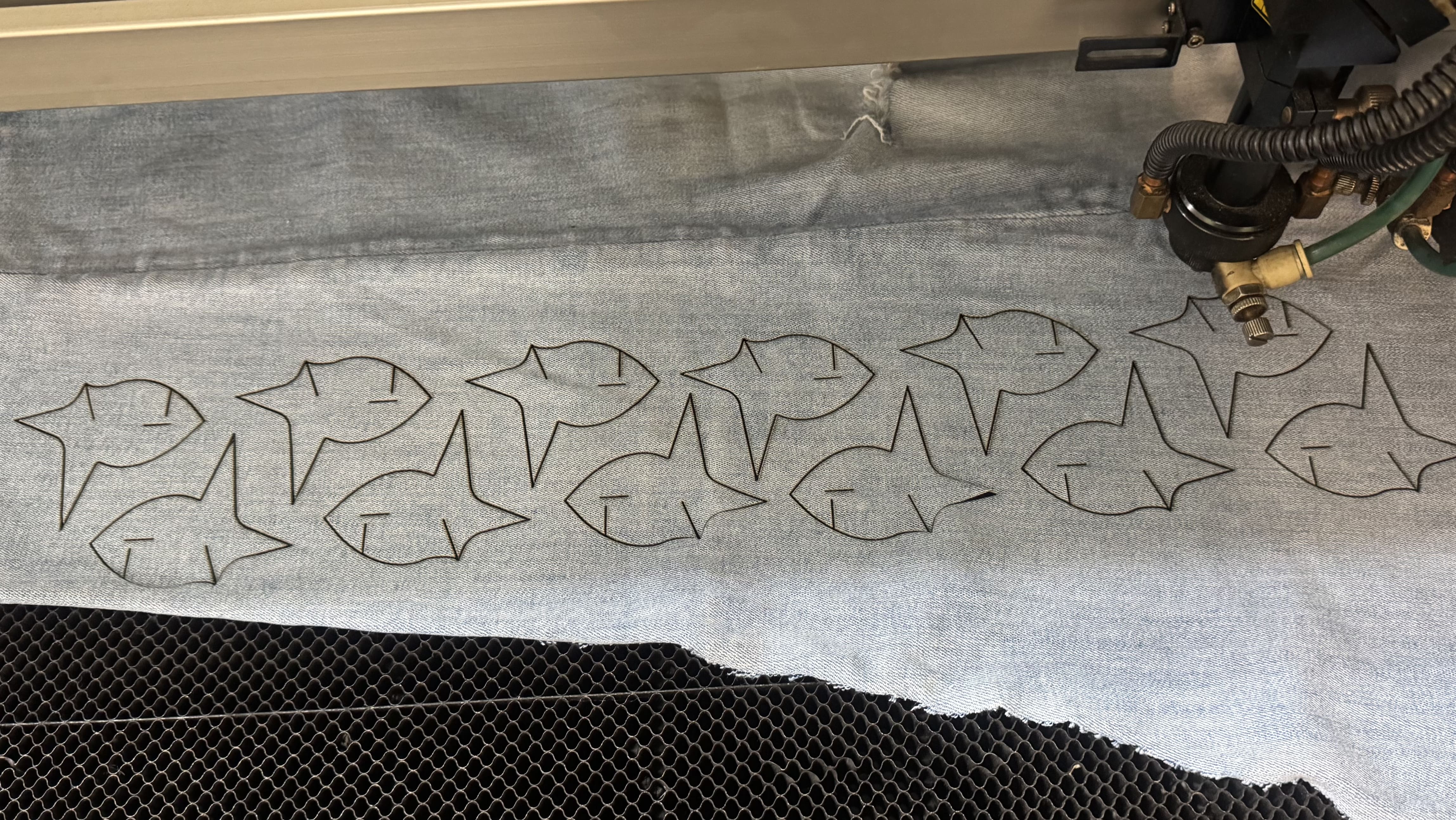
Used parameters:
Max. Power 35%
Min. Power 25%
Speed 30 mm/s
Assembling
After having the final shape i started to assemble them, first in pairs, then 2 pairs, lines, until I had a full plane.
With the help of the sewing machine I added some raw fabric as lining because I noticed the fabric I used was too fragile.
/* gif ensamble */
5. Results
/* fotos producto final */
6. Weekly reflection & critical thinking
This practice was really interesting for me because it was the first time i've worked with modules, understanding them was a challenge and making one took me a lot of time. I enjoyed this a lot because each part of the process thought me something useful, from making my shape modular, to assembling the figures, it had a lot of challenges which ended up being enriching for my knowledge.
7. Fabrication files & References
-
Reference: Author; Title; Source; year ↩