
Understanding biochromes
Biochromes are natural pigments found in living organisms that give them color. These pigments are chemical compounds that selectively absorb and reflect light, creating the colors we see.
These can be categorized into:
Non-nitrogenous pigments
| Family | Colors | Source examples |
|---|---|---|
| Carotenoids | yellow, orange, red | carrot, tomato, annatto, saffron, paprika, marigold |
| Quinones | ||
| -Benzoquinones | yellow-orange | primrose, secretions of some beetles |
| -Naphthoquinones | brown, red, purple | henna, walnut hull, alkanet, Lithospermum |
| -Anthraquinones | red, pink, orange | madder, rhubarb, cochineal, senna |
| -Polycyclic | red, purple | hypericin, crinoid pigments |
| Flavonoids | yellow, red, blue, purple | red cabbage, hibiscus, purple corn, butterfly pea, onion skin, weld, safflower, logwood |
Nitrogenous pigments
| Family | Colors | Source examples |
|---|---|---|
| Porphyrins | green, red | spinach, nettle, parsley, matcha (chlorophyll); blood (heme) |
| Bilins | blue, red-pink, green, yellow | spirulina (phycocyanin), red algae (phycoerythrin), biliverdin, bilirubin |
| Melanins | black, brown, sepia | squid/cuttlefish ink, chaga, dark hair and feathers |
History
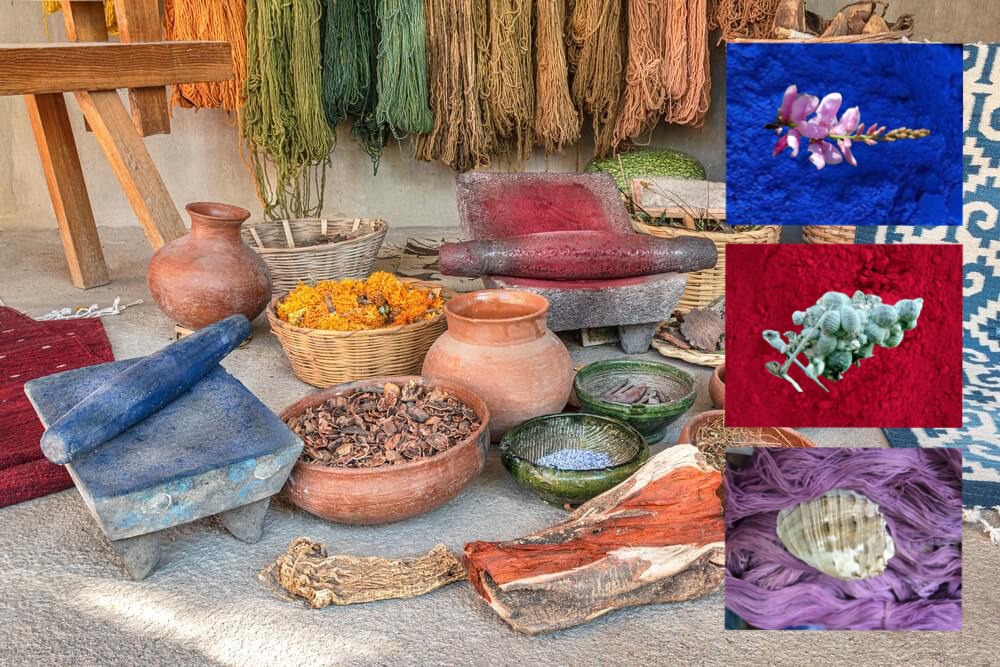
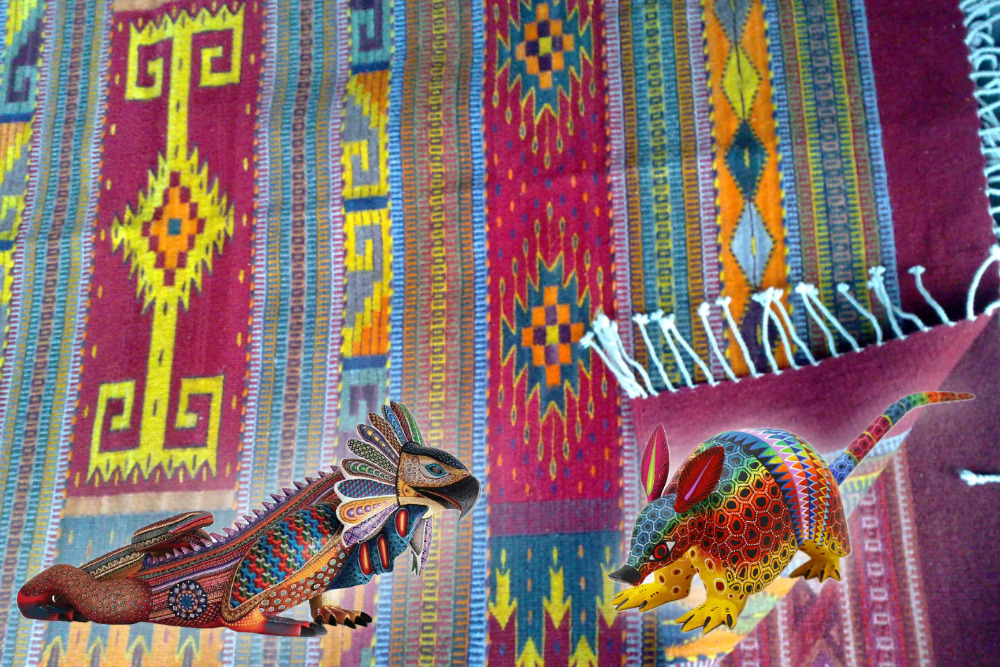
In Mexico natural dyes have been understood and applied since prehispanic times, they were used to color textiles like clothes and rugs as well as wood. Some of the most used were cochineal, a red dye obtained from an insect that lives on nopal, añil, a blue dye extracted from the jiquilite plant and the purple dye of the sea snail plicopurpura pansa. These processes are still used today, although interest in them is less due to the arrival and accesibility of synthetic dyes. Today they are preserved by artisan communities, open to teach people who have sustainable interests.
Process and workflow
For this practice we used the laboratory at Ibero Puebla, guided by Majo.
Materials
- Glass beakers
- Watch glass
- Laboratory spoons
- pH indicator strips
- Digital stirrer
- Analytical balance
- Precision thermometer
Ingredients
- Sodium hydroxide
- Hydrochloric acid
- Potassium aluminum sulfate
- Distilled water
- Hibiscus
Fabric
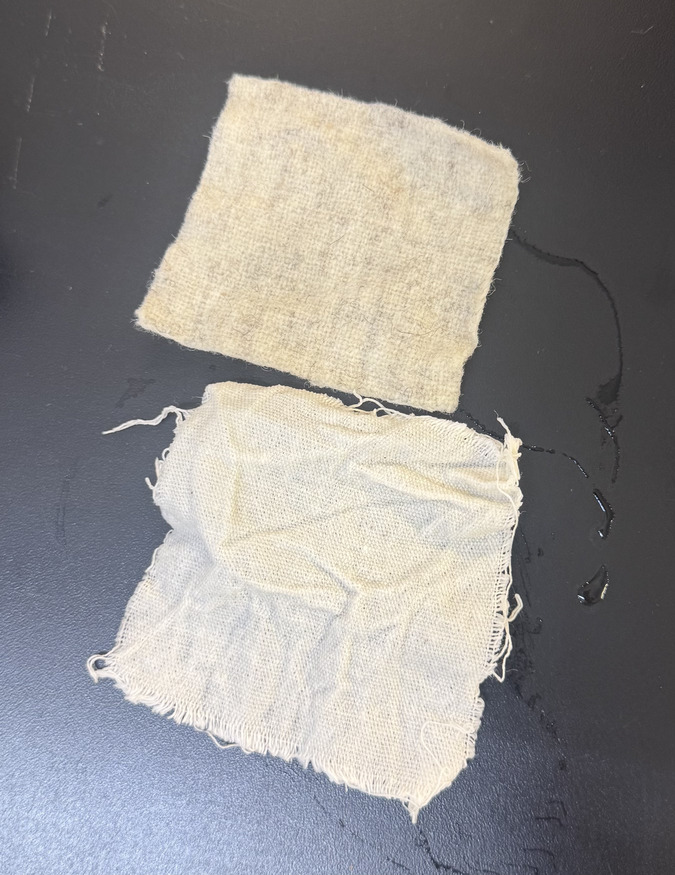
We used animal fabric: wool and vegetal: muslin.
- Cut in 10cm x 10cm squares
- Wash with water
- Boil at 60°C
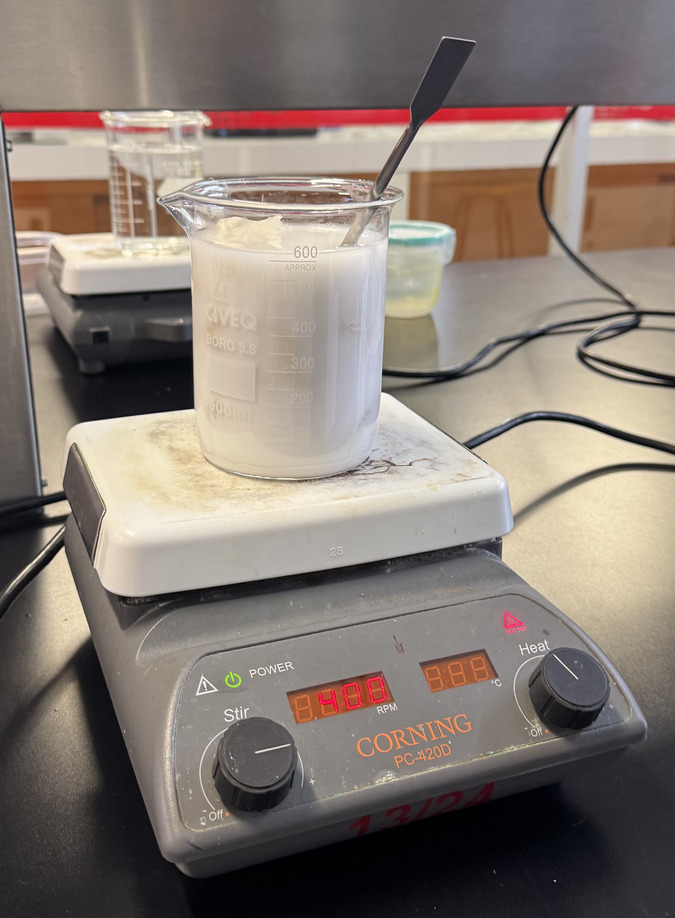
- Boil with mordant at 60°C for 1 hour
Mordant
500 ml water
50 g Potassium aluminum sulfate

For the pigments
Hibiscus
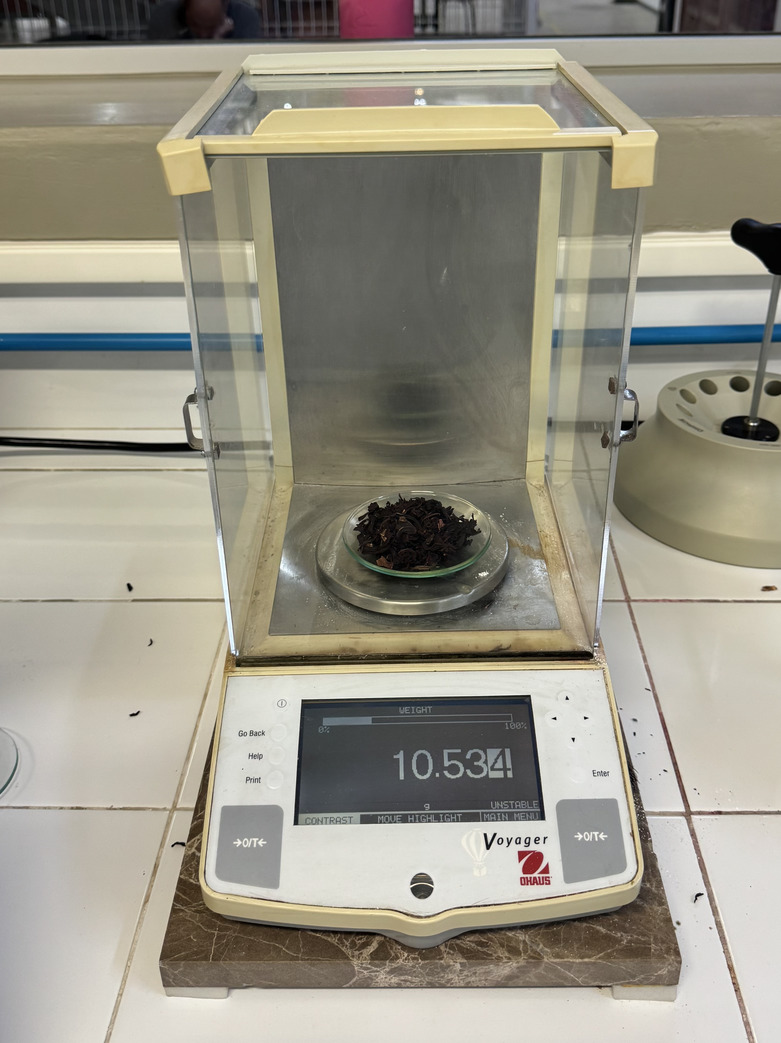
- Weight (10.53g) using the analytical balance
- Turn on
- Open doors
- Place container
- Close doors
- Tare
- Place material to weigh
- Rinse with water
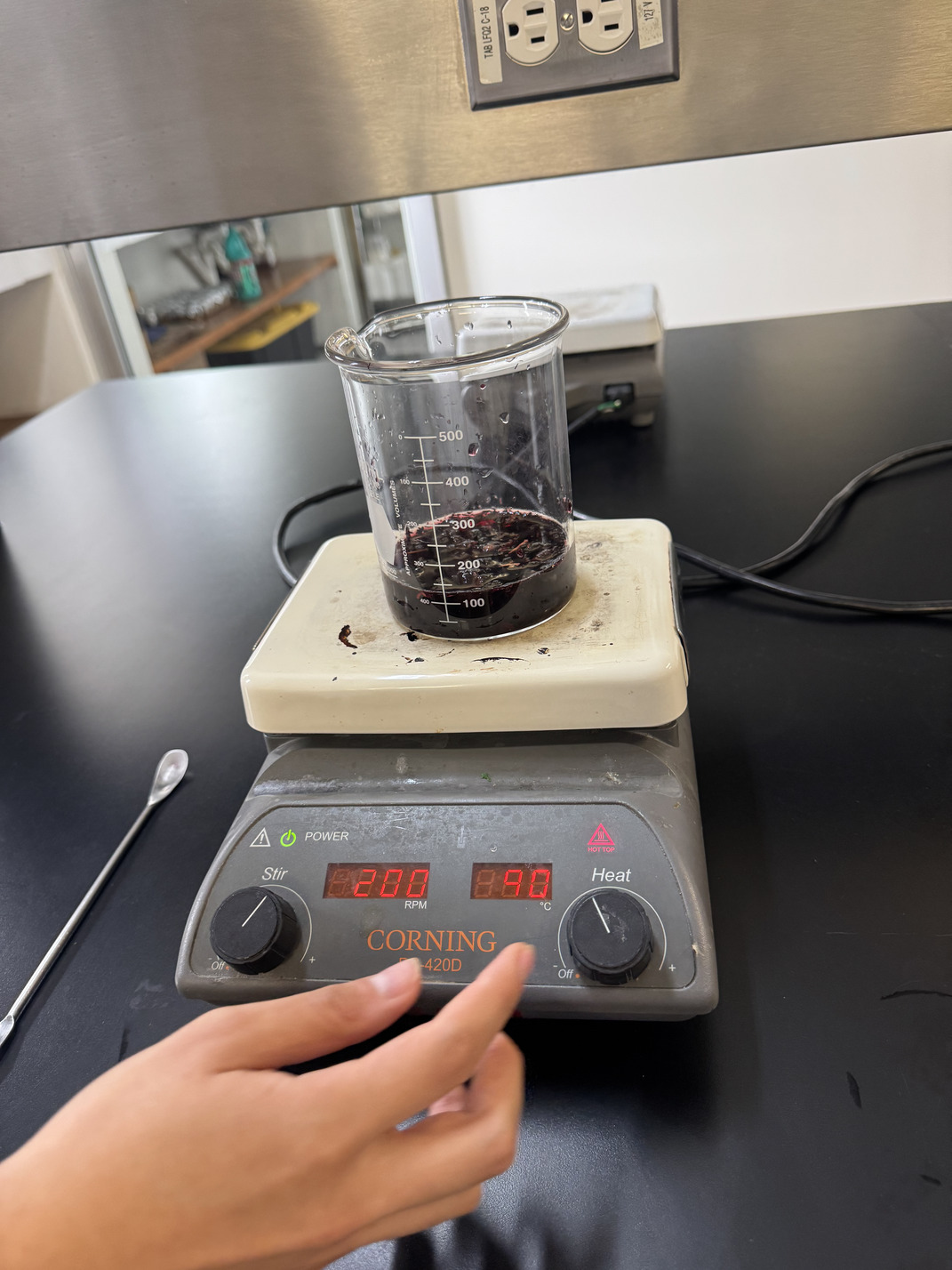
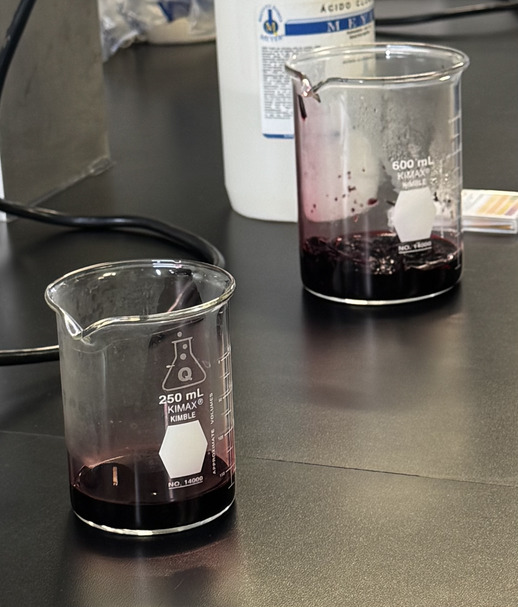
- Boil (80°C) 10.53g 105 ml water for 20 min
- Let it cool
Turmeric
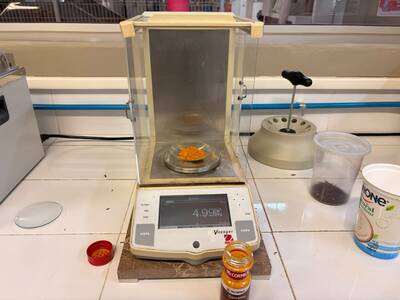
- Weight (4.99g) using the analytical balance
- Turn on
- Open doors
- Place container
- Close doors
- Tare
- Place material to weigh
- Boil (60°C) 4.99g 50 ml water for 20 min
- Let it cool
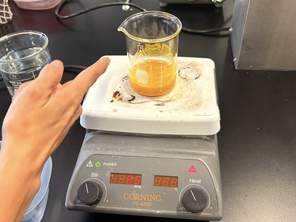
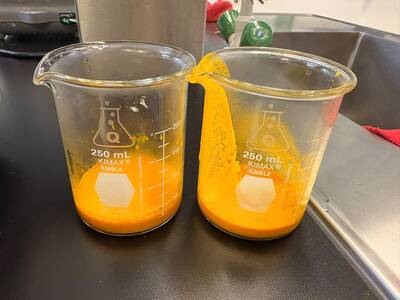
Modifiers
We can add modifiers to make new chemical reactions which can change the colors.
acid - hydrochloric acid
base - sodium hydroxide
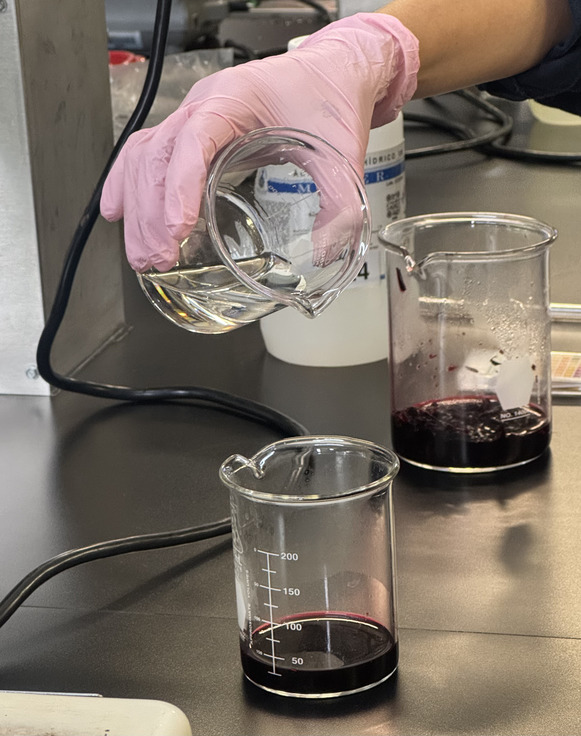
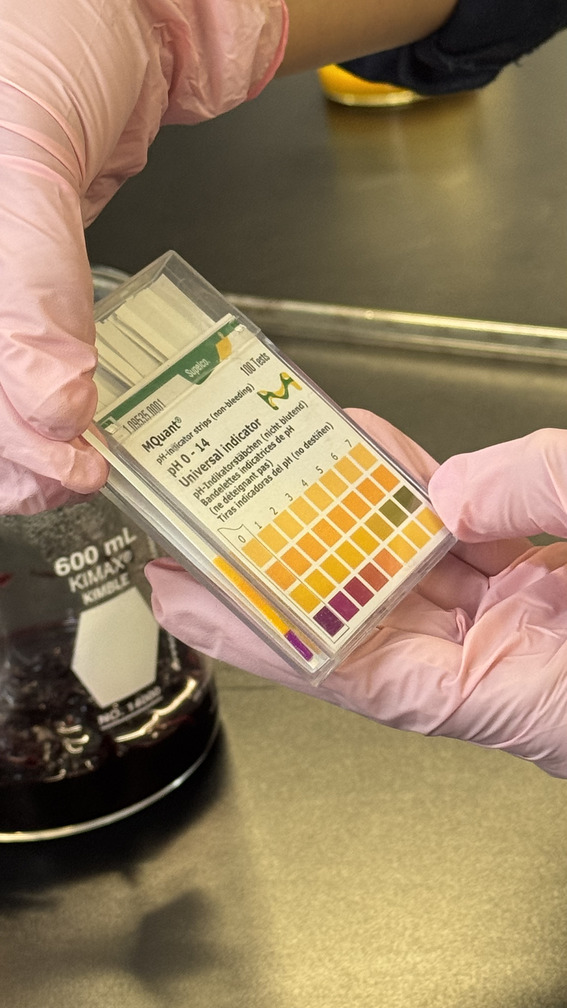
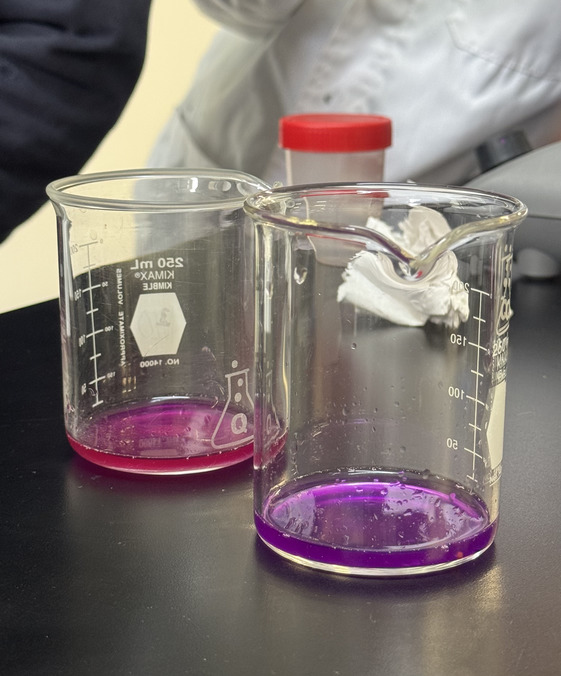
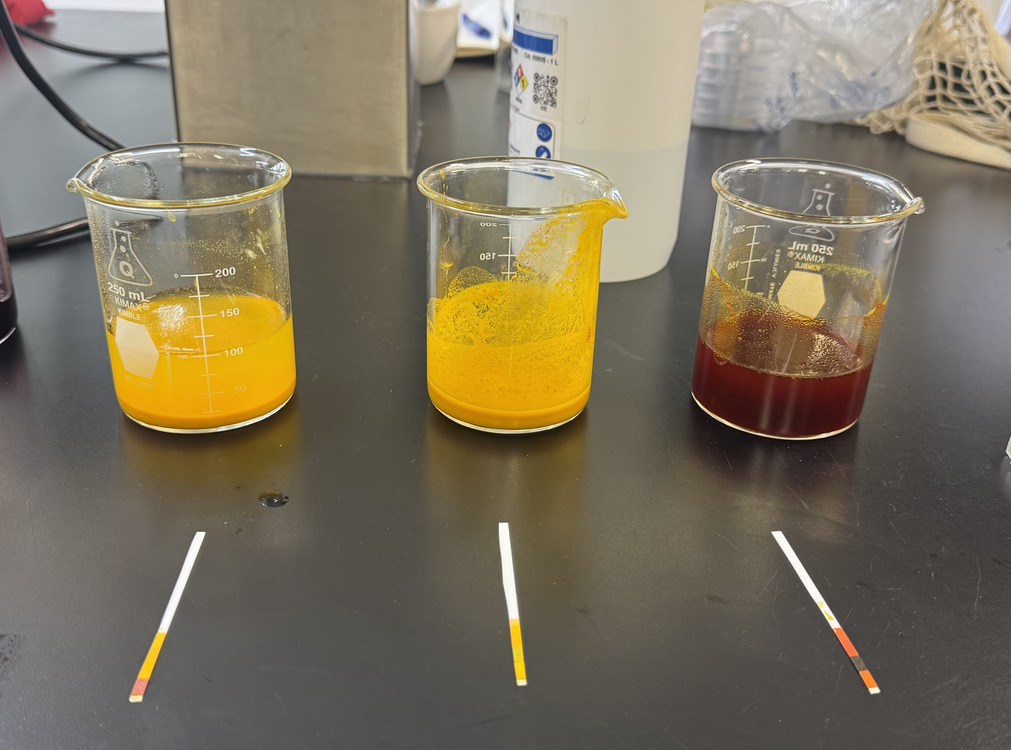
Dyeing the fabric
- Soak for 10 min. in the pigment
- Rinse with water
- Let it dry
Results
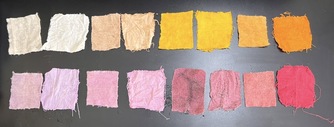 { width: 800 }
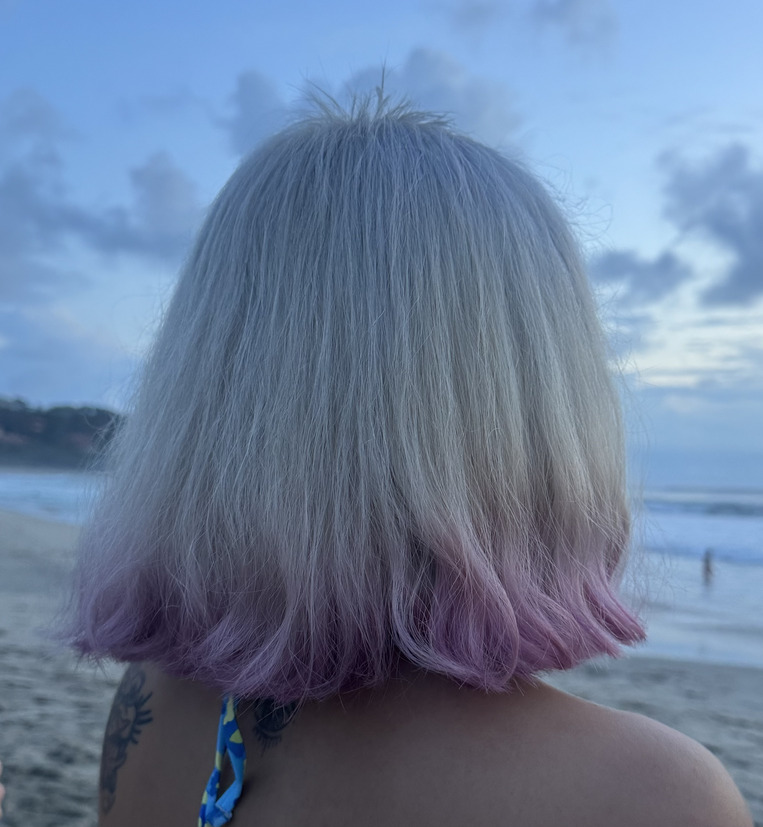
Dyeing my hair
After doing the experimentation at the lab I started wondering about the applications of these and how possible it was to use it as hair dye.
References
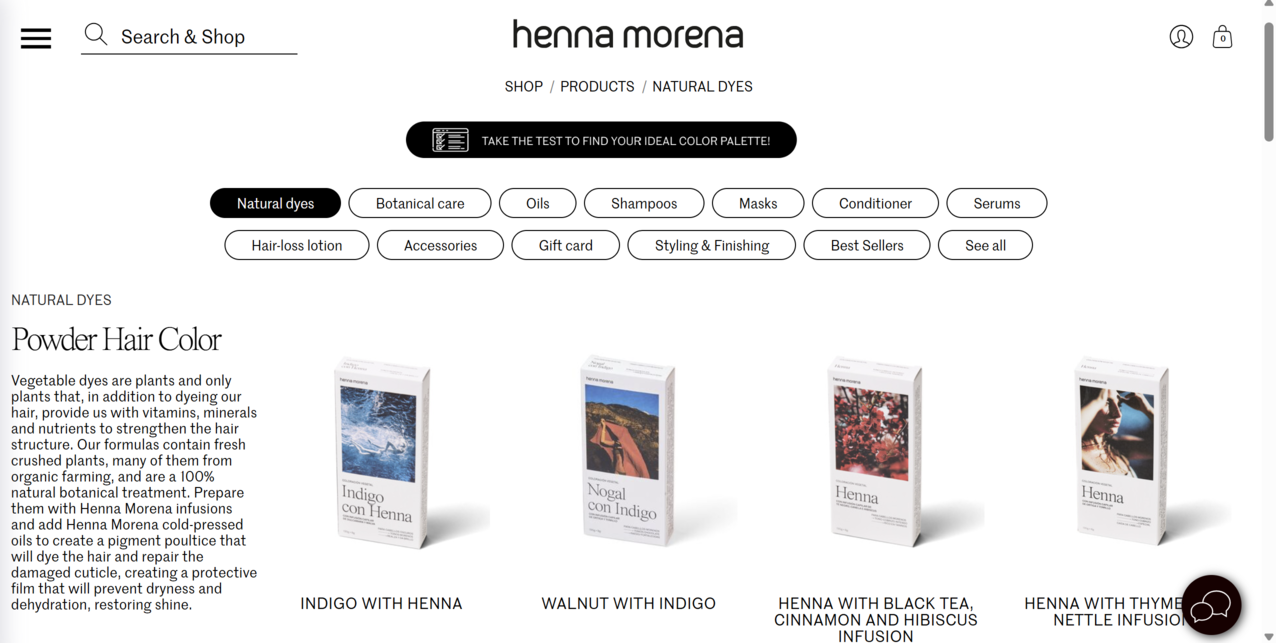
I started looking up if this was a thing or analogue cases, I found this brand henna morena which does natural hair dyes. Even though the formulation is different, it encouraged me to try.
Recipe
Mordant
4 g alum
400 ml water
30°C
Dye
14 g hibiscus
140 ml water
Process
-
I washed my hair without conditioner.
-
While it was still humid I started applying the mordant, let it act for 20 min.
-
Put the dye on and left it for 8 hours.
Results
6. Reflection
Dyeing with textiles is something I've done before but find really interesting everytime, each exploration is really interesting and unique. This time for me was special because I tried something new for me, which was, dyeing my hair. The process was so enriching due to it leading me to understand a bit more about biochromes and the science behind it.
7. References
[^2]Norma Schafer; Oaxaca, Mexico: Source for Natural Dye Textiles; Oaxaca Cultural Navigator; 2016
[^3]Anna Bruce; A festival of indigo in Oaxaca; Garland Magazine; 2025
[^5]México Desconocido; La grana cochinilla; México Desconocido
[^6]MILIC; Arte textil en Oaxaca; MILIC; 2023
[^7]Wikipedia; Archivo:Textiles bellos de Oaxaca.jpg; Wikipedia, la enciclopedia libre

[^8]Fundación Alfredo Harp Helú Oaxaca; ALEBRIJES; Fundación Alfredo Harp Helú Oaxaca; año
[^9]Alebrijes Blas; Alebrije Armadillo Oaxaqueño 1; Alebrijes Blas
[^9]Henna morena