State of the art, project management and documentation
1. Objective
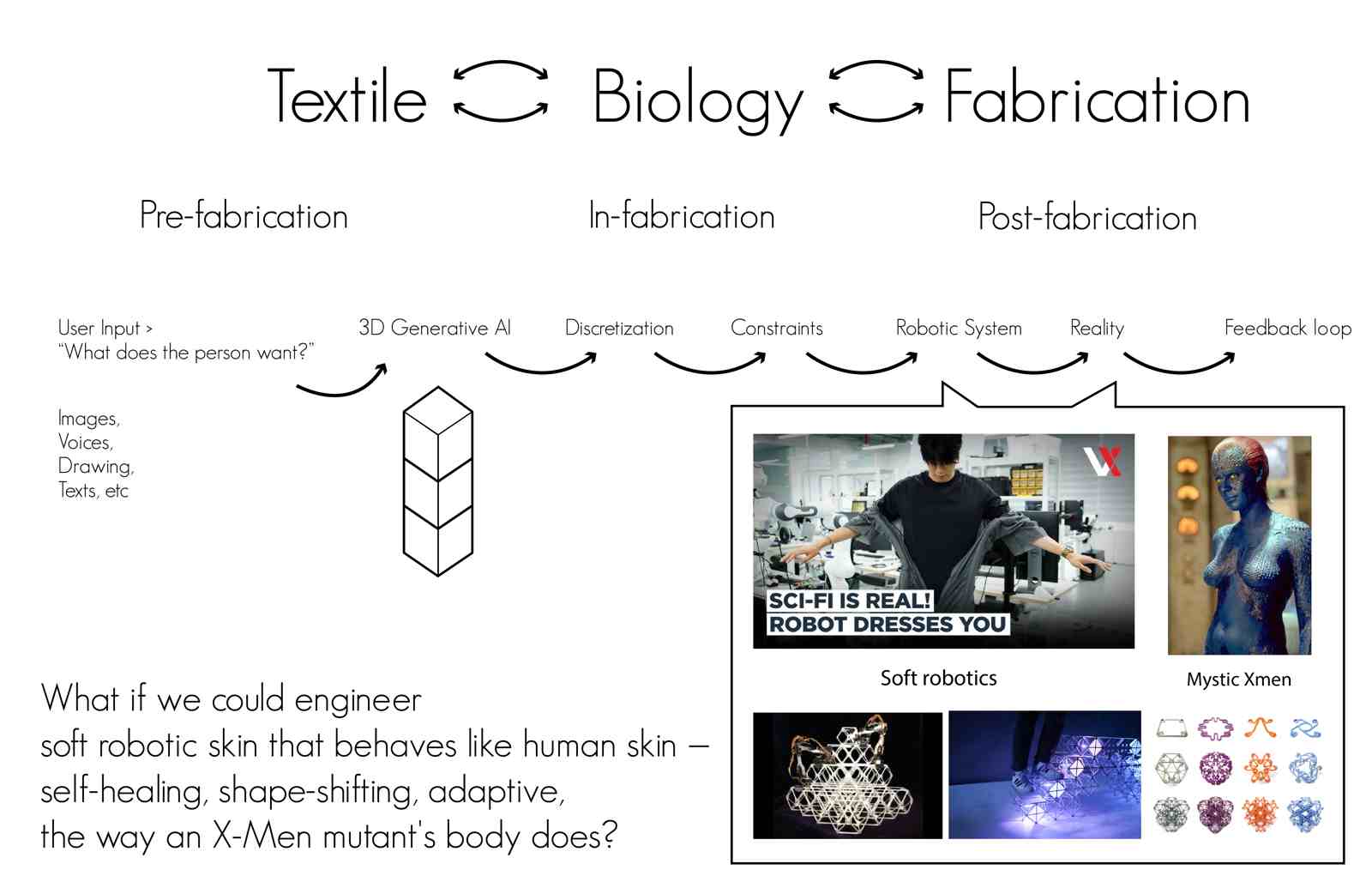
This week I rebuilt my Fabricademy website from a default documentation template into a personal research fieldbook. The goal was to make the site useful for weekly documentation, but also to introduce the direction of my final project: a speculative and experimental soft robotic skin that can behave more like living skin.
The research question I am carrying into Fabricademy is:
What if we could engineer a soft robotic skin that behaves like human skin: self-healing, shape-shifting and adaptive?
For this first week I worked on two layers at the same time:
- Research direction: collecting references about adaptive matter, robotic textiles, programmable material, digital fabrication and feedback loops.
- Website workflow: customizing the visual identity, publishing with GitLab Pages, creating thumbnails and reducing heavy images so the site can load quickly.

2. State of the art
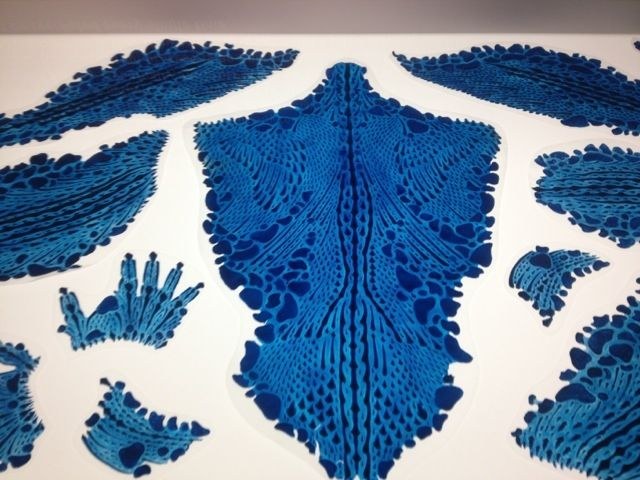
My starting point is a fictional and biological imagination: skin that can heal, shift and adapt. I used the idea of "mystique skin" as a way to ask a bigger design question, not as a finished technology. The question helps me connect textiles, soft robotics, computational design and bio-based material systems.
2.1 LLMs and data categories
Large language models are useful to my project because they can help organize messy design inputs: user intentions, material constraints, fabrication settings, images, test notes and evaluation data. In design and manufacturing, LLMs can become part of a pipeline that helps humans move from language to computational instructions, while still keeping people involved in the decision process.2
For my website and future documentation, this means I should record:
- What input or question started each experiment.
- What material, tool and machine settings were used.
- What changed after testing.
- What human feedback or observation shaped the next version.
2.2 Material references
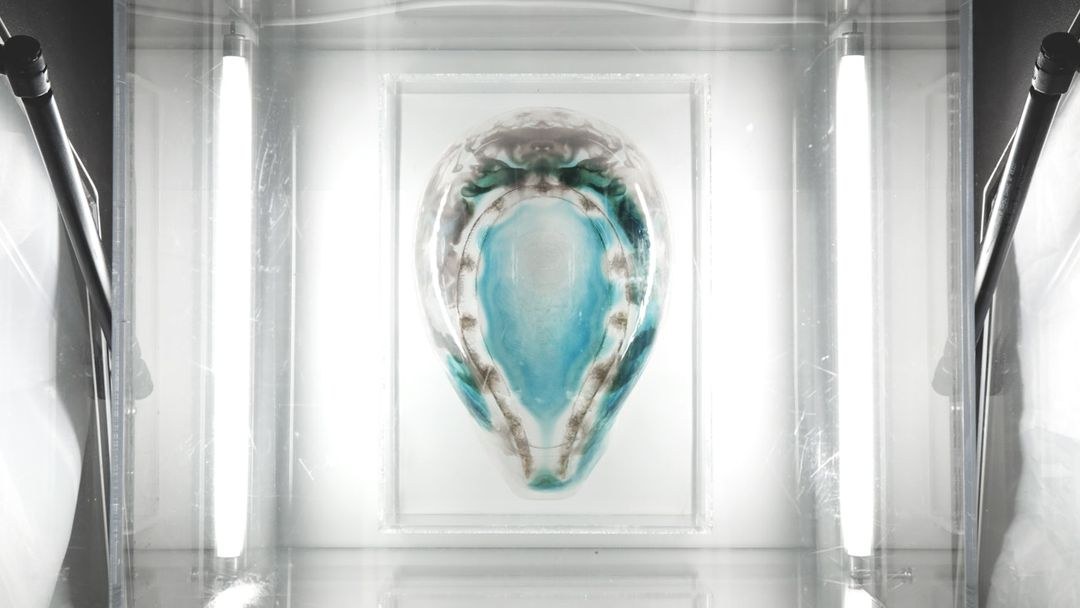
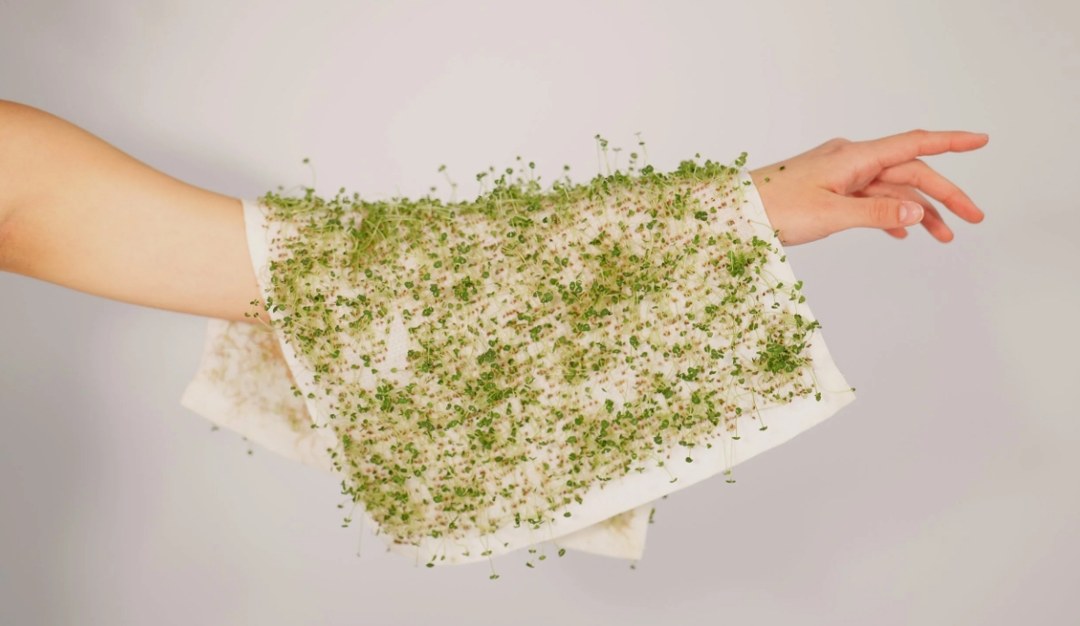
The material side of the project is inspired by speculative biological design, living textiles and programmable matter. Neri Oxman's Vespers III is a reference for thinking about designed matter as a layered, expressive and computationally informed material system.3 Cornell Hybrid Body Lab's LivingLoom helps me think about textiles as living or bio-hybrid systems, where a textile is not only a surface but also an environment for growth, response and care.4
This gives my project an important boundary: I am not claiming that my first prototypes are already self-healing or living. Instead, I am collecting references and designing tests that can lead toward adaptive, responsive and repairable material behavior.
2.3 Geometry and robotic clothing
Geometry matters because a soft skin changes through structure. Folding, knitting, patterning, inflation, tension and modular assembly can all create movement. I looked at robotic clothing and wearable robotics as examples of how garments can assist or change the body through mechanical systems.5
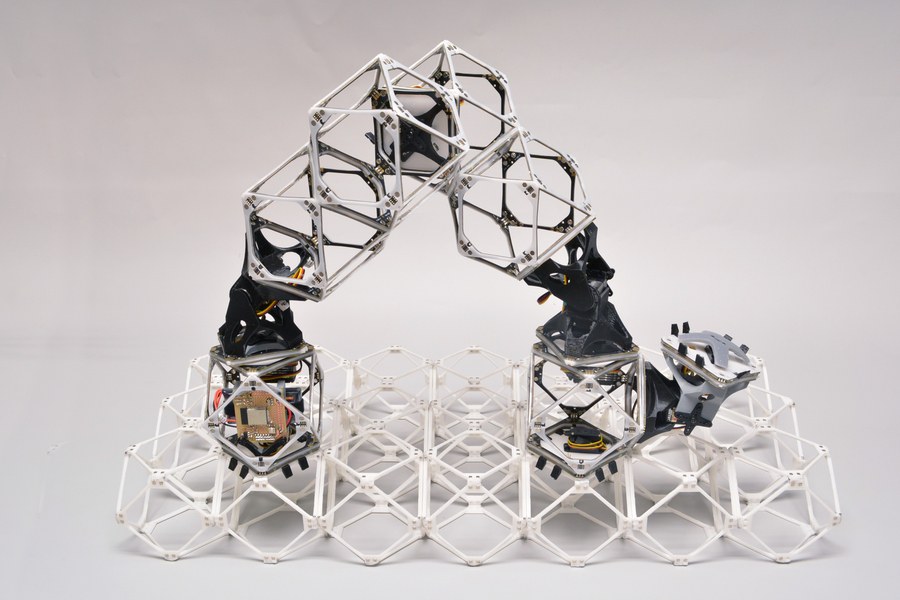
I also looked at MIT's work on assembler robots and voxel structures. This research shows how modular parts can be assembled into larger structures, which is relevant to my interest in skins made from repeatable cells or physical grammars.6
2.4 Textile as construction
Mariana Popescu's knitted objects and textile formwork are important references because they show how textile logic can become structural logic. Instead of treating textile as decoration, computational knitting can define form, force and construction behavior.7
This connects directly to my Fabricademy direction: I want to test whether textile geometry can become an active interface between fabrication, body and transformation.
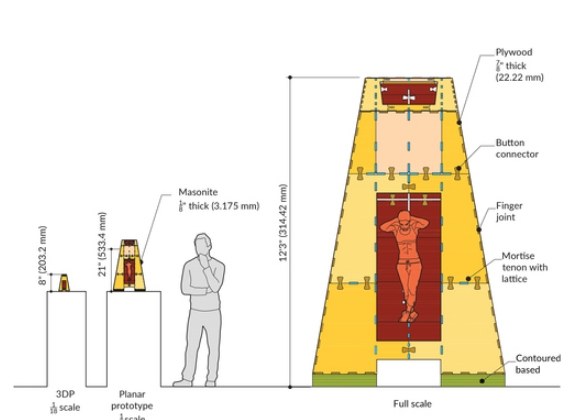
My notes also include Plane Delivery: Towards a Physical Grammar for Large-Scale Digital Fabrication, as a reference for connecting individual parts, joints and full-scale construction.1
2.5 4D printing and programmable matter
Skylar Tibbits and the Self-Assembly Lab are key references for programmable material behavior. 4D printing and programmable textiles show how movement can be encoded into material composition, structure and fabrication process.8
For my project, this is useful because the "intelligence" should not only be in software. Some behavior can be built into the material itself: bending, swelling, shrinking, stiffening, softening or changing shape.
2.6 Sustainability and feedback loops
Sustainability is part of the project from the beginning. Adaptive textile systems should not become another layer of electronic waste or disposable novelty. I am interested in repair, reuse, low-waste fabrication and bio-based material directions.
I also found a reference on long-term computer vision monitoring for bio-based materials.9 This is useful because adaptive matter needs observation. If a material changes over time, the documentation system should record that change through photos, measurements and notes.
3. Website customization workflow
3.1 Repository structure
I kept the Fabricademy repository structure so the website can be built automatically:
The source pages are written in Markdown inside docs/. GitLab Pages builds the static website and publishes it to the Fabricademy class site.
3.2 Landing page design
I changed the homepage from a plain template into an editorial fieldbook. The landing page now uses:
- A paper-like background.
- Green, coral, pink and blue accents.
- A strong cover image.
- Section thumbnails for quick navigation.
- Portfolio and research images.
- References and visual credits.
I used custom CSS in docs/stylesheets/fieldbook.css for the homepage and shared color styling in docs/stylesheets/extra.css for the rest of the documentation pages.
3.3 Thumbnail index
After reviewing the site, I added a thumbnail index near the top of the homepage. This makes the site easier to scan and helps visitors jump to the main sections without scrolling through the whole page.
The thumbnails are stored separately:
This matters because thumbnails should be small, fast and separate from full images.
3.4 Image optimization after review
During review I learned that the website was much too heavy. The full site was about 315 MiB, mainly because I had uploaded portfolio and documentation images that were not optimized for web use. For example, fabricademy-01.jpg was about 873 KiB, when it should be closer to 80 KiB for a fast documentation site.
After the review, I downsized and compressed the images. My process was:
- Find large JPG and PNG files in
docs/images/. - Resize images to web-friendly dimensions.
- Compress JPG quality while checking that the image still reads clearly.
- Create separate thumbnails for index cards and galleries.
- Keep filenames stable so the Markdown links do not break.
The optimized fabricademy-01.jpg is now around 72 KiB, and the image folder is much lighter than the first upload.
3.5 Publishing workflow
I also fixed the publishing setup:
requirements.txtpins the Zensical version used to build the site..gitlab-ci.ymlinstalls dependencies and runszensical build --clean.- GitLab Pages publishes the generated
public/folder. - I checked the generated output and fixed broken file paths.
The live website is:
https://class.textile-academy.org/2027/prapawit-pam/
4. Result
This week I created a documentation system that can support the rest of Fabricademy. The site now has:
- A customized landing page with a personal research direction.
- A lighter image workflow for faster loading.
- A thumbnail index.
- A clearer Week 01 documentation page.
- A filled reference list connected to my final project theme.
- A working GitLab Pages build pipeline.
5. Reflection
At first I treated the website too much like a portfolio PDF. The review helped me understand that a documentation website must be beautiful, but also lightweight and easy to maintain. A heavy page makes the work harder to access, especially for weekly review.
For the next weeks I will prepare images in two versions from the beginning:
- A compressed image for documentation pages.
- A small thumbnail for navigation or galleries.
This workflow will be important for my final project because I expect many material tests, process photos and iterations. If the website stays organized and lightweight, the research will be easier to follow over time.
6. References
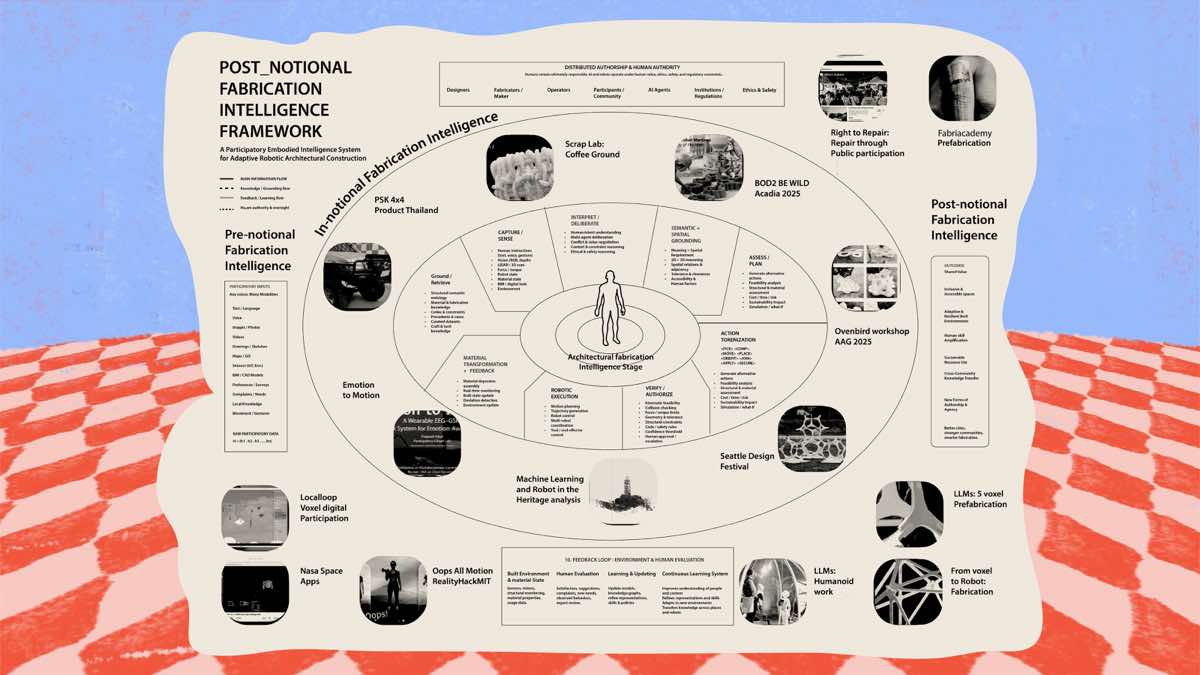
The images and videos above are research references collected in my Fabricademy notes. Linked project pages and video channels identify their original sources; the research framework brings these references together for my project.
-
"Plane Delivery: Towards a Physical Grammar for Large-Scale Digital Fabrication." Source paper. ↩
-
"How Can Large Language Models Help Humans in Design and Manufacturing? Part 1: Elements of the LLM-Enabled Computational Design and Manufacturing Pipeline." Harvard Data Science Review. https://hdsr.mitpress.mit.edu/pub/15nqmdzl/release/2 ↩
-
Oxman, N. Vespers III. https://www.oxman.com/projects/vespers-iii ↩
-
Hybrid Body Lab, Cornell University. LivingLoom. https://www.hybridbody.human.cornell.edu/#/livingloom/ ↩
-
YouTube reference collected in my research notes: "Meet the robot clothes that dress you." https://www.youtube.com/watch?v=LGmVPgOhDN8 ↩
-
Massachusetts Institute of Technology News. "Assembler robots make large structures from little pieces." https://news.mit.edu/2022/assembler-robots-structures-voxels-1122 ↩
-
Popescu, M. KnitCandela and computational knitted formwork research. https://maadpope.com/knitcandela/ ↩
-
Self-Assembly Lab, MIT. Programmable Materials. https://selfassemblylab.mit.edu/programmable-materials ↩
-
"A computer vision-based long-term monitoring framework for biobased materials." Aalborg University research portal. https://adk.elsevierpure.com/en/publications/a-computer-vision-based-long-term-monitoring-framework-for-biobas/ ↩
-
Fabricademy documentation tutorial. http://fabricademy.fabcloud.io/gitlab-documentation-tutorial/ ↩