Modular Threads
Concept
Today’s fashion industry is built on a foundation of planned obsolescence, a model that treats garments as disposable commodities rather than durable goods. By prioritizing rapid trend cycles and cheap labor over longevity, the industry has normalized a linear lifecycle that is currently devastating the planet. This system relies on the constant production of low-quality items designed to fail, ensuring that we are trapped in a perpetual loop of purchasing and discarding. For the individual consumer, the scale of this crisis can feel insurmountable—rendering personal wardrobe choices seemingly insignificant against a global tide of textile waste.
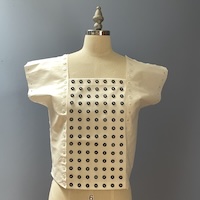
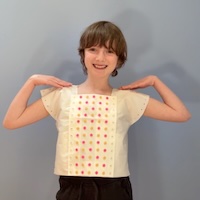
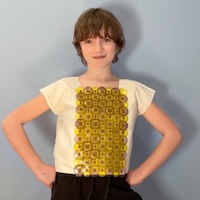
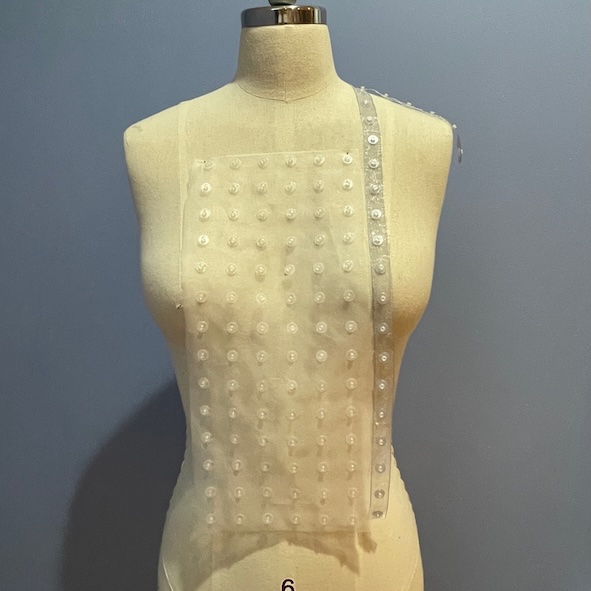
Modular Threads introduces a vision for a sustainable fashion ecosystem, empowering individuals to modify both the fit and style of their garments through an adaptable framework of adjustable panels, snap-based seams, and interchangeable appliques. By revisiting pre-industrial models of clothing—where garments were customized to the individual rather than forcing the body to fit standardized sizing—this system aims to restore a deeply personal relationship between the wearer and their clothing. By inviting the wearer back into the manufacturing process as an active participant, this accessible design provides true agency over the creation and long-term evolution of a personal wardrobe, transforming it into a lifelong system of evolution and repair.
Materials & Processes
Zero-Waste Layout Patterns were developed using CLO3D software on custom digital avatars mapped to the exact measurements of the models, ensuring a perfect fit and drastically reducing the need for physical, wasteful prototyping cycles. Furthermore, the geometric pattern pieces are engineered to be nested tightly together on the fabric layout, eliminating cutting scraps while allowing the digital markers to adapt effortlessly to varying laser-cutter bed dimensions.
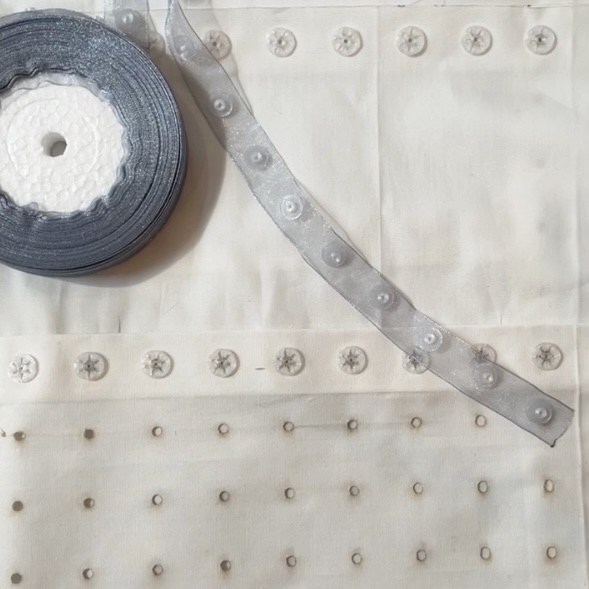
Adjustable Panels The design utilizes a system of efficient rectangular panels that entirely eliminate curved edge waste, featuring laser-cut holes engineered at precise 1-inch increments to serve as a modular matrix for assembly. To ensure longevity, weight fluctuations, and size inclusivity, the garment features built-in width adjustability along both the central panels and side seams, while length adjustability is seamlessly achieved by folding up the hem.
Repurposed Fabrics The physical prototype was built from repurposed natural textiles, the material choice actively supports a circular economy and reduces the demand for extracted resources. The cotton sateen bedding was selected for its ability to be laser-cut with minimal edge-fraying, ensuring clean finishes and durable structural integrity, while still offering the flexible option to be custom-dyed for aesthetic variation and personalization.
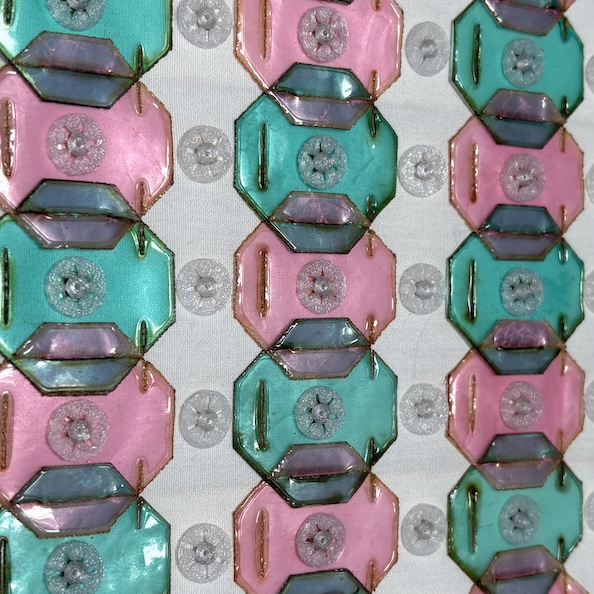
Biofabricated Applique Decorative variation is made possible through the integration of biofabricated appliqués. Using a simple, accessible blend of gelatin, glycerine, and natural food colorants, these embellishments can be easily made in a consumer’s kitchen, completely bypassing toxic chemical manufacturing. The liquid bioplastic mixture is poured into thin 1mm sheets that cure into a flexible, resilient, and fully compostable biomaterial that replicates vinyl. Once dried, these sheets are cut into precise, modular decorative components using a digital laser cutter.
Publication
Video
Presentation
Gallery