9. Wearables
Research
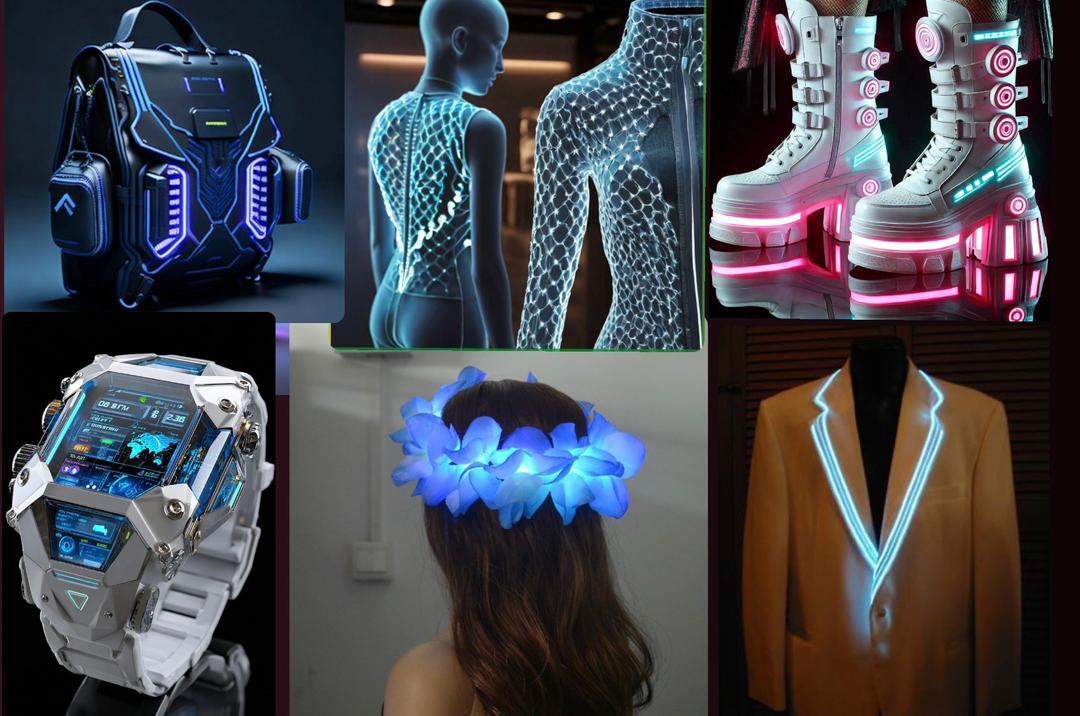 - Image referencesimage1image2image3image4image5
Wearables are objects you can wear on your body that have added functions beyond clothing. They can sense, react, light up, move, change color, or communicate data.
Think of them as:
Clothes + Technology
Accessories + Interaction
Body + Digital Expression
Wearables can be:
•   Smart jackets that heat up
•   Light-up dresses
•   Soft robotic sleeves
•   Fitness trackers
•   Emotion-sensing jewelry
•   Interactive fashion pieces
•   Medical or health sensors
- Why Wearables Matter
Wearables help us:
Express ourselves (art + fashion + creativity)
Extend our bodies (exoskeletons, soft robotics)
Stay safe & healthy (heart monitors, posture trackers)
Communicate (LED messages, color-changing materials)
Explore new materials (smart textiles, bioplastics)
- Key Components of Wearables
A. The Body (Your Canvas) You design for movement, comfort, and interaction. Ask:
•   Where does it sit?

•   How does it move with the body?

•   What reaction do I want? (light, pressure, airflow, sound)
B. The Materials You can use:
•   Fabrics (cotton, mesh, neoprene, lycra)

•   Smart materials (conductive fabrics, thermochromic pigments)

•   Biomaterials (gelatin, bioplastics, natural dyes, silicone)

•   Soft robotics materials (vinyl, silicone, TPU)
C. Electronics (The Brain) Usually includes:
•   Microcontrollers (Lilypad, Arduino, ESP32, Flora)

•   Sensors (touch, stretch, pressure, flex)

•   Actuators (LEDs, motors, pumps, speakers)

•   Conductive threads / conductive fabrics

•   Power (button battery, lithium battery)
Wearables turn the body into a platform for innovation.
Types of Wearables You Can Explore
- Interactive Light Wearables
Use LEDs, light strips, or fiber optics to react to movement or touch.
- Sensor Wearables
Pieces that sense something and respond. Examples: • Stretch sensors in sleeves • Heart-rate monitor jewelry • Touch-sensitive fabric patches
- Soft Robotics Wearables
Inflatable or silicone-based structures attached to the body that move or change shape. Examples: • Inflatable muscles • Pneumatic shape-changing decorations • Air-pumped accessories
- Smart Textiles
Textiles that change color, temperature, or texture.
- Health & Accessibility Wearables
Assistive technology to help movement or give feedback.
References & Inspiration
- When starting my wearable project, I wanted to understand not only how wearables work, but also how other designers use technology and materials to create pieces that feel alive, expressive, and connected to the body. These are the main references and inspirations guiding my approach:
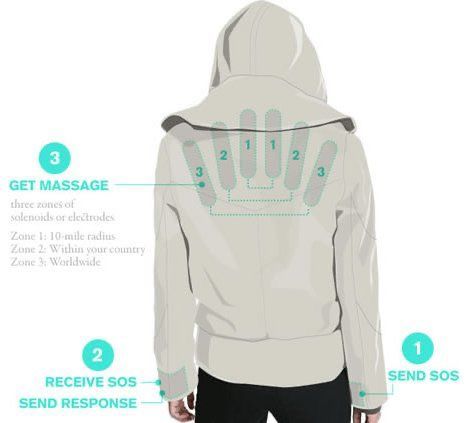
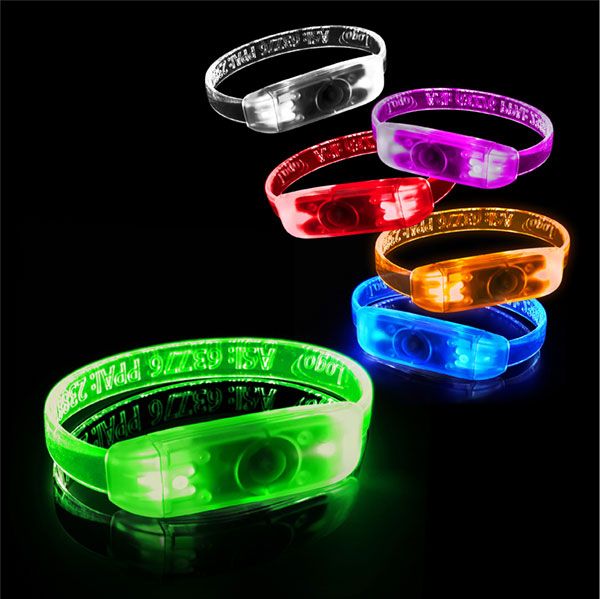
- Functional & Practical Wearables
I’m inspired by wearables that make everyday life easier — fitness bands, health trackers, and smart clothing. They remind me that technology doesn’t always have to be dramatic; sometimes the best designs are simple, useful, and comfortable.
Key Inspiration:
•   Clean interfaces
•   Soft materials that blend with the skin
•   Light, minimal forms
•   Designs that feel natural to wear
- Modern & Minimalist Aesthetics
I love the idea of technology hiding in simplicity. Minimalist wearables show how powerful a design can be when it’s clean and intentional.
I’m taking inspiration from:
•   Sleek wristbands
•   Soft neutral colors
•   Low-profile sensors and small electronics
•   Smooth forms with no visual clutter
These references help me think about making my wearable look modern and timeless, instead of overly “techy.”
- Personalized & Comfortable Designs
Because wearables live on the body, personal comfort is everything. I looked at examples where designers use fabric, silicone, or flexible materials that adapt to movement.
This inspires me to:
•   Build something that feels soft
•   Consider body movement in my design
•   Make it adjustable and body-friendly
•   Combine aesthetics with comfort
- Innovative & Discreet Technology
I’m also inspired by wearables that hide advanced technology inside small, discreet forms. These pieces show how sensors, LEDs, or actuators can be integrated without making the wearable bulky.
This gave me ideas like:
•   Placing electronics inside pockets or silicone
•   Using thin conductive threads
•   Embedding LEDs inside fabric layers
•   Creating soft robotic shapes that look natural
Designers & Projects That Inspired Me
Here are the creators whose work influenced my thinking:
- Anouk Wipprecht — robotic fashion, expressive movement
- Ying Gao — garments responding to sound and environment
- Pauline van Dongen — solar wearables + functional tech
- Iris van Herpen — structural, futuristic silhouettes
- Soft Robotics Toolkit (MIT) — inflatable and silicone-based movement
Their work helped me understand how wearable technology can be artistic, emotional, functional, or even futuristic.
HEADBAND EARPHONES
Idea: A soft wearable headband that plays audio like earphones, combining comfort, style, and wireless sound.
Inspiration Sources:
•   Bone conduction speakers for open-ear listening.

•   Sports Bluetooth headbands that hide small speakers in fabric.

•   Flexible electronics (thin batteries + small Bluetooth modules).

•   Textile circuits using conductive thread to keep everything soft.
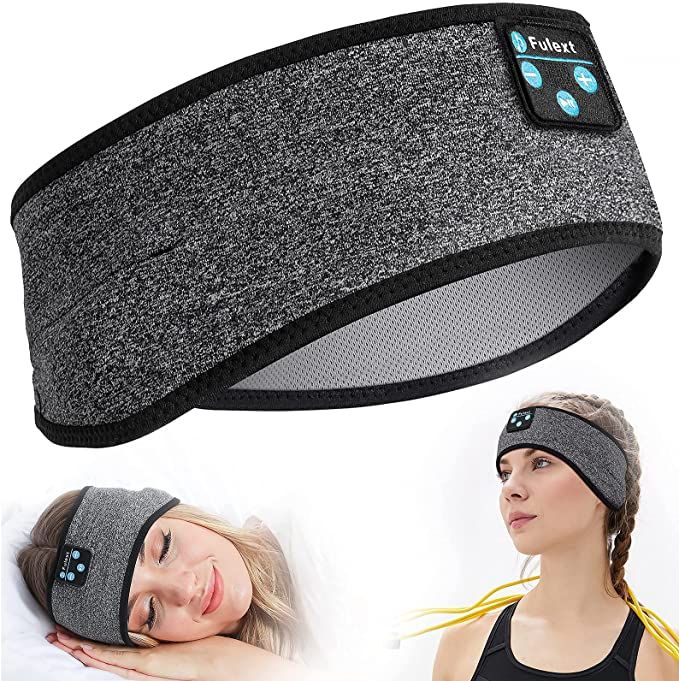
I explored how sound can be integrated into textiles by creating fabric-based headphones. The idea was to transform a headband into a wearable audio device using conductive thread and simple components.
💡 Inspiration
This experiment is inspired by embroidered fabric speakers, where sound is generated through stitched conductive paths and magnets. rodrt215's Instructable
Fabric Speaker Setup
[ Audio Source (Earphones) ] ↓ [ Conductive Thread Circuit ] ↓ [ Stitched Coil Area ] ↓ [ Neodymium Magnet ] ↓ [ Vibration Attempt ] ↓ [ Sound Output (weak / failed) ]
Materials
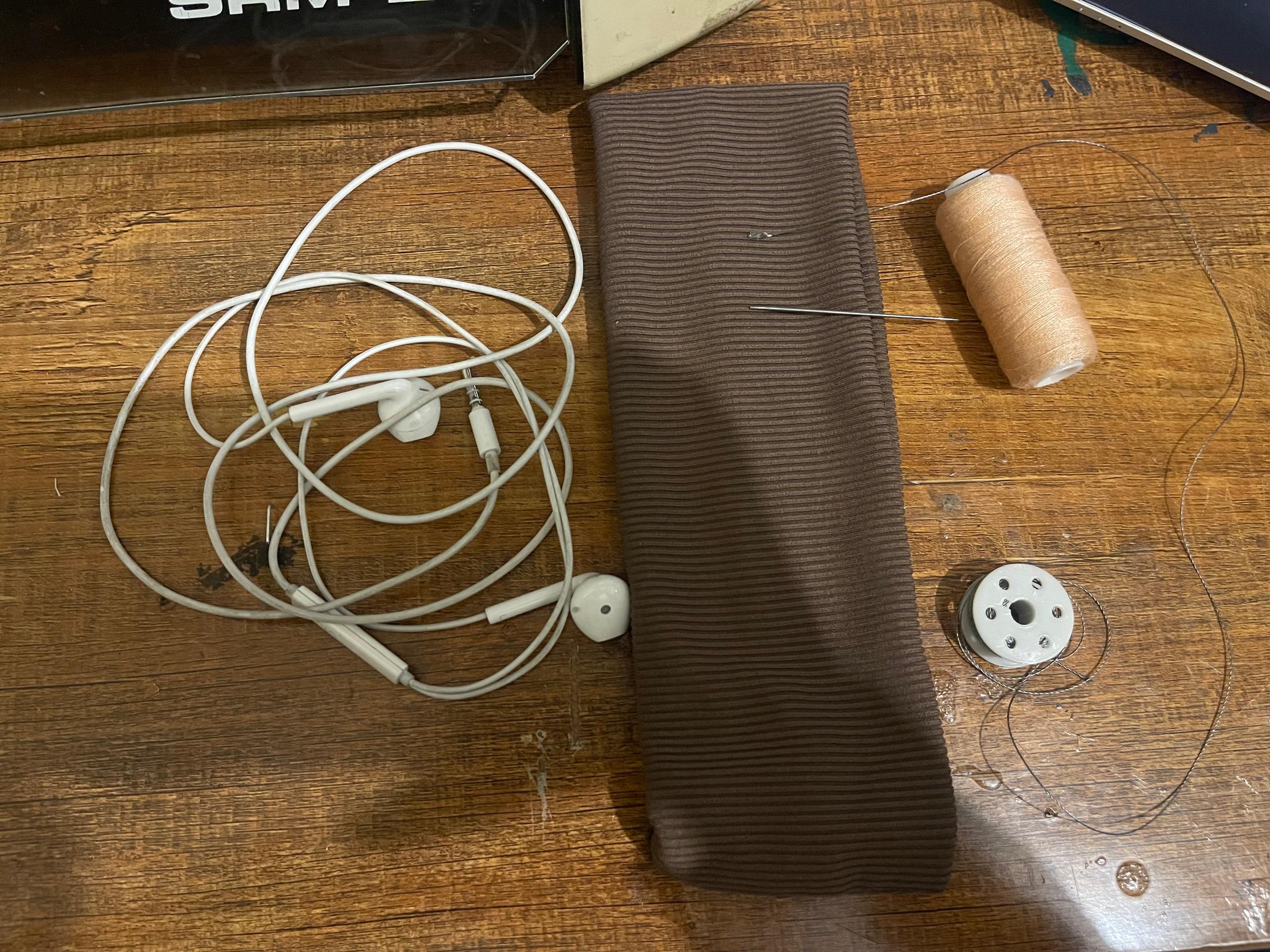
- Headband
- Earphones
- Conductive thread
- Neodymium magnet
- Sewing thread
- Needle
Step 1
- Preparing the base
- I used a headband as the structure
Step 2
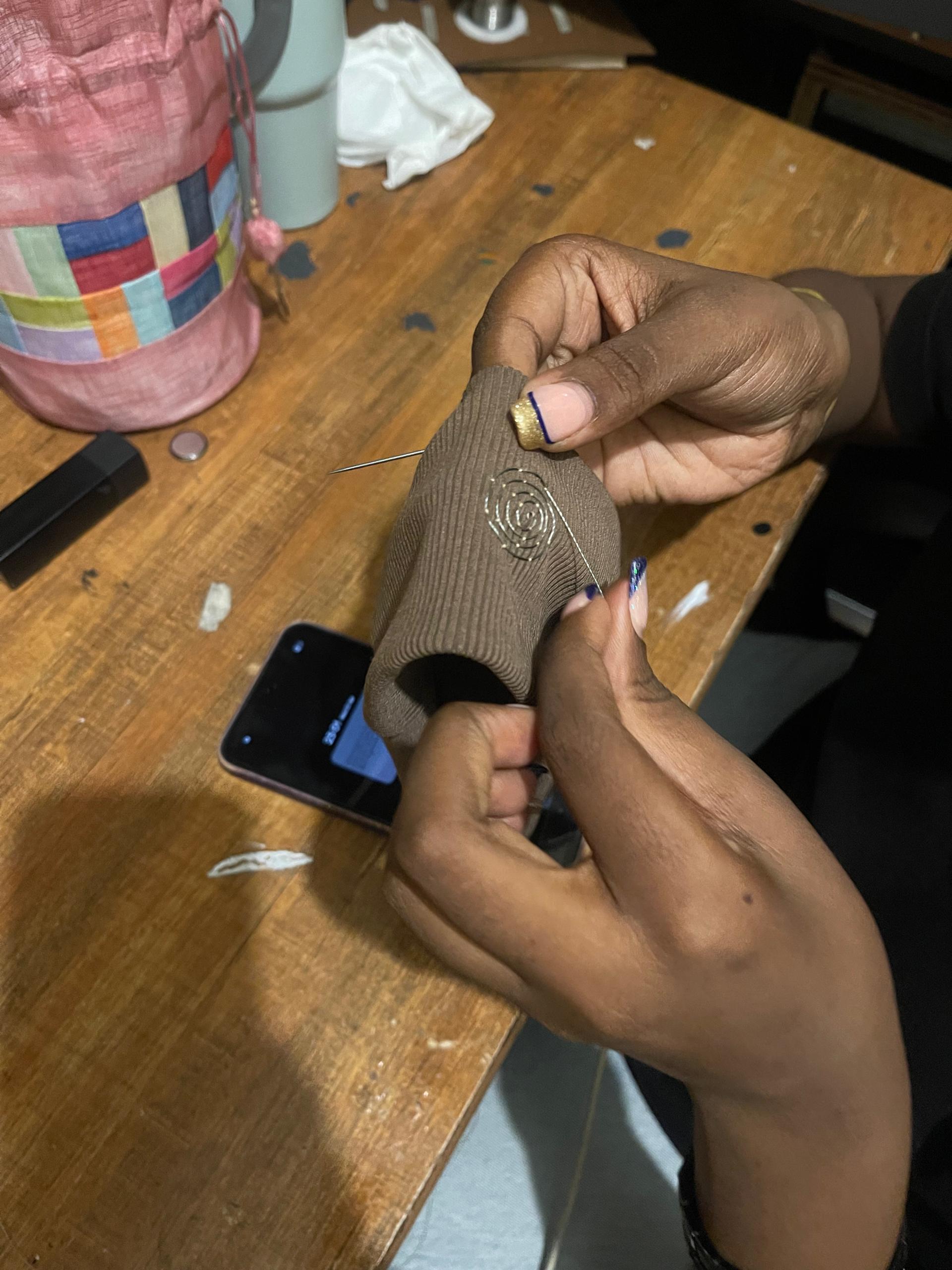
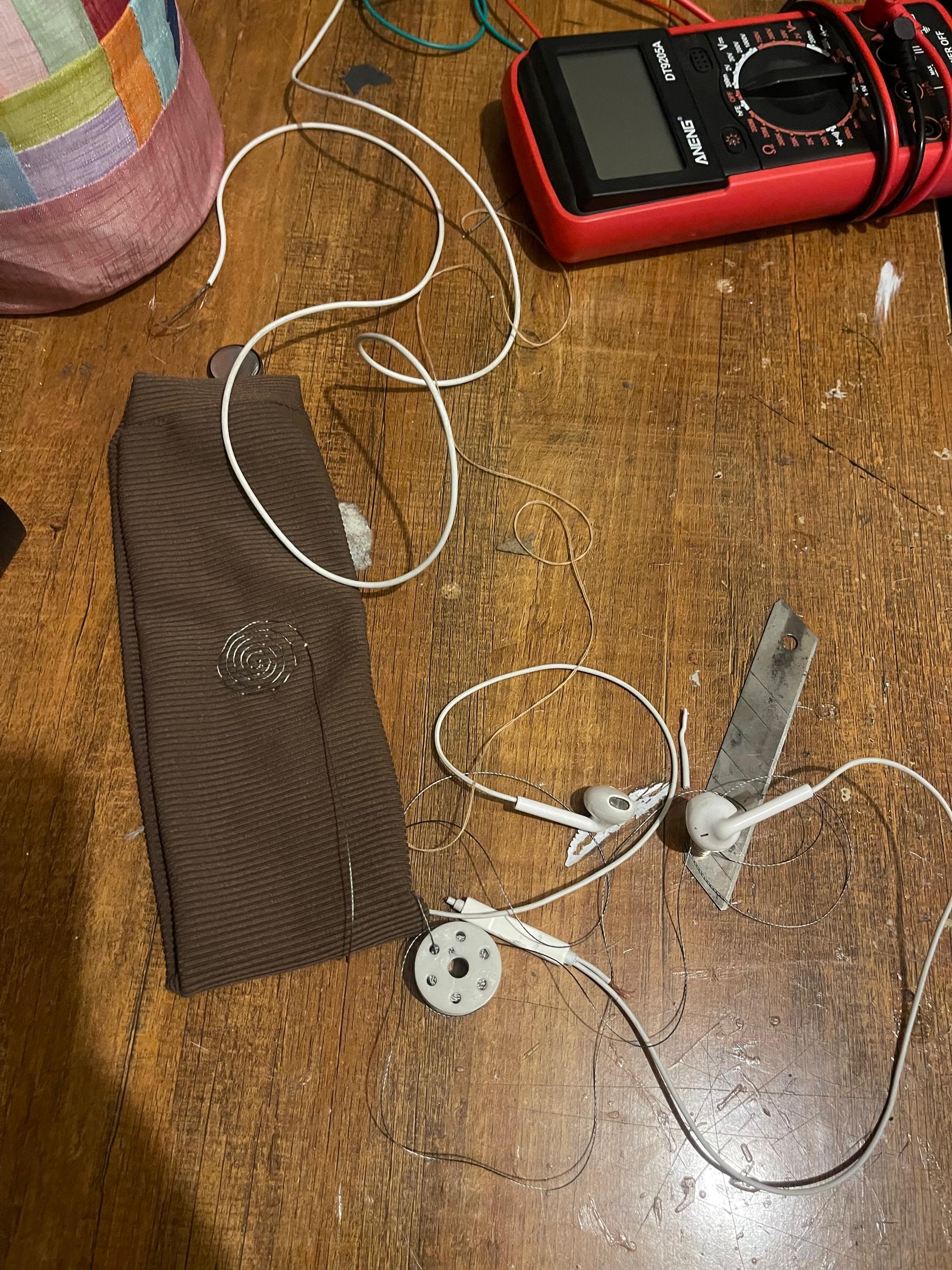
- sewing
- Stitching the circuit
- I used conductive thread to create connections
Step 3
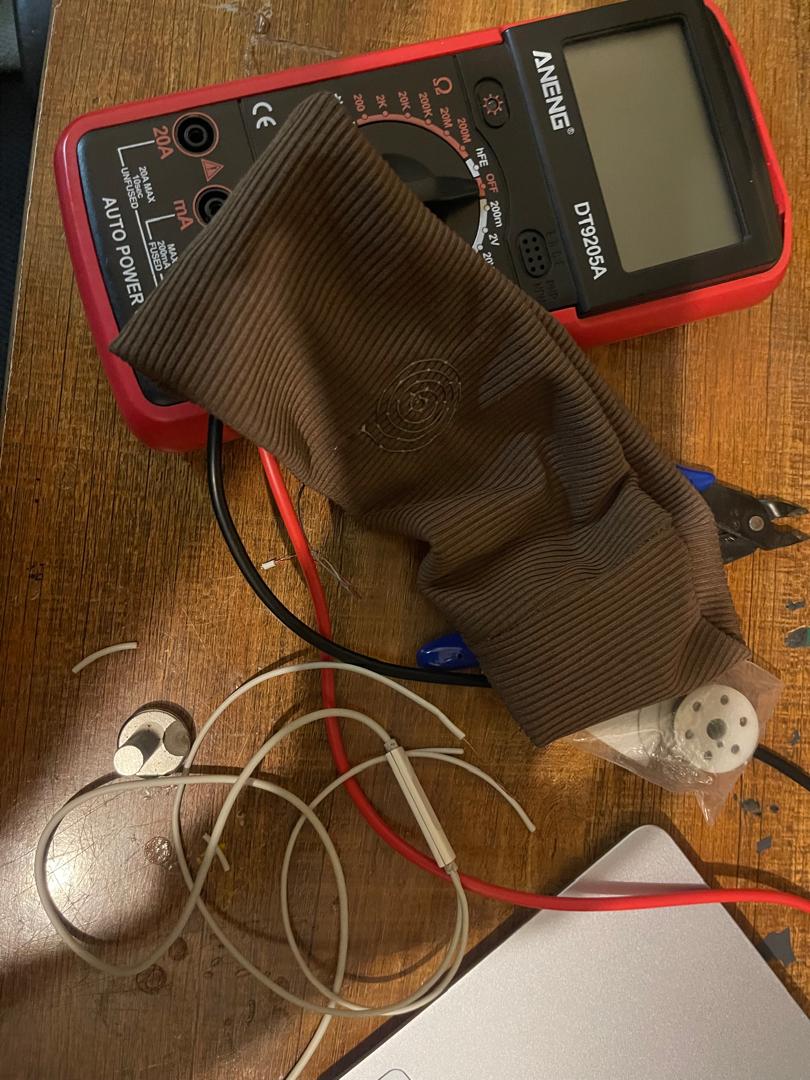
- Adding the magnet
- I placed a magnet behind the stitched area
Step 4
- Testing
- I connected the system to audio
- I tested for sound output
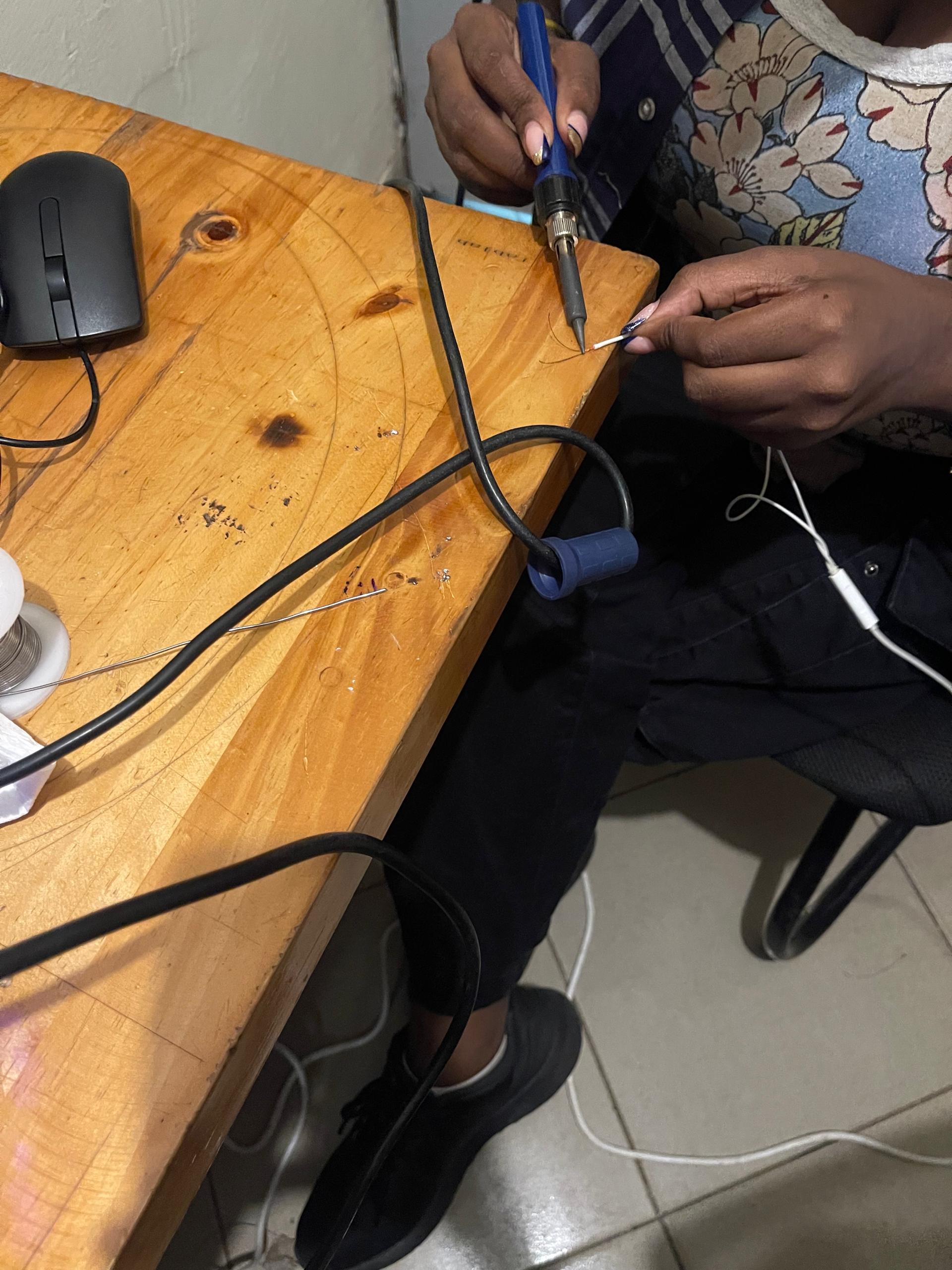
Result (Failed Attempt)
- The magnet was not strong enough
Even though the experiment did not work, it helped me understand the limitations of conductive thread and the complexity of integrating sound into textiles.
WEARABLE SOUND REACTIVE SKIRT
I wanted to explore how a garment can respond to its environment.
Instead of staying static, the idea was to create something that reacts to sound and becomes more visible as the sound increases.
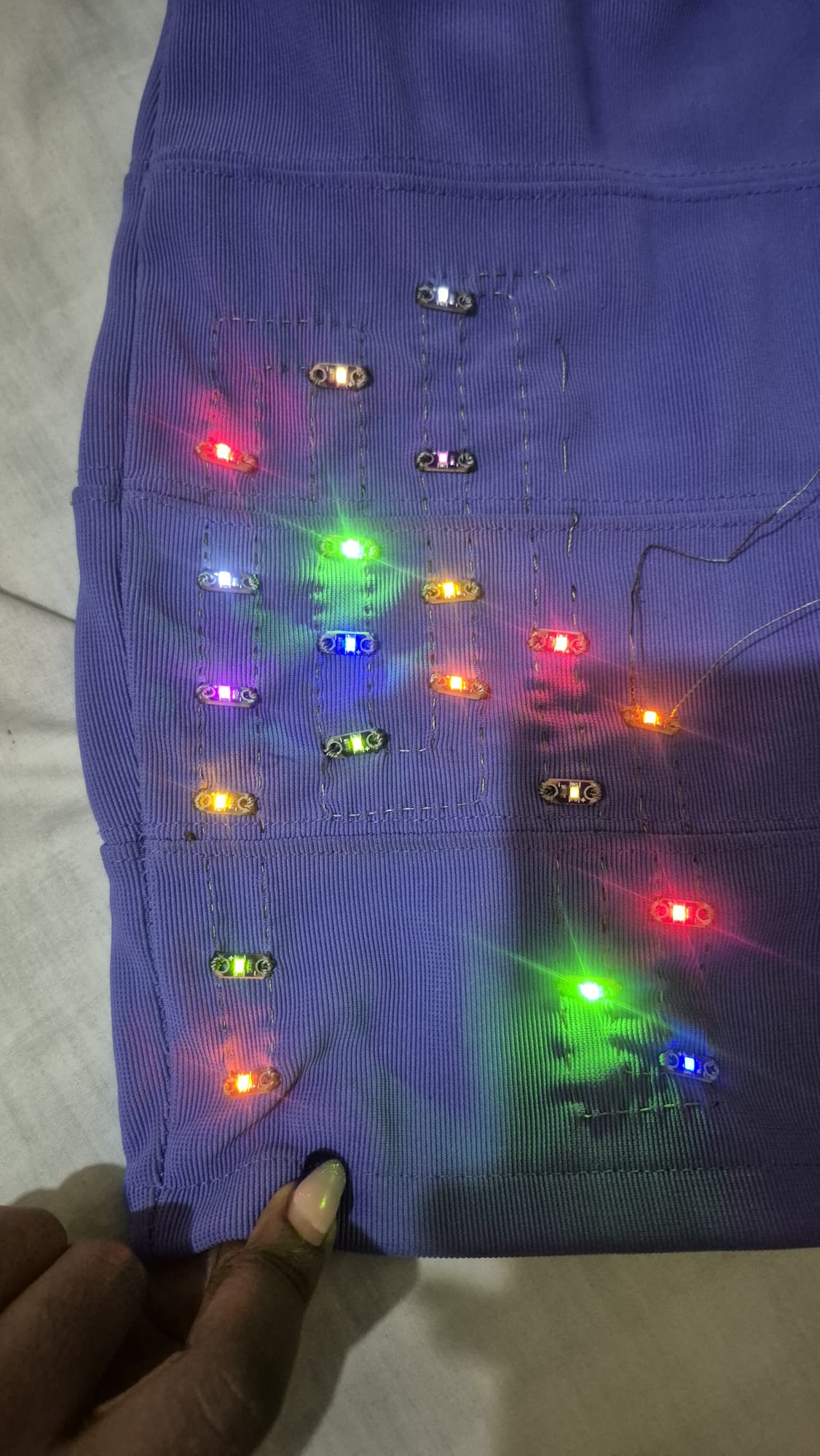
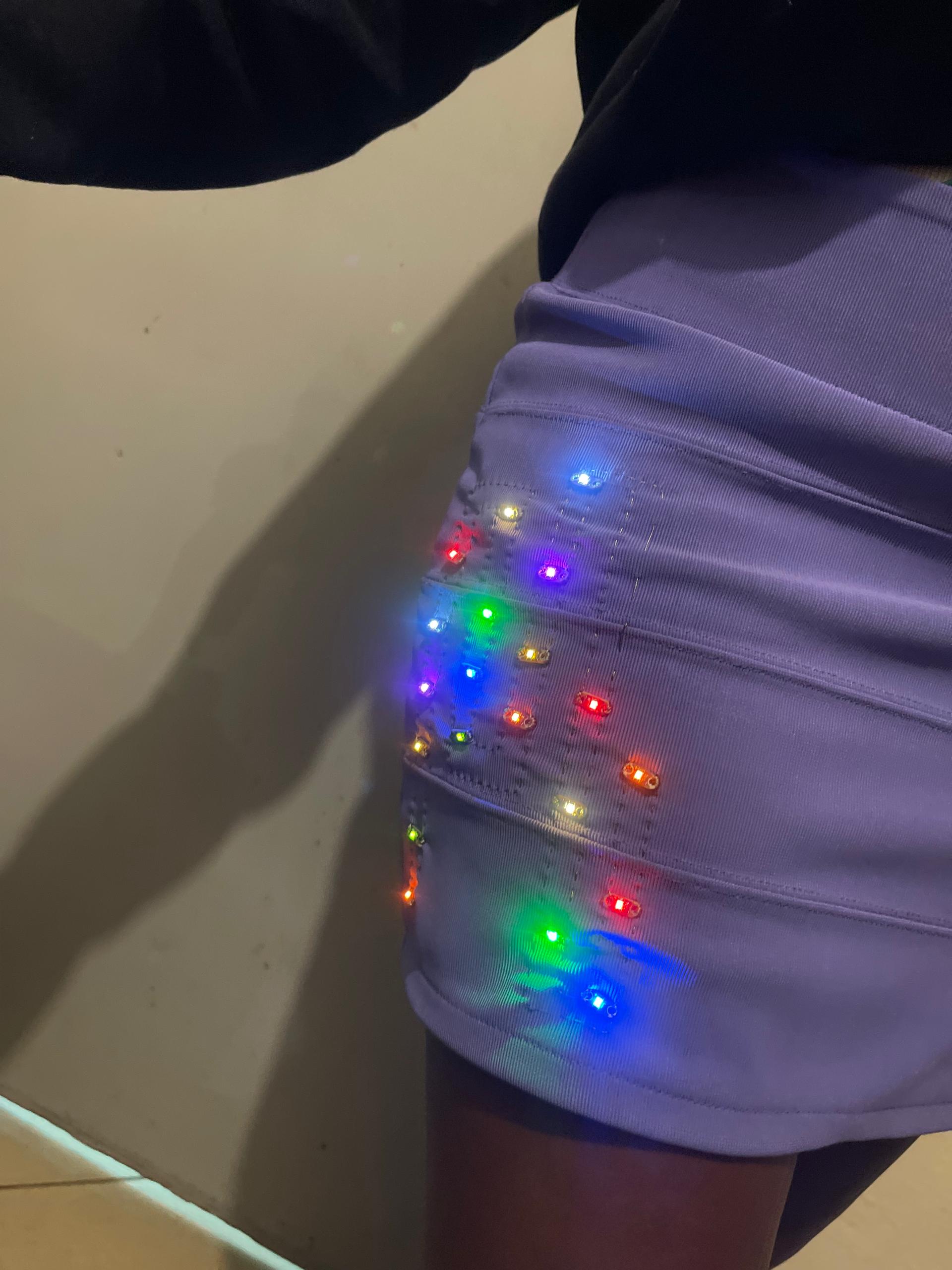
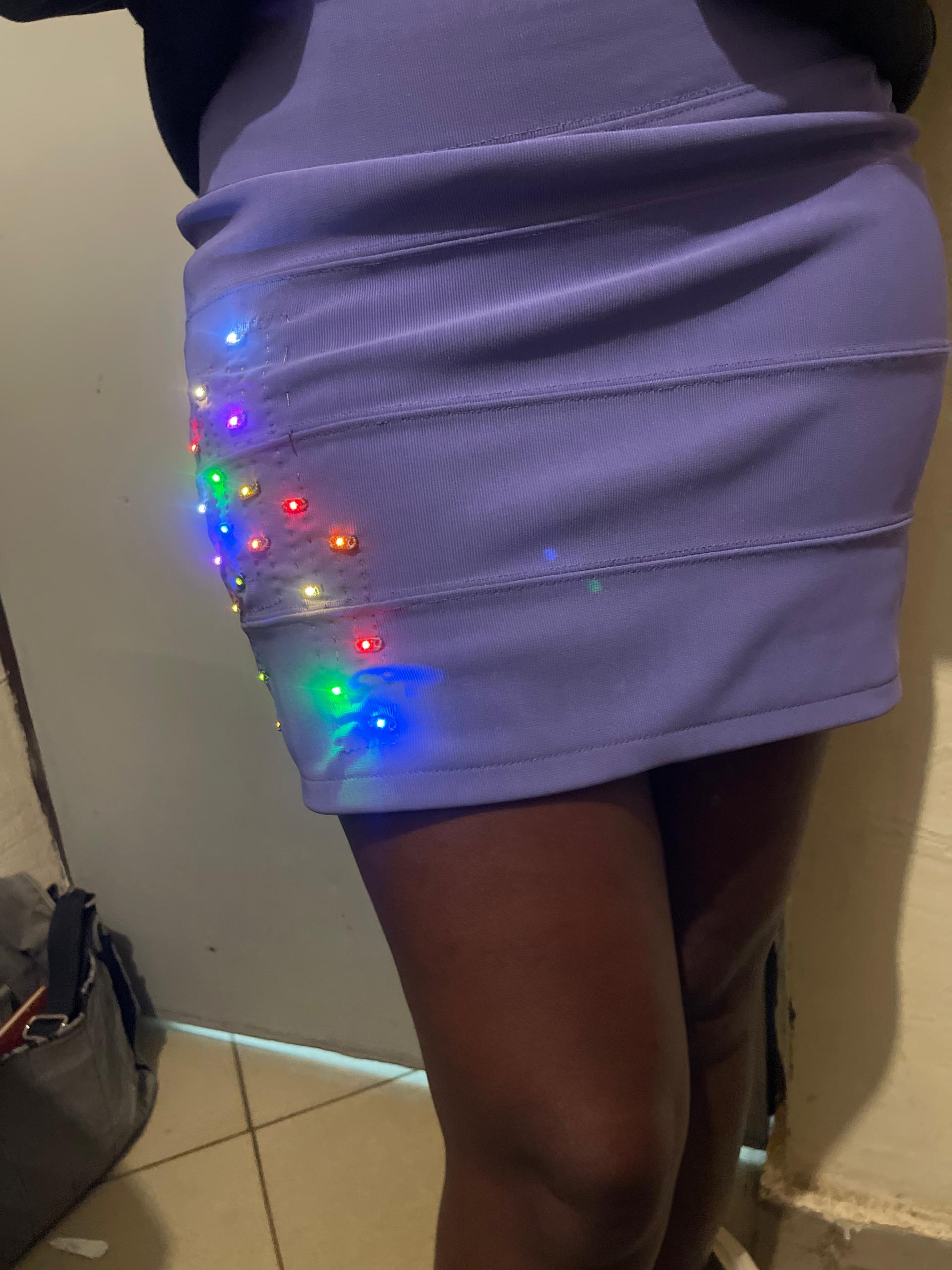
The result is a sound-reactive skirt where LEDs light up when there's sound goes off when the sounds stops.
This project is inspired by sound-reactive wearables like the Equalizer Skirt, where light behaves like an audio visualizer. However, I adapted the idea to fit my own approach, materials, and constraints.
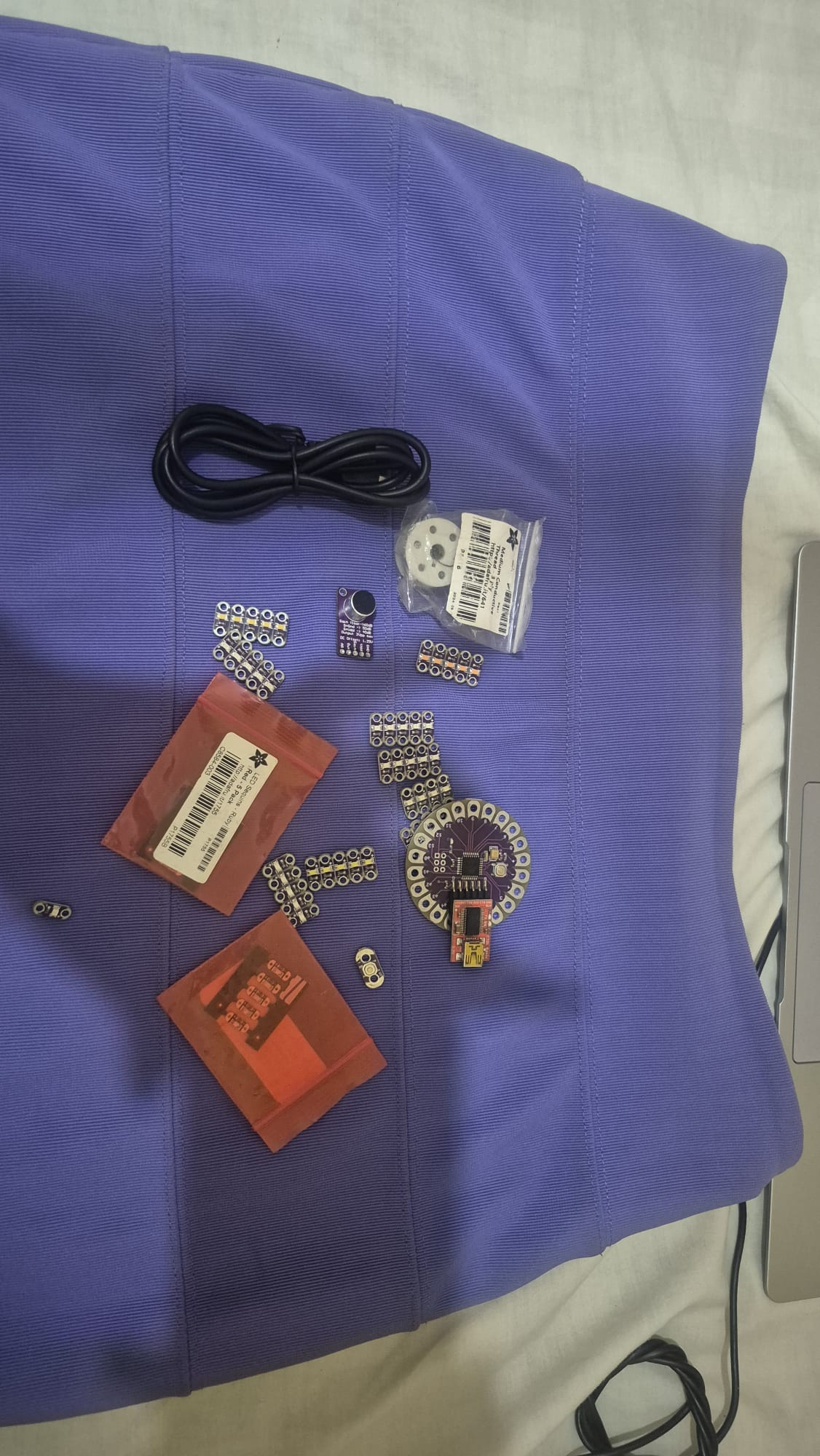
Materials
- LilyPad Arduino
- LilyPad LEDs (20 pieces)
- Conductive thread
- Battery
- Sound sensor(MAX9814)
- Skirt (existing garment)
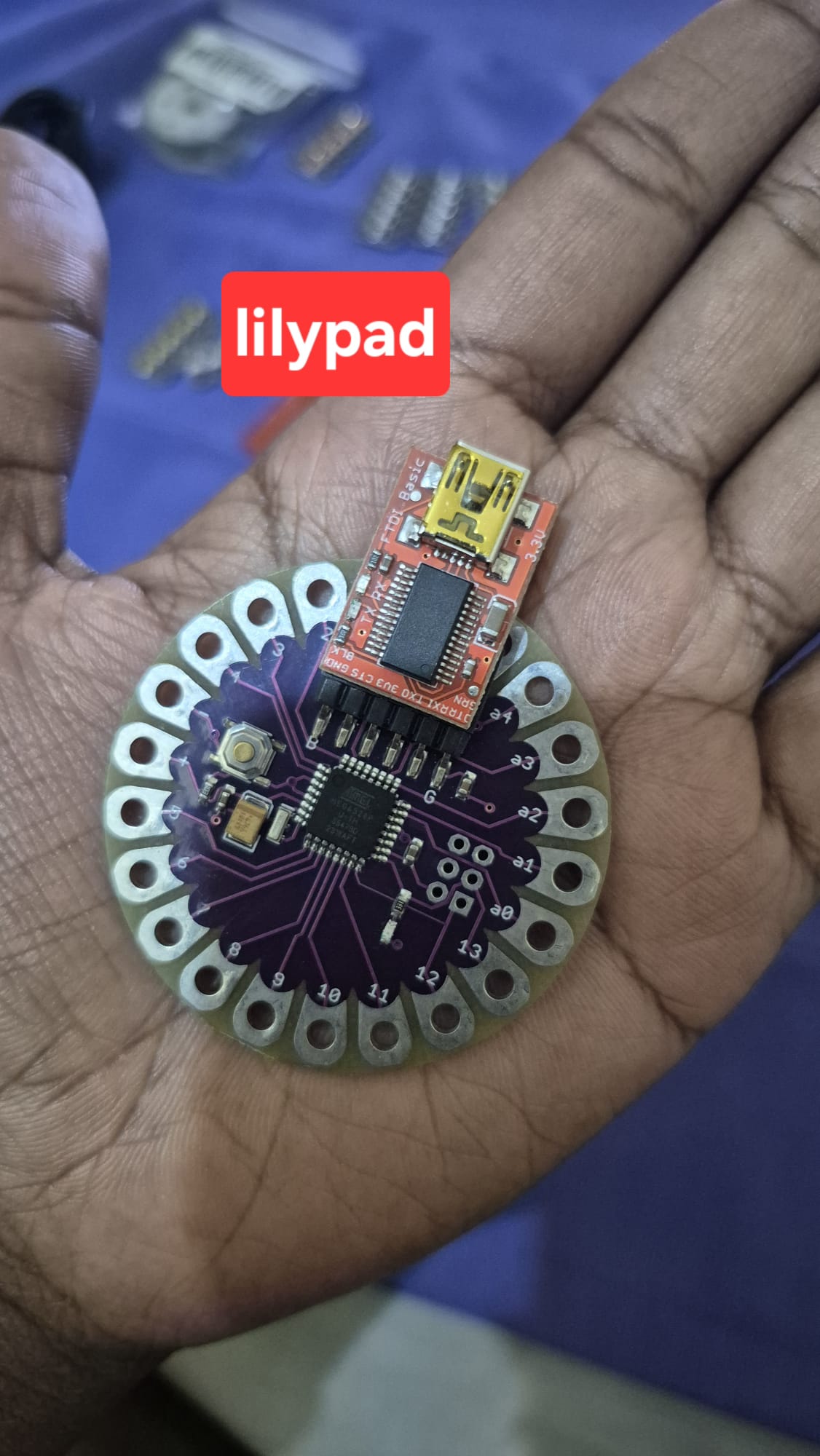
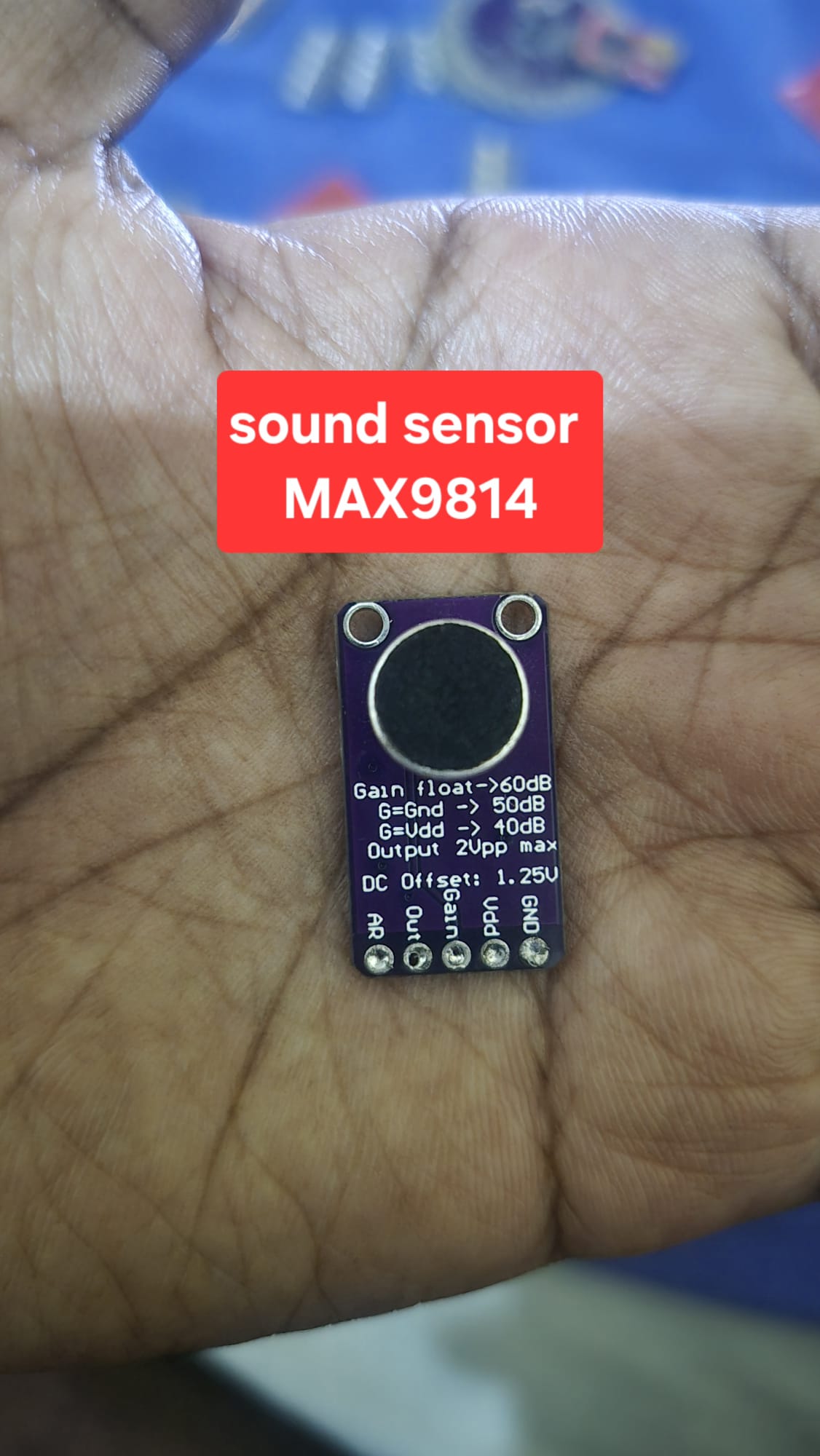
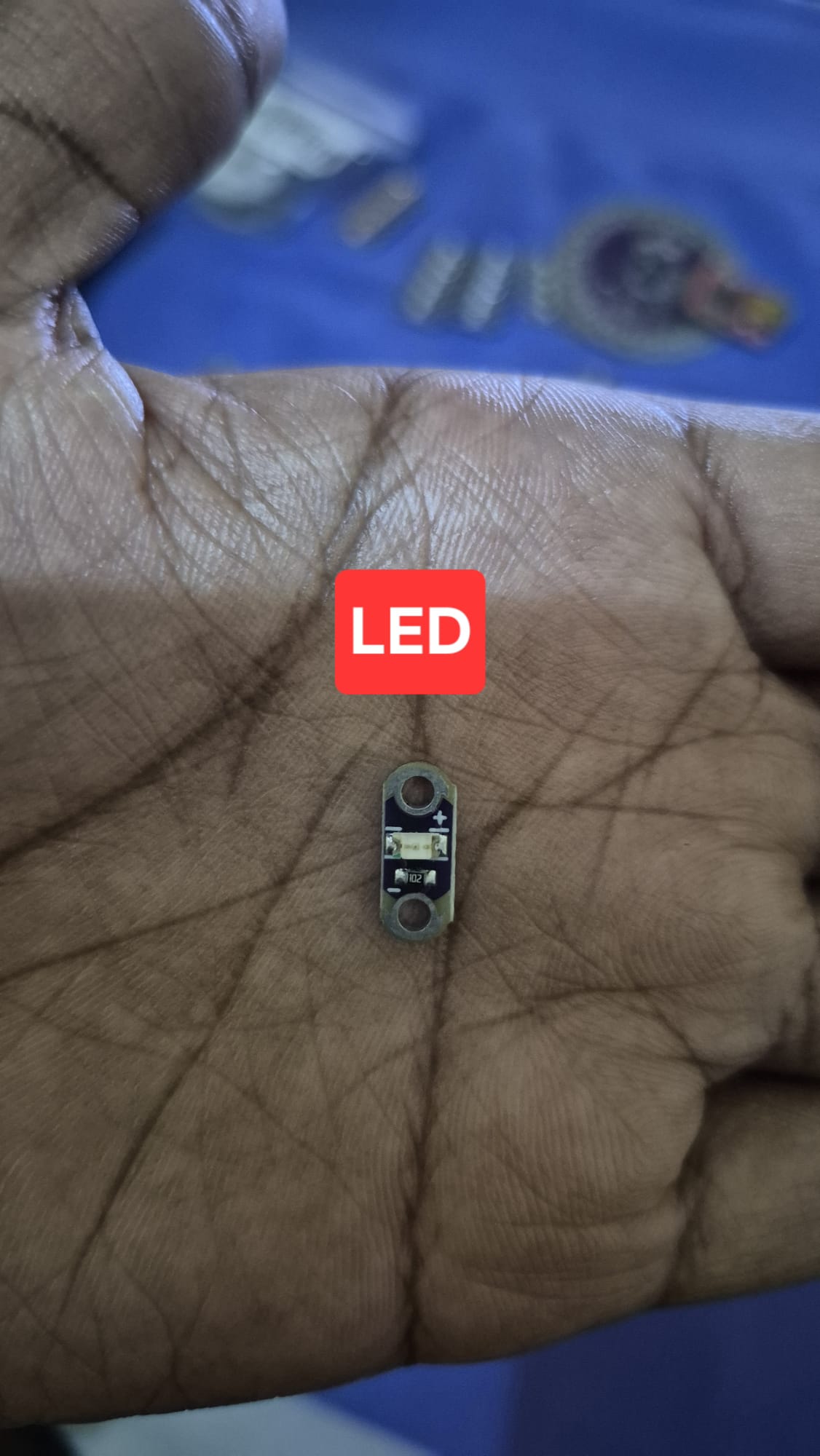
Process
Sound Reactive Circuit
[ Sound Sensor ] ↓ (analog signal) [ LilyPad Arduino ] ↓ (digital output) [ LEDs (20x) ] ↓ [ Power Supply (Battery) ]
Step 1
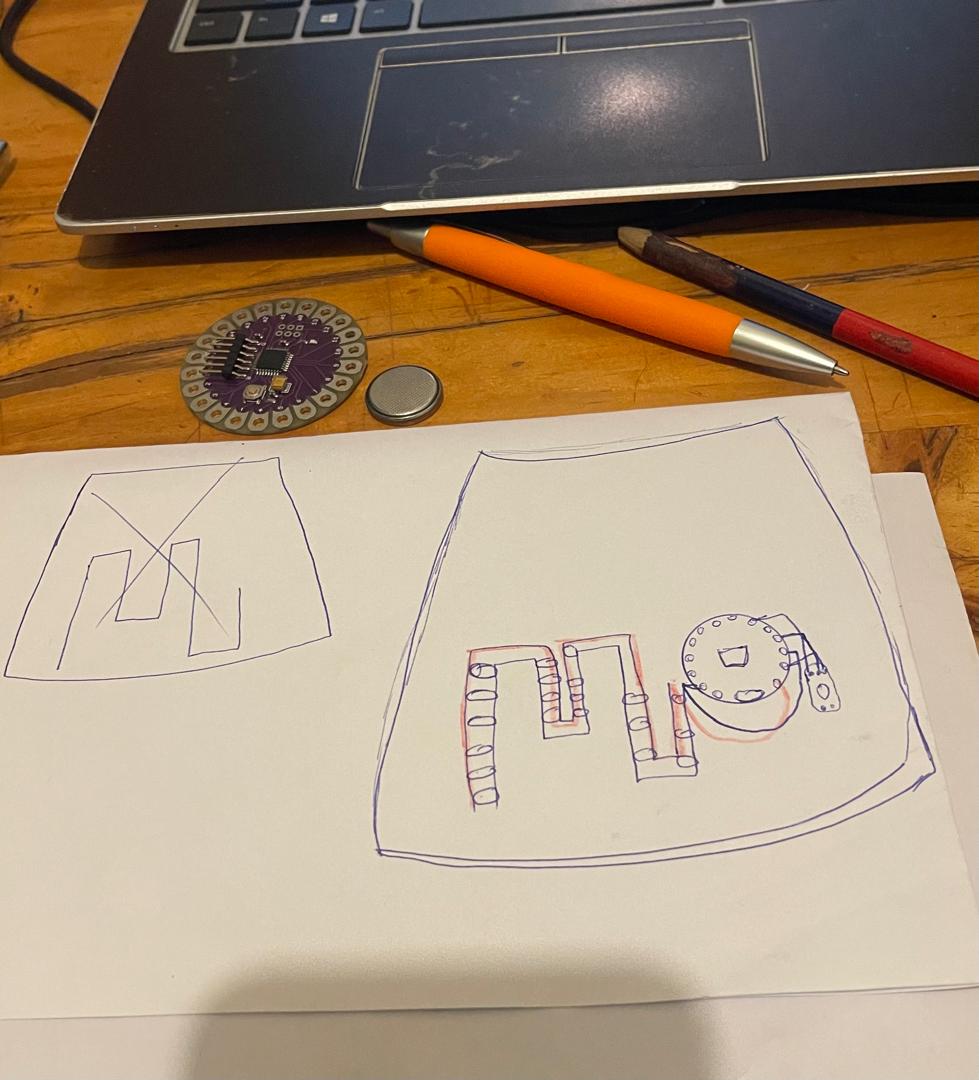
- Planning
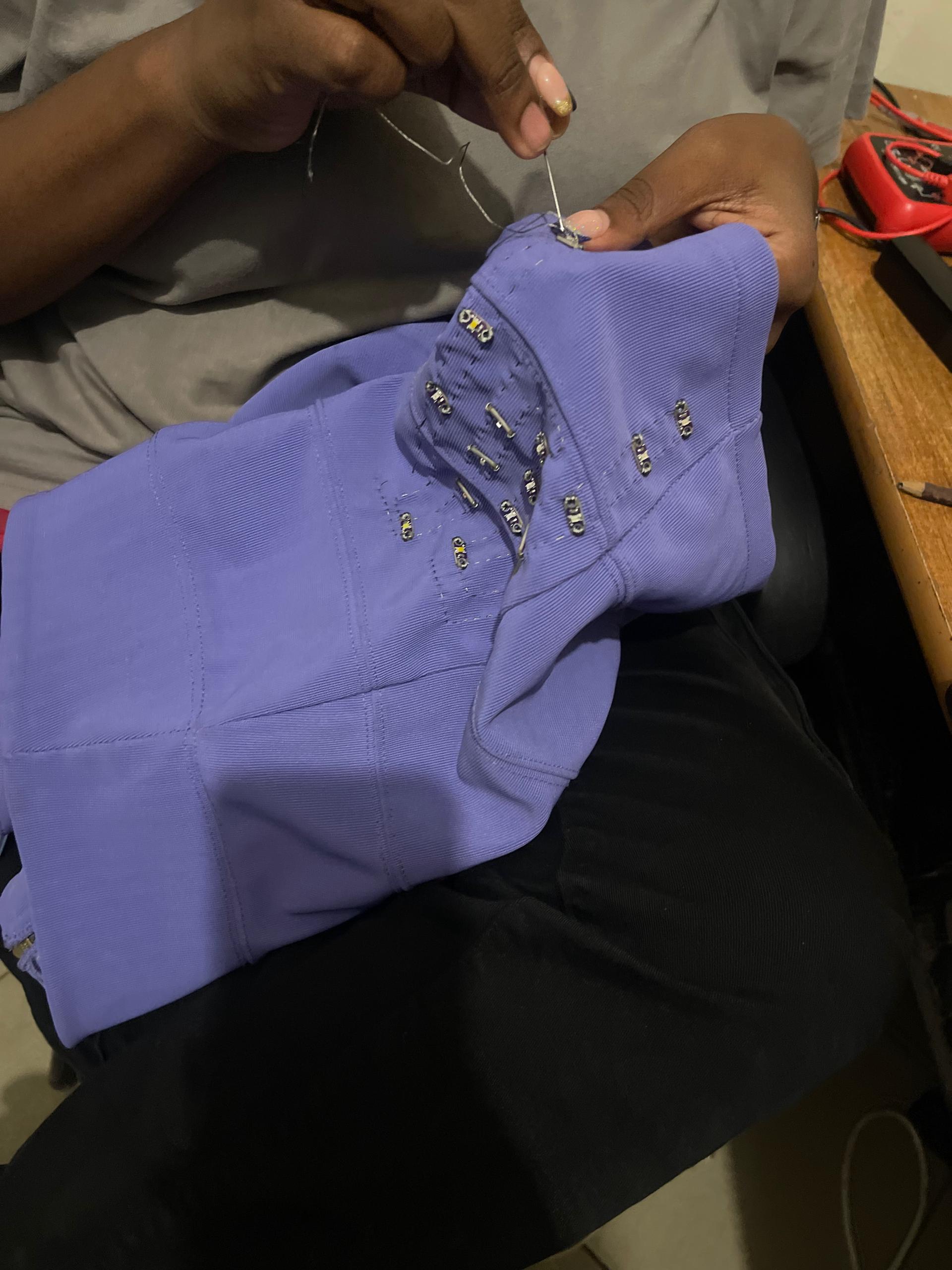
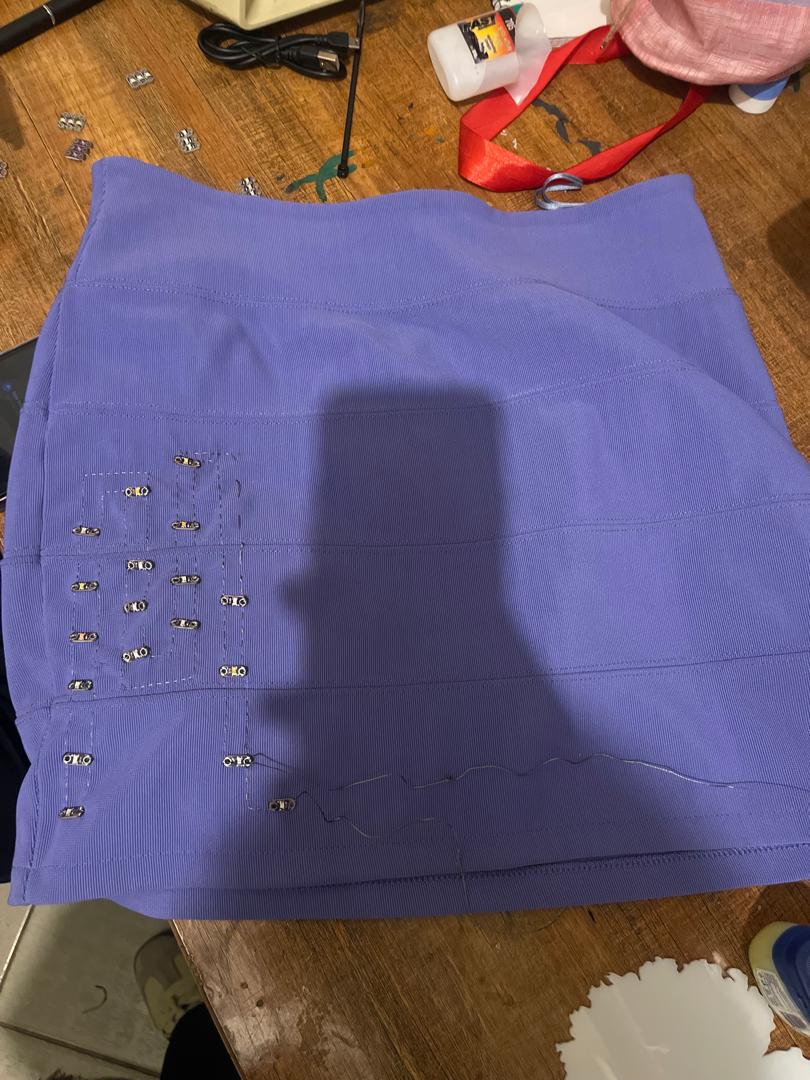
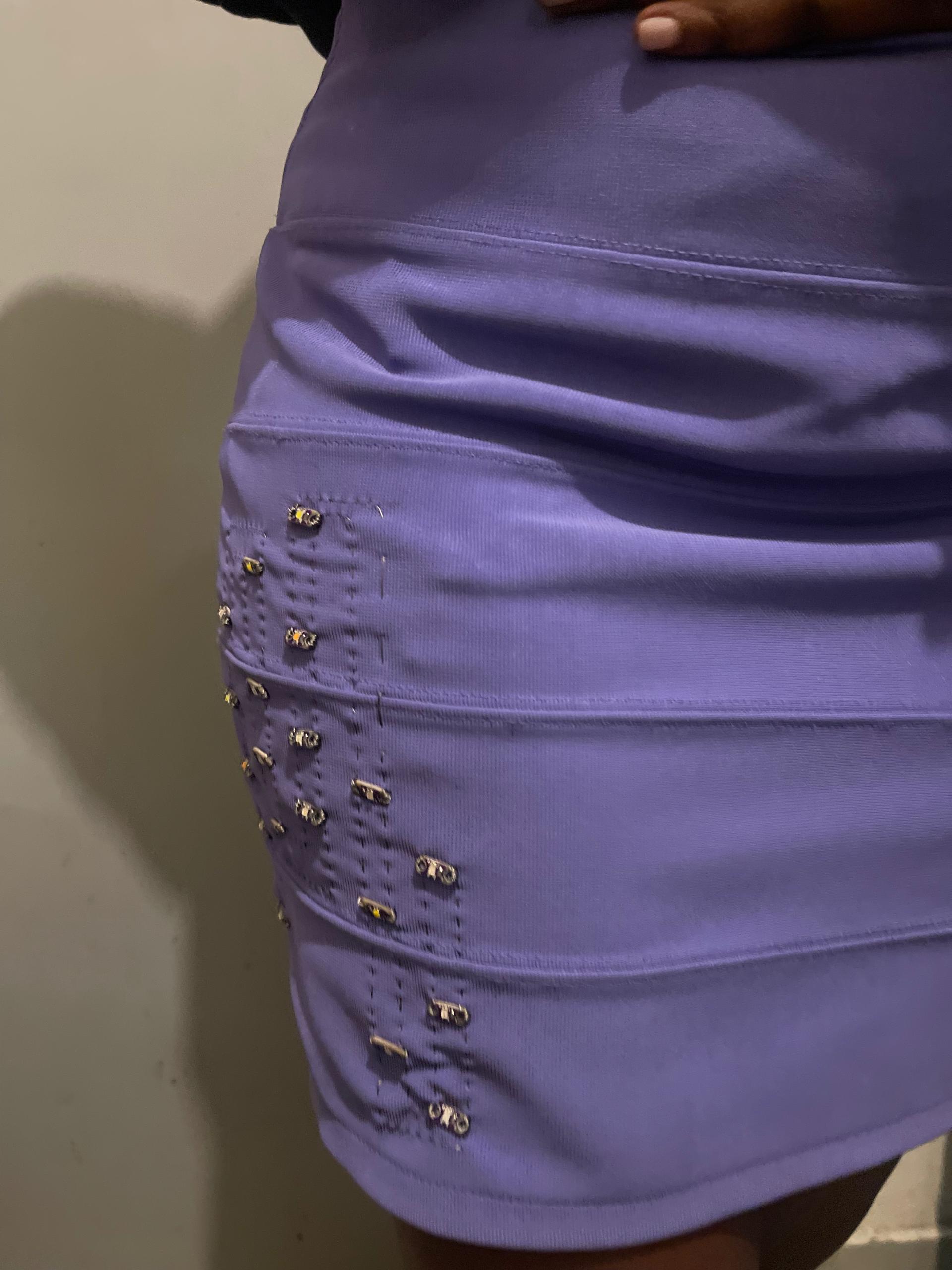
- I planned where the LEDs would be placed on the skirt
- I arranged them in a pattern similar to an equalizer
Step 2
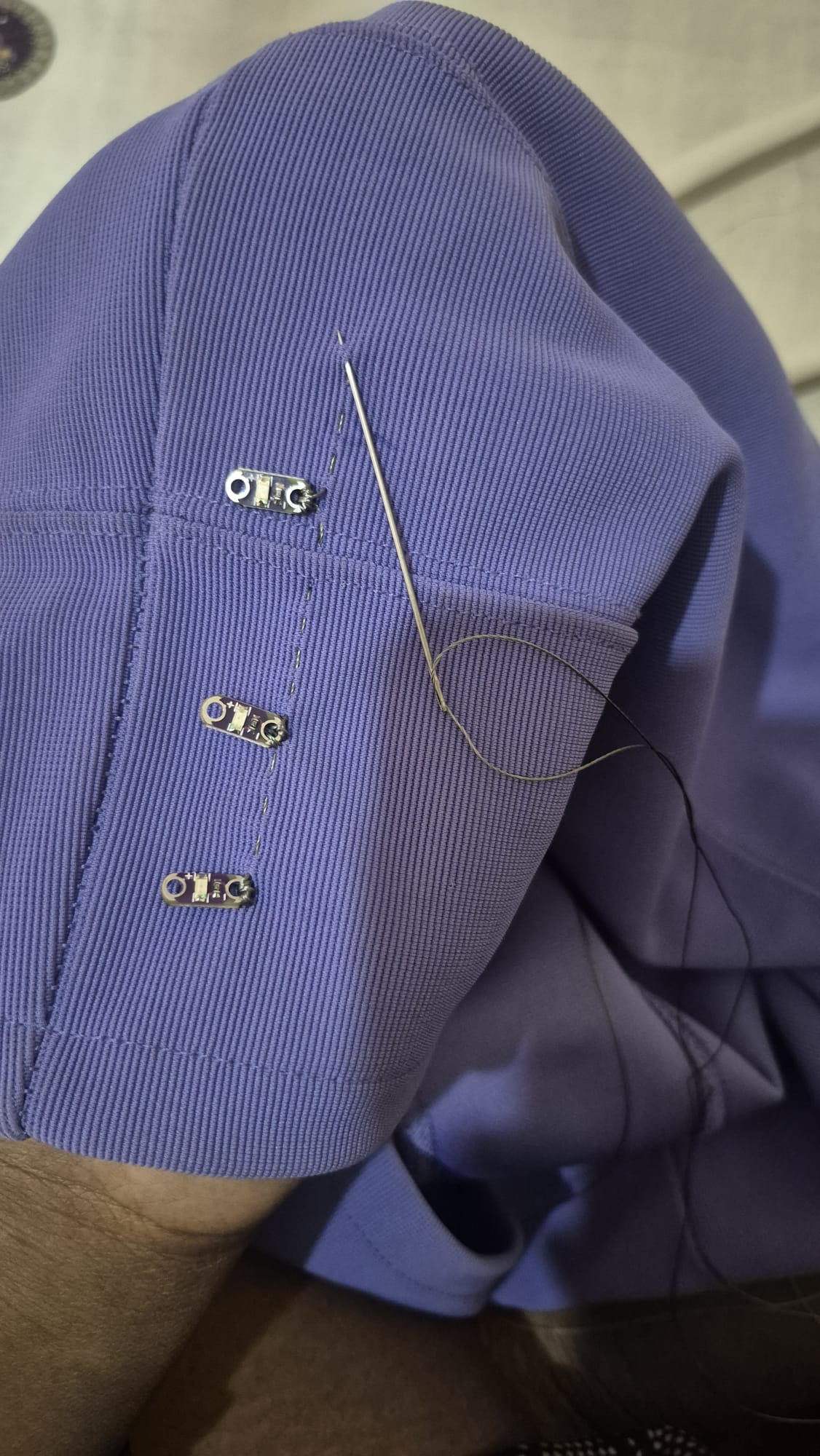
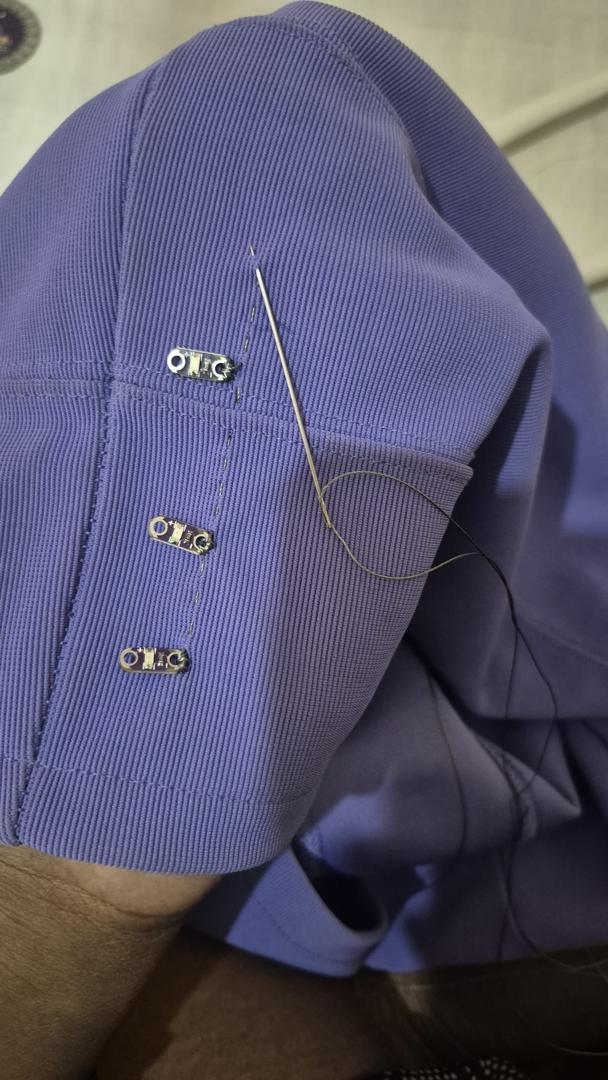
- Sewing the circuit
- I used conductive thread to connect:
- LEDs
- Sound sensor
- LilyPad board
- Since conductive thread has resistance:
- I kept connections short and close
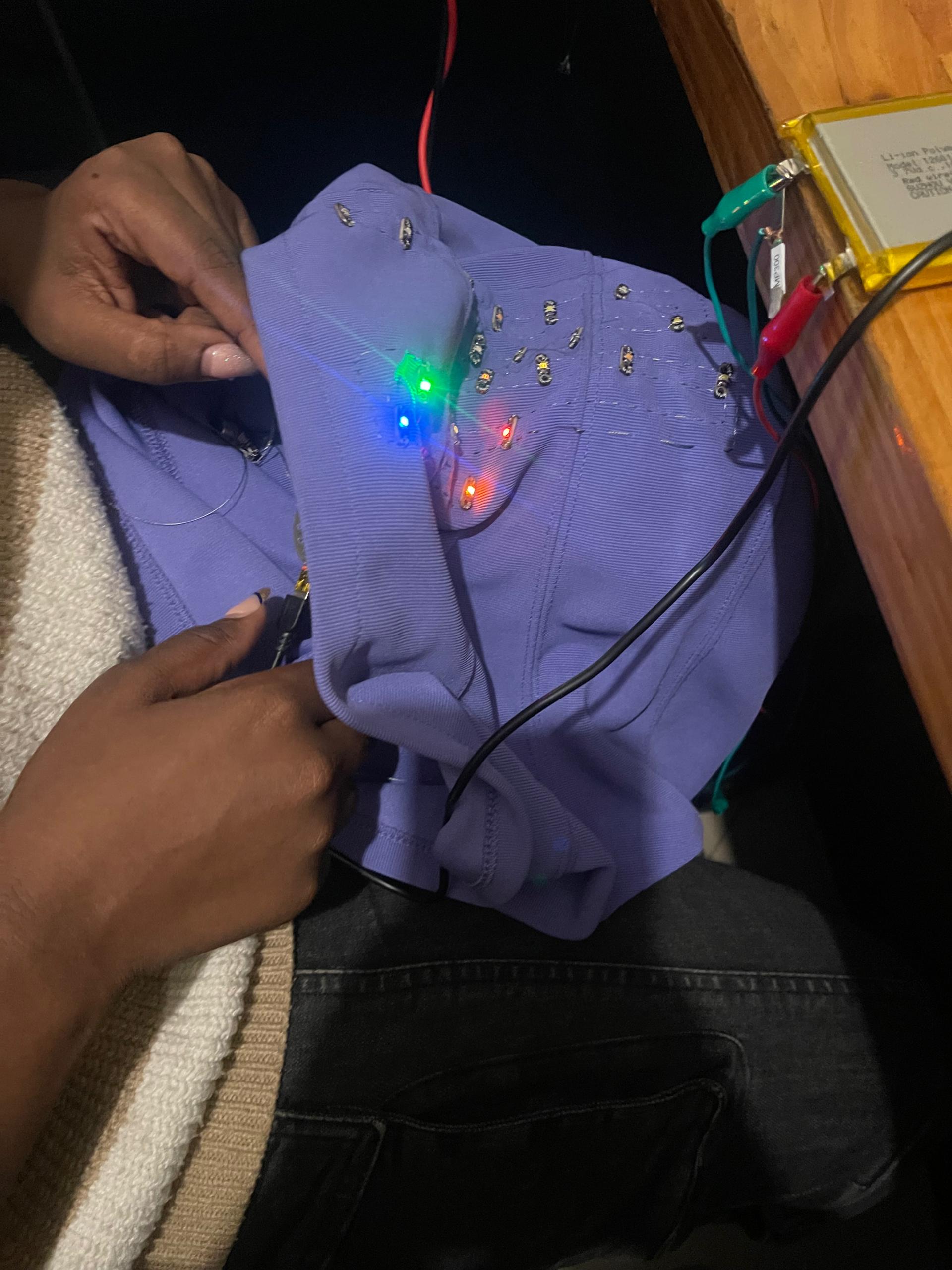
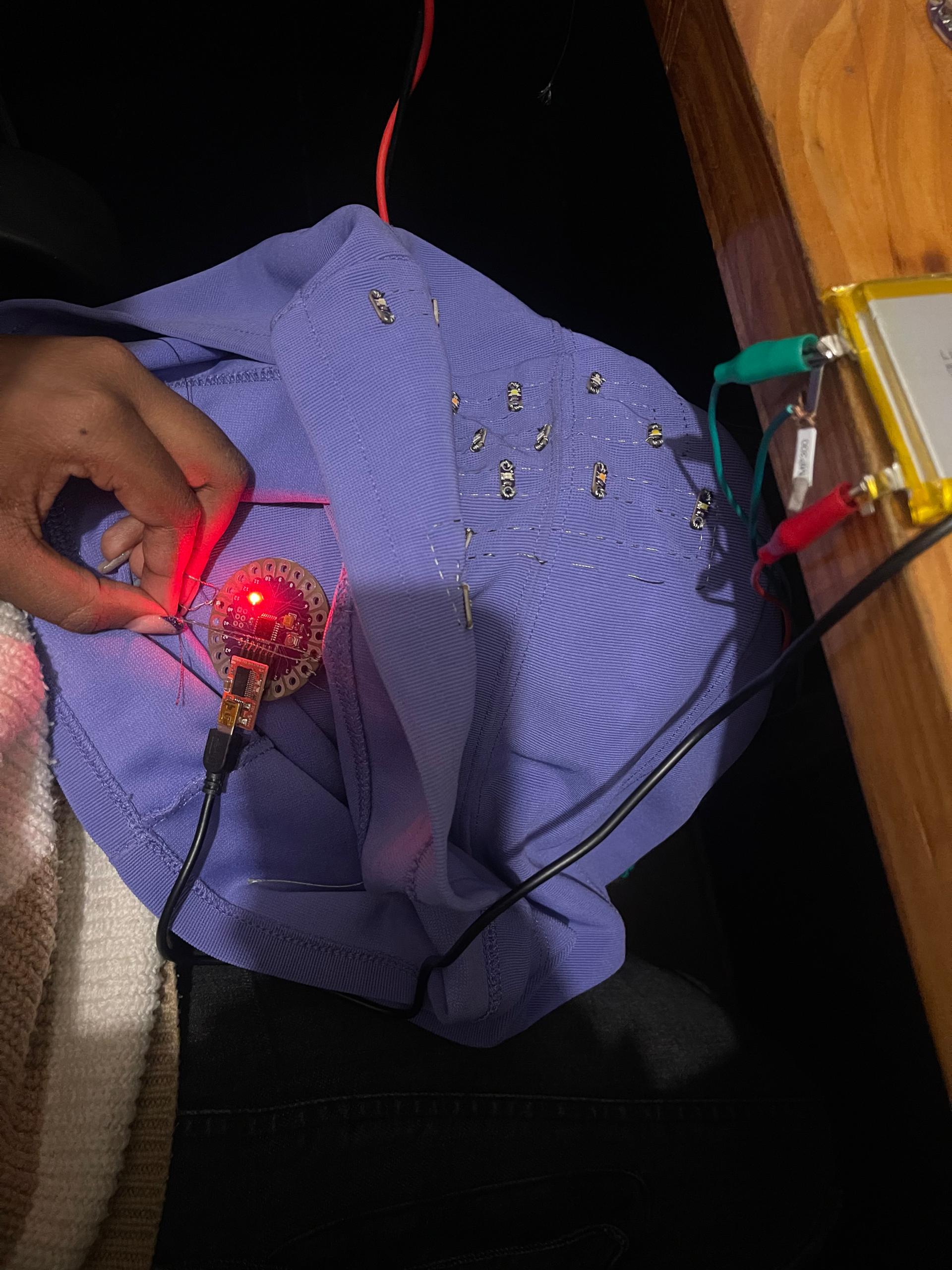
Step 3
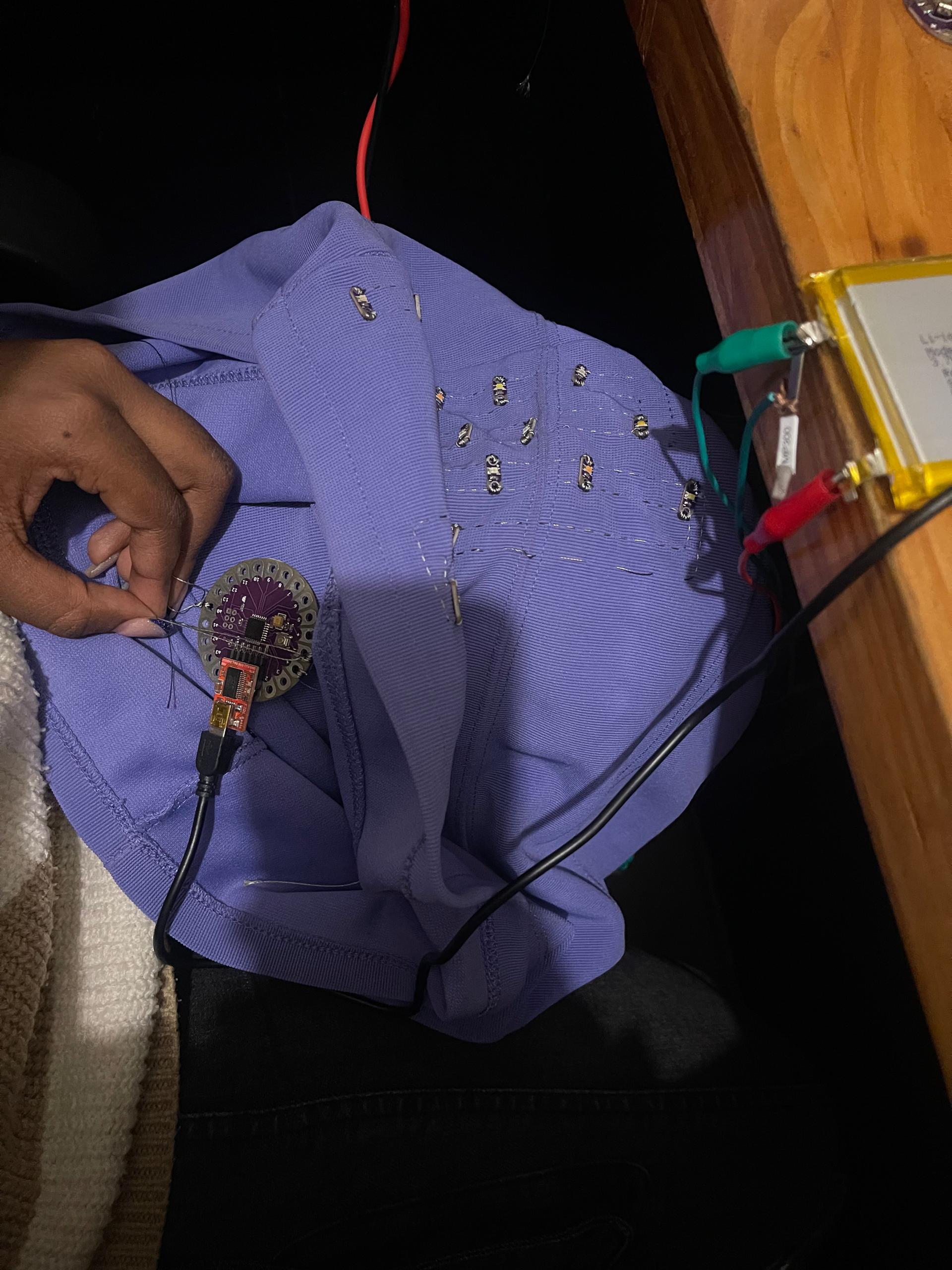
- Testing
- I connected the lilypad to arduino IDE and then inserted the code i generated from chatgpt
- Tested sound reaction
- Adjusted connections where needed
### Step 4
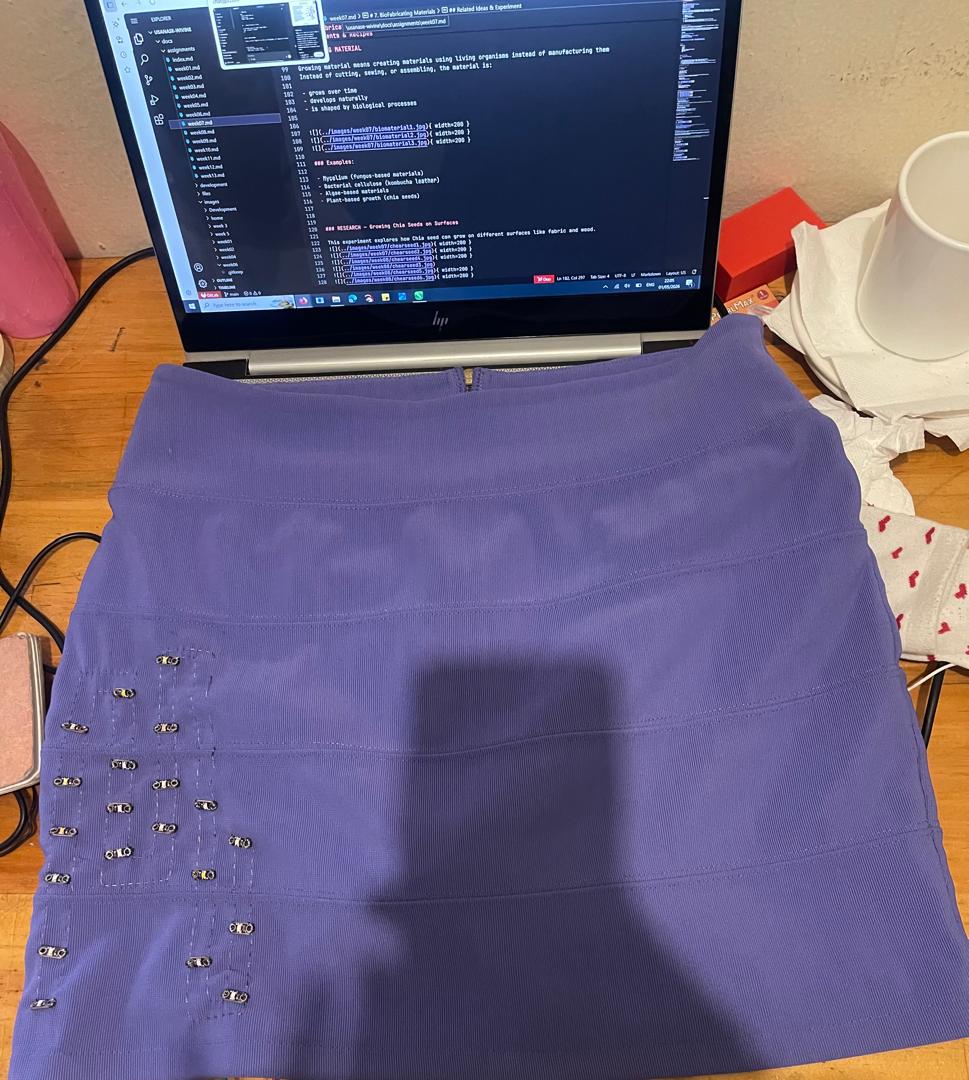
- I made sure senser and battery and lilypad they were:
- not visible
- comfortable to wear
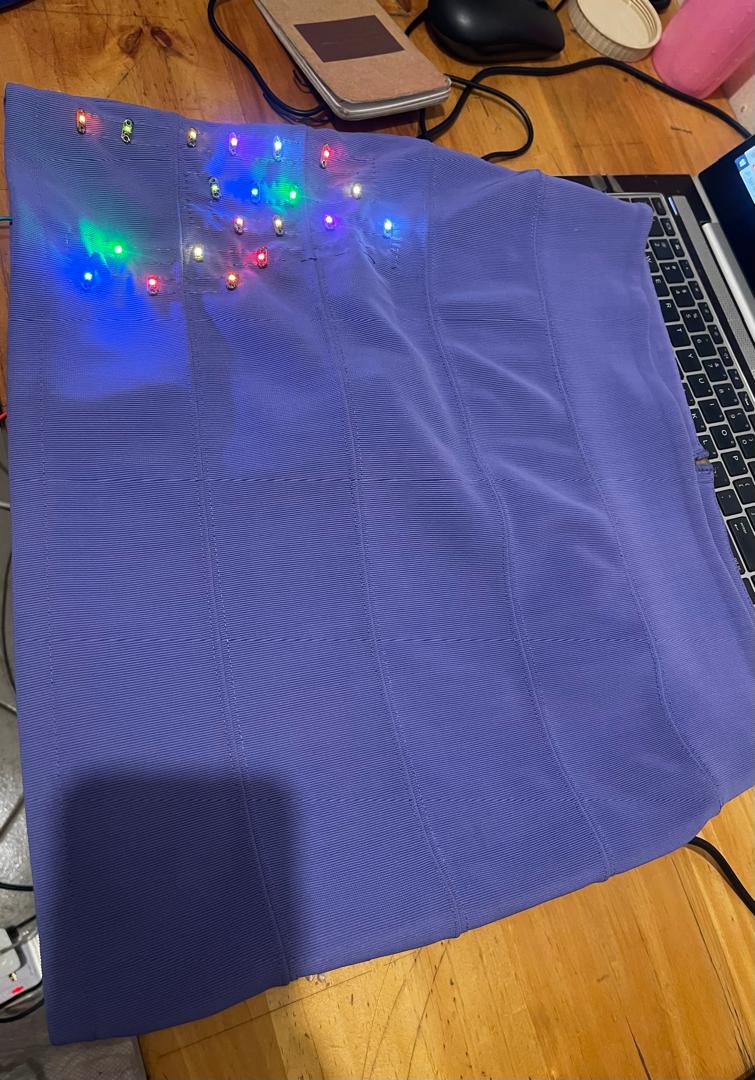
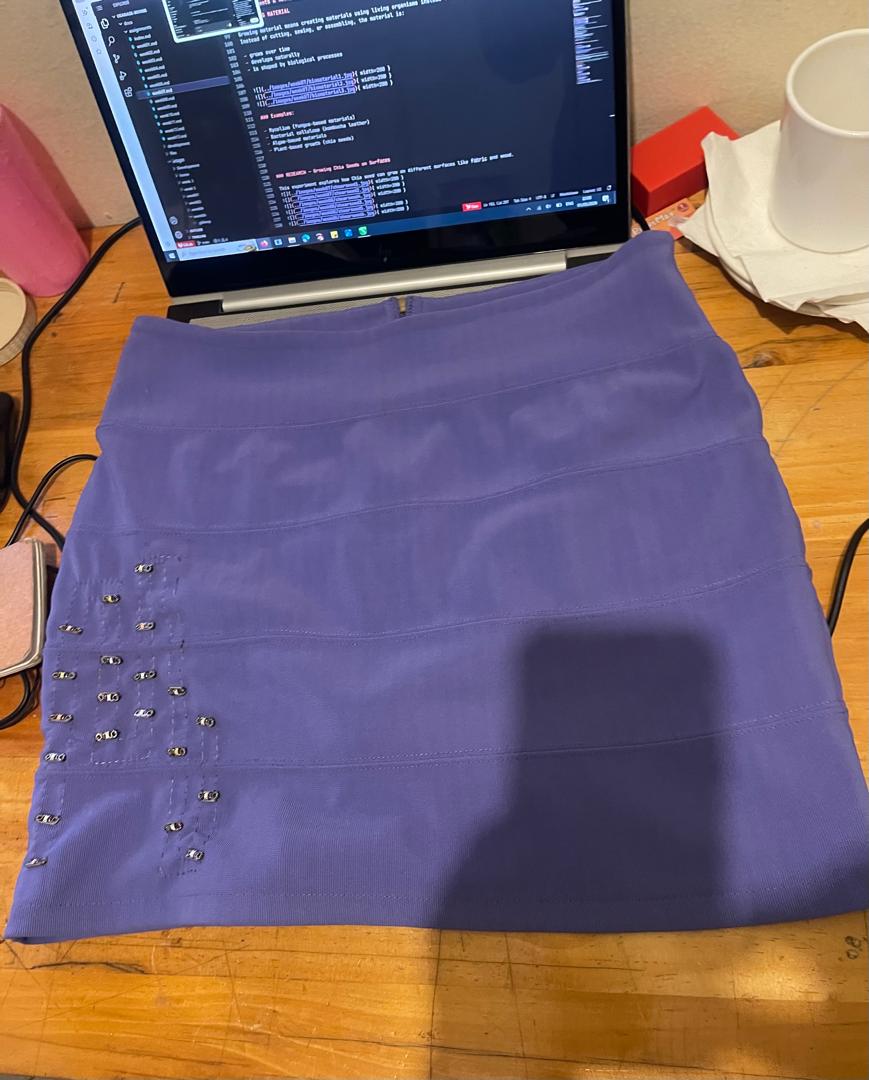
Result
- LEDs light up when there is sound
- Stops when there is no sound
The CODE USED
int micPin = A0; // sound sensor OUT int ledPin = 5; // your LED bundle (negative side)
int threshold = 550; // adjust this later
void setup() { pinMode(ledPin, OUTPUT); }
void loop() { int soundValue = analogRead(micPin);
if (soundValue > threshold) { digitalWrite(ledPin, HIGH); // LEDs ON } else { digitalWrite(ledPin, LOW); // LEDs OFF } }