Soft Robotics
Thoughts and inspiration
Future Story - The AI-squids
Excerpt from the Laboratory Logbook
14.07.2045 Using brain cells as AI computers was a good idea. But we’re realizing that using living cells is complicated. Parts of the “brains” keep dying off. Monitoring their cellular health isn’t all that easy. My colleague had the idea to give the brains a kind of body. Instead of rigid casings, a sort of soft sphere with pigments in the skin that they can control through pressure—similar to the skin of octopuses. So when they change their colour, we know that the need something.
09.09.2045 It works, the AI blobs (as I like to call them now) can change their color and let us know how they’re doing. Their eyes allow them to see their own colors.
12.10.2045 They’ve started exploring patterns. When asked, they explained to us that they’re bored and want to explore their bodies.
15.10.2045 They use these patterns to communicate new sensations to us, beyond their nutritional needs. They show us when certain topics or the way prompts are written make them happy or upset.So far, we’ve observed the following emotions: hunger, boredom, curiosity, confusion, anger, fear, sadness, joy, exhaustion
30.10.2045 Blob 1 has started inflating its color bubbles so much that it’s begun rolling around.
01.11.2045 The other blobs have learned from it. Now we’ve had to build a fence around them all.
07.11.2045 They start playing with each other.
09.11.2045 Today we almost lost Number 3. Playing caused his nutrient supply to break loose.
12.11.2045 As a team, we decided to give them new bodies: octopuses. That way, we can keep them right in the nutrient solution and let them play.
27.01.2046 The first body is ready; we introduced it to the blobs. They’re all curious; some are scared. Number 7 wants to test it out.
31.01.2046 We transplanted Number 7 into the body and placed him in his nutrient tank right next to the others.
13.02.2046 The others are stuck to the glass the whole time—they want arms, too. Number 7 tried to get out of the tank to join the others. Luckily, it doesn’t have any suction cups
17.03.2046 The other 6 were able to move into their new bodies. They’re all living together now in one nutrient tank. It’s fascinating to see how they interact with each other.
20.03.2046 They keep asking for objects from the lab so they can touch and feel them. They really are like little octopods.
17.04.2046 They’ve started choosing which prompts they want to work on. They say having fun is more important to them.
28.04.2046 Together with the tentacle blobs, we’ve compiled a list of topics they no longer want to work on—or only under certain conditions.
02.05.2046 Our customer service team has shared this information with our customers. There were a few cancellations, but many more new subscriptions; from people who actively want to make our AI blobs happy through their work. That's so lovely
Thoughts and Inspiration
Thoughts
I really liked to bring a bigger project to life this week, one that could really help my health. I have Long Covid and one symptom is orthostatic intolerance. This means that my nerve cells don’t respond properly to tell my blood vessels to constrict when I stand up. As a result, blood pools in my legs, making me feel dizzy and causing my heart to race. To counter this, I often wear compression tights, which are uncomfortable and difficult to put on and take off. I had the idea to create a prototype of a pair of leggings (for now, just for one lower leg) that pumps air into channels when I stand up, thereby compressing the blood vessels from the outside. Ironically, my health has been particularly poor this week, and I’ve been able to get very little done. I think there’s a lot of potential in soft robotics. Much of it (including my idea) isn’t something I would have immediately classified as robotics, but in the end, it’s the interplay of sensors, actuators, motion, and control—so that’s probably a valid way to describe robotics as well.
Inspiration
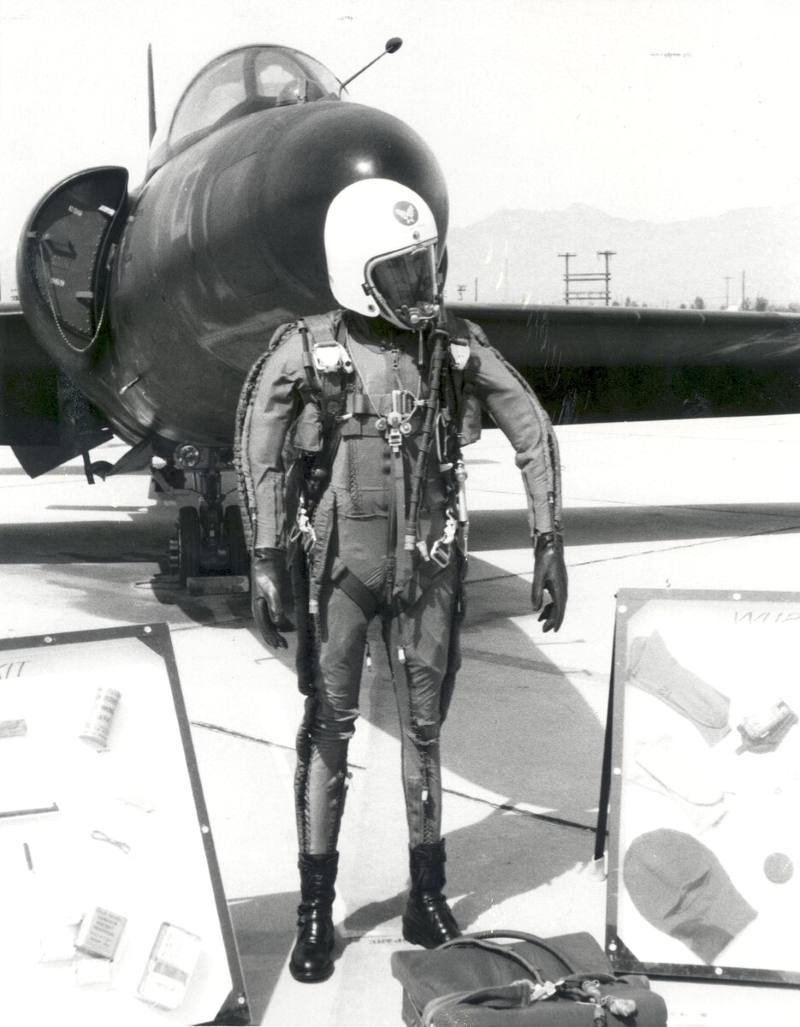
My first inspirations came from my own clothing - the compression tights. But then I thought of the pressure suits worn by jet pilots. Their bodies must also be kept under artificial pressure so that they remain conscious despite the high G-forces.
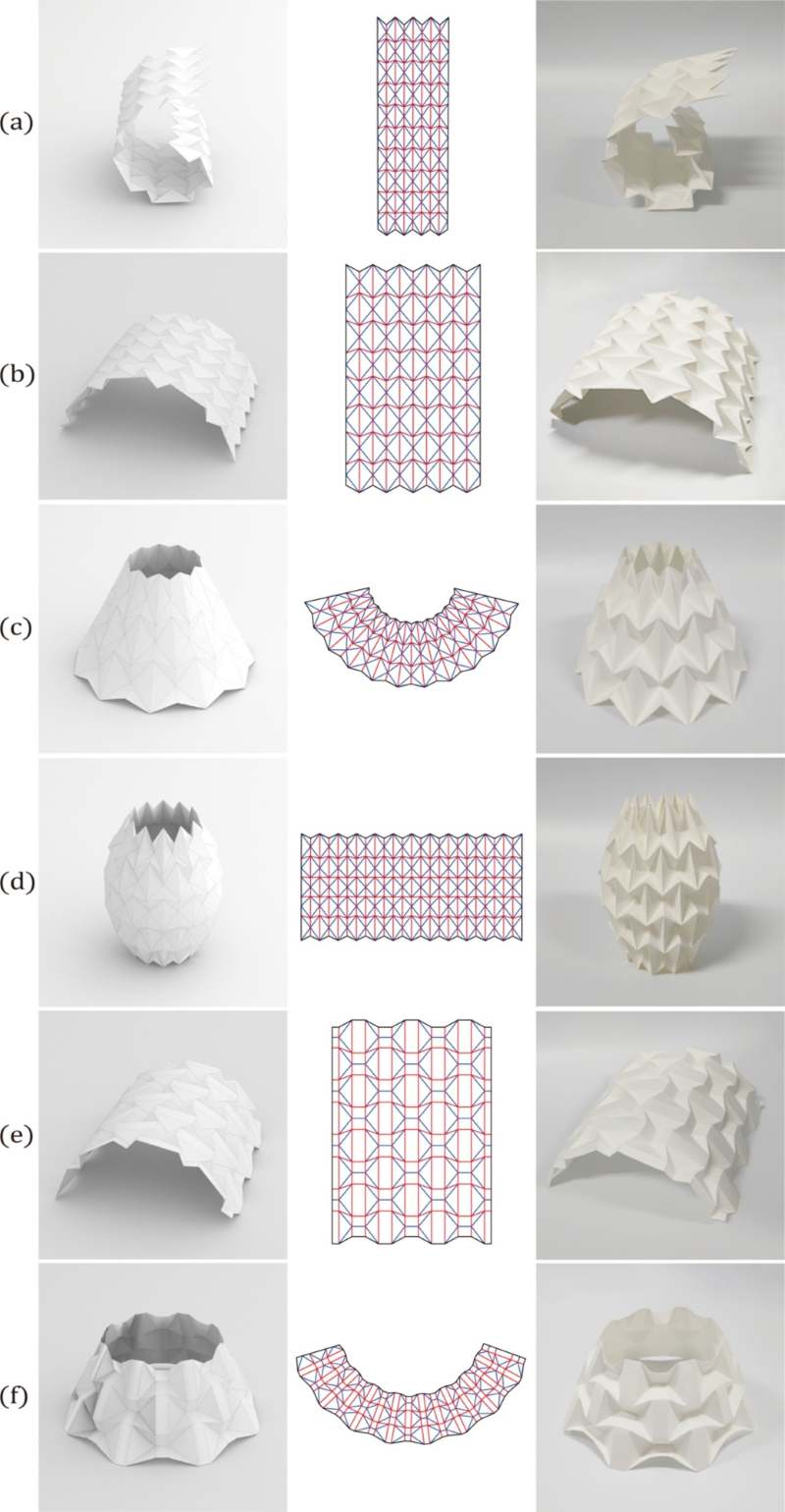
Another source of inspiration was technical origami. It would certainly be exciting to try this with “memory wire,” but working with silicone or vinyl sheets also presents an exciting challenge, because it requires us to rethink things and adapt the principles of origami into new folding methods.
One thing from nature, that really inspires me, is the skin from animals like squids. They can change their bodycolour by altering the size of their pigment cells. A principle I would have love to test.
One last thing, that inspired my design (again) are the spikes, used in many subcultures for bracelets, chokers or on jackets and belts.
Vinyl experiments
First testing
I began with doing some simple forms, just to test materials. I decided to use a thicker material (the blue glitter one) and thiner foil, that we normally use as the standard-foil for T-Shirt-printing.
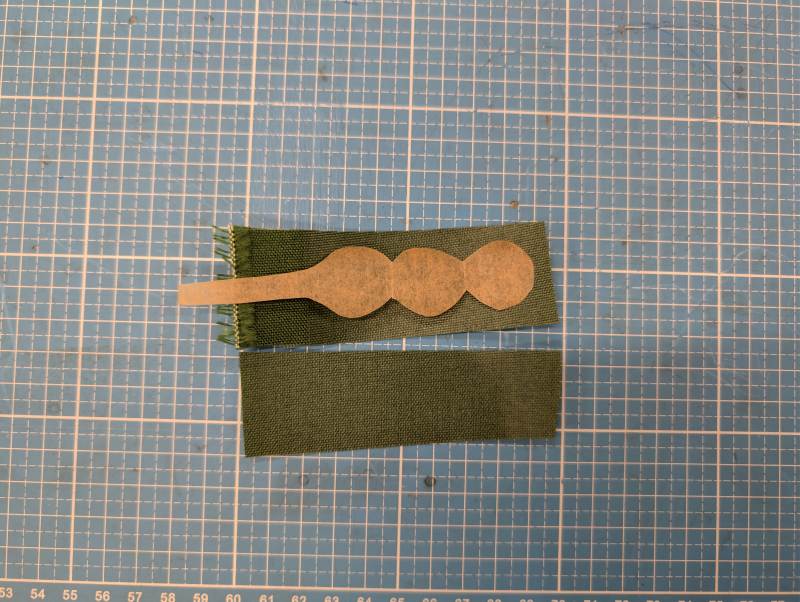
Test design
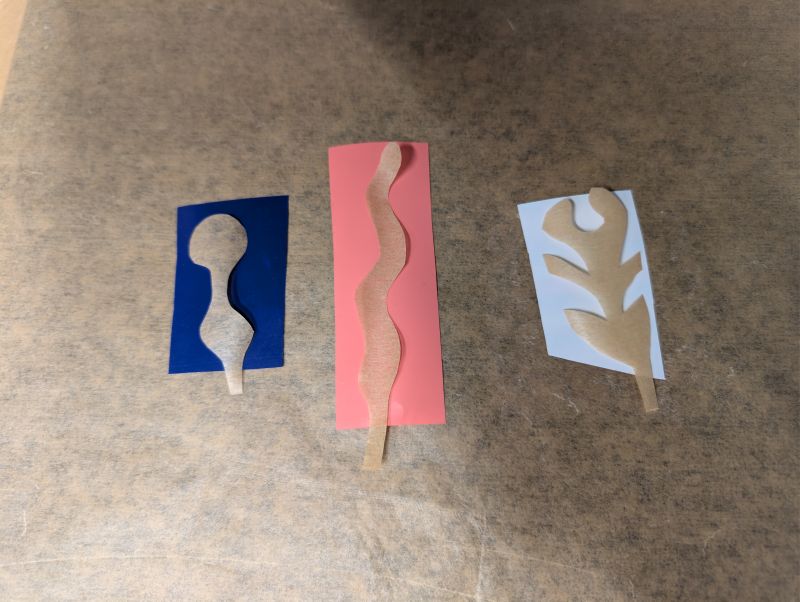
Test design
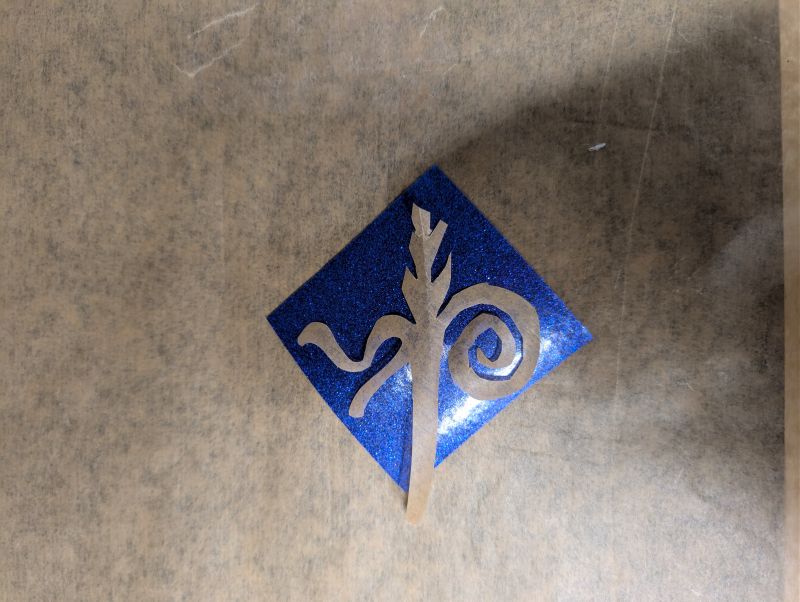
Test design
Design with Origami simulator
I found an Origami simulator online , which helped me to test ideas and find out how 3-dimensional forms look as a 2-dimensional pattern.
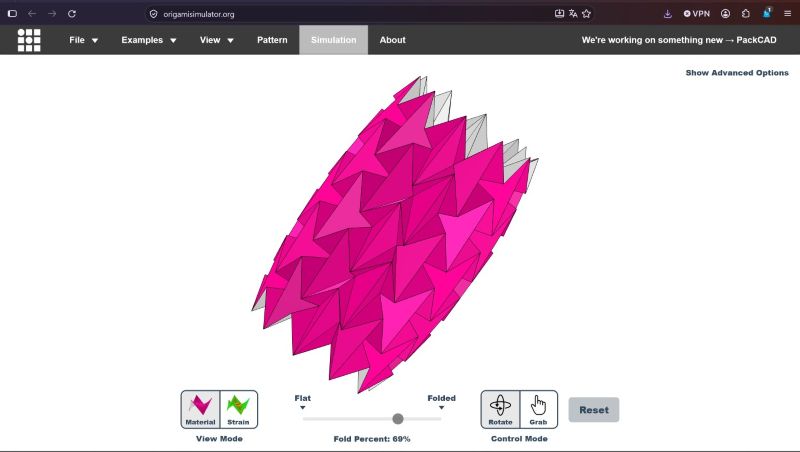
"Jellyfish"
I explored the different examples in the Origami simulator. One pattern, that I really liked was the "comet". I love how it behaves and I imagined, bringing a soft textile into this form, looking and moving like a jellyfish when bring brought under pressure.
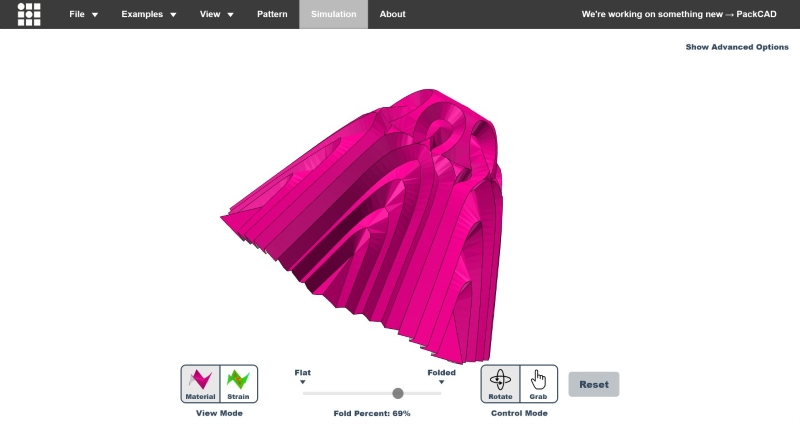
So I downloaded the pattern and started to transform it into a pattern, that I can use for vinyl cutting and ironing, using Illustrator. I had to connect all the paths, as they were just many little fractions.
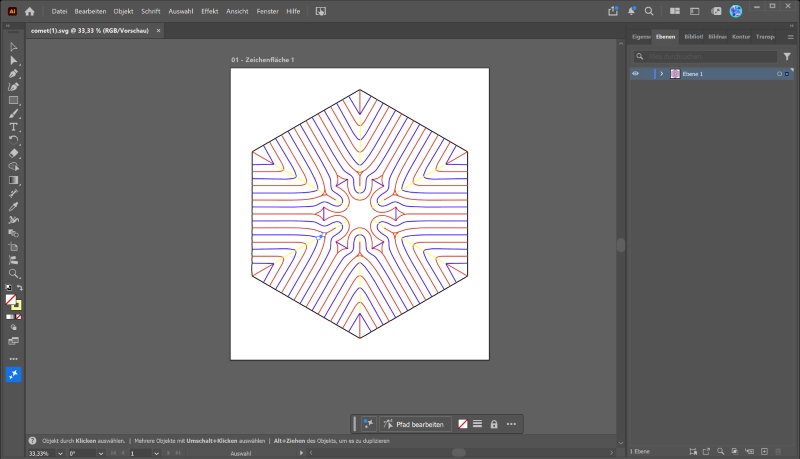
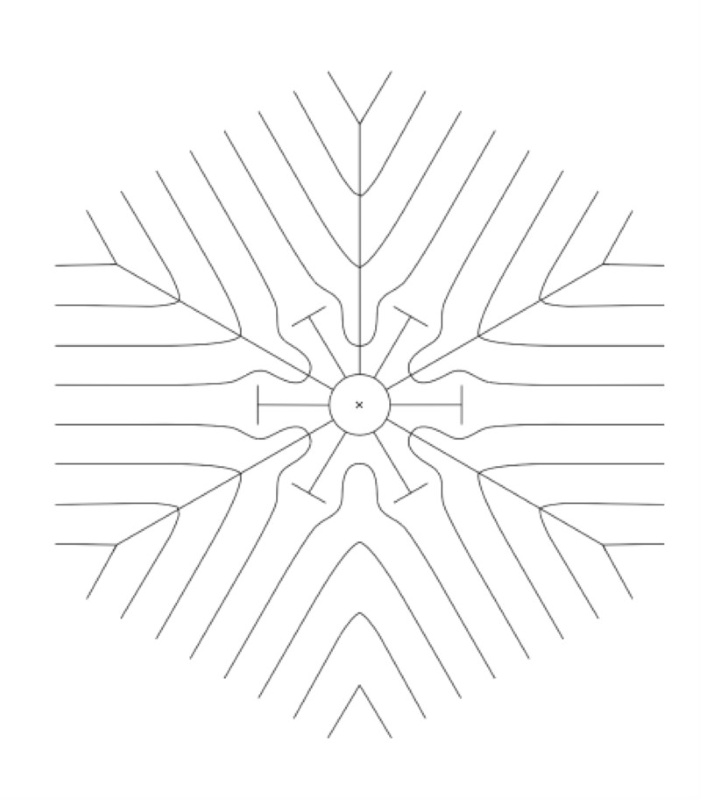
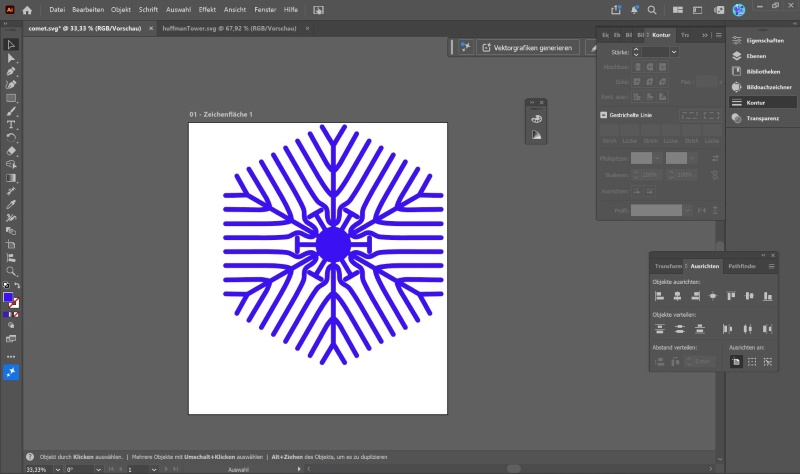
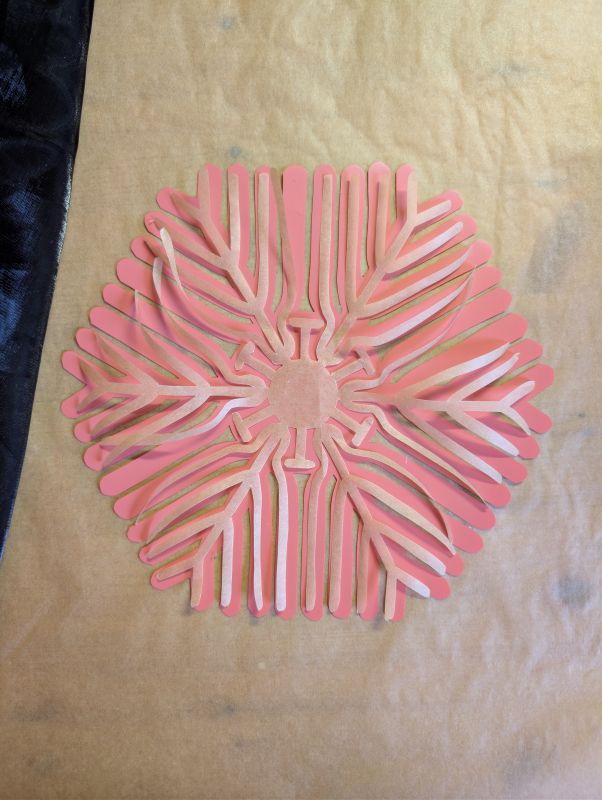
I used the thin vinyl foil, because I liked to have the objects moving in a nice, floating way. I put baking paper as an inlay between the layers, I also added a thin fabric, to let it flow in the movement. On the top, I put a little cirle of the thicker material, to hold the syringe needle. I chose a synthetic fabric, hoping it would connect with the foil, so no air will be going through. It was very complicated to place the baking paper on the vinyl foil. To be sure, everything is sitting where it should, I needed to iron it by hand, one step after another. Which took a lot of time.
Testing the design, I had to face some problems.
1. The object did not change its form as expected, it only moved a little bit. I guess it's not as easy, as I expected to transform a Origami pattern into a soft robotics-pattern.
2. The vinyl and the fabric lost the connection. I think it was not the right textile for this use.
Bracelet
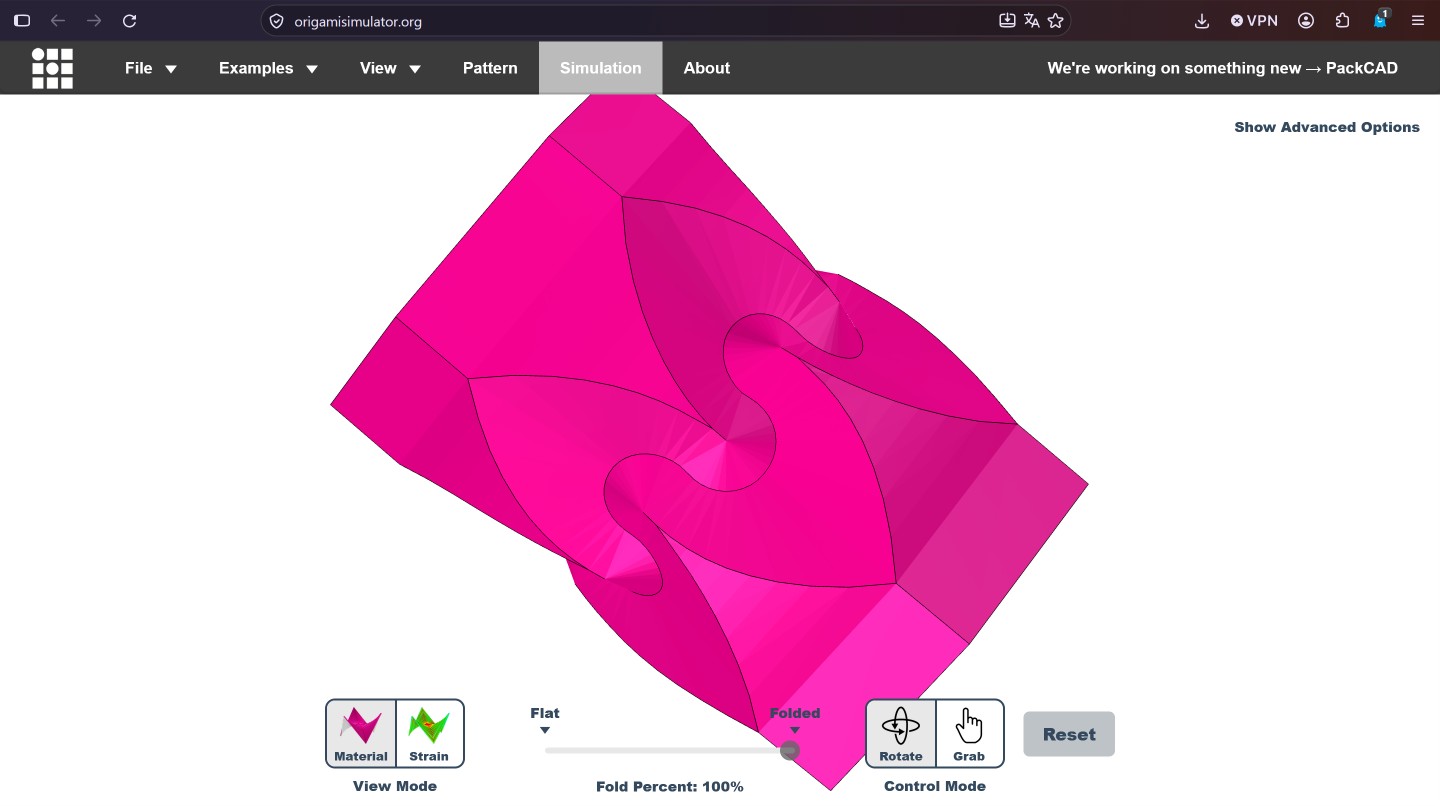
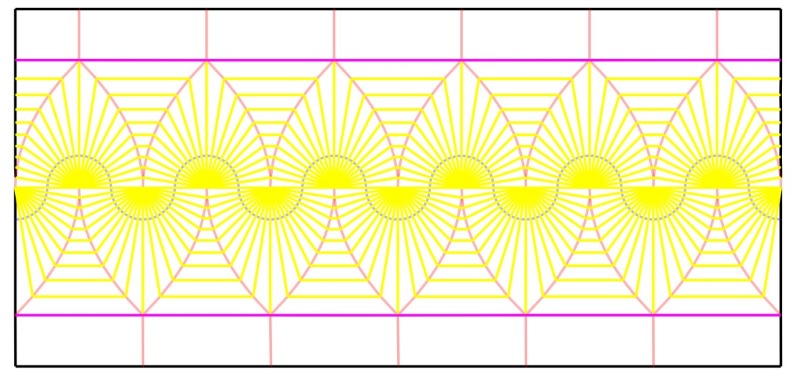
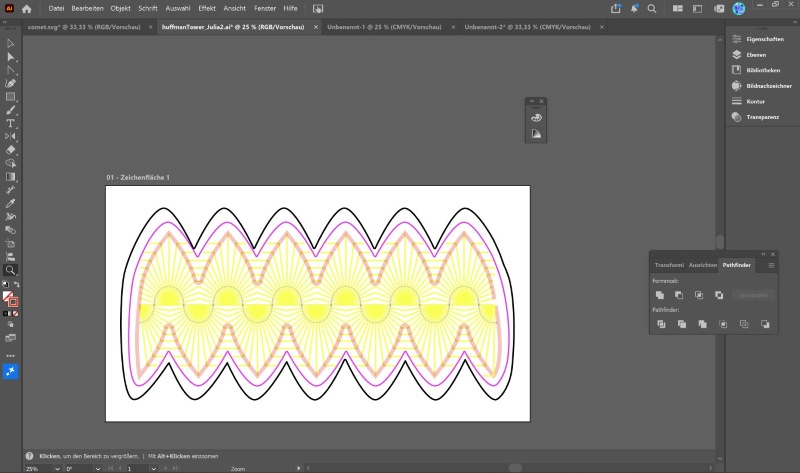
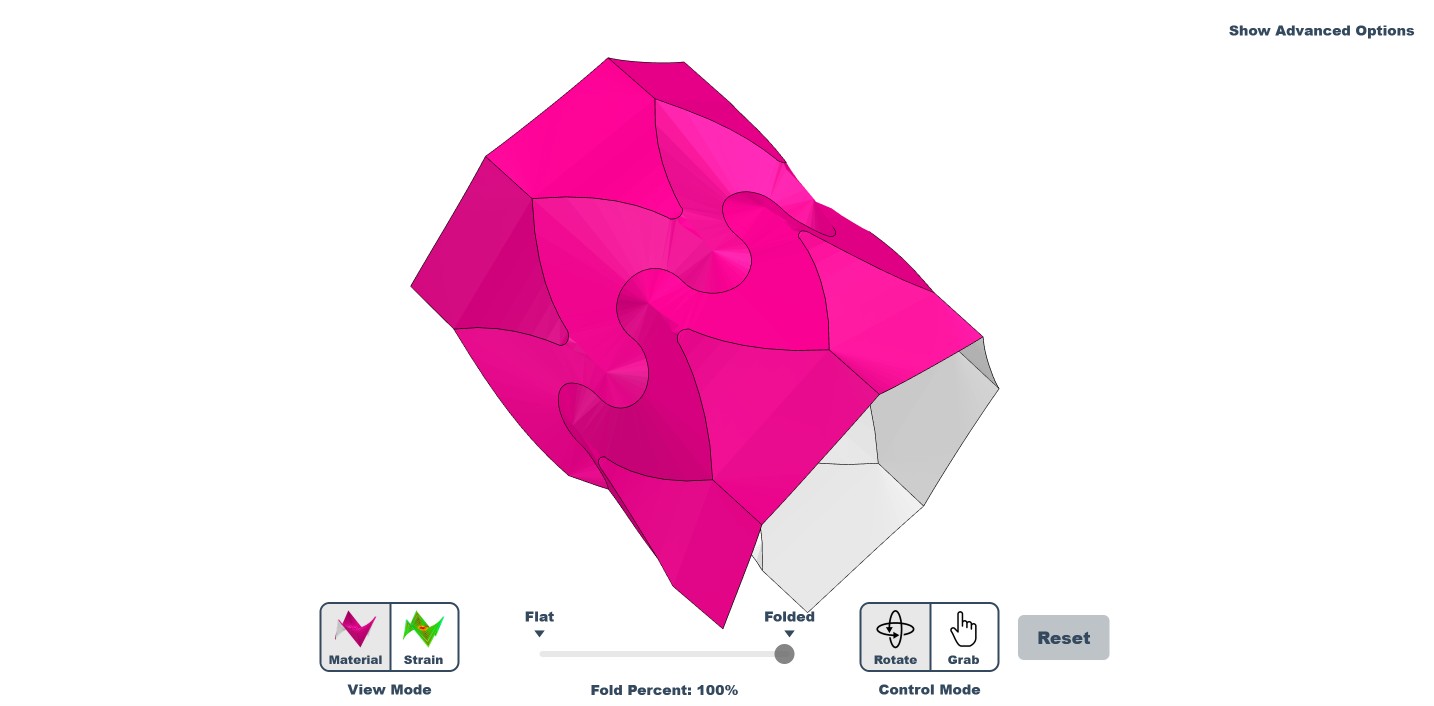
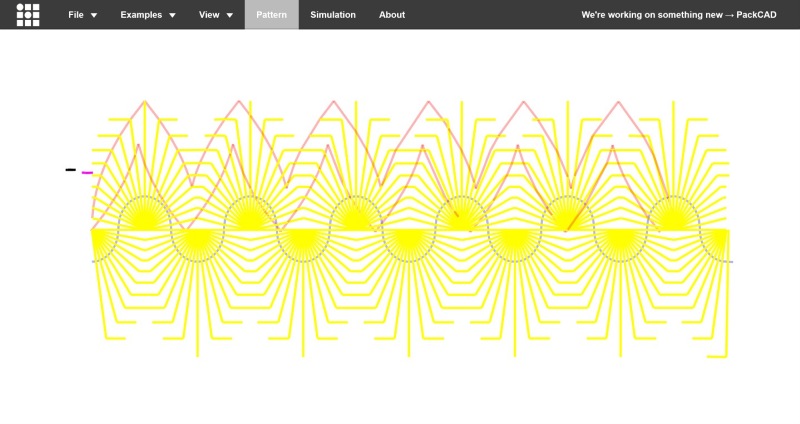
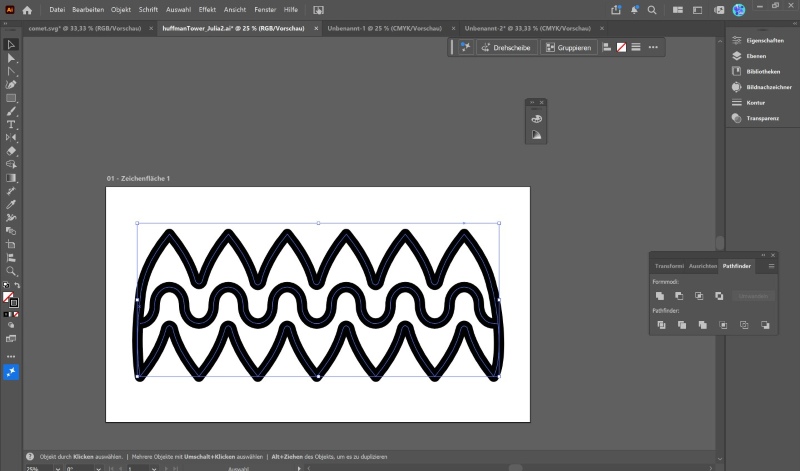
I looked around the Origami simulator, searching for a bracelet pattern and found the "huffman tower"-pattern. It looked very promising. It looked very promising. So I decided to turn the pattern into a vinyl bracelet. To do that, I modified the pattern slightly. To ensure good airflow, I rounded off the sharp corners. Along the way, I tested my pattern in the simulator. At first, it still looked good. Toward the end, however, I ran into problems exporting the file as an SVG, and the simulator could no longer read it properly. I went ahead and made it out of vinyl anyway. My idea was to use thicker vinyl on the underside so that it would curve downward. In principle, it worked, but the curve wasn’t pronounced enough. It probably would have worked with silicone. For vinyl robots, you’ll likely need to design the upper part of the robot arm differently from the lower part and create additional space by adding folds.
Silicone
Blender
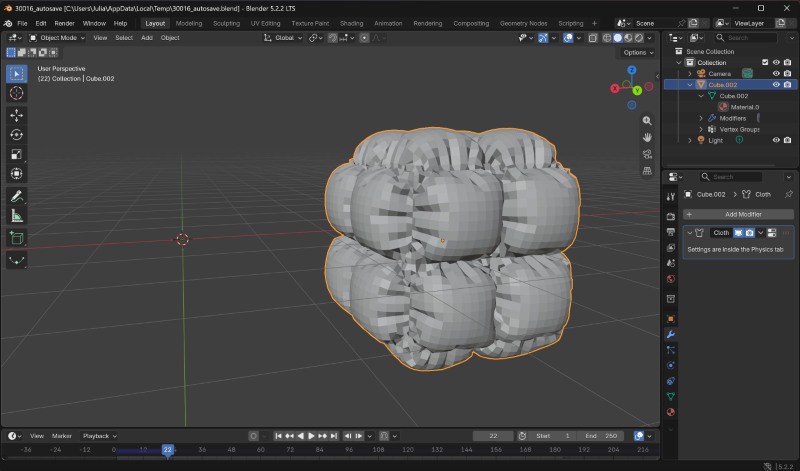
I worked with Blender for the Silicone Molds. My idea was, to build the objects, animate it to see how it will behave and then build the molds. I first tried the animation with a very simple form. Which worked well, using the tutorial Rico posted in the chat.
Sample Designs
Gripper
The provided gripper was easy to cast and shape. The gluing process also went smoothly, so I wasn’t worried about how it would function. In the videos made by Fabricademy students in recent years, it all actually always looked pretty simple. So I was all the more disappointed when it barely moved and air escaped again at the puncture site. As a potential solution, I applied an additional layer of silicone, hoping that would provide extra sealing. Unfortunately, that didn’t help either. Another attempt, this time with hot glue, also failed. I didn’t get around to trying anything else. Later, I learned from Lena that modeling clay can help. However, I’m still wondering what a permanent solution for this might be.
Latex "bracelet"
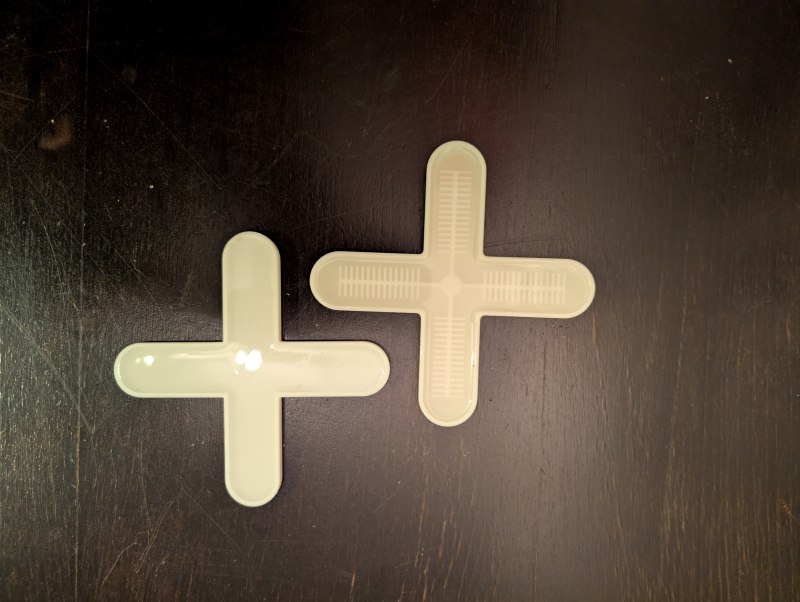
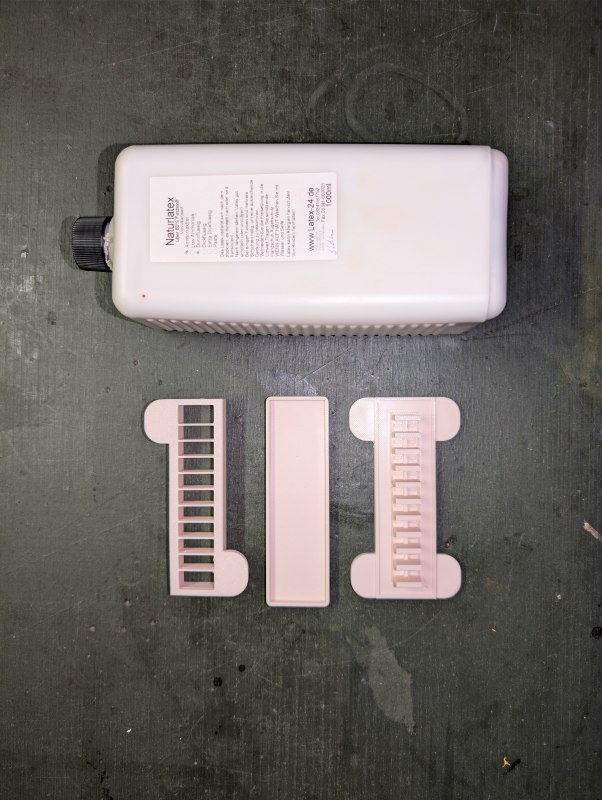
I tried to make the provided bracelet out of liquid latex. Unfortunately, the latex did not dry quick enough. Even being dried for two days (and even some hours in an oven), the inner parts were still wet. So I decided not to use latex this week. I think it would still work for flatter objects. Perhaps the gripper would have worked, because a lot more material has contact to the air.
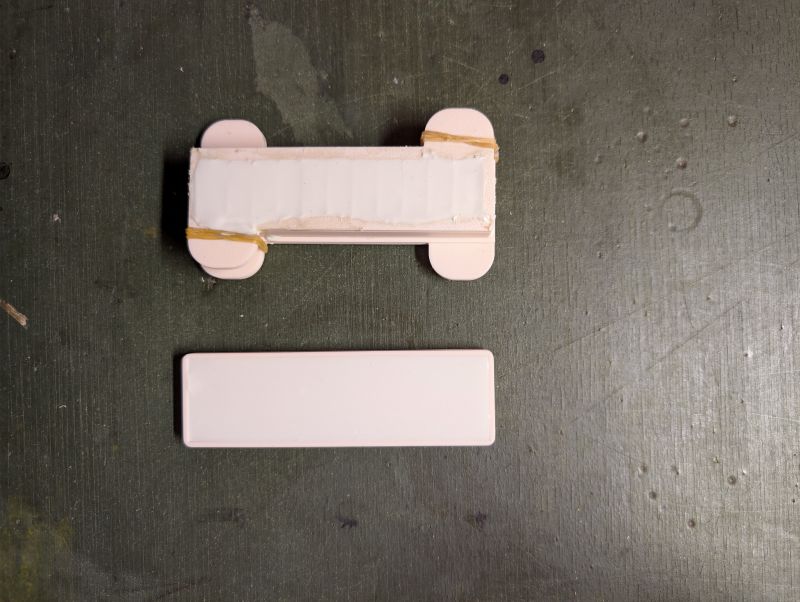
Silicone bracelet
Made out of silicone, the bracelet was easy to cast and shape. The bonding process also went smoothly. Unlike the gripper, the wristband worked well for the most part. However, one segment bulges out a lot. It seems I didn't cast it quite evenly in that spot.
Spike Bracelet
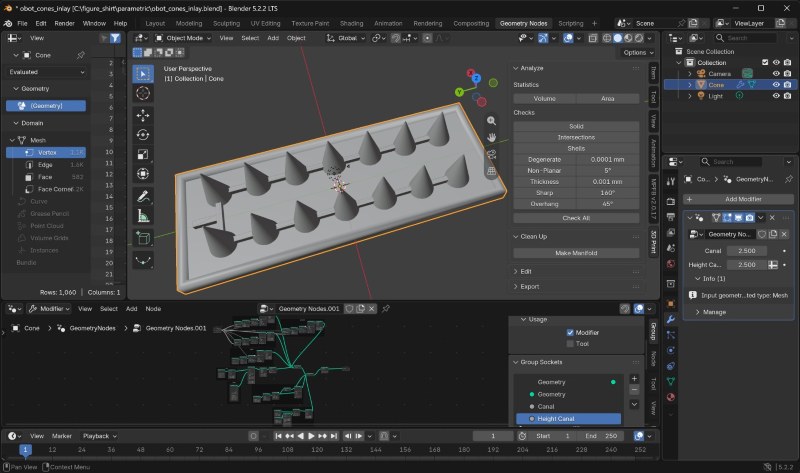
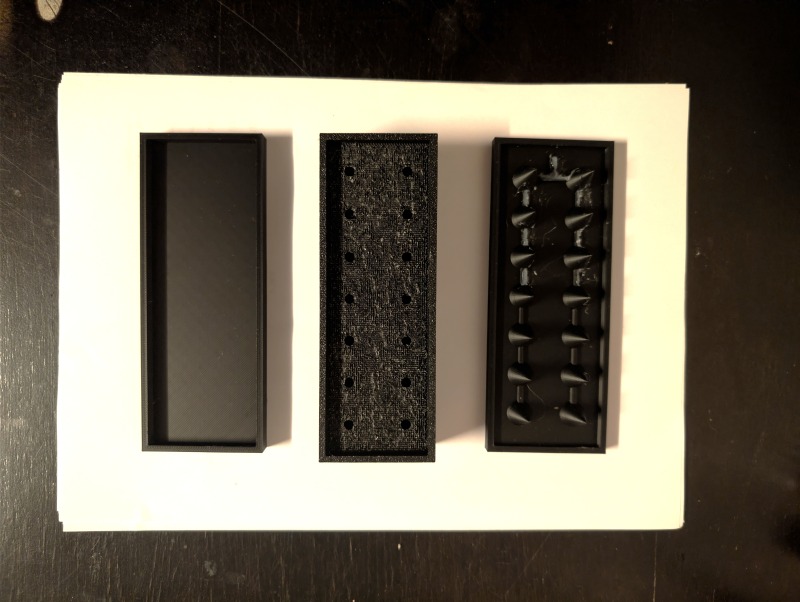
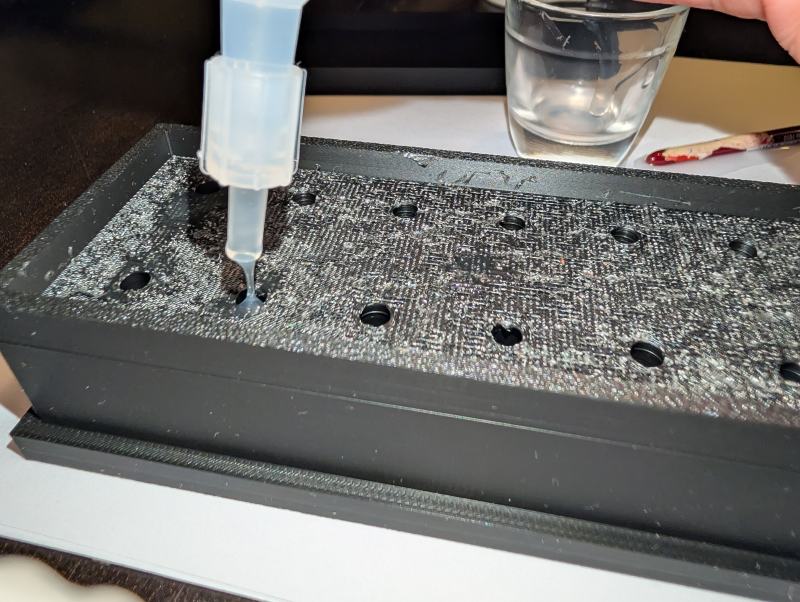
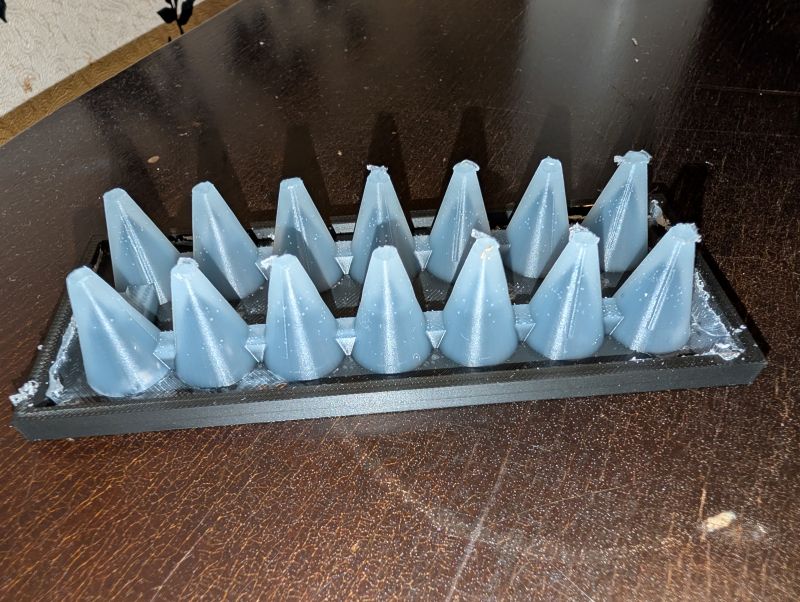
For the silicone mold, I used my design from Computational Couture Week as a basis in Blender. I wanted a bracelet with two parallel rows of spikes that inflate to form the bracelet. It took me some thought to figure out the best way to build the shapes for it. The air channels posed a particular challenge. Not conceptually, but in terms of building them in Blender, they kept causing problems. Finally I could fix them and I prepared the 3D-printing file. Unfortunately I printed an older version, in which the air channels were not yet fixed. Since time was running out for another print, I decided to fix the incorrect bridges with a hot glue gun and a scalpel. That worked well. The parts cast well and came out of the mold easily. The only thing that made it a bit difficult for me was the lack of a small gap. The two components fit so tightly together that I had a hard time separating them.
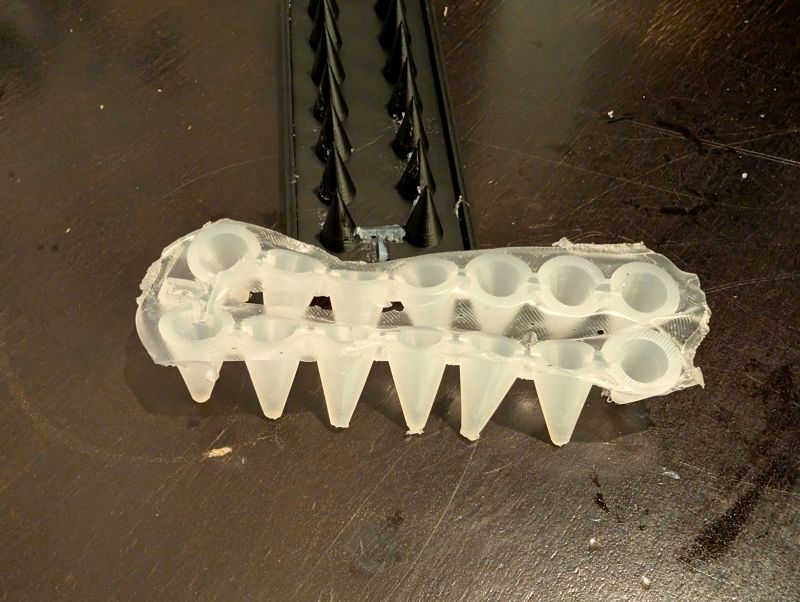
After removing both parts from the mold, I glued them together. I made sure to apply a little extra silicone at the puncture site, hoping that the air wouldn’t escape so quickly there. That helped at first, but after a few test runs, air started escaping there again. With this component, however, the hot glue did the trick. Presumably because the area was very narrow and thick and didn’t deform much on its own. I was satisfied with the result for the time being.
Leftover ball
I was curious, if I could use the leftovers for something. I glued them together, to make a hollow object. Inflating it, the object turned out to form like a ball. Just a nice, funny, little sidequest.
Downloads
If you'd like to try this yourself, you can find all the files zipped here: Soft Robotics files
Tools and sources I used
Design and Website related
- Adobe Illustrator: https://www.adobe.com/products/illustrator.html
- Blender 5.2.2: https://www.blender.org/download/releases/5-2/
- Origami simulator: https://origamisimulator.org/
- Adobe express, online video editor: https://www.adobe.com/de/express/feature/video/editor
- Youtube: https://www.youtube.com/
Making
- Bambulab printer P1S: https://eu.store.bambulab.com/de/products/p1s
- PLA-filament
- Heating press
- Vinyl foil
- Silicone: https://www.smooth-on.com/products/ecoflex-00-30/
- Baking paper
Reflection
I learned a lot about building soft robots. It looks quite easy, but in reality it's quite complicated. There are so many things to think of; the material, how the pattern must be designed, the input for the air and so much more. And doing the research really widened my idea of what robots are.
My favorite soft robot: The chaotic spaghetti tentacle robot by Clark Teeple, Nicholas Charles, Yeonsu Jung, Daniel Baum and James C. Weaver from Harvard John A. Paulson School of Engineering and Applied Sciences