Design
Prototype to Design
Colour Chamber
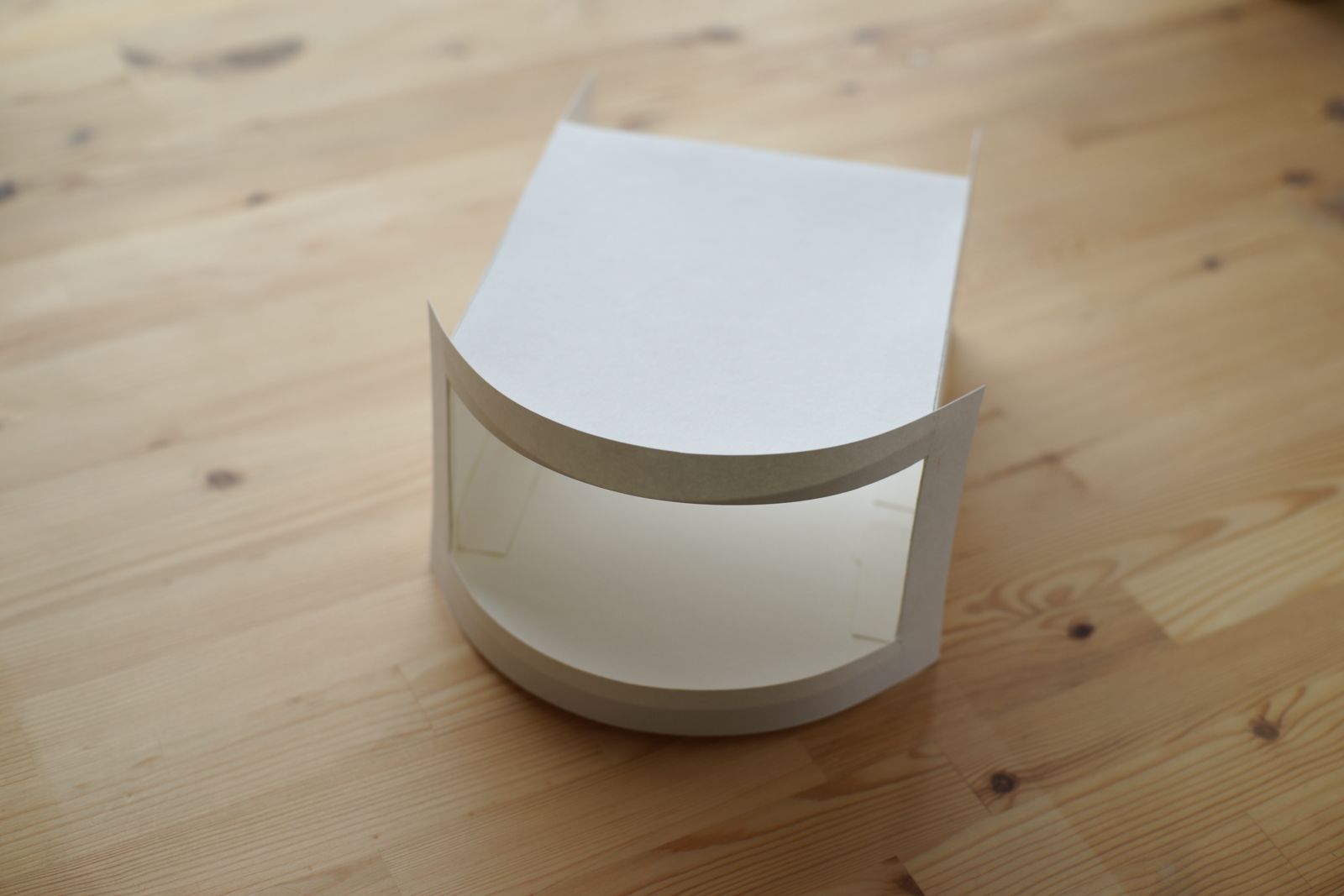
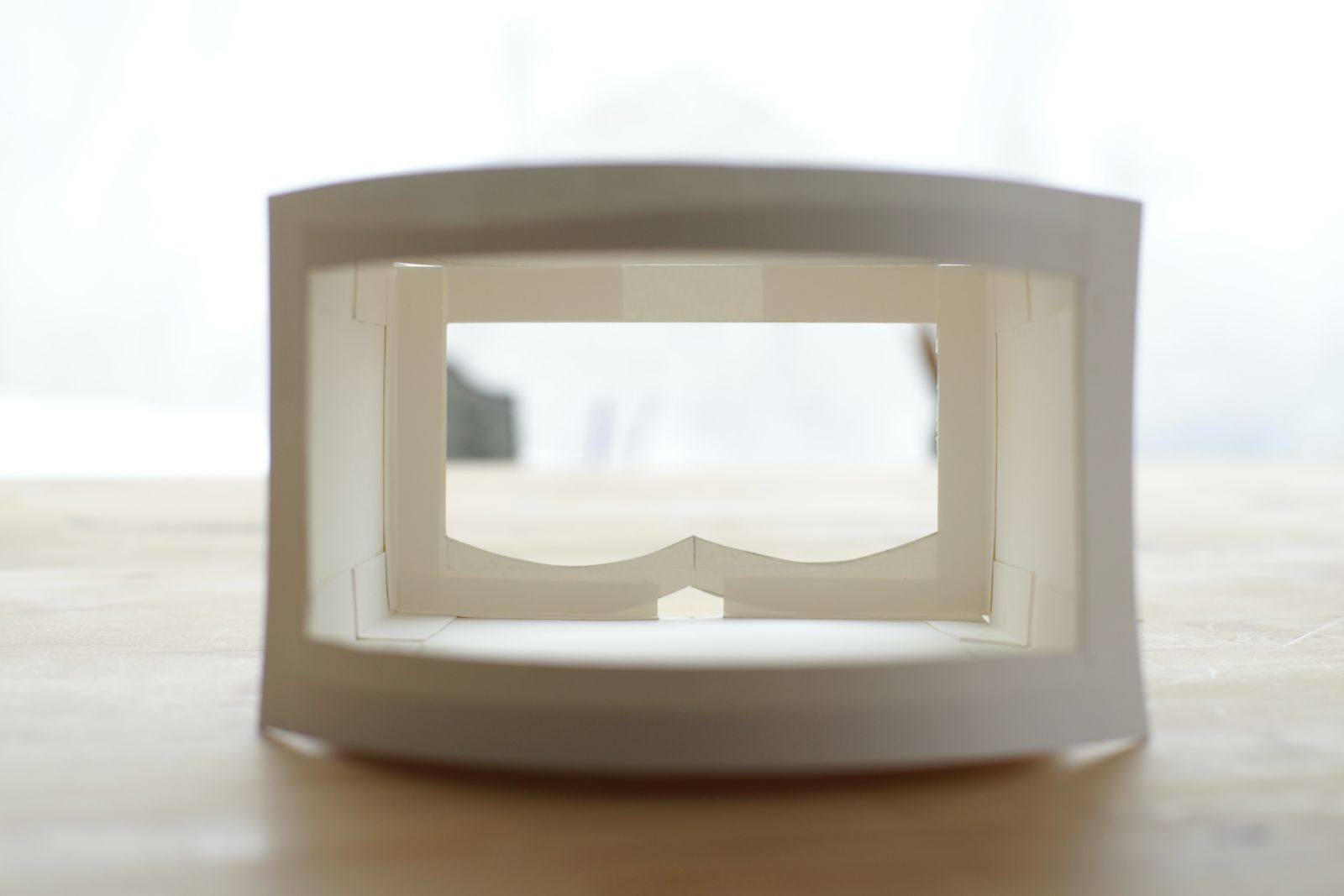
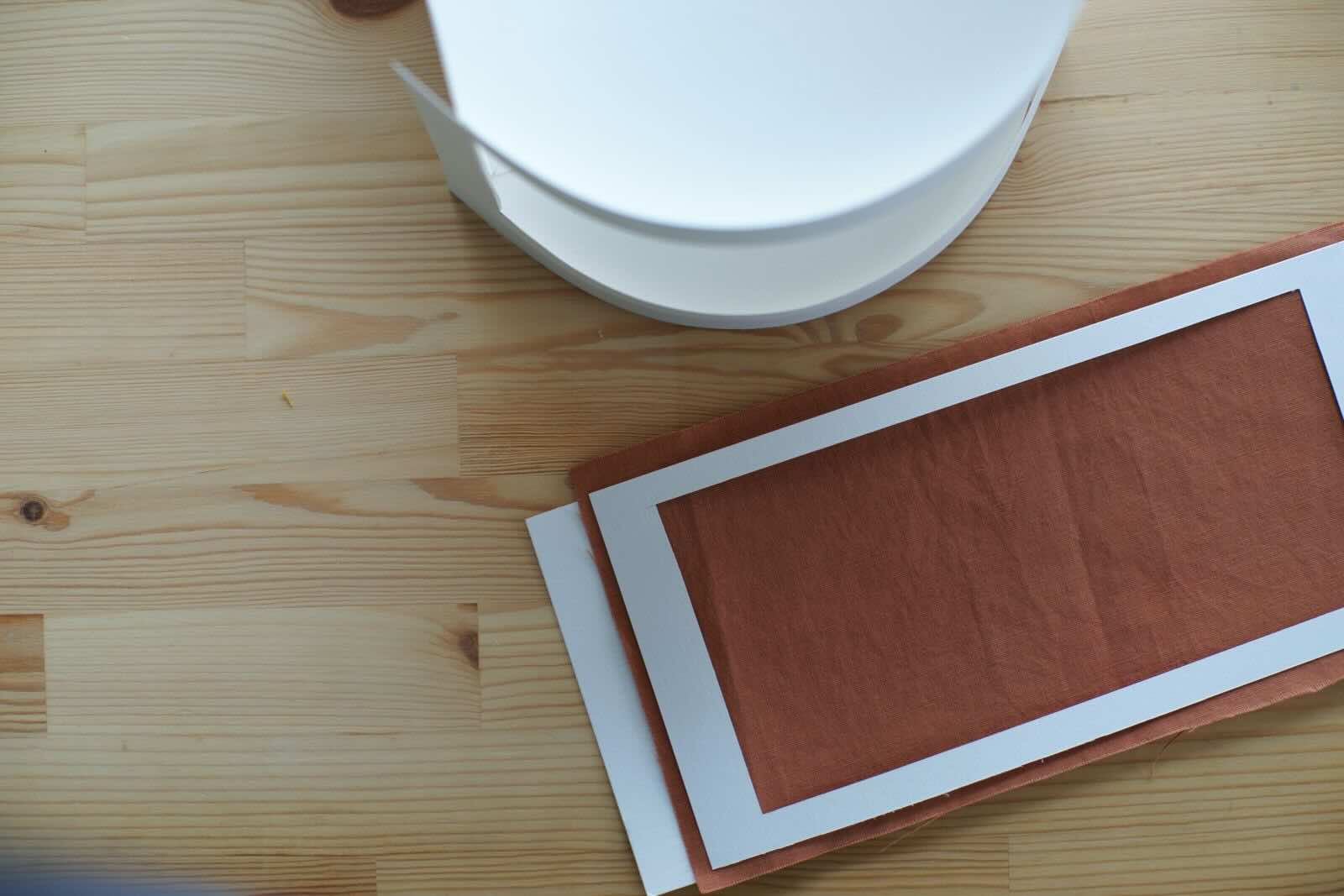
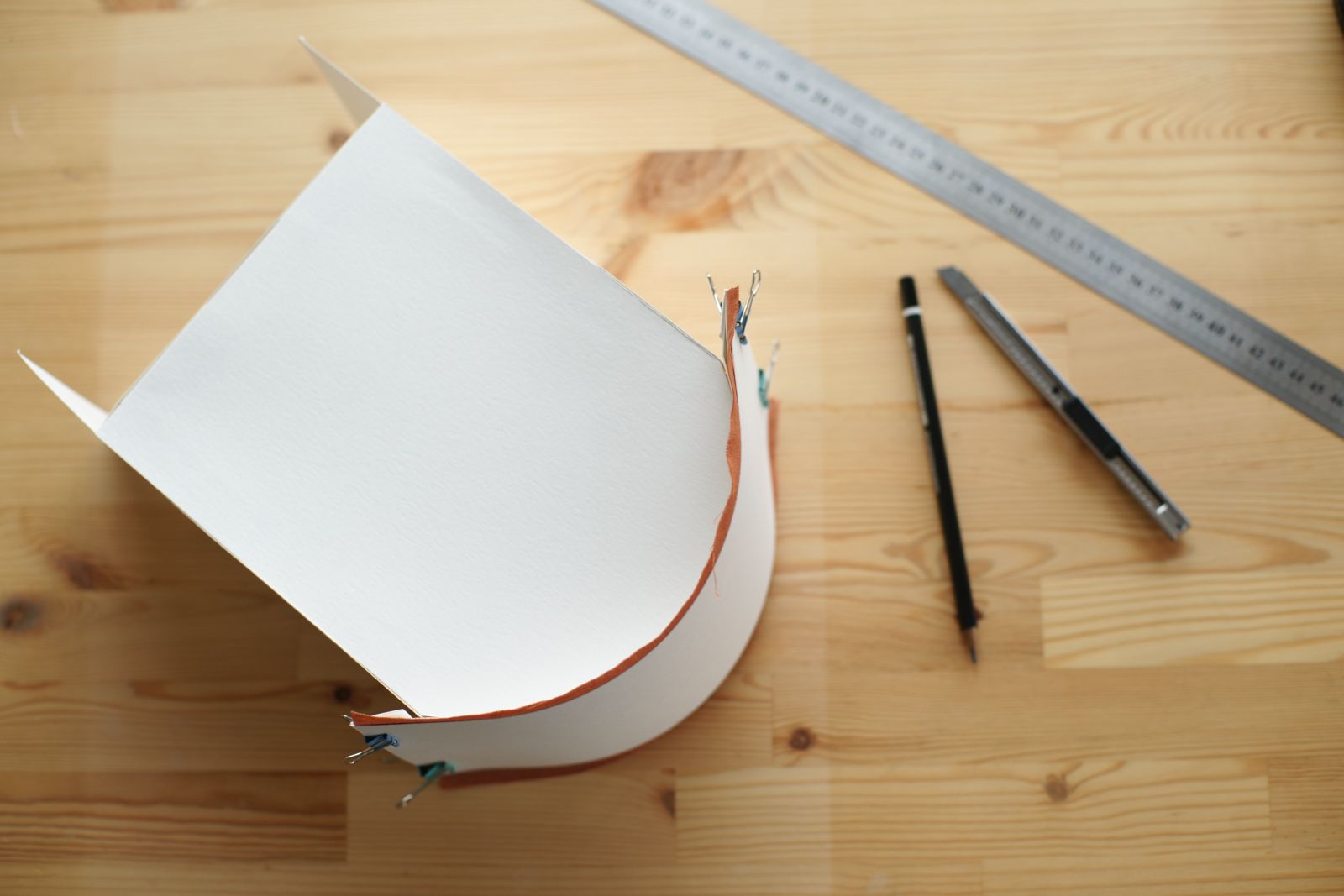
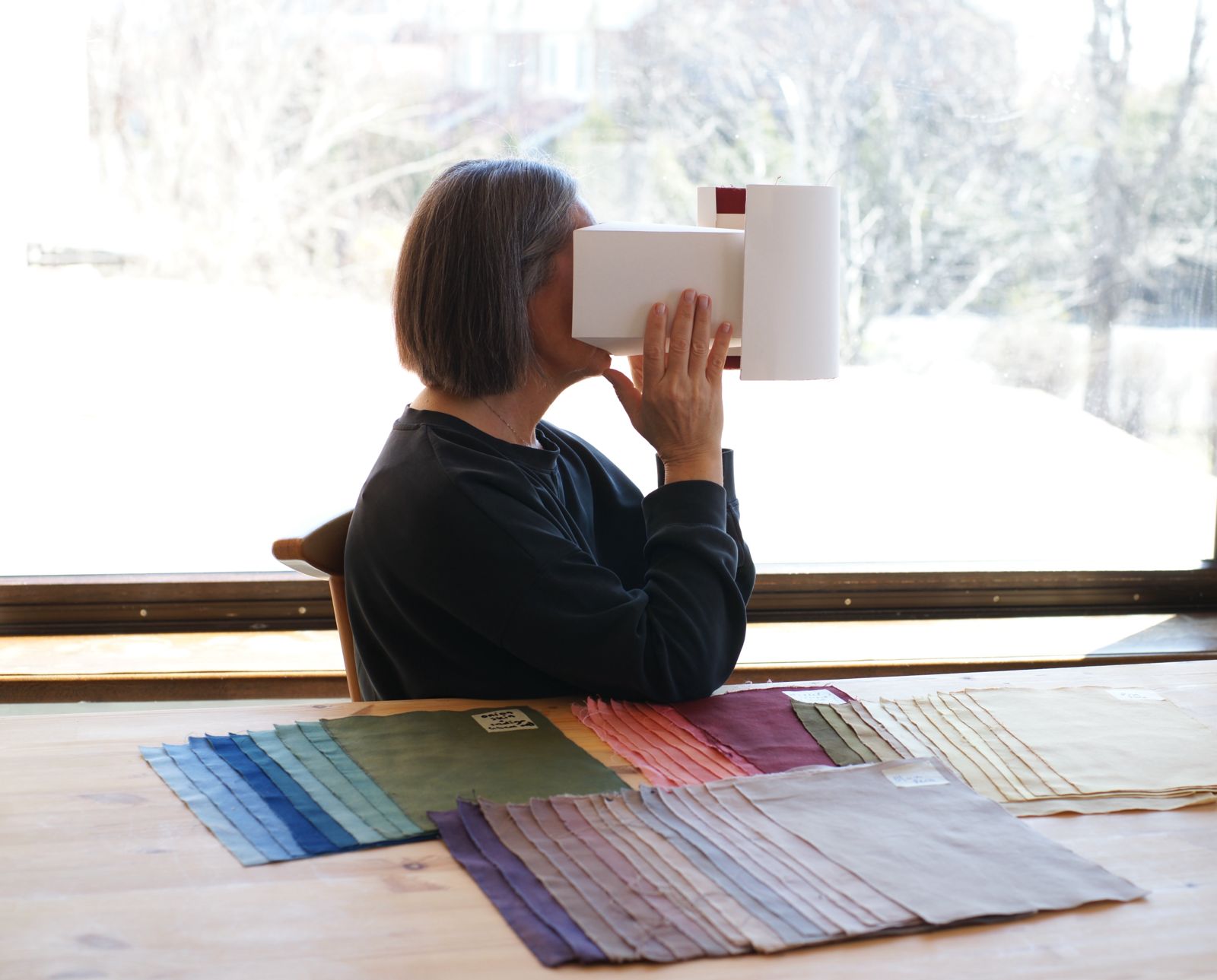
Following the ideation of a colour chamber apparatus, I experimented with a lightweight, easily assembled apparatus, which can help the process of colour immersion. The goal for the final design would be to not only to assemble easily, but to also quickly change the naturally dyed fabric for viewing.
 |
 |
|---|---|
 |
 |
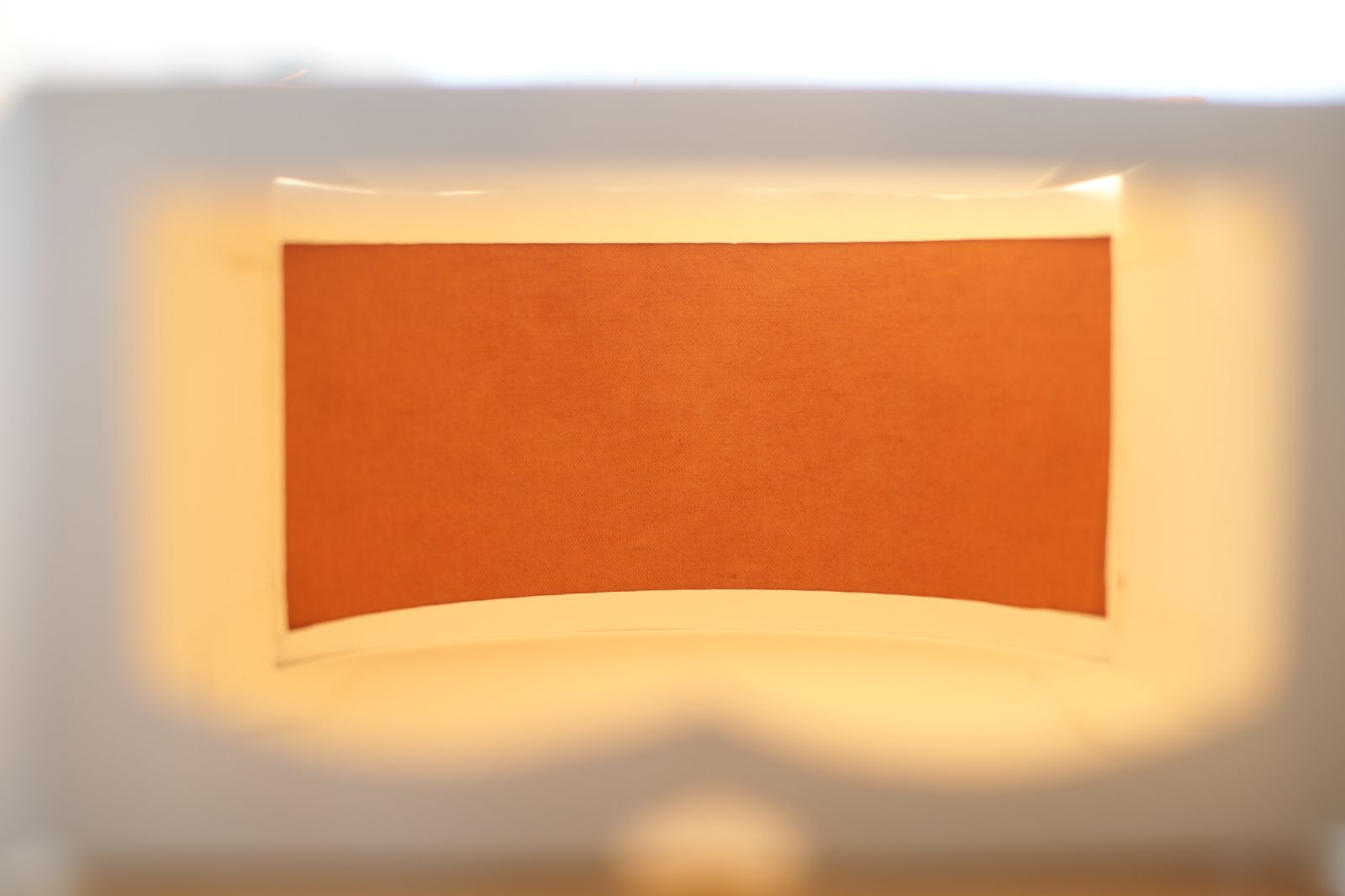
Prototype Two
Some of the important factors for the apparatus is for it to be easy to assemble, lightweight, inexpensive and easy to change the colour swatches. This will serve as an "accesory", accompanying the research.
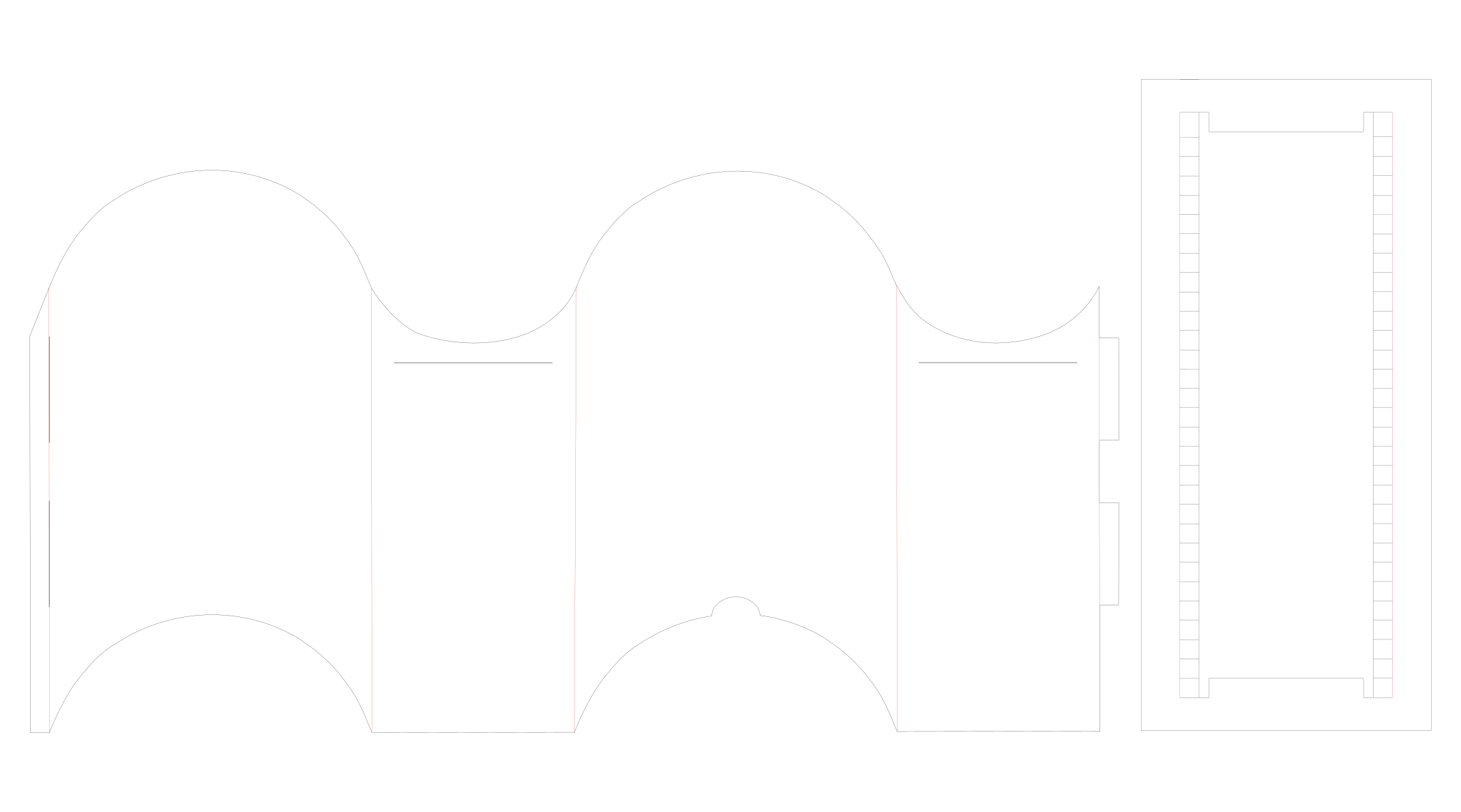
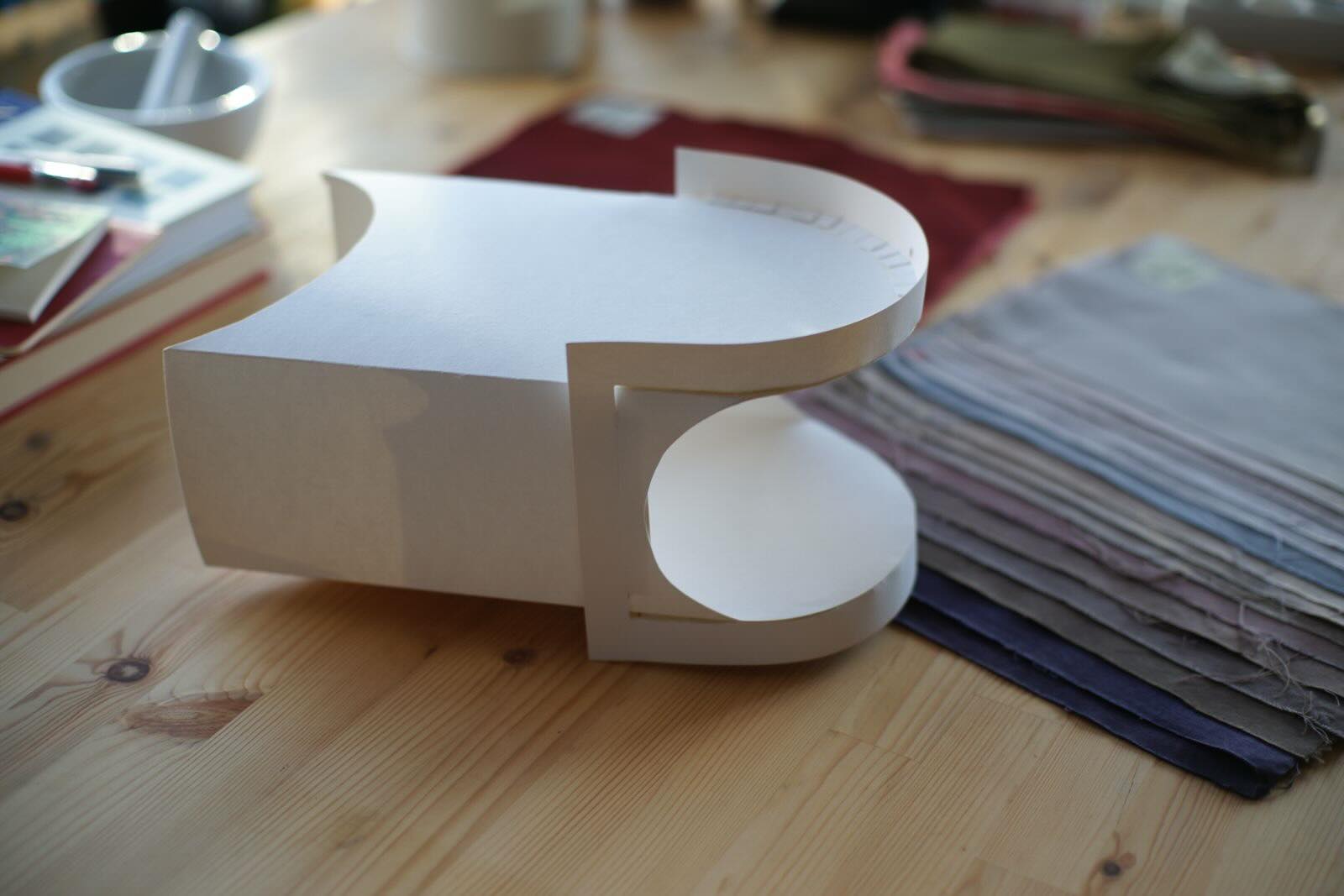
I initially laser cut the following design on 290g/m2 paper. However, this designe still needs much work, as it was not easy to lock the parts with each other. Furthermore, while cutting and designing, my peers each tested and further commented. The design lacked the comfort for the face, especially nose and forehead.
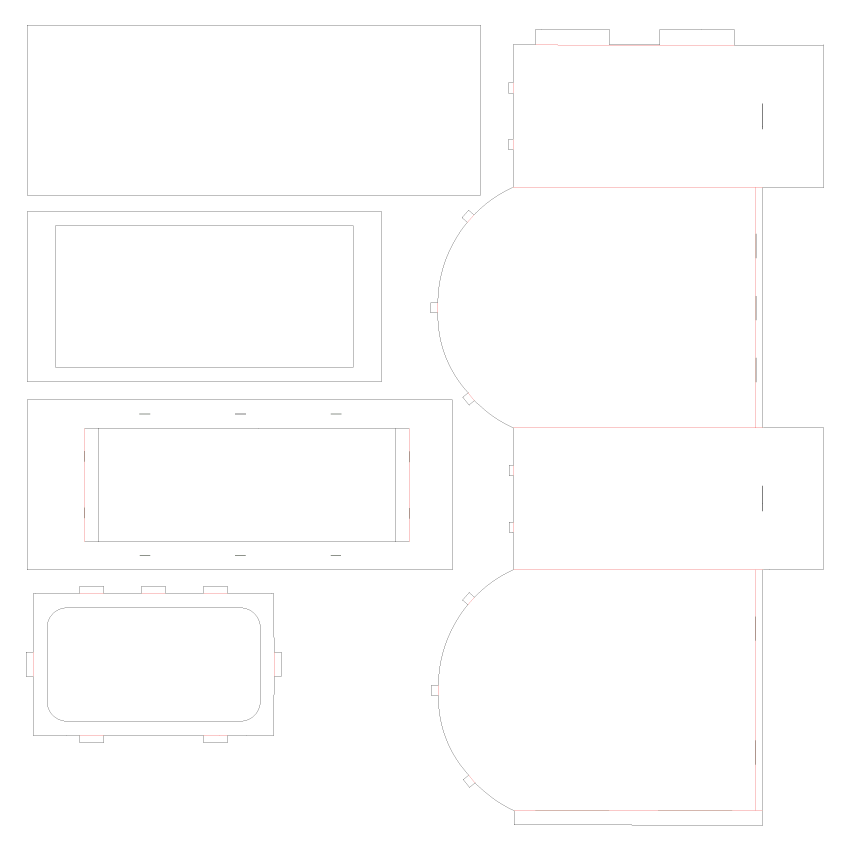
A better approcah was suggested to have a concave cut, which will envelope around the eyes, not to allow extra light to come in from the sides. Aother suggestion and main complaint was that the naturally dyed swatch doesn't curve enough. Curving it further would capture a lot more of the eye sight.
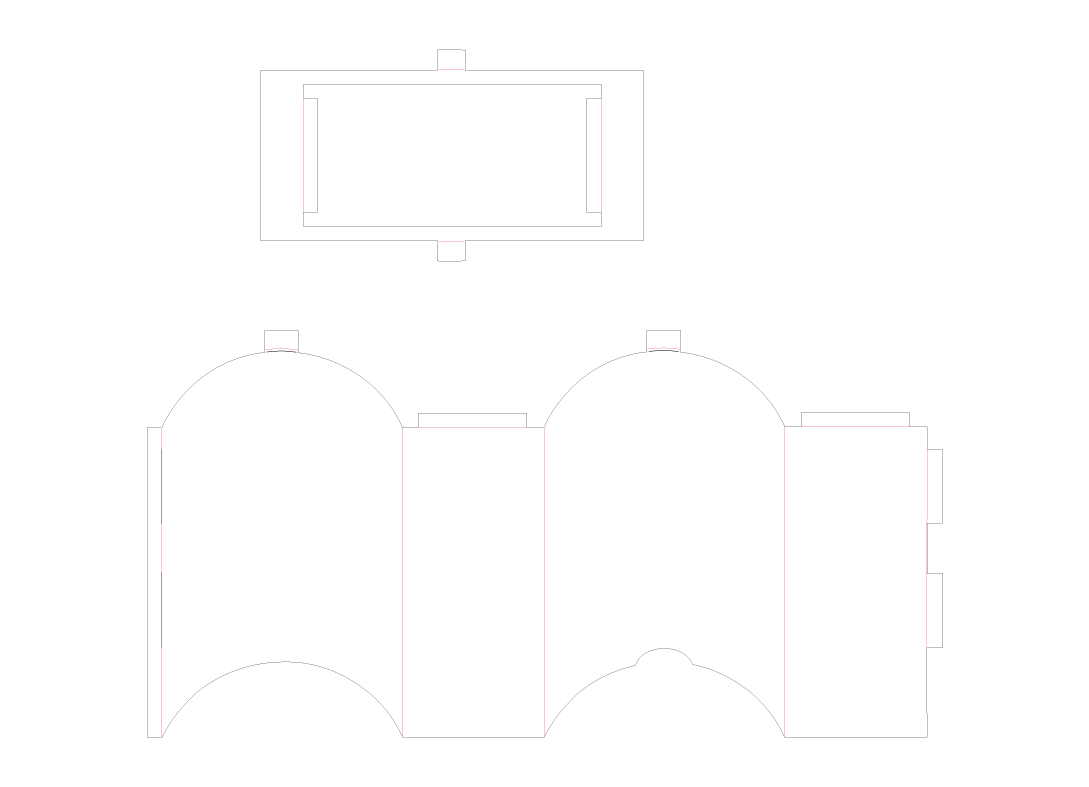
Designing and fine tuning the apparatus has been a road of trials and errors (many of them if I am frank). I have experimented with different paper wights, as well as different settings on the laser cutter. The biggest issue is making the holes for the locks big enough, that the paper fits, but not too big that it also locks. Another issue is making the scratch lines, where the folding of the apparatus becomes possible, without the laser cutter cutting all the way through.
There are also limitations to the aparatus. For the viewer to have a colour immersion, it would be best to view the colours during a sunny day. Furthermore, since it's not static, but rather hand held, changing the angle where the light hits changes the hue of the colour.
From this prototype I made a design, which can be laser cut, using a heavy weight paper and folded into each other.
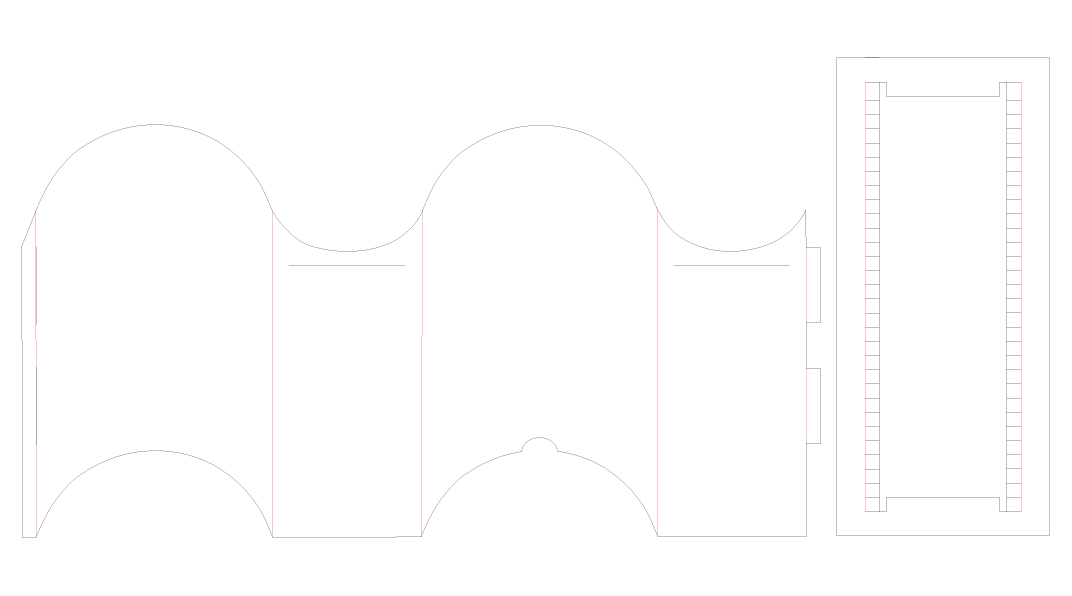
Colour Immersion Apparatus File
Mood Room
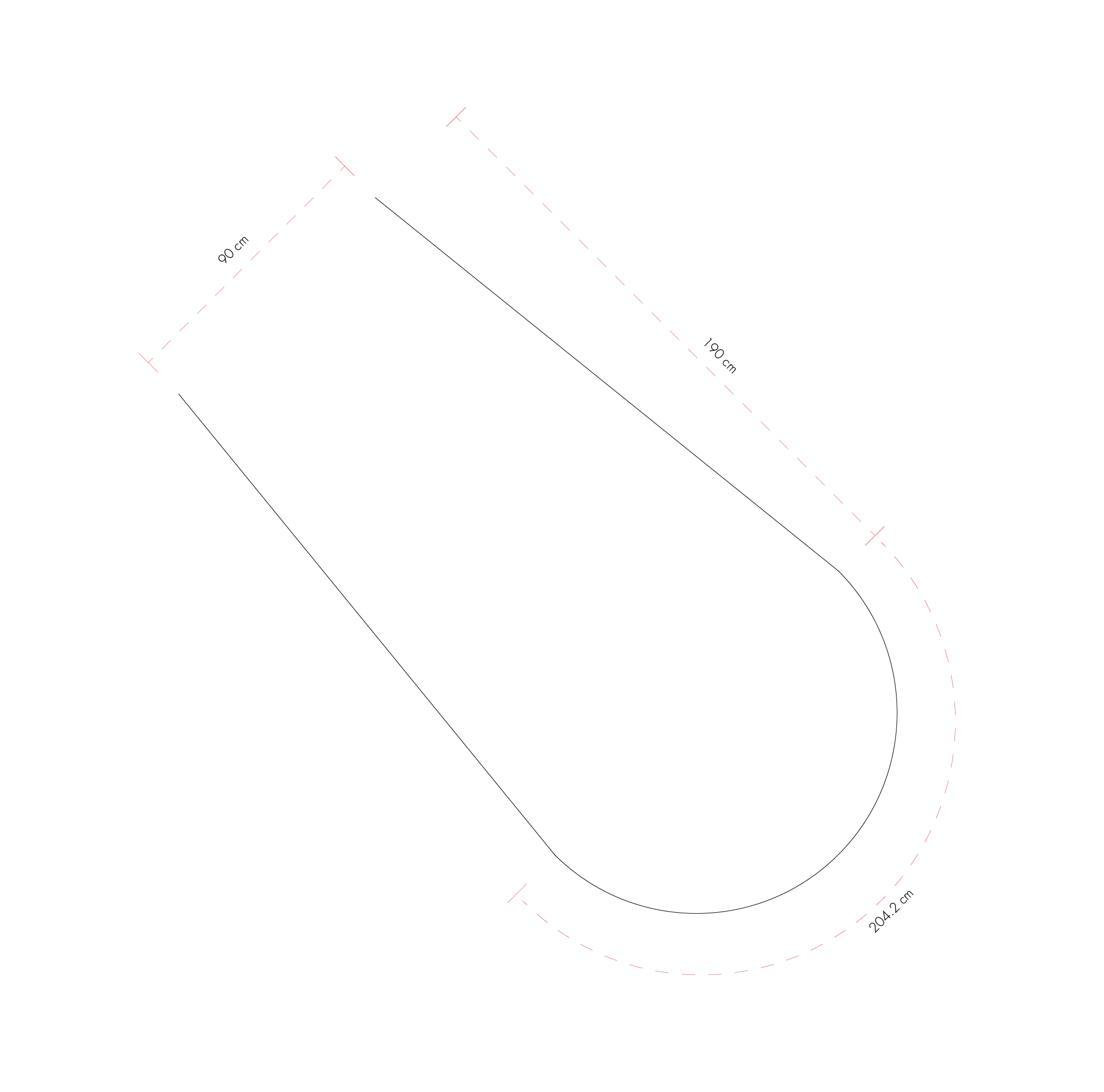
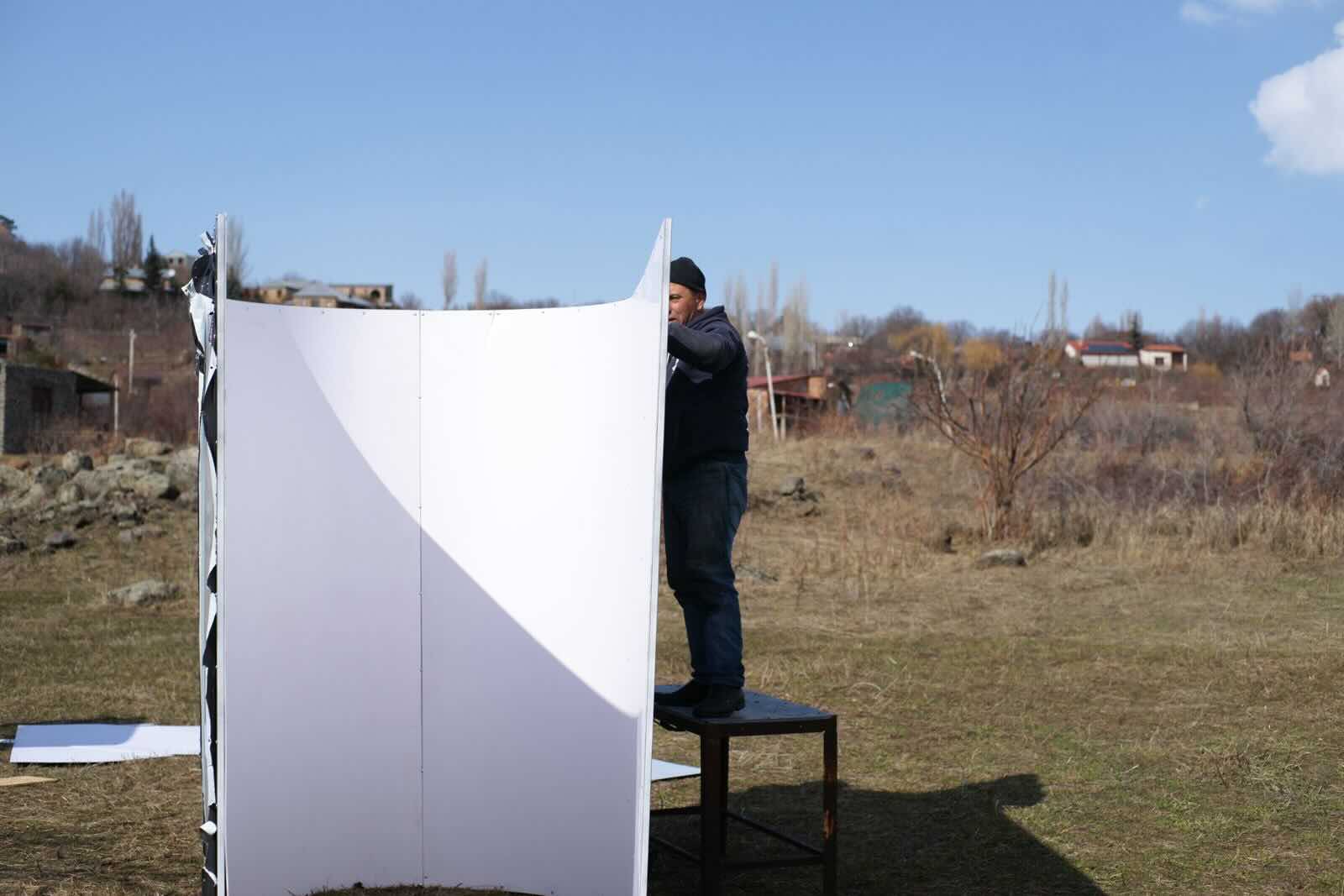
The inspiration of the Mood Room was developed based on the shape and idea of the Colour Chamber. It was important to create a space that would isolate the monochrome textiles. Inspiration was drawn, similarly, from the Musée de l'Orangerie. I paid close attention to the shape, the curve of the wall. It was important to have the eye's peripheral vision to be filled with the final colour.
The entrance has a width of 90 cm, similar to interior doors, symbolising entering a room within a house.
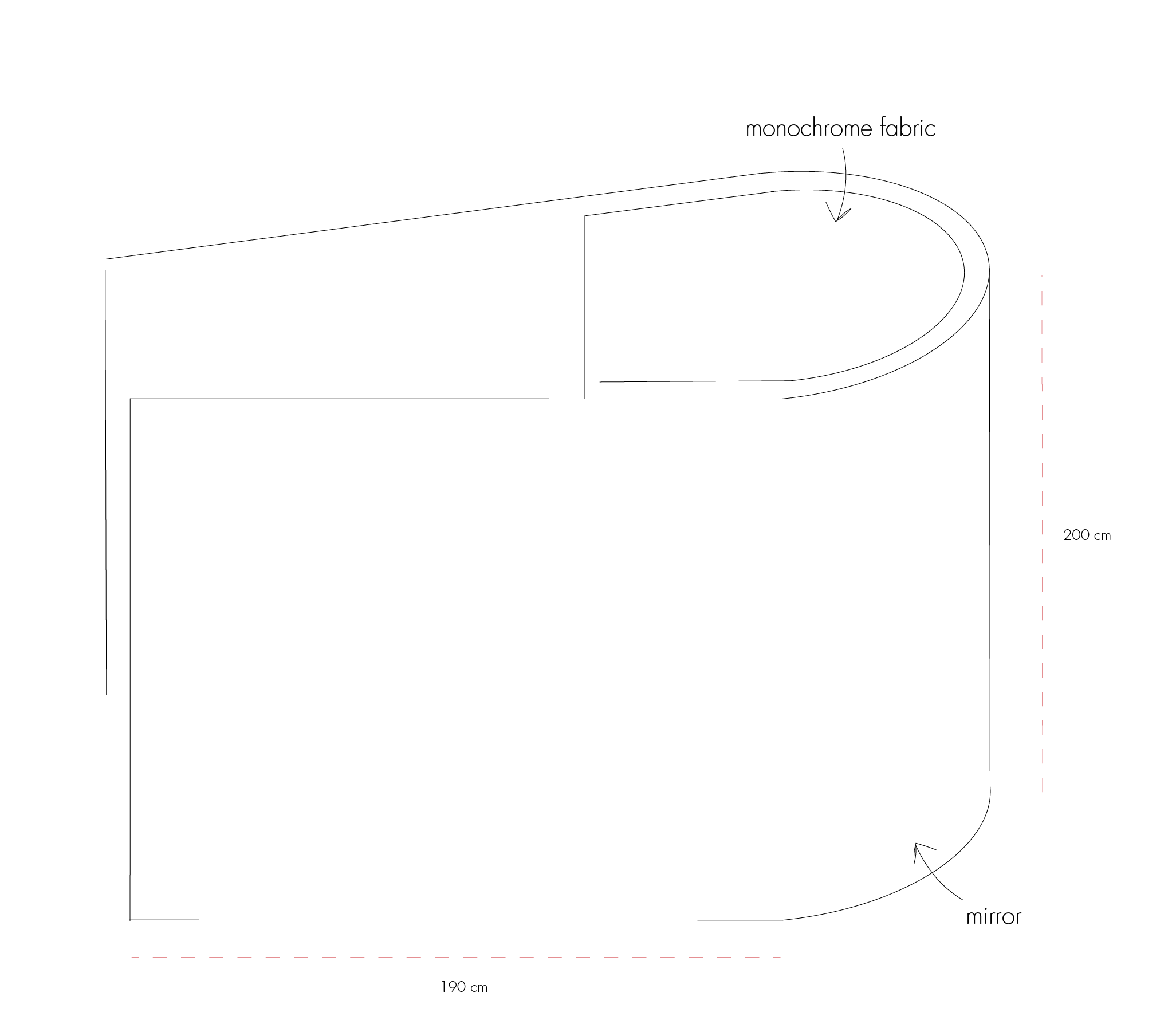
The Mood Room was going to be set up on a specific location- a piece of land that carries significance for me. I have plans (dreams) of building a dye-house on this land. The installation of the Mood Room is situated within the walls of the "dream" house.
The material choice for this construction also refelcts the project as a whole. Interviews made it evident that colours reflect a person's inner landscape. I wanted the mirror metal sheets to symbolise this reflection.
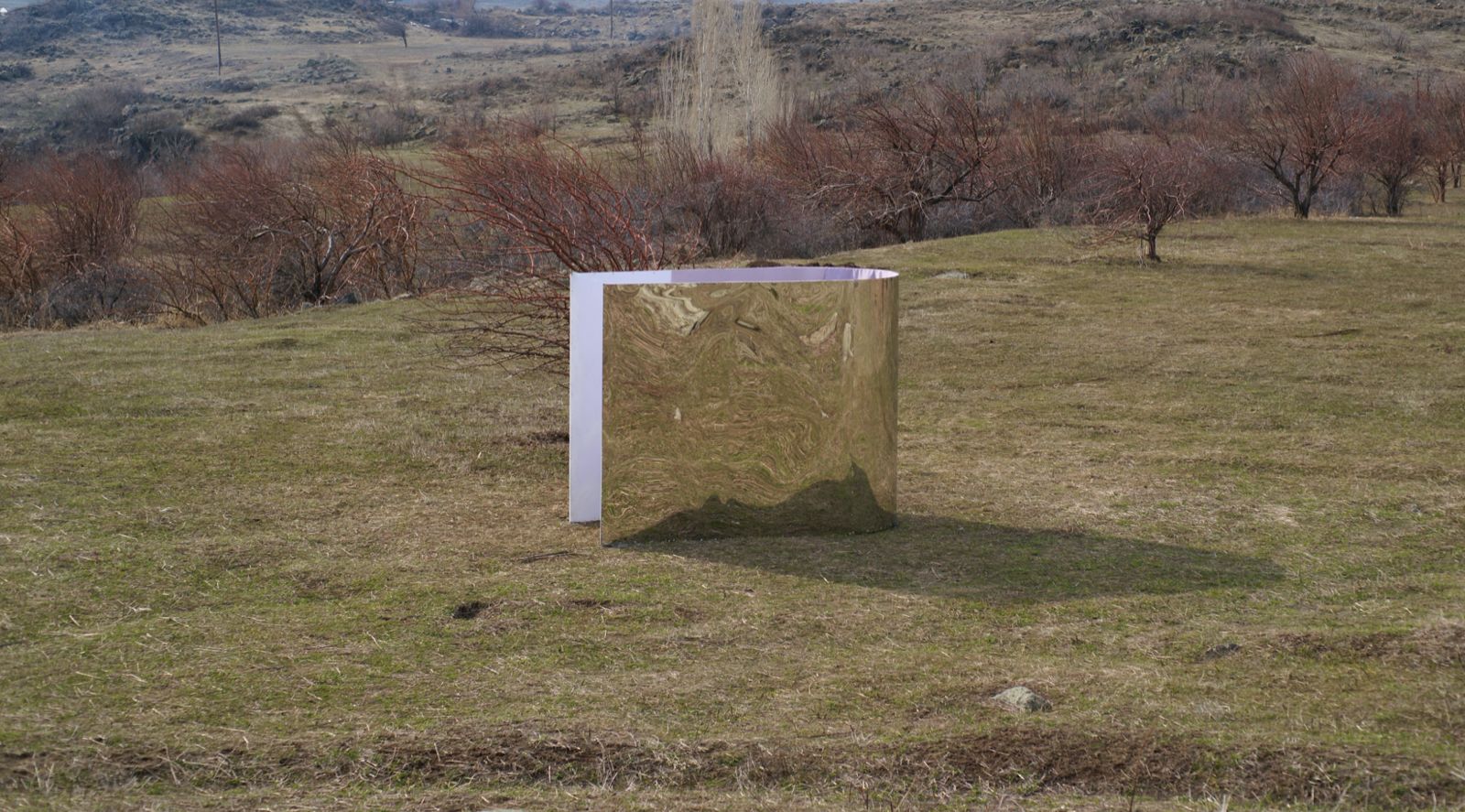
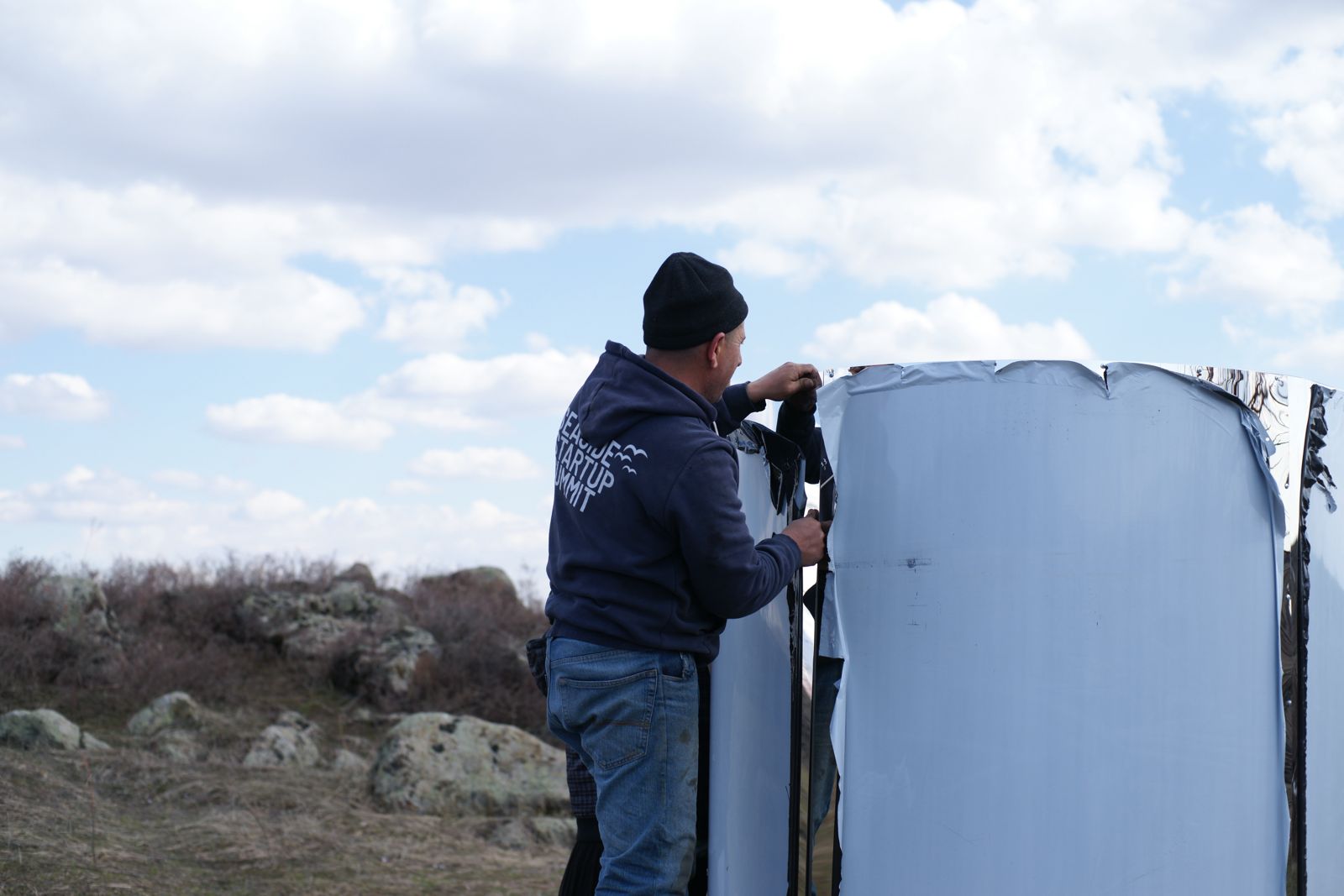
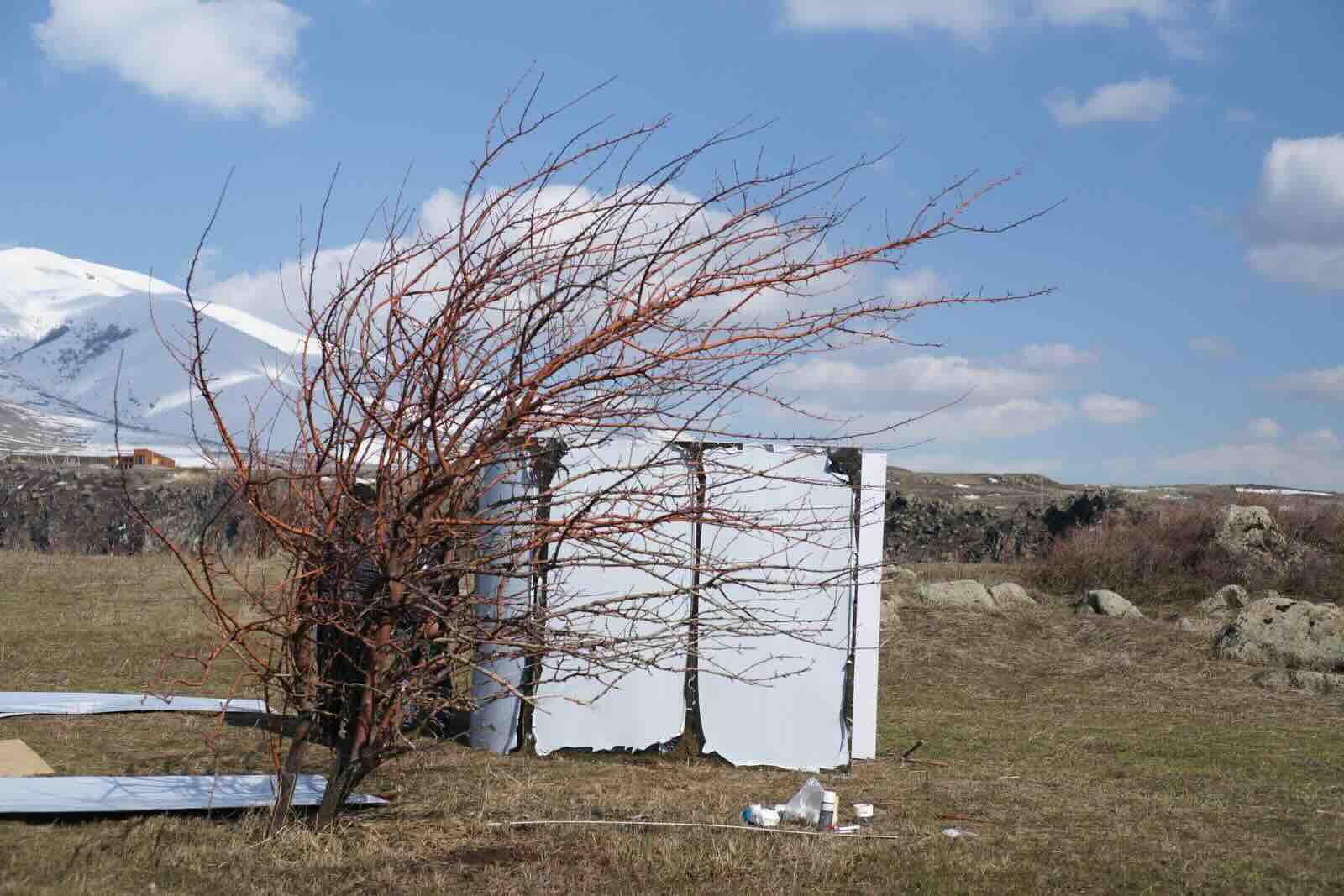
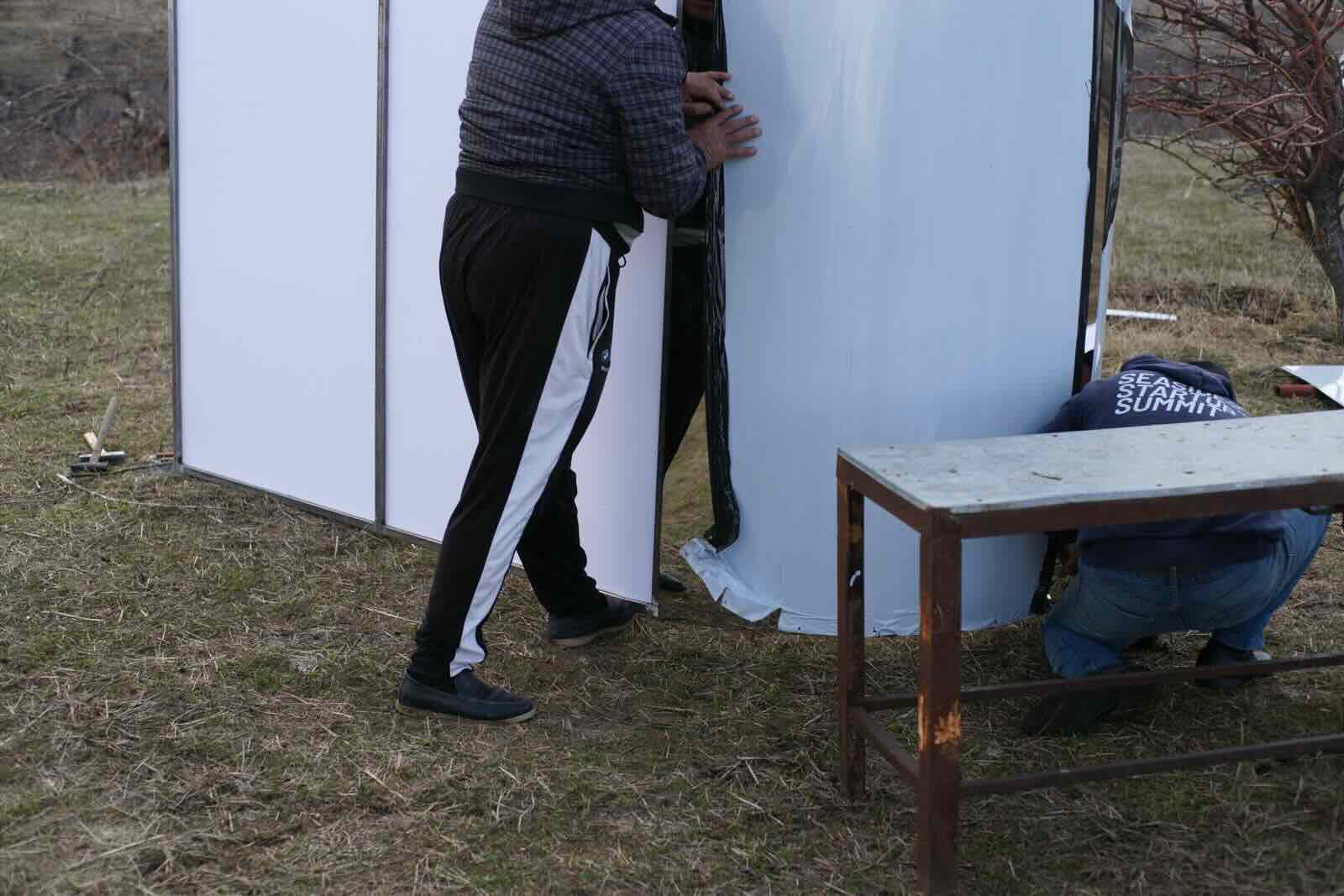
The Mood Room is constructed using metlas. Avo, the metalworker, put together the frames according to the size of the mirror metal sheets- which are 1 m x 2 m.
The interior of the construction is covered with PVC Sheets. Not the ideal choice of material, however it was easily bendable, affordable and waterproof.
 |
 |
 |