Computational Couture
1. references, research & inspiration
I was impressed by what you can do with the combination of textiles and 3D printing. I was also fascinated by Julia’s approach to structures in nature and the underwater photographs that inspired her work. It seems like an interesting challenge to translate organic shapes and curves into computational designs and then into physical objects using digital fabrication. I am particularly interested in the way natural structures often follow their own logic, which is not necessarily based on symmetry or regular geometric forms. I wonder how these structures can be translated into a digital language without losing some of their organic qualities.
During my research, I came across an interesting project by Heather Dewey-Hagborg called Stranger Visions. She collected discarded biological material, such as hair and chewing gum, in New York City and used DNA analysis to create speculative 3D-printed portraits of the people who might have left these traces behind. She used computational processes to translate biological information into physical representations of human faces. Her work also raises questions about the limitations and biases of these technologies. The portraits are not exact reconstructions of the people, but rather interpretations based on genetic data and assumptions about how certain traits are expressed. I find this particularly interesting because it shows how a seemingly objective scientific process can still involve a great deal of interpretation. You can find a video here:
Her work made me think about the relationship between a physical body, the information it leaves behind and the digital representations we create from it. What happens when biological information is translated into a computational model? What gets lost in this process, and what new possibilities emerge? Although my own project is more focused on organic structures than on human identity, I am interested in this same transition between different forms of representation.
I also liked the work of Holly Adams, Fabricademy participant from last year.
For my own project, I wanted to experiment with creating a kind of textile based on root systems. I was interested in translating the branching structures of roots into a printable pattern.. Root systems have an interesting combination of repetition and irregularity: they branch out, adapt to their surroundings and develop in response to their environment (light, gravity…). I wanted to see whether I could reproduce some of these qualities using a 3D printer.
2. Filafabric
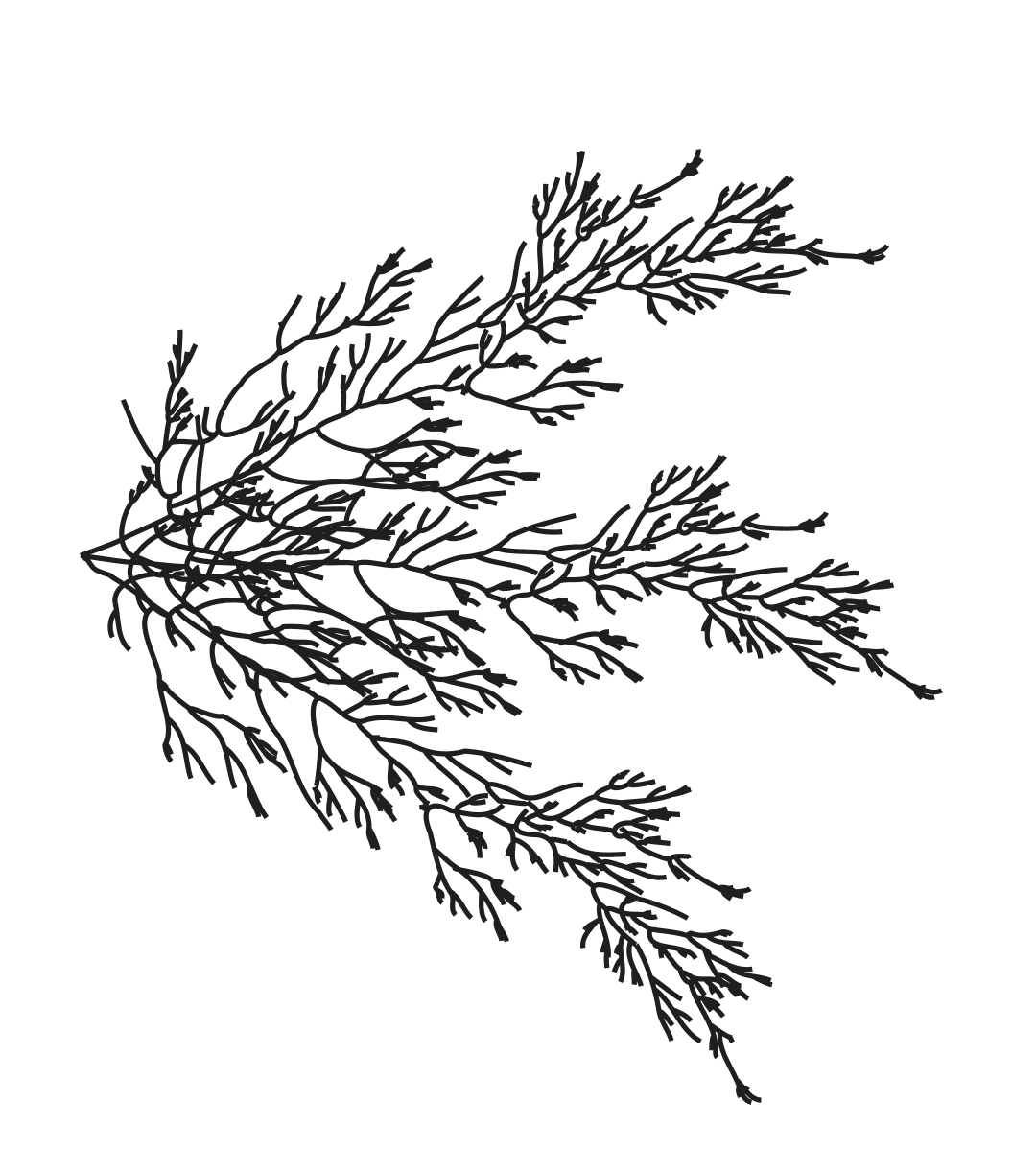
I found this vector image and used inscape to transform it into a line drawing. I tried different ways of printing it. First printed the basic shape, but I made a mistake in the scaling of the object and it came out too thick. It was also very fragile.
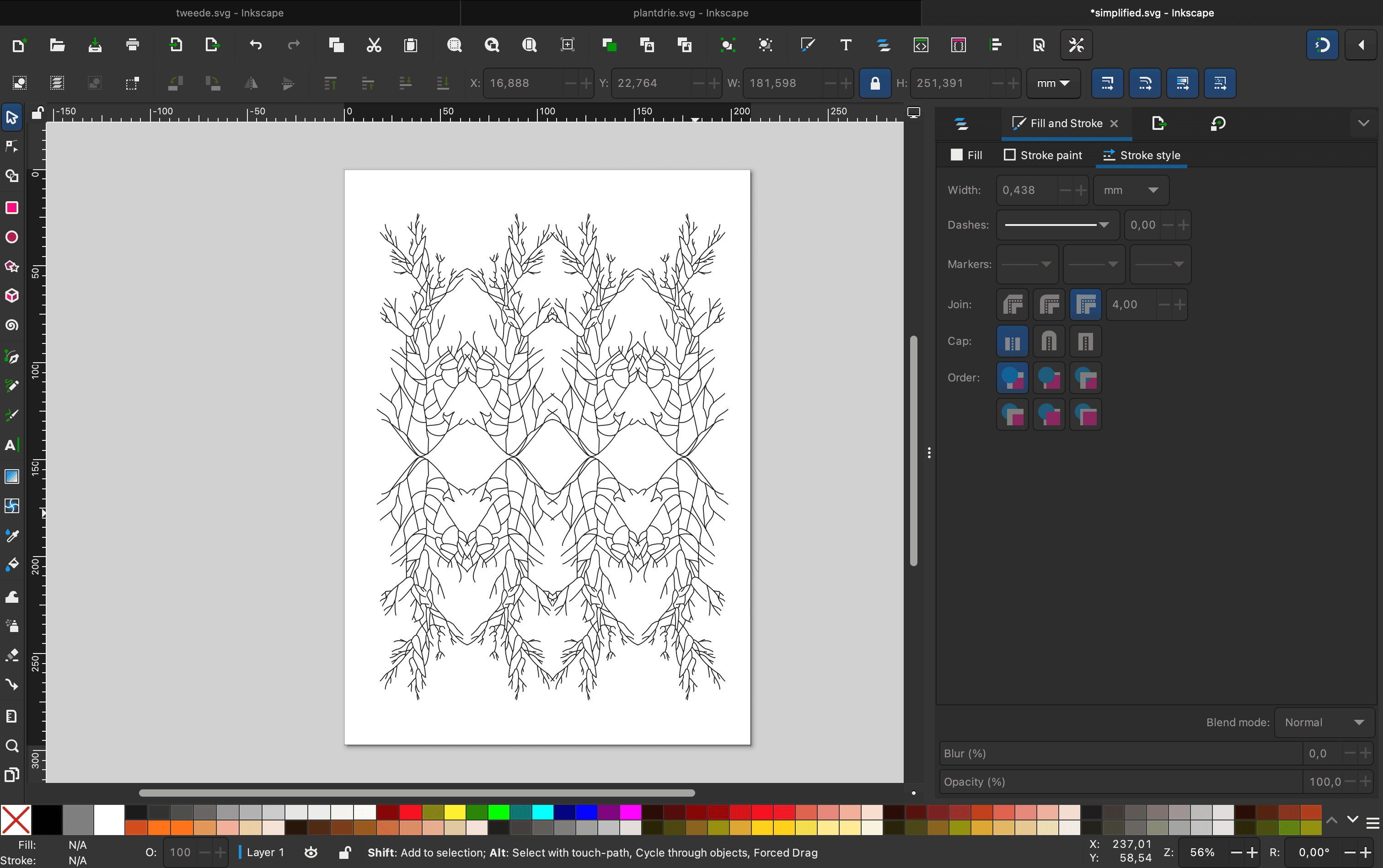
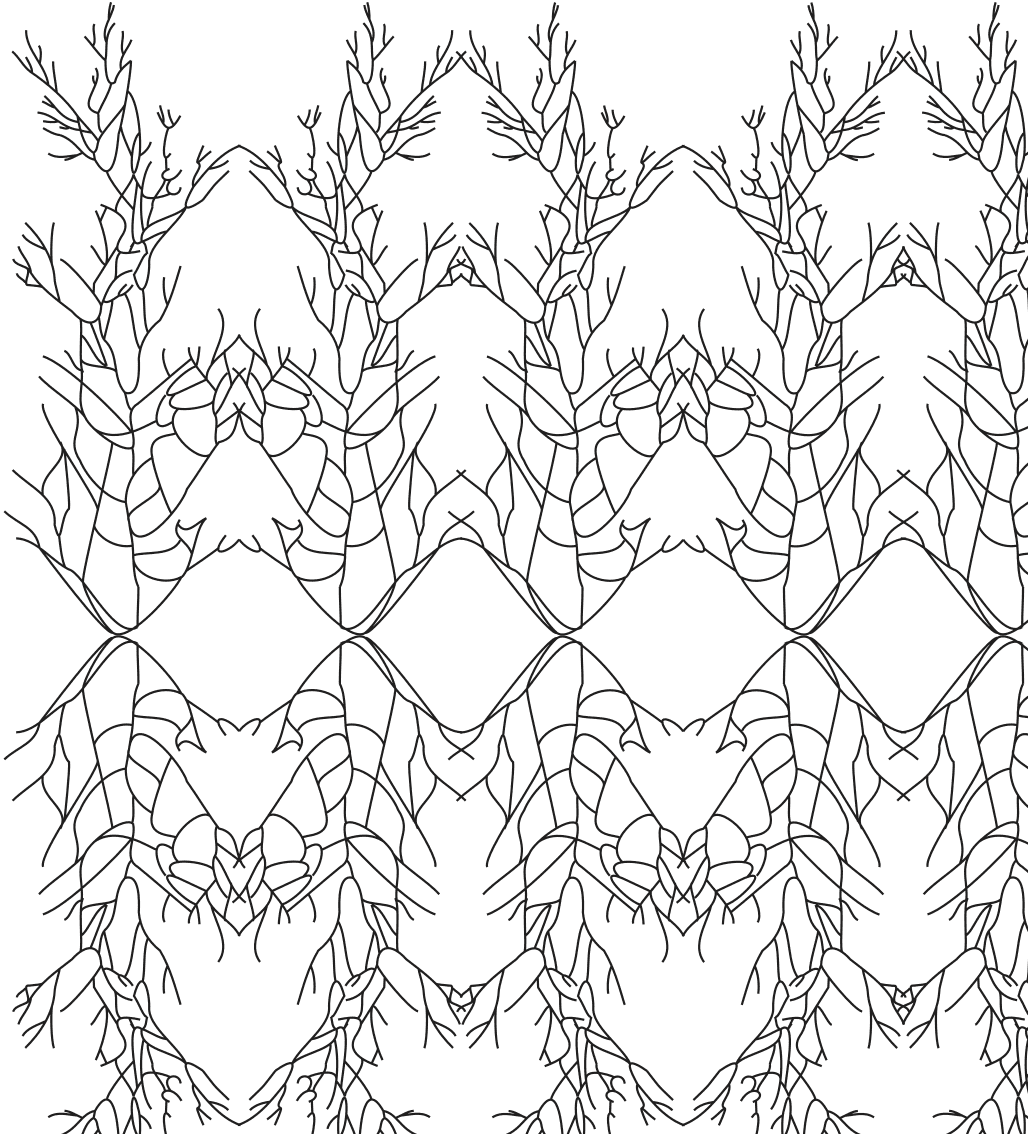
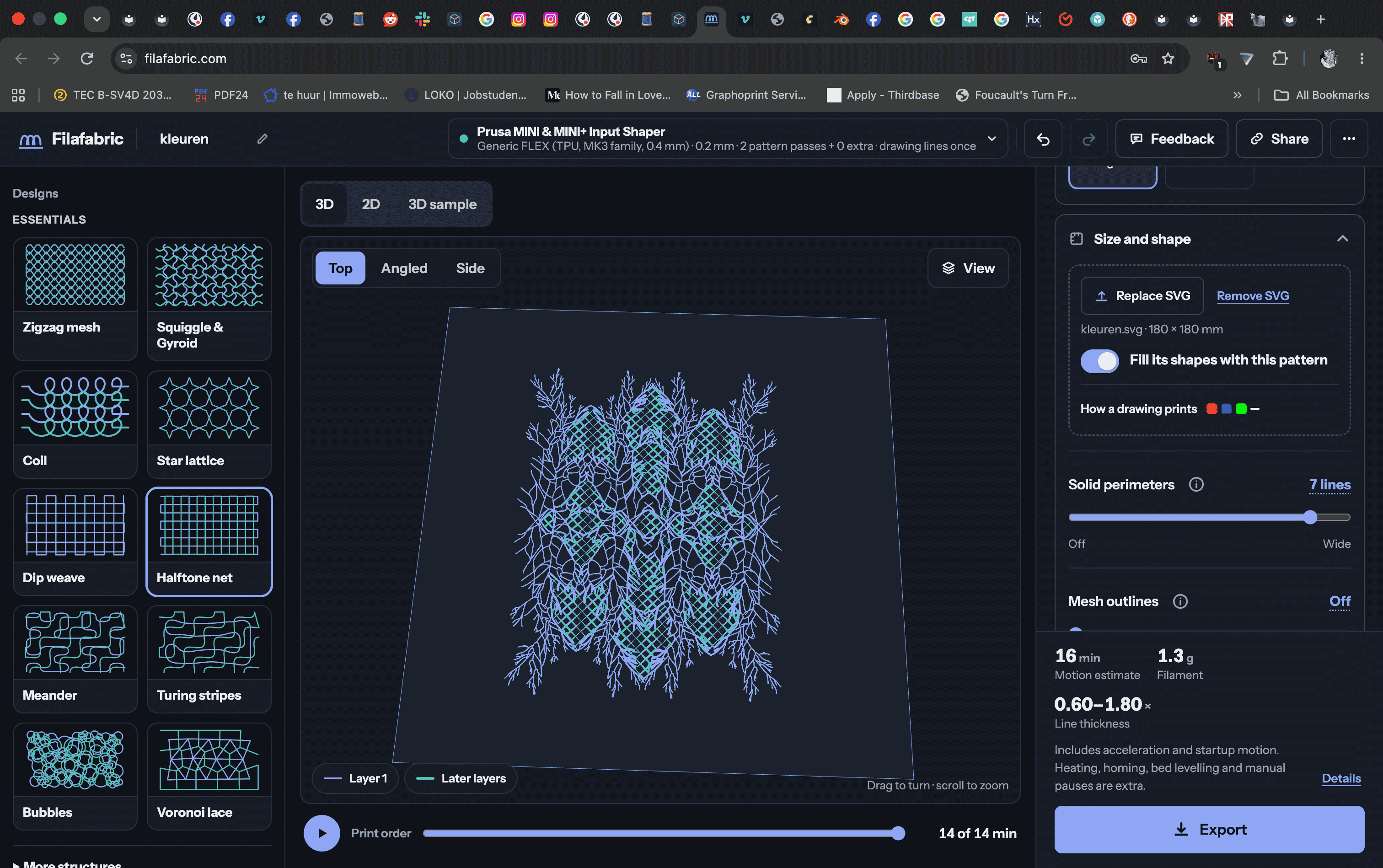
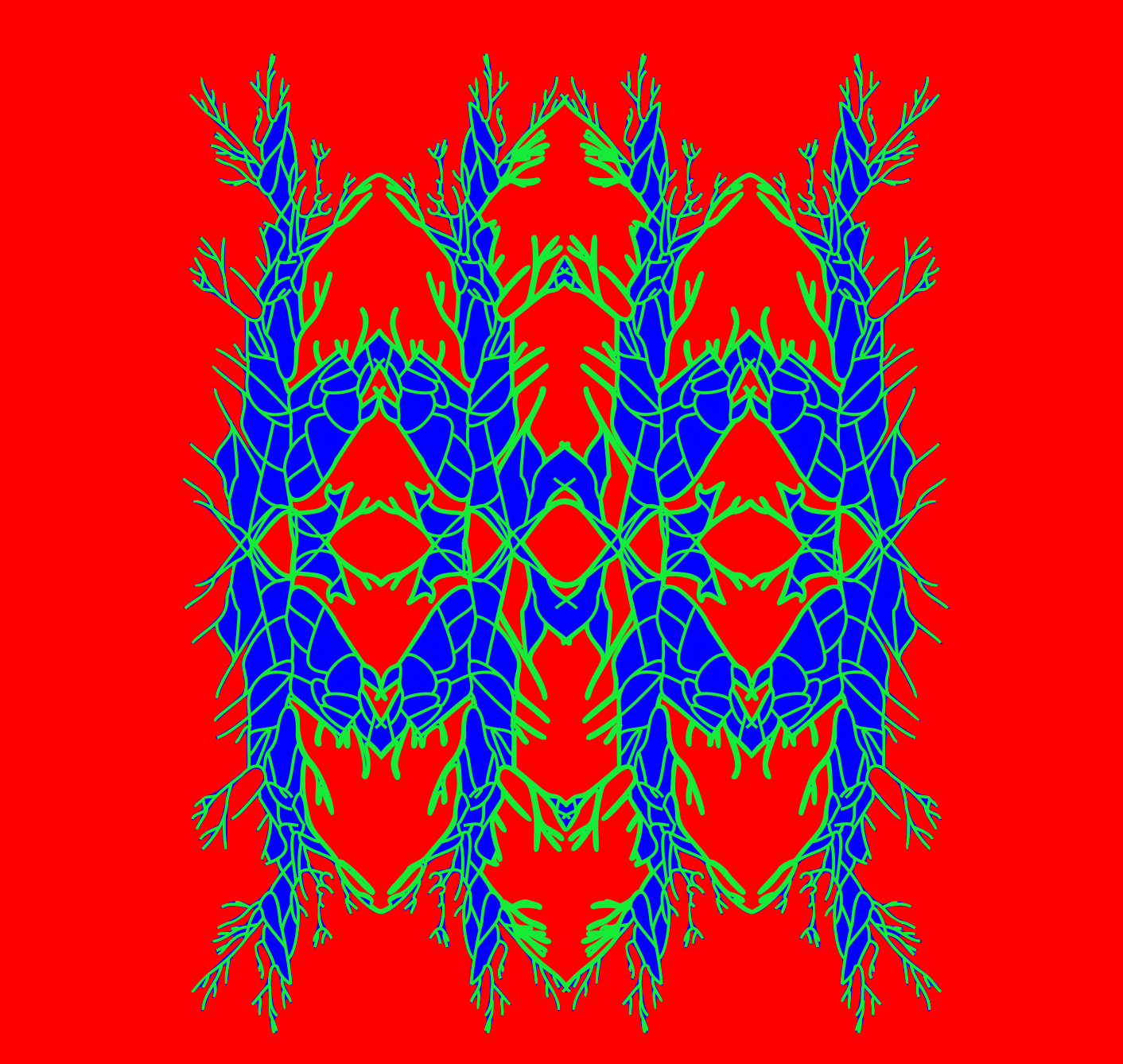
For the second step, I made a pattern by repeating the same shape different times and rotating them using inkscape. It has a nice lace effect, but the 3d print was still too fragile. I was curious about the Filafabric program to add some structural integrity. I used the halftone raster and uploaded my image. I coloured it according to the instructions found on the site:
Red Fill with the pattern when “Fill its shapes” is on. Blue Cut out: leave empty. Green Fill solid. Thickness follows Solid layers. Other lines Print as drawn. Stroke width sets the printed width.
The result was much better, but still too fragile, so I made the lines thicker and also changed the pattern of the filling to ‘curvilinear’ in the ‘strat form’ menu. I thought this would be interesting as the lines are more organic, but I didn’t really like the result.
For the final piece which what a good balance between structural integrity and appearance, I made the lines thinner again and added a square raster.
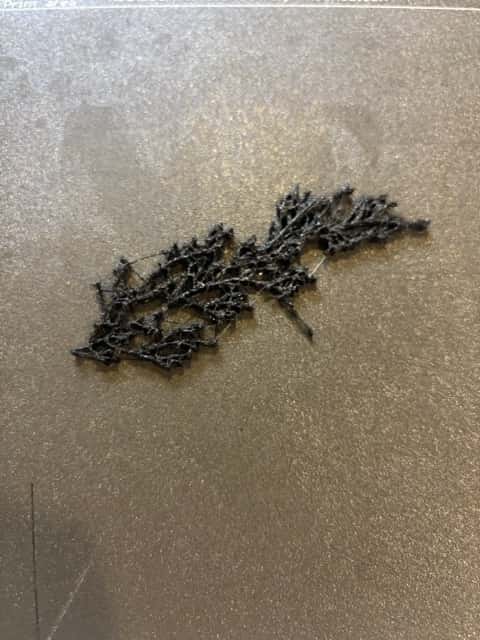
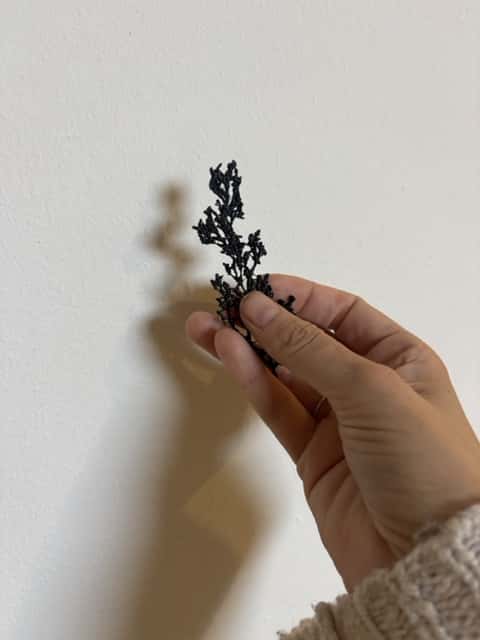
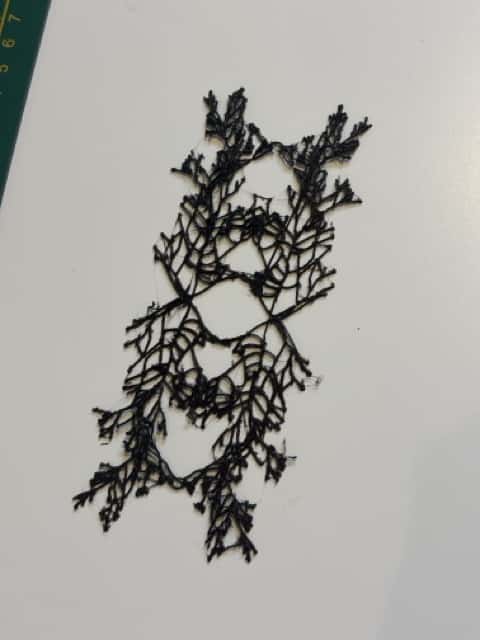
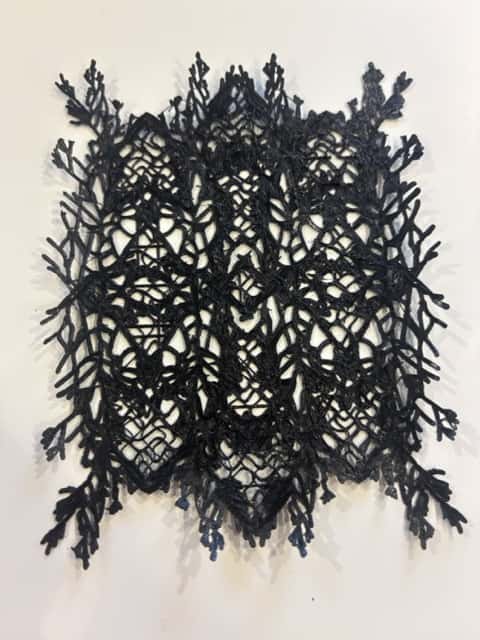
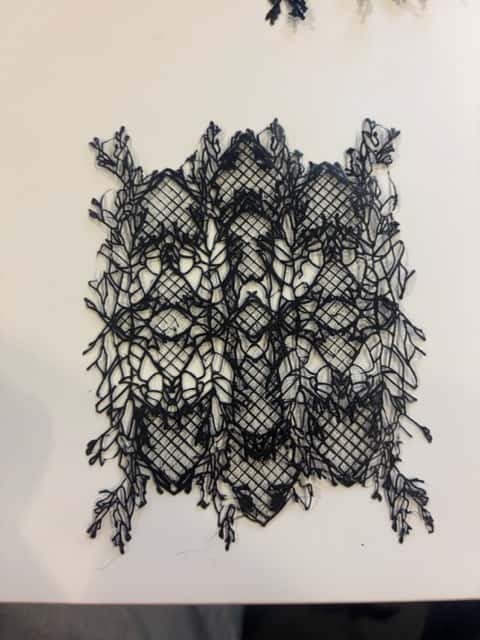
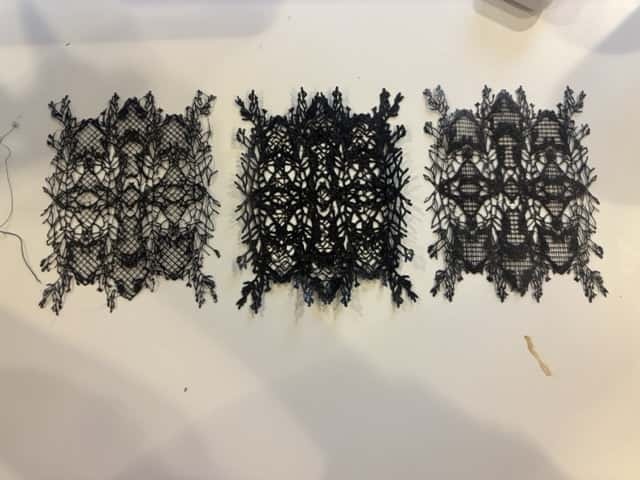
I encountered two small issues with the program: (1) you cannot edit how many layers the uploaded pattern should print. This would have solved the structural integrity part. (2) Also, the temperature of the printer was not synced with the temperature I inputted in the program.
3. Blender
Alongside the printing experiments, I explored parametric design in Blender by following Rico’s tutorials. I took screenshots of some of the experiments I made during this process.
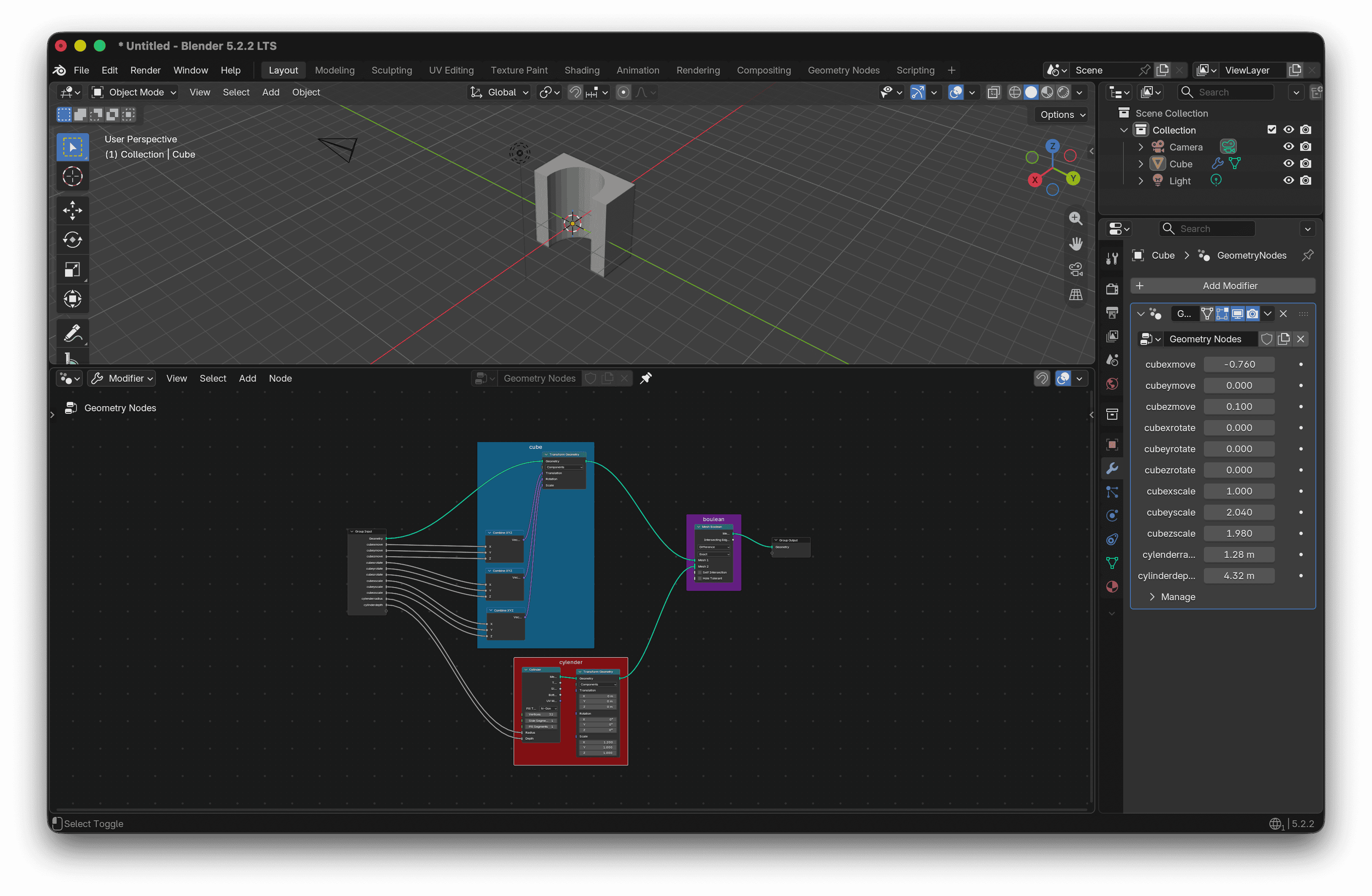
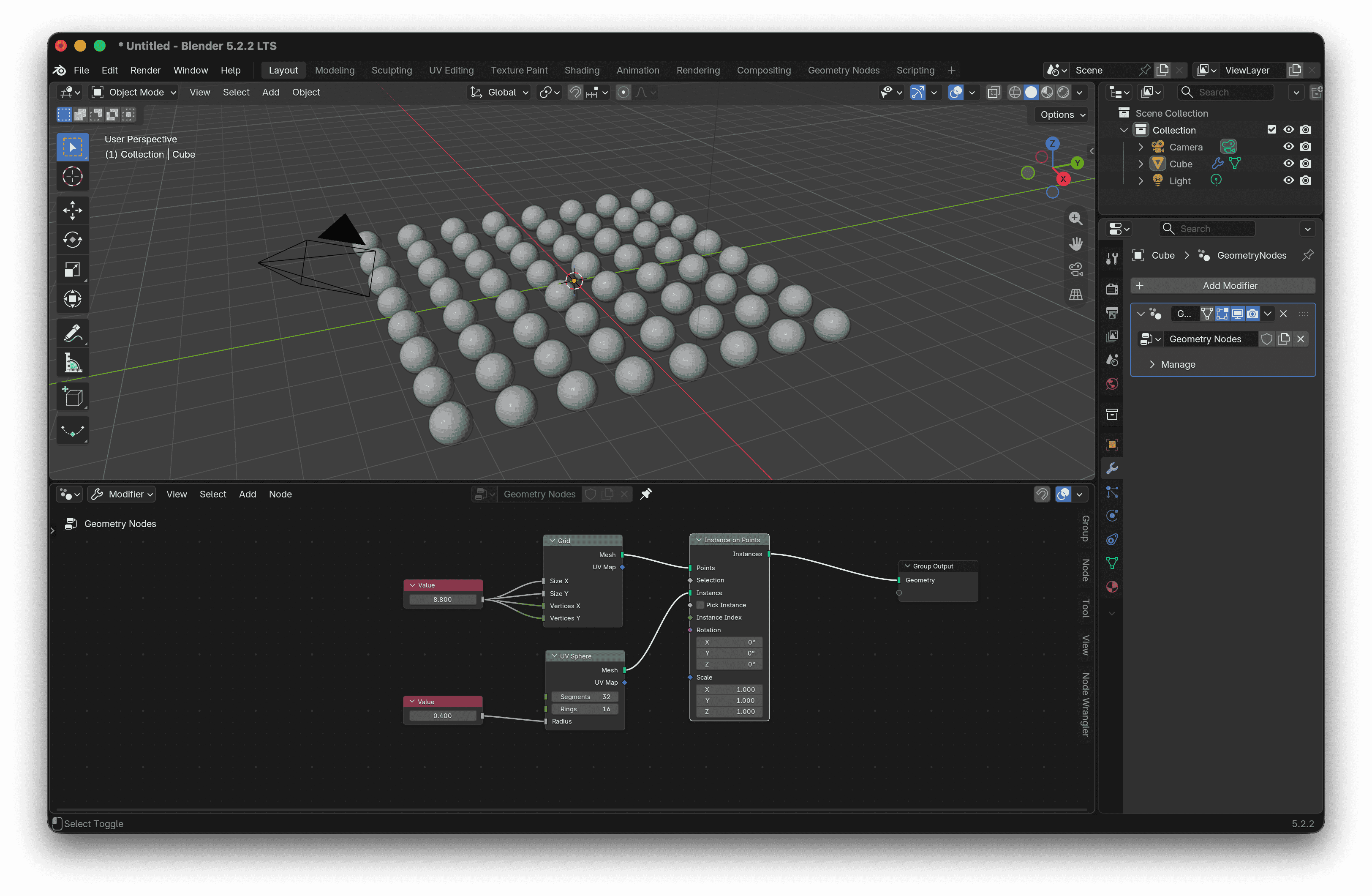
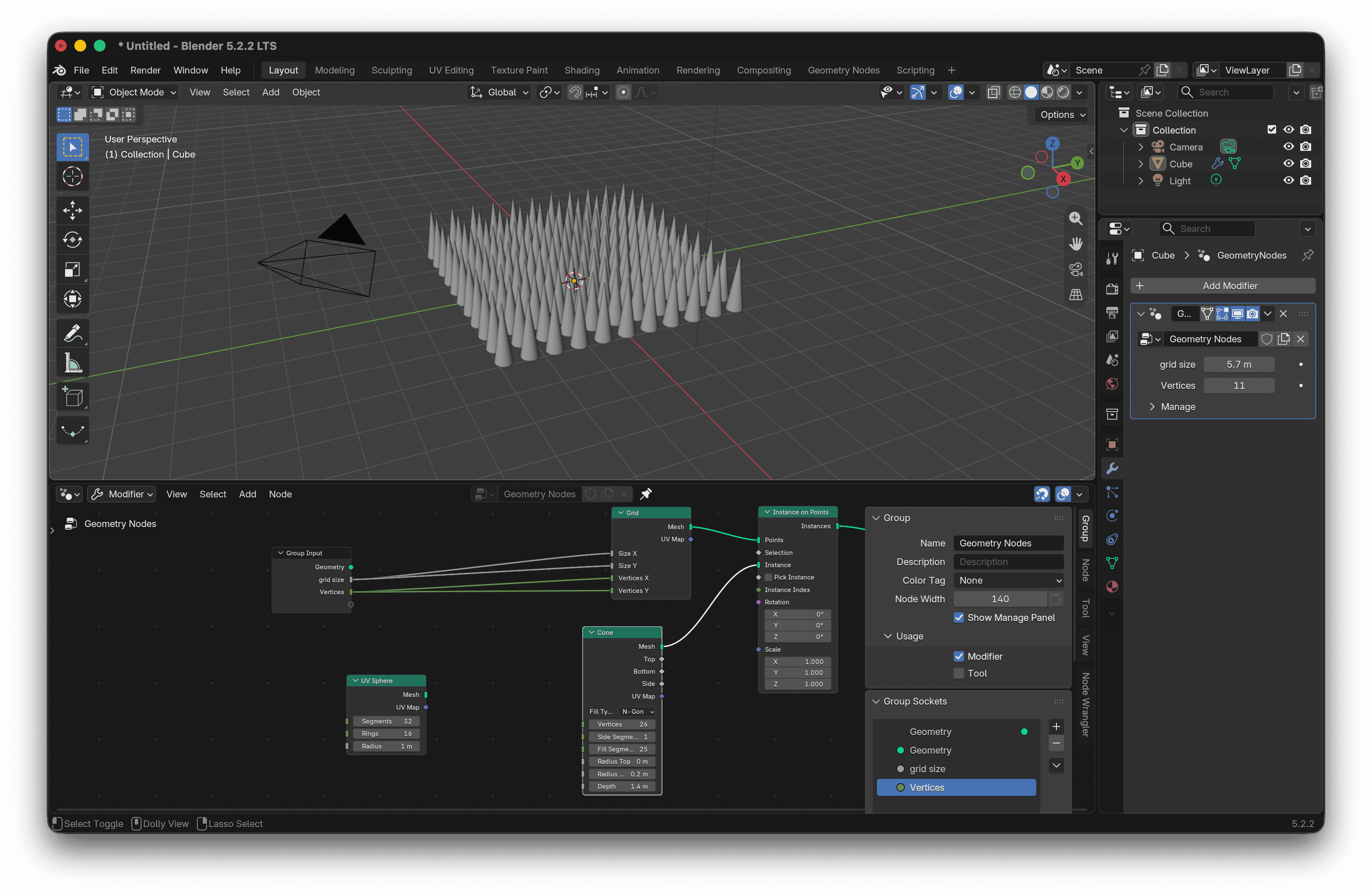
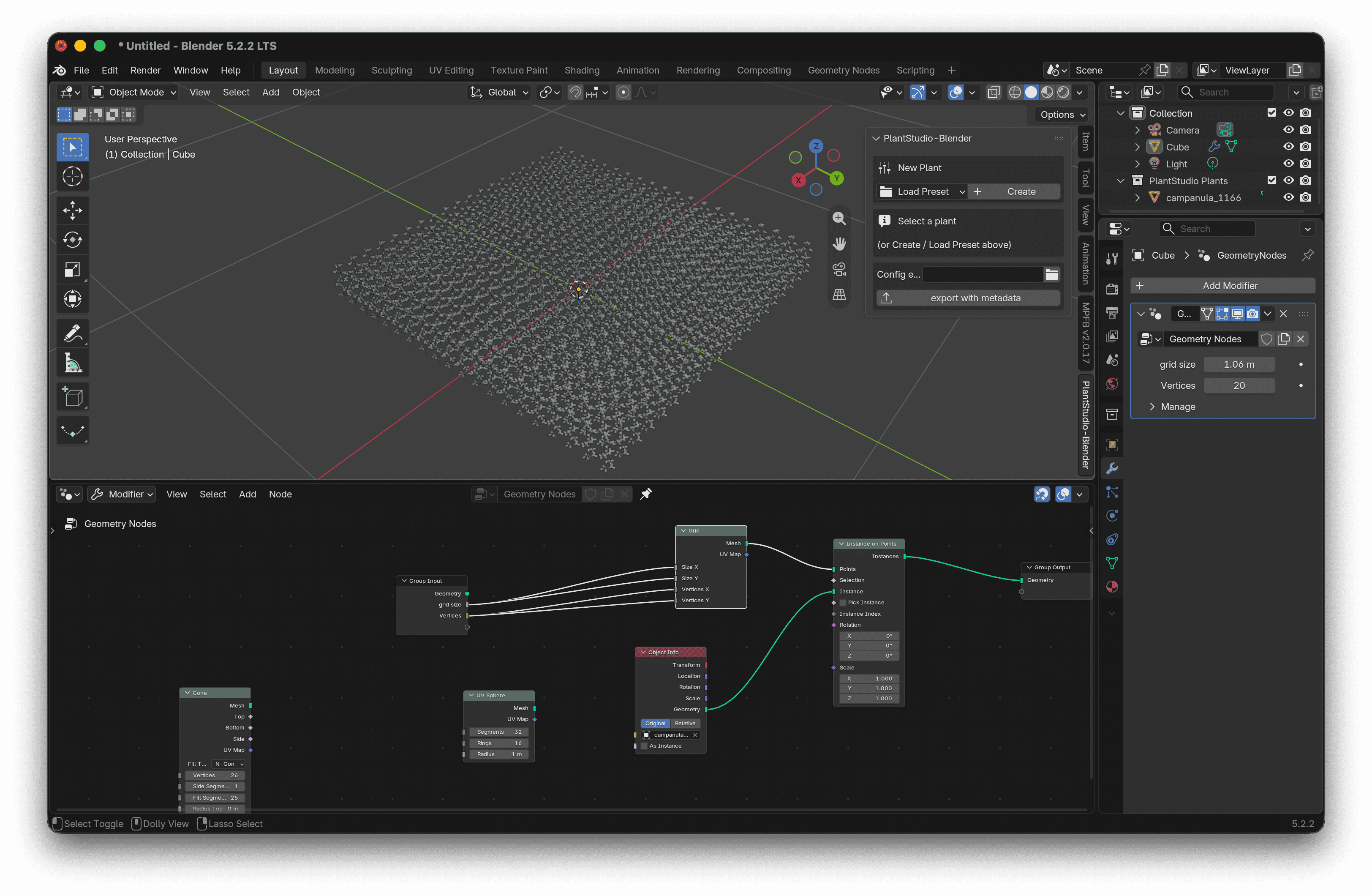
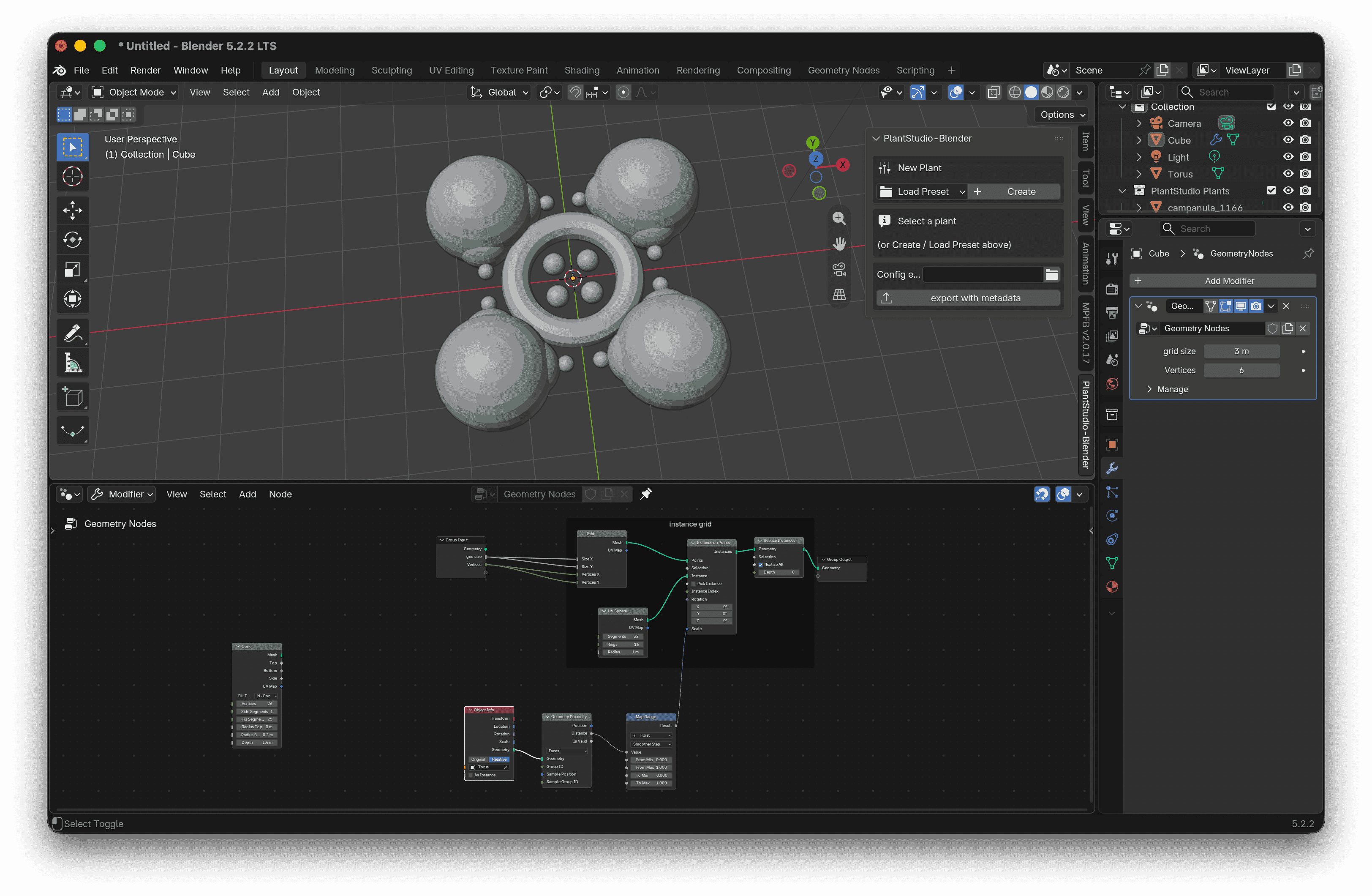
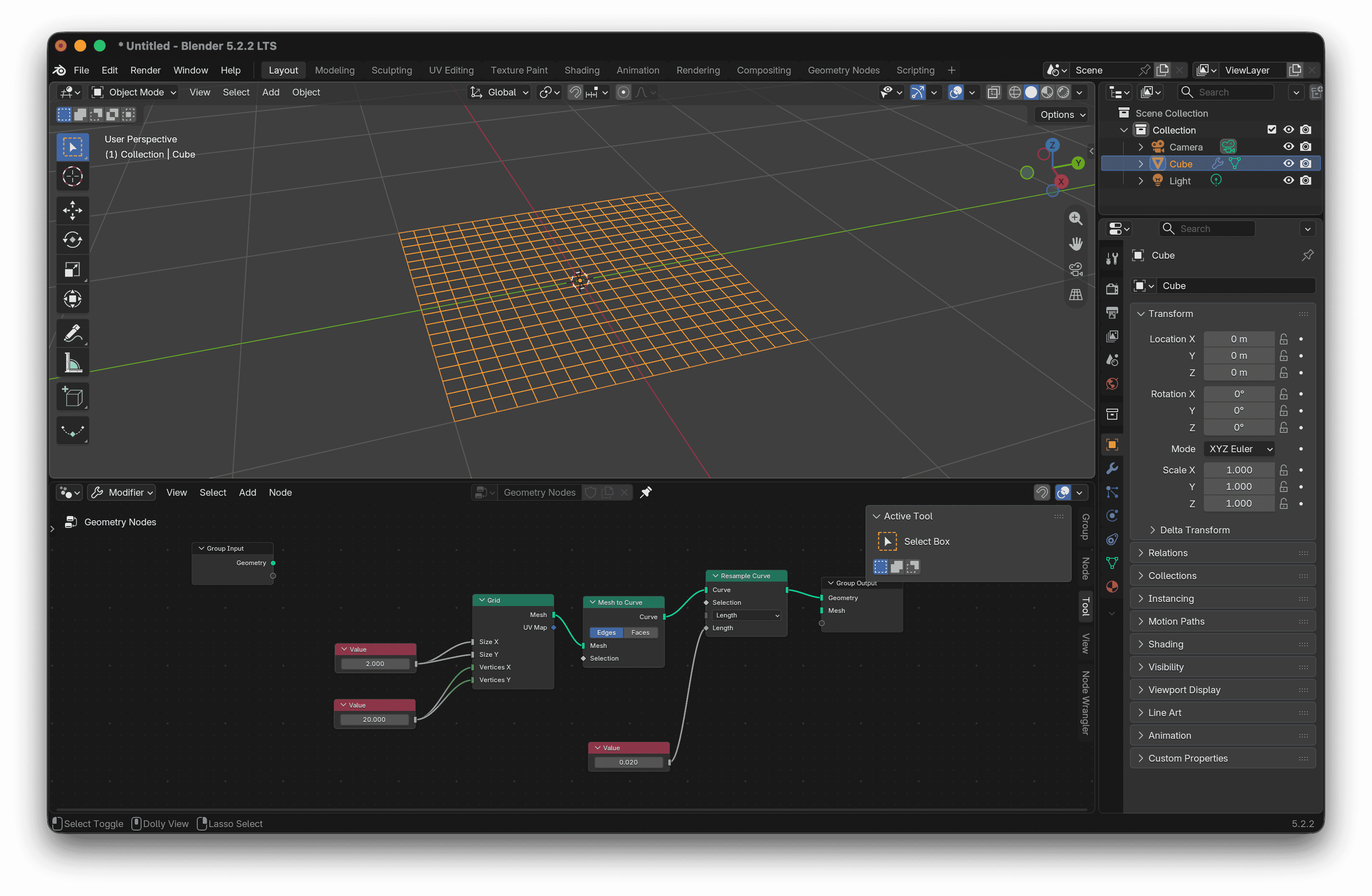
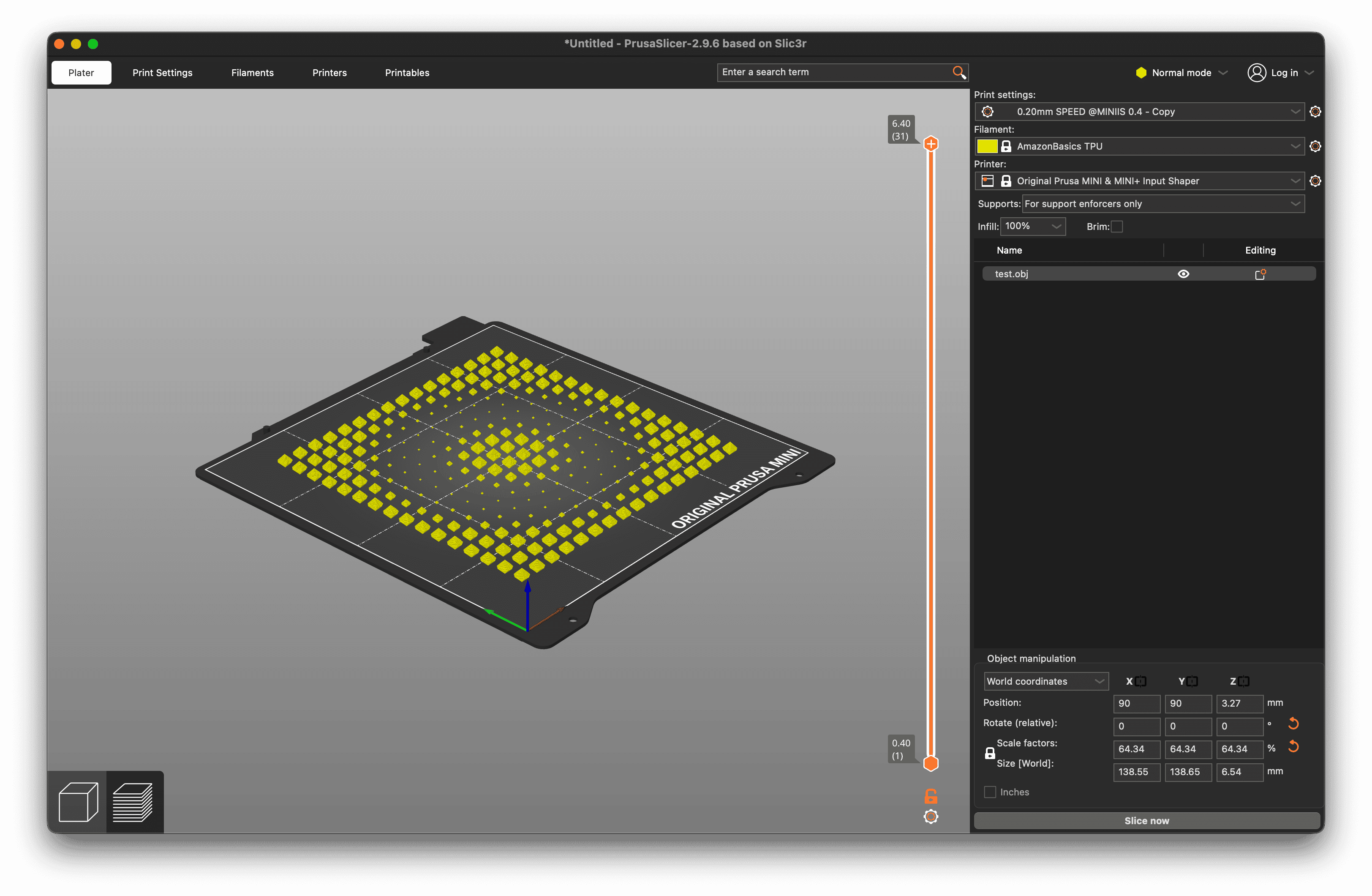
I found it interesting to discover how a set of parameters can generate and modify a structure. Instead of modelling every detail individually, you can establish rules that determine how a shape develops. This seems particularly relevant when working with natural structures, where repetition and variation often exist together.
However, I also realised that there is a considerable gap between following a tutorial and developing my own designs. The tutorials helped me understand the different tools and processes, but I still need more practice to use them in a way that reflects my own visual language. I tend to gravitate towards organic shapes and irregular structures, and I would like to become more confident in translating these forms into parametric models that go beyond basic geometric shapes.
4. thoughts and reflections
Overall I’m happy with the result. That said, I think I have to search for a more specific use for the 3d printer. I felt a bit lost without a specific goal in mind except for the pattern. I think in the end, if I want root structures, I should just grow them organically instead of 3D printing them. So looking forward to this week :) In hindsight, it would have been a good idea to focus on making moulds for this, it would be a more interesting evolution.
Regarding the parametric design on Blender, I learnt a lot from the recipes and Rico’s tutorials. In my work I lean a lot towards organic shapes and I think you need a strong knowledge of Blender to be able to make parametric designs which exceed the primitive shapes. I think I need some more practice to get to that point.