3. Circular Open Source Fashion
1. Research & Inspiration
Mottainai
When I heard "zero wasting" and "circular design", Japanese culture has so many elements of those way of thinking.
There is a word "mottainai"(もったいない) which means wasting things can be useful in some other way. It is really common word in Japan and we've taught this word since children. We can see many work from this mindset and these are some examples.
- Kintsugi(repairing the broken pottery using with lacker and gold)
- Sashiko(traditional Japanese decorative stitching)
- Sakiori(weaving with strips of old clothing)
- Furoshiki(Japanese wrapping cloth)
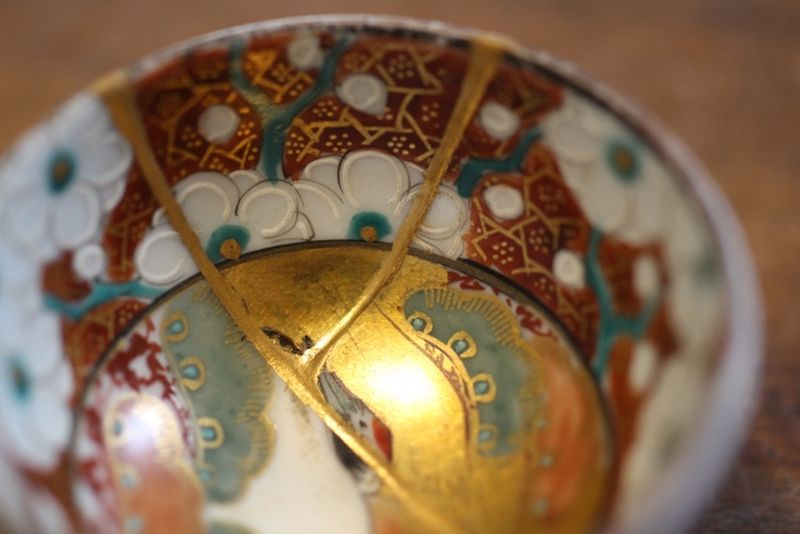
Kintsugi
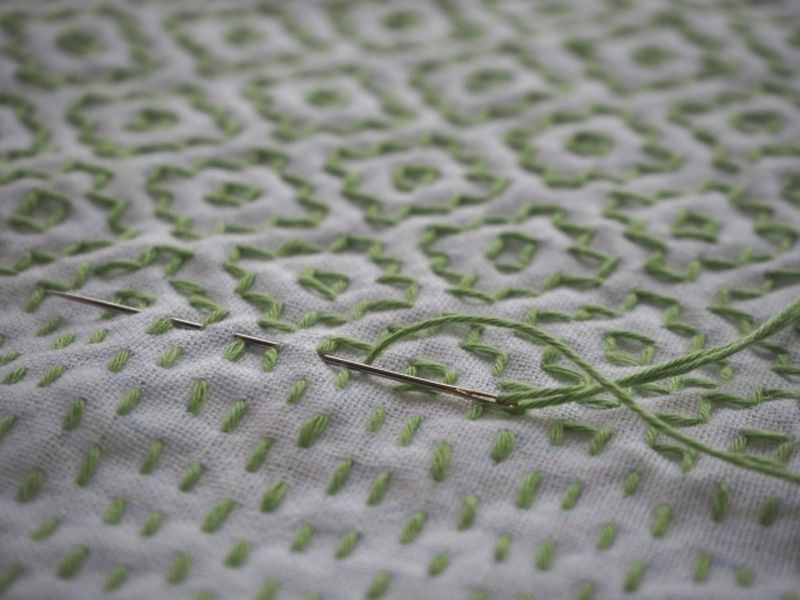
Sashiko
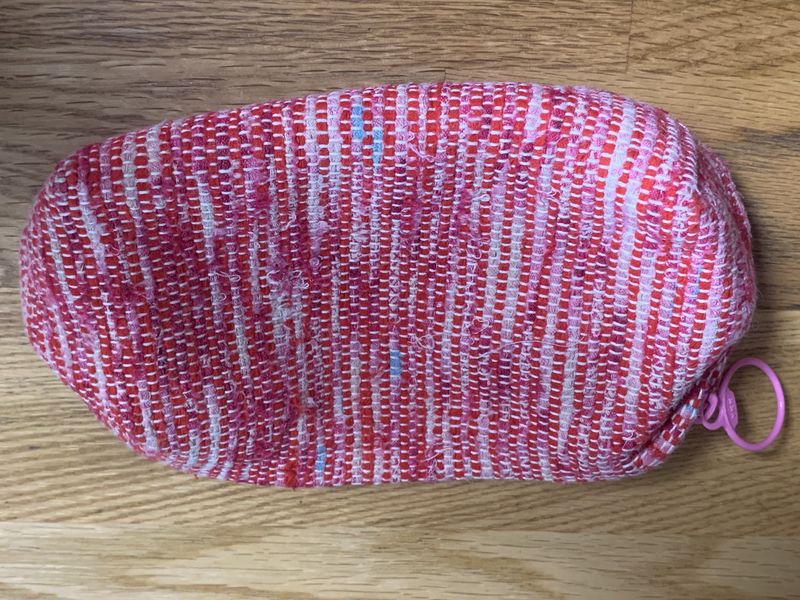
Sakiori
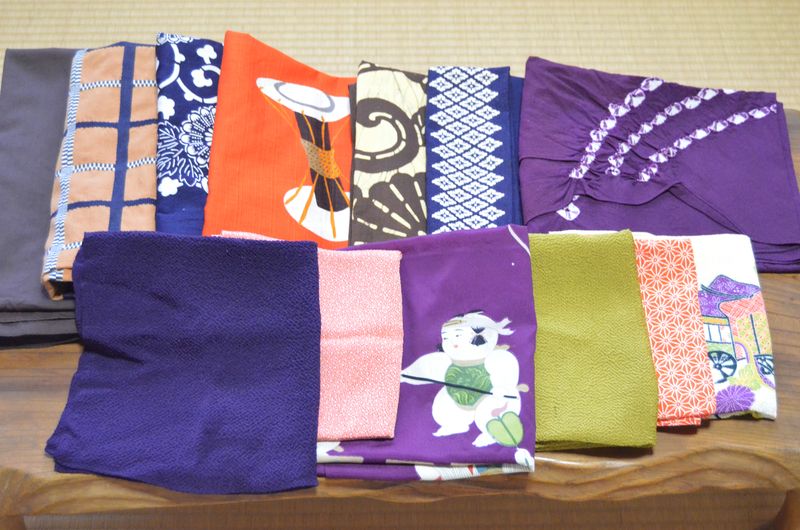
Furoshiki
Kimono
Kimono also has lots of "zero wasting" and "circular system" way of thinking.
Kimono originally means "clothing" or "something to wear" and it used to be one of the most common clothing around Japan.
We used to wear kimono as a common clothing until 1950s.
The kimono that we call right now was began to wear since the Heian period(794~1185).
From the History of kimono said;
In the Heian period (794-1185), a new kimono-making technique was developed. Known as the straight-line-cut method, it involved cutting pieces of fabric in straight lines and sewing them together. With this technique, kimono makers did not have to concern themselves with the shape of the wearer's body.
Straight-line-cut kimono were suitable for all weather: they could be worn in layers to provide warmth in winter, and kimono made of breathable fabric such as linen were comfortable in summer. These advantages helped kimono become a part of Japanese people's everyday lives.
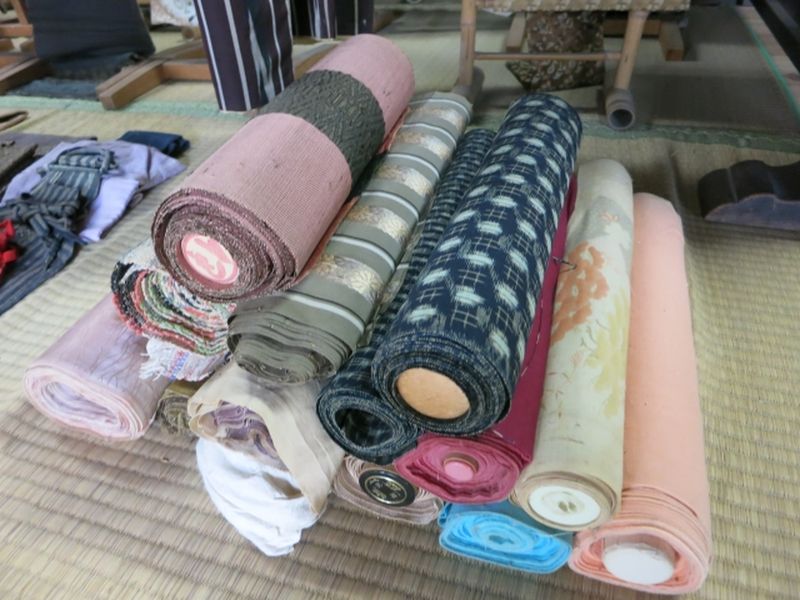
Kimono is made from the pile of textile called "Tanmono(反物)", which is usually 37cm width and 12.5m long. As kimono is cut straight way, we can cut with minimum waste. (Photo from M Kimono)
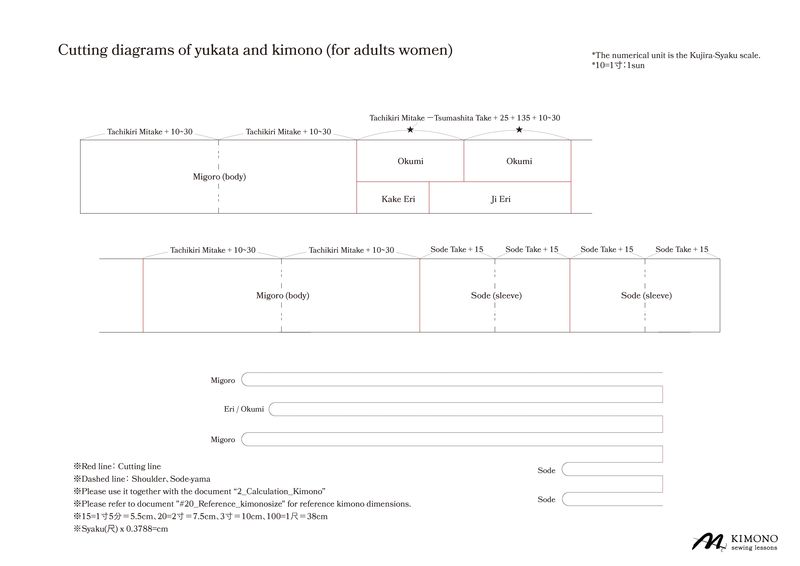
Cutting kimono
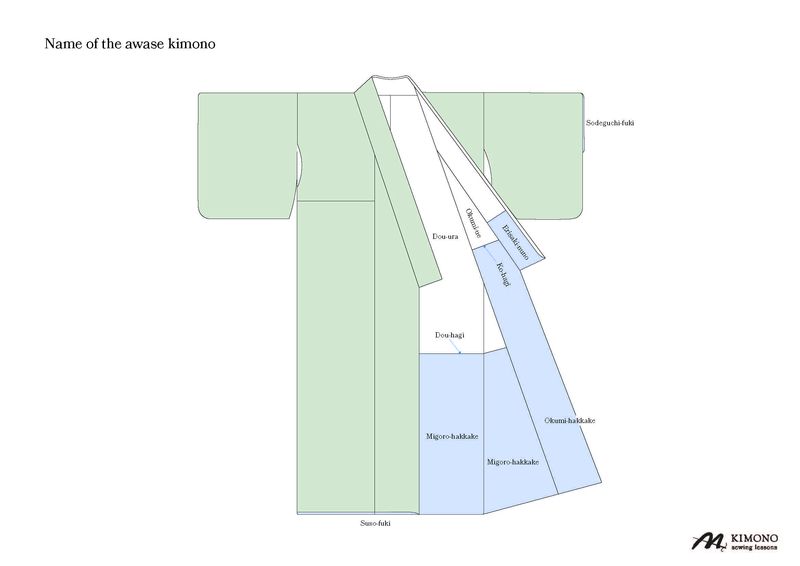
Kimono
2. Tool
-
Paper & scissors
-
Inkscape
-
Laser cutter
3. Process & Workflow
Definition of Modularity
Before getting down to the assignment, I'd like to check the definition and meaning of "modularity".
It is said in the cambridge dictionary;
the quality of consisting of separate parts that, when combined, form a complete whole
So, modularity is one small design or unit and a certain design or "thing" is assembled those modularity units.
For getting idea of this week's assignment, first I looked alumni pages. I also saw several japanese traditional patterns which might help invoking iea.
I got the basic idea from them, and I think shape would be good at circle or square.
traditional Japanese pattern
Traditional Japanese pattern is often used on the pottery, textile, and so on. As each design has it's own meaning, people use or send them with their wishes. These are more than 70 patterns, and there are mixed patterns. Those are 7 examples;
| Name | Design | Meaning |
|---|---|---|
| Seigaiha (青海波) |
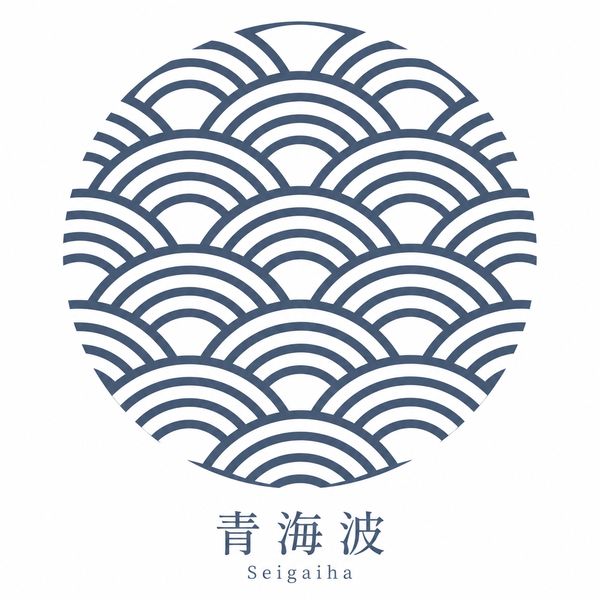 |
Gentle waves. it symbolizes peace, good fortune and lasting happiness. This symbol seems to come from Persia |
| Asanoha (麻の葉) |
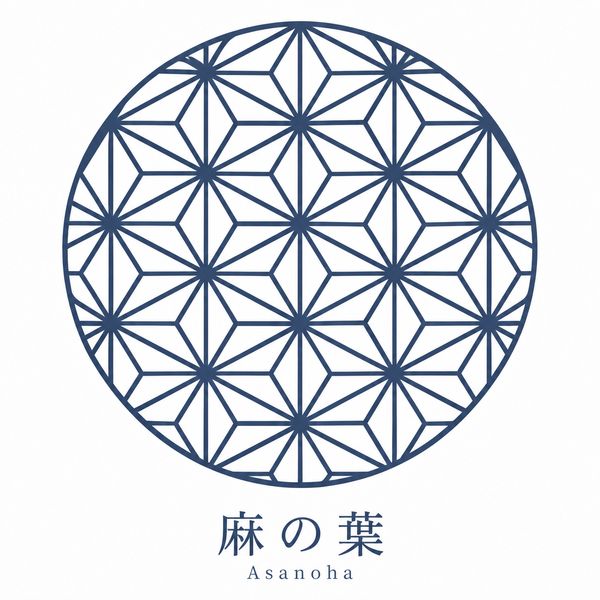 |
Hemp leaves. This leaves are often used as a sacred ceremony. As it grows really fast, it symbolizes healthy growth and vitalily. |
| Shippo (七宝) |
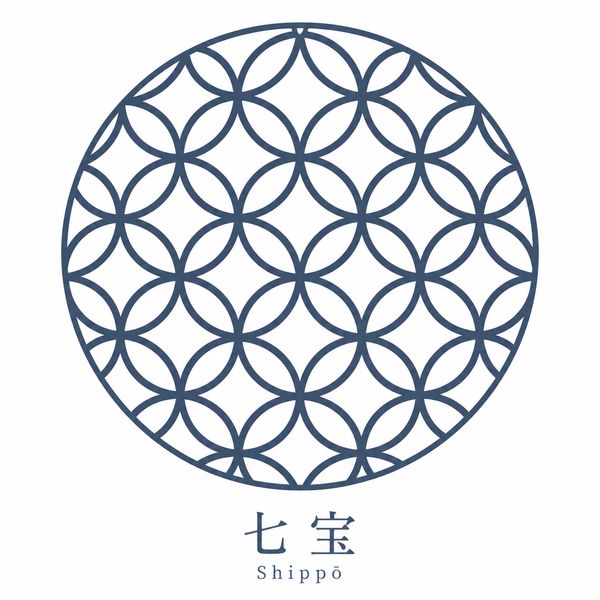 |
Interlock same size of circles. Because en(circle in Japanese) and en(connection) are same sound, it symbolizes the human connection and prosperity. |
| Ichimatsu (市松) |
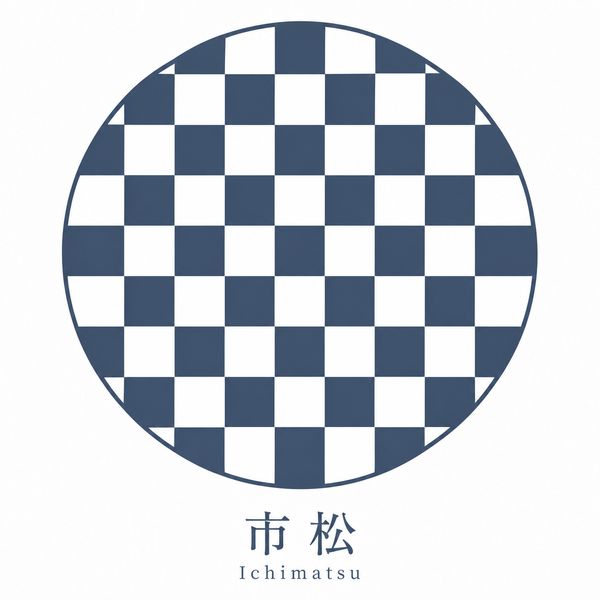 |
Two colored squares make grid-like pattern and repeat like checkerboard. It symbolizes continuing prosperity and growth. |
| Yagasuri (矢絣) |
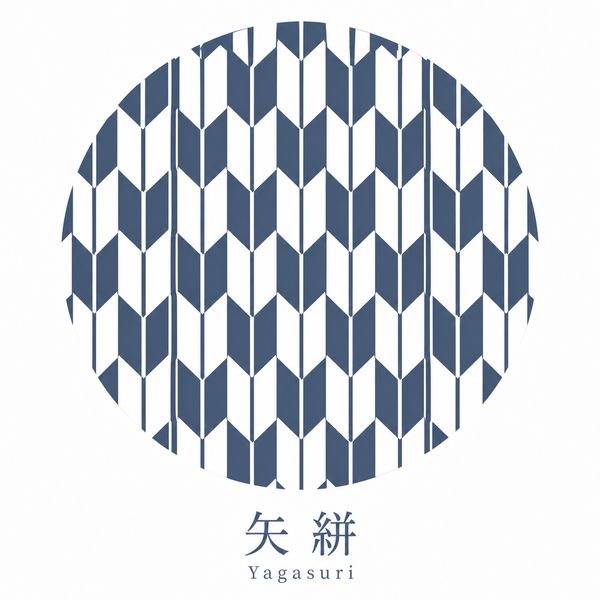 |
It represents arrow feather. It means forward movement, determination, and a good beginning |
| Uroko (鱗) |
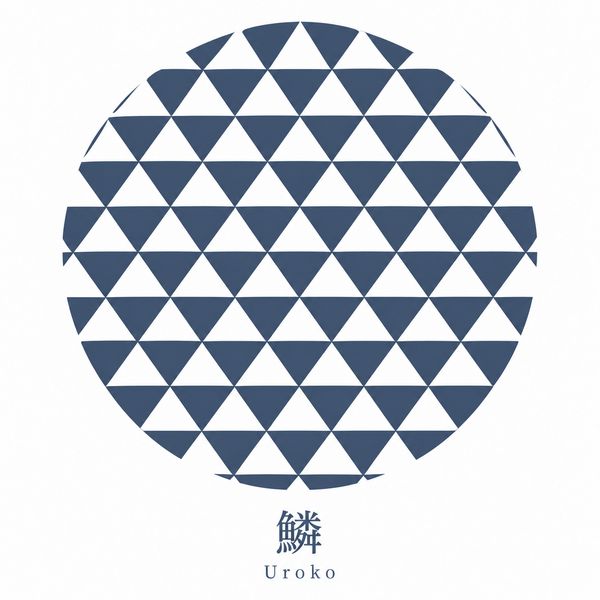 |
2 colored rectangles make like scale. Rectangle means snake's scale and it represents protection, renewal, and transformation. |
| Karakusa (唐草) |
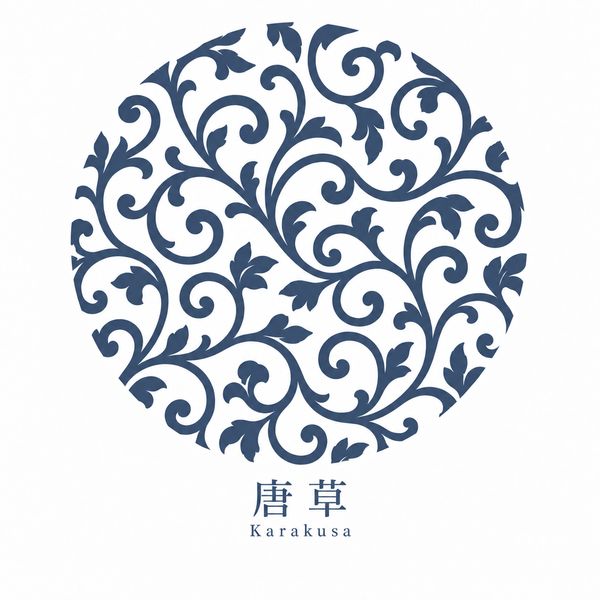 |
Design of vines stretching all over. It symbolizes longevity, prosperity, and family growth. |
(designed by chatGPT)
Workflow
This assignment was really hard for me to do it. So I watch alumni works for a while to get an idea, such as an alumni from 2026, Ms Flora.
First try
I decided to design from the circle or square, because those shapes are the least amount of wasting part. Then I designed the feature combined 2 circles.
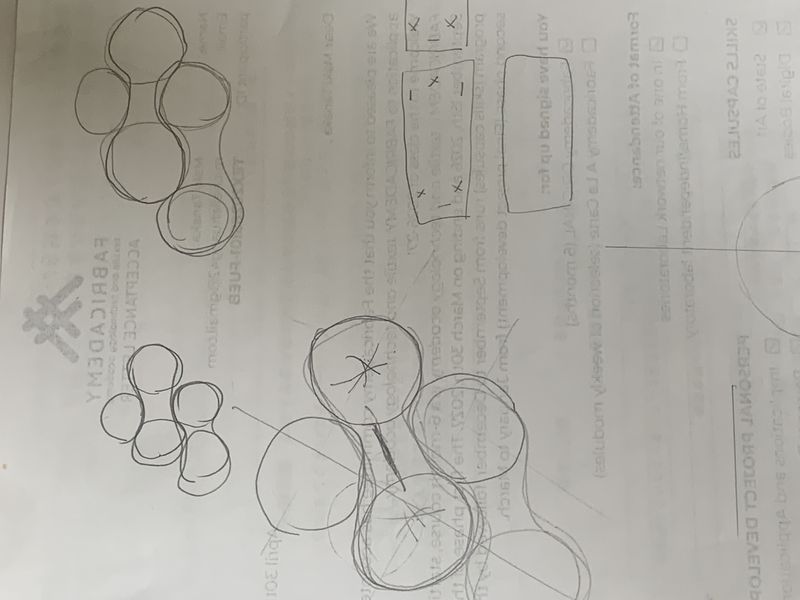
I didn't realize that there was more waste than expected. So I change the design more simple, just a circle and try to use leftover as a interlocking but it didn't work well. Then I changed the basic shape from circle to square and cut the circle shape inside the square.
I designed the module in Inkscape to fit the interlocking.
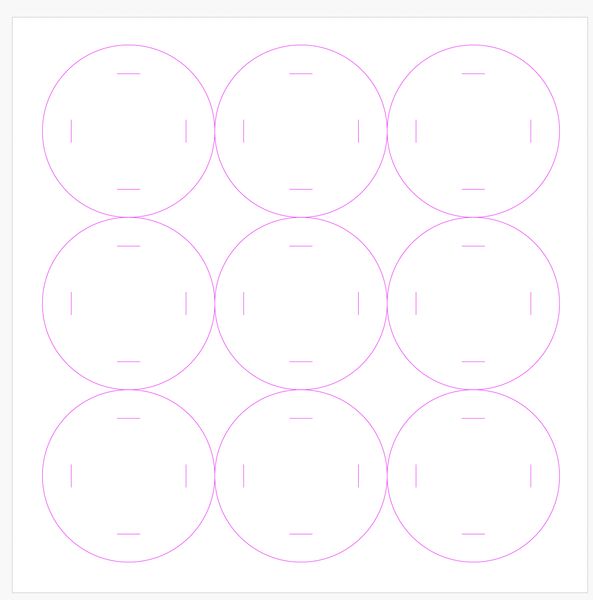
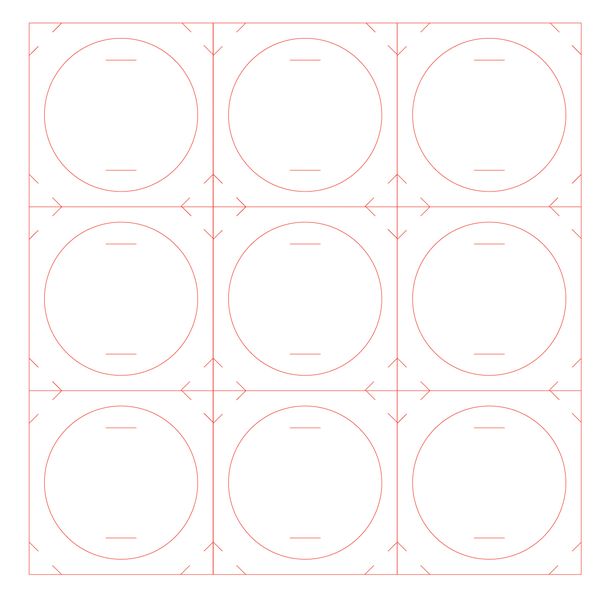
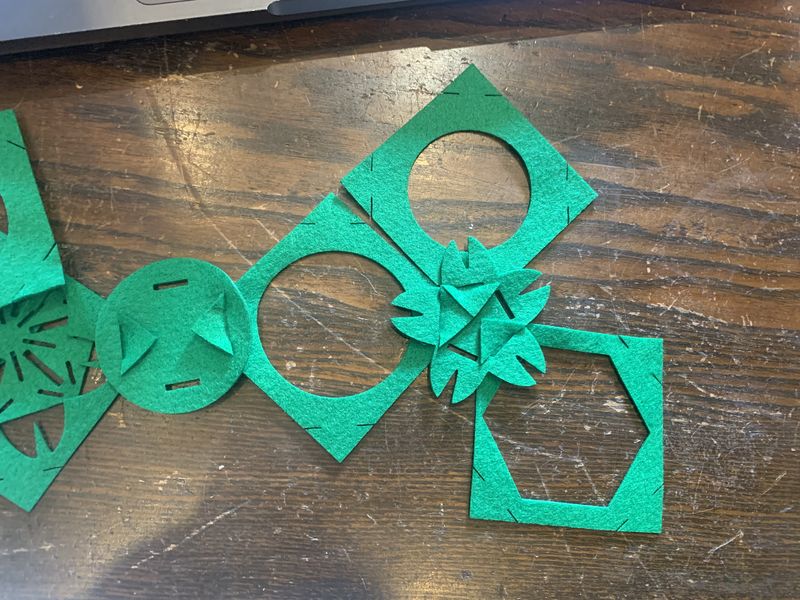
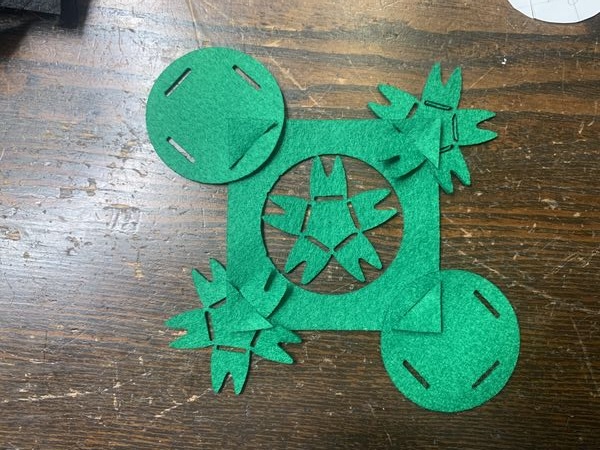
I also want to put some japanese traditional pattern in the square pattern. So I basically cut the circle inside and one of the circle has the pattern of hemp. As this circle has 6 directions to put the interlocking, it became a bit difficult to connect because it becomes 3D feature.
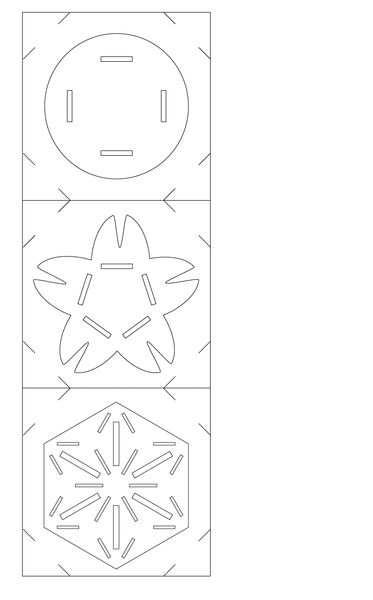
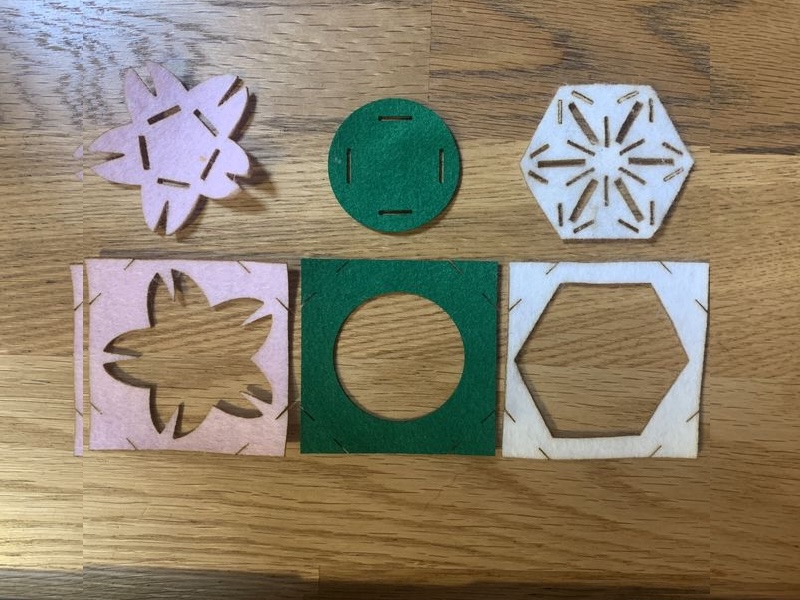
After designing pattern, it was cut by laser cutter.
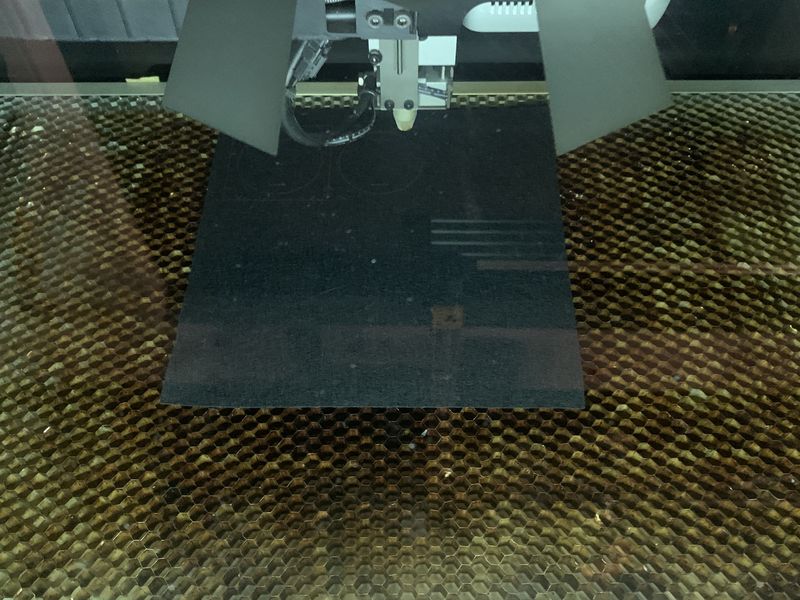
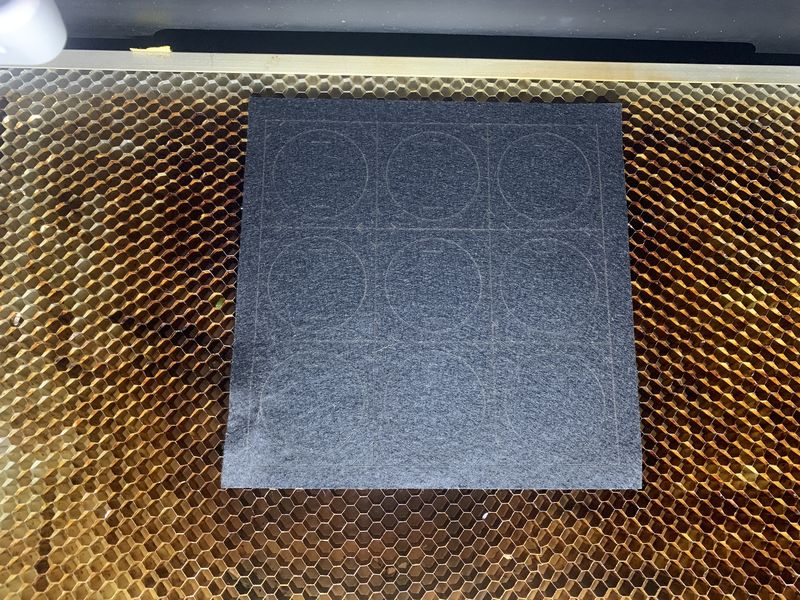
I began to assemble them and made a big necklace. It fits for the dog too..
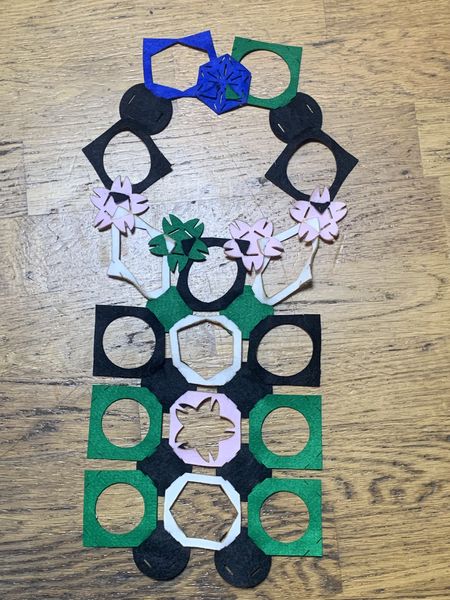
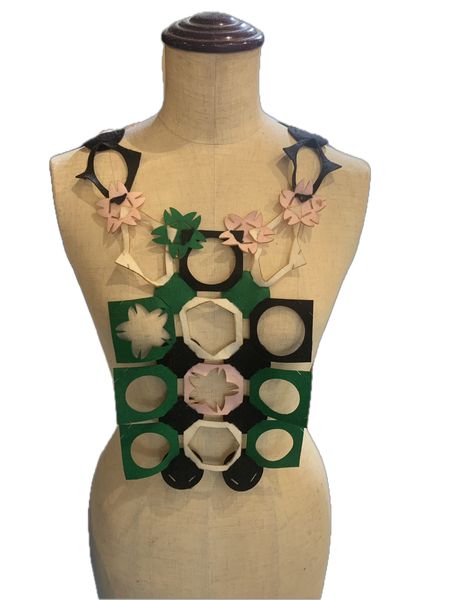
First assemble: necklace
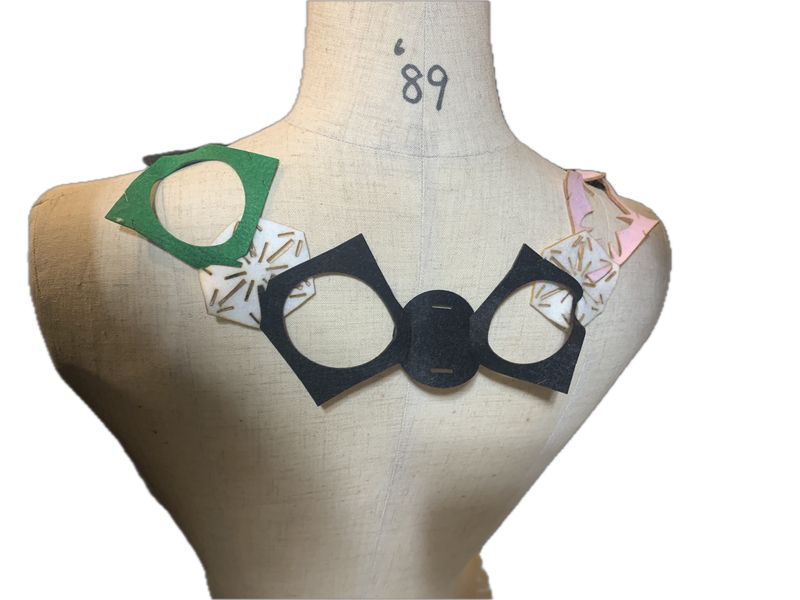
Necklace from the back
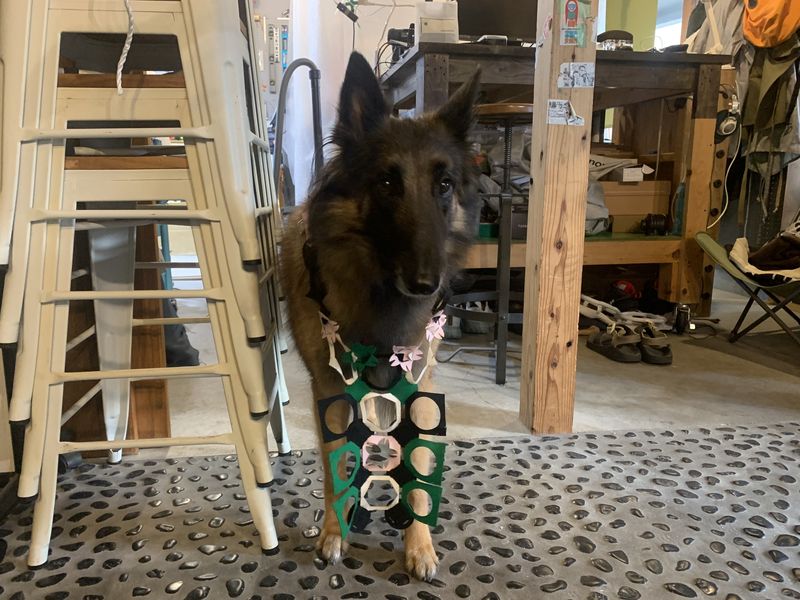
My dog with the necklace
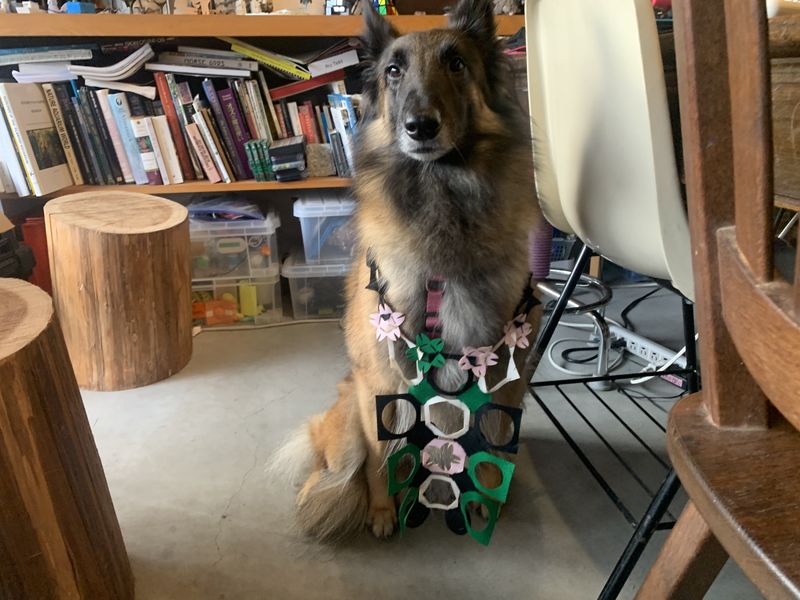
Put the necklace to my dog
Second Try
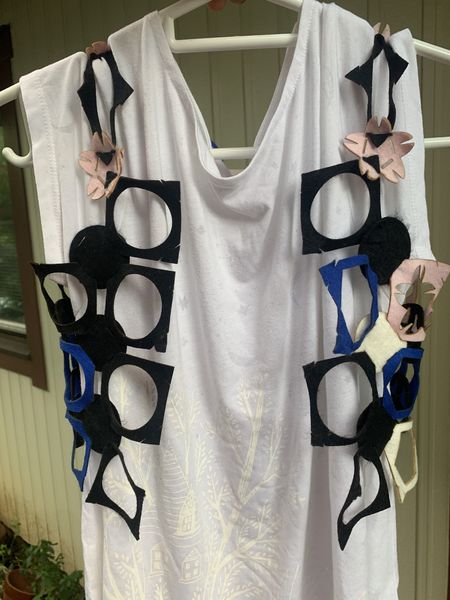
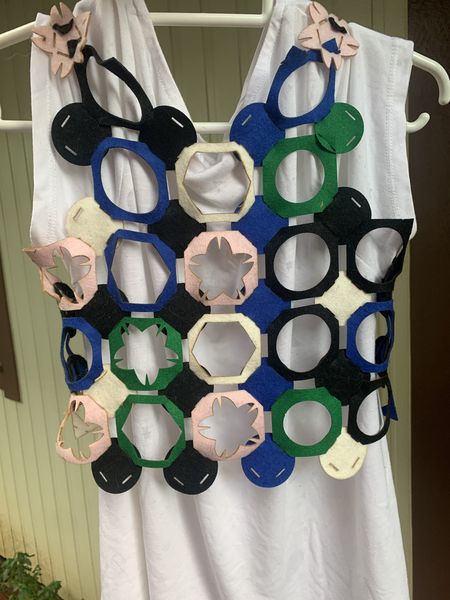
Then I tried to make little vest with these pattern. The size is a bit small but I'm glad to make a kind of garment from my modules.
Caption for the left image
Caption for the right image
I'm glad that I could finish my first "designing & making". By making and assembling, I could find new way or new design. That's was really fun for me.
3. References
Files
- Circle PDF(Pattern)
- Hemp PDF(Pattern)
- Sakura PDF(Pattern)
Link
- History of Kimono (in Japanese)
- Kimono Documents
- Adobe: Japanese traditonal pattern
- Traditional Japanese Pattern