7. BioFabricating Materials
Objective
Learning Outcomes
- Research skills: the participant has acquired knowledge through references and Concept development
- Technical skills: Master techniques for growing and crafting personalised materials
- Process skills: Anyone can go through the process, compare and explore the recipes
- Final outcome: create a material chart
- Originality: Has the design been thought through and elaborated?
Student Checklist
- Include some inspiration: research on artists, projects, platforms that work with biomaterials, local ingedients and resources
-
Produce at least samples from one crafted and one grown material:
-
Crafted material - explore the different recipes and understand how to adjust them based on the ingredients (bioplastics/resins/extruded yarns/gathered&twisted fibers/non-woven matrix)
- Grown material - explore the different recipes and understand how to adjust them based on the ingredients (bnc / mycelium / molds / etc)
- Document your recipes, the ingredients and process and if there have been changes, document your unexpected discoveries
- Name your materials, classify them by typology and display them in a systematic order of samples
- Submit some of your swatches to the analog material library of your lab. (20cm x 20cm approx.)
Research & inspiration
Traditionally, Japanese people have lived in harmony with nature in many aspects of daily life, such as clothing, everyday items, food and so on. As Japan has four distinct seasons, we've used many natural resources according to the season.
Japanese Culture
Clothing
Kimono is Japanese traditional garment.
In ancient time, people wore the garment by the fibres from plants such as hemp, wisteria, kuzdu and Chinese fir and from the tree bark.
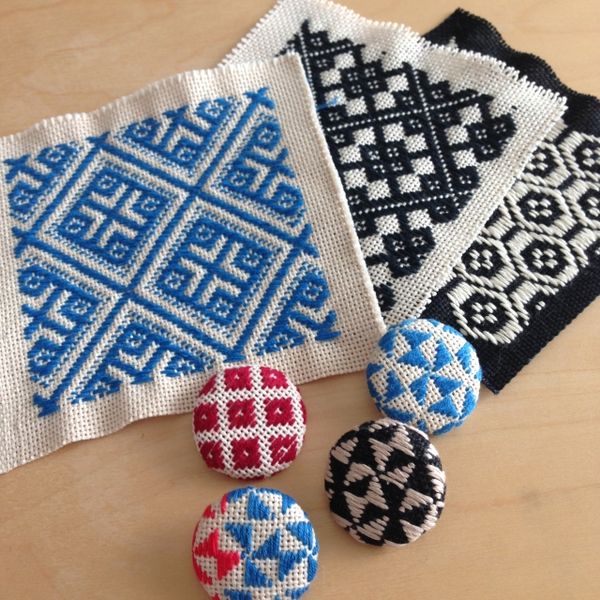
Linen cloth was one of the most common textile before cotton came. Because linen was good for the summer, but it was too cold in winter, people have invented several ways to keep warm, such as Sashiko(Traditional hand embroidery especially in nothern area).
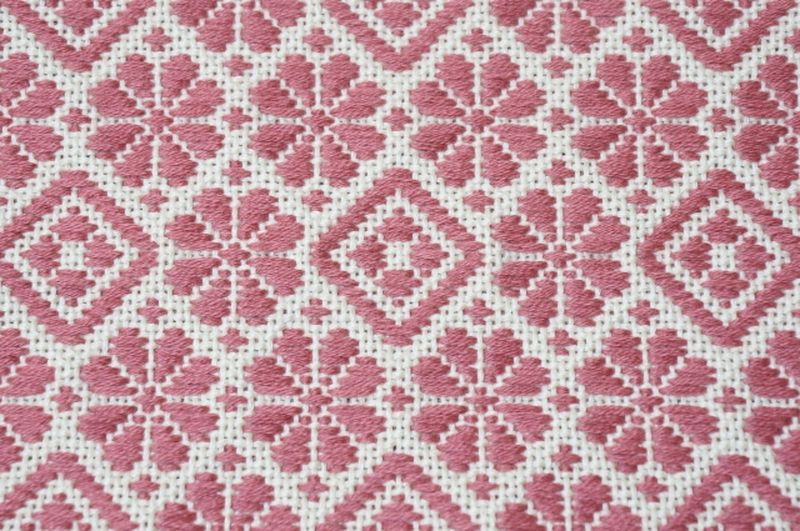
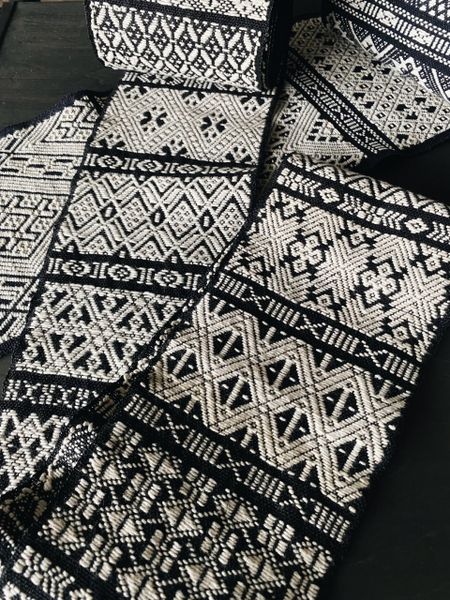
Sashiko
Even after cotton became common in Japan, Linen continued to be used as summer garment because summers in Japan are hot and humid.
Cotton began to be imported into Japan on a large scale from Korea and China during 15th century. Then by the end of 15th century, cotton cultivation became common in Japan.
One other famous material of kimono is silk.
The characteristics of silk are;
- Soft and smooth texture
- Cool in summer and warm in winter
- Less to generate static electricity
- Excellent moisture absorption and release
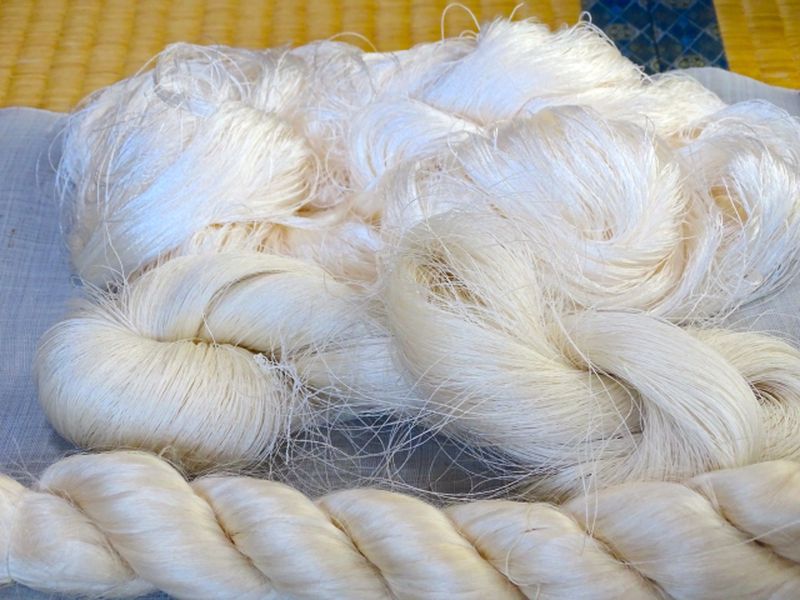
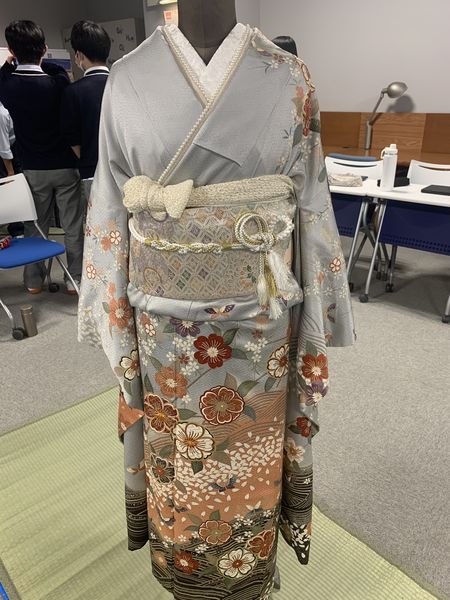
Silk and kimono
Daily goods
There are so many crafts using natural resources in Japan.
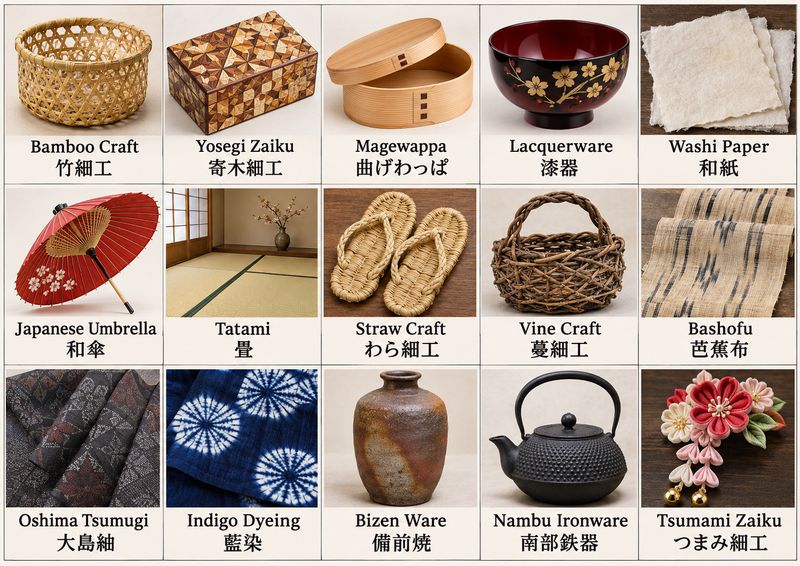
Japan is one of the world's most forested countries. Even today, forests covers around 66% of the country's land area. Therefore, we have made daily goods from tree, bamboo, and plants. We made our living primarily through agriculture, including rice farming, we also used straw and other materials for clothing and household items.
Japanese people have had a spirit of "Mottainai". So we tried to use many ways even the waste.
Kombucha
I went to Kombucha shop in Kamakura for researching about Kombucha.
This shop called "Kombucha Laboratory" and the shop owner Kimi told about Kombucha a lot.
She sells and gives the lecture of Kombucha for drinking.
Though she sells drinking kombucha, I think making a drink kombucha and kombucha leather are basically same procedure.
She gave me many great advices to make and grow scoby with good condition.
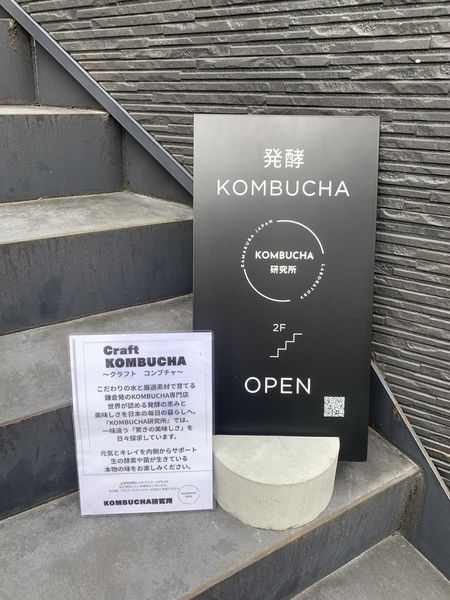
Kombucha Laboratory
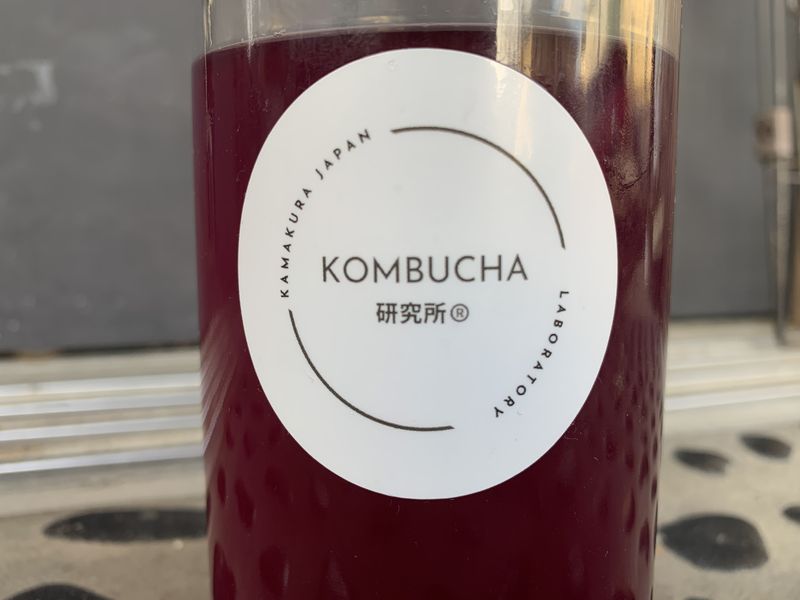
Butterfly pea Kombucha
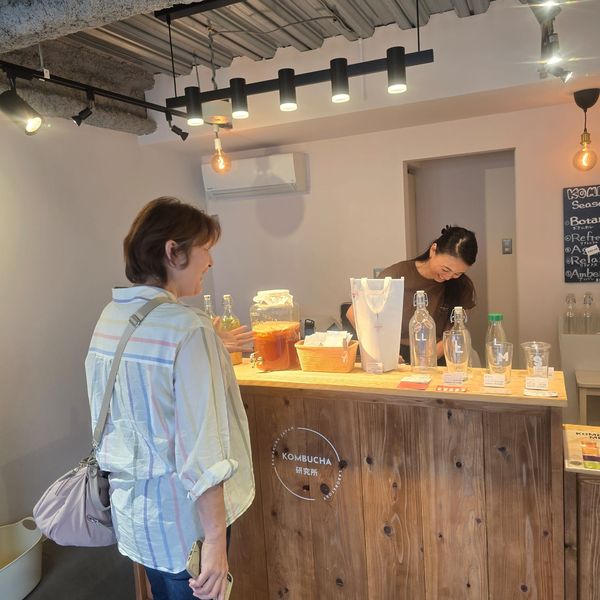
Several kinds of kombucha
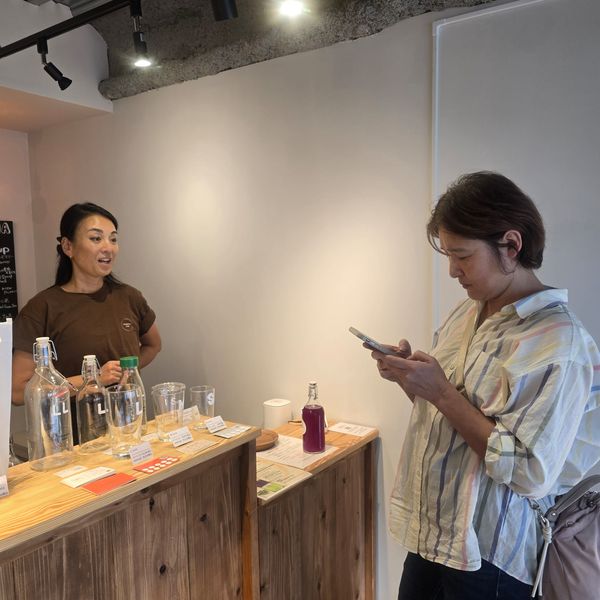
Kimi-san,the owner and me
First about the liquid, we need to have scoby, water, tea and sugar.
Amount of sugar is around 10% of water volume and tea is just right strength to drink.
If it's too strong, it becomes more sour. The strength of the tea also affects the color of the scoby.
You can choose any kind of tea, and it changes by the color of tea.
You can use normal sugar but the finer the particle, better and faster it is to ferment.
White sugar seems better to use it because it has sugar content.
For better taste, first we should boil water and make tea. Then put the suger and melt it. This procedure makes more tasty kombucha and it may effect to the scoby too.
flowchart LR
    A[Boil the water] --> B[Make tea]
    B --> C[Put and melt the sugar]
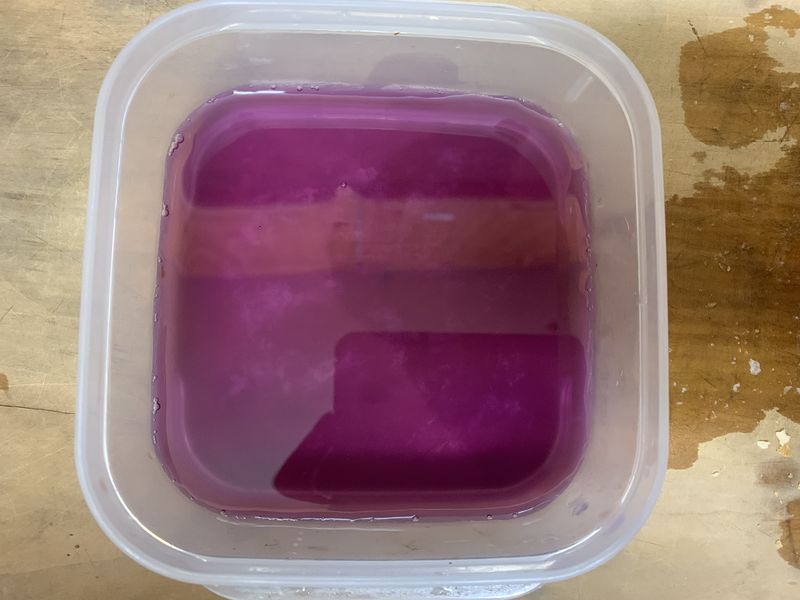
Basically, any tea can make the kombucha. I tasted butterfly pea tea Kombucha which has pink-purple color and the scoby is also pink color.
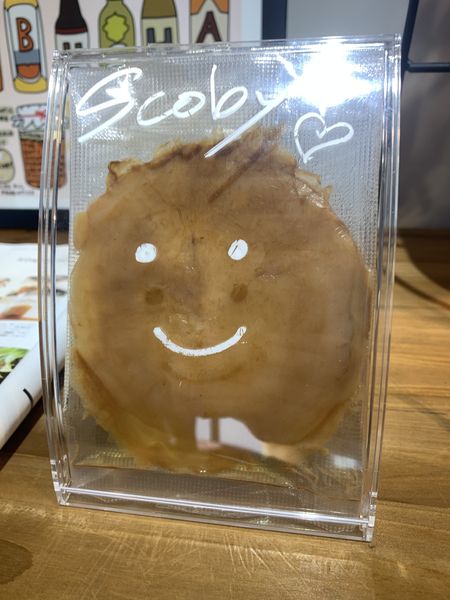
Scoby
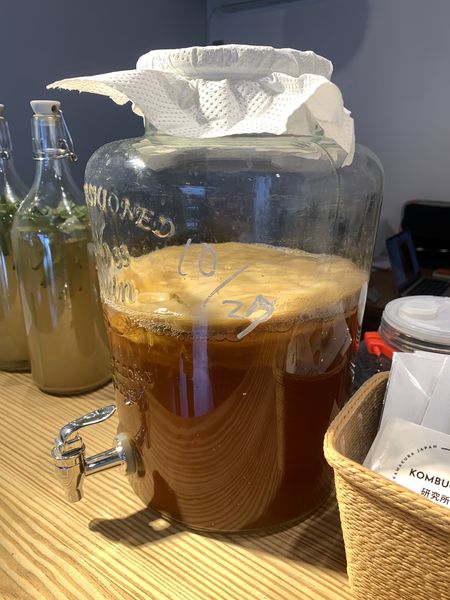
Kombucha
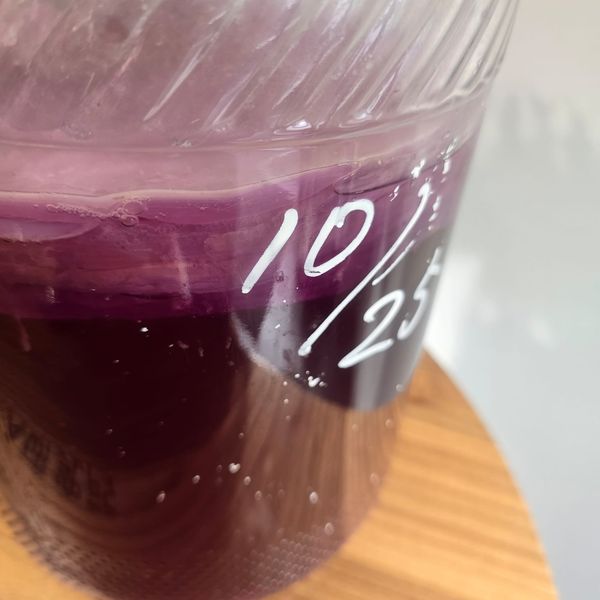
Butterfly pea kombucha
It is good for kombucha to stay in the dark and warm environment.
After 5~7days(depends on environment), kombucha drink is enough fermented and it's better change the liquid.
The liquid is poured into another container except leaving small amount, new liquid is poured over the scoby. Then, the scoby is grown with new liquid.
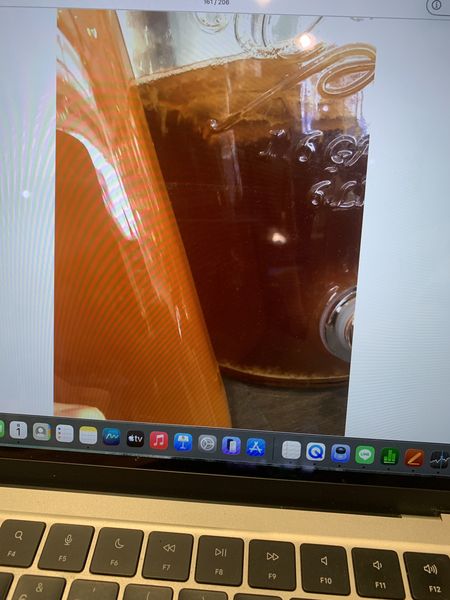
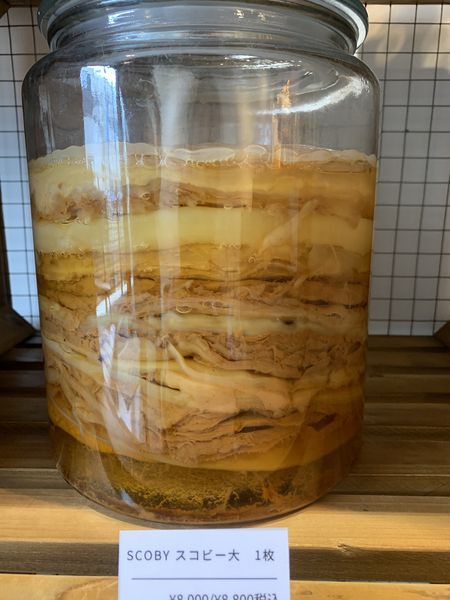
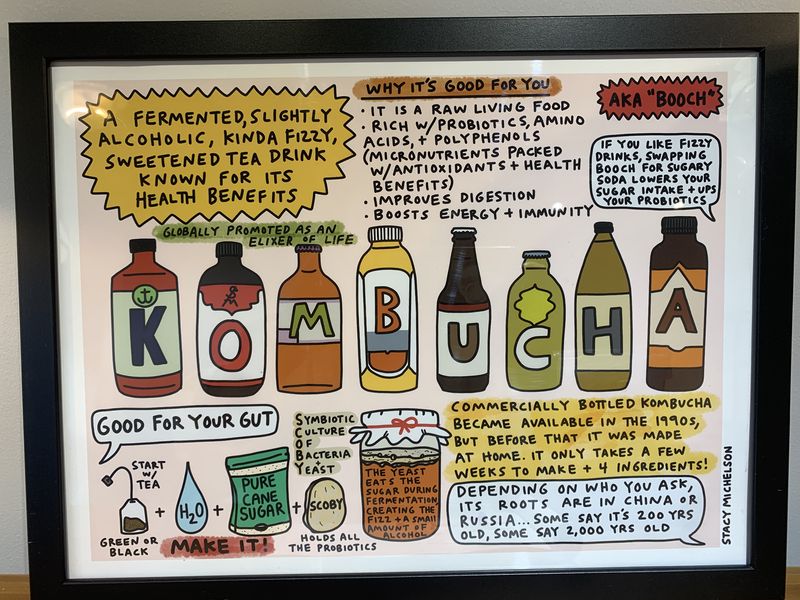
As I got butterfly pea kombucha yesterday at the kombucha laboratory, I tried to grow it with that kombucha. I'll see the difference between 2 kombuchas.
Tools & Ingredients
Kombucha
* Scoby  several pieces(small piece is fine)
* Water  2500ml
* Sugar  250gr(10% of water)
* Teabag 3bags ()
* Plastic container
* Kitchen paper or linen
* Pot
* Boil the water
* Put tea(or teabag) and make hot tea
* Put and melt the sugar (not boil too much)
* Leave to cool
* Leave a little behind and pour off the liquid
* Pour new liquid into the box
Bio plastic or Paper making
* Persimmon   1(really ripe one) → 163g
* Water       100ml
* Glycerin  250gr(10% of water)
* Kitchen paper
* Scaler
* Oven
* Chop the persimmon into small pieces
* Put persimmon and water into the pot
* Cook over lo-medium heat and stir until it becomes syrupy
* Cool down
* Put glycerin if you need
* Put on the kitchen paper
* Put it in the oven with low temperature(60~65) for dry
Process and workflow
Kombucha
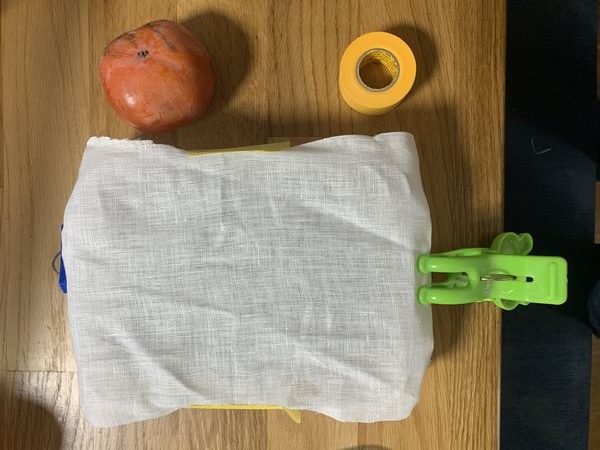
At first, I began to make kombucha as I got small scoby.
As I'm wondering making kombucha with wine or beer, I'd like to research more.
So I went to kombucha shop with my instructor.
She told me that we can make it only with tea and sugar. It would be possible to make with grapes(actually she made it once) but it would be really difficult(almost impossible) to make it with wine.
However, I found beautiful colored kombucha at the shop, which is made from butterfly pea tea.
Then I tried to make it with several kinds of tea.
1st day(1/Nov.)
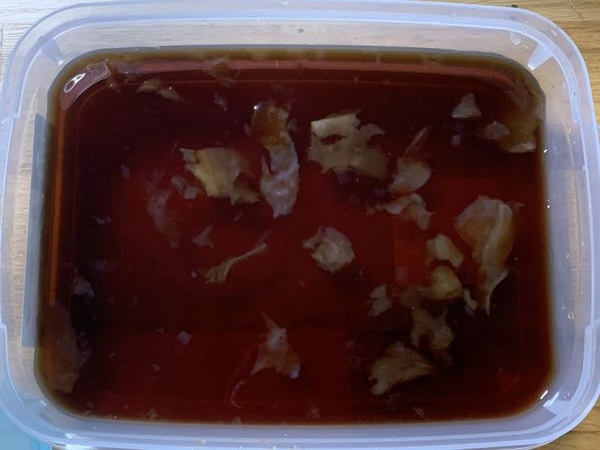
I made a basic kombucha and stayed in the kitchen.
Scoby
Kombucha
3rd Day(3/Nov.)
As I started a bit late(from Sunday), it doesn't have almost any change since 1st day. I'l check as much as possible.
4th Day(4/Nov.)
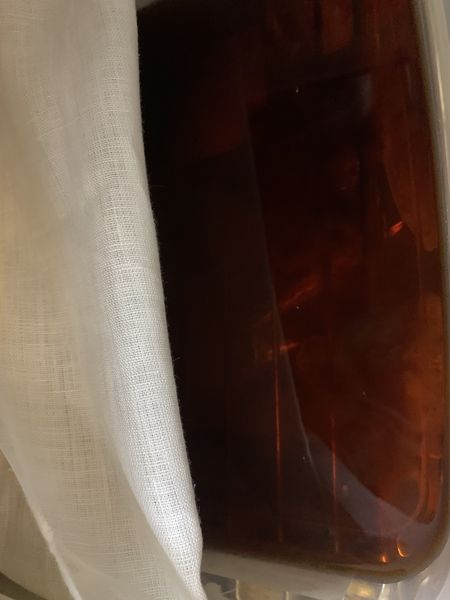
Bigger one doesn't seem any difference.
On the other hand, thin membrane has began to grow in the butterfly pea kombucha.
Normal kombucha
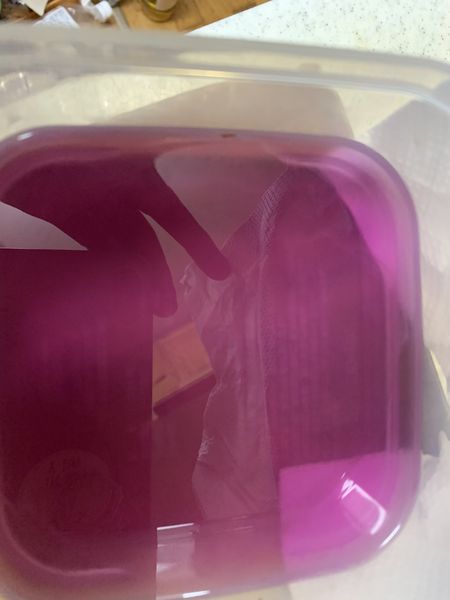
Butterfly pea Kombucha
Bio plastic(persimmon)
I made 3 patterns of persimmon plastics. At first, I intended to make paper with persimmon and asked chatGPT if it's possible to make it because there was seldom note about it. ChatGPT said it would be possible but it seemed really difficult because it doesn't have enough fibre for paper. Then I changed to make bio plastic with persimmon.
First, persimmon is cut into small pieces and taken out the seeds. Then put into the pot. As I have enough "riped" persimmon, I didn't have to cut but squeeze and stir gently and cook over heat until all the solids have dissolved.
Then I put 3 pattern, without glycerin, 2%, 4% of glycerin and see the condition. I put them into kitchen paper and drying with the temperature 65°c around 3 hours in the oven.
| No. | Glycerin , total mass | Photo |
|---|---|---|
| 1. | 0g , 50g | 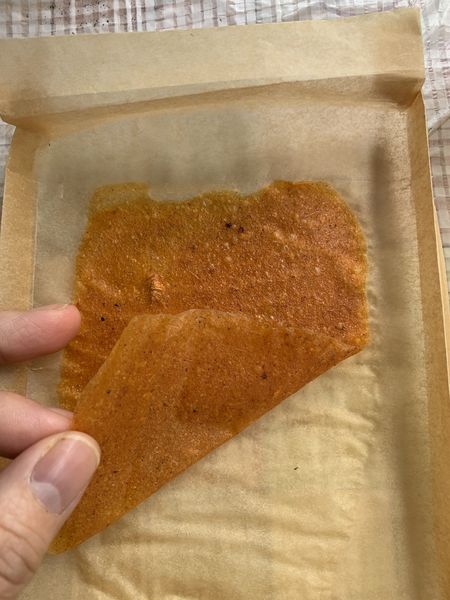 |
| 2. | 1g , 50g | 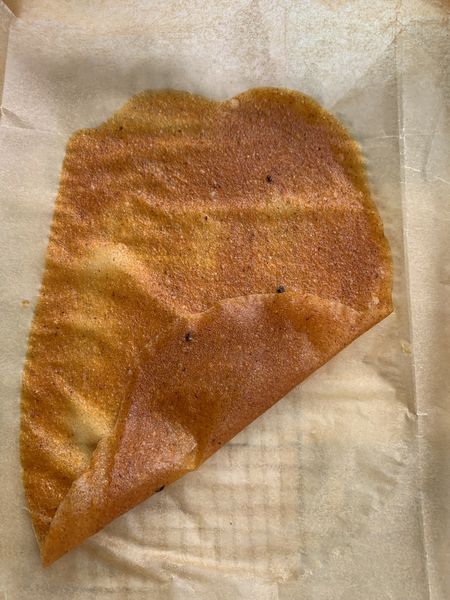 |
| 3. | 2g , 53g | 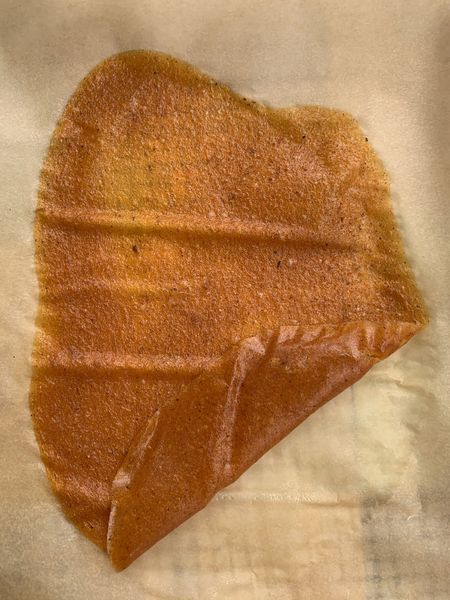 |
Result
Bio plastic
3 patterns are made with persimmon.
The first one without glycerin is rather dry and less elastic.
The second one was put 2% of glycerin. It was a bit sticky than first one and seems to have moisture.
The third one was put 4% of glycerin. It was the most sticky texture and took time to dry. It is the most flexible and difficult to fold.
Weekly reflection & critical thinking
This week is rather fun week for me, because I could do some experiment and "grow" something. We need to have more time to see the real result, but I'm looking forward to see it, especially I'm really looking forward to seeing how the colors of the two kombuchas differ.