4. BioChromes
Learning Outcomes
- Research skills: the participant has acquired knowledge through references and concept development
- Technical skills: Master techniques mordanting, dyeing (botanical or bacterial), pigments
- Process skills: Anyone can go through the workflow and recipes, understand them and reproduce it
- Final outcome: the participant understands various stages of color as: dye, inks and pigment
- Originality: Has the research been thought through and elaborated?
Student Checklist
- Include some inspiration: research on artists or projects that on natural/bacterial dyeing, local ingedients and resources
- Produce at least 1 natural dye with modifiers on fabric or yarn
- Produce 1 ink (not just dye on a paper) OR 1 pigment (recycling the dye bath leftover or creating one from scratch
- Document your recipes, the ingredients and process and if there have been changes from what was provided, document your unexpected discoveries
- Submit some of your swatches or a catalogue of them to the analog material library of your lab (20cm x 20cm approx)
References, research & inspiration
Color in Japan
As Japan has a rich natural environment and four distinct seasons, people have long enjoyed a variety of colours and incorporated them into their daily lives.
Consequently, there are more than 500 colours known as "Japanese colors".
Furthermore, colours have been used to express emotions, such as white express purity and cleanliness, red represents joy and celebration, and black represents noble and formality. Therefore we Japanese use colours, not only garment, but pottery and even literature.
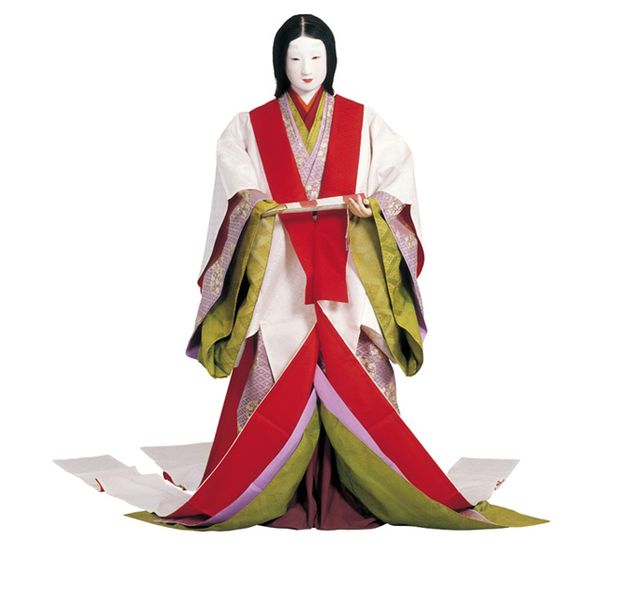
Juni hitoe(ancient style kimono)
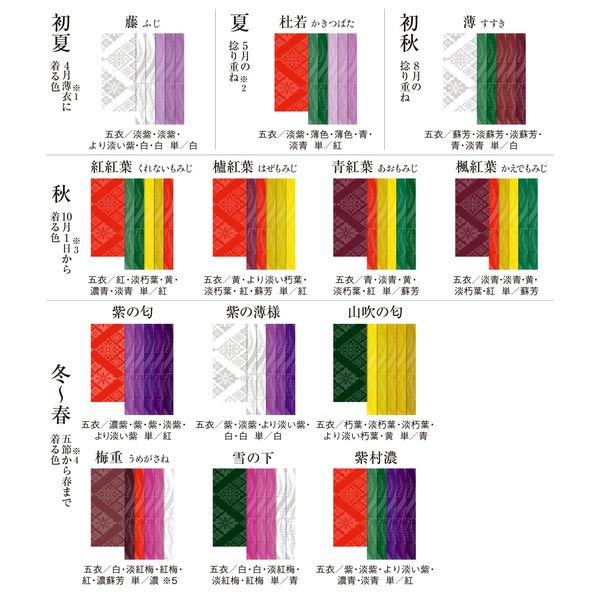
Colour pattern by season
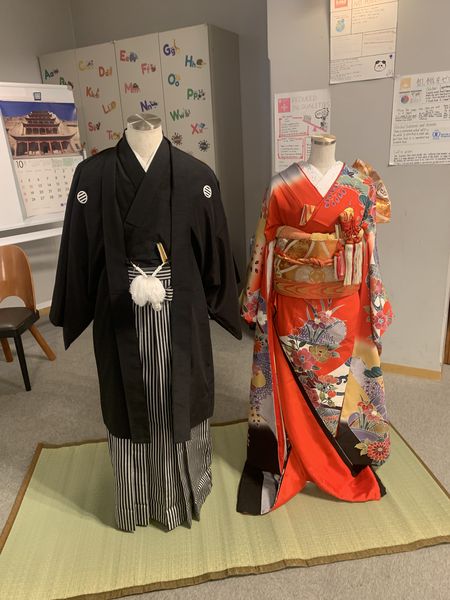
Wedding Kimono
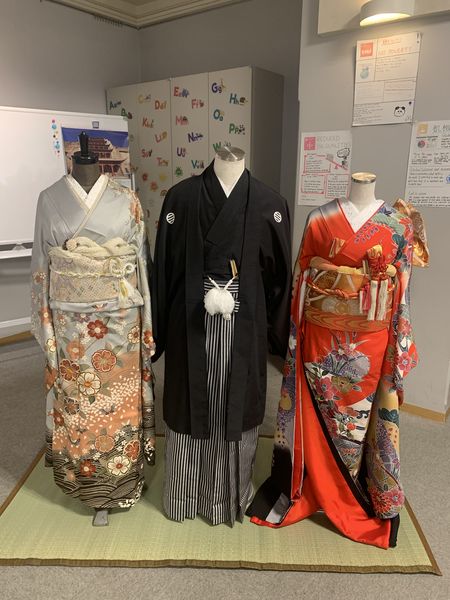
Wedding kimono
We have also used colours in the politics.
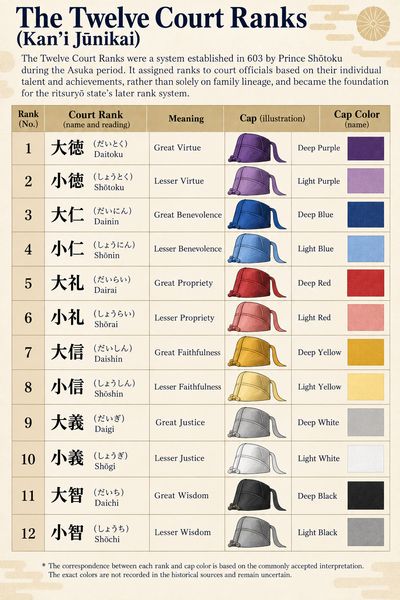
For example, in 603, a system called "The Twelve Court Ranks".
This system was established in Japan in 603.
This system allowed government officials to be ranked based by their abilities and achievements. Before this system, many person's position were succeeded by their family background.
This system has 12 ranks and each represents by the colors of cap.
In the first half of the 8th century, Japan had a set of laws to govern the country. These included the "Ebukuryō(衣服令)" (Clothing Regulations), which established rules for the clothing worn by government officials.
Under these regulations, specific clothing colours were assigned according to an official's rank. These colours were called "ishiki(位色)" or "tōjiki(当色)" (rank colours).
There was also a system called "kinjiki(禁色)" (forbidden colours), which prohibited people from wearing colours reserved for ranks higher than their own.
The colours were ranked in the following order, from highest to lowest: white, ōni (orange), purple, suō (reddish purple), hi (scarlet), beni (red), kitsurubami (yellowish brown), soyō (reddish orange), budō (grape purple), green, dark blue, light blue, kuwa (mulberry), and yellow.
People were not allowed to wear colours associated with ranks higher than their own.
In particular, "ōni" (orange) was reserved exclusively for the Crown Prince, and no one else was permitted to wear it.
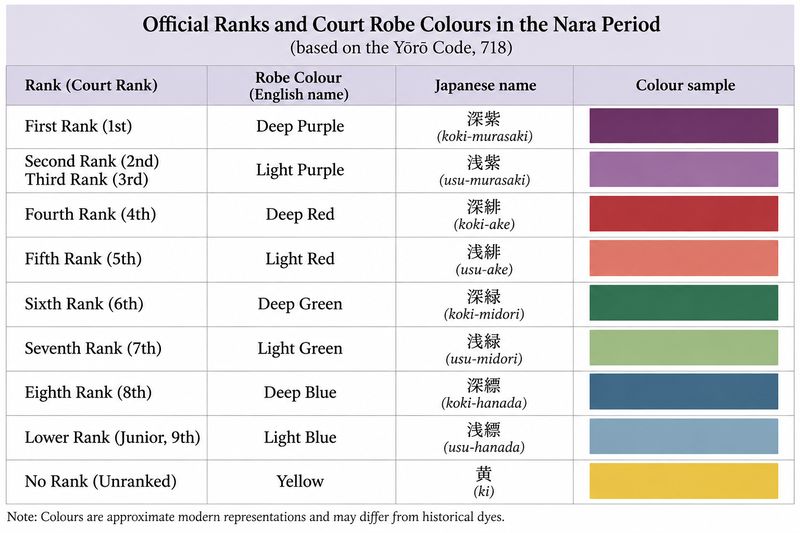
Ranking colours list
We have also enjoyed the color with nature and name the colors from the nature. For example,
| Name of Color | Color | Hex | Meaning |
|---|---|---|---|
| Sakura(桜色) | #FEF4F4 |
Cherry blossom pink | |
| Beni(紅色) | #D7003A |
safflower petal color | |
| Yamabuki(山吹色) | #F8B500 |
the Japanese kerria plant | |
| Wakakusa(若草色) | #C3D825 |
young grass in spring | |
| Moegi(萌葱色) | #006E54 |
freshly sprouting plants | |
| Ai(藍色) | #165E83 |
indigo | |
| Fuji(藤色) | #BBBCDE |
wisteria flower |
Process & Workflow
Fabric
- Cotton 100% / Linen 100%
Preparation
(1) Cut clothes into 50mm x 50mm
(2) Measure the weight
Scouring
-
None:
Each fabric is washed and boiled for the comparison -
Sodium bicarbonate(Baking soda):
- Put Weigh 10% of Fabric Sodium bicarbonate into boiled water
- Simmered 30 mins
Mordant
-
None :
For comparison -
Alum solution:
- Weigh 10% of fabric. Dissolved in the hot water and mixed well
-
Iron solution:
-
Preparation:
I could get the Iron solution, but if you want to make iron solution by yourself, please check alumni page(Kae Nagano). -
1 spoon(2g) put into the solution and mixed well
-
Dye
Fabric Preparation
-
Cut the fabric into small pieces(50mm x 50mm)
-
Weigh the fabric
-
Put Baking soda into water and boil it / just boil the water(for comparison)
-
Simmer the fabric in the hot waters(with/without Baking soda) for 30min
Red Onion peel
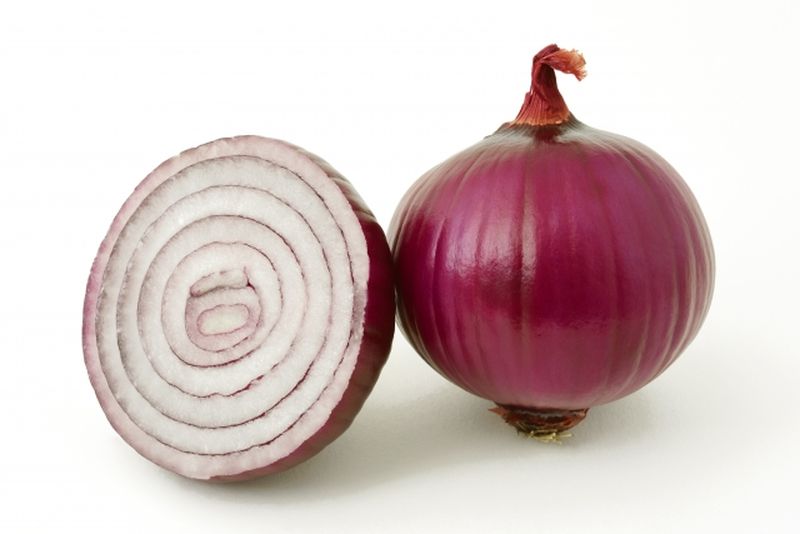
Red Onion
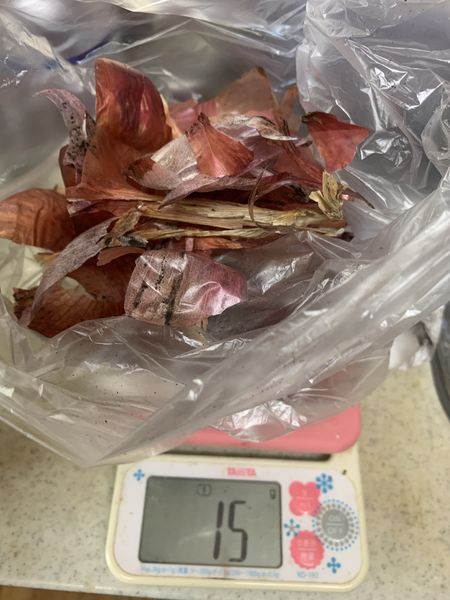
Red onion peel
Red Onion peel recipe
Ingredients
- Red onion peel 15g
- Water 500l
- Baking soda (in place of Soda Ash) 10% of fabric weigh
- Alum 10% of fabric weigh
- Iron water 1 teaspoon
- Vinegar 2 teaspoon
Preparation
- Put the peel into the hot water
- Simmer 30 mins
- Strain the peel
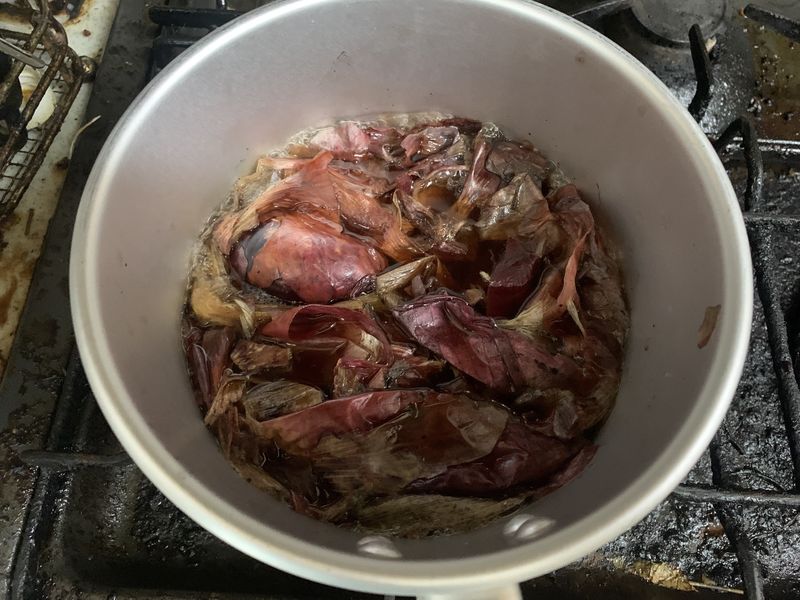
Simmer red onion peel
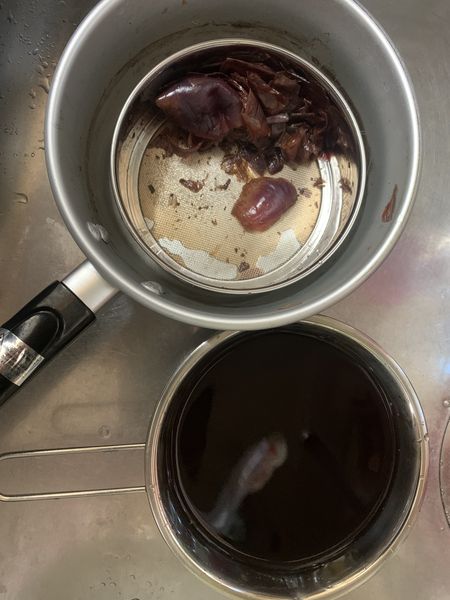
Strain
Process
-
Put 30g for each cup and make 3 patterns:
- None
- 10% weigh of fabric
- 1 teaspoon of Iron
- 2 teaspoons of Vinegar
- None
-
Put Linen and cotton into each cup
Doku-dami(Fish mint)
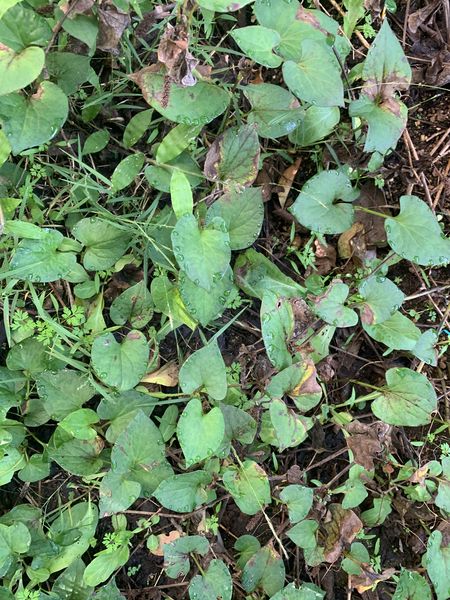
Dokudami
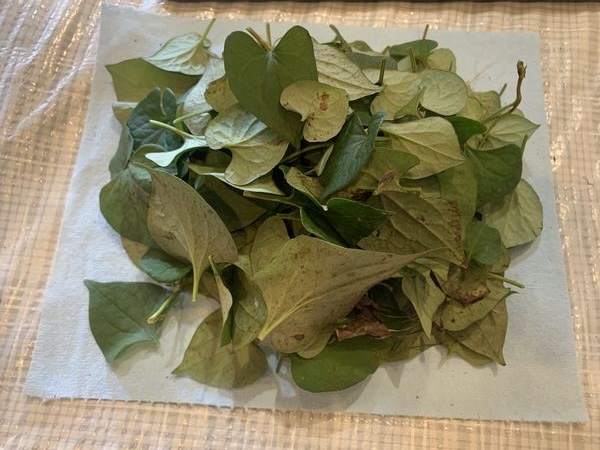
dokudami
Doku-dami recipe
Ingredients
- Doku-dami 59g
- Water 1l
- Baking soda (in place of Soda Ash) 10% of fabric weigh
- Alum 10% of fabric weigh
- Iron water 1 teaspoon
Preparation
- Cut leaves into small pieces
- Simmer in hot water for 30mins
- Strain the leaves
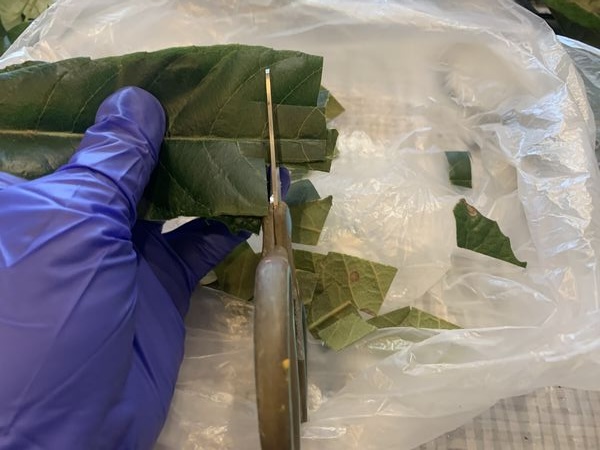
Cut Dokudami leave
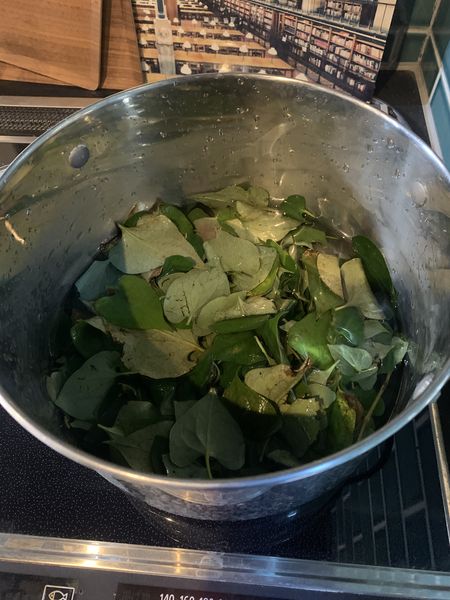
simmer Dokudami leave
Process
- Put 30g for each cup and make 3 patterns:
- None
- 10% weigh of fabric
- 1 teaspoon of Iron
- Put Linen and cotton into each cup
Cut Dokudami leave
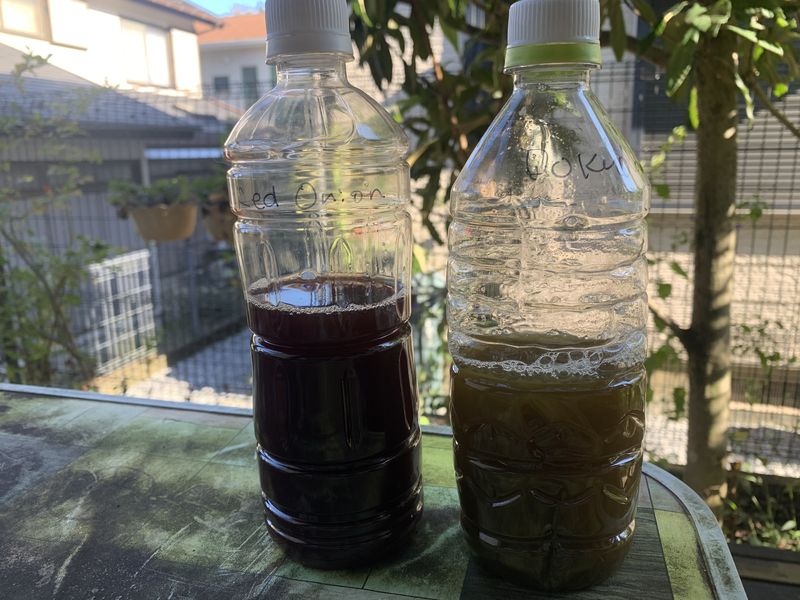
simmer Dokudami leave
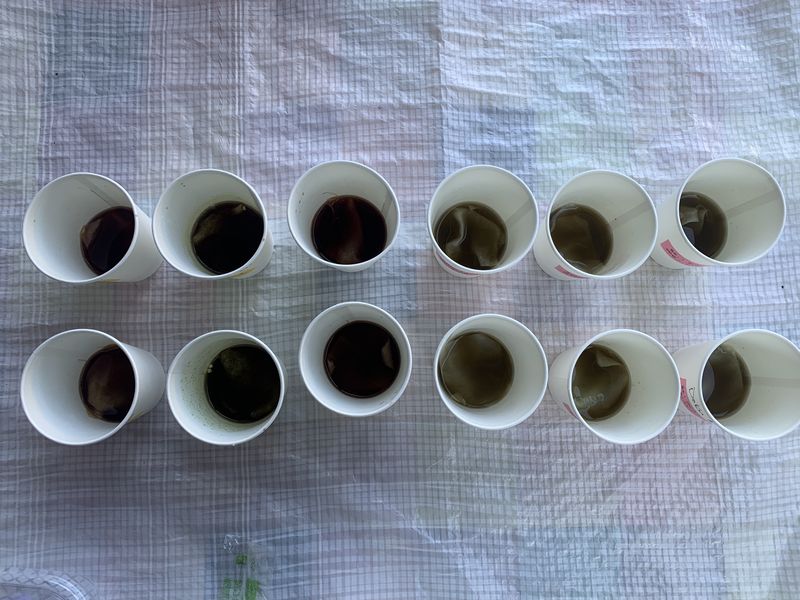
Check After 1 hour
It didn't seem enough dying to the fabric, I stayed for 24 hours.
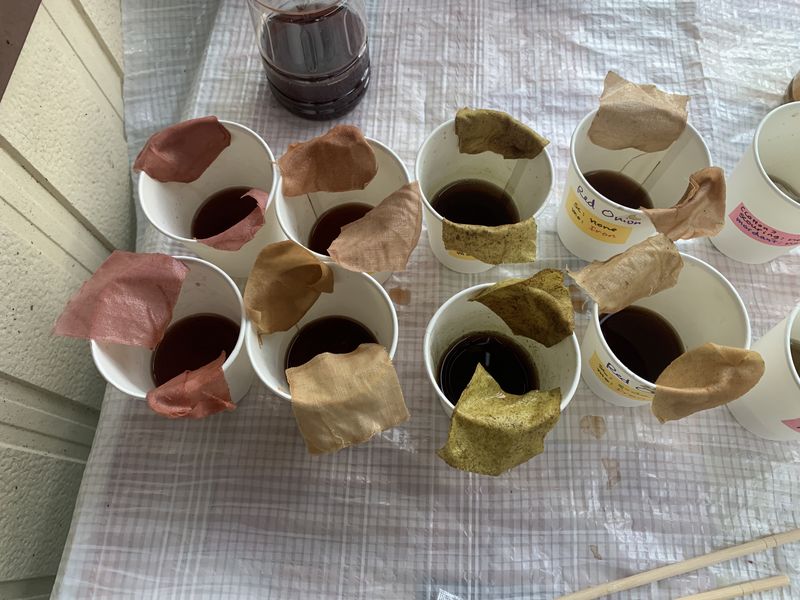
in Red onion solution for 1 hour
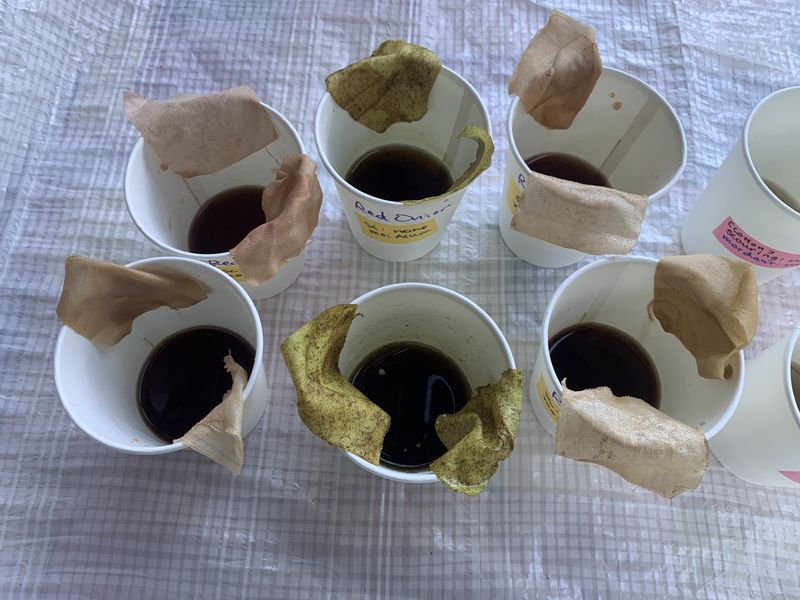
in Dokudami solution for 1 hour
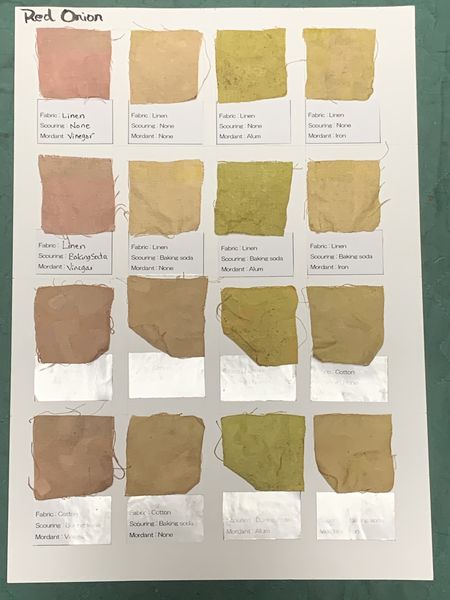
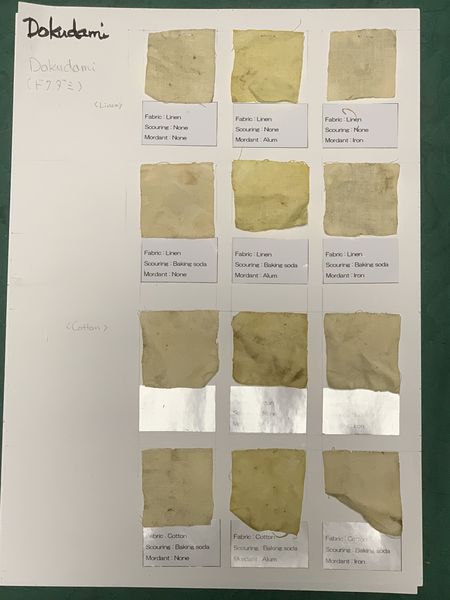
After 24 hours, all the fabrics are out and dried over night.
Dokudami
simmer Dokudami leave
Shibori dye
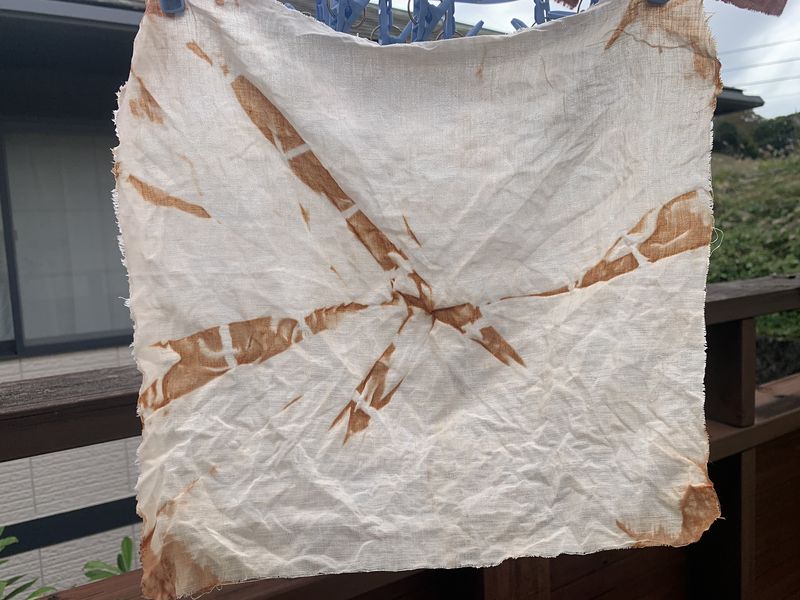
I tried td dye with Shibori by the kaki-shibu(bitter persimmon varnish)
Kaki-shibu recipe
Ingredients
- Kaki-shibu 100g
- Water 100g
- Hemp fabric 300mm X 300mm
Preparation - Gather the fabric from the center and tighten several parts with rubber bands
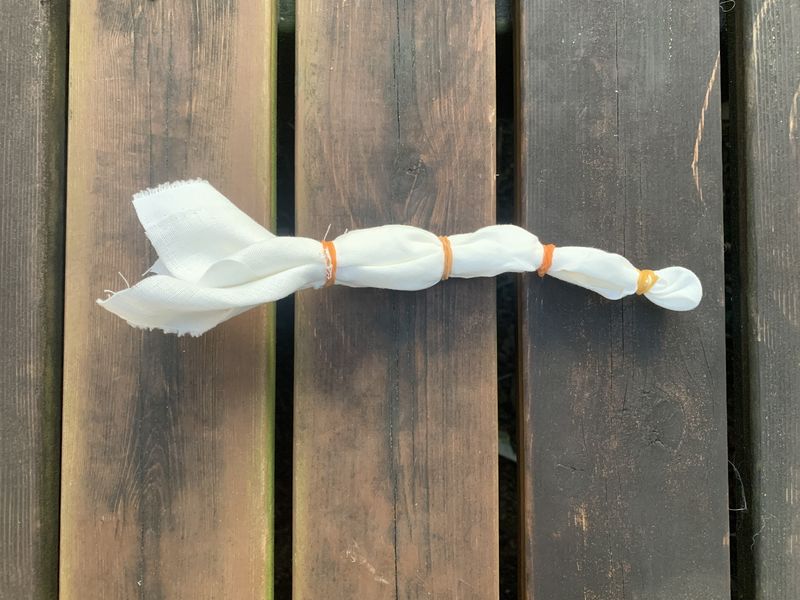
Process
- Put the fablic into solution for 30 mins
- Take out and put outside for 15 mins and put it back into the solution
- Keep it in the solution another 30 mins
- Dry it outside for 3 hours
- Remove the rubber bands, unfold it
- Wash it in the water
- Hang it out to dry
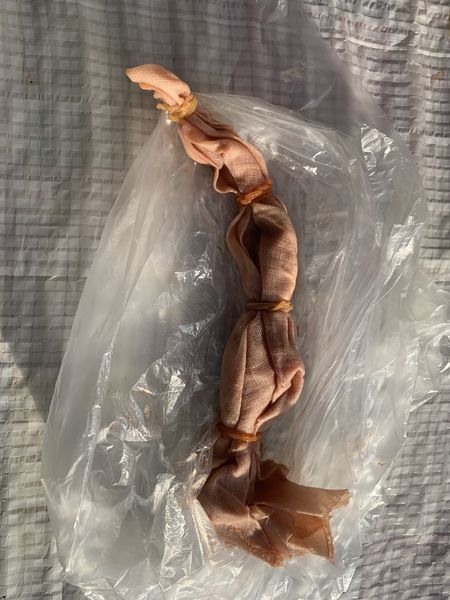
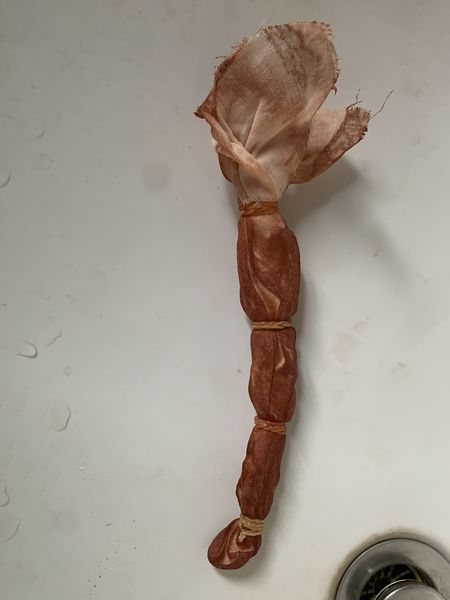
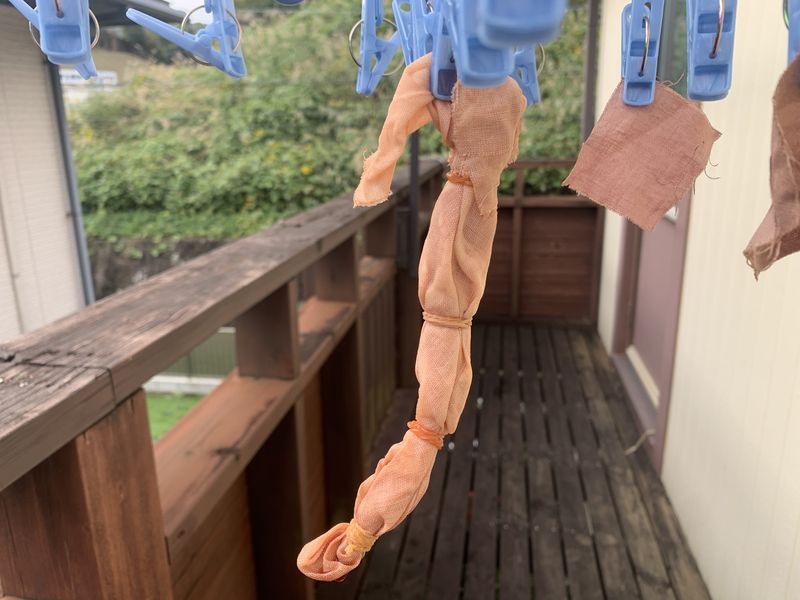
Surprisingly, sunlight had the strongest effect on kakishibu dyeing.
At first, I dried the fabric outside for about three hours with rubber bands around it, and only the exposed parts became much darker. Then I removed the rubber bands, washed the fabric with water, and spread it out to dry. However, the parts that had darkened first remained the darkest in the end.
Ink
I made ink from red onion solution for dyeing and gum arabic as a binder.
At first, I made red onion ink.
recipe - Gum arabic 0.5g
- Red onion solution 20g
Those ingredients are put in the cup and mixed well. I tried it but colour didn't come out well.
So, I tried another things, coffee, tea, and matcha.
As the instant coffee and matcha were in powder form, I put the gum arabic which was also in powder form into a cup, mixed it thoroughly, and added boiling water a little at a time.
Tea bag was poured a little amount of hot water and add gum arabic. Then it was mixed well afterward.
Ingredients - Red onion(solution) - Tea(tea bag) - Coffee(Instant) - Macha(powder)
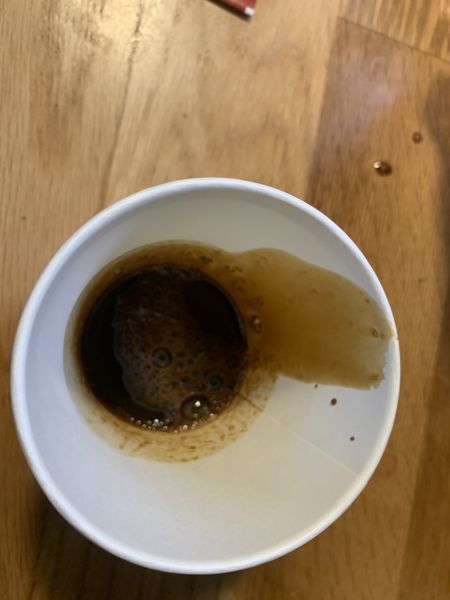
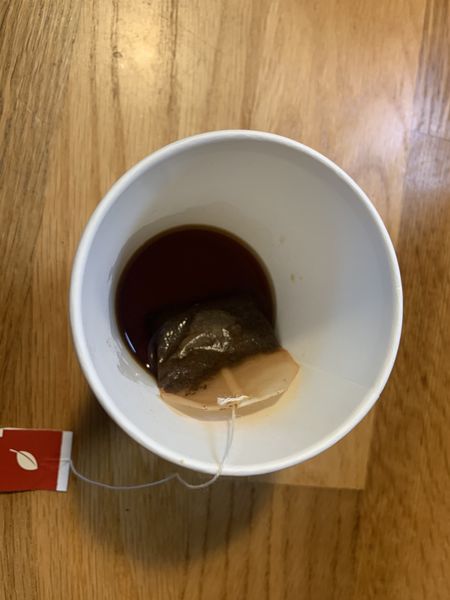
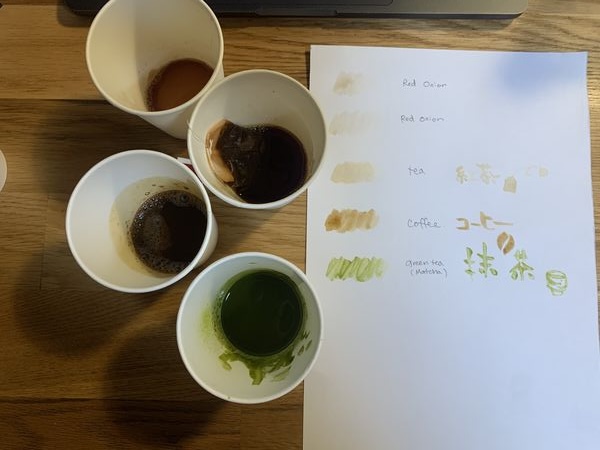
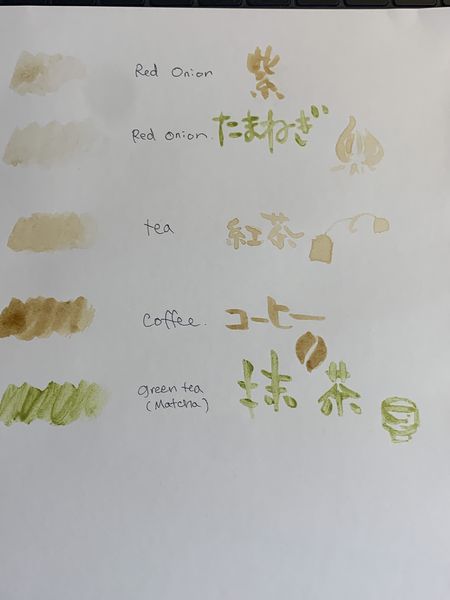
Coffee and match were well colored. As powder can put less water, pigment can stay thick color.
I think red onion contained too much water as a pigment, and colour didn't come out well.
If it would be heated and reduced the water, it might be more have more vivid.
Anyway, all colors are soft and I like them.
What I've learnt from this week's assignment
I felt that one of the characteristics of natural dyeing is the soft and gentle colours it produces.
It was also very interesting to see how differently the fabric was dyed depending on the scouring and mordanting, even when using the same dye solution.
Surprisingly, sunlight had a much stronger effect on kakishibu dyeing than I expected. This time, I only diluted the kakishibu with water, so I didn't try any other chemicals. But I think it would have been interesting to see how it reacted with them.
Ink was interesting experiment for me. Unfortunately red onion didn't colored well, but others such as coffee and matcha had appeared beautiful colour.
I've learnt that all the colours of the plant didn't appear the same colour to dye. However it's also interesting and exciting to see what colour comes out.