State of the Art
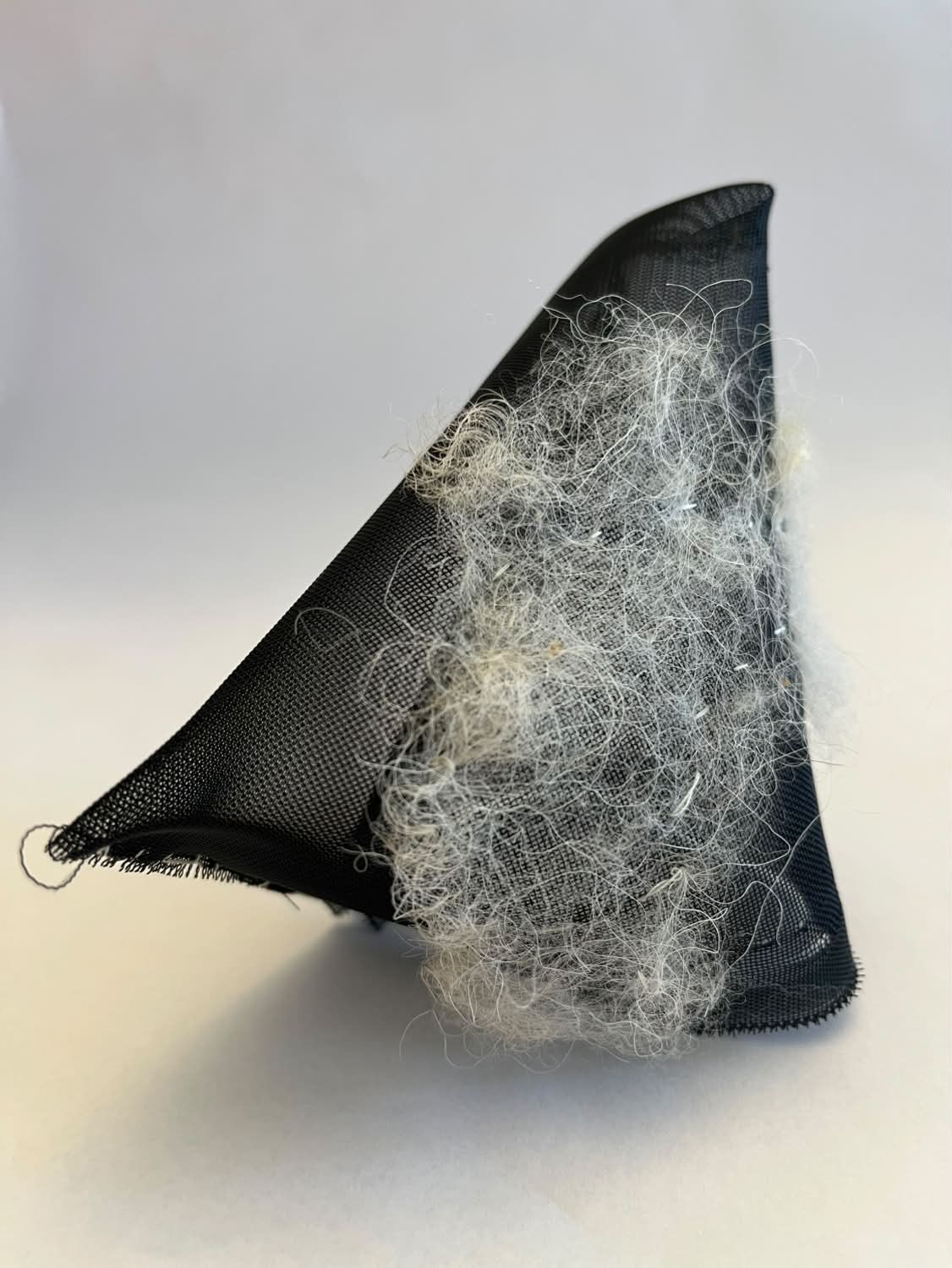 |
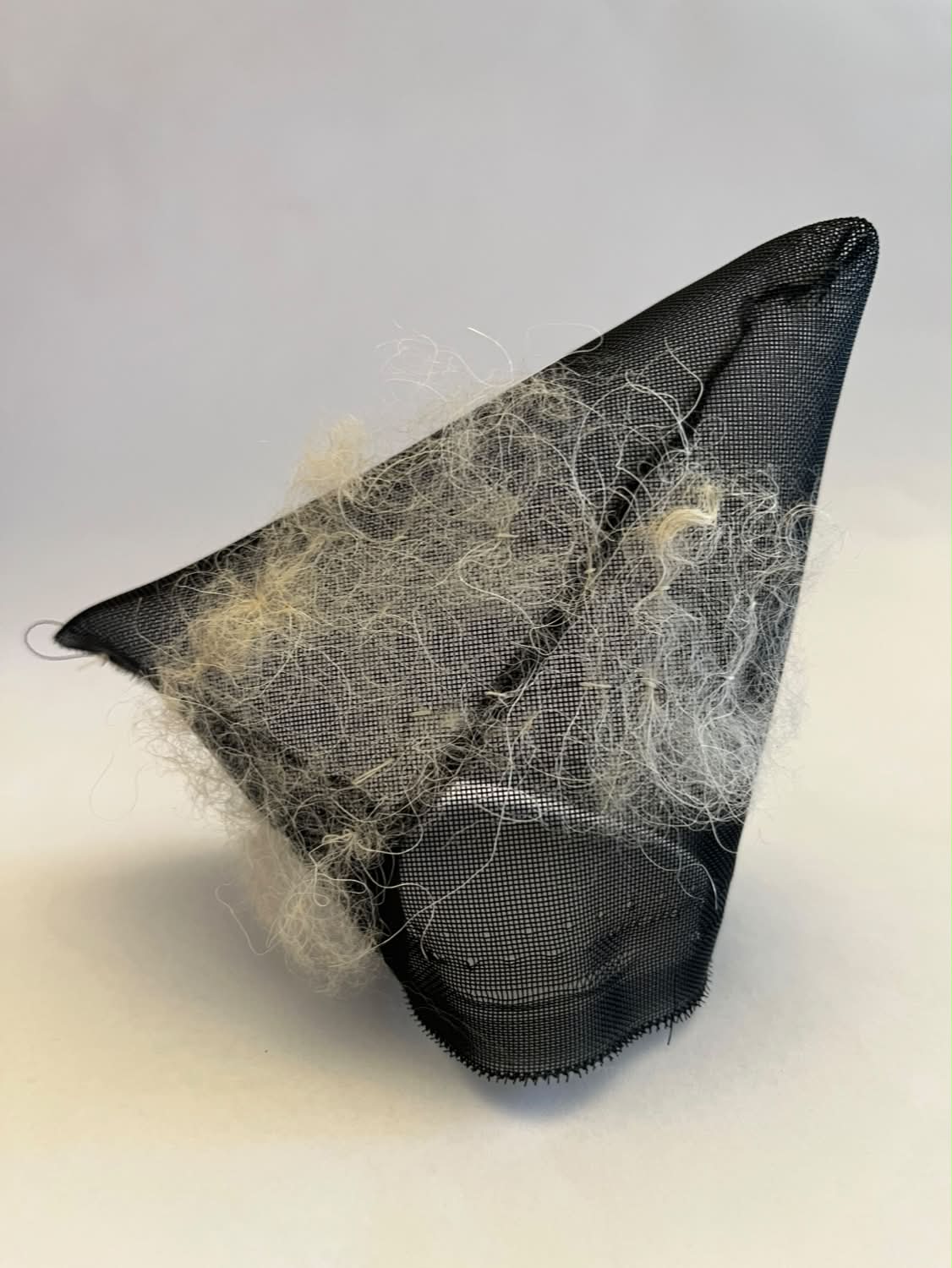 |
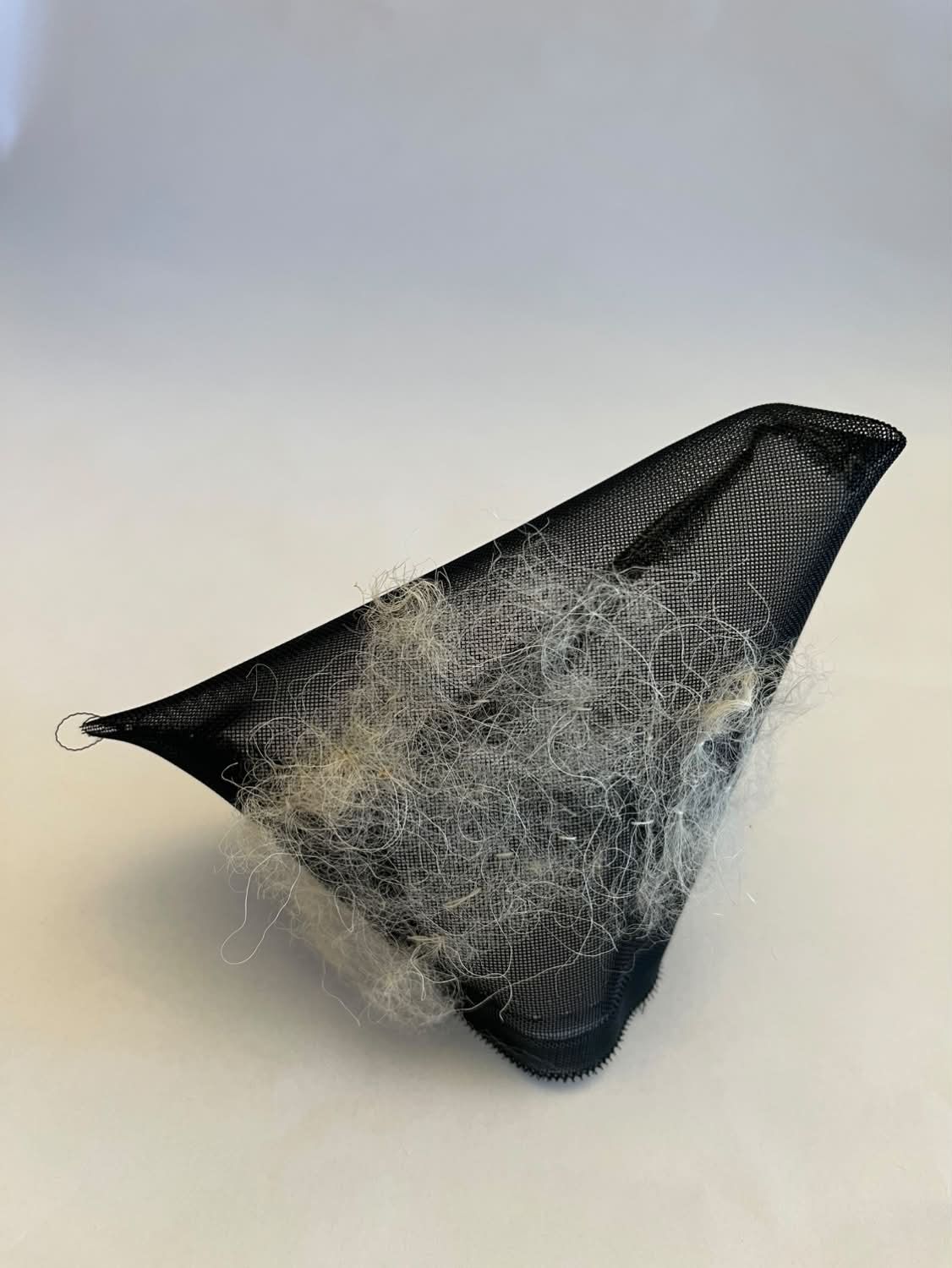 |
|---|---|---|
| Experiments with Camel Wool on Mesh |
Research Project: Shedding
Dromedary Camel Wool: Creating a contemporary textile from an under-utilized local natural fibre
Camel wool was traditionally used by Jordanian Bedouins for small textile objects like bags and blankets. With the sedentarisation of these communities -as well as other factors- camel wool textile production has markedly declined, along with other weaving traditions and handicrafts. This valuable fibre is now mostly discarded. In this project, I aim to explore the use of digital fabrication tools to refine processing and weaving of camel wool.
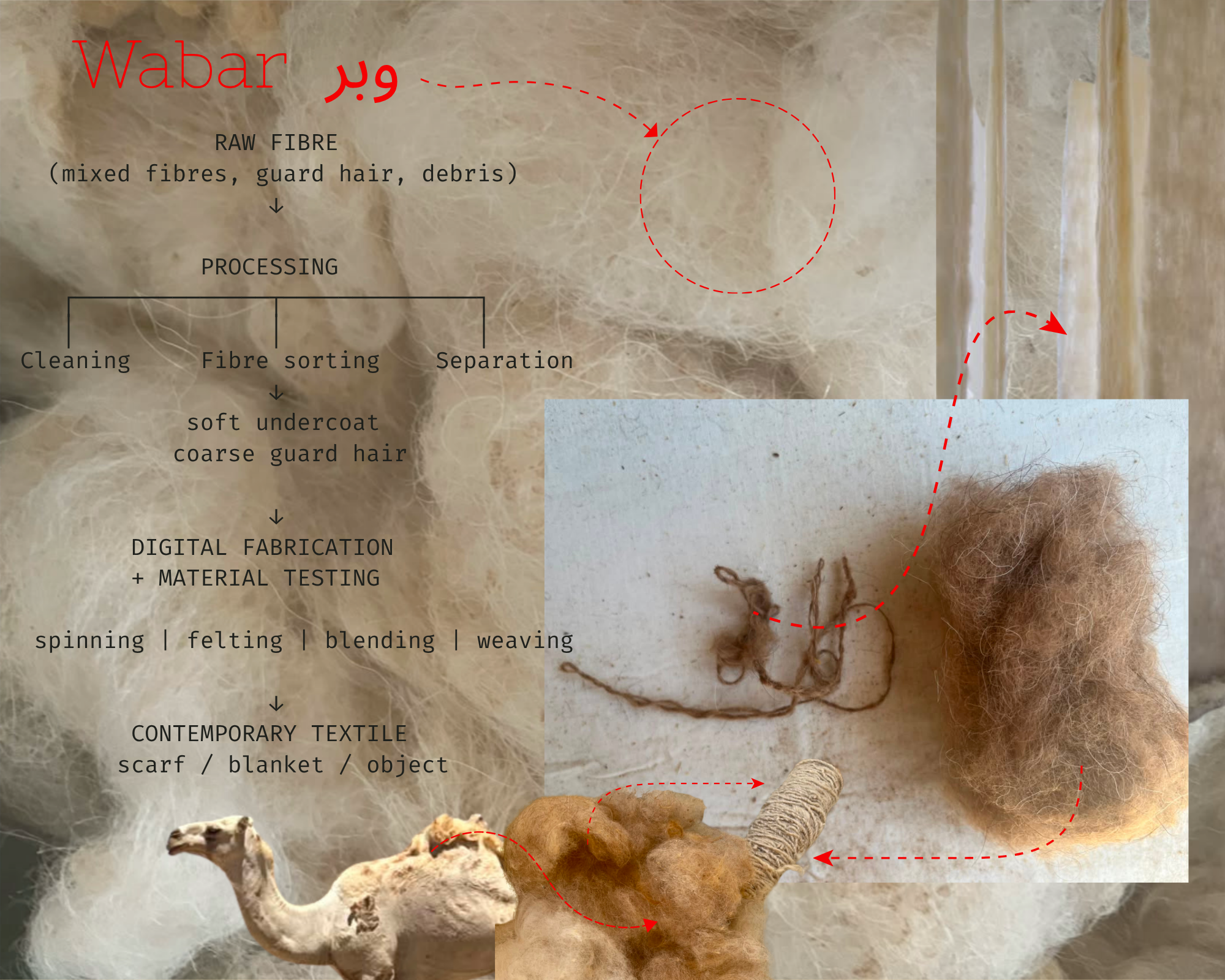 Camel Wool Value Chain Abstraction
Overarching Question
How can digital fabrication tools refine the processing of this bio-material and support the creation of a contemporary textile?
This project will expand on my existing relationships with local camel herders, as well as build upon previous experiments with spinning camel using manual techniques. I propose the following project approach:
- Collecting camel wool during July (the optimal time for fur harvesting based on conversations with local weavers)
- Examining the wool samples and determining the most usable fibres for textiles from the appropriate part of the camel torso based on existing research and considering the endemic camel species
- Refining the existing cleaning techniques to remove impurities in a streamlined fashion
- Introducing the separation technique that includes extracting softer fibres from the undercoat and removing coarse guard fibres
- Improving the fibre preparation methods for combing, spinning, and weaving through slight automation
- Experimenting with blending with other local fibres
- Experimenting with felting
- Producing a woven or blended prototype that is a usable small object
The desired outcomes of this project include:
- Developing a soft-robotics solution for steps 4, 5, and 6 above
- Producing a series of experimental camel fibre samples (pure and blended)
- Producing a final textile prototype of a product (scarf and/or blanket) to demonstrate the viability of the proposed process and material
Future Potential
- What does this experiment reveal about the broader potential of local wool in Jordan?
- How can digital fabrication tools be used to reimagine manufacturing for this material going forward?
- Can this scalable innovation inspire wider movement in the local textile domain?
References
- Alhaddad et al. (2024), Fibercharactaristics of the dromedary camel in the Arabian Peninsula, Small Ruminant Research, 235, 107276
- Singh & Patni, Camel Hair: Its textile applications, Saving the Camel and Peoples' Livlihoods
- Iglesias Pastrana, C., Navas González, F. J., Ciani, E., López de Los Santos, B., & Delgado Bermejo, J. V. (2024). A Comparison of the Physical Properties Between Merino Wool and Camel Hair Through Discriminant Analysis. Journal of Natural Fibers, 21(1).
Documentation
Theme and Inspiration
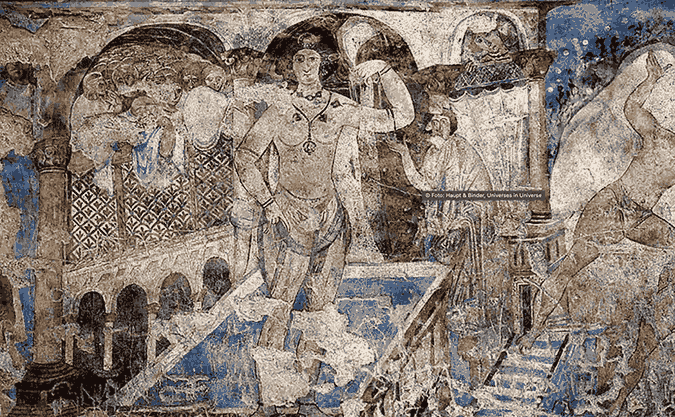
Audience Hall, Large Bathing Woman, Qusayr Amra, Source
Home Page
Changes
The Changes I made include:
Stylistic Changes for the site:
- Text alignment
- Site font
Changes that are specific to the page include:
- Uploading images
- Embedding pdfs
Code
Changing the style for the whole site, requires using the stylesheets extra.css page. For the header, the font color and the background colour can e changed in .md header. To align the text of the site differently, I added md-content.
`:root > * { --md-primary-fg-color: #940000; --md-primary-fg-color--light: #ff0000; --md-primary-fg-color--dark: #001aff; }
.md-header, .md-tabs { --md-default-fg-color: #ffffff; --md-default-bg-color--light: #f40103; }
.md-tabs { background-color: var(--md-default-bg-color--light); }
.md-content { text-align: justify; }`
I changed the color of the background
body { background-color: #ffdfcf; }
I changed the font by changing lines 278-280 in the .toml file
`[project.theme.font]
text = "Space Grotesk"
code = "Roboto Mono"`
I used markdown to upload photos to the homepage like this:
{ width=300 align=right }
To embed the pdfs and link them from google docs, I used the following code:
<object
    data="https://drive.google.com/file/d/1RRB5ZVOfWw4FcizK258ahgVIiJTzHCmW/preview"
    width="100%"
    height="700"
    >
</object>
I changed the icon to the logo by changing line 73 in the css file:
logo = "images/home/m_logo.png"
Index
I stylized the grid based on the work of Diane Wakim. I used her html code as a base and I made changes. The Changes I made include:
- Dimensions of the grid
- Hover + opacity
- Font size and colour, it's wrapping and hyphenation
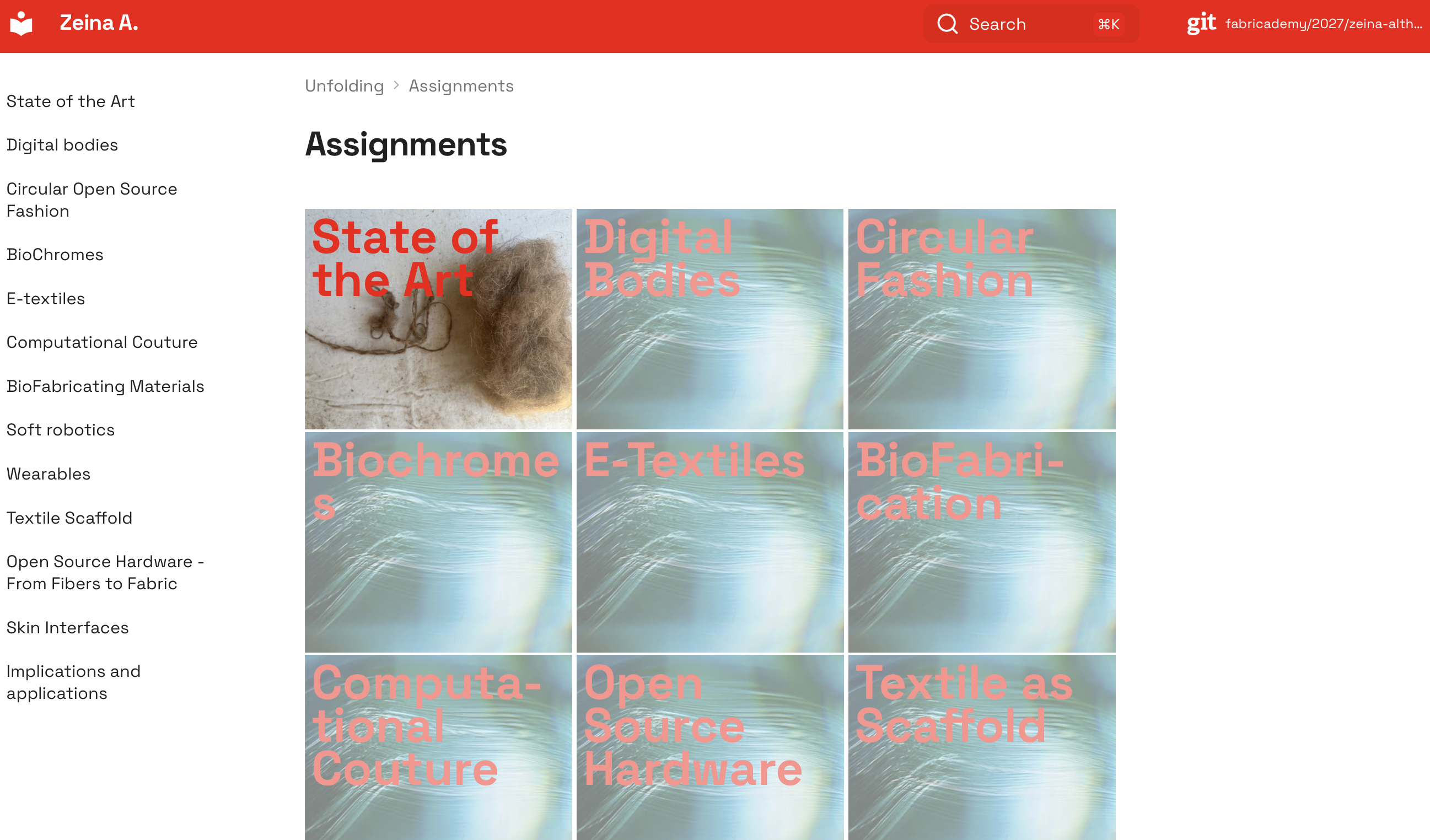
Theme, Inspiration
Changes
Code
Here are the changes I made to the html code that I used from Diane Wakim. First I made changes in the stylsheets >> extra.css.
First I changed the gaps within the grid, by changing the value on the bottom margin and by adding the gap to change the space between the columns:
.assignments-grid .row{
    display: flex;
    flex-wrap: wrap;
    margin-bottom: 0.1rem;
    gap: 0.2rem;
}
Second, I changed the way hover interacts with the link image. In Wakim's code, the image gets more transparent when hovering. I reversed that as follows:
.assignment-link{
    position: relative;
    width: 32%;
    background-size: cover;
    background-position: center;
    min-height: 200px;
    opacity: 0.5;
}
.assignment-link:hover{
    opacity: 1;
}
Finally, I moved the titles to the top by adding top: 0', I minimzed the space between lines by addingline-height`, I changed the color and the alignment, and I added automatic hyphens.
.assignment-link span{
    position: absolute;
    left: 0;
    padding: 6px;
    top: 0;
    width: 100%;
    font-weight: bold;
    font-size: 2rem;
    line-height: 1.8rem;
    text-align: left;
    color: #f40103;
    hyphens: auto;
}
I added Wakim's html code to index.md, and made very minor changes there like changing the image, like this:
<a href="./week01/" class="assignment-link"    style="background-image: url('../images/home/wool.jpg')">
        <span>State of the Art</span>
    </a>
State of the Art Page
Theme, Inspiration
Changes
Code
First, I added images as though in a grid using Markdown:
|  |  |  |
|---|---|---|
Second, I used the "tip" structure to present the code portion of the documentation. I changed the color by changing the icon using "danger".
???+ danger "Code"