Computational Couture
1. Objective
Create:
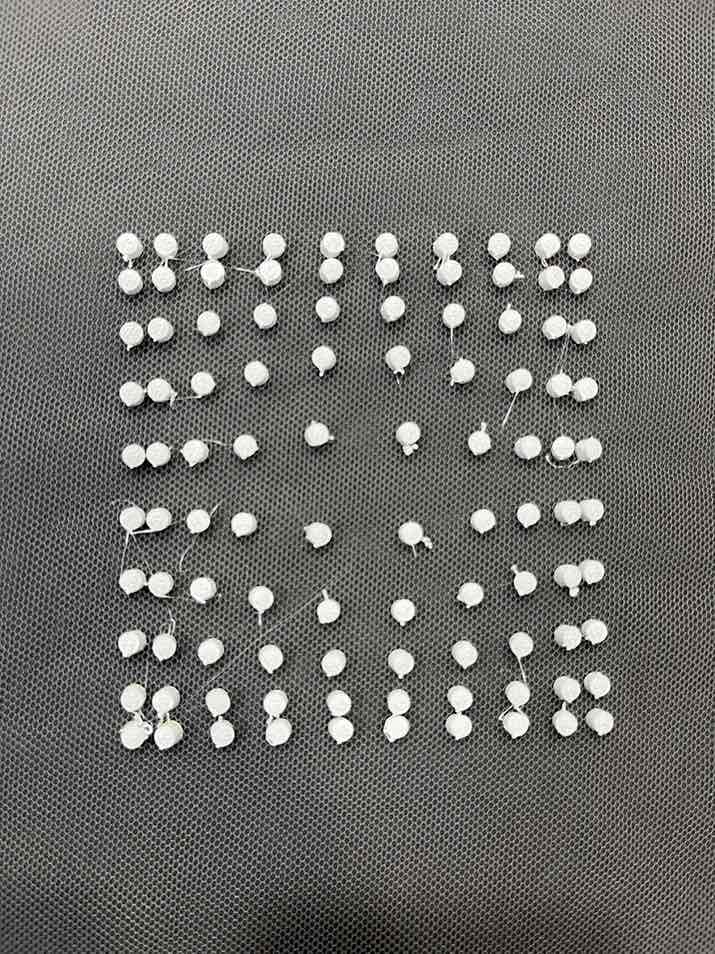
- samples/swatches of 3D printing as fabric or on fabrics, and
- a 3D/parametric model
Personal Objectives:
- Reflect on how to incoporate 3d-printing with the wool
- Experiment with 3d printing on different fabrics
- Experiment with different patterns in Grasshopper
2. References, research & inspiration
As per usual, I started by looking into the work of Fabricademy alumni, and I found the work of Stéphanie Vilayphiou. I found her research interesting, specifically the part about the collaboration between Amandine David and Esmé Hofman. This helped my refine my tangent on mixing of traditional crafts with contemporary technologies.
Vilayphiou mentions Amandine David and Esmé Hofman who collaborated on on baskets where the skeelton is designed in grasshopper and then the weaving is done manually.
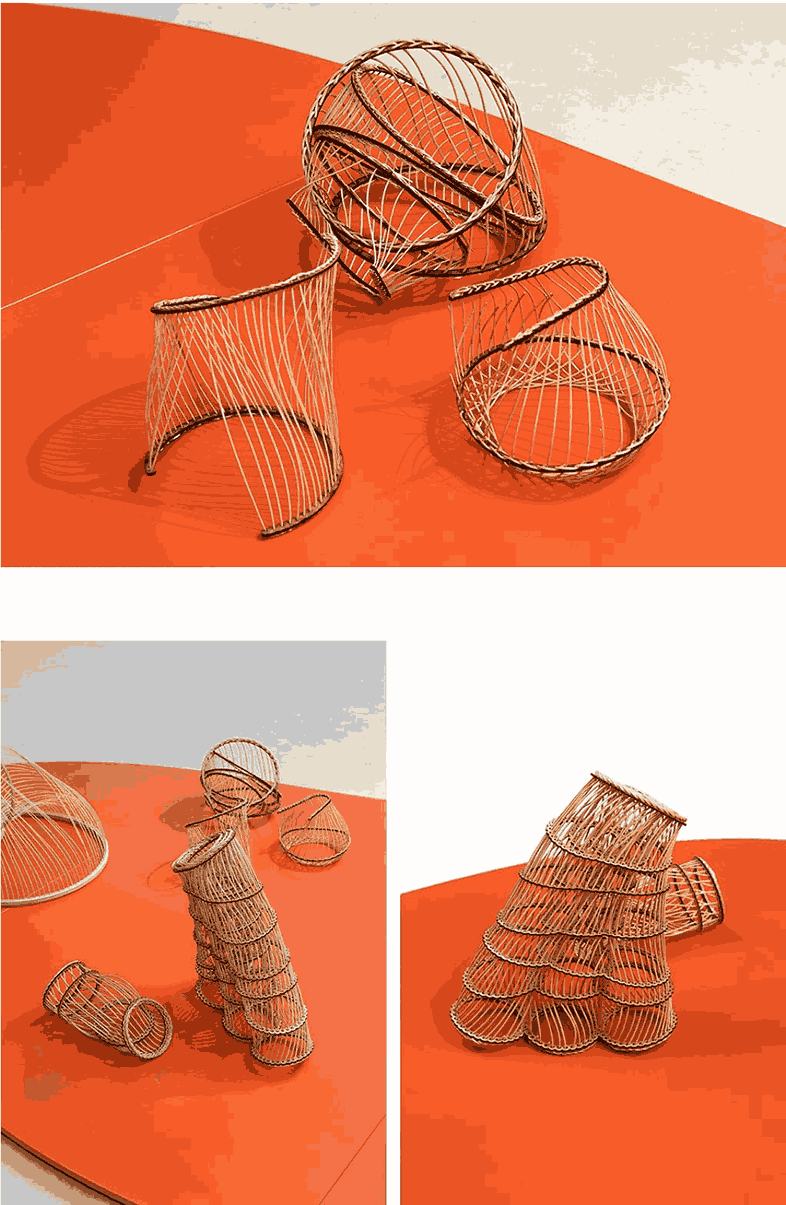
I wanted to delve into this concept of mixing digital fabrication and parametric modelling tools with traditional crafts.
- Amit Zoran – Hybrid Basketry
In this paper, Zoran discusses merging 3D-printing with hand-woven basketry. The rationale behind this merger is the advancement of digital fabrication technology. Interestingly, Zoran discusses how digital modelling and fabrication can benefit from traditional crafts. Previously, they'd worked on using digital fabrication for restoration of a ceramic bowl. The thought process behind their work is appealing to me because they seem to place value on traditional crafts and their point of departure is that both 'digital making' and 'manual making' are both creative processes that can be used symbiotically. In the hybrid basketry project, zoran touches on the essence of the basket weaving practive. I find this essential for any hybrid model. First one must understand the core of the craft they are working on.
This inspired me to reflect on the core of wool weaving and felting. Much like basketry, as discussed by Zoran, weaving and felting, rely on reptition and structural growth, but more importantly, the are not prescriptive in terms of form. Sure, in weaving there are certain patterns that follow traidition. But weaving and felting have scultptural affordances that the maker can tap into. In addition to that, the material itself, wool, is malleable and once the maker understands the basic qualities of the material, they can mold the form in almost infinite ways. So, like basketry, wool weaving and felting are very flexible crafts.
Here some examples of Zoran's work.
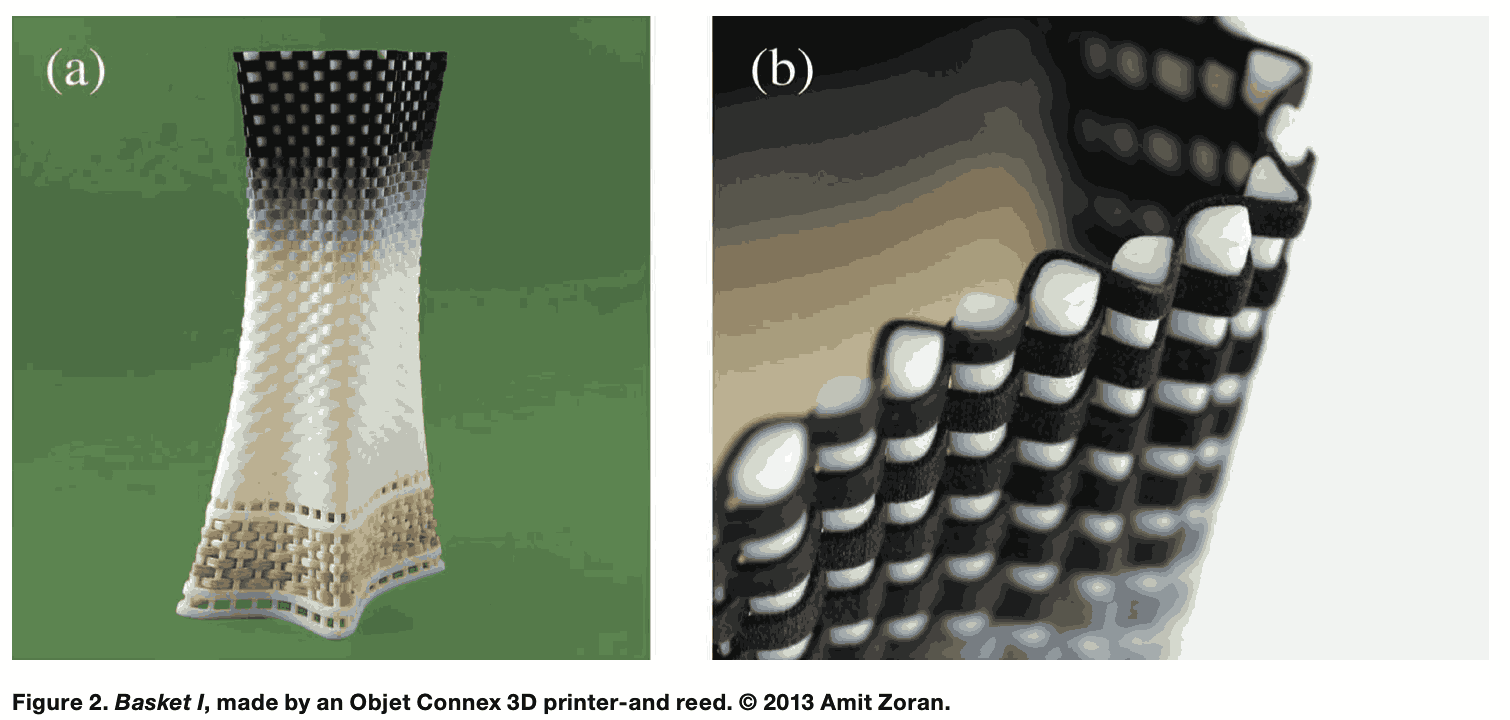
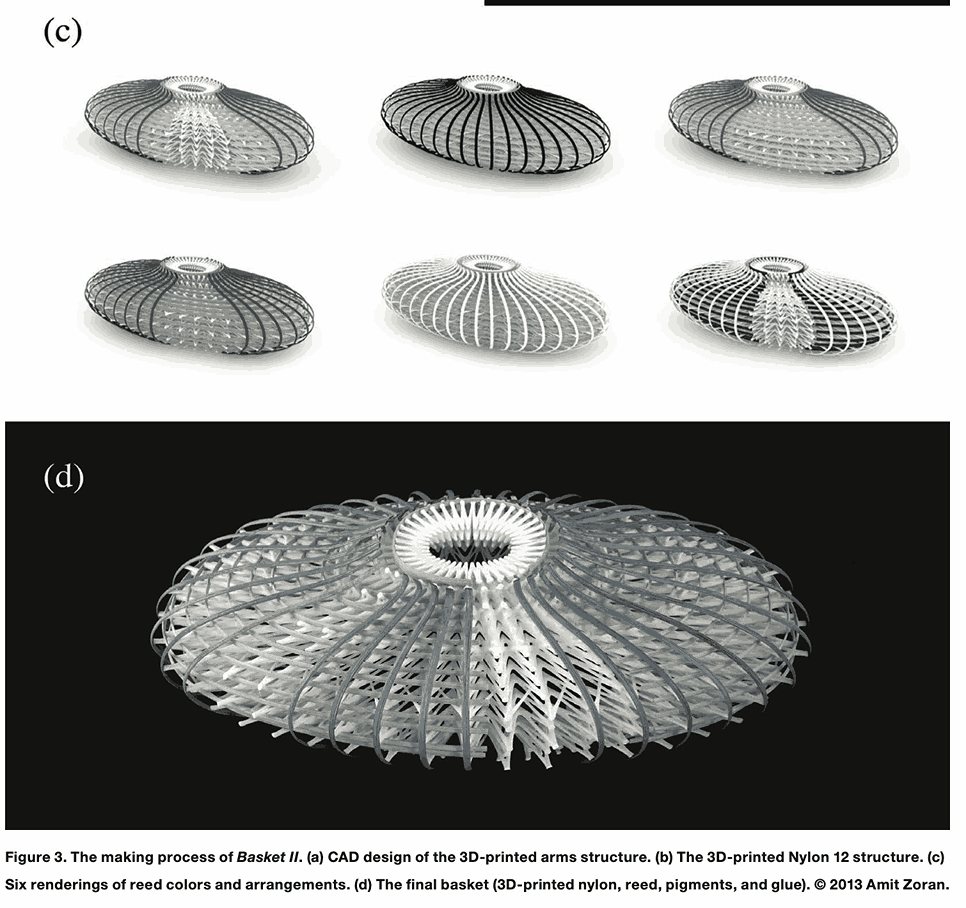
A phrase they used stuck with me "A balanced exchange between the practices." They used it in a context of commenting on Baket II, but I thought that a successful merger of digital and manual requires balance.
The processes for their designs differ, but the one used for baskets I and IV, invovled modelling the surface, then using freehand deformation, finally slicing the surface to create a weft structure as the weaving pattern.
- PunchPrint
I came across this project and I found it interesting for several reasons. Firstly, it is interesting how they are using TPU filament to create customized textile for embroidery, which opens up many possibilties.
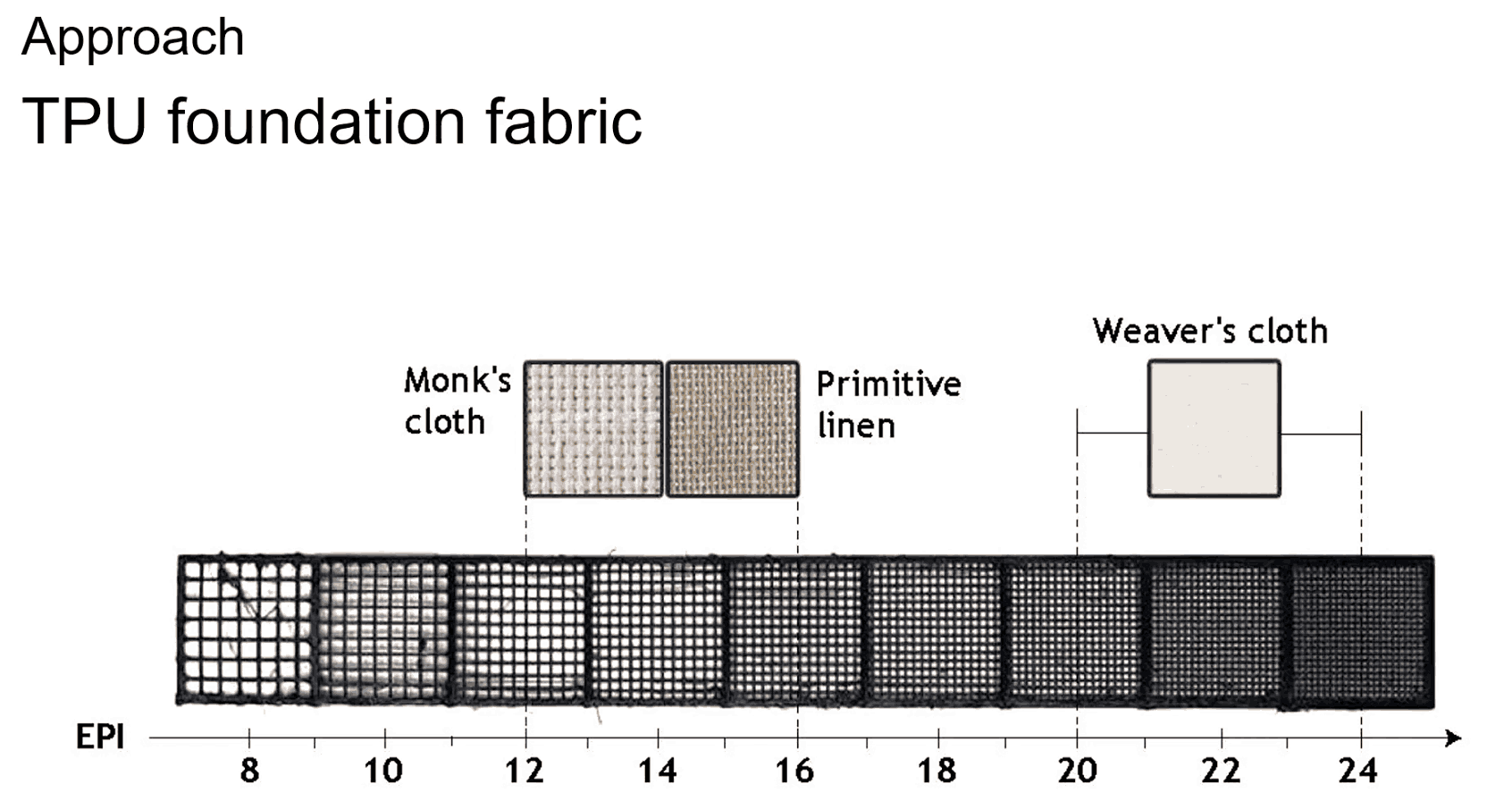
Secondly, by making the this 3d-printed textile, they opened up many possibilties in terms of form for embroidary. This is one the projects they created which I find very innovative. .
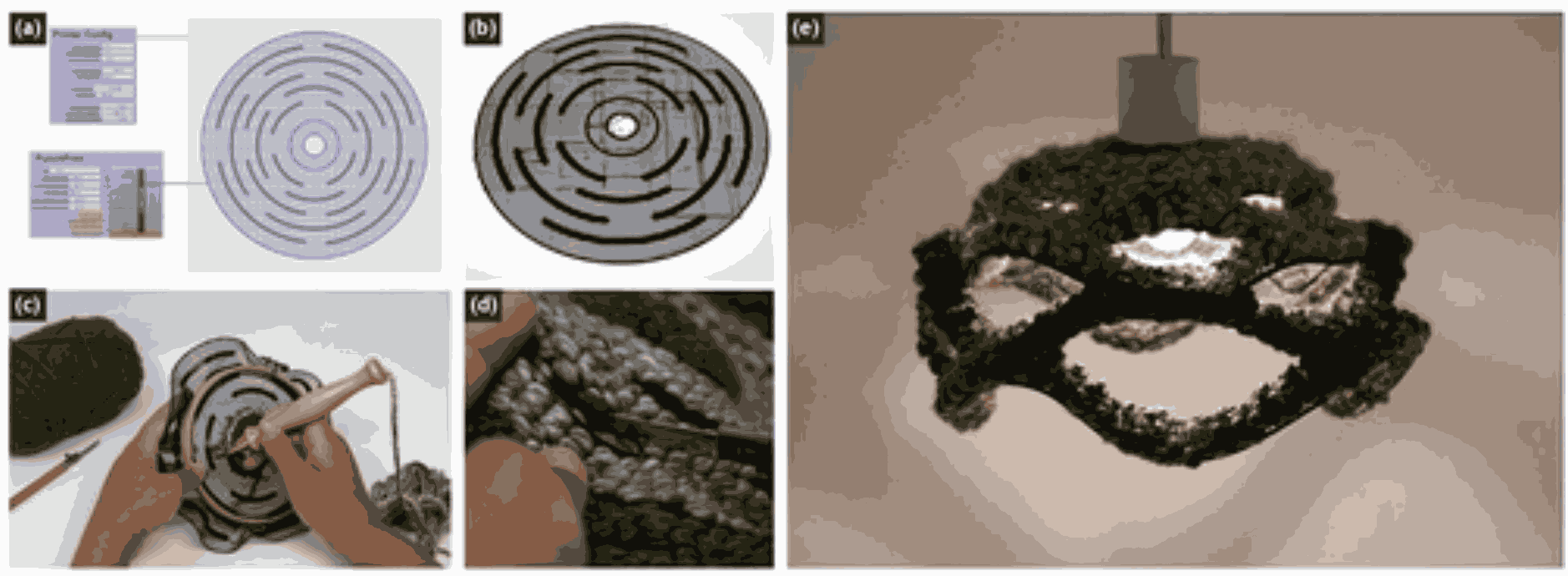
The creators follow the same path of parametric modelling, except that they also print the customized mesh fabric. After minor assembly, they attach an embroidery hoop and they proceed with embroidery.
- Iris Van Herpen
Van Herpen is probably the person with the highest profile who sought to combine hand-crafts. Up until now, I hadn't really found a resource on the process from start to finish. So I want to learn more about Foliage, one of her first projects.
The basic idea is that leaves are printed on very delicate fabric with a 0.8mm thickness. These leaves were printed directly onto transparent fabric (tulle). An interesting fact about the process is that the printer was very small (30x30 cm), the dress was printed in pieces and later on sewed together.
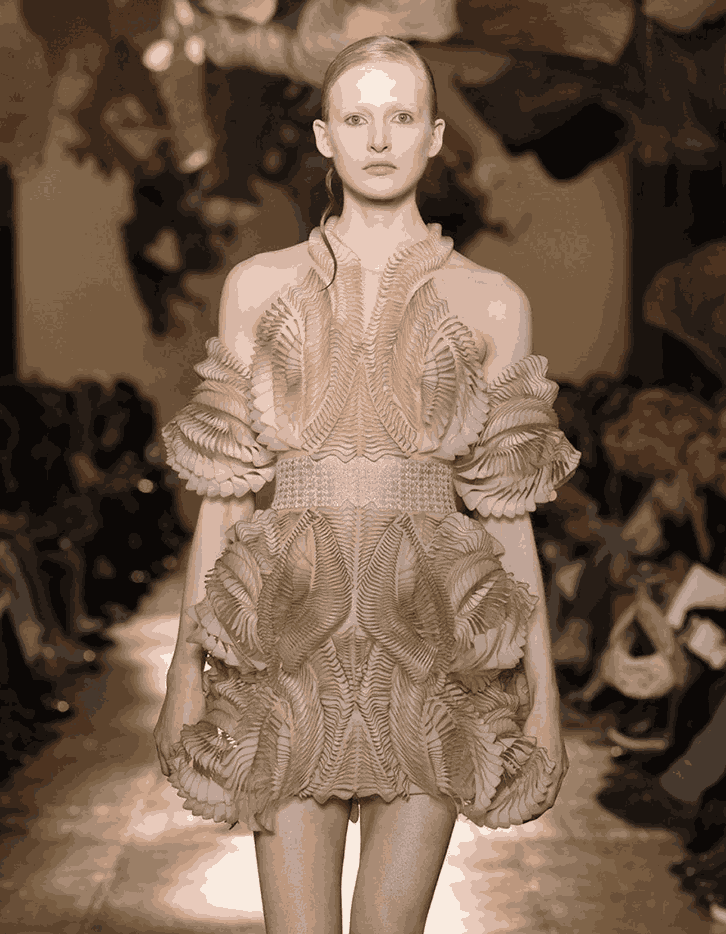
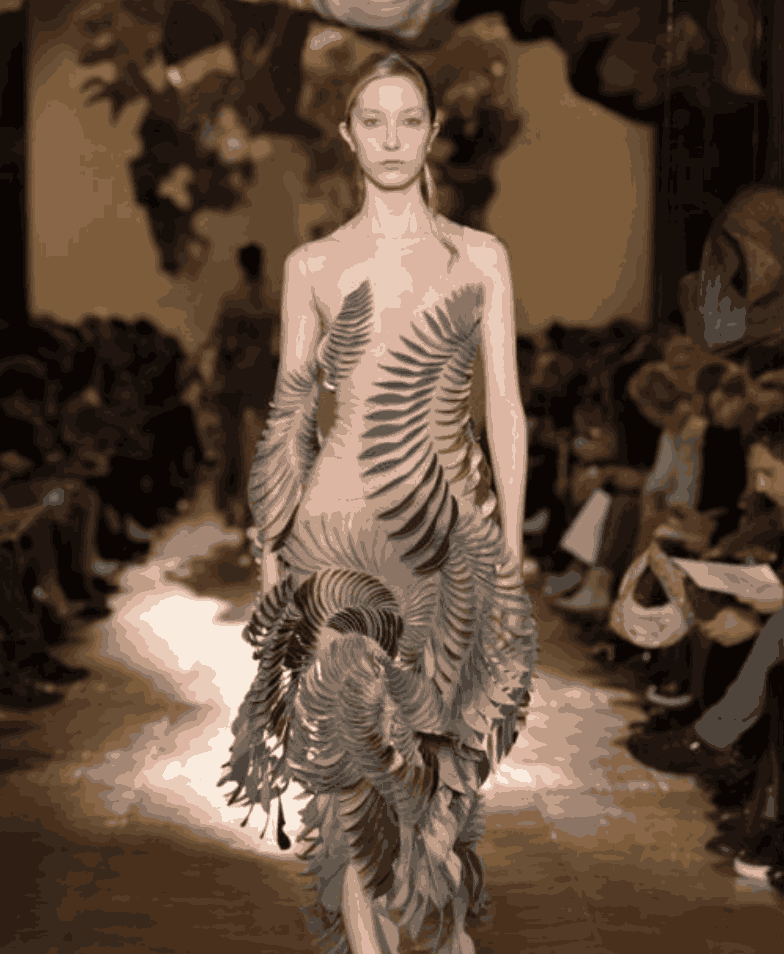
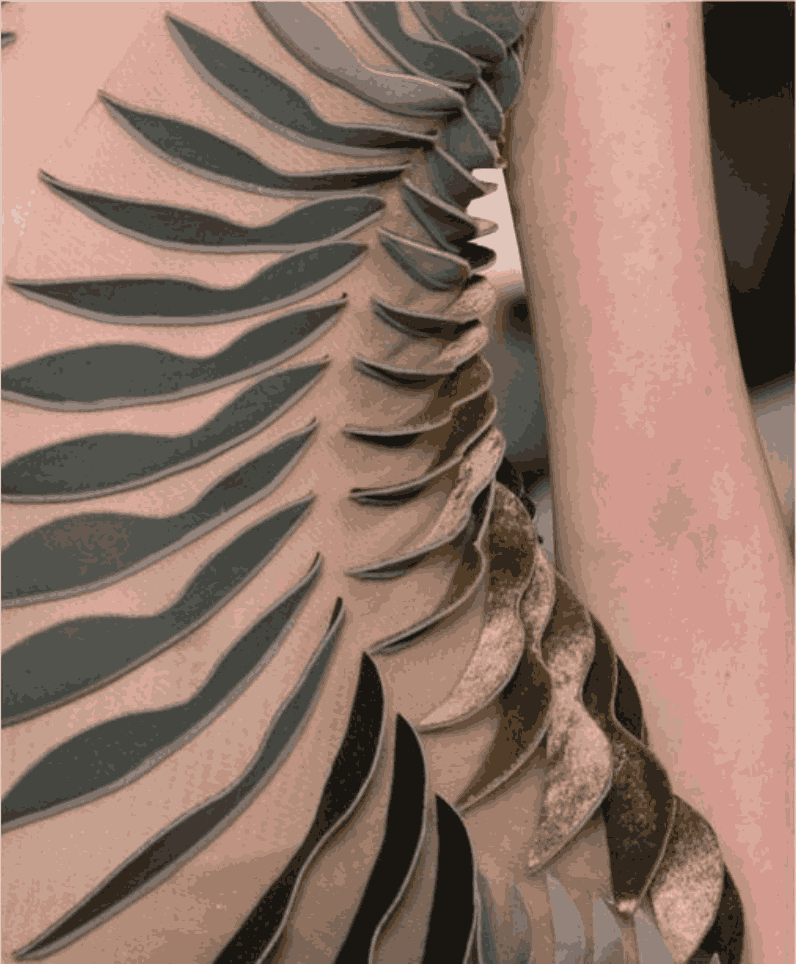
I am still not sure how the partially attached and partially hovering part of the leaves was created for the hovering effect.
I also tried to find another example of Van Herpen's where there is a clearer use of digital and manual fabrication. I found Alchemy of Light:
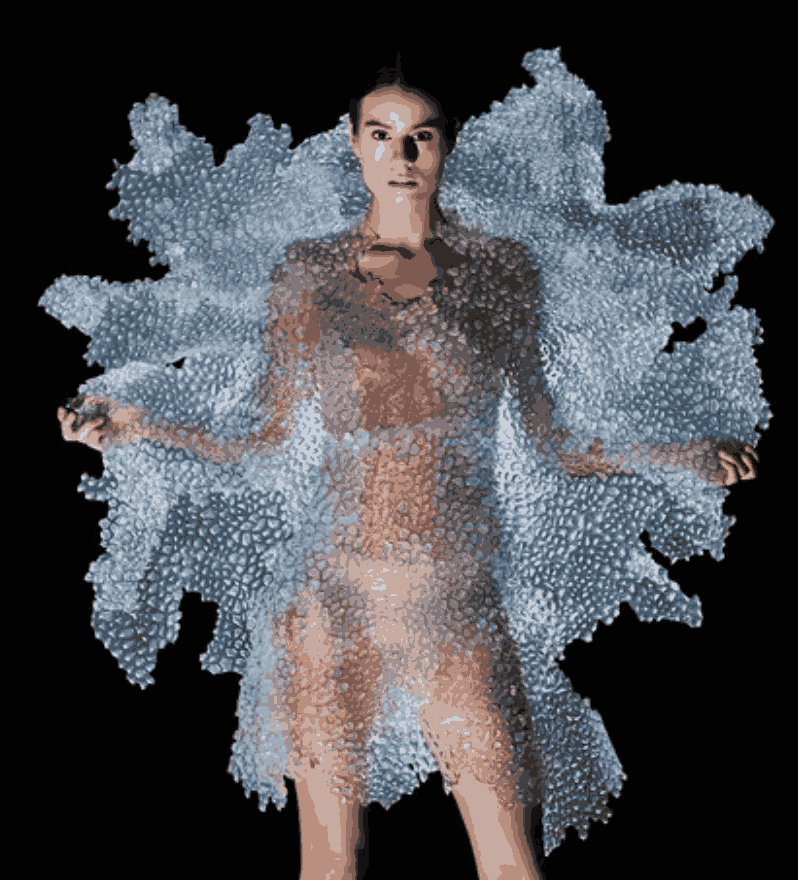
I gleaned that there was a combination of many techniques, but effectively, the droplets were printed and there was a combination of hand and machine-stitching to construct the garment.
I have aways appreciated Van Herpen's work. This week's research was very enjoyable.
3. Tools
- Rhino
- Grasshopper
- Ultimaker Cura Slicer
- Prusa Slicer
- Ultimaker 3D-printer
- Prusa 3D-printer
- Tulle fabric
- Two-way stretch tulle fabric
- TPU Filament
- PLA Filament
4. Process and workflow
Ideation
Based on the research, I wanted to combine the [ parametric modelling ] + [ 3d-printing ] as the digital fabrication portion, with a manual process like weaving or felting.
I personally like the felting process more than weaving, because, depending on the technique and volume of wool, it can create an ethereal effect or it can produce a thick material. In short, it is very versatile.
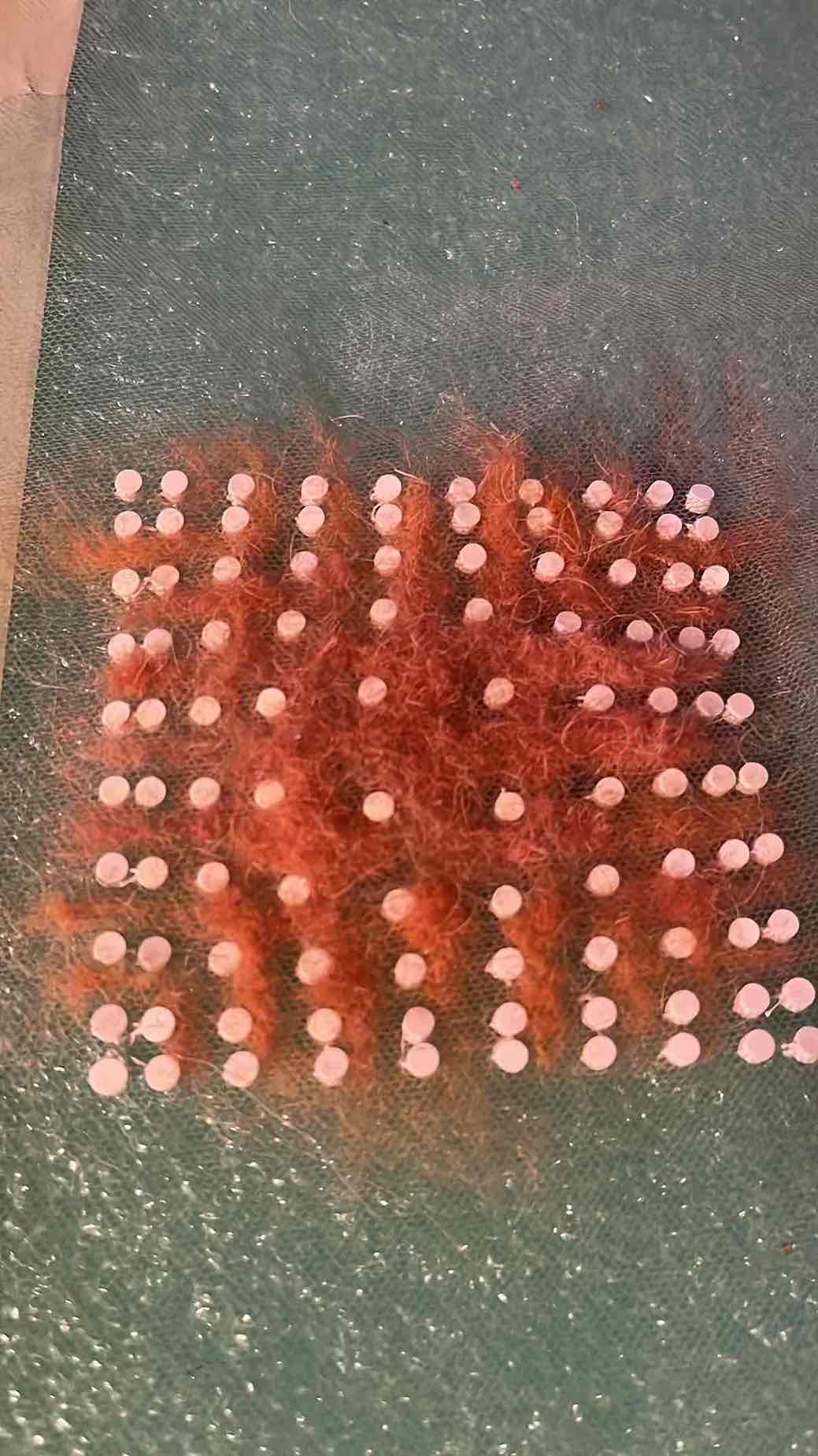
Discovering that we do 3D-printing using tulle is a hasard objectif. There is a mesh that I can needle felt on (I haven't mastered wet-felting yet, but I think that can be a good combination with moulds).
I wanted to try three techniques:
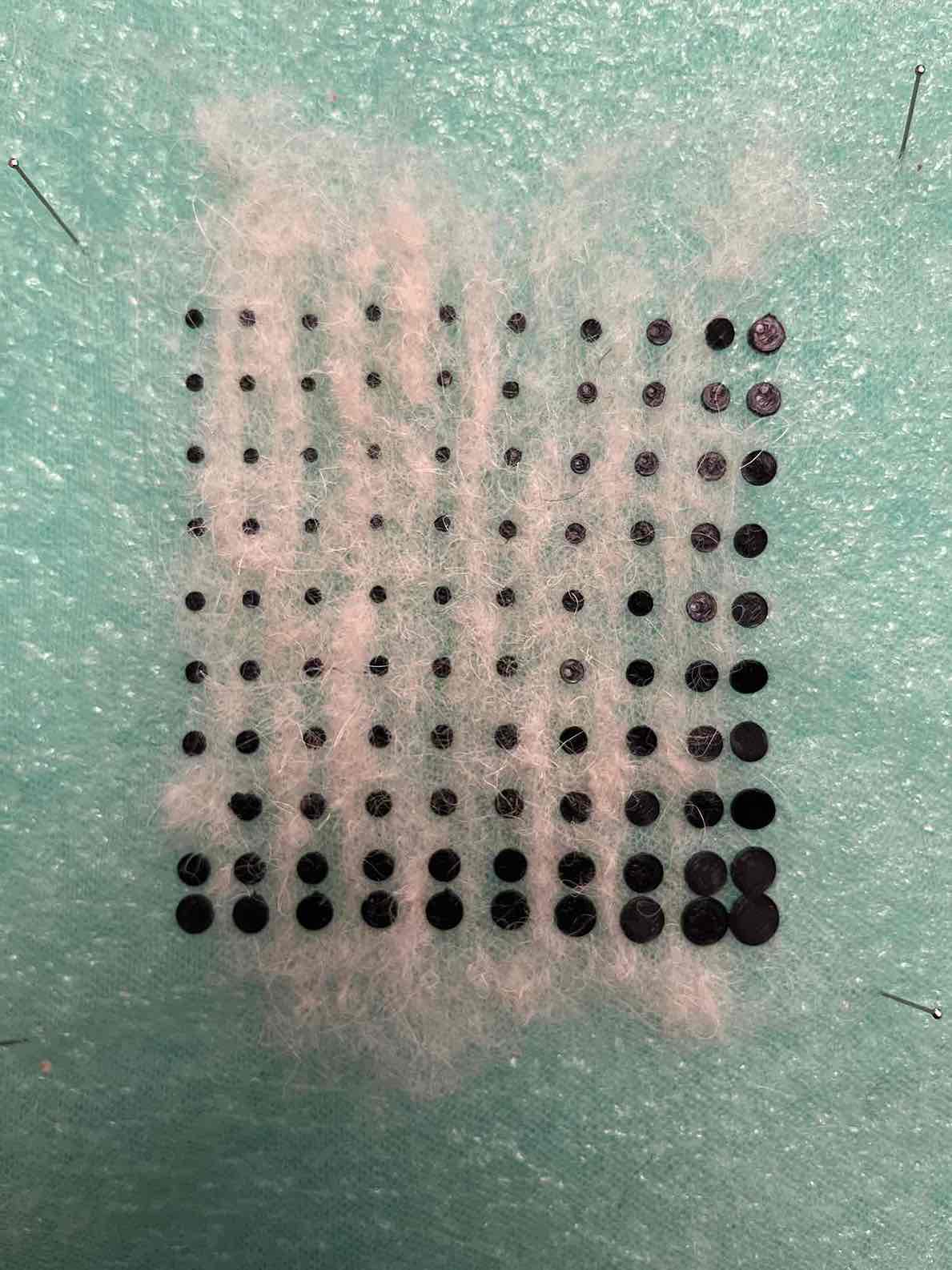
- Felt in between the 3D-printed design with elevated printed components (I found this to be essential after the first swatch was printed because the felt has height)
- Attachable felt surface onto 3D-printed design
- Felting on two-way stretch fabric
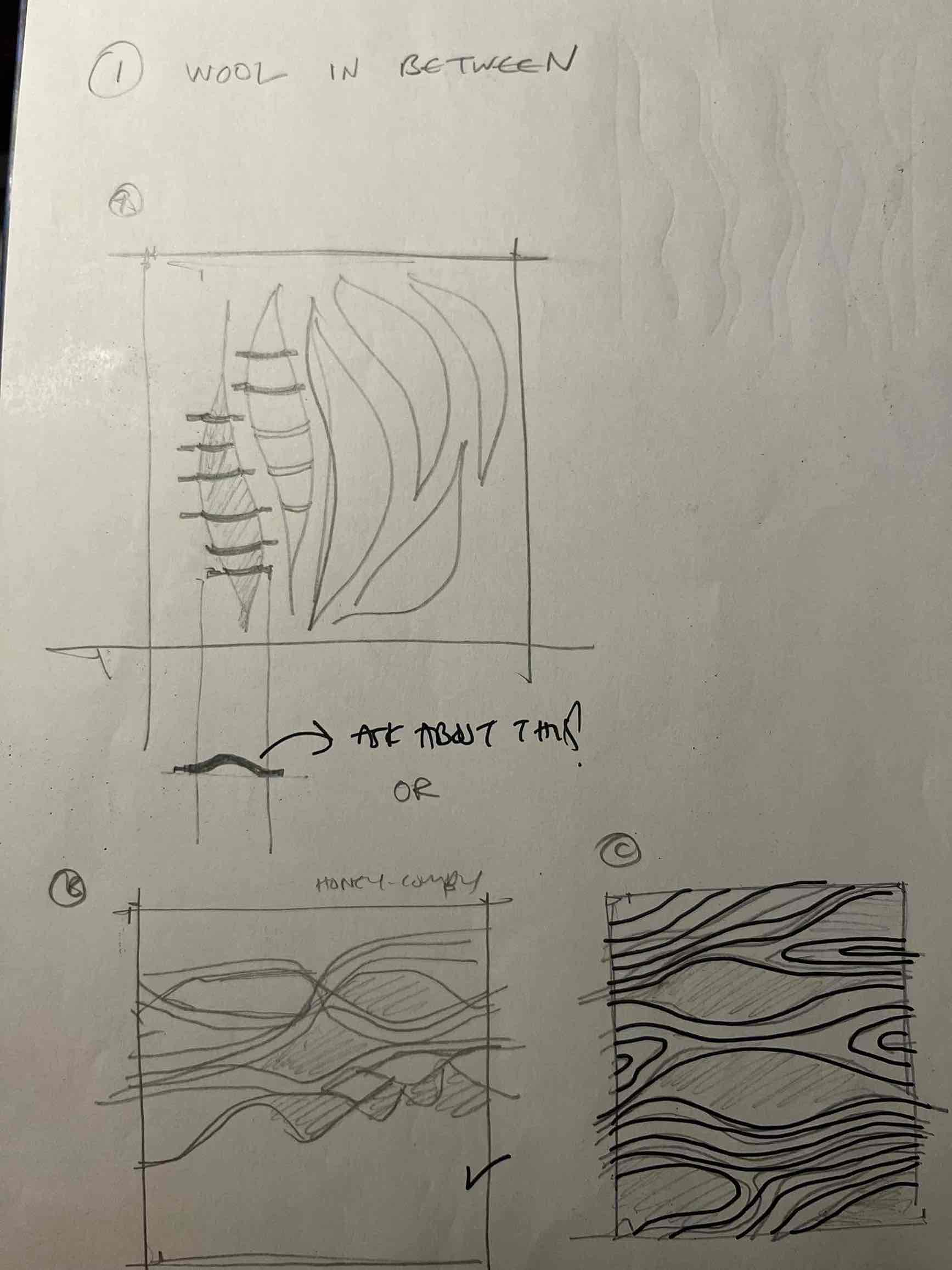
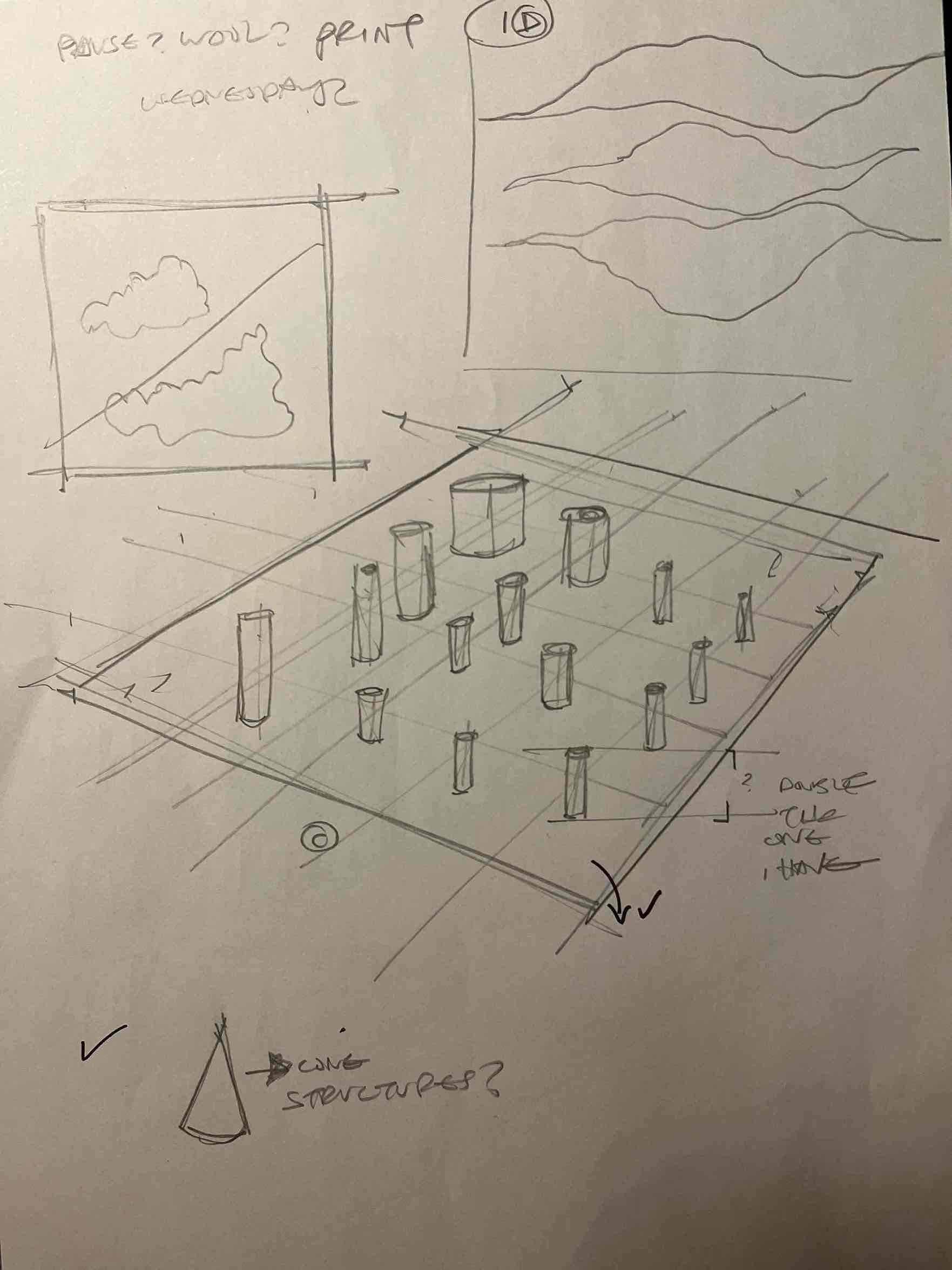
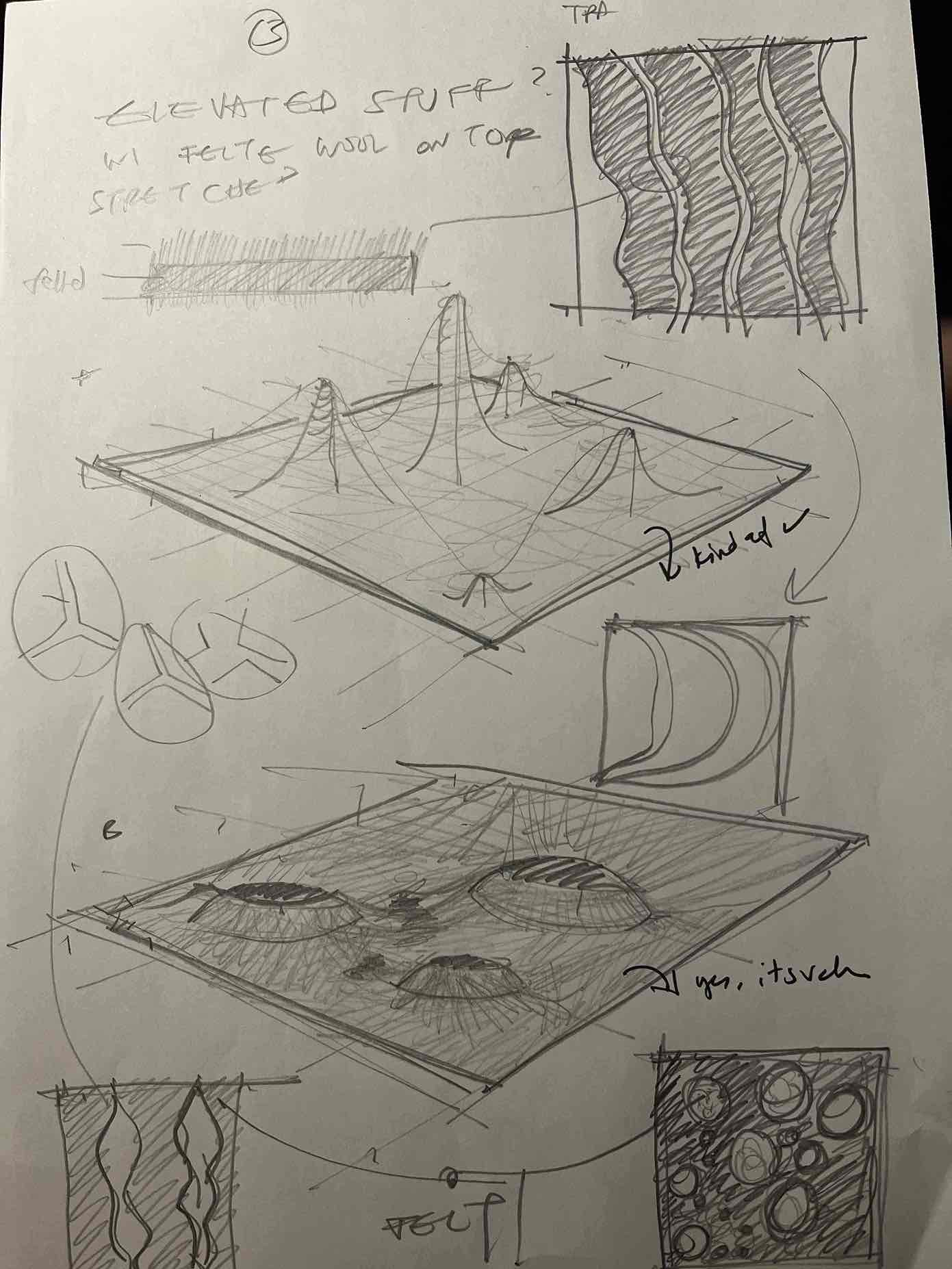
Modelling - Grasshopper
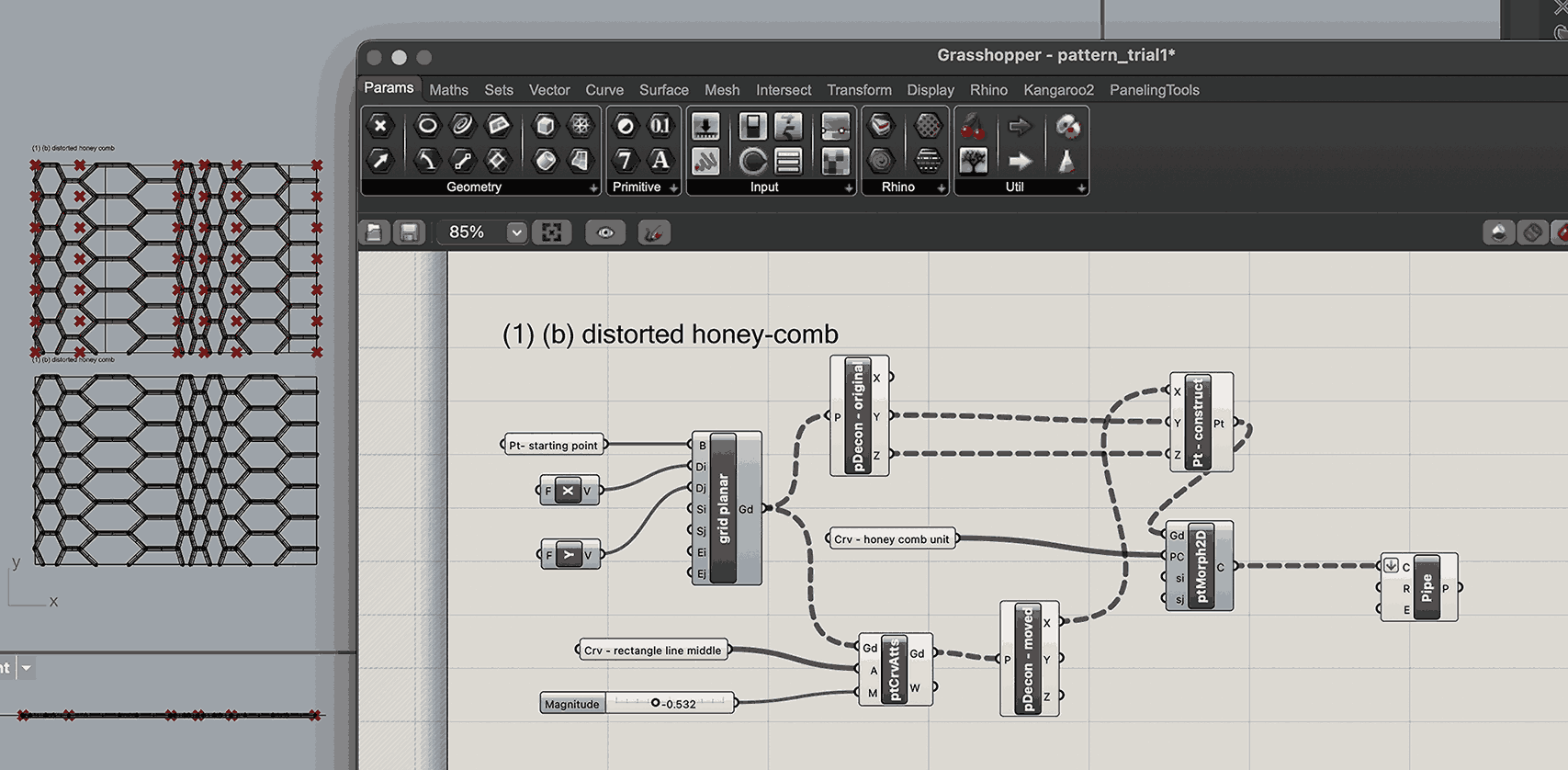
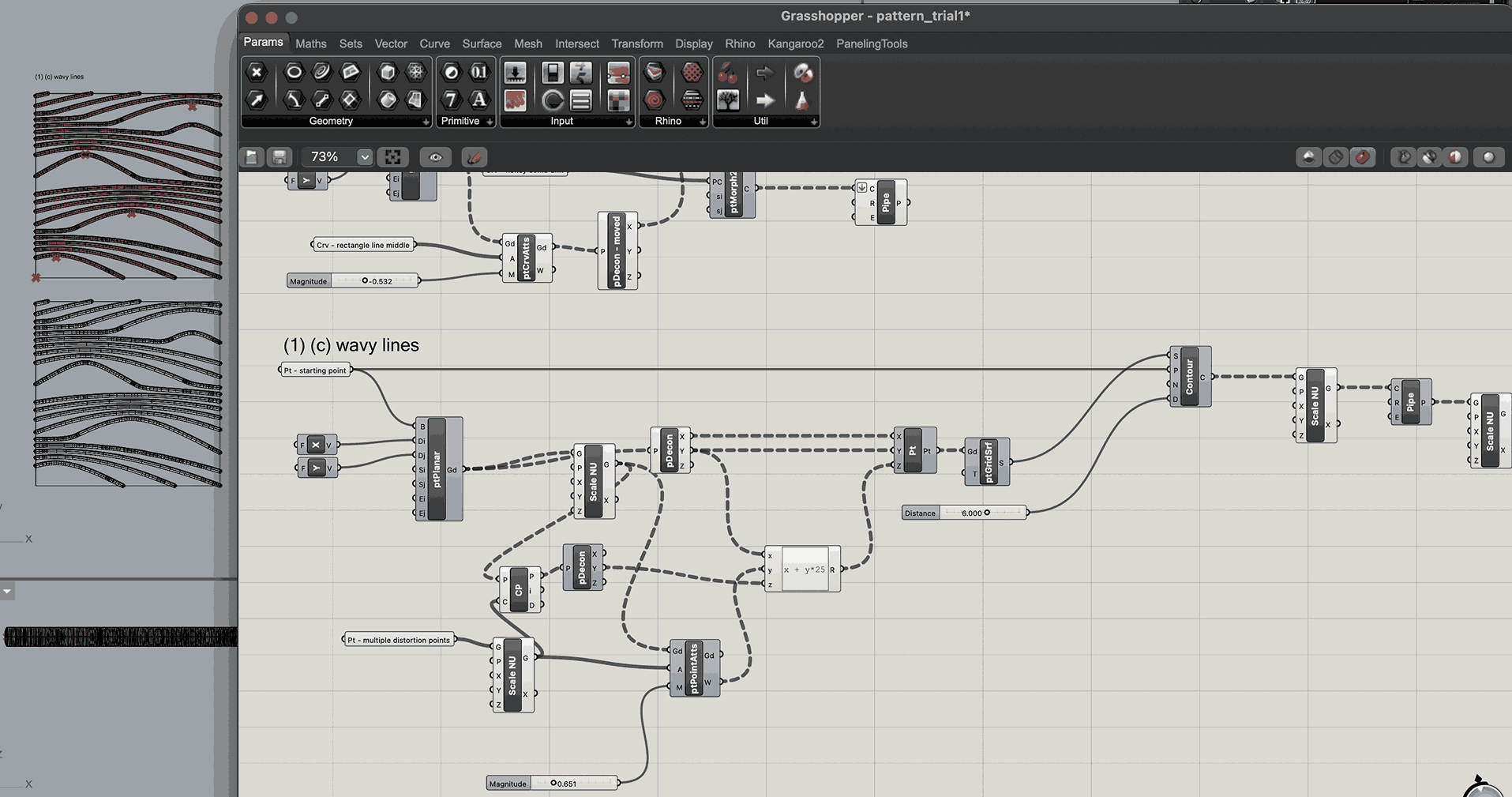
I have a new-found love relationship with Grasshopper, probably because I rely a lot on Claude for debugging and figuring things out. I think that is the only way to use Grasshopper because it is not very intuitive and the nodes or components can add up, making the setup far too complex to sort through. In any case, a lot of the designs that I have in mind benefit from parametric modelling. Until someone creates a software that is more intuitive than Grasshopper, I am warming up to it. In this week, one of my objectives is to learn how to use this plugin better, so I tried to build grids and forms directly on the canvas, and to manipulate and distort these grids.
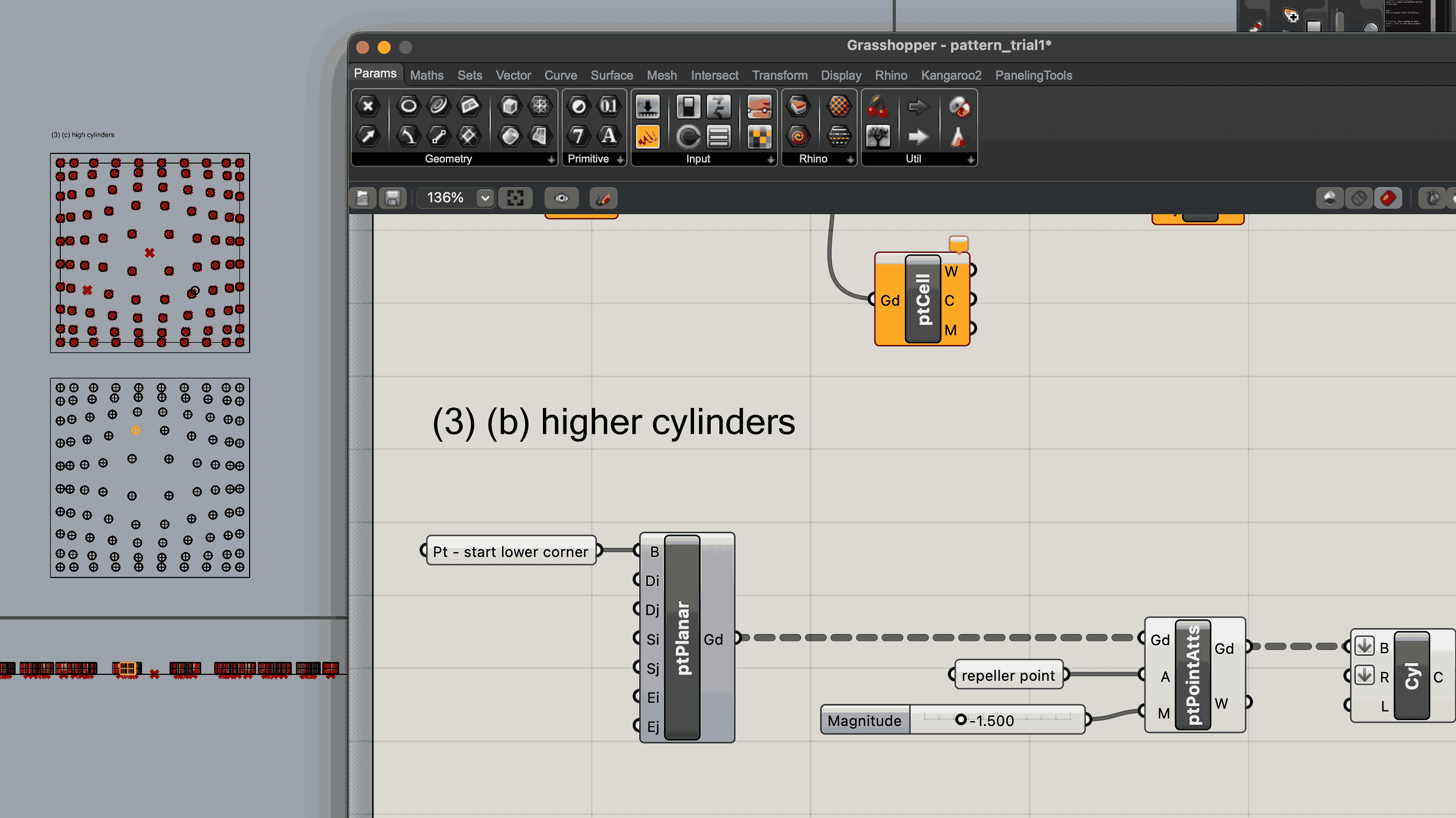
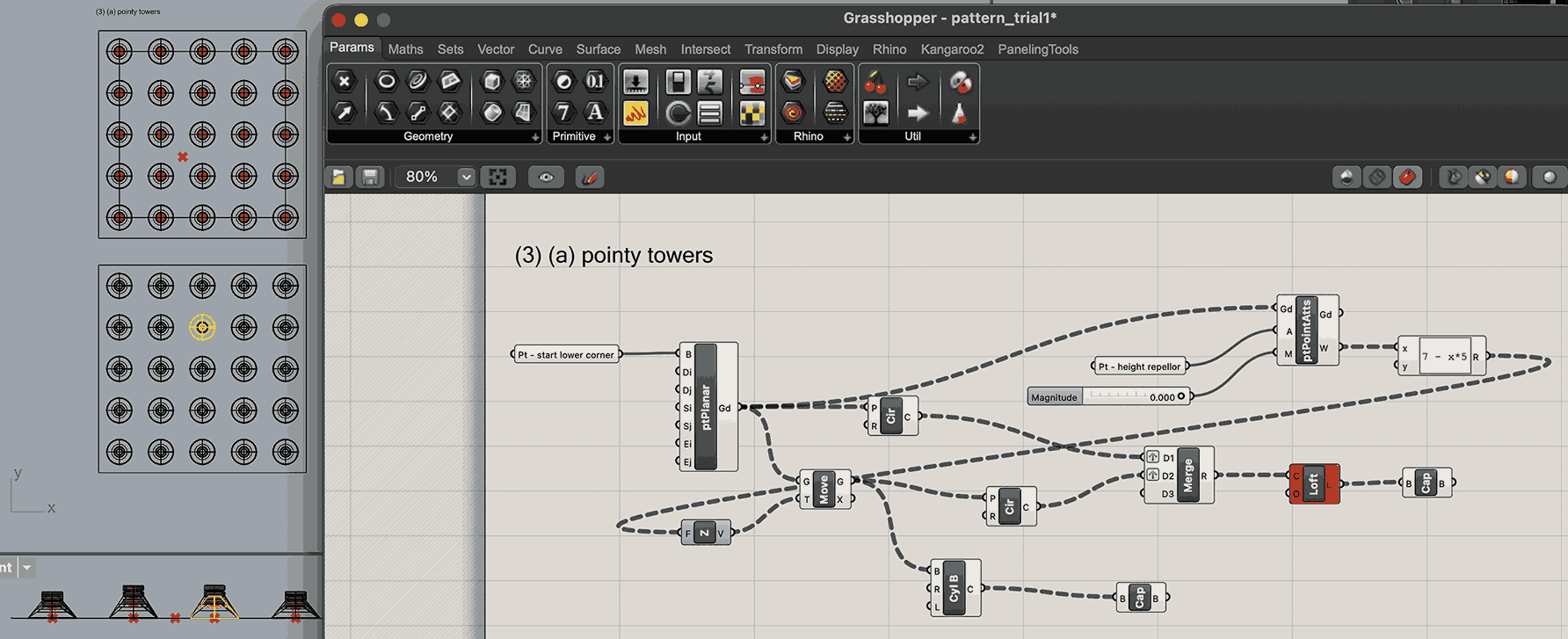
Printing
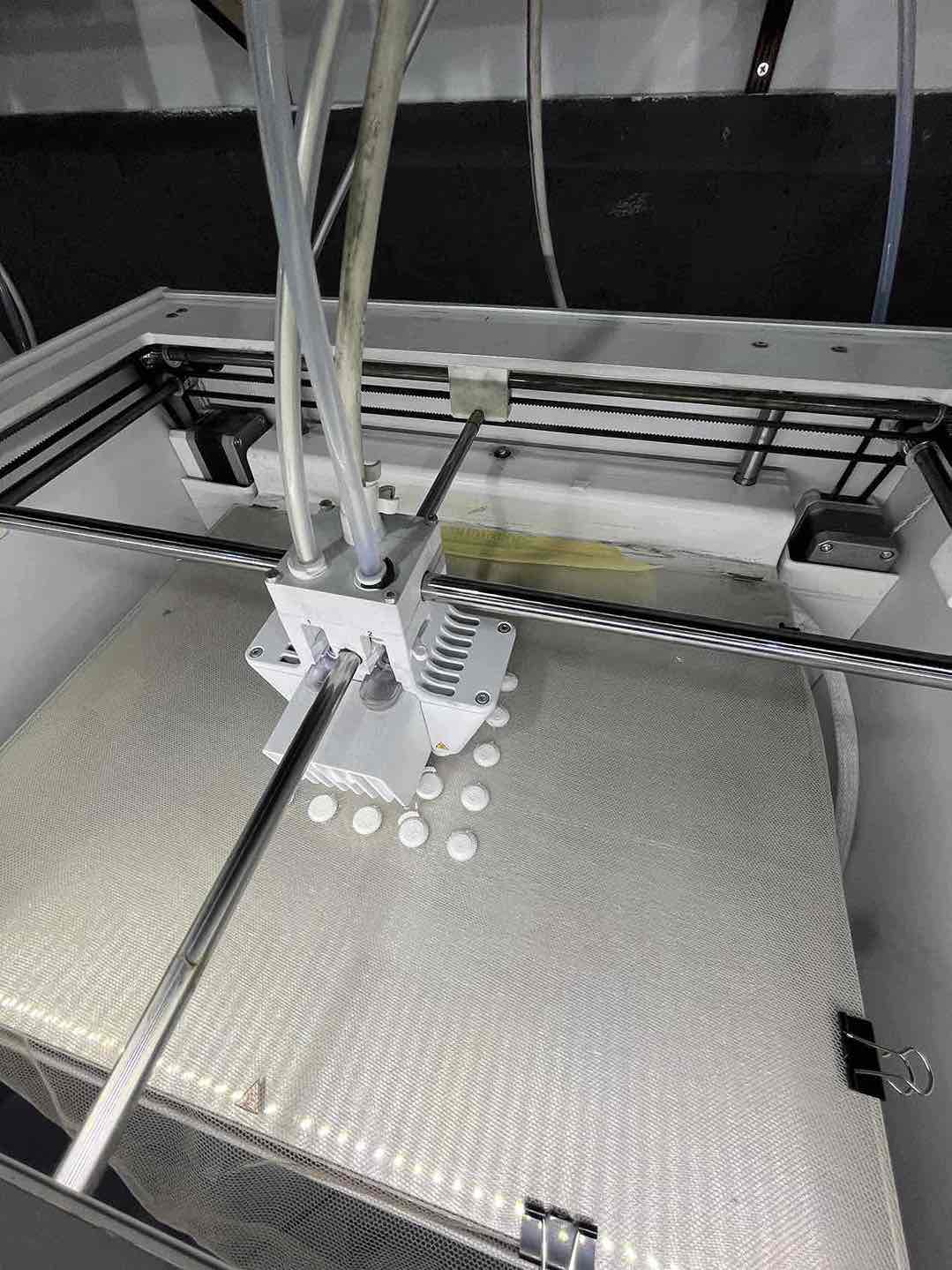
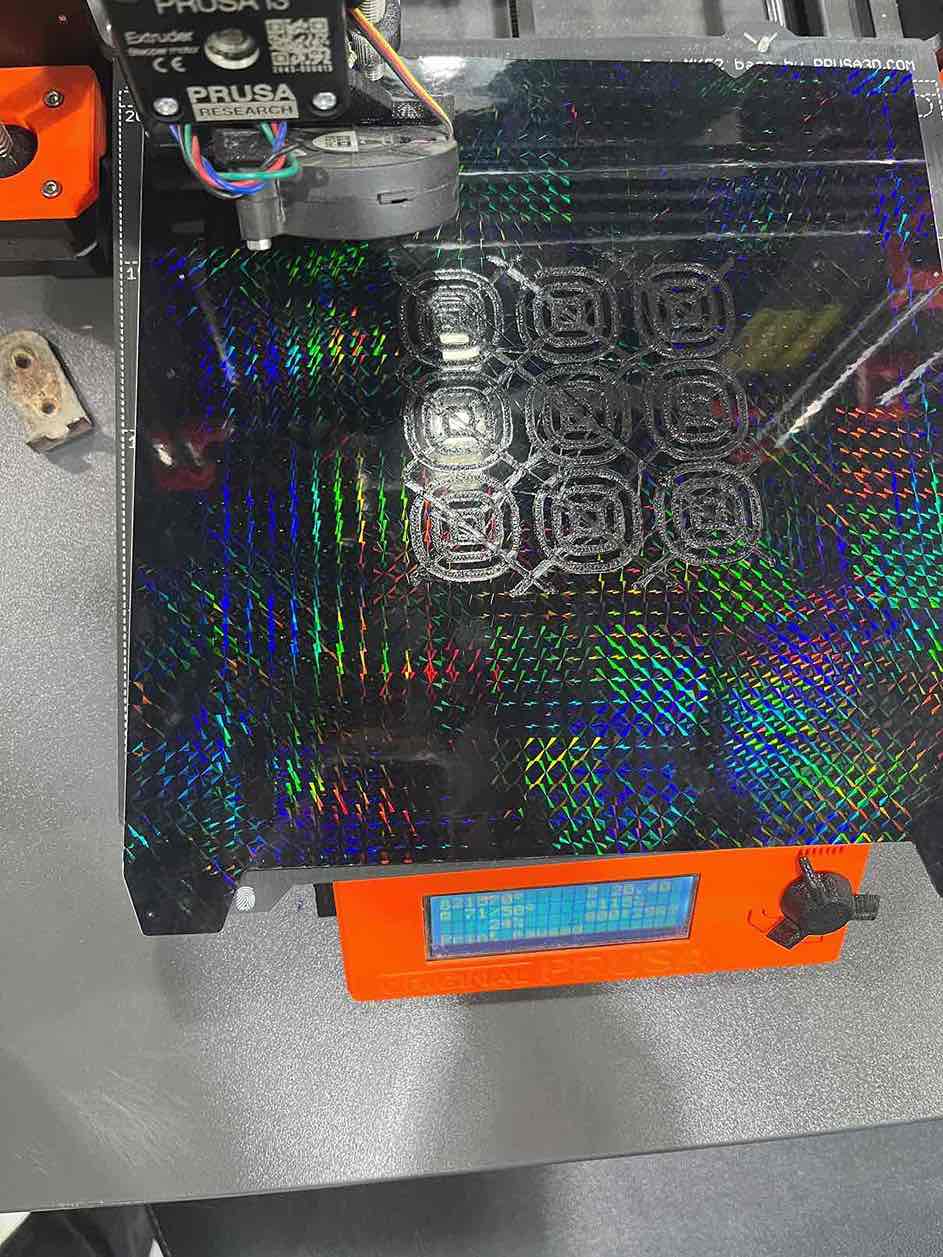
5. Results
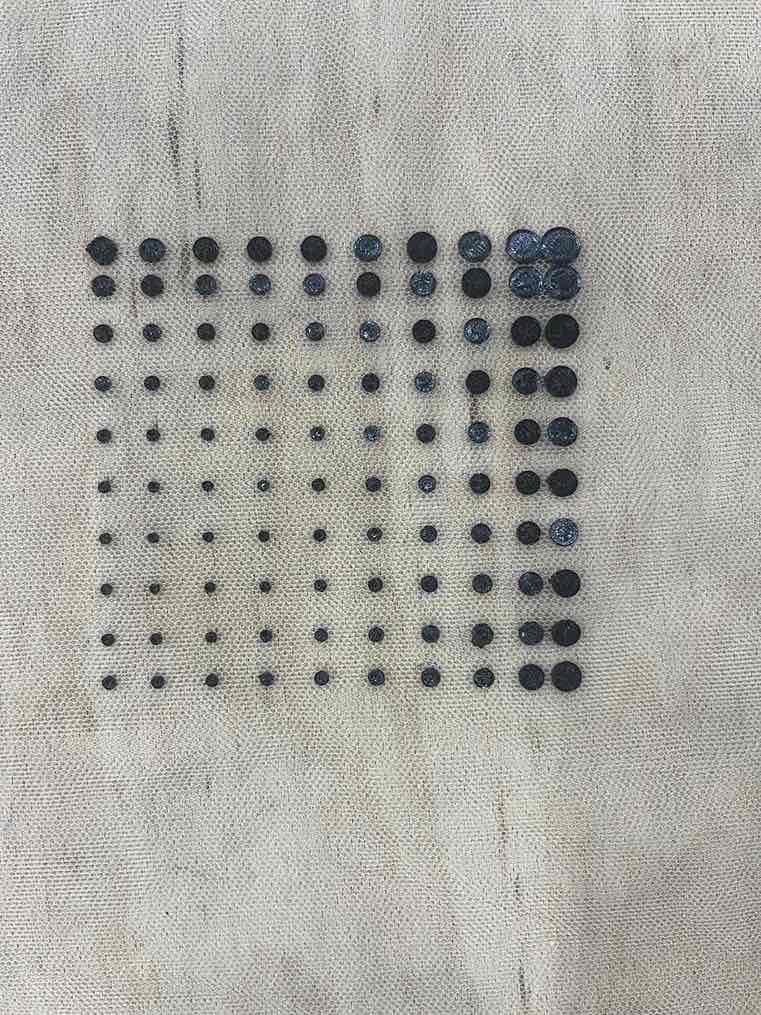
Low Cylinder
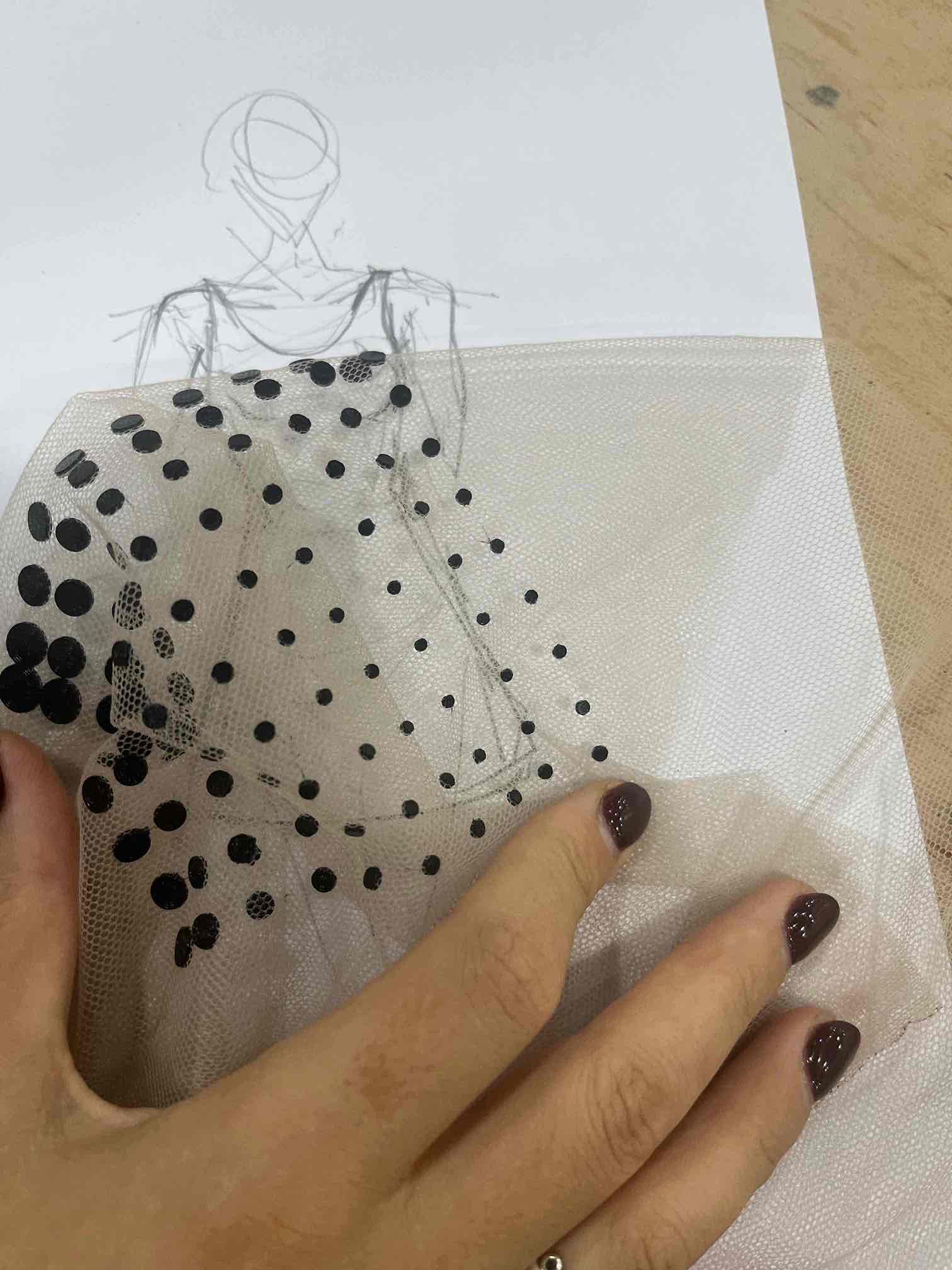
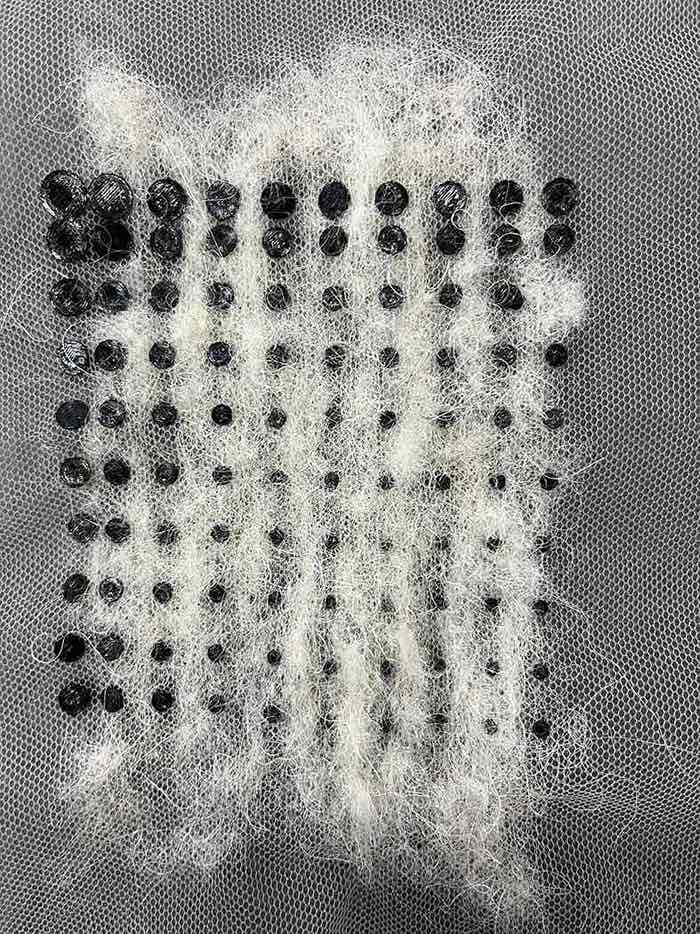
Raised Cylinder