4. BioChromes
Research
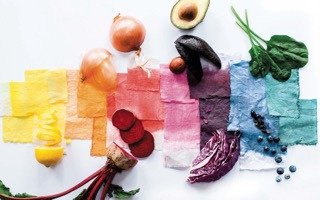
Photo courtesy of Edible Denver.
This week, I explored BioChromes and natural color for textiles. Biochromes are pigments and color-producing compounds associated with living organisms and biological sources, including plants, algae, fungi, and bacteria.
In textile design, naturally derived color provides an opportunity to explore alternatives to conventional synthetic dyeing processes. Natural dyes can be extracted from roots, leaves, flowers, bark, and food waste and applied to natural fibers such as cotton, linen, hemp, wool, and silk.
For this experiment, I focused on avocado skins and pits and black beans as sources of color. I tested the dyes on cotton fabric, cotton yarn, and wool to observe how fiber type and chemical modifiers influenced the final color.
My workflow included five primary stages:
- WOF – Weight of Fiber
- Wash and Scour
- Mordant
- Dye Bath
- Rinse and Evaluate
I also explored how a remaining dye bath could be transformed into a dry pigment, extending my investigation from textile dyeing into biomaterial color development.
References & Inspiration
Kate Turnbull and The Secret Dyery
One of my primary inspirations for this experiment was Kate Turnbull, natural dyer, educator, and founder of The Secret Dyery.
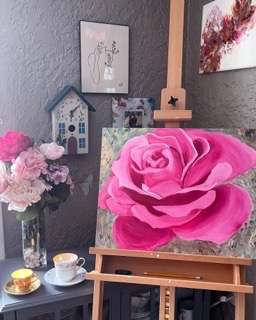

Images used as visual research references to the natural dye practice of Kate Turnbull.
I am inspired by Turnbull's ability to combine natural dye practice, education, sustainability, and advocacy. Her work demonstrates that natural dyeing can move beyond an individual craft process and become part of a broader conversation about responsible textile production.
I was especially interested in her educational approach. Through workshops and collaborative projects, Turnbull shares natural dye techniques and encourages others to engage directly with plant-based color.
Her combination of practice + education + advocacy connects with my own interests as a professor, textile designer, and researcher. I do not simply want to create a dyed textile. I am interested in understanding the process, experimenting with the materials, documenting the results, and sharing the knowledge with others.
Related references:
- The Secret Dyery – Kate Turnbull
- The Secret Dyery
- Fashion Revolution – Developing Natural Dyes for the Textile Garden
- Fabricademy BioChromes Class Documentation
My BioChromes Exploration
My experiment was influenced by these natural dye practices but focused specifically on avocado waste and black beans. I wanted to compare color development across different fibers and then explore whether the remaining color bath could be recycled into pigment.
Materials
- Avocado
- Black beans
Tools
- Pots and pans
- Spoon, tongs, and wisk
- Petri dish and beakers
Process and workflow
My first step was to.....
Follow the process... 1. WOF 2. WASH & SCOUR 3. MORDANT 4. DYE BATH 5. RINSE
-
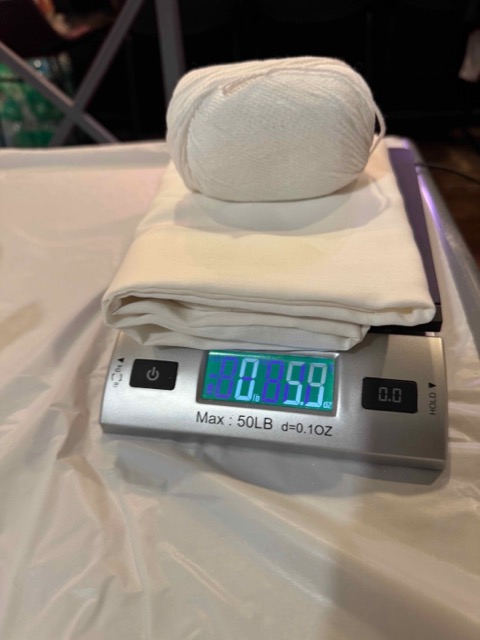
WOF From the image above, the weight of all of the fabric was was 5.9 ounces which is converted to 167 grams.
WOF = (Weight of fiber) x (% of Dye Needed / 100) = 167g x 0.02 = 3.34 of soda ash -
WASH & SCOUR For this experiment, I only scour the cotton fabric and cotton yarn.
3.34g of soda ash was added to water and it was boil on the stove and simmer for 2 hours. -
MORDANT I added the scour fabric into a mordant bath. I used 15% WOF of alum for the mordant. Therefore, 25g of alum was added to water and the scour fabric was added to the bath. This step is used in order to help the dyes penetrate the fabric/yarns. The wool was only 4 grams and all was mordanted in the one pot. The mordant was boil on the stove and simmer for 2 hours.
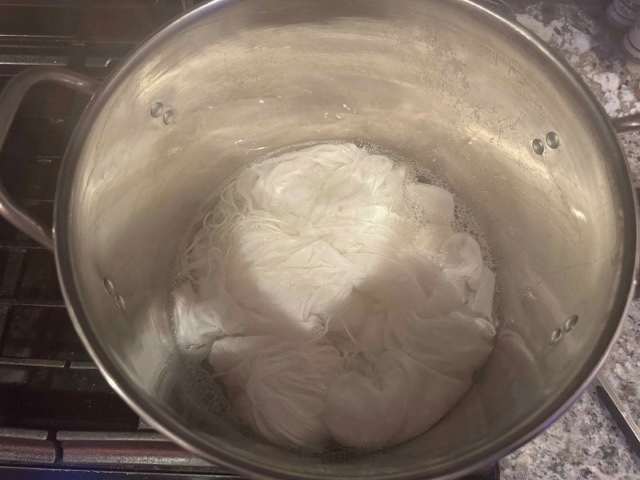
- DYE BATH I used avocado (skins and pits) and black bean. Prepare this recipe [^1] by collecting the ingredients necessary, to be found in the list below:
Avocado
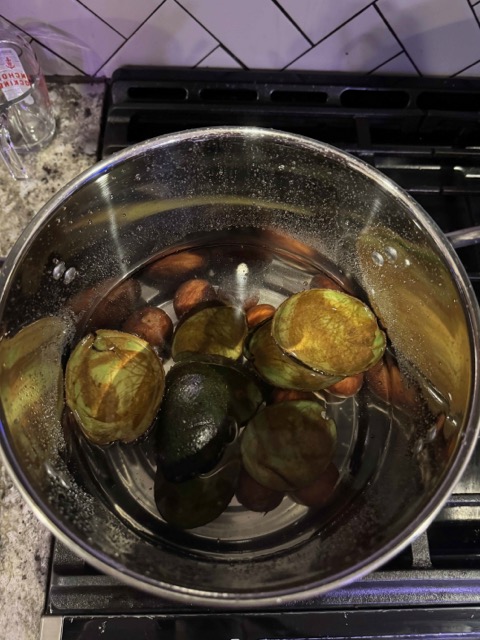
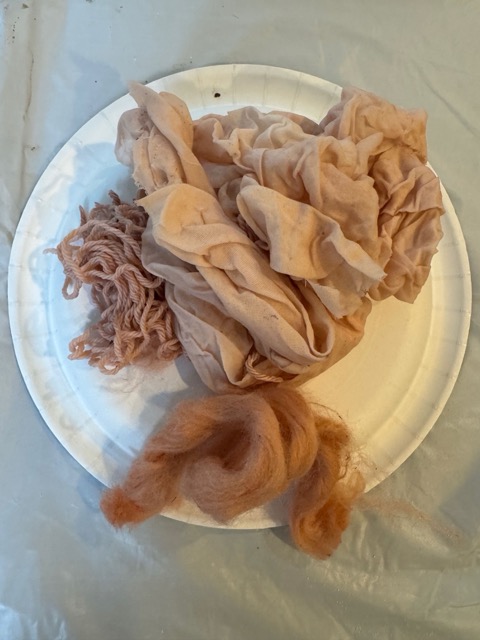
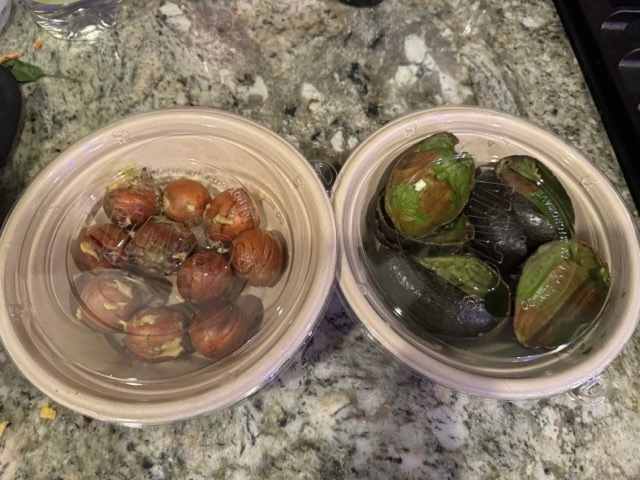 Both the avocado skins and pits were throughly cleaned and place in the pot with water. The dye bath simmer for over 2 hours and the color looked a little light. I simmer it again for another hour and strained the skins and pit out of the pot. I added all of the fabrics and left it overnight.
Blackbeans
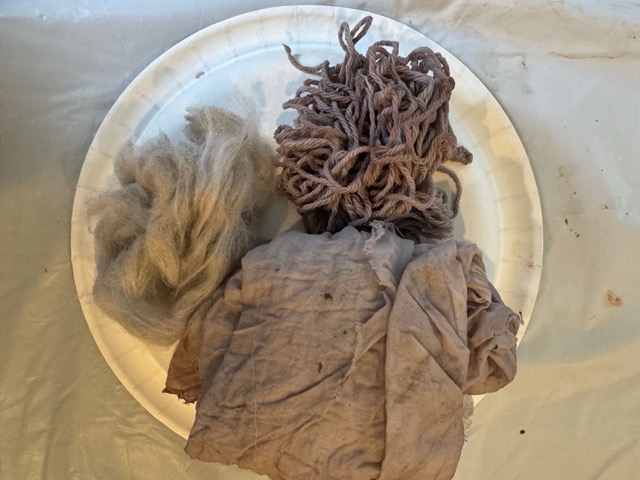
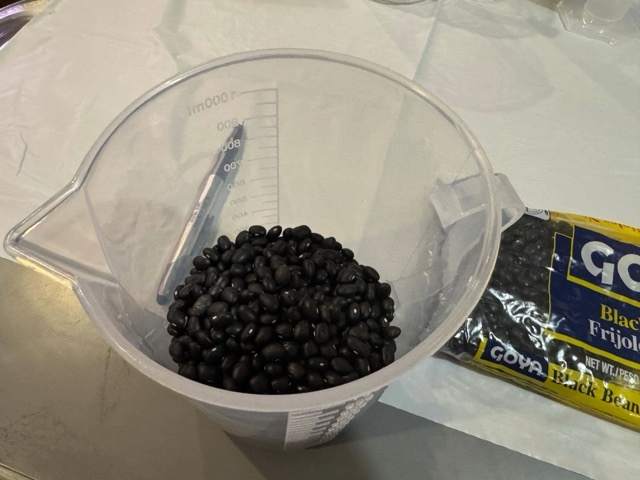 The blackbeans were placed in water and sat for a few hours. Next, I put the beans in a pot and simmer for 2 hours. It had a dark blueish black hue. I strained the blackbeans out and added the fabrics. I let it sit overnight in the dye bath.
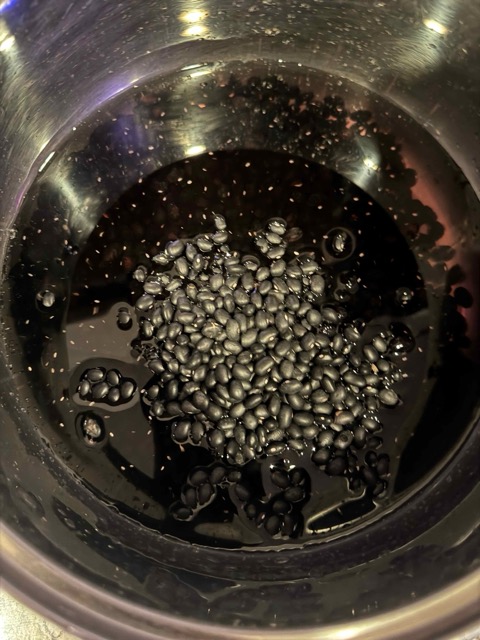
- After both dye baths sat overnight, I warm up both baths to simmer for 30 minutes. I let both baths cool and rinse off fabrics with ph neutral soap. The avocado fabric looks a slight salmon pink tone and the blackbean was a purple-grayish tone.
RESULTS

Avacado
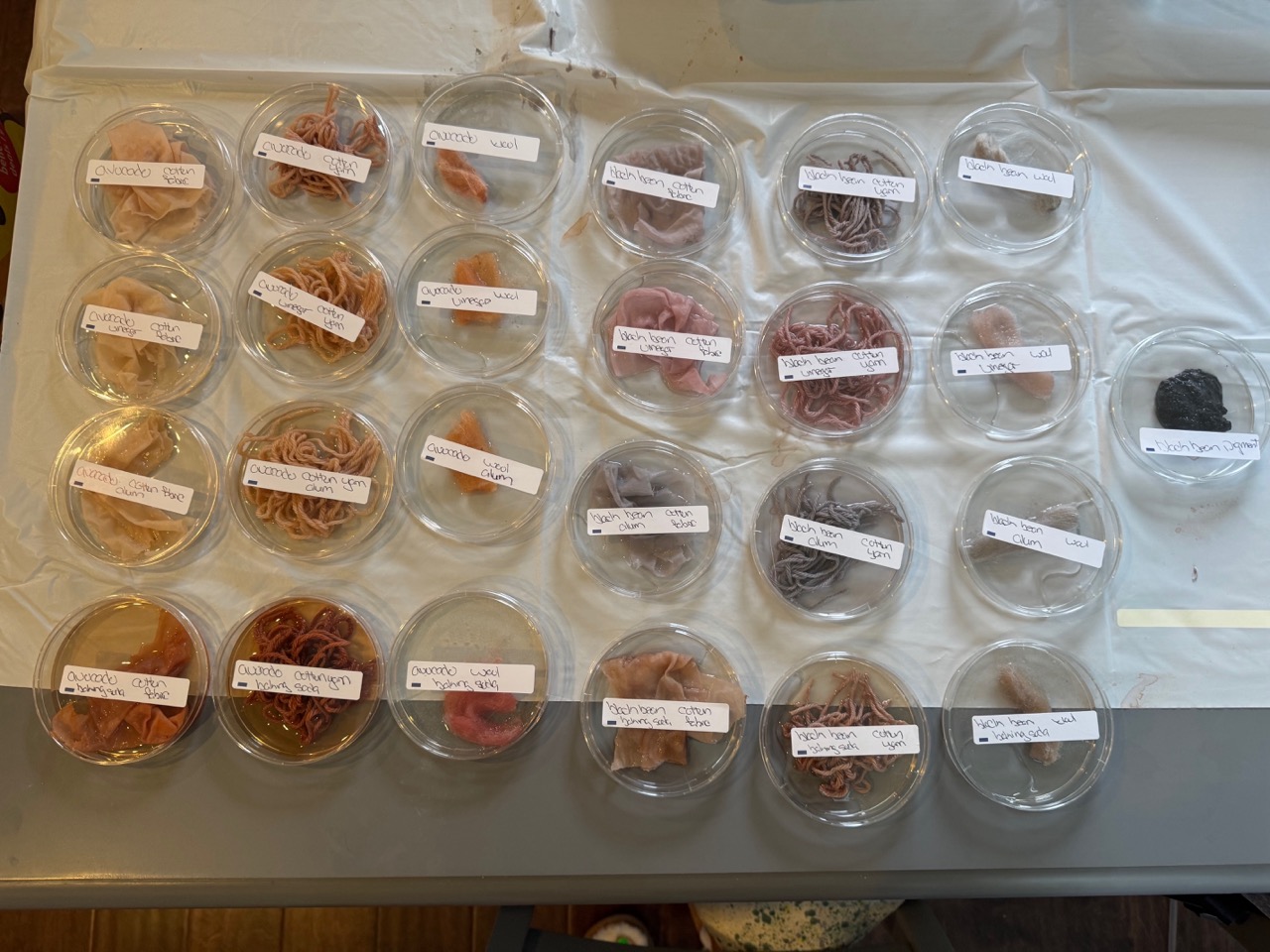
On the left, the image shows avocado dye samples treated with different modifiers. The modifiers used were vinegar, alum, and sodium bicarbonate. Each modifier was applied across three textile substrates: cotton fabric, cotton yarn, and wool fibers, allowing for direct comparison of color variation based on both fiber type and chemical modification.
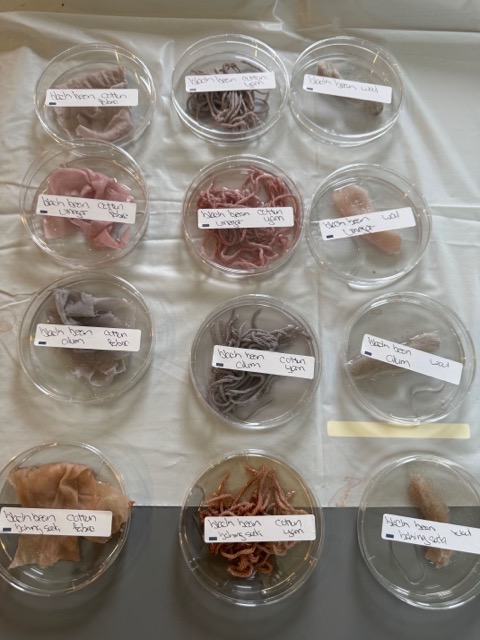
Blackbeans
On the right, the image displays black bean dye samples treated with the same set of modifiers—vinegar, alum, and sodium bicarbonate—and applied to the same three textile materials: cotton fabric, cotton yarn, and wool fibers. Using consistent mordants and substrates across both dye sources enabled a controlled comparison of how different natural dyes respond to identical chemical conditions.
Recycling the Dye Bath into Pigment
After completing the black bean dye experiment, I wanted to explore whether the remaining dye bath could be reused instead of immediately discarded.
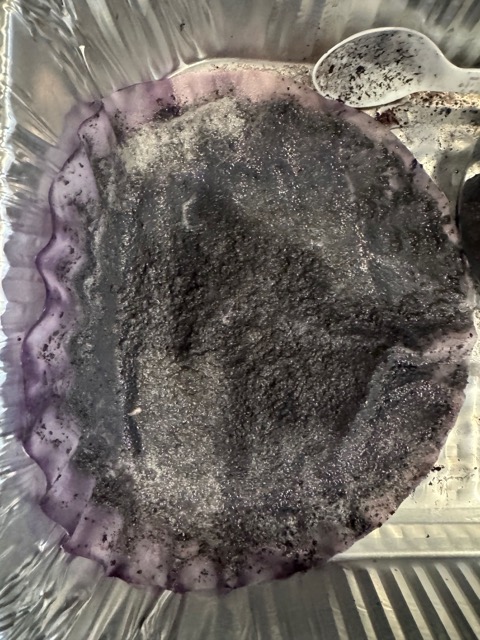
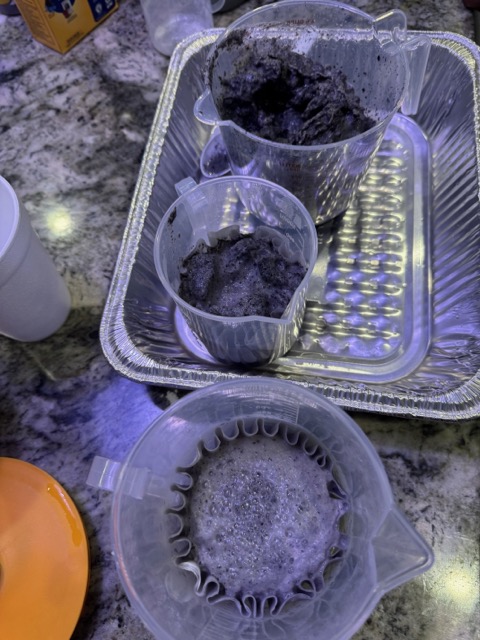
I used the remaining black bean dye bath to experiment with pigment extraction. Alum was added to the dye solution and stirred thoroughly. As the solution reacted, the suspended color began to separate from the liquid. The mixture was transferred into a beaker and filtered using a coffee filter. The pigment remained in the filter while the liquid slowly drained away. The filtered material was allowed to dry for approximately three days. Once dry, the remaining material produced a concentrated pigment derived from the original black bean dye bath.
This experiment was especially interesting because it allowed me to extend the life of the dye bath and explore a second application for the color. Instead of viewing the remaining dye liquid as waste, I began thinking about it as a potential material for further color experimentation.
Pigment Process Video
Pigment Results
The chart below documents the pigments produced during my BioChromes experimentation.
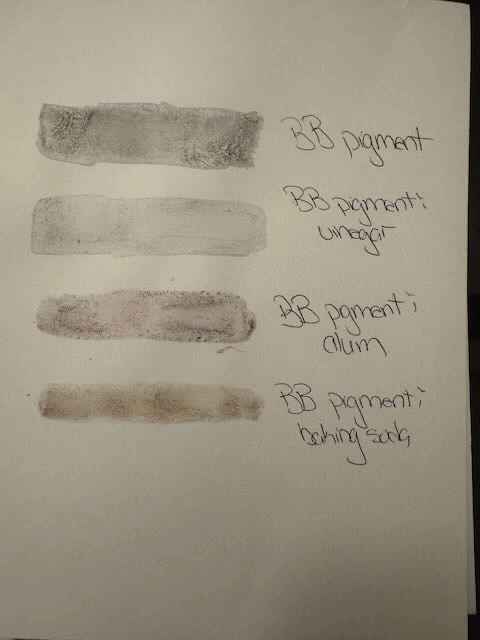
The differences in color demonstrate how biological color sources and processing conditions can produce a range of pigment outcomes. This experiment encouraged me to think beyond dyeing fabric and consider how bio-based color could be developed for future textile, surface design, and wearable art applications.