Experiments | Washing
Expected Output: Documentation of the process, including step-by-step instructions and any open-source tools used to allow experimentation in similar settings.
This experiment focuses on using only the natural grease (lanolin) and potassium salts (suint) present in raw wool to create a mild alkaline washing bath through controlled fermentation, no external soap or chemicals are added.
Based on initial research, suint fermentation can achieve up to a 75% reduction in water use, effluent volume, and chemical consumption compared to conventional wet scouring.
Process details
| STEP | Details |
|---|---|
| Bath preparation | Submerge wool in rainwater (it's the best to use or in the absence, distilled water). Temperature: 10°- 40°C (as warm as possible in winter) |
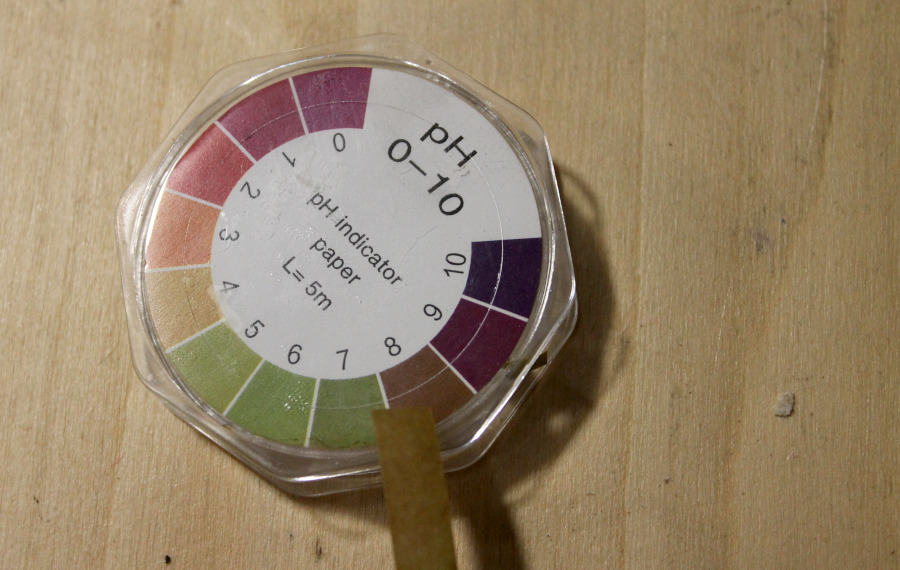
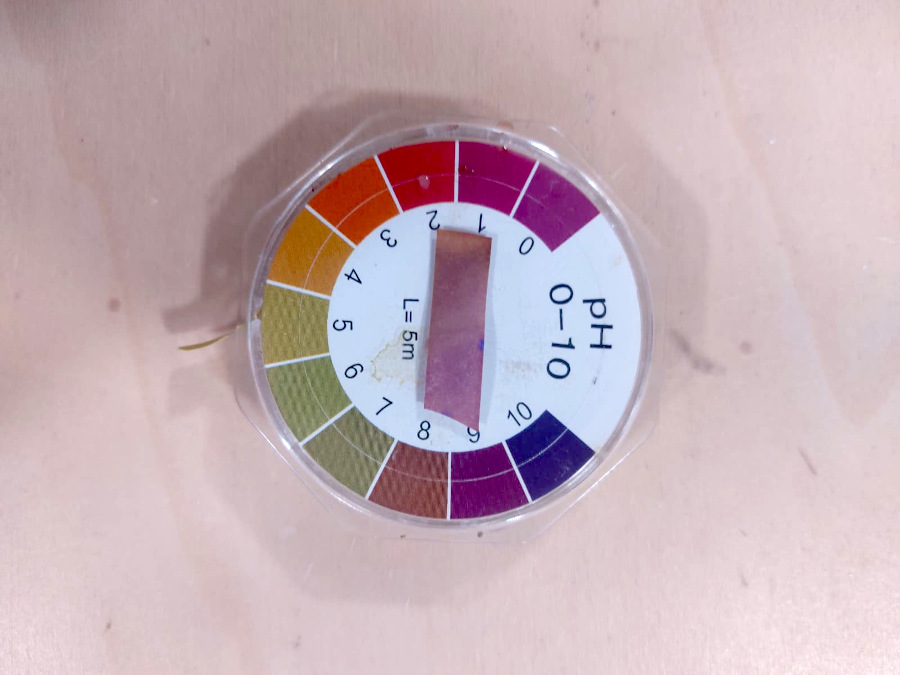
| Fermentation Phase | Monitor temperature and pH (pH target: 8–9, every 6-8h). Keep wool submerged for 1 week |
| Rinsing & Drying | Rinse gently with warm water and air-dry in a ventilated area. Lanolin remains in the wool as a soft protective wax and the dry fibers keep only their natural sheep scent (bacteria are anaerobic, they die and therefore the smell goes away). |
| Final rinsing | (Optional and not tested) Final wash post-dry. |
| Lanolin Recovery (Extra) | If the water is not reused for a second bath, let it sit overnight so the lanolin can float to the surface and collect it for future use. |
| LIMITATION | Details |
|---|---|
| Seasonal Constraints | The process works best in spring and summer, when the temperature is warmer. |
| Wool Characteristics | Freshly shorn wool is most effective. This project uses wool shorn in October, which may affect fermentation. |
| Odor & Indoor Space | Microbial activity may produce strong odors. Experiments are planned indoors due to winter conditions. |
| Regulatory & Hygiene Considerations | No official regulations exists.The substances are not hazardous but protective measures are used. |
Phase 1 (January)
Small batch test
Material: unwashed wool, water, stainless steel bain-marie, thermometer, pH strips, gloves (BoM here).
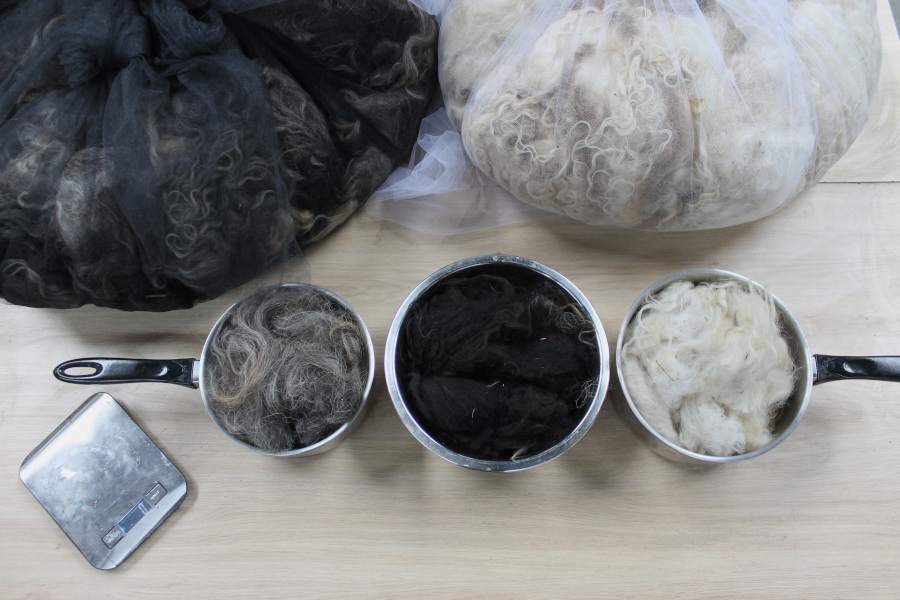
Quantity: 50 g of raw wool and 500 ml of water per batch, for three rustic wool colours: beige, dark, and mélange. Each batch was placed directly into stainless steel bain-marie containers.
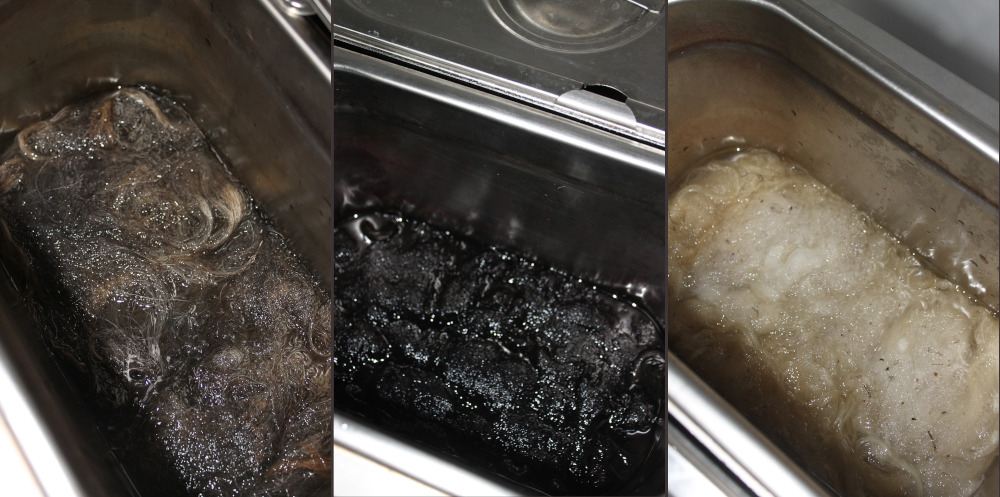
stainless steel bain-marie: (Water-bath machine) used on the first day to raise the water temperature. Heating was then gradually reduced and switched off, leaving the wool submerged.
Key observations
-
Temperature: process started at 40°C. Containers were insulated with a wool blanket to limit heat loss and placed near a running air conditioner for 5 hours/day, allowing temperature to stabilize around 20°C.
-
pH: the first test was run with tap water, with pH 7 gradually increased to 8, within the target range.
-
Odour: the characteristic wool odour progressively intensified, indicating ongoing biochemical activity.
-
Monitoring is still in progress and wool will be removed and checked on Jan 27.
Results
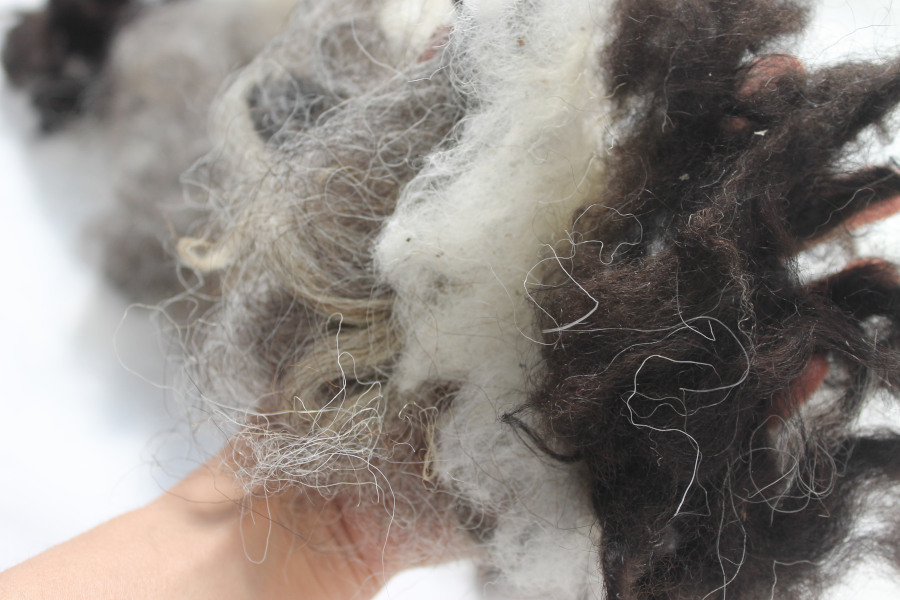
Wool removed from containers and rinsed, it is soft and clean, the smell is gone once the wool is completely dried.
Lanolin extraction
In the initial proposal, I included an additional step for lanolin extraction. However, I observed that a significant amount of lanolin remains on the wool, particularly in rustic breeds.
I therefore chose to preserve the lanolin in the bath, either for reuse in subsequent washes or for its nutrient-rich properties when used as a fertilizer.
Phase 2 (February-March)
Scale up
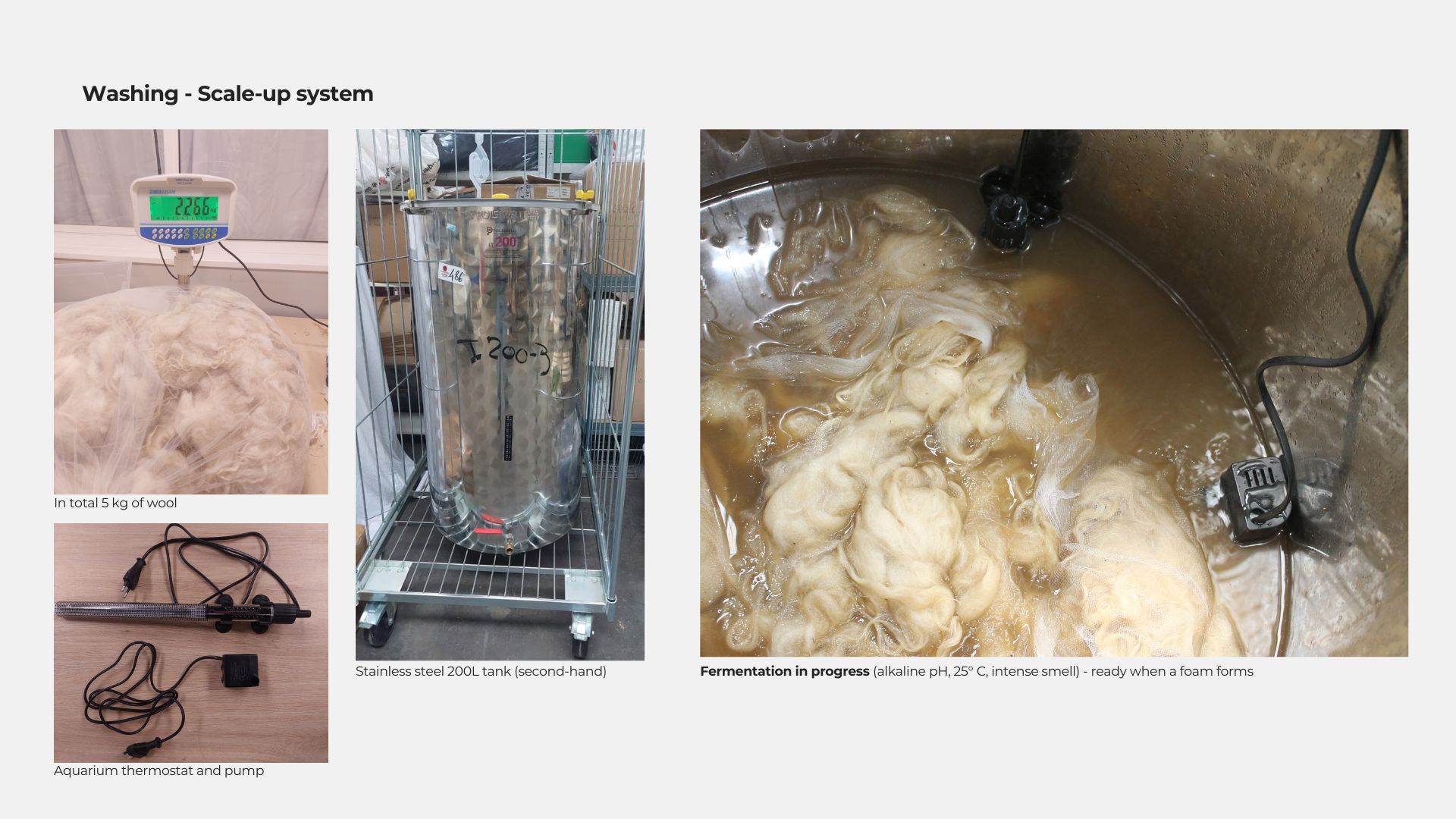
Building on the first experiment, the focus shifted towards scaling up the suint fermentation process to wash larger quantities of wool at once and developing a DIY fermentation machine.
Process key points
-
Water: prefer rainwater when available (collected locally in Lyon) to create the bath. Reuse the bath from previous fermentation will speed up the process (it's fine to re-fill it with additional rain water as needed).
-
Fibers preparation: fully submerge the fleece to ensure complete coverage.
-
Bath reuse: the fermentation bath can be reused, reducing treatment time from a week to a few days. Remaining water can be repurposed as fertiliser.
-
Readiness: the wool is considered ready when bubbles appear or a surface film develops.
-
Temperature control: passive insulation leverages wool’s thermal properties and stable indoor conditions; process remains viable down to 15 °C.
-
System to speed up the process: a small air pump in the barrel and a froth forms on the water surface like a soap.
-
Insulation inspiration: Norwegian haybox, a low-tech system using wool to trap air and retain heat. This serves as a reference for a potential open-source insulating system for winter fermentation. The insulation system will be designed on Jan 29 during a dedicated session with Capucine. Experiment 2 will begin once the system is complete.
DIY machine components:
- a tank (either HDPE or stainless steel with a LID)
- a cheesecloth containing the wool, to easily pull up it from the tank when ready
- a thermostat, like the one used in fish tank to control the temperature. Note: you need to buy it according to the liter capacity of the tank. This should also show what is the temperature continuously for monitoring
- An aquarium pump that makes bubbles and help the process.
Anastasia had suggested I also use a perforated washing machine drum, but I couldn't find one and tried directly with a washing machine, as described here.
Sketches
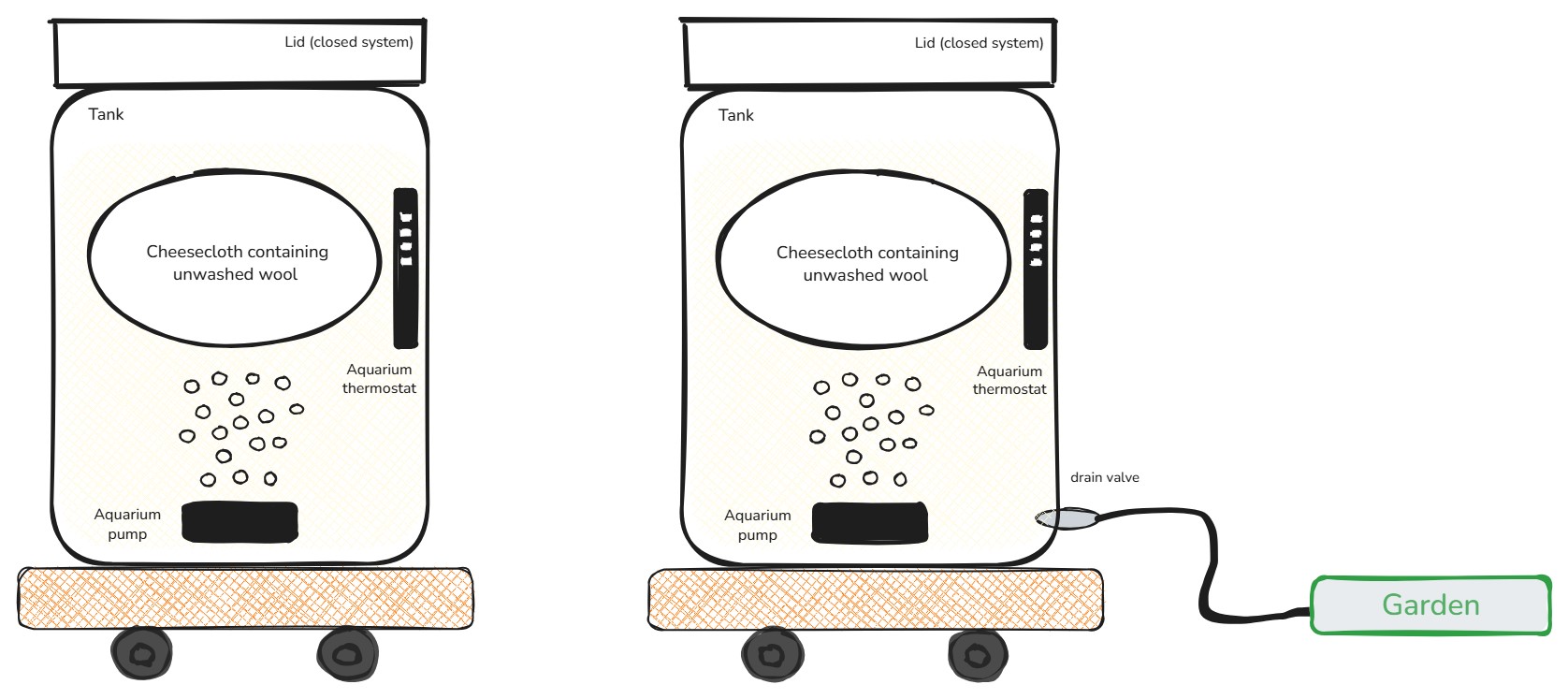
System
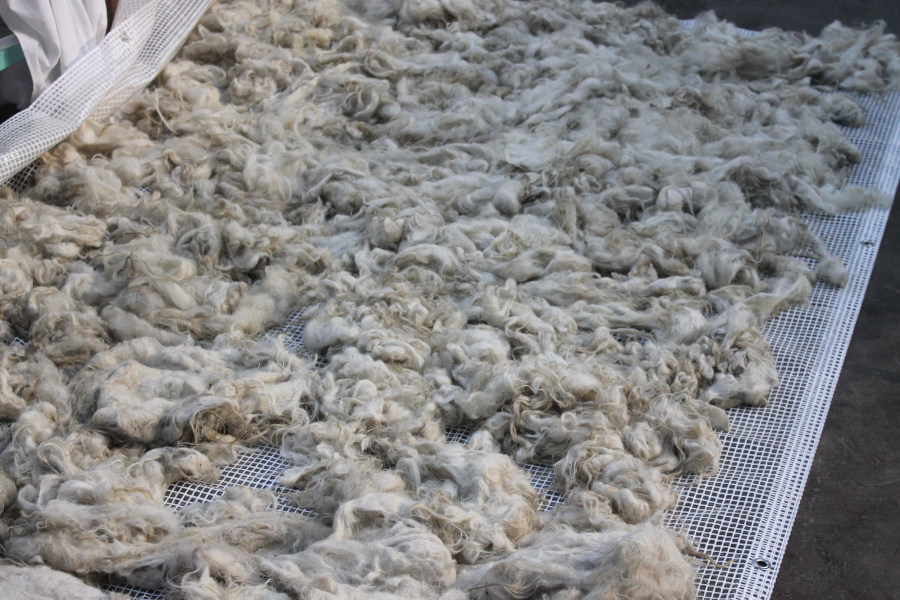
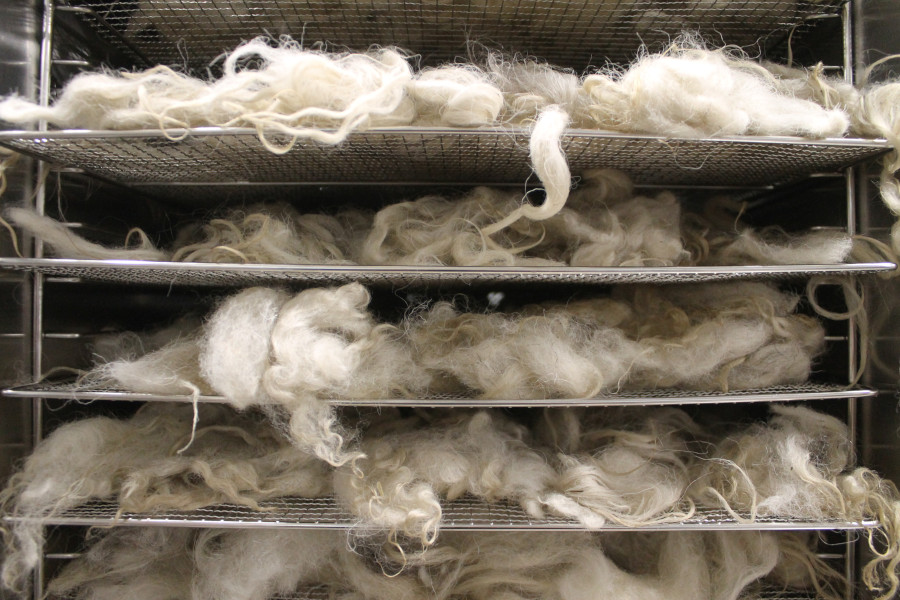
The 5 kg of wool washed with the system were spread on a surface in the lab during the drying phase. I also placed them in batches in a large dehydrator at the minimum temperature to speed up the process.
Observations and best practices
-
The system worked. After one day, the aquarium thermostat achieved a warm temperature and kept it for the full experiment (around 25°C).
-
Aquarium pump generated some bubbles but in my opinion this tool is facultative.
-
The lid was fundamental to keep the water warm and the smell contained (intense after 3 days).
-
The mesh fabric used to contain the wool, compared to cotton, allows for better observation. However, it's not necessary to open the lid every day (in my case, I wanted to monitor the process).
-
Wear a mask, a pair of gloves and a lab coat help manage odors and grease in the water.
-
Rinsing the fibers can be a lengthy process, so if possible, take advantage of a rainy day to hang the wool outside and rinse it that way.
-
Wet wool may be heavy, the system could be improved with a mechanism for lifting the bag containing the wool.
-
If you are not using bags to contain the wool inside the system, use a net (such as a swimming pool net) to more easily reach the fibers at the bottom of the container.
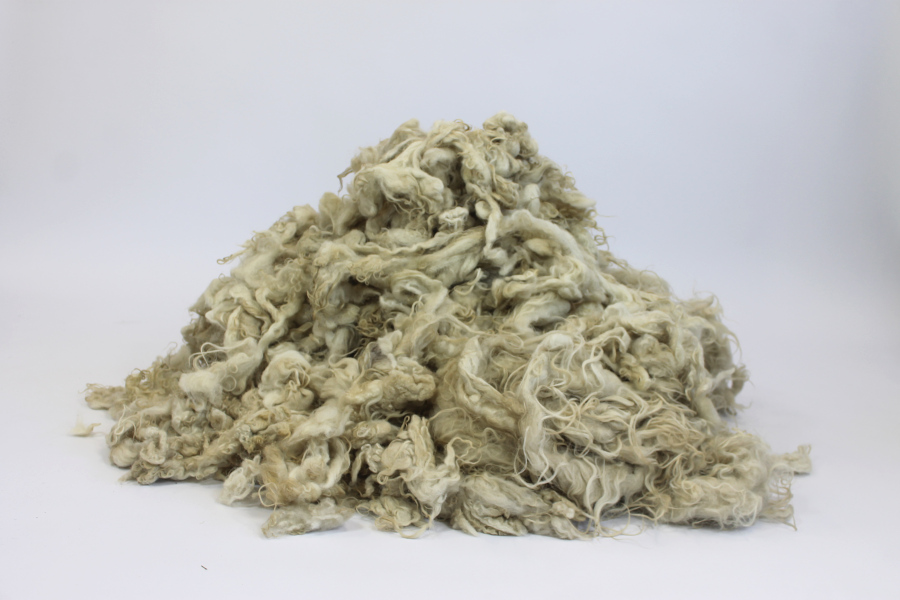
Reading the limited literature available on the process, I wasn't sure if shaking the fibers would help the process. Talking about it with Pauline, we discussed whether to test this using a washing machine. The idea emerged because Le Textile Lab is located near Envie, a sustainable organization specializing in refurbished appliances.
To develop this system, I defined a few key requirements:
-
A top-loading machine, allowing easy monitoring of pH, temperature, and odor.
-
The ability to stop the cycle before the draining phase.
-
The use of rainwater instead of tap water, with control over drainage.
One morning Pauline found a suitable solution: a compact Tecktake washing machine that requires manual water management and I decided to test it.
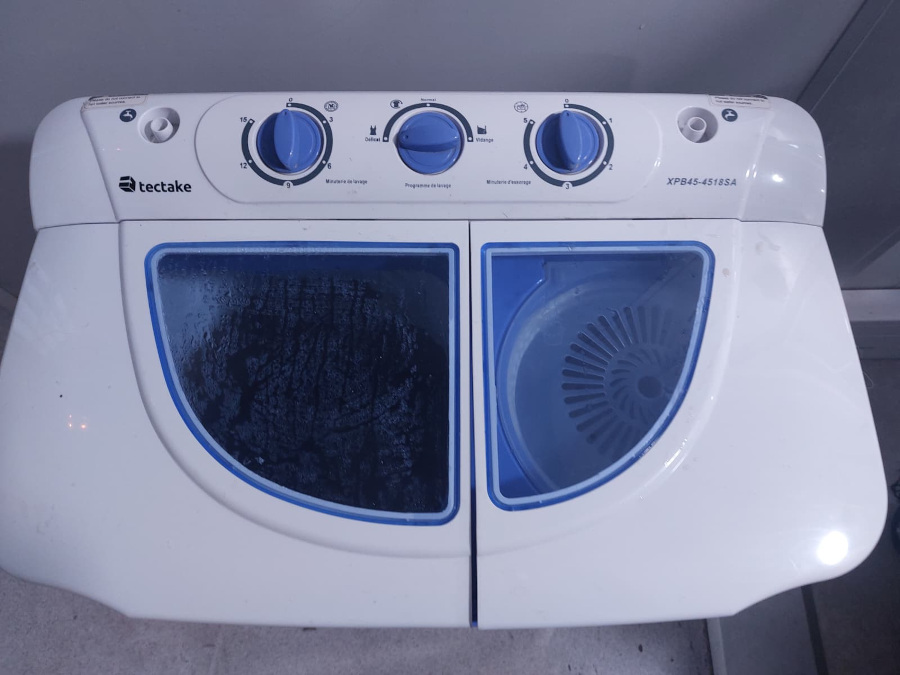
Steps I took
-
Collect rainwater (5 L for this experiment).
-
Weigh and prepare the wool fibers using cheesecloth or a cotton cover (1 kg for this experiment).
-
Preheat the water, as the washing machine maintains a temperature of around 30°C, although the stability and duration are uncertain.
-
Place the wool in the drum and fill the machine with the prepared water.
-
Run a delicate cycle for approximately 3 minutes to gently agitate the fibers.
-
Leave the fibers inside the machine without further agitation for several hours.
-
After 5 hours, measure and record the pH, temperature, and other relevant parameters (e.g. odor, visual changes as the water becomes dirty, fiber texture).
-
Repeat the delicate cycle once per day. Monitor the smell as it gradually becomes stronger. Check for bubbles or a film formation, this indicates that the wool is ready.
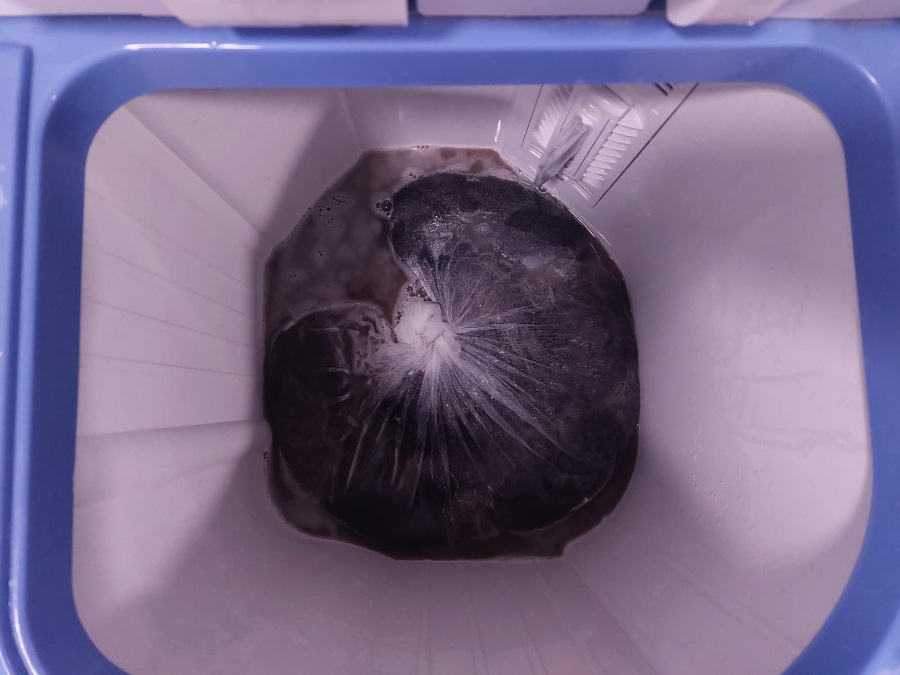
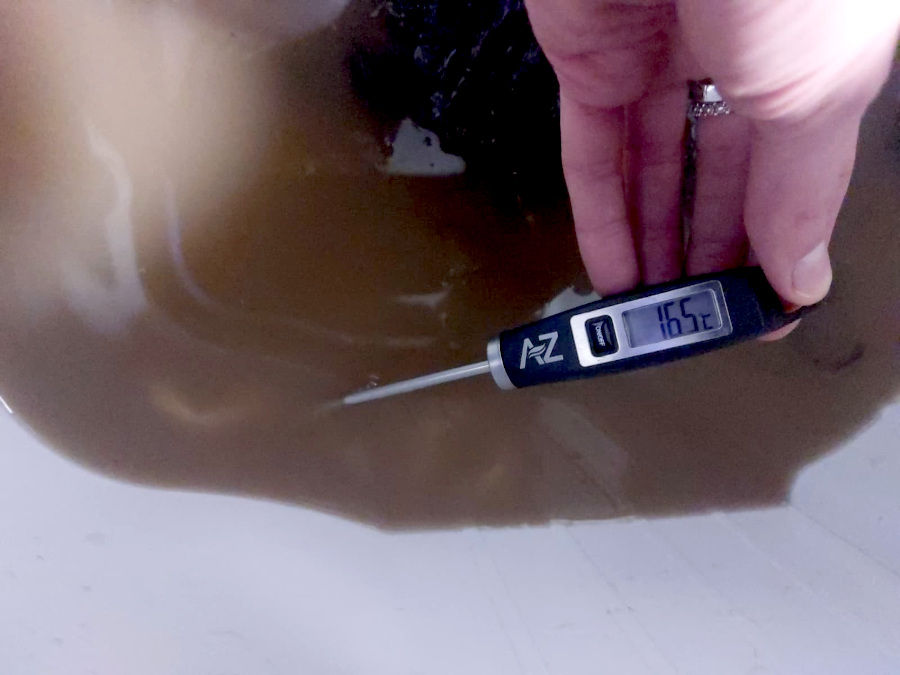
Observations
-
The smell was strong, and the water very dirty, but with the washing machine lid closed, it was not visible.
-
The fibers became very tangled once dried. A woman who runs a washing facility, whom I met through Woolshed, shared that she does not wash Thones et Marthod wool, as the fibers become too tangled and felted.
-
The drying system significantly reduced the water content between the fibers, but they remained tangled.
For this reason, I do not recommend agitating the fibers. The tank-based system remains the best solution I have tested, even with other rustic fibers.
References
Images: Martina Muroni unless otherwise stated.