Experiments | Biochromic
Expected outcomes: A set of preliminary samples, recipes and process notes documenting differences in color uptake, fiber response and process efficiency.
Phase 1 (January)
During this initial stage, I tested a “micro-bath” approach, placing the hot dye bath directly in a small jar together with the fiber and, when needed, the mordant. The bath was then left to cool down naturally.
I explored both a tannin-based recipe that does not require a mordant and another with mordanting, including one test without it, to observe the differences in results.
Experiment 1: coffee and wool (tannin micro-bath)
Process
MATERIAL:
- 50 g ground used coffee
- 500 ml Water
- 3 g carded white wool
- 3 g unwashed light-colored wool
-
1 tablespoon potassium aluminum sulfate
-
glass jars with lids
- pot
- paper coffee filter
- strainer
STEPS:
-
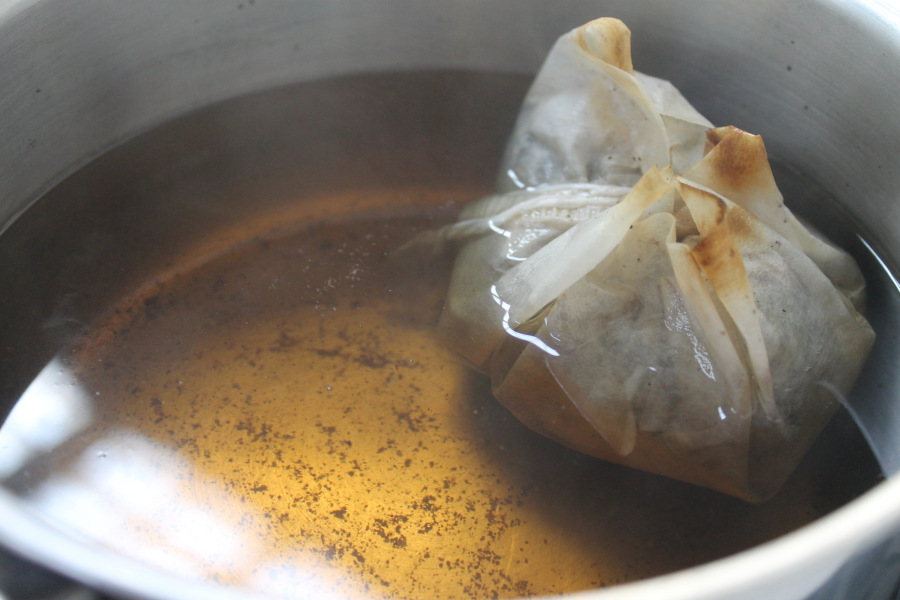
Coffee extraction: place ground coffee inside a paper coffee filter (in my case, I kept the one used for preparing american coffee and close it with a string). Submerge the filter in a pot filled with water. Bring to a gentle boil and let simmer for approximately 15 minutes, allowing the coffee pigments to fully extract into the water. Filter the dye bath.
-
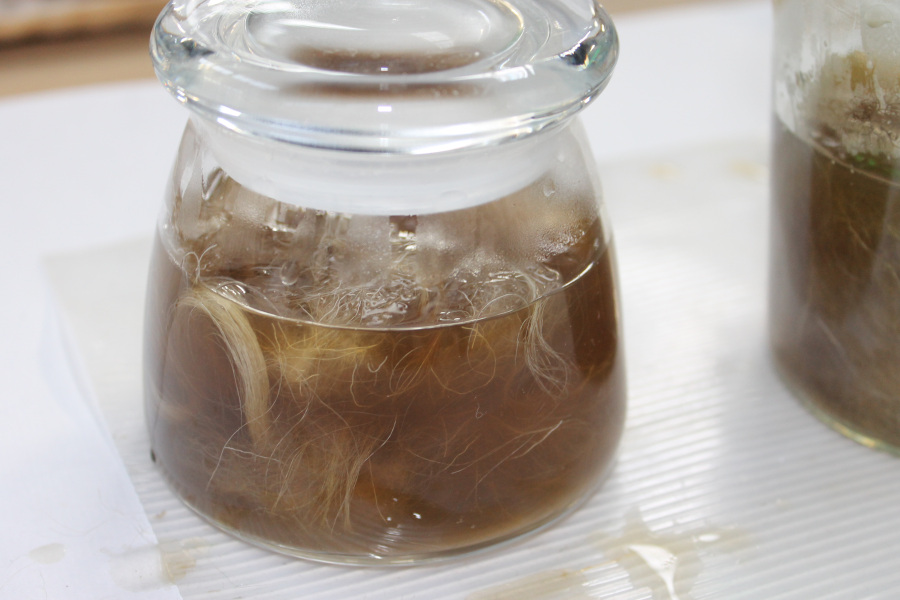
Mordant and fiber preparation (jar method): place the alum (optional as coffee is tannin and mordant is not mandatory) and the washed wool directly into a clean glass jar.
-
Dyeing: pour the hot coffee dye bath over the wool, fully submerging the fibers and close the jar with a lid. Leave the wool immersed in the dye bath at room temperature for at least 60mins (I kept overnight) with no further heating.
-
Rinsing: remove the wool from the jar. Rinse gently using a small amount of clean water, avoiding agitation. No soap was used.
-
Drying: lay the wool flat and allow to air-dry completely at room temperature, away from direct sunlight.
Key observations
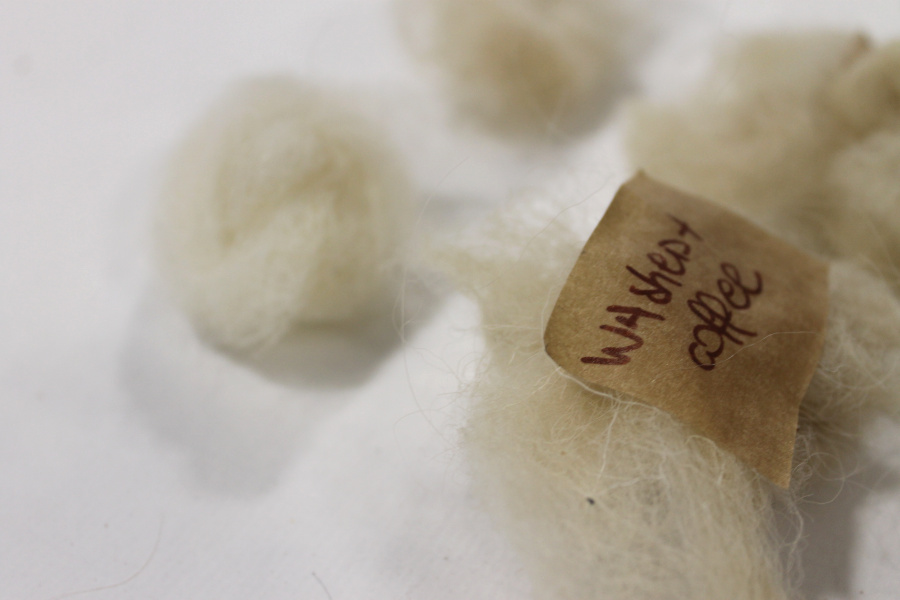
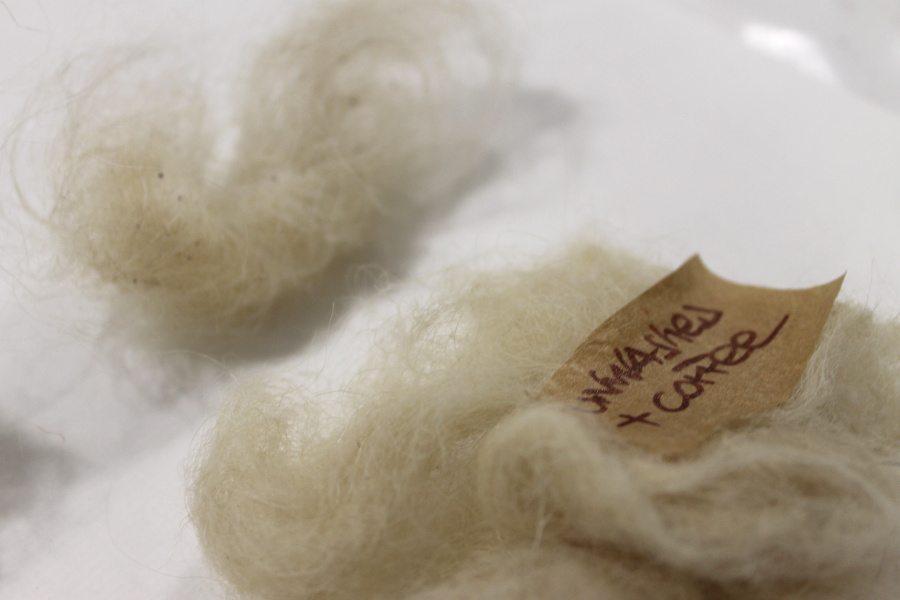
The coffee micro-bath did not produce a visible color change on wool. This suggests that coffee is not an effective dye source for protein fibers.
The jar-based micro-bath successfully reduced water use and simplified the process. If effective with other dye sources, combining mordanting and dyeing in the same container could save both time and resources.
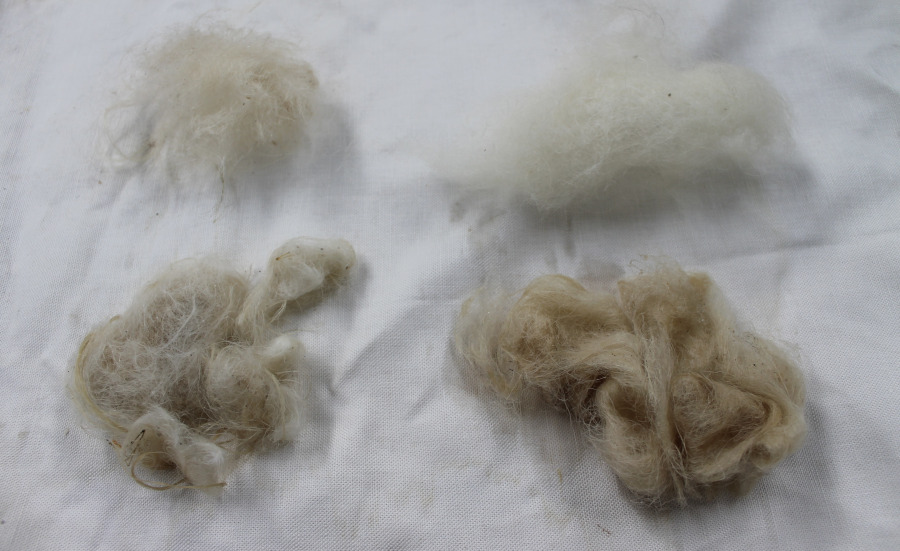
Comparison during the drying phase: the upper part of the image shows undyed wool (unwashed on the left, washed on the right), while the lower part shows the coffee-dyed samples (unwashed on the left, washed on the right).
Fully dried: the visual difference between dyed and undyed wool became almost imperceptible.
Experiment 2: avocado peel + wool (tannin micro-bath)
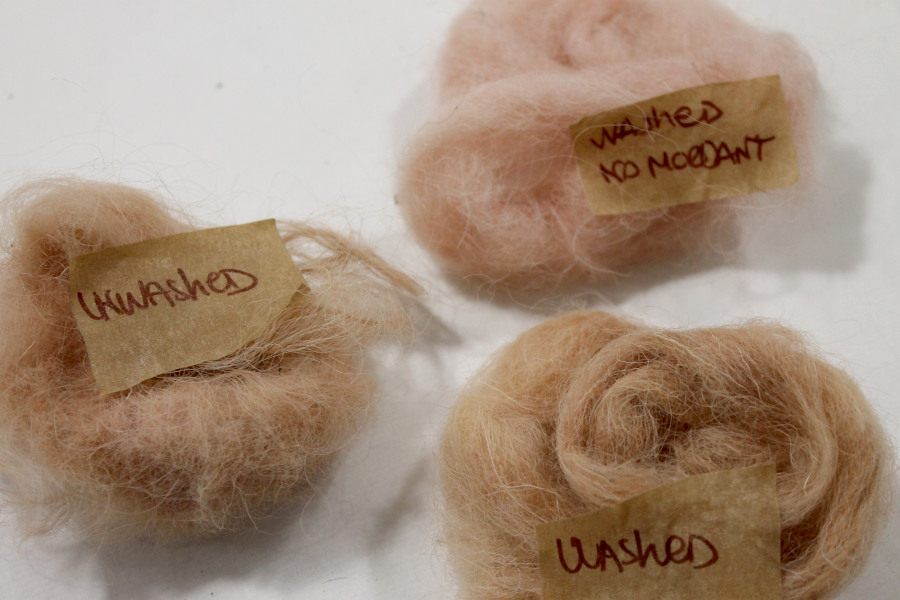
This test explored avocado peels as a natural dye source for wool across three batches: two mordanted with alum and one dyed without a mordant.
- Batch A: unwashed wool + avocado dye + alum
- Batch B: washed wool + avocado dye + alum
- Batch C: washed wool + avocado dye without mordant.
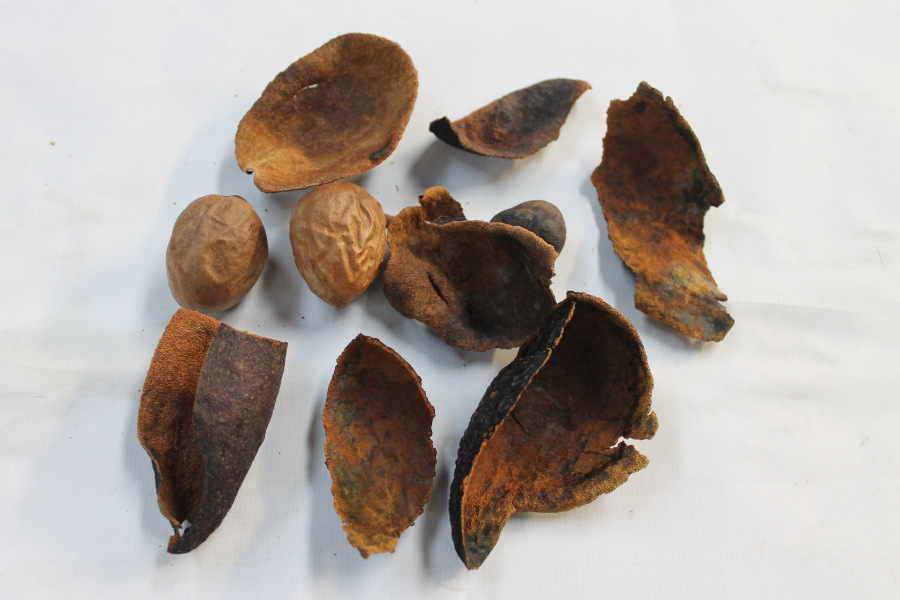
Avocado peels were selected for their high tannin and anthocyanin content, their origin as food waste, and their strong affinity with protein fibers such as wool.
Process
MATERIAL:
- dried avocado peels
- 6g of washed carded wool
- 3g of unwashed wool
- 500 ml water
-
2 teaspoon of potassium aluminum sulfate
-
pot
- heat source
- strainer
- glass jars with lids
STEPS:
-
Dye extraction: place avocado peels in a pot. Add water to cover the material. Heat gently to 70–80 °C, avoiding boiling. Maintain temperature for 30–45 minutes, allowing pigments to extract. Strain the liquid to remove solid peel residues and let it cool up to 60 degrees.
-
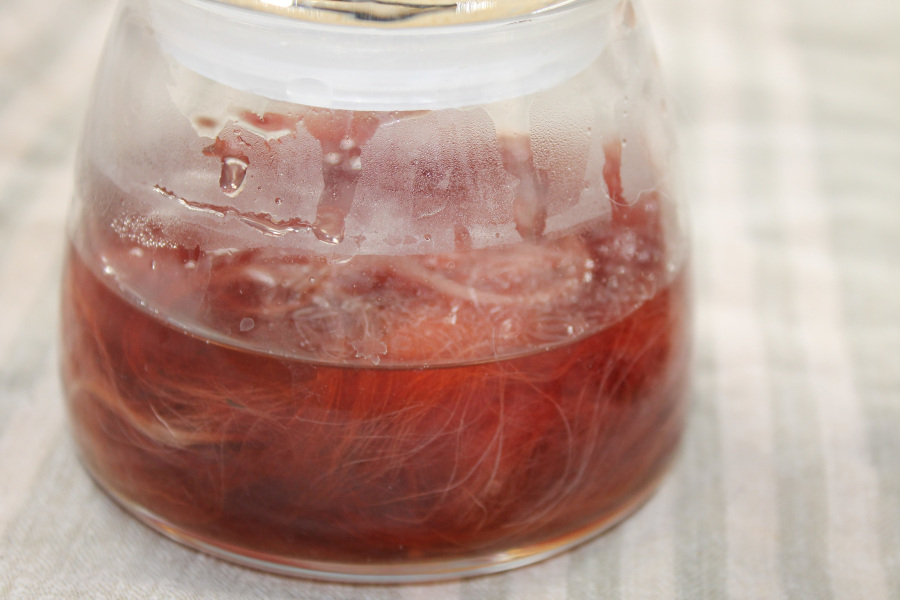
Dyeing: prepare wool batches by adding wool and the warm dye bath. For Batch A and B, add alum directly to the bath. For Batch C, no mordant was added.
-
Cooling and resting: Allow the wool to cool inside the dye bath. Leave to rest until fully cooled to room temperature, overnight in my case.
-
Rinsing: remove the wool and rinse gently with a small amount of clean water.
-
Drying: air-dry the wool flat at room temperature, away from direct sunlight.
NOTES:
- Avocado peels can dye wool without mordant due to their natural tannin content.
- Alum improves color uniformity and wash fastness but is not chemically required.
- The process prioritizes low water use and low energy input.
- Final dyed wool remains hydrophilic and moisture-sensitive.
Key observations
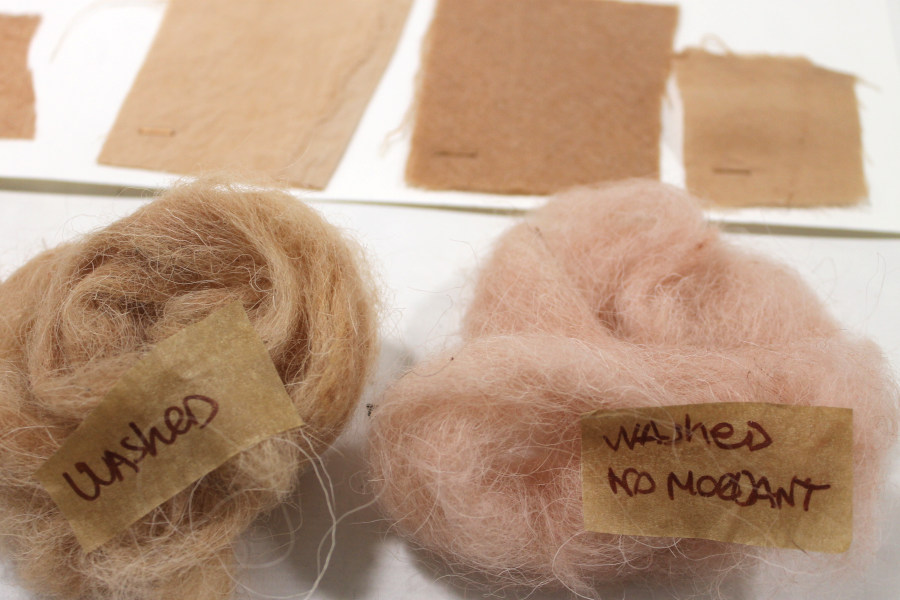
Avocado peels proved to be a suitable dye source for wool, producing soft pink–beige tones across all batches.
Both washed and unwashed wool absorbed color effectively. The unmordanted sample resulted in a lighter but still visible coloration, confirming that tannin-rich ingredients can dye wool without alum.
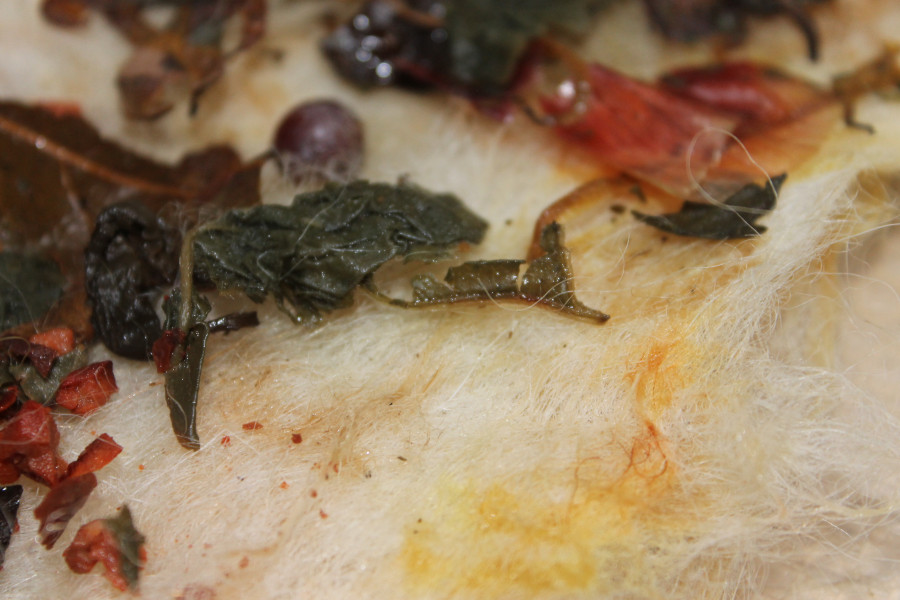
Experiment 3: contact dyeing (eco-print inspired)
Fiber used: A dense surface was created from carded wool using water and Marseille soap, resulting in a structure similar to wet felting. The fiber was kept damp throughout the process. This approach replaces the mordanting phase, as the soap is already present within the fiber.
Ingredients: leaves, onion skins, tea, herbal infusions, flowers.
Process
STEPS:
-
Preparation of the fiber: light damp the wool sample to allow better absorption of color and contact with the organic materials.
-
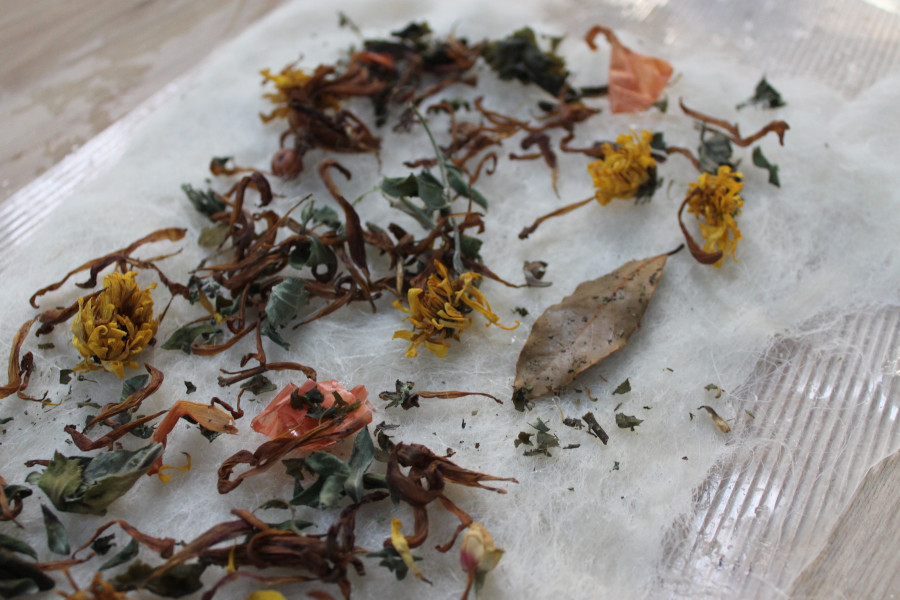
Placement of ingredients: place the ingredients in direct contact with the wool surface, arranging them intuitively to encourage organic pattern formation.
-
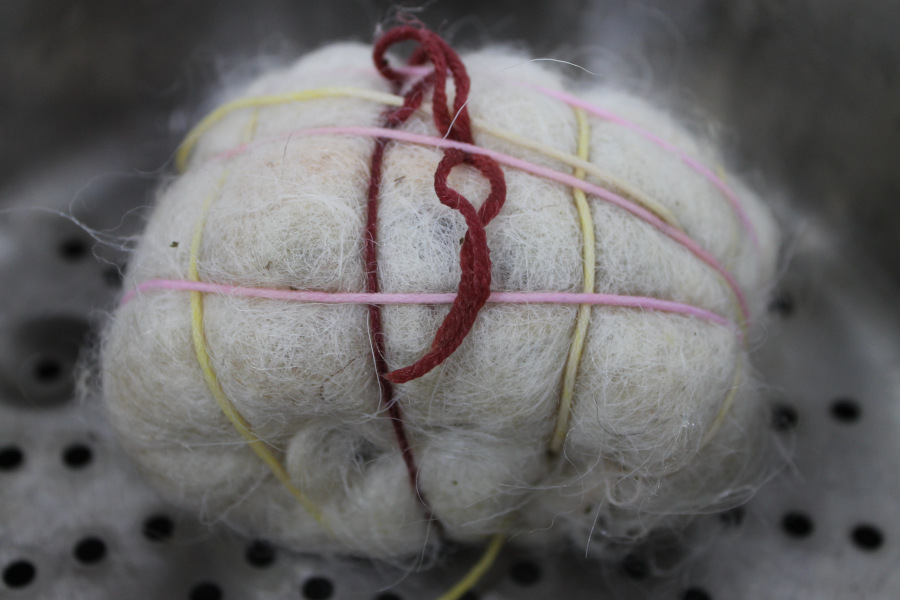
Wrapping (Roll Technique): wrap the wool and ingredient into a roll, ensuring close and continuous contact between fibers and natural dyes.
-
Steam exposure: place the rolled bundle in contact with steam for at 30 minutes.
-
Cooling phase: leave the bundle cool slowly, remaining in contact with the warm steam environment until it reached room temperature. This gradual cooling helped fix the pigments and enhance pattern transfer.
-
Rinsing: once fully cooled, gently rinse the wool with water to remove excess residues without disturbing the transferred marks.
-
Drying: the sample was laid flat and left to dry horizontally.
Key observations
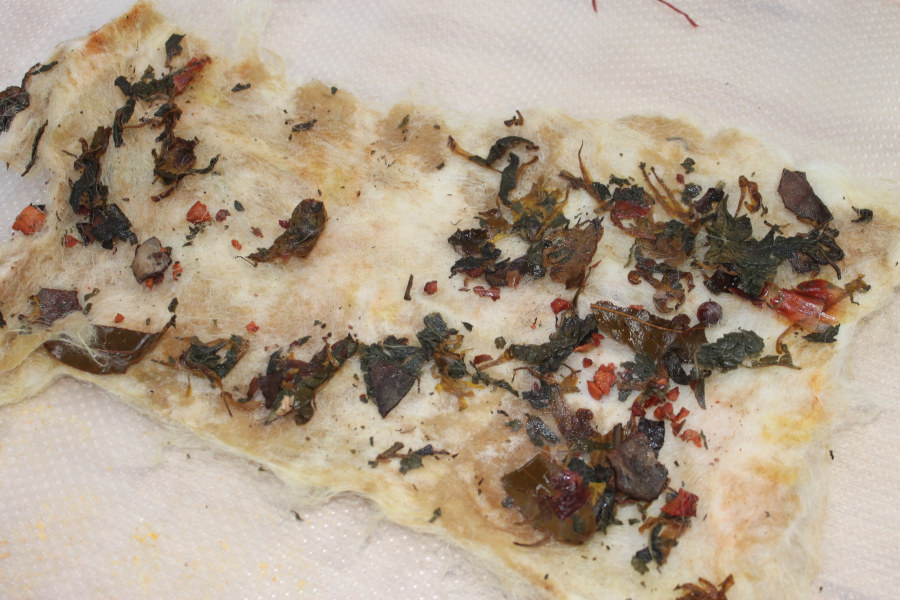
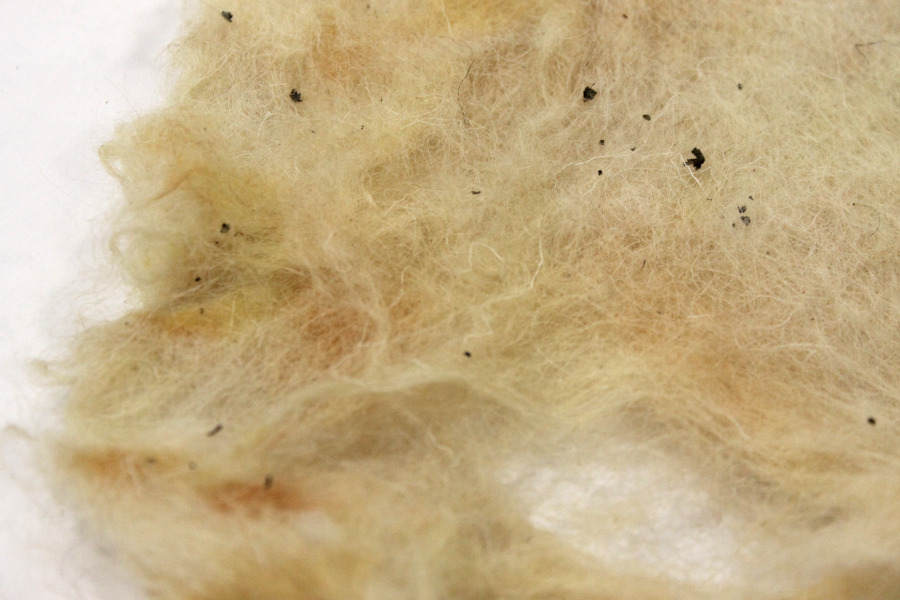
Eco-printing results in irregular marks and stratified chromatic patterns, revealing the material dialogue between wool fibers and plant matter.
Botanical residues often remain embedded in the fiber structure, suggesting a well-felted wool surface can provide a more controllable substrate for future experiments.
Next steps planned
The following directions were initially outlined for the next phase of the research:
1. Selection of tannin sources
Identify tannin-rich, locally available materials compatible with wool for low-water dyeing experiments, considering seasonal limitations (winter availability).
2. Low-water dyeing tests with tannin-rich materials
Small-scale experiments to observe colour uptake and stability across different tannin sources, with a focus on processes that do not require a separate mordanting phase.
3. Alternative explorations (secondary direction)
Additional experimental lines included bacterial dyeing in controlled lab conditions (Petri dish setup, inspired by Petra Garajová's work) and fermentation-based dyeing processes as low-water and low-energy alternatives.
Phase 2 (February-March)
After the mentoring session on January 27, and following initial exploration of fermentation (later set aside due to its limited controllability and seasonal constraints), the research shifted toward more sustainable dyeing techniques, focusing on locally relevant Alpine plants.
Key aspects of the new approach:
-
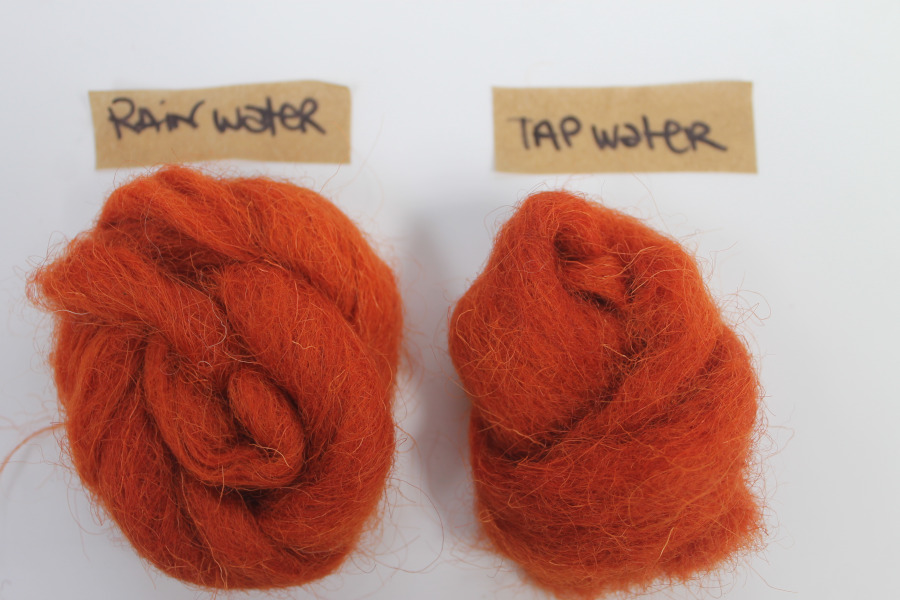
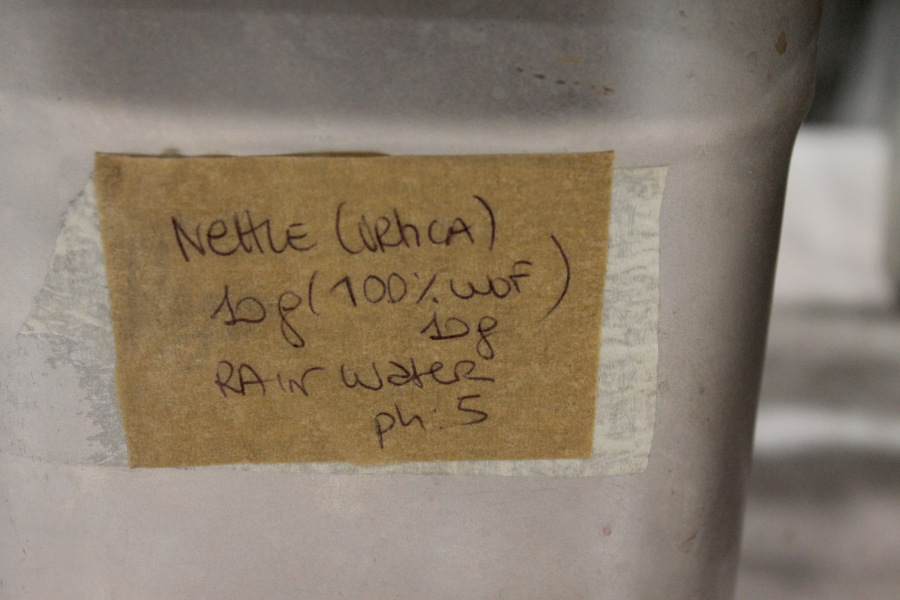
Water pH impact in dyeing: comparing rainwater (pH:5) and tap water (pH:8) to evaluate rainwater as a local resource.
-
Skipping the scouring step: comparing pre-scoured and raw fleeces to assess when scouring can be avoided.
-
Tannin-based no-mordant dyeing: testing natural tannins as standalone dye agents and using iron post-dye modification to deepen tones.
-
Simultaneous mordant dyeing: a traditional wool-friendly method adding mordants directly to the dye bath, reducing water use. The recipe requires to prepare the dye bath as per standard process, then to dissolve the mordants and finally add the fiber.
-
Dye bath reuse and pigment extraction: both methods reduce water consumption and provide effective secondary dye sources. Lake pigment extraction was an historical practice to dye and now it can be used to recycle the bath. I started experimenting it by following Cecilia's Raspanti recipe:
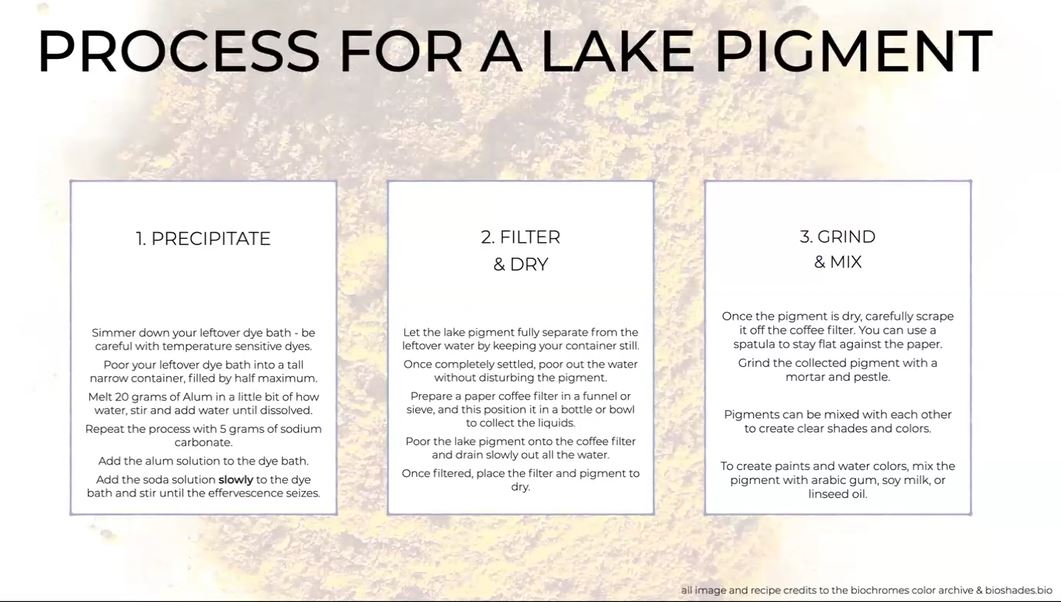 Credit: Cecilia Raspanti
Alpine dyes
Natural dye plants were historically central to Alpine textile systems but were largely replaced in the 20th century by synthetic alternatives. Despite the abundance of dye plants in the Alpine region, structured and reliable application methods remain limited. Source
Ingredients tested
Each alpine-based ingredient has been tested in one bath prepared with rainwater and one bath with tap water, using the same amount of WOF. WOF in the table below refers to a single bath.
| Ingredient | Preparation method | Mordant | Colour | % WOF | Colour with iron modifier | WOF |
|---|---|---|---|---|---|---|
| Chamomile (Matricaria / Anthemis spp.) | Decoction | Yes | Yellow | 100% dried (300% if fresh) | Mustard | 5g |
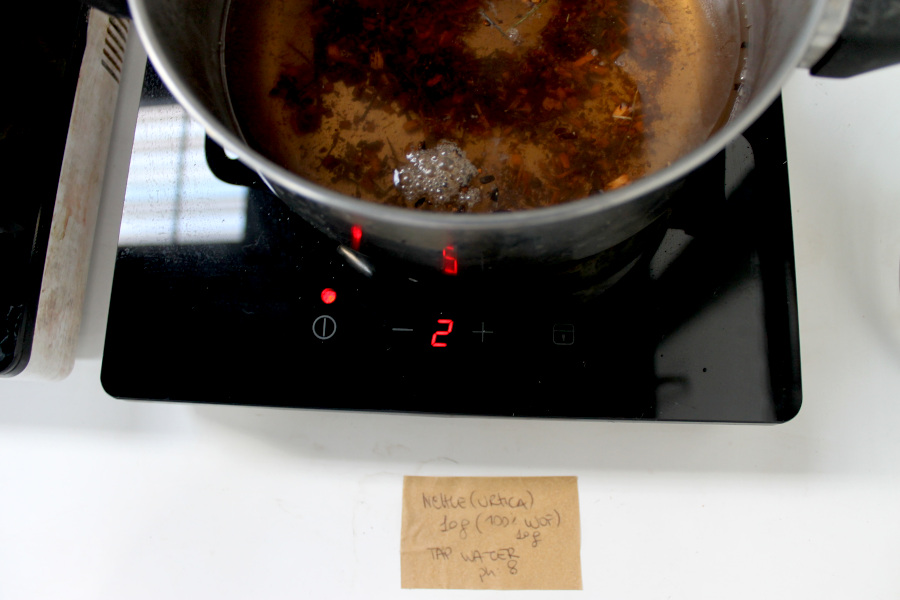
| Nettle (Urtica dioica) | Decoction | Yes | Pale green | 100% | Soft grey | 10g |
| Oak galls (Quercus spp.) | Single bath | No - tannin | Warm beige | 30% | Grey, Black | 10 g |
| Madder (Rubia tinctorum) | Single bath | Yes | Warm Coral, Red | 100% | Brown, Violet | 10 g |
| Walnut husks (Juglans regia) | Single bath | No | Brown | 100% | Grey | 10 g |
Preparation, Mordants and Dyeing methods
MORDANTS (WOOL): 20% WOF of potassium alum + 8% WOF cream tartar.
DECOCTION:
-
Place the ingredient in a container, then added water and leave for 6-24 hours.
-
Heat the container, keeping the temperature around 80–90 °C for about 1 hour.
-
Filter the liquid to remove the matter and keep the coloured water.
-
Let it cool down to 40° degrees and add the mordant if required.
-
Once dissolved, add the wool and heat up to 90° degrees for 1 hour or until desidered color is reached.
SINGLE BATH:
-
Place the extract powdered ingredient in a container and add water to dissolve. Leave it there up to 24 hours.
-
Heat up to 40° degrees and add the mordant if required.
-
Once dissolved, add the wool and heat up to 90° degrees for 1 hour or until desidered color is reached.
Observations
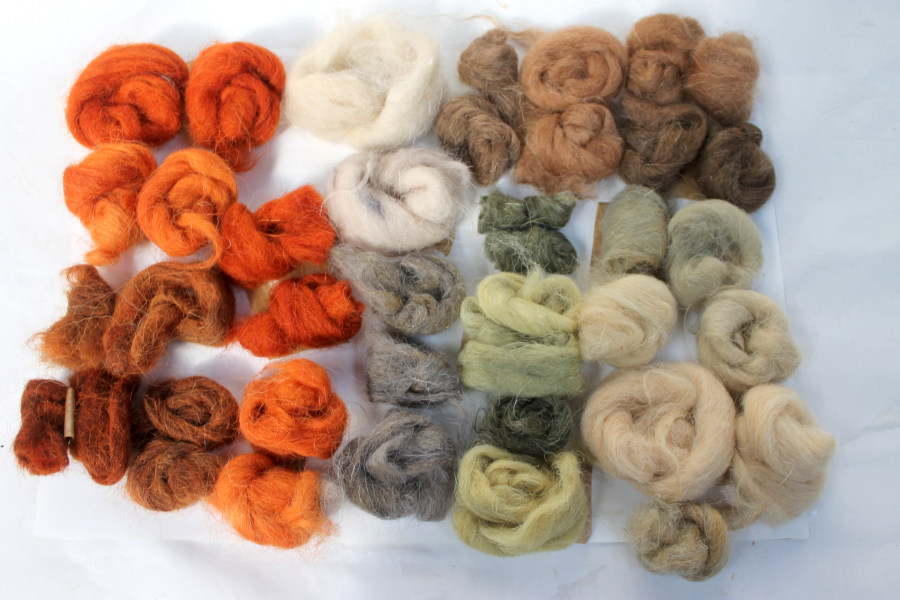
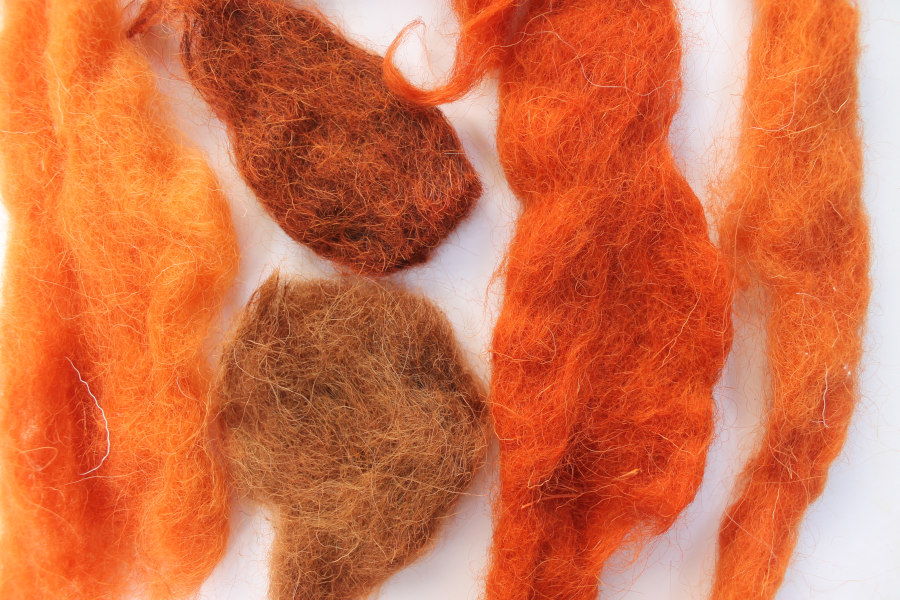
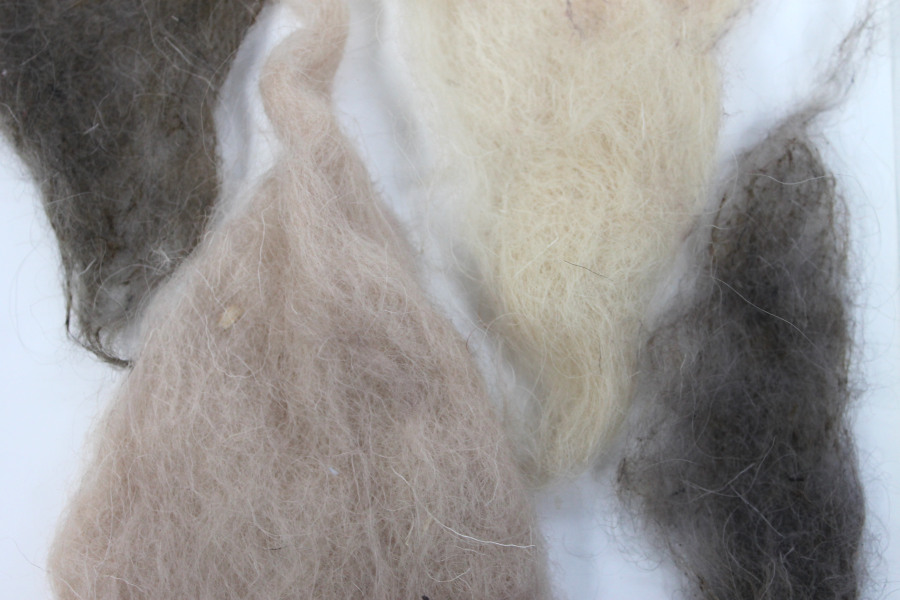
The following photo shows the full colors palet I created during the tests in phase 2.
Water pH
In some experiments, the colour did not vary with changes in pH. In one tannin-based test, I achieved a pink shade instead of the expected beige, while with madder I observed slight tonal variations.
I recommend using local water whenever possible, as its specific characteristics and pH can influence the dye bath and contribute to unique results.
Skipping the scouring step
The scouring step can be omitted when working with raw fleeces or yarns spun without additional treatment (e.g. wax).
To test this, I prepared two separate dye baths: one with pre-scoured fibres and one with unscoured fibres. The initial results were consistent with the literature and tutors’ guidance regarding fleece processing, so I did not repeat the comparison across all colour tests.
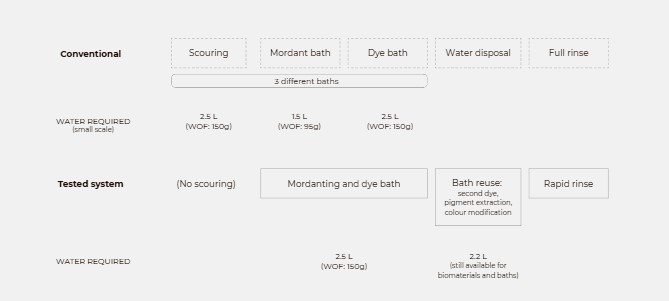
Water saving: scouring 50 grams of fibre required approximately 1 litre of water.
Simultaneous mordanting
The process, applied to non-tannin ingredients, gave me good results, confirming this step can be eliminated.
By removing the mordanting phase, one bath is also saved, reducing overall water consumption.
Iron modification
This process intensifies the color tones and is capable of altering the pale colors of the tannins into intense dark grays and greens.
I replicated Week 4 recipe and process, but instead of vinegar I used citric acid as I found it to be gentler on the fibers.
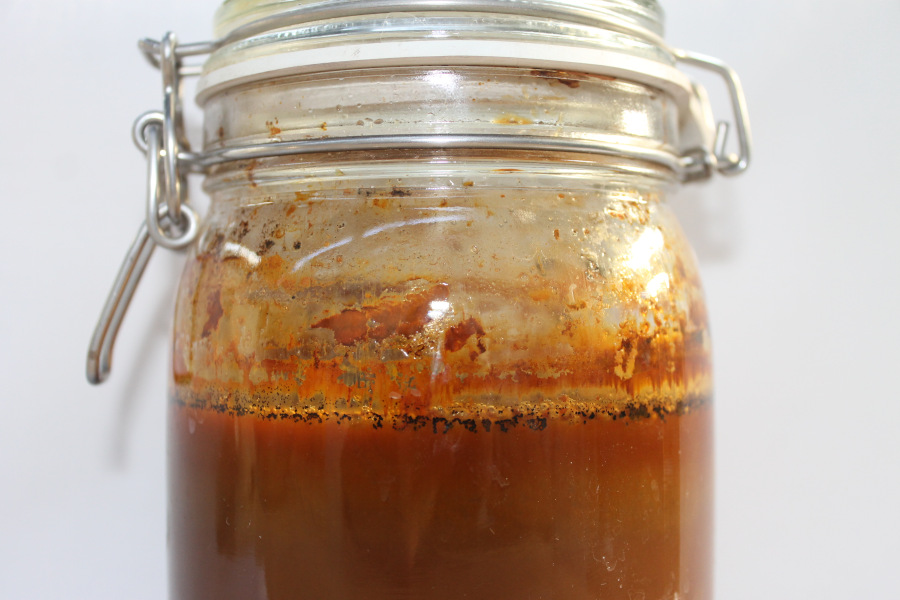
In parallel, I prepared a more traditional iron solution using rusty nails and citric acid in water. This process took one week, so I started the test with the Fabricademy recipe. Once ready, I mixed the iron solution with 1 part of water before pouring the previous colored wool.

Bath reuse
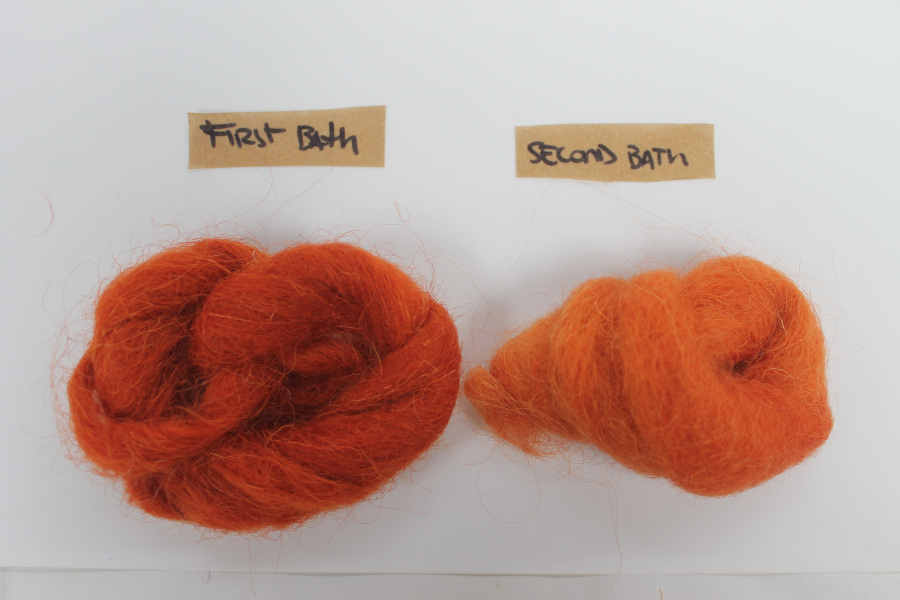
The same bath can be reused multiple times by replenishing it with the necessary amount of mordant solution to treat a new piece of fabric. A dye bath can be reused until it is exhausted, however, colour intensity and tone may gradually shift with each cycle.
I tested this approach with madder and obtained a softer, orange-toned shade in the subsequent bath.
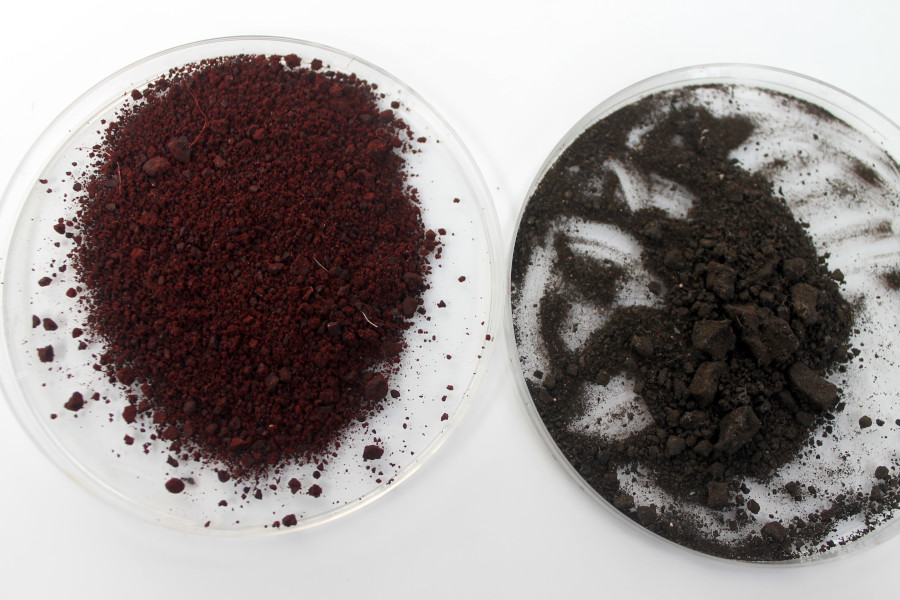
Pigments extraction
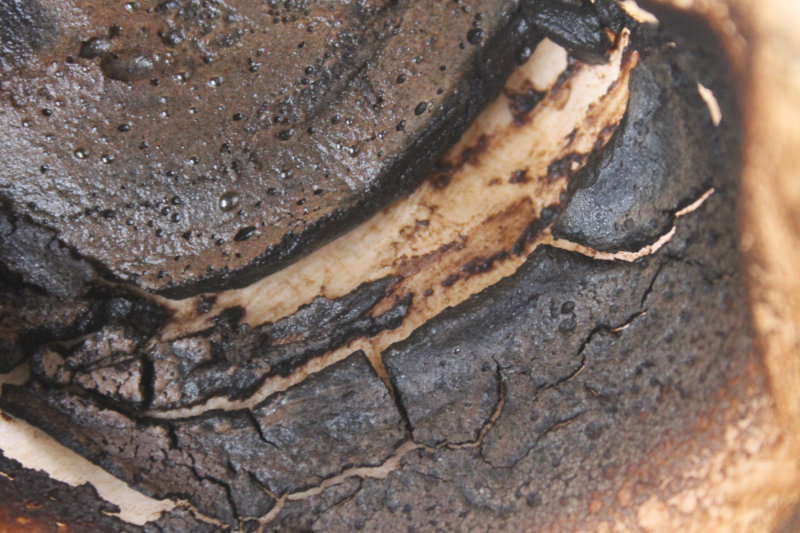
After using the dye bath, the remaining liquid can be precipitated with alum and sodium carbonate, transforming it into a pigment powder. This powder can later be reused for natural dyeing or combined with other ingredients to produce tempera and similar media.
This method is especially valuable when the dye bath tends to degrade quickly.
References
Images: Martina Muroni unless otherwise stated.