Experiments | Biomaterials
Expected Outcomes: A set of preliminary samples, recipes and process notes documenting current material behaviors, to be further refined through future testing and workshops.
This stream started with an exploration of wool combined with natural binders and food-waste-based systems, aiming to develop sheet materials and resin-like composites.
It then shifted towards using wool as a shared material for experimentation, moving towards a workshop-based approach rather than a single finalized material.
Wool-based papers
Wool fibers and no water
Process
MATERIAL:
* 10 g wool fibers (test both washed and unwashed)
* 100 ml water
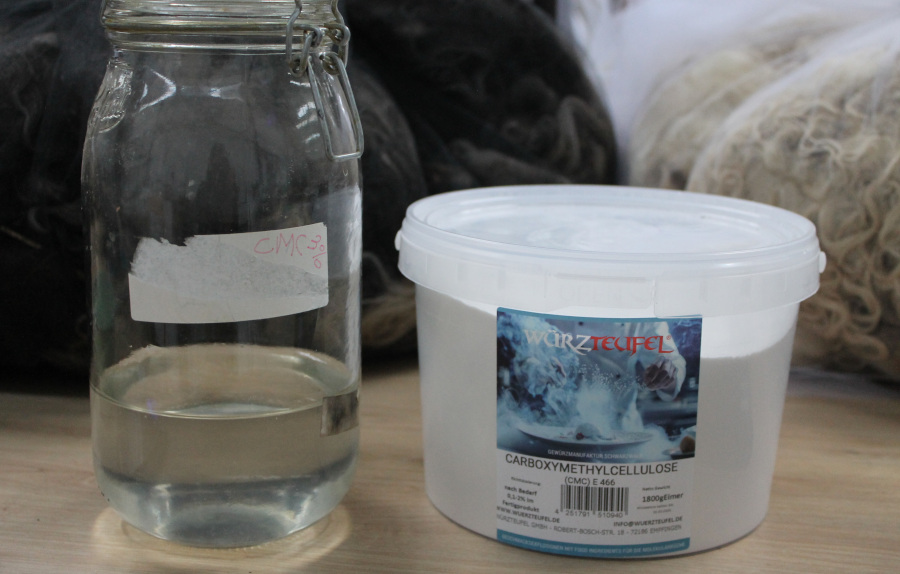
* 10g CMC 3%
* 5 g recycled paper pulp
- spatula
- balance
- bowl
- frame mold with fine mesh
- sponge
- absorben paper
- blender
STEPS:
-
Prepare paper pulp: tear paper into small pieces, soak in warm water for 10–15 minutes and mash by hand until a fibrous pulp forms.
-
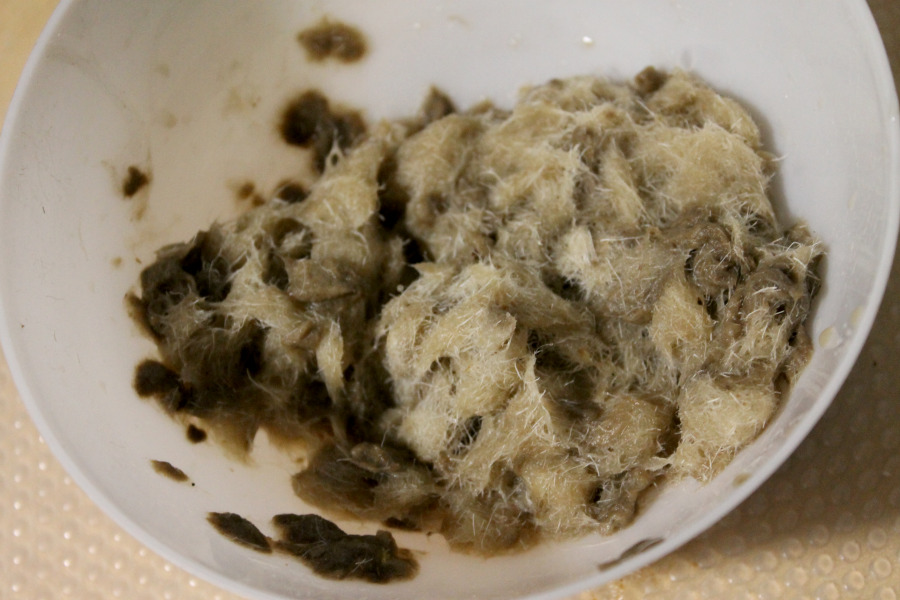
Combine fibers: in a bowl, mix wool with CMC solution and incorporate water.
-
Form the sheet: pour the mixture onto a fine mesh, level gently and press with a sponge to remove excess water.
-
Drying: let the sheet dry flat on a cotton piece. Avoid direct heat or sudden temperature changes.
-
Finishing; peel off the sheet carefully.
NOTES: Paper pulp increases mechanical strength. CMC helps fibers stick, but too much gummy sheet.
Observations
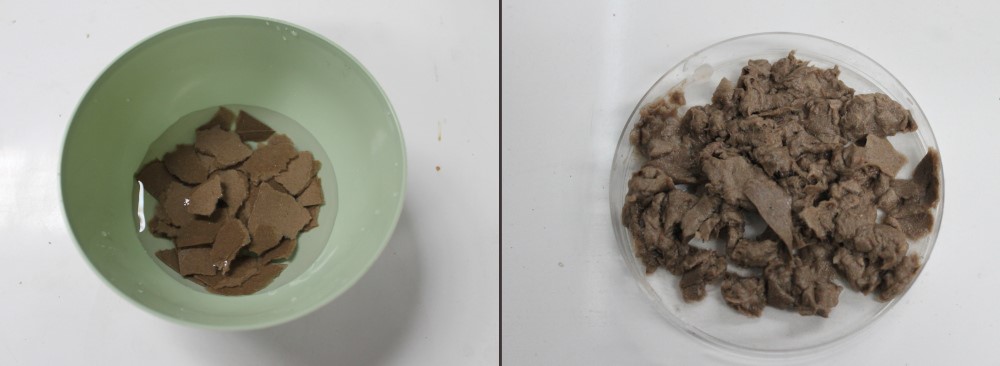
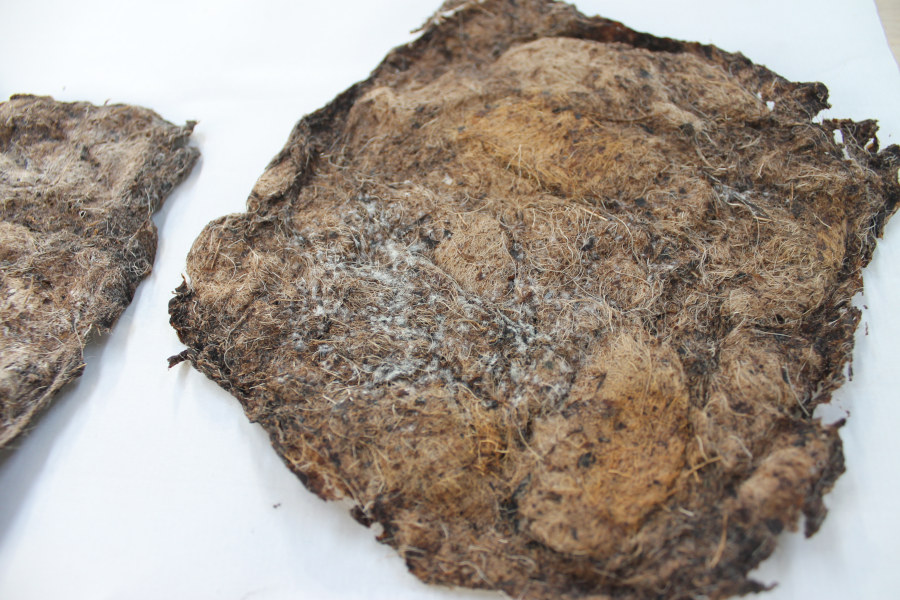
The test was not successful. During drying, the wool fibers separated from the paper pulp instead of bonding with it. As a result, the structure lost cohesion and broke once fully dried.
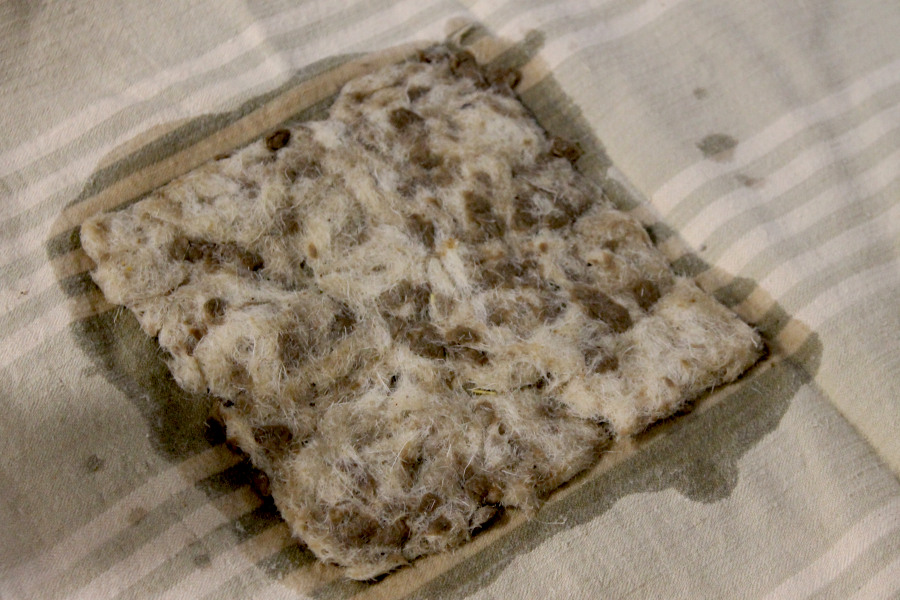
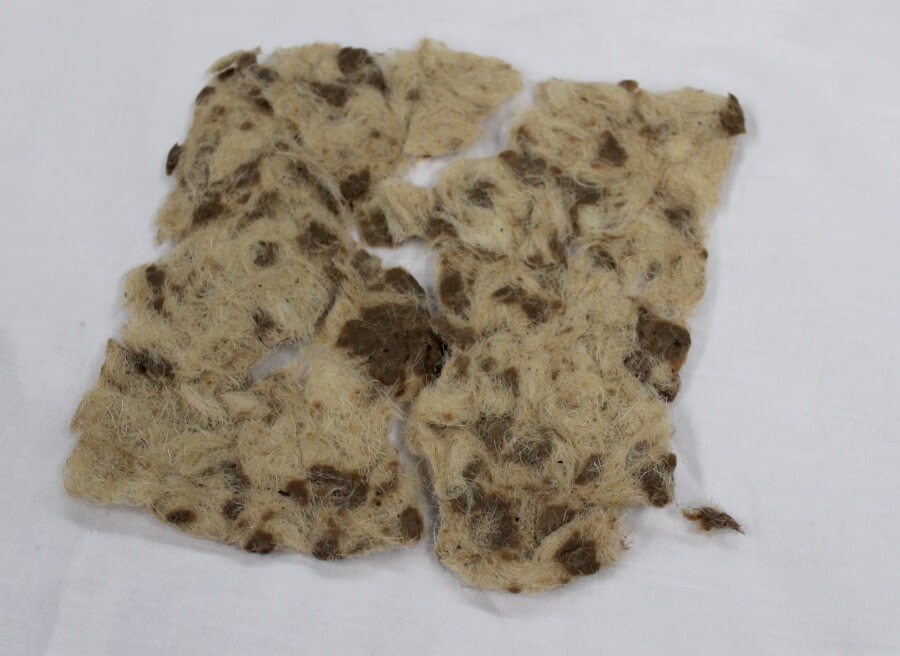
Wool, paper pulp and water
Process
MATERIAL:
- 10 g wool fibers (test both washed and unwashed)
- 2l water
- 10g of CMC 3% (optional)
-
50g g recycled paper pulp (in my case, a carton of 12 eggs I found at home)
-
spatula
- balance
- bowl
- frame mold with fine mesh
- sponge
- blender
STEPS:
-
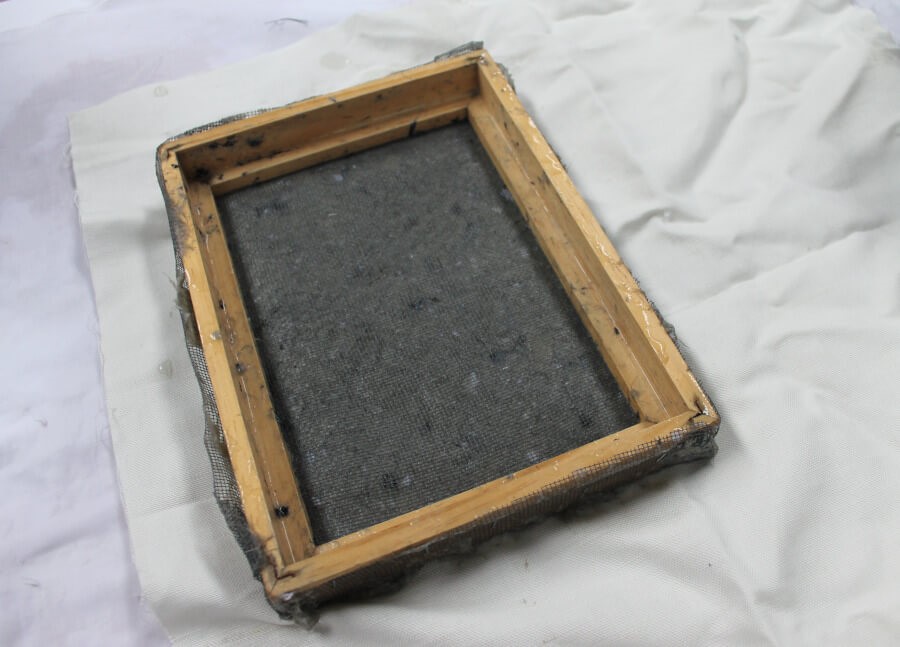
Prepare paper pulp: blend the paper fiber with water (enough to cover them) until a uniform fibrous pulp is obtained.
-
Prepare the vat: fill a large container with water and add the paper pulp, mixing gently.
-
Add wool and binder: add the wool fibers and the CMC, stirring slowly to ensure even distribution.
-
Form the sheet: immerse the frame mould into the mixture and lift it slowly, allowing excess water to drain while the fibers settle on the mesh.
-
Couching and pressing: transfer the wet sheet onto a cotton cloth and gently press with a sponge to remove excess water.
-
Drying: let the sheet dry flat on a cotton surface. Avoid direct heat and sudden temperature changes.
-
Finishing: once completely dry, carefully peel off the sheet and flatten if needed.
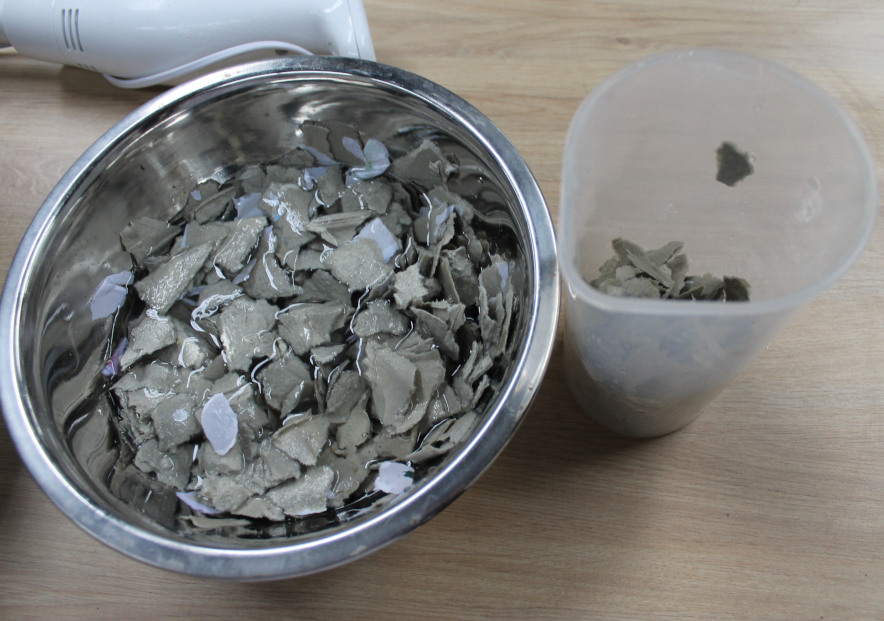
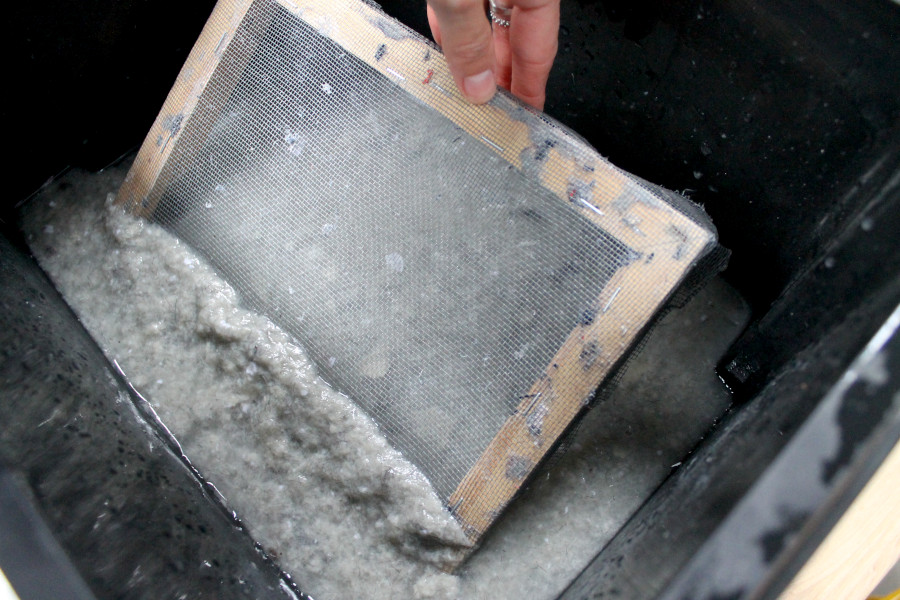
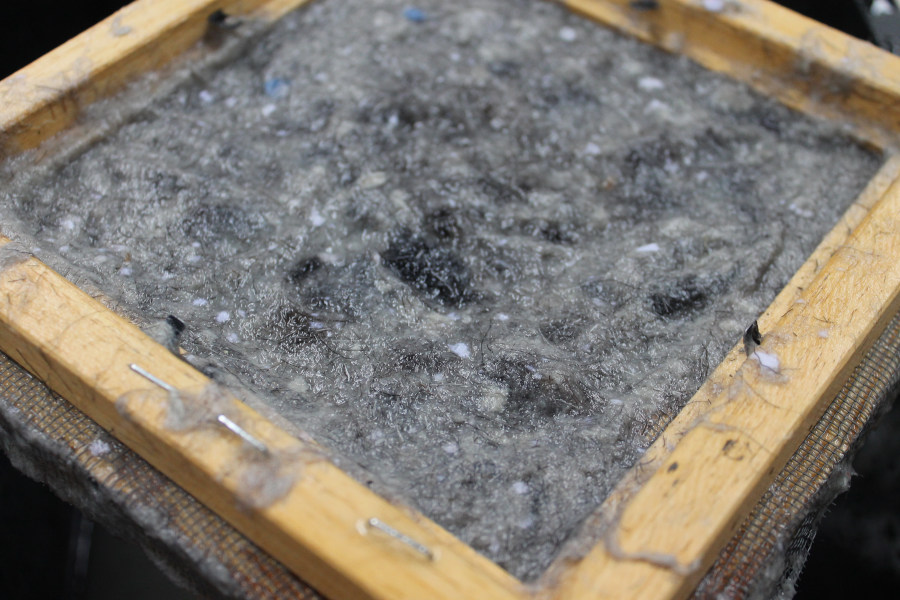
Key observations
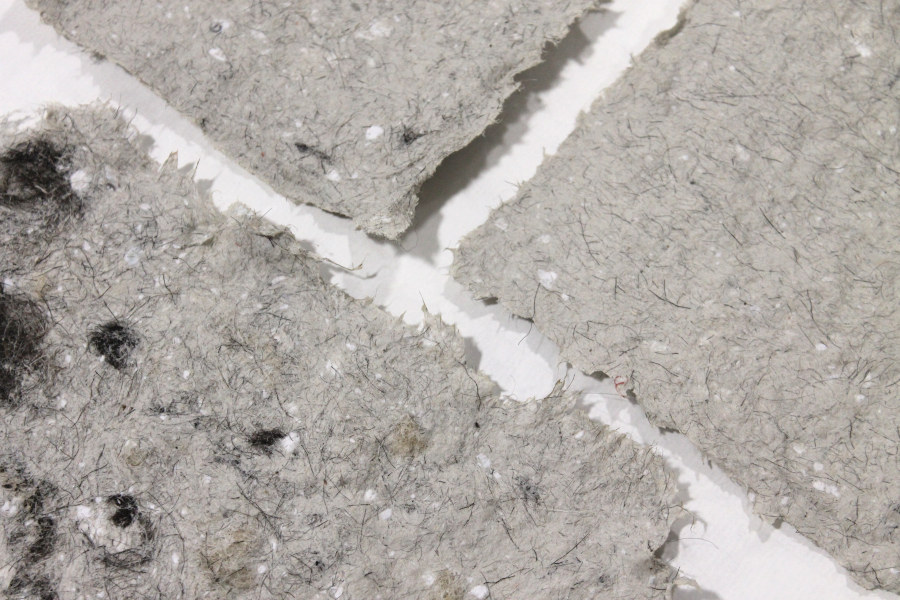
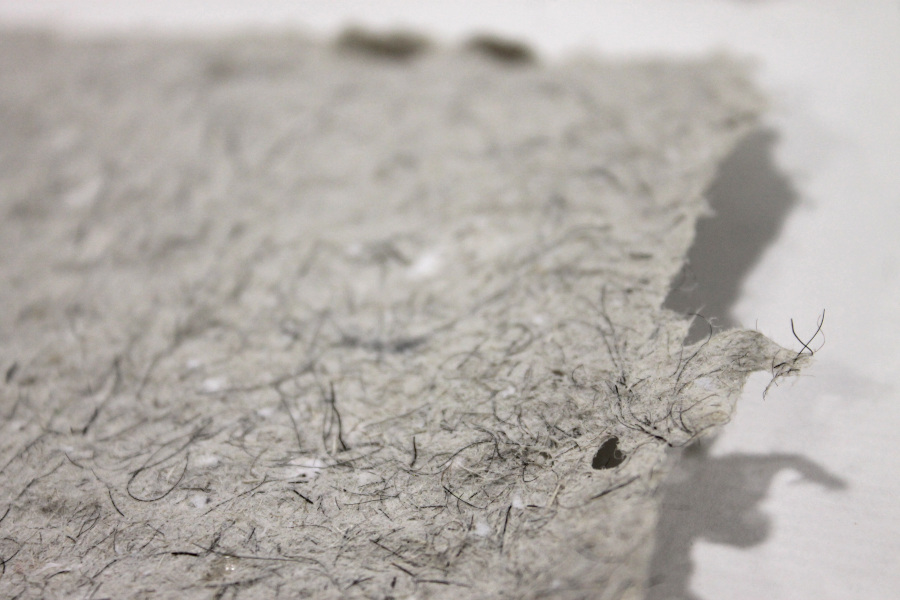
After drying, the sheets show a stable structure across different formats and wool quantities, but remain thin and relatively rigid. The addition of CMC appears to improve fiber cohesion but it was not essential. The use of unwashed wool did not affect fiber–binder interaction. The sheets will be hot pressed to improve the surface quality.
Wool and natural bio-resins
The initial plan was to use a bio-resin with wool, but the focus shifted towards food-waste-based resin-like materials. Two tests were carried out using banana peels and avocado seeds.
Banana and wool
Process
MATERIAL:
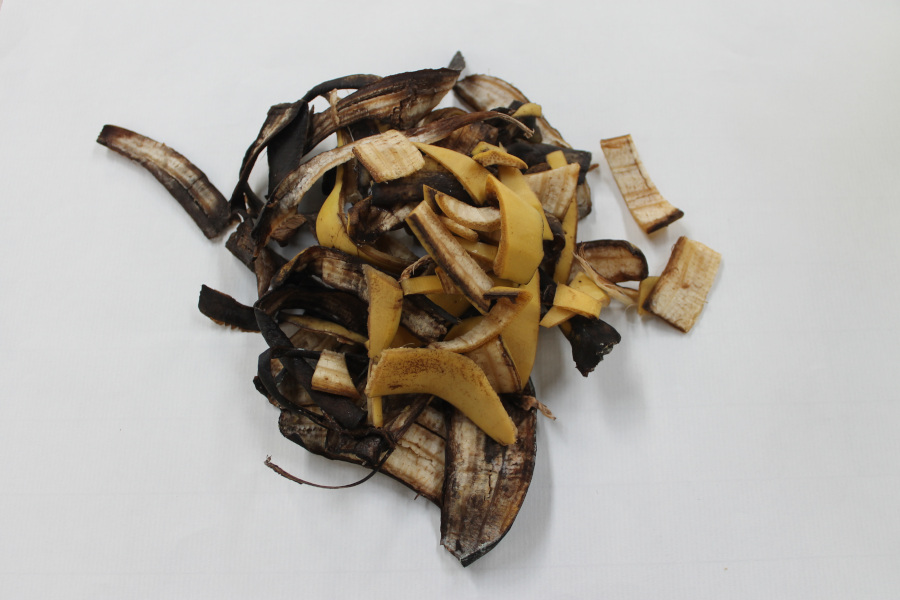
- 200 g banana peels
- 3 g of washed wool
- 3g of unwashed light wool (comparative sample)
- 150ml water (adjustable)
- 2 teaspoon sugar (plasticizer, optional)
- 1 teaspoon cornstarch (thickener)
- 1 teaspoon glycerin (plasticizer)
-
3 drops lemon essential oil (optional, odor control)
-
spatula
- balance
- bowls
- wood or silicone mold
- blender
- pot
- Heating plate or microwave
STEPS:
-
Preparing the banana pulpp: Cut the peels into small pieces. Place the peels in a blender with 1 tablespoon water and the sugar. Blend until smooth and gelatinous.
-
Thermal gelatinization: heat the mixture gently for 10 minutes, stirring continuously. Add water if necessary to avoid burning. Alternative: microwave in short pulses of 15–20 s.
-
Fiber incorporation: Manually tear wool into small fragments. Incorporate wool gently into the warm matrix, preparing Sample A (washed wool) and Sample B (unwashed wool - comparative).
-
Casting: spread the mixture evenly into a mold, thickness 2–5 mm.
-
Drying: air-dry slowly in the shade for 12–48 hours depending on humidity and thickness.
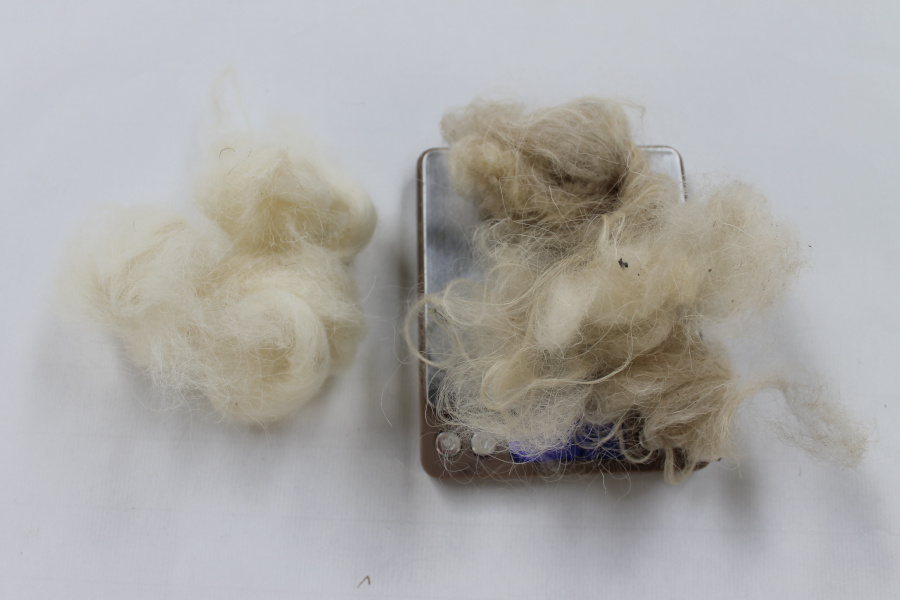
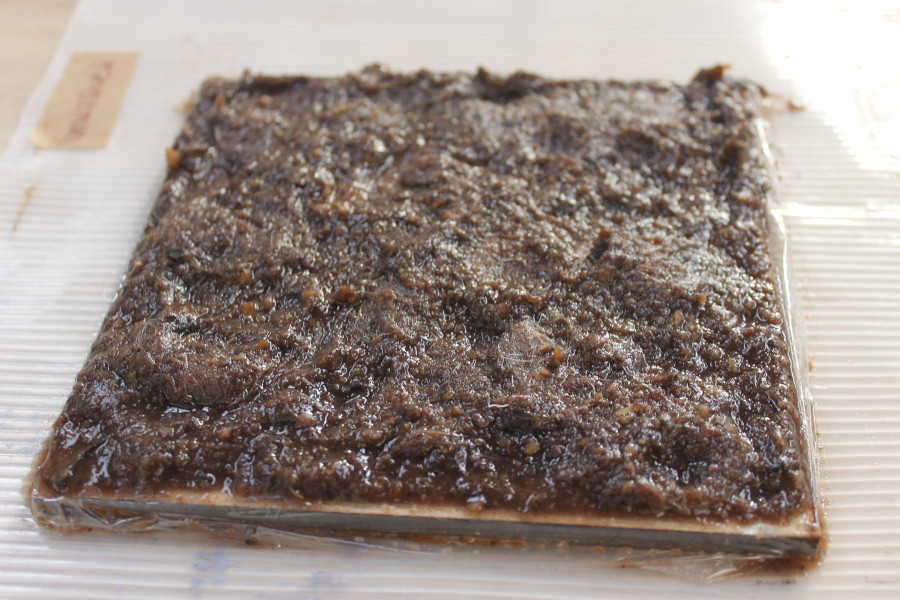
Observations
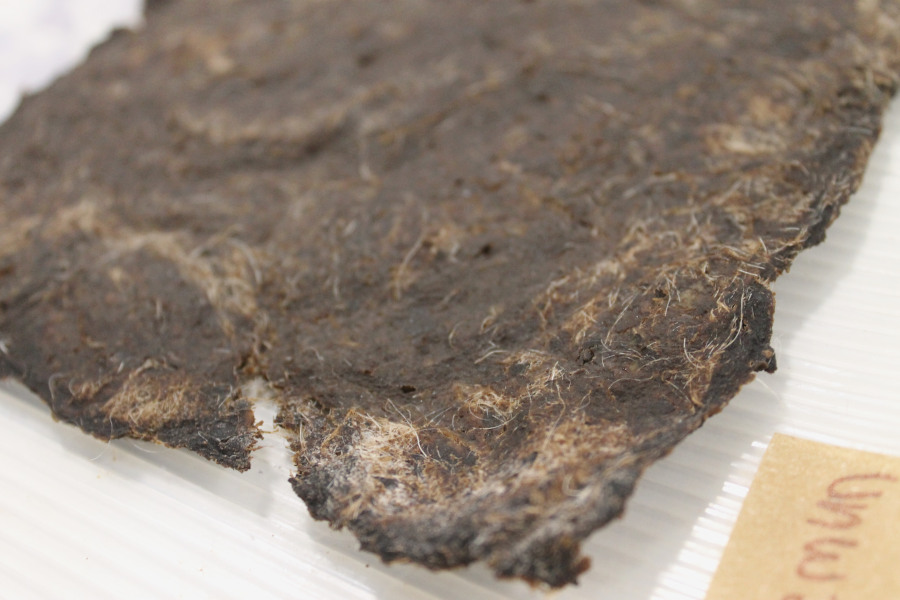
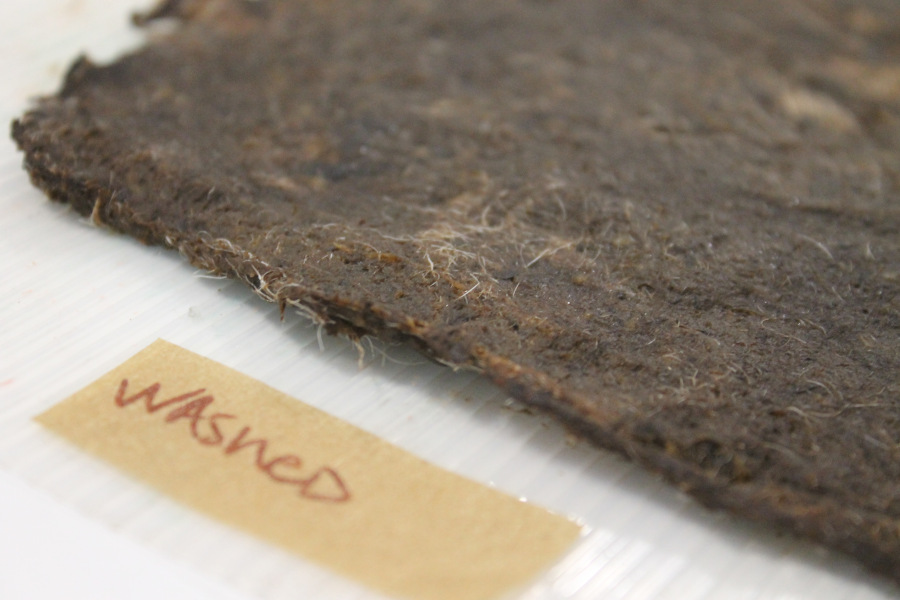
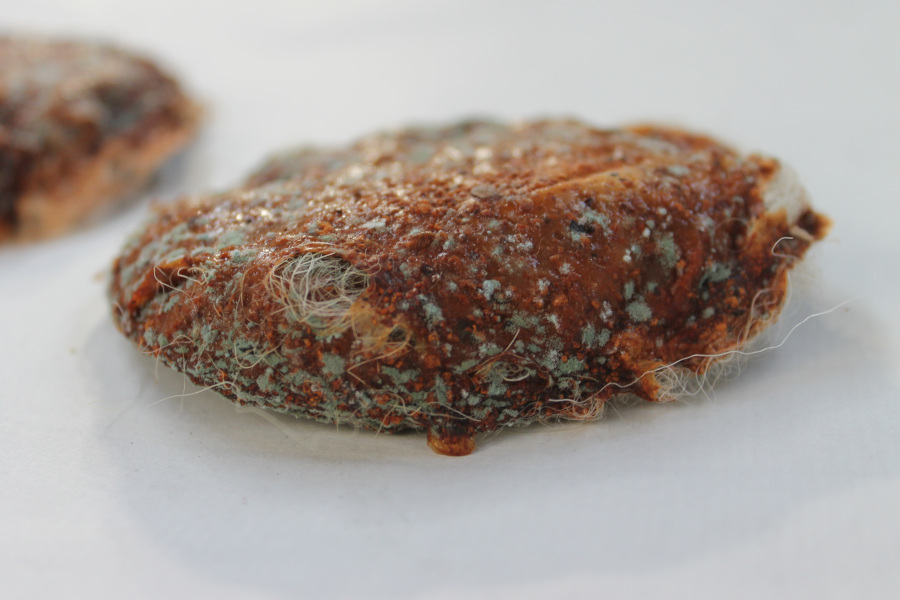
+1week
The test was not successful. The samples were left to dry at room temperature in the lab and developed mold. The composite did not behave like a resin and bent when in contact with wool.
Avocado dyeing bath and seed, wool and alginate
Inspired by a recipe from REMIX EL BARRIO, I tried to change recipe proportions to get a more rigid material.
Process
MATERIAL:
- Avocado peel bath (400–500 mL, used for biochromes test)
- Avocado seed
- 14 g alginate
- 5 g glycerin
- 1–2 g seed oil (optional)
- 5–10 g avocado seeds (roughly crushed)
- 5–10 g (washed, carded) wool
-
Calcium solution
-
bowl for mixing
- spatula
- mold or flat surface for shaping
- protective surface (paper, plastic)
STEPS:
-
Preparation of Seed Paste: break avocado seeds into smaller pieces using a mortar/pestle or a strong blender. Soak the pieces in a small portion of the avocado bath for 15–30 minutes to soften. Lightly blend or mash to obtain a paste: granular texture is fine, it will act as filler and provide rigidity.
-
Composite Preparation: In a bowl, mix: avocado bath, alginate, glycerin, seed oil and stir gently until fully dissolved. Add the seed paste into the mixture and incorporate evenly. Tear the wool into small pieces and fold into the gel mixture.
-
Shaping: pour or spoon the mixture into a mold or onto a protected flat surface. Spread into thin layers (2–5 mm) for faster and more uniform drying.
-
Increase rigidity: apply a calcium solution spray to cross-link alginate.
-
Drying: let the material dry slowly at room temperature, away from direct sunlight.
NOTES:
- Seed granules act as filler and mechanical reinforcement, even without being pulverized.
- Reducing glycerin and oil increases rigidity but slightly decreases elasticity.
- Cross-linking with calcium is optional but enhances the structural stability of the composite.
 As mold I replicate the configuration in the tutorial using a embrodery wooden hoop and texture waterproof fabric.
Observations
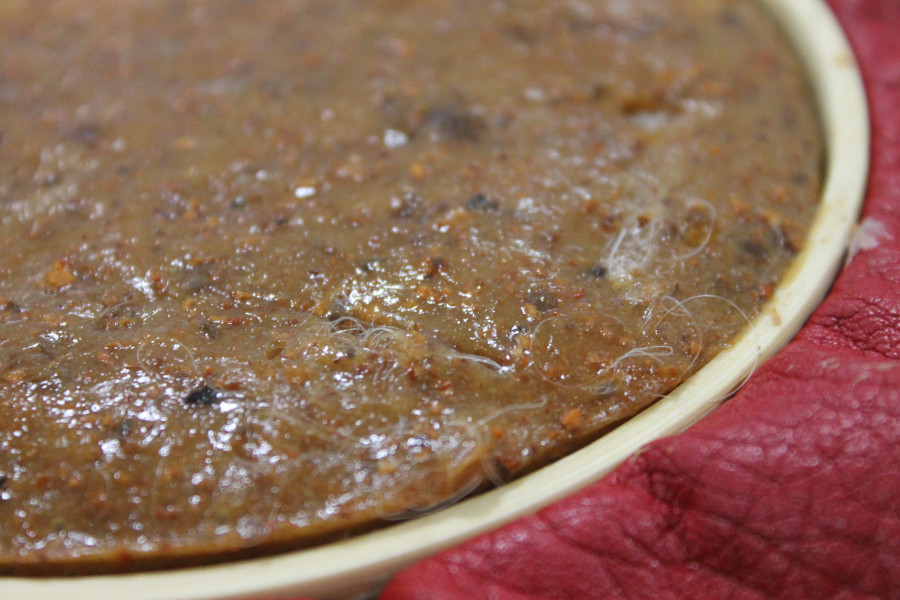
+1week
The test was not successful. The samples were left to dry at room temperature in the lab and developed mold.The composite did not behave like a resin: the wool remained highly visible and the shape deformed, likely due to contact with the calcium carbonate solution.
Phase 2 (February-March)
Based on Phase 1 results, the focus shifted from open material exploration towards the development of a workshop-based material system rather than a single finalized material.
The main deliverable became a workshop template, inspired by the She Makes framework, and built around a wool–alginate composite system, combined with food-waste fillers. The process is designed to remain low-tech: no heating is required, only the preparation of an alginate solution and manual mixing of ingredients by participants.
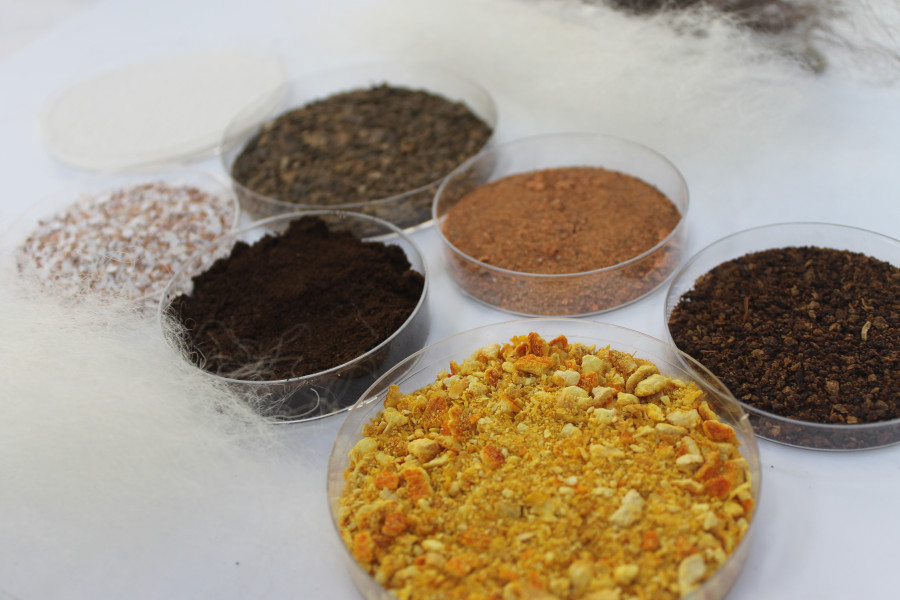
Different dried organic materials can be used as powder fillers. A dehydrator and a simple grinder are sufficient to produce fine particulate matter, which improves texture and integration within the composite.
The aim is to explore how a stable base material (alginate + wool) can support collective variation, where participants actively modify texture, density and material behaviour through their choices.
Template and documentation sheet have been developed and tested during a session in the lab. Resources are available here and a printable version is here.
Alginate foil recipe
INGREDIENTS:
- 12 g Alginate
- 20 g Glycerin
- 400 ml
- 10 g seed oil
TOOLS:
* a pot
* a balance
* a spatula
* a mixer
* embrodery hoops as molds
PROCESS:
-
Preparing the calcium chloride: in a spray bottle, mix calcium chloride with water (10 g of calcium per 100 ml of water)
-
In a container, mix all the ingredients and then blend.
-
Once a creamy consistency is obtained, stop the blender.
-
Let the mixture rest for several hours to allow air bubbles to escape.
-
Pour the mixture into molds.
-
Spray the calcium chloride onto the mixture.
-
Let it dry. Speed up the process with a dehydrator.
Workshop session
A first prototype of the workshop template was tested during a session at Le Textile Lab (February 27).
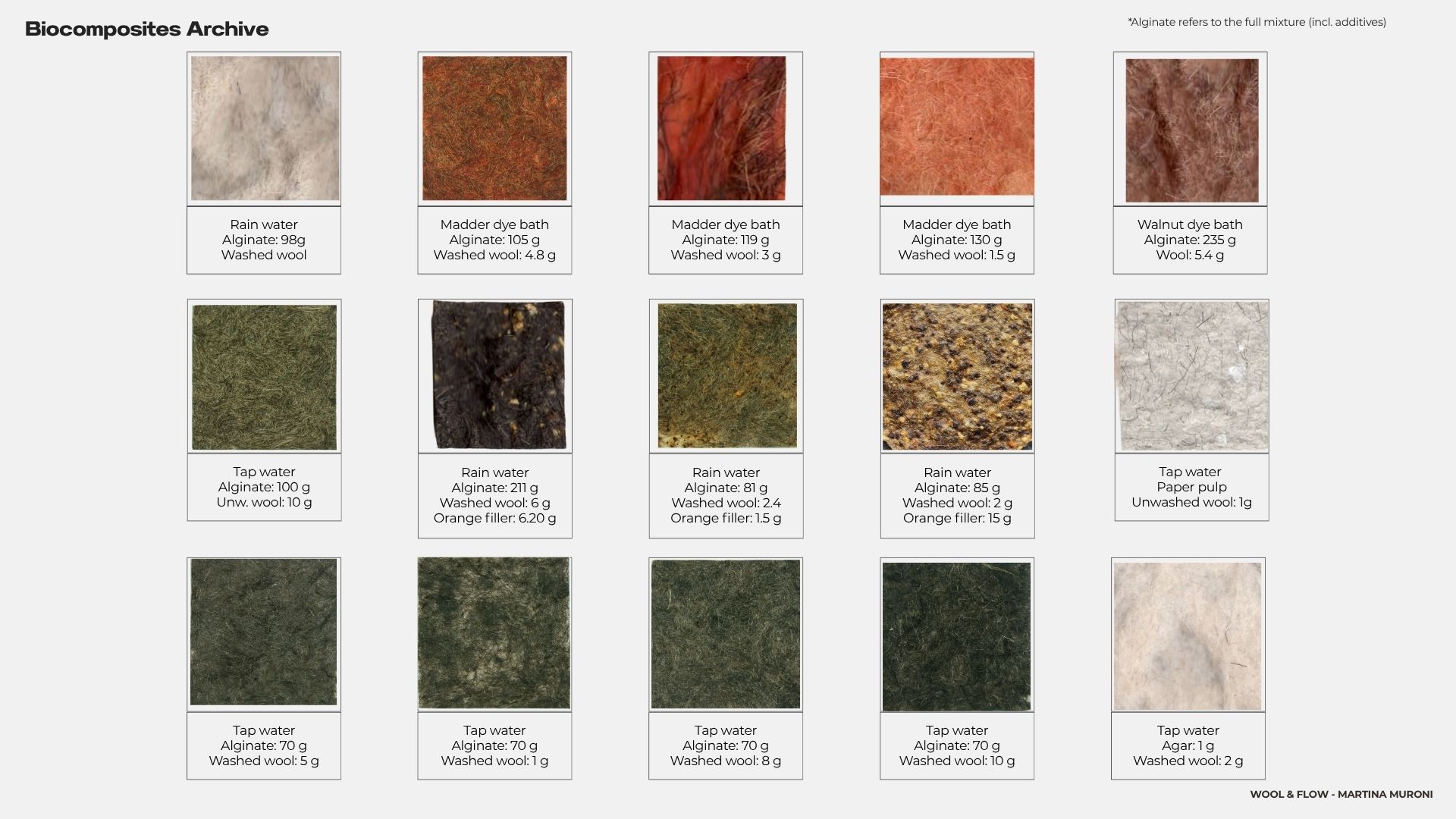
The session focused on applying the wool–alginate system in a collective setting, allowing participants to experiment with variations in fibre density, fillers, and water conditions as a key variable of the process.
Different water sources were introduced to test their influence on the composite behaviour, including tap water and residual dye bath water, linking the material exploration to previous biochromic experiments and local resource cycles. No significant differences were observed between the water sources, as all produced stable and consistent results.
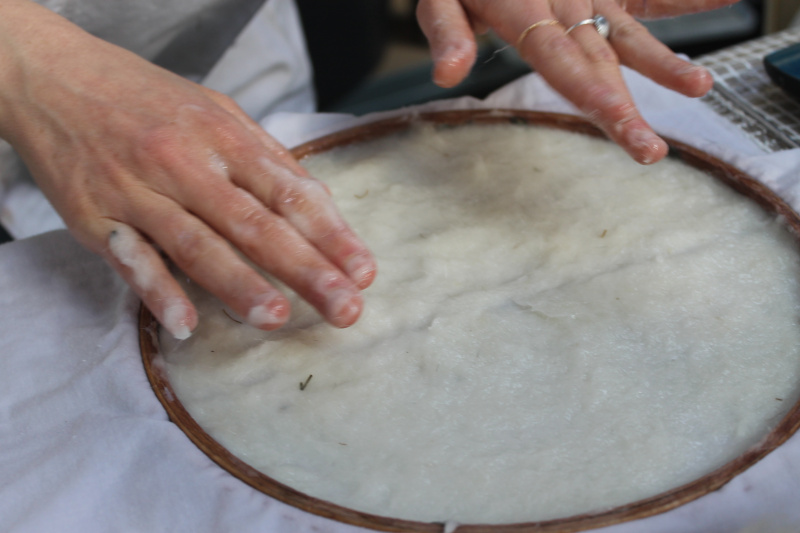
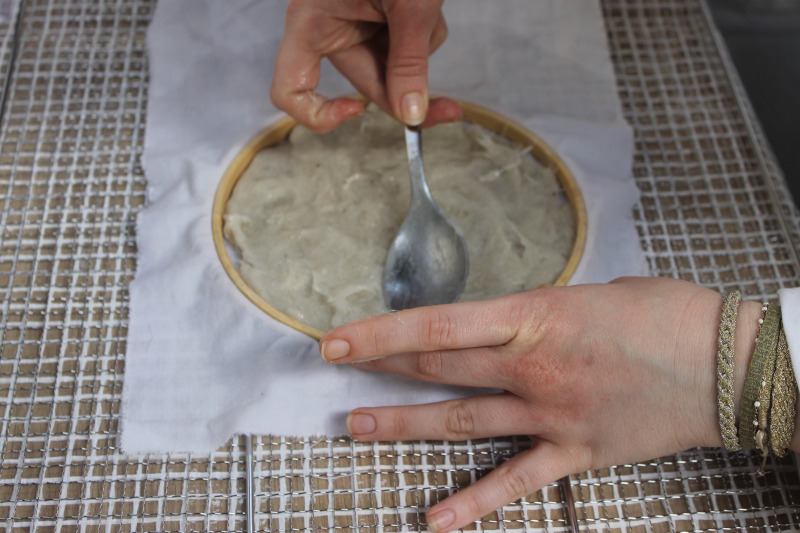
Approximately 16 samples were produced during the session. They were placed in a dehydrator, unmolded the following day, and fully dried within two days. This process served as a material and methodological prototype, contributing to the development of a physical and digital archive of samples and process variations.
References
Images: Martina Muroni unless otherwise stated.