Design Development
I. Ideation & Design Process Development
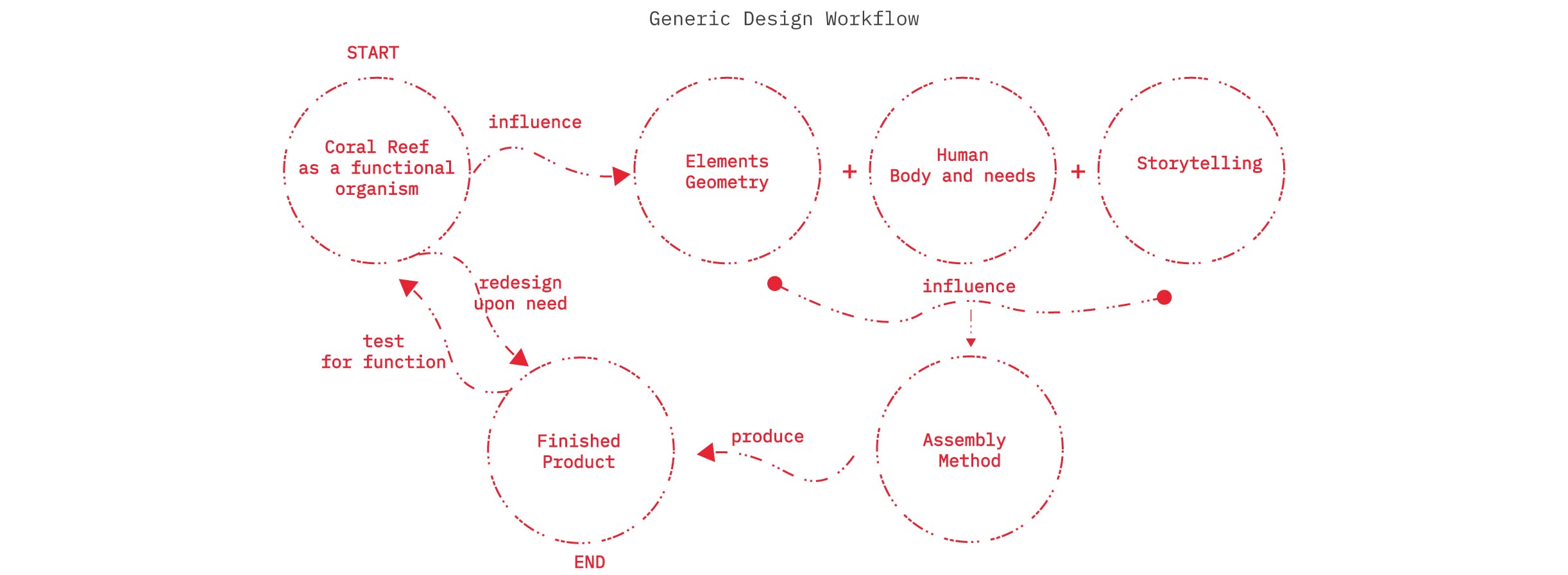
Generic Design Approach:
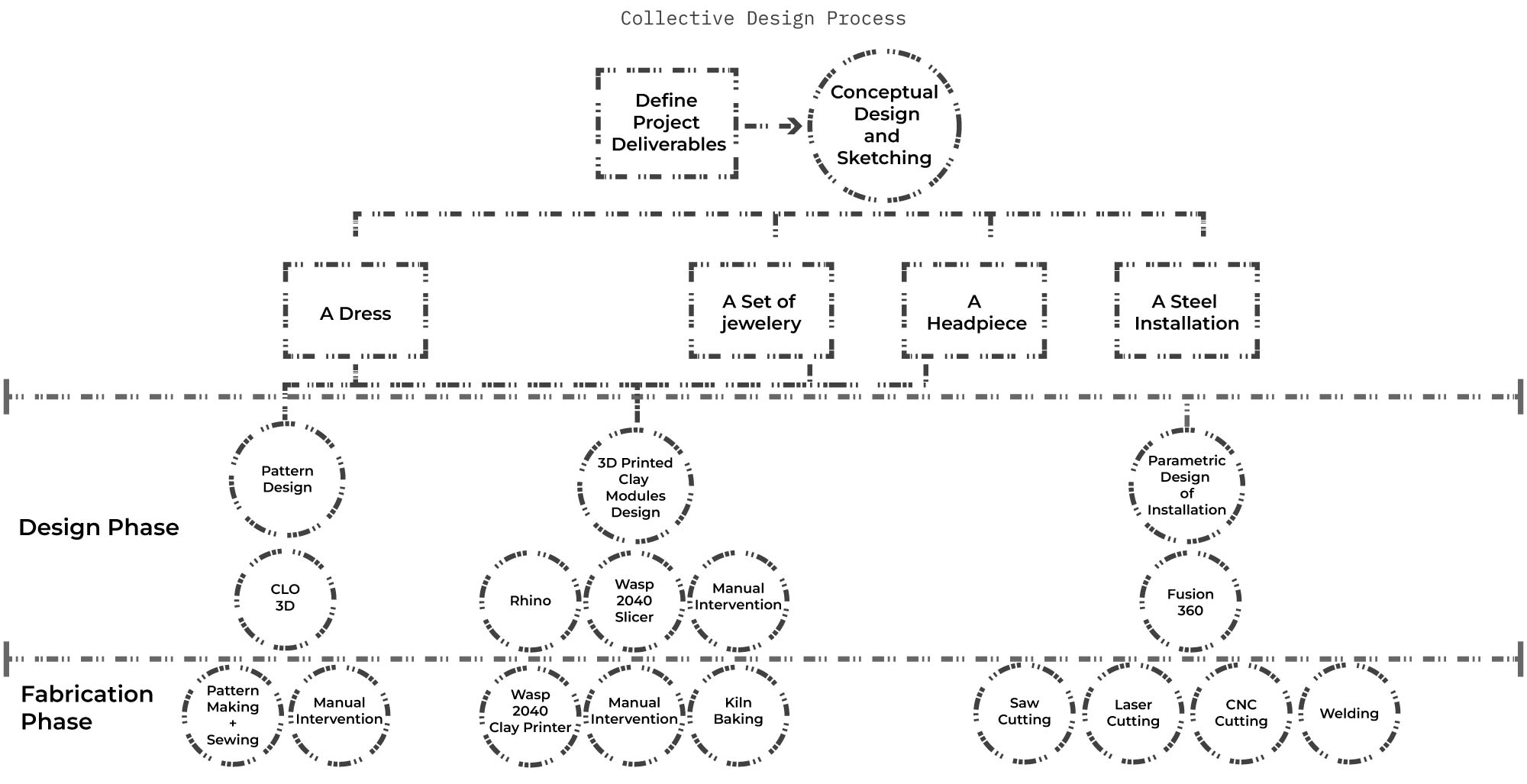
Collective Detailed Process:
II. Garment Design and Pattern Making
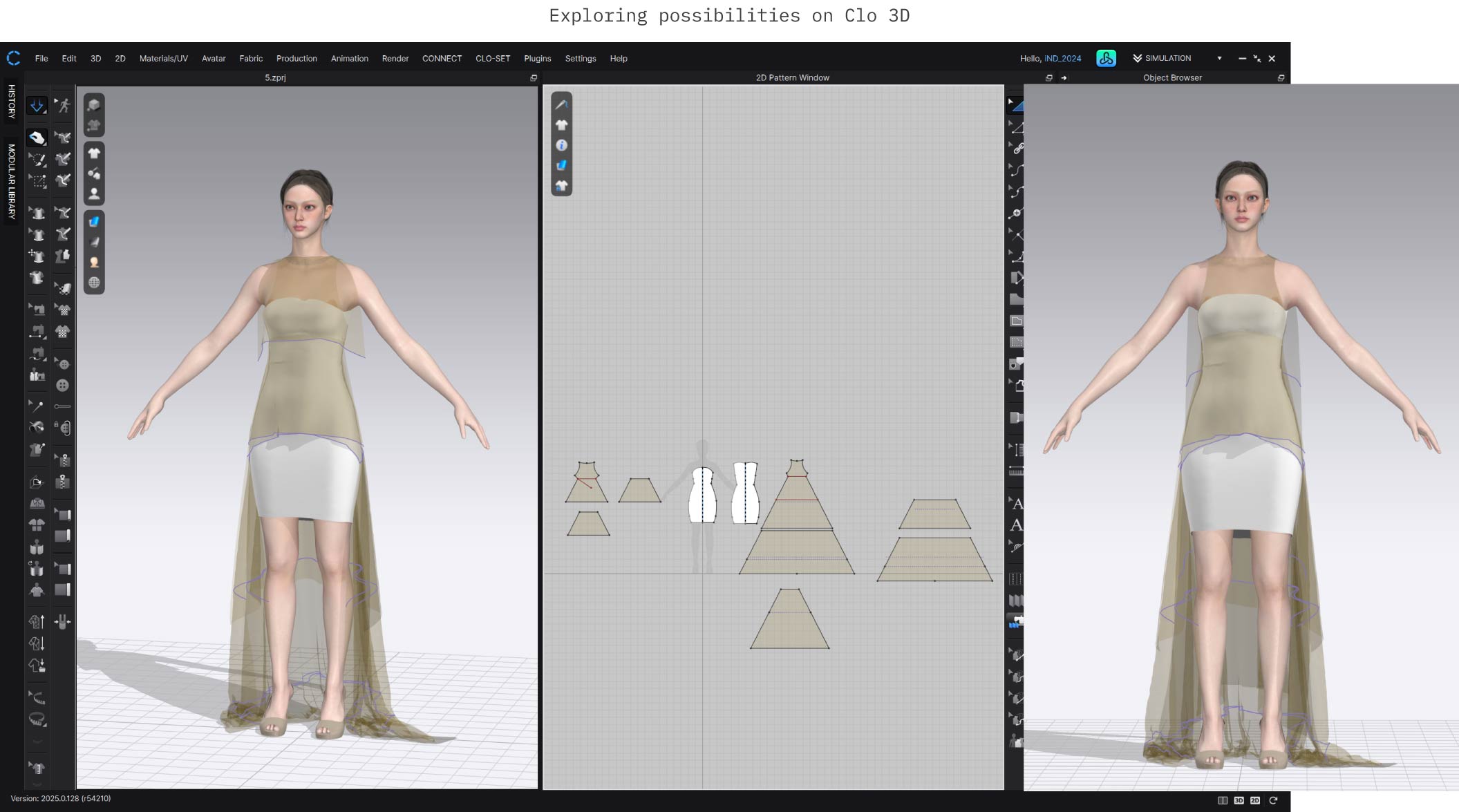
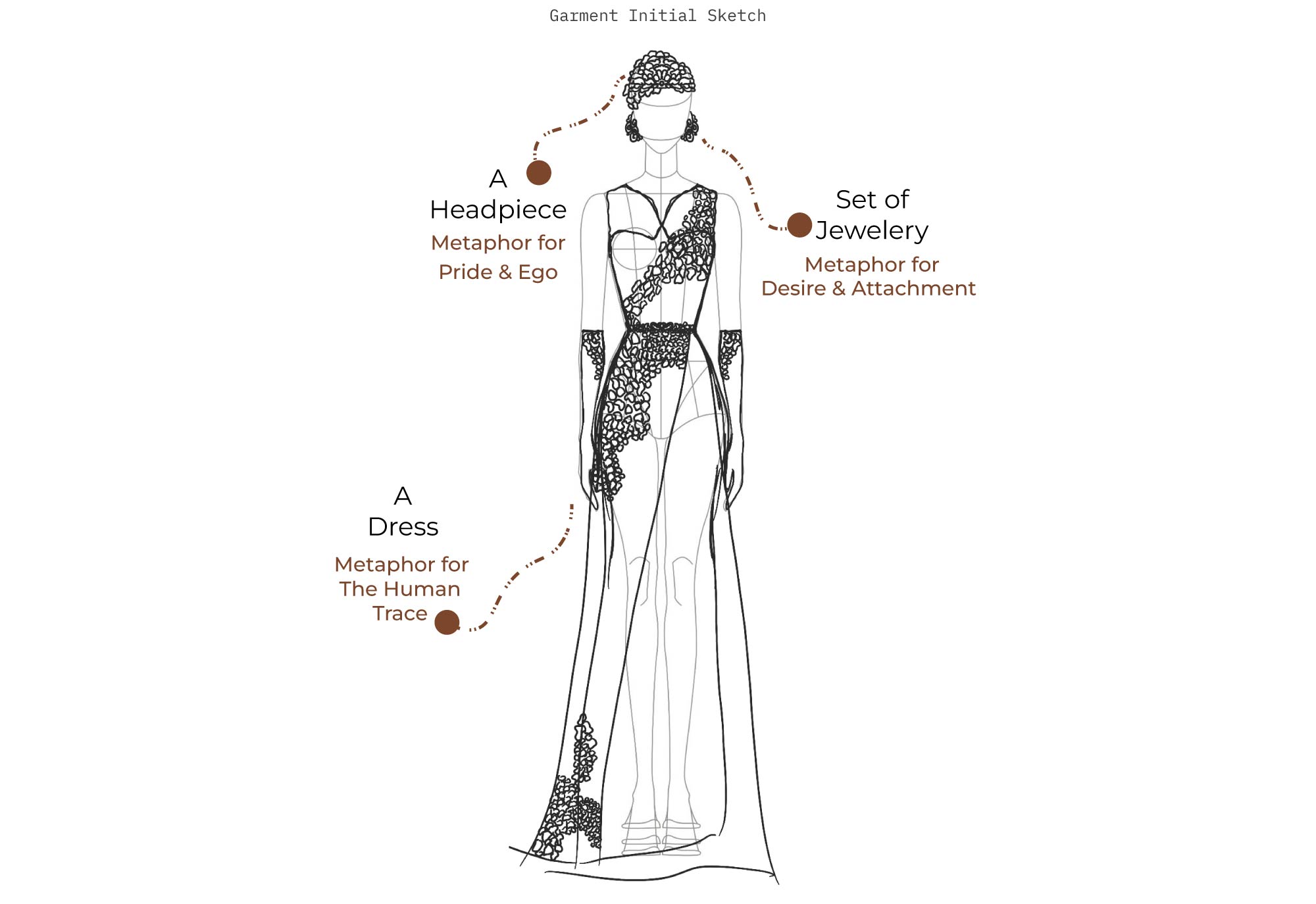
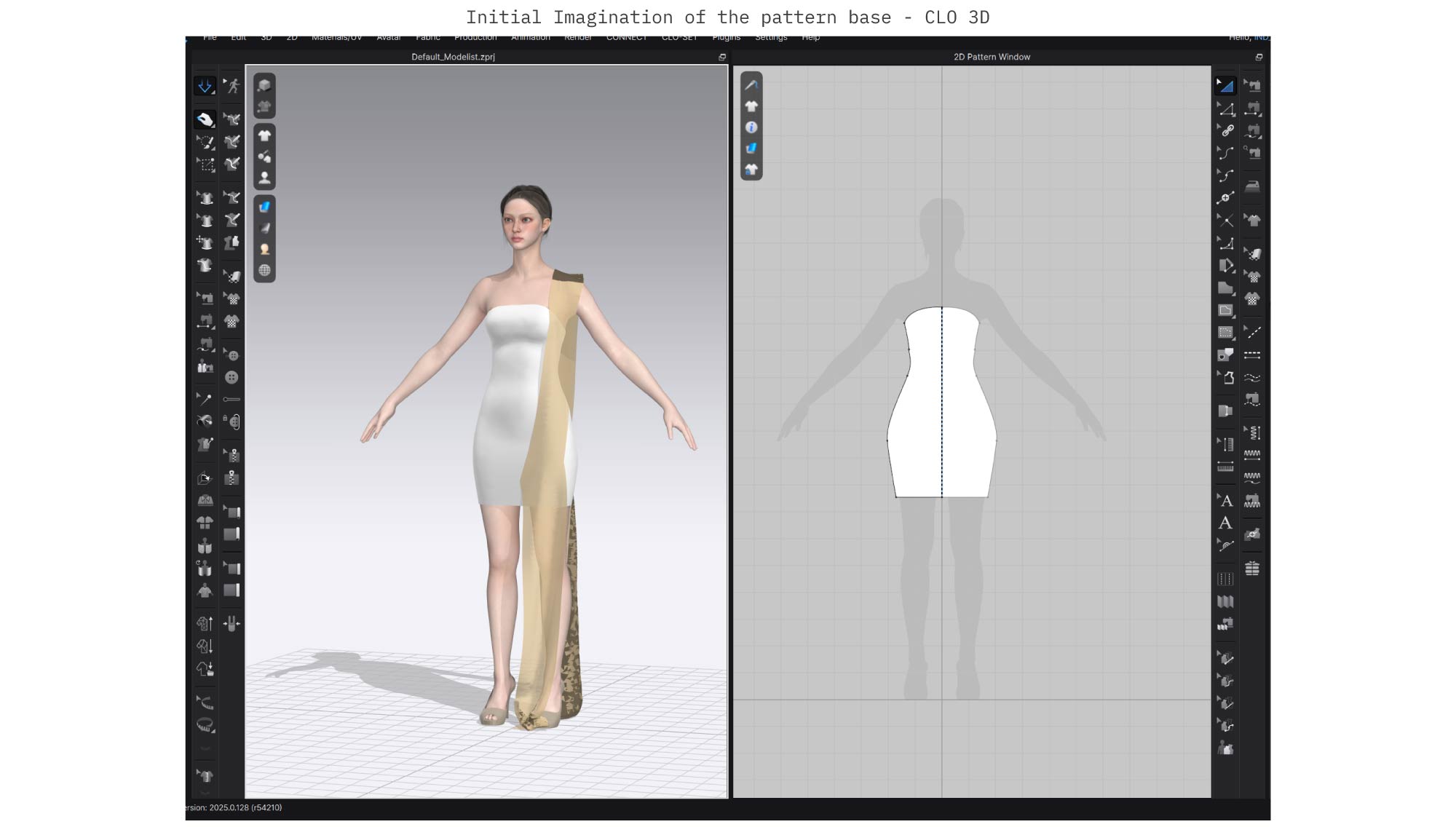
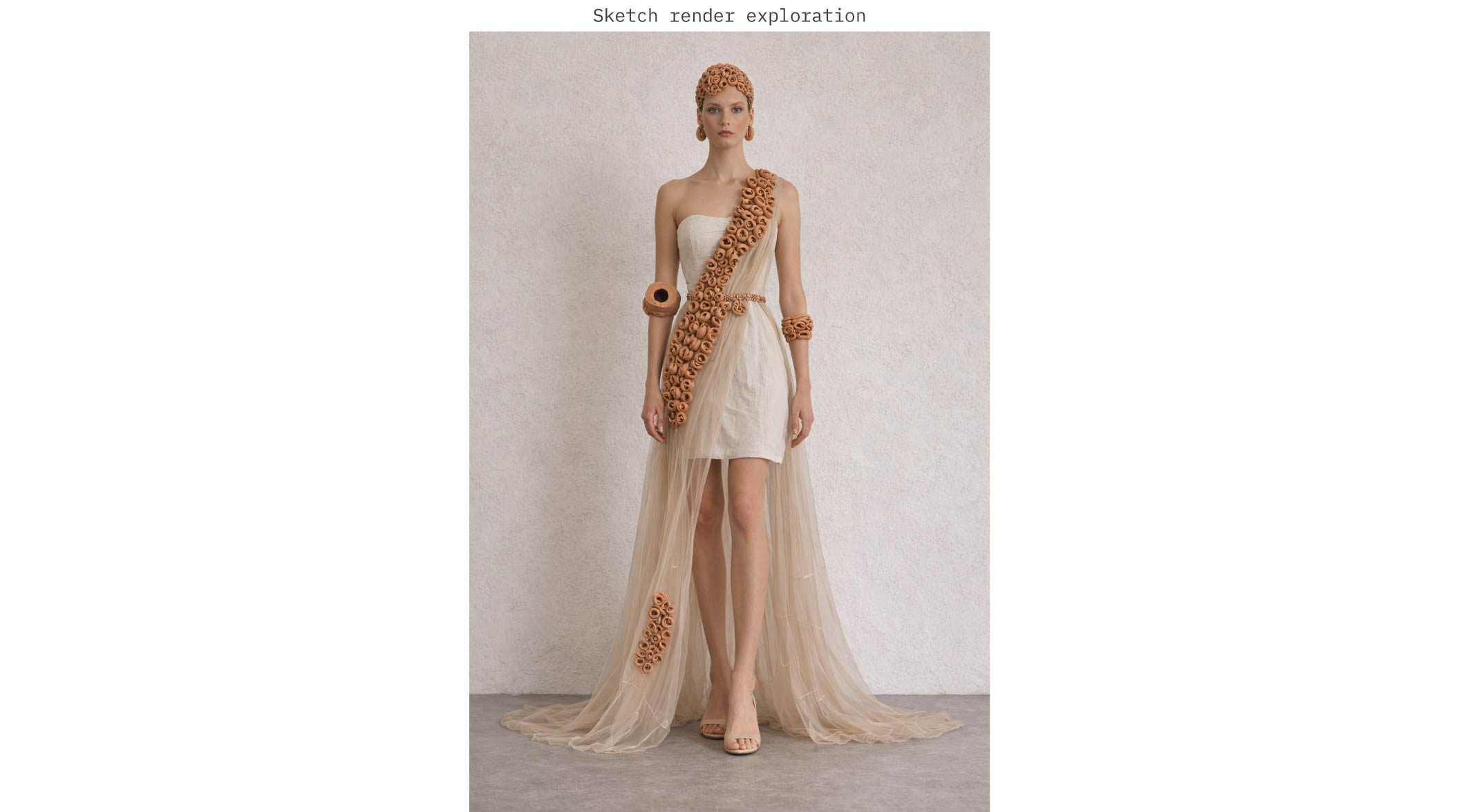
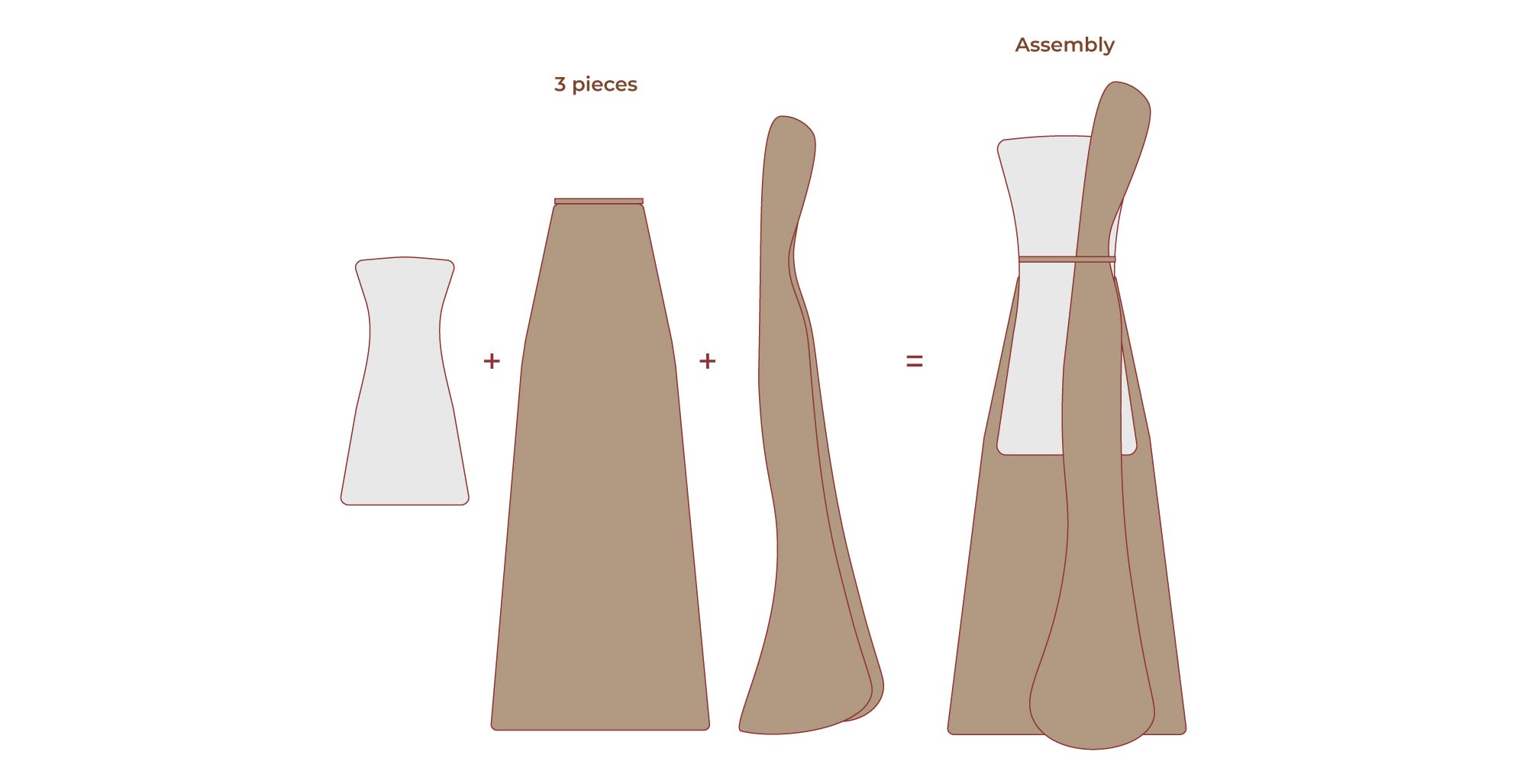
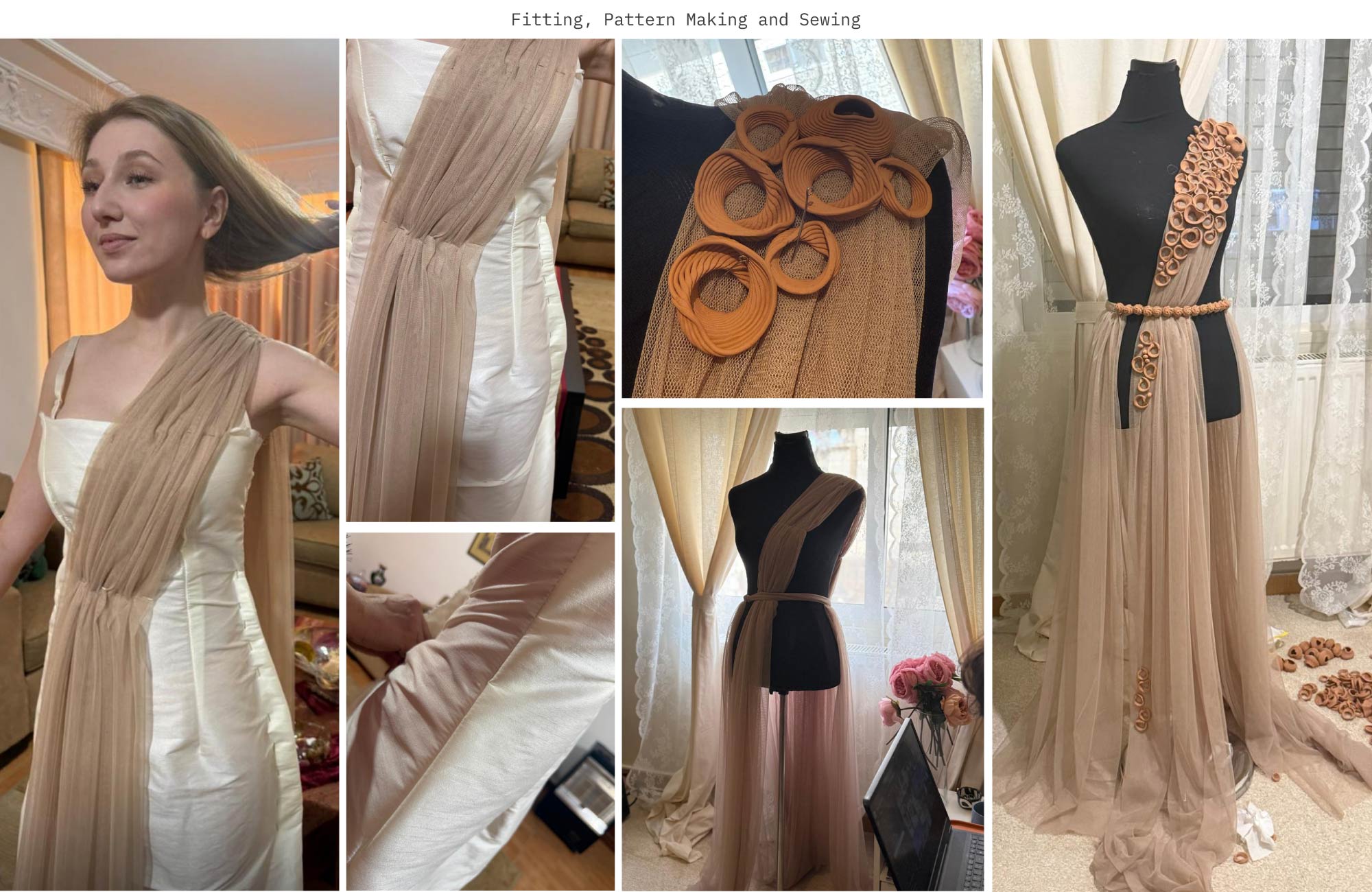
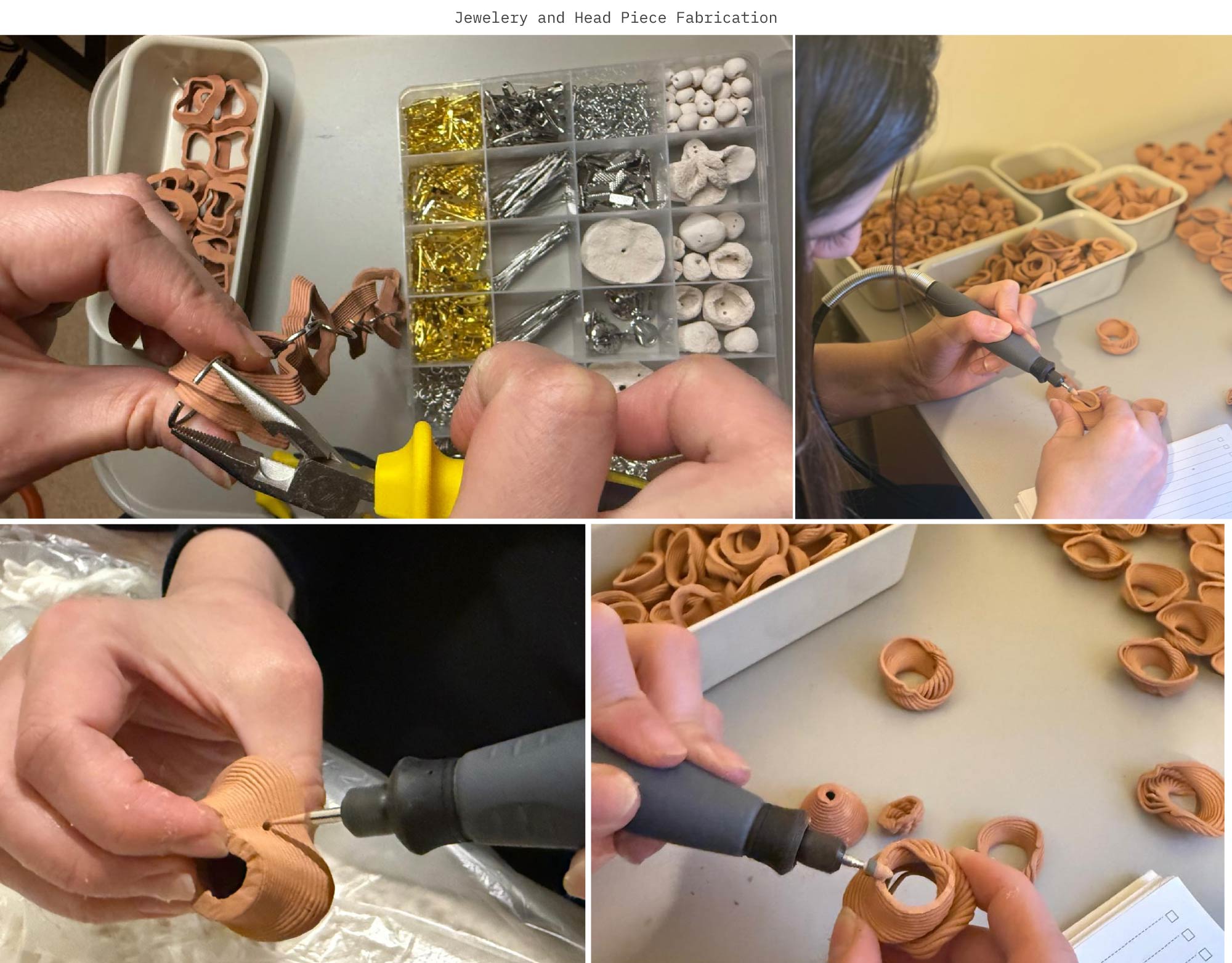
I started by bringing my sketches into CLO 3D, using the simulation to explore how different fabrics connect and layer. Afterwards I tried to position the clay elements to understand how the fabric would respond to the added weight of them. This phase helped me visualize the garment in motion and understand its structural needs. Afterwards, I sought professional support for pattern making and sewing to ensure the design could be realized with precision.
III. Steel Installation
A. References and Inspiration
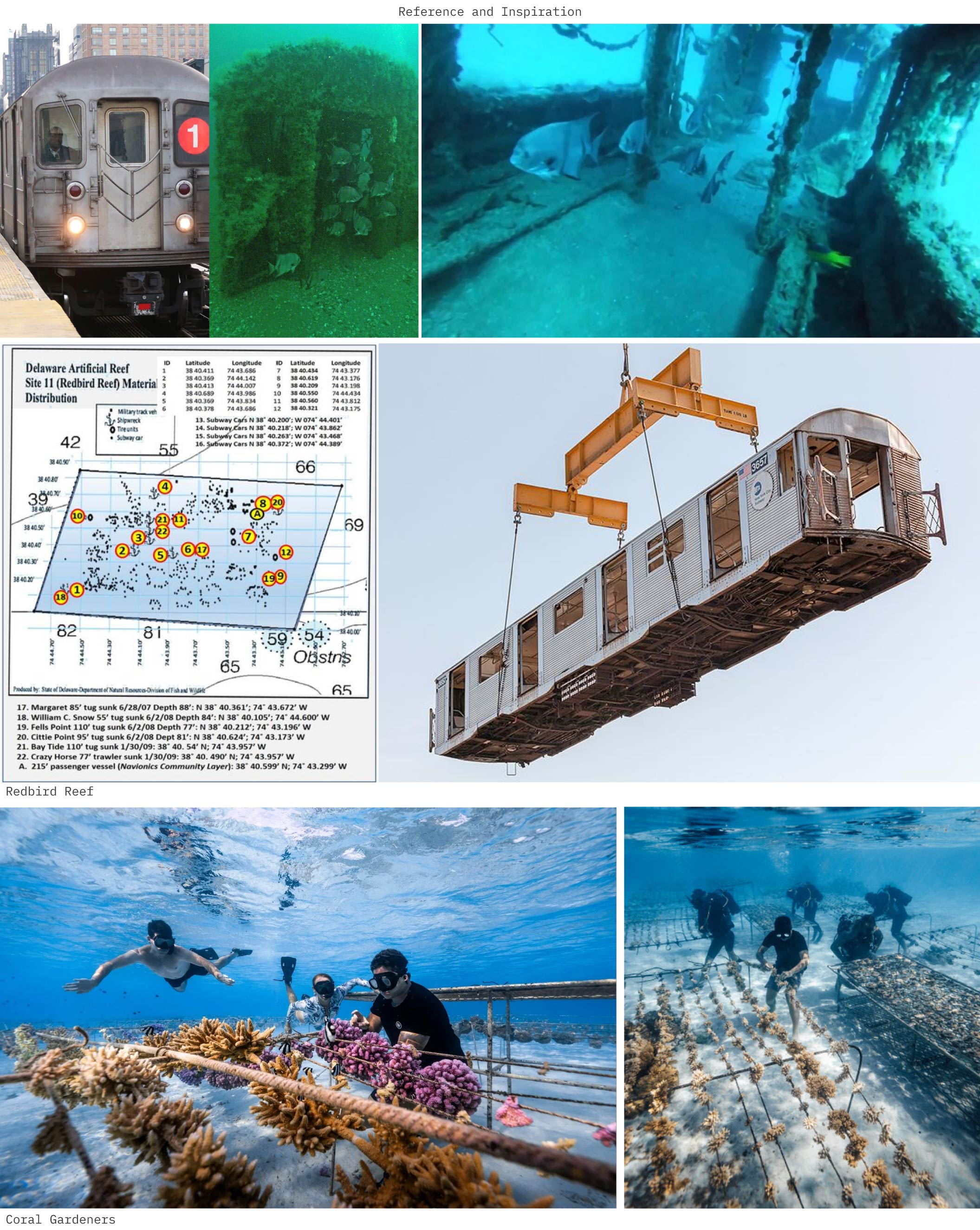
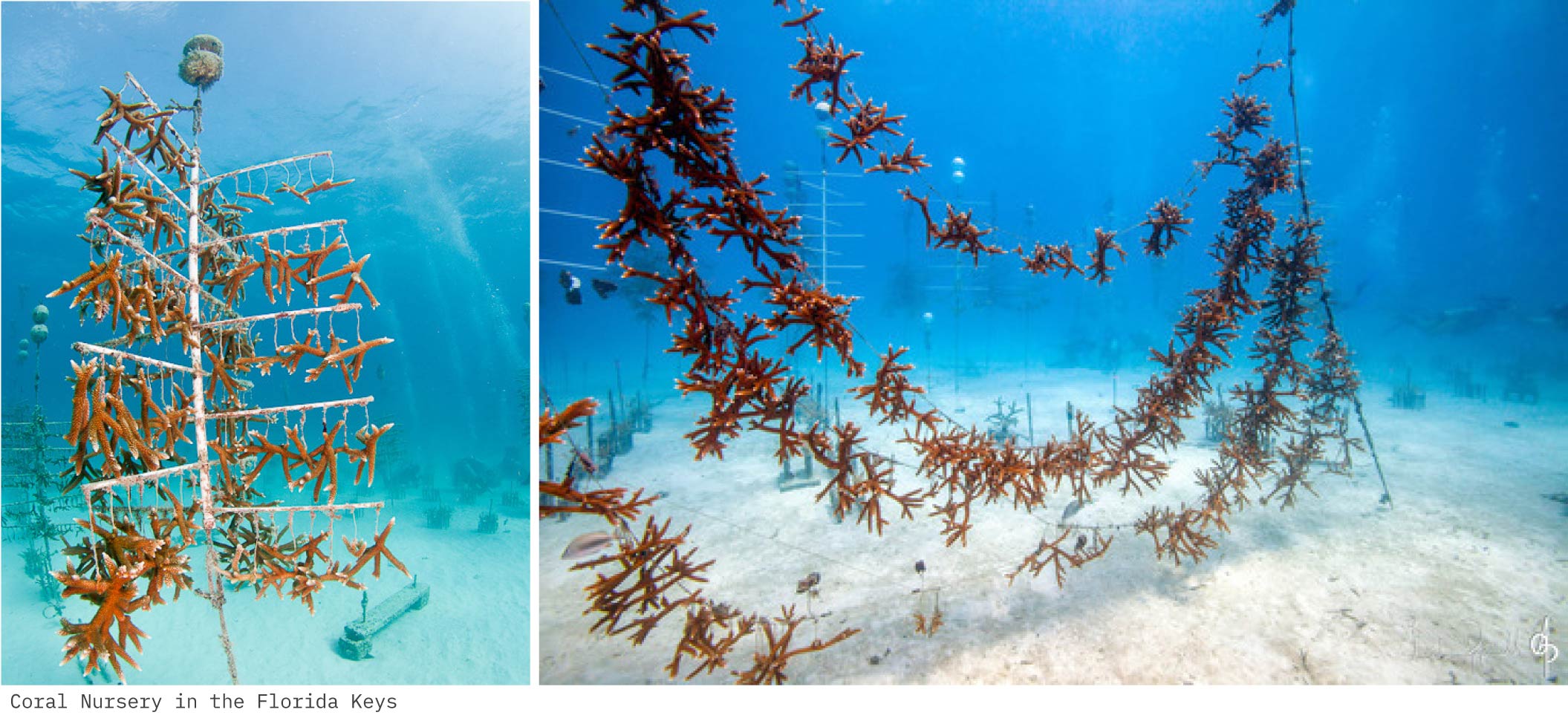
The concept of using treated steel structures as artificial coral reefs is grounded in well-established marine ecology principles, where the introduction of stable, hard substrates into otherwise sedimented seabeds enables the formation of new ecosystems. After proper cleaning and decontamination, steel behaves as a chemically stable surface that supports the attachment of microorganisms, algae, and invertebrates, the first stage in reef formation. Over time, this initiates a process of ecological succession, where increasingly complex species, including fish and corals, begin to inhabit the structure. The geometric complexity of steel frameworks, voids, edges, and varying densities plays a critical role by modifying local water flow, trapping nutrients, and creating microhabitats that enhance biodiversity. This approach aligns with artificial reef science, which demonstrates that material neutrality, surface roughness, and spatial complexity are key parameters in promoting marine colonization. As evidenced by large scale implementations such as Redbird Reef , these systems can transition from inert infrastructure into biologically active environments, positioning engineered metal not as waste, but as a catalyst for long-term ecological regeneration.
B. Ideation and Design
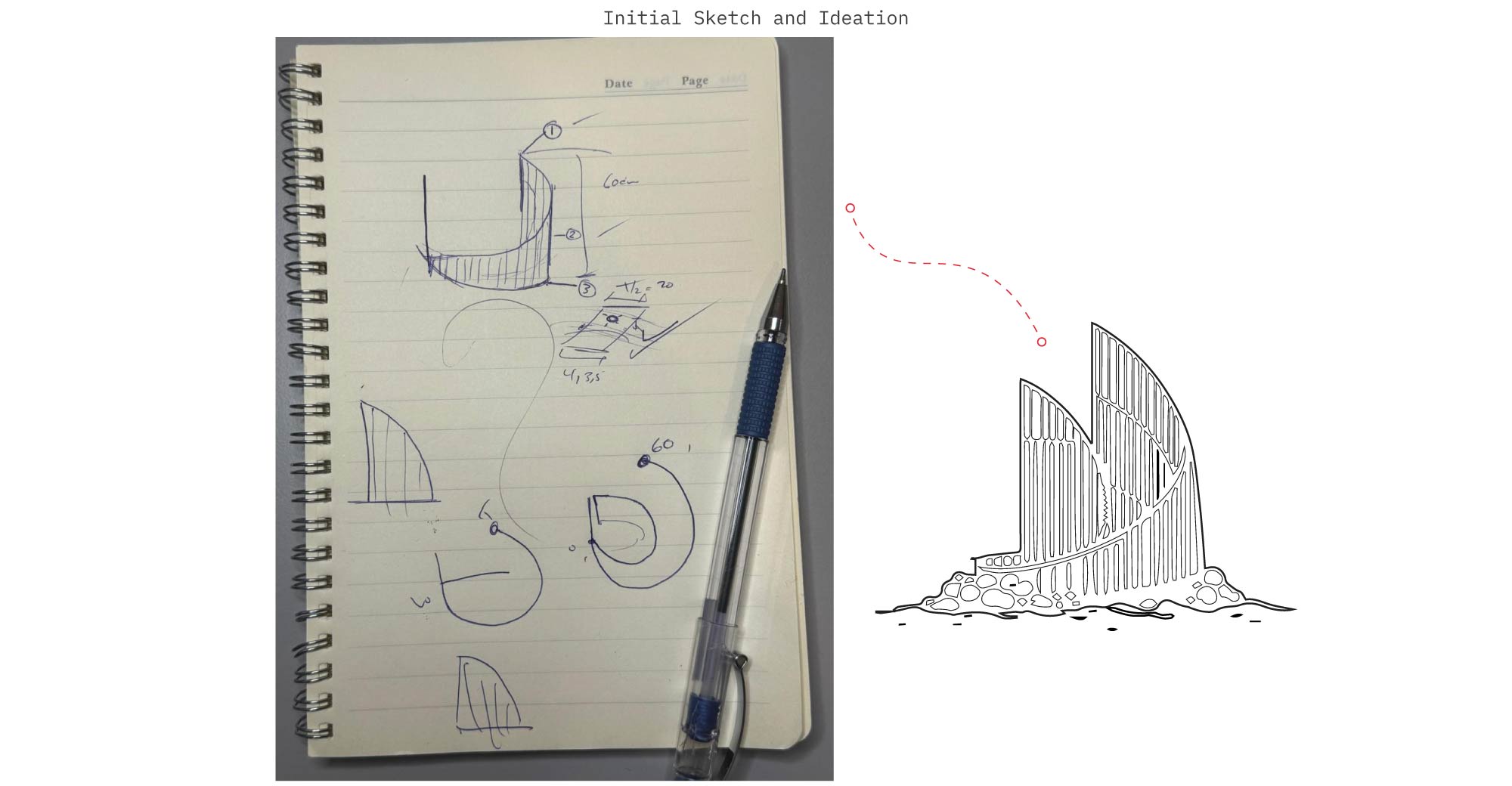
The steel installation for Resurrect is conceived as a modular scaffold designed to support the reassembly of terracotta elements in their second life. Constructed from treated scrap steel with all coatings and contaminants removed, it provides a durable and inert structure suitable for marine environments. Its geometry creates a stable framework that allows the terracotta modules to be attached, while offering structural complexity and surface conditions that support potential reef formation.
- Prepare the design on Fusion 360:
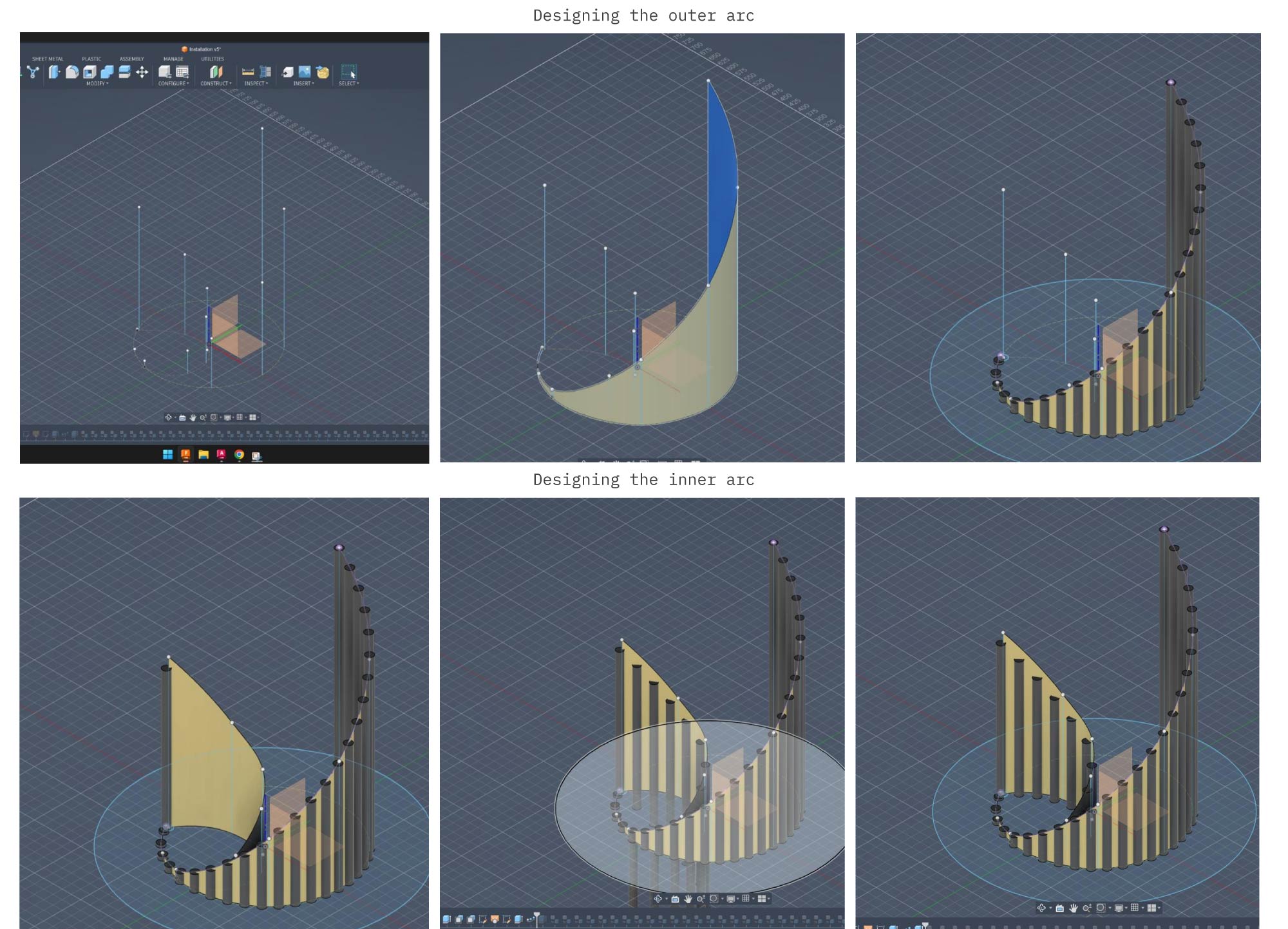 Step by step:
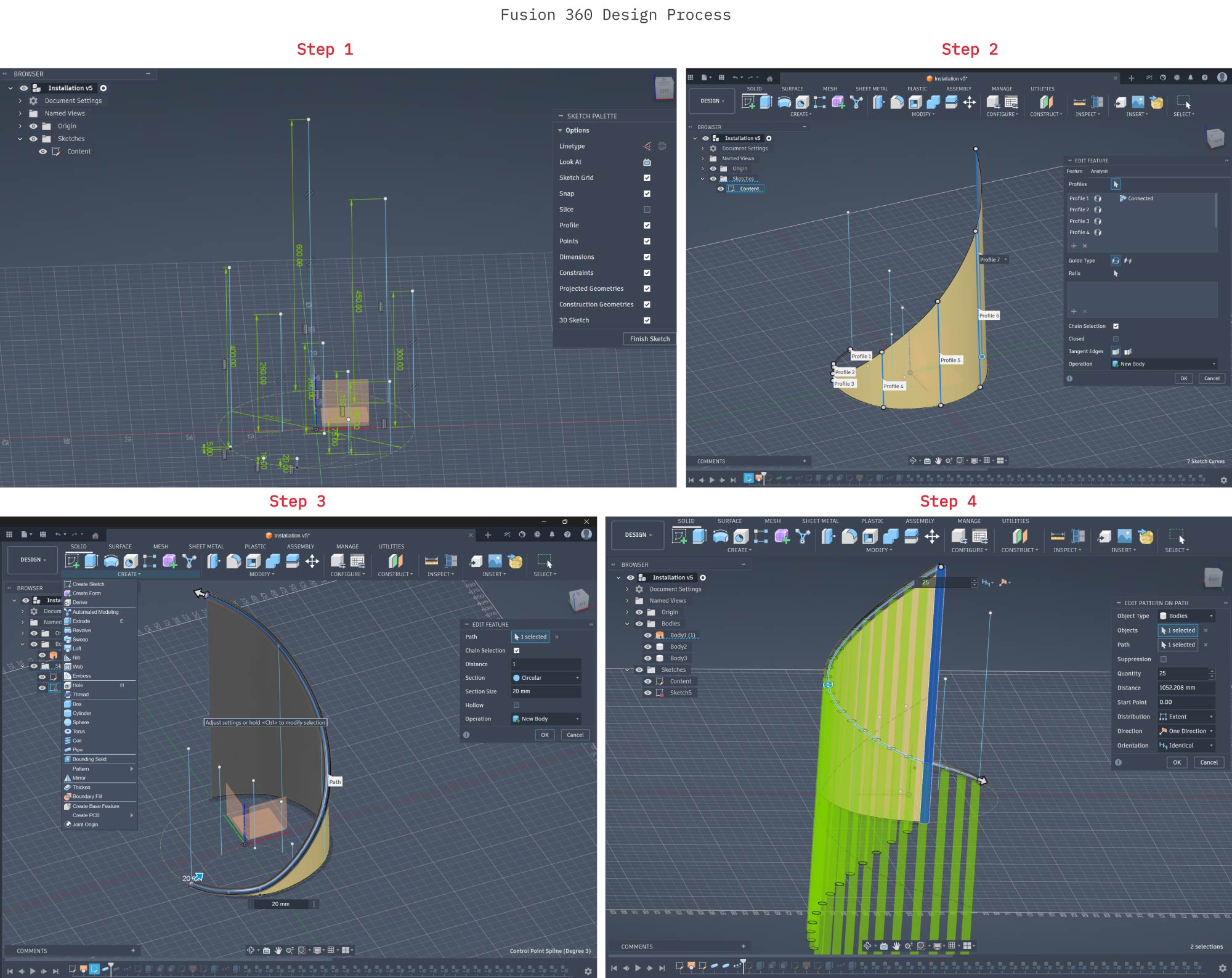
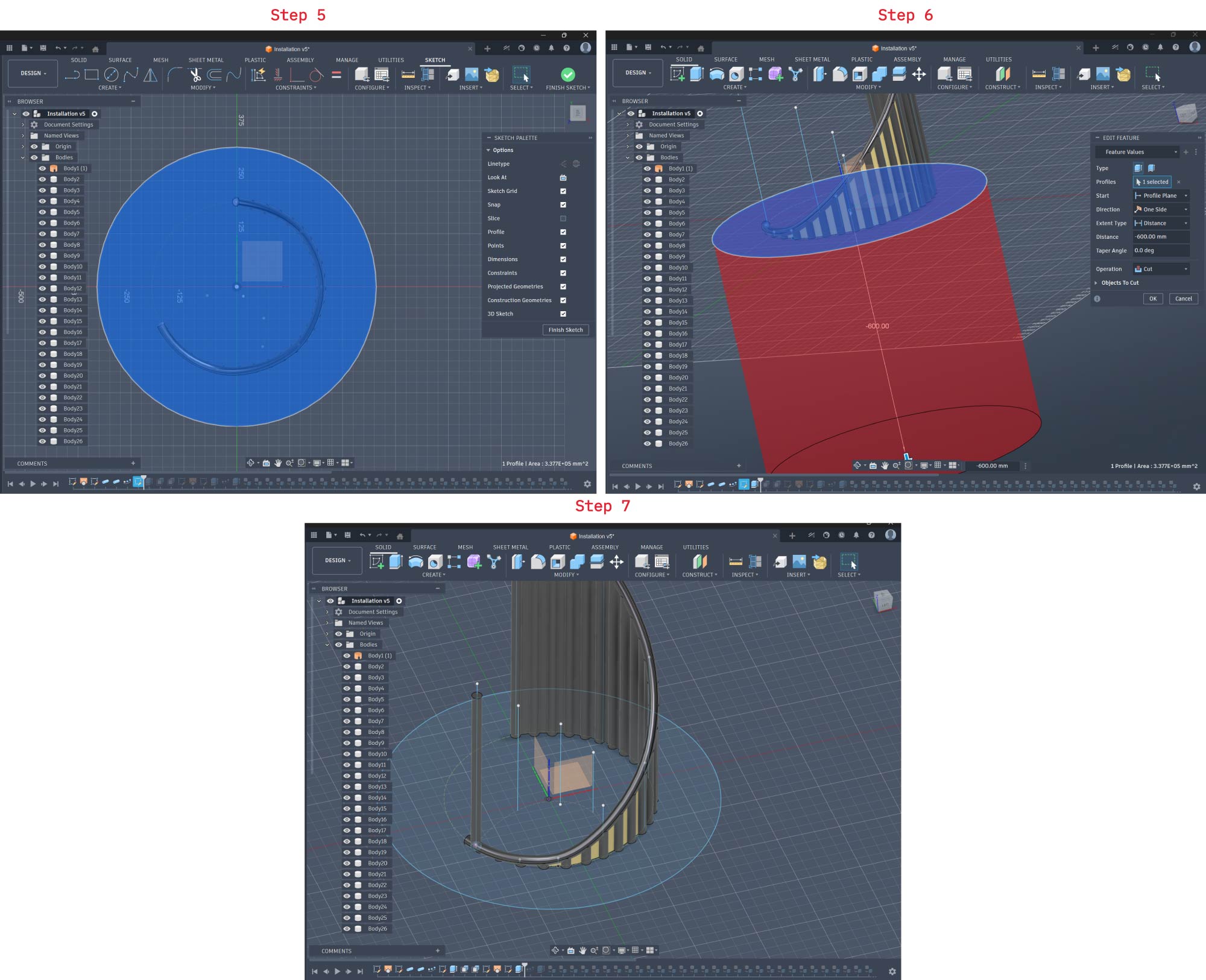
Step by Step Process
-
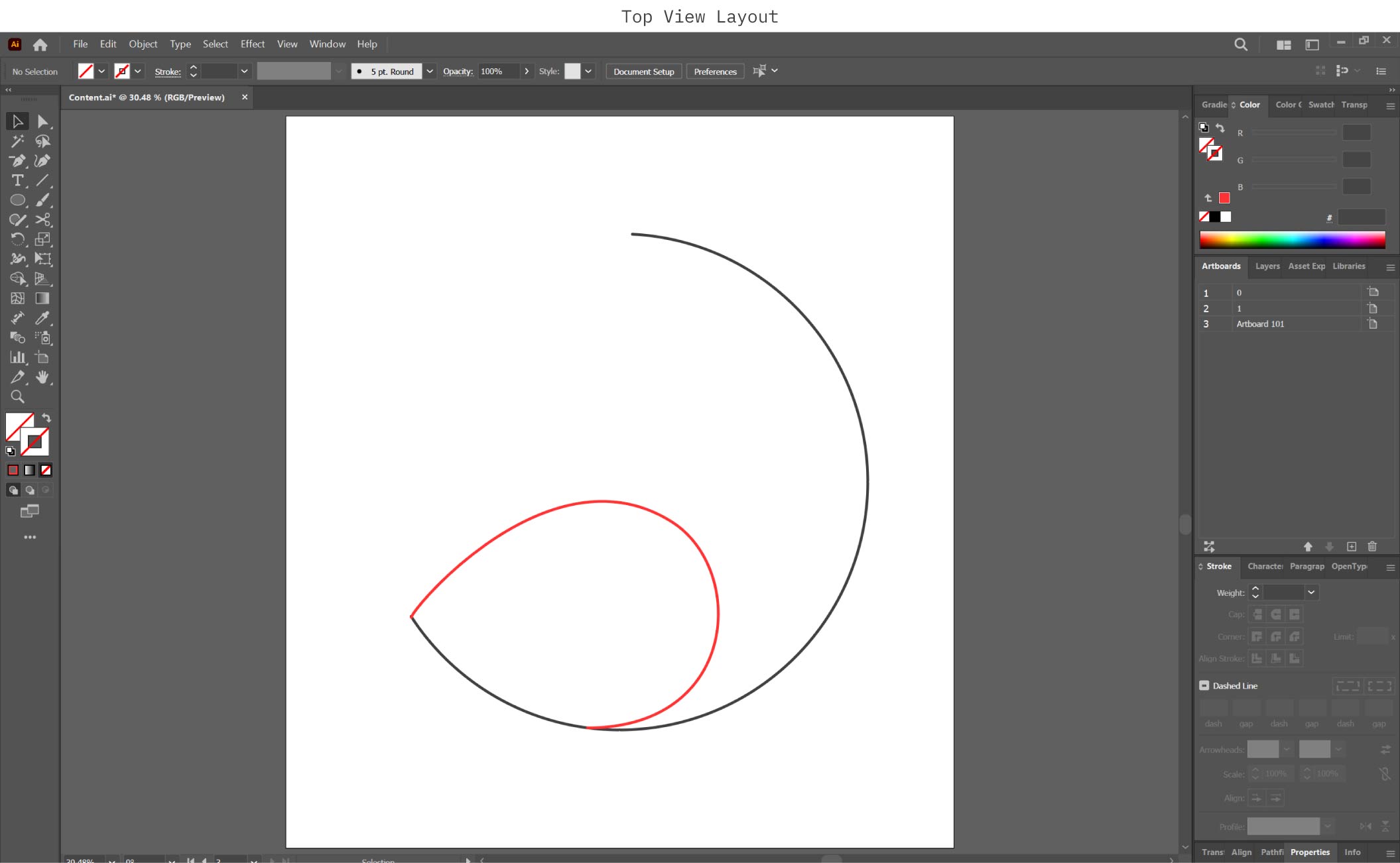
Created a hand sketch of the installation’s top elevation.
-
Converted the hand sketch into a DXF file.
-
Imported the file into Fusion 360 for 3D development.
Fusion 360 Process:
-
Enabled 3D sketching and drew vertical columns along key points of the 2D path, varying heights from 600 mm to 10–15 mm. This process was repeated across all paths.
-
Used the Surface tools to create lofts between the vertical sketch lines.
-
Inserted a pipe along the primary vertical line.
-
Applied Pattern on Path to generate additional pipes, extending them below the ground plane of the installation.
-
Created a new 2D sketch on the ground plane, drawing a circular boundary to define the base.
-
Extruded and cut the base to remove the pipe extensions below ground level.
-
Repeated the same process for the second arc.
C. Fabrication
- Cutting the base and the pipes:
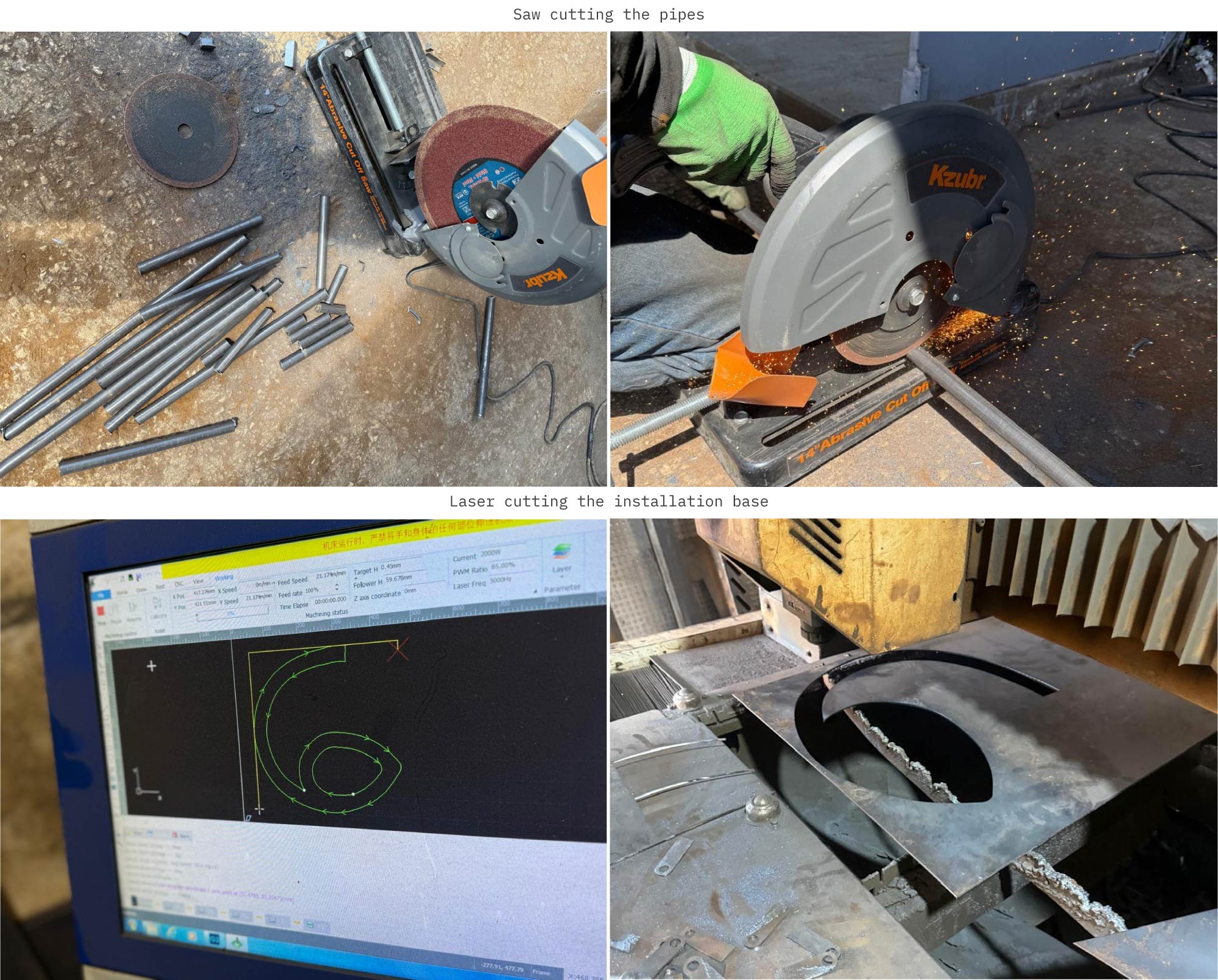
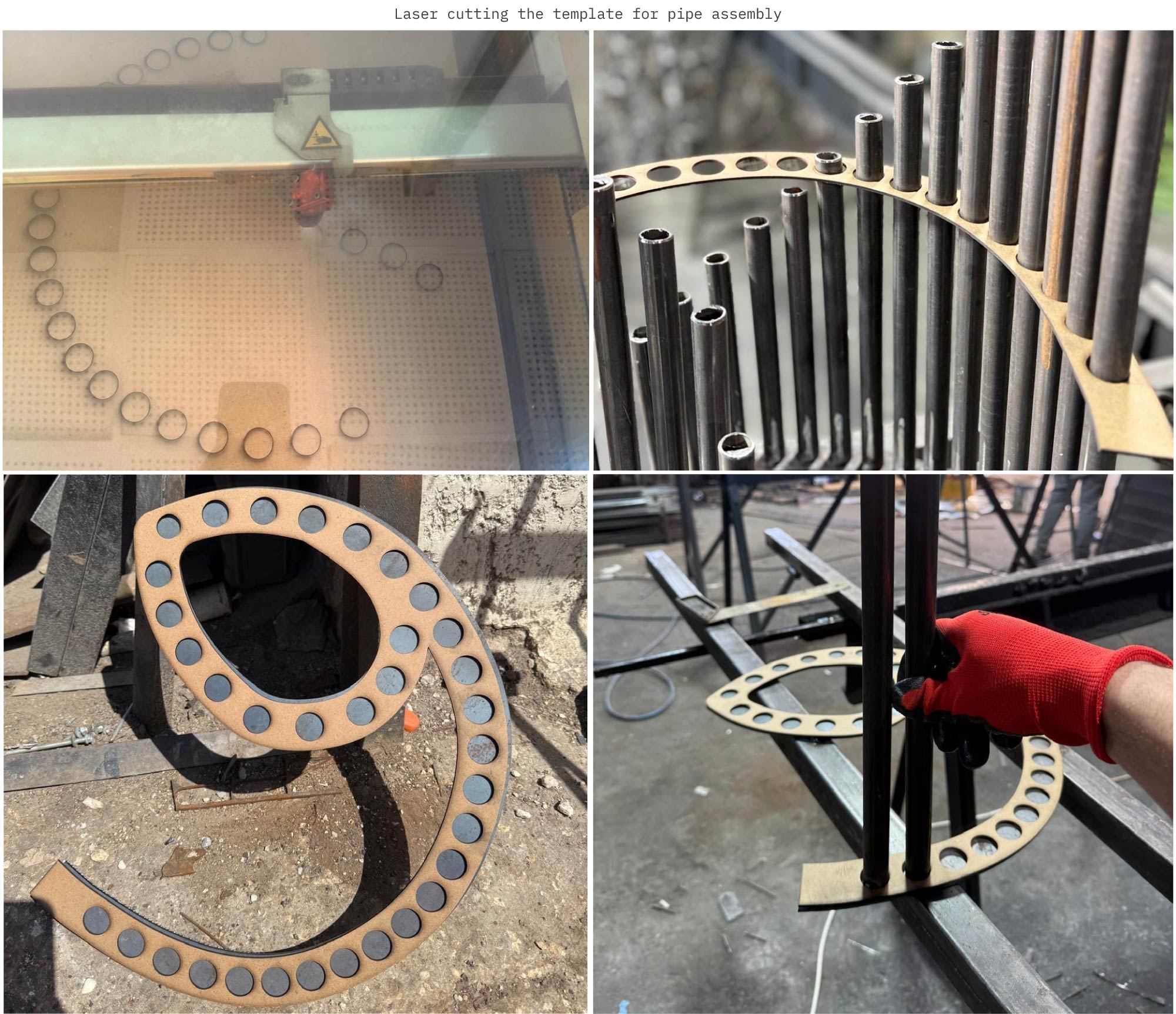
- Cut the template to arrange the pipes:
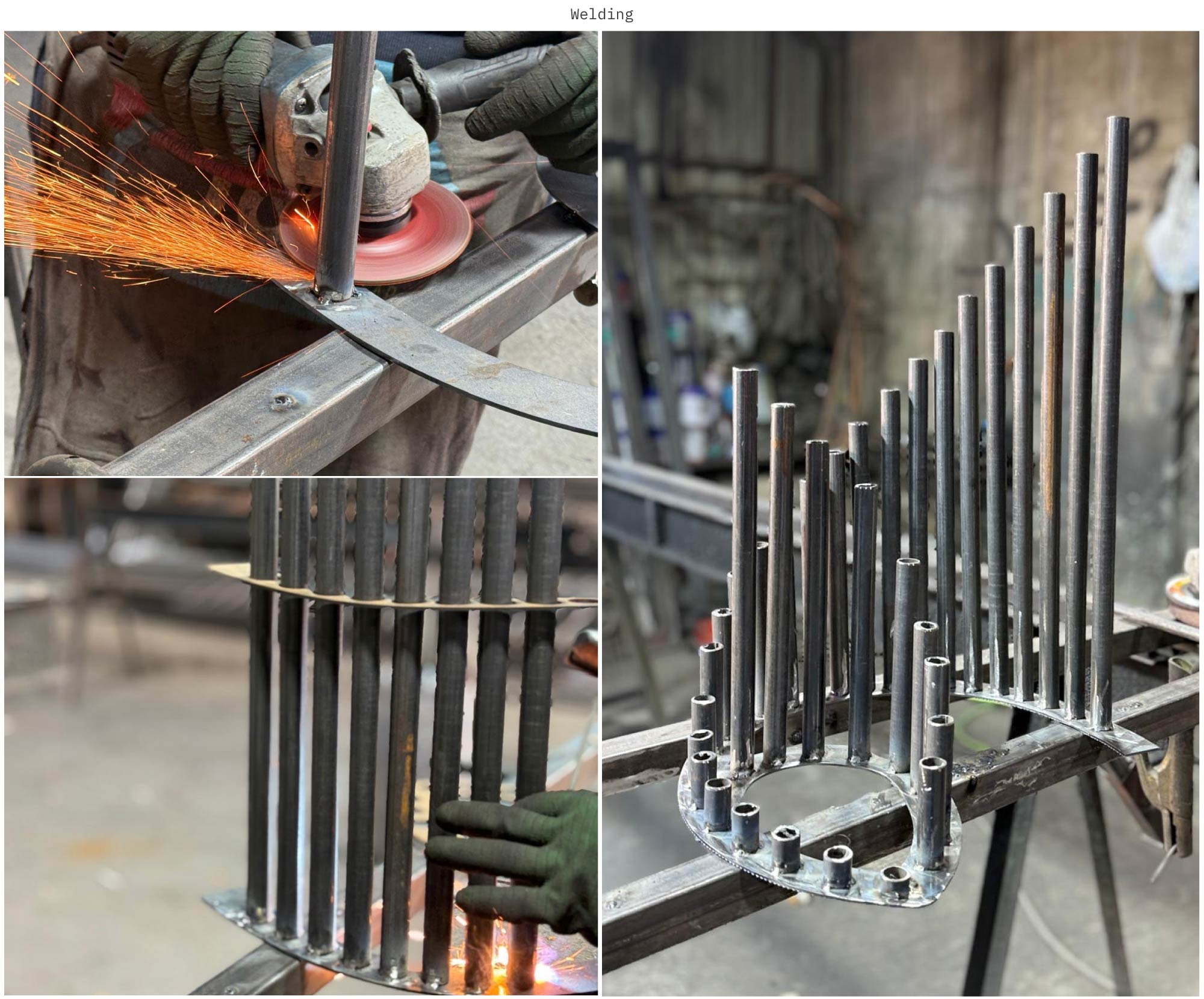
- Welding: