State of the art, project management and documentation
Inspiration and reference
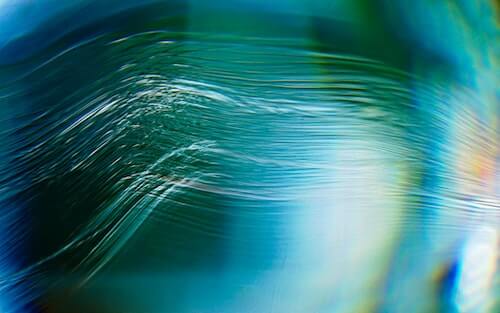
"I’m inspired by the way a place can make you feel. I love learning about cities around the world and noticing the little things that make each culture its own: the patterns, materials, traditions, and ways people come together. I’m especially drawn to light and texture, and I enjoy experimenting with them to see how they can change the feeling of a space. A lot of my ideas start with something I notice or feel, and I try to turn that into something other people can connect with too."
Image ref for[^2]
Caption for the right image
Caption for the right image
Image ref for[^2]
Caption for the right image
Caption for the right image
I Found Light in Darkness
Darkness allowed me to notice light, not just as something that helps us see, but as something beautiful on it's own It made me wonder: what if light wants to interact with me? What if it could tell me something, create an experience, or become the main part of a story?
From there, I started asking myself more questions.
-
How can light become more than just a function?
-
How can light become the main character instead of just something that illuminates an object?
-
How can I feel and experience light rather than simply see it?
-
how can I use light to tell stories?
I understood how the light around us affects the way we experience a place and interact with it. More importantly, I became interested in how strongly light can influence our mood and even our decisions. From there, I began designing lighting units that don’t simply provide light, but shape and sculpt it across surfaces, using textures, patterns, and materials to create different visual effects. I also explored light art as a way of creating atmosphere and telling stories, treating light as an active part of the experience rather than just a functional element.These projects became my way of experimenting with how light can transform an ordinary space into something that feels different.
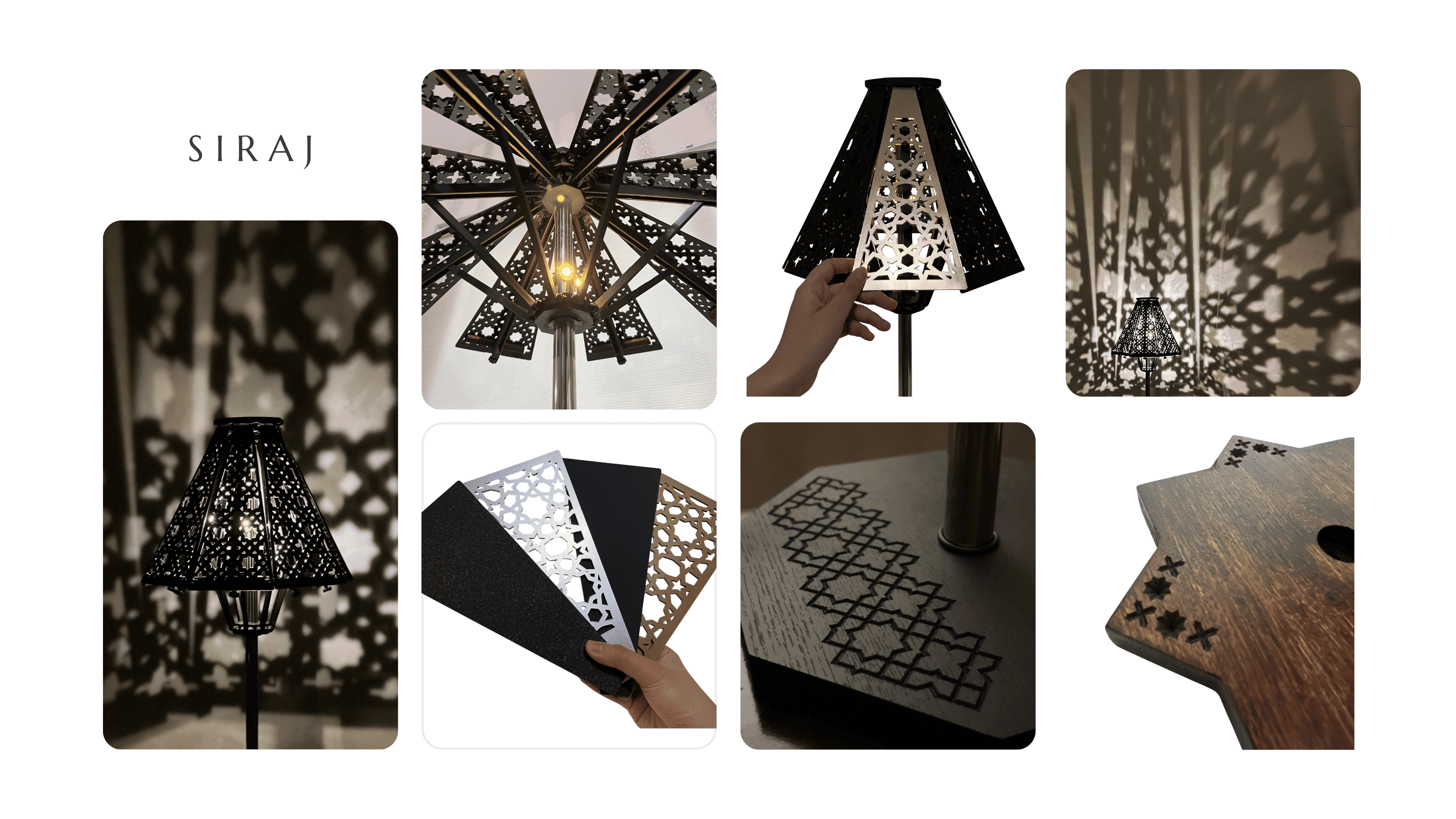
SIRAJ
Siraj is a mood light inspired by Islamic geometric patterns. It brings the beauty of the Mashrabyeh into a contemporary space, casting a warm, patterned glow that makes the room feel calm and inviting.
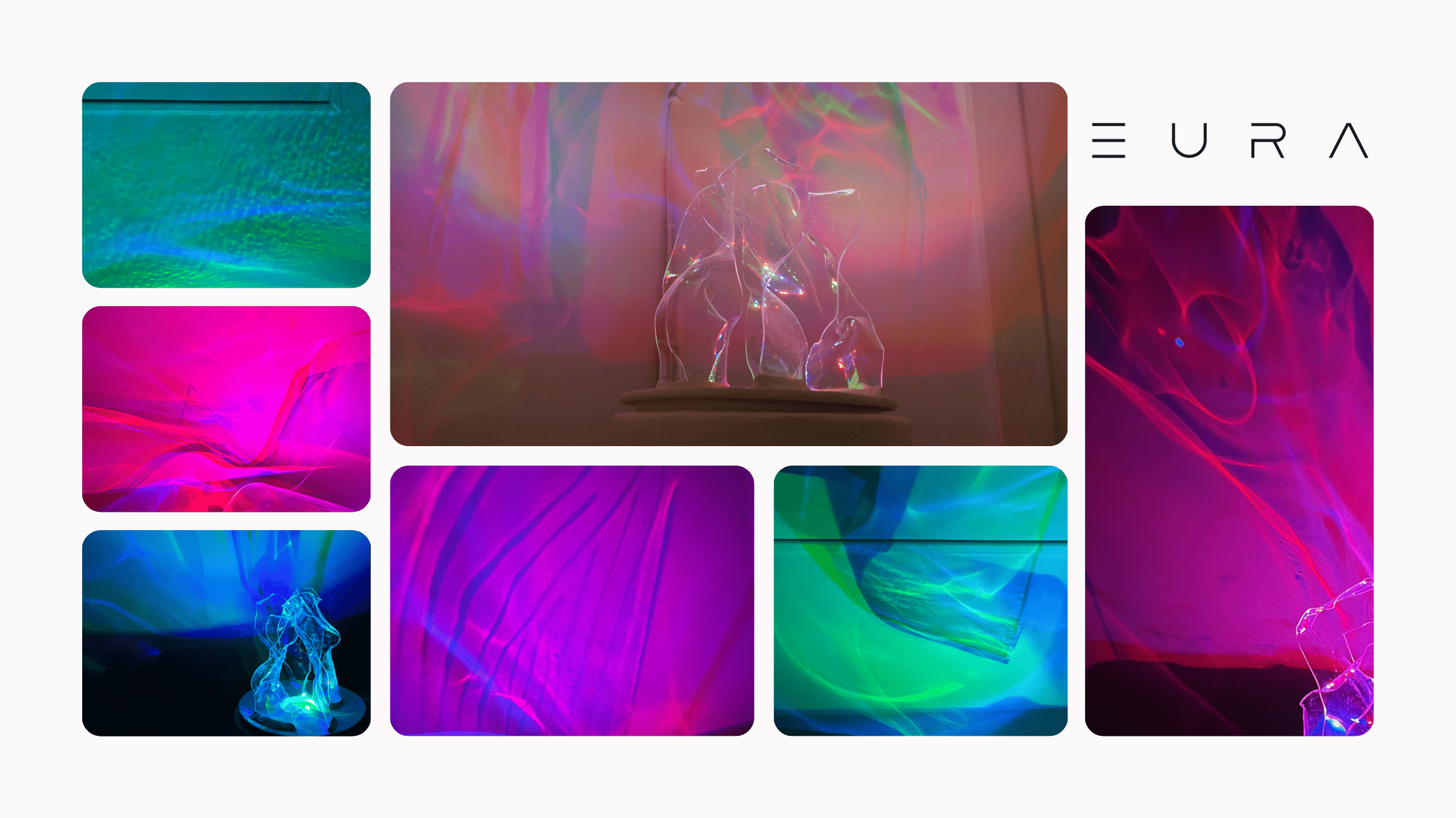
EURA
Eura is a light that helps you connect with your aura through the colors of your choice. It rotates light through uniquely hand-bent Plexiglass, creating irregular shapes and strong visual reflections on surrounding surfaces.
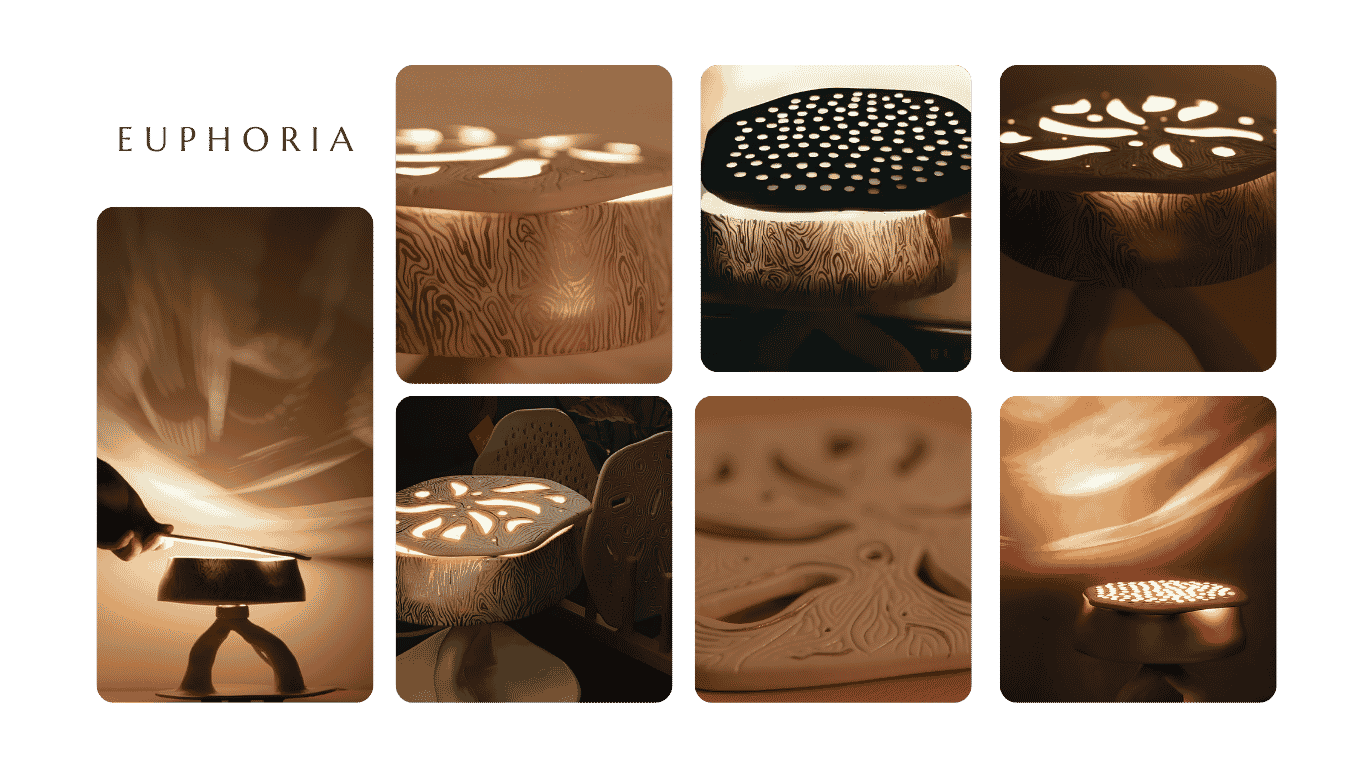
EUPHORIA
Based on the reflections and projections of light, this lamp will give the feel of textures through visuals. Placing plates on top of the light source, each with its unique pattern, will reflect light and create shadows to create beautiful visuals that give a calming feeling.
My First Week
My first week at Fabricademy was a roller coaster of emotions. At first, I felt overwhelmed by how much there was to take in. But as the days went on, I got to know the kind people around me and started to see how much I could learn here. I’m really happy to be part of this community. We began by introducing ourselves, looking at projects from previous years, and learning how to use GitLab to document our work. I didn’t expect to enjoy the documentation part so much, but it turned out to be fun!
4. Process and workflow
Tools
tools I used
start working locally
-
Download VS Code.
-
Start working on it and organizing, creating a laout template
-
compress images and files
4.1 Step 1
This tutorial [^1] .. Lorem ipsum dolor sit amet, consectetur adipiscing elit, sed do eiusmod tempor incididunt ut labore et dolore magna aliqua. "
4.2 Step 2
"Lorem ipsum dolor sit amet, consectetur adipiscing elit, sed do eiusmod tempor incididunt ut labore et dolore magna aliqua. "
4.3 Step 3
...
5. Results
Results & documentation
- Don’t forget to document the outcome including:
- Final result
- Photos from different stages
- Videos of movement or interaction, show how a material moves, something was assembled or the interactive
- Include measurements or a reference object to give a sense of size
- Describe the (material) properties or what you made
- Comparison between attempts, if you did multiple experiments or generated multiple files before fabricating / deploying. You can use a table as shown in week 4
6. Weekly reflection & critical thinking
- What did I learn? What did I personally find interesting or surprised me?
- What would I do differently? If something "failed" do I know how else to tackle it now?"
- How does this connect to my final project or my learning trajectory?
- What are implications and possible applications, think also from the ethical or environmental aspect, how it could connect to your practice and project?