BioChromes
1. Lecture
Natural dyes have existed since time immemorial and have played an important role in our history in terms of how colors are represented in different cultures and in the history of textiles. Today, natural dyes have seen a resurgence of interest in the textile industry and among the general public. Because they are more environmentally friendly and non toxic, as we have become more aware of how our individual and collective actions affect the planet—natural dyes have emerged as a new way to rethink dyeing and production methods.
There is a wide variety of biochromes, including: animal, bacterial, botanical, composite, fungal, mineral.
2. References, research & inspiration
Click on each one
Scouring
When fabrics are manufactured, finishes, adhesives, and oils must be removed so dyes can penetrate the fibers more evenly.
- Thorough washing is essential.
- It helps achieve more even dyeing.
Protein fibers: Plants fibers
(Raspanti, 2026).
Mordant and Binders
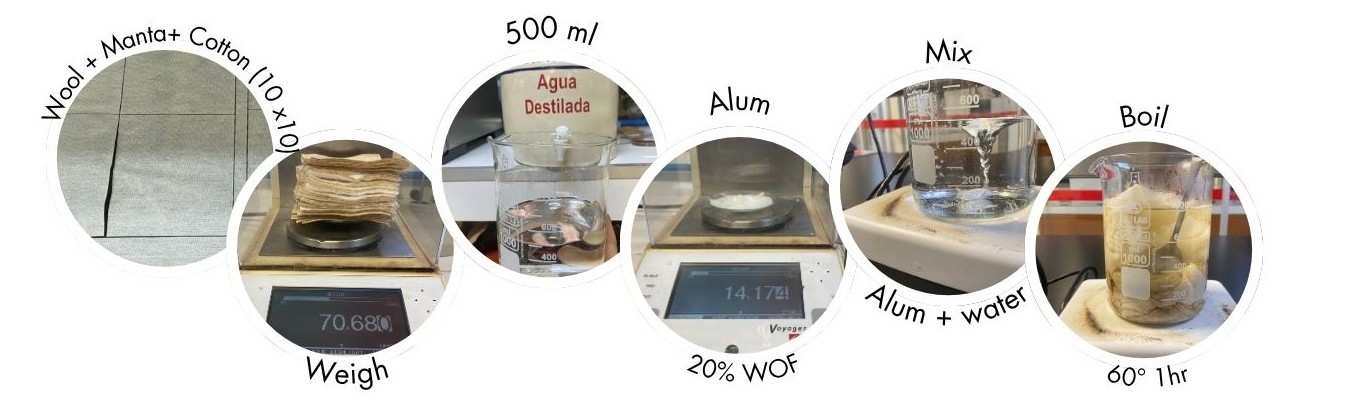
Mordants help fibers retain natural dyes and can influence the final color.
Metallic mordants
- Alum (10-20% of weigh of fibers + 8& tartaric acid for protein fabrics)
- Copper (10-20% of weigh of fibers + 8& tartaric acid for protein fabrics)
- Iron
Plant-based mordants and binders
- Aluminum biohyperaccumulators
- Soy-based binders
(Raspanti, 2026).
Tannins, natural compounds that help set the color in the fibers.
Boil
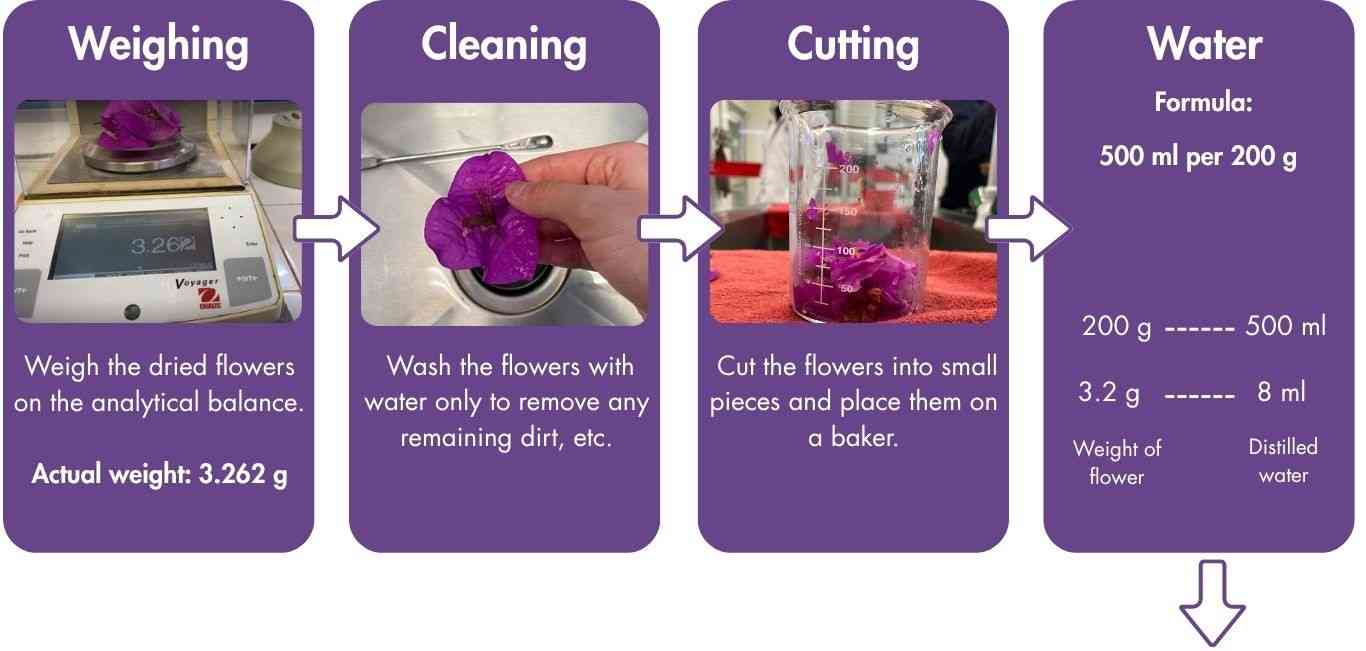
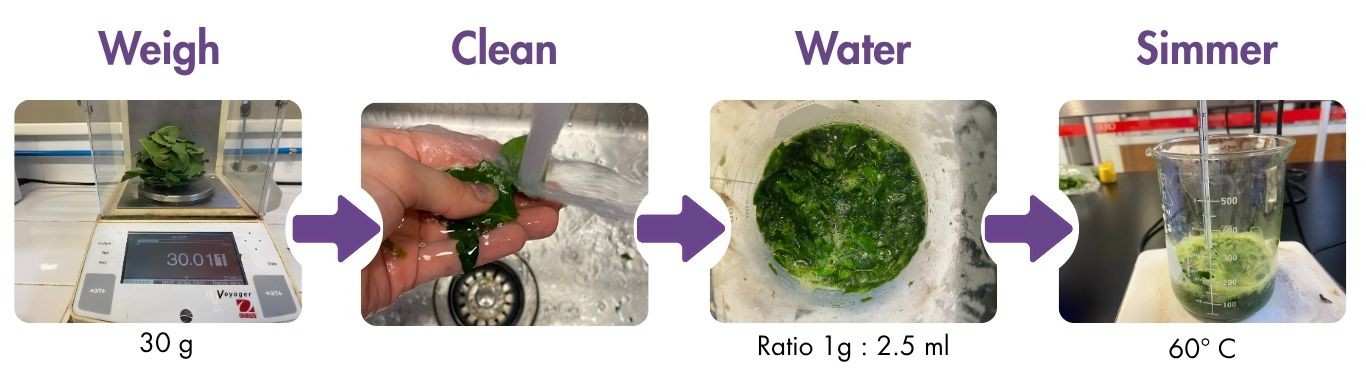
When the temperature reaches 60°, this helps break down the structures of the plants, etc., and release the liquid dye.
Modifier
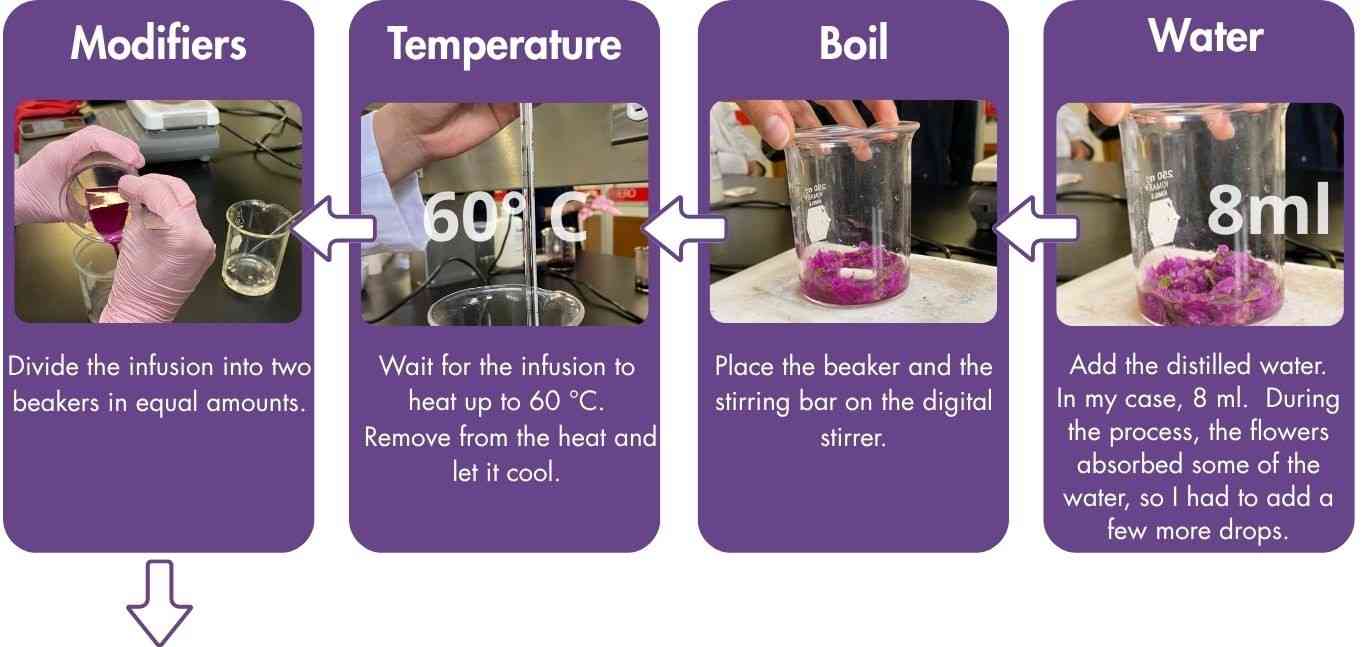
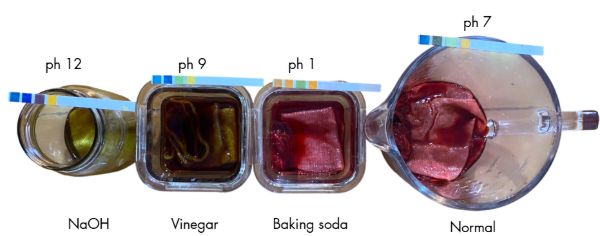
Modifiers can change the color of a dye bath by changing its pH.
Alkaline additives
- Calcium carbonate
- Sodium carbonate (soda ash)
- Calcium hydroxide
- Sodium hydroxide
Acidic additives
- Citric acid
- Acetic acid (vinegar)
- Cream of tartar
- Tartaric acid
Metal salts - Ferrous sulfate
(Natura dye stores,2025).
Dye bath
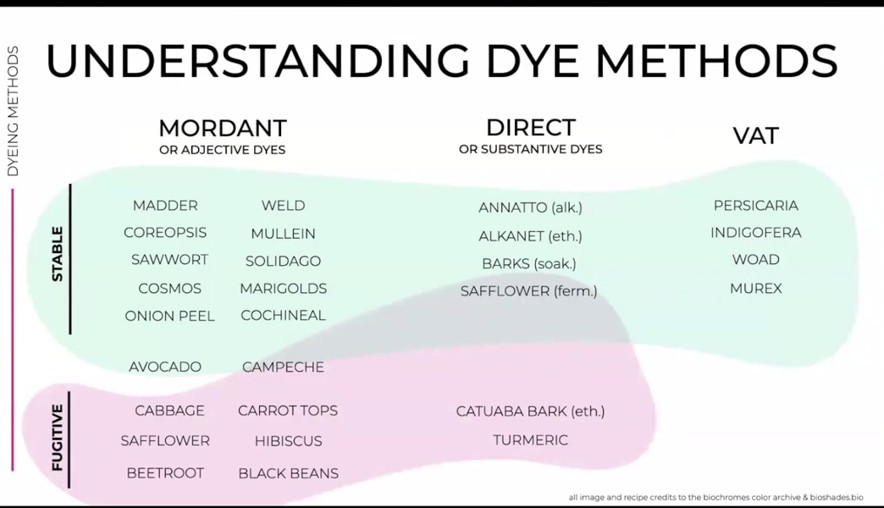
A dye bath is a liquid solution containing pigments or mordants.
There are two types of dye baths: stable and fugitive. The fugitives, which degrades over time and when exposed to light (Tanner, 2025).
Pigment
Colors that stay colorful (Raspanti, 2026).
 Celilia Raspanti
2. Inspiration
get inspired!
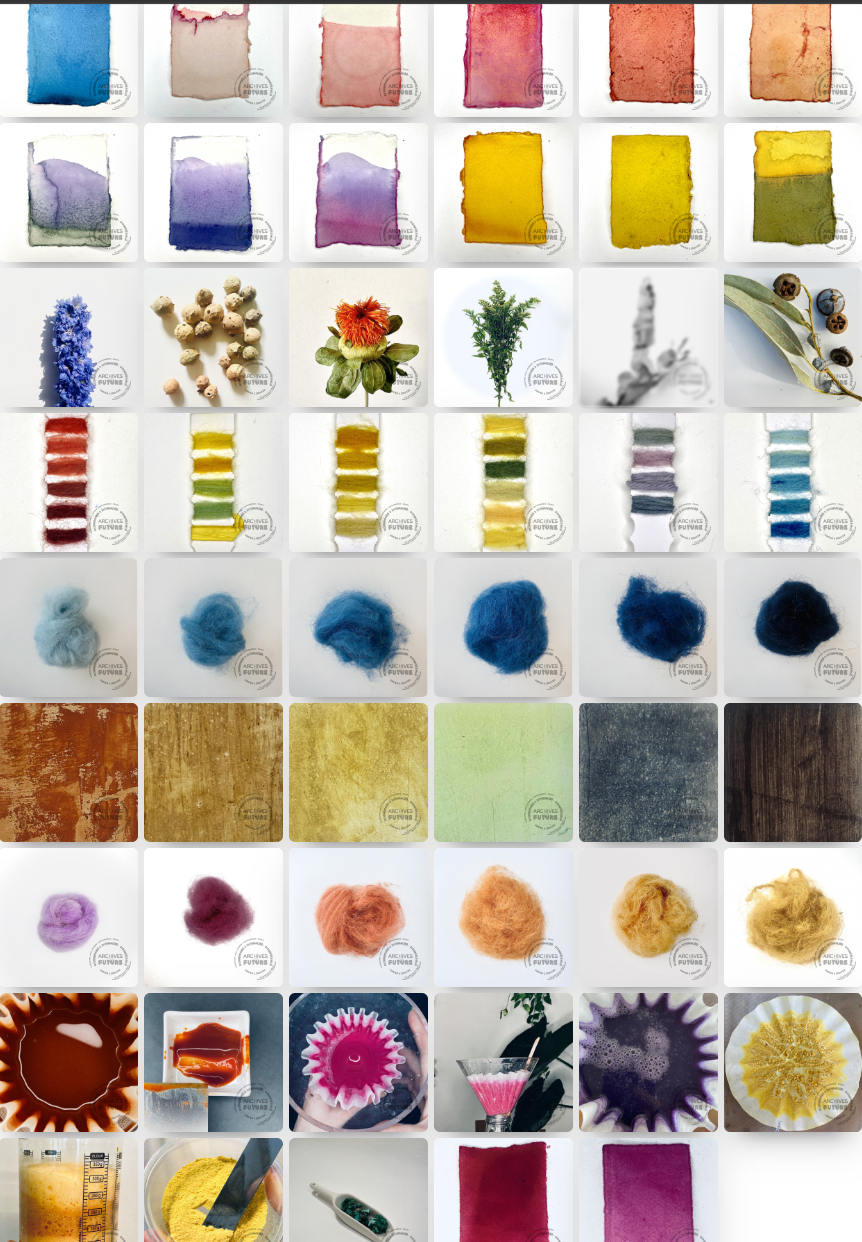
Check out and research alumni pages to betetr understand how to document and get inspired
-
Dye book - Isobel Leonard - TextileLab Amsterdam Waag FutureLab
-
Inks & folds - Germarillis Ruiz - FabLab Bcn
-
Woven documentation matrix - Riley Cox - TextileLab Amsterdam
-
Comparison inks - Stephanie Johnsons - TextileLab Amsterdam
-
Documentation formats - Julia Karas - FabLab Bcn
-
Artistic intervention - Kate Reed - Dassault Systems
Add your fav alumni's pages as references
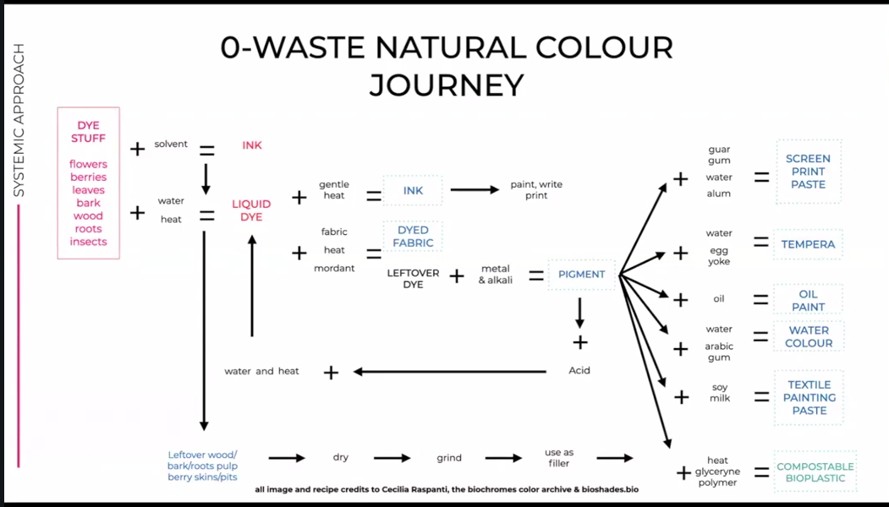
- Here is a diagram by Cecilia Raspanti that visually explains the systematic “zero-waste” approach to natural color production.
3. Tools
Materials

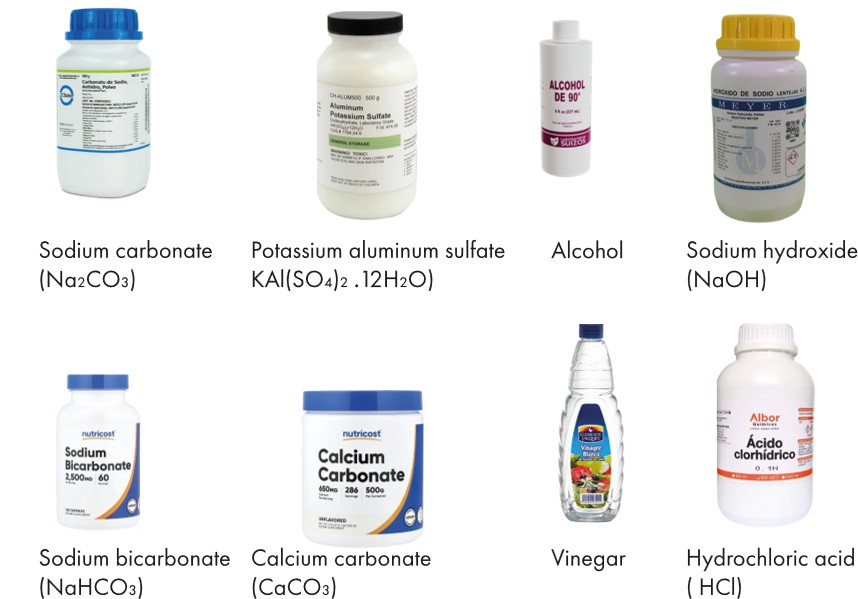
Reagents
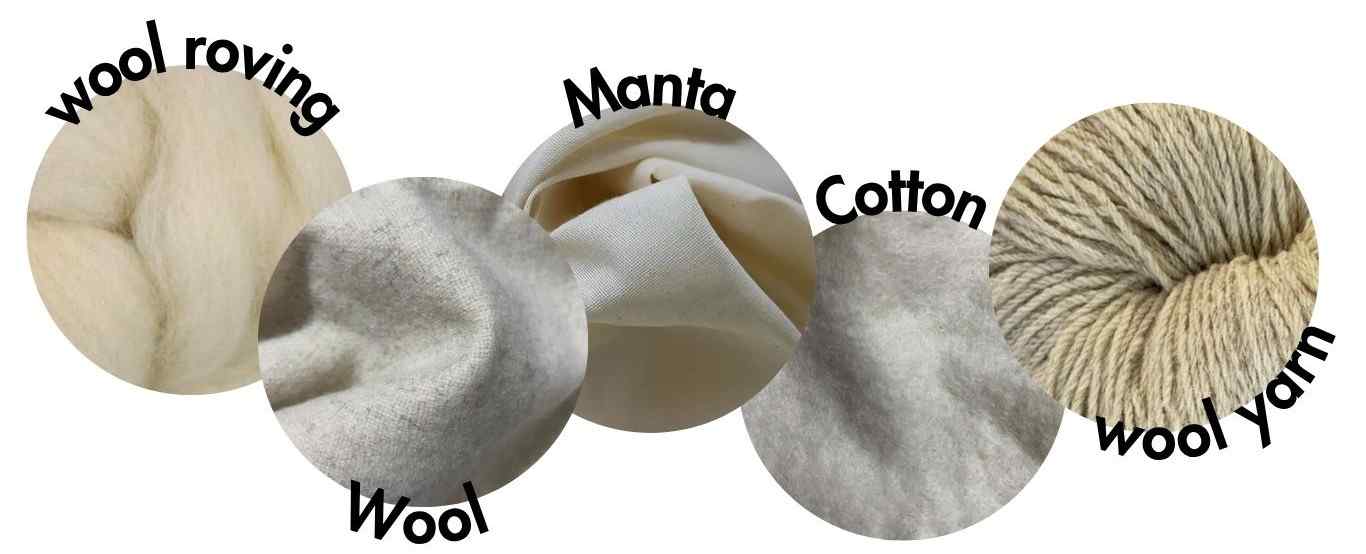
4. Process and workflow
4. 1 Mordant
4. 2 Bouganvillea
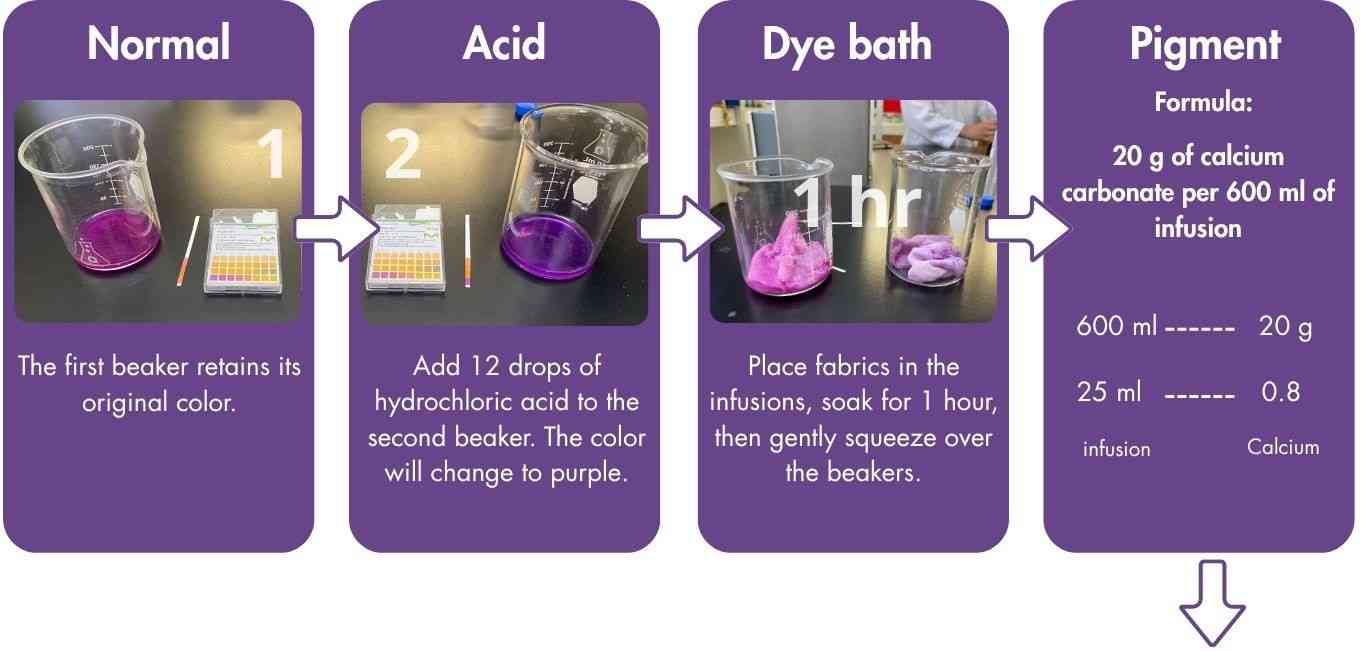
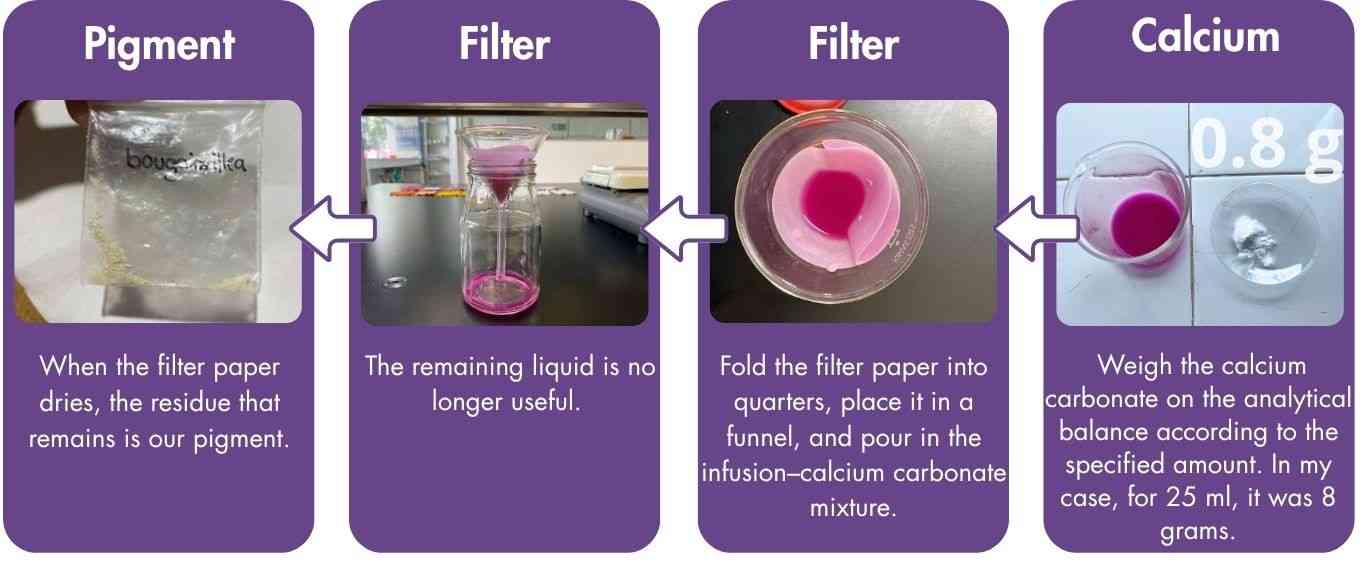
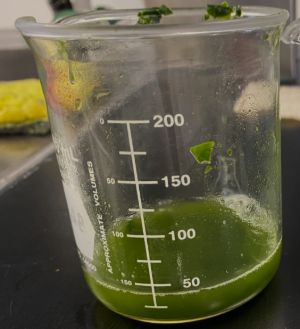
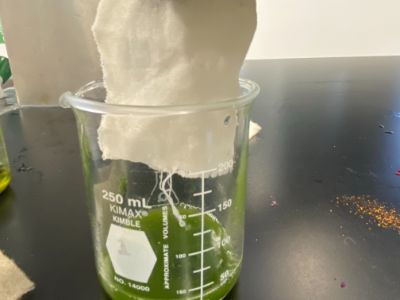
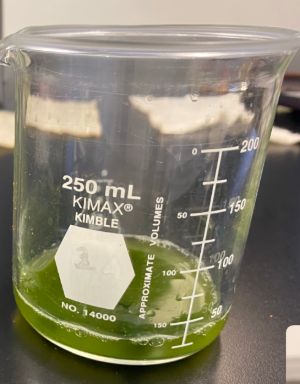
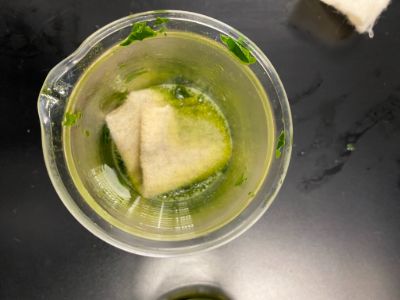
4. 2 Spinach
-
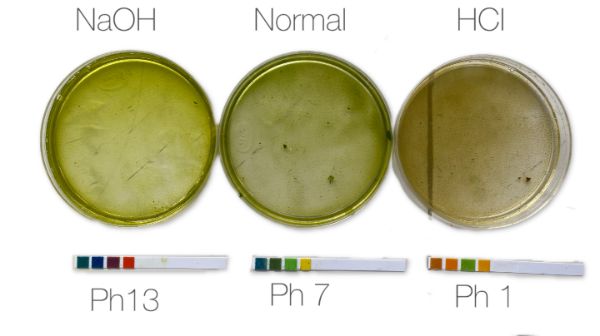
Divide the infusion into two samples
ORIGINAL COLOR
DYEING
MODIFIED COLOR
The infusion turns purple.
DYEING
4. 2 Beetroot
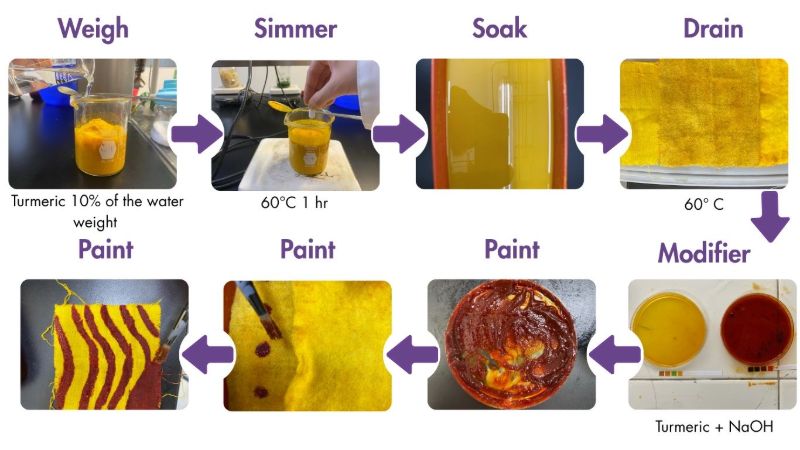
4. 3 Turmeric
Antotypia
Antotypia was developed in the 19th century by Sir John Frederick William Herschel, a British mathematician and astronomer.
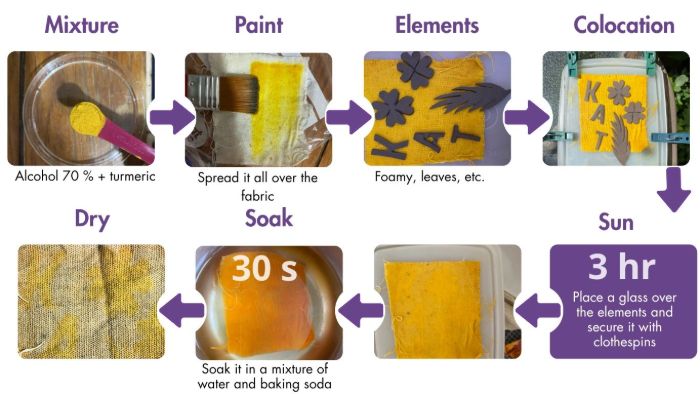
Antotypya involves using plant pigments and other natural materials to create a photosensitive emulsion(Tipia Lab, 2024). Here’s an explanation of the basic process:
Turmeric antotypia
Spinach antotypia
4. 3 Turmeric antotypia
5. Results
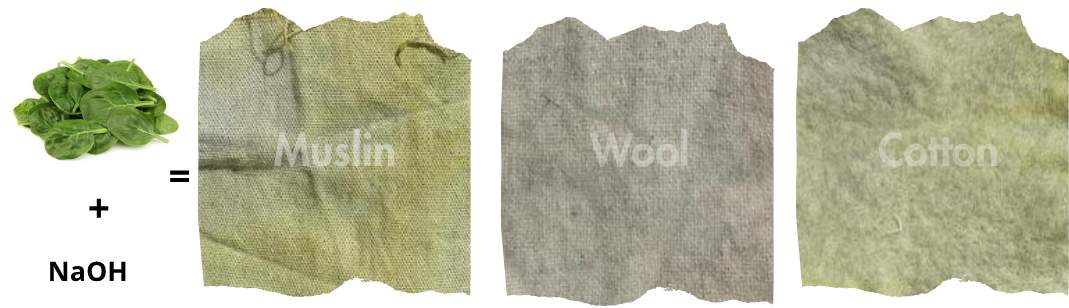
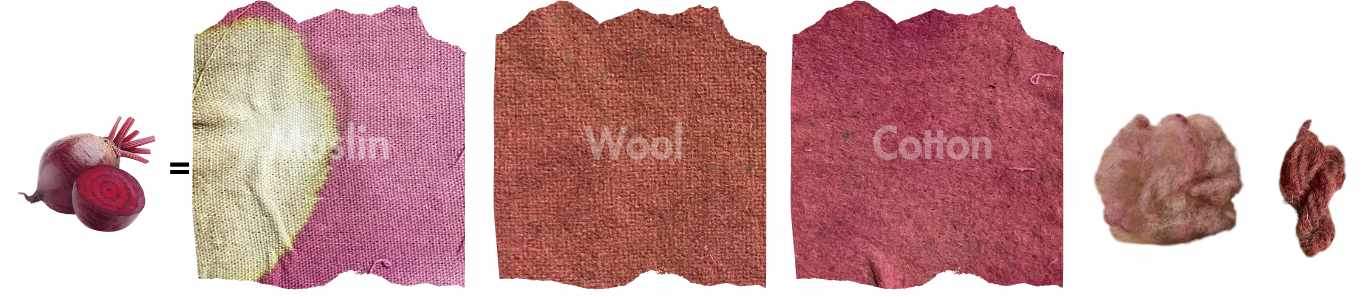
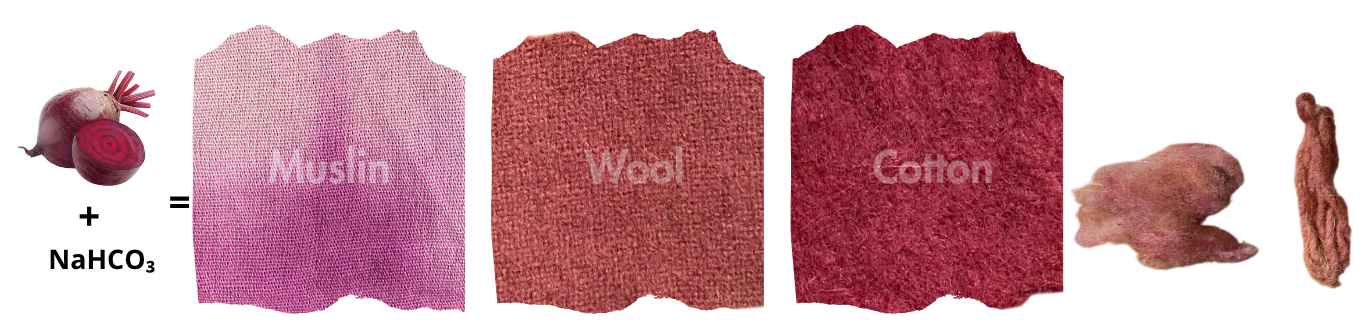
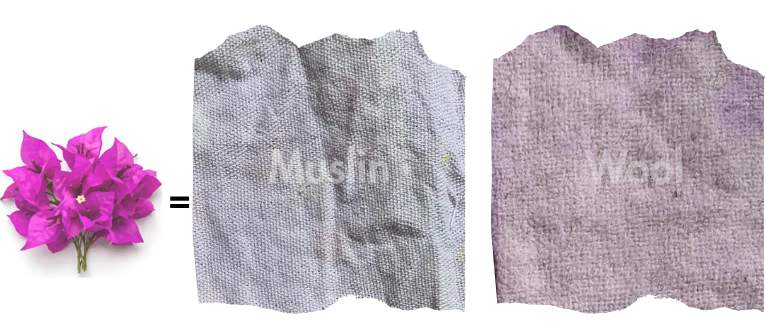
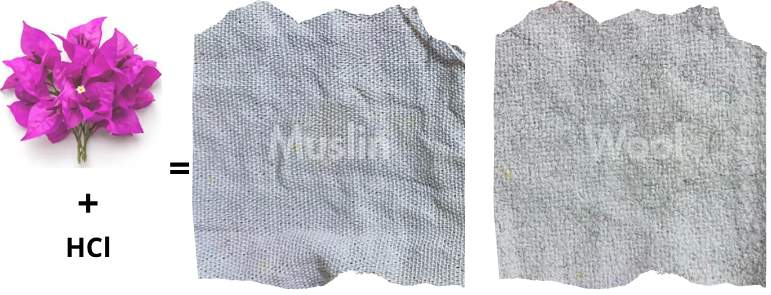
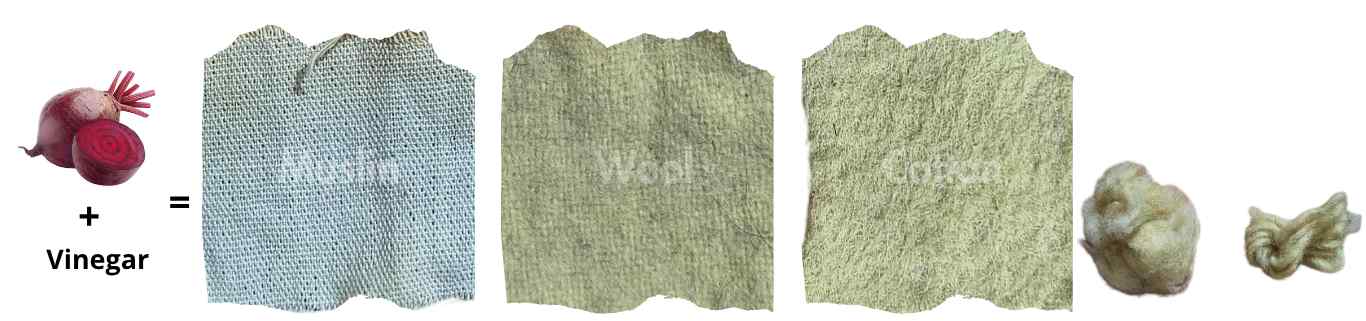
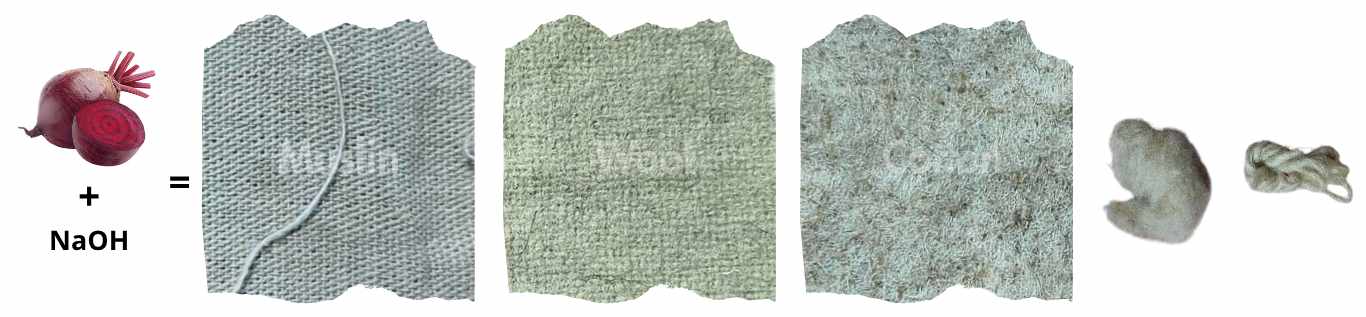
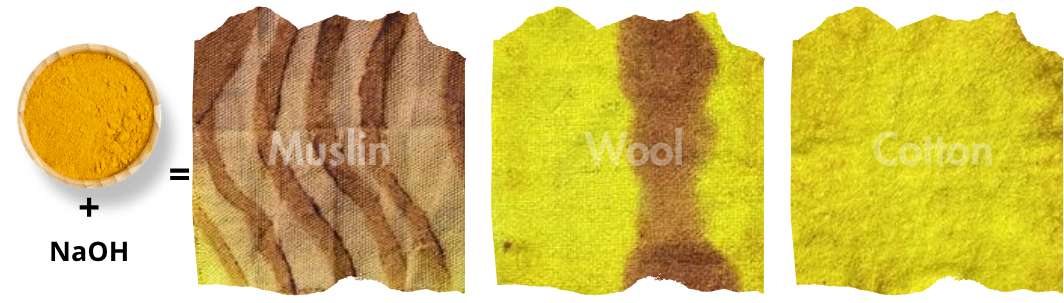
Table for comparison
| Material name | Fabric composition | Dye treatment | Color Hue | Color Intensity | Stretchability | Observations |
|---|---|---|---|---|---|---|
| M1 | Plant fibers - muselin | Dyeing with spinach | Green | Medium | Low | It retains its properties as a muslin |
| W1 | Animal fibers - wool | Dyeing with spinach | Green | Medium | Low | Feels rough when stretched |
| C1 | Plant fibers - cotton | Dyeing with spinach | Green/yellow | Medium | Low | When removed from the dye bath, it felt slimy; as it dried, it shrank and became stiff |
| M2 | Plant fibers - muselin | Dyeing with NaOH | Bright Green | Medium | Low | Some areas are more intensely colored than others |
| W2 | Animal fibers - wool | Dyeing with NaOH | Green | Medium | Low | The color did not take |
| C2 | Plant fibers - cotton | Dyeing with NaOH | Bright Green | Medium | High | A beautiful green |
| M3 | Plant fibers - muselin | Dyeing with beetroot | Bright pink | High | Low | I applied a drop of sodium hydroxide to see the effect on the fiber; it lost its color and turned light yellow. |
| W3 | Animal fibers - wool | Dyeing with beetroot | Rust red | High | Low | It retains its properties as wool |
| C3 | Plant fibers - cotton | Dyeing with beetroot | Magenta | High | Medium | The color remained uniform. |
| WR1 | Animal fibers - wool | Dyeing with beetroot | Red | Low | High | The color did not adhere. |
| WY1 | Animal fibers - wool | Dyeing with beetroot | Rust red | Medium | Low | The color did not adhere uniformly. |
| M4 | Plant fibers - muselin | Dyeing with NaHCO₃ | Fuchsia | High | Low | A gradient effect was created; perhaps another fabric absorbed its color.yellow. |
| W4 | Animal fibers - wool | Dyeing with NaHCO₃ | Rust red | High | Low | The color remained uniform. |
| C4 | Plant fibers - cotton | Dyeing with NaHCO₃ | Magenta | High | Low | The color remained uniform. |
| WR2 | Animal fibers - wool | Dyeing with NaHCO₃ | Red | Low | High | The color did not adhere. |
| WY2 | Animal fibers - wool | Dyeing with NaHCO₃ | Low red | Medium | Low | The color did not adhere uniformly. |
| M4 | Plant fibers - muselin | Dyeing with NaHCO₃ | Fuchsia | High | Low | A gradient effect was created; perhaps another fabric absorbed its color. |
| W4 | Animal fibers - wool | Dyeing with NaHCO₃ | Rust red | High | Low | The color remained uniform. |
| M5 | Plant fibers - muselin | Dyeing with bougainvillea | Pale pink | Low | Low | Little color due to the small amount of dye used |
| W5 | Animal fibers - wool | Dyeing with bougainvillea | Light fucsia | Medium | Low | Little color due to the small amount of dye used |
| M6 | Plant fibers - muselin | Dyeing with HCI | Pale pink | Low | Low | A light fuchsia with areas of intense color along the edge |
| W6 | Animal fibers - wool | Dyeing with HCI | Pale pink | Low | Low | TLittle color due to the small amount of dye used |
| M7 | Plant fibers - muselin | Dyeing with vinegar | Pale olive | Low | Low | A gradient effect was created. |
| W7 | Animal fibers - wool | Dyeing with vinegar | Pale olive | Medium | Low | It retains its properties as wool |
| C7 | Plant fibers - cotton | Dyeing with vinegar | Pale olive | Medium | Medium | The color remained uniform. |
| WR3 | Animal fibers - wool | Dyeing with vinegar | Pale olive | Medium | High | The color adhere uniformly. |
| WY3 | Animal fibers - wool | Dyeing with vinegar | Pale olive | Medium | Low | The color did adhere uniformly. |
| W6 | Animal fibers - wool | Dyeing with HCI | Pale pink | Low | Low | TLittle color due to the small amount of dye used |
| M8 | Plant fibers - muselin | Dyeing with NaOH | Beige | Medium | Low | A gradient effect was created. |
| W8 | Animal fibers - wool | Dyeing with NaOH | Pale olive | Medium | Low | It retains its properties as wool |
| C8 | Plant fibers - cotton | Dyeing with NaOH | Beige | Medium | Medium | The color remained uniform. |
| WR4 | Animal fibers - wool | Dyeing with NaOH | Pale olive | Medium | High | The color did not adhere uniformly. |
| WY4 | Animal fibers - wool | Dyeing with turmeric | Pale olive | Medium | Low | The color did not adhere uniformly. |
| M9 | Plant fibers - muselin | Dyeing with turmeric | Orange | High | Low | When painting with a mixture of turmeric and NaOH on the dyed fabric, the red color spread. The fabric became stiff. |
| W9 | Animal fibers - wool | Dyeing with turmeric | Pale olive | High | Low | When painting with a mixture of turmeric and NaOH on the dyed fabric, the red color spread. |
| C9 | Plant fibers - cotton | Standard dyeing | Pale olive | Medium | Medium | The color remained uniform. |
5.1 Results Antotypia
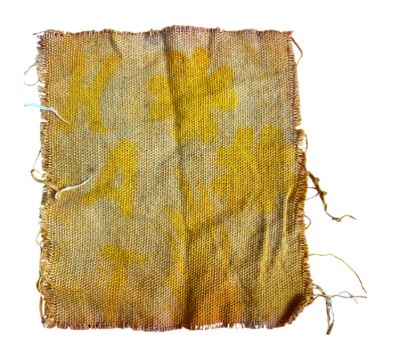
Due to the bad weather, there wasn't enough sunlight, so the color of the fiber seems to have changed slightly. This may also be because I used 70% alcohol when I should have used 90%.
5.6 Results pigments
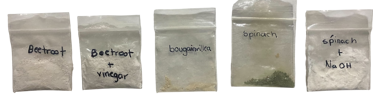
Most of the extracts turned white when mixed with calcium carbonate and then filtered. You can leave the extract with calcium carbonate for longer before filtering it to get a little more color, but even so, they turn very white.
The spinach infusion turned out green because I filtered it without calcium carbonate; then, I mixed what remained on the filter paper with a little water and calcium carbonate according to the formula, and that’s what gave it that color.
6. Weekly reflection & critical thinking
I learned a new dyeing process based on natural plants; I learned about the color extraction process, pH changes caused by different modifiers, and the creation of pigments. During this journey, I recognized the importance of mordants in the process and their effect on the fibers after dyeing. What surprised me most was that sometimes you don’t need to leave home to create your own dye; I wanted to experiment with materials that anyone could have access to. I was also surprised by the significant effect of modifiers, which alter the substance’s pH, resulting in a dramatic color change from the original and a variety of astonishing colors.
During my process, I didn’t clean the plant-based or protein-based fibers, though the results weren’t bad. I’d like to know if this would affect the color. Also, most of my pigments turned out white; I’d try others like arabic gum or guar gum to see the result on a watercolor painting.
This has helped me discover a new way to create color, colors that people can relate to, new colors through processes that are more sustainable and accessible. This has been very helpful in continuing my research and asking myself what other plants, barks, or even organic “waste” can be reintroduced into the life cycle, giving them new value through dyeing. Dyeing is just the first step toward offering different sustainable production alternatives.
7. Recipe files & References
-
Reference: Natural Dye store ↩
-
Reference: Biochromes ↩