Soft robotics
1. Lecture
As we begin a new week, excited about the results we can achive with soft robots, we had a guest, Chambers who talked about how nature inspires soft robots, shark fins, moving through a liquid medium, bird´s wings and spiders´s legs, whic help them move around inside their web.
As part of the lesson, there are various activities in which we can activate a resource using different signals.
-
Physical signals - pressure, vibration, motion, touch.
-
Chemical - olfaction and taste. (Químicas: olfato y gusto).
- Thermal signals - hot and cold. (Señales térmicas: frío y calor).
-
Electrophysiological signals - brain wave, cardiac, muscle.
-
Light waves - Vision and optic flow.
-
Sound waves - Hearing and echolocation.
Robots
Are a system in control, movement and sensing!
Soft robots - systems that are compliant and flexible. We can also called them as actuators, felxible components that converts the energy into a controlled physical movement.
Stimuli for soft actuators: Fluidic Chemical Biological Thermal Electrical Magnetic Hybrid Systems Actuator
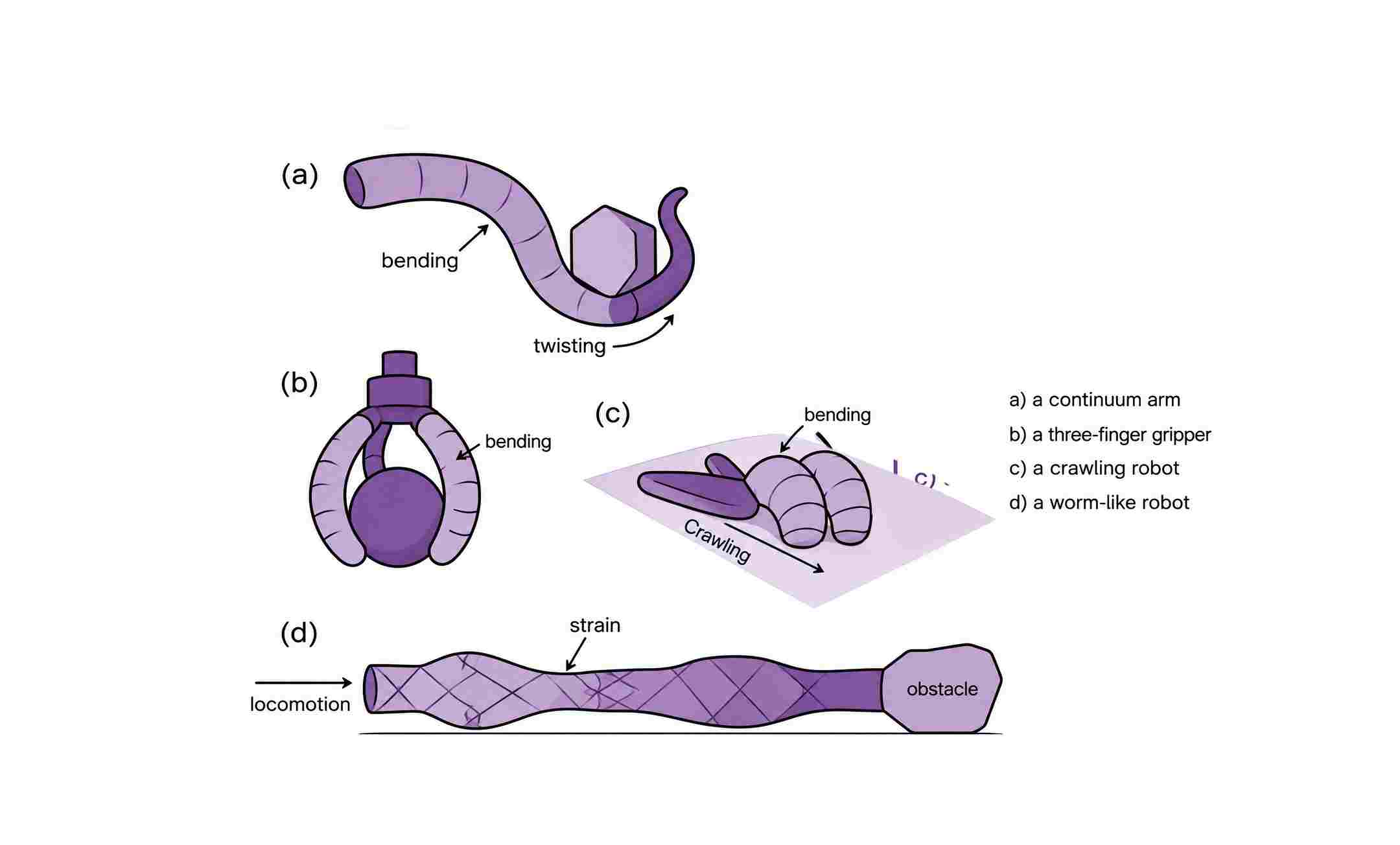
## Articial muscles made from fabrics McKibben muscles, also known as pneumatic artificial muscles (PAMs), are actuators that mimic the behavior of natural muscles. They were first developed in the 1950s by Joseph L. McKibben, initially intended to assist polio patients. These muscles have found applications in robotics, prosthetics, and various mechanical systems due to their high power-to-weight ratio, flexibility, and compliance.
2. References, research & inspiration
2.1 Quick how-tos
remove chapter 2.1 after use
get inspired!
Check out and research alumni pages to betetr understand how to document and get inspired
-
materials comparison - Julija Karas - FabLab Bcn
-
Artistic intervention - Riley Cox - TextileLab Amsterdam
Add your fav alumni's pages as references
3. Tools
4. Process and workflow
How to make the first actuator
As a group, we started with a star. I decided to create a star with different designs to explore how its behavior. I created the design in Illustrator, measuring 15 x 15 cm, to fit the dimensions of the laser cutter I was going to use.
I downloaded the file in DXF format. 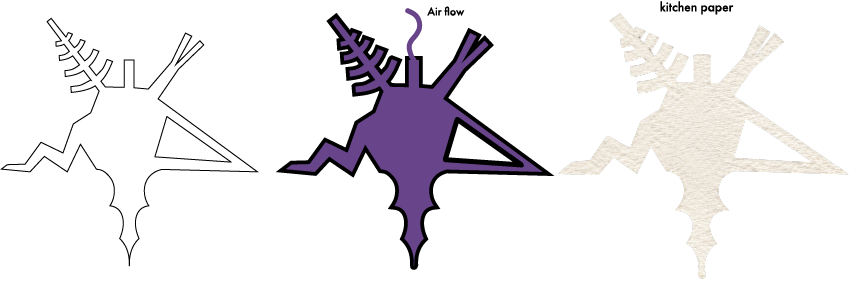
How to use the Xtool laser cutter
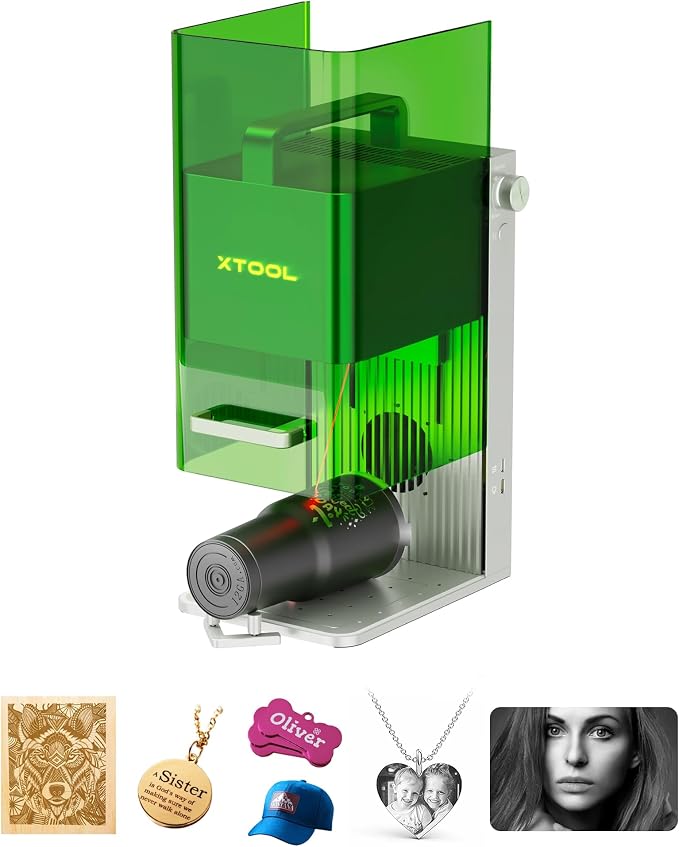
xTool F1 Ultra 20W Fiber & Diode Dual Laser Engraver
- 20W Fiber laser: Deep engraving, embossing, and thin metal cutting.
- Dual laser engraves almost all materials: wood, acrylic, leather, metal, and more.
- Speedy and precise: 10000mm/s engraving on almost all metals
- Auto Streamline™ production: Batch processing with conveyor.
- Safety-Assured: Enclosed cover. Eye-protection cover. Fire safety stop
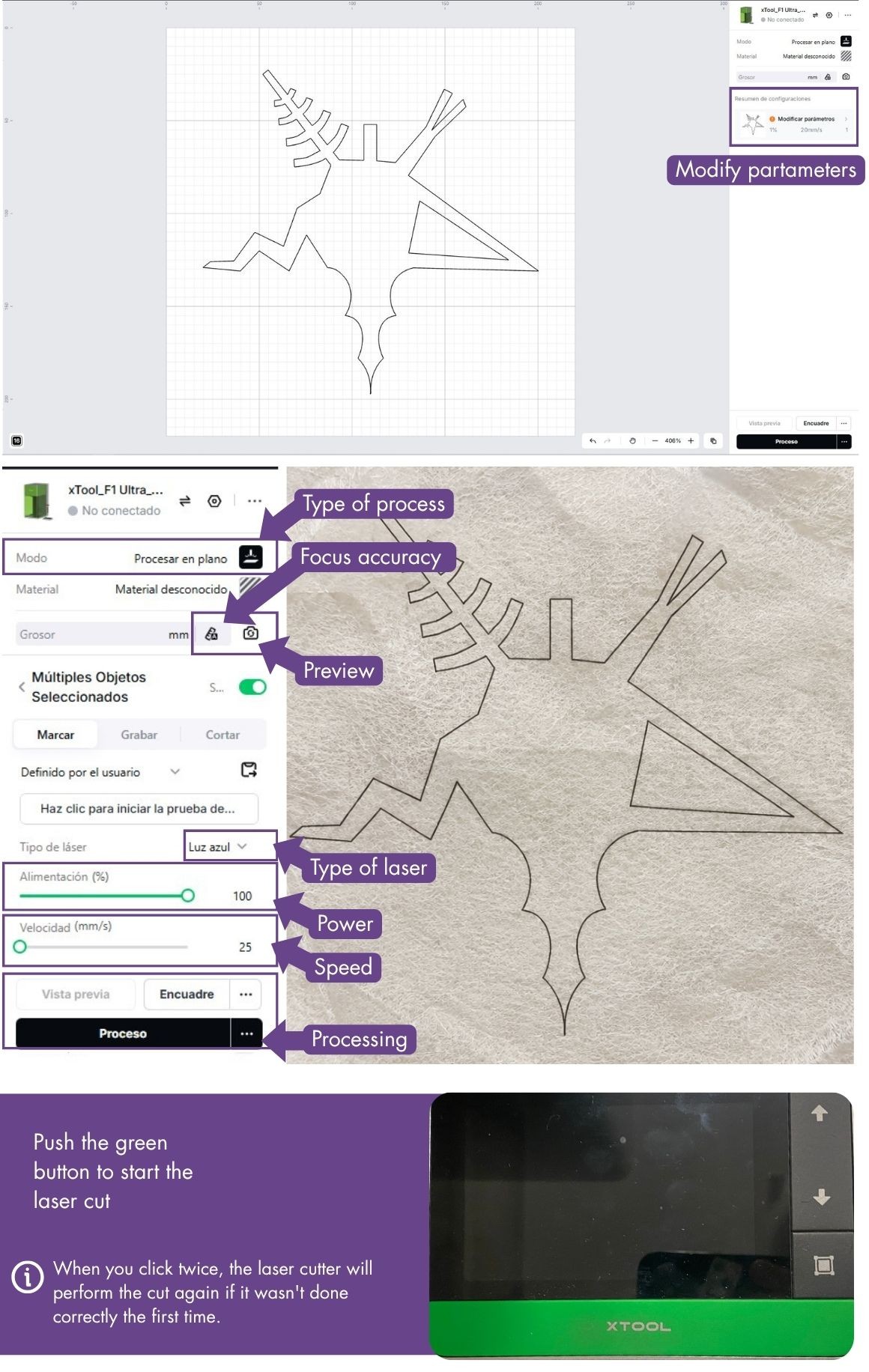
I did the exercise with the xTool F1 UltraI imported the file and cut out enough baking paper to place in the machine, and I used the following settings:
4.1 Laser cut
4.2 Thermoadesive vynil
This process is simple: just cut a piece of vinyl with a minimum offset of 5cm , using the baking paper shape as a guide.
What’s happening here?
We’re creating an air chamber. The vinyl fuses to itself when heated, while the paper towel acts as a barrier that prevents the vinyl from fusing in specific areas.

4.2.1 Thermoadesive vynil
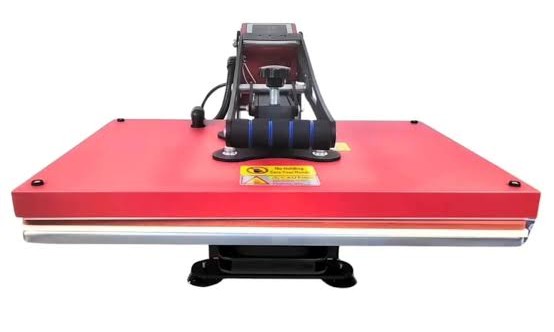
Heat Press
3 basics
Vinil parameters:
Time: 15 seconds.
Temperature: 150 ° C
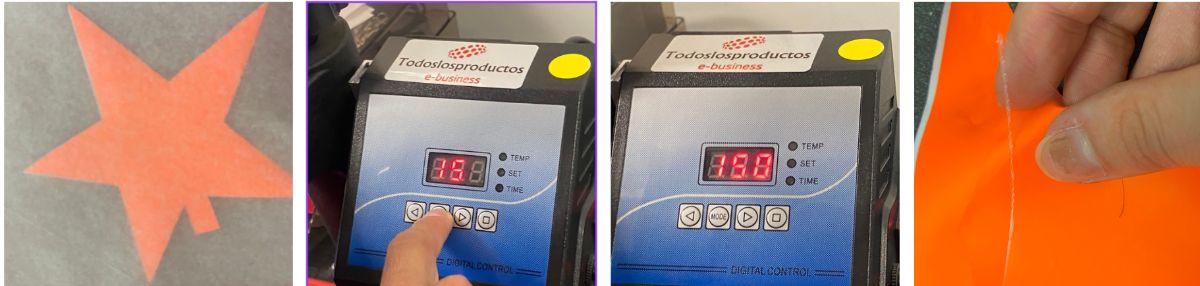
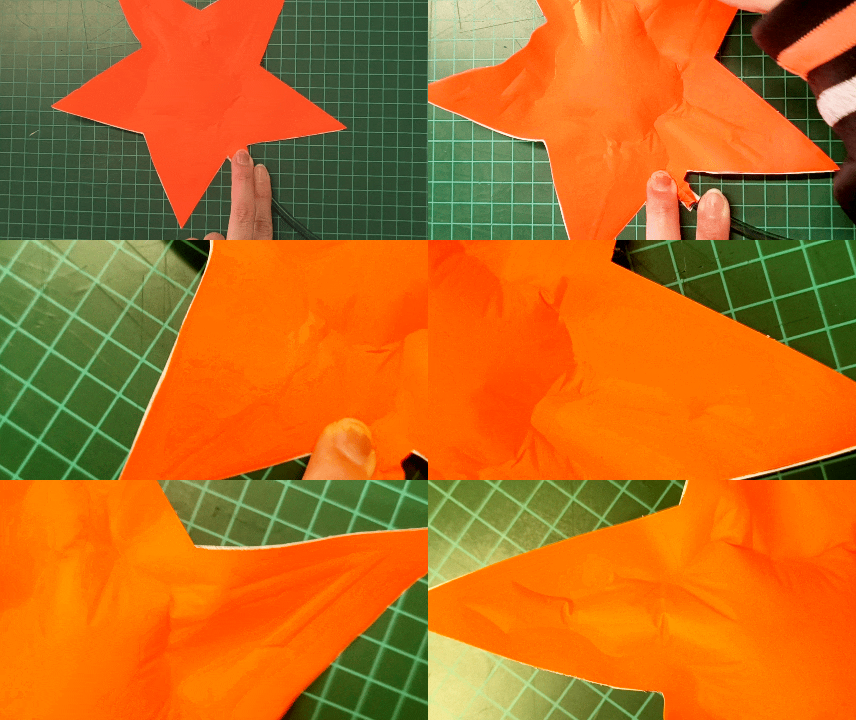
Result 1
AIt just inflates; it doesn't move at all. Since the channels are very thin, not much air gets through
Result 2
It just inflates/p>
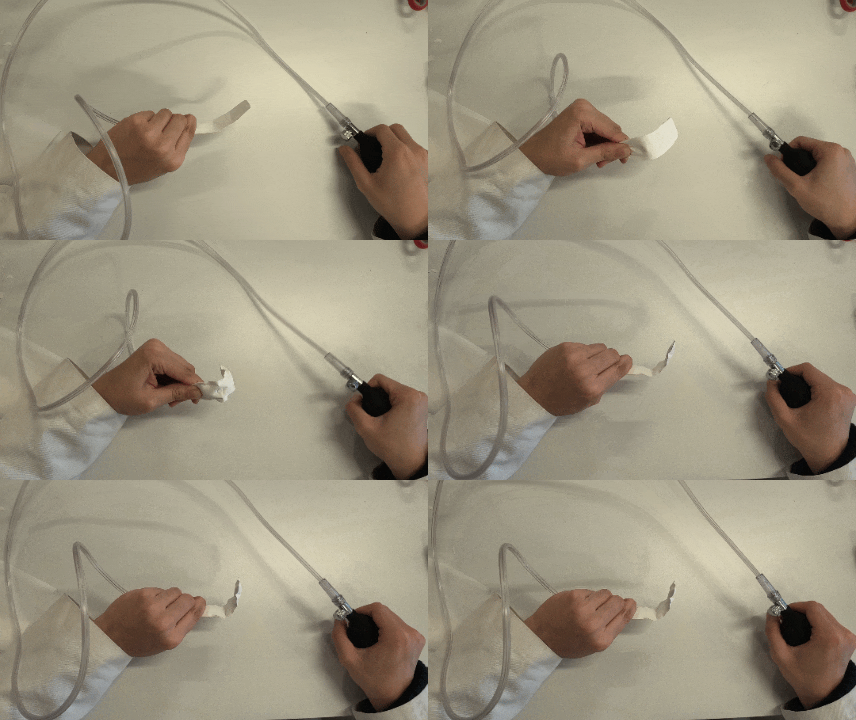
Result 3
Flexibility.
5.Mold
I started with an idea: to create a device that could apply pressure to the finger through a sealed, rounded mold. Since my mom has a disability called trigger finger, I wanted to do something to help her condition, something that, through pressure, could increase movement and flexibility in her finger.
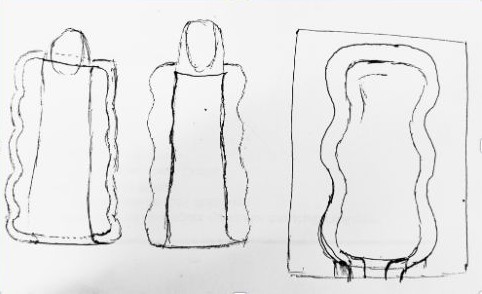
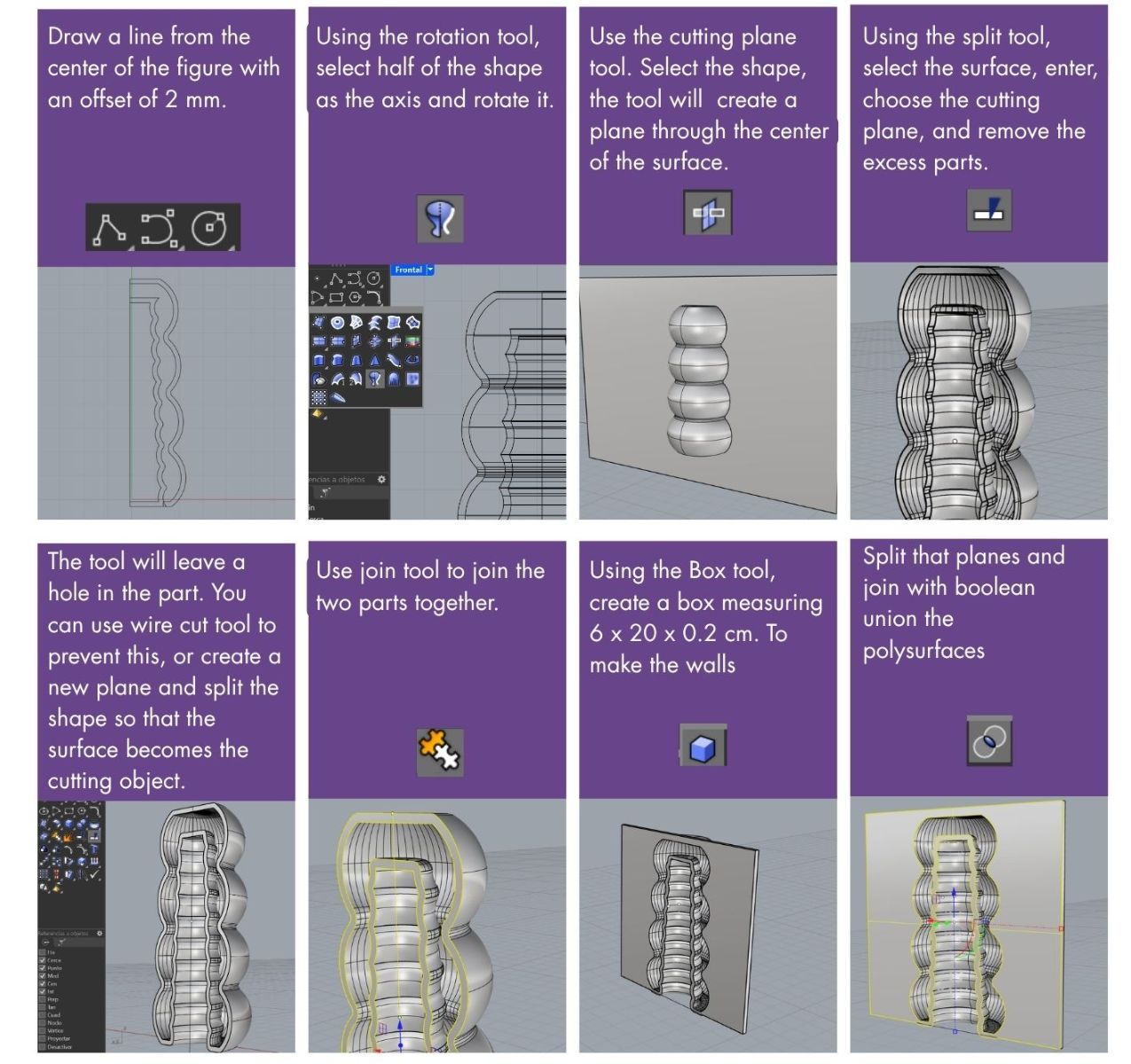
5.1 3D modeling
This idea works differently from the clssic one, so I had to figure out a way to preserve the shape without having to make it in pieces and glue them together.
One of my advisors, Alberto Blanco, recommended using the rotomolding process, a manufacturing process used in industry to create hollow plastic products.
5.1.1 First try
When the mold was ready, I realized that when I tried to remove the piece from the silicone, it would get stuck because the mold would wrap around the part of the finger. So I had to redesign it.
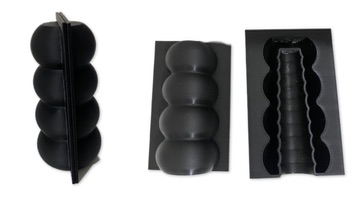
5.1.2 Second try
This time I made a two-piece model; to removed the core from the center after it was finished.
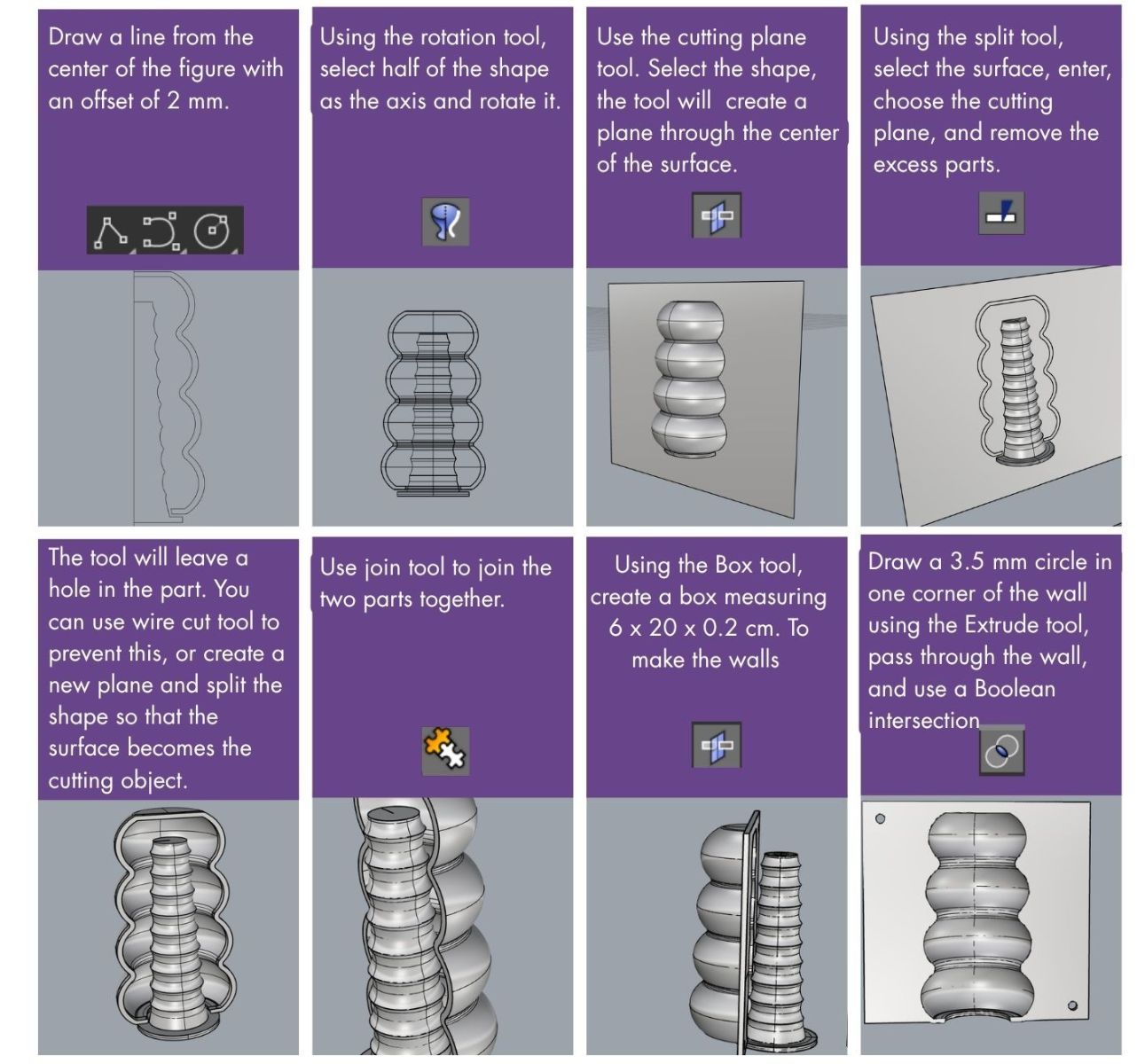
6.Democratizing Soft Robotics
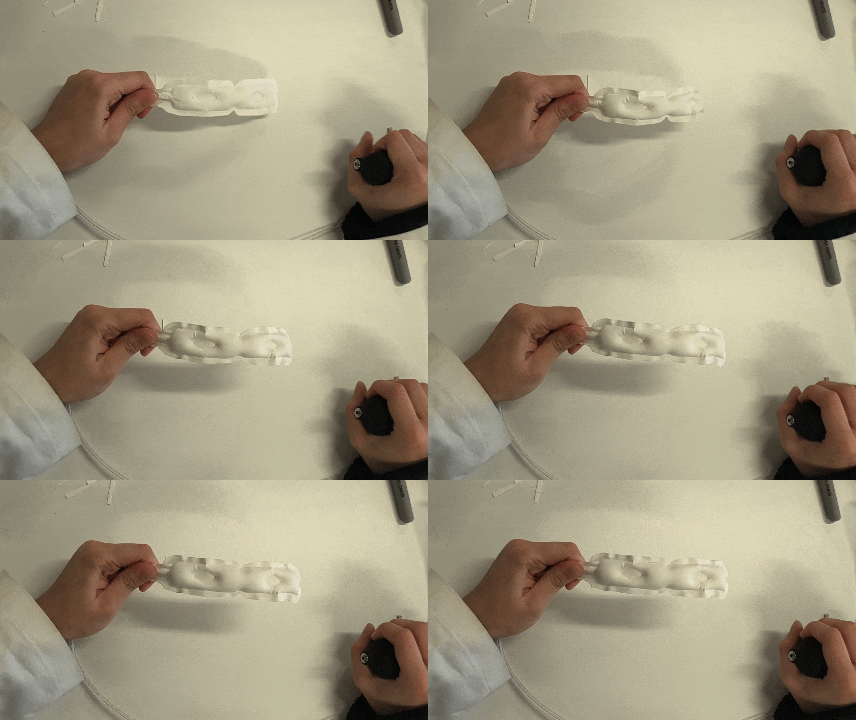
As part of my effort to make knowledge about soft robots more accessible, I started thinking: What happens when I don’t have a 3D printer or a laser cutter at my disposal to make my molds? So I looked for materials that anyone could easily find—bottle caps and silicone rods.
I used these to form my channels and made my mold out of an old box of building blocks.
In this experiment, I also used a recipe to make biosilicone from gelatin, glycerin, and water.
The recipe is 1 water, 2 gelatine and 2 glycerine.
7.TPU
...
5.1 Code
Use the three backticks to separate code.
// the setup function runs once when you press reset or power the board
void setup() {
  // initialize digital pin LED_BUILTIN as an output.
  pinMode(LED_BUILTIN, OUTPUT);
}

// the loop function runs over and over again forever
void loop() {
  digitalWrite(LED_BUILTIN, HIGH);   // turn the LED on (HIGH is the voltage level)
  delay(1000);                       // wait for a second
  digitalWrite(LED_BUILTIN, LOW);    // turn the LED off by making the voltage LOW
  delay(1000);                       // wait for a second
}

// the setup function runs once when you press reset or power the board
void setup() {
// initialize digital pin LED_BUILTIN as an output.
pinMode(LED_BUILTIN, OUTPUT);
}
// the loop function runs over and over again forever
void loop() {
digitalWrite(LED_BUILTIN, HIGH); // turn the LED on (HIGH is the voltage level)
delay(1000); // wait for a second
digitalWrite(LED_BUILTIN, LOW); // turn the LED off by making the voltage LOW
delay(1000); // wait for a second
}
6. Weekly reflection & critical thinking
I found this practice very interesting, and given its endless applications, I think I’ll continue searching for materials and silicone to work on it. I feel that this practice has many flaws, but it offers even more in terms of learning. I won’t miss the opportunity to keep experimenting with rotomolding and new vinyl textiles on fabrics. I hope this practice can be applied to my final project through different techniques.
7. Fabrication files & References
-
File: Laser cut matrix ↩
-
Reference: Author; Title; Source; year ↩