BioFabricating Materials
In week 7 of Fabricademy, we set aside the laptop for a bit to discover biofabrication. With different recipes, we made some samples that could be used for multiple things. Some samples felt more rigid, while others were flexible; some felt soft, and others hard. I tried four different recipes this week and tried to grow some roots too. Want to see the results?
Moodboard and Research
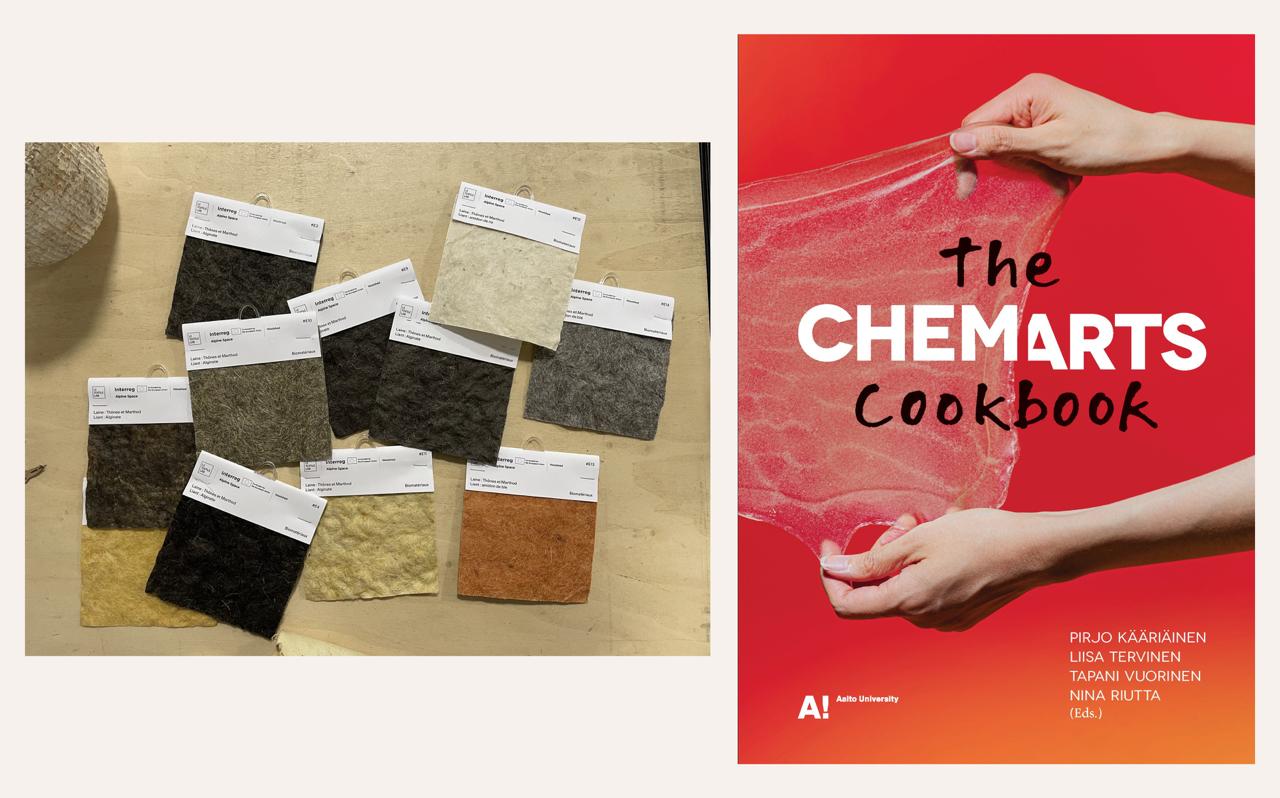
At Le Textile Lab, we have the samples from the woolshed project. All of these were made using the alpine wool. They had different colors and feels because of added pigment and different recipes used. During Cecilia’s lecture, she talked about different recipes and the recipe book from Aalto University, The CHEMARTS Cookbook. This book has 27 recipes for hard, soft, flexible, and transparent materials made from cellulose.
Process
I explored four different recipes: alginate, agar, maizena, and carboxymethyl cellulose (CMC). I planted some grass seed as well to grow the roots. I will explain, per group, how I did it and what I used.
Alginate recipe
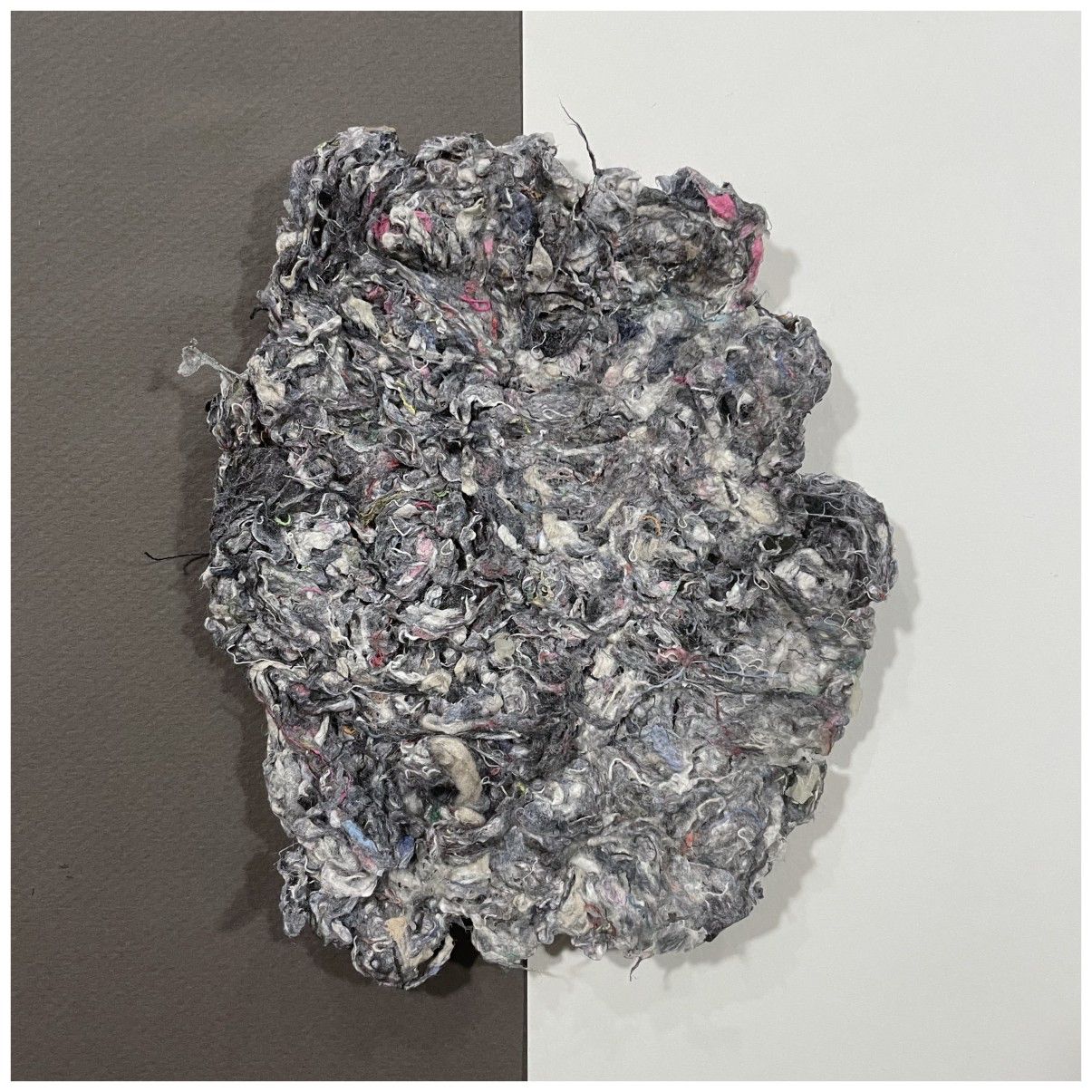
With this recipe, I explored different things; I added eggshells, dried orange peels, red pigment, and thermal insulation.
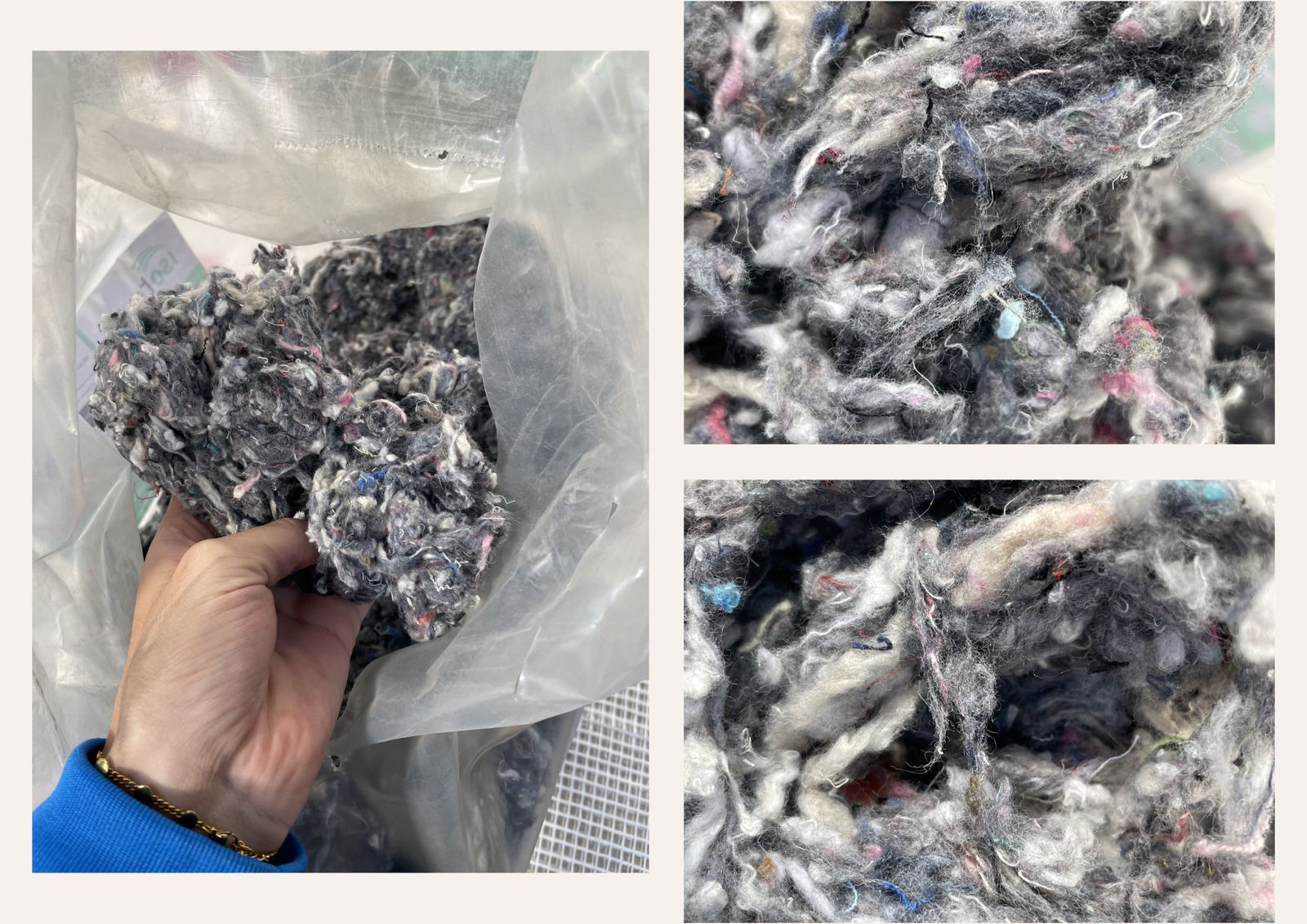
The thermal insulation:
Alginate recipe
- 6 grams alginate
- 10 grams glycerine
- 200 mL water
- 5 grams oil
+10% calcium chloride solution
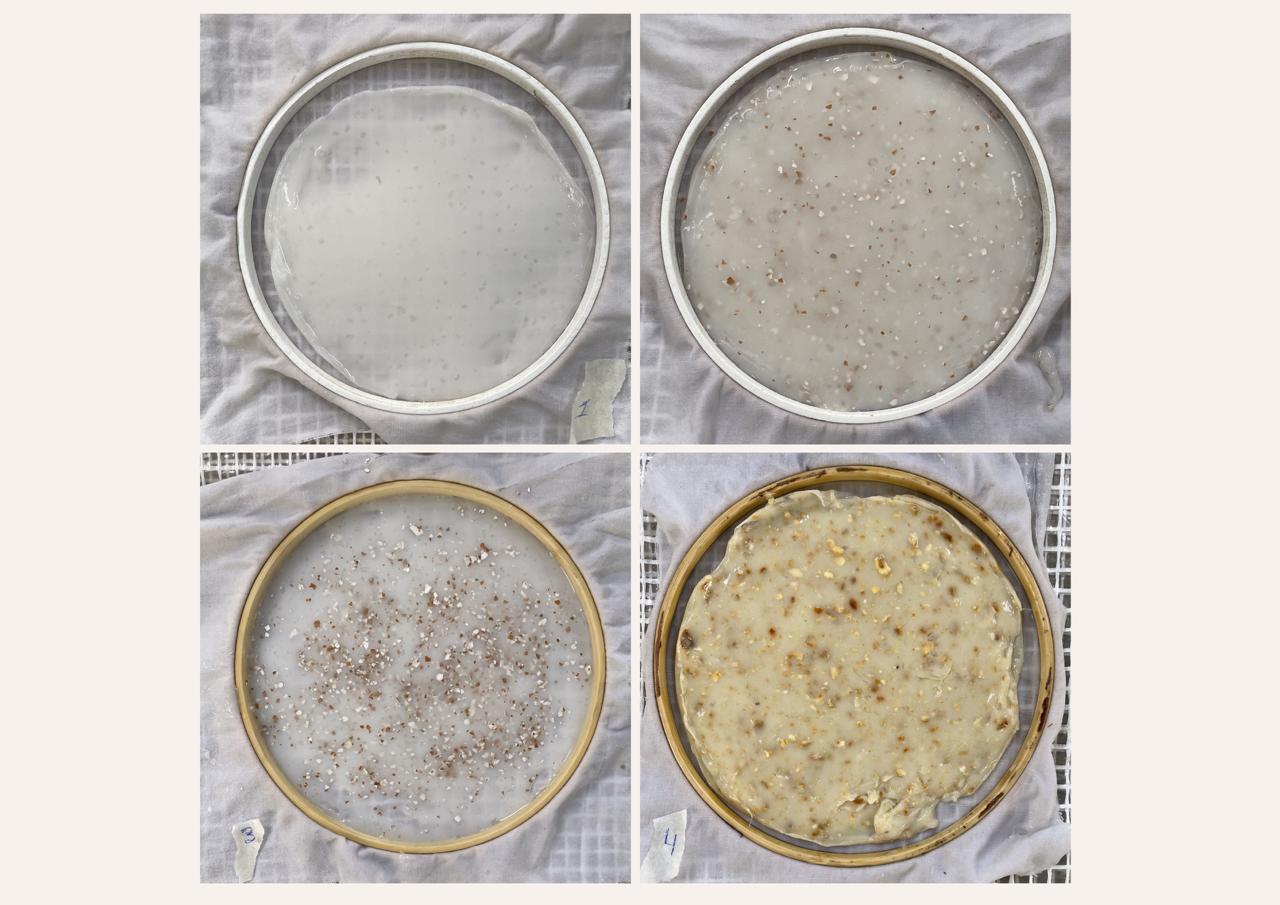
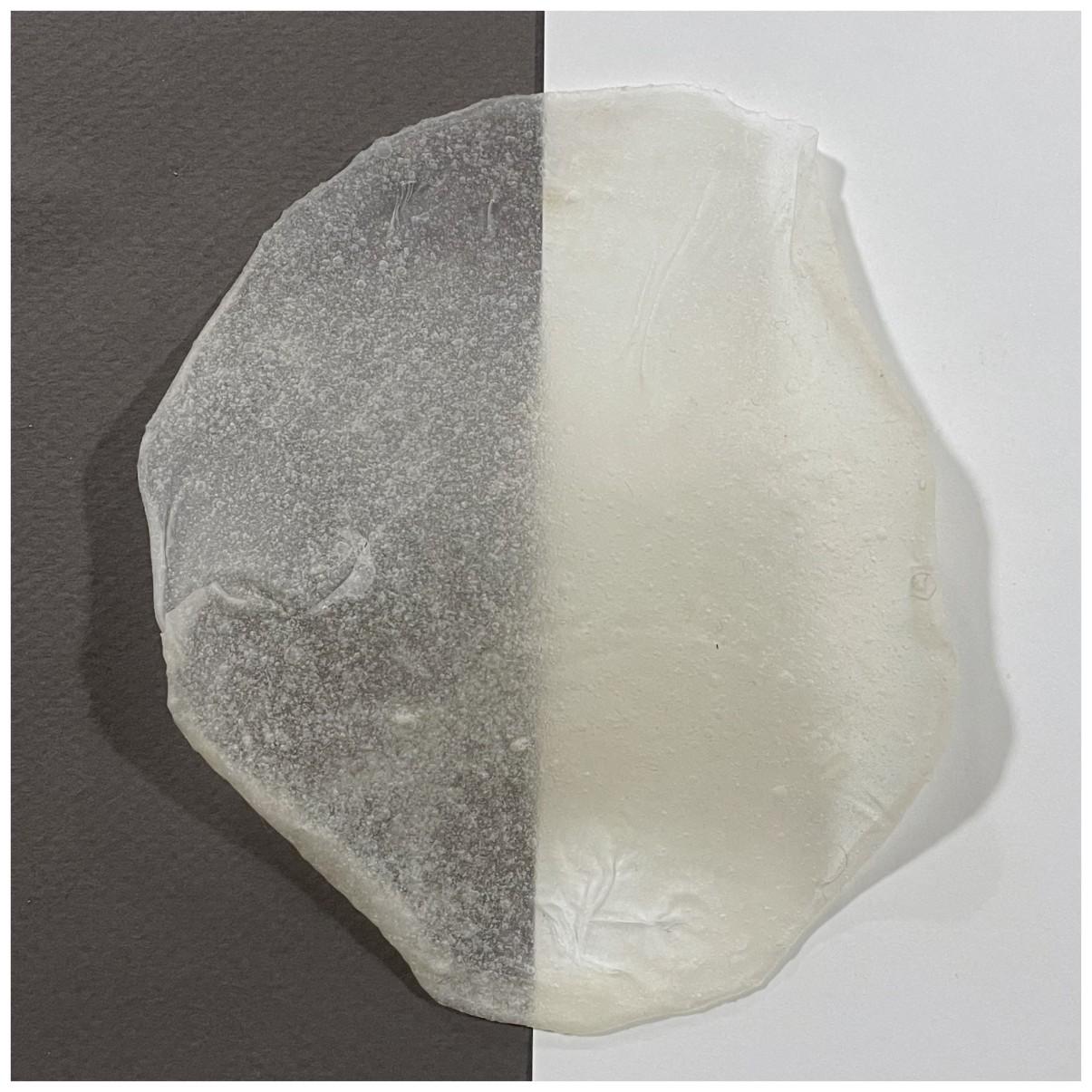
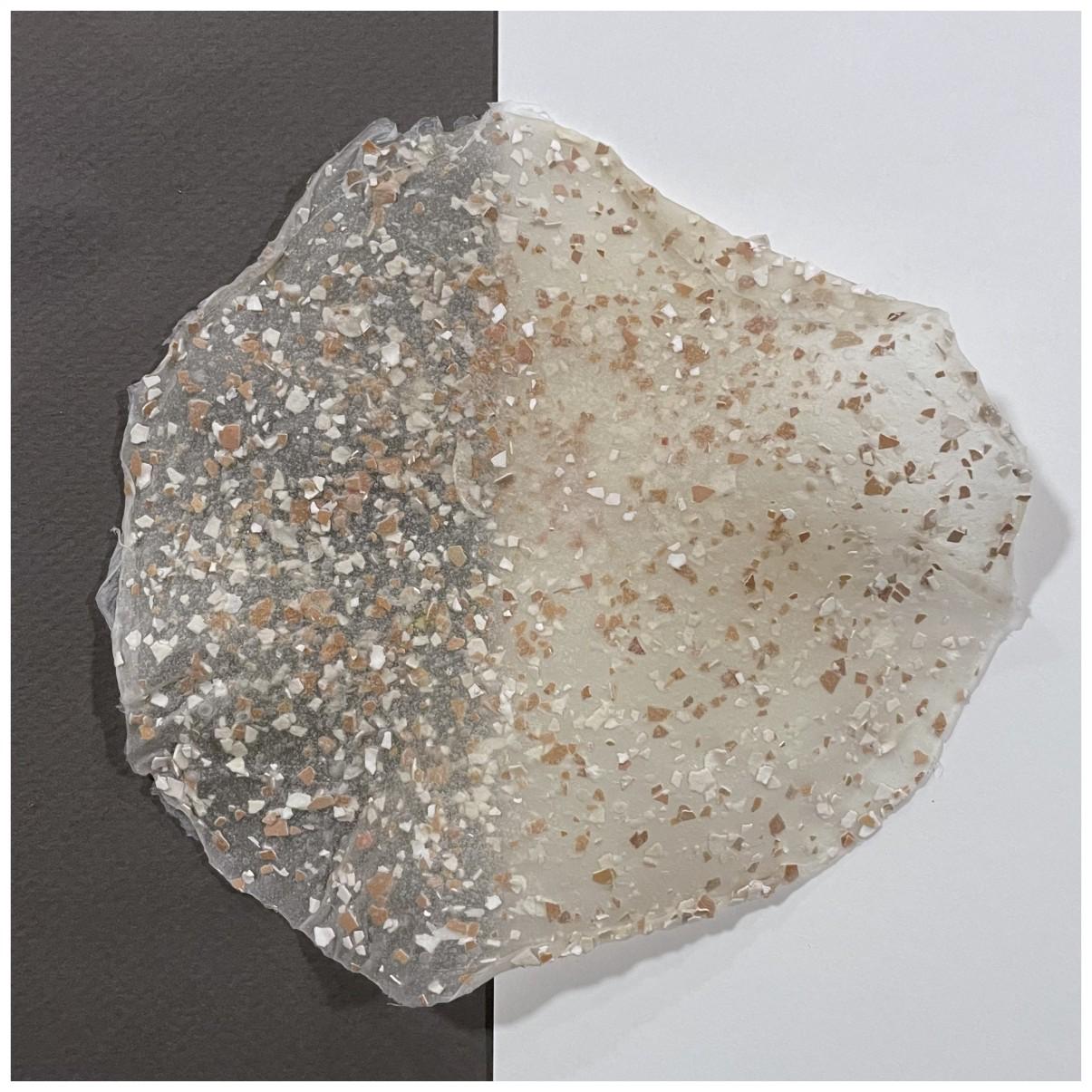
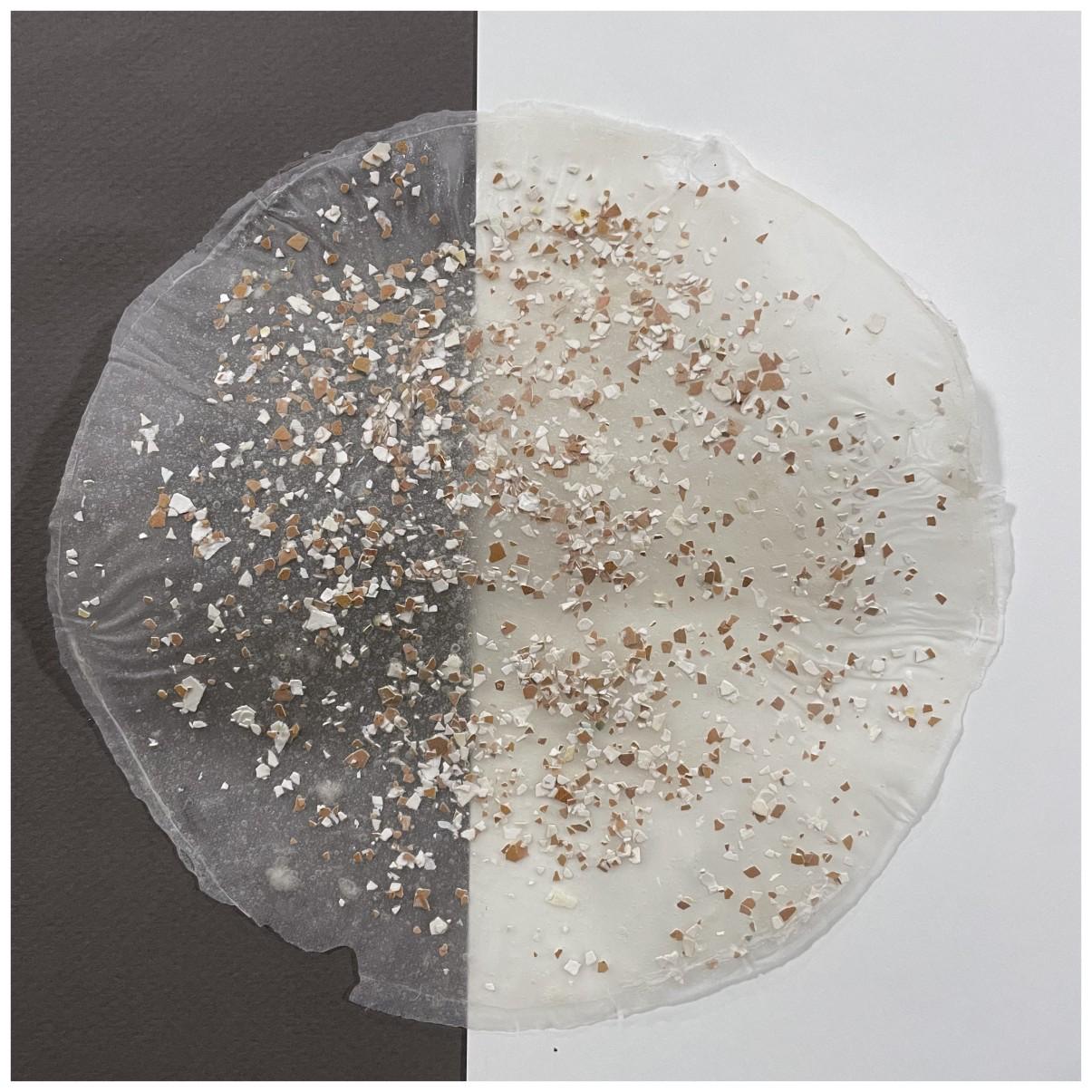
For the first one, I didn’t add anything to the recipe. I sprayed the calcium chloride solution on the fabric in the embroidery frame, added the alginate mix, and sprayed it again with the calcium chloride solution. This made it shrink a bit and not be sticky anymore. For the second one, I mixed in 5 grams of eggshells. For the third, I sprinkled 5 grams of eggshells on top, and for the fourth, I mixed in 5 grams of dried orange peels.
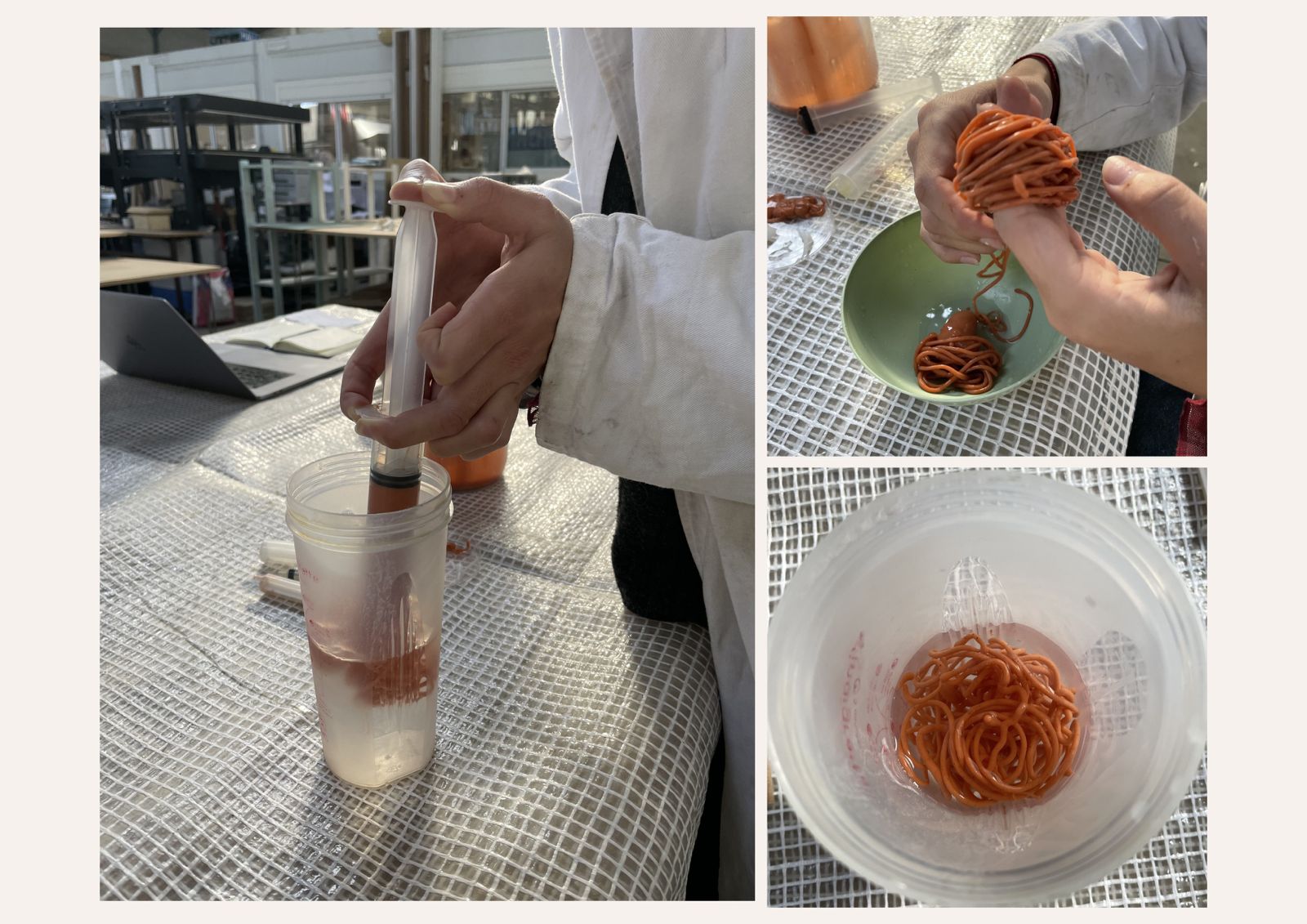
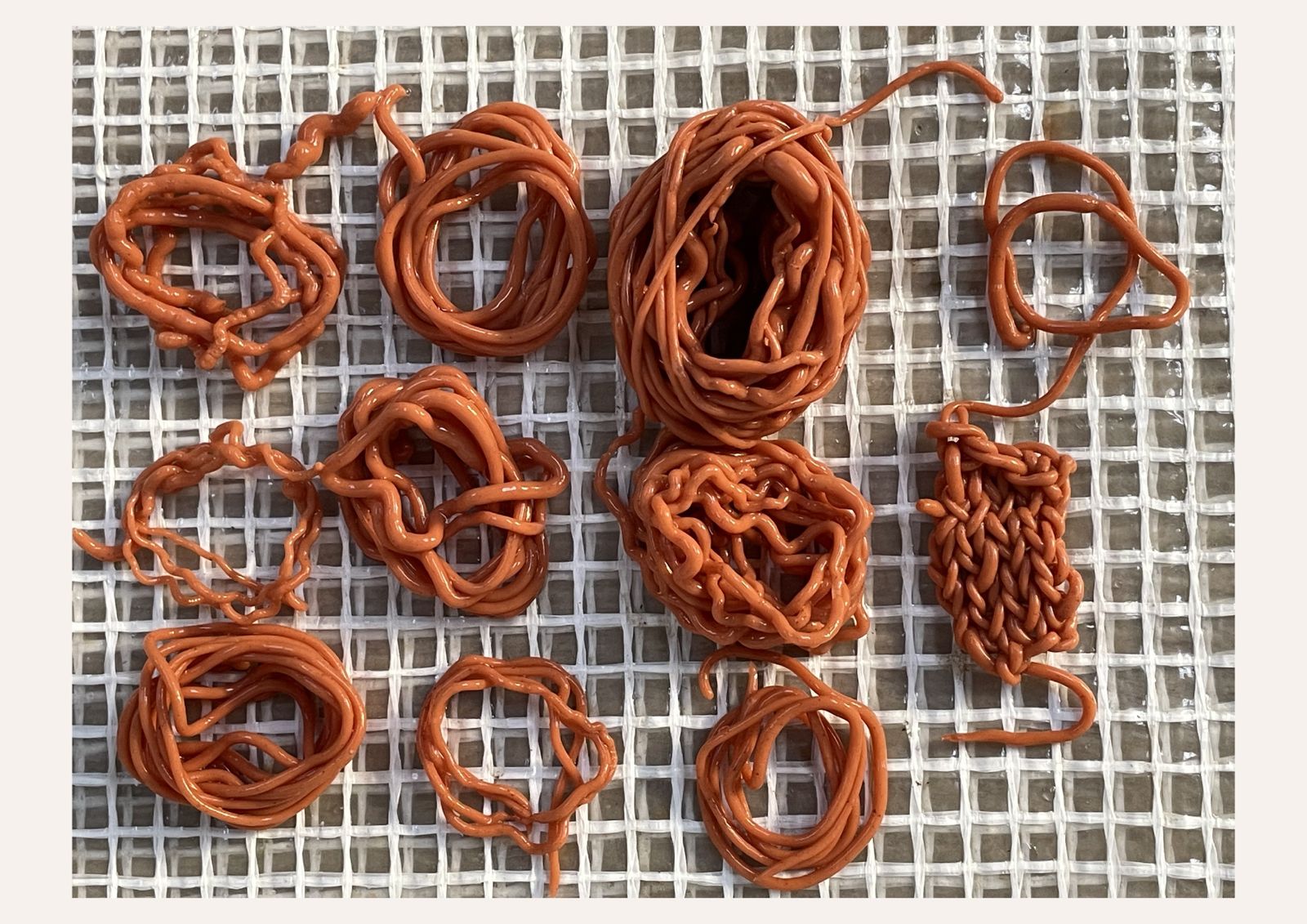
I made another batch of the alginate mix and added 1 gram of red ochre of Provence pigment. I filled a cup with the calcium chloride solution and put the alginate mix in the syringe. Pressing the alginate mix out of the syringe was hard. As soon as the alginate mix entered the calcium chloride solution, it became a non-sticky strand. This I could wind up into a ball, just like yarn.
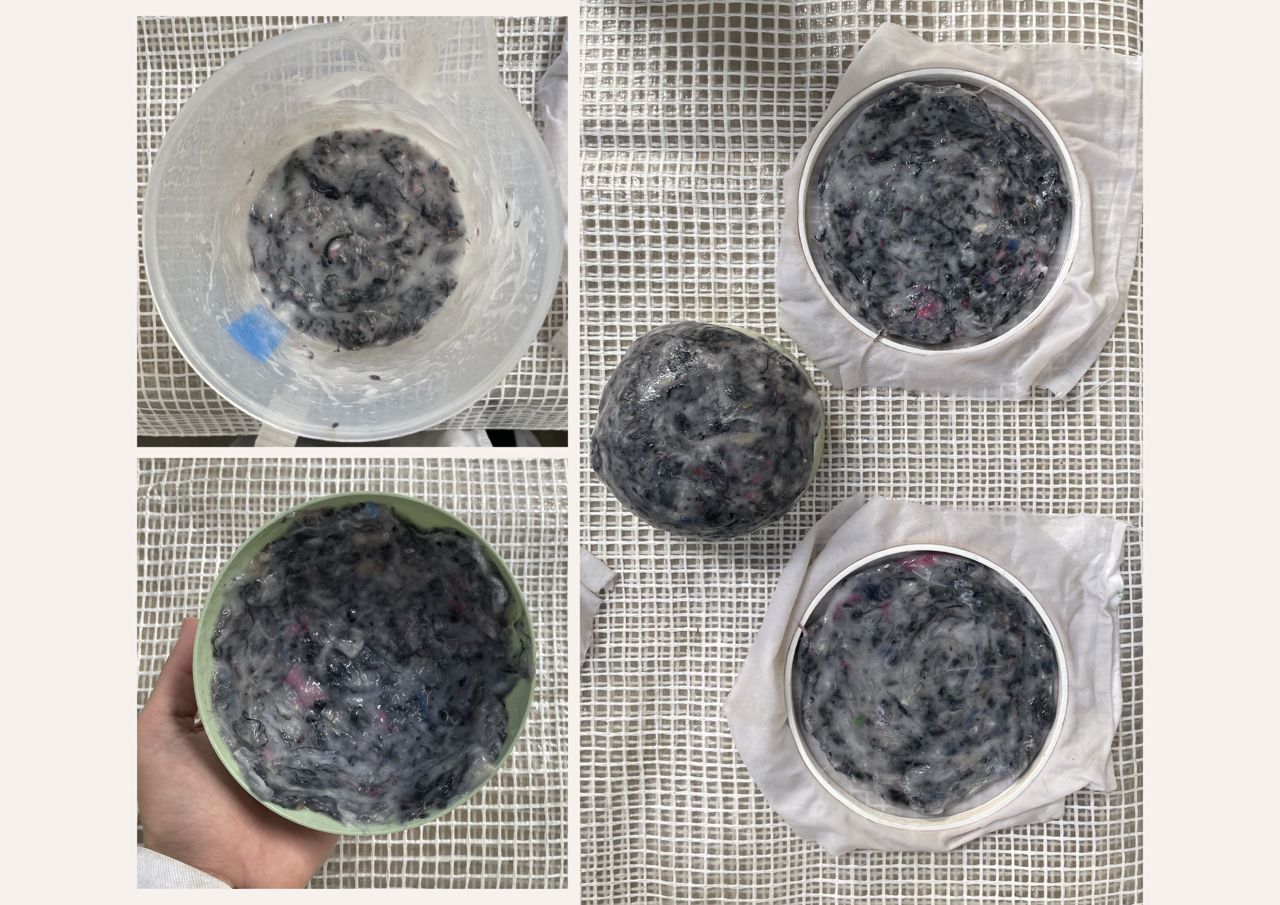
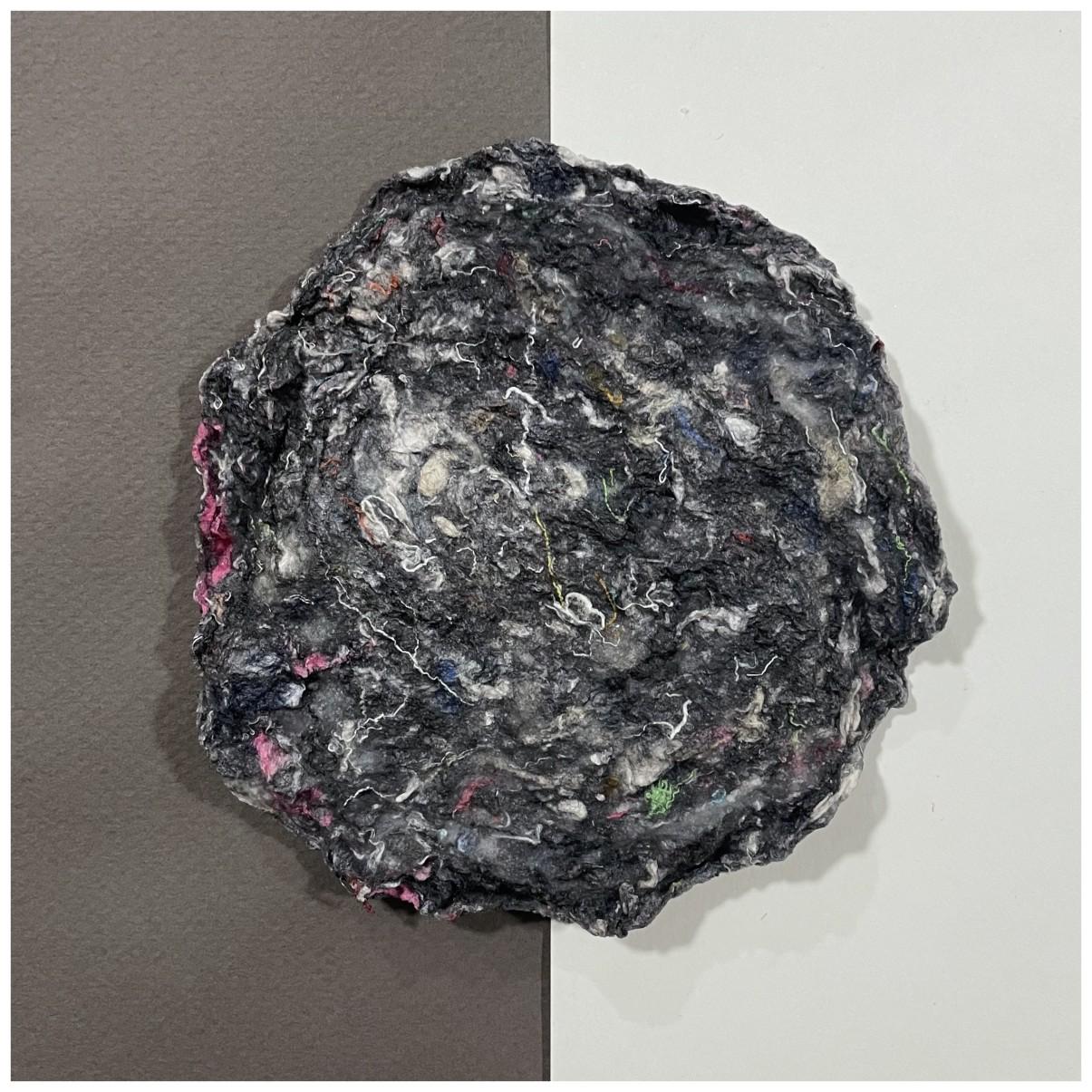
At last, I mixed in 10 grams of thermal insulation (dry weight). Before mixing it in, I soaked it in water. Here as well, I first sprayed the surface with the calcium chloride solution, then added the alginate mix and sprayed again with the calcium chloride solution.
Carboxymethyl cellulose recipe
This is a recipe from The CHEMARTS Cookbook I wanted to try out. In the cookbook, they say it will become a transparent material, but nothing about whether it’s rigid or flexible, so I wanted to see that. They also advise experimenting with the percentage (1%-3%) of CMC solution.
Carboxymethyl cellulose recipe
Carboxymethyl cellulose (CMC):
* 1%: 2 grams
* 2%: 4 grams
* 3%: 6 grams
200 mL water
I made three batches with their percentages of CMC. This needed to rest for a night so the next day I came back to pour the solution into Petri dishes.
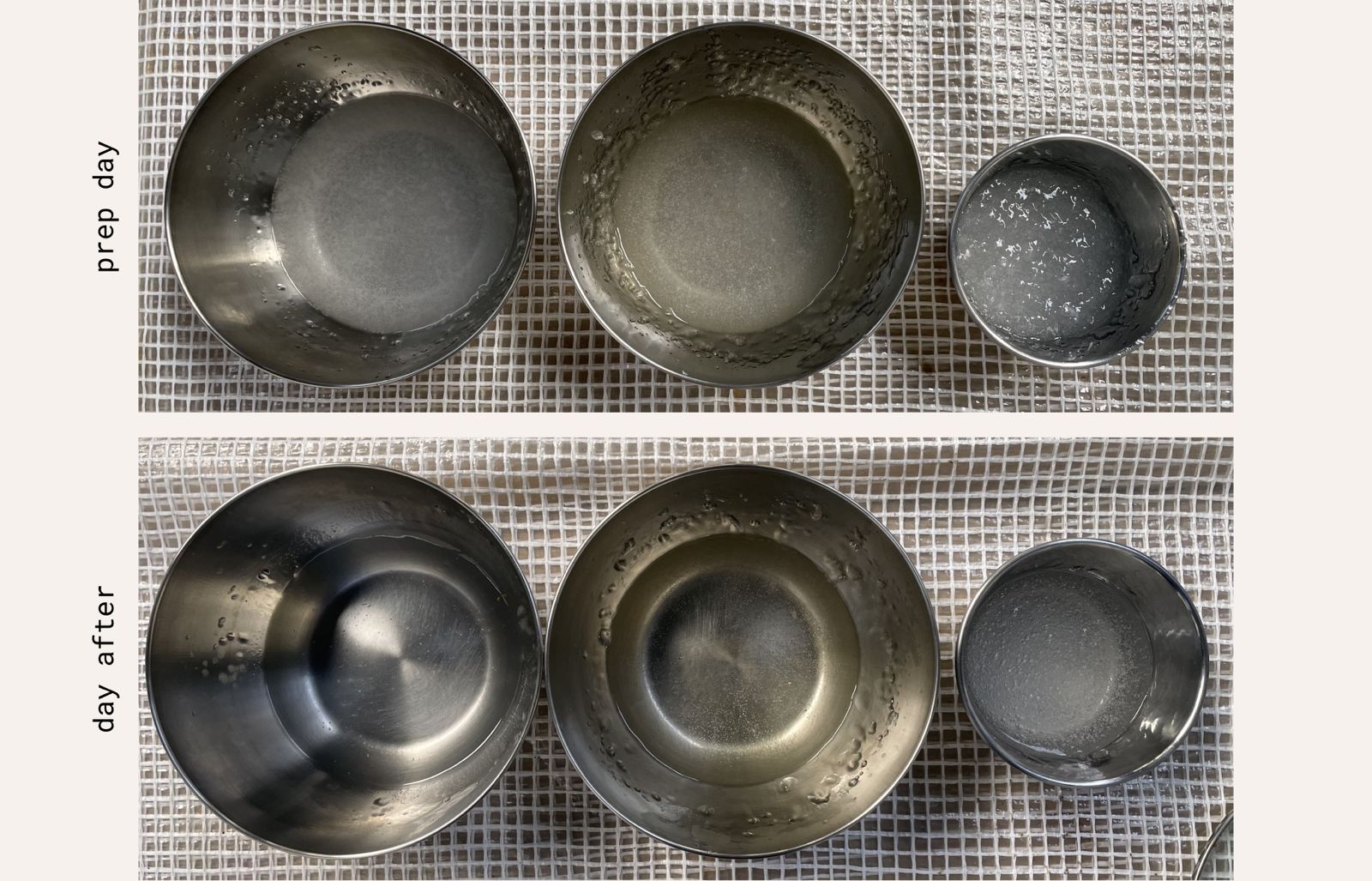
The thickness of the solutions was very veried, the 1% was pretty liquid, whereas the 3% was very thick and could almost be held upside down.
I split up every batch into three parts: natural, réséda extract (from week 4), and green oxide pigment. I added around 0,20 grams of pigment to the mix, this was very hard to dissolve, and I did not succeed completely. I ran out of green oxide at the 3% CMC mix, I used a different green pigment. This pigment dissolved well, so I added this pigment to a bit of the 1% and 2% CMC mix. With the leftovers, I filled three more Petri dishes with a thin layer of each concentration.
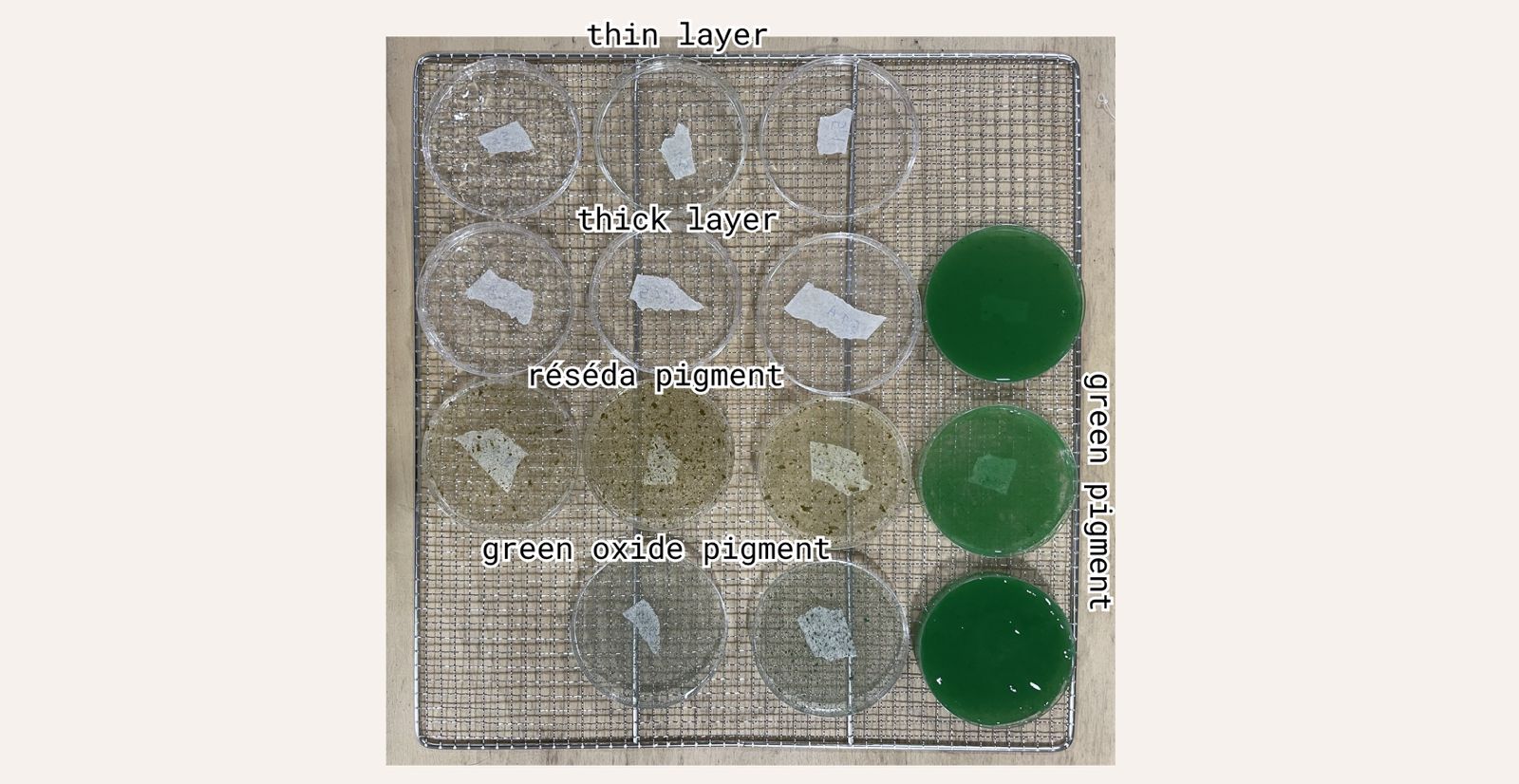
I let this dry in the dehydrator at 80°C for the first two hours. After that, I lowered the temperature so I could add the other recipe samples.
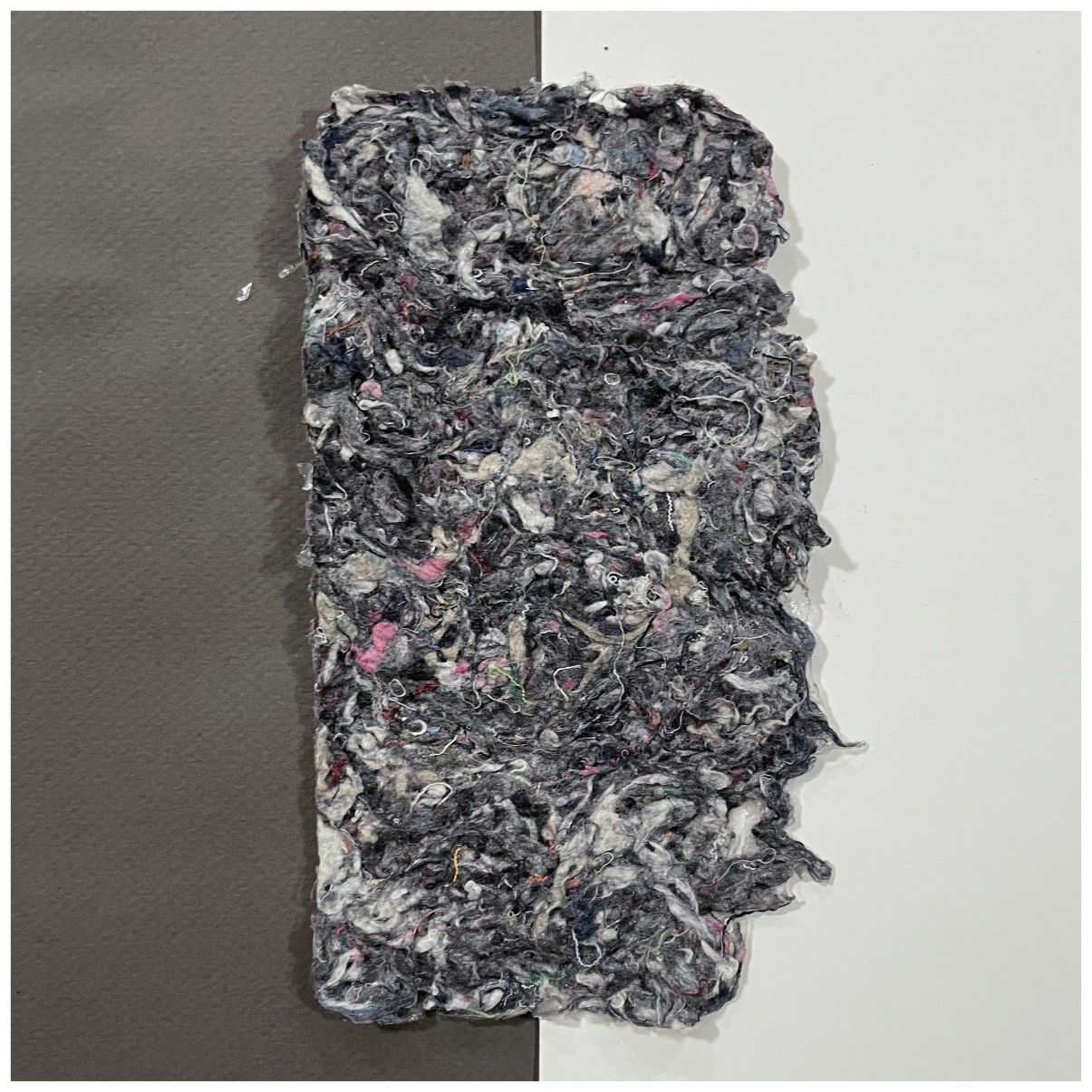
At last, I wanted to try this recipe by adding the thermal insulation. For this, I made another batch of 2% CMC. To this, I added 10 grams of thermal insulation (dry weight). And laid it out onto a flat surface. I still had some leftovers of the 1% and 3% CMC mix, so I mixed those and added 10 grams of thermal insulation (dry weight) and laid this as well on a flat surface. These samples were put in the dehydrator for the night.
Agar recipe
With this recipe I explored with dried orange peels and the thermal insulation.
Agar recipe
- 5 grams Agar
- 15 grams Glycerine
- 250 mL water
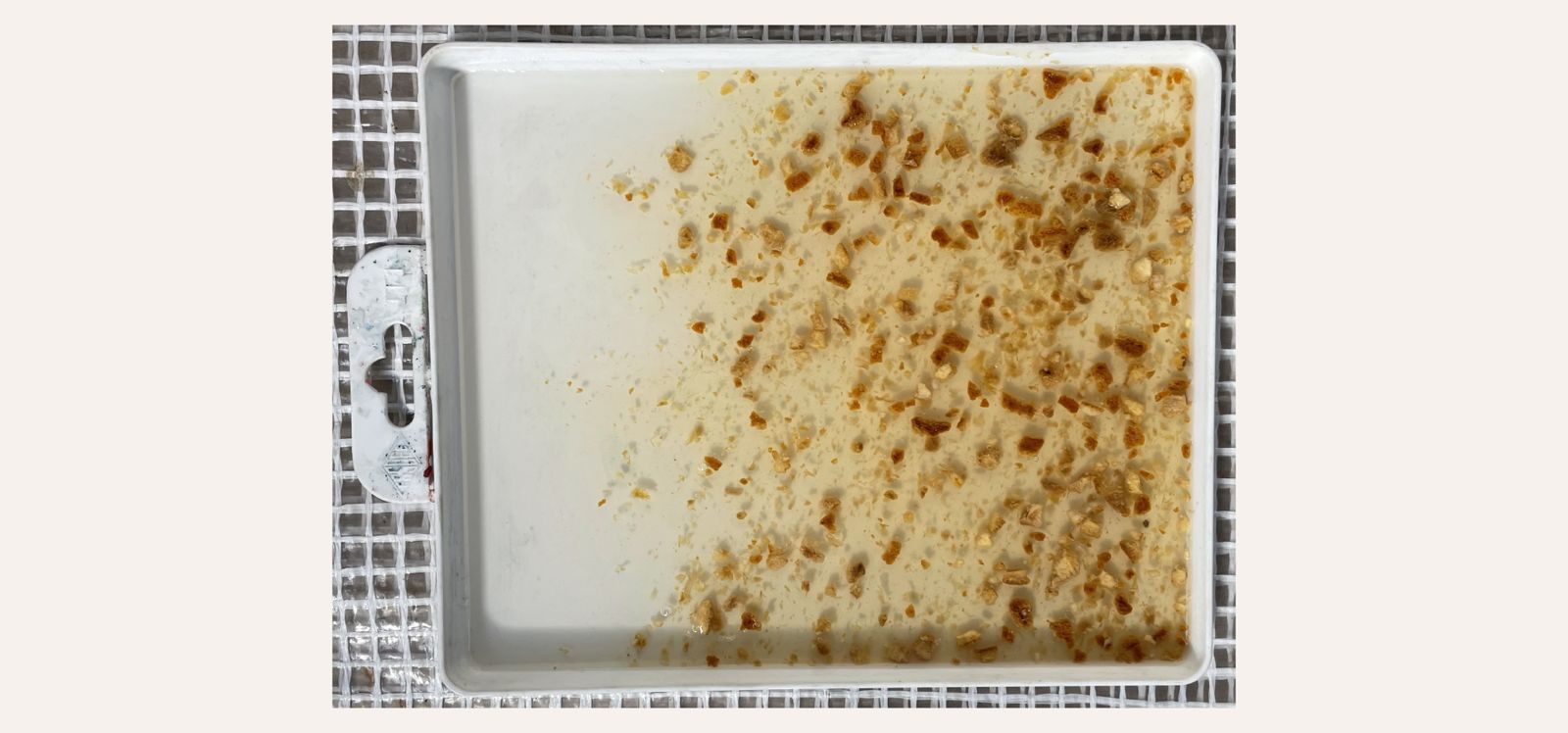
When it was heating up, I stirred regularly until it had the thickness of syrup. At this point, I poured around 50% onto a flat surface. To the leftover 50%, I added 5 grams of orange peels, mixed it, and poured it onto the same flat surface on the other side. So a gradient would appear.
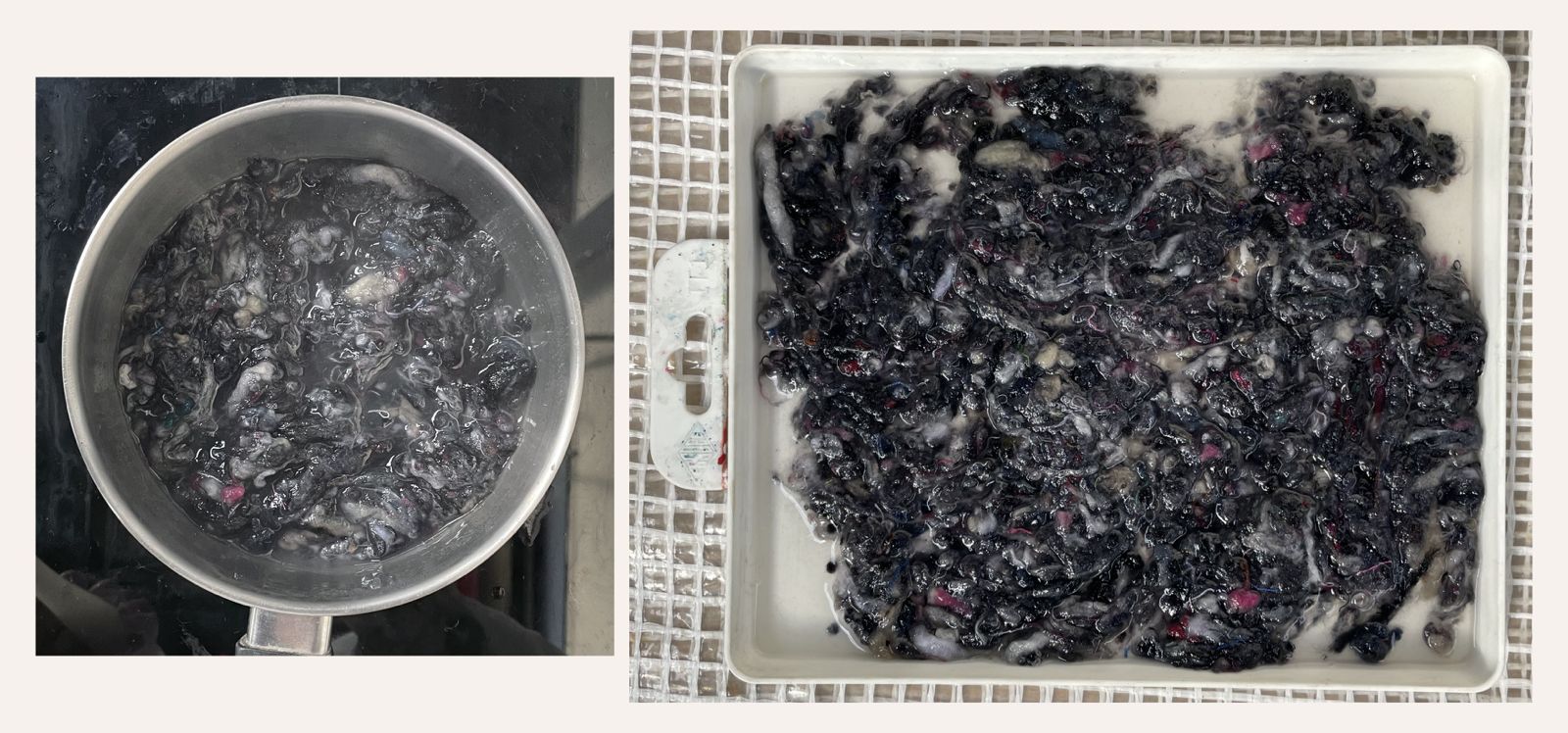
For the second batch, I added 10 grams of thermal insulation (dry weight).
Maizena recipe
I just experimented with the thermal insulation for this recipe.
Maizena recipe
- 20 grams cornstarch (Maizena)
- 5,4 grams Glycerine
- 5 mL vinegar
- 40 mL water
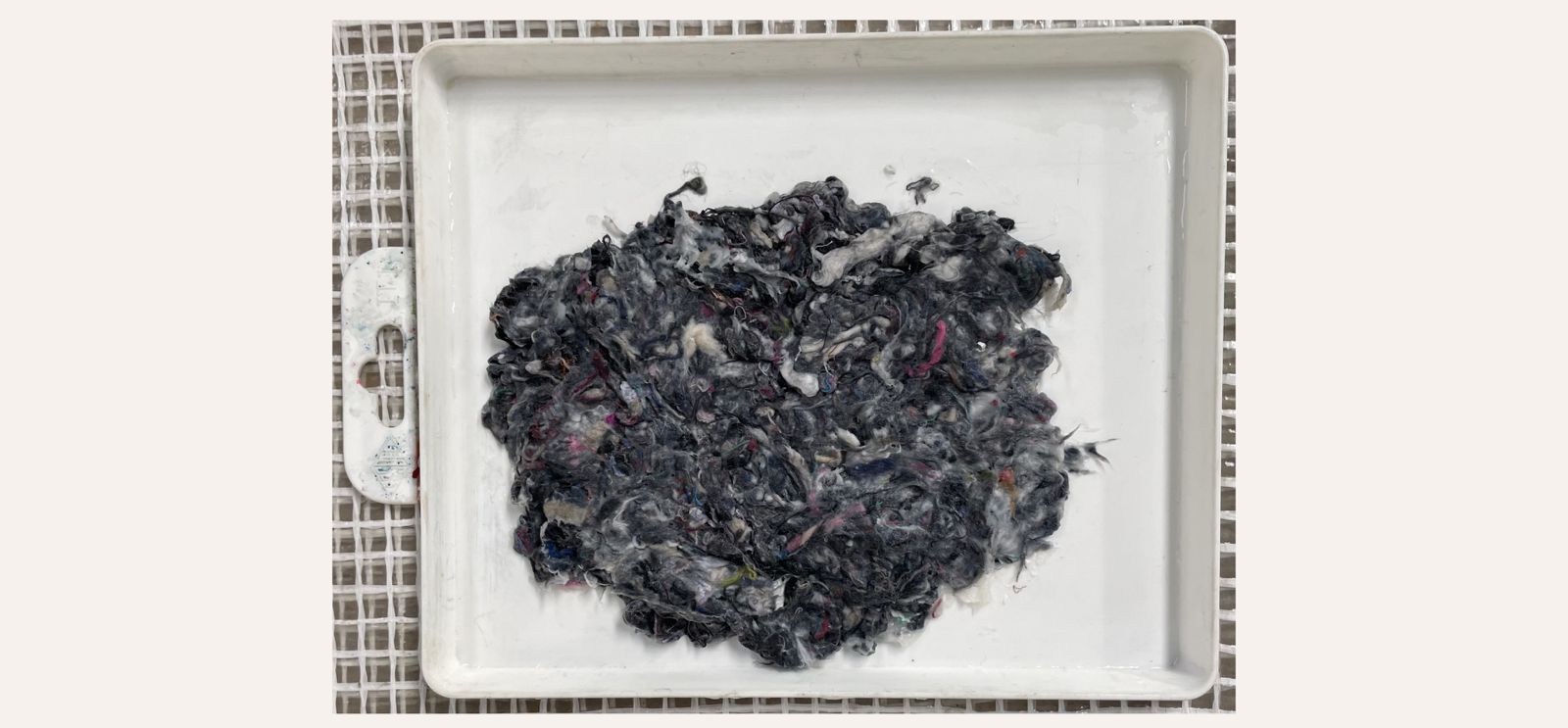
To this recipe, I added 10 grams of thermal insulation (dry weight). It was not much of a mix that came out of this recipe, so when heating, I needed to keep a close eye on it so it wouldn’t burn or evaporate completely. When it got a thicker, almost cream-like texture, I turned off the heat and added the thermal insulation and stirred well. This mix was added to a flat surface so it could dry.
Plant roots
For setting up this experiment, I used the research page of Barbara Rakovska.
Plant roots supplies
- Mold (where the roots will grow)
- Grid (I used tulle)
- Pots
- Grass seeds (I used Vilmorin - Gazon 7 jours)
Daily water, sunshine, and a warm but not too warm place
We found three different molds that maybe will work for growing roots. I added those to pots and put some grid/tulle to cover them. Then I added a thin layer of moist soil, the seeds, and another layer of soil. I watered this every day.
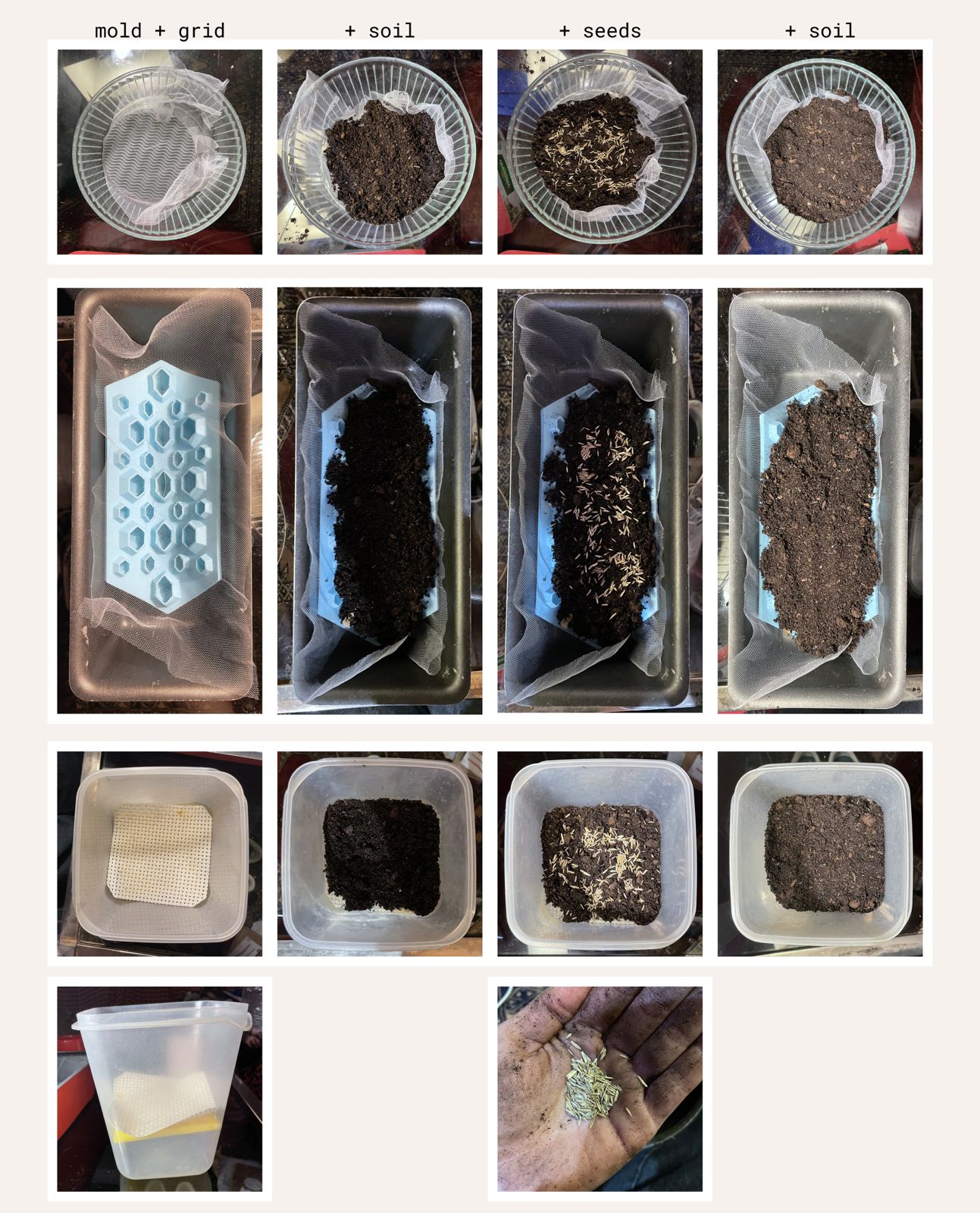
Day 3: For now, I don’t see any roots or grass growing. Hopefully it’s warm enough here for the seeds.
Results
I have split the results up into the different recipes for a clearer overview. From all the results, I made a video where you can see the movement and sound of the materials.
Alginate
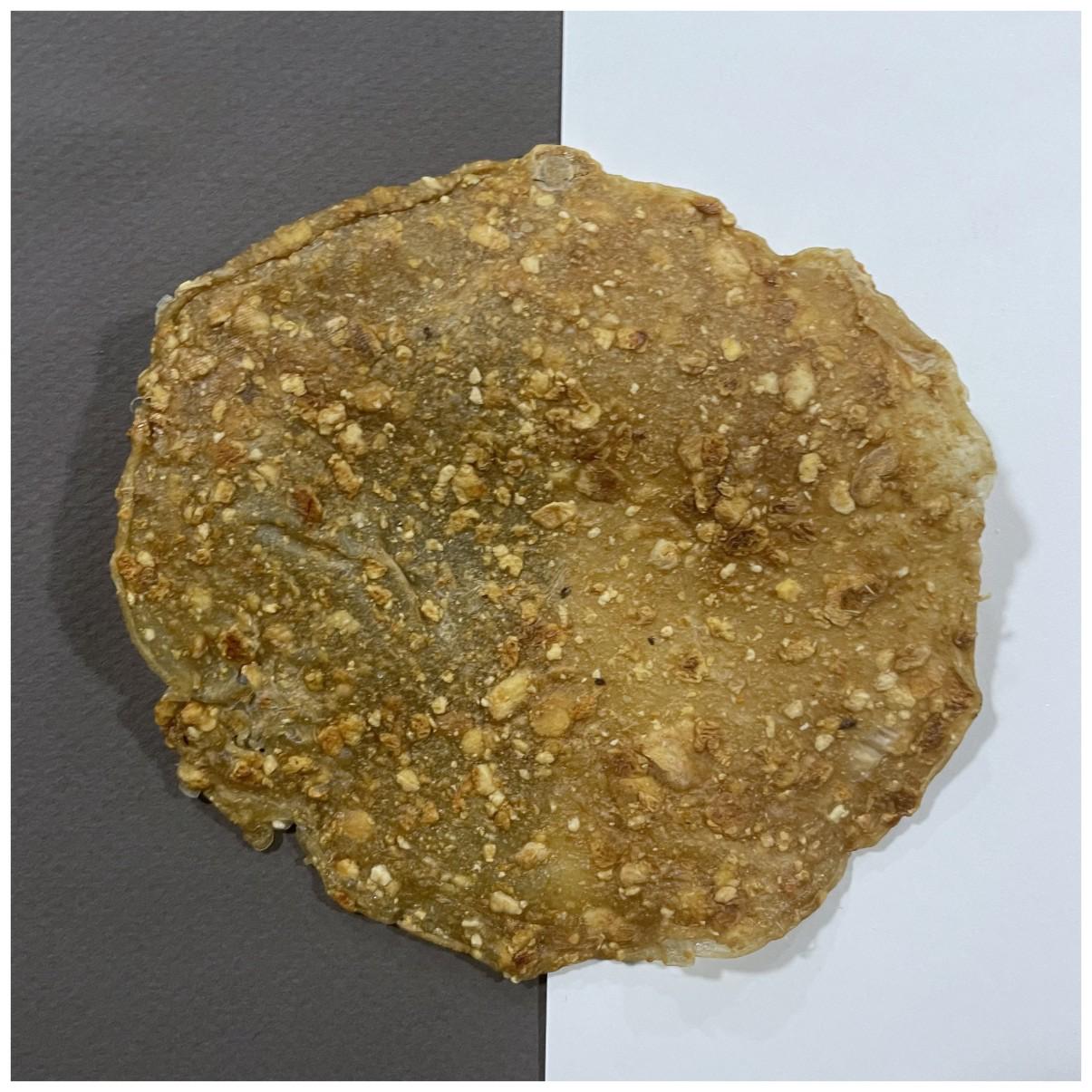
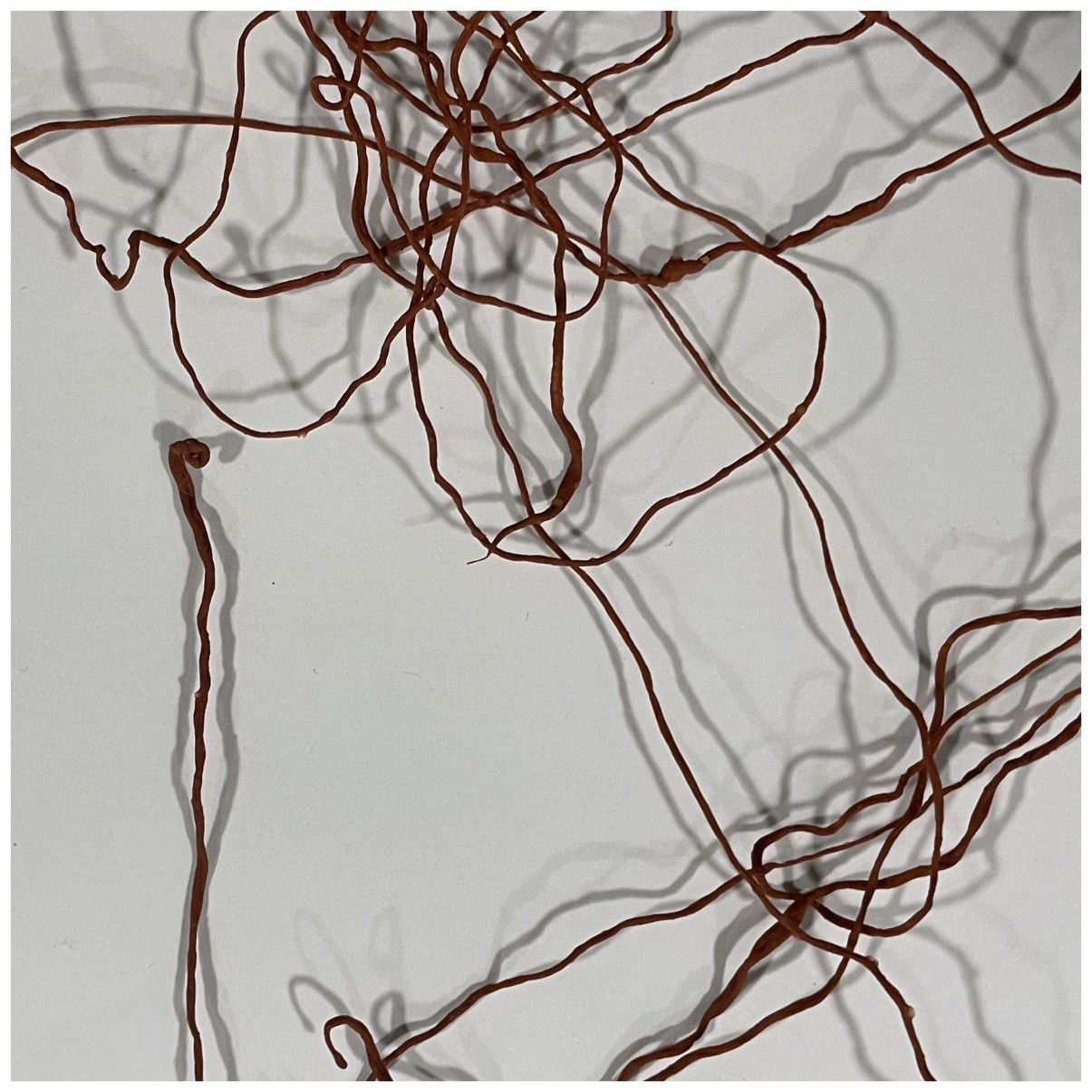
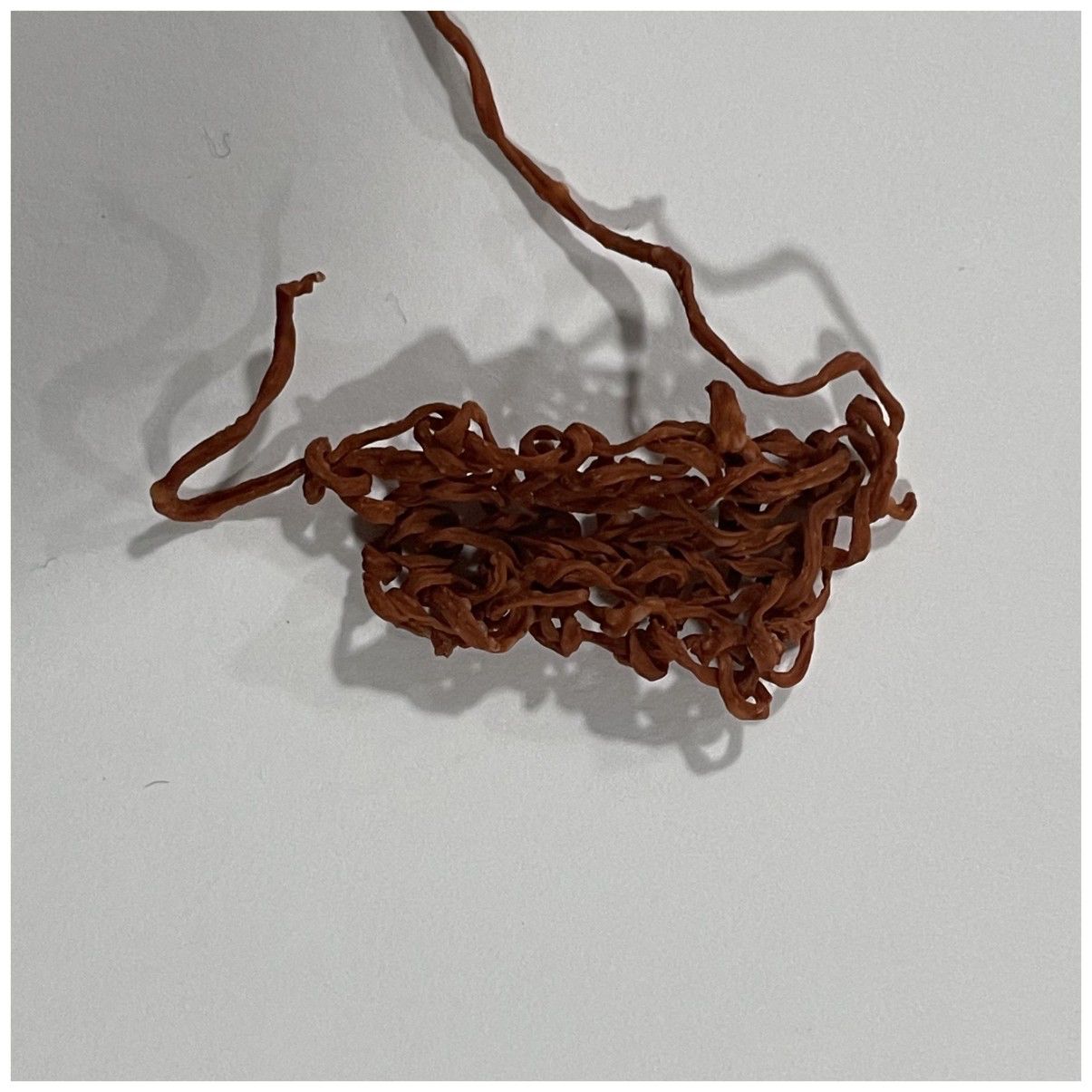
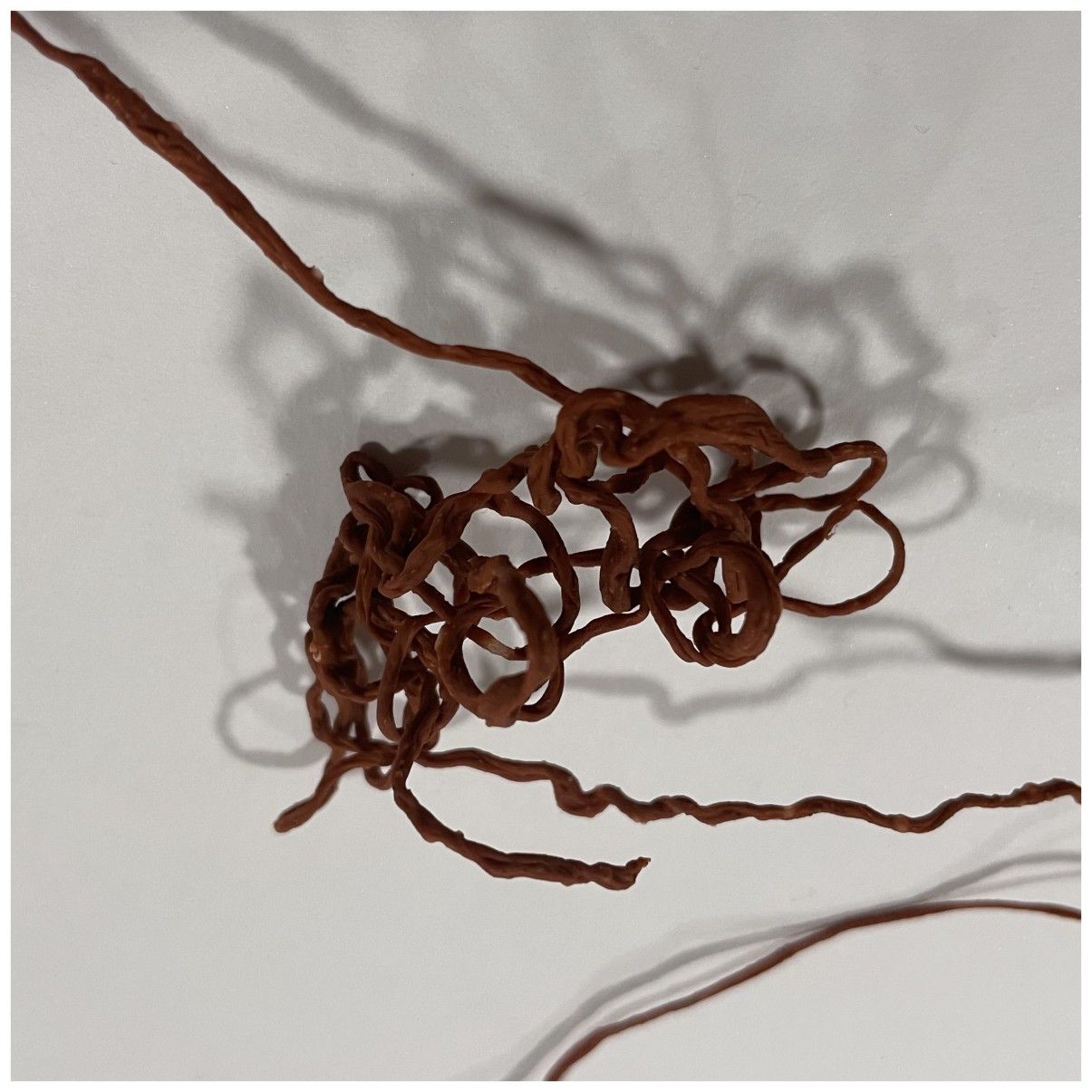
Carboxymethyl cellulose
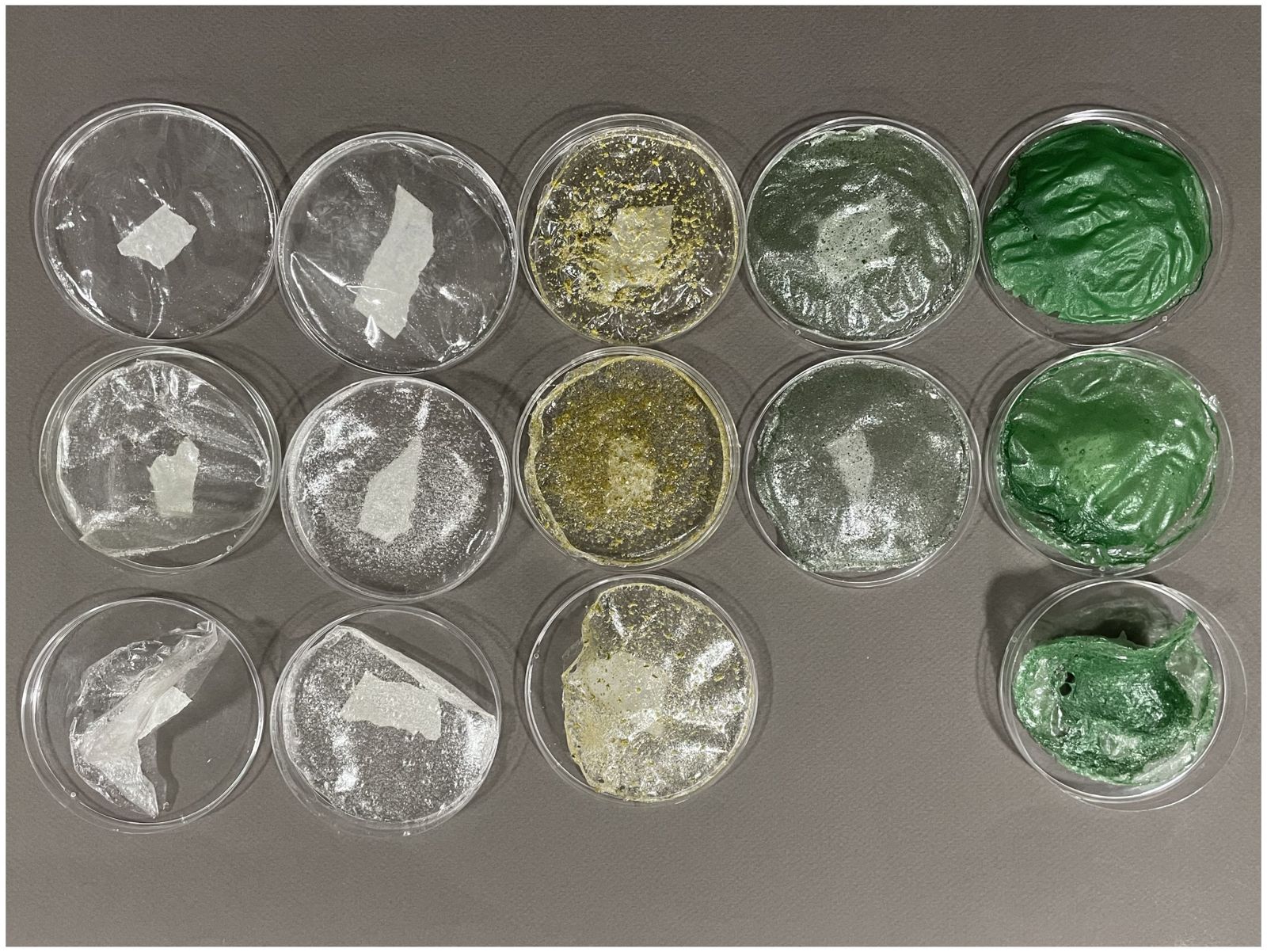
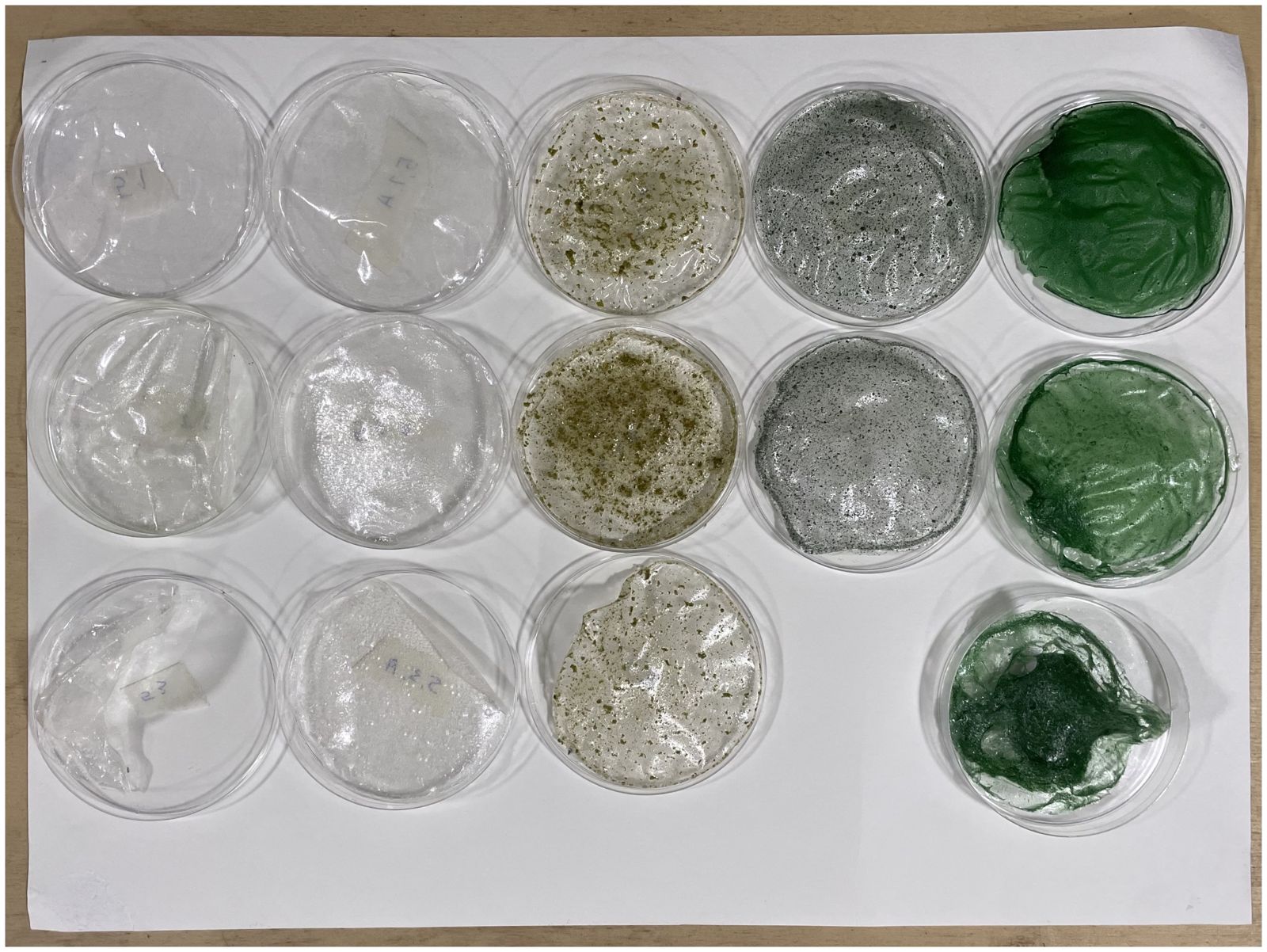
From left to right: thin layer, thick layer, réséda pigment, green oxide pigment, and green pigment. From top to bottom: 1%, 2%, and 3% CMC.
The 2% CMC solution with thermal insulation:
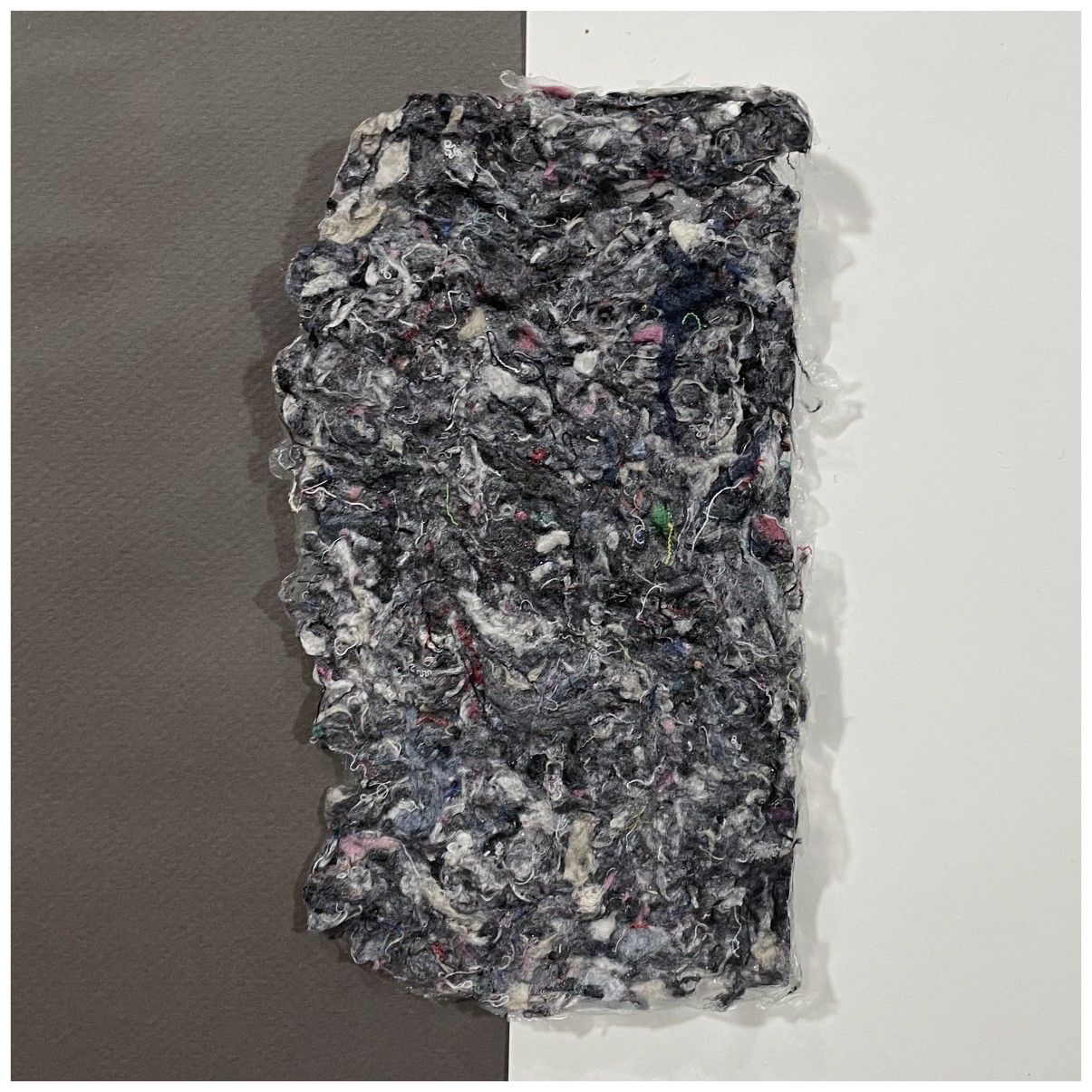
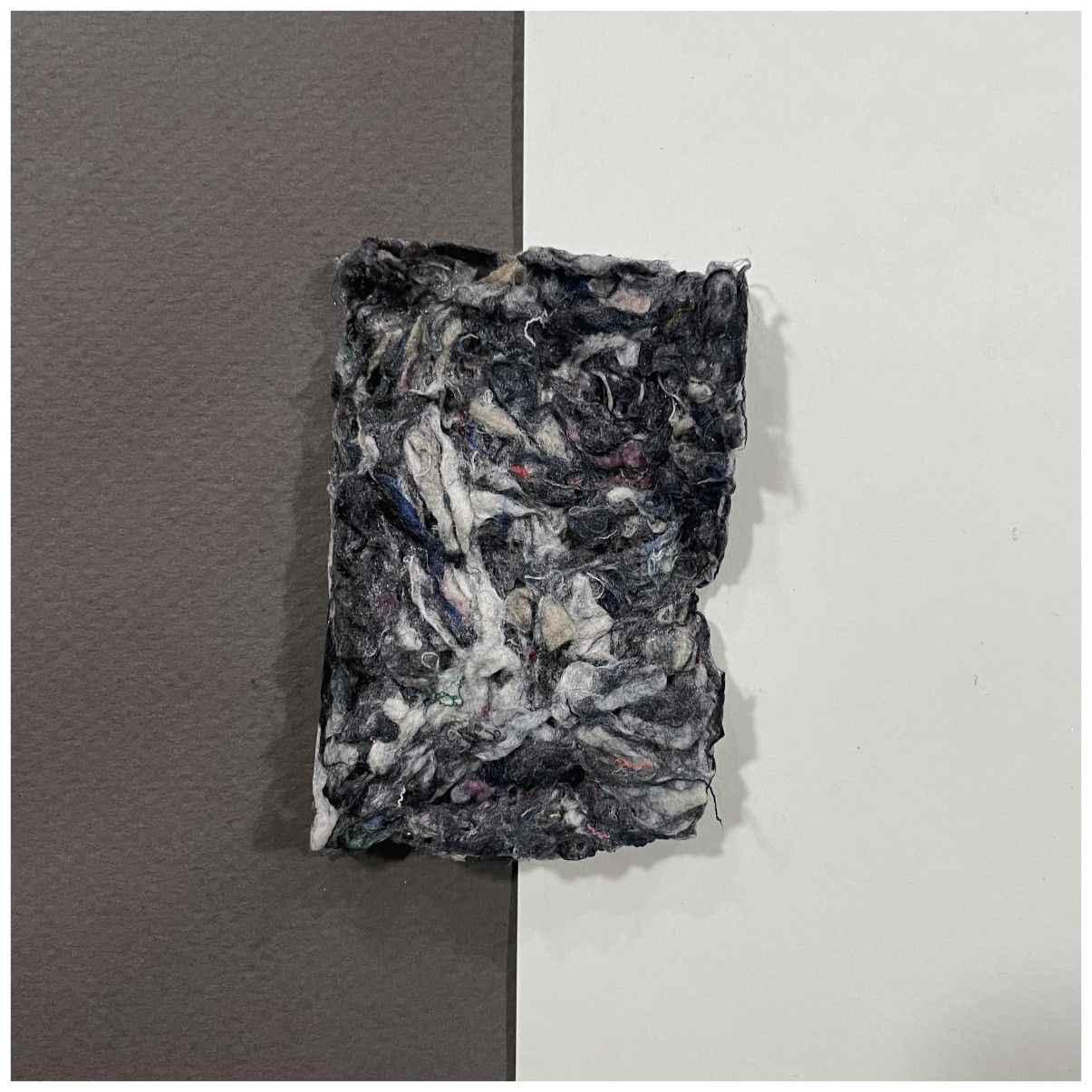
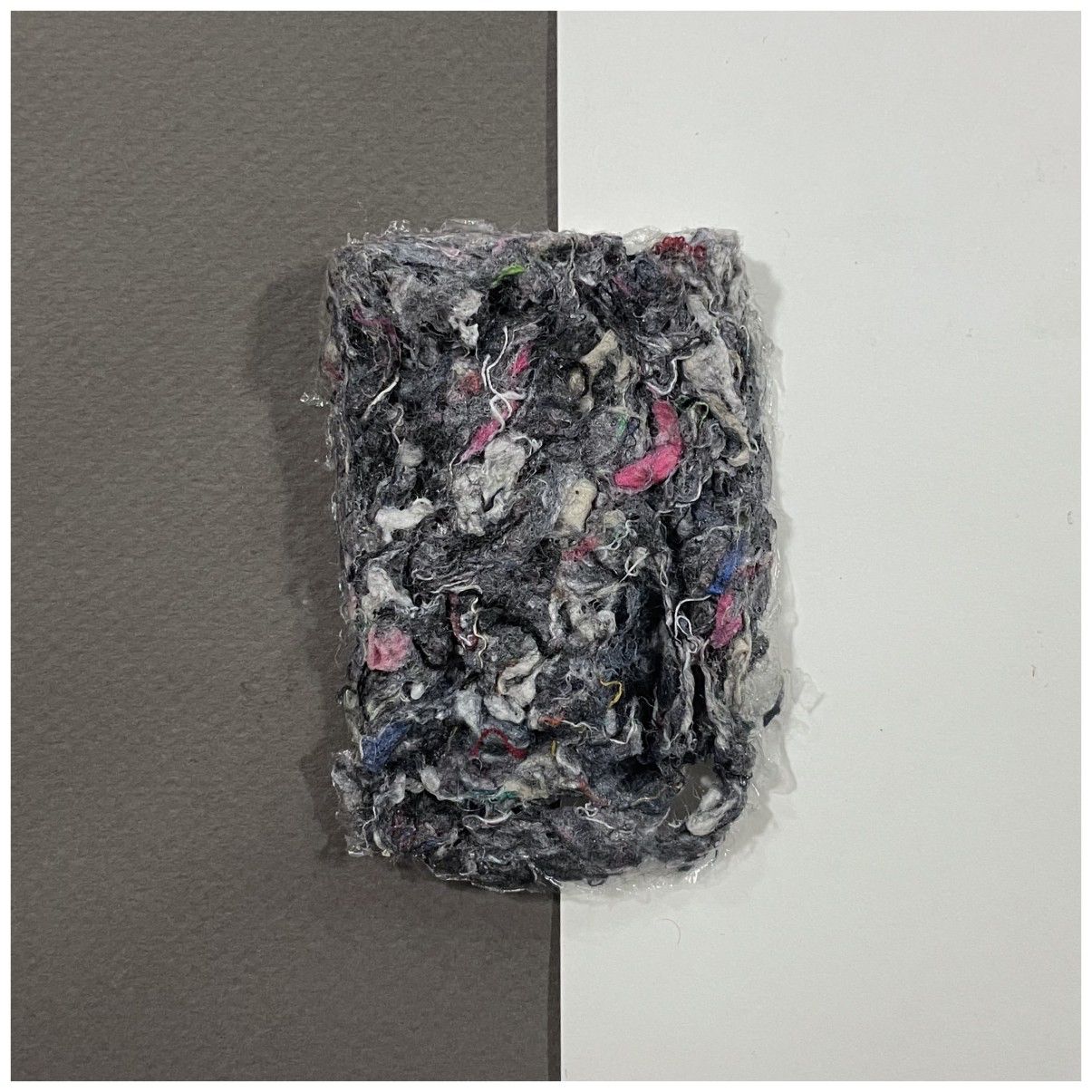
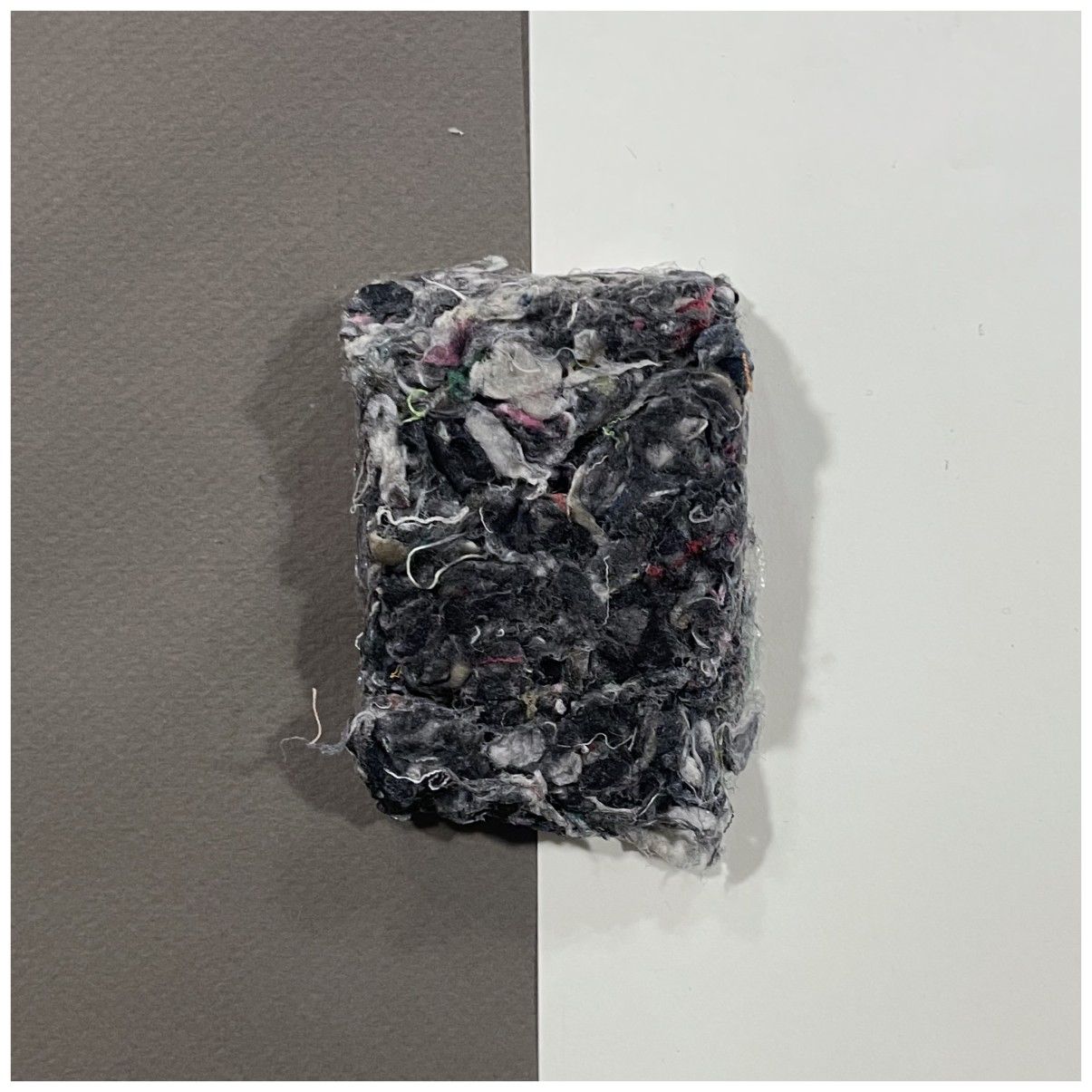
The mix of 1% and 3% CMC solution with thermal insulation
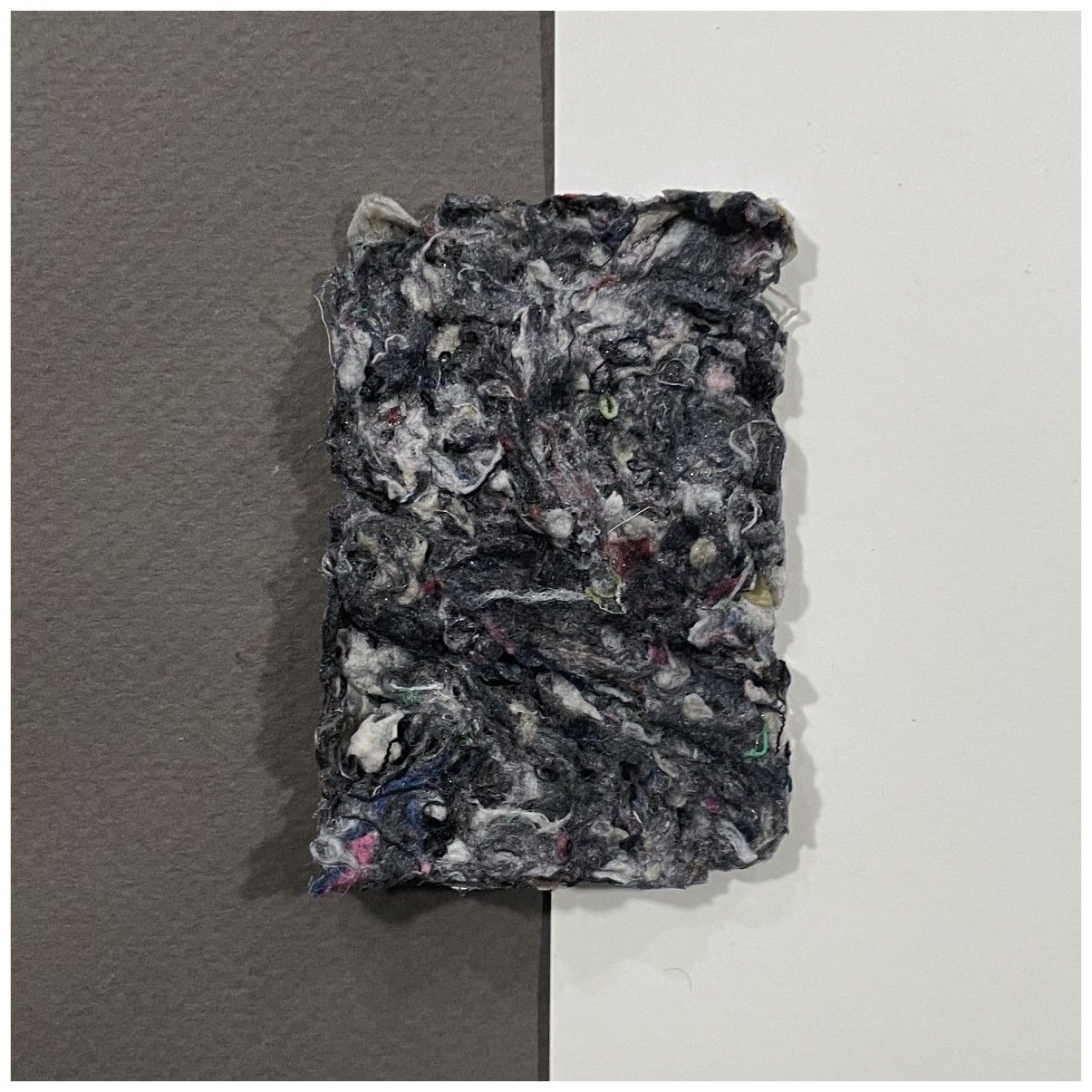
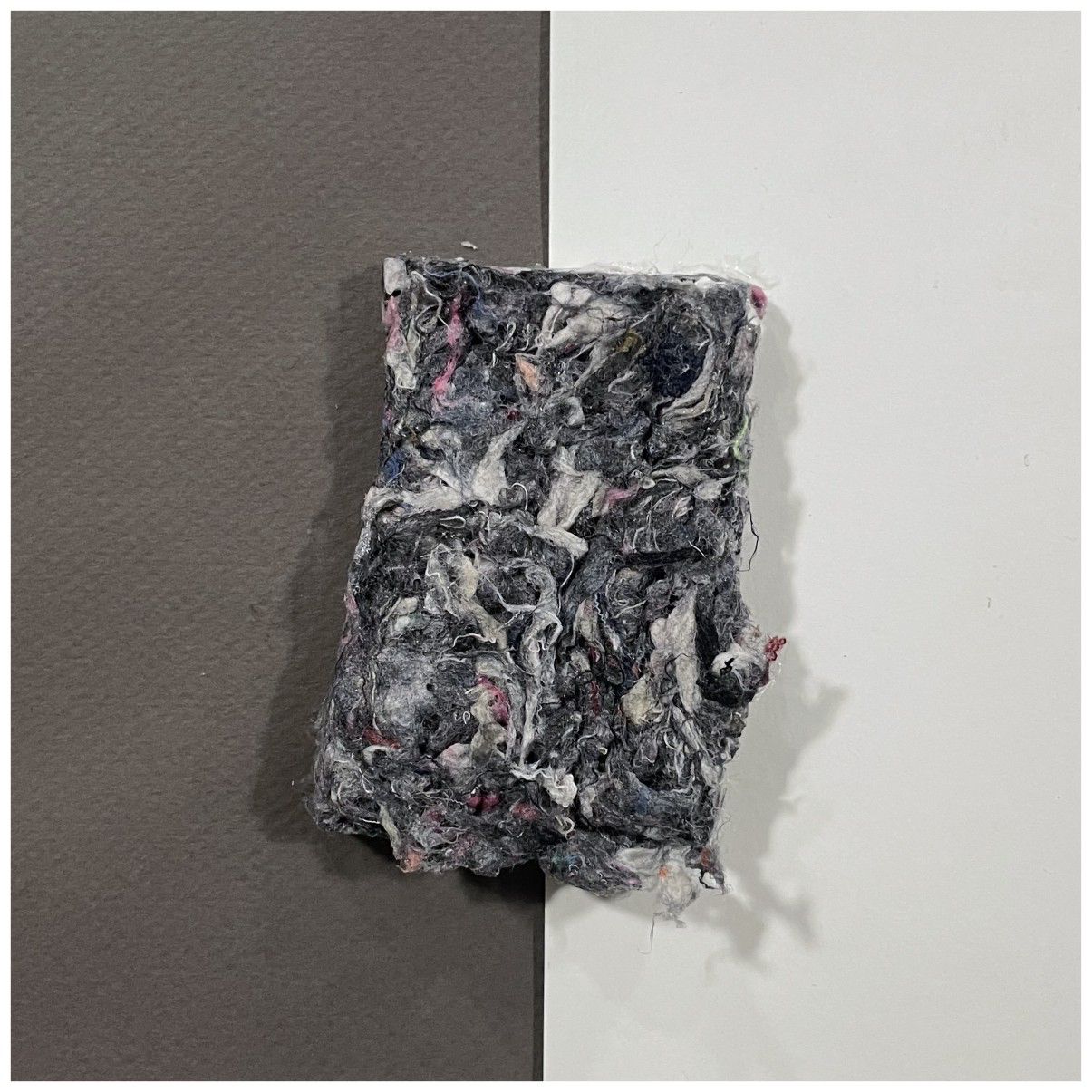
Agar
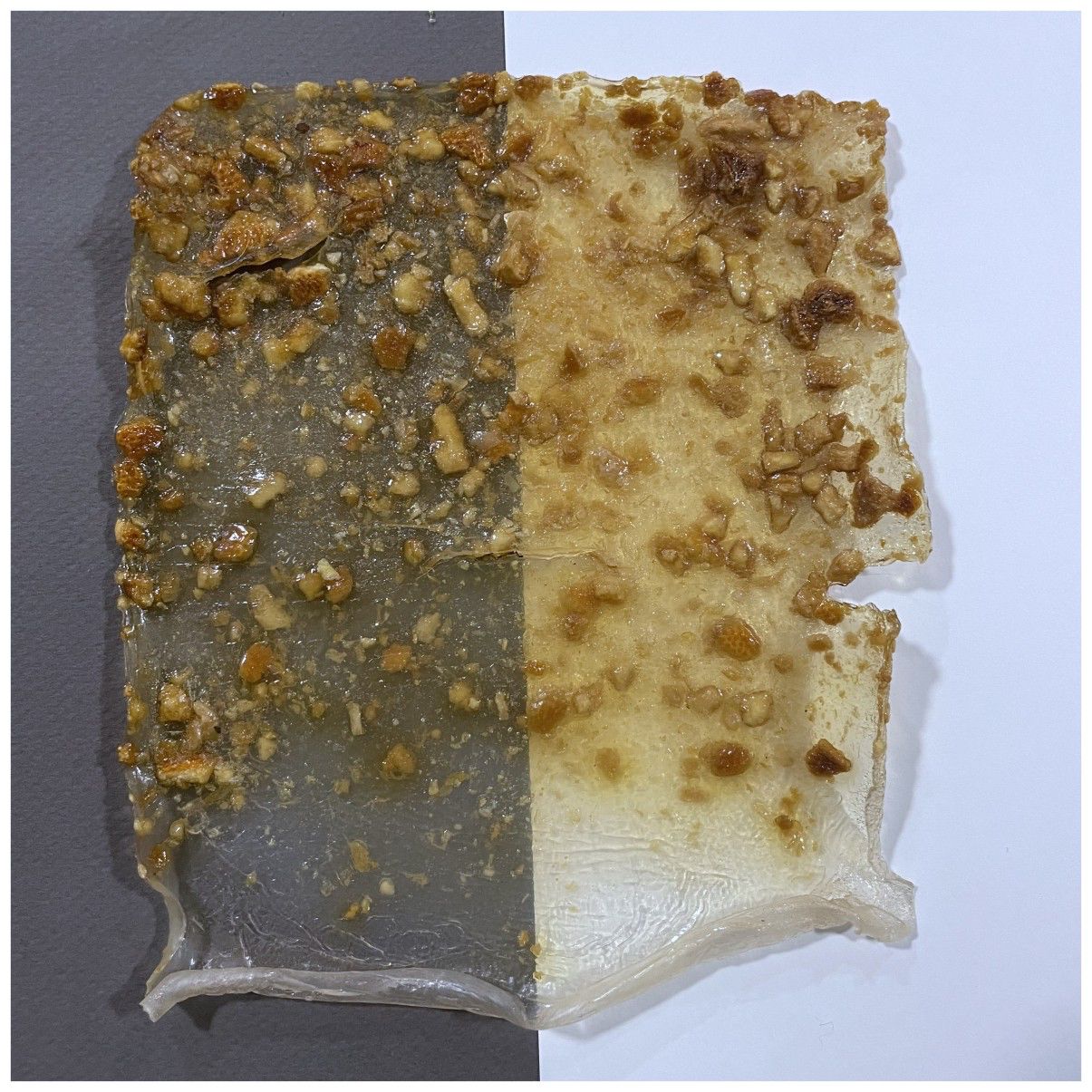
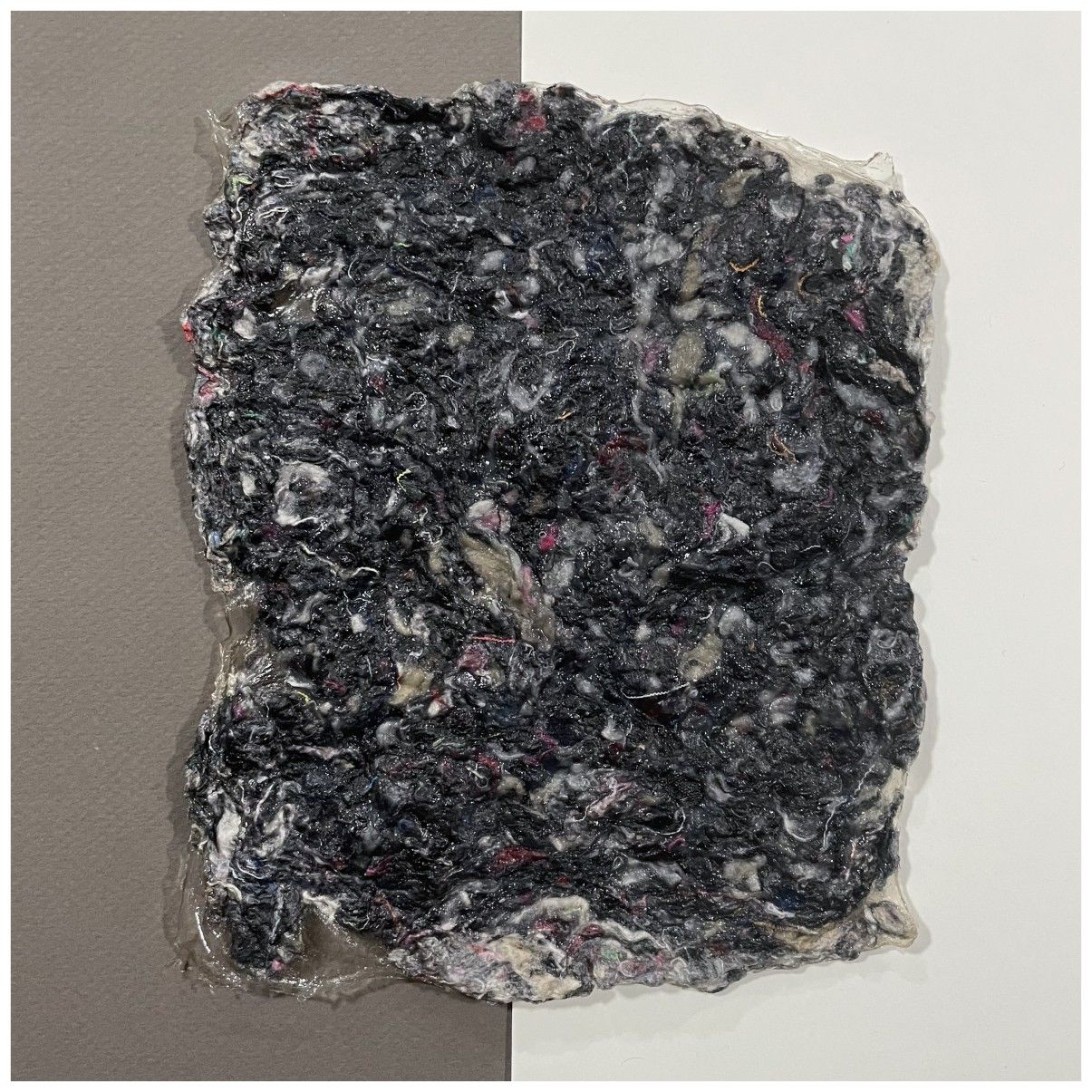
Maizena