BioChromes
1. Objective
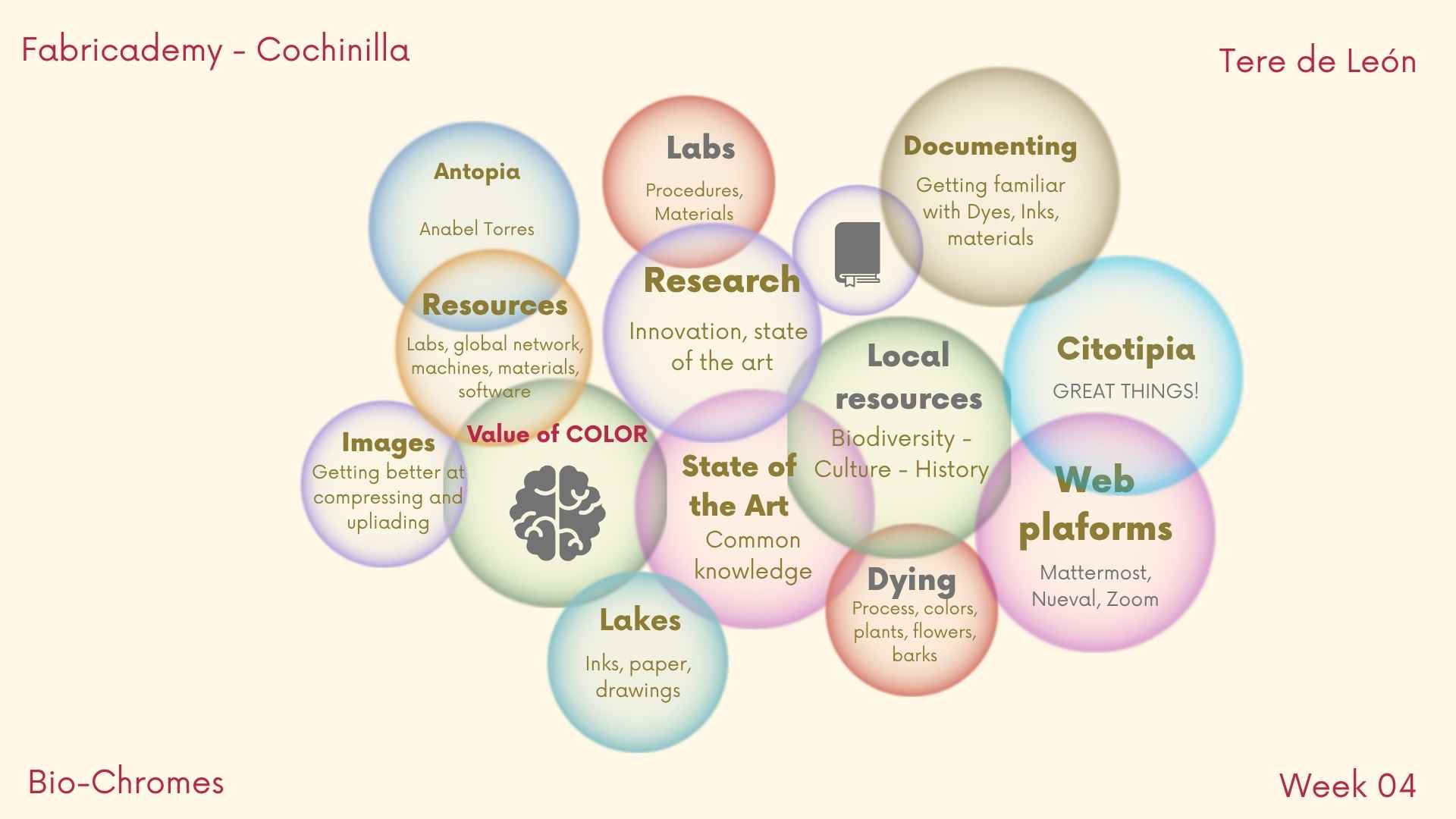
My mind map of this week 04:
2. References, research & inspiration
2.1 Back in 2022
This practice allowed me to go back to the many experiments I did back in 2022 in Hueyapan, Puebla, towards the Gulf of México, when I visited Liliana Filomeno and her very new project: TAYOL and got a first hand experience with her as a beautiful artist and textile lover. I know now more about plants, extraction of color, different behaviours according to the types of mordants or tannins we use. Also, very significantly, I learned about the love and respect people as Lili show for old traditions and for the materials earth bring.
Dying in Hueyapan_2022
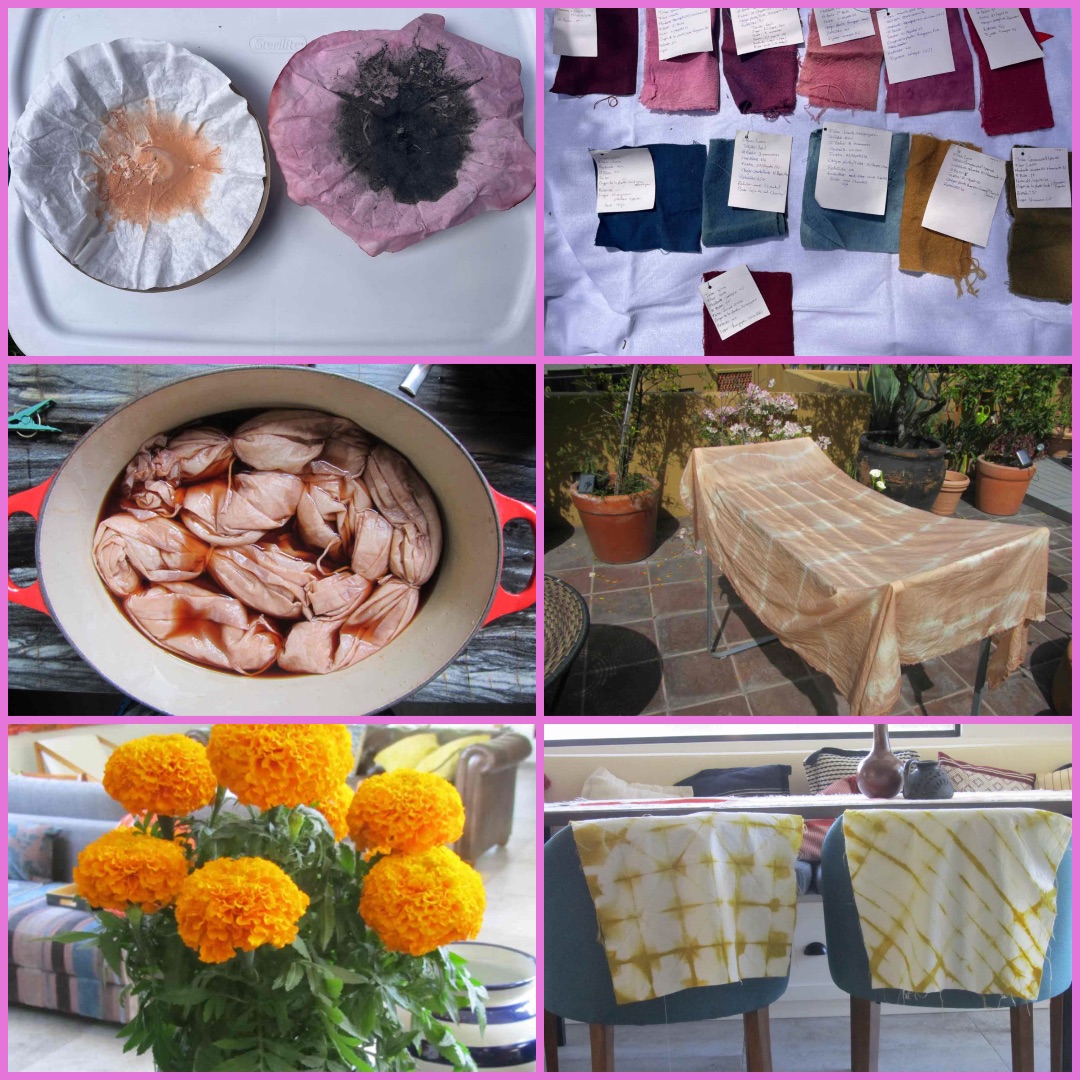
In the image: wide range of colors dyied in wool and cotton with different plants, flowers and seeds mordants and reduction in the case of añil/índigo.
Thanks to this Fabricademy practice I documented all my learning together for the first time. You can see the full pdf document here (Color Manual): View my PDF document
I got into a long journey that the many, MANY possibilities of organic materials that surround us and the many cross disciplines allow. Starting from extraction of color, to the dying, to the lakes and other applications (paper, biomaterials, resines) and the endless experiments regarding the fabrication of biomaterials, biocomposites, biostructures, it just blows your mind.
I did feel a little bit overwhelmed about all the different and exiciting things I could do and went through a "rabbit hole"
2.2 Trudi Pollard
Trudi was the first person I found in the internet who did experimentation with dying textiles precisely during COVID. I was so impressed and inspired about her knowledge, her own laboratory (her home) and her absolutely precise documentation processes. She is absolutely worth to get to know:
2.3 TAYOL
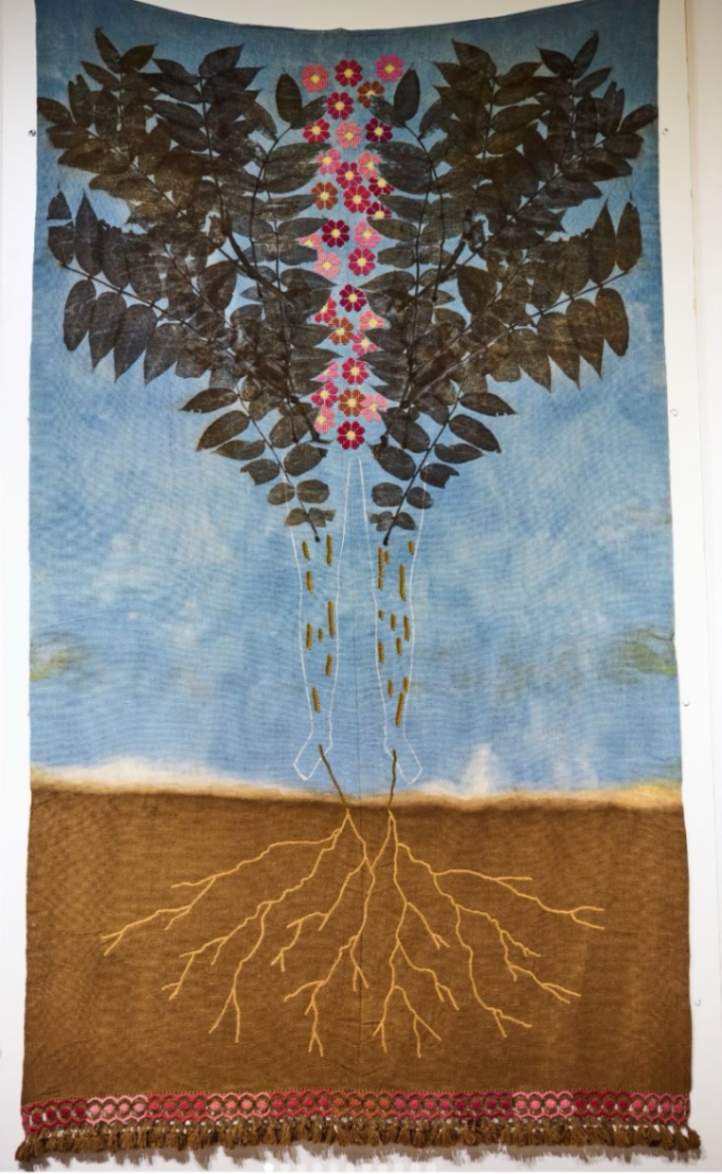
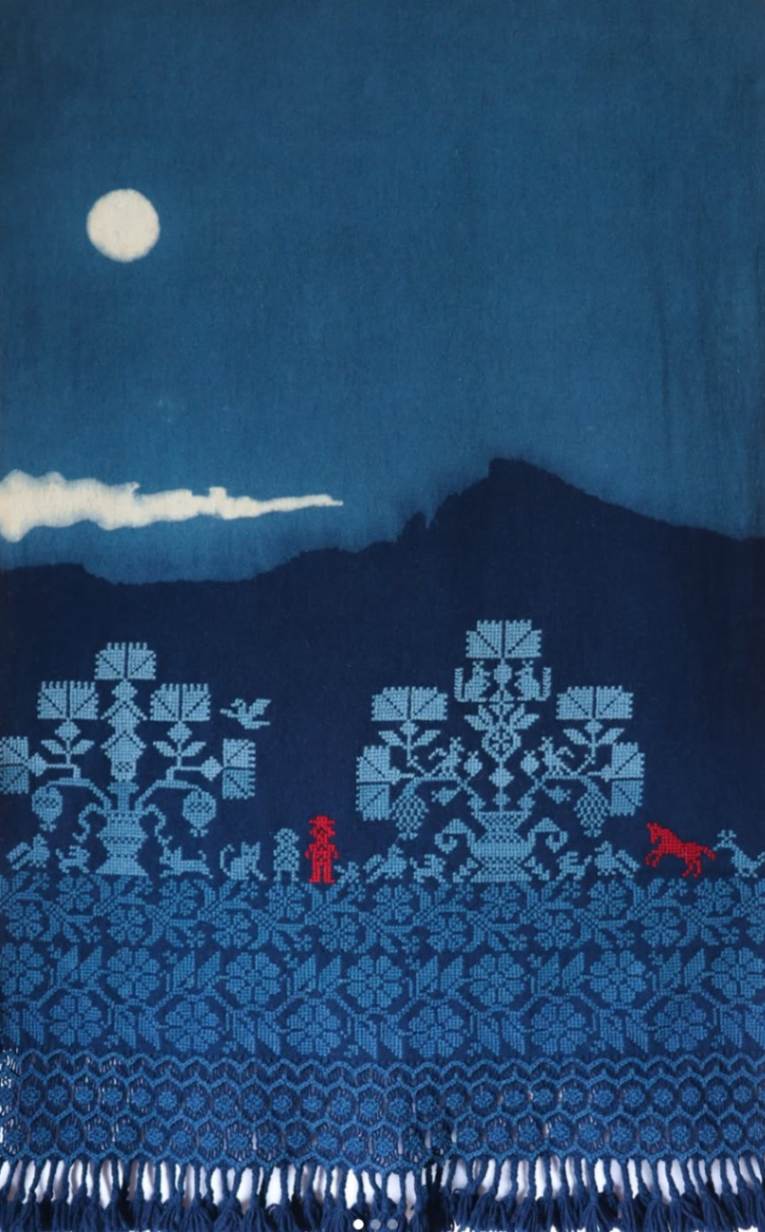
Lili Filomeno was my first great teacher for knowing plants and dyes. I visited her back in 2022 with my husband David and she was very generous to share with us her time, knowledge, space and love. Since then, Lili has evolved tremendously and has had participations in major culture events nationally and internationally, Here a couple of her makings:
2.4 Anabel Torres
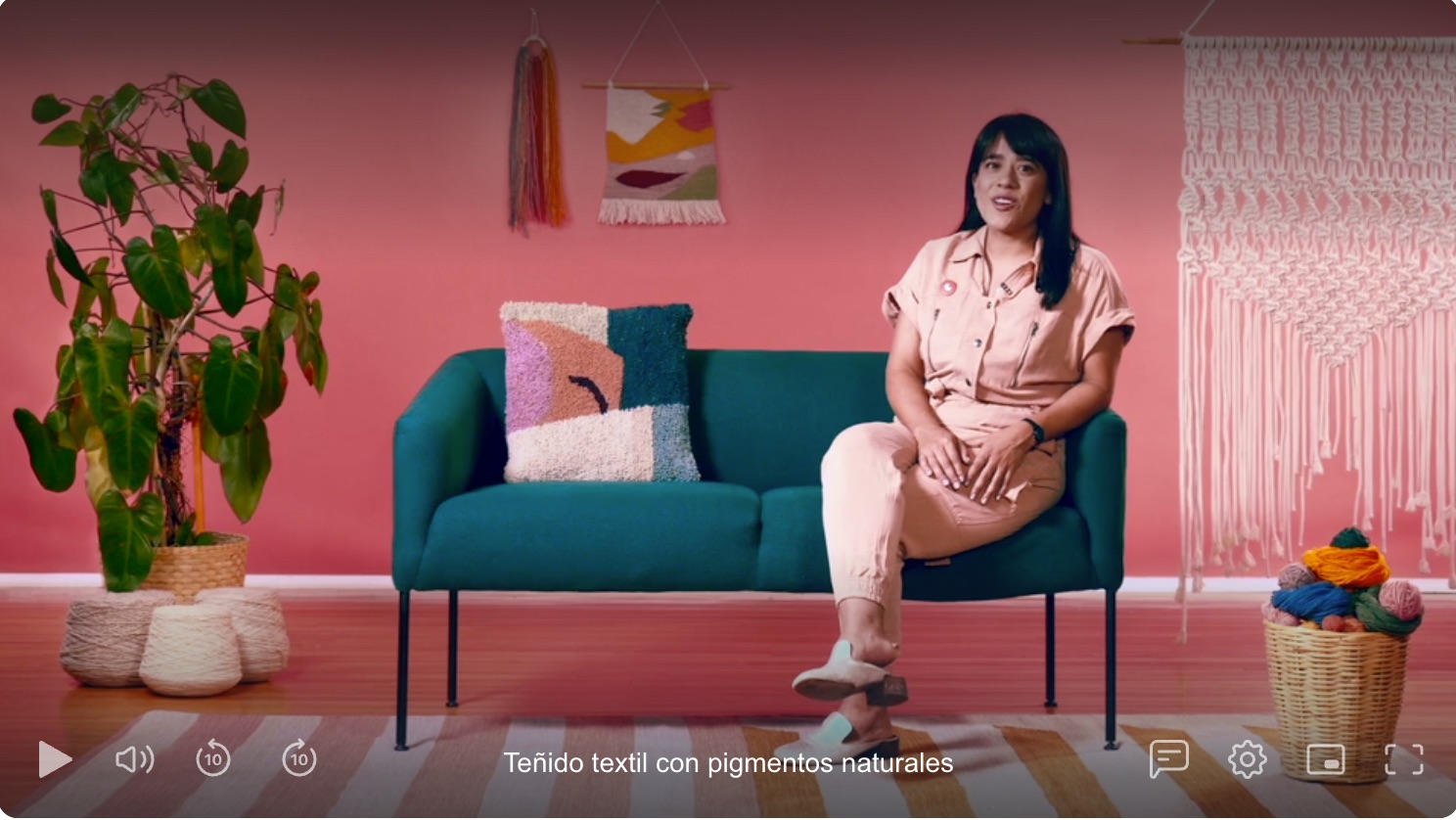
Another influence I have is Anabel Torres who I knew through the Domestika platform during COVID. I was very inspired about everything you can do with color and textiles. She just published her Manual and I still follow a lot of her work.
3. Tools
- [JPEG compressor](https://jpeg-optimizer.com/)
- [YouTube](https://www.youtube.com/)
- [sources](http://class.textile-academy.org)
- [I love pdf](http://ilovepdf.com)
- [Piccolage](https://piccollage.com/)
4. Process and workflow
We all started our practice at IDIT by extracting color to different organic elements and then dying some small pieces of fabric. We worked with:
- Red/orange mud from Oaxaca (my sample)
- Cochinilla (my sample)
- Bugambilia
- Jamaica (Hibiscus)
- Curcuma
We got familiar with the Bio Lab at IDIT and with equipment and the process of:
- Extracting color
- Preparing the fabric
- Measuring Ph
- Dying the fabric
Here some images and a video where we appreciate the change of color in curcuma as the result of adding ácido clorhídrico and hidróxido de sodio.
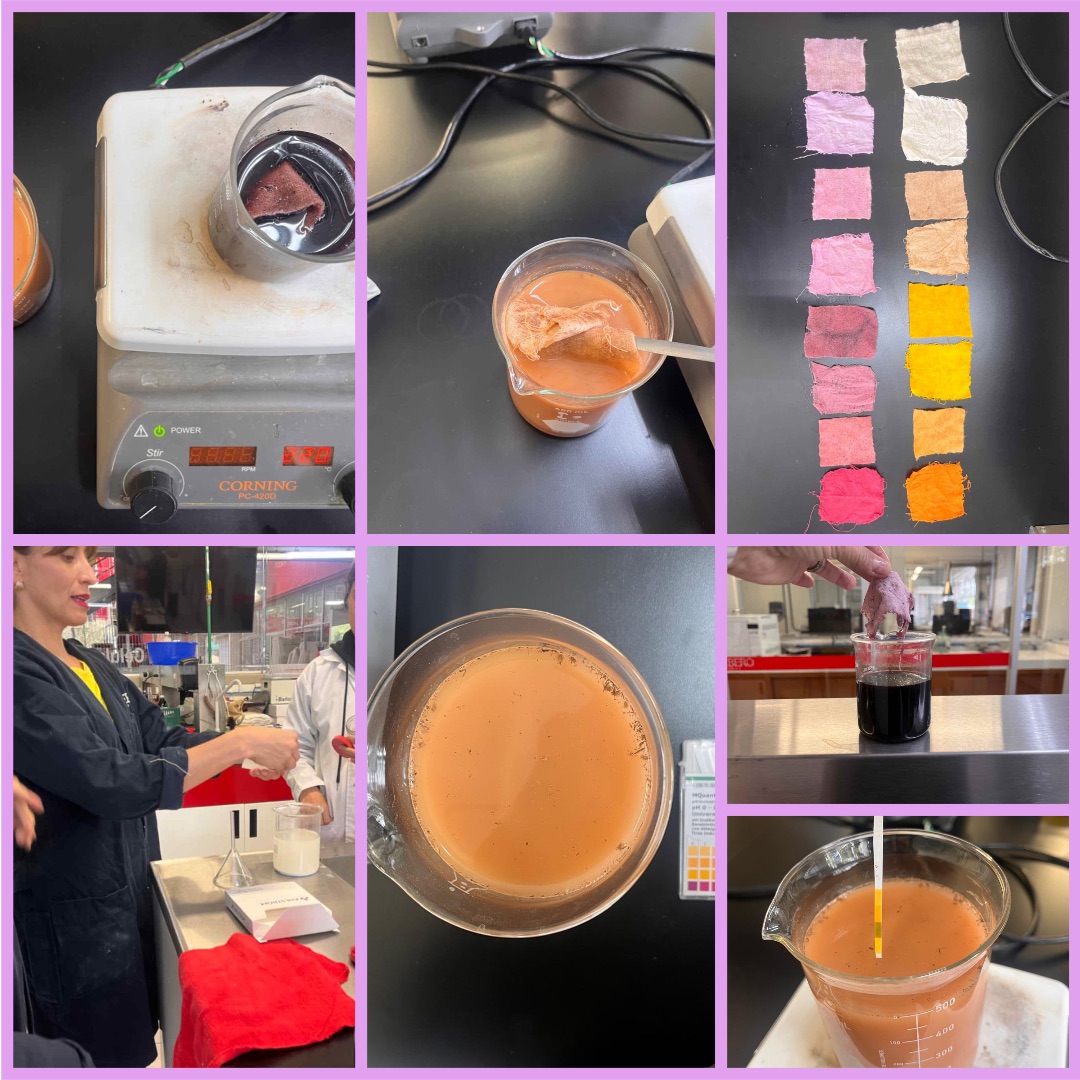
Several videos of my practice in IDIT-Ibero Puebla:
4.1. For my own process I did the following:
- Extraction of color of:
- chile aji
- Malva flower (natural state)
- Hortensia flower (natural state)
- Coffee grains (after brewing)
- Precipitation for powdered ink
- Oaxacan dirt
- Grana cochinilla
- Dying with:
- Chile aji solvent extraction
- Malva flower solvent extraction
- Hortensia flower solvent extraction
- Oaxacan dirt ink pigment
- Grana cochinilla pigment
- Bugambilia pigment (obtained from Raúl Barbines from IDIT Puebla and former Fabricademy).
- Fabrication of a biomaterial for dying with coffee using cornstarch and glicerin.
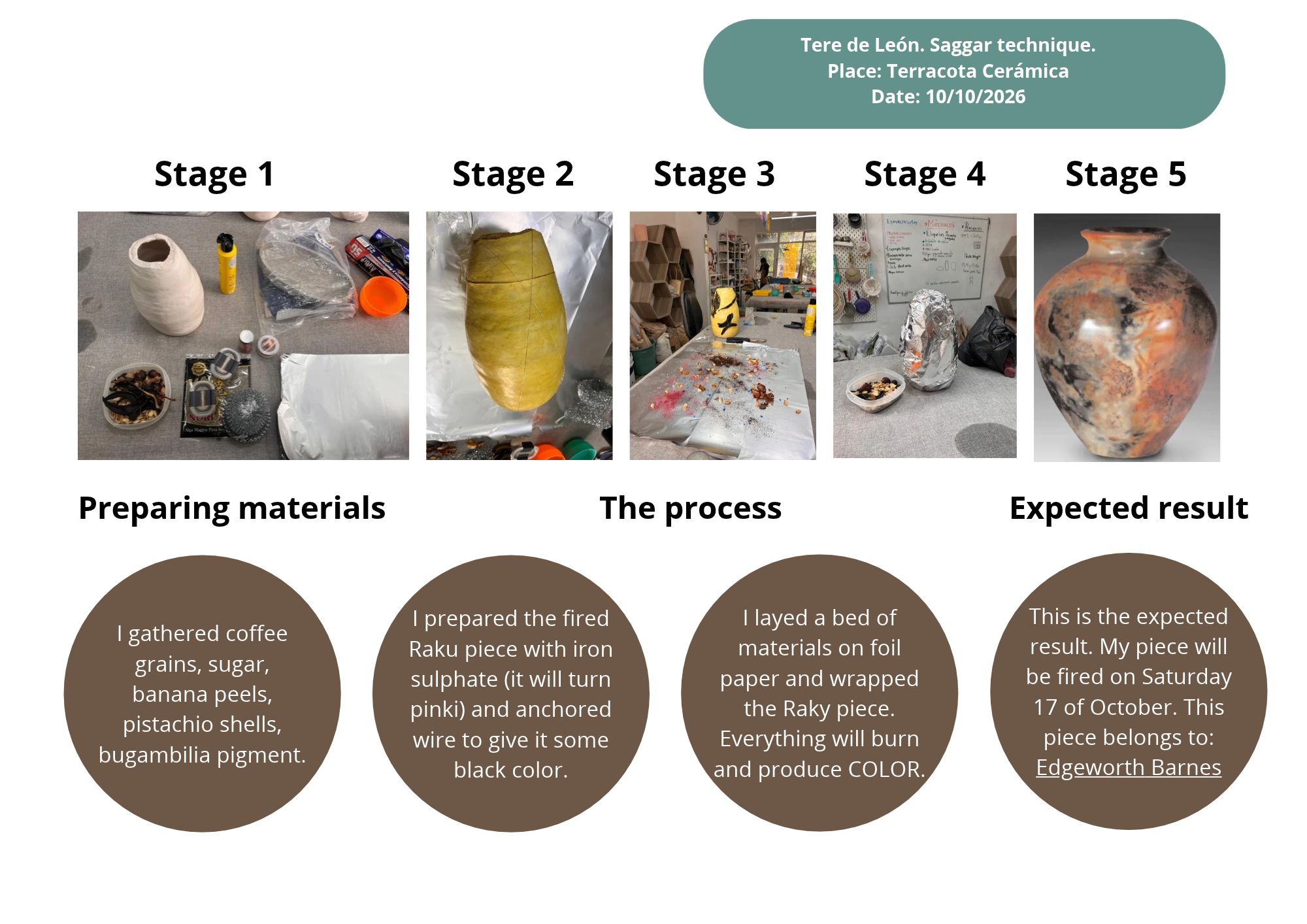
- Extraction and application of color in ceramics using high temperature clay, organic materials and a kiln where my piece with burn up to 750o degress Celsius.
4.2 Step 1 Extraction of color
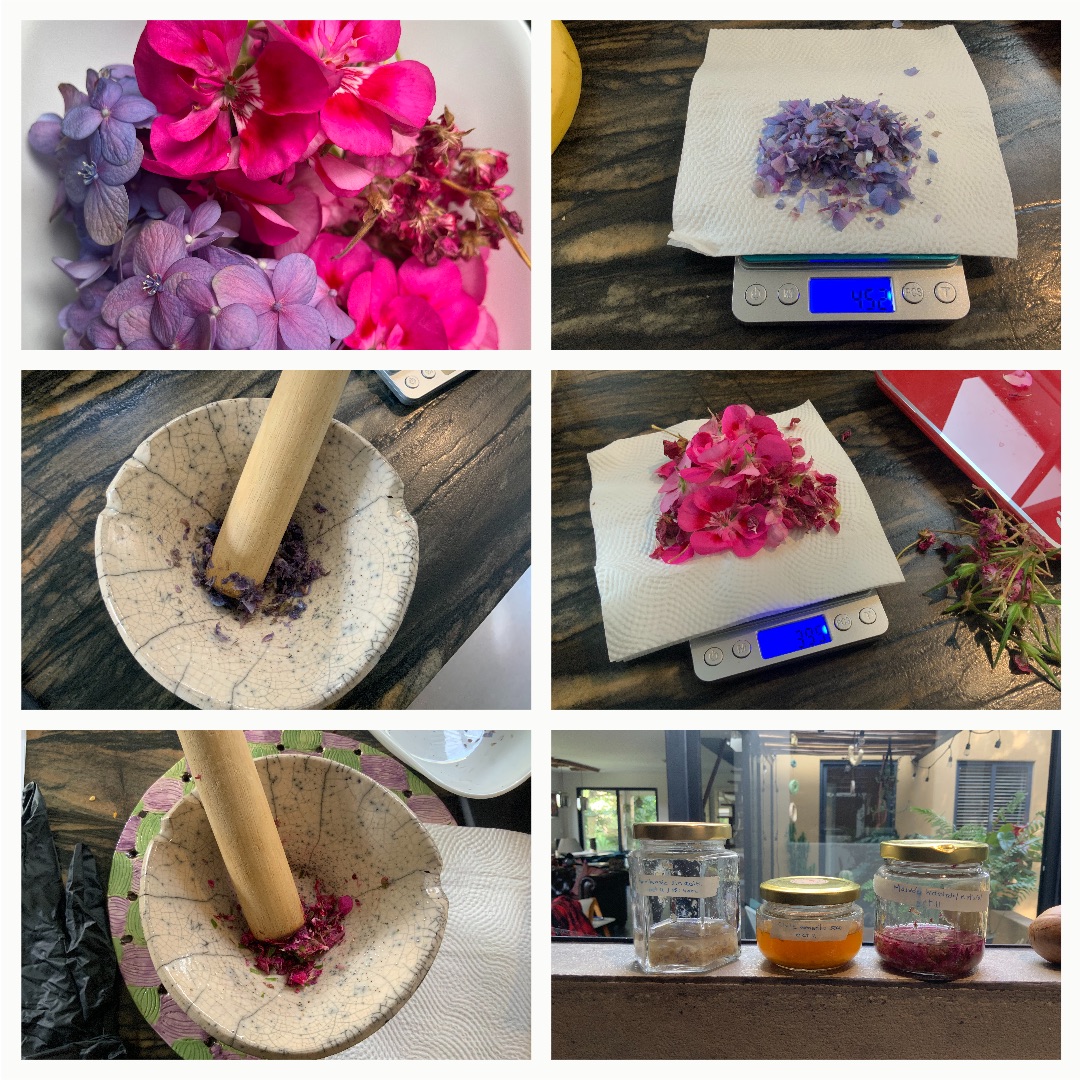
As I established in my Color Manual 1 I extracted color from chile aji + Malva flower + Hortensia flower by macerating using alcohol 40o (Vodka) for two days.
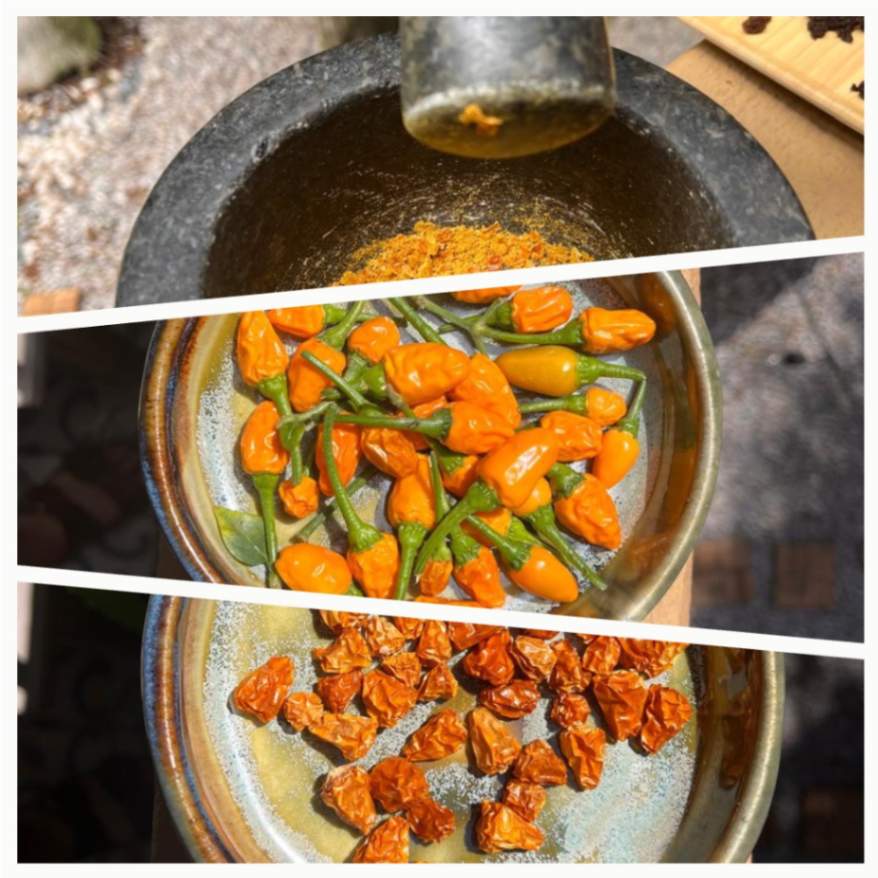
These images show the process of both drying (chiles) and cutting and grinding to smaller pieces (petals) in order to get a better maceration process.
4.3 Step 2 Precipitation process
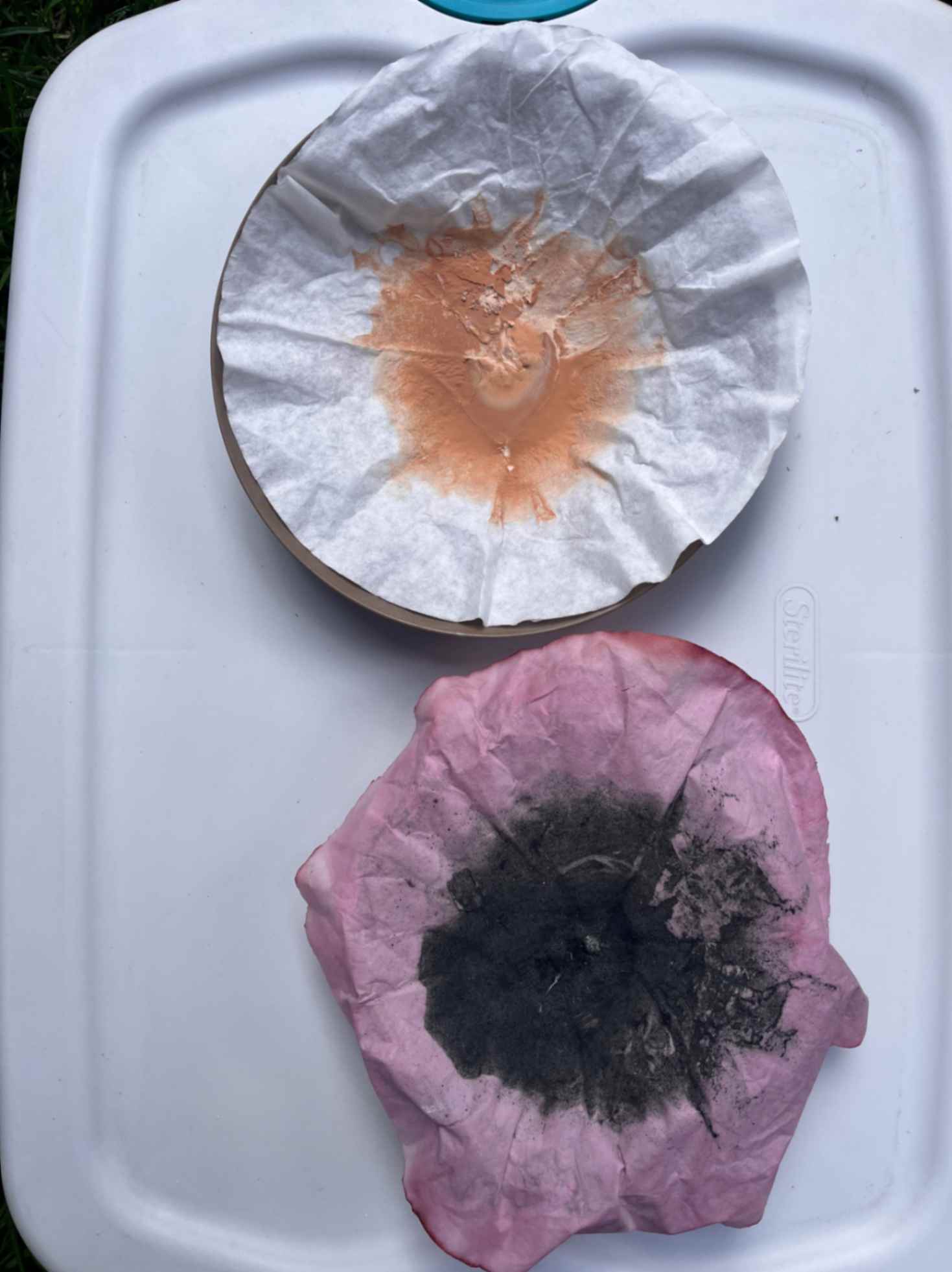
The Oaxacan mud and the grana cochinilla pigment was produced after the extraction process by adding Carbonato de calcio and allow the particles to precipitate.
4.4 Step 3 Dying process
4.4.1. Scouring the fabrics
I chose to use 100% cotton with a nice pattern and started by washing it with neutral soap in the washing machine. I cut 6 pieces of 10x10cms. each. In total, my fabric weighted 9 grs.
PHOTO of white fabric.
4.4.2. Mordance the fabrics
I simmered the fabric for an hour in water with Alum (10% WOF).
PHOTO of the simmering.
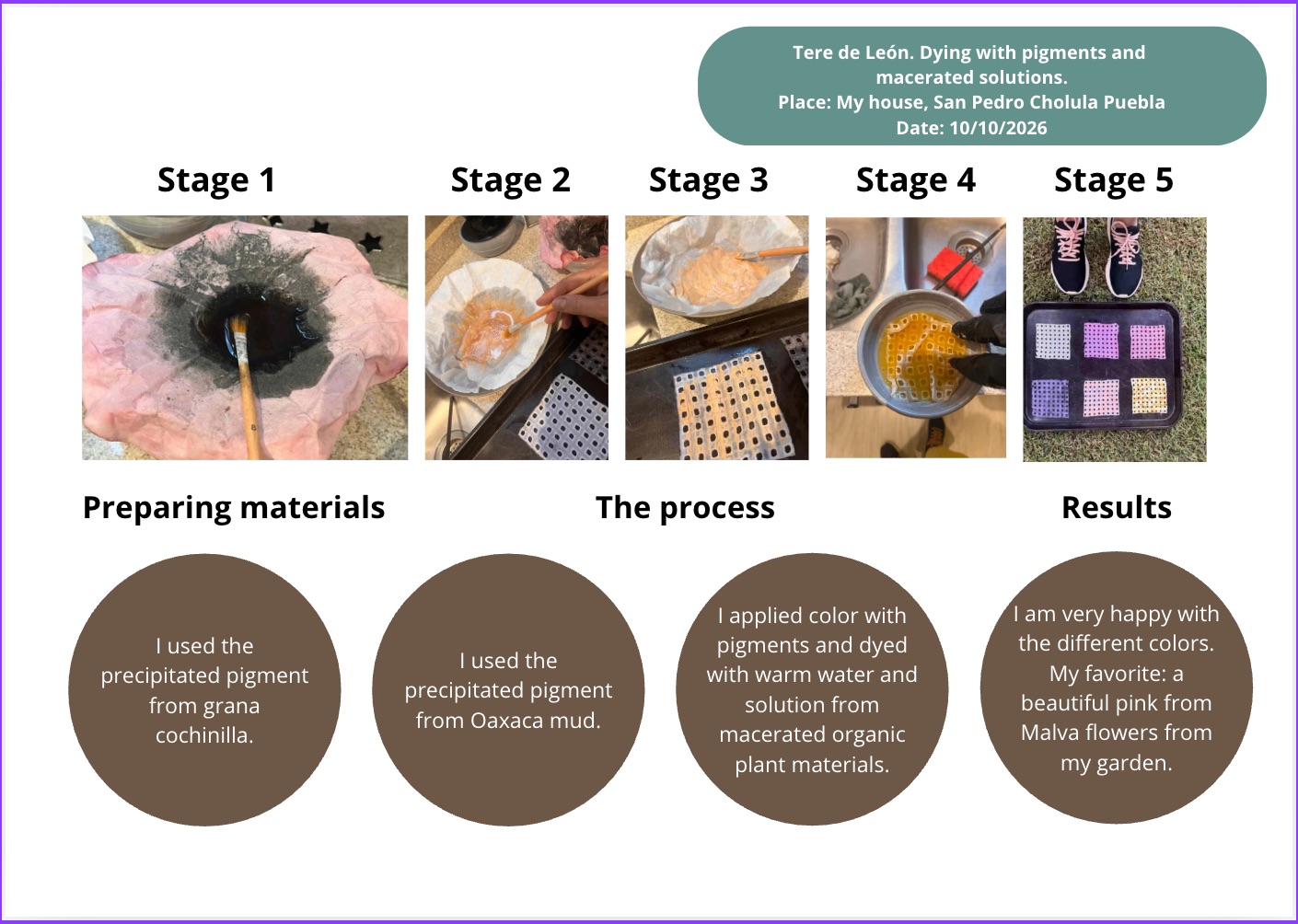
4.4.3 Adding colors:
-
Pigments: Oaxacan dirt and grana cochinilla on a 100% cotton piece of white fabric.
-
Chile aji and flowers on a 100% cotton piece of white fabric.
4.5 Biomaterial production and dying with coffee grains
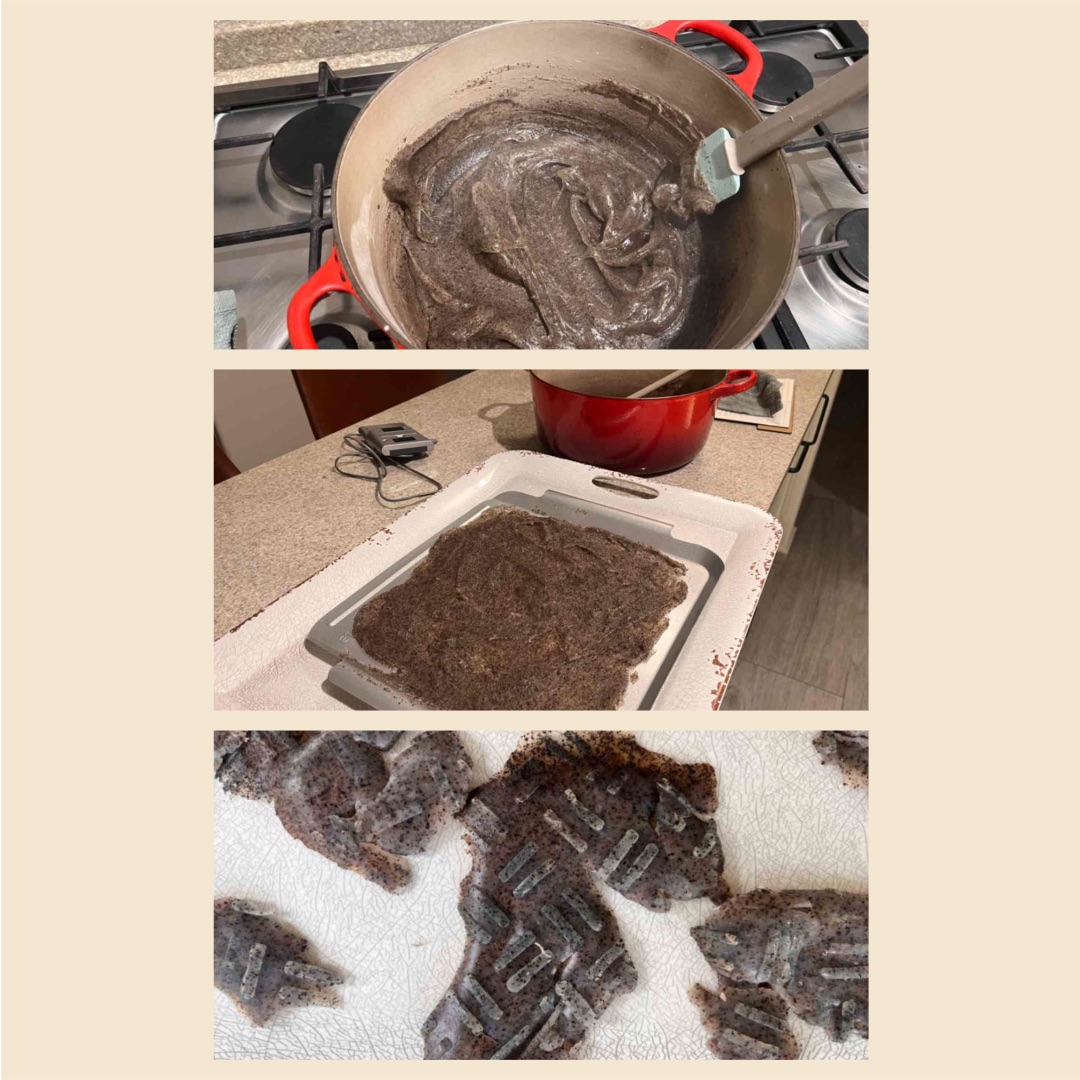 I used cornstarch, glicerina and water and coffee grains from made coffee (my house most important organic material that we produce). I laid it on a tray with a pattern. It came out nicely, but I didn´t let it dry slowly (I put it under the sun) so it broke. The pattern looks nice but no flexibility.
4.6 Extraction and application of color in ceramics
5.1 Documenting experiments in a table for comparison
One of this week´s biggest accomplishments was to document the process I did in the past and for this practice. I developed a matrix that I will upliad
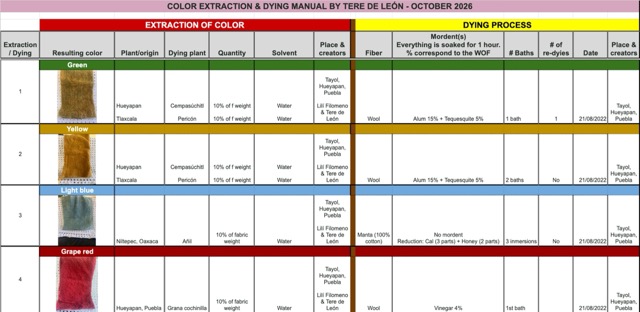
You can see the full pdf document here (Color Manual): View my PDF document
6. Weekly reflection & critical thinking
- Very busy week documenting, finding materials and experimenting. My house has become a Laboratory. I am very excited about the Malva color and the Oaxacan mud colors, very authentic to the original.
- I am aware of the importance of documenting, but I have to confess it takes a lot of time doing it precisely and with nice visuals.
- I have to get better in taking photos and making them part of the narrative finding a better way to take-download-compress-make a good visual-manage files in both phone and computer.
- Colors extraction is a never ending story; I would like to be able to choose three or four favorite colors and start testing in materiales that will allow me to think in new lampshades.
- i fell in love with biomaterials, I will keep experimenting.
Some other things I can improve: - I should get a better setting for photos and try making videos. - Use PH to get modifiers. - -
7. Recipe files & References
-
Manual: download my recipe booklet here ↩
-
Recipe: Dye recipe pdf ↩
-
Reference: Author; Title; Source; year ↩