Computational Couture
1. Objective
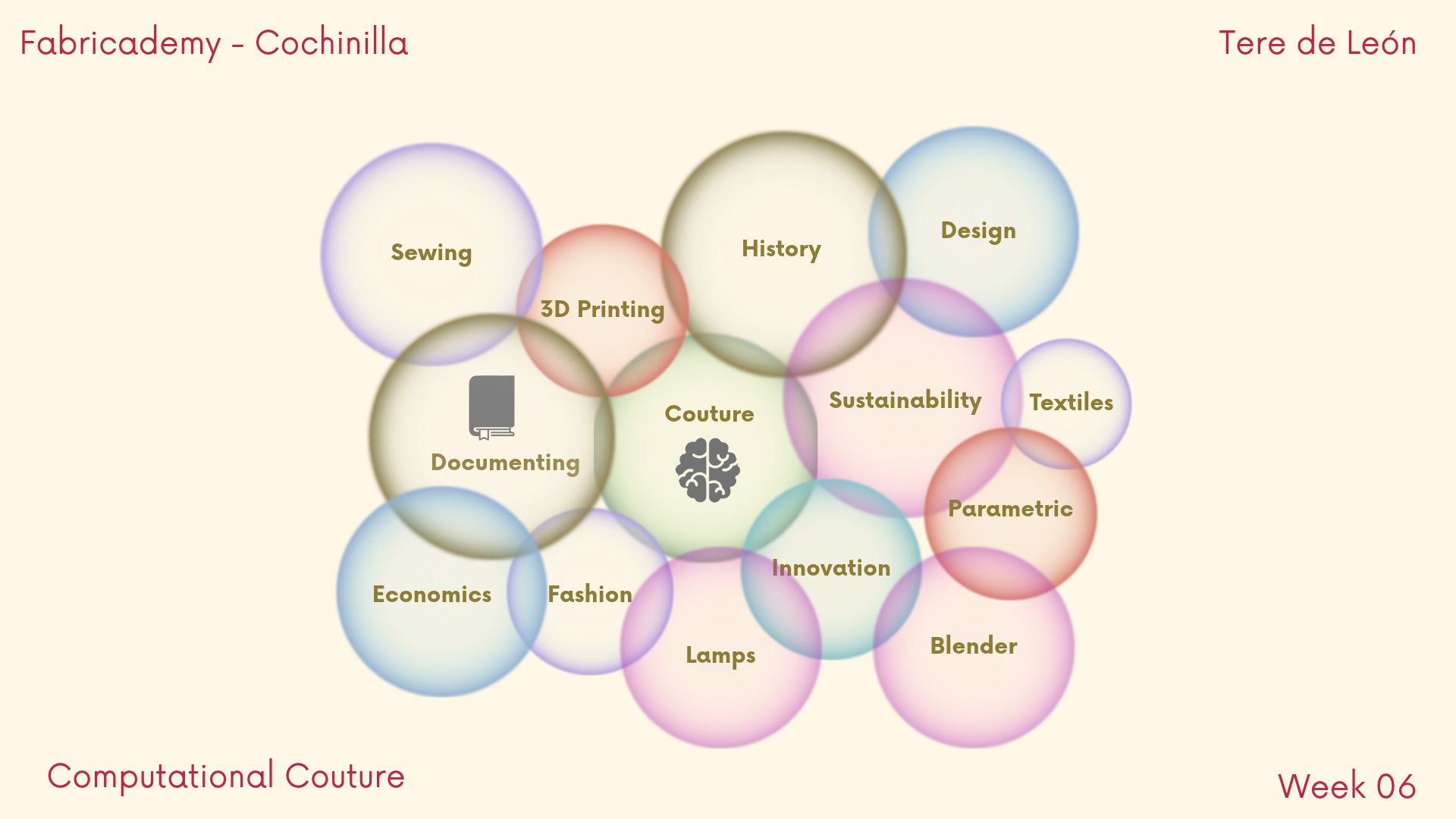
My focus is around the construction of lamps as a beautiful object that is part of a home and can be admired. An object that can set up a mood, a state of mind and which can be a vehicle of inspiration and happiness.
My goal for this week assignment is to learn about computational couture to design and construct a beautiful lampshade that can become an object of desire. I find that, contrary to fasion in clothes, a lamp is more permanent and therefore more atemporary, so more sustainable and more challenging.
2. References, research & inspiration
2.1 Diving into Couture
New terms for me:
- Couture: which comes from "coudre", to sew. In the late twentieth century it wa used to refer to a modest female artisan mending and doing alterations for a neighborhood clientele 1
- Tailler: Tailor, which derives from "tailler", to cut. 1
Louis XIV in France (XVIII Century) was the one we can "blame of" about Fashion. He created this imaginary of creating beautiful and desirable garments with a very political/arts/societal/economical meaning: ROYALTY. In its own way it was the beginning of a new and very important economic activity for France as also a very meaningful effort of achiving independence of China and the UK (India and US) regarding textiles: silk, cotton and linen.
By introducing two seasons per year of new garments with new designs he was able to mobilize society by generating expectation of the next new garment and therefore a brutal taskforce of people committed to perform.
It was a "bespoke" initiative that carried out so much energy and dynamism.
This idea brings me back to lamps; I like to think about lamps as a piece that makes sense for a particular setting enhancing it by making it very desirable. Its about proportions and the nature of materials. It is an artistic element that influences our ambient, mood and energy.
Lamps - lampshades started as shields (protecting from direct light) back in ancient times. They could be made or hollowed-out shells, animal skings, and parchment or cloth soaked in animal fat to diffuse the glos of open flames. 2
Here three images that inspired me in terms of how 3D printing could enhance lamps design.I did not managed to develop a model like thes in this ocassion due to time but I will like to try very soon. Of course it will compete with hand made, but certainly it is all part of creativity and desigh.
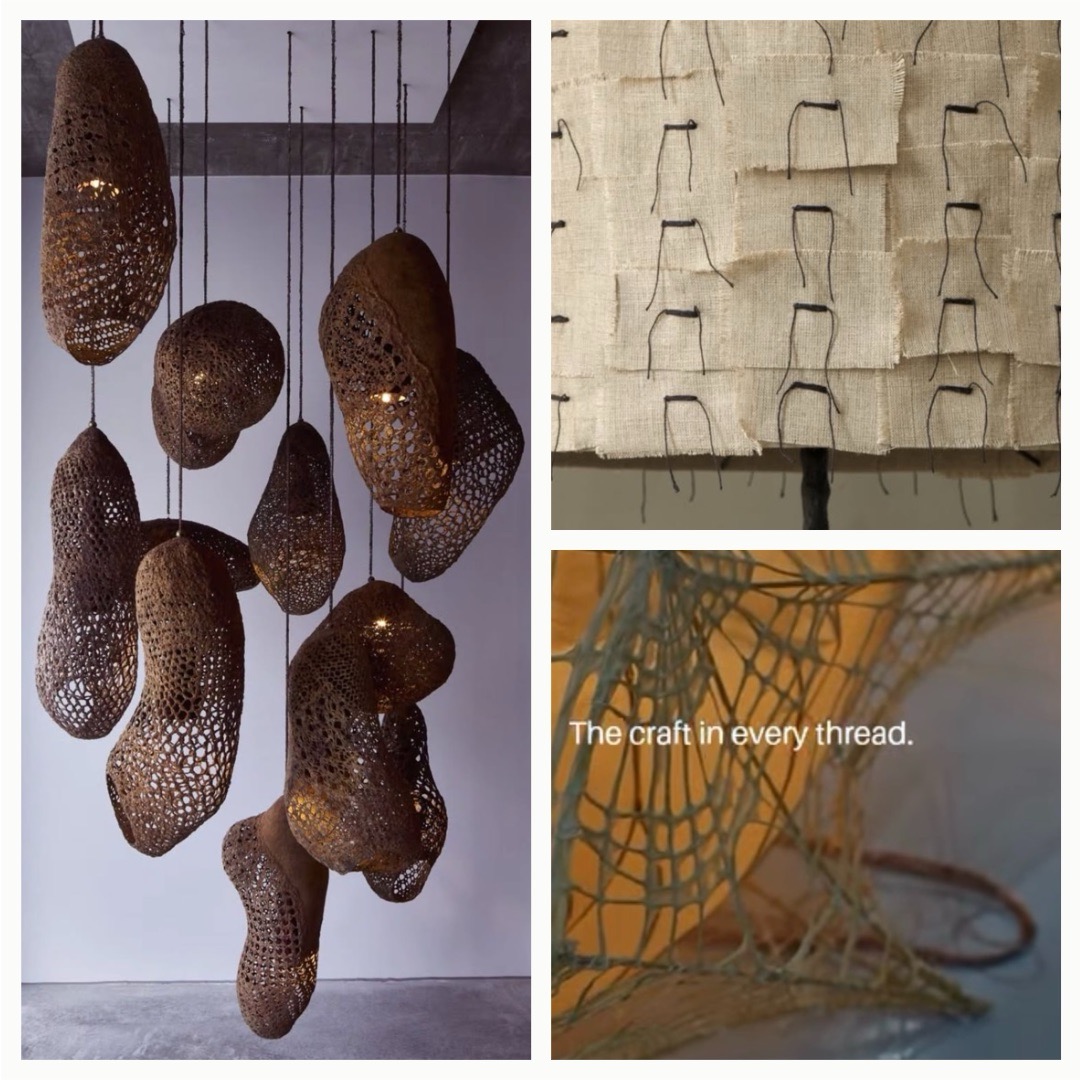
Image source: Collage by Tere de León. Images from Pinterest
3. Tools
4. Process and workflow
4.1 Step 1 Designing the parametric models:
Following Rico´s tutorials 3 , I managed I used the Geometry Node Editor in Blender to work on two models, 1. A grid with regular texture and spheres as "instances" on points 4
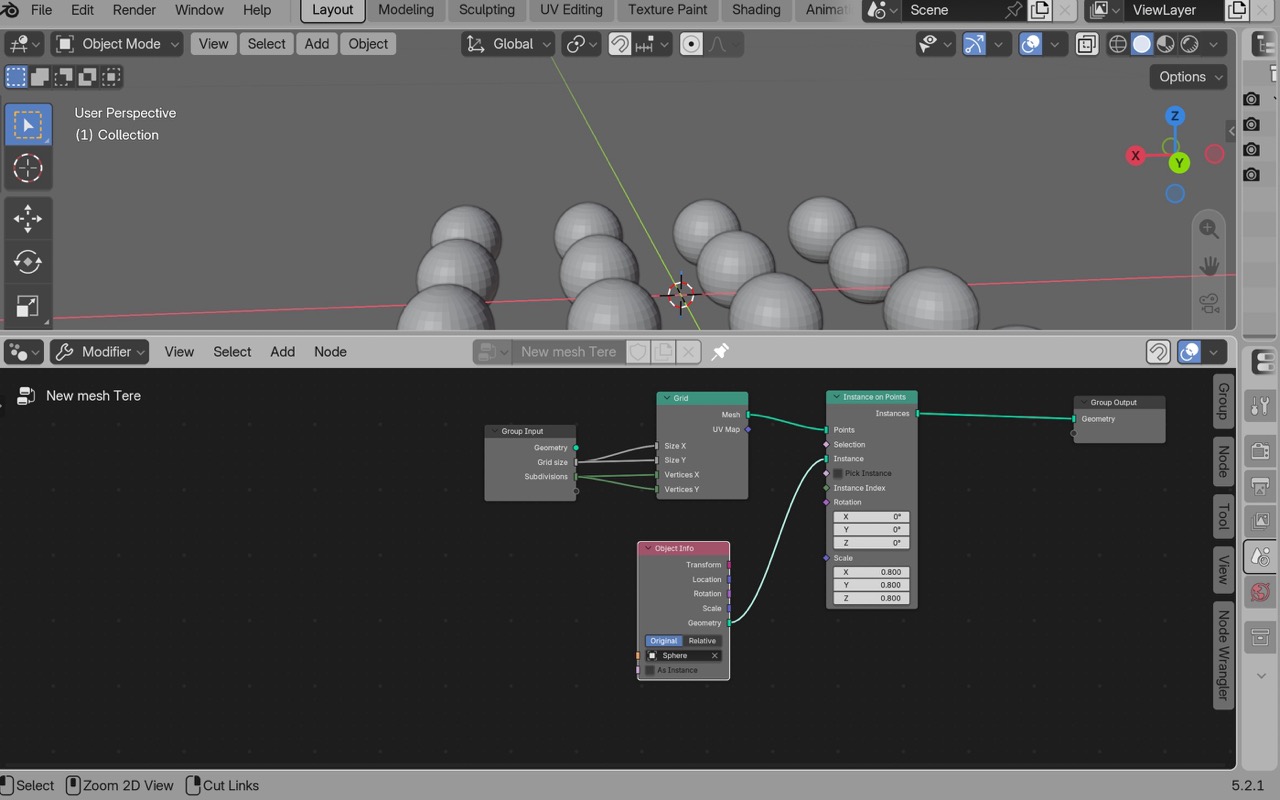
Image source: Tere de León
- A grid with noise texture and cubes as "instances" on points 5
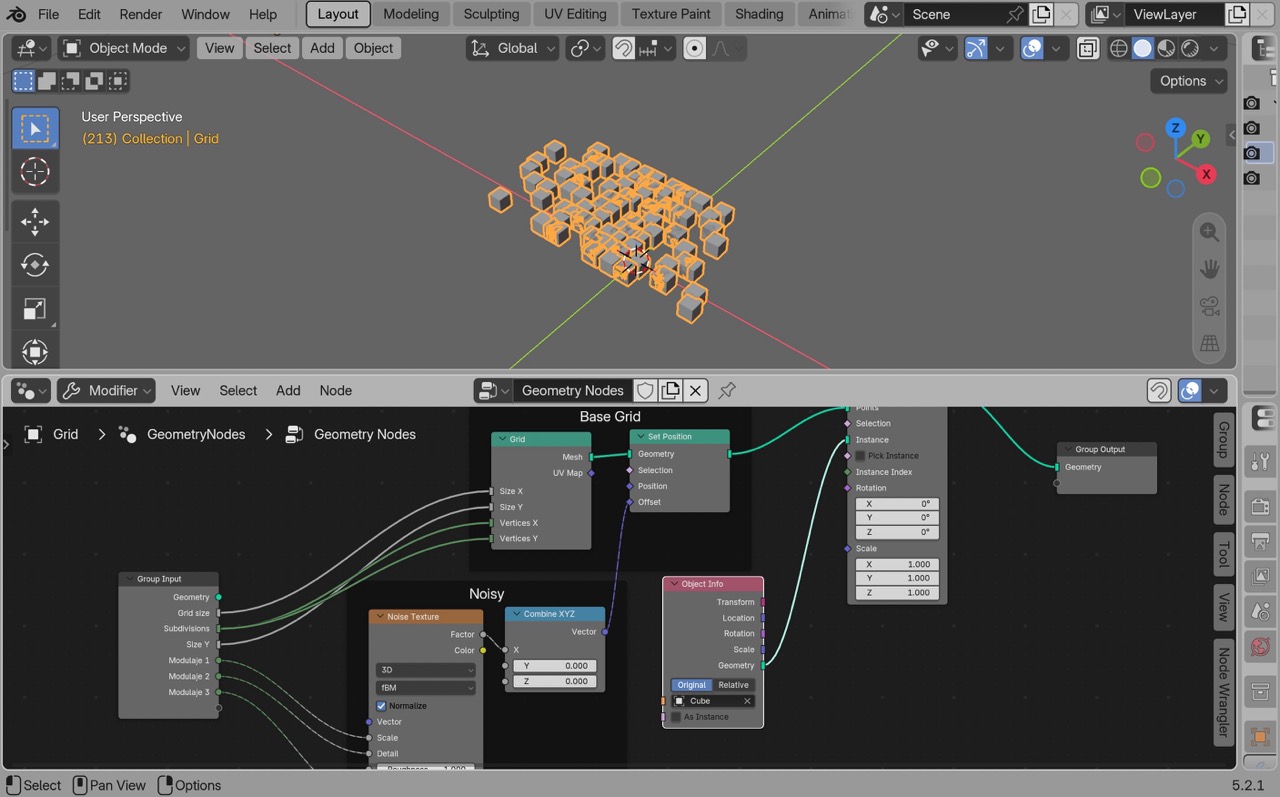
Image source: Tere de León
4.2 Step 2 Exporting and formating in Multimaker
- Software: Ultimaker
-
Specs:
- Infill density: 0
- Quality: Standard
- Wall thikness: 0.8mm
- Wall line count: 3mm
- Outer wall wipe distance: 0.4mm
- Outer wall inset: 0.4mm
- Print speed: 60mm/s
- Travel speed: 150mm/s
-
Post processing for pause:
- Pause at layer 10
- Method BQ (M25)
- Retraction speed 25
- Extrude speed: 3.33
4.3 Step 3 Printing
Here you can see the 3D printer ENDER doing its thing very smoothly. The parameters were:
- Nozzle Max Temperature= 209°C
- Bed Temperature: 70°C
- Filament: 3D Market PLA 1.75mm.
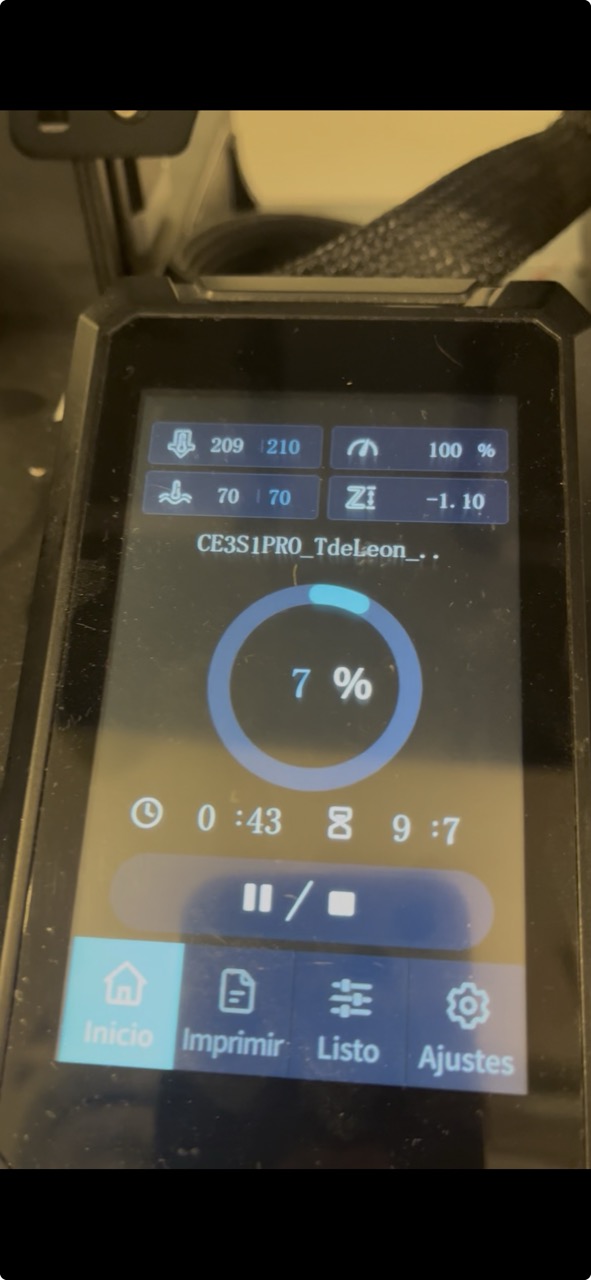
Image source: Tere de León
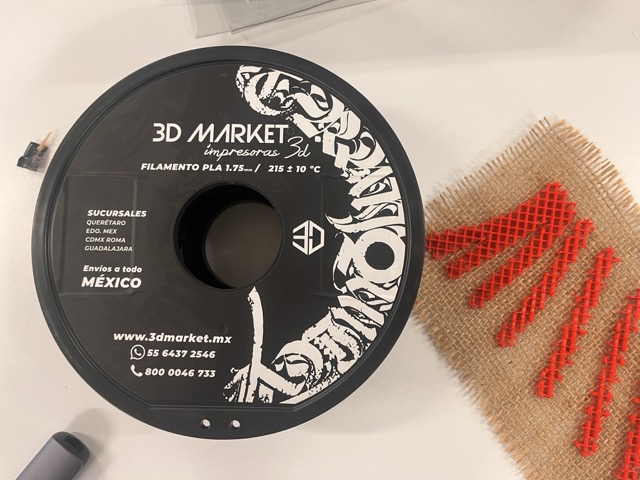
Image source: Tere de León
Printing pause where I introduce the fabric: black plastic mesh.
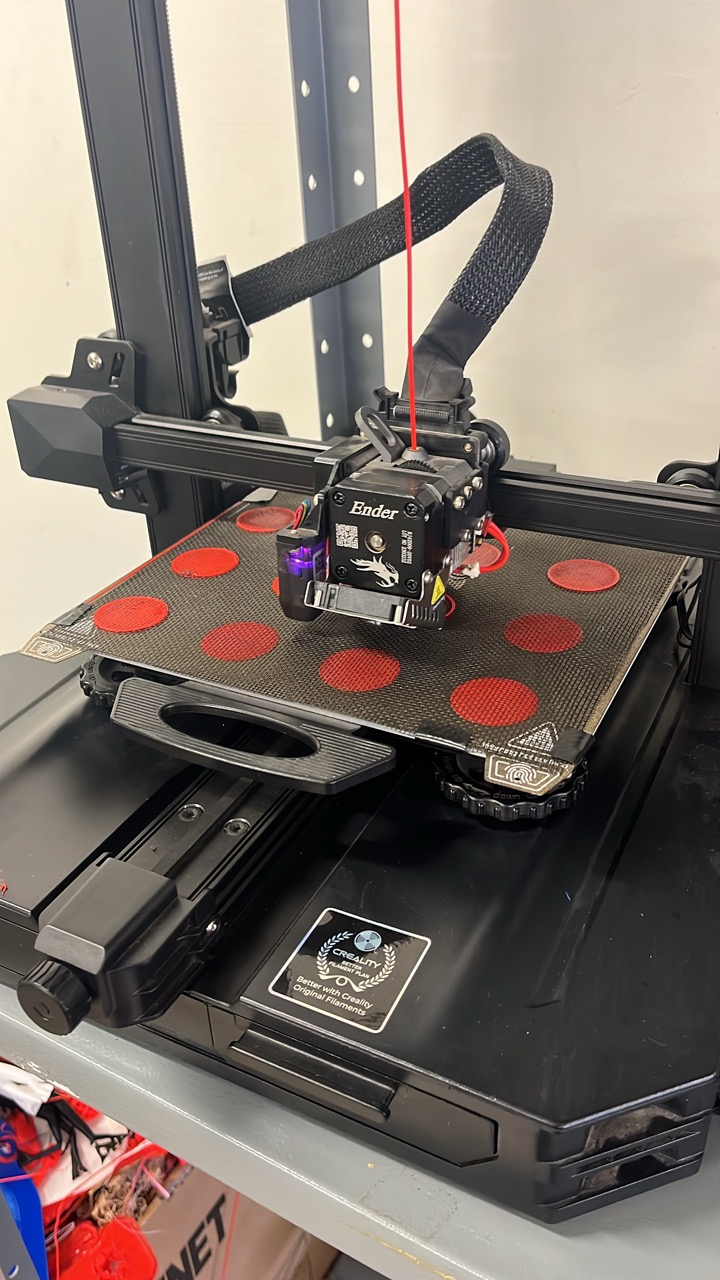
Image source: Tere de León
...
5. Results
I succesfully printed two models on fabric using Blender and a parametric design following Rico´s tutorials. The first one was on a regular mesh and the second one I accomplished it using noise in the programming.
Spheres on Regular Grid, my favourite and worth to explore in the future as a lamp shade.
Cubes on Grid with noise:
6. Weekly reflection & critical thinking
- It was my very first time using Geometry Nodes and I would like to keep exploring.
- It was also my very first time using a 3D printer; I did some tutorials and I did get some guidance from the IDIT team.
- I think digital couture opens a great opportunity for interior design and can help making unique pieces.
- I really don´t like the PLA look or texture; I would like to try printing with biomaterials.
- Related to my final project, I will like to develop some models that can be used for these types of lampshade (with a biomaterial ideally).
Image source: Collage by Tere de León. Images from Pinterest
7. Fabrication files & References
-
Thanhauser, S.; (2022). Worn: a people´s history of clothing. First Vintage Books Edition 2023. First edition. New york. ↩↩
-
Hayes, C. (2026,October 24). A Fascinating Journey through the History of Lampshades. https://www.elegancelamps.com/blog/history-of-lampshades?shem=aimgspe
↩ -
Rico Kanthanthan. (2026). Blender and nodes tutorial. https://vimeo.com/1237990230/9451416981
↩