Soft robotics
1. Objective
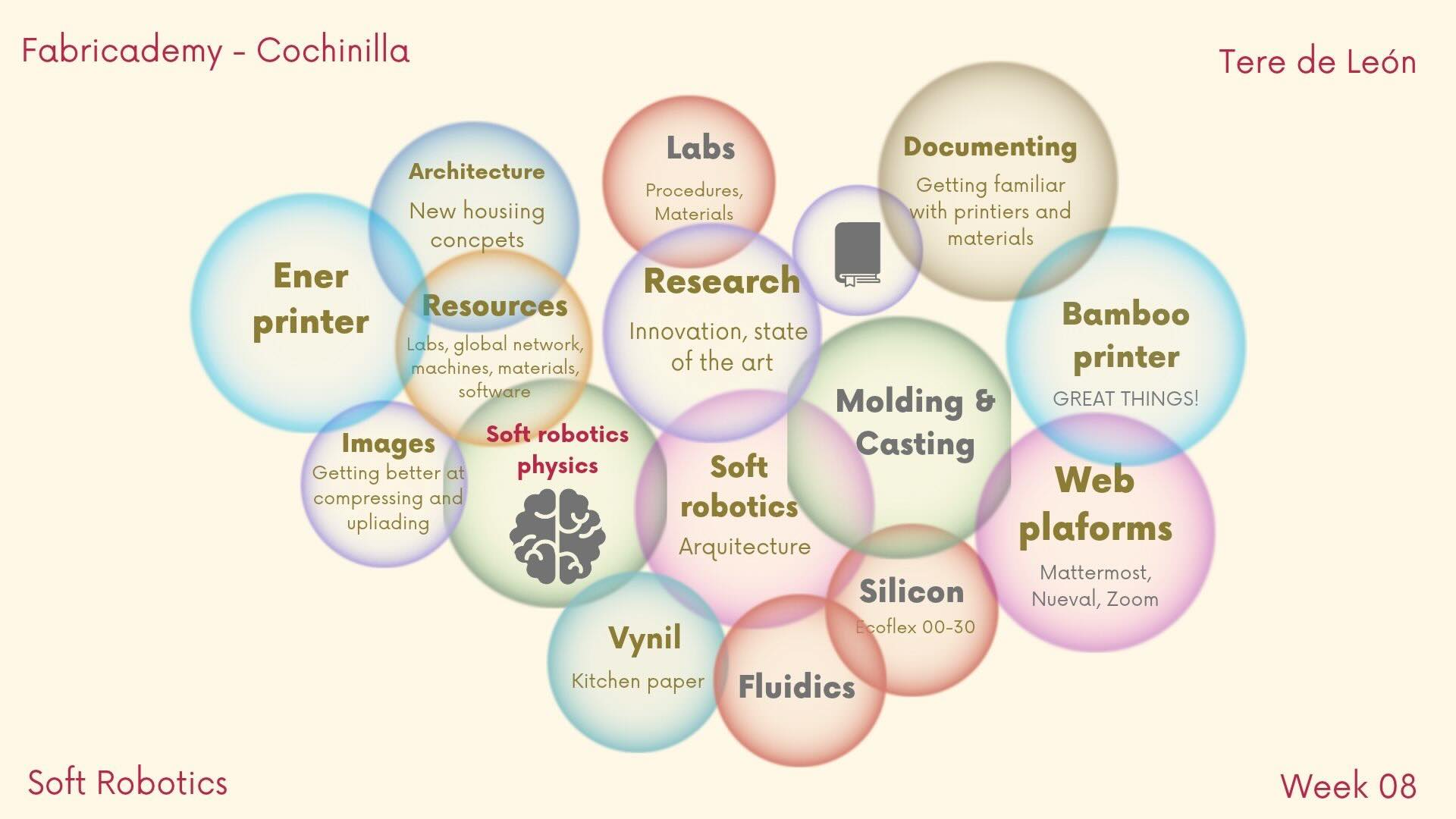
Image source: Tere de León
2. References, research & inspiration
I looked into soft robotics in interior design / architecture to make this week more relevant to my final project: LAMPS.
Here some findings:
This project was developed by Daniel Beltran, Salma Mahmood, and Michelle Ghanime, three New Jersey Institute of Technology students studying architecture and design. Their wall system has the purpose to control heat transfer through exterior architectural envelopes by using air for the actuation mechanism. 1.
Soft Robotics Toolkit initiave provides detail about the fabrication of this wall: https://softroboticstoolkit.com/soft-barrier/fabrication
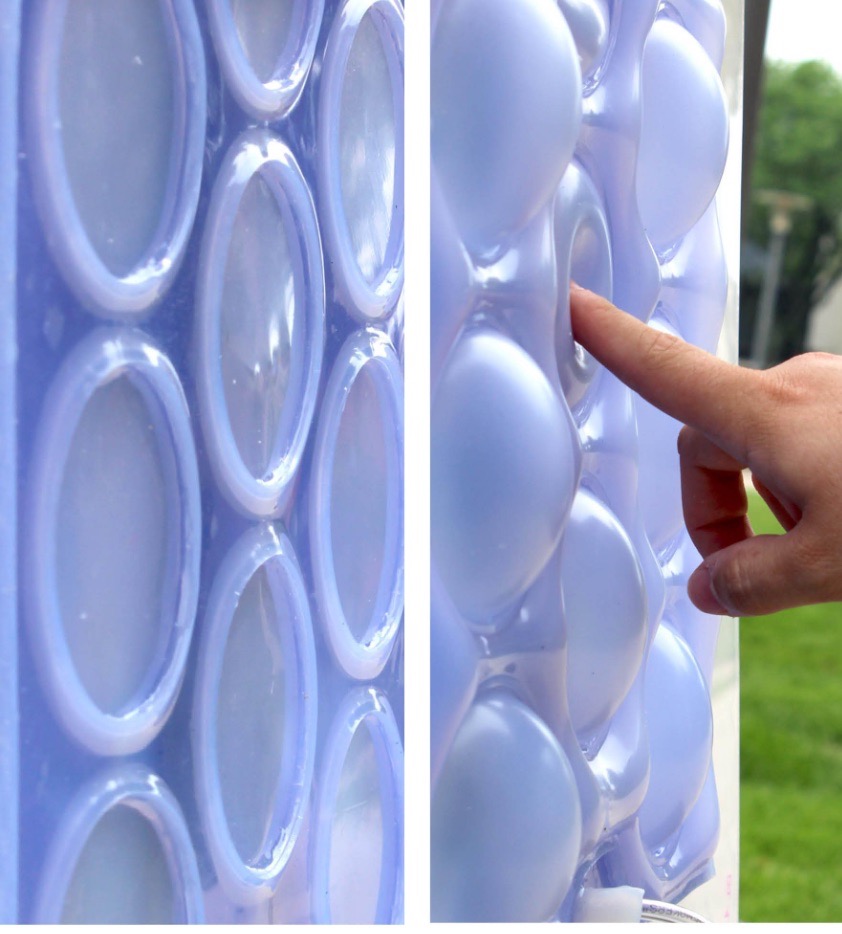
Image source: Soft Robotics Toolkit
I found this amazing lamp which made me wonder if the petals could be inflatable pieces that would open with a fluidic mechanism:
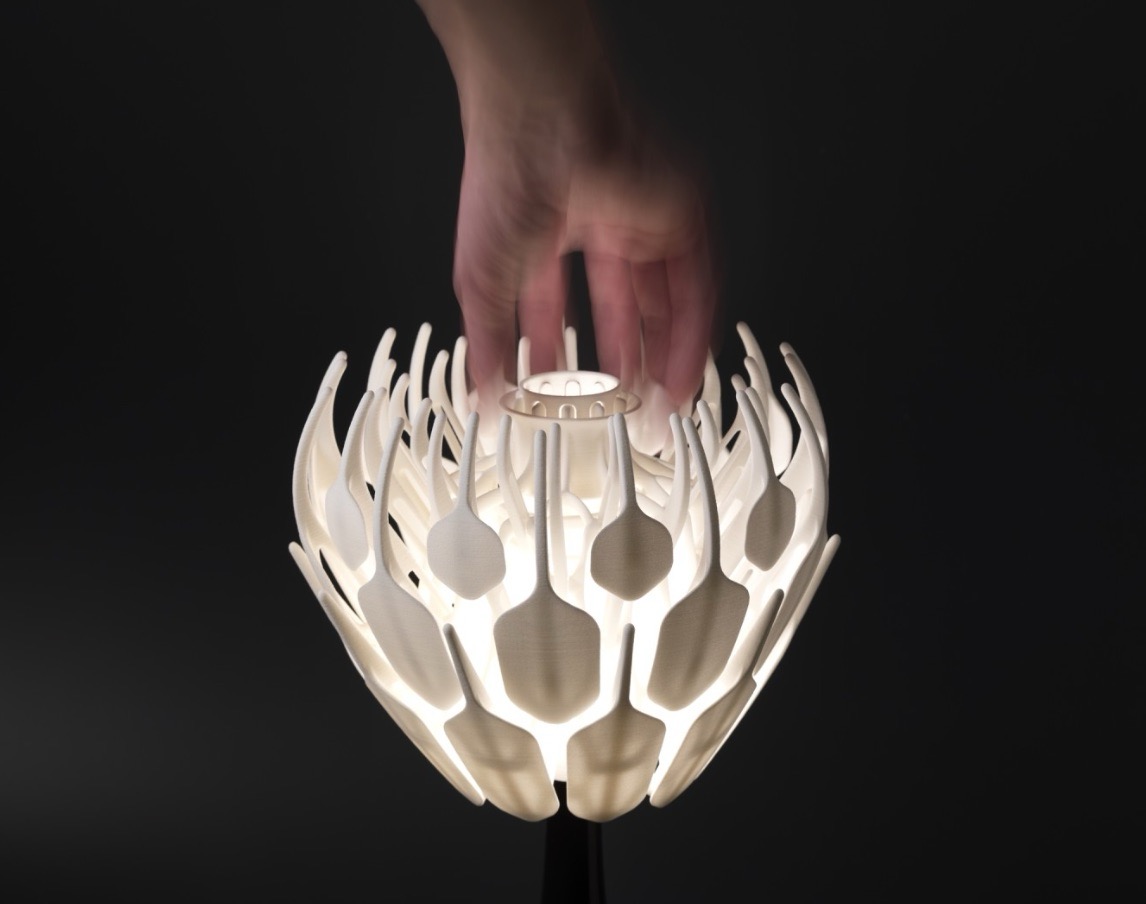
Image source: Bloom by Patrickjouin
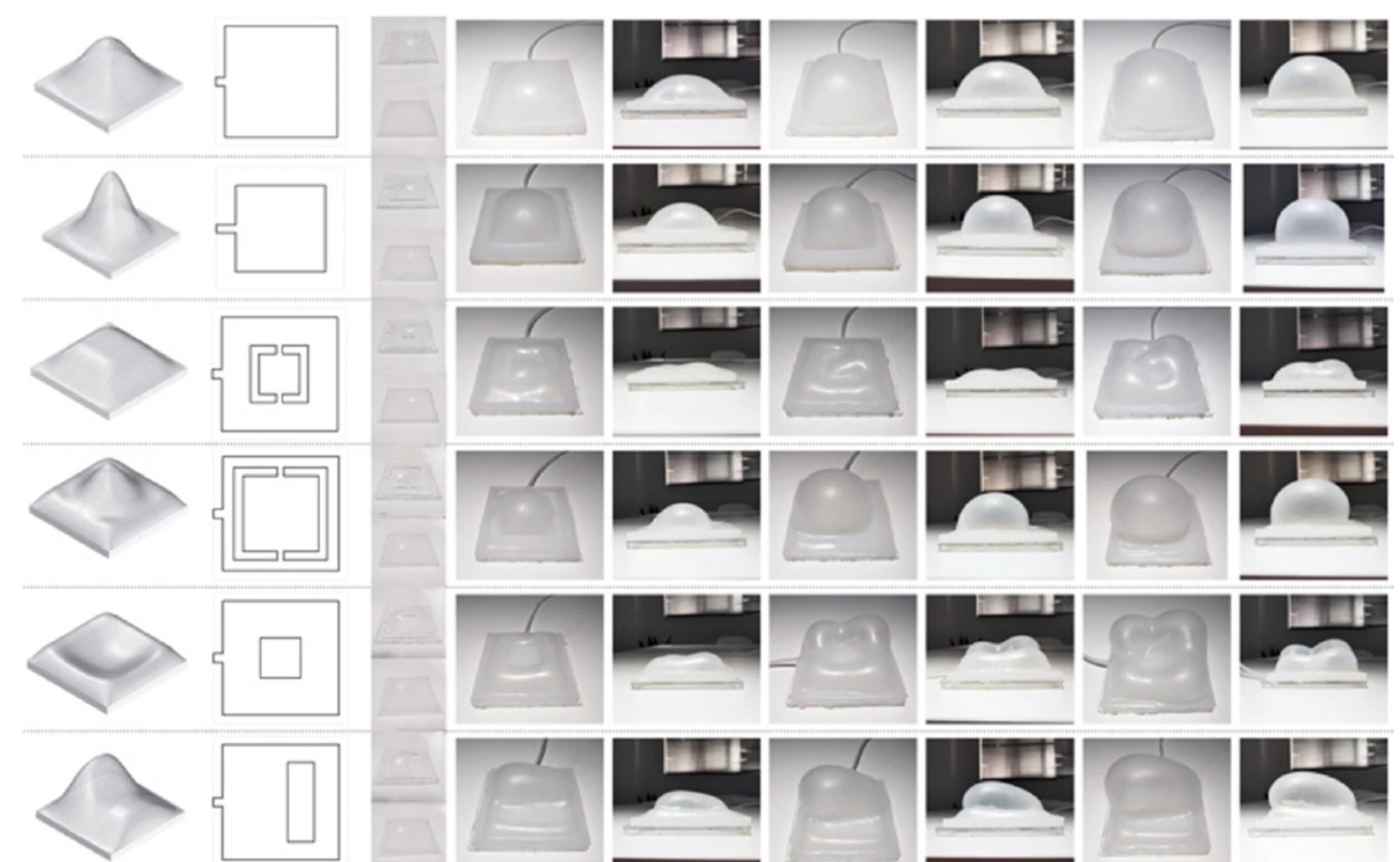
I found an extremely interesting concept developed in the Nanchang University in China regarding deformed architecture using cybernetic robotics where the idea is to build homes with soft modules that can adapt to particular life situations: responsive or soft architecture .
The following image shows the concept idea:
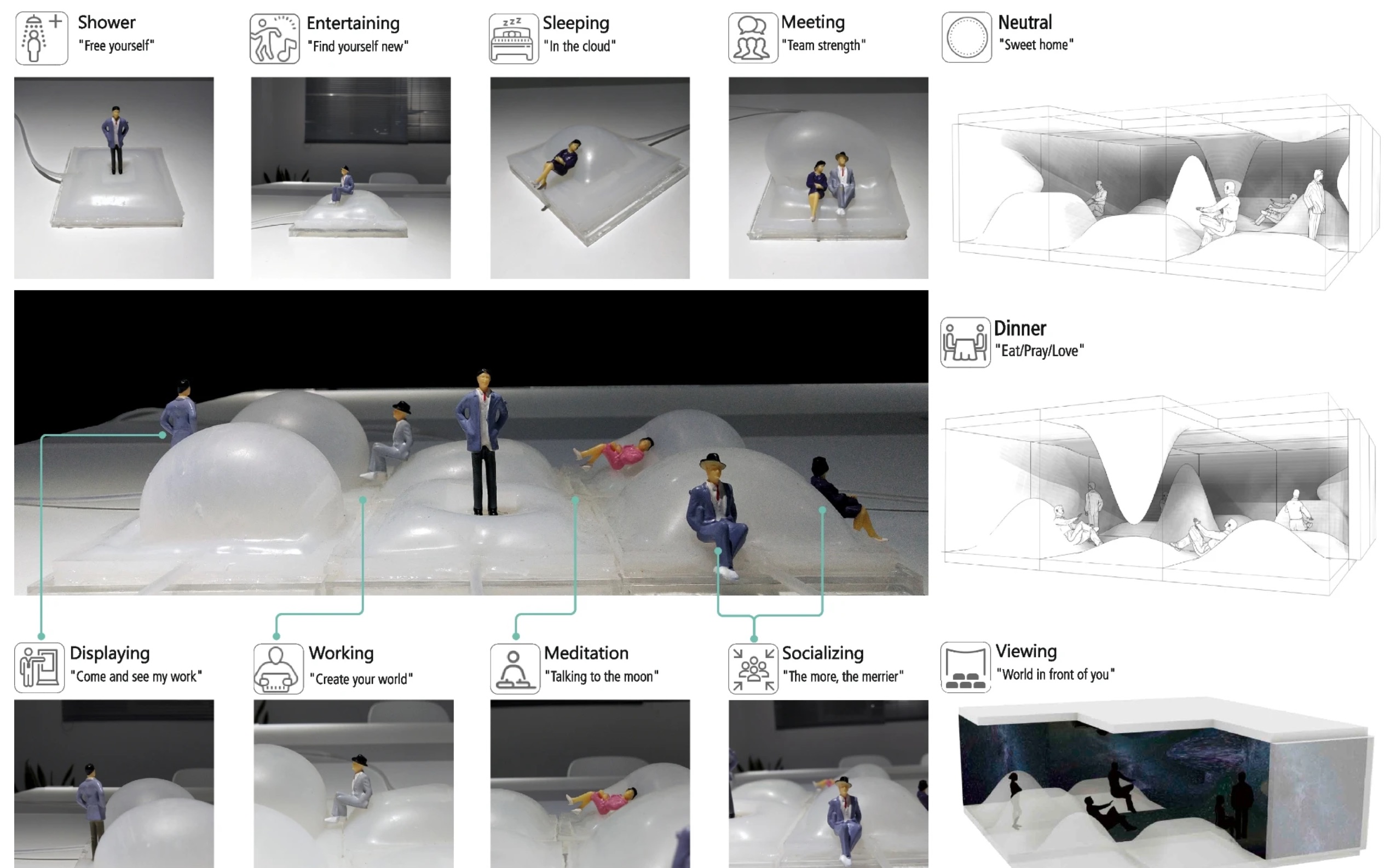
Adriana Cabrera´s webinar at Fabricademy´s 10th edition gave me the concepts and methodology to think about the manufacturing of these systems. And also I found in Adriana´s website a good guide for the week.
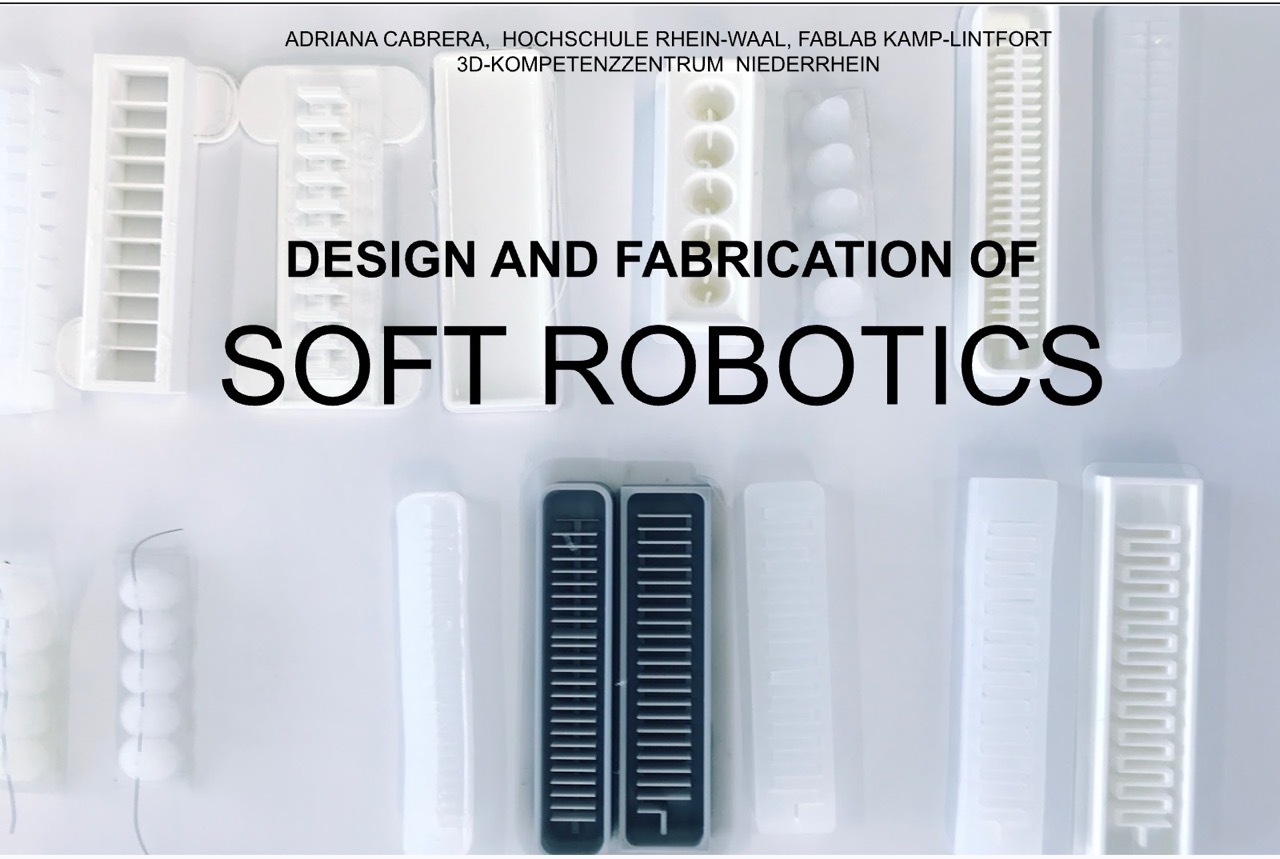
Image source: Adriana Cabrera website
Some important theory:
These robotics are based on the PneuNet Actuators principle where these actuators are composed of chambers connected by a canal. To enhance the compliance of the structure, the chambers are separated by gaps of length. A silicone base of thickness goes beneath to provide resistant to deformation than the chambers and the canal 3.
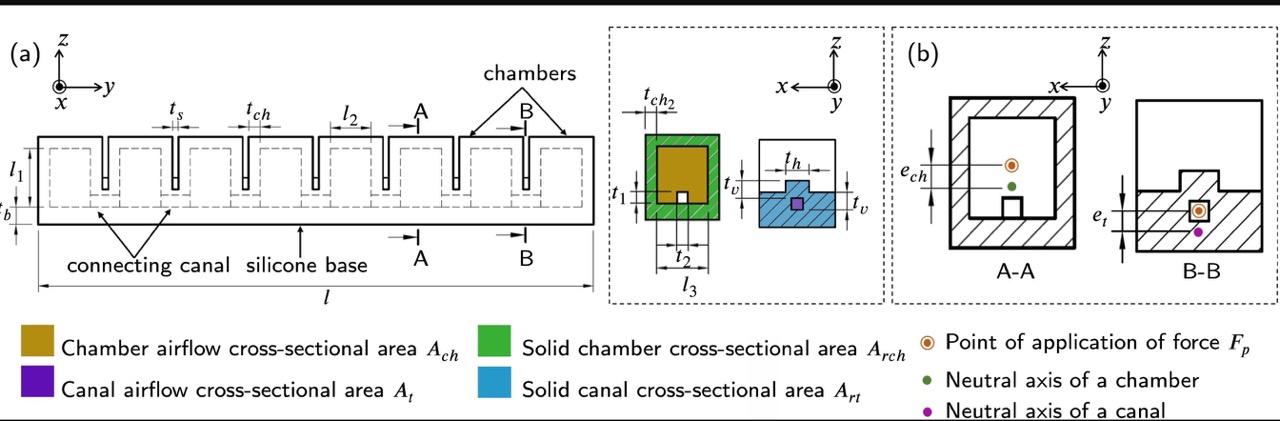
Image source: Zeinab A, et.al., 2025 3
So, linking these ideas, I looked for some specific examples to inspire me using Gemini AI and came to this concept that really excites me:
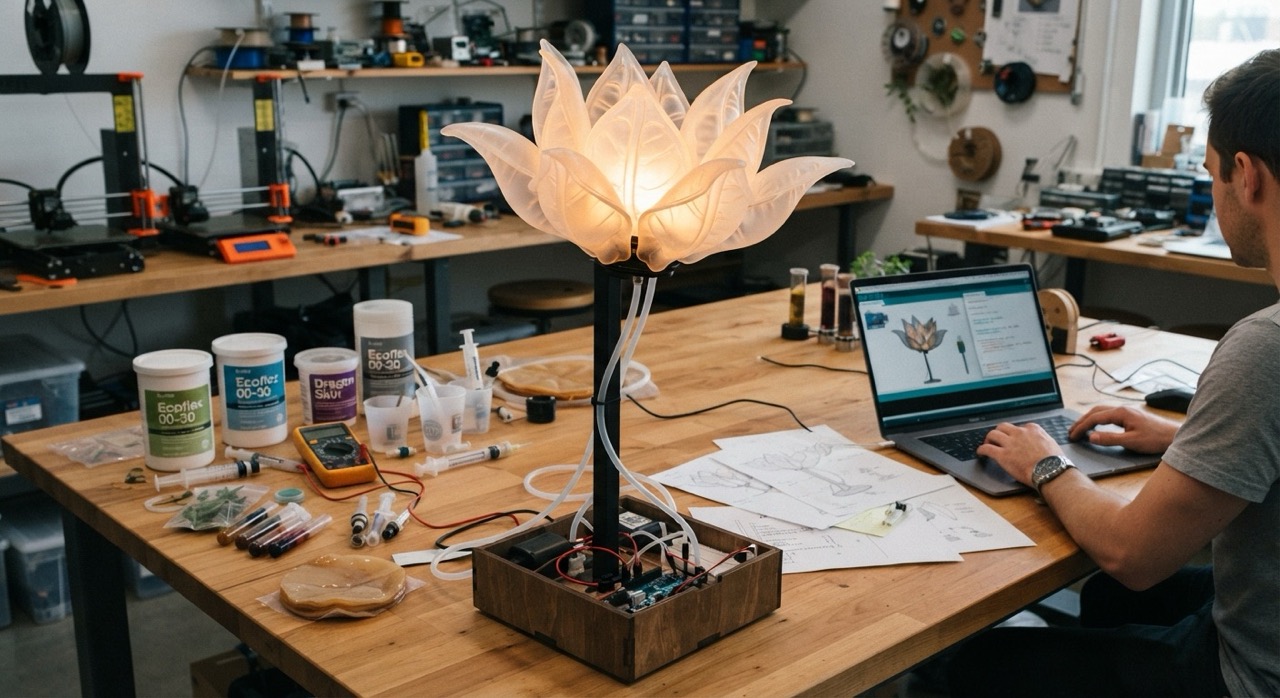
Image source: Gemini AI after several iterations regarding "soft robotics incorporated in functional roon-level elements like a lamp"
3. Tools
- Laser cut XTool
- Thermal Vynil
- Kitchen paper
- Thermal press
- Inkscape
- Ecoflex 00-30
- Piccolage
- Blender
- Bamboo 3D printer
- Scissors and air tube with bomb
- Canva
4. Process and workflow
4.1 Groupal practice
We started a groupal activity in IDIT by making an inflatable with thermo transfer vinyl.
Step 1
I designed a model for a star using Inkscape with random figures inside to make the channels. This was not a PneuNet system; both layers of the star were soft. I draw a channel to insert the tube for the input of the air.
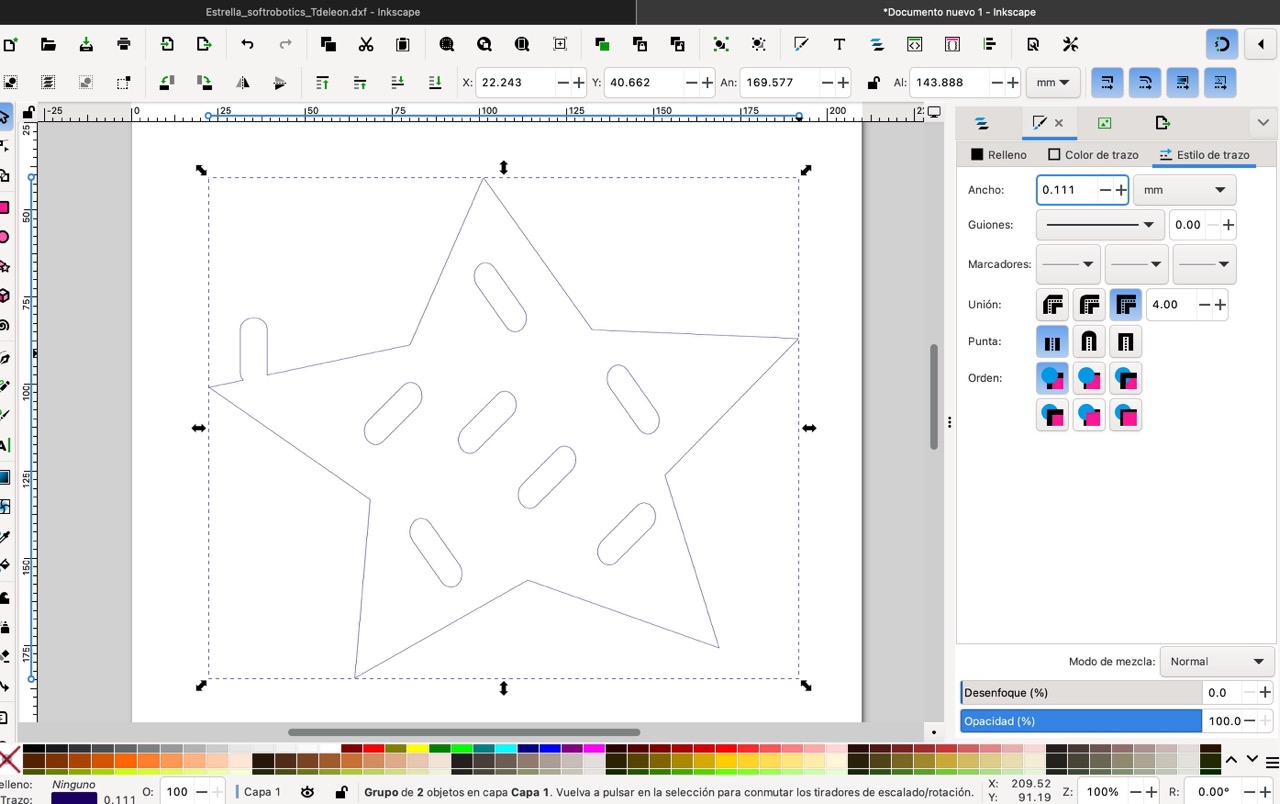
Image source: Tere de León, Computer screenshot
See file:
Step 2
I used the laser cut (MARCA) to cut the star in thermal Vynil and the kitchen paper to create the channels for the fluid (air).
Parameters:
Step 3
I used the thermal bed to press the star with the kitchen paper in between.
Parameters:
Step 5
I introduced the pipe, blew and watched how it inflated successfully.
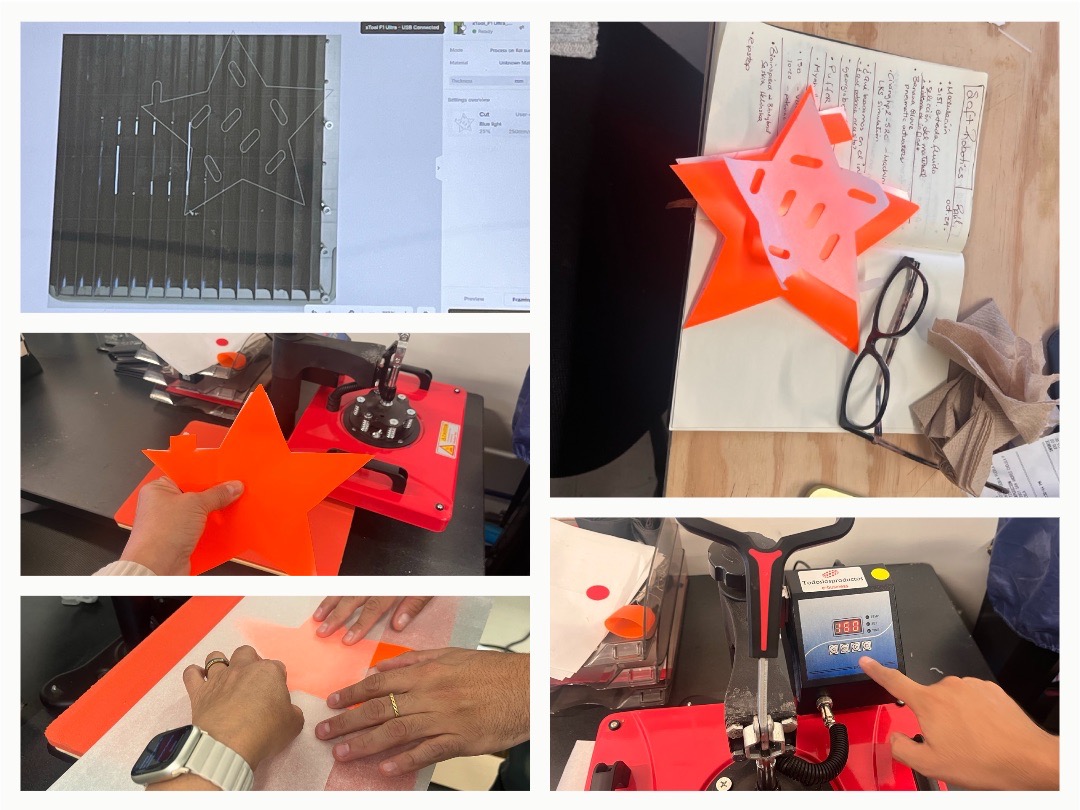
Image source: Tere de León,
4.2 Personal practice (with the assisstance Gemini and validaton from my local evaluator)
Inspiration:
Image source: Tere de León using Gemini
With the help of Gemini I created the image of one leave with the idea of the fluidic channel to be able to start working on the 3D model on Blender:

Image source: Tere de León using Ghat GPT Plus,
So I isollated the leave and imported it into Blender using "Add Image as mesh plane" in order to develop a mold to 3D print.

Image source: Tere de León using Ghat GPT Plus,
With the use of Chat GPT I generated the image without background to start manipulating:

Image source: Tere de León using Ghat GPT Plus,
Editing the image for a 3D model:
2 subdivisions Vertices: 164,000 Edges: 327,250 Faces: 163,216 Triangles: 326,432

Image source: Tere de León using Blender,
I believe this sketch will not work for the 3D model because of the many vertices and the uncertainty of not being able to connect them or seal them. So I did it again using Inkscape to be able to control the drawing with what for me was the essential:
- the contourn of the leave
- the main vein
- secondary and terciary veins
All connected to allow the air to go through.
With the help of Chat GPT Plus, I made my image in Inkscape, saved an .svg file to import in Blender:

Image source: Tere de León, Screenshot 3
With the help of Chat GPT Plus, I ended up with this tutorial to be able to make my 3D model in Blender allowing to have the fluid channels to transport the air through the contourn of the leave and primary and secondary veins:

Image source: Tere de León with the use of Chat GTP Plus 3
I decided to try and do it in paper first at home (I was sick this week) with not good results. I used thermal nylon for textiles, my home iron and kitchen paper.

Image source: Tere de León
My assumptions for it not working are:
- the channel was too small
- I didn´t use the right kitchen paper (except i was able to isolate the tube channel).
- Maybe a need a pump, my lungs are not good enough :)
BUT, it helped me doing this before doing the 3D printing mold because now I know I need to make sure the leaf is big enough and the channels big enough to make sure the aire transportation.
Monday the 9th in the lab I was able to do the laser/scissors/hot plate twice with two different types of thermal vynil paper and the right kitchen paper:
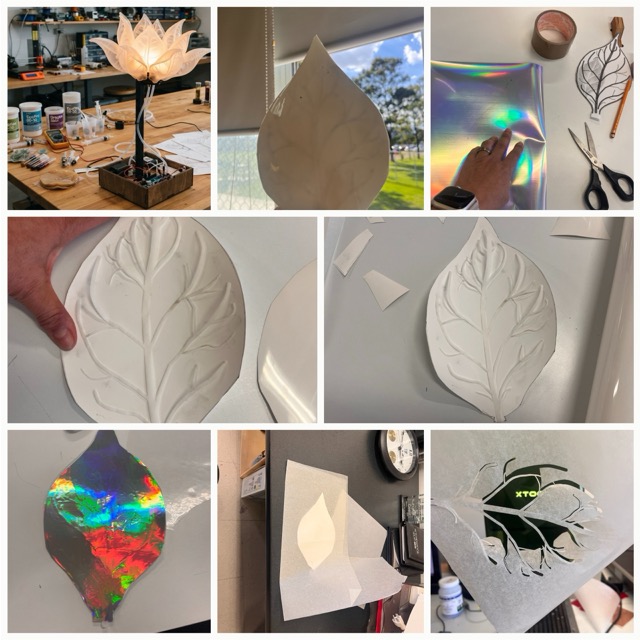
Image source: Tere de León
The first image shows my vision (image made with Chat GPT Plus) and the translation into reality. Both leaves worked, highlighting I struggled putting the tube in, I need to leave a bigger hole.
To achieve the fluid and organic expansion of a blooming flower, I will use a classic soft robotics architecture called a PneuNet (Pneumatic Network).
Step 1: The Pneumatic Actuators ("Petals")
-
3D Casting
-
I used Inkscape to make the petals.
- Blender for creating the 3D model
- Bamboo printer for 3D printing
-
Ecoflex 00-30 for the silicon mold
Here is an image of the process seen in class:
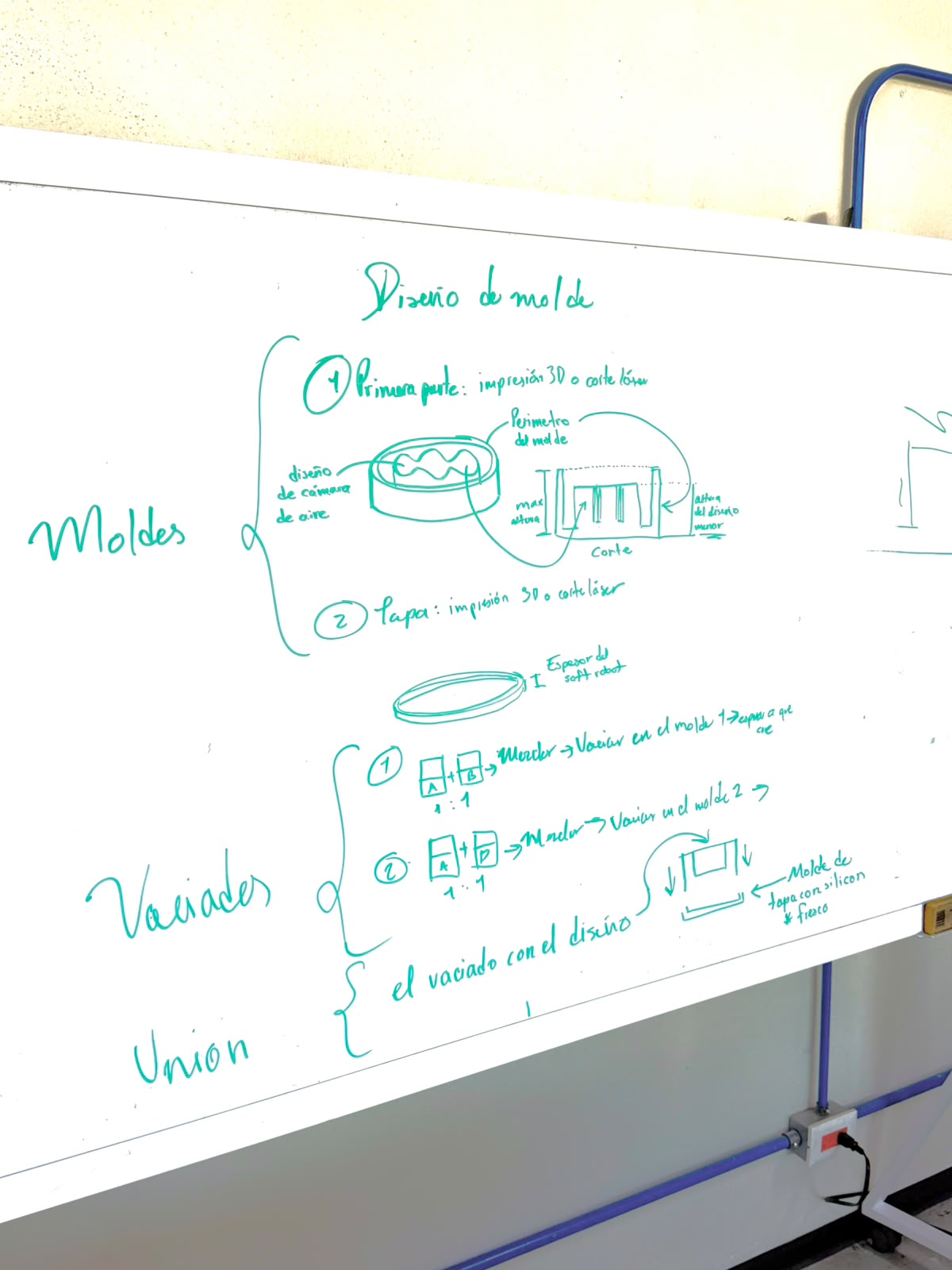
Image source: Zeinab A, et.al., 2025 3
I printed a two-part mold on the IDIT Bamboo 3D printer. The top part generates the hollow, internal air chambers (the folds of the petal) and the bottom part creates a flat base layer. Hopefully this one is flat hoping it will give some resistance to make the leaf bend.
-
Casting: I used Ecoflex 00-30 1:1 ratio and mixed it thoroughly, pour slowly into my printed molds and prevented air bubbles and let it cure for about 20 hours. I will pick it up tomorrow in the lab.
-
The design
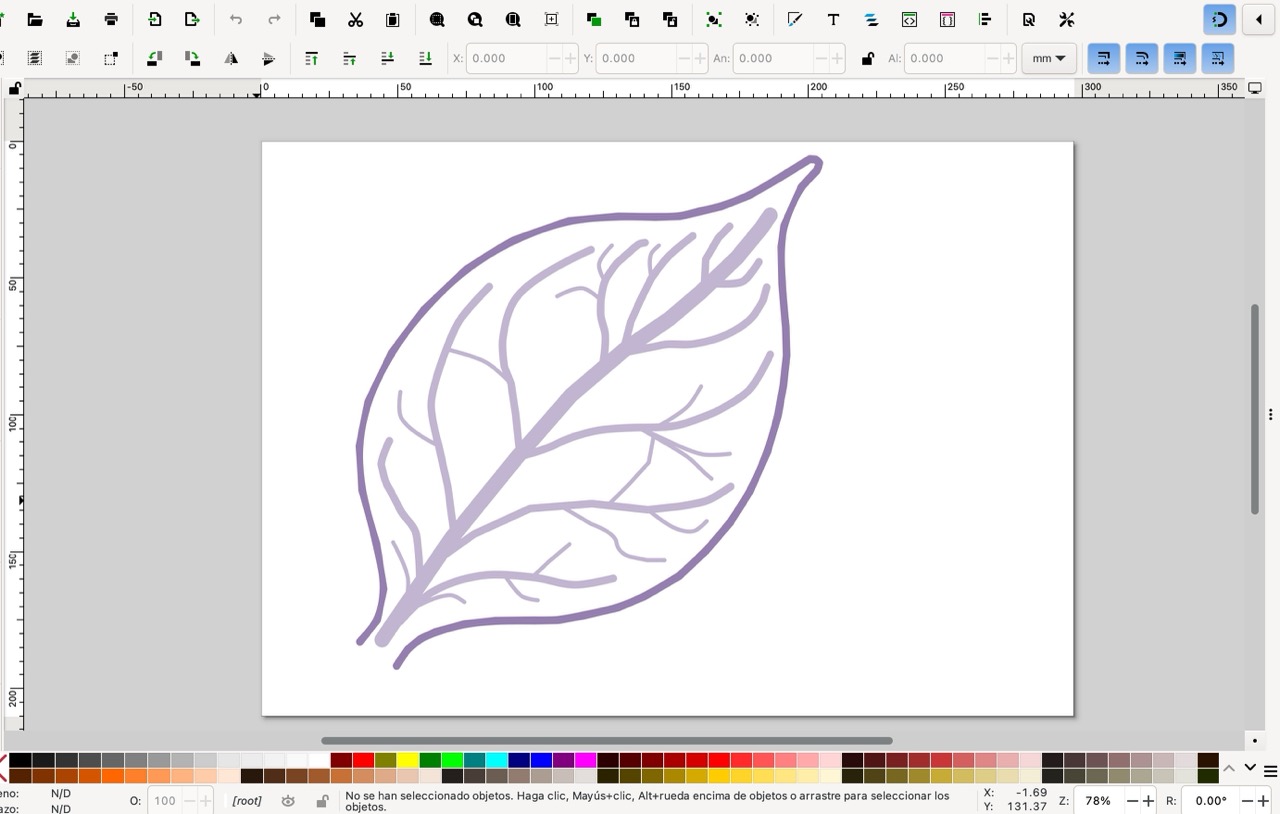
Image source: Tere de León -Inkscape-
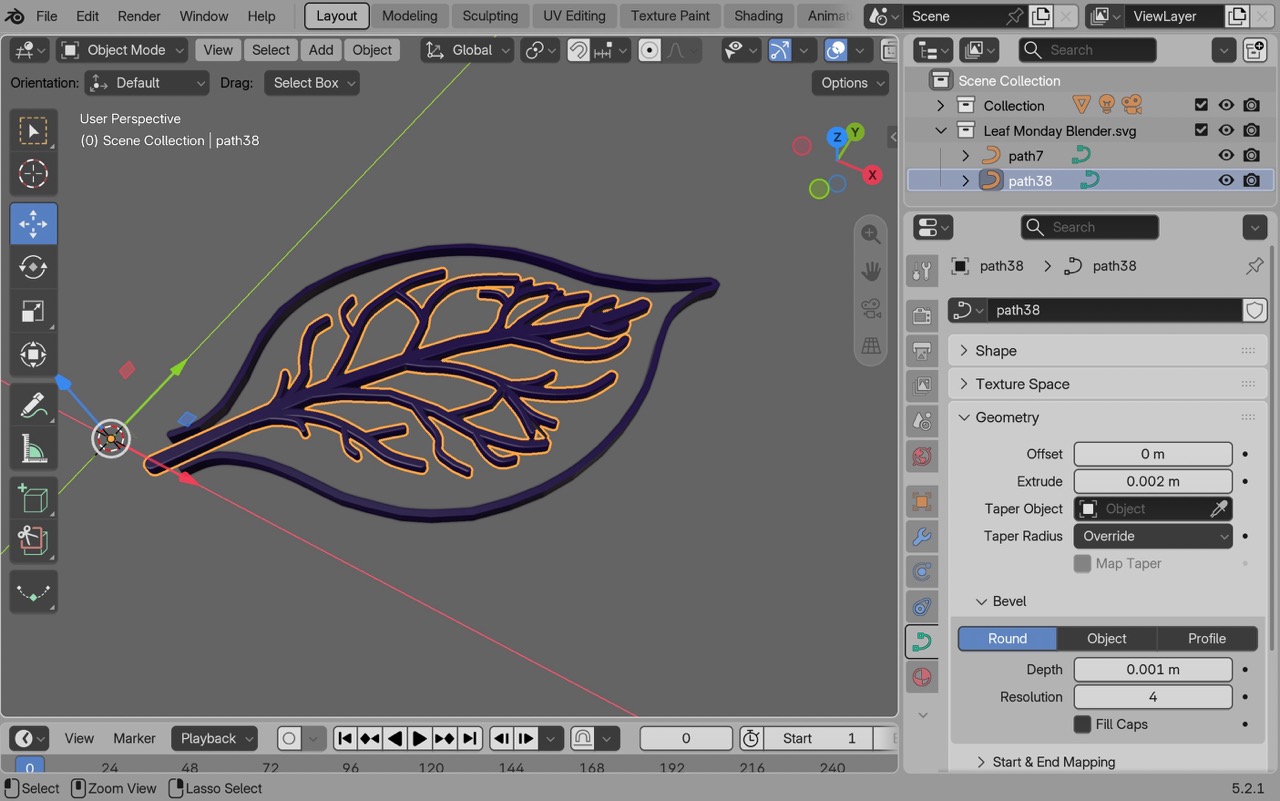
Image source: Tere de León -Blender-
I used Chat GPT´s tutorial to work on these files.
- The Molding
Using the Bamboo SW, I configured the printing and estimated the volume for estimating the silicon use.
Measurements: Total cm3 = 16X9X.5 = 72 Volume: 72cm3 - the volume of the leaves (31cm3) Total volume: 41cm3

Image source: Tere de León -Bamboo settings-
- Printing

Image source: Tere de León -Bamboo printer-
- Casting
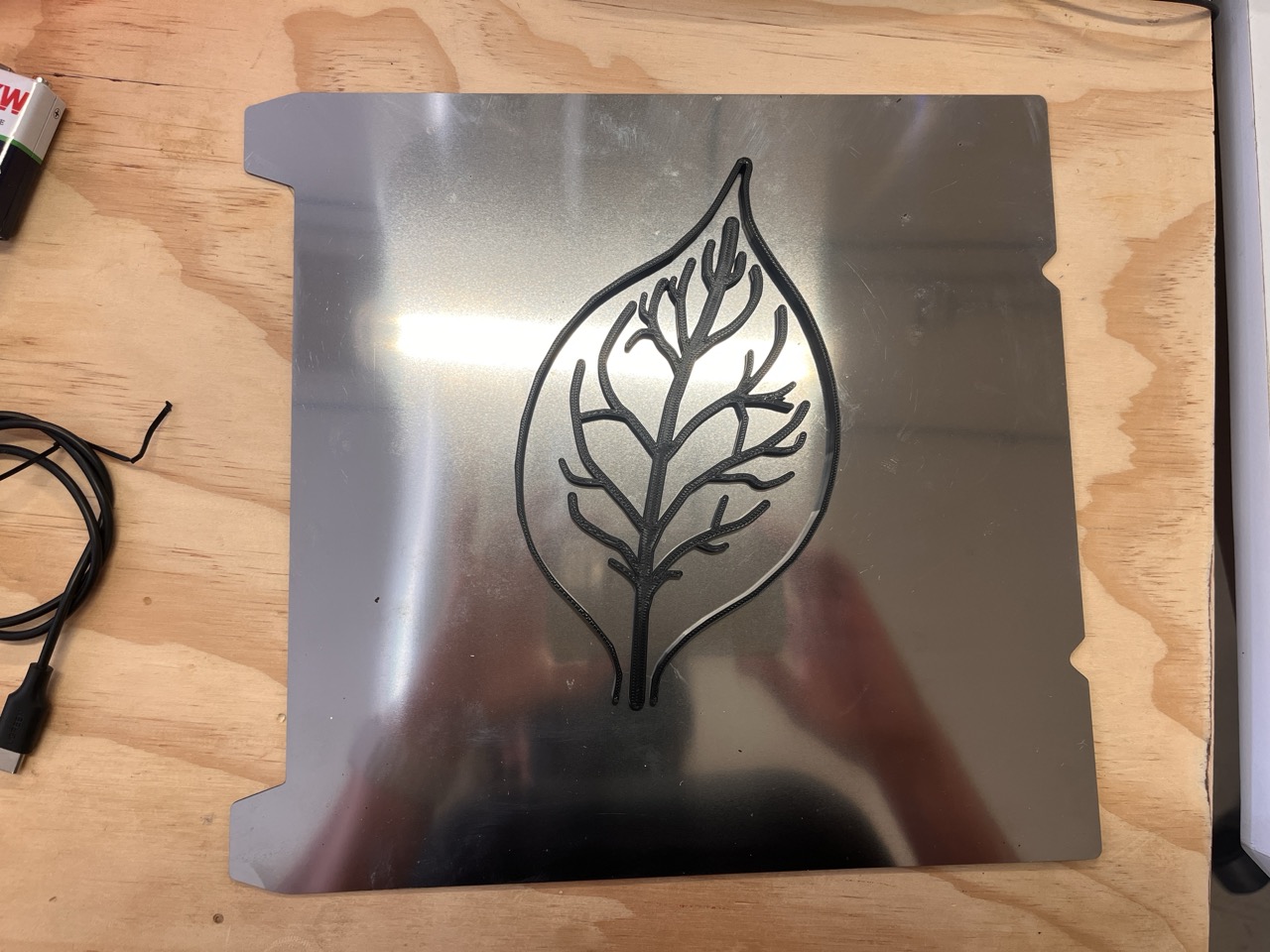
Image source: Tere de León-
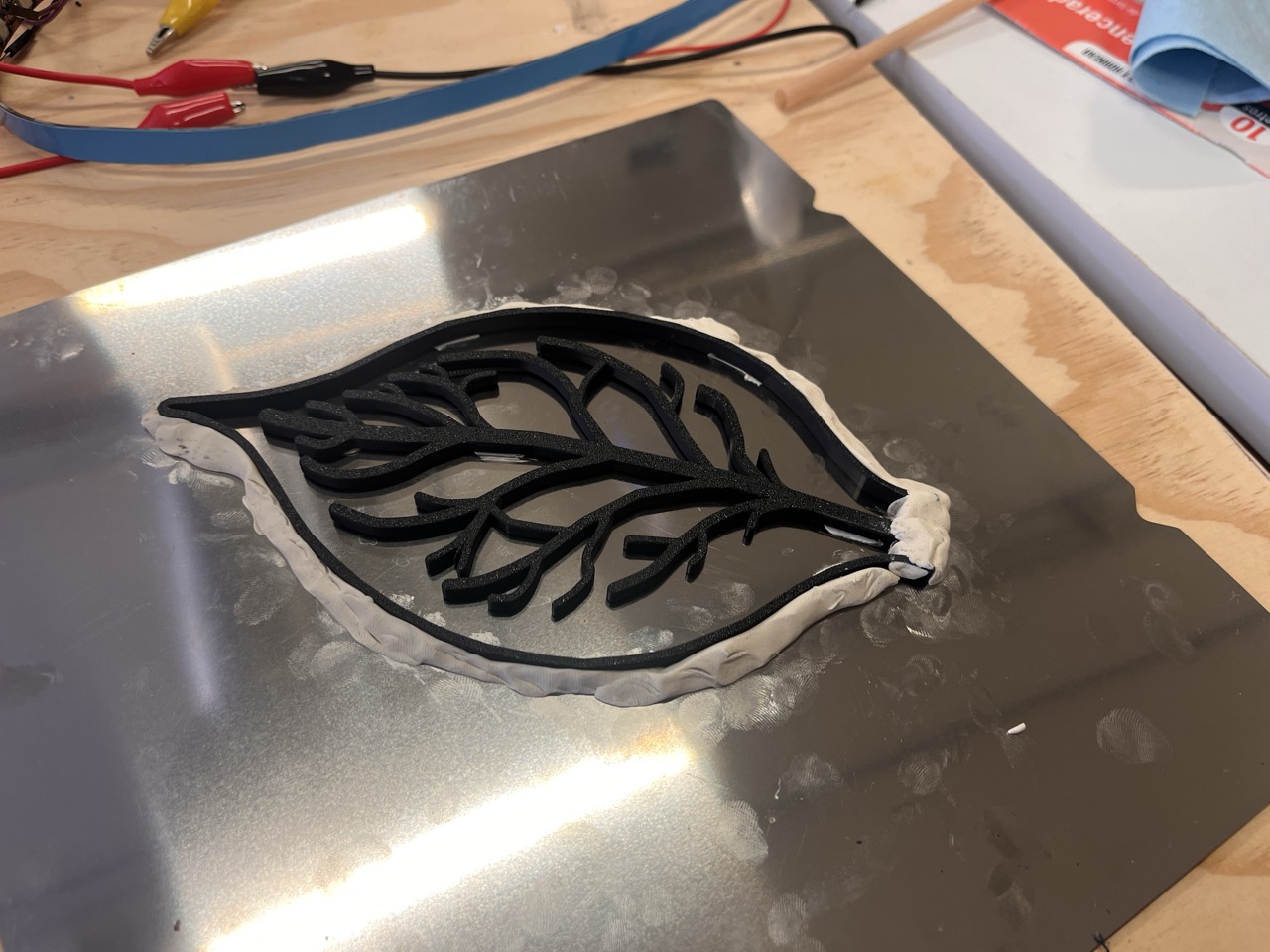
Image source: Tere de León-
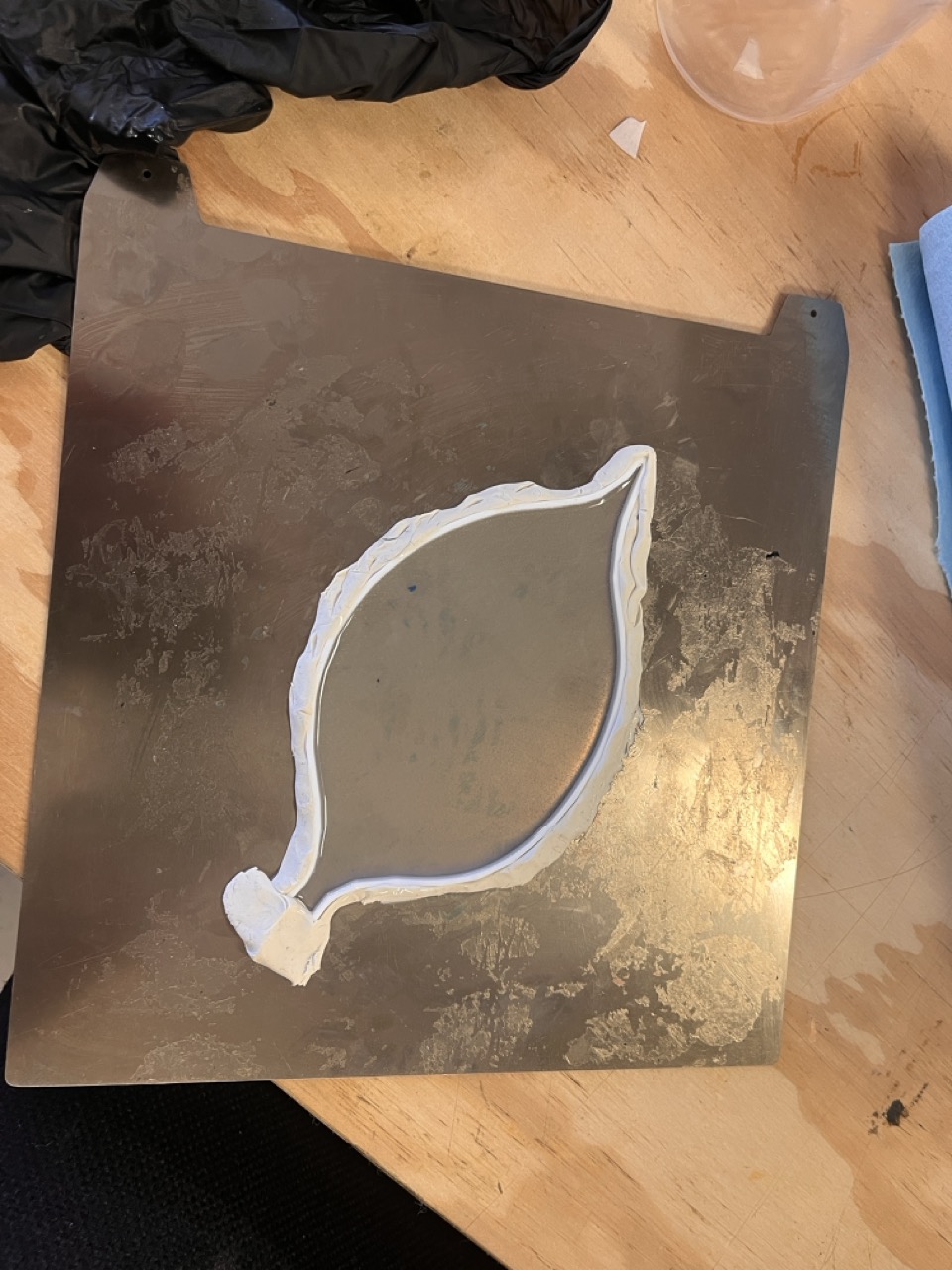
Image source: Tere de León-

Image source: Tere de León-
5. Results
5.1 Laser - Vynil
5.2 3D Soft Robot
To be continued TODAY Tuesday, November the 10th.
Simulation with the use of Chat GPT Plus:

Image source: Tere de León-
6. Weekly reflection & critical thinking
- I am very proud of being able to create the design by myself (help of Chat GPT) and developed the 3D mold in Blender.
- My local tutor Beto helped me with the Boolean process and checking everything was ok. Some details to check.
- I needed a little bit more time to finishing and testing the silicon mold, but considering I got sick, I think I did pretty good.
- I need to make the air input tube BIGGER.
- I am getting better at managing images and videos.
- I personally do not like silicon (plastic wise and the look).
7. Fabrication files & References
-
Harvard John A. Paulson, School of Engineering and Applied Sciences. https://softroboticstoolkit.com/soft-barrier/background ↩
-
Wang, SY.R. Framing responsive architecture with soft robots—the exploratory practice of soft pneumatic robotic architectural system. ARIN 2, 17 (2023). https://doi.org/10.1007/s44223-023-00036-x ↩
-
Zeinab Awada, Yassine Haddab, Marc Gouttefarde, PneuNet actuators design: Trade-offs between deformation, force, and resistance to buckling, Sensors and Actuators A: Physical, Volume 386, 2025, 116307, ISSN 0924-4247, https://doi.org/10.1016/j.sna.2025.116307. ↩↩↩↩↩
-
Files: Leaf Monday Blender.dxf
3DLeafMoldMondayVeins.stl
3DLeafMoldMondayContorno.stl
Leaf Monday Blender
↩