BioGun Builds
References
The Marcus Giorgiu BioGun
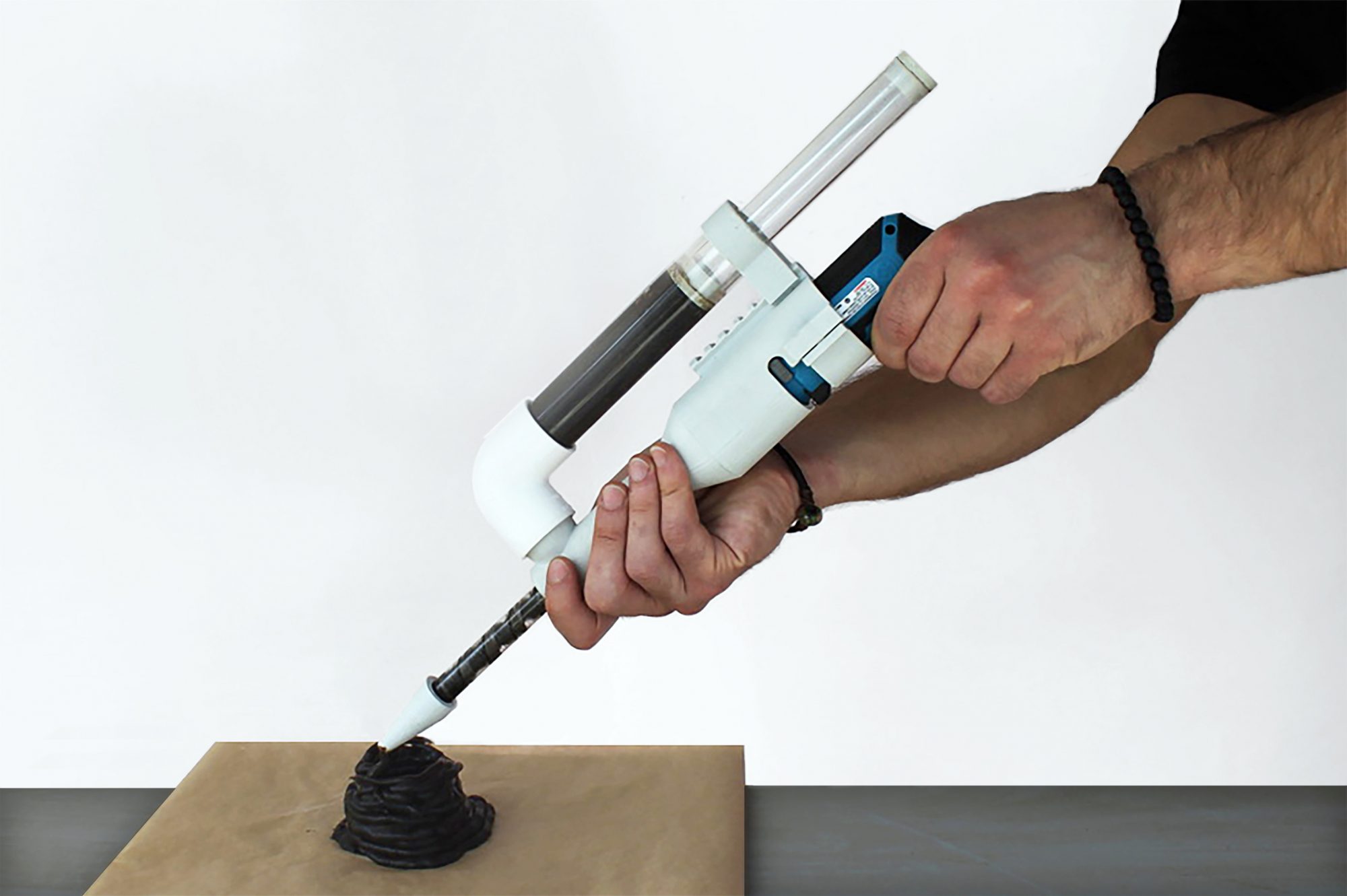 Marcus G - Wikifactory - BioGun
Biogun - A gun for creating and supporting life - Distributed Design Platform
Marcus Giorgiu has developed a Biopaste Extruder Gun powered by an electric screwdriver, which is a rather nifty thing to build.
FabLab Barcelona BioPaste Extruder
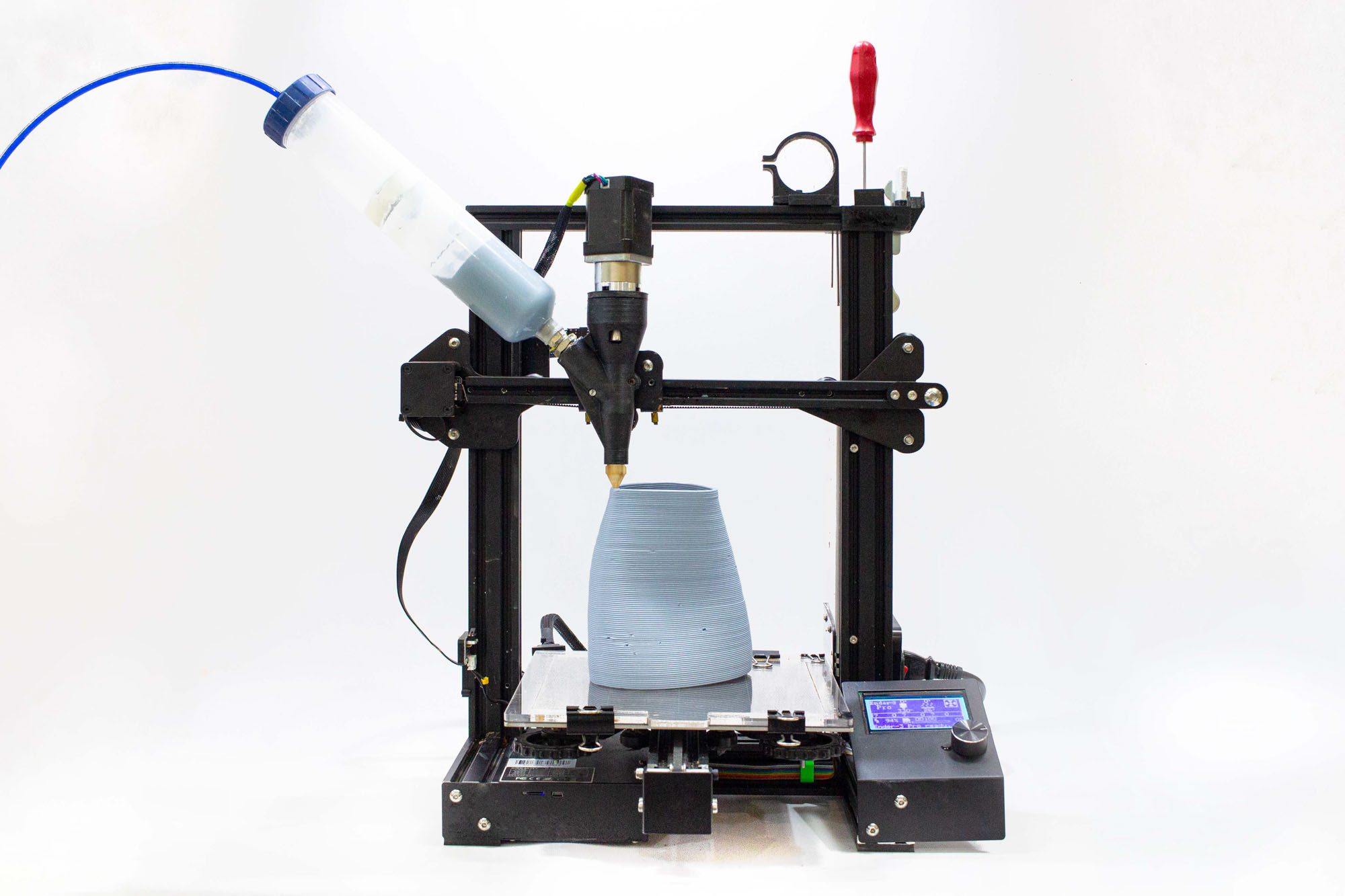 FabLab Barcelona : Paste Extruder
FabLab Barcelona has build a paste extruder that is being used to work with clay and other paste-like materials. The possibilities are vast here.
The complete BOM and other details are available on the repo.
Research and Ideation
A. Biogun
In order to understand how the Biogun works and how I could modify it to work with Biopaste, I downloaded and printed out the parts from the WikiFactory page.
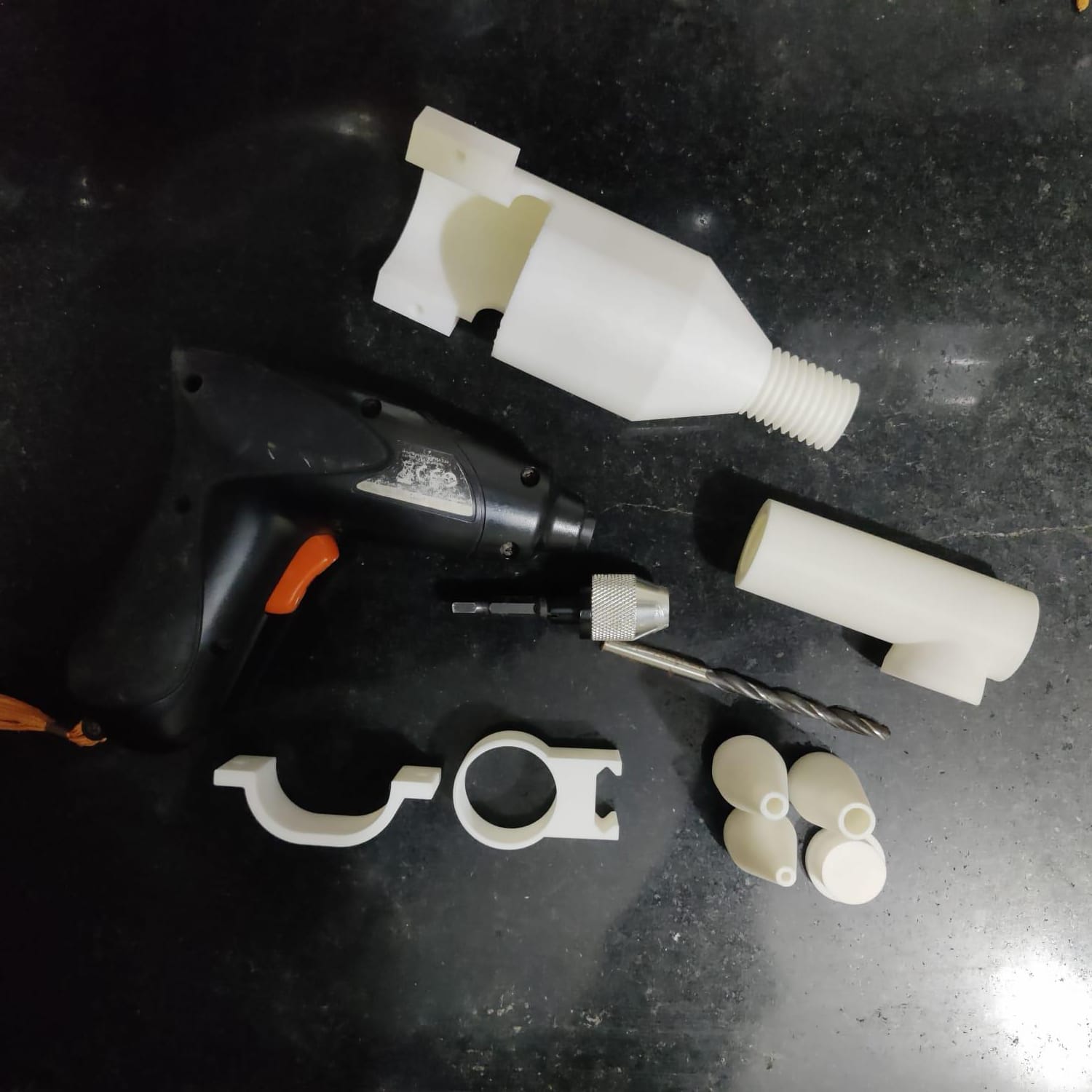
Apart form some 3D printed parts, the biogun uses pipe sections as part of the framework, as hollow cartridges to hold the paste, and as a plunger to push paste forward. It uses an Auger as the screw to push the material out of the nozzle, and an electric screwdriver to run the auger.
I dont have the same electric screwdriver, so I plan on modifying the main body based on the Ikea electric screwdriver, considering it to be more standard and widely available than choosing between various Bosch, Makita, and other models. It is also cheaper, at about Rs 800 a few years ago.
B : Paste Extruder
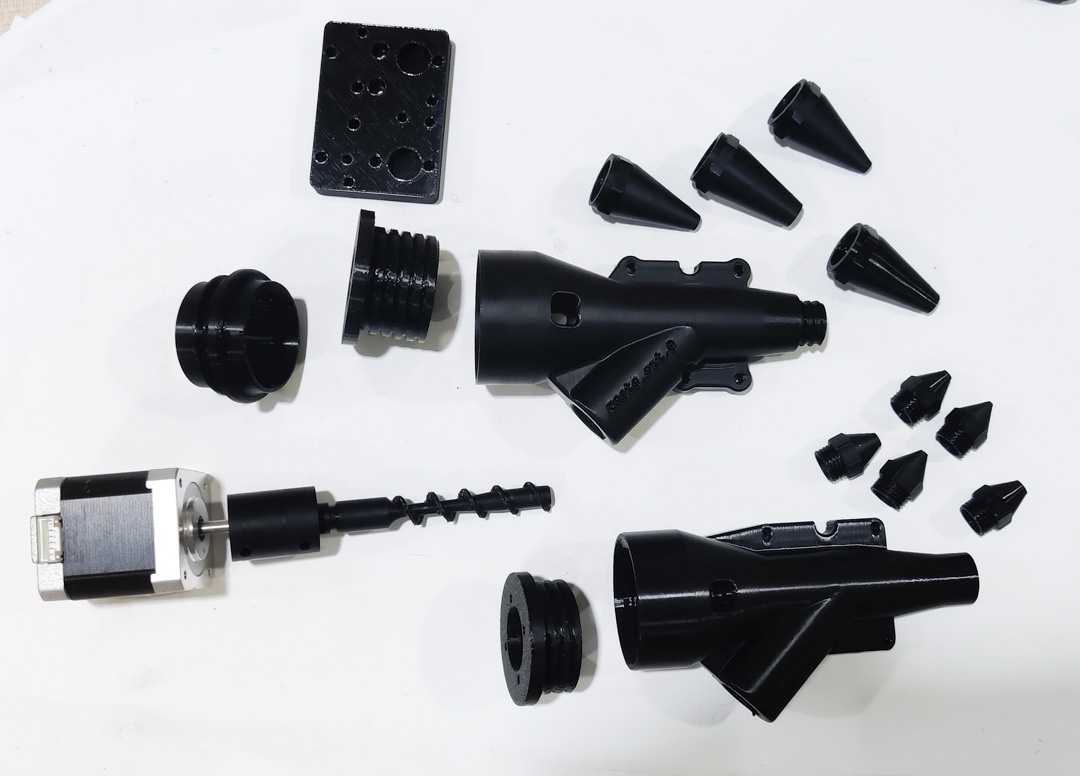
I printed out the parts from the FabLab Barcelon repo as well to assemble the current version and explore how I could modify it for biopastes.
Process
Before tackling the entire extuder machine, I decided the biogun was the more accessible build.
Biogun 2 : Ikea Electric Screwdriwoo!
Not having the same screwdriver or auger or matching pipe sections, I modelled the entire gun from scratch.
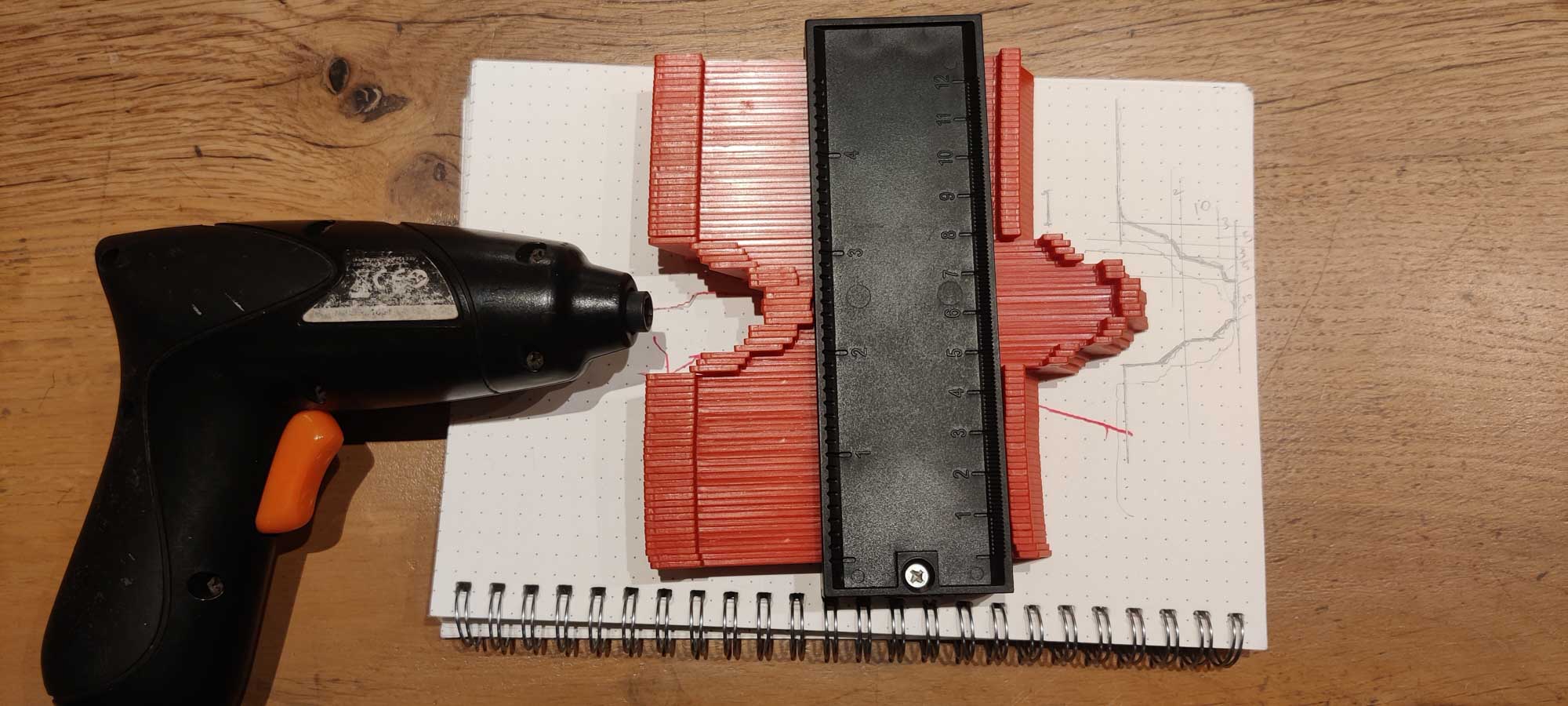
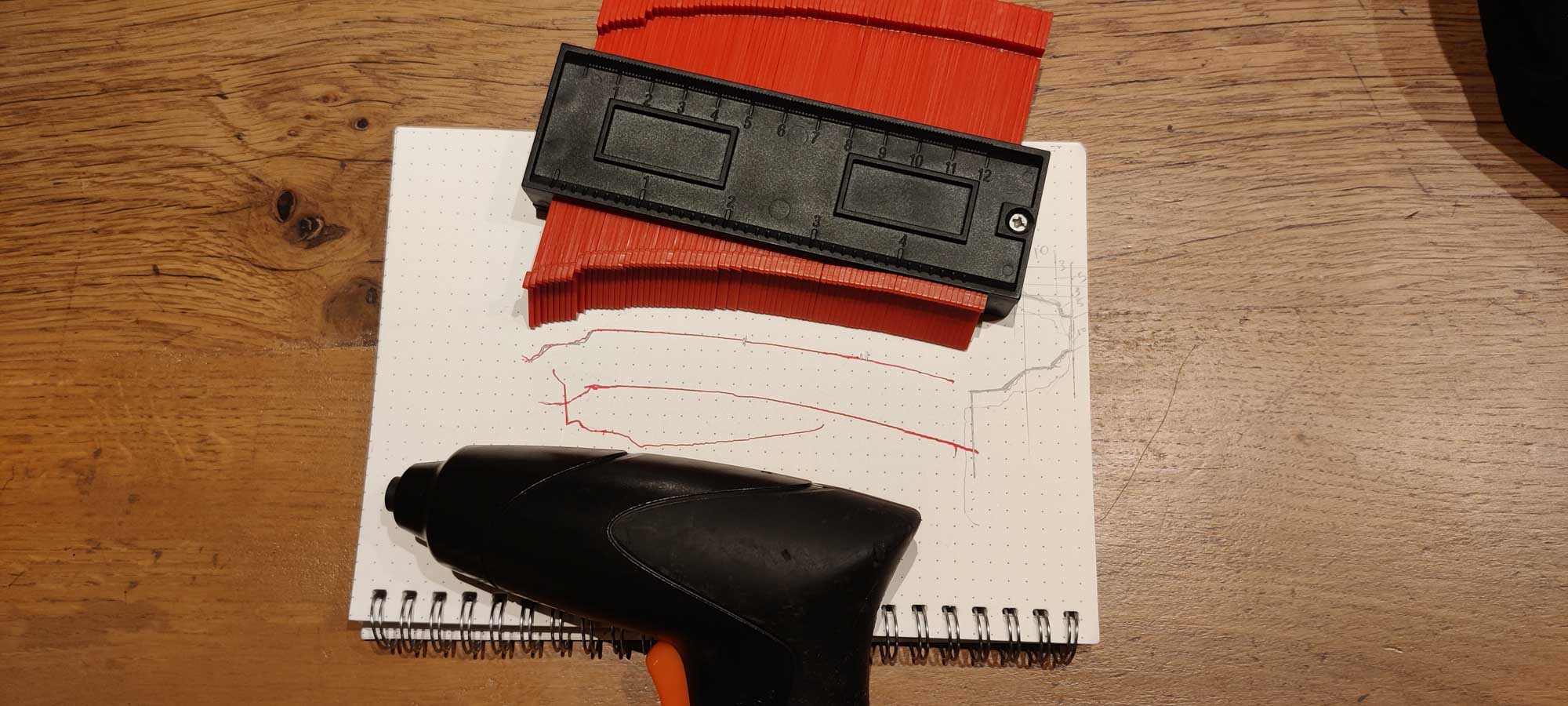
I started by approximately modelling my Ikea Screwdriver. I could have 3d scanned it but a few key measurements and some traced profiles were enough.
I considered to have a hopper made of a softdrink bottle screwed onto the body instead of the acrylic pipe, but eventually just modelled a hopper for 3d printing.
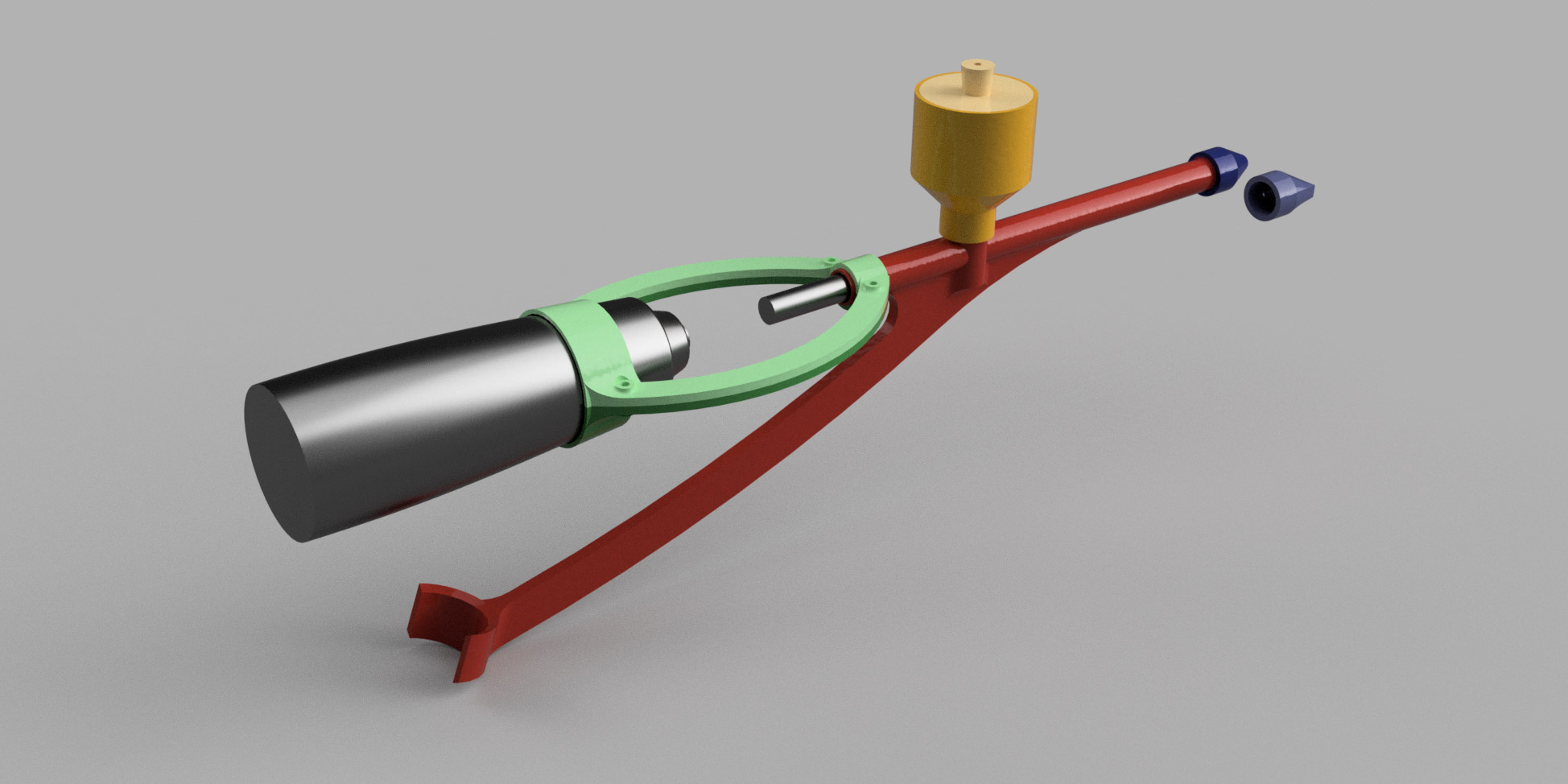
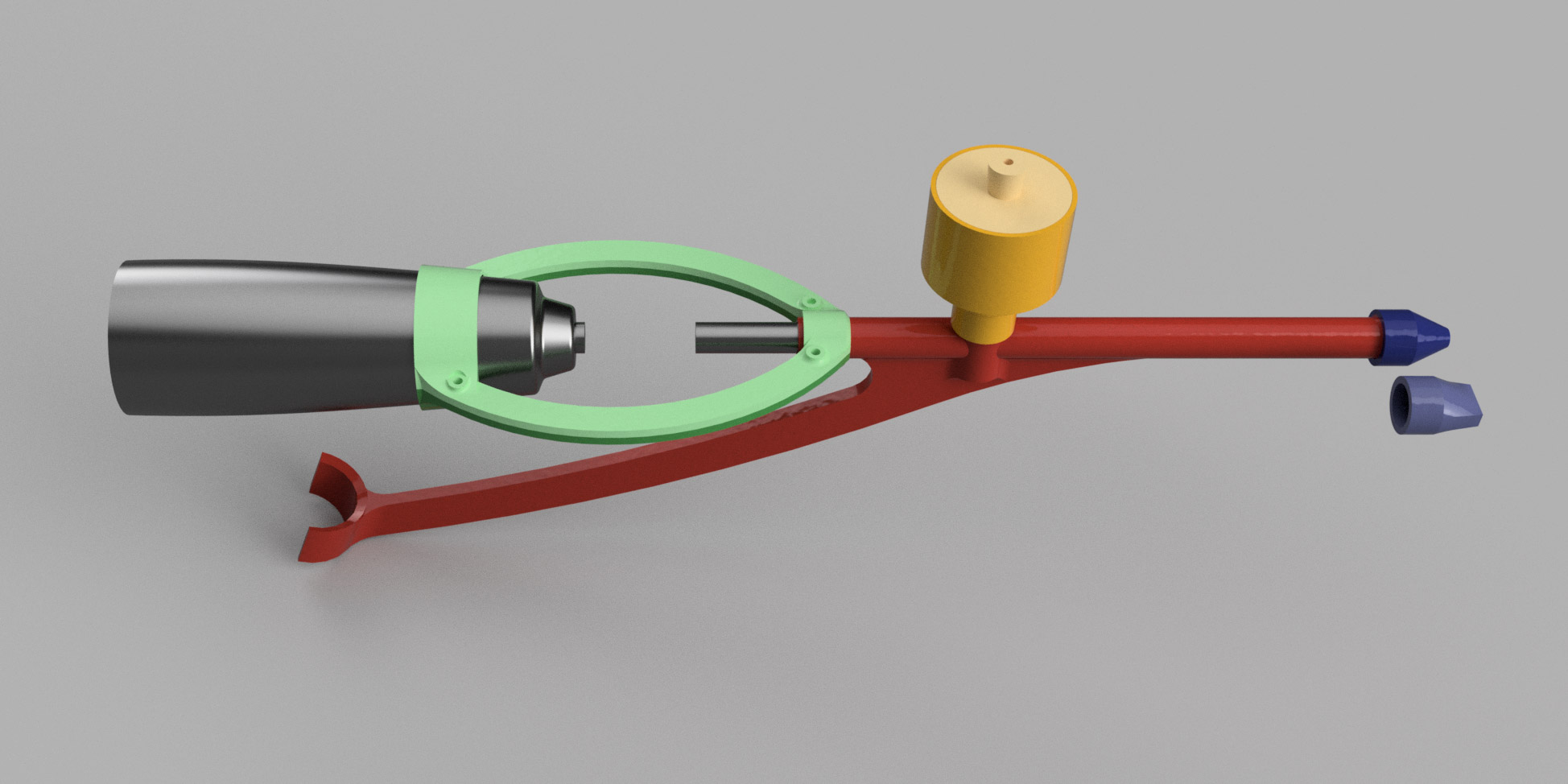
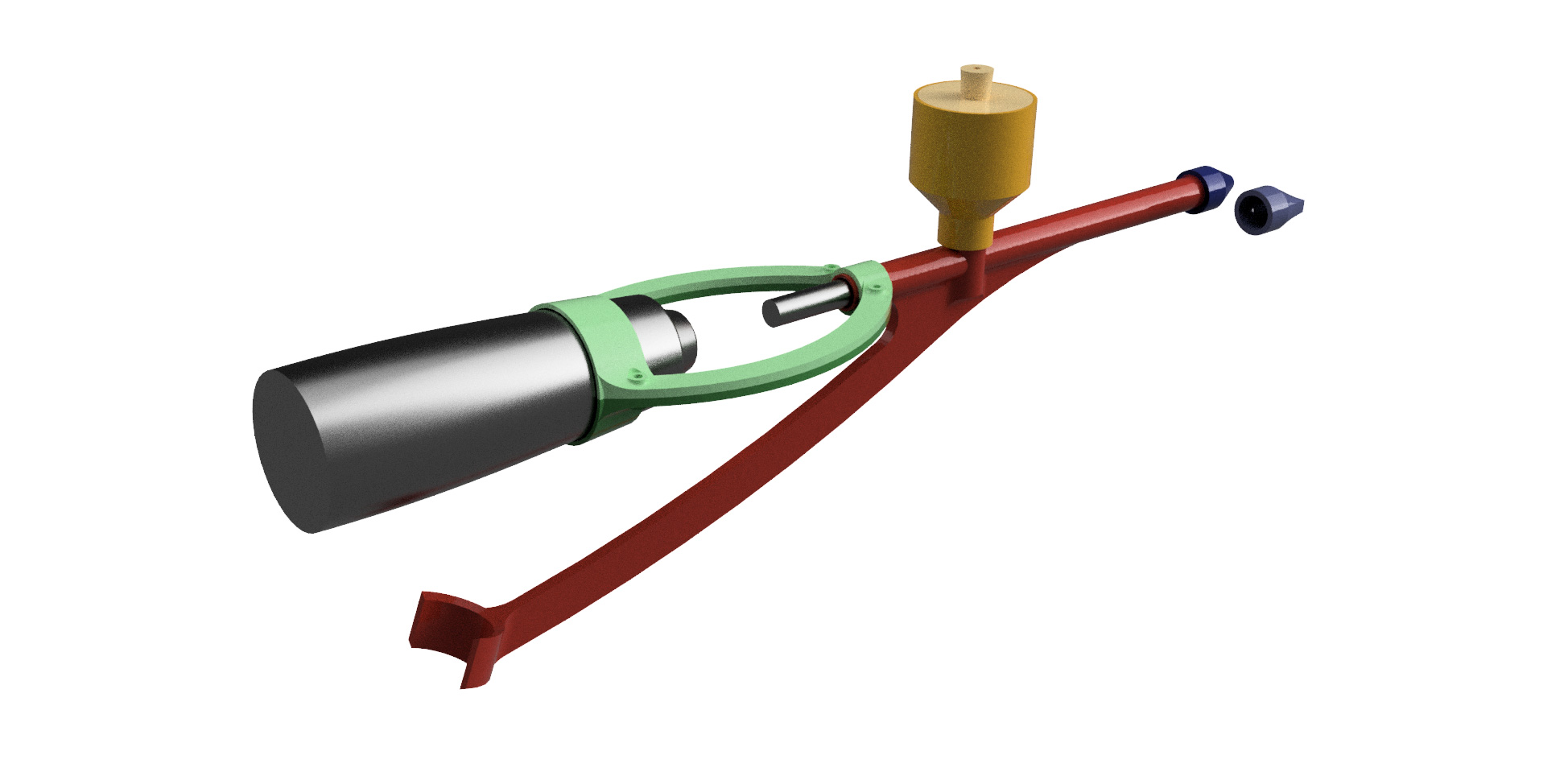
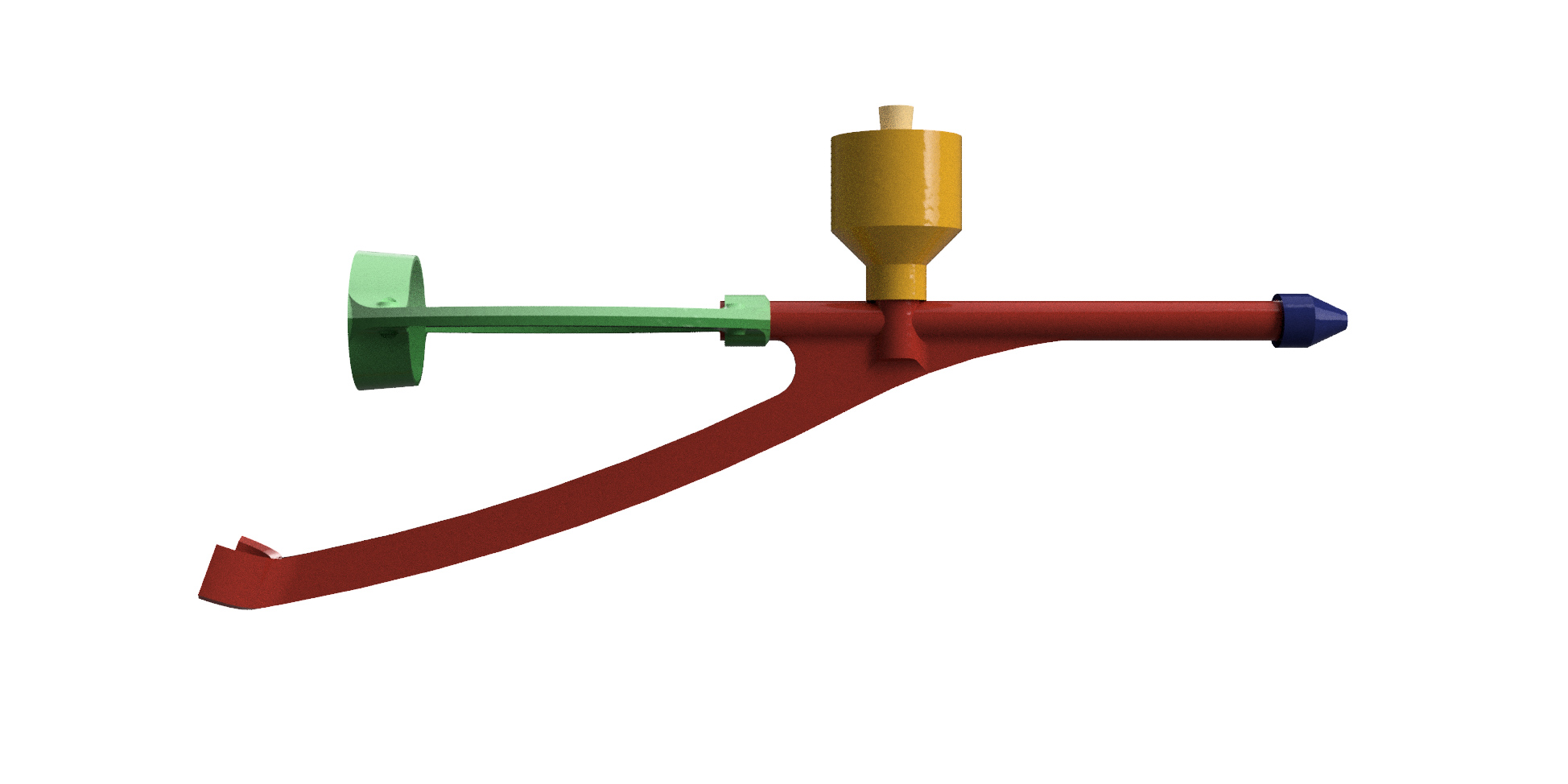
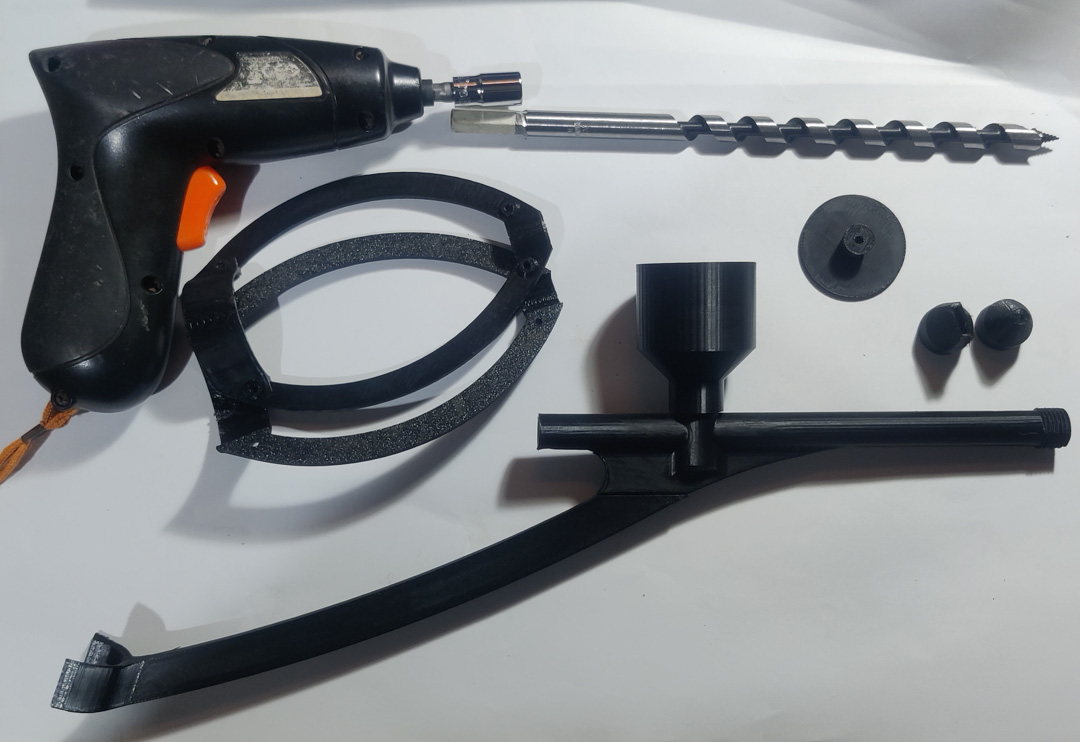
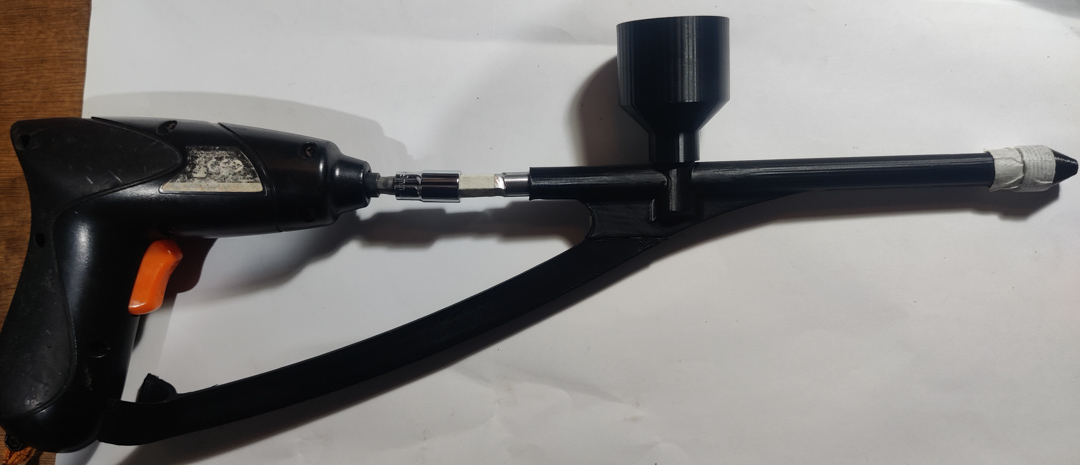
This version allows a lot of tolerance in the measurements since it has large conical collars and braces so that the parts come to rest on the screwdriver body regardless of dimensional errors.
The Augur was procured off Amazon. I had to use a convertor from a socket wrench set to allow the auger to fit the electric screwdriver.
I tried multiple nozzle shapes as well.
Biogun, version 3
I modified my design to eliminate some parts that weren't required, and reprinted things for better fits and structure.
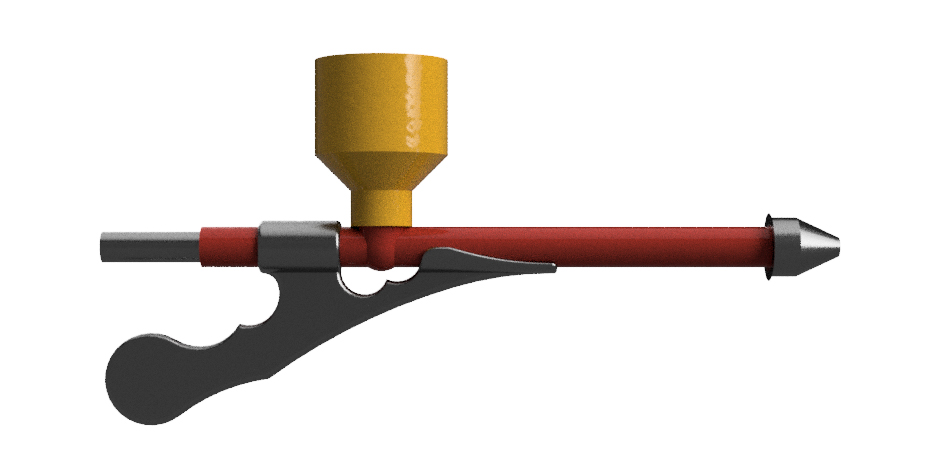
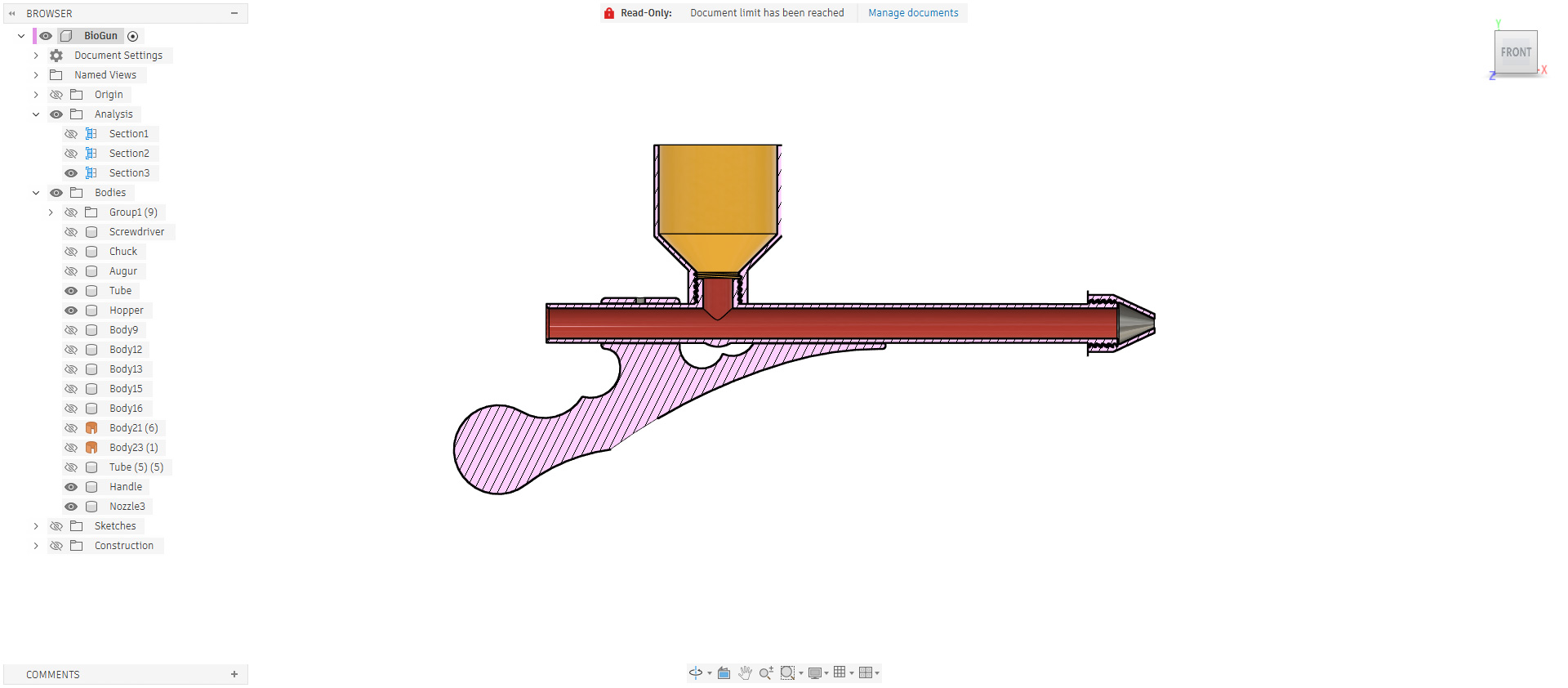
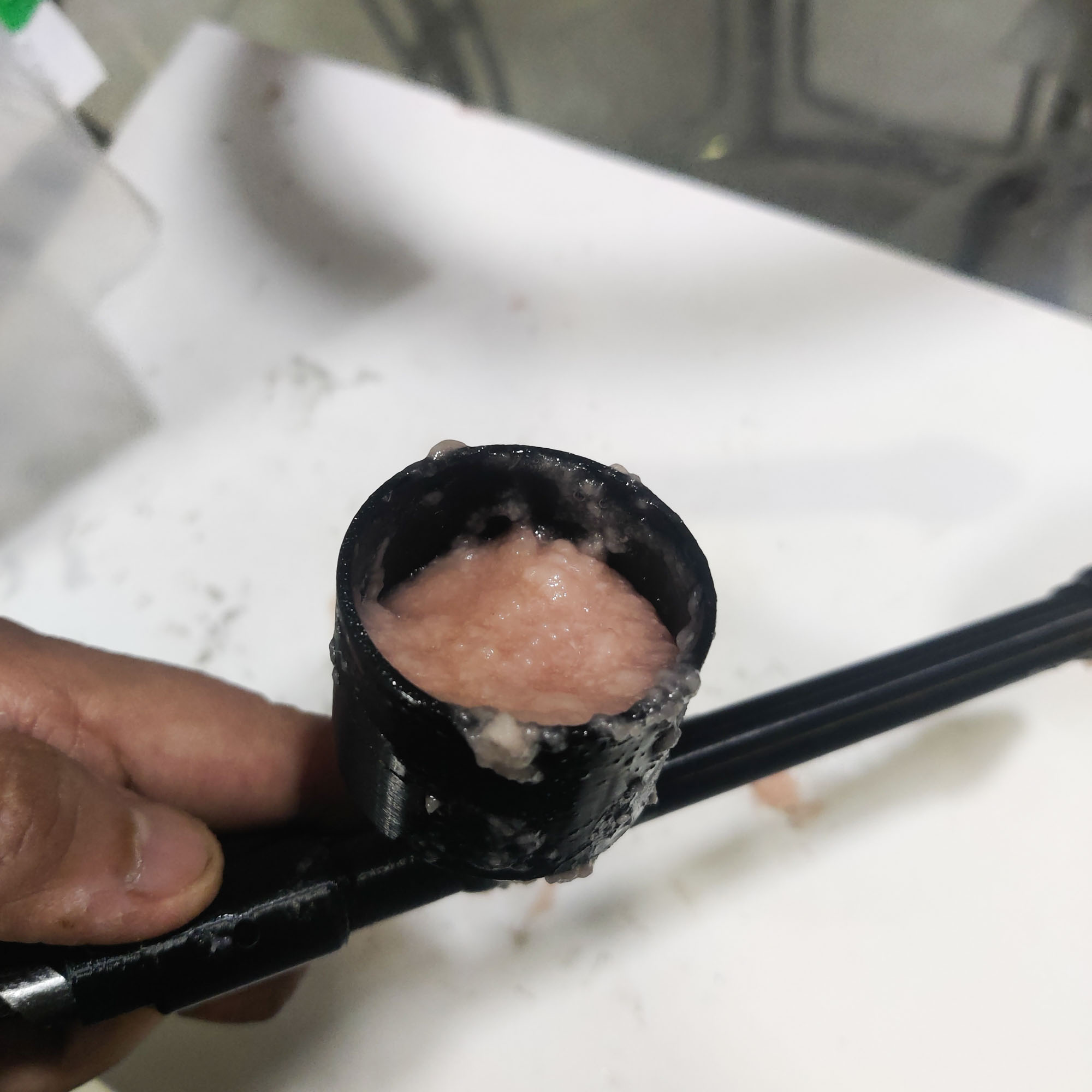
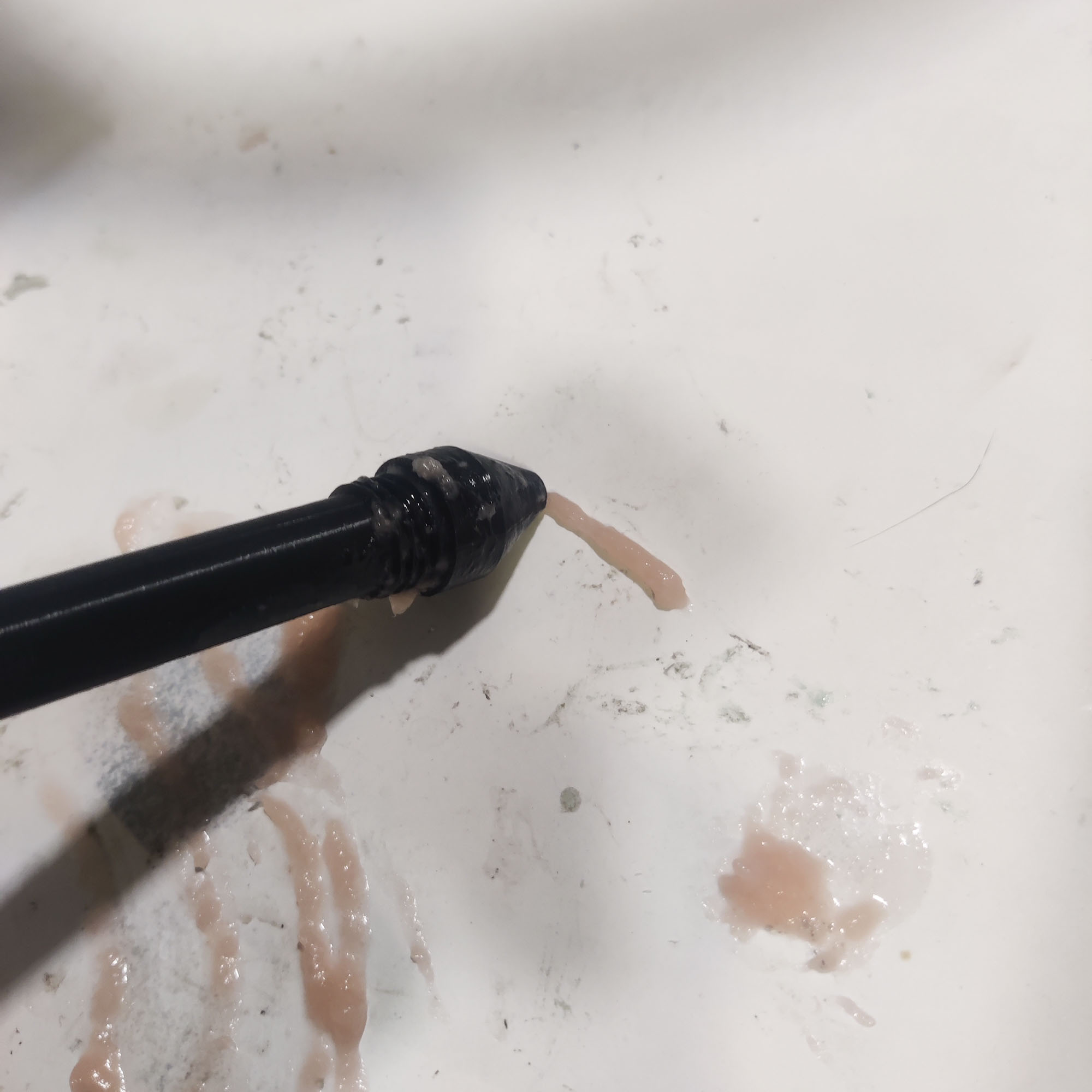
Overall, not quite what was usable.
Paste Extruder
While I printed a set of the parts, studies the screw, nozzle systems etc, I did not really go ahead with this one.
I would have needed either an old printer to build on top of, or to build a printer from parts before adding this. Both cases were not feasible given my time and resources.
Results
- The biogun is very fiddly, especially since I am using a convertor between the screwdriver socket and the augur itself. It is very difficult to use it with one hand, but your other hand is occupied to try and keep it stable.
- The paste I had was rather thick and the augur did pull it, but it didn't go far
- The augur and the pipe it sat in were too snug and there was friction resistance
- It was also too snug for the thick paste to be able to flow, but less snug may also have meant that it spun freely but without pushing the paste
Conclusions and Discussions
The Biogun
On the whole, while it is a promising tool, I need to resolve it form both directions - a better build and an appropriate paste consistency.
The BioPaste extruder
While I did not go ahead with this, I had discussions with my mentor, Anastasia about it. We discussed that a BIO-paste version would need some form of heating mechanism to prevent the gelatin or other binder from setting in the hopper or cartridge itself.
One way to do so was to create a copper-pipe heat exchanger that circulated hot water on the outside of the chambers holding raw biopaste. This would be either encased around the hopper with another conducting medium around it, or just wrapped around the hopper and the contact would be enough.
Another method was to have an immersion heater type heating coil inside the hopper, keeping it warm from the inside. However, the surface temperature of the immersion heater would need ot be controlled enough to not burn or char or overcook the binder and filler components of the paste.