Auxetics Explorations
References
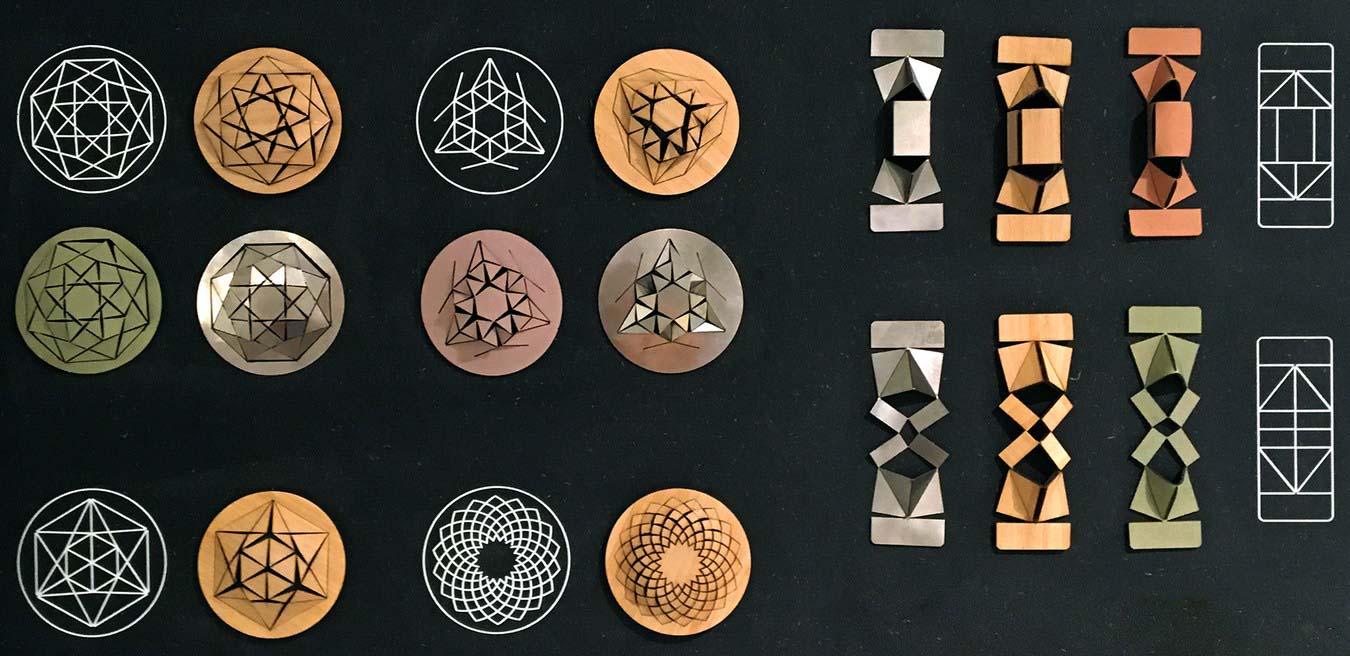
I found some great resources on Auxetics, but Tamar Levy's work was by far a very strong inspiration.
I also learnt of Bistable Auxetic surfaces, and that was a promising line of enquiry for the belt.
Bistable Auxetic surfaces
Design Intent
Auxetic patterns - or more correctly, Auxetic materials - are materials or patterns that exhibit unusual properties in their expansion and contraction. An auxetic material, if pulled in one direction, expands in multiple directions, unlike regular materials that contract in the other direction.
I was interested in using Auxetic structures within the project, since I knew I'd require some expansion-contraction structures to allow bending and flexibility. The biomimetic inspiration of Pangolin and Armadillo shells that incorporated both hard materials but also bending would require similar structures to be translated.
My goal was to understand if
- such a property could be introduced into fabric through cuts and geometry
- such a property would be useful to the project
Process
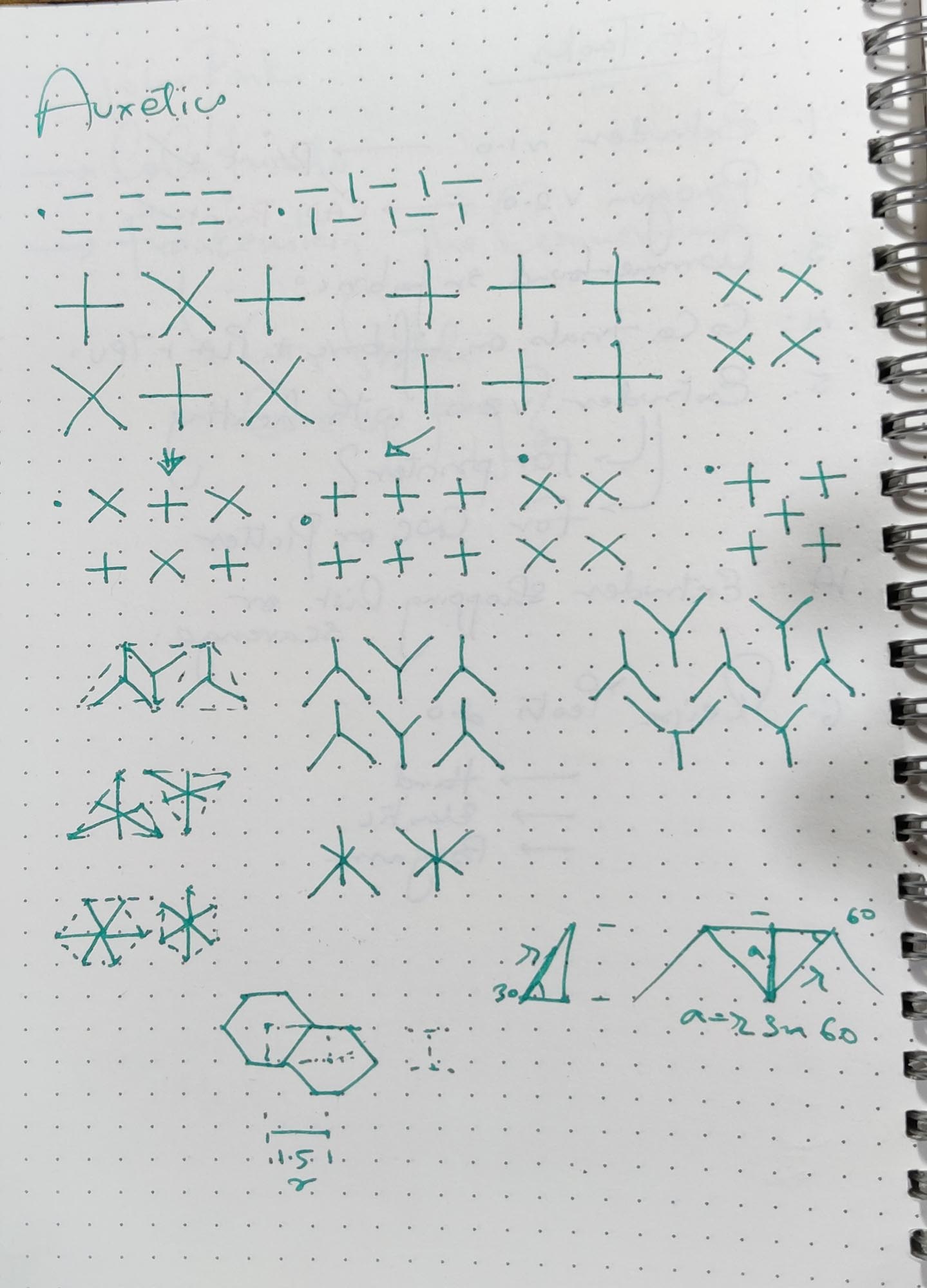
I ideated and explored several patterns to see the results.
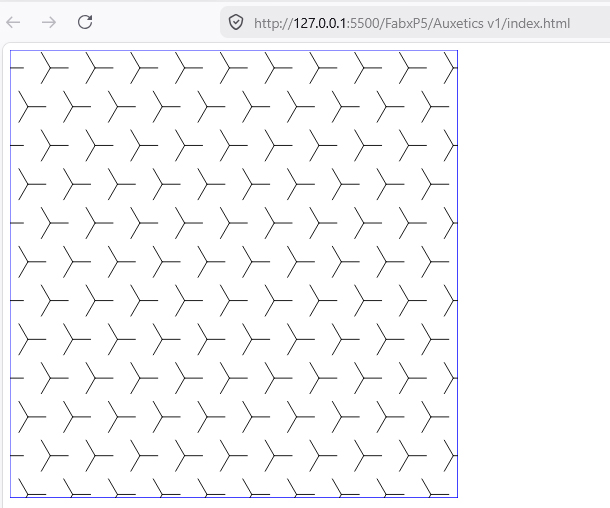
I was certain that I did not want to manually draw these, so I wrote some code in p5.js to generate them with contolled paramters. This seemed a faster workflow than using Grasshopper.
I wrote individual functions for each patterns and cycled through them saving versions that looked favourable.
function draw() {
  stroke("blue");
  rect(width / 2, height / 2, width, height);
  s2 = (scl / 2) * pad;
  translate(s2, s2);

  // singleLine();
  // singleLineStag();
  // lineAlt();
  // lineX();
  // lineXalt();
  // lineXaltStag();
  // lineTri();
  lineTriHex();
}
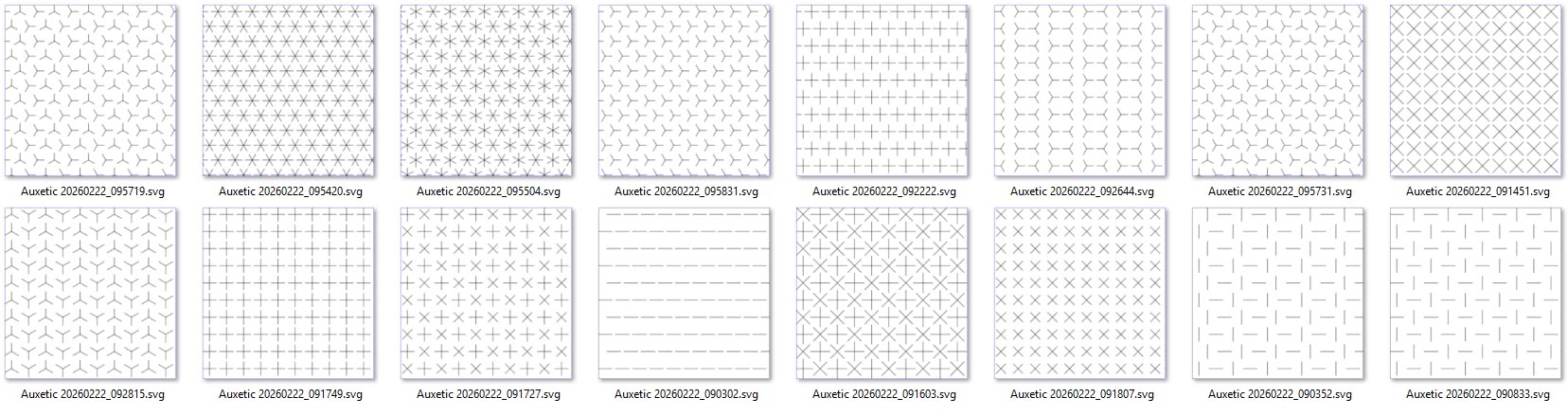
The patterns were exported as SVG files, laid out in Inkscape and lasercut.
Results
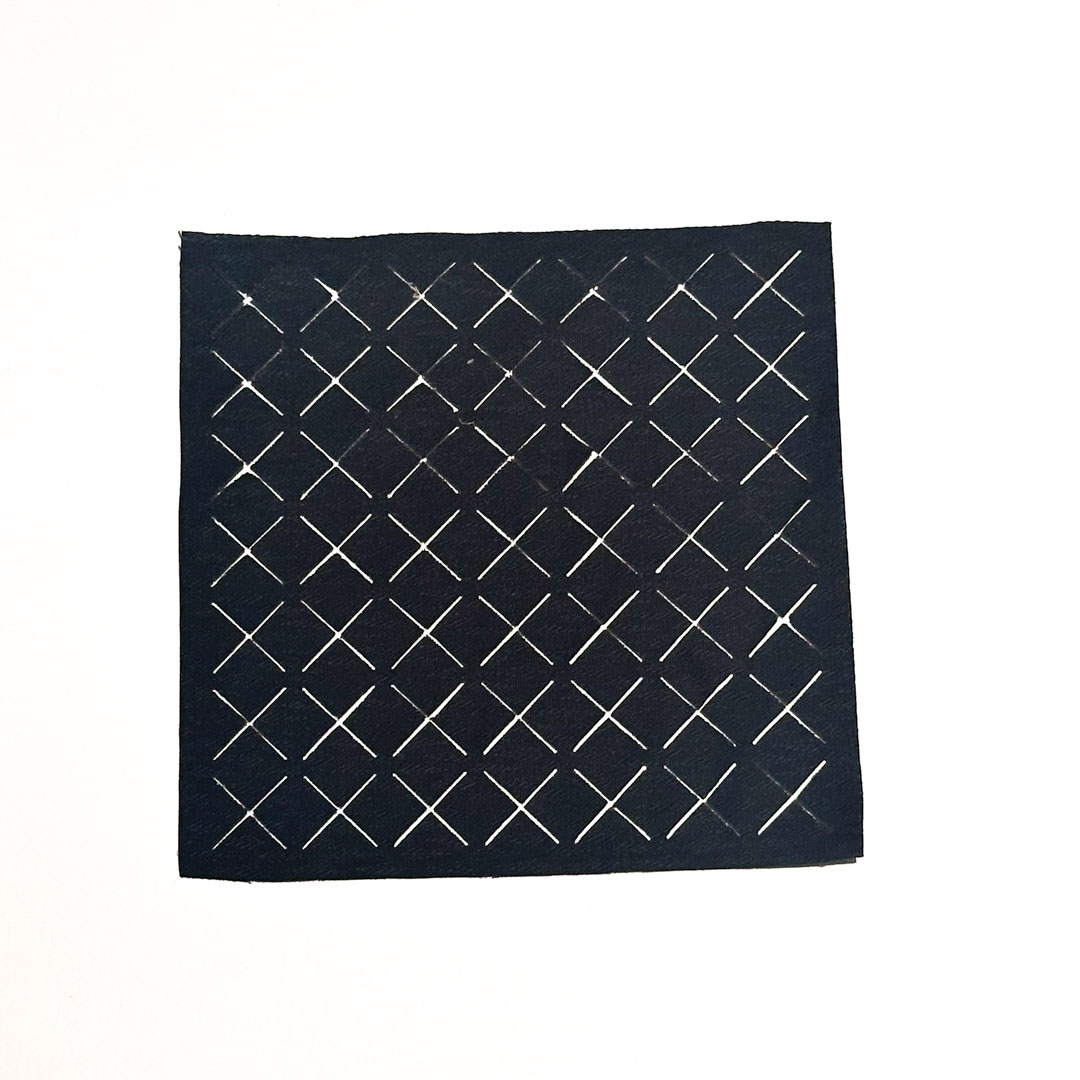
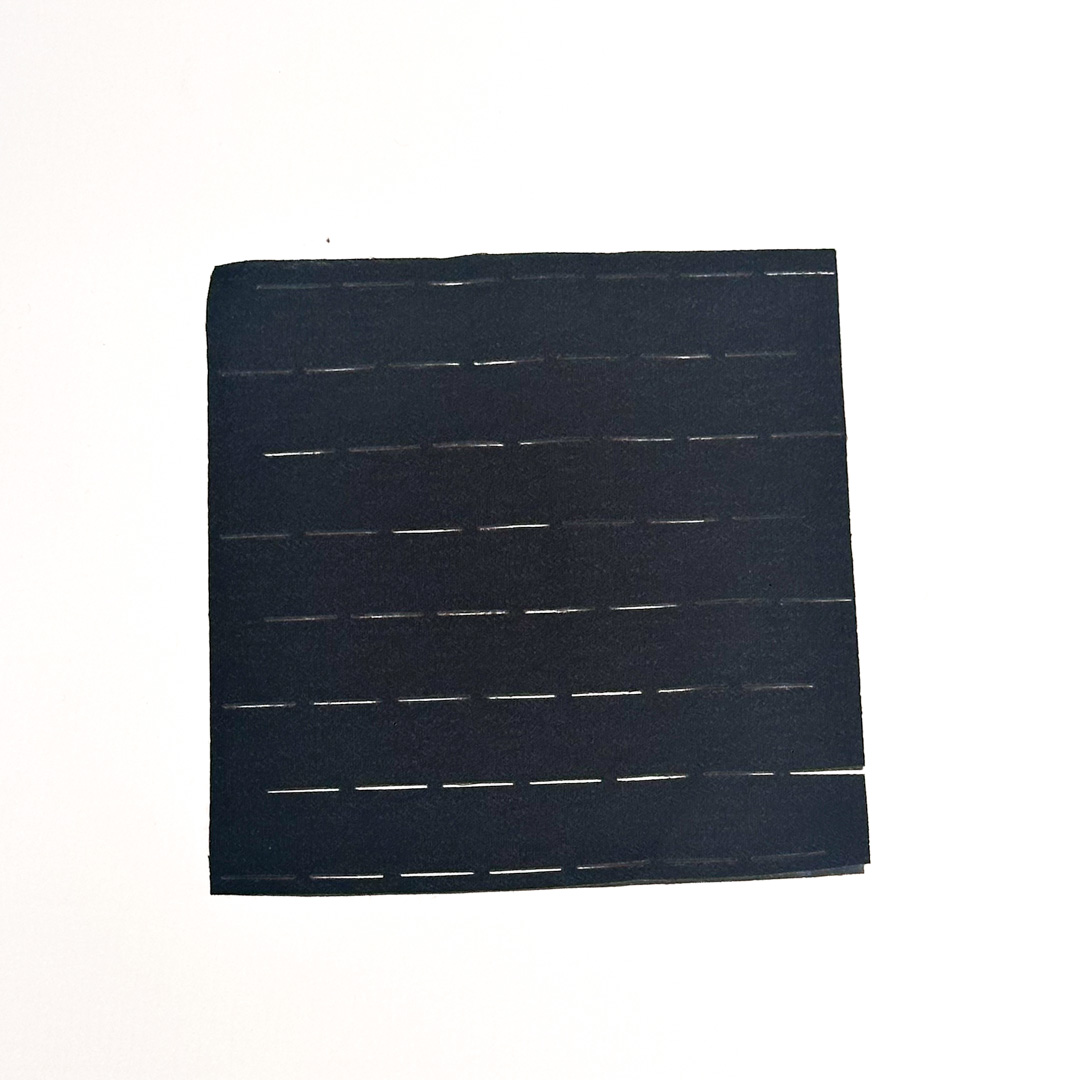
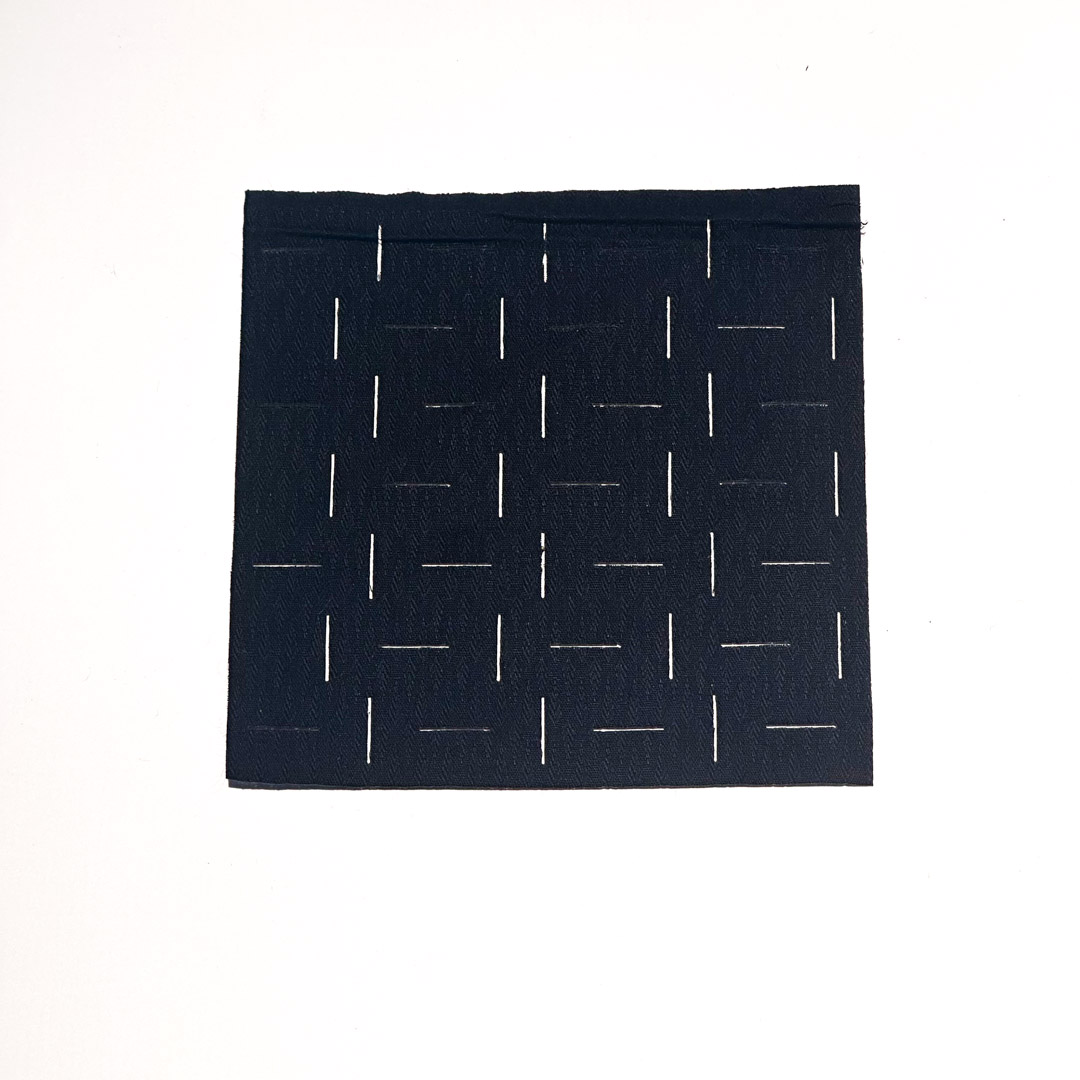
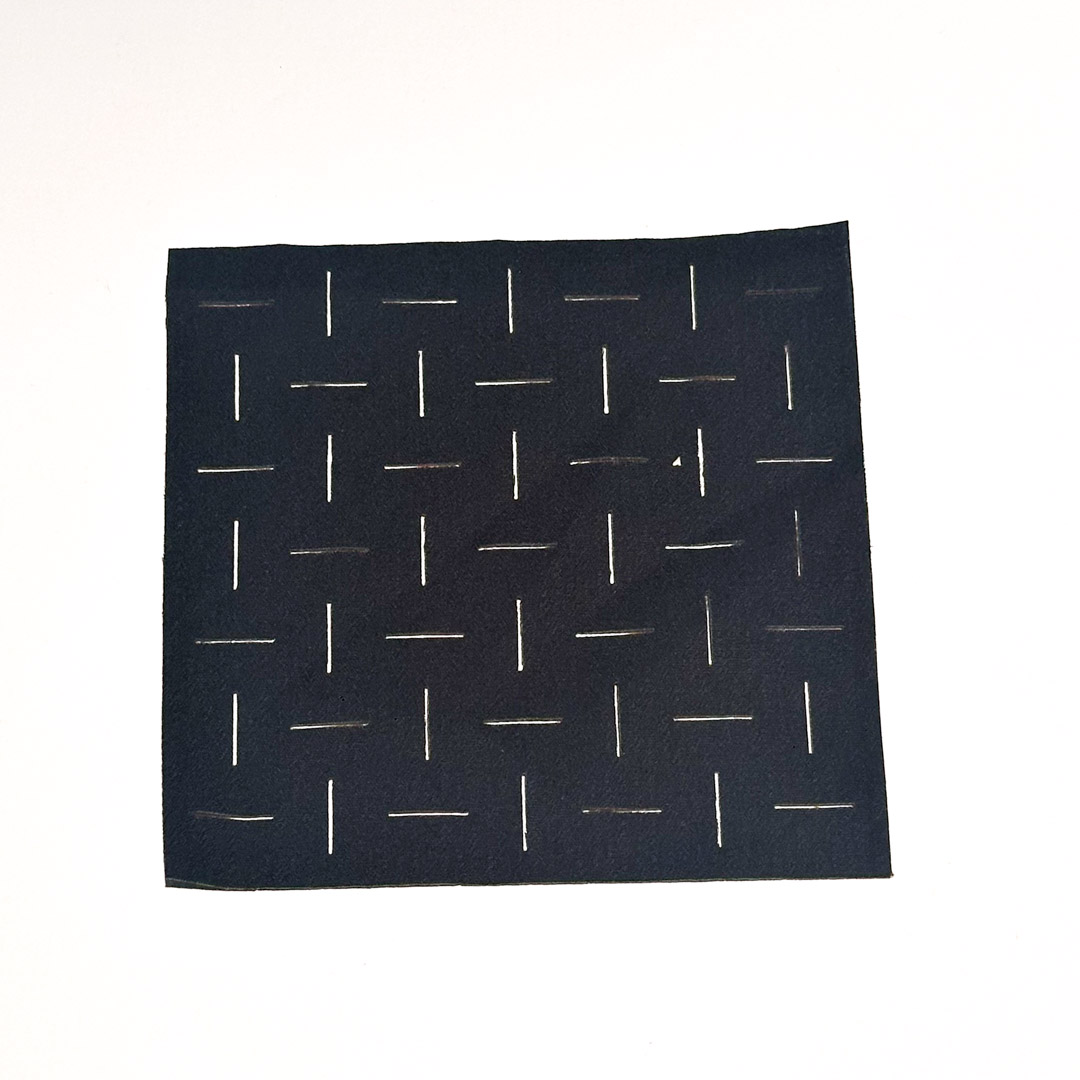
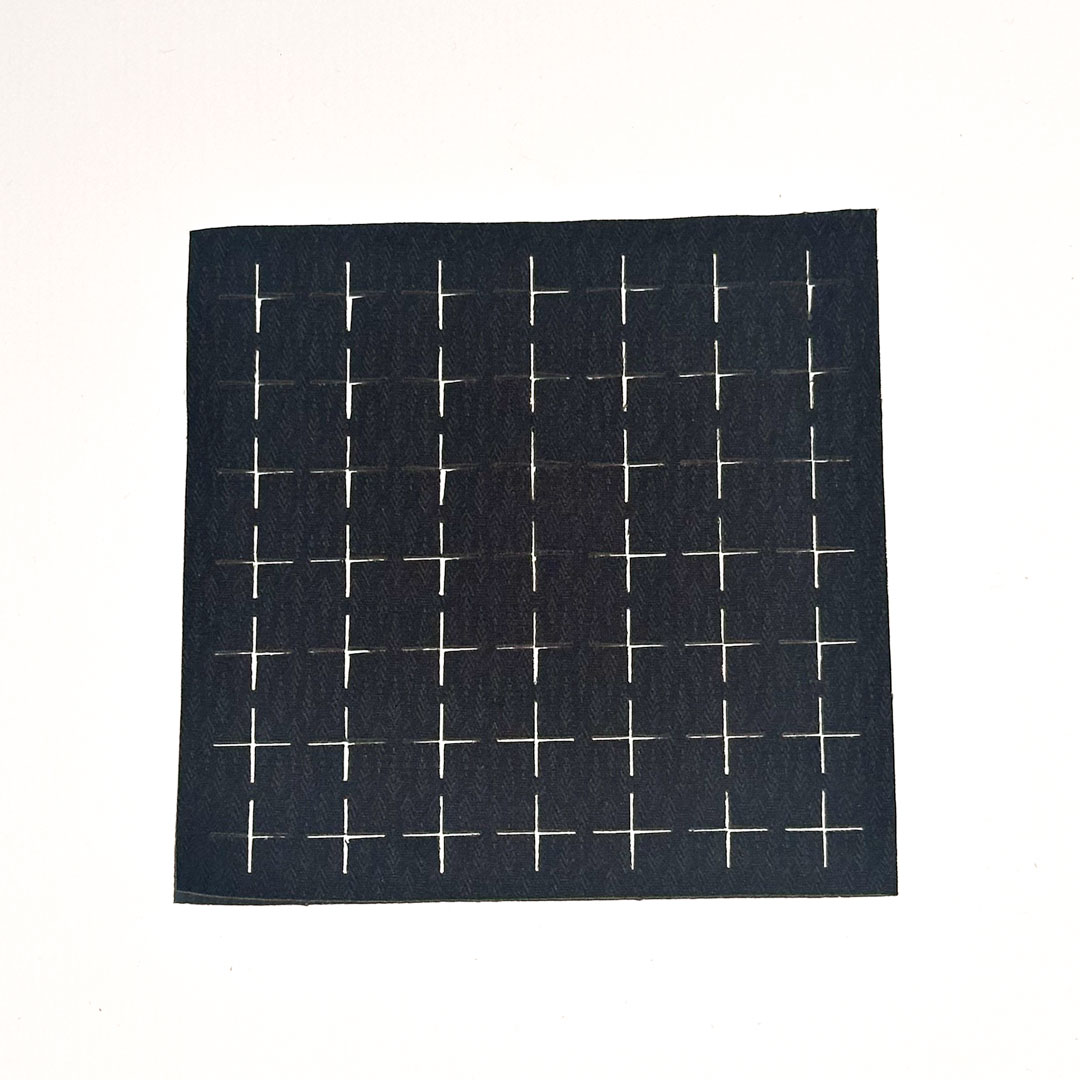
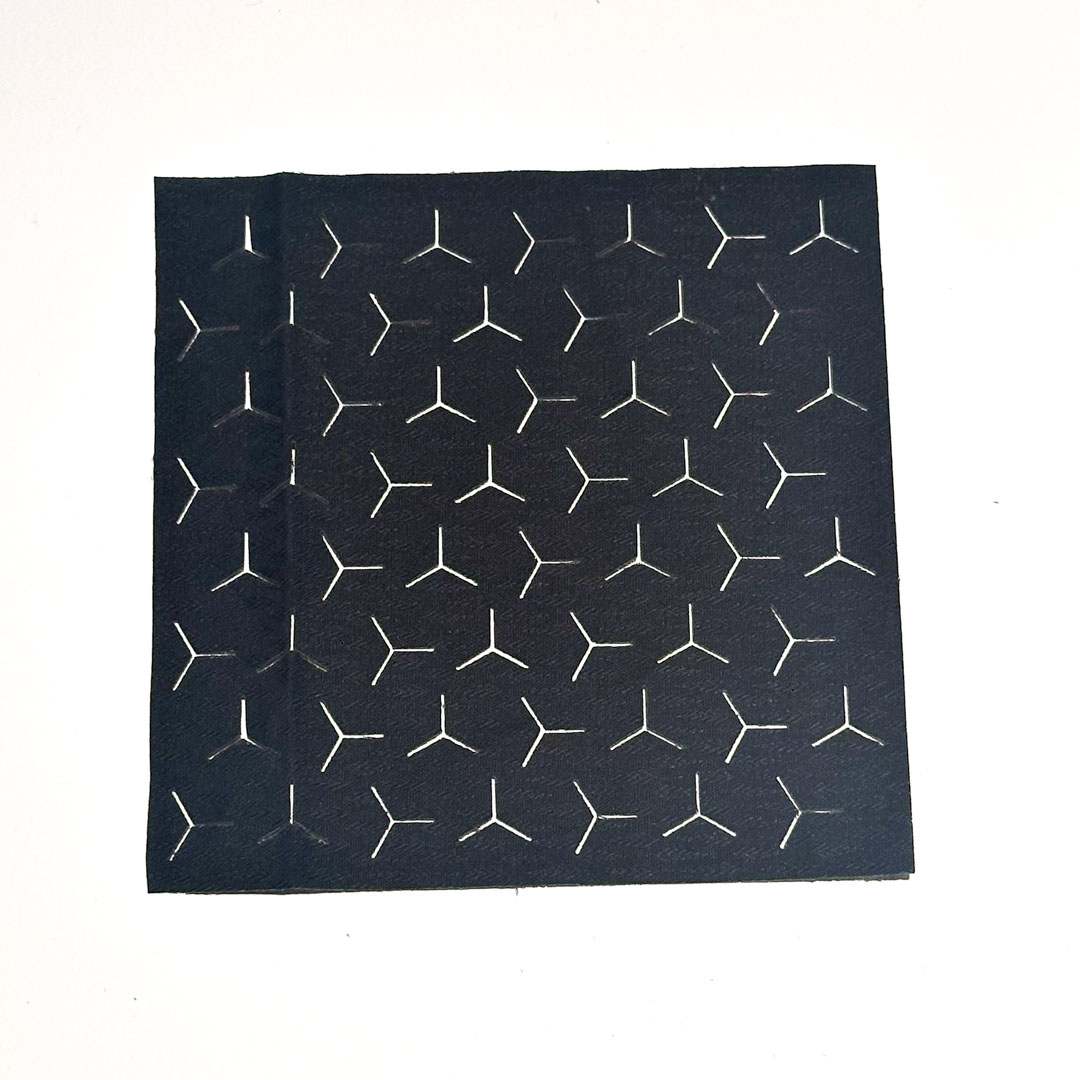
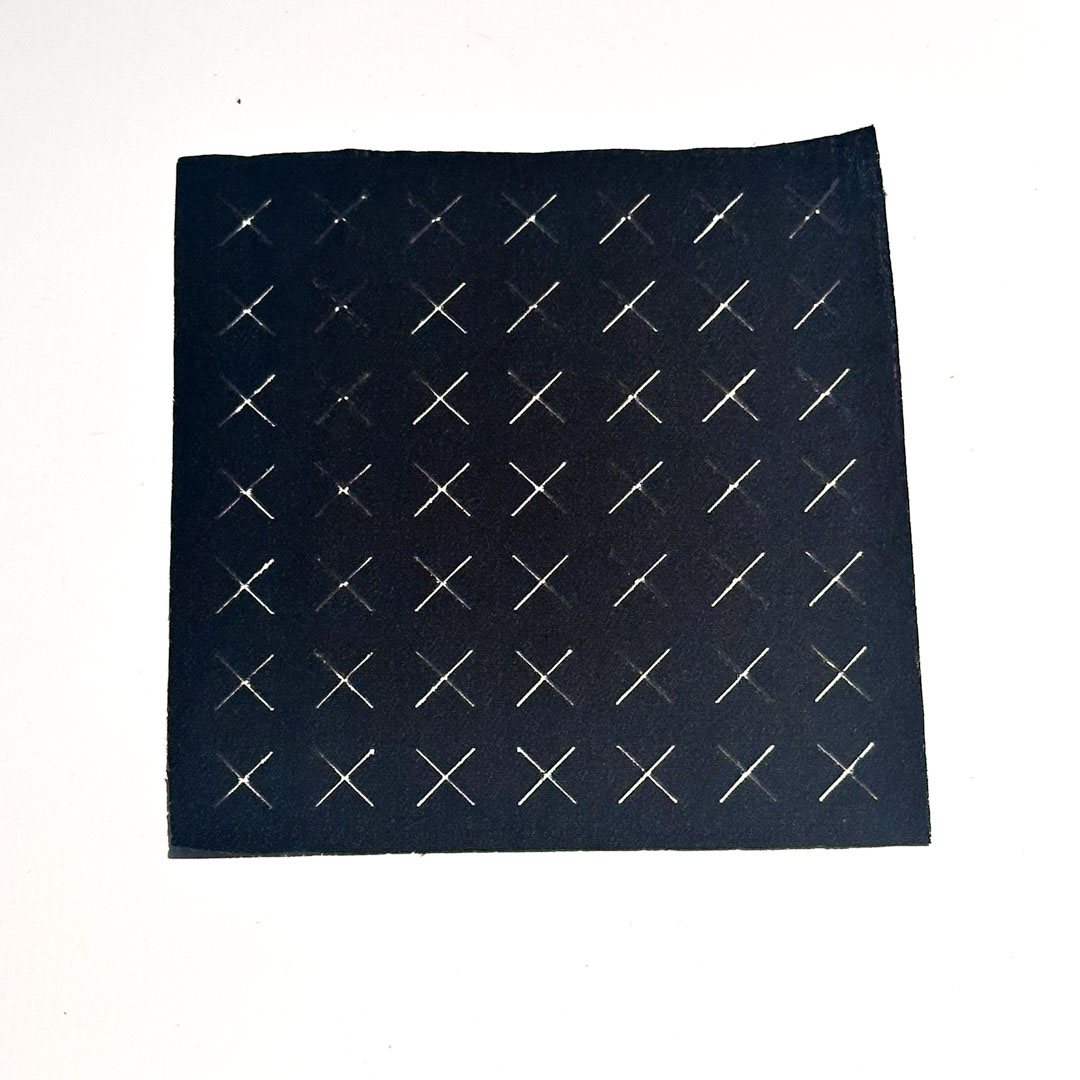
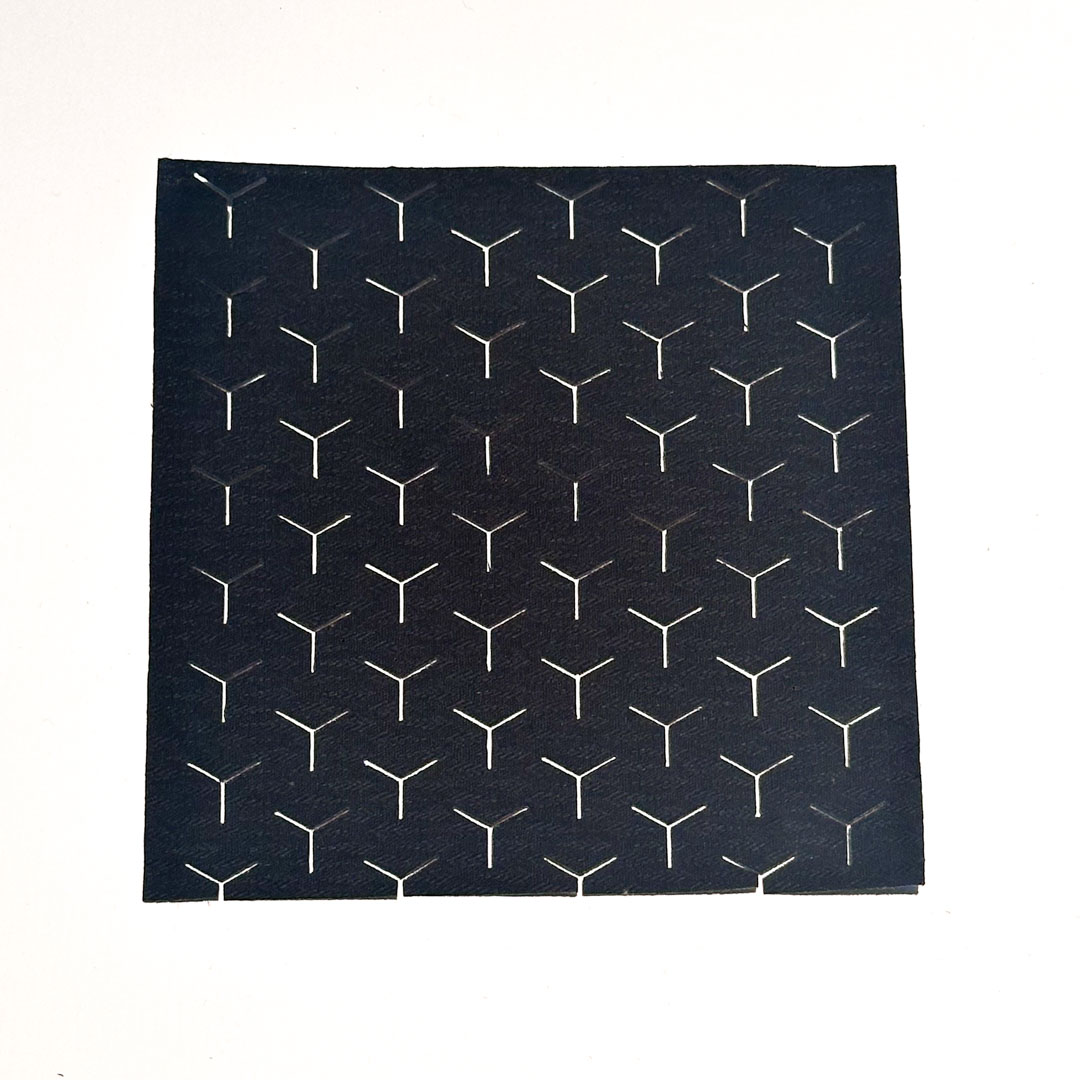
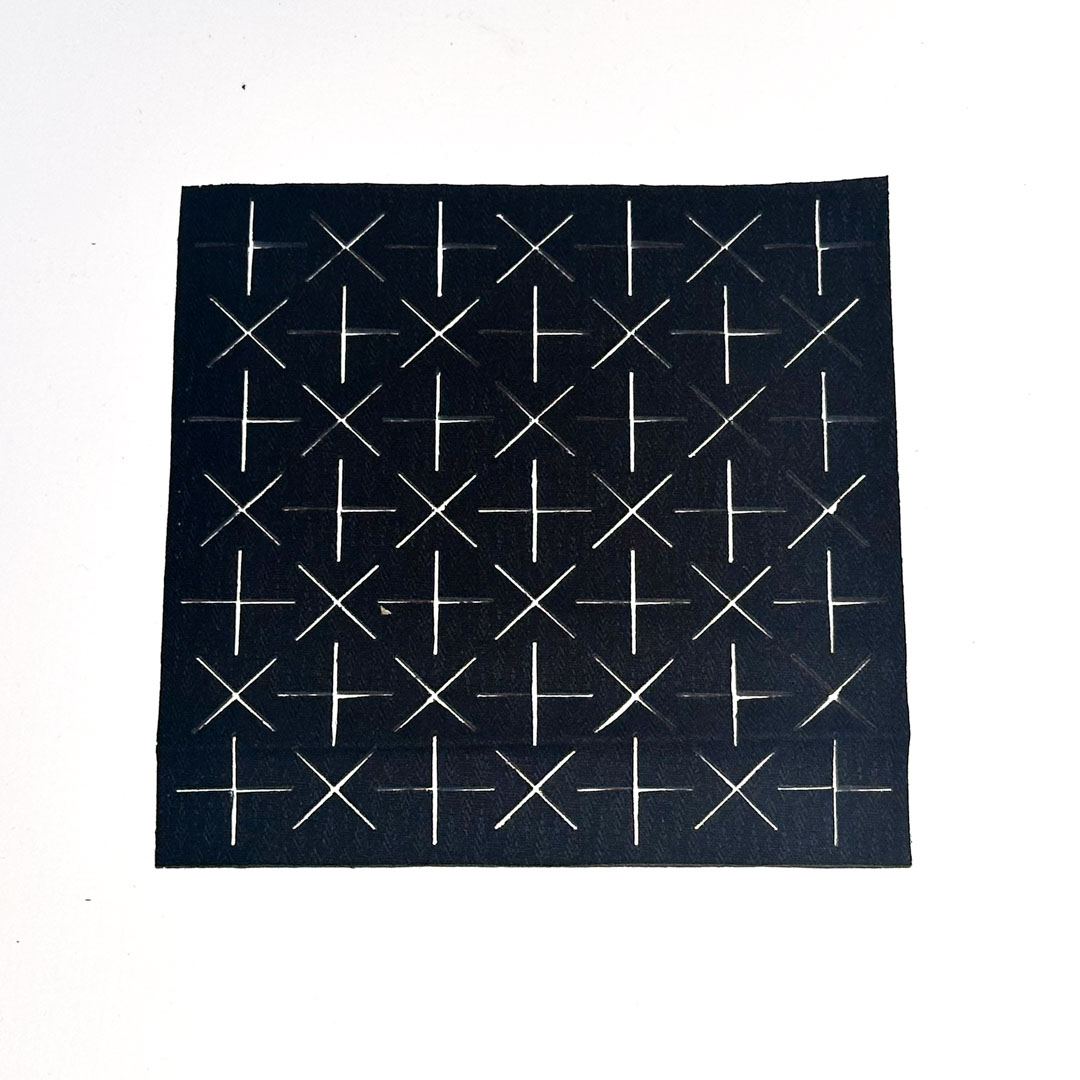
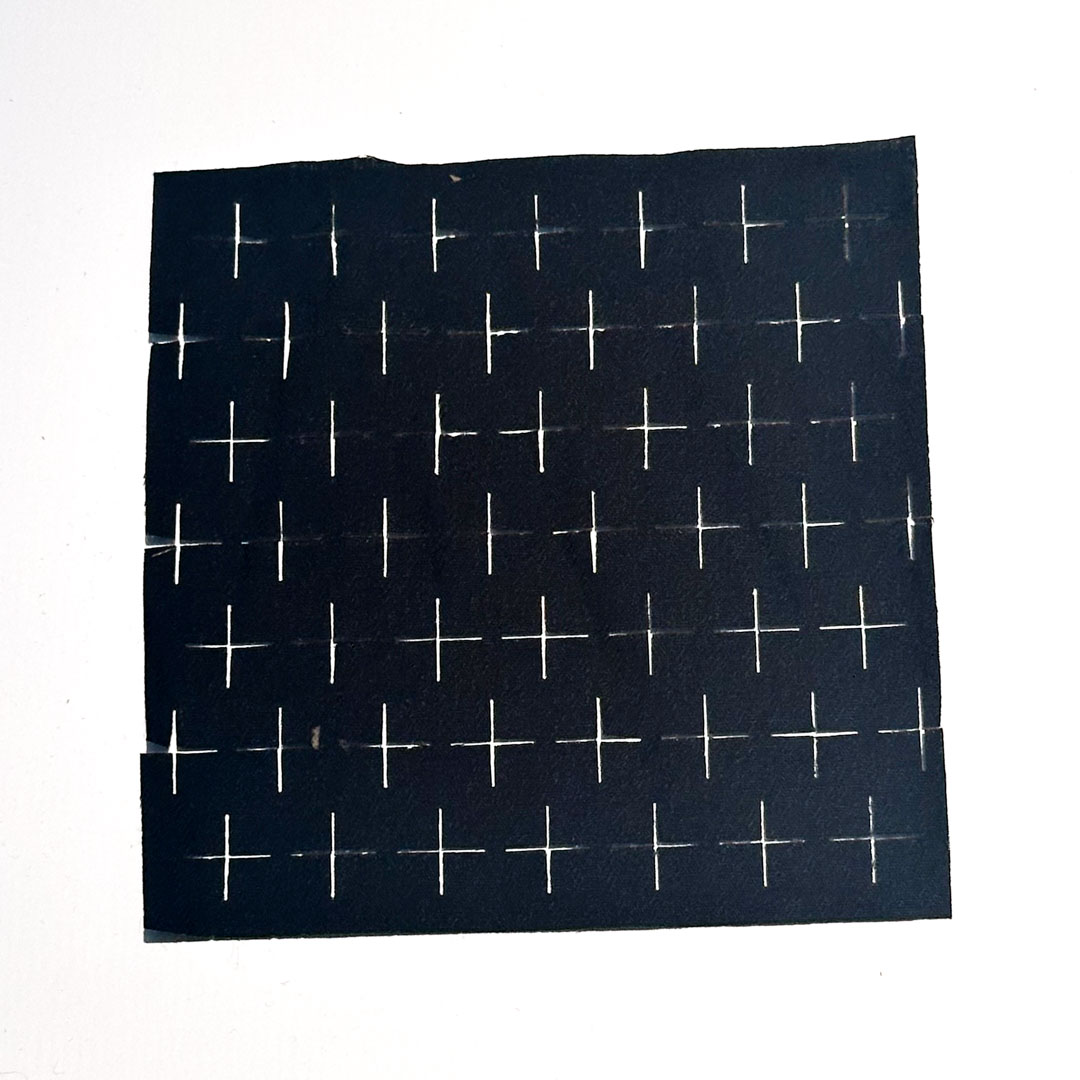
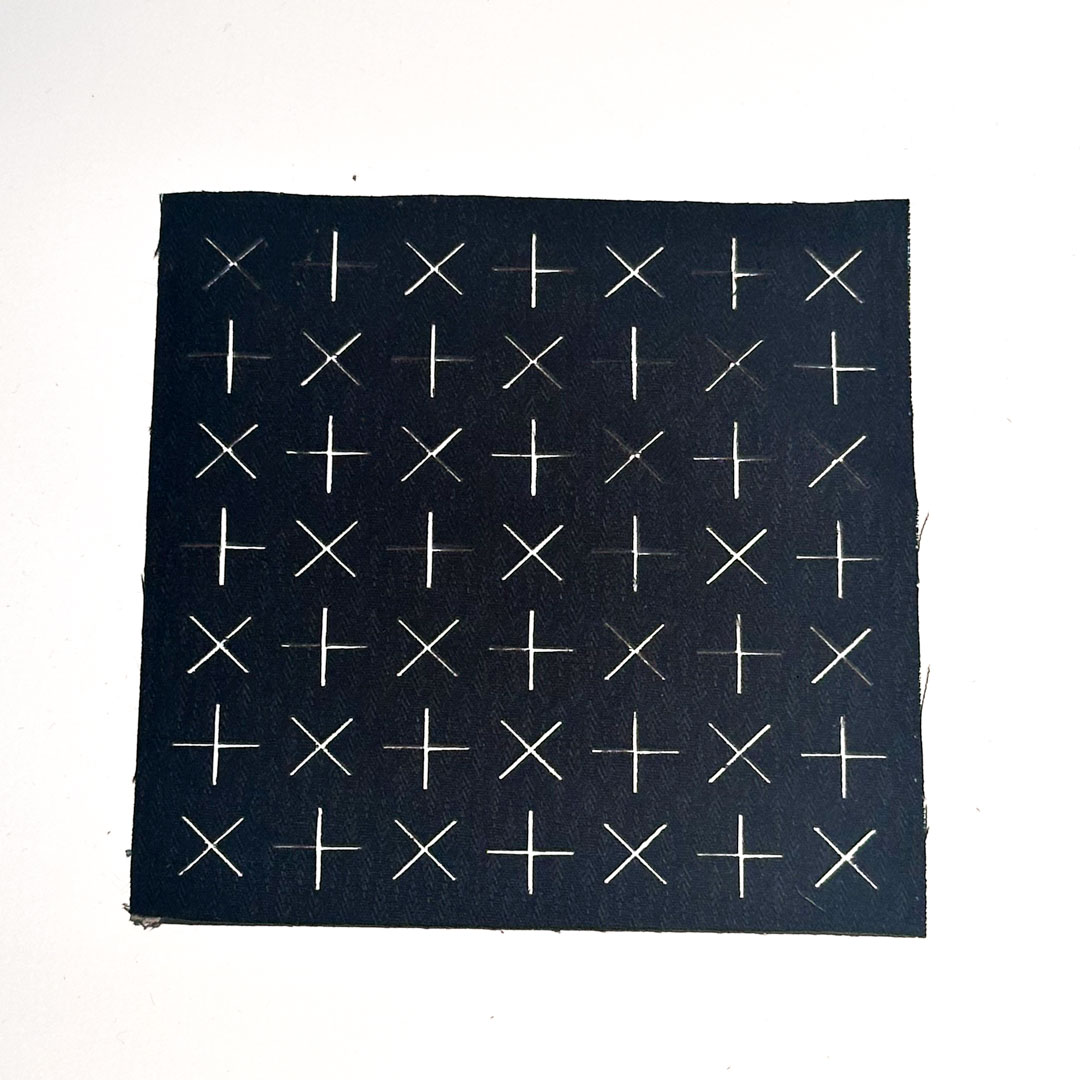
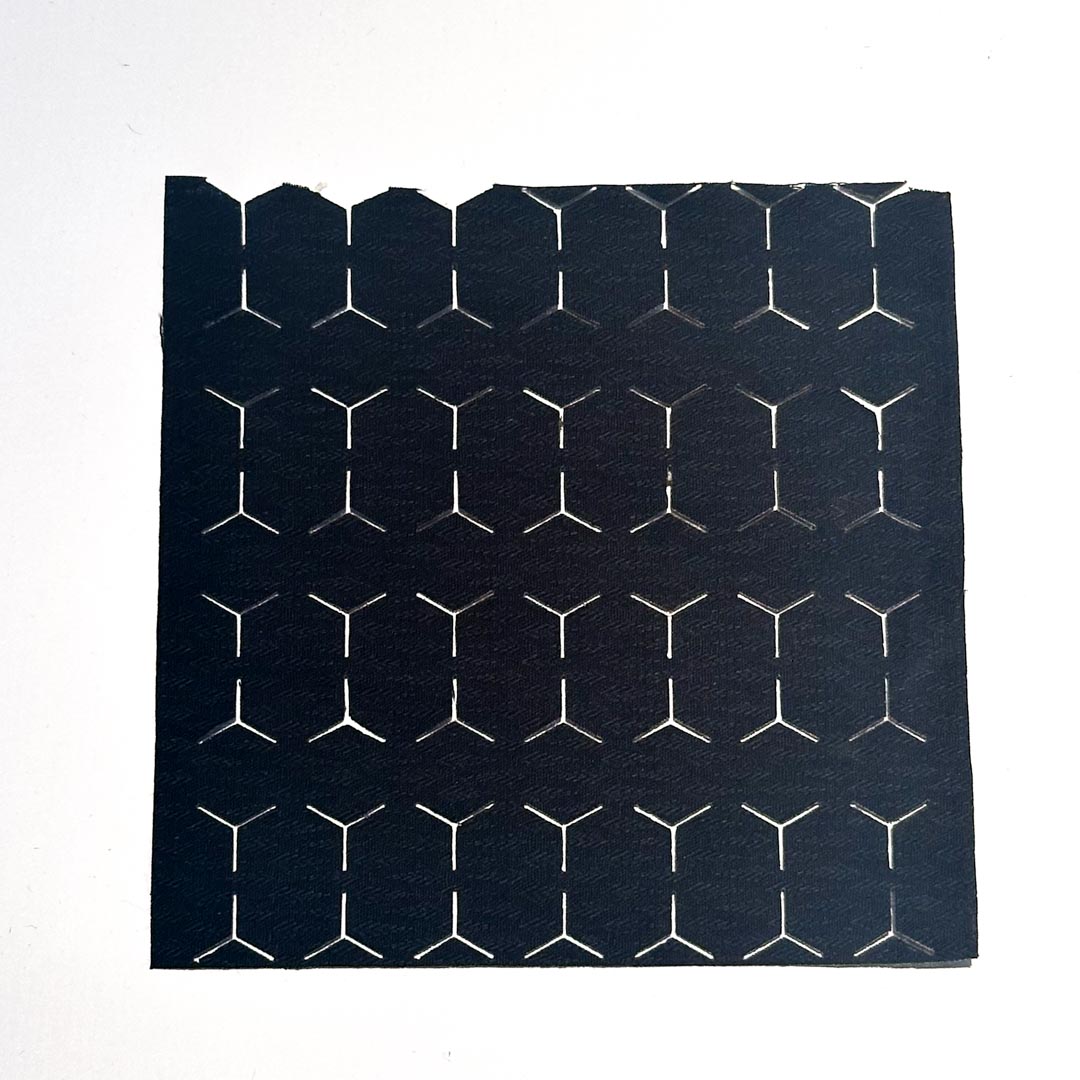
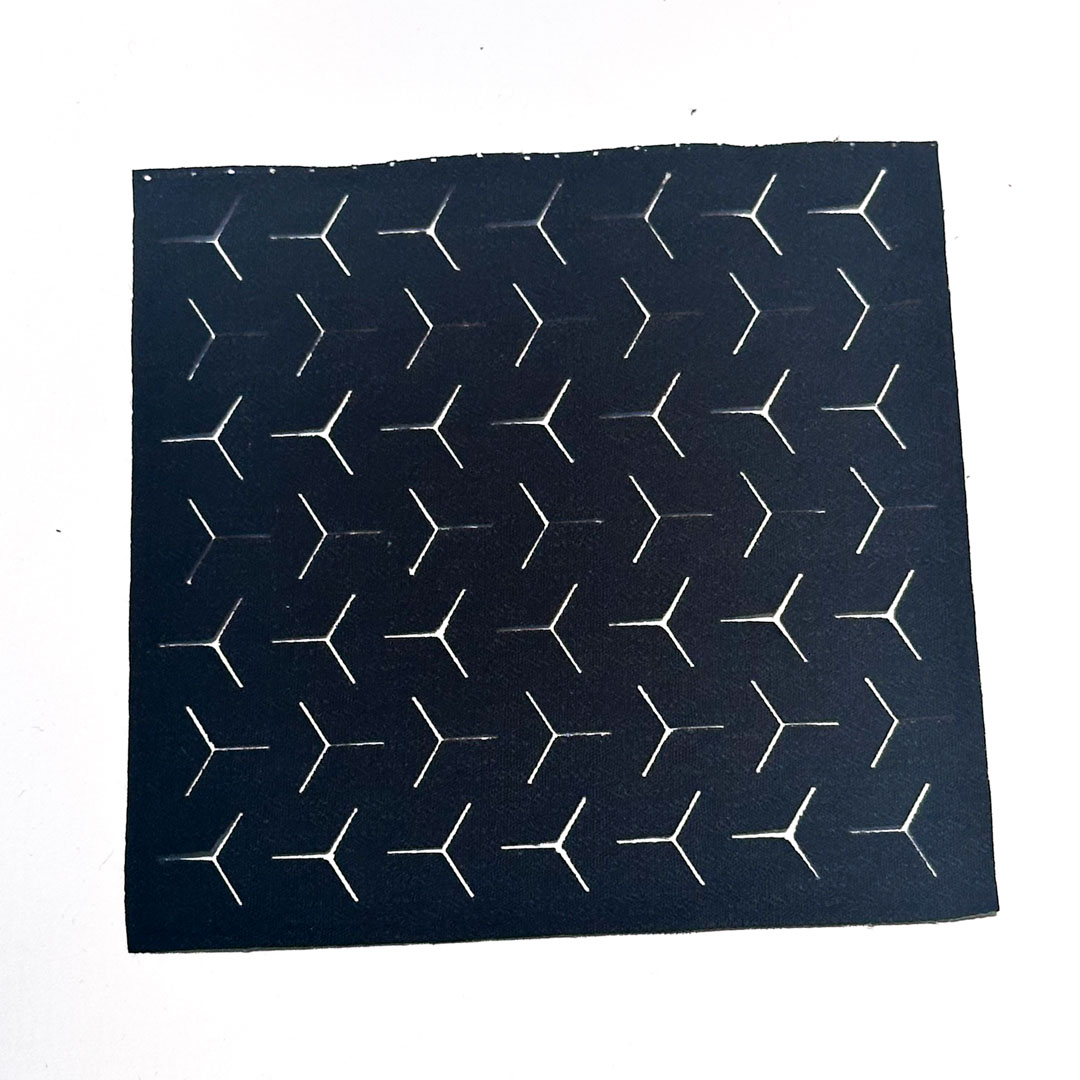
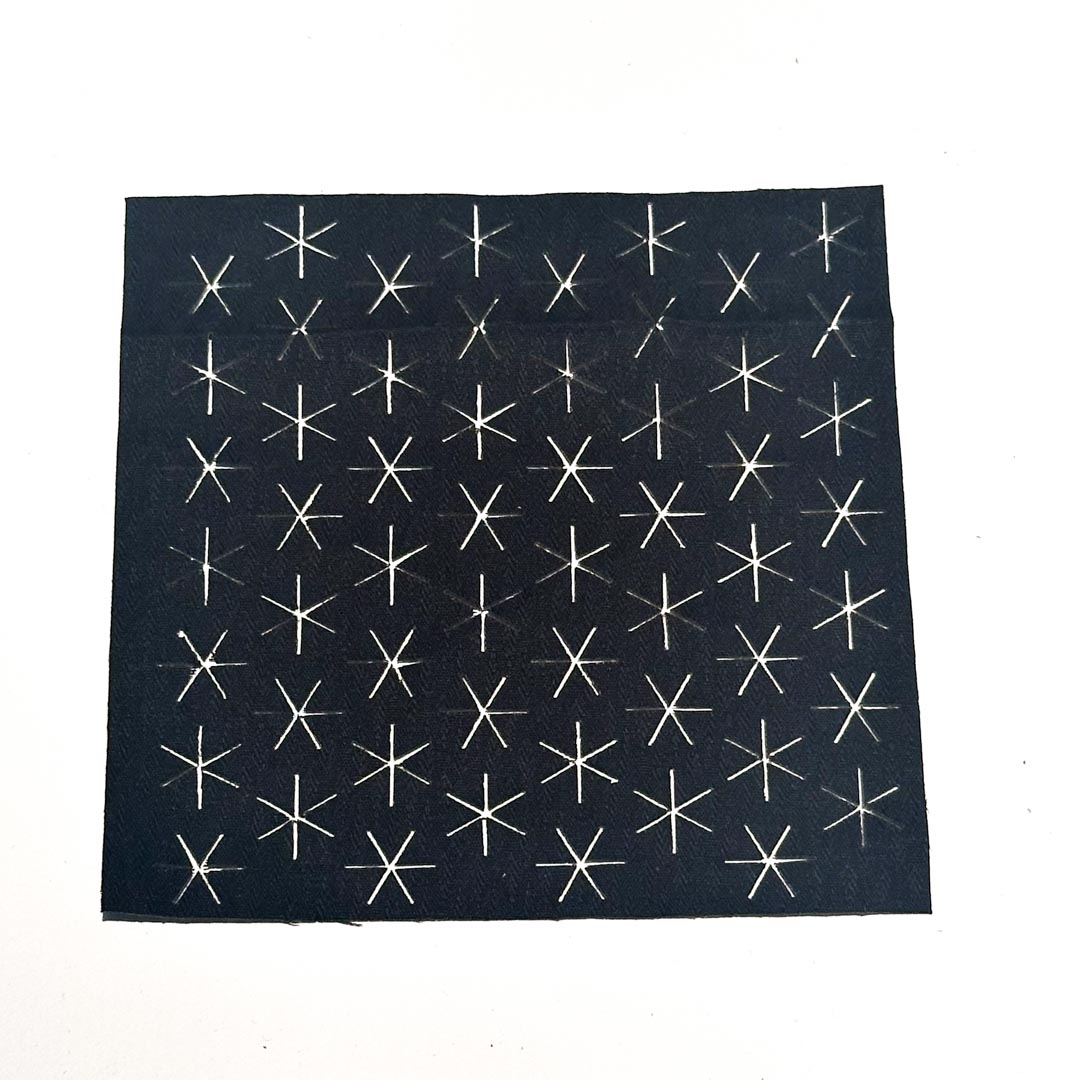
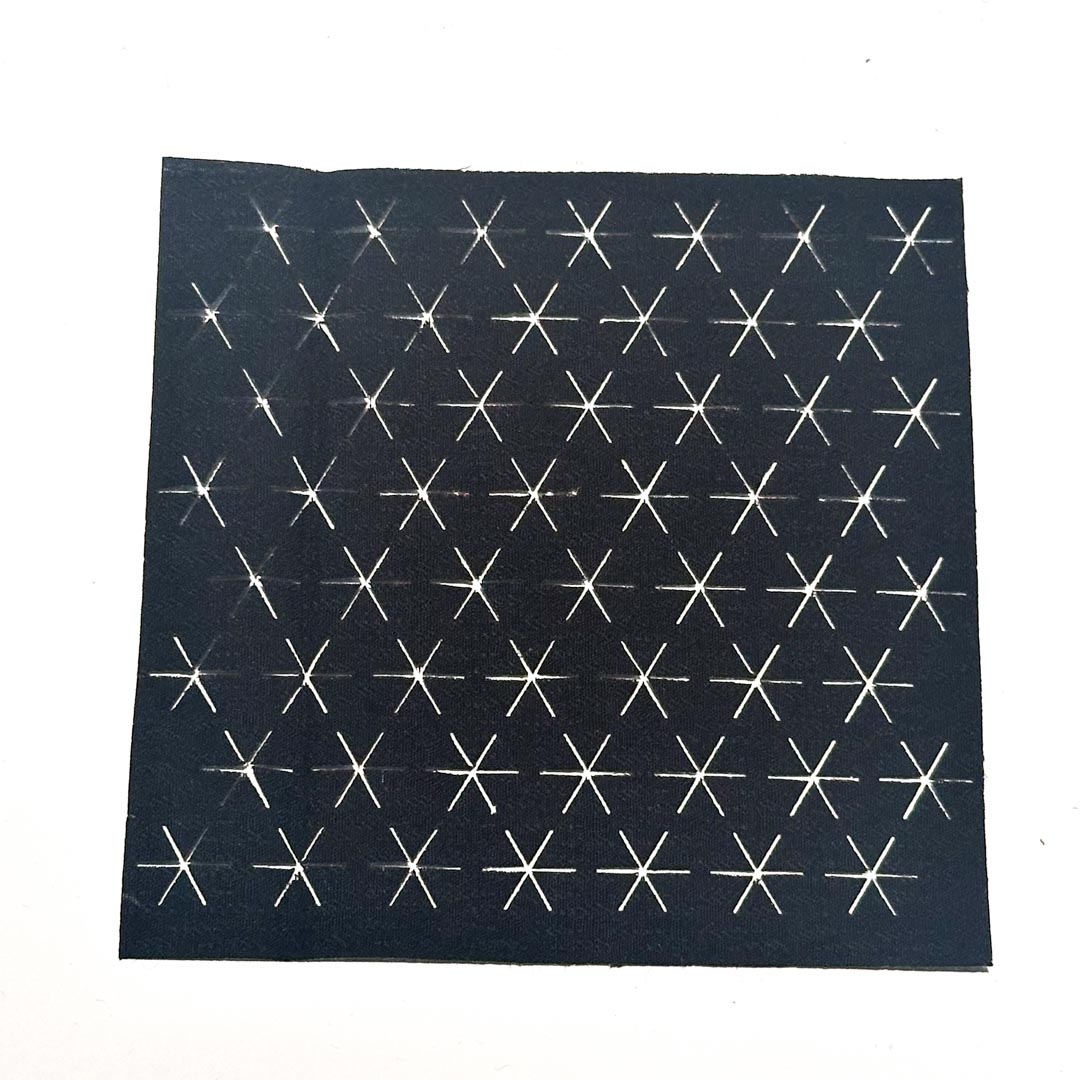
//add videos
Conclusions
I tested various auxetic patterns and structures. I think I got enough knowledge and experience to help me later when doing the structural designs. But in itself, I realised, cut patterns in a base material would not be the first line of designing my outcome. Introducing breaks in a material, while allowing varied kinds of motions and flexibility, also inherently weakens it, and the strength required by the belt could not be compromised. However, it did tell me that having weaker/stretchier areas vs rigid, non-deformable areas was a potentially good direction.