Structural Wood Textile Composite Explorations
I then tried using thin plywood on fabric to achieve the hard-soft combination. This was done by either stitching the pieces onto the fabric, gluing them onto the fabric, or both. The stitching allowed certain kinds of slidable movements since the entire piece wasn't locked to the fabric. But eventually I settled on gluing them since the relative movement that stitching allowed was causing more problems than benefits. This version is what I finally chose to execute the belt with.
Later, I also tried combining this with the biocomposite by casting the flexible material onto the fabric that held the wood pieces, but did not proceed with that.
Intent
As I realised the biocomposite pieces were not going to work very well, I decided that a Plan B was necessary. Since I was still aiming to play with a hard-soft material combination, I decided to strongly simplify things.
The textile scaffolding week had been very interesting for me and I had wanted to take those explorations further ever since.
I decided to follow that direction and see if it was viable.
Ideation
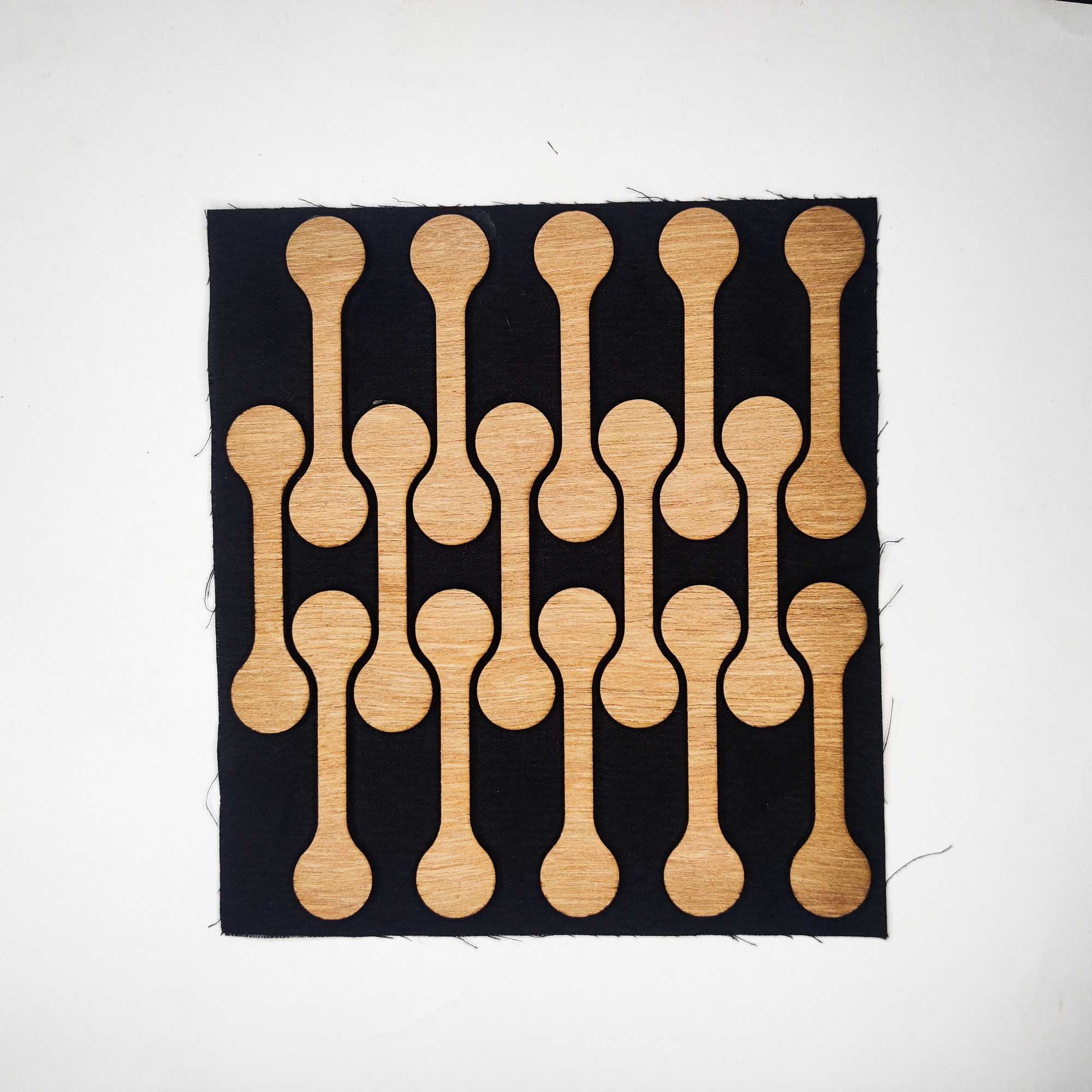
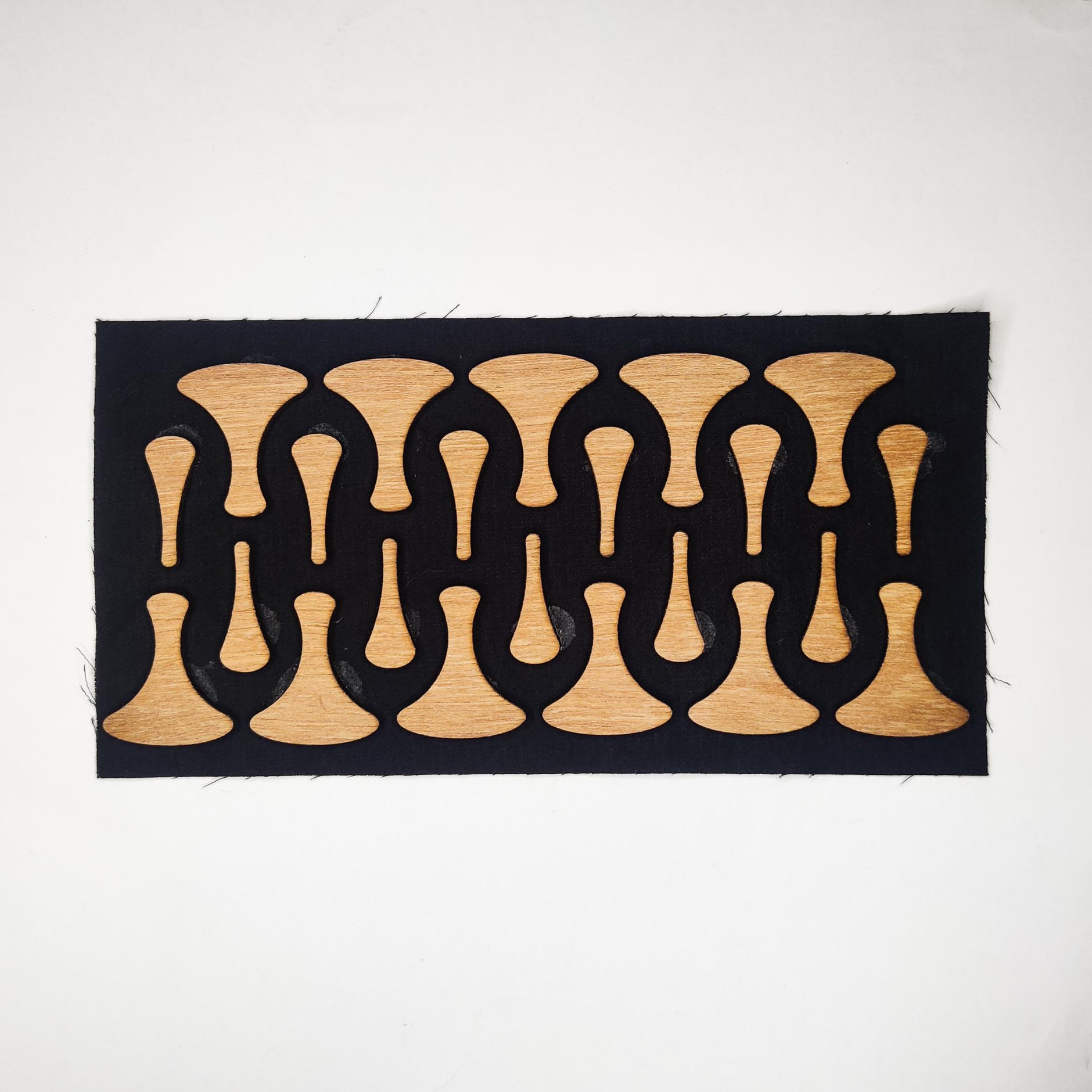
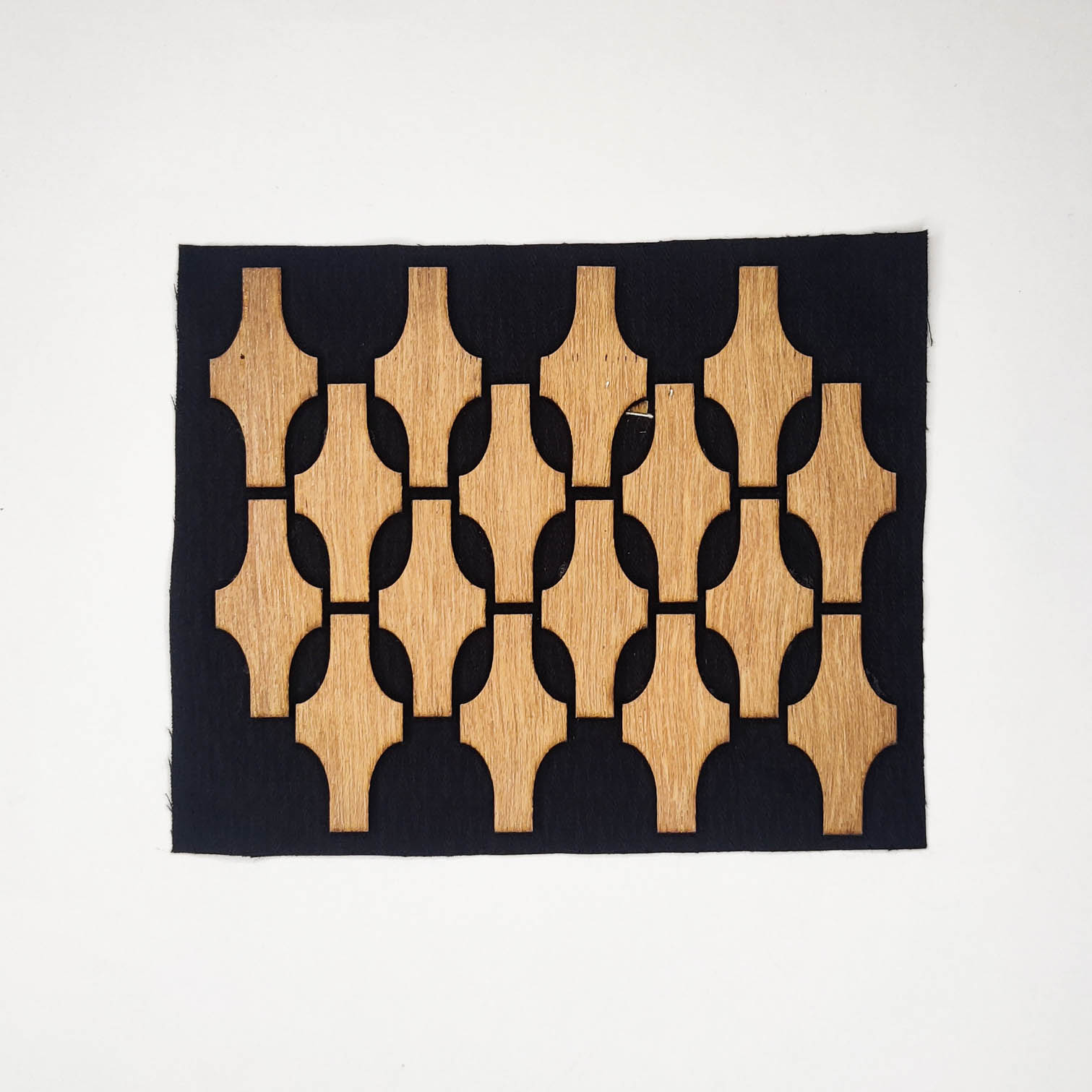
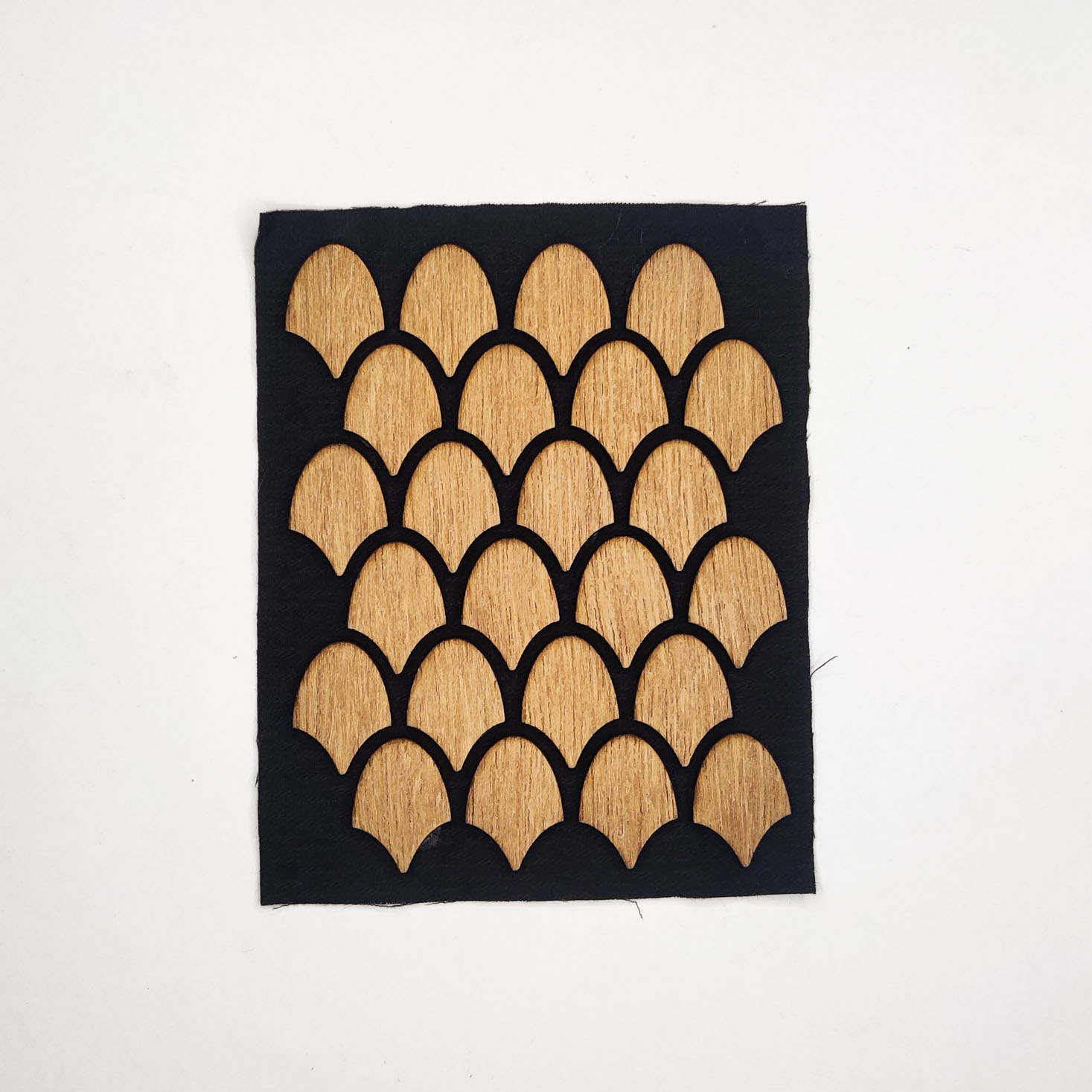
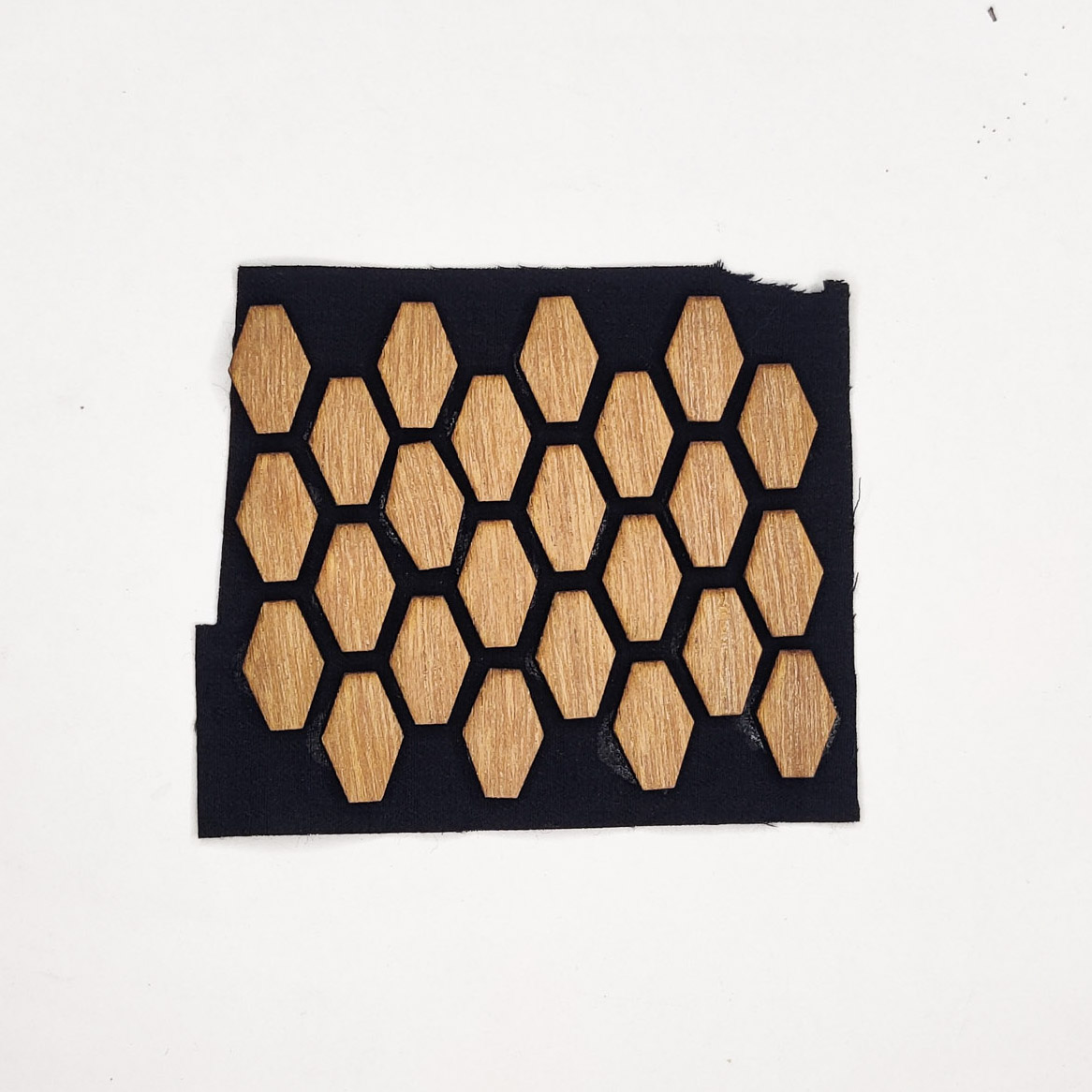
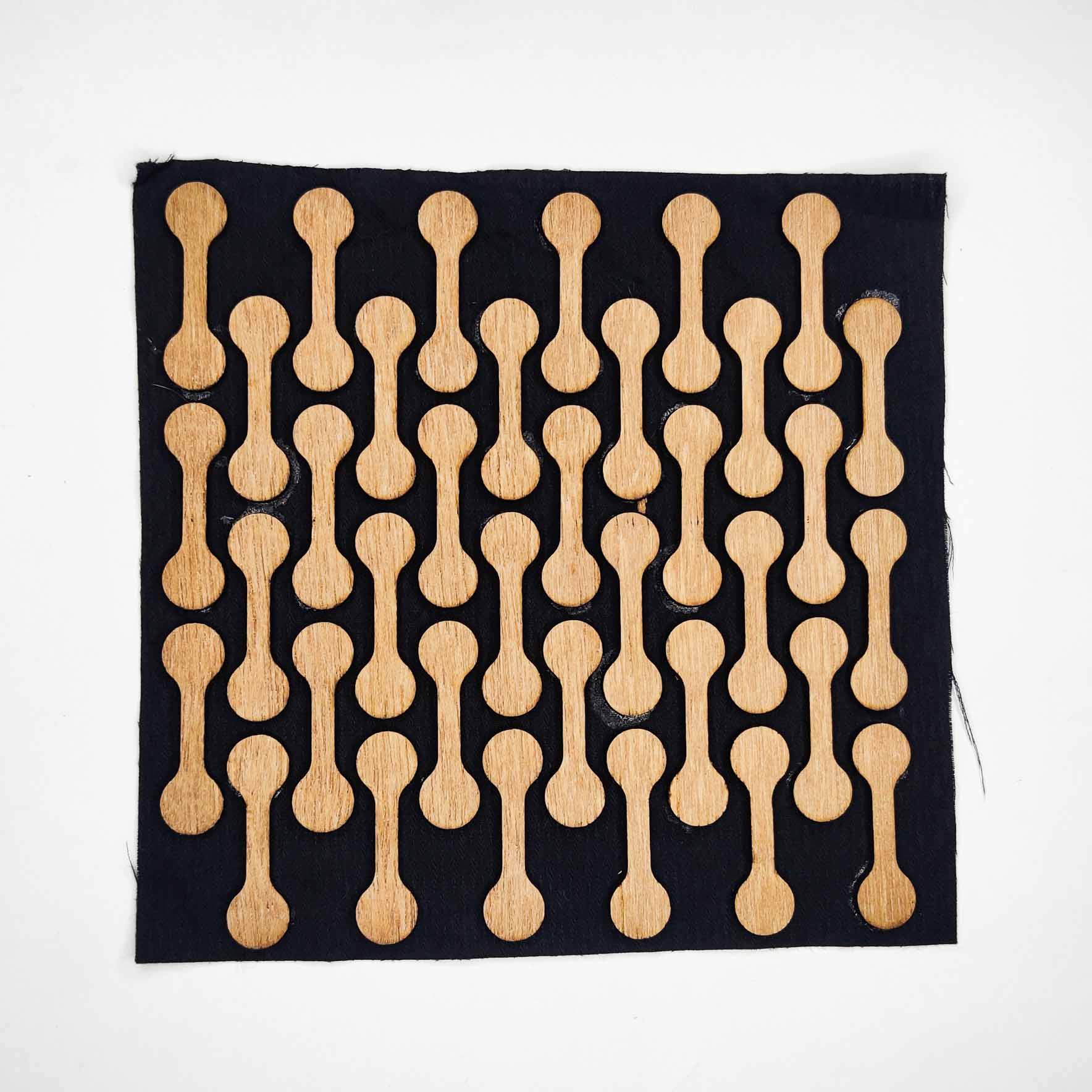
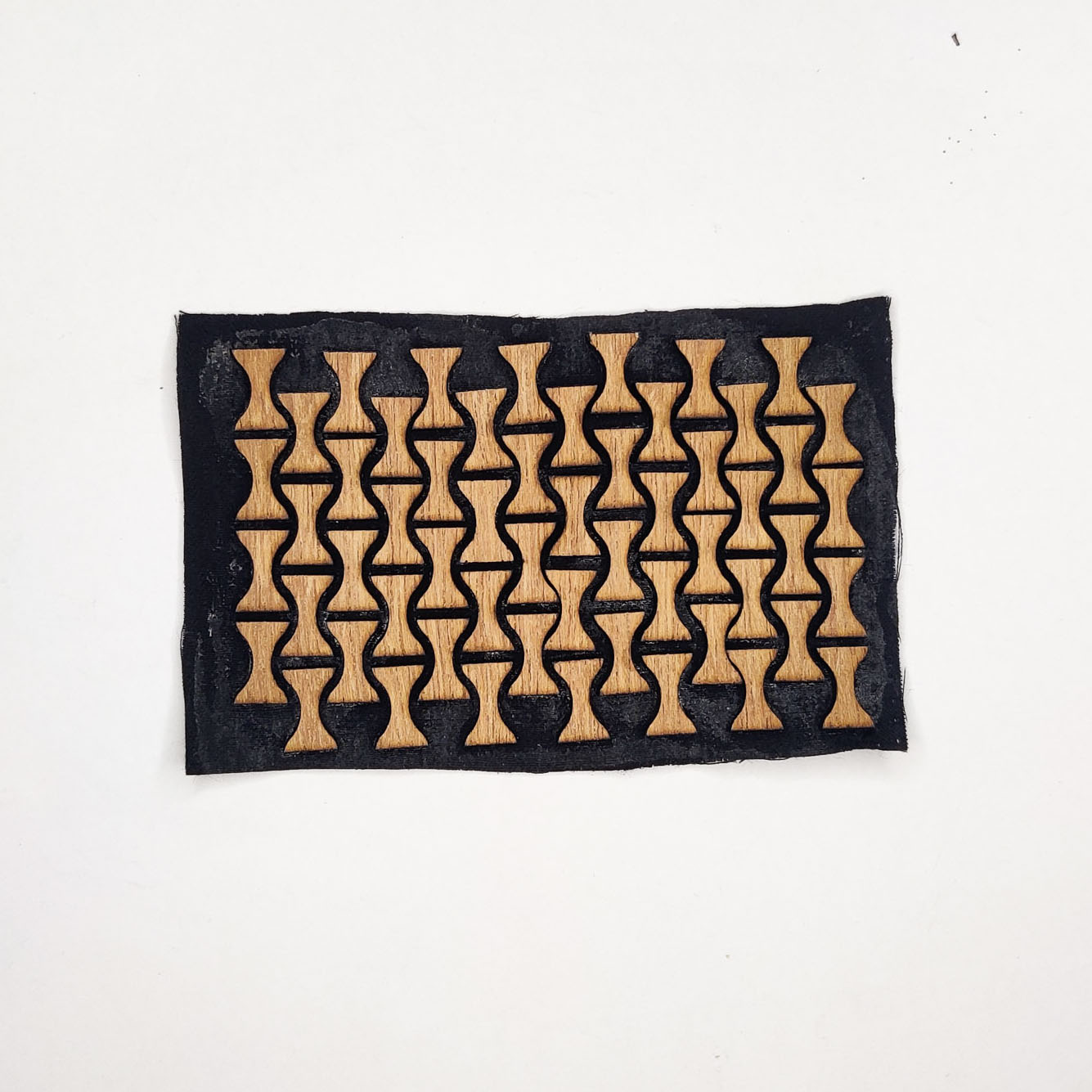
The idea was to lay up thin pieces of plywood on the fabric and attach them, so the composite in its entirety had a some flexible areas where wood wasnt present, and some rigid areas where wood was.
I tried 2 piece combinations as well as single pieces.
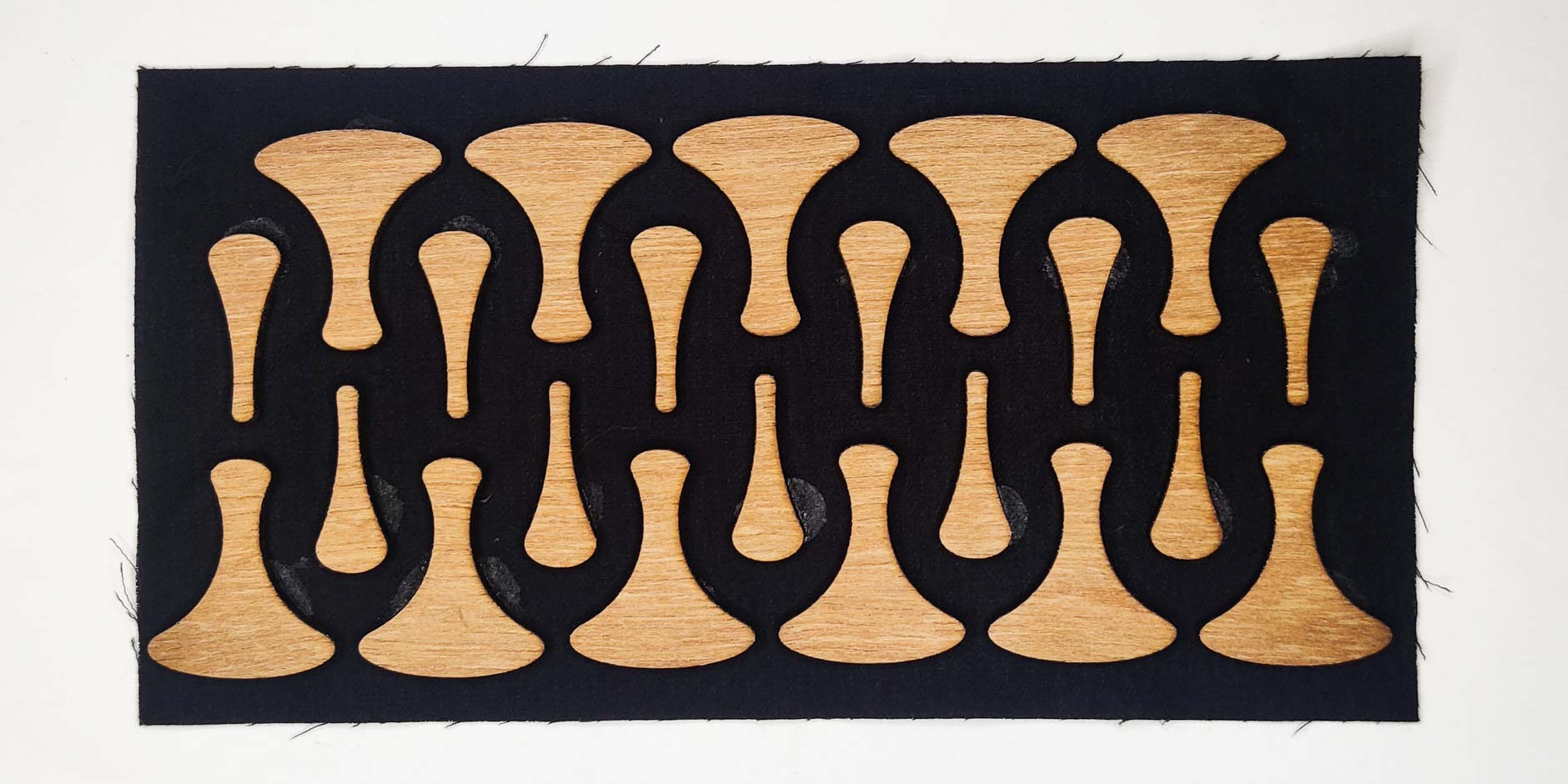
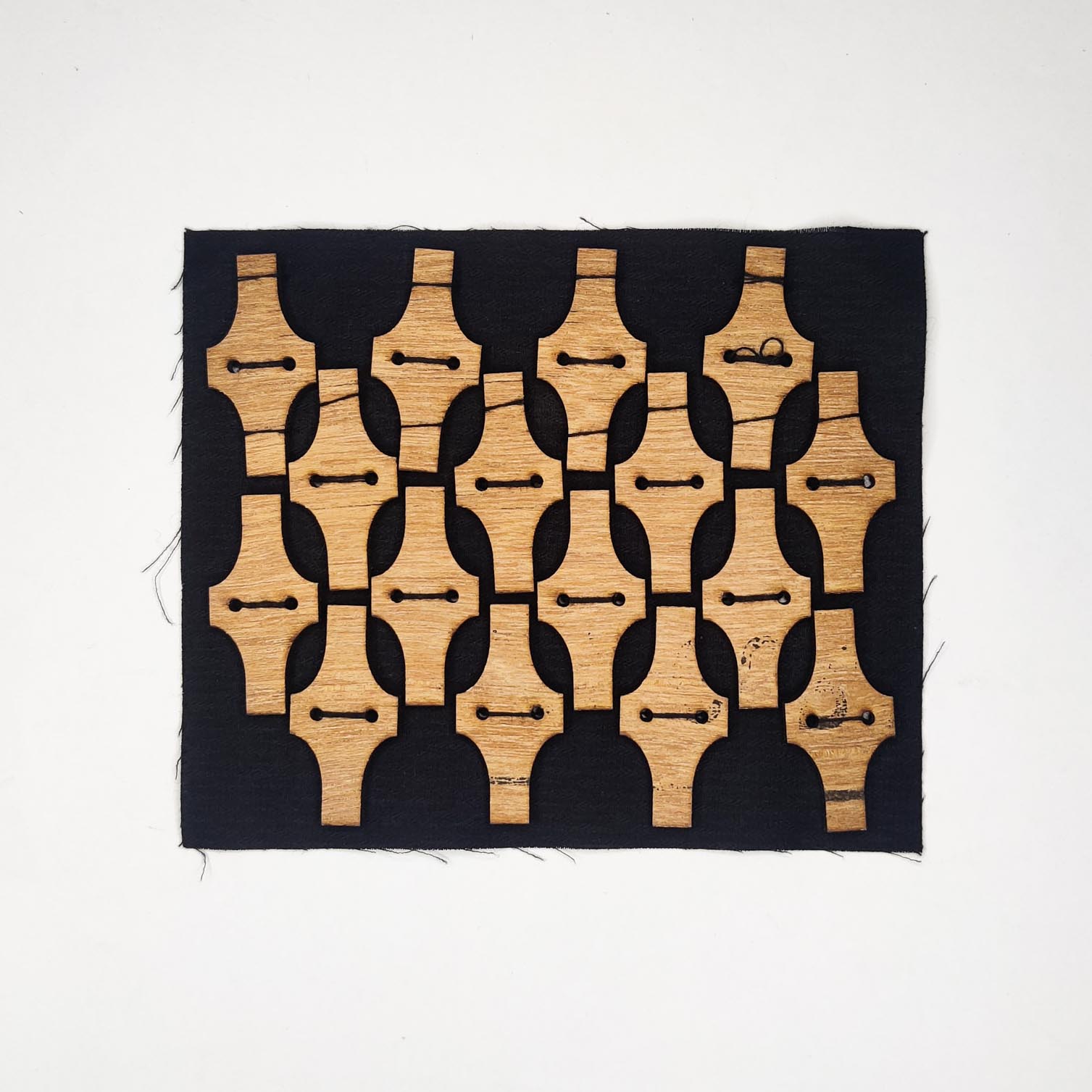
I tried sewing the pieces on, like medieval armour made of scales or chainmail.
I designed a piece that was attached at one end but loose at the other, so that it could slide along one axis.
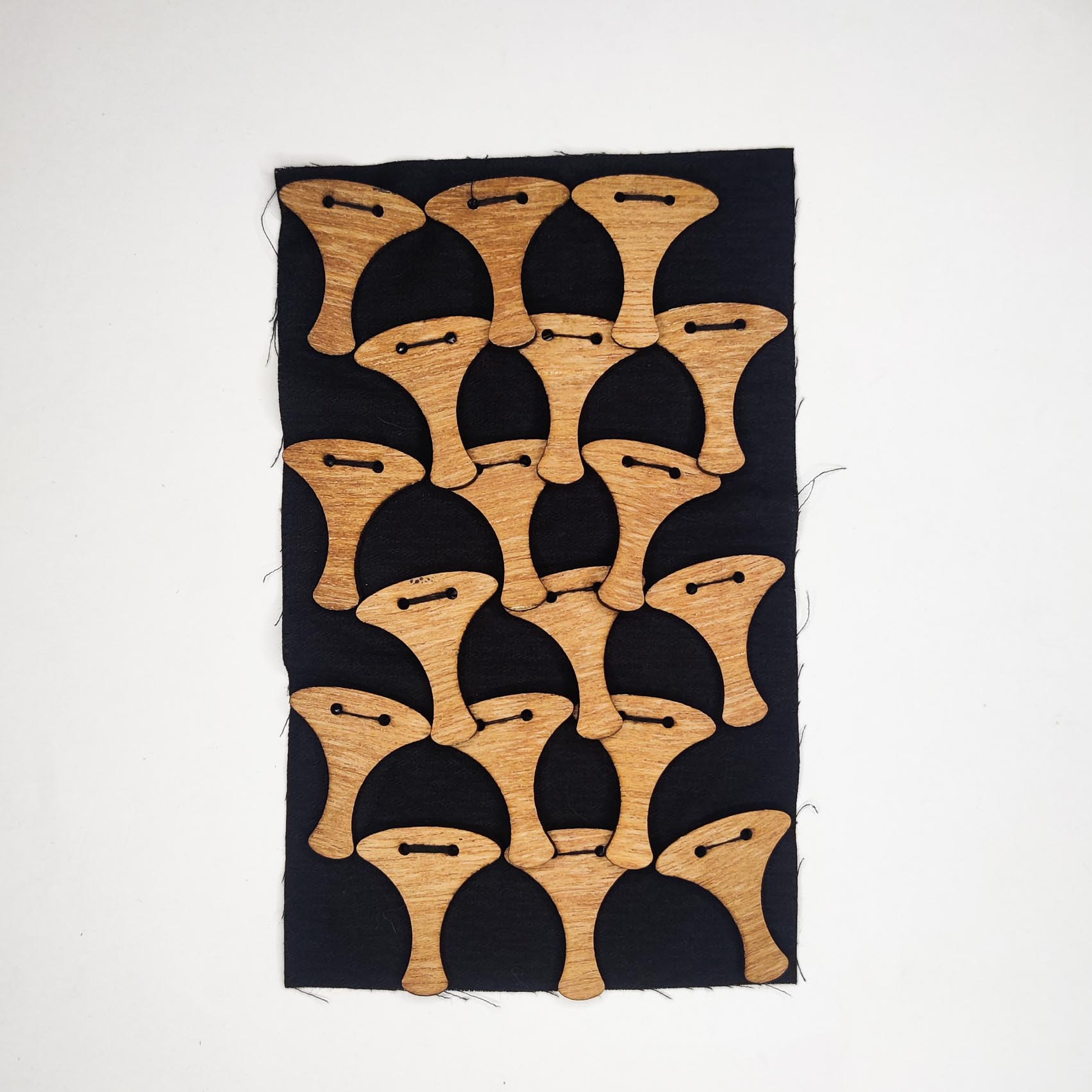
There were other pieces that I sewed on as well, see below.
However, in the effort to benefit ratio, stitching wasn't very high. While results were good, the effort was very high. The swatches got done but a full-size piece would be high on effort, on drudgery and very likely take too much time.
Eventually, I switched over to just gluing the pieces. This worked out well enough.
Process
Drawings
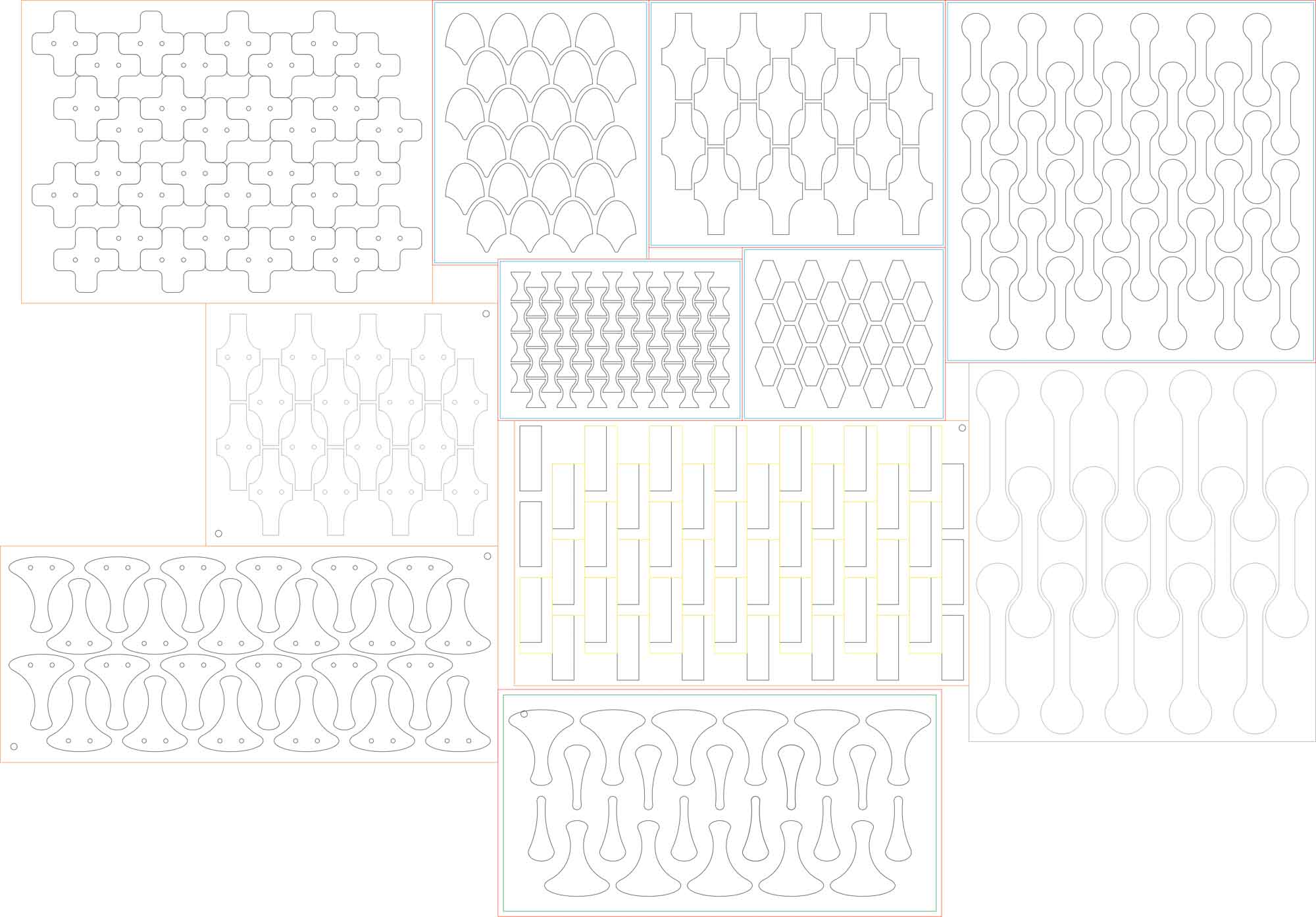
Results
Stitched
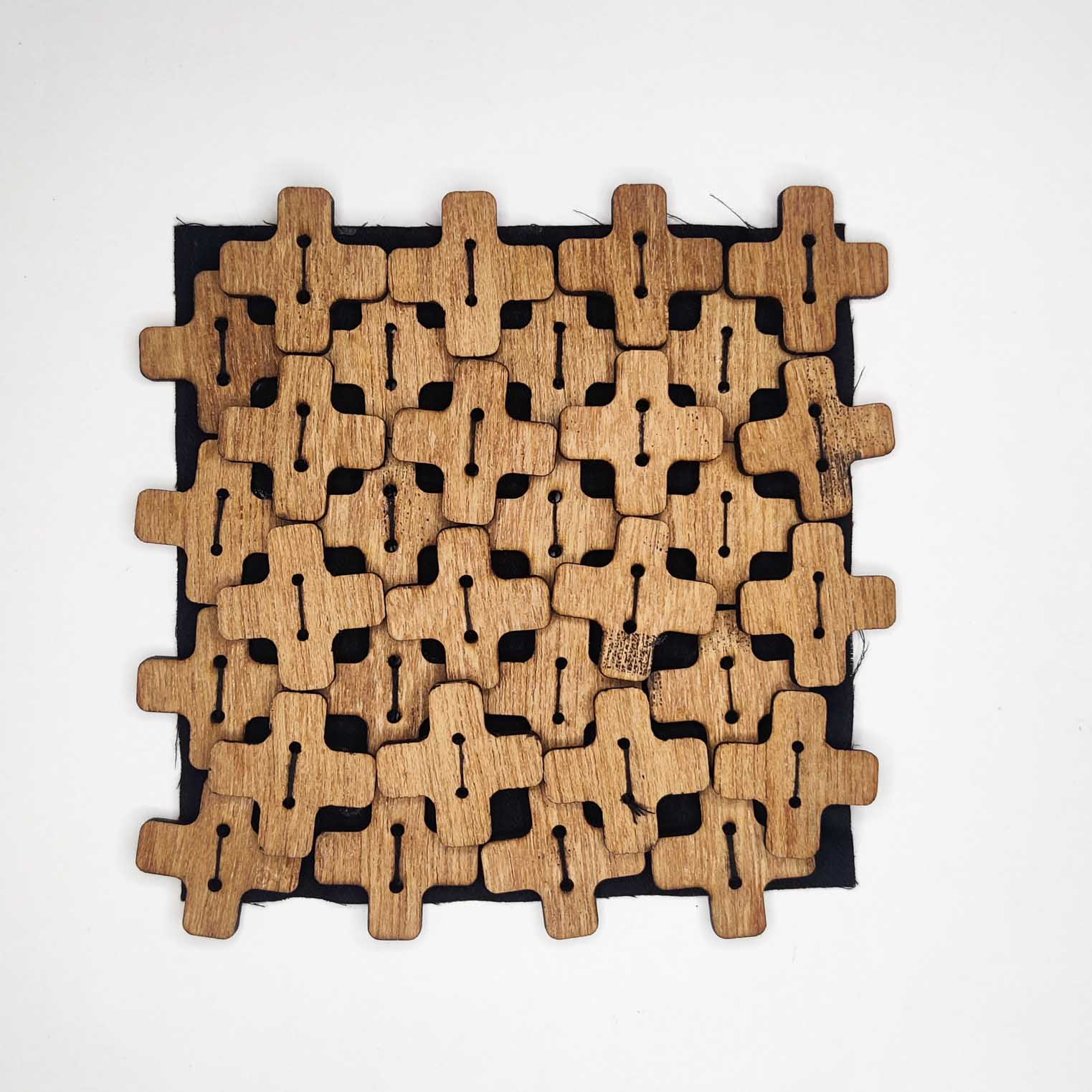
Glued
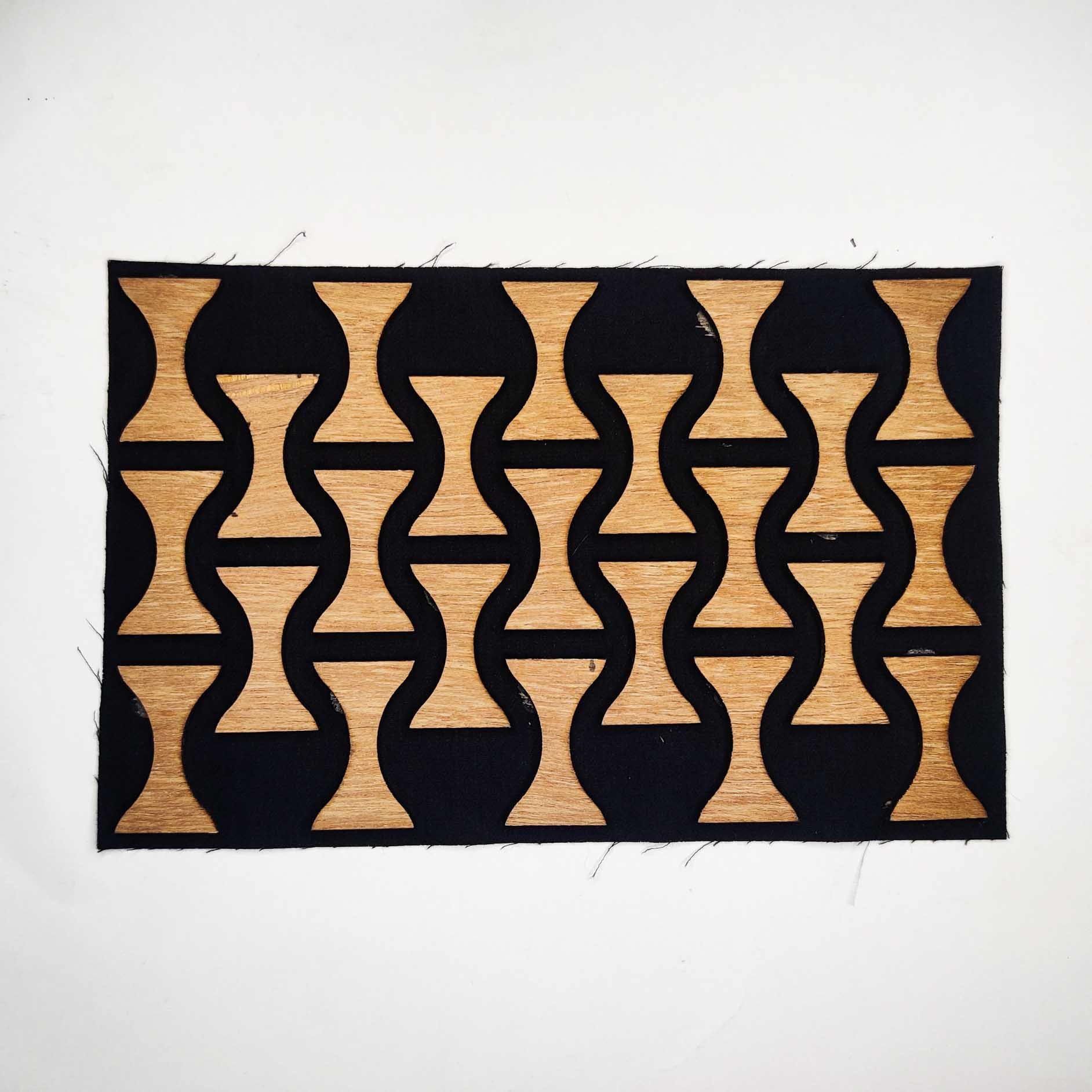
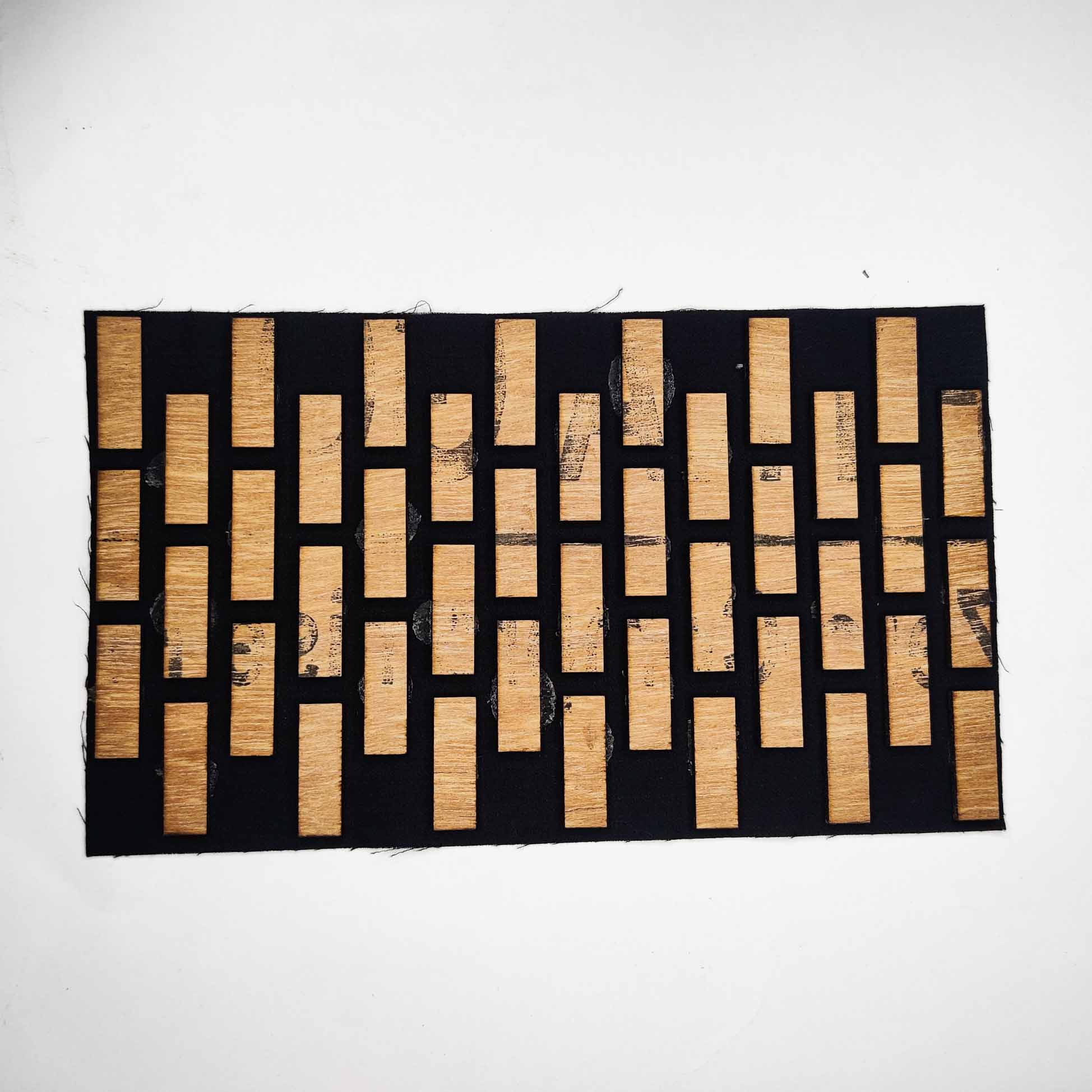
Additional Bioresin layer
//add videos
Conclusion
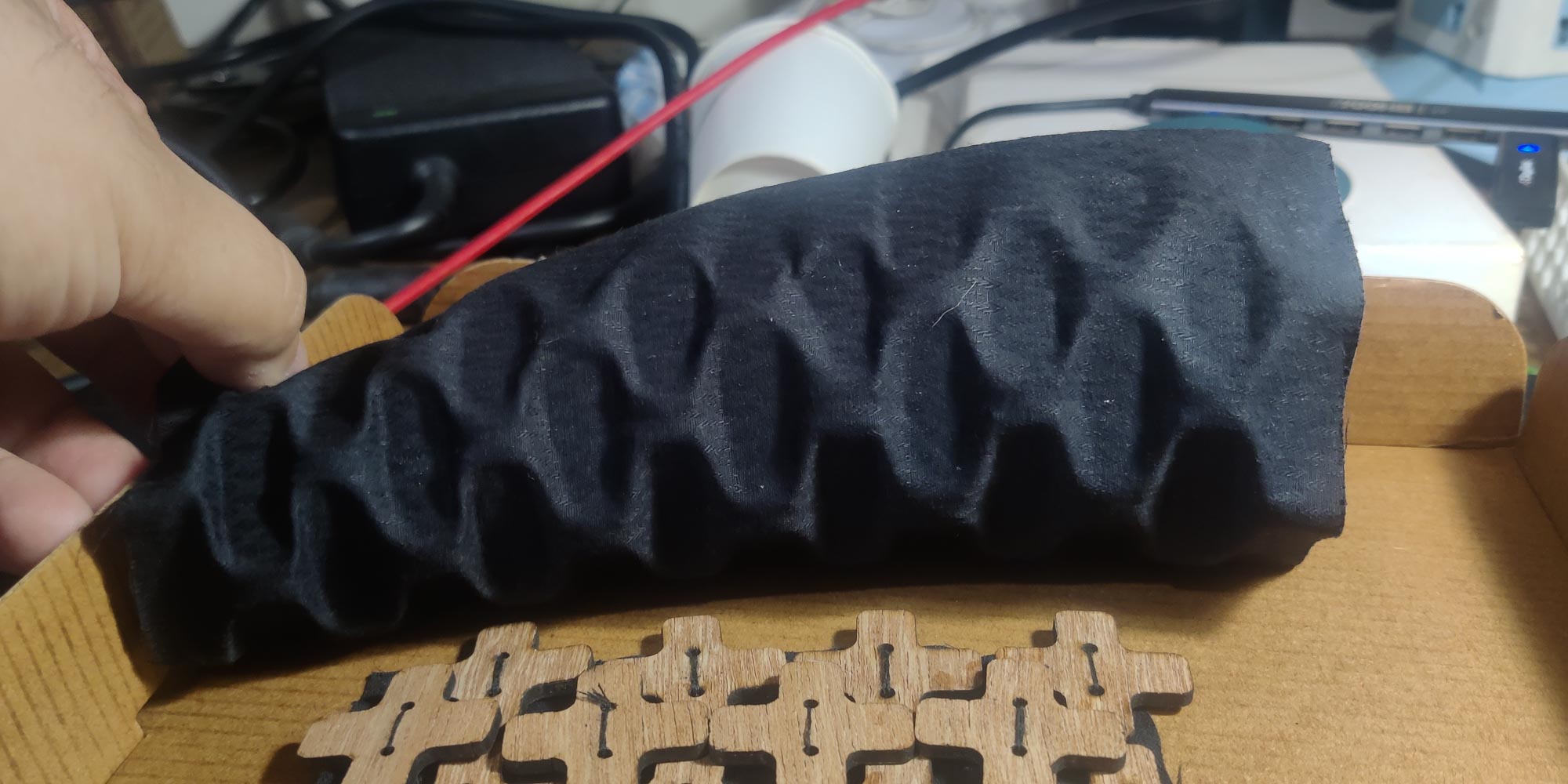
This process seemed extremely viable. The fabric was bending in one direction but rigid in the other.
Based on the gap inbetween the pieces, the bendability in the forward and reverse direction could also be made different.
However, stitching, as clean and tidy a process as it was, would not be scalable for large sizes for the sheer effort of it.
Gluing was less tidy, and more error-prone since some pieces would fall off if not properly glued. However, it was better at scale.